RSS
 

Posts Tagged ‘Tips’

Travel Photography Tips – Jasin Boland

13 Feb

Jasin Boland is an Australian based motion picture stills photographer who’s worked on such films as The Matrix, Ghost Rider, The Mummy, Mission Impossible and The Bourne films. Jasin’s work has been used on movie posters, billboards, TV commercials, magazines and newspapers all around the world. In this episode, Jasin talks with us regarding one of his favourite pastimes: travelling. Hear from our Nikon Ambassador as he discusses his favourite locations, talks over some practicle camera gear, and offers key tips on how you can improve your travel photo’s. See more @ My Nikon Life: mynikonlife.com.au
Video Rating: 4 / 5

hey guys ithree6mafia here, just talking about how you should price your photography and how i price mine., remember to SUBSCRIBE!COMMENT!RATE! and as usual send me a question of about anything as i will answer it:) THANKS FOR ALL THE SUPPORT:DD!! ADD ME ON FACEBOOK! www.facebook.com FOLLOW ME ON TWITTER! twitter.com JOIN THE FORUM 🙂 www.facebook.com
Video Rating: 4 / 5


Photography Tips from David Hobby for Exceptional Lighting

10 Feb

www.silberstudios.tv Join us for this behind the scenes interview with David Hobby,when we caught up with him on his FlashBus Tour with fellow master of light, Joe McNally.They were stopping off near Silber Studios on their 29 city, 6 week tour to teach America how to see the light!. David Hobby loves to teach photographers how to improve their control of light, including “how to use off-camera flash with your DSLR to take your photos to the next level. Or the next ten levels,” as he said. David gave use some important photography tips including why you need to get your flash off of your camera, how to use “China ball lighting” for very soft lighting and the “secret setting on the Nikon SB 800, and a lot more, including some inside stories. Grab your flash, and step on board the FlashBus as we talk with David Hobby. Read the transcript here http
Video Rating: 4 / 5


5 tips for successful wedding photography

06 Feb

After a long day of shooting, here in my hotel room I run through 5 tips that will help things go smoothly on the big day. Not to be alarmist – but it is a tough gig if you want to do it properly, so think things through, plan, and give it your very best. In Australia I recommend Digital Camera Warehouse: goo.gl Outside Australia I recommend Adorama: goo.gl & Amazon: goo.gl ====== Sign up to our mailing list at www.thatnikonguy.com See all the latest photography news & reviews on my second channel here www.youtube.com Join in: www.facebook.com Twitter: twitter.com
Video Rating: 4 / 5


Ten tips for better mobile photography

02 Feb

Screen_Shot_2013-02-01_at_12.24.28_PM.png

Stock photography website iStockphoto recently began accepting smartphone images from photographers who sell images through the service. Now they’re offering tips to photographers who want to improve their mobile photography skills, which includes both basic photography advice about composition and framing, as well as specific advice for mobilographers. Check out the post on connect.dpreview.com.

News: Digital Photography Review (dpreview.com)

 
Comments Off on Ten tips for better mobile photography

Posted in Uncategorized


Four Tips on Your Image Data Safety Procedures

01 Feb

Introduction

The following is an excerpt from the SLR Lounge Lightroom Workflow System Workshop on DVD, a system designed to increase your post production speed by 5 to 10 times. Click here to learn more.

I was attending a workshop last year in Los Angeles where the instructor talked about the importance of having backup gear for an important shoot. His mantra was that during a shoot, “something always goes wrong.” Gear redundancy is important, especially when you are on the client’s clock. Without a doubt, not having a backup to your gear can potentially derail a photoshoot if something were to break.

However, the most important and expensive component of your photoshoot is indeed not your camera gear. Unlike your gear, which you carry insurance for and can be replaced, the images from the shoot may not be replaceable and are therefore the most critical component of a paid photoshoot.

Not only would it be far more expensive to setup a reshoot, for photojournalists shooting a wedding or a Presidential inauguration, a reshoot is simply impossible.

So just like your gear, it is important to have duplicate copies of your client’s images from the shoot to your computer. Here are four tips that you can integrate into your shooting workflow.

1. Back up the Images in Camera

Ideally, when you are working professionally, it is best to shoot with a DSLR that can record onto two cards on the fly. It is the most convenient and most portable method of creating backups of your images as you can simply set the camera to “duplicate” the images onto each card as they are recorded. If you are in need of frequent high speed burst shooting for action/sports, this may not be possible since using dual cards can often fill your cameras buffer too quickly. But, wherever possible, using two cards in camera will automatically add an additional level of security to your workflow.

The majority of the full-frame DSLRs such as the Nikon D600, Sony A99, Canon 5D mkIII, Canon 1D Series, Nikon D800 and the Nikon D4 Series have this capability already. Currently, the Nikon D7000 is the only APS-C DSLR that has two card slots.

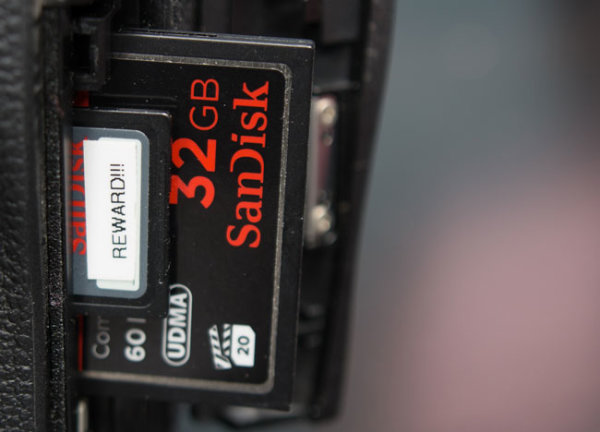
Additionally, we recommend that for your most important shoots to only use memory cards from established manufacturers such as Sandisk and Lexar. There are also many fake Sandisk and Lexar cards out there, so be wary of them. For Amazon shoppers, be sure to buy directly from Amazon itself and not a third-party seller on Amazon. Often times these counterfeit cards are virtually impossible to differentiate from packaging alone. For those that want the extra peace of mind there are also “zero failure” memory card brands out there such as Hoodman. However, in sticking with the major name brands, I have never had a card failure and thus never really felt like it was worth the 5x-10x premium price for zero failure memory.

It is also a good idea to have a standardized system of storing your cards in order to know which memory cards have been used. An example of a straightforward system is to place any used card face down in the wallet.

2. Back up the Images at the Shoot

Another method of backing up your images during the shoot is by backing up the images to either a laptop or a portable media storage drive such as the Sanho Hyperdrive Colorspace UDMA. This is especially useful when you are shooting with a single-card camera or if you have a second shooter with you

The laptop is easier if you are in a controlled environment such as a studio or a private photoshoot, but it is not recommended when you have to be in a less-secure environment such as a wedding where you may be running around everywhere. This is where a portable media drive can attract less attention, while also being far more portable than a laptop.

3. Safeguard the Memory Card on the Trip Back

The trip from the shoot is another part of the day where having a contingency plan can keep the client’s images safe in case something happens on the way home or to the studio.

One way to ensure the safety of the images is to keep both copies of the images in two separate places. I usually carry the primary cards in my card wallet which is attached to my belt loop and kept in my pocket. The back-up cards, laptop, hard drive, or portable media storage stays in the trunk.

If someone rear ends the car and damages the gear, or if someone breaks into the car while I’m eating at a restaurant, I still have at least one set of the images with me. Additionally, if the memory cards in my pocket somehow fall out, I still have the backup in the trunk.

4. Back up to Images to at Least Two Locations on the Computer

Once you returned to your studio or home, be sure to back up your images to your computer and into the backup hard drive. For additional security, you can also upload the images as either the original RAW or the finished images on to an online storage site like Amazon’s Glacier or Crashplan.

Thankfully, hard drives are relatively cheap nowadays, and additionally, there are plenty of online storage options as well. It pays to research the brand names and websites to know which hard drives and online storage sites are the most reliable. I personally use 1TB Silicon Power Rugged Armor A80 portable hard drives because they can take a beating (literally). The current online storage solution that I use is Crashplan.

Conclusion

Remember, gear can be replaced, but the client’s images may not be replaceable, so it is important to work image redundancy into your shooting workflow. The good news is that it does not take that much more effort to safeguard your images, just good habits and awareness.

The SLR Lounge Workflow System Workshop on DVD

The SLR Lounge Workflow System Workshop on DVD takes everything that we taught in the Lightroom 4 A to Z Workshop on DVD and builds by teaching you how to maximize your shooting and post processing efficiency and workflow. This 7 hour DVD covers data safety procedures, file management, culling standards and overall develop techniques to increase your post production efficiency by up to 15x! In fact, using this Workflow System we can cull and edit over 1,500 images per hour! Don’t believe us, watch the teaser video! The Workflow System is also available as a part of the Lightroom 4 Workshop Collection. To learn more click this link.

Post originally from: Digital Photography Tips.

Check out our more Photography Tips at Photography Tips for Beginners, Portrait Photography Tips and Wedding Photography Tips.

Four Tips on Your Image Data Safety Procedures


Digital Photography School

 
Comments Off on Four Tips on Your Image Data Safety Procedures

Posted in Photography


Photography Tutorials – Landscape Photography Tips – Learn How To Use Your Camera In Manual Mode

19 Jan

Hi Everyone. Welcome to another landscape and seascape photography tip. Heaps of people when they are starting out are unsure how to find correct exposure when taking photos. This little trick should help you get correct exposure when taking your landscape photographs. Its easy and takes about 10 seconds to do. Let me know what you think! Jamie Paterson


3 Tips for Better Black and White Conversion using Lightroom

16 Jan

Ever wondered how the professional photographers get those dreamy black and white or sepia toned images? Wonder why yours come out looking dull and flat looking?  I’m going to give you 3 tips to help you do better black and white conversions using Adobe Lightroom, and solve that problem!

Today’s cameras are pretty smart, and many of them offer a black and white setting or shooting mode. I recommend using those to start, especially if you’ve never done any black and white (B&W) or if you are not currently doing any post processing or image editing on your files. BUT, if you have some experience with b/w photography, and you are processing your images, I recommend doing the conversion yourself as you have more control over the look of the final image.  I’m going to show you a few ways of converting them into B&W using Lightroom.

Note:  for the most part these tips will work in Photoshop as well, using the Adobe Camera Raw features and sliders.

First a quick note about my background. Back when I took my photography degree (dare I say, in 1987-88, and date myself) I spent the entire first year shooting black & white only, using a 4×5 view camera no less. I processed my own film and made my own prints. I spent a lot of time in a black & white darkroom, so I’m pretty well versed in how it works and how to control it to my advantage.

To grab some info from those film days, it’s important to note and understand that your camera sees light and colours differently than does the human eye. Black and white film sees blue tones much lighter than our eyes, for example.  Coloured filters were used to shift how the B&W film “saw” and rendered the scene.  Using a red filter would lighten anything red in the image and darken blue tones.  So if you were a landscape photographer you’d often use a red filter to darken the sky and make it less washed out.   A green filter would lighten green and blue tones and darken red and orange.  So photographers used the appropriate filter to capture the scene as they envisioned it.

In Lightroom and ACR (Adobe Camera Raw) in Photoshop you have the same tools at your disposal!  So without the use of filters, you can adjust how the scene is rendered in B&W.  That brings me to the first tip.

Tip #1 – use the B&W mix to do your conversions

In Lightroom’s Develop module (and ACR) there are a few ways that you can convert your images into B&W.  You can just pull the saturation slider all the way to left to -100. You can also do similar with the Vibrance slider, but it may not give you a 100% B&W image, depending on the image. Both of those options will give you a black & white result. However, they give you no control over how the colours render into the various shades of grey. A better choice, in my opinion, is to use the B&W mix, located on the third panel down on the right in Develop – see below.
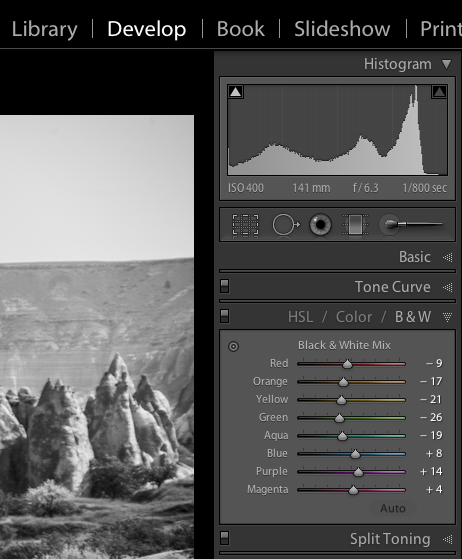
Black and white mix panel in Lightroom Develop module

Let’s take a look at an example using the same image.
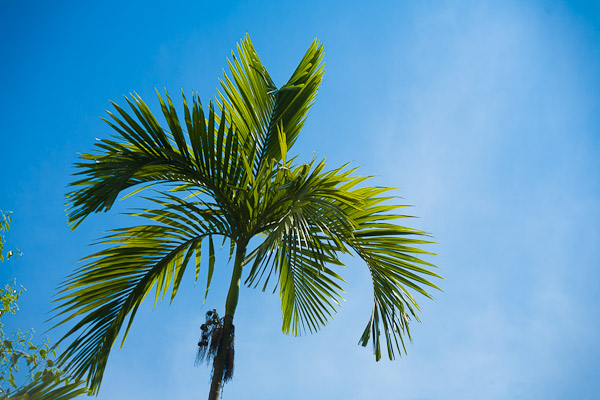
Original colour image
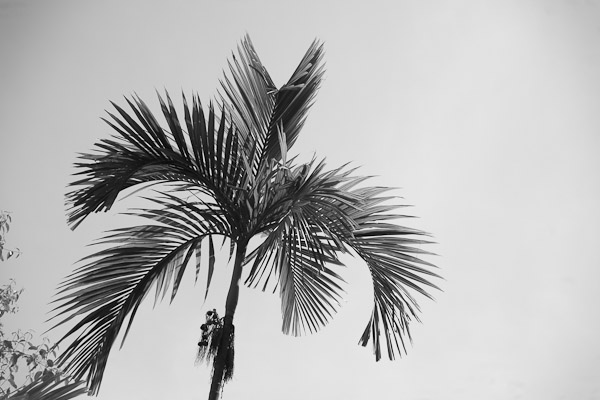
B&W conversion done using the Saturation slider at -100
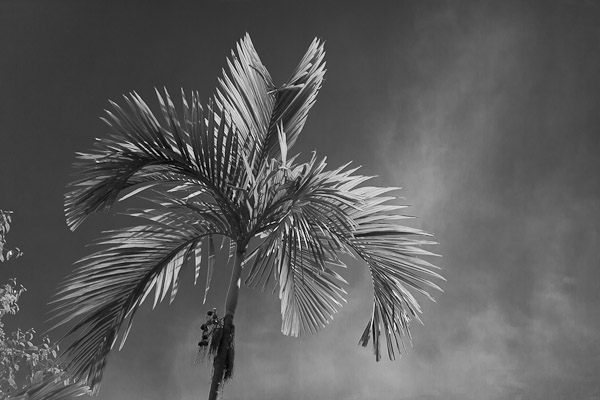
B&W conversion done using the B&W mix in LR

In the images above, notice how the blue sky went really light using the desaturate method?  This is often the case when you have a lot of blue sky in an image, as I explained above.  Using the B&W mix and pulling a few of the sliders I was able to get very different tones.  This is what my sliders in the B&W Mix panel look like on the third image:
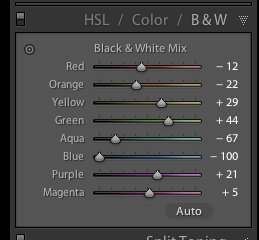
Notice the blue slider is pulled all the way to the left to -100.  That is what is darkening my sky.  Also worth noting is the green and yellow sliders are moved in the opposite or plus direction.  This lightens both yellows and greens (most grass and trees are often a mix of green and yellow, sometimes more yellow than green).  I have not done any selective adjustments to darken the sky here, just the sliders you see to the right!  How very different this image is from the desaturated one, and so simple to do using this method!

Also on this panel notice there is an “Auto” button.  Clicking it will allow Lightroom to apply a predetermined B&W mix for you.  You can also set up in your Lightroom preferences to apply that for you when B&W mix is selected, then you can just fine tune from there.  Otherwise all the sliders will start at “0″.

Another little known trick for using these sliders is the funny looking little double circle thing on the top left.  As you move the mouse over it, you will see this:
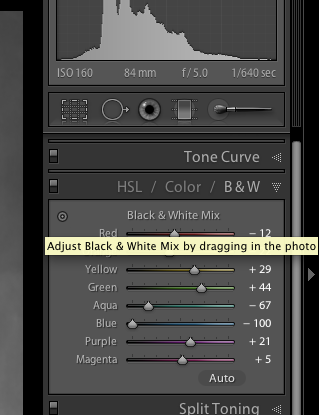
Adjust Black & White Mix by dragging in photo. So what on earth does that mean, you may wonder?!  If you click on the little circle your mouse pointer will now have little up and down arrows, as well as your cursor showing the same icon as you hover over the image. Click anywhere on the image, hold and drag, and it will adjust ONLY the colours that you’ve clicked on.   Drag up to move the sliders to the right (+) and drag down to move them to the left (-). How cool is that?!

This is very helpful if you do not know which sliders to adjust.  Just select the area of your image you’d like to adjust the tones on and drag away!

Tip #2 – don’t just stop there, add some punch

Sometimes even using the B&W mix sliders the resulting image still looks a bit flat and dull looking.  Take it up a notch by adding some punch to your image.  I do the following to most of my B&W images:

  • increase the clarity:  if it’s a scenic I’ll push it quite far like +60 or higher, if it’s a person I keep it under +30 or they start to look a bit crunchy and overly wrinkled (especially if the photo is of your mom or your spouse, they tend not to be too happy about that)
  • lower the black slider, until it looks good.  Highly scientific, yes! Here’s a little trick for you as well using the Blacks slider:  if you click and hold the Opt/Alt button while you slide it, you will get to see exactly where your blacks are clipping (meaning going off the chart on the histogram and having no detail). You can use that information to make sure you have just enough blacks, but make sure you keep all the detail in important areas.
  • increase the contrast either using the Contrast slider or Curves

Occasionally after making these contrast adjustments it will affect the overall image and you may want to go back and rework the B&W sliders a bit too.  It’s a dance, play them back and forth until you get a mix you like.   Here’s the final version of the image above, with contrast and punch adjustments applied.

Notice how much more snap it has, while still maintaining that nice rich, dark sky!

Secret to making great B&W images that the pros won’t tell you . . .

Black!  That’s it.  Make sure you actually have some black, and some white in your image.  Check the histogram and use my little tip on seeing the clipped bits. Add contrast or increase the blacks, whites, or both to get a full range of tones.  No matter what the subject is in the photograph, having enough contrast to have pure white, and pure black is key to having a stunning B&W image.  Otherwise you’re just left with a bunch of grey mud.

Tip #3 – creating selective coloured images

There are a couple ways to make selectively coloured images, and also to create that faded look that is really popular. Once again you can use the Vibrance and Saturation sliders in the Basic panel, however they will affect colours in the entire image the same.  You can also use the Adjustment Brush and paint in a lower saturation onto parts of your image where you want to fade out the colour.  I use that method quite often, even on full colour images, to do tone control on items in the background that are distracting.

Lastly you can use the sliders in the HSL panel.  By sliding selected colours to the left you can desaturate only those colours.  You can also use the little Click and Drag tool we used earlier to do the B&W Mix to click on your image and pick the areas to fade.   Here’s an example using each of these methods.  None is right or wrong, just give you a different look and some have more control than others.  Choose the one that works for you on in individual image basis.
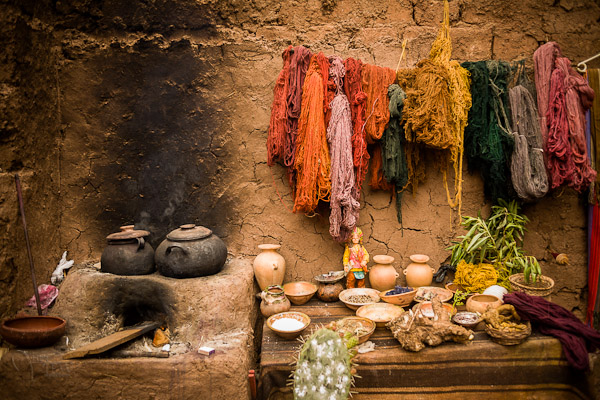
Original colour image
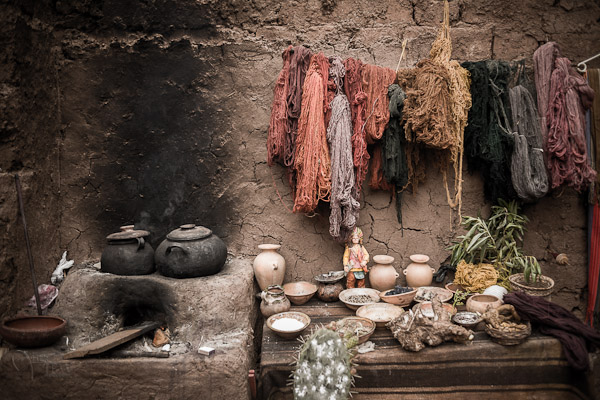
Vibrance slider set to -75

Saturation slider set to -75

Adjustment brush used to paint in saturation at -75 to the whole image except for the wool
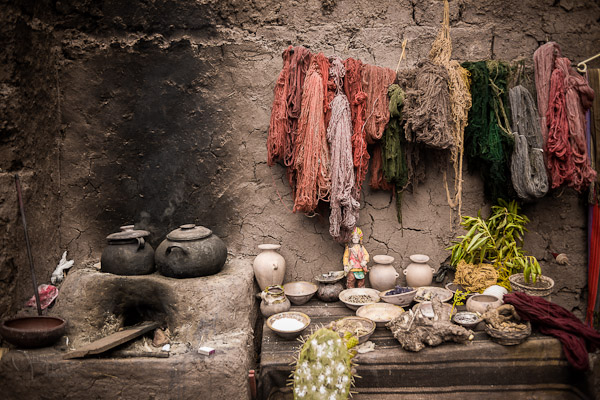
HSL sliders used to desaturate by separate colours

*Bonus Tip – making a nice duotone or sepia toned image

A little extra bonus tip for you.  Adobe has made it super easy to create a really nice duotone (just means two tones, go figure!) image, which includes Sepia.  Just go to the Split Toning panel after you’ve done your B&W conversion, it’s the fourth one down.
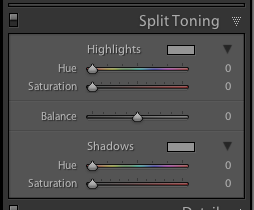
You will see sliders for both Highlights, and Shadows.  My personal tip on how to keep a nice clean sepia or toned image is to use ONLY the Shadows sliders and do not touch Highlights.  That will leave you with clean, crisp white highlights even after you’ve applied the toning.

How to create the duotone

First start by choosing the Hue slider (for Shadows).  If you want a nice brown colour, start with it around 40-45. Each image tones slightly differently, so start there and adjust to your taste and style.  You may notice that nothing happened, right?  That is because you need to increase the Saturation slider before the tone will show up.  The more you increase saturation, the deeper and more vibrant the colour tone will become.  Again, there is no right or wrong, it’s all about preference.  For a subtle, dark, chocolate brown try 10-20.  For a deeper colour go higher with saturation (NOTE: make sure the “balance” slider is set to zero)

If you want a different tone just move the Hue slider.  You can create some really neat affects this way including Blue Tone or a true Duotone.

Example using a portrait

For this final example I’ll show all the steps we’ve just covered using a portrait.  This is applicable to any people photos, you don’t need to make portraits to use this information.
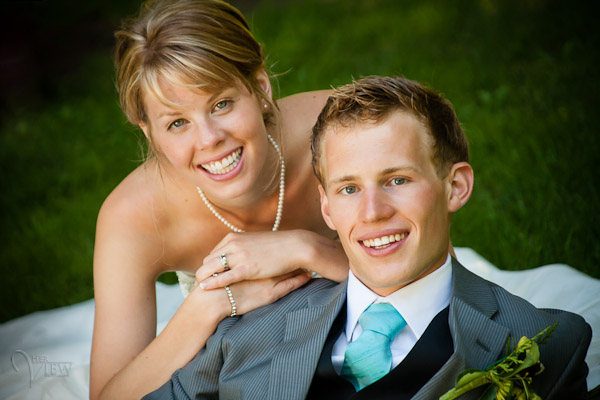
Original colour image
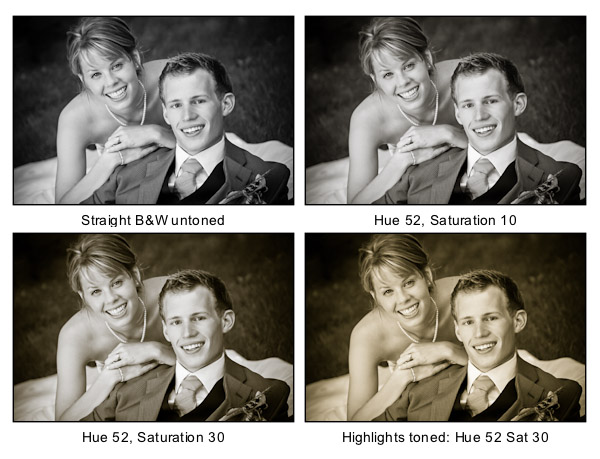

Notice the last image where I’ve added in colour to the Highlights and how it completely changes the look of the image. The whites have a yellow tint now instead of a nice clean look. I personally prefer the third one but there are times I do use this option. Do what feels right for your image, you’ll know what to do.
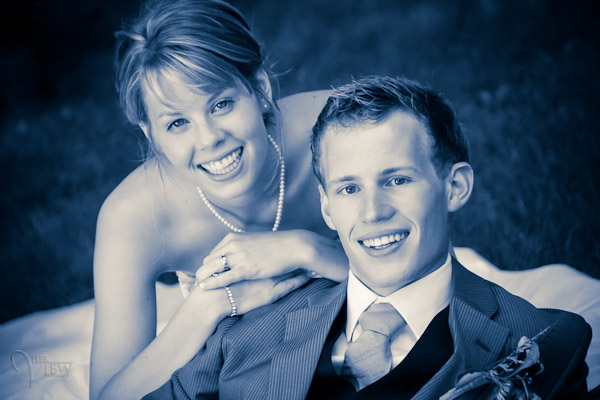
A "duo" tone using different colours for the Highlights and Shadows. Shadow settings: Hue 232, Sat 70 – Highlight settings: Hue 52, Sat 37. I did move Balance to -27 to skew the colours more towards the Shadows as well.

What next?

As always I encourage experimentation.  If you have another way that you like better, that’s awesome!  Please share it with us if you will.  Another way to do some really quick B&W inside Lightroom is to find some good presets. There are literally tens of thousands of Lightroom Develop presets available for free on the internet.  Try a Google search for:   Free lightroom b&w presets.  Then just pick the ones you like and install them.

Now get out there and go make some images and let’s see what you can do in Black & White!


Post originally from: Digital Photography Tips.

Check out our more Photography Tips at Photography Tips for Beginners, Portrait Photography Tips and Wedding Photography Tips.

3 Tips for Better Black and White Conversion using Lightroom


Digital Photography School

 
Comments Off on 3 Tips for Better Black and White Conversion using Lightroom

Posted in Photography


360 degree Panorama Photography tips and editing

15 Jan

dombowerphoto.blogspot.com If you enjoy myvideos please post them on your Facebook page and let others know about this channel, please subscribe and share on Facebook and twitter. Also check out the links below. If you really like my work please feel free to check out or buy a copy of the my PHOTOGRAPHY BOOK: Getting There With Photography: By Dom Bower www.blurb.com FACEBOOK Critique/advice GROUP www.facebook.com FACEBOOK PAGE www.facebook.com TWITTER page twitter.com WEBSITE www.dombower.com PHOTOGRAPHY CLOTHING Point and destroy clothing http
Video Rating: 4 / 5


Selling Your Images As Art: 5 Tips To Getting Started

14 Jan

As photographers, the highest compliment we can be paid is to have someone pay us for our vision and creativity.  For some, this means becoming wedding or portrait photographers, getting paid per event or session.  But what about those of us who enjoy shooting landscapes, or wildlife? Subjects that aren’t often paid for in advance? Aspiring photographers are often told they should try selling their work, but are unsure where to start. It’s relatively easy to set up a website, but getting potential customers there can be difficult.  So how do you get your work seen? What are the options?  Here are five tips to getting started.

1. Establish an Online Presence

This allows you to get customers when you aren’t otherwise selling your work.  The secret here is to go with a web presence that will allow you to be found when others don’t even know they are looking for you.  I use FineArtAmerica.com to host my website.  The beauty here is that all of my work gets entered into their database. I keyword my images, so they appear in pertinent searches by people who’ve come to the site looking for art to purchase. Visitors who know of me can use my own URL, but my guess is that few, if any of my sales actually have come from people visiting my personal URL.  There are other websites out there- Zazzle.com and RedBubble.comare two others. 

I will admit I know very little about how they operate, so do some research before you commit to any of these websites.  One of the beautiful things about the online presence is that it can work with the other outlets I mention below.  It will allow you offer other sizes and products, such as canvas prints, that you may not keep in stock at an art show or be displaying in a gallery. It allows someone who saw you at a show, but wasn’t prepared to purchase, place that order a day, a week, or a month later.  With any of these sites, depending on how quick you are to upload your work, you can be selling within hours.

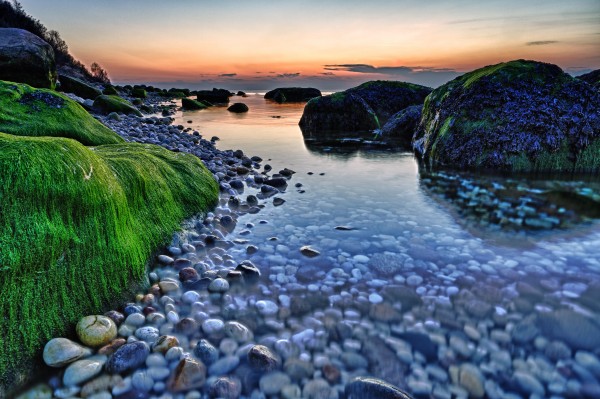
Horton Point Sunset

This image of a local point of interest on Long Island, NY would do well in a local restaurant, cafe, or art show but would probably not garner interest in a more national setting.

2. Look Locally

There are opportunities to sell your work everywhere.  That coffee shop on the corner. That new restaurant down the block.  Many local banks will occasionally show local artists’ work.  The local library will as well.  Prepare a portfolio and ask who to speak with at the establishment. 

Be prepared to have your images printed, matted, and framed.  Work with the establishment to set up guidelines, commissions, and payment for the images.  The best images for this kind of use are images of local landmarks that compliment the restaurant, or images that work well with the restaurant or establishment’s theme.

3. Besides local restaurants and cafes, local art galleries and framing shops are also a good bet

Contact the gallery owners for their guidelines and ask how they like to review new submissions. I’ve found they all seem to work a little differently. Some galleries will charge a membership fee, or a rental fee for space. Most will have specific requirements for digital files, and commission structure will vary- the usual range is from 40%-60%

4. Local art and Craft Shows

These can be tricky, because you never know what kinds of buyers will show up.  It’s best to avoid shows that may be more crafty than artsy, but you’ll have to evaluate each show on it’s own merits. These are a good way to get your feet wet, as they tend to have low entry fees and less stringent requirements, but at the same time, you don’t get the kind of buyer who is necessary looking for fine art and is willing to pay top dollar for it.

Local shows, like local eateries, tend to look for more local art.  My first show I showed up with lots of images from around the country in my travels.  The stuff that got the most interest was all stuff local to where I lived. You’ll want to have a variety of sizes, with most images matted and a few framed images.  While the larger images look great, it’s generally the smaller sizes that will sell better.

5. A-list Art Fairs are the “Big Time”

I have not ventured into this arena yet but have researched it thoroughly.  Sunshine Artist Magazine(subscription required) is pretty much the definitive resource for these larger art fairs. Each fair is different, with artists required to apply and be accepted into the show.  Application fees can be in the hundreds of dollars and apply to your booth fee if accepted. The applications are generally accepted months in advance, so planning is required.

There are requirements for your booth layout as well.  Nothing about these shows is just thrown together at the last minute.  It is virtually a full time job to do such fairs, so be prepared for a commitment.  It is an expensive proposition as well.  You must have a stockpile of prints, framed and unframed, as well as a way to display them.  Several artists I know well have spent well over $ 1000 just on displays. That said, they can be lucrative as there are many who do make a good portion of their income doing such shows.

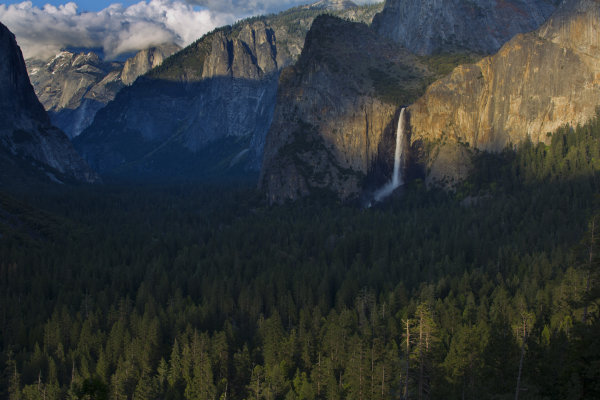
An image of a national park or other nationally known landmark will have broader appeal.

As I mentioned, it’s incredibly gratifying when someone is so taken with your work that they actually pay for it.  There are various outlets for you to get started in selling your work. All it takes is some commitment, and some time to get started.  Remember, ultimately,

Post originally from: Digital Photography Tips.

Check out our more Photography Tips at Photography Tips for Beginners, Portrait Photography Tips and Wedding Photography Tips.

Selling Your Images As Art: 5 Tips To Getting Started


Digital Photography School

 
Comments Off on Selling Your Images As Art: 5 Tips To Getting Started

Posted in Photography


SLR Photography Introduction and Tips

13 Jan

LINKS: Nikon Cameras: D3100: amzn.to D5100: amzn.to Canon Cameras: T3: amzn.to T1i: amzn.to T2i: amzn.to T3i: amzn.to Lens: Nikon 50mm f/1.8 Prime Lens: amzn.to Canon 50mm EF Prime Lens f/1.8: amzn.to