If you are a man of a taste and you like to tweet then you’ll probably appreciate these Twitter backgrounds of photography-related accounts. Go ahead and check them out!
The post 50 Striking Examples Of Professional Photos In Twitter Background Design appeared first on Photodoto.
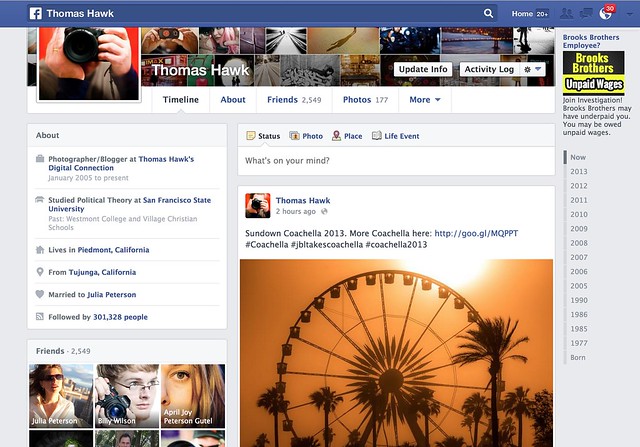
I had the new Facebook Timeline turned on for me yesterday. My wife got it about a week ago. Does anyone else have it? Do you like it? Anyone ever seen that movie Memento?
Photos feel larger — I like that — but I don’t really like the way that photos are cropped.
The old timeline forced everything into a square box by default so landscape/portrait crops were still problematic. You could reposition the photo after the fact (sometimes, when the reposition tool worked, which was probably less than 10% of the time for me) but your photo got stuck in a square crop. You could also “feature” the photo which would give it an extreme horizontal crop manually.
By the way, I seem to be able to use the reposition tool again now with the switch over to the new timeline.
Part of me liked the old Facebook timeline format. I love the square photo. It’s my favorite crop of all. When I uploaded a square to Facebook it would then show perfectly on my timeline page. If the other crops suffered, oh well.
The new timeline page goes back to a traditional landscape crop. So now when you upload your landscape oriented photos to Facebook they fit and look great. Unfortunately though, now both the portrait and the square crop are squashed into a landscape box.
Why on earth doesn’t Facebook just display BOTH landscape and square crops in their original crop? This is what they do on mobile btw, so it would seem more consistent. This would mean that square photos would be even bigger on the web version of Facebook, but everybody wants bigger photos anyways, so why make our square crop photos suffer in that landscape oriented box? This is what Flickr does by the way. On Flickr the square crop is king. I love that.
Of course portrait oriented photos get butchered even worse now with the new Facebook timeline — now they are squeezing a portrait photo into a landscape orientation instead of a square. Some of these just look awful.
It does feel like Facebook is trying to somehow more intelligently decide which portion of square and portrait photos get shown in the landscape box. Maybe their algorithm is looking for the eyes and focusing on that. I’m not sure, but it feels like the auto cropping is a little smarter and more intelligent.
Google+ takes a different approach. They retain the photographer’s original crop… but then you are stuck with those damn grey bars on the sides of your square and portrait photos on G+. For the life of Kevin, I’m not sure why G+ doesn’t just let the square photo have the entire envelope. It would look much better than those tiny little gray bars on the side and it’s just giving square photos an ensy weensy more real estate.
Which is what Facebook should do too, by the way. Square crops sort of fit into the landscape envelope, but why make the square suffer that way? Just liberate it. Make the square the king. I thought Facebook was doing this on the newsfeed a couple of weeks ago, but I think they switched back to cramming a square photo in a landscape box with both the new newsfeed and timeline now too.
Is there an answer to this perplexing problem about how best to display our images on the web? Why can’t we have just one big gigantic mosaic wall on both Facebook and Google+, that’s actually my favorite format of all I think.
Other changes on the new Facebook timeline, include moving your follower count over to a smaller less prominent place on the left. They also give the actual number now, instead of something that just said 300K before. You can add or remove certain modules out of the smaller left side column if you want.
Despite the photo crop issues, overall I like the new timeline a lot. I like it better than the old version. It feels more fluid and slick. I do like that overall photos do appear bigger. Landscape oriented photos especially look great there now.
The new comment system drives me a little batty though. I can never figure out who is talking to who and I feel like I’m trapped in some sort of web version of the movie Memento — but that’s a whole other topic entirely. I can never understand who said what in what order to who. I feel like I’m trapped in some sort of online version of that old movie Memento.
Unfortunately, as usual, with the new Facebook timeline we’re still stuck with the damn ads. I wish Facebook’s ads weren’t so especially vulgar. Why is Facebook trying to get me to join some lawsuit about unpaid wages at Brooks Brothers? I hate lawsuits — plus I’ve never worked at Brooks Brothers. Shouldn’t Facebook be smarter than that in terms of what ads it shows me? Why does Facebook think I worked at Brooks Brothers? Next thing you know some other ambulance chaser is going to start advertising at me just in case I’ve ever had Mesothelioma. Facebook should let us pay for a Pro account and exempt us from bad advertising.
We’ve all got them. That perfect shot hidden away on our hard drive or waiting in a negative sleeve.
But, with 80 bajillion photo sharing sites out there the question of where to share our masterpieces is not always an easy answer.
Getting your photos in the right place means getting your photos seen, so Photojojo has come up with a foolproof guide to help you figure out:
A) What type of photographer you are?
B) Where you should share your stuff?
Sound simple? It is!
You can finally give ImageHive the heave ho and find the sharing service that’s right for you.
A Personalized Guide to Photo Sharing
p.s. Now’s a great time to order photo prints! You can get up to 80% off with the Photojojo promo code at Nation’s Photo Lab.
p.p.s. We’re looking for the World’s Most Friendly Full Stack Web Developer in San Francisco, CA (relocation available) to join Photojojo (a.k.a. “Team Awesome”) Tell your friends! ? Here’s the details… ?
The Globetrotting Travel Snapper
What They’re About: Hopping from hotel to hostel in search of graffiti filled alleyways and temples shrouded in fog.
Where They Share: Flickr: The Flickr Travel Photography Group boasts over 75,000 members and the improved mobile app makes it easy to share while on safari.
Instagram: This photo-sharing app incorporates a neat map showing all your geotagged photos and makes it easy to share your travels across all your favorite social media sites at once.
Postagram: This app revolutionized the postcard. Simply take a pic on your phone, write a message, and hit send. The Italian postal system could learn a thing or two from these guys.
Their Cameras:Waterproof compacts, mirrorless interchangeable-lens cameras, dinged up DSLRs
Famous Travel Photogs: Steve McCurry, Robert Frank, Trey Ratcliff
The Fashionista Portrait Popper
What They’re About:The Portrait Popper assures that the fashions of their generation don’t go undocumented.
Where They Share: Pinterest: A place to share and keep track of your best fashion photos. A digital dream board that serves fashion-fans as a well of inspiration.
Pose: Similar in design to Pinterest but much more fashion centered. Pose offers some fantastic features like the ability to tag items of clothing when you post!
Lookbook: The fashion-inclined share not only their best daily ensembles, but their best shots, too.
Their Cameras: Holgas, Polaroids, 85mm lenses
Famous Portrait Photogs: Richard Avedon, Annie Leibovitz, Steven Klein
The Light Bending Experimenter
What They’re About: Photographic mavericks that set the shutter to their own tune and have no fright of the night.
Where They Share: Flickr: Has a number of experimental groups such as: Experimentation, Experimental Techniques, Light Painting, Digital Abstract, and Illusions
DeviantArt: While not a solely photography based site DeviantArt showcases some fantastic abstract and digital art that overlaps with photography.
Reddit: Subreddits cover all manner of niche photography including: /r/toycameras, /r/PerfectTiming, /r/lightpainting, and the tantalizingly titled yet completely safe for work /r/exposureporn/
Their Cameras: Anything that will take a photo! From paper pinhole cameras, to giant walk-in camera rigs, to glitchy phone cameras and Rebels
Famous Experimental Photogs: Andy Warhol, Troy Paiva, Kyle Thompson
The Foodie Chronicler
What They’re About: Each day brings a new opportunity to fill their bellies and Instagram feeds with the best of both worlds.
Where They Share: Instagram: To the foodie photog Instagram is like brushing your teeth, something you do everyday at least 2-3 times.
Foodspotting: This foodcentric photo app makes it easy to tag food types and find other users’ yummy stuff.
Serious Eats: The Photograzing section of Serious Eats offers up some of the finest food photography on the net.
Their Cameras: Their phone, DSLR or anything that will shoot macro
Famous Foodie Photogs: Carl Warner, Marcus Nilsson
The Family Memory Machine
What They’re About: Pictorially protecting holidays, graduations, and family vacations from the inevitable fade of memory.
Where They Share: Facebook: The popularity of Facebook, it’s simple design, and the ability to simply tag family members makes Facebook the social network of choice when it comes to family photo sharing.
Shutterfly: This popular print making service makes it easy to create photo books, stationery, and calendars from your own shots. It even has an app so you can use photos from your iPhone!
Their Cameras: Point-and-shoots, DSLRs, iPads, and zooming cameras for capturing various sporting events
Famous Family Photogs: Sally Mann, Jock Sturges, and Dorothea Lange
The Landscape Lover
What They’re About: The Landscape Lover can’t get enough of the outdoors and they have the camouflage tripod to prove it.
Where They Share: Google+: Nature photography based communities, built in photo editing, and extra large image uploads.
500px: Contributions from amazing landscape photographers from all around the world help to make 500px the gold standard of social photo sites. If you are interested in selling prints, this may be a good place to start.
Their Cameras: Million mega pixel DSLRs, medium format film holdouts
Famous Landscape Photogs: Ansel Adams, Charles O’Rear, Galen Rowell
The Analogue Enthusiast
What They’re About:35mm, medium format or Polaroid, these retro revivalists love affair with analogue borders on religious.
Where They Share: Tumblr: Powerful blogging resource and treasure trove of analogue projects. Search ‘film photography’ tag for some fine examples, and check out I Still Shoot Film and Filmspiration.
Flickr: There are tons of film photography groups on Flickr including this aptly titled group: I Shoot Film, which has a pool of over 2 million film shots. Whew, thats over 50 miles of film!
Meetup: This website is great for finding passionate people with similar interests and has loads of groups that are tailored towards film fanatics. (Ahem, photo walks!)
Their Cameras: Nikon F3s, Bronica S2s, Canon A-1s
Famous Film Photogs: Henri Cartier-Bresson, Robert Capa, William Eggleston, Robert Doisneau, pretty much any photographer before 1999
The DIY Photo Crafter
What They’re About: While most people are content with a photo’s standard two dimensions, Photo Crafters like to see it in all three.
Where They Share: Pinterest: The DIY and Crafts section of Pinterest is a mecca for those seeking crafty inspiration and looking to share their latest creations.
Instructables: This is where the mad scientists and fearless explorers of the photo world come to hand out their crafty camera hacks.
Their Cameras: DSLRs sporting a Holga lens, home modified IR cameras, their phone with a fisheye lens attached
Famous DIY Photogs: Justin Quinnell, Maurizio Galimberti, Enrico Nagel
The Micro Macro Marvel
What They’re About: This specialized breed of shutter bug goes mad for all things small miniscule.
Where They Share: Flickr: Boasting a number of fantastic macro groups such as Flower Closeups, Closer and Closer, Macro in Black and White, Macro Liquid, and Secret Forrest.
Small World: For thirty six years, Nikon’s Small World competition has been showing the world that the microscope can be just as effective as a paint brush for showcasing life’s natural beauty.
Their Cameras: Even your phone takes pretty sweet macro shots these days, but pros and enthusiasts shoot DSLRs with specialized lens so they feel special
Famous Macro Photogs: Thomas Shahan, Lester Lefkowitz, Michael Keniston
Related posts:
Valentine’s Day: 5 Fun Ways to Share Your Love With Photos! Extra photos for bloggers: 1, 2, 3 Valentine’s Day: that…
The Mailable Photo Frame: The Best Way Ever to Share and Show Off Your Photos The minute we saw these Mailable Photo Frames, we knew…
Prism Yard — A Place to Share & Browse Camera Collections You consider your cameras family. You remember the day each…
Last week photographer Remi Thornton penned a post about why he quit working with Getty Images. Remi alerted photographers to a new scheme by Getty Images whereby they were “loaning” photographer images (without pay) to Cafe Press for marketing purposes. The idea is that Cafe Press could use photographers’ images without paying, unless a sale was made, then a photographer might receive a royalty.
Allowing Cafe Press free use of photographers’ images for marketing did not sit right with Remi or other photographers, Remi felt that Cafe Press should have to pay a royalty for using the image at all and not get to use the images to market Cafe Press for free.
On March 25th, I submitted my own resignation to Getty Images. Shortly thereafter on March 27th I received acknowledgement from Getty along with the following:
“As per your recent request where you expressed your desire to terminate your outstanding contract with Getty Images, this is your official notice of termination of the Agreement between yourself and Getty Images, which had a Commencement Date of 3/11/2009.”
A few days later my images disappeared from Getty’s website for sale.
One would think that upon termination with Getty Images, the pilfering of images by Cafe Press would cease, but not so. Not only are my images still up for sale with Cafe Press (being marketed in a large font as “Thomas Hawk Gifts”), Cafe Press is additionally ADVERTISING them to me to buy on Facebook (again without pay — see image above).
Even though I no longer have a relationship with Getty and have NEVER had a relationship with Cafe Press, they want to sell me a dry erase board of a dog image of mine. I can also buy a wine charm thing or a beer coaster if I want.
I’m sure in the super fine print of my contract with Getty there is some loophole that is allowing this, but frankly it’s bad enough that Getty is allowing Cafe Press to market our images without pay. To further allow our images to be marketed in Facebook ads (again, without pay) seems a bit far fetched — especially when my relationship with Getty is supposed to be terminated. And why is Cafe Press specifically targeting me on Facebook trying to sell me my own images?
I have no idea how long my images must remain for sale at Cafe Press, but this just serves as an example of how a photographer can lose control over their images with Getty.
I wonder how much money Getty was paid to allow Cafe Press to use our images for free on Facebook?
I’d ask Getty what the deal is in the Contributor forum, but alas, I’ve been permanently banned from the Contributor forum for daring to criticize Getty’s paltry 20% payout.
When I first started in photography nineteen years ago, Photo Law dictated that you dare not show your face shooting outside after 8 a.m. or before 4:30 p.m. My Prime Appointment was 7 a.m. Well, I’m here to tell you , those days are over. No one needs to get dressed up in their best clothes and drive an hour Continue Reading
The post How to Take Amazing, Beautiful Photos Any time of Day…or Night appeared first on Photodoto.
[ By WebUrbanist in Architecture & Public & Institutional. ]
Imagine the state of it: the United States executive mansion after 150 years of continuous occupation. By this time, the already-aging White House had retrofit with a maze of modern amenities like plumbing, electricity and heating – none of which this expansive estate was constructed to house.
Per reporter Brian Resnick, sagging ceilings, scaffolding and supports had rendered the structure an unsanitary fire hazard by the late 1940s – some suggested scrapping it entirely and starting from scratch, but President Truman lobbied to keep and rehabilitate it.
As these amazing photographs from the National Archives & Truman Library illustrate, the entire interior had to be ripped out. Historically valuable materials and decor were meticulously cataloged and stored, and temporary steel columns and beams erected to keep the exterior from collapsing.
To get equipment like bulldozers inside and clear debris required disassembling machines to avoid bursting holes in the sides of the structure – rebuilding would have been cheaper and faster, but this careful treatment preserved irreplaceable pieces of US history.
In all rooms and on all levels, lathe, plaster, brick and mortar were laid bare, giving a unique one-time view – fortunately captured in photographs – into the hidden structure and secret architecture of the most important residence in America.
[ By WebUrbanist in Architecture & Public & Institutional. ]
Ruth Nickerson, American sculptor, 1905-1997 Image by Smithsonian Institution Description: Jennie Ruth Nickerson was a sculptor, WPA (Public Works of Art Program) artist, art educator and teacher. She preferred to work in stone and carved directly into her materials. Her signature works were larger-than-life religious figures, but also created the occasional political figure as well.
Collection: Peter A. Juley & Son Collection – The Peter A. Juley & Son Collection is comprised of 127,000 black-and-white photographic negatives documenting the works of more than 11,000 American artists. Throughout its long history, from 1896 to 1975, the Juley firm served as the largest and most respected fine arts photography firm in New York. The Juley Collection, acquired by the Smithsonian American Art Museum in 1975, constitutes a unique visual record of American art sometimes providing the only photographic documentation of altered, damaged, or lost works. Included in the collection are over 4,700 photographic portraits of artists.
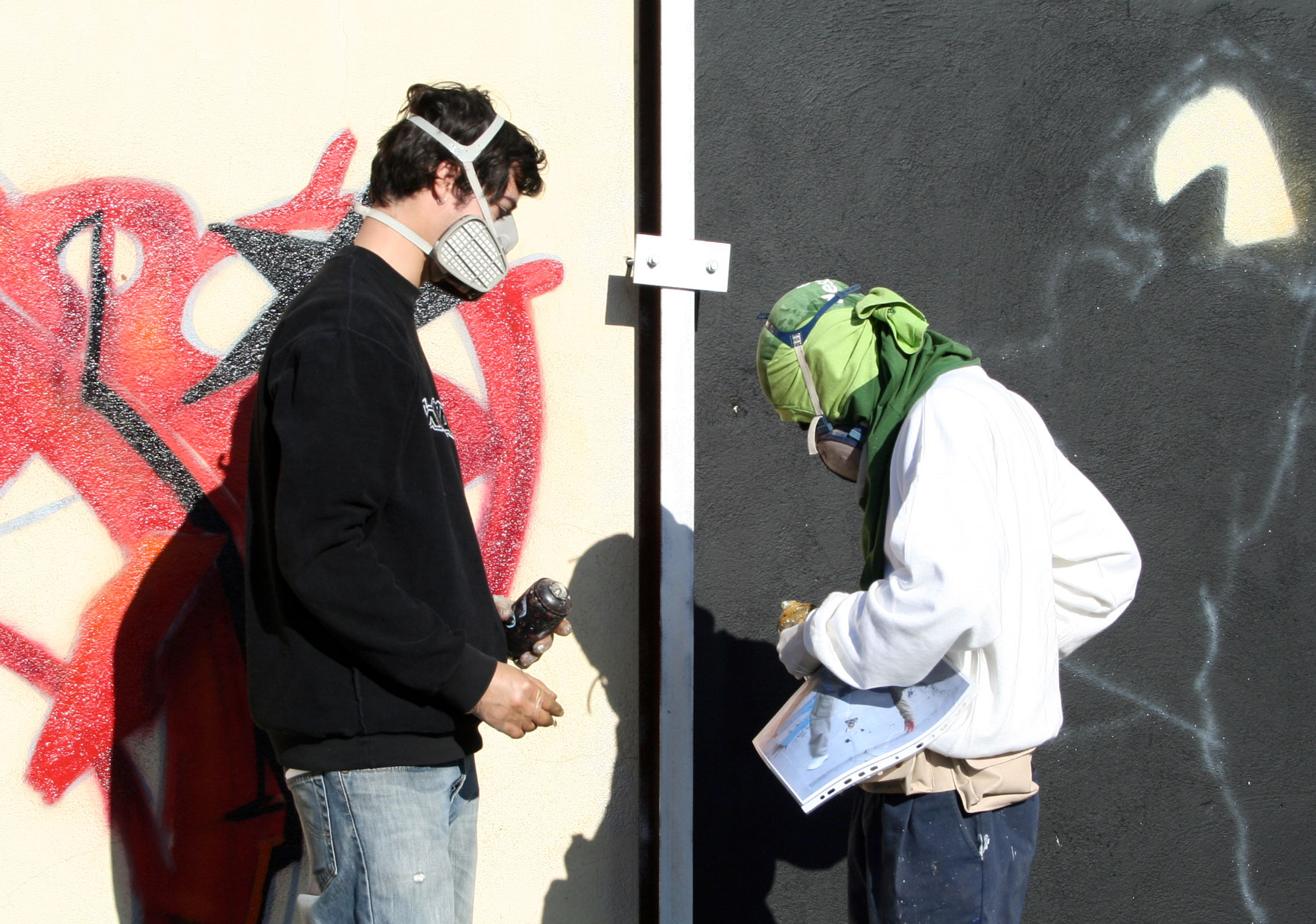
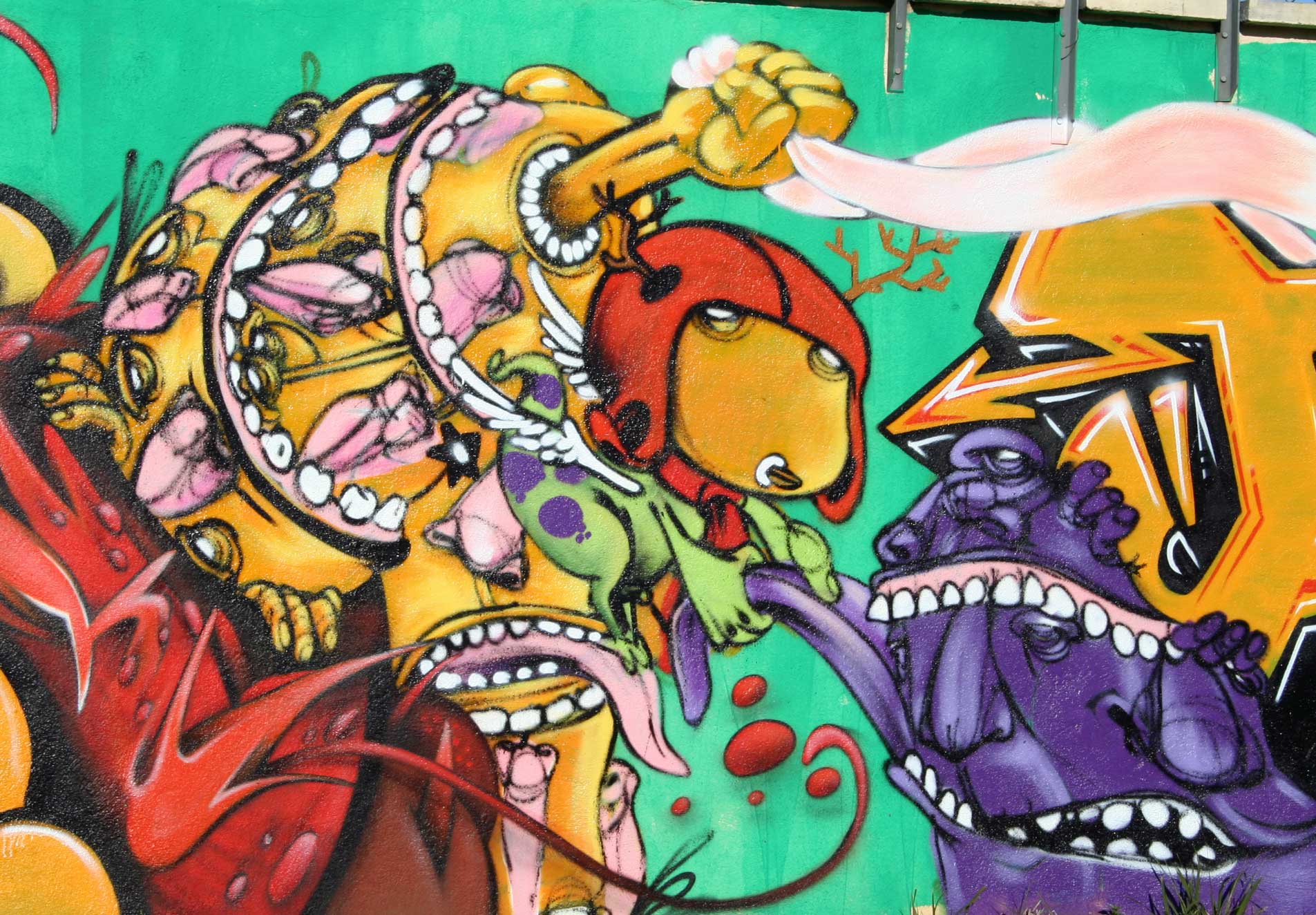


 What They’re About: Hopping from hotel to hostel in search of graffiti filled alleyways and temples shrouded in fog.
 What They’re About:The Portrait Popper assures that the fashions of their generation don’t go undocumented.
 What They’re About: Photographic mavericks that set the shutter to their own tune and have no fright of the night.
  What They’re About: Each day brings a new opportunity to fill their bellies and Instagram feeds with the best of both worlds.
 What They’re About: Pictorially protecting holidays, graduations, and family vacations from the inevitable fade of memory.
 What They’re About: The Landscape Lover can’t get enough of the outdoors and they have the camouflage tripod to prove it.
 What They’re About:35mm, medium format or Polaroid, these retro revivalists love affair with analogue borders on religious.
 What They’re About: While most people are content with a photo’s standard two dimensions, Photo Crafters like to see it in all three.
 What They’re About: This specialized breed of shutter bug goes mad for all things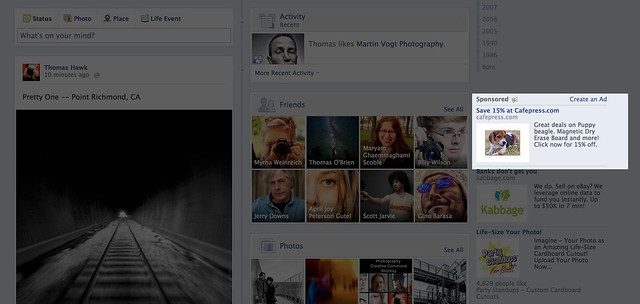


You must be logged in to post a comment.