RSS
 

Posts Tagged ‘Digital’

Meet The Photographers Who Write For Digital Photography School ~ Darlene Hildebrandt

21 Feb

You’ve been reading their articles for months or years, have you ever wondered “Who are the photographers who write for dPS”? Today meet photographer Darlene Hildebrandt from Alberta, Canada.
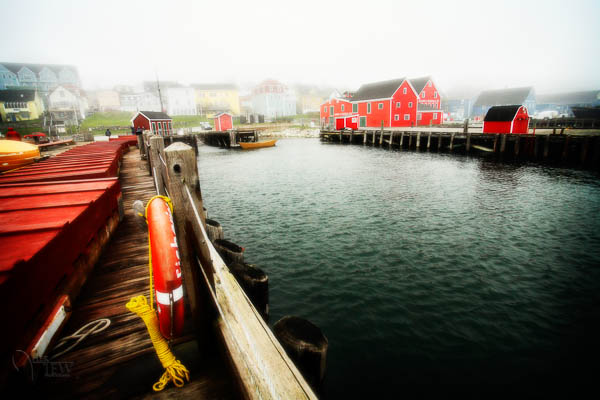
maritimes06-339f-680

1. How long have you been shooting?

I graduated from a 2 year photography program in 1988!  So over 25 years now, mostly as a professional.  I’ve been in the industry in many forms including: doing commercial studio work; had my own portrait/wedding studio for 12 years; was a trade rep for an album company and coached my photographer clients on business; some editorial work; travel photography; and the odd image sale for stock.  I’ve also done tons of art shows and sell my work in local galleries.

2. Do you have a full time job or are you a full time photographer?

I have a part-time job at a camera store, in the accounting department of all things. Mostly because I’ve done my own accounting for years and I needed something to get me out of the house after a 6 month extended RV trip around Canada and the US. Camera discounts are also a bonus, and it has connected me with teaching photography classes which I do here at the store as well as with two other local photography schools.

The photography that I do now is mostly for myself and my articles and classes.  I make most of my living teaching classes, doing private tutoring (in person and virtually using skype), leading workshops and photo tours.
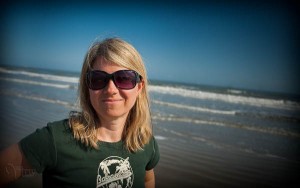
RV-03957-680

3. If you had to limit yourself to one genre of photography, what would it be and why?

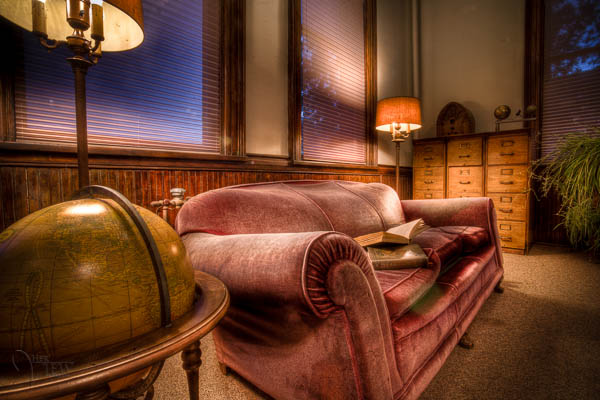
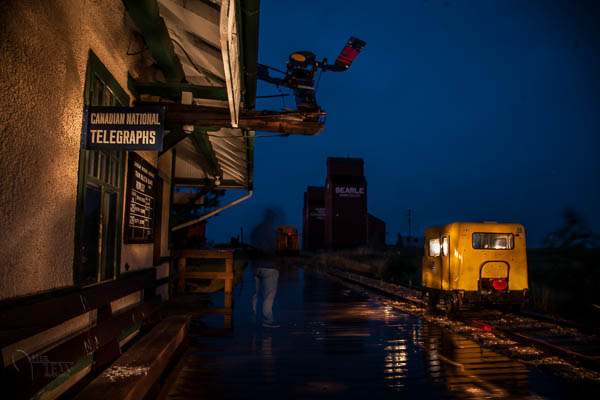
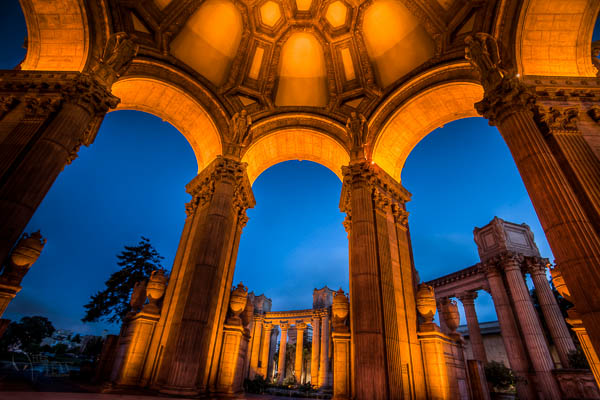
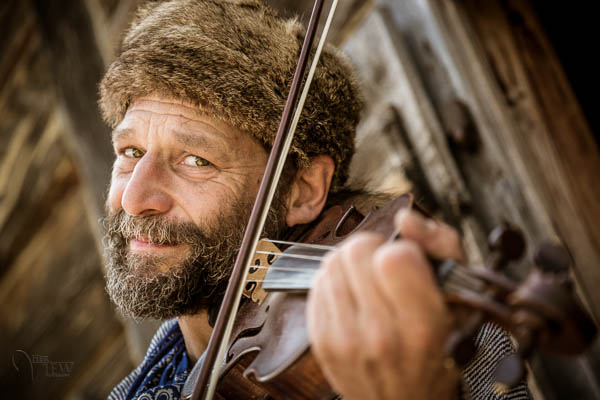
Tough question.  I’d have to say travel photography, which to me encompasses fine art, urban, landscape, HDR, night photography, and people.  I find joy in all those areas so I’d find it hard to pick among those.  If I had to I’d say travel photography with people.  Those are the images I find I want to see first when I download after a long trip.  But I also love night photography and HDR, both of which I teach.  Okay I can’t pick, so can I say I’d pick – “general”!

4. When did you start writing for dPS and why?

May 2012 was the date my first article was published with DPS.  I wanted to teach to a wider audience than I currently had on my own site and share my knowledge with more people.  DPS allows me to do that in a big way.  I love hearing the comments from readers who have enjoyed my articles. Seeing their resulting images after applying my tips, and hearing how excited they are about photography is why I do this.

5. What do you shoot with and what is your favorite lens?

I’m a Canon shooter, I have a 5D MarkIII.  However, not to get into a flame war here, I believe the camera is just a tool and whatever you use is just fine, be it Canon, Nikon, Pentax, Sony or something else.  It’s about learning how to use it and this is the right place to do that!  Not sure I have a favorite lens, but I’d say the extremes.  I love either really wide angle images, or long lens tight shots.  I tend to live in the 17-20mm and 150-200 range more so than I do in the middle.  My wide is a Tamron 17-35mm.  I also really love my 85 f1.8 for portraits.

6. What would be your number one tip to any new photographer?

Invest in education before you invest in gear.  I’ve had several students want to jump from an entry level DSLR into a full frame one, thinking that it will magically make all their photos better.  While there are some advantages of full frame (better at higher ISO, can get better shallow depth of field, etc) in my personal opinion mastering some of the other aspects of photography first will take you further. Things like getting the right exposure; what IS the right exposure; metering; controlling contrast; composition; lighting; choosing the right lens for the job; white balance; lighting; working with people; confidence; shooting in manual and RAW modes, and more.  A full frame SLR is a big investment, but I suggest you invest in yourself first.  An experienced, great photographer can do more with a crappy camera, than an inexperienced photographer can do with great camera – in my opinion.

7. What’s your next big project?

I have two projects in the works right now.  First is a virtual photography class I’m collaborating on with another photographer, still hammering out the details as I write this but by the time this is published it will likely be available.  It will be an 11 week (first one is free so you can try it out with no obligations, no money down), 15+ hour, live class which will incorporate lecture, Q&A, image reviews, and weekly assignments.  The topic is two fold – Lightroom mastery and Image mastery, so a marriage of technical (image processing) and artistic (shooting and processing).

The second is an ebook that I’ve had in my mind for a while.  It’s 75% written, now I just need to find time to finish it and process all the images.  It will feature photo tips, things I learned along the way on my 6 month RV journey to reinventing myself as a photographer, as well as inspirational images.

8. Where can people go to find out more about you and your work?

My main hub is my website Her View Photography,  where you can get my FREE ebook “10 Challenges to Help you Take Better Pictures Without Buying More Gear” and find out more about my upcoming photo tours, workshops  and photography tutoring – both in person and virtual using Skype or Google Hangouts.

You can see some of my images on my portfolio site. My social media links are: Facebook, Google Plus, Twitter and Pinterest. Contact me here or by commenting on this article.
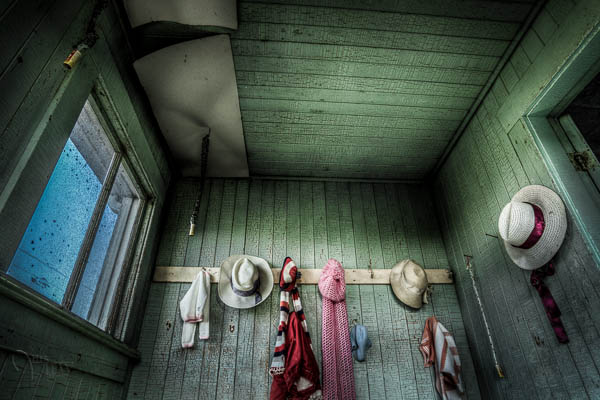
Drumheller-Sept-2012-0124_5_6_7-680

HDR-FT-Sept2011-0044_5_6_7_8-680

Drumheller-test-0113-Edit-680

SanFran-2012-0868_69_70_71-680

Photowalk-07_29_2012-0195-680

TrainWkshp2011-0009-680

Post originally from: Digital Photography Tips.

Check out our more Photography Tips at Photography Tips for Beginners, Portrait Photography Tips and Wedding Photography Tips.

Meet The Photographers Who Write For Digital Photography School ~ Darlene Hildebrandt


Digital Photography School

 
Comments Off on Meet The Photographers Who Write For Digital Photography School ~ Darlene Hildebrandt
Posted in Photography


17 February, 2013 – Rolleiflex 2.8F – An Old-Timer in The Digital Age

17 Feb

Nostalgia ain’t what it used to be, but when it comes to cameras that I used in my youth, I’m a sucker.

Today’s exclusive essay is a look at one of my favourites, the Rollei 2.8F by István Nagy.


Win a New 128GB iPad with Retina Display
Including all Major Luminous Landscape Videos
– Pre-Installed –

Find Out More 


The Luminous Landscape – What’s New

 
Comments Off on 17 February, 2013 – Rolleiflex 2.8F – An Old-Timer in The Digital Age

Posted in News


Meet The Photographers Who Write For Digital Photography School ~ Elliot Hook

14 Feb

You’ve been reading their articles for months or years, have you ever wondered “Who are the photographers who write for dPS”? Today meet UK photographer Elliot Hook.

dps_interview-1-2

1. How long have you been shooting?

I’ve always taken pictures but it wasn’t until 2009 that I bought my first DSLR and started to seriously learn about photography.

2. Do you have a full time job or are you a full time photographer?

I have a full time job in research science meaning that photography is an ‘all-other-time’ consuming hobby currently.  It is unfortunate that work stops me from getting out with my camera as much as I would like, but I am fortunate in that I enjoy my job, and can use photography as a way to unwind at the end of a week.

profile pic

3. If you had to limit yourself to one genre of photography, what would it be and why?

I would have to say ‘outdoor’ photography as it allows me to cover both landscape and wildlife photography in one genre.  I seem to alternate between the two in terms of which one I put all of my effort into, though really they are quite similar in terms of my approach – being up and out early for sunrise, trying to make sure I am in the right place at the right time and having patience to wait for the perfect moment.  Trying to shoot landscapes or wildlife can be very frustrating as you are at nature’s whim, however, that just makes it all the more rewarding when you do capture that great shot!

4. When did you start writing for dPS and why?

I started writing for dPS in October 2012.  It is a blog that has helped to inspire and teach me ever since I bought my first DSLR, so when I saw a post from Darren saying that dPS was looking to recruit new writers, I just had to apply.  I really enjoy sharing images, knowledge and tips with others so I’m very happy that I am able to share what I have learned and help people avoid making the same mistakes that I’ve made.

5. What do you shoot with and what is your favorite lens?

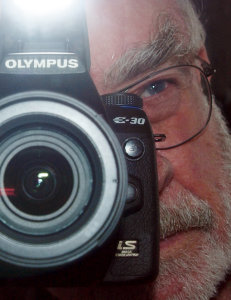
I shoot with an Olympus E-3 and two lenses: Olympus Zuiko 12-60 mm f/2.8-4.0 SWD and the Olympus Zuiko 50-200 mm f/2.8-3.5 SWD.  I’m not sure that I could pick a favourite of the two as they are each perfect for their intended use.  The 12-60 mm gives me a great 24-120 mm effective focal length, perfect for landscaping and as a walk around lens.  The 50-200 mm, when coupled with a teleconverter, gives me up to 560 mm effective focal length, perfect for capturing wildlife.  Both give amazingly quick autofocus performance and both are fully weather sealed; I couldn’t ask for much more.

6. What would be your number one tip to any new photographer?

Don’t obsess about having the latest and greatest kit; it isn’t the camera or lens that defines the photographer or photograph they can produce.  I see far too many folk out and about using top of the range cameras that they have no idea how to operate.  My advice would be to just get out there and learn how to use your camera.  The more comfortable you are with your camera, with its strengths and flaws, the more likely you will be to capture that special moment.

Oh, and get out before sunrise.  The world is a completely different place before everyone else wakes up!

7. What’s your next big project?

There are so many things I want to try and get stuck into in 2013 that I don’t quite know where to begin.  I don’t have any projects defined currently, but I have just booked my first trip to the Isle of Skye in Scotland for early in the year.  It looks to be a landscape photographer’s dream, so I really can’t wait to go.

8. Where can people go to find out more about you and your work?

More of my photography can be found on my website at , or on my 500px or Flickr  pages.  I’m also on twitter.

dps_interview-1-5

dps_interview-1-4

dps_interview-1-3

dps_interview-1-7

dps_interview-1

Post originally from: Digital Photography Tips.

Check out our more Photography Tips at Photography Tips for Beginners, Portrait Photography Tips and Wedding Photography Tips.

Meet The Photographers Who Write For Digital Photography School ~ Elliot Hook


Digital Photography School

 
Comments Off on Meet The Photographers Who Write For Digital Photography School ~ Elliot Hook

Posted in Photography


Digital Photography 1 on 1: Episode 26: Metering Part 2: Exposure Compensation

13 Feb

This week is the second episode in a four-part series about metering. In this episode, Mark will explain exposure compensation. He will also demonstrate this and show us how to use it correctly.

Info : mockmoon.sblo.jp music (MP3) download : soundcloud.com movie (MP4) download : vimeo.com Recording live : Ustream address www.ustream.tv Location : Panoramio adress www.panoramio.com


Digital Photography 1 on 1: Episode 45: Getting to know your DSLR

12 Feb

Holding a DSLR for the first time can be quite overwhelming and you may want to completely understand how your camera does what it does with the buttons and switches that it has. This week Mark will show you what these buttons do.
Video Rating: 4 / 5


Digital Photography 1 on 1: Episode 50: HDSLR Part 3: Audio for Video

11 Feb

This week is the third episode in a series about shooting video on a DSLR camera. HDSLR cameras are capable of producing remarkable images but they are all pretty awful in the audio department. In order to combat these audio issues Mark will show a number of different microphones and audio devices that can be used to ensure that you’re getting the best audio. In the coming weeks, he will go over basic editing techniques as well as compressing for the web- so stay tuned!
Video Rating: 4 / 5


Digital Photography 1 on 1: Episode 37: Post Production Workflow Part 1

11 Feb

This week is the first episode in a two-part series about post production workflow. In this episode, Mark will explain how to get images from the camera to the computer. Then he will show you how to keyword, group and organize the photos in Adobe Photoshop Lightroom.
Video Rating: 4 / 5


Meet The Photographers Who Write For Digital Photography School ~ Barrie Smith

11 Feb

You’ve been reading their articles for months or years, have you ever wondered “Who are the photographers who write for dPS”? We thought it would be a good time to introduce them to you through a series of interviews.

Today meet Barrie Smith, Australia based writer-photographer.

1. How long have you been shooting?

Decades.

Barrie Smith

2. Do you have a full time job or are you a full time photographer?

I am a full time writer-photographer.

 3. What does this require?

Ability to move quickly. Many of my subjects are people stories so I may make contact with the character one day, then talk to and shoot him or her the next.

My pictures are journalistic in style, so arty shots are not in the running.

4. What other jobs have you held in the industry?

Early days: film and video cameraman, then setting up and operating the TV workshop for a major international ad agency. Then directed TV commercials for a long, long time.

As a sideline started to write about photography for Australian and international magazines.

Wrote, photographed and self-published Australia’s only book on vintage cameras — THE CLASSICS: CAMERAS.

When digital cameras arrived (was it 1995?) I began shooting and writing on this topic as well as reviews on cameras and software.

Founding editor of Australian Videography and Australian Digital Camera magazines.

 4. When did you start writing for DPS and why?

Nearly four years ago I joined the team, thanks to a tip from a fellow contributor. Enjoy my stuff on the Web. Beats the bum off conventional publishing. Immediate communication with your audience. Rapid appearance online as against months of lead time with magazines.

 5. What do you shoot with?

Compact bridge cameras. Not a favourite of clumsy, heavy DSLRs!

 6. What would be your number one tip to any new photographer?

It’s the driver not the car!

Post originally from: Digital Photography Tips.

Check out our more Photography Tips at Photography Tips for Beginners, Portrait Photography Tips and Wedding Photography Tips.

Meet The Photographers Who Write For Digital Photography School ~ Barrie Smith


Digital Photography School

 
Comments Off on Meet The Photographers Who Write For Digital Photography School ~ Barrie Smith

Posted in Photography


Digital Photography 1 on 1: Episode 39: Understanding RAW Files

10 Feb

This week Mark Wallace explains the difference between RAW and JPEG. There’s no right or wrong answer to the question “should I shoot RAW or JPEG?” but Mark will help explain the advantages of each format.

Plies – “Me Ho” from his mixtape “You Need People Like Me” (hosted by DJ Scream). Special thanks to Ben Evans and Jose Delosangeles who assisted with the shoot.
Video Rating: 4 / 5


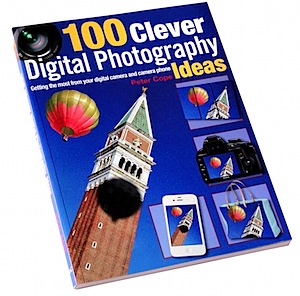
100 Clever Digital Photography Ideas [Book Review]

10 Feb

100 Digital Photography Ideas.jpgOne of my faves is lists of ‘clever’ ideas and hints on how to improve your digital photography, so this book hit home immediately.
Author Cope recalls that ‘there was a time, not so long ago, when photography was in serious decline …. Although cameras were becoming easier to use … people were just not buying them as they once had.” Digital cameras and photography arrived just at the right time.

Cope’s book is an absolute treasure house, beginning with a camera parade that identifies the various camera types (camera phones, compacts, bridge, DSLR etc) and their capabilities. For example: camera phones are not ideal if you need control over your picture making, whereas DSLRs are far from ideal if you want to be a discreet snapper.

Then follows single page helpers on such tasks as shooting for eBay auctions, making identity/passport photos, recording a car accident, making a home inventory, etc.

The tips keep coming: when shooting table top subjects (models etc), locate the camera at table top level, use the widest lens angle and smallest aperture; when shooting jewellery, especially rings, focus on the gem and let the band go out of focus; shoot kids at eye level, focus on their eyes, use the zoom’s mid range, blur the background, avoid flash etc; when shooting sports choose a fast shutter speed, move in close, follow the action, know the event.

A useful chapter on colour matching explains how you can colour match a house’s interior and its contents in the pursuit of the correct colour paint or furnishings. Digital cameras are far from perfect when it comes to precise colour rendering so the book suggests using a card colour checker containing colour swatches to help the paint mixer.

There are ideas on how to make a photo comic strip, shooting in the city, capturing landscapes, making atmospheric shots in low light, being aware of cultural sensitivities, finding your way home in a strange city by shooting a ‘photo trail’ … and here’s one hint that retail outlets will ‘love’: take a shot of the product you crave in-store so you can duck home and buy online with accuracy!

Then you can buy accessories to perform some unusual photo tricks: shoot ultra low angles with mini tripods or photo clamps, acquire a door spyhole lens, magnifying lens, Lensbaby or similar so you can shoot ultra closeups of bugs and the like.

Shoot the seasons: while a snowy landscape is entrancing, the high brightness can fool your camera’s auto exposure function: use the snow/sand setting; shoot rainbows by turning your back on the sun; summer time shots can be improved by using flash in people shots to fill in the heavy shadows; when shooting sunsets you can improve the rendering by slightly underexposing the shots.

Shoot a ‘flickback’ video by combining a sequence of stills that, when played back as movie, confer movement … a bit like a high speed slide show.

Some useful tips on future proofing your shots follow: shoot RAW as often as possible; shoot at the highest resolution; shoot lots!
Share your photo online via flickr or YouTube, etc: select your best shots; remember you don’t have to make your Web photo gallery public; some Web sites let you photo share so others can order prints.

There’s heaps more: add borders to some of your favourite shots; add a keyline or a frame; crop shots and straighten horizons of sloppily composed shots; create a scrapbook.

Overall, the book is chock full of information and, in one respect, is less of a book of tips and hints and more an encouragement on how to maximise your photo pursuits.

Top book!

Author: P Cope.
Publisher: David & Charles.
Length: 144pages.
ISBN 978 1 4463 0216 4.
Price: Get a price on "100 Clever Digital Photography Ideas: Getting the Most from Your Digital Camera and Camera Phone at Amazon

Post originally from: Digital Photography Tips.

Check out our more Photography Tips at Photography Tips for Beginners, Portrait Photography Tips and Wedding Photography Tips.

100 Clever Digital Photography Ideas [Book Review]


Digital Photography School

 
Comments Off on 100 Clever Digital Photography Ideas [Book Review]

Posted in Photography