RSS
 

Posts Tagged ‘Architectural’

Kim Jong Il Leaves an Unusual Architectural Legacy

21 Jun

[ By Steph in Architecture & Offices & Commercial. ]

Ryugyong Hotel North Korea 1

Started in 1987 and still not complete, North Korea’s Ryugyong Hotel is perhaps its most potent architectural symbol, and an odd legacy for an odd and secretive leader. The 105-floor, pyramid-shaped hotel has towered over the city of Pyongyang in a mostly abandoned state since 1992, when construction was halted due to a period of economic crisis after the fall of the Soviet Union.

Ryugyong Hotel North Korea 4

The 1,080-foot-tall (330-meter) tower was slated to be completed this year, but it retains its title as the tallest unoccupied building in the world. It was initially intended to be complete by the 13th World Festival of Youth and Students in June 1989, at which point it would have been the world’s tallest hotel; however, it was eclipsed in 2009 by the spire atop the Rose Tower in Dubai.

Ryugyong Hotel North Korea 5

For the sixteen years in which the tower was abandoned, it was a glaring concrete eyesore. Called “The Worst Building in the History of Mankind” by Esquire Magazine, the 3,000-room hotel has sucked up more than two percent of North Korea’s gross domestic product, while a large number of the nation’s citizens go hungry. Why would Kim Jong Il have believed that this city, which is so poor it can’t afford to light up the streets at night, would need to accommodate so many visitors?

Ryugyong Hotel 1
Ryugyong Hotel North Korea 2

(all images via: Wikimedia Commons)

Construction resumed on the hotel in 2008, and in 2011, the mirrored facade was finally completed thanks to an influx of $ 180 million from an Egyptian telecommunications company. The group that reportedly manages the hotel has refused to give an expected completion date, saying “Market entry is not currently possible.” The fate of the hotel remains unclear.

Share on Facebook


[ By Steph in Architecture & Offices & Commercial. ]

[ WebUrbanist | Archives | Galleries | Privacy | TOS ]


WebUrbanist

 
Comments Off on Kim Jong Il Leaves an Unusual Architectural Legacy

Posted in Creativity


Hidden Depths: Architectural Illusion Unfolds Underground

14 May

[ By WebUrbanist in Design & Guerilla Ads & Marketing. ]

russian underground

Facade or fantasm, this series of images presents an alluring picture of the layers – perhaps even literal  levels – of  history that lies beneath aged and famous buildings.

russian architecture kremlin photoshop

Blending physical fact and historical fantasy, these advertisements (for titled “Discover the Full Story”) extend three archetypal works of Soviet architecture to new subterranean depths. They seem a fitting set to promote the Shchusev State Museum of Architecture in Moscow, Russia.

russian architecture museum advertisement

russian architecture kremlin ad

The Kremlin, with its recognizably colorful onion towers, reveals even more (and larger) turrets below – what is on the surface turns out to be just the uppermost peaks. Neo-Classical and Gothic Revival play their parts as well, turning what looks like an old Greek tempt into the top of an edifice, and a stately structure into a skyscraper.

russian architecture underground drawings

russian building underground sketch

And for those who enjoy process as much as product, it is interesting to see the stages these illustrations went through to get to their final form – sketched figures and pillars, hand-drafted architectural elements, and then finishing touches.

Share on Facebook


[ By WebUrbanist in Design & Guerilla Ads & Marketing. ]

[ WebUrbanist | Archives | Galleries | Privacy | TOS ]


WebUrbanist

 
Comments Off on Hidden Depths: Architectural Illusion Unfolds Underground

Posted in Creativity


7 Top-Secret Architectural Wonders of the World

15 Apr

[ By Steph in 7 Wonders Series & Global. ]

Secret Architecture Main

Bunkers under luxury hotels, wartime factories hidden beneath fake neighborhoods and vast systems of intricately decorated tunnels just beyond humble houses are among the many incredible architectural wonders just out of sight. Often built for top-secret purposes like manufacturing weapons or housing important officials during attacks, these complex and fascinating facilities went undiscovered for decades.

America’s Top-Secret Atomic Cities

Secret Architecture Oak Ridge 1

Secret Architecture Oak Ridge 2

Secret Architecture Oak Ridge 3

“What you see here, what you do here, what you hear here, when you leave here, let it stay here.” So say posters and billboards that were once posted all over Oak Ridge, Tennessee, one of the United States Government’s three secret cities that toiled away on The Manhattan Project: atomic bombs that would soon devastate two cities in Japan. 75,000 employees lived and worked in Oak Ridge with absolutely no idea what they were actually party to. Their town wasn’t even on the map, and visitors were restricted. They didn’t find out the exact nature of their work until the infamous atomic bombings of Hiroshima and Nagasaki, in the final stages of World War II in 1945.

Oak Ridge joined Los Alamos, New Mexico and Richland, Washington as a major research and development site producing fissionable materials for nuclear weapons. Employees brought in from other areas of the country were screened with lie detector tests. There were so many of them in this small town with a former population of just 3,000, the government had to house them in temporary huts. Hundreds of photos of life inside Oak Ridge were captured by Ed Westcott, the only government-authorized photographer during the Manhattan Project. The American Museum of Science and Energy has published them on Tumblr.

Britain’s Secret Underground City of Burlington

Secret Architecture Burlington 1

Secret Architecture Burlington 2

You’d never guess that below a charming historic market in Wiltshire, England is an entire underground city inside a system of limestone caves. And it’s not dank and primitive. Built in the 1950s to house 4,000 central Government employees during a nuclear strike, the mile-long facility with sixty miles of roadways has kitchens, laundry facilities, its own pub and even a communications hub from which the Prime Minister would have addressed the nation in the event of a real attack.

The Burlington Bunker can withstand bombs, radiation and poison gas, and was designed to sustain its inhabitants for a three-month stretch. In fact, it boasted an underground lake (now drained) to provide fresh water, and a secret rail line from London for the English Royal Family.

No one knew about the existence of Burlington until 2004, when it was decommissioned. See photos, videos and maps at BurlingtonBunker.co.uk.

The Fake Washington City Hiding Boeing’s Wartime Plant

Secret Architecture Boeing Plant 2

Secret Architecture Boeing Plant 2-2

Anticipating the possibility of a direct attack on its most important facilities during World War II, Boeing didn’t want to take its chances with vast factory roofs that would be clear from the air. So at the Seattle facility known as Boeing Plant 2, the company created a surprisingly convincing form of camouflage in the form of a fake neighborhood. Blending in fairly well with its surroundings, the plant was covered in streets, trees and plywood shells of houses. A Hollywood set designer was brought in to make sure the housing development looked as realistic as possible. Boeing Plant 2 helped turn Seattle into a boomtown for technology, and the bombers built there helped win the war.

Luckily, the ploy was never tested. After the camouflage was removed, the factory sat empty and abandoned for decades before it was demolished in late 2010.

Secret Society in the Catacombs of Paris

Secret Architecture Paris Catacombs

The Catacombs of Paris are mysterious enough on their own, an underground ossuary holding the remains of about six million people connecting to a larger system of tunnels throughout the city. But in 2004, they became even more intriguing as police discovered that they were in use as a hidden lair complete with an underground cinema. Using pirated electricity, the 3,000-square-foot space even had a security system mostly made up of recorded barks of guard dogs. What the cops first thought was a bomb later turned out to be a couscous maker. Once their hideout was discovered, those responsible for it came back in the night to claim their equipment, wiring and booze. Parisians wondered what secret society could possibly have ben using the space, with news outlets theorizing “extreme right-wing” connections.

The truth is not quite so dramatic, though no less interesting. An anonymous group of Parisian underground explorers calling themselves LMDP built the cinema and other areas nearby over a period of 18 months starting in 1999, and screened Urbex movies for audiences of twenty to thirty people. The main point was escaping the realities above the surface, holding free events for those in the know. Read the whole story at Gizmodo.

Next Page:
7 Secret Architectural Wonders Of The World

Share on Facebook


[ By Steph in 7 Wonders Series & Global. ]

[ WebUrbanist | Archives | Galleries | Privacy | TOS ]


WebUrbanist

 
Comments Off on 7 Top-Secret Architectural Wonders of the World

Posted in Creativity


7 Destroyed Architectural Wonders of the Modern World

08 Apr

[ By Steph in 7 Wonders Series & Global. ]

Destroyed Architecture Main

We hear so much about the vanished wonders of the ancient architectural world, it’s easy to forget about those of our more recent history, from the 19th century to the present. These train stations, palaces, monuments and skyscrapers may not be as grand and dramatic as the Colossus of Rhodes and the Hanging Gardens of Babylon, but each of them represents the loss of an icon. Whether by fire, war, demolition or terrorist attacks, these 7 destroyed architectural wonders may be gone, but they remain important symbols of our cultural heritage.

Old Penn Station, New York City

Destroyed Architecture Penn Station

Just one of many historic New York City buildings that have vanished, the original Pennsylvania Station was a pink granite structure inspired by Roman and Greek architecture, occupying two city blocks from Seventh Avenue to Eighth Avenue and from 31st to 33rd Streets. It covered an area of 8 acres, and featured a cavernous concourse. Inspired by the Roman Baths of Carcalla, the main waiting room was the largest indoor space in New York City at 150 feet in height, and one of the largest public spaces in the world. It served as a spectacular entrance to the city, with dozens of passenger trains arriving and departing each day for cities like Chicago and St. Louis.

Its grandiosity couldn’t save it from the onward march of progress, however. By the late 1950s, intercity rail travel declined dramatically. Plans for a new Penn Station, which is now the busiest passenger transportation facility in the United States, were announced in 1962; demolition on the old building began in 1963, making way for Madison Square Garden. The cost of maintaining the building had become prohibitive. Three eagles statues from the station were salvaged and remain in the city, including two in front of the Penn Plaza and Madison Square Garden complex.

The Crystal Palace, London

Destroyed Architecture Crystal Palace London 2 Destroyed Architecture Crystal Palace London

Built in Hyde Park, London to house the Great Exhibition of 1851, The Crystal Palace was a cast iron and plate glass building measuring 990,000 square feet. It hosted more than 14,000 exhibitors from around the world, displaying examples of the latest technology. The building was rebuilt even larger when the exhibition was over, in a residential area beside Sydenham Hill, to become a ‘winter park and garden under glass.’ It boasted two towers and a number of fountains with over 11,000 jets, and soon became the world’s first theme park with a rollercoaster, cricket matches and other entertainment. The gardens even had a prehistoric swamp with models of dinosaurs, just thirty years after the existence of these creatures was discovered.

But times were hard, and the owners had difficulty making enough money to keep the Palace running. It fell into financial ruin and underwent a series of misfortunes including wind damage and fires. It was declared bankrupt in 1911. In 1936, another fire broke out, this one catastrophic, and the building could not be saved. The grounds have been used for various purposes since then, and in 2011, it was announced that the Crystal Palace Football Club would build a new stadium and athletic track there.

Königsberg Castle, East Prussia

Destroyed Architecture Konigsberg Castle

With its beginnings in the 13th century and a great expansion in the 1700s, Köningsberg Castle was an important landmark in the East Prussan capital of Königsberg (Kaliningrad) for centuries. What began as a fortress was later designated a castle, home to the Grandmasters of the Teutonic Order and then various Prussian rulers. It featured a gothic tower stretching 328 feet into the air, with 284 steps to the top. It contained an extensive library as well as a palace church. By the 20th century, many rooms were turned into a museum full of art and provincial archives.

The region was plunged into disorder and violence during World War II, and the city was bombed in a series of air raids by the Soviet Air Force, mainly in retaliation for the German bombing of Moscow. More than 90% of the city, including the castle, was destroyed by 1945, and the German population was forced out of the city by the occupying Soviets. Under their rule, the city became Kaliningrad. While the ruins of the castle’s stone walls still stood for decades, they were ultimately blown up in 1968. The site of the castle is now the city’s main square.

Pearl Monument, Bahrain

Destroyed Architecture Pearl Monument

Erected in 1982 in honor of Bahrain’s first time hosting the Gulf Cooperation Council, the Pearl Monument featured six ‘sails’, representing the member nations of the council, supporting a pearl, which symbolized those nations’ shared heritage and Bahrain’s history of pearl cultivation. It was built in the center of Pearl Roundabout, located near the city of Manama’s financial district.

In 2011, the monument became central to the Bahraini uprising. Several thousand demonstrators set up tents  and obstructed traffic in the roundabout to protest the first fatality of the uprising, and police soon cracked down, killing at least four more civilians. Tanks were deployed to disperse the demonstrators, and while the Prince of Bahrain urged the government to allow peaceful protest, the camp was bulldozed and set on fire. The government tore down the Pearl Monument, stating that it had been “desecrated” by the protests and had to be “cleansed.”

Next Page:
7 Destroyed Architectural Wonders Of The Modern World

Share on Facebook


[ By Steph in 7 Wonders Series & Global. ]

[ WebUrbanist | Archives | Galleries | Privacy | TOS ]


WebUrbanist

 
Comments Off on 7 Destroyed Architectural Wonders of the Modern World

Posted in Creativity


Augmented 3D Printing: Architectural Model Overlay App

21 Jan

[ By WebUrbanist in Conceptual & Futuristic & Technology. ]

augmented 3d reality

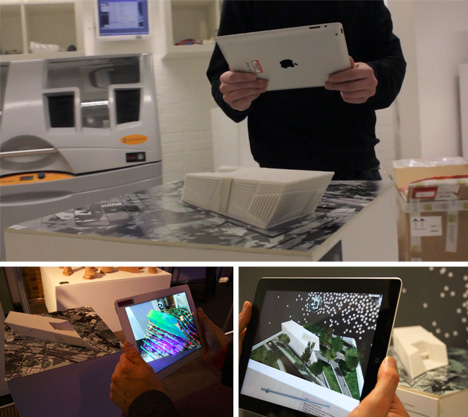
Augmented reality meets architectural modeling in a remarkable best-of-both-worlds hybridization of two essential technologies for architecture designers, builders and (especially) clients. You have to see this video to believe it:

Inition takes a physical (real-world) model, places it on a pattern-mapped background, and presto: point your iPad at the object and all kinds of additional layers of information begin to map themselves onto the object, shifting as you change perspective.

augmented 3d printing architecture

Real-life simulations can thus be applied to the model, including wind and other weather patterns, day versus night views, pedestrians, trees, egress routes and traffic patterns. It helps visualize the kinds of things that are hard to picture purely on the screen, but generally impossible to show in actual space (let alone in context with map underlays and structural reveals).

augmented reality model simulations

From the creators: “The iPad is a fantastic platform for AR, making it easy to deploy and fun to use. Combined with fluid graphics, reliable tracking and the right content, we believe it is a game-changer in this new medium. We create bespoke apps for clients that can be pre-loaded or made available for download on the App Store”

Share on Facebook


[ By WebUrbanist in Conceptual & Futuristic & Technology. ]

[ WebUrbanist | Archives | Galleries | Privacy | TOS ]


WebUrbanist

 
Comments Off on Augmented 3D Printing: Architectural Model Overlay App

Posted in Creativity


Architectural photography digital retouching of home exteriors by Alan Goldstein Photography.wmv

13 Aug

This is a video that shows examples of how I digitally retouched the exterior of homes and landscaping. These photographs were made by Alan Goldstein Photography. Alan Goldstein is an architectural, interior, and advertising photographer located in Maryland just outside of Washington DC. Most of his work is in the Mid-Atlantic region but he also travels to other parts of the country for photography. His clients include ad agencies, real estate developers, builders, architects and interior designers. Alan Goldstein has more than 25 years of experience in this specialized field. He is a member of Advertising Photographers of America and is a Gold Award winner in the 2010 Graphis Photography Annual.

 
Comments Off on Architectural photography digital retouching of home exteriors by Alan Goldstein Photography.wmv

Posted in Retouching in Photoshop


25 October, 2010 – Digital Tools for Architectural Photographers

30 Oct

Architectural photography is one of the technically most demanding disciplines of our craft. In days of yore (more than about 5 – 10 years ago) it was the almost exclusive domain of large format technical cameras and film. Not so much today.

Our regular contributor Richard Sexton has just provided us with his latest essay titled Digital Tools for Architectural Photographers. This is a must-read if the topic is of interest to you.


Observant readers who check the site’s Home Page will notice that its lead photograph was taken with the upcoming Panasonic GH2 and 100-300mm G lens.

I have been testing a pre-production sample, along with the also new 14mm f/2.5 pancake lens. My first-impressions report will be published this coming Wednesday. Watch for it.

I will also be going to New York City later this week for the PhotoPlus Show. Maybe I’ll see you there.


The Luminous Landscape – What’s New

 
Comments Off on 25 October, 2010 – Digital Tools for Architectural Photographers

Posted in News


DOF Architectural Animation Reel 2010

04 May

Architectural Animation Reel 2007-2010 by Depth of Field Co.,Ltd. www.dof.co.th www.deeartschool.com

 
Comments Off on DOF Architectural Animation Reel 2010

Posted in Animation Videos


Real Image : 3D Architectural Animation and Live Footage – La Cité Du Fleuve

10 Apr

3D Architectural Animation for a Real Estate Development Project by Hawkwood Property Investment LTD
Video Rating: 4 / 5

A 3d animation describing how Lyme disease works inside your body. And a lecture on different Lyme disease treatments