RSS
 

Archive for December, 2015

25 Glitzy Holiday Lights Photos to Sparkle up Your Day

18 Dec

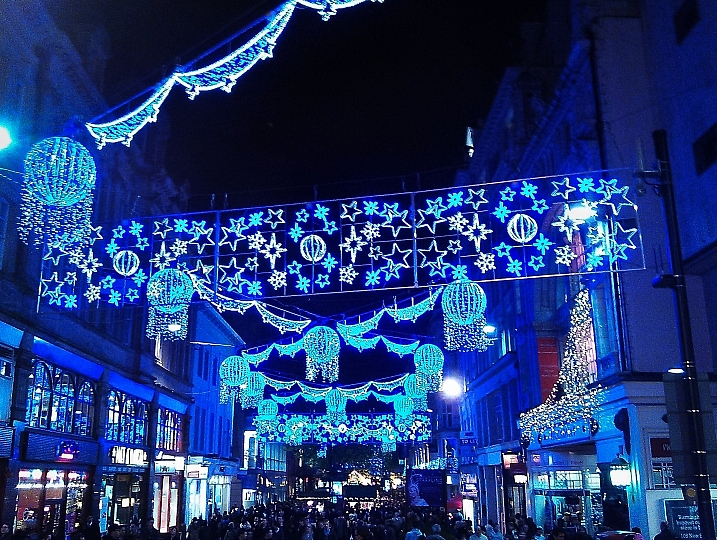
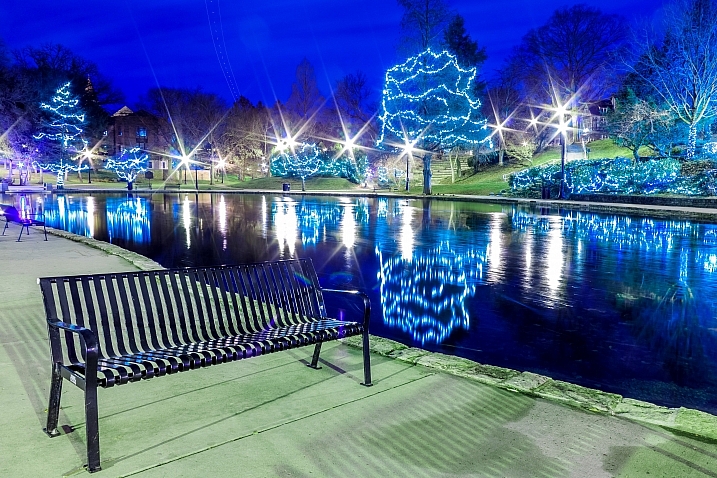
Holiday time is almost upon us, however you celebrate. Regardless of location, it seems we all like to glam up a little and decorate. Let’s look at these glitzy holiday lights photos, including some abstract and zooming techniques:

Ginny

By Ginny

Howard Ignatius

By Howard Ignatius

Dave Wilson

By Dave Wilson

Always Shooting

By Always Shooting

Billy Wilson

By Billy Wilson

Kkmarais

By kkmarais

Robert Couse-Baker

By Robert Couse-Baker

Frank Farm

By Frank Farm

Maf04

By maf04

Matthew Paulson

By Matthew Paulson

André Mellagi

By André Mellagi

Howard Ignatius

By Howard Ignatius

James Morley

By James Morley

Nathan Reading

By Nathan Reading

Marco Ghitti

By Marco Ghitti

Vitorcius

By Vitorcius

Hernán Piñera

By Hernán Piñera

Kevin Dooley

By Kevin Dooley

Gorfor

By gorfor

Aurimas

By Aurimas

MissTessmacher

By MissTessmacher

Howard Ignatius

By Howard Ignatius

Dawn Ashley

By Dawn Ashley

Mike

By Mike

Tulane Public Relations

By Tulane Public Relations

googletag.cmd.push(function() {
tablet_slots.push( googletag.defineSlot( “/1005424/_dPSv4_tab-all-article-bottom_(300×250)”, [300, 250], “pb-ad-78623” ).addService( googletag.pubads() ) ); } );

googletag.cmd.push(function() {
mobile_slots.push( googletag.defineSlot( “/1005424/_dPSv4_mob-all-article-bottom_(300×250)”, [300, 250], “pb-ad-78158” ).addService( googletag.pubads() ) ); } );

The post 25 Glitzy Holiday Lights Photos to Sparkle up Your Day by Darlene Hildebrandt appeared first on Digital Photography School.


Digital Photography School

 
Comments Off on 25 Glitzy Holiday Lights Photos to Sparkle up Your Day

Posted in Photography


Gear of the Year Part 4: Dale’s pick – Samsung NX1

18 Dec

Before anything else, let’s address the elephant in the room: for my Gear of the Year I’ve just selected a camera whose future appears a bit dark. As in ‘Luke, I am your father’ kind of dark. The Samsung NX1 was the camera that some photographers saw as A New Hope for the future, but there’s a disturbance in The Force with signs that the Dark Side might prevail when it comes to Samsung’s camera business. 

Some might find my lack of faith disturbing, but I have a bad feeling about this…

It wasn’t an easy choice. On the one hand, how could I choose a product that has more clouds hanging over it than the DPReview offices on a December day in Seattle? On the other, there’s a bunch of engineers somewhere who built a serious kick-ass camera that continues to impress us with its features, quality, and performance. So, yeah… I’m going with the Samsung NX1.

What I love:

  • Best in class image and video quality
  • Excellent design and handling
  • My favorite EVF of any still camera
  • Outstanding AF performance
  • Continuous improvement through firmware updates

“You must unlearn what you have learned…”

To provide a bit of context, I’m historically an SLR shooter, though I’ve gone through my share of rangefinders, compact cameras, and other random stuff that converts light into images. For the past several years I’ve relied on a system built mostly around one manufacturer’s products that I could trust day-in and day-out to work reliably and predictably when I had to get it right the first time (in my case Canon). 

But in recent years I’ve also been using a lot of mirrorless cameras, particularly Panasonic’s GH series, for video work. I love the idea of what mirrorless cameras can do, and in particular I love the flexibility they provide for shooting video. However, mirrorless cameras never provided the level of performance that I needed for some projects.

Cloud City: the Space Needle rises from a foggy Seattle sunset.

Samsung 50-150mm F2.8 S lens, ISO 100, 1/1250 sec. at F5.6

Enter the Samsung NX1. I’ll freely admit that little more than a year ago Samsung was barely on my radar as a camera manufacturer. I knew Samsung made cameras, but like that guy who shows up to every party but never gets noticed, Samsung’s products lurked in the shadows where I conveniently looked past them. Then Barney asked me to review the NX1 as one of my first assignments at DPReview.

I was blown away. The NX1 was the first mirrorless camera that made me forget that I wasn’t shooting a DSLR. And that was using a camera with pre-production firmware.

Don’t misunderstand – I’m not implying that the pre-production NX1 was perfect. The camera had a nasty habit of crashing and re-booting into German, menu items occasionally went walkabout, and a couple of lenses sometimes decided that they would no longer autofocus. But despite its flaws it was fun to use and hinted at great things to come.

Samsung fixed most of those annoyances with a firmware update, and I spent the next month shooting the NX1 almost every day, sleeping with it under my pillow to absorb its goodness, and pushing the video to its limits.

All was good in the world. Several weeks later I was ready to publish my review, but three days before it was scheduled to go live on our site Samsung released another major firmware update. That changed everything.

Samsung 16-50mm F2-2.8 S lens, ISO 4000, 1/125 sec. at F2.8 

With the updated firmware the NX1 was practically a new camera. It added numerous video features including additional frame rates, gamma curves, and other custom settings. Autofocus improved significantly for both stills and video, and new customization options gave users an additional level of control over the camera. 

My review was toast. A couple months later, after re-testing the entire camera again and writing a new review, we were ready to go to press one more time when… wait for it… Samsung released another firmware update. Fortunately, this update wasn’t as dramatic as the previous one, so we made an editorial decision to go ahead and publish anyway lest we repeat the process in perpetuity, but you get the idea.

I share this backstory because it highlights one of my favorite things about the NX1: Samsung seems (seemed?) intent on not just innovating a great product, but on a program of continued improvement. These weren’t just minor firmware updates, but things that significantly impacted the performance and value of the camera.

“Aren’t you a little short for a stormtrooper?”

But as we all know, a camera is not just about electronics and firmware. It’s also about hardware. It needs to be well designed, solidly built, and most importantly it needs to feel right in your hand.

That last item is a bit nebulous and hard to define, but anyone who’s been shooting for more than a few years knows the feeling of picking up a camera that just feels right. I’m convinced that Samsung did the unthinkable and actually involved photographers in the design of this camera, something I can’t say about every model that comes through the DPReview offices. (And you will never find a more wretched hive of scum and villainy, I assure you.)

Not only does the NX1 feel great in your hand, but it’s solid. Maybe not solid in a ‘I can use my Nikon F3 to pound nails into a board’ type of way (and really, what is anymore?), but it’s certainly tough enough to stand up to typical professional use.

At one point I took the NX1 on a winter shoot where the temperature hovered in the range of 0 to 5 degrees F (-18 to -15 C). Based on previous experience with mirrorless cameras I fully expected to run into trouble at some point. I didn’t. Like the Energizer Bunny the NX1 kept going, and going and going… Everything just worked, including the EVF and touch screen, for several hours in sub-freezing temperatures. I gave in before the camera did.

Some like it Hoth: Even after a couple hours outdoors working at 0? F (-18? C) temperatures, the NX1 continued to operate normally. In this case, the camera outlasted me.

Samsung 50-150mm F2.8 S lens, ISO 160, 1/500 sec. at F2.8

Speaking of the EVF, it’s one of the standout things I love about this camera. It’s clear, bright, and has essentially zero lag. You won’t mistake it for a true optical viewfinder, but it works so well that 1) I don’t care, and 2) after a short period of time I simply forget about it and just get on with shooting. I know other cameras have EVFs with similar specs for resolution and lag, but somehow Samsung has managed to make the EVF experience on the NX1 exceed the sum of its parts.

“She may not look like much, but she’s got it where it counts, kid.”

The other thing that almost makes me forget I’m using a mirrorless camera when shooting the NX1 is it’s performance. I’ve shot cameras with 10 fps shooting speeds before, but even so the NX1’s 15 fps is scary fast. As in ‘you could easily tell if Greedo shot first’ fast. (Did he? Share your opinion in the comments!) And with 28MP of resolution to play with you would have plenty of detail to examine closeups of those blaster shots. Combine that speed with an AF system that, somewhat incredibly, is able to keep pace and it’s a blast to shoot with.

I say almost because high speed shooting isn’t quite perfected yet. The screen briefly freezes on each exposure, making it a tad difficult to shoot continuously while panning with a subject, and the best part of the AF system – ‘Tracking AF’ – can only be invoked from the touch screen, but overall it’s as good as almost every DSLR I’ve used, and better than most.

Samsung’s 28MP sensor doesn’t really provide any additional detail beyond the standard 24MP found on most APS-C cameras, but in terms of quality it’s right up there with the best of them, including the very impressive Nikon D7200. I also love the fact that I can push exposure in post several stops with almost no penalty to image quality, a feature I’ve leveraged to underexpose in order to preserve highlights.

This photo from Channel Islands National Park in California is actually a single frame of 4K video from the NX1. (Samsung 50-150mm F2.8 lens, exposure unrecorded)

I mentioned above that I do a lot of video work, something that has pushed me into using two parallel camera systems in recent years. In principle, the NX1 could replace both systems. Its video is as good as my go-to workhorse, the Panasonic GH4, but in a package that provides the performance of a high-end DSLR.

In fact, in my perfect world where I can use one system for everything, the NX1 comes remarkably close to meeting almost all my needs.

If we can momentarily ignore that whole ‘Will Samsung even be in the camera business in a few months?’ thing, I’m still not completely convinced that I could make a wholesale switch to the NX system as it stands today. Samsung still doesn’t have as many lens options as competing systems – though some of their lenses are outstanding – and the company hasn’t managed to foster a strong third party ecosystem of tools and adapters similar to what we’ve seen for mirrorless systems from Panasonic and Sony. As much as I like the NX1 these are real limitations.

Laugh it up, fuzzball! Samsung 50-150mm F2.8 S lens, ISO 640, 1/500 sec. at F2.8 

“Difficult to see. Always in motion is the future.”

There are no shortage of rumors about the future of Samsung’s camera business, and believe it or not we here at DPReview don’t know any more than you. But I think I speak for the whole team when I say that we would be disappointed if Samsung didn’t continue to pursue this market, especially since the company has been one of the most innovative in the business of late. Notably, the NX1 won DPReview’s 2015 Innovation Award amid some very credible competition.

Some people have suggested to that Samsung tried its luck in the camera market but never completely committed to it. I’m not convinced that’s the case, but my advice to Samsung is to be bold and heed the words a great philosopher who said ‘Do or do not. There is no try,’ and stick with it. However, in the event that the NX1’s future is not long for this galaxy, my hope is that it doesn’t go quietly into the starry night, but instead continues to live on in some form or inspires other manufacturers to make products that push the limits of what’s possible.

Articles: Digital Photography Review (dpreview.com)

 
Comments Off on Gear of the Year Part 4: Dale’s pick – Samsung NX1

Posted in Uncategorized


Take your Composition & Lighting Skills to the Next Level with this 70% Off Deal

18 Dec

It’s time for day 6 of our 12 Deals of Christmas and this one is from our good friends at Photography Concentrate who have two fantastic eBooks for you to choose from (and a great offer when you pick them both up).

Concentrate ebooks

Incredibly Important Composition Skills

Are you ready to unlock your superpowers in composition and gain real skills that you’ll use in every single shot you take?

Save 60% on this ebook and video guide from Photography Concentrate (and get a bonus Printable Field Guide and 7 bonus teaching videos)!

Fantastic Fundamental Light Skills

When you understand why light looks and behaves the way it does, you’ll know how to control and change it to suit your creative vision – and take better photos.

Save 60% today on this comprehensive guide (and get a bonus Printable Field Guide)!

Bundle Them Together

Grab both Incredibly Important Composition Skills and Fantastic Fundamental Light Skills in this amazing combo deal (with all the bonuses mentioned above).

A HUGE 70% OFF for 24 hours only!

googletag.cmd.push(function() {
tablet_slots.push( googletag.defineSlot( “/1005424/_dPSv4_tab-all-article-bottom_(300×250)”, [300, 250], “pb-ad-78623” ).addService( googletag.pubads() ) ); } );

googletag.cmd.push(function() {
mobile_slots.push( googletag.defineSlot( “/1005424/_dPSv4_mob-all-article-bottom_(300×250)”, [300, 250], “pb-ad-78158” ).addService( googletag.pubads() ) ); } );

The post Take your Composition & Lighting Skills to the Next Level with this 70% Off Deal by Darren Rowse appeared first on Digital Photography School.


Digital Photography School

 
Comments Off on Take your Composition & Lighting Skills to the Next Level with this 70% Off Deal

Posted in Photography


Lego Landmarks: Elegant New ‘Architecture Skyline’ Collection

18 Dec

[ By Steph in Design & Products & Packaging. ]

LEGO skyline 1

The phrases ‘adult toys’ and ‘city blocks’ take on a different meaning when applied to architecturally sophisticated LEGO sets like these, enabling you to make your own miniature replicas of the cityscapes including the Empire State Building, Statue of Liberty, Berlin TV Tower, St. Mark’s Basilica and much more. The Architecture Skyline Series explores the most famous architectural achievements of three cities: New York, Venice and Berlin.

LEGO skyline 3

These aren’t your ordinary blank slate LEGO bricks, from which all manner of creations can spring, but rather very specific pieces for very specific structures.

LEGO skyline 2

With the NYC package, you’ll get the Empire State Building, Chrysler Building, Statue of Liberty and Flatiron Building as well as the brand new One World Trade Center. Berlin includes the Reichstag, Victory Column, Deutsche Bahn Tower, Berlin TV Tower and Brandenburg Gate. The Venice model will give you St. Mark’s Basilica and Campanile, Rialto Bridge, St. Theodore and the Winged Lion of St. Mark, and the Bridge of Sighs.

LEGO skyline 4

LEGO skyline 5

LEGO has been teasing the release of these sets on Facebook for weeks, and has now revealed that they’ll be available on an unnamed date in January 2016. Follow the company’s Facebook page if you want to be among the first to find out so you can snatch up your own box.

LEGO louvre

LEGO architecture studio

These upcoming sets arrive on the heels of a stunning model of the Louvre in Paris, as well as LEGO’s Architecture Studio, which offers 1210 white and transparent bricks to design and build the architecture of your imagination. Check out the LEGO Architecture series for other classic structures, like Rome’s Trevi Fountain and the Lincoln Memorial.

Share on Facebook


[ By Steph in Design & Products & Packaging. ]

[ WebUrbanist | Archives | Galleries | Privacy | TOS ]


WebUrbanist

 
Comments Off on Lego Landmarks: Elegant New ‘Architecture Skyline’ Collection

Posted in Creativity


Vom Außergewöhnlichen im Gewöhnlichen

18 Dec

© Oliver Raschka

Ein Beitrag von: Dr. Oliver Raschka

Ich bin davon überzeugt, dass man als Fotograf die „besten“ Bilder in seiner gewohnten und vertrauten Lebensumgebung macht, ohne dass man gleich in ein kreatives Tief fällt. So ermöglicht die genaue Beobachtung des täglichen und unmittelbaren Umfelds, die zu Grunde liegenden Strukturen und Muster des städtischen Treibens zu erkennen und in subjektive Bilderwelten zu packen.
kwerfeldein – Fotografie Magazin | Fotocommunity

 
Comments Off on Vom Außergewöhnlichen im Gewöhnlichen

Posted in Equipment


Kipon to launch reducer to mount medium format lenses on full frame cameras

18 Dec

Chinese lens manufacturer Kipon has announced that next year it will make available a reducing adapter that’s designed to allow medium format lenses to fit on full frame cameras. The adapter will have a magnification factor of 0.7x which it says will both widen the effective focal length of the lens in use and widen its effective aperture. 

The first adapter will be designed to mount Hasselblad lenses on Sony E-mount cameras, but the company says it is working on other mounts for a wider range of both lenses and host cameras. 

The lenses in the adapter channel the light from the exit element to create a tighter covering circle. This means light that would otherwise fall outside the sensor area is directed to land on it to be recorded.

When a 50mm Hasselblad lens is mounted on a current Hasselblad digital body it produces a similar image area to a 35mm lens on a full-frame camera. That calculation though is a factor of the sensor size of the Hasselblad camera, and the same lens would not deliver that apparent angle of view were it mounted on a full frame camera or in front of the 6x6cm film frames Hasselblad lenses were designed to be used with. 

The 0.7x magnification of the Kipon adapter has the effect of canceling out the crop factor, turning that 50mm Hasselblad lens back into a 35mm-equivalent on a full-frame camera.

The adapter will have to be very good quality to make the most of the resolution of Hasselblad lenses, otherwise the exercise will be a bit pointless. It is expected to retail for $ 415 when it becomes available in February.

For more information visit the Kipon website. 

Articles: Digital Photography Review (dpreview.com)

 
Comments Off on Kipon to launch reducer to mount medium format lenses on full frame cameras

Posted in Uncategorized


DPReview Recommends: Best compact cameras for travel 2015

18 Dec

Whether you’re traveling the world or the next town over, having the right camera at your side makes all the difference. We’ve picked out our best picks for the photographer who wants to keep things simple by carrying a compact camera rather than one with interchangeable lenses. If you fall into that category, we’ve got great news for you – there are more high quality cameras with attached lenses than ever before, brimming with features tailored to your needs. 

Fujifilm X100T

$ 1099 | 16MP APS-C sensor | 35mm equiv F2 lens | Hybrid electronic / optical viewfinder | 3″ LCD

Few cameras in recent history have attracted as much of a cult following as Fujifilm’s X100 series. They’re the photographer’s darling – not just a good-looking camera, but a beautifully effective machine. The X100T is small and light, and won’t burden a weary traveler, and its low-profile lends itself to street shooting. If you don’t mind zooming with your feet, its 35mm F2 equivalent lens and 16MP X-Trans APS-C sensor will serve you well.

In addition to its travel-friendly size, the X100T offers a hybrid viewfinder with optical and digital views. That’s especially handy when the sun is high in the sky and the 1.04M-dot 3″ LCD becomes harder to see. Having been on the market over a year (at time of publication), its 16 megapixels are starting to feel quite low in comparison to some of its peers, but it also means that the price has dropped slightly since its launch. It is worth noting though that its movie mode, which was far from class-leading at launch, is now well behind the competition in terms of quality and 4K support.

With obviously classic design cues, the X100T’s controls and handling are timeless. Though it doesn’t offer the cutting-edge modern features of its newer peers, it won’t go out of style anytime soon. 

Also consider…

Ricoh GR II
Not a revolutionary update to the original by any means, but the Ricoh GR II’s 16MP APS-C sensor and 28mm F2.8 make the camera one of the best bargains on the market for under $ 600.

Panasonic Lumix FZ1000

$ 750 | 20MP 1″-type sensor | 4K video | 25-400mm equiv. focal range | XGA OLED viewfinder

You can zoom with your feet all day long, but some situations and shooting styles call for real zoom. The Panasonic Lumix FZ1000 doesn’t top its class in terms of massive zoom reach, but its 25-400mm equivalent zoom opens up plenty of options, and an F2.8-4.0 aperture is brighter than most of its peers. With a 1″-type 20.1MP CMOS sensor, it borrows some tech from the GH4 including 4K video recording at 30 fps. Its DSLR-style build includes a fully articulated 921k-dot 3″ LCD and a 2.4M-dot OLED viewfinder.

Also consider… 

Nikon Coolpix P900 
On the seventh day, the Nikon Coolpix P900 was created. And there was much zoom. An incredible 24-2000mm equivalent range, in fact. The P900 uses a considerably smaller 16MP sensor than the FZ1000, but its lens is impressive considering what it has to do, the image stabilization is amazing, and the built-in GPS won’t let you forget where you’ve been.

Sony Cyber-shot DSC-RX100 IV

$ 950 | 20MP 1″-type sensor | F1.8-2.8 24-70mm equiv. lens | Pop-up EVF | 4K video

It’s hard not to recommend the Sony RX100 IV to anyone buying a compact. It’s by no means a budget-friendly option, but it’s among the most capable pocket-sized cameras we’ve ever tested. Sony’s excellent 20MP 1″-type sensor is bigger than your garden-variety compact camera sensor with lots of dynamic range, and a 24-70mm equiv. F1.8-2.8 lens is much brighter than most of its competition. The camera’s tiny pop-up EVF is higher resolution than that of it predecessor and comes in very handy in bright outdoor light.

The RX100 IV really shines when you set the mode dial to movie mode. 4K/UHD recording is available, and at lower resolutions (upscaled to 1080p) high frame rates of 240, 480 and 960 fps can be used. Slow motion video is an awful lot of fun.

If you want to take control over your settings, shoot high quality video and make the most of your vacation Raw files, the RX100 IV is a solid choice. Of course, if you can live without 4K and high frame rates, the RX100 III will save you a couple hundred dollars and get you much of the same excellent image quality. Neither will get you a lot of zoom if that’s what you’re after, but their image quality is at the top of their class.

Also consider…

Panasonic Lumix DMC-ZS50 
Before there were fancy Sony point-and-shoots with 1″ sensors, Panasonic had the market cornered on premium zoom compacts for travelers. While its 12MP 1/2.3″ sensor looks a bit pedestrian in comparison, there’s something to be said for a 24-720mm equiv. zoom that just about fits in your pocket. And for under $ 300, it’s pretty much a steal for full manual controls, Raw support and Wi-Fi with NFC.

Panasonic Lumix DMC-LX100

$ 700 | 13MP Four Thirds sensor | 24-75mm equiv. F1.7-2.8 lens | Electronic viewfinder | 4K video

Why stop at a 1″-type sensor? That’s the question Panasonic engineers must have asked themselves, and lo and behold, the Lumix LX100 was born. It uses a cropped 13MP Four Thirds sensor coupled with a very fast 24-75mm equiv. F1.7-2.8 lens and offers great ergonomics and handling for the kind of photographer who wants quick access to exposure settings. It’s not as pocket-friendly as the RX100 IV, but its solid handgrip gives it a steady feel and its responsive user experience is one of the best we’ve encountered in a compact.

In addition to recording 4K video, the LX100 also offers a useful 4K Photo Mode, which lets you extract a high quality 8MB still from your clip. Its time-lapse and stop motion animation modes are also a lot of fun. Its zoom is certainly on the shorter side, and for someone who plans to stay in Auto mode the camera’s controls and customization will verge on overkill. But for the seasoned photographer wanting to give her shoulders a break from the big camera, the LX100 is a joy to carry and shoot with.

Also consider…

Canon PowerShot G5 X 
If you want just a bit more zoom (100mm at the top end) and a more traditional SLR-style body you may want to consider the Canon PowerShot G5 X. It sports a 20MP 1″-type BSI CMOS sensor (likely the same as in the RX100 III) and a 24-100mm equiv. F1.8-2.8 lens, along with a fully articulating LCD, high resolution EVF, and full set of manual controls. It’s not great for action shooting and it lacks 4K video, but the G5 X is still worth a look.

Olympus Tough TG-4

$ 350 | 16MP 1/2.3″ BSI CMOS sensor | 25-100mm equiv. F2.0-4.9 lens | Everything-proof

Nothing spoils a vacation like spilling a Mai Tai on your fancy new camera. The Olympus TG-4 isn’t just sealed against spills, its fully waterproof to 15m/50ft, as well as shockproof from 2.1m/7ft, crushproof to 100kg/220lbf and freezeproof to -10C/14F. Wherever your travels may take you, the TG-4 is up to the challenge.

Outside of its rugged specs, we like the TG-4’s ability to shoot Raw, making it possible to get very nice image quality with a little time invested in post-processing. Its moderate 25-100mm equiv. zoom, which is fast at its wide end, will get you a little closer to the action, and optional accessories like a macro LED ring light and waterproof fisheye lens open up more possibilities. It also provides the peace of mind of knowing your camera will survive just about anything your vacation throws at it.

Also consider…

Olympus Tough TG-860
The Stylus TG-860 is the TG-4’s more casual sibling, lacking buttoned-up features like Raw capture and Aperture priority mode, but provides identical rugged specifications with a flip-up selfie-friendly LCD. If you don’t anticipate doing extensive editing to your snapshots, the TG-860 is good, clean fun for a significantly cheaper price.

Articles: Digital Photography Review (dpreview.com)

 
Comments Off on DPReview Recommends: Best compact cameras for travel 2015

Posted in Uncategorized


Disused 15-Mile Railway to Become Country-Wide Park in Singapore

18 Dec

[ By WebUrbanist in Architecture & Cities & Urbanism. ]

nature converted rail

An ambitious infrastructure conversion project in Singapore will turn 15 miles of a abandoned rail corridor into a continuous mixed-use trail-and-park system stretching from one end of the island city-state to the other.

nature park map

Led by the Urban Redevelopment Authority and designed by Japanese firm Nikken Sekkei, the coast-to-coast master plan features over 100 access points and 20 modular platforms for various uses, strung together with contiguous bicycling and pedestrian paths.

nature park

nature park singapore

Some spaces will be dedicated to nature-oriented activities, including secluded boardwalks and rainforest viewing stations. Other nodes will be community-oriented, with outdoor movie projectors, climbing walls, information stations, food vendors and additional activity centers.

nature park information

The southern terminus will be the Tanjong Pagar Railway Station, and the long route north will bring the trail system past a series of both remote and urban areas, under viaducts and over bridges, offering access to city dwellers but also escapes into nature and compelling views. In some cases, redundant infrastructure (like former train stations) will be incorporated into this rails-to-trails redevelopment plan.

nature park climbing wall

nature park urbanism

The goal is to create “seamless public space” that prioritizes the “preservation and reintegration of existing green areas and a relaxed extension of modern life,” according to the designers. The rail corridor should be “inspiring, accessible, comfortable, memorable, eco-friendly and growing/evolving … acting as a catalyst to development and community bonding.”

Share on Facebook


[ By WebUrbanist in Architecture & Cities & Urbanism. ]

[ WebUrbanist | Archives | Galleries | Privacy | TOS ]


WebUrbanist

 
Comments Off on Disused 15-Mile Railway to Become Country-Wide Park in Singapore

Posted in Creativity


In Fine Detail: Canon EOS 5DS / 5DS R In-Depth Review

18 Dec

Preview based on pre-production Canon EOS 5D S & SR

Canon has added to its EOS 5D range with the launch of two 50MP cameras, the 5DS and the 5DS R. Both cameras are high resolution full frame models, primarily aimed at stills photographers. The only difference between the models is that the ‘S’ has an optical low-pass filter, while the ‘S R’ has a self-cancelling filter (the same relationship as Nikon’s D800 and D800E models shared).

The two cameras will exist alongside the EOD 5D Mark III, acting as dedicated high resolution cameras primarily intended for studio, landscape and wedding shoots, rather than the all-round capability offered by the existing model. The Mark III still trumps the S and S R in terms of maximum ISO and continuous shooting speed.

Canon EOS 5DS / 5DS R key features

  • 50MP CMOS sensor
  • 5 fps continuous shooting
  • ISO 100-6400 (Extends to 12,800)
  • 61-point AF module with input from 150k pixel metering sensor
  • Dual Digic 6 processors
  • 3.0″ 1.04M-dot LCD
  • CF & SD slots (UHS-I compatible)
  • 1080/30p video
  • M-Raw and S-Raw downsampled formats
  • 30MP APS-H crop and 19.6MP APS-C crop modes
  • USB 3.0 interface

Most of the big new features on the high-res 5Ds are about ensuring you’re able to get the best of the cameras’ extra resolution. Our experiences with the Nikon D8X0 series cameras has shown us that simply having a high resolution sensor isn’t enough: to take full advantage of it you need to really obsess about stability.

To this end, Canon has reinforced the tripod socket and surrounding area to allow stable engagement with a tripod. It has also used a more controllable, motorized mirror mechanism, like the one in the EOS 7D II, that allows a deceleration step before the mirror hits its upper position – reducing mirror slap.

The third change is a revised mirror lock-up mode that allows you to specify an automatic delay between the mirror being raised and the shutter opening to start the exposure. It allows the user to choose the shortest possible delay that has allowed mirror vibration to subside: maximizing sharpness while minimizing the loss of responsiveness.

Although the S and the SR can both shoot movies with the same choice of frame rates and compression as the 5D III, they don’t offer clean HDMI output or headphone sockets. The message is pretty clear – if video is a major concern, these aren’t the cameras for you.

 
Canon EOS 5DS
Canon EOS 5DS R
Canon EOS 5D
Mark III
Pixel count 50.2MP 50.2MP 22.1MP
Processor Digic 6 Digic 6 Digic 5+
Maximum ISO ISO 6400
(12,800 ext)
ISO 6400
(12,800 ext)
ISO 25,600
(102,400 ext)
Maximum ISO ISO 6400
(12,800 ext)
ISO 6400
(12,800 ext)
ISO 25,600
(102,400 ext)
Maximum frame rate 5 fps 5 fps 6 fps
Autofocus 61 point, of which 41 are cross type and 5 are double-cross type 61 point, of which 41 are cross type and 5 are double-cross type 61 point, of which 41 are cross type and 5 are double-cross type
Metering sensor 150k pixels (RGB+IR) 150k pixels (RGB+IR) 63-segment (RG/GB)
Optical low-pass (anti-aliasing) filter? Yes Self-cancelling Yes
Uncompressed HDMI output No No Yes
Headphone jack? No No Yes
USB connection USB 3.0 USB 3.0 USB 2.0

A series of features in the EOS 5DS and S R are ones we first saw in the EOS 7D Mark II. This includes the flicker detection function that warns you of lighting flicker and can synchronize the camera’s continuous shooting so that it only fires at the brightest moments to ensure consistent exposure (rather than the constant variation you can otherwise get in such situations).

Two other 7D II features to make an appearance in a 5D camera for the first time are the built-in intervalometer function that can be used to shoot time lapse sequences. And, as a first for Canon, these can then be combined in-camera to create a 1080/24p time-lapse movie.

Canon EOS 5DS / SR overview video

If you're new to digital photography you may wish to read the Digital Photography Glossary before diving into this article (it may help you understand some of the terms used).

Conclusion / Recommendation / Ratings are based on the opinion of the reviewer, you should read the ENTIRE review before coming to your own conclusions.

We recommend to make the most of this review you should be able to see the difference (at least) between X, Y, and Z and ideally A, B, and C.

This article is Copyright 1998 – 2015 and may NOT in part or in whole be reproduced in any electronic or printed medium without prior permission from the author.

Articles: Digital Photography Review (dpreview.com)
 
Comments Off on In Fine Detail: Canon EOS 5DS / 5DS R In-Depth Review

Posted in Uncategorized


17. Dezember 2015

18 Dec

Das Bild des Tages von: Lukas Wawrzinek

© Lukas Wawrzineck

Im Ausblick: das Kameragesicht, Textilfabriken und ein Interview.
kwerfeldein – Fotografie Magazin | Fotocommunity

 
Comments Off on 17. Dezember 2015

Posted in Equipment