RSS
 

Archive for December, 2015

Merry Christmas II you: RX1R II sample gallery updated

19 Dec

The holiday season is upon us, which means it’s the season for all manner of Christmas spectacle, including the hoard of revelers all dressed as Old Saint Nick who recently took over the streets of downtown Seattle. 

The festivities provided an excellent opportunity to get out and shoot, which is exactly what we did with the Sony Cyber-shot RX1R II. Check out our updated sample gallery to see what this pocketable full-frame compact camera can do.

Articles: Digital Photography Review (dpreview.com)

 
Comments Off on Merry Christmas II you: RX1R II sample gallery updated

Posted in Uncategorized


Today Only: 54% OFF Phil Steele’s Event Photography Course

19 Dec

It is day 5 in our 12 Deals of Christmas and today we’ve got a great deal that is perfect for anyone who gets asked to photograph events (birthday parties, concerts, school plays, reunions, weddings etc).

It’s 54% off Phil Steele’s Event Photography Course.

NewImage

We are all Event Photographers

While not all of us see ourselves as ‘event photographers’ most of us are. As Phil says:

“Let’s face it, we are ALL event photographers. Even if you have no desire to shoot professional events for money, if you are the person in your family with a decent camera, then you get called on to shoot the kid’s birthday party, your friend’s concert, the school play, or the family reunion.”

With 25 videos and over 5 hours of training this course teaches you the techniques used by professionals to get great photos—every time—even in the most difficult conditions.

See full details of what Phil covers in his training here.

For the next 24 hours you can pick this practical course for just $ 67 USD – that’s 54% off the normal price of $ 147.

Lastly – as with all our products during this 12 days of deals this one comes with a money back guarantee. If you buy it and are unsatisfied in any way Phil will gladly refund the purchase price with no questions asked.

Become a Great Event Photographer

We are all event photographers – this course will help you to become a great one!

Get full details of Phil Steele’s Event Photography Course.

googletag.cmd.push(function() {
tablet_slots.push( googletag.defineSlot( “/1005424/_dPSv4_tab-all-article-bottom_(300×250)”, [300, 250], “pb-ad-78623” ).addService( googletag.pubads() ) ); } );

googletag.cmd.push(function() {
mobile_slots.push( googletag.defineSlot( “/1005424/_dPSv4_mob-all-article-bottom_(300×250)”, [300, 250], “pb-ad-78158” ).addService( googletag.pubads() ) ); } );

The post Today Only: 54% OFF Phil Steele’s Event Photography Course by Darren Rowse appeared first on Digital Photography School.


Digital Photography School

 
Comments Off on Today Only: 54% OFF Phil Steele’s Event Photography Course

Posted in Photography


7 Quick Tips on How to Use Visual Balance to Make Better Photographs

19 Dec

Balance is one of the characteristics of good composition. It is the way elements of an image are arranged to create a feeling of stability. If you imagine that your image is a set of scales, all elements of your composition should be balanced to make a photograph feel stable.

balance 1 eva polak

There are many ways to create balanced images. The easiest way to achieve it is by using symmetry, as it guarantees left to right, or top to bottom balance. The results look formal, organized, and orderly.

If you would like to create a balanced composition that feels more casual, free, and energetic, then use asymmetry.
To understand this concept, let’s go back to our analogy of a set of scales. If you have several small items on one side, they can be easily balanced by one large object on the other side. Visual balance works in a very similar way, but it can be affected not only by the size of objects, but also by their value, colour, texture, quantity, orientation and isolation.

Different colours, shapes and sizes create different degrees of visual interest. So, to achieve asymmetrical balance you need to arrange elements of all different visual weights, when composing your image, in such a way that each side is still balanced out.

balance 2 eva polak

There are seven basic factors to consider when you compose your images with visual balance in mind. Let’s have a close look at how you can use these different factors affecting visual weight and gain some advantage.

1 – Colour

1 Colou by Eva Polak

Colour has many properties that can affect an object’s visual weight relative to others in the photograph, such as saturation, brightness, darkness, and hue. Warm colours advance into the foreground and tend to weigh more than cool colours, which recede into the background. Red attracts attention better than any other colour, and thus has the highest visual weight as opposed to yellow, which has the least visual weight. Also bright colours attract more attention than subdued colours.

2 – Size

2 Size by Eva Polak

Large elements appear heavier than small ones. Size is an evident visual weight factor because, in the physical world, an object that’s bigger than another will naturally be heavier, and will take up more physical space. Large elements command more attention. We naturally see them first, or spend more time looking at them anyway.

3 – Value


3-Value-by-Eva-Polak.jpg

Value is a powerful tool for balancing images. Dark elements feel heavier than light items. The higher the value-contrast (between object and background), the heavier will be the weight of the object.

4 – Texture

4-Texture-by-Eva-Polak.jpg


Texture adds visual weight to items in photographs. Texture is just more interesting and our eyes are drawn to it. Smooth areas will feel lighter than those with a lot of heavy texture.

5 – Isolation

Objects isolated in a space appear heavier than those surrounded by other elements. Look at the image below with a brown circle on it. Your eyes go directly to the brown circle first because there’s nothing else to see.

5-Isolation-by-Eva-Polak.JPG


6 – Quantity

A few small objects can balance out a single large object. Repetition of objects can be used here as well. In the example below, the three small berries are balancing out the large berry.

6-Quantity-by-Eva-Polak.jpg


7 – Orientation

Vertical objects appear heavier than horizontal objects. A diagonal orientation carries more visual weight than a horizontal or vertical one. Lines can be very powerful in your composition. Pay close attention to them.


7-Orientation-Eva-polak.JPG

Remember, you don’t have to balance colour with colour, or light with dark – you can mix and match your visual weights. For example, a counterweight to a large, bright area might be a small red object. Experiment with different kinds of balance and play around with visual weight. See what works best for your images and the story you want to tell.

As you go out exploring with your camera on your next photo shoot, keep balance in mind and the seven factors of visual weight. Look closely and try to determine which elements are commanding the most visual weight when you compose your photographs, and see how they affect balance in your images.

If you have any comments or questions please post them below. And we’d love to see your visually balanced images.

googletag.cmd.push(function() {
tablet_slots.push( googletag.defineSlot( “/1005424/_dPSv4_tab-all-article-bottom_(300×250)”, [300, 250], “pb-ad-78623” ).addService( googletag.pubads() ) ); } );

googletag.cmd.push(function() {
mobile_slots.push( googletag.defineSlot( “/1005424/_dPSv4_mob-all-article-bottom_(300×250)”, [300, 250], “pb-ad-78158” ).addService( googletag.pubads() ) ); } );

The post 7 Quick Tips on How to Use Visual Balance to Make Better Photographs by Eva Polak appeared first on Digital Photography School.


Digital Photography School

 
Comments Off on 7 Quick Tips on How to Use Visual Balance to Make Better Photographs

Posted in Photography


10.000 amerikanische Filme

19 Dec

© Yiorgos Kordakis

Yiorgos Kordakis begann seine Fotoserie „10.000 American Movies“ 2009, als er zu einer Wanderschaft durch die USA aufbrach, um für ihn neue, unbekannte Gebiete zu erkunden und sich selbst neu zu finden. Wie viele andere war auch Kordakis besessen von Amerika – der Musik, den Autos, dem Versprechen des amerikanischen Traumes. Aber am meisten prägten ihn die amerikanischen Filme.
kwerfeldein – Fotografie Magazin | Fotocommunity

 
Comments Off on 10.000 amerikanische Filme

Posted in Equipment


104 Brand NEW Hacking Photography Lightroom Presets for $10 [Save 94%]

19 Dec

Ever looked at a stunning image and wondered “why don’t mine look like that”?

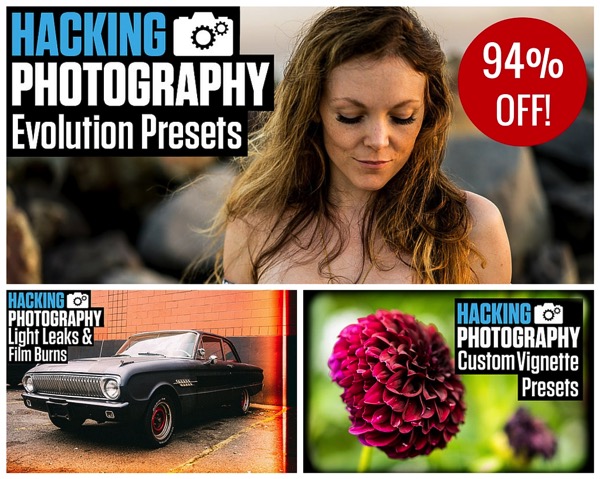
Here’s the secret: great photo editing – achievable with this ALL-NEW collection of 104 Lightroom presets from Hacking Photography!

DPS Xmas Bundle Promo

Today’s deal in our 12 Deals of Christmas is deal #7 and it’s our biggest one yet with a whopping 94% off the normal retail price.

This preset collection from Mike Newton at Hacking Photography has never been released before – in fact Mike created it specifically for today’s deal!

Created specially for dPS, this deal includes:

  • The Evolution collection – 54 presets that turn up the volume of color adjustment and creativity (48 color, 6 black and white)
  • The Light Leaks collection – 25 special effects presets that emulate Holga-style, instant film, film burns and toy camera effects
  • The Custom Vignettes collection – 25 presets that add custom vignette styles around your images, in both black or white

Head over to Mike’s site to see lots of before and after examples of these presets

Screen Shot 2015 12 18 at 9 41 30 AM

And with an INCREDIBLE discount of 94% for today, it works out to be just over 10 cents per preset!
To be clear – these presets have never been available in any previous collections – they’re all brand new for you to grab today – but only at this price for 24 hours only!

FAQ: These presets are for use in Lightroom and work on Lightroom 4, Lightroom 5, the standalone Lightroom 6 version (non Creative Cloud), and the Lightroom Creative Cloud version. They come with step by step instructions on how to install them.

googletag.cmd.push(function() {
tablet_slots.push( googletag.defineSlot( “/1005424/_dPSv4_tab-all-article-bottom_(300×250)”, [300, 250], “pb-ad-78623” ).addService( googletag.pubads() ) ); } );

googletag.cmd.push(function() {
mobile_slots.push( googletag.defineSlot( “/1005424/_dPSv4_mob-all-article-bottom_(300×250)”, [300, 250], “pb-ad-78158” ).addService( googletag.pubads() ) ); } );

The post 104 Brand NEW Hacking Photography Lightroom Presets for $ 10 [Save 94%] by Darren Rowse appeared first on Digital Photography School.


Digital Photography School

 
Comments Off on 104 Brand NEW Hacking Photography Lightroom Presets for $10 [Save 94%]

Posted in Photography


Sony’s new Sky HDR app mimics the effect of a graduated ND filter

19 Dec

Sony has released Sky HDR, a new PlayMemories app for capturing landscape scenes that have wide ranging levels of brightness. Sky HDR aims to replace a graduated ND filter, with various adjustment ‘themes’ along with control over exposure and white balance of sky and landscape areas separately.

Sky HDR works by capturing two different exposures of the same scene and combing them into a single image. The interface, demonstrated in the video above, is tailored to landscape photography, and resulting photos can be saved as JPEG or Raw files. The app is available for $ 10, and is compatible with the following cameras:

  • Sony NEX-5R
  • Sony NEX-6
  • Sony NEX-5T
  • Sony a7
  • Sony a7R
  • Sony a6000
  • Sony Cyber-shot DSC-RX100 III 
  • Sony a7S
  • Sony a5100
  • Sony a7 II
  • Sony Cyber-shot DSC-RX100 IV
  • Sony Cyber-shot DSC-RX10 II
  • Sony a7R II
  • Sony a7S II
  • Sony Cyber-shot DSC-RX1R II.

Sky HDR can be purchased from Sony’s PlayMemories website.

Articles: Digital Photography Review (dpreview.com)

 
Comments Off on Sony’s new Sky HDR app mimics the effect of a graduated ND filter

Posted in Uncategorized


Weekly Photography Challenge – Holiday Lights

19 Dec
Tracy Sigler

By Tracy Sigler

Photography of lights at night can be fun. There are many things you do and techniques to enhance photos of lights:

  • Shoot at an aperture of f/11 or smaller to make star points on the light sources
  • Use long exposures to shoot light trails
  • Use a zoom technique to create a unique effect
  • Or just shoot them straight up at night

Weekly Photography Challenge – Holiday Lights

Your job this week is to photograph some lights. If there are no decorations near where you live try some car trails, or street lights. Just try some shooting in the dark, or a new technique you haven’t tried before.

Mike Schaffner

By Mike Schaffner

Chris

By Chris

Powershotpix

By powershotpix

Share your images below:

Simply upload your shot into the comment field (look for the little camera icon in the Disqus comments section) and they’ll get embedded for us all to see or if you’d prefer upload them to your favourite photo sharing site and leave the link to them. Show me your best images in this week’s challenge. Sometimes it takes a while for an image to appear so be patient and try not to post the same image twice.

DAVID MELCHOR DIAZ

By DAVID MELCHOR DIAZ

Counse

By Counse

Olivier Noirhomme

By Olivier Noirhomme

Jeff Krause

By Jeff Krause

Johan Hansson

By Johan Hansson

googletag.cmd.push(function() {
tablet_slots.push( googletag.defineSlot( “/1005424/_dPSv4_tab-all-article-bottom_(300×250)”, [300, 250], “pb-ad-78623” ).addService( googletag.pubads() ) ); } );

googletag.cmd.push(function() {
mobile_slots.push( googletag.defineSlot( “/1005424/_dPSv4_mob-all-article-bottom_(300×250)”, [300, 250], “pb-ad-78158” ).addService( googletag.pubads() ) ); } );

The post Weekly Photography Challenge – Holiday Lights by Darlene Hildebrandt appeared first on Digital Photography School.


Digital Photography School

 
Comments Off on Weekly Photography Challenge – Holiday Lights

Posted in Photography


18. Dezember 2015

19 Dec

Das Bild des Tages von: detailbilder

Blick in einen Nadelwald in Grün und Rostrot.

Im Ausblick: UNICEF-Foto des Jahres, Star Wars hilft Kodak und ein risikoreiches Foto.
kwerfeldein – Fotografie Magazin | Fotocommunity

 
Comments Off on 18. Dezember 2015

Posted in Equipment


Tetris House: Modular Structures are Made to be Stacked

18 Dec

[ By Steph in Architecture & Houses & Residential. ]

tetris house 6

Modular living units in a range of sizes can be stacked, spun and cantilevered over each other to create unique custom dwellings with views in every direction. The Tetris House makes it possible for homeowners to design their homes to their own specifications, from the size of each room to the orientation of the windows, and enables developers to create apartment complexes that can be easily expanded or reduced in size.

tetris house 2

tetris house 3

tetris house 4

Dutch design studio Universe Architecture offers three basic sizes of steel units that can be enhanced with balconies, shutters, glazing and rooftop terraces. Plug three or more units together in pretty much any configuration you can think of, orient some of them to face the sun or your desired view, and stick on some pop-up decks with glass railings to take it all in.

tetris house 7

tetris house 8

tetris house 1

The company teamed up with interior design firm i29 to create minimalist, compact and efficient interiors that can adapt to all the different possibilities in each building’s individual floorpan, adding interior walls, staircases, fireplaces and other basic elements. The prototype will soon be completed in the Netherlands, with plans to expand availability to other countries in the future.

Share on Facebook


[ By Steph in Architecture & Houses & Residential. ]

[ WebUrbanist | Archives | Galleries | Privacy | TOS ]


WebUrbanist

 
Comments Off on Tetris House: Modular Structures are Made to be Stacked

Posted in Creativity


Sigma 18-300mm F3.5-6.3 DC Macro Lens Review

18 Dec

It seems that in the world of photography today the demand for lighter, and more versatile, gear is at an all time high. The average photographer (if there is such a thing) wants to be able to cover a huge variety of subjects, and carry as few lenses as possible. Shooting quick and light has become the goal of many. In addition, even the hobbyist photographer has become more knowledgeable and more discerning about what cameras and lenses they choose to use. This has lead to an increased demand for all-in-one lenses that are built to higher performance standards than we’ve saw since, well, ever.

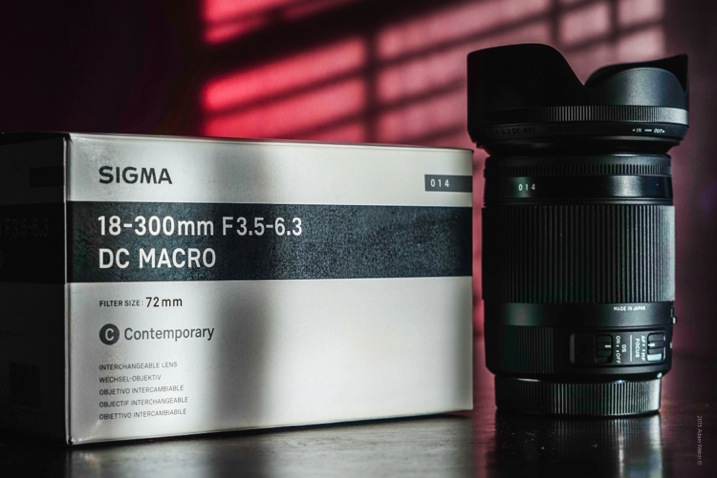
Enter the Sigma 18-300mm F3.5-6.3 DC Macro OS HSM C Lens
Lens 1

Now, take a mental breath after reading that title and then we’ll continue. Don’t let the name for this lens (which I will shorten to Sigma 18-300mm) trouble you, because we’ll talk more about all those letters and their meanings soon. Sigma has attempted to squeeze a lot of features, versatility, and performance into a lens that won’t break the bank. Let’s see if the good folks over at Sigma have succeeded.

The lengthy title for the Sigma 18-300mm is simply a road map so that you know exactly what the lens brings to the table.

  • The DC of course means that it is intended for digital camera bodies.
  • OS designates the lens is equipped with image stabilization technology.
  • HSM relays that the lens sports a hypersonic motor drive autofocusing mechanism.
  • The macro designation means that it has a relatively close minimum focusing distance and is capable of producing macro images (1.0x or 1.1x magnification).
  • Lastly, C stands for indicated this lens is part of Sigma’s Contemporary series. This lens is designed to be mounted only to APS-c(cropped) sensor cameras.

Down to business…
Lens 4

Build Quality and Function

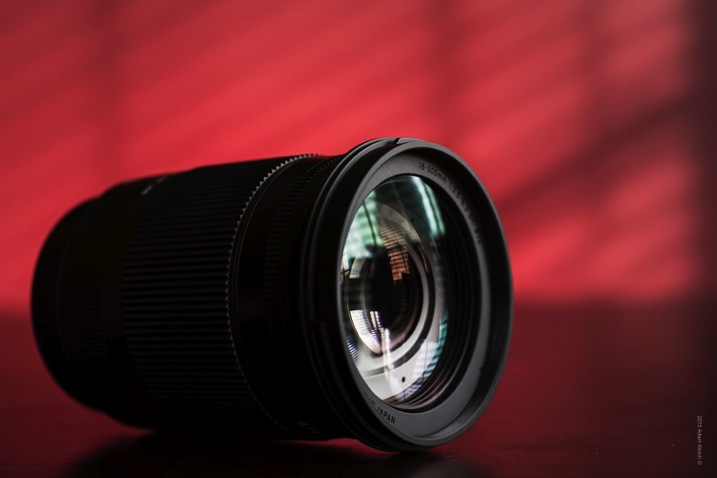
The lens arrived well packaged from Sigma. The optics were all clean and free of smudges and dust. First handling of the lens proved to be immediately impressive.
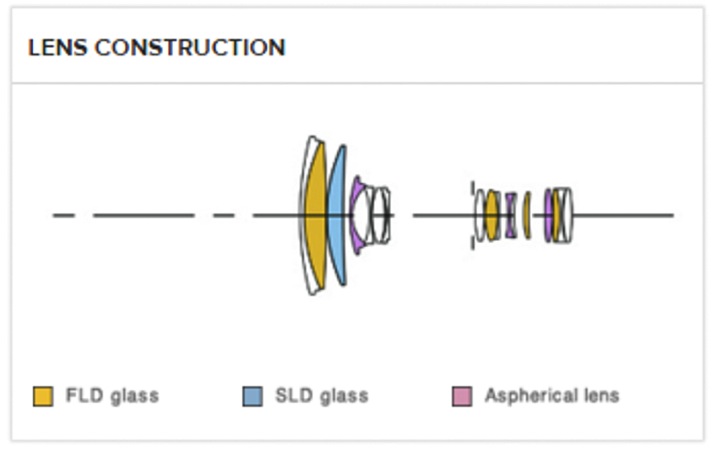
Lens Elements

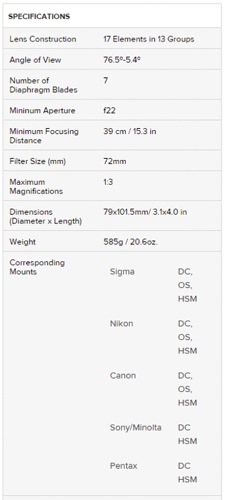
Specs

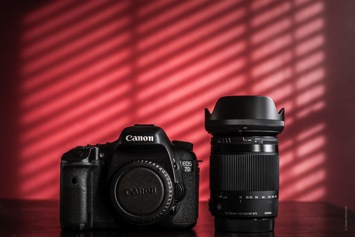
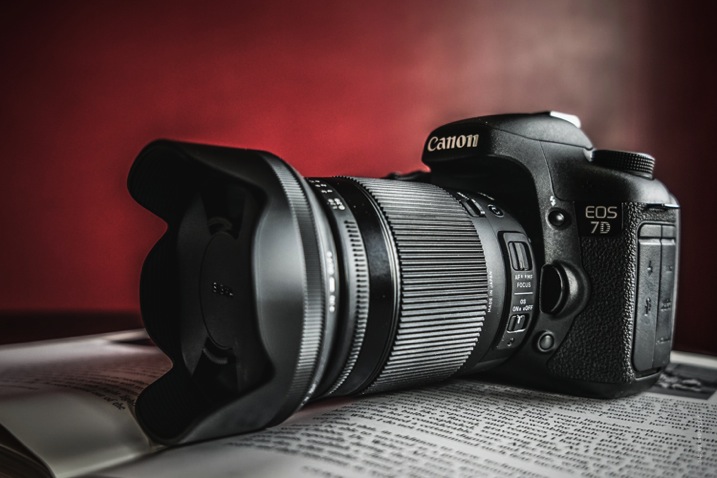
The lens felt very solid but in no way overly heavy. Both the focus and zoom rings are rubberized, and provide a suitable grip for cold or damp fingers. Everything is exceptionally tight and smooth. Some telephoto lenses of this type arrive a little too tight and require some use before the zoom ring operates easily, but the Sigma 18-300mm was just right out of the box. Autofocusing performed very well and was quite fast using my Canon 7D, but the image stabilization was not the best. It became virtually unnoticeable at longer focal lengths, so it remained off for the majority of the test images.

The overall body of the lens is finished with a very understated yet attractive matte black appearance, in case you love form as much as function. Included in the box is quality petal-type lens hood, which fits the lens perfectly and mounts in reverse for storage. Sigma also placed a small rubberized ring at the base of the hood which really helps in the on/off application. It’s a small detail but worth mentioning.

Speaking of details: The effort (or lack thereof) a manufacturer puts towards the little things is of great importance. Here are a few small points that stand out about the Sigma 18-300mm.

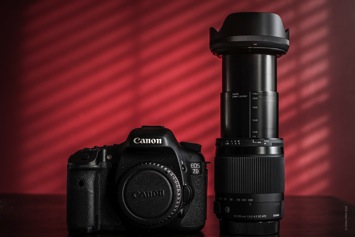
  • Zoom-Lock: The zoom-lock switch is a great feature for any zoom lens in my opinion, by preventing gravity from gradually extending the lens while carrying your camera on a strap.
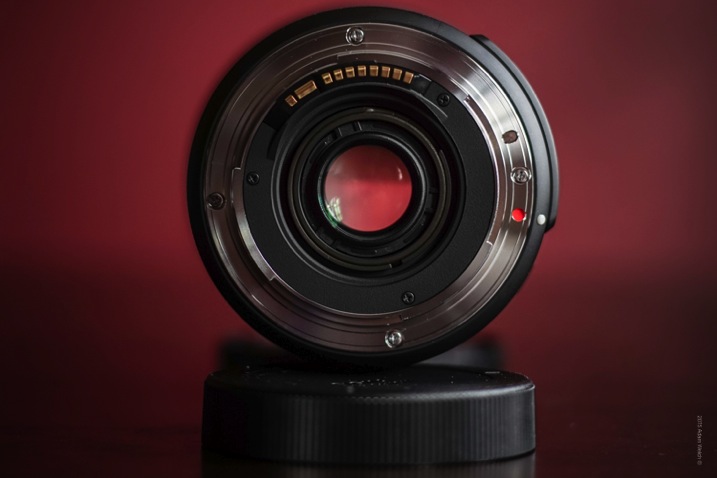
  • Raised mounting indicators: Attaching your lens to your camera can be difficult in low light or if you’re in a hurry. Sigma has chosen to use a small white bead embedded into the lens body instead of merely paint. It makes lining up the lens much easier, and is longer lasting.
  • Lens Hood Indicators: In addition to the rubberized ring, the lens hood also has mounting markings to help mount the hood on the go or in low light.

Lens 3

Lens 9 Lens 10

Lens 8

Lens 12

Image Quality

Sharpness and Distortion

Test images showed that sharpness is acceptable/good across all apertures for a lens in this range, and likewise with contrast. Each of these images were shot at 18mm, at apertures ranging from f/3.5 to f/22. Maximum sharpness seemed to be achieved between f/8 and f/16.

F3 5

Shot at f/3.5

F5 6

Shot at f/5.6

F8

Shot at f/8

F16

Shot at f/16

F22

Shot at f/22

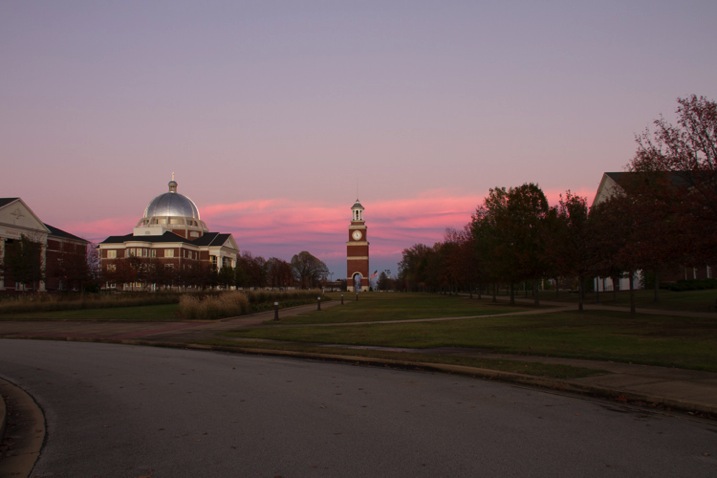
There is some moderate softening at the corners, and minor vignetting at 18mm, but it’s not overly distracting. Very minimal, if any, distortion was encountered even at the shortest focal length.
Wide

This is a scene shot at the shortest focal length of 18mm and at f/6.3.

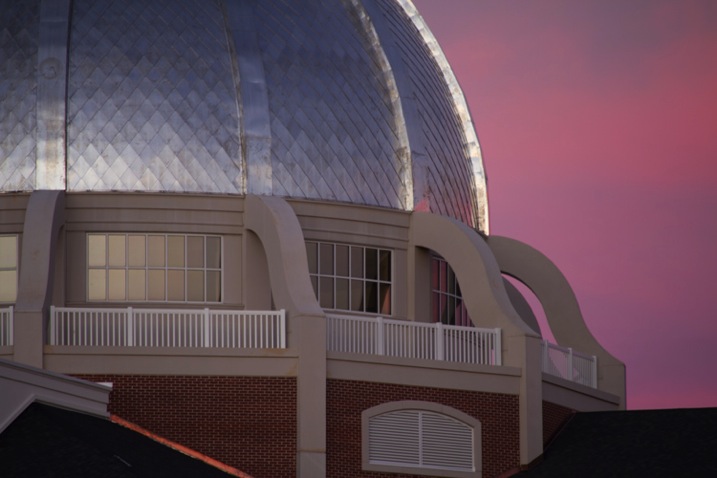
For comparison, here are two images shot from the previous vantage point, after zooming to 300mm (shot at f/6.3).

300mm 1

300mm 2

Color

Color rendition is very good with the Sigma 18-300mm. Colors came through true to life, and quite crisp across all focal lengths. However, it had a significant amount of chromatic aberration which was quite apparent, and worsened towards the edges of the frame. Fortunately, it was easily removed with one click using Lightroom, so all is not lost.

Macro Use

After-all, this lens bears the designation of a macro lens so let’s talk a little about how it truly performs as such. Dedicated macro lenses produce images with a magnification factor of around 1.0 or 1.1x (meaning the subject is life size on the camera sensor). The Sigma 18-300mm has a maximum magnification factor of 1.3x. Though it may not be considered a true macro lens, it performs astonishing well for a lens with such a large focal range.

Macro

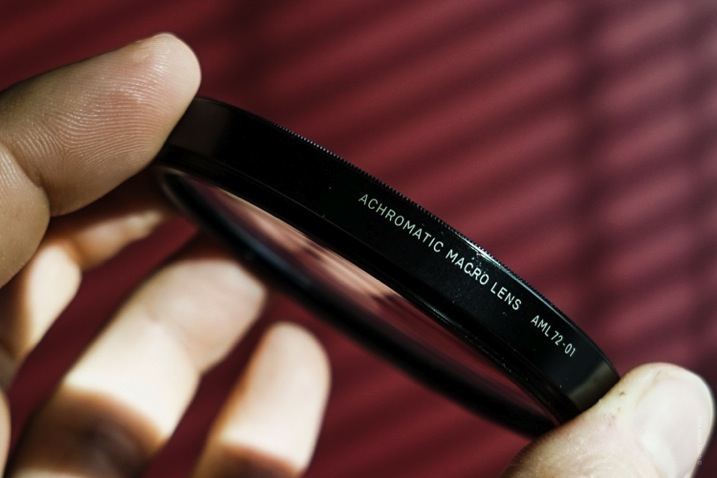
Sigma lists the minimum focusing distance at around 15.3 inches (39cm), but in my tests focus was achieved even closer. You can really get up close and personal using this lens. In addition, there is an optional macro adapter (great build also) available for this lens which will further enhance its macro capabilities.
Macro Adapter

Extras

An interesting accessory available for this, and most Sigma glass, is a USB dock which can be used for tweaking the parameters of your particular lens. This could be of some use to the sports and wildlife crowd. Here is a description of the docking station provided by Sigma.

“The Sigma USB dock works in conjunction with Sigma Optimization Pro software in order to connect a photographer’s lens to their personal computer to update firmware, calibrate the lens and other customizations such as the focus parameter. For the Sports category, changes can be made to: Autofocus speed, focus limiters, manual focus override and optical stabilization functionality. Updating the firmware can be done via the internet. Sigma Photo Pro is available for Mac and PC computers.”

Summary

Overall, the Sigma 18-300mm lens does a fantastic job of combining high telephoto zoom capabilities with macro functionality. While not perfect, it performs well in many ways.

Here’s what you’ll probably like:

  • Great focal range for a multitude of shooting situations.
  • Low optical distortion.
  • Surprisingly acceptable macro performance.
  • Build quality is absolutely fantastic.
  • Attention to detail and usability is superb.
  • Good sharpness for a lens in this price range.
  • Fast autofocus.
  • Silky smooth operation of zoom and focusing rings.
  • Available USB Calibration Dock.

Lens 14

Here’s what you may not like:

  • Moderate but resolvable chromatic aberration.
  • Image stabilization performance is questionable.

The Sigma 18-300mm F3.5-6.3 DC Macro OS HSM C is a more than capable lens option for those where are seeking to combine the local focal range of a telephoto lens, with the close-up capabilities of a macro.

Does this lens offer the best of both worlds? No.

Does this lens bring you a little bit of both, while offering great image quality at an affordable price? Yes.

Sigma has produced a very capable lens option which will delight those who maintain realistic performance expectations from their gear. It is an impressive lens at a budget price. Give it a try!

Have you tried this lens or any other all-in-one? What are your thoughts?

googletag.cmd.push(function() {
tablet_slots.push( googletag.defineSlot( “/1005424/_dPSv4_tab-all-article-bottom_(300×250)”, [300, 250], “pb-ad-78623” ).addService( googletag.pubads() ) ); } );

googletag.cmd.push(function() {
mobile_slots.push( googletag.defineSlot( “/1005424/_dPSv4_mob-all-article-bottom_(300×250)”, [300, 250], “pb-ad-78158” ).addService( googletag.pubads() ) ); } );

The post Sigma 18-300mm F3.5-6.3 DC Macro Lens Review by Adam Welch appeared first on Digital Photography School.


Digital Photography School

 
Comments Off on Sigma 18-300mm F3.5-6.3 DC Macro Lens Review

Posted in Photography