RSS
 

Posts Tagged ‘working’

Natural Versus Artificial Light: Which Do You Prefer Working With?

16 Jul

Many photographers at one point or another are faced with this question; is it better to use natural or artificial light when taking photos? There is definitely not a right or wrong answer, although as a photographer, you’re sure to have your own strong opinions. In this article, we’ll review the key differences between natural and artificial lighting sources, as well as the pros and cons of using them.

Defining Natural and Artificial Light

To begin, let’s clarify the definitions of natural and artificial lighting. To keep things simple, natural lighting can also be thought of as available light, such as that produced by the sun or the moon. Artificial lighting is produced via another source, such as a studio strobe, speedlight, LED light, your camera’s pop-up flash, or even a streetlight or lamp.
Natural light2

Benefits of Using Natural Light

The biggest benefits of using natural lighting is that it is free, abundant, and very easy to find. There’s no need to make huge investments in lighting equipment to find gorgeous natural light to pull off brilliant shots. All you need is a camera and some sun or moonlight, and you can begin shooting immediately! If you ever choose to upgrade your natural lighting approach, the tools of the trade are also very cheap, consisting mainly of reflectors and diffusers to bounce or manipulate the available light. Due to the ease of use and acquisition of natural lighting, it’s generally recommended that beginning photographers start experimenting with natural light before introducing artificial light to help understand how light works.

Cons of Using Natural Light

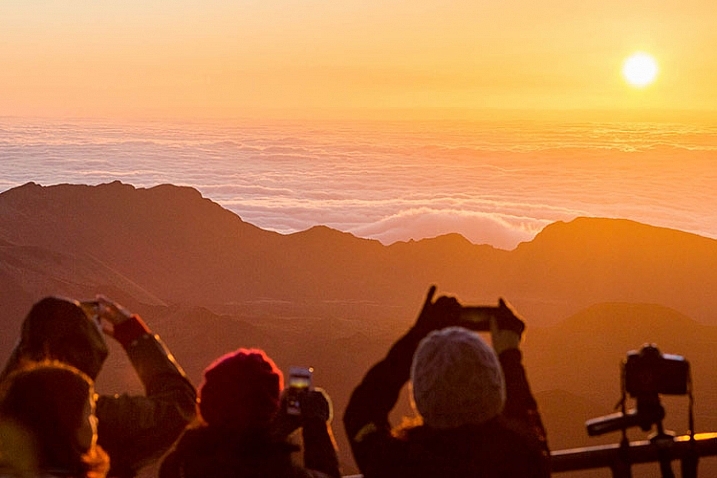
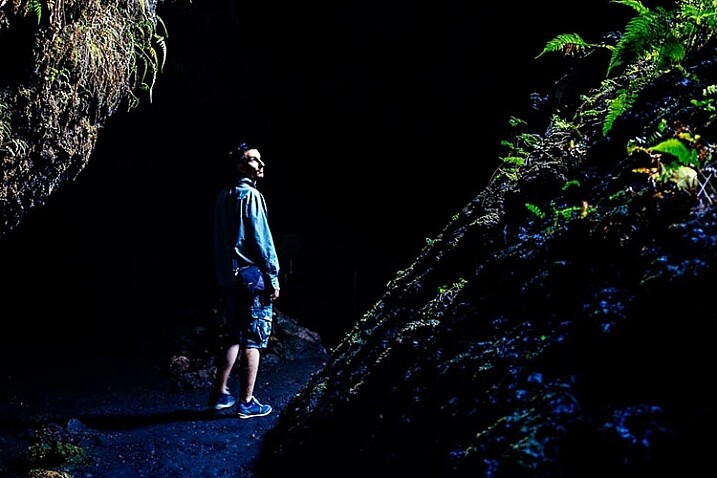
While natural lighting is abundant and easy to incorporate into photography, it can be challenging for the simple fact that sunlight varies greatly. Depending on location, season, weather, and time of the day, natural lighting can produce differing colors and contrast in your images. For example, midday sun tends to produce neutral white colors and extremely high contrast, while golden hours of sunrise and sunset have very warm colors and medium contrast. Thus, the look you’re going for will determine the time and location of your photo shoot, unless you harness additional tools such as reflectors, diffusers, and lens filters.
Natural light1

Benefits of Using Artificial Light

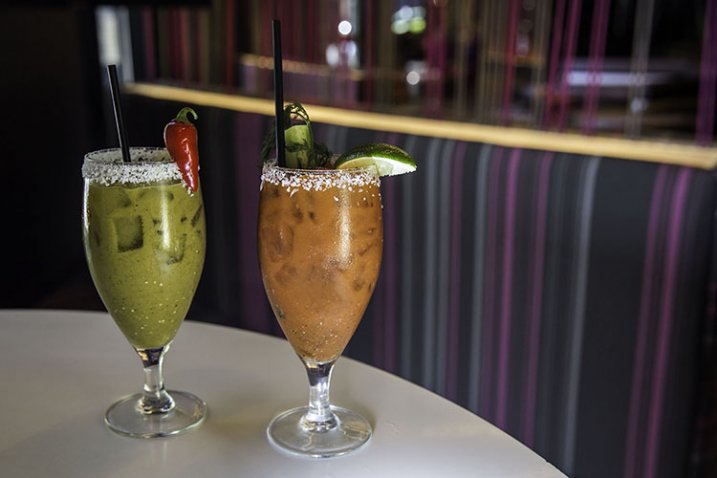
If you’re a fan of being able to manipulate and control every aspect of your photo shoot, artificial light will better suit your needs. Since artificial lighting has little to do with natural sources, it is a ceaseless light source that is available at any time of the day, meaning you don’t necessarily have to plan your photo shoot around the weather, or availability of sunlight. Depending on the artificial light source you choose, sunlight or even moonlight can be replicated, creating images that appear to have been shot with natural light, but at a time of your choosing.

While artificial light may have a reputation for sounding complicated and expensive, there’s a wide range of lighting gadgets available for photographers; ranging from cheap DIY solutions to top-of-the-line professional grade strobes, and lots of options in between. Some lights can have tricky settings, but many are relatively straightforward, especially continuous lighting sources such as LED lights that have simple dimming switches.

Off camera flash portrait photography

Off-camera flash portrait photography

Cons of Using Artificial Light

Even though artificial light sources offer you more control over photo shoots, it comes with the burden of needing more gear, and time to set it all up. Unlike the sun, artificial lighting costs money, even if you opt for DIY solutions such as candles or desk lamps. Professional grade artificial lighting sources will also need to be held in place with light stands, and possibly even modified with umbrellas, beauty dishes, and soft boxes.

Depending on the photo you have in mind, you may need multiple artificial light sources to balance your image out. There are also other accessories needed such as batteries or power cables and plugs, and you’ll need a dedicated studio or space to set your lights up. Long story short, artificial lighting can adds lots of extra moving parts to your photo shoot, that cost additional time and money, not to mention require lots of practice.

When to use Natural or Artificial Lighting?

What type of lighting you use will ultimately come down to your personal preference and experience as a photographer, as well as your budget and the ideal image you’re trying to create. Artificial lighting typically takes some time and practice to begin using properly; whereas natural lighting is much easier to get started with from the get-go. There are of course exceptions to these rules, but generally natural lighting is usually easiest to use for documentary, street, or run-and-gun photography when you don’t have a lot of time to set up a controlled photo shoot. On the flip side, artificial lighting is usually preferred for commercial, product, and fashion photography when there’s both a budget, and ample resources to create the photo.
Off camera flash portrait photography

Which do You Prefer?

As noted earlier, there are very strong opinions for and against using natural and artificial lighting for photography. Which camp do you fall into, and why?

googletag.cmd.push(function() {
tablet_slots.push( googletag.defineSlot( “/1005424/_dPSv4_tab-all-article-bottom_(300×250)”, [300, 250], “pb-ad-78623” ).addService( googletag.pubads() ) ); } );

googletag.cmd.push(function() {
mobile_slots.push( googletag.defineSlot( “/1005424/_dPSv4_mob-all-article-bottom_(300×250)”, [300, 250], “pb-ad-78158” ).addService( googletag.pubads() ) ); } );

The post Natural Versus Artificial Light: Which Do You Prefer Working With? by Suzi Pratt appeared first on Digital Photography School.


Digital Photography School

 
Comments Off on Natural Versus Artificial Light: Which Do You Prefer Working With?

Posted in Photography


DIY a Working 35mm Camera with Konstructor!

06 Jul

The best way to fully immerse yourself in any hobby is to delve in, hands first, from the ground up.

The DIY Konstuktor Camera Kit is your full immersion into photography because you build a fully FUNctional 35mm film camera!

It’s super easy to assemble and a great way to further develop (heh) your love of cameras, or spark a photo-interest in young ones.

We’re throwing in a roll of 35mm film with these kits too, so you’ll be ready to shoot. You’ll soon be handling real prints from a real camera you built yourself.

Dive into your photo hobby with a little DIY love.

Build Your Konstruktor Camera
$ 39 at the Photojojo Shop


© Erin for Photojojo, 2015. |
Permalink |
No comment |
Add to
del.icio.us

Post tags:


Photojojo

 
Comments Off on DIY a Working 35mm Camera with Konstructor!

Posted in Equipment


Samsung working on slimmer RWB camera sensors

29 May

Photos from a Samsung presentation have emerged online, providing some insight about the company’s upcoming image sensors for mobile devices. It appears Samsung is working on chips that use a RWB (red, white, blue) color filter instead of the conventional RGB pattern. This allegedly improves color fidelity and light sensitivity, allowing for smaller pixels. In turn, this could mean smaller camera modules in future smartphones. Read more

Articles: Digital Photography Review (dpreview.com)

 
Comments Off on Samsung working on slimmer RWB camera sensors

Posted in Uncategorized


Tips For Working with Agency Models

25 Jan

Alana Tyler Slutsky is back on FashionPhotographyBlog.com, after sharing the steps to take when approaching a new modeling agency for the first time, to share some tips with our readers that are useful to remember when working with models from agencies in order to maintain a working relationship with both the models and the agencies they are from. Take it away Alana!  

 Top Male Modeling Agencies in New York NYC for Men

Hey FashionPhotographyBlog.com readers!


A LOT of people have asked how to approach agencies to work with their models, so here are some tips for working with agency models.


THINGS TO REMEMBER:


 – DO NOT SHOOT NUDE/IMPLIED NUDE – nudity isn’t really necessary.  It won’t end up in the models book, it doesn’t look good on you, just don’t do it!  If you shoot nude, there is a very good chance that agency will not be sending you another model to test.  Remember – ** A lot of the girls you’ll be sent are young.  Shooting nude or dressing models in sheer clothing is risky business when you’re working with a 16 year old **


– THESE IMAGES ARE FOR YOUR PORTFOLIO – whatever you do DO NOT make the mistake of shooting client work with a model under the impression that this is a test shoot.  The agency will find out and they’ll send you a bill.


– DON’T BE A JERK! – I would hope no one is going to be a jerk anyways, but keep in mind that everyone on a test is donating their time.  Don’t be mean.  Models will review you to their agent. Keep that in mind when you have the urge to yell and make the model cry “to draw out the emotion.”


– KEEP THE IMAGE USABLE – by that I mean don’t go heavy on the makeup and keep the hair simple.  The more you do to the model, the less likely they’ll be able to use it in their book.  As pointed out before – agents love simple, natural, clean images of their models.  Leave the crazy stuff for editorials.  If you become that guy known for extreme makeup and hair, chances are you’re not going to be sent more models to work with.


The best advice I can give is to start with smaller agencies and work your way up, (that is what I did and I’m still in the process of doing).  Don’t know who to contact and who to hold off contacting?  Do some research! Models.com is a great resource that shows the top agencies for men and women.  They also have a directory of agencies which you can view by country/state/city.  I would advise to stay away from the top agencies until you’ve tested a bit, build up your confidence and know what you’re doing.


Good luck!

– Alana


Did you find Alana’s post useful? Please leave your comments below in the comment section. We would like to know what you thought about this post. If you enjoyed this article, do stay tuned as Alana has another post just around the corner on FashionPhotograhyBlog.comIf you want to know more about approaching modeling agencies, check our upcoming post on Reaching Out To Modeling Agencies.


IMAGE SOURCE: 

Feature image & images 1: courtesy of Alana Tyler Slutsky.


Fashion Photography Blog

 
Comments Off on Tips For Working with Agency Models

Posted in Uncategorized


A Beginner’s Guide to Working With Flash Off-Camera

23 Jan

FF HeroBW

I spent the first three years of my photography career avoiding the use of speedlights off-camera because I couldn’t wrap my head around the concepts and science behind them. I tried to cover it up saying things like “I’m a natural light photographer.” or “I really don’t like the aesthetics of flash photography.”

But then, I reluctantly invested in a flash for my first Nikon. This was the 90s, pre-digital, pre-autofocus, and pre-TTL. I had to calculate how much flash to use via a chart on the top of the flash. The formula was complicated, but if you knew how to split an atom, you were pretty much set.

Each shoot I went on that required flash was preceded by a sleepless night filled with anxious dreams about turning up to the shoot naked. And the thought of having to use flash also had a mild to moderate laxative effect on me.

Luckily those days are long gone and shooting flash has never been easier. In this tutorial, I’ll show you the quick and easy steps I take to shoot portraits using off-camera speedlights.

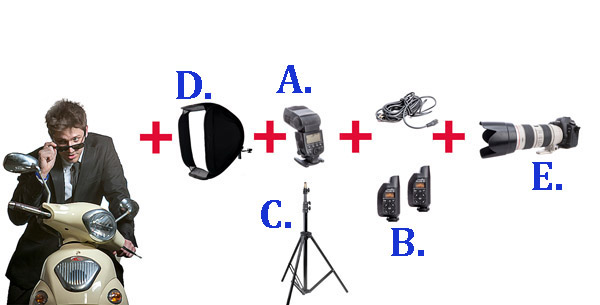
The Gear Essentials

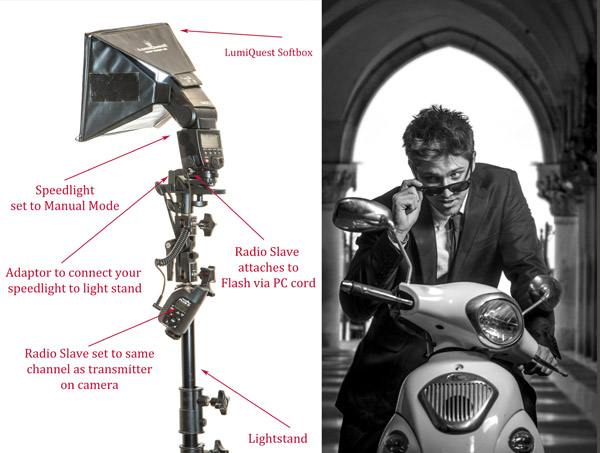
A. Speedlights:

I use speedlights most often when I’m travelling and need light portable flashes, when I’m working on location without access to power, or when I’m working in small, confined locations where studio flashes would be too powerful or cramped.

I work with two Canon 580EX IIs. A great alternative if you are looking to save a few bucks is the Yongnuo YN-560 II. It has a very similar look to the Canon 580EX II and Nikon’s SB speedlight series.

B. Remote Triggers:

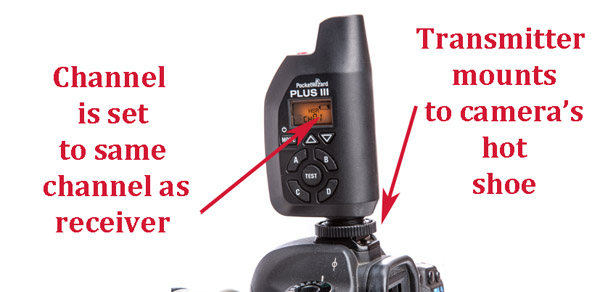
Remote triggers allow you to fire speedlights when they’re not mounted on your camera and are essential when using flash off-camera.

The cheapest and most reliable way to fire your speedlight off-camera is using a sync cord — basically you connect your speedlight to your camera via a long cable. The drawbacks of using a cable are that it reduces the distance you can be away from your flash, and can create a tripping hazard. Having said that, I still carry a couple of spare sync cables in my kit because remote triggers do fail from time to time, and the cords have saved my butt on a few occasions.

The next option is cheaper infrared triggers. They do the job of setting your flash off remotely, but they’re sensitive to bright sunlight and external factors such as alert lights on emergency vehicles and forklifts, etc., so they can go off without warning. I started out with a $ 30 set of triggers and used them for a couple of years before trading up to PocketWizards, which I’ve been using for the last eight years. A good entry level flash trigger is the YONGNUO RF-602 (approximatel $ 30).

Fill Flash Diagram 1W

C. Light Stands:

There are three options when it comes to mounting speedlights off-camera:

  1. First, you can use a light stand. Light stands vary in price from $ 20 to $ 200+ dollars, depending on the make and construction.
  2. Second, you can use a GorillaPod and mount your speedlight to a door or place it on top of something near your model.
  3. Third, you can mount your speedlight to an extension pole (or monopod) and have someone hold the light above your model. I like to do this because it gives me more options when shooting, and it also means there aren’t any light stands in the way of my shot.

D. Light Shapers:

Using a speedlight as a bare light source creates a very hard style of lighting similar to harsh sunlight. This looks great in certain situations, but I prefer to soften and control the light source by using a small or medium soft box over the flash unit. This creates a much softer, more flattering and realistic-looking light source.

A good one to start with is the LumiQuest Mini Softbox. It attaches to your speedlight with Velcro and folds flat for easy storage.

E. Camera with Hot Shoe Mount:

You will need a Camera that works in manual mode with a hot shoe mount.  The hot shoe mount is just a sexier way of saying that little square bit of metal on top of the camera that an external flash or wireless trigger slides into.

The Way

I used to believe that great portraits needed artificial lighting regardless of the environment. I often added two or three lights to my portrait shoots because I thought anything less was lazy or unprofessional. I actually felt guilty when I shot with natural light because I thought it was cheating.

Fortunately, I’ve gotten over that false notion and now understand that finding great light and being able to use it are learned skills, so is knowing when to use fill-flash in a portrait.

Nowadays, whenever I set up portrait shoots, I always look for opportunities to use great natural lighting first. It’s the most beautiful and flattering light for portraits, so if it ain’t broke, no need to fix it.

Having said that, there are many occasions when natural lighting is only just okay or even complete caca — and sometimes a portrait needs more mood or drama than the available light can provide.

The following is an example of how I used flash off-camera to light a heavily backlit image. My objective was to create an image that looked naturally lit. This technique can be used for any portrait that requires fill-flash using off-camera flash.

Daylight 001 Daylight 800ISO 001

Flash on camera 002

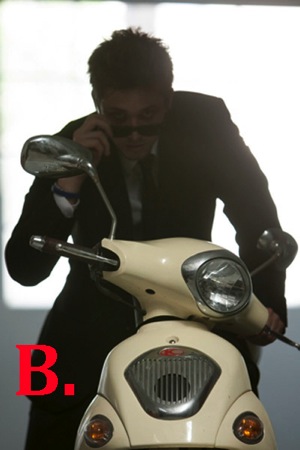
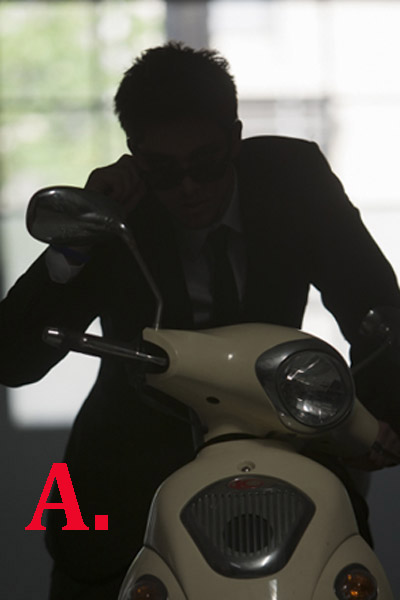
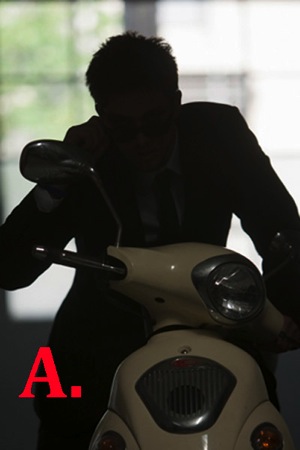
A. Here you can see that my model was heavily backlit, which makes a great silhouette, but not such a great portrait.

B. I attempted to correct the lighting by increasing my ISO, which overexposed the background and brings more detail to the motorbike, but leaves the model’s skin tone flat, dull and underexposed. It also added extra noise in the blacks. At this stage, I could also have used a reflector to bounce light back onto the model to help create a better skin tone.

C. A quick fix to this problem would be to shoot flash on-camera using TTL, which uses the camera’s metering system to calculate the correct amount of light needed to create the portrait.

As you can see in my example, the Canon 580EX II did an okay job of lighting my model, given I was about five meters (16′) away using a 200mm lens.

The thing I don’t like about using flash on-camera for portraits is that it tends to make them look unnatural and have flat, lit look. By using my flash off-camera, I can control the direction and amount of light going onto my model to achieve a more natural look.

FF Diagram

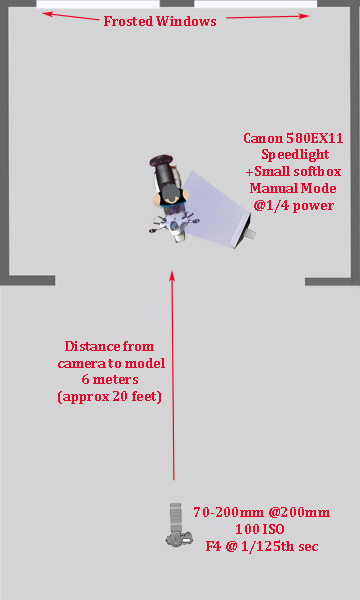
Here’s a bird’s eye view of my setup

My speedlight was positioned approximately one meter (three feet) from the model. I set it at a 45 degree angle because I wanted to make my model look like he was lit from the side.

I was working with a 70-200mm zoom lens set at a focal length of 200mm because I wanted to blur all the details in the background and work within a narrow focal range.

My camera was approximately six meters (twenty feet) from my model.

My ISO was set at 100 at f/4. I was working at f/4 rather than wide open at f/2.8 because I find it very difficult to make the eyes look sharp at f/2.8, at that distance, and in that extreme lighting condition.

Setting up the Gear

580EX+Lumiquest+stand 1

Setting up speedlights and radio slaves

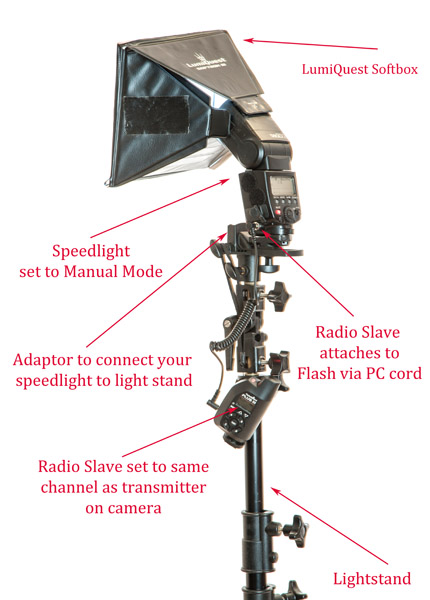
For this motorbike model shoot, I mounted my speedlight to a light stand via an adaptor and used a small LumiQuest Softbox to soften and shape my light.

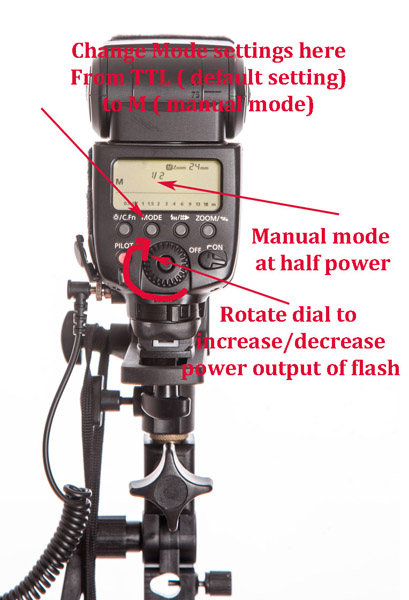
580EX+Power

PocketWizard+camera 1

To manually adjust the flash output of your speedlight, first switch the setting from its default of TTL to M (manual mode). As a general guide, I start with the following settings:

  • Full sun: 1/1 (full)
  • I would use a power setting of 1/1 (full) if you are shooting in full sun and need f/16 or higher.
  • If you are shooting wide open at f/2.8 or f/4, start at around 1/16th-1/32 power.

The above diagram is based on Canon’s 580EX II. For any other camera, check your manual for instructions on how to increase and decrease power. It should be very similar.

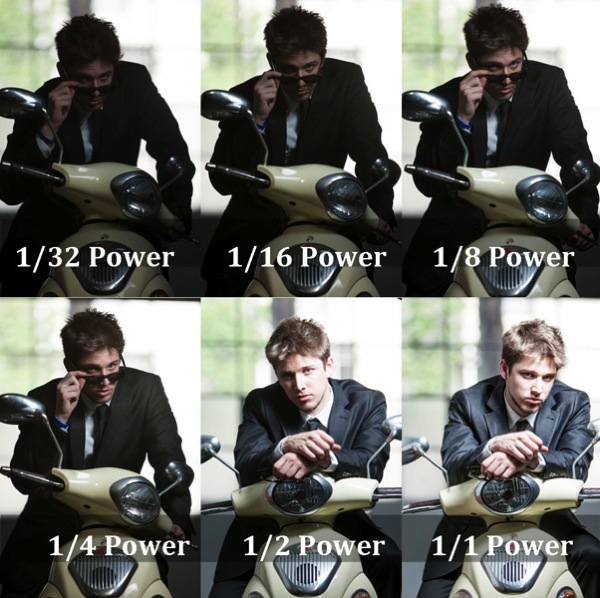
Fill Flash  001

  • Flash at 1/32 power is underexposed, skin tone looks muddy and there’s no detail in the blacks.
  • Flash set at 1/16th power is starting to look better.
  • Flash set at 1/8th power is looking good, but I prefer a slightly brighter skin tone.
  • Flash set at ¼ power is the correct reading for the look I was going for.
  • Flash set at ½ power gives a slightly overexposed skin tone, which is perfect for most portraits as it is a very flattering light (no model will ever tell you they love seeing all the detail in their pores and skin tone).
  • Flash set at full power is overexposed—there’s very little detail in the skin tone and the blacks are too light (gray).

A Step-by-Step Guide to How I Lit This Shot:

Daylight 001

Caption: My ambient reading was 4 at 1/125th second.

  1. Take an ambient reading to determine correct exposure for the background. In this case, my ambient reading was f/4 at 1/125th and ISO 100. This exposure will now remain fixed. I will next add light to create a nice skin tone.
  2. I ask myself if adding flash will improve or detract from the shot. In this case, the answer is a definite yes, it will improve my shot.
  3. I bring in my flash and set it up as per the diagrams above.
  4. The quickest and easiest way to figure out the best settings is to use a light meter (If you don’t have a light meter, you can still work with off-camera flash. It will just take a bit longer to work out your exposure). I believe the light meter is an essential tool in good portrait photography and would never leave home without one. When you use a light meter you know you have most accurate readings, and lighting becomes really easy.
    I suggest you set up your lights per the diagram, start at a power setting of 1/32, and gradually increase your power in small increments (1/32, 1/16, 1/8, ¼, etc.) until you get the desired results.
  5. Set your light meter to non-sync and press the button on the side of the meter. The non-sync button will flash on and off indicating it’s ready. If you don’t have an assistant, I suggest taking a radio slave off-camera and using it to test fire your flash so you can take a reading. Hold the meter in front of your subject’s face and point the sensor dome towards the camera.
  6. Keep increasing or decreasing the amount of light until you have it a half stop, to one stop over the ambient setting.
  7. If you want a clean, beauty-style shot with lots of shadow detail, add +1 stop of fill-flash and shoot at your ambient meter settings.

This is something I strongly urge you to practice with as many patient friends, family, and pets as possible so you can build up your confidence and really get to know your equipment.

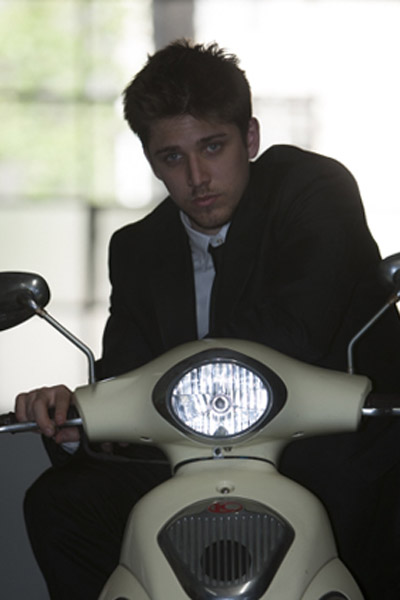
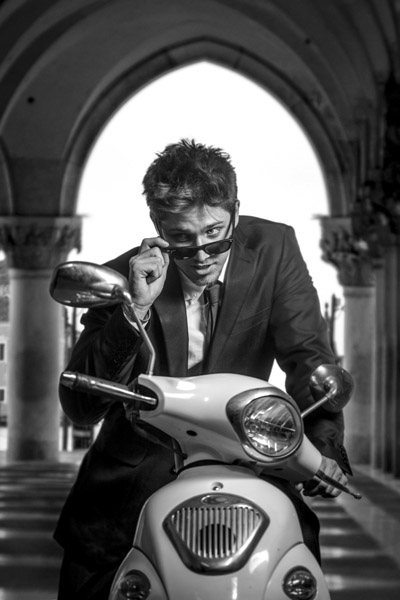
Here’s the final image, the new background is from a shoot I did in St Marks Square, Venice last year. I merged the two images together using Photoshop.

FF FINAL BW

Glauco Junior Solleri, Vespa courtesy Glow Studios

What are your experiences of working with off-camera flash? I’m keen to hear about the flashes, modifiers and flash triggers you rate highly and anything you’d like to add to the discussion.

googletag.cmd.push(function() {
tablet_slots.push( googletag.defineSlot( “/1005424/_dPSv4_tab-all-article-bottom_(300×250)”, [300, 250], “pb-ad-78623” ).addService( googletag.pubads() ) ); } );

googletag.cmd.push(function() {
mobile_slots.push( googletag.defineSlot( “/1005424/_dPSv4_mob-all-article-bottom_(300×250)”, [300, 250], “pb-ad-78158” ).addService( googletag.pubads() ) ); } );

The post A Beginner’s Guide to Working With Flash Off-Camera by Gina Milicia appeared first on Digital Photography School.

Digital Photography School

 
Comments Off on A Beginner’s Guide to Working With Flash Off-Camera

Posted in Photography


Sarah DeAnna On Working With Photographers

18 Jan

Hi FashionPhotograhyBlog.com readers, 

Sarah DeAnna, top fashion model, speaker & author of the book “Supermodel YOU“, is back with us on FPBlog. After sharing her passion helping everyone discover their own supermodel from within  in our previous post with Sarah, “Body Image of a Model“, she shares her experience working as a model for both male and female photographers, as well as offering tips for photographers who need guidance in how to direct models to get the most out of their subjects during a shoot. Let’s get the party started.  Here is Sarah DeAnna with FPBlog…


FashionPhotographyBlog.com Sarah DeAnna photo by Melissa Rodwell for Kurv Magazine


FPBlog: Do you have any words of advice to, either models that want to start in this industry and/or photographers who are starting out? You have worked with some of the biggest photographers… What’s the difference between men and women photographers?


Sarah Deanna: Working with women is great, I do like that. I felt more with women for some reason, like I connect more – I don’t know why. Some of my best shoots have been with female photographers. And I think it’s because we’re women, and we get it. I mean, we understand each other.  I mean I love working with men too. It’s always different, but there’s something really intimate working with a woman. I don’t know how to explain that. They always take beautiful pictures. I don’t know a woman that does not know how to take a beautiful picture. I think she knows, she wants you to look beautiful. You (can) look cool and still look beautiful, but, sometimes I think, (in) fashion, you could take a picture of me and I’m like, “Really? You think this looks good?” But, I get it. It’s edgy and cool. 


Don’t give them too much direction. (Some) direction is good, like the idea and the concept, but also (let the models) own it for themselves. (If) you’re telling them all the time, “turn your foot to the right, turn your foot to the left, keep your hand there, do this (and) do that”,  all of that (can) make you crazy and feel like you’re doing everything wrong. If you’re constantly saying, “move to the left, or don’t do that, or change that pose… it’s so hard (that) you’re going to have a terrible time.


FPBlog: Yeah, because it makes you (the model) look rigid right?


Sarah Deanna: Yeah, and you start to get so self-conscious and it’s in your face, so that’s a big one. Anytime anybody is giving me too much direction like that type of (over) direction; where it’s “body like this”. A little bit I get it, you know. (However) if you explain (it like), “well don’t do that because you’re going to make it (out of the frame)”, and “when you go that way you’re out of the light”. When you explain (it like) that you say, “don’t turn your face to that side because you’re going into the shadow” that makes sense, but, a lot of times they don’t explain it to you like that and you get so (self-conscious and confused as a result).


FPBlog: Does it help if someone just shows you, for example, “I want your hands on your hips like this. Sometimes it looks better like this, or higher up because it breaks through the hip line”. Just showing them, is that type of direction useful?


Sarah Deanna: Yeah, and I like that. I really do, I like both. Sometimes photographers know exactly what they want, the exact pose and everything. If you (the photographer) know exactly (what you want) you (can) tell a girl (model) that. To me I’m not offended, because then I don’t have to think about – sometime (that part) is a lot of work. Sometimes it’s fun and I love it because I get to be part of the creation of it (the image) but if they know exactly what they want then I just get it (understand the concept and then) I just got to nail the pose and…


FPBlog: And work it from there right? Go with the emotion?


Sarah Deanna: Yeah, so it’s just knowing what you want. The worst thing you can do is not know what you want. It can’t just be, “let’s just shoot” unless two people have just great energy and they’re just like, “let’s just go with this” and the model is cool (with it), and you know that’s its going to work out. But if they (the models) need that direction you got to give it to them.


FPBlog: Right. So thank you so much for sitting with me and good luck… I know that you’ll keep FPBlog in the loop.


Sarah Deanna: Thank you!


Did you find the tips from Sarah DeAnna useful? Leave your comments below in the comment section. We would like to know what you thought about this post. If you enjoyed this article, we recommend that you check out our article on FashionPhotograhyBlog.com with Sarah DeAnna on how she began her modelling career, titled “Beginnings of a Model“. If you are interested in grabbing a copy of Sarah’s book, “Supermodel YOU” you can find it here.


IMAGE SOURCE: 

Feature image & image 1: Photo of Sarah DeAnna, courtesy of Melissa Rodwell for Kurv Magazine


Fashion Photography Blog

 
Comments Off on Sarah DeAnna On Working With Photographers

Posted in Uncategorized


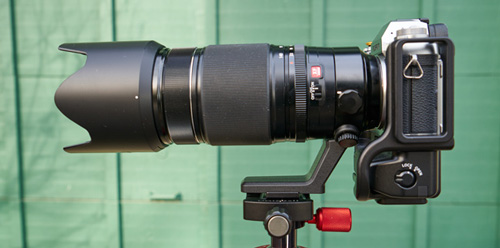
4 January, 2015 – Working With The Fuji 50-140mm Zoom Lens

05 Jan


Right before the Holiday we published an article about the Fuji X-T1 and promised in that article a follow on article to the NEW Fuji 50-140mm 2.8 Zoom Lens.  We have had a lot of fun with this lens and we are really liking the results.  Fuji has once again made a very god lens adding to their already nice line of lenses. Take a look at the article Working With The Fuji 40-150mm Lens.


The Luminous Landscape – What’s New

 
Comments Off on 4 January, 2015 – Working With The Fuji 50-140mm Zoom Lens

Posted in News


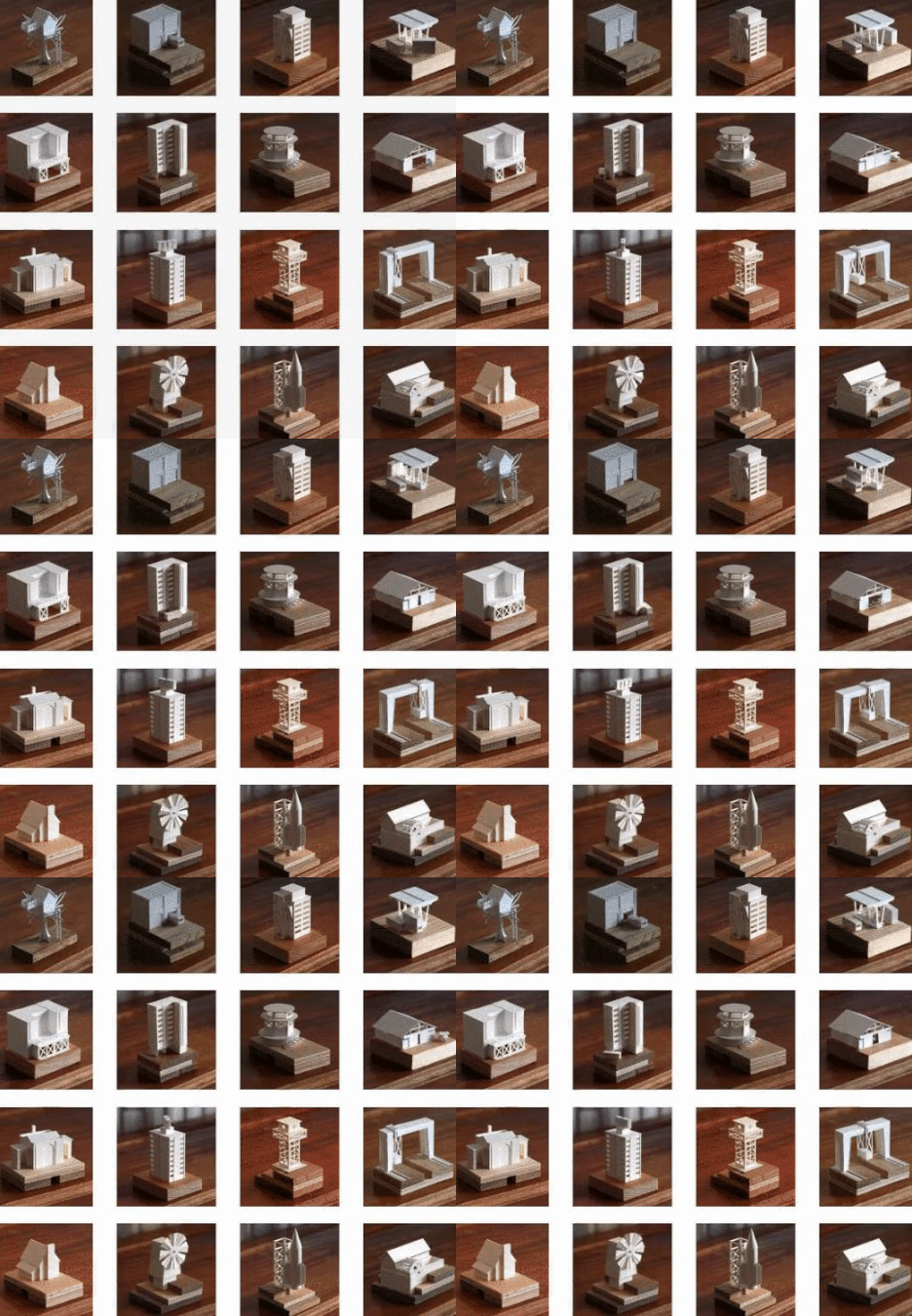
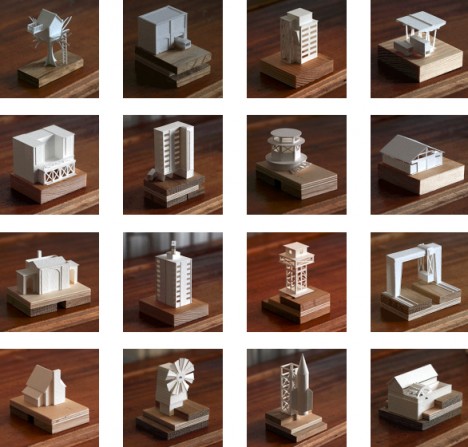
1 Building Per Day: Crafting Paperholm, a Working Micro-City

23 Dec

[ By WebUrbanist in Art & Sculpture & Craft. ]

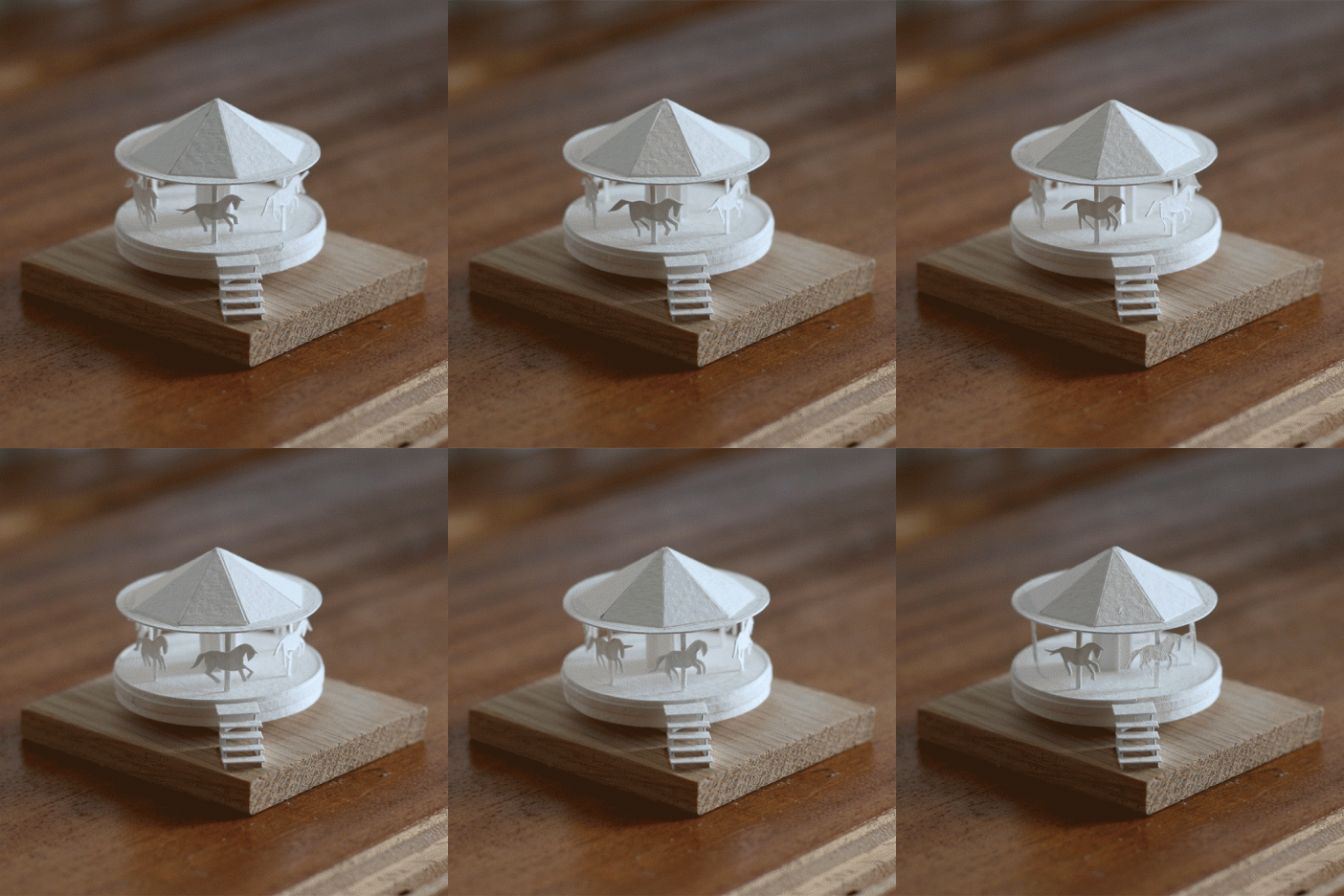
small miniature merry go round

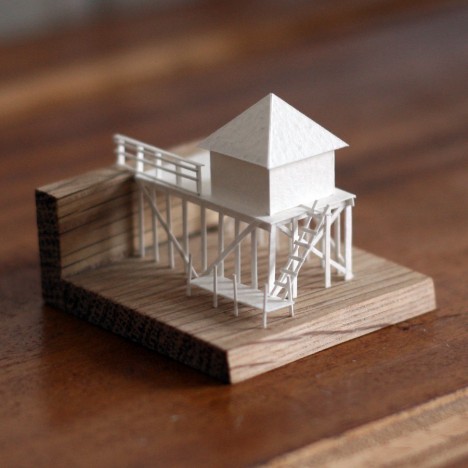
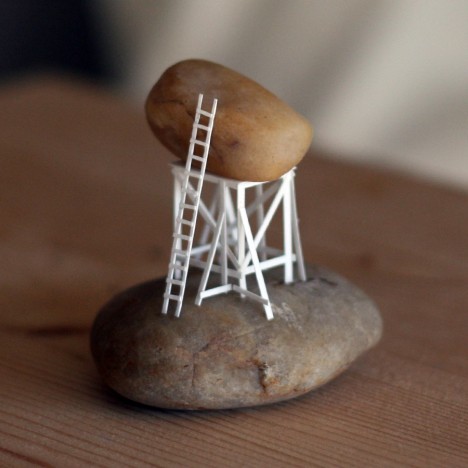
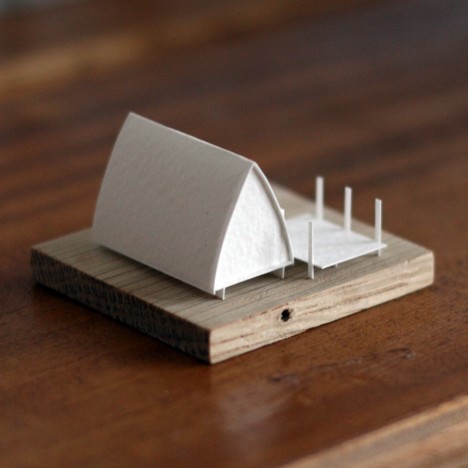
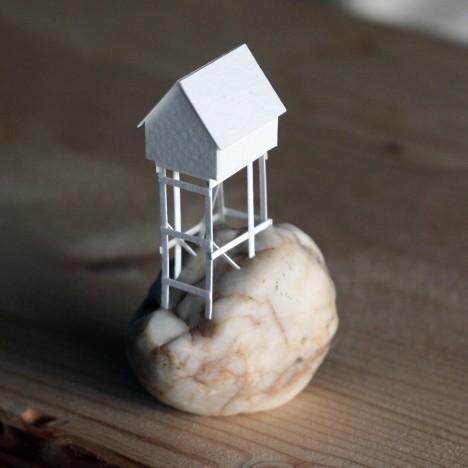
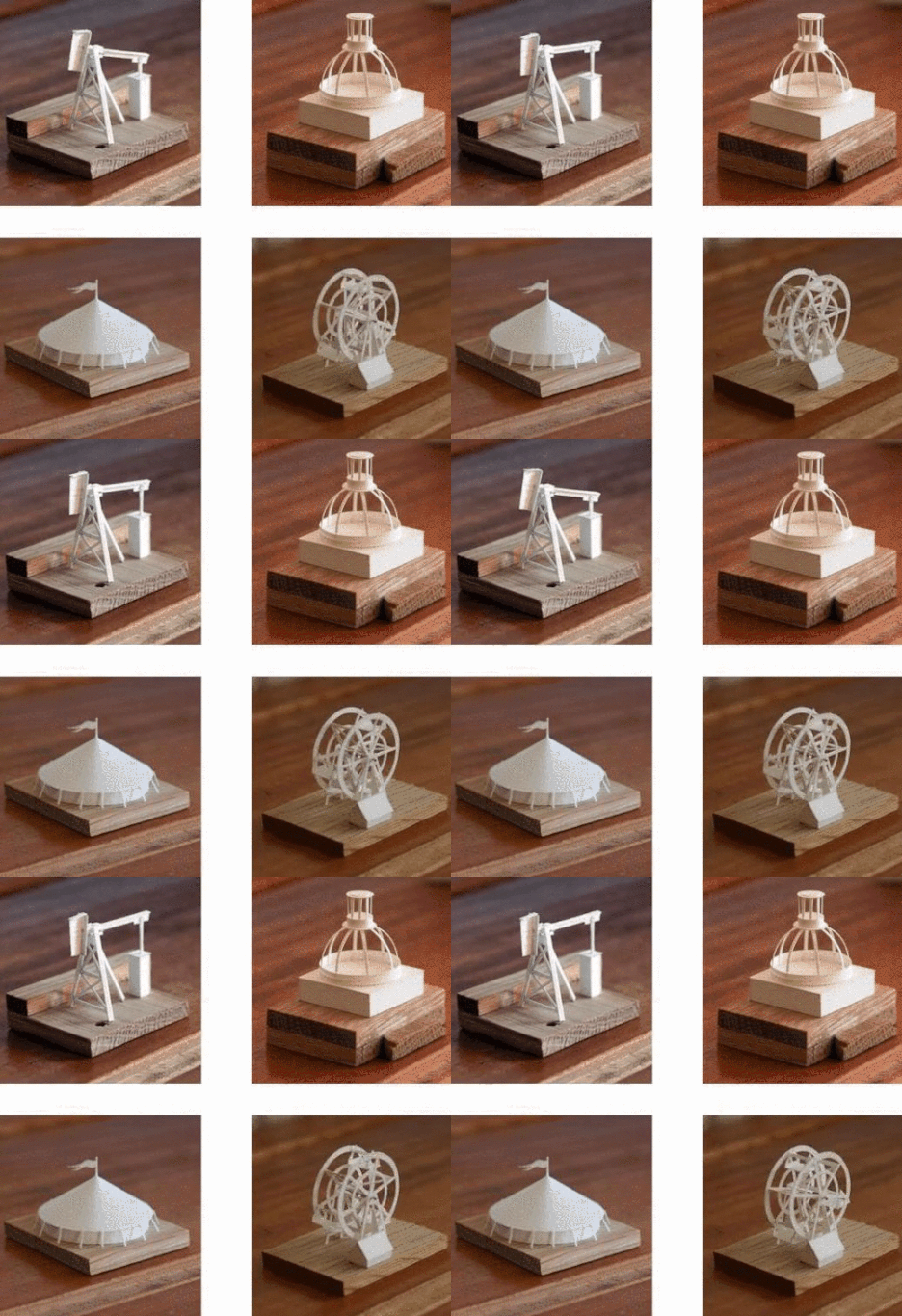
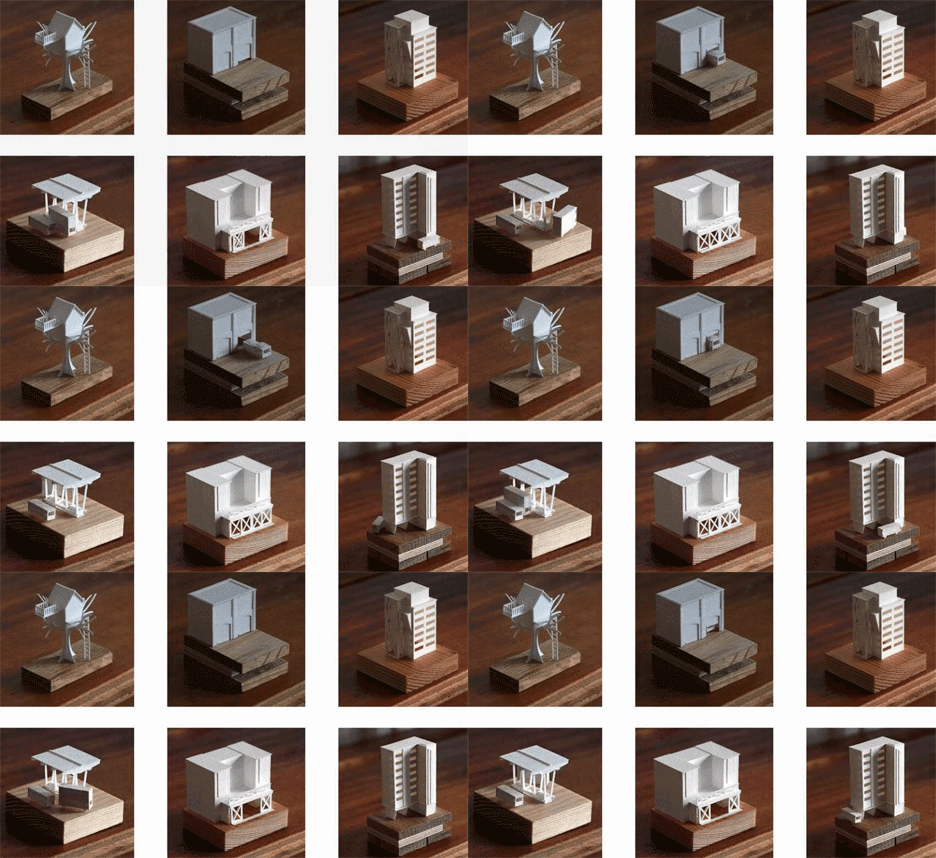
The individual structures are impressive as is the fact that they have moving parts, but their rate of construction is particularly compelling: the man behind this project is creating an additional mini-building each and every day.

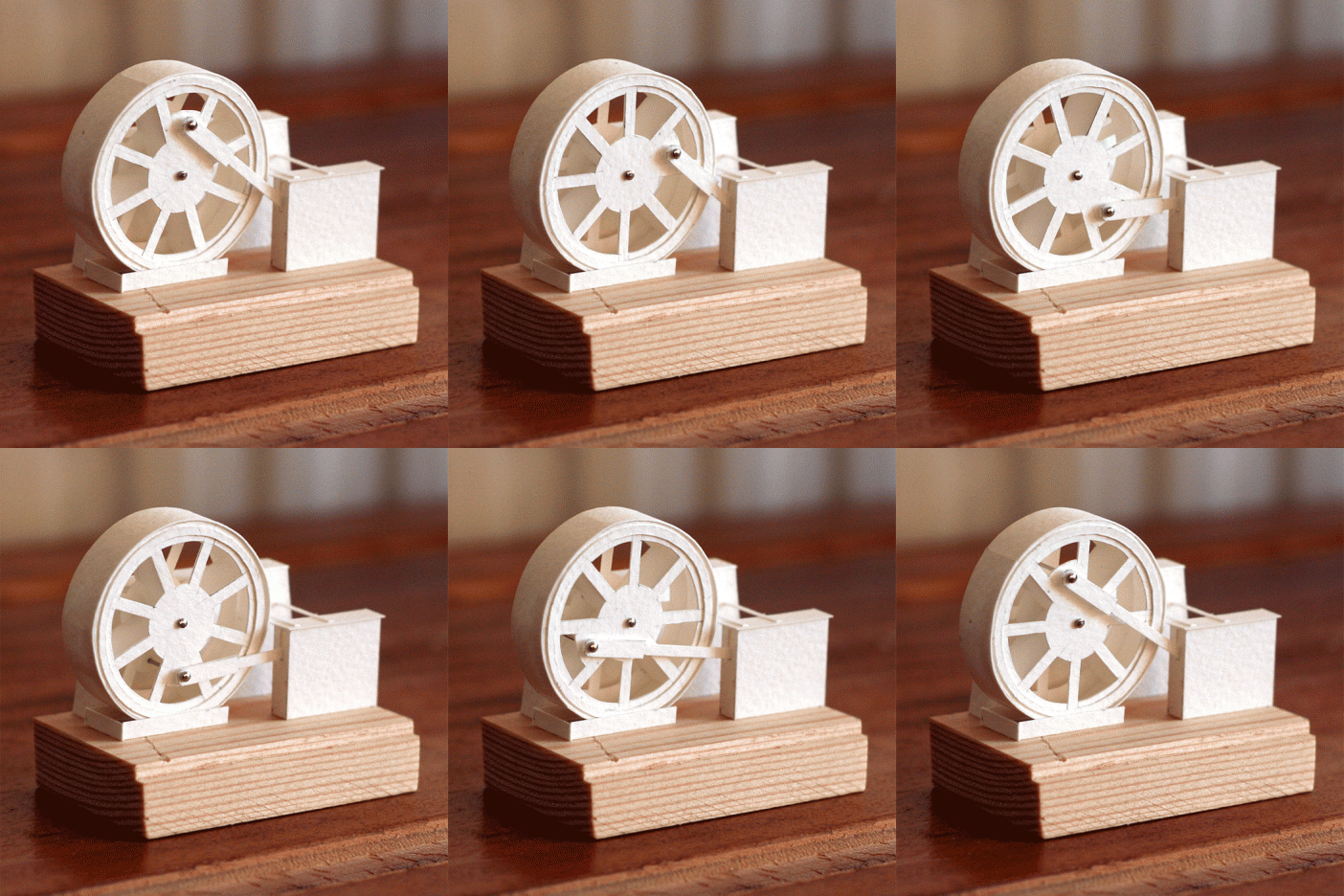
animated flyweel gif

micro city animated

Charles Young has an advanced degree from the Edinburgh College of Art where he learned to make models – this project was a challenge to himself to not only remain continuously productive but to continue to improve his craft day by day.

tiny huge building architecture

small water tower rock

small craft paper model

small perched building design

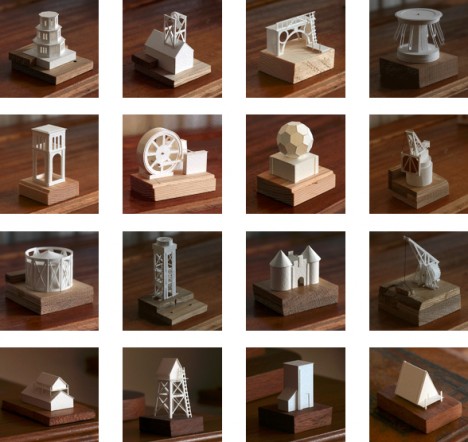
With fresh posts every day, Paperholm represents a growing micro-troplis populated with buildings, buses, cars, planes and trains, the motion of which is animated via gif-formatted images.

micro mini building architecture

mobile mini city parts

tiny architectural crafted models

tiny city builing array

But the movement goes well beyond vehicles and into the realm of rotating radar dishes, spinning flywheels, sliding cranes, opening and closing garage doors and other elements that give this growing urban experiment a sense of life.

Share on Facebook


[ By WebUrbanist in Art & Sculpture & Craft. ]

[ WebUrbanist | Archives | Galleries | Privacy | TOS ]


WebUrbanist

 
Comments Off on 1 Building Per Day: Crafting Paperholm, a Working Micro-City

Posted in Creativity


Time in Color: Skatepark Graffiti Acts as a Working Sundial

16 Aug

[ By Steph in Architecture & Cities & Urbanism. ]

Skatepark Graffiti 1

Skaters at this park in Lugano, Switzerland don’t have to pull out their phones to check the time – they can just glance down at a series of colored lines painted right onto the concrete of the bowl as a modern sundial. A ribbon of rainbow hues curves up and down the undulating surface, the sun and shadows revealing the current hour.

Skatepark Graffiti 2

Skatepark Graffiti 3

A different line of color indicates each hour of the day, marked off as the sun passes overhead. Designed by Moscow group Zuk Club, the vibrant park is like an abstract modern mural customized specifically to the shape of the bowl and the surrounding area.

SKatepark Graffiti 4 Skatepark Graffiti 5

It’s an interesting and visually resting concept, though perhaps no match for the largest and most complex skate parks around the world. Skaters who find ordinary skate parks unimaginative should check out 13 examples of highly skateable architecture, ranging from the specially renovated interior of a hunting lodge to Zaha Hadid’s futuristic science center in Germany.

Share on Facebook


[ By Steph in Architecture & Cities & Urbanism. ]

[ WebUrbanist | Archives | Galleries | Privacy | TOS ]


WebUrbanist

 
Comments Off on Time in Color: Skatepark Graffiti Acts as a Working Sundial

Posted in Creativity


Newbie Tips for Working with a Model

02 May

Fashion photography model tips

If you’ve ever tried taking pictures of someone (or something) that isn’t extremely cute and fluffy like a baby or a puppy, you’ll know it can sometimes be difficult to capture people in a flattering way. Some people are extremely shy or don’t like getting their picture taken. Others really do like having their pictures taken. Some even make a living getting their picture taken. They are called models, and today we are going to consider what it is like working with models.

Where can you find a model to practice with?

There are two ways to go about working with a model.

One way to find a model to work with is by going to a model website like Model Mayhem that connects models, photographers, makeup artists, etc. In fact, Model Mayhem is the best resource for up and coming photographers to find models, because a lot of beginning models are on there looking to build their portfolio and will trade their time for pictures (see section below). Check it out today and see who is in your area, ready to shoot. Be clear and specific about times, what you want to shoot, and what they will be receiving. Some sites have a lot of models to choose from, and if you are courteous and professional through correspondence, you can connect with a model and set up a shoot.

Fashion photography model tips

Another way to find a model is to ask around your town or city. There is a good chance there is someone in your town who has the looks or aspirations to do some modeling, whether it’s on a national scale or a local one. If you don’t know someone directly, simply ask around or a make a call out on Facebook. I remember when I was taking a lighting class and needed someone on short notice due to a cancellation. I put out a request on Facebook for a model as replacement and I had two subjects willing to step in within an hour. Some people really love having their pictures taken, it’s simply a matter of putting yourself out there.


Either way, if you have someone who is interested in posing for you, now you have to decide what arrangement benefits both of you.

Trading Time for Pictures or Prints

There is a great rule of thumb that goes something like this – if the model is benefitting the photographer’s portfolio only, the model should be getting paid. If the photographer is benefitting the model’s portfolio only, then the photographer should be getting paid. But if you are both benefitting each other, meaning you both are trying to build up a portfolio of images and you are both more at less at the same stages in your career, then you can do what is called Time for Prints, or TFP.

Fashion photography model tips

Time for prints means the model is giving up his or her time in exchange for images at the end of the collaboration. This could be called a “trade” or, in the commercial modeling world a “test shoot.” It is not expected that you are actually printing images and delivering them to the model. I believe that is a term left over from the glory days of film.

Model Release

When working with a model, it would be wise for you to obtain a model release form. You can find them easily on the web (here’s a PDF you can download immediately), and there are even a few great apps that you can download. I use an app called Easy Release, which is powerful and lets you and the model sign right on your smart phone or tablet.”

A model release form, when signed by the model, grants you the photographer legal permission to use the photos online or in advertising.

If you don’t get a model release, the model has the right to ask you to remove images from websites and even sue you if you end up making money using those photos without permission. I’ve personally never had issues when I’ve forgotten to bring along a model release, but it is always better to be prepared.

Fashion photography model tips

Picking a Location and an Outfit

Now that you’ve done all the prep work, where do you shoot? What should the model wear? This is where the fun begins!

It makes the most sense to either start planning with an outfit or with a location (assuming you aren’t shooting in a studio). If you start with an outfit, say a summery dress on a girl, then the location should probably match the outfit. Maybe think about shooting in a field, or the beach, or in the forest. If you have an amazing location in mind, like a great old building with Victorian architecture, then think about what outfit would match that setting best, in terms of colors, shape, patterns, etc.

Just to give you a few ideas about location, I’ve shot in abandoned buildings, under piers, in wheat fields, in flower fields, at vineyards, against brick walls, yellow walls, graffiti walls, in studios, in parks, on carousels, in casinos, and more.

fashion photography model tips

Working with a Model

The next (and final) step in working with a model is to simply begin shooting. If you have an experienced model, you won’t have to say much to them in terms of posing, because they will already know what to do. The best models I’ve worked with will actually change poses or expressions every time they hear the camera click, so you’re never getting duplicate images.

If you have an inexperienced model consider getting some posing inspiration from sites like Pinterest,fashion magazines, and right here on dPS. Do your homework. Look at lots of images, practice those poses yourself so you can articulate what you want from your model. Here are a few to get you started:

  • Striking the Pose – dPS eBook
  • 67 Portrait Posing Printables – a PDF you can print and take with you to go with the eBook above
  • Posing guide for women part one – 21 different pose ideas
  • 8 Posing guides – for women, men, children, groups

A fun and easy rule to remember is “make triangles with the body” (see photo below). How many triangles can the model make using legs, arms, and body? This advice works better on women than on men, by the way. Sometimes working with models means stretching them in ways that might not feel natural but can look awesome. The best thing you can do is practice, practice, practice. The more you shoot, the easier directing models becomes.

Fashion photography model tips

Now let’s see some of those model photos, please share your images in the comments below and if you have any questions please ask.

The post Newbie Tips for Working with a Model by Phillip VanNostrand appeared first on Digital Photography School.

Digital Photography School

 
Comments Off on Newbie Tips for Working with a Model

Posted in Photography