RSS
 

Posts Tagged ‘working’

Instagram is working on iPhone 7-specific features

11 Sep

Yesterday Apple announced its iPhone 7 models and app developers are already working hard at making use of the devices’ new features, especially the dual-camera in the iPhone 7 Plus. Instagram actually had a slot during the Apple presentation and Ian Spalter, head of design at Instagram, had the opportunity to explain how the app would make use of the camera’s new features and capabilities. 

In one of the next versions of the app, the zoom of the iPhone 7 Plus dual-camera will be controllable from the Instagram camera. In addition, the new taptic engine will indicate how much the photographer has zoomed into the scene in both video and stills mode. Instagram says it is also looking at adapting its image filters to the iPhone 7 display’s wider color gamut, which lets viewers see a wider range of color.

Other, not strictly iPhone 7-related improvements, include the addition of a 3D Touch action for the Instagram app icon, which will let you add an image to an Instagram story in a quick and easy fashion. There will also be a function to convert Live Photos into Instagram Boomerang GIFs, which repeatedly play back and forth. This function will be based on the new Live Photo API in iOS 10.  The new Instagram version is expected to launch sometime after shipping of the new iPhone models has started on September 16. 

Articles: Digital Photography Review (dpreview.com)

 
Comments Off on Instagram is working on iPhone 7-specific features

Posted in Uncategorized


Hasselblad rumored to be working on 10x zoom camera module for Moto Z phones

05 Aug

The Lenovo Moto Z and Moto Z Force smartphones have a unique feature: they accept accessory modules, so-called Moto Mods, which attach to their back plates magnetically and via 16 connection pins. At launch, Lenovo showed the InstaShare projector, a JBL Soundboost 6 Watt speaker and a 2220 mAh battery pack, but unfortunately the previously rumored camera module did not materialize. 

However, now hellomotoHK found information on the Chinese microblogging site Weibo that might indicate that Hasselblad is working on a Moto Z camera module with, a 10x zoom lens, physical shutter button and zoom lever, Xenon flash and Raw capability. Unfortunately, no information on sensor size and resolution has been provided. 

With Raw capture, optical image stabilization and 13 and 21MP sensors respectively the Moto Z and Z Force are well-equipped in the camera department, but a 10x zoom lens with a potentially larger sensor than in the smartphone camera modules would definitely expand the creative potential of the devices. It’s impossible to know how much truth is in this rumor, especially given that the image is just a rendering, but we certainly hope Hasselblad and Lenovo will let us know soon.

Articles: Digital Photography Review (dpreview.com)

 
Comments Off on Hasselblad rumored to be working on 10x zoom camera module for Moto Z phones

Posted in Uncategorized


Fast Glass: Tips for Working With Wide Aperture Lenses

29 May

As photographers, many of us become infatuated with new gear, such as a new flash, tripod, or lens. We scrimp and save our money, and go off to the camera store to purchase that new lens we’ve had our eye on, most times satisfied with whatever new piece of kit has found its way into our bag. Sometimes, though, it happens that for some reason that new gear we’ve spent our hard-earned money on doesn’t live up to our expectations.

Shallow depth of field

Fast lenses enable the photographer to use shallow depth of field creatively. A 24mm f/1.4 lens, shot at f/1.4 was used for this image.

It may be that it was overhyped, or it doesn’t suit your workflow. There are occasions, however, when a piece of gear has a learning curve attached to it that needs to be solved before you can fully enjoy it. One such item that seems to have that learning curve attached, is a fast lens (one with large maximum aperture).

At some point, we all begin dreaming of fast (large aperture) lenses. For the purpose of this article, I’m going to define fast lenses as ones with maximum apertures wider than f/4.

Fast lenses are great for a lot of things, shooting in low light being one of the major advantages, because the wider aperture allows more light into the imaging sensor, which in turn allows you to use a faster shutter speed. This is why lenses like the 70-200mm f/2.8 are such a workhorse in a photojournalist’s camera bag. Another advantage to the wider aperture is the ability to create shallow depth of field in your image, which can make your subject really stand out from the background. The 85mm f/1.4 is one of my go-to lenses for almost any portrait situation for just that ability.

Focus on the eye

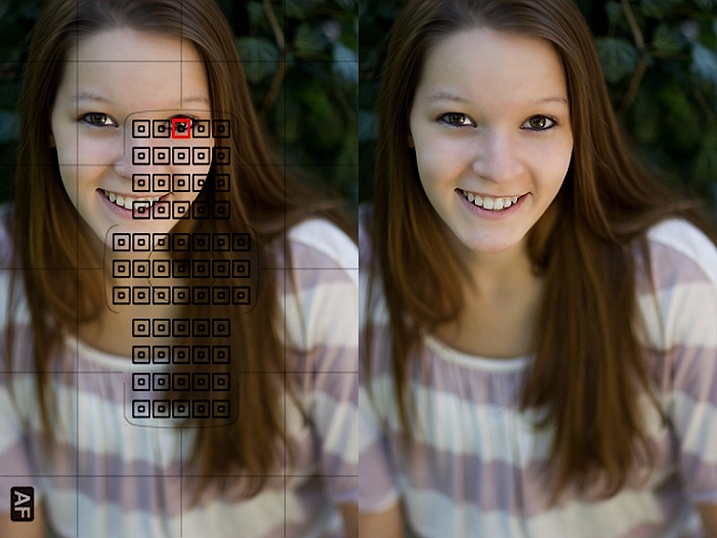
When photographing portraits, focusing on the closest eye is ideal when using shallow depth of field.

That all sounds great, right? But it’s that last point regarding shallow depth of field which seems to create the biggest problems for most photographers, who are new to using a fast lens. I often hear of photographers complaining about a lack of sharpness in their lenses, and more often than not, the issue crops up when the photographer is using a fast lens.

It may be a portrait photographer trying to use an 85mm f/1.8 wide open, or someone doing street photography with a 35mm f/1.4, and for some reason there’s a lack of sharpness to the image that will invariably be blamed on the lens. In my 20 years in photography, I’ve owned and worked with a lot of gear – 0ver a dozen different camera bodies, and several dozen lenses I’ve used at one point or another. I can honestly say that I have never once had one come straight out of the box brand new, and not be in perfect working order, so treat that option (that the lens is faulty) as a last resort for now.

Understanding Depth of Field

In addition to their low light capabilities, many photographers purchase fast lenses simply because of the ability to shoot with a shallow depth of field. When used creatively, a lens with a large aperture used wide open, allows you to be very selective in what you show the viewer, and what you hide in soft out of focus areas, known as bokeh.

However, it’s very important to understand that depth of field works differently dependent on the lens you are using. For instance, a lens such as the Nikon 85mm f/1.4 will have paper thin depth of field when used at f/1.4, at close distances to the subject. As the subject moves further away from the camera, that depth of field becomes a little greater. But at the minimum focusing distance, you could focus on an eyelash on your subject, and still have the eyeball be out of focus, despite the fact it’s only half an inch behind the eyelash. Assuming you don’t want to back up and change the framing on your subject, the best way to ensure sharp focus on the eye, is to choose a focus point on the eye and be careful it does not accidentally focus on an eyelash.

If you are willing to sacrifice a bit of that shallow depth of field, simply stop down a bit to give yourself some leeway on where you focus. While at f/1.4 or f/1.8 you may not be able to get both the eyelash and the eye in focus, but at f/2.2 or f/2.8, you’ll likely have enough depth of field to achieve sharp focus on both.

hyperfocal distance

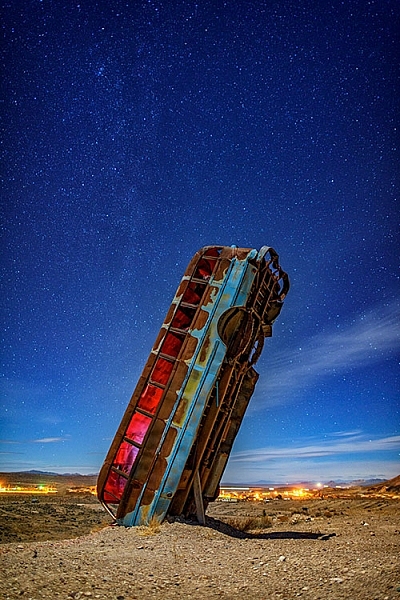
Using a 24mm f/1.4 lens wide open, setting the focus distance to the hyperfocal distance, allows you to get greater depth of field even when photographing wide open.

Even on wide angle lenses, such as a 24mm f/1.4 or 35mm f/1.4, which have inherently (seemingly) greater depth of field due to the nature of wide angle lenses, you’ll still notice some issues arising due to the use of a wide open aperture. If you can step back from the subject, you can increase the perceived depth of field since you’ll be focusing further away. You can calculate how far away you need to be by using a hyperfocal distance calculator.

The hyperfocal distance is the closest distance at which a lens can be focused, while still keeping objects at infinity acceptably sharp. In the shot of the upended bus at night, knowing the bus was about 30 feet away, I calculated the near limit of focus for the lens I was using at about 18 feet and the far limit was 91 feet, meaning anything past that distance would still be out of focus at f/1.4. By focusing at the hyperfocal distance of 44 feet, I knew the bus would fall into the area of sharp focus, while still keeping the stars in sharp focus. This is true because the hyperfocal distance is where everything from that distance to infinity falls within your depth of field, and everything from the hyperfocal distance to the point halfway between the camera and that distance, also falls within your depth of field.

Unfortunately, it’s not always possible to focus at the hyperfocal distance. For instance, photographing at a party in a dimly lit room, you may notice some areas out of focus due to the shallow depth of field. The fix here is to  stop down a bit if you can. If you need more light, consider using a flash if appropriate, and stopping down the lens to give greater depth of field. Another option is to raise the ISO a bit to allow you to stop down the aperture more.

You may find yourself saying, “I didn’t purchase a fast lens to use it at a smaller aperture!” While that may be true, if you find yourself unable to capture sharp images due to the shallow depth of field, stopping down is the best solution. Please keep in mind, I’m not talking about a lens that just isn’t sharp. I’m talking about a lens that, due to its fast aperture, isn’t capable of capturing the depth of field needed to keep everything that you want sharp in focus.

Choosing Your Focus Point

choose a focus point

When it is critical to focus on a specific area in the image, choosing the correct focus point will ensure sharp focus where you want it, even when using a wide aperture with shallow depth of field.

One of the best things you can do when using a fast lens, is to ensure you’re focusing precisely where you think you are focusing. You want to be sure your camera is set to allow you to manually choose a focus point. By manually selecting a focus point, you can ensure the camera focuses on what you think it should. Most cameras default focus point selection method is automatic. In this mode, the camera will generally try to focus on the nearest object with detail that is covered by one of the focus points. Allowing the camera to choose can be a recipe for disaster, since quite often, the nearest object with detail is not what you want to focus on.

One of the best things you can do as a photographer is take control of where your camera is focusing by selecting the focus point that you want, and ensuring that the focus point you choose is on the subject you want to be sharp. Cameras today have multiple focus points, with some having as many as 61 AF points. While it’s true that generally speaking the center point will be the most accurate of those points, technological advances have made the points along the outer edge much more accurate than in the past. This means that you can choose those outer focus points with confidence when composing your image.

Focus on the eyes

Using shallow depth of field on a portrait allows the photographer to focus on the eyes, and lets the rest of the body fall out of focus. An 85mm f/1.2 lens was used here.

Another related problem to the camera choosing the wrong AF point, is photographers employing a technique known as focus and recompose. This technique came about back when cameras only had a few AF points bunched around the center of the viewfinder. In many situations, it’s not a problem, as long as you are using an aperture that will provide adequate depth of field to maintain focus on the object or person you’ve focused on.

However, when using a fast lens, at a wide open aperture, focusing and then recomposing your shot becomes a real problem. This is because when using a fast lens at a wide aperture, the depth of field is so thin, that recomposing the shot will actually shift the plane of sharp focus away from the subject you initially focused on. So while you may have focused on the correct subject, using the center AF point, in adjusting your composition you knocked your subject right out of focus again. The solution for this issue is the same as above: manually select an AF point that you can place right on top of your subject, without recomposing your shot.

Embrace the Bokeh

shallow depth of field

Shallow depth of field can be used to create interesting effects and force your viewers to look where you want them. This image was made with a 70-200mm lens at f/2.8.

Lastly, in answer to those who bought fast glass to shoot it wide open, I say – embrace the bokeh! Bokeh is defined as the visual quality of the out of focus areas of an image, and each lens renders these areas a bit differently. Fast lenses typically have beautifully smooth bokeh.

Compose your shots so that the shallow depth of field is used creatively. To do this, you’ll need to understand what you can and can’t do when shooting wide open. Knowing that you will have a shallow depth of field, you’ll want to avoid stacking subjects at different distances. Create compositions that contrast sharp areas, with out of focus areas. Use that contrast to highlight certain objects within your frame, and by the same token, hide other objects by causing them to be drastically out of focus.

Highlight an object using shallow depth of field

Using shallow depth of field allows you to highlight one object in sharp focus against a blurry background. This image was made with an 85mm f/1.2 lens.

Images created using shallow depth of field force your viewers to look where you want them to, because the eye is naturally drawn to areas of sharp focus. By using proper focusing techniques, you can ensure the image you see in your mind is the one you capture, and by understanding how the lens will handle depth of field, you can ensure that you’ll know to stop down when you need to for added depth of field, avoiding the mistake of having an important part of your image out of focus.

What’s your favorite fast lens to work with and why?

googletag.cmd.push(function() {
tablet_slots.push( googletag.defineSlot( “/1005424/_dPSv4_tab-all-article-bottom_(300×250)”, [300, 250], “pb-ad-78623” ).addService( googletag.pubads() ) ); } );

googletag.cmd.push(function() {
mobile_slots.push( googletag.defineSlot( “/1005424/_dPSv4_mob-all-article-bottom_(300×250)”, [300, 250], “pb-ad-78158” ).addService( googletag.pubads() ) ); } );

The post Fast Glass: Tips for Working With Wide Aperture Lenses by Rick Berk appeared first on Digital Photography School.


Digital Photography School

 
Comments Off on Fast Glass: Tips for Working With Wide Aperture Lenses

Posted in Photography


Purple Reign: Photographer Brian Ach shares his experiences of working with Prince

23 Apr

Purple Reign: Photographer Brian Ach shares his experiences of working with Prince

Paris, France. June 2011. Brian wanted to show what it was like to experience a Prince performance, so he decided to shoot in a more artistic and editorial way than is typical for concert photography. This is the first shot he showed Prince, which was the shot that defined Brian’s stint as Prince’s tour photographer. Photo by Brian Ach.

Celebrity and concert photographer Brian Ach was Prince’s European tour photographer during the artist’s 2011 “Welcome 2” tour through North America, Europe and Australia. Brian shared some of his tour stories with us in his closing talk at PIX 2015, and this morning he chatted again with us about his experience photographing and working with Prince, following the musician’s death this week, aged 57.

You were hired to photograph the European leg of Prince’s tour in 2011. As a huge fan of his music, and knowing his reputation for hard work and high expectations, how did you approach this job?

I didn’t get a chance to meet Prince before the first show in Paris. Since I didn’t have any direction from him about how or what I should shoot, I decided that I was going to be true to myself and shoot the show the way I thought it should be shot. I decided to go for broke and shoot it in an artistic way, to make it worthy of his art and his performance.

When I was ready to deliver the edits to Prince after the show, I opted not to show them to him in chronological order. Instead, I picked what I considered to be the most interesting 6 or 7 shots and put those first. Prince entered the room and said, “You have something to show me,” so I pulled the first picture up on the screen. He stared at it for 15 seconds in complete silence and then got up and walked out of the room. I assumed I was going to get fired after a single shot, but a minute later Prince walked back in with his whole band. He pointed at the screen and said, “Look at that,” and then stood back with a smile on his face. He asked his manager, “Where did you find this guy?” and I answered, “Queens.” He laughed, and from that moment we had an understanding. He expected the best, so as long as I did my best work, we’d work well together.

Purple Reign: Photographer Brian Ach shares his experiences of working with Prince

Gdynia, Poland. July 2011. Being Prince’s photographer gave Brian the opportunity to be more creative. Photo by Brian Ach.

You have a lot of experience photographing musicians, from U2 to Taylor Swift, Jay-Z, Kanye West and Bruce Springsteen. Was it different to photograph Prince?

The advantage of shooting for an artist is that you get to shoot the whole show rather than just the first 30 seconds of the first few songs. This gives you time to be more creative as long as you get the basic shots out of the way, and it gives you access to areas of the stage that you wouldn’t normally have.

Prince was an epic performer, so photographing his show meant going for the epic shots. I shot a lot of wide angles from behind the stage to bring people right into the performance, and I had the luxury to swap out different lenses to try different things. Normally I would never shoot a concert with a 50mm F1.4, but I used it during a few quieter moments to really capture the feeling of the moment. I had time to experiment, to catch a strobe, get him backlit, drag my shutter. Prince was an artist, so he was going to “get” it if I took some chances to be more creative. However it was still a huge risk if he didn’t like what I shot!

Purple Reign: Photographer Brian Ach shares his experiences of working with Prince

Rotterdam, Netherlands. July 2011. This shot was initially rejected by Prince because of his animated expression.  Brian argued that it was a powerful and emotive shot, and Prince eventually agreed. Photo by Brian Ach.

Prince owned his public image. He was one of the first artists to start buying out photographers and his music, to refuse to have his interviews recorded. He made sure there was nothing out there that he felt cheapened his image or his music. He had strong opinions about what he wanted, and over time I was able to learn what he was looking for. Sometimes I argued with him about shots that he rejected and sometimes he conceded. Because even though he knew what he wanted, he was also collaborative. His entire career was one risk after another, so he appreciated and respected when I took risks and challenged him.

Purple Reign: Photographer Brian Ach shares his experiences of working with Prince

Paris, France. June 2011. This shot was rejected by Prince because of the empty seats behind the stage. Photo by Brian Ach. 

When I took this shot [above], I thought, “Yes!  I got it!”  I showed it to Prince and he said no, we weren’t going to use it. It was a great shot of him walking on stage singing with the crowd bursting into applause, but it wasn’t going to work. I asked what was wrong with it and Prince said, “There are empty seats behind me.  It can’t look like there were empty seats at my show.” Those seats had to be empty because they were behind the stage, but even though there was a good reason, it told the wrong story. I agreed with Prince and that photo wasn’t used.

Purple Reign: Photographer Brian Ach shares his experiences of working with Prince

Rotterdam, Netherlands. July 2011. Prince didn’t choreograph his shows, so Brian had to be on his toes at all times. He couldn’t just sit back and shoot or he’d have missed shots like this one. Photo by Brian Ach.

Prince didn’t play a concert; he put on a show, and it wasn’t the same show every night. His band had to know at least 300 songs and they had to be ready to play any of them, as they would often see the set list for the first time when they walked on stage. Nothing was choreographed, so it kept you on your toes thinking, “Man, he’s never done that before.”

One time, Prince did a guitar solo, ripped off the guitar, and threw it into the audience. When I saw him after the show he smiled that little smile he’s famous for. “Did you get that guitar in the air?” “You know what?  I did.”  “Right on.”

Purple Reign: Photographer Brian Ach shares his experiences of working with Prince

Rotterdam, Netherlands. July 2011. Prince saw Brian about to take this shot, so he moved his guitar from behind the mic stand to make it a cleaner shot. Photo by Brian Ach.

Do you have a favorite photo you took of Prince?

Prince was an amazingly energetic performer, but this photo [above] was taken during a very calm, peaceful moment. He was completely in the zone, and it was rare to catch him like this. At the same time, even as he committed himself to this moment, he still knew what he needed to do. Before the shot, he saw me there so he pulled his guitar from behind the mic stand. He knew I was going to get the shot and that it would be good. It’s that kind of awareness that you don’t see in many musicians. So confident in his ability that he didn’t have to think about performing; it just came naturally.

I once commented that his guitar playing seemed so effortless for him. He told me, “Yeah, that’s from practicing so long that my fingers bled. I’d play 8 hours a day when I was growing up. That’s called putting in the work. You’ve gotta put in the work.” He said that a lot, that you have to “put in the work”. I’ve found that to be true for my own work as well. I can’t be free to be creative if I’m thinking about the settings on my camera. A violinist plays scales for hours until they can play music without thinking about the notes. You’ve got to put in the work if you want to be good at something, and Prince put in the work.

Purple Reign: Photographer Brian Ach shares his experiences of working with Prince

Rotterdam, Netherlands. July 2011. A photo from the last show Brian shot. Photo by Brian Ach.

What is your favorite memory from working with Prince?

Before the last show I photographed, I left a handwritten note for Prince on the table in his dressing room. I told him how I’d never have believed that the kid in Ohio watching Prince perform ‘Purple Rain’ at the 1985 American Music Awards on TV would some day be living his dream photographing Prince on tour. I thanked him for the opportunity.

Prince didn’t say anything to me before the show or after the show, so I was worried that he didn’t get the note. But at 4am as the night was winding down, he put his arm around me and said, “Thanks for your note; that put me right to go on stage tonight. You make art. These aren’t photos; it’s art.” That was the one of the best things anyone has ever said to me. As a photographer I don’t get feedback or validation very often, so to hear that from one of my heroes was huge for me.

Prince never shared most of the photos I took of him during this tour. By the third show, he said that he wanted to keep the photos for himself rather than send them out on Wire Image. At the end of the tour he told me that the photos were art and needed to be shared, so he picked a few from each show to send to Wire Image. By then the tour was already over so the photos weren’t seen by many people, and Prince kept the rest in his personal collection.

A number of news agencies have called me asking if I have unpublished photos of Prince. I do – I have tens of thousands of them.  But they aren’t mine to share.

Articles: Digital Photography Review (dpreview.com)

 
Comments Off on Purple Reign: Photographer Brian Ach shares his experiences of working with Prince

Posted in Uncategorized


5 Troubleshooting Steps for When Your Nikon’s Autofocus Stops Working

03 Apr

You’re in the middle of a photoshoot and suddenly you notice nothing in your viewfinder is in focus. Your shutter and AF-ON buttons (if using back-button focusing) do not seem to work. All eyes are on you, and the pressure is on to quickly fix the problem. Where do you start? Or perhaps you have just changed lenses and suddenly nothing works. Where might you have gone wrong?

This has happened to me one too many times, so I have now come up with a system of troubleshooting in the quickest time possible on the spot. It goes without saying, of course, that your camera needs to be switched to ON and the lens cap needs to be off.

nikon-autofocus-troubleshooting-photo-tips

#1 Autofocus not Manual

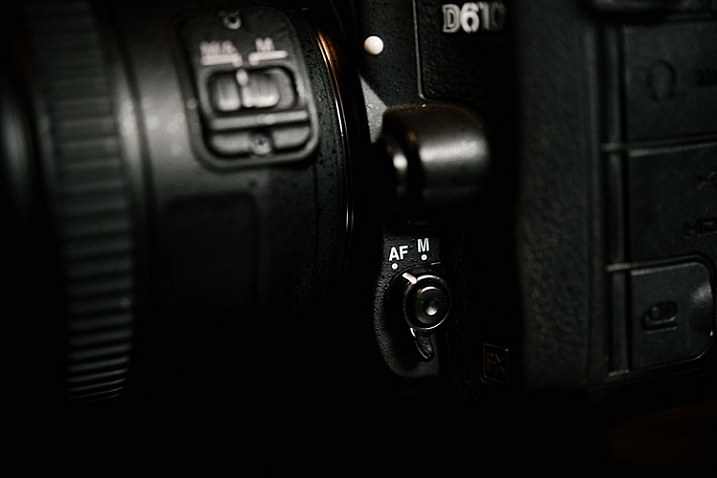
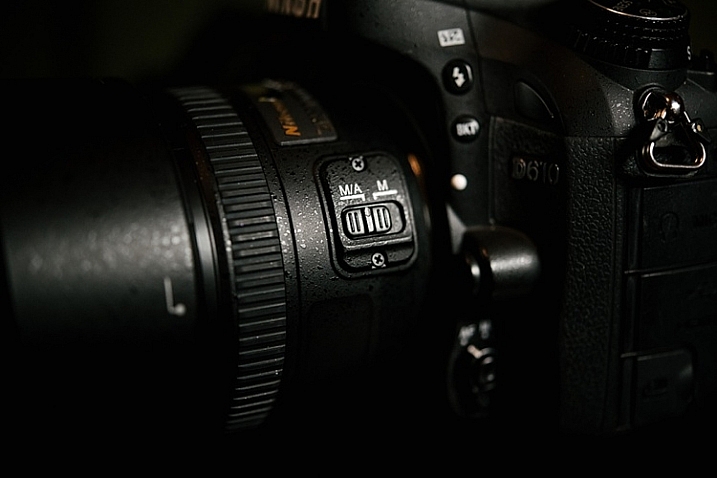
Check that both the lens and the camera switches are both pointing towards Autofocus. On the camera it must be set on AF, not M, and on the lens put it to M/A (A stands for Autofocus and M for Manual, M/A allows you to use both). Flicking the lens switch to Manual can be done unwittingly and fairly easily, especially if you are in a rush to change lenses.

nikon-autofocus-troubleshooting-photo-tips

nikon-autofocus-troubleshooting-photo-tips

#2 Back dial is not Locked

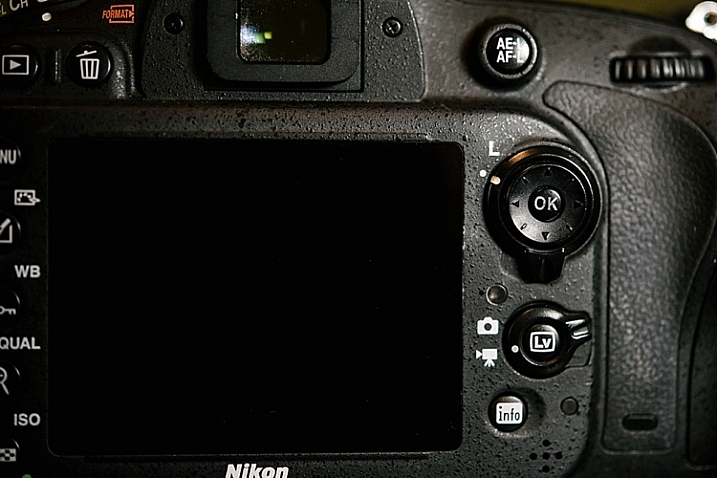
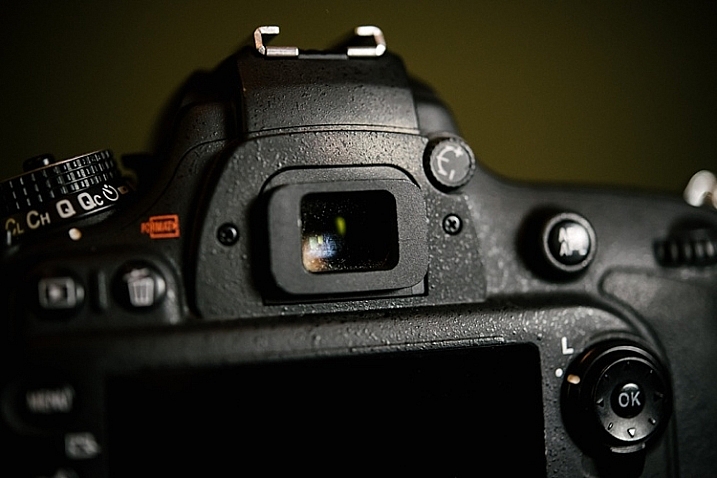
Check that the dial is pointed towards the camera icon and not the L, which stands for lock.  You can easily flick this dial, especially if you are back-button focusing and your dial sees so much action.

nikon-autofocus-troubleshooting-photo-tips

#3 AEL / AFL

Check your AEL/AFL button that you haven’t locked focus. Clicking it once locks focus so click it another time to unlock focus.

nikon-autofocus-troubleshooting-photo-tips

#4 Check the lens

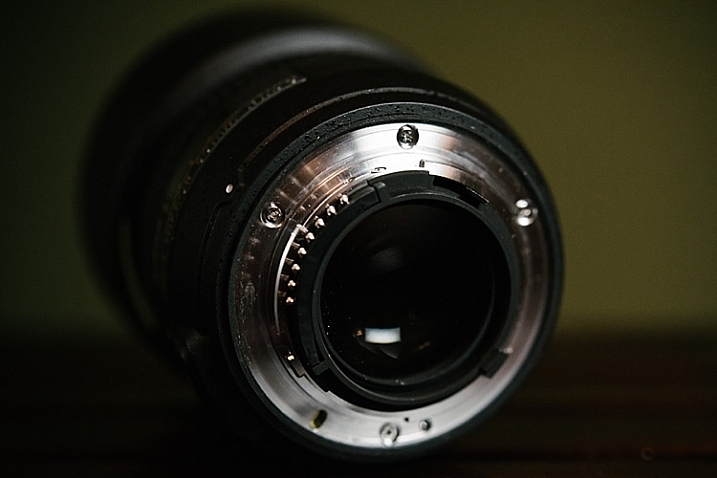
Remove the lens. Inspect the front and rear lens aspects for smudges or dirt. Check also that no part of the lens is broken. If you have filters on your lens, check that they are clear and there are no cracks. When you re-attach the lens, make sure you hear a click once the lens is twisted in place.  If there are any smudges on the lens, make sure you clean it with a lens cloth, and do not blow on the lens.

Lens cloths are usually lint-free pieces of material, and should be used with a lens cleaning solution, rather than anything with solvents. Blowing on the lens can contribute to lens damage since a person’s breath can contain harmful acids. If you feel you have to blow, use a lens bulb blower and a brush.

nikon-autofocus-troubleshooting-photo-tips

#5 Viewfinder

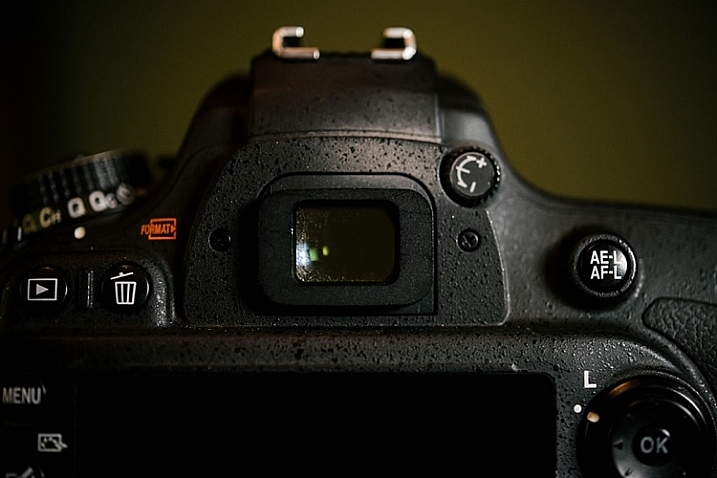
Finally, check your viewfinder and make sure there are no oils, smudges or dirt covering your sight. You can clean the viewfinder the same way you clean your lens.

nikon-autofocus-troubleshooting-photo-tips

#6 Bonus

This applies to any camera, not just Nikons. If something is going on with your camera that is odd – turn it off for a few seconds, then turn it back on. It’s like a reboot for your camera, just like you do with your computer. If that doesn’t work you can also try removing the battery for a minute or more (remember to turn the camera off before removing the battery). As a last ditch effort you could try resetting all functions and settings on the camera to factory default. If it still isn’t working test the camera with another lens, if that one works you may need to take your lens in to get serviced. If the

I hope this little troubleshooting guide helps when you get stuck with focusing problems. Do you have any other quick focus troubleshooting tips to share?

googletag.cmd.push(function() {
tablet_slots.push( googletag.defineSlot( “/1005424/_dPSv4_tab-all-article-bottom_(300×250)”, [300, 250], “pb-ad-78623” ).addService( googletag.pubads() ) ); } );

googletag.cmd.push(function() {
mobile_slots.push( googletag.defineSlot( “/1005424/_dPSv4_mob-all-article-bottom_(300×250)”, [300, 250], “pb-ad-78158” ).addService( googletag.pubads() ) ); } );

The post 5 Troubleshooting Steps for When Your Nikon’s Autofocus Stops Working by Lily Sawyer appeared first on Digital Photography School.


Digital Photography School

 
Comments Off on 5 Troubleshooting Steps for When Your Nikon’s Autofocus Stops Working

Posted in Photography


Working with what you’ve got: Bambi Cantrell on photographing brides, babies and more

21 Feb
 

Bambi Cantrell is a 30-year veteran of the photography industry specializing in portraiture and wedding photography. In this presentation from PIX 2015, she translates lessons learned over her career into real photographic results, whether her client is a bride, a couple or a young family. As Cantrell’s tastes and photography have evolved over the years, she encourages others to embrace change. ‘Lay a strong foundation on concepts,’ she says. ‘Don’t put blinders on…. You can adapt as you decide to change and get older.’

Keep it simple.
‘Give me a wall, a window and a reflector, and I’m home free,’ says Bambi Cantrell, ‘Don’t feel like you have to have every single tool that’s made to get good pictures.’

Do what you can with what you’ve got.
‘I love tungsten lighting as well,’ Cantrell says. ‘Use existing light sources to create beautiful images. It’s not that the planets line up perfectly for [pro photographers] and not someone else. It’s how can I take the best possible picture with what I’ve got in front of me right now.’

A great expression can be perfection.

‘She’s just laying across the bed in her home, holding her newborn baby,’ Cantrell says. ‘It’s about who you’re photographing. What is this person like?’

Articles: Digital Photography Review (dpreview.com)

 
Comments Off on Working with what you’ve got: Bambi Cantrell on photographing brides, babies and more

Posted in Uncategorized


Tokyo Drifter: Editorial and commercial photographer Alfie Goodrich on working in Japan

07 Feb

Tokyo Drifter: Editorial and commercial photographer Alfie Goodrich on working in Japan

Azusa by Alfie Goodrich

First published in 1991 at the age of 23, portrait photographer Alfie Goodrich has been shooting primarily in Japan since 2007. His eye as a photographer as well as a fluency in both English and Japanese has brought him a diverse portfolio of commercial and editorial clients, including Ferrari, Lamborghini, United Airlines, Condé Nast, Air Asia and so many more.

Goodrich counts on more than just his bilingualism to bring him clients, however. He’s a master of SEO, as well, with a daily blog that pulls in between 40,000 to 80,000 unique visitors a month, a self-produced online magazine and a Google+ page that sports more than a million followers. When he’s not shooting, he also leads workshops and tours for photographers looking to work in Japan, and has even published his own Google guide to photogenic locations throughout urban Tokyo and Japan.

Find out more about Goodrich by clicking through the slideshow and accompanying Q+A. For more imagery, visit his website, www.alfiegoodrich.com and subscribe to his magazine ‘Stekki’. You can also follow him on his blog, Google+, Facebook, Instagram, 500px, and Flickr.

Tokyo Drifter: Alfie Goodrich on working in Japan

Kamakura by Alfie Goodrich

You began your career as a music portraitist and photojournalist in the UK. What was behind the transition to travel reportage and editorial work?

Actually, pretty much all of my professional photography work in the UK was done within the realm of the music business – which I was involved in from 1992 to 2002. Whilst I was PR Director for Nimbus Records, I shot a lot of stuff for CD covers, at recording sessions and events I was organising. Later, whilst general manager for Black Box Music in London, I did more of the same. Once I left music and started my own business, I started to mix up the subject matter a little more, providing a one-stop shop for people needing PR, websites, hosting and photography to promote and market their own companies. As my career changed, so did the subject of my photography.

Tokyo Drifter: Alfie Goodrich on working in Japan

Akari by Alfie Goodrich

When did you decide to make the move from England to Japan, and why did you decide to stay there?

My wife is Japanese. We met in the UK and lived together there for seven years, having two of our three children during that time. We’d been thinking of moving to Japan for some time. I lost both my parents within six months of each other, in 2005 and 2006. After that, we needed a change of scene. My parents had been very active in the local community, as had I. They were good times but, yes, a change was required.

I had some friends in business, some of whom were doing very well from diverse, international businesses built up over decades. People like that generally have a good sense for what’s in the wind. One of them, who had some experience of business in Asia, warned me that he felt Europe had some hard times ahead and that my thinking about a move to Japan was a good idea.

Tokyo Drifter: Alfie Goodrich on working in Japan

Fuji by Alfie Goodrich

(cont.) We left the UK in October 2007 when the yen was 210 to the Pound. Under a year later, Lehman happened and the Yen-Pound rate dropped to 105 at one point. My friend was right. Asia and Japan have weathered the financial crisis a little easier than friends of mine have back in the UK. For me to work in the way I do in Japan but do that back in the UK, we’d be looking at living and raising a family in London. Tokyo is very different. It’s safe, safe for the kids and safe for me to do my job – often dripping in camera equipment – without ever needing to look over my shoulder.

That’s one reason we’ve stayed here. Anther is that here I am different. I’m not a local. I have a different eye for Japan than a local photographer does; different working methods. I’ve made that work in my favour.

Tokyo Drifter: Alfie Goodrich on working in Japan

Johan – Akiko by Alfie Goodrich

Have you found any significant differences working in Japan as compared to working in the UK – not just culturally, but on the business side of things?

There are many differences between the UK and Japan and whilst nowhere is perfect, Japan and Tokyo tick a lot more boxes for us right now than London or the UK did. Little amusing things happen all the time, like asking if I could move a chair out of the background of a shot and having the company’s PR team all look at each other as though that was something that needed a board-level decision. My response at those times is just to make light of the situation, move the chair myself and then say ‘well, perfect… now you can blame the foreigner’.

There is a very hierarchical decision making process at work in Japan. Responsibility is a collective thing, not really down to individuals. That’s good in some ways but it can prolong decision making and during a shoot, things are often fluid and decisions need making quickly. Once you’ve built people’s trust with you then it’s different; they’ll give you more of a free reign over things.

One of the good things I would say here is that once you make business relationships, they tend to last. In the UK I would often come across the situation of having clients disappear to someone else based on cost: if Photographer X down the road was delivering Product A for £1 less an hour, then they’d move. That doesn’t happen in Japan. Trust and relationships take longer to build, which can be frustrating at first, but once you’ve made that relationship it isn’t really ever going to go south over trifling amounts of money.

Tokyo Drifter: Alfie Goodrich on working in Japan

Kawasaki Daishi by Alfie Goodrich

You mention in an interview that budgets have shrunk so companies are looking for local photographers to carry out campaigns rather than flying out a production. What measures have you taken to ensure that you’re the ‘go-to’ photographer that they will think of in Tokyo and these other cities?

In terms of how I compare, from a client’s perspective to, say, a Japanese photographer then I think the main difference is my eyes. I see things from a foreigner’s perspective. Japan is still new and fascinating for me, after almost a decade of living here. I work differently to the locals. That can sometimes be a curse but usually it’s a benefit; where it might take a Japanese photographer a team of seven people to do even a small fashion shoot, it takes me three. Working quicker, more efficiently is something I would say that is an advantage.

I spent a lot of time getting my web presence sorted out and integrating it with SNS sites. So I have a good footprint on the web and on the search-engines. The photography teaching I do also helps a lot, making my network of contacts here and abroad more diverse and giving me a something different to blog about and publish online, which isn’t just about my own work but about encouraging and championing others.

Tokyo Drifter: Alfie Goodrich on working in Japan

Asakusa by Alfie Goodrich

Besides speaking English and Japanese, what is it about your expatriate status that has given you a leg up over other photographers in Japan?

I am of course well-mannered and have respect for the local customs and culture, but being a foreigner means that it’s possible to skirt many of the conventions that hold local people back from being true to themselves 100%. I think for me it’s also about having come here at the right age. An old boss of mine once said that ‘when you get to 30, people take you more seriously. By the time you reach 40, you don’t give a shit whether they do or not!’.

I was 38 when I came here, with a wife and two children and on the back of just losing both my parents. Since then, we’ve had another child, I hit 40 and, to be very honest, I just have no time for bullshit anymore. Or for games. I’m also pretty happy with who I am. Still not perfect, obviously, but happy with the imperfections. There really is only ONE me.

Japanese people, because of the nature of their society, really don’t tend to get much chance to be totally themselves except when they are by themselves. They have one face for themselves, one for inside the house and one for outside the house… for work. Being myself and being happy with that person has been a large part of doing well here. You obviously have to have the skills to do the job, that goes without saying.

Tokyo Drifter: Alfie Goodrich on working in Japan

Baja by Alfie Goodrich

Since the beginning of the year, you’ve been an Ambassador for Hasselblad in Japan. How did that come about and what does that entail?

The boss of Hasselblad Japan is a Brit. Once we met, that certainly helped: shared heritage, same daft sense of humour, same propensity to swear every other word. I think he’d heard my name crop up quite a few times around the time that Hasselblad opened their shop and gallery here in Tokyo. The same had happened to me with his name. The foreign photographer community here is fairly compact and we were bound to meet each other eventually.

We had a meeting, talked about some of the things I was doing with photo education and which I was keen to explore with a camera company, especially one as legendary as Hasselblad. The boss and I got on well, we spent a bit more time hanging around with each other, I knew they had an ambassador programme and eventually we ended up talking about it and I was offered a post. It’s been a lot of fun.

Tokyo Drifter: Alfie Goodrich on working in Japan

Alfie Goodrich and his travel pack

What do you shoot with?

  • Hasselblad H5D-50c
  • Hasselblad H4D-40 as backup
  • Nikon D800E
  • Fujifilm X100 [borrowed from a friend]
  • Countless lenses

Tokyo Drifter: Alfie Goodrich on working in Japan

Iambo-ishii by Alfie Goodrich

What is it about the Hasselblad system that first appealed to you as a commercial portraitist?

First of all, the people at Hasselblad are human, friendly, passionate and down to earth. Yes, it’s business and of course it has to make money and be viable. But it’s about more than that. It’s about giving people an experience, sharing that feeling of joy and excitement that comes from having a truly awesome piece of machinery in your hands to take photos with… but at the same time, making sure it’s not all about gear. It’s about the image, the photo, the moment. The gear is crucial but it’s not everything.

As a perfectionist, I love being around people that are the same and Hasselbad are truly perfectionists. People often ask why the cameras are so expensive… well, part of the reason is that they are perfectionists. Craftsmen, perfectionists. And really, nowadays, buying a digital Hasselblad well of course they are not cheap but having one is the closest you will get to a ‘camera for life’. In the digital, throwaway, planned obsolescence society we live in now that’s a hard thing to say. But it’s true. So now imagine that camera for life and having unlimited free film, forever… and it doesn’t seem quite so expensive anymore.

Tokyo Drifter: Alfie Goodrich on working in Japan

Meijimura by Alfie Goodrich

(cont.) For me, why does Hasselblad appeal to me? The colour rendition is amazing, very film-like. Skin tones are perfect straight out of the camera. The True Focus system [which uses a gyro in the camera to re-focus after you have re-framed] helps me shoot at the large apertures I like and still nail the focus every single time.

The range of lenses is great and as ambassador I get to use what I like, as long as they have one available at the time. So, after really only using the 80mm and the 28mm a lot from the HC range before this year, I’ve been playing a lot with the amazing 300mm F4.5, the 210mm and the 120mm macro. I’ve also had a lot of fun with the CFV-50c digital back for the old film Hasselblads which is, for me, the fantasy come true of having all the wonderful usability of the older cameras but the convenience of the digital back.

The Hassie flash syncs up to 1/800th sec. That and the range of lenses they have, which often stop down to F32 and F45, give you a lot of flexibility to kill the sun when you are shooting with flash outdoors. The Nikon only syncs to 1/250th.

Tokyo Drifter: Alfie Goodrich on working in Japan

Ruri by Alfie Goodrich

As a Hasselblad Ambassador, you have ‘kid in a candy store’ access to their lenses. What have been a few of your favorite lenses so far?

Like I said before, the 300mm is astonishing: super sharp wide open at F4.5 and still super sharp when you stop it down to F45. It’s not light but it’s perfectly balanced. A joy to use and I use it hand-held a lot.

The 120mm macro is so sharp you could cut yourself on it. Lovely handling too. The first one I spent time with was the 100mm F2.2. I used to have the old Zeiss manual-focus 110mm F2 which was a beautiful lens. But it was seductive at F2, drawing you in what the lovely bokeh, only to leave you on the rocks of despair when you realised half the shots were out of focus.

With Hasselblad’s True Focus, you can shoot the 100mm all the way open at 2.2 and be sure to nail the focus every time. The 24mm is something also try to get my hands on when I can. Pretty much the widest lens for digital medium format and stunning on the right circumstances of subject matter. The TS1.5 tilt-shift converter has been fun too. I could go on… I mean, it’s a nice candy store.

Tokyo Drifter: Alfie Goodrich on working in Japan

Shinyong Kimono by Alfie Goodrich

You also shoot with the Nikon D800, D700 and D3X. When do you find yourself employing that system instead of Hasselblad? How do the two systems compare?

When I need lighter more compact cameras I use the Nikons. I don’t mind weight but if I need to hand-hold a shot at 1/4 sec then that’s more likely to be doable with the Nikon. I also have a lot of old Nikon glass which I like using a lot on the new cameras. So, sometimes it’s just because I have a lot of lenses at my fingertips that I use the Nikons. For shooting at a higher frame-rate, the Nikons win every time. Hasselblad is not built for that.

You have to play a camera, any tool, at its strengths. That goes for weatherproofing too. My D700 now has about 650,000 pushes on the shutter and has been through five typhoon seasons with me… and it’s been in the sea. The camera is practically bullet-proof. Best thing Nikon made since the F4, IMHO.

Tokyo Drifter: Alfie Goodrich on working in Japan

Keihincanal by Alfie Goodrich

(cont.) The Hassie I shoot the most is a CCD sensor camera, the H4D-40. It’s not a high ISO camera and I rarely shoot it above 400 ISO, although it’s still doing OK at 1600. The colour on the CCD chip vs the CMOS in the Nikons is huge. The dynamic range too. If I need large dynamic range, if the colour is super important and required to be nailed in the camera then I use the Hassie. I hardly do any post- production on the Hasselblad shots. If I am in the studio, it’s Hassie all the way.

Tokyo Drifter: Alfie Goodrich on working in Japan

Shinyong by Alfie Goodrich

With more than a million followers of Google+, do you have any tips for managing a presence on the site? Why has it become your social media site of choice?

I’m sort of getting back to Flickr too lately after a long break. Yeah, Google+… well I had a friend invite me to it very early, almost from day one of the site being open. The big thing for me was to investigate how well it integrated with other Google products, particularly whether it had any bearing on SEO and how far up Google you came. There are lots of articles out there on the net about G+ having no discernible effect on SEO. I’m not a techie but I can tell you that it has helped me get found.

One of the first reasons I was also attracted to G+ was that, via a plugin I have called Google+ Blog which was developed by photographer and coder Daniel Treadwell. It’s allowed me to post on Google Plus via by iPhone and have the posts pulled out and cross-published on my WordPress sites by the plugin. That solved two issues for me: first was that there was really no decent app on the iPhone for blogging on a WordPress site.

Tokyo Drifter: Alfie Goodrich on working in Japan

Rebel Rebel by Alfie Goodrich

(cont.) Secondly, the cross-posting gave me three bites of the SEO cherry with a post that shared the exact same title as the one on G+. And Daniel’s plugin preserves a link back to GPlus in the footer of each post. All these things have conspired to create a situation where, if I get clever about what I call my posts on G+, searches on Google’s main search engine containing the same words can mean me getting listed on page one of Google within 40 minutes of making the post. That’s powerful marketing for a small business or freelancer.

I’ve made some good friends there and you always have to give something to get anything back in life. So, putting out rich posts that have a backstory about how I shot the pic and why; these posts have always got good attention and allowed me to cultivate a nice audience.

Tokyo Drifter: Alfie Goodrich on working in Japan

Yokohama Rain by Alfie Goodrich

You’re also quite active on several other social media fronts. Which do you recommend photographers invest their time in the most?

Facebook is, for me, really just about keeping in touch with friends, making some new friends and having a personal place to chat informally. I don’t really use it for work. It’s my garden fence over which to gossip. The main thing I hate about FB for photography is that the JPEG compression is awful. It makes photos you post there look bad, so why would I use it so much for that? Google+ is all about photography. Flickr started in 2006 for me and now they have sorted out the look and the usability of the site, I am getting back to using it more. Tumblr I use as a scrapbook, moodboard and ideas archive. Twitter I am starting to use more but really just getting my head around it even now.

I think the biggest thing for photographers to get sorted is their own website. Get a decent platform for it which for me is WordPress. Then make it look nice but don’t over spec it. It’s all about your work, not fancy animations, complicated navigation or anything too clever. People want to see images and to get to see a decent cross-section of your work as quickly as possible, in a mobile and web-friendly way.

SNS should then relate back to your website. I post links on FB and link to my work on my sites. That generates traffic and sows links out there on the web and the amount of links a search engine sees to your site helps it bump you up the table for page ranking. As for what to post on SNS, give people something. It should not all be ‘me, me me’ and really not, on FB for instance, be about ‘come and like my page’. You have to find a unique voice for yourself.

Today is different. We have to be photographers and agent, promoter and marketer. That’s hard to do for long without occasionally disappearing up your own backside. Find a way to promote yourself that also educates or enriches the people seeing your posts. That’s really where the photography teaching has helped me; I like passing things on, helping people enjoy their photography more. A lot of what I post on SNS is slanted that way.

Tokyo Drifter: Alfie Goodrich on working in Japan

Yumi by Alfie Goodrich

How does your Japanorama website tie into the rest of your endeavors? 

Japanorama was the first domain I had outside of one in my own name. I bought it way back, at first just because I liked the name and it was a domain I used to point to my pics of Japan. When we moved here, I changed the site to be something the reflected more of everything I do: the teaching, the work, stuff not shot by me but done by people I teach etc. It’s also the umbrella name under which I do business in Japan.

Tokyo Drifter: Alfie Goodrich on working in Japan

Mari by Alfie Goodrich

Would you speak a bit about your self-published magazine Stekki and what the process of putting together a magazine is like?

Stekki came about purely as a way to help students and workshop attendees get the experience of seeing their work in a magazine form. On workshops we’d shoot to a brief of making features to fill pages. People would need to think about a cover, double-page spreads, remembering to shoot vertical and horizontal. I get to see my work in magazines. That’s nice for me. I wanted to share that experience and make a magazine for people.

Plus, the discipline of shooting for the page, pre-visualising for the page, seeing someone edit your shots down and then fit them on to a page… this is good for people who are learning about photography. I’m shortly about to start designing and producing all the content for a real magazine here in Tokyo. That will help me move Stekki one step closer to being in print, which I think we can realistically see happening in 2016.

Tokyo Drifter: Alfie Goodrich on working in Japan

Momo Shoko Yoyogi by Alfie Goodrich

As well as shooting, you teach photography in Tokyo. What are a few of the things that photographers can expect to learn in your workshops and photowalks? Are there any less known locations that you can recommend for photographers who are making a visit to Japan?

I help people see. I help them pre-visualise, become visual literate as much as anything we do technically or physically with the camera. We’ll always work to some kind of brief or project and since the Stekki magazine idea came along, very often we’ll work together on shooting pages for that. I do one-to-one lessons, courses and workshops and at any one time there’ll be something going on across a few genres of photography, from fashion to landscape, travel to documentary or street. I tend to get off the beaten track a lot and actually earlier this year made a Google Map with more than 100 places and walks on it, each with a photo. You can find that here: http://japanorama.co.uk/2015/04/30/a-photographers-map-of-tokyo-japan/

Tokyo Drifter: Alfie Goodrich on working in Japan

Mone Ohashi Tripych by Alfie Goodrich

You do a lot of location portraiture, what’s your chosen lighting system for working in these urban areas?

I’ve used lots of things and still do have a real mix of stuff. Recently I tried out the Profoto B2 kit for a few months and may well end up getting one. I like their B1 lights a lot as well. No cables. Huge benefit when working outdoors. I have an Einstein or two and the Paul Buff ring flash, which is fun. I still use a lot of small speed lights and radio triggers as well. I like the flexibility of clamping them onto a fence, railing or somewhere it would be hard to use stands or large lights.

Tokyo Drifter: Alfie Goodrich on working in Japan

Meijijingu by Alfie Goodrich

Does Japan have similar permitting issues as the US or the UK when it comes to commercial photography?

Japan is pretty good for photography. The main thing is about tripod and stand usage. There are plenty of areas in the cities where you can get away with light on a stand though. But the speed lights come in useful a lot for ‘gun and run’ type shoots.

The police never really bother me. It’s more the private security guards or guards that work for a building. If they think you are on their land, which at times can be hard to figure out, then they can be very persistent and annoying. Temples and shrines anywhere in Japan are pretty much either, ‘yes we are cool with you but it’s on a permission only basis’ or, ‘no, you can’t shoot commercially here’. They are usually pretty approachable and the ones that will let you shoot will usually turn around a request for permission in two weeks or less. Some even use email now! But be prepared in Japan for the surprise of how popular the fax machine still is.

Playing the ‘stupid foreigner’ card obviously is something I will do occasionally. I’m well mannered and polite but if I want a shot than I will try, within reason, plenty of things to try and get it. If pretending not to understand the rules is one, I’ll do it.

Tokyo Drifter: Alfie Goodrich on working in Japan

Mari by Alfie Goodrich

What was the experience of shooting Prince William, Duke of Cambridge like?

The experience of a lifetime. I mean, whatever you think about the royal family, being on an assignment with any super-VVIP level people is amazingly interesting: the organisation, the pace, the things you get to see and experience.? I spent four days with the Duke, as the British Embassy in Tokyo’s official photographer of his visit. I travelled in the convoy, went to all of the engagements in Tokyo and up in Tohoku. In four days I photographed the Duke, the Prime Minister, the Emperor and Empress, a Crown Prince and assorted other dignitaries. Not just from the press-pack perspective but as an embedded photographer. That opportunity doesn’t come around very often.

The Tohoku and Fukushima parts of the trip were especially poignant for me. My wife is from Fukushima and the majority of her family still live there. So when I got a chance, at the end of the trip, to speak with the Duke, I thanked him for taking the time to visit Fukushima. Lots of people had come out to see him. It meant a lot to them that someone like him would visit there home. Oh, and my two sons still hate me for the fact that – with the Duke – I managed to get inside the driver’s compartment of the bullet-train. You can only really do that if you have a Prince to get you in the door.

Articles: Digital Photography Review (dpreview.com)

 
Comments Off on Tokyo Drifter: Editorial and commercial photographer Alfie Goodrich on working in Japan

Posted in Uncategorized


Cardboard That Shreds: Working Corrugated Fender Stratocaster

08 Dec

[ By Steph in Design & Products & Packaging. ]

Screen Shot 2015-12-07 at 5.03.33 PM

If you can build a foosball table, a desk or an entire full-scale chapel out of cardboard, perhaps it’s not too surprising that this notoriously flimsy material can form the basis of a working Fender Stratocaster guitar. Signal Snowboards previously teamed up with Ernest Packaging to create a corrugated cardboard surfboard, and now they’ve built a custom Strat that even impressed the expert guitar techs at Fender.

Screen Shot 2015-12-07 at 4.58.33 PM

Screen Shot 2015-12-07 at 5.00.35 PM

Screen Shot 2015-12-07 at 4.59.43 PM

The way the cardboard is assembled and shaped makes it surprisingly structurally sound, which is a good thing considering the strings put about 250 pounds of torque on the neck of the guitar. Once it was all glued together, Signal took it to Fender and had their techs cut it into shape and add three 50s single coil pickups, a Stat scratch plate and other Fender components. When held up to light, the body and neck of the corrugated Fender is nearly see-through.

Screen Shot 2015-12-07 at 5.01.15 PM

Screen Shot 2015-12-07 at 5.01.46 PM

Screen Shot 2015-12-07 at 5.03.18 PM

Check out this video to watch the entire building process and listen to the cardboard Fender in action. “The fact that it plays at all is kid of remarkable, honestly,” says Dennis Galuszka, Fender Master Builder. “It’s cardboard.”

Share on Facebook


[ By Steph in Design & Products & Packaging. ]

[ WebUrbanist | Archives | Galleries | Privacy | TOS ]


WebUrbanist

 
Comments Off on Cardboard That Shreds: Working Corrugated Fender Stratocaster

Posted in Creativity


Bio-Wearables: Tech Tattoos Put Working Circuits on Your Skin

30 Nov

[ By WebUrbanist in Gadgets & Geekery & Technology. ]

wearable circuit board tattoo

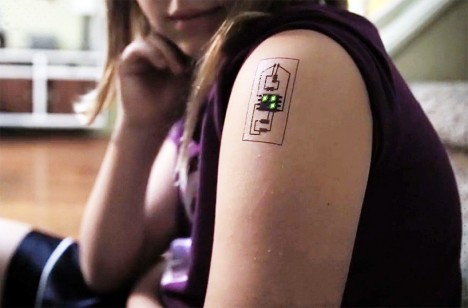
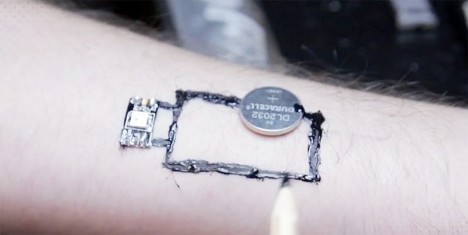
Tech Tats use conductive inks to create a circuit board right on your skin, providing a passive and unobtrusive alternative to standard wearables. Smartwatches and fitness trackers tend to stand out (worn on wrists or around necks) and need to be taken off and put back on daily, whereas these tats (while temporary) can be applied indefinitely.

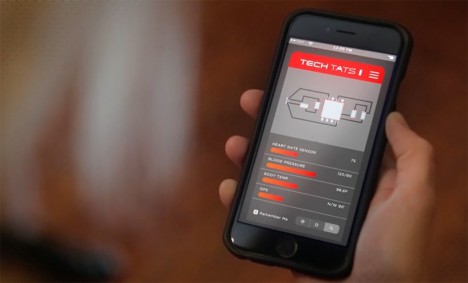
The wearable can be used to monitor body temperature, blood pressure, stress levels and heart rate, then transmit data wirelessly to a mobile app or computer.

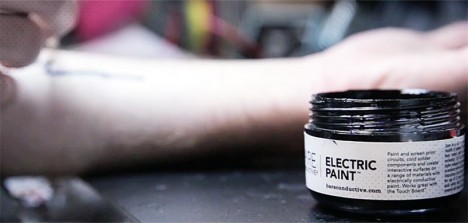
wearable electric ink paint

Lying effectively flat against the surface of your skin, these complete circuits are easy to conceal or reveal depending on whether or not you want to show off your ink.

wearable tech example development

The DIY-friendly design uses LED lights, a microcontroller and conductive ink – for now, the result is intentionally temporary, but permanently-inked versions could work as well.

wearable tech app wireless

The applications are numerous, starting with medical but expanding to financial as well as other identification-oriented use cases. A wearable wallet could be tied to your banking information, for example, or you could apply a Tech Tat to your child during an outing to a busy place, providing an easy way to track them in case you get separated. Chaotic Moon is currently developing both the wearable circuitry tech as well as related applications.

Share on Facebook


[ By WebUrbanist in Gadgets & Geekery & Technology. ]

[ WebUrbanist | Archives | Galleries | Privacy | TOS ]


WebUrbanist

 
Comments Off on Bio-Wearables: Tech Tattoos Put Working Circuits on Your Skin

Posted in Creativity


Back From the Future: Working Hoverboard Surfs Water & Rails

07 Aug

[ By WebUrbanist in Technology & Vehicles & Mods. ]

hoverboard over water

Pro skaters pull tricks on (and beyond) the pavement on this real-life hoverboard – at a distance, one might mistake their rides for normal skateboards, except for the steam from liquid nitrogen cooling superconductors to negative 320 degrees. Completing the futuristic scene, hovering drone cameras can be seen floating into and out of view, capturing wide-angle views and close-up shots of the gravity-defying skateboarders in action.

hoverboard park

Developed by Lexus, getting the hang of this electromagnetic contraption is still not trivial, even for professionals, as many falls and bails illustrate in the video above. Considering the challenge of relearning a fundamentally difference set of balancing variables, though, these skaters do quite well for themselves, even managing a few rail slides and to coast across a body of water.

hoverboard lexus

hoverboard bowl

The device does, however, come with a significant catch: like other similar inventions, it relies on a metallic subsurface to function – the depiction of this scene as taking place a typical skateboard is alas somewhat misleading.

hoverboard pavement

hoverboard jump

Out in the real world, there are limited environments where one might actually make this work. That being said, infrastructure changes, and should this take off as a recreational sport, new parks could be designed around these devices as well. At the very least, this one is a few steps past the Hendo in terms of technological compactness, robustness, stability and, of course, an outdoor demo to get people excited.

Share on Facebook


[ By WebUrbanist in Technology & Vehicles & Mods. ]

[ WebUrbanist | Archives | Galleries | Privacy | TOS ]


WebUrbanist

 
Comments Off on Back From the Future: Working Hoverboard Surfs Water & Rails

Posted in Creativity