RSS
 

Posts Tagged ‘Wildlife’

Readers’ Showcase: Nature and Wildlife

03 Aug

In all the talk about new gear, it’s easy to overlook the end result of our shared passion – the pursuit of stunning images. Among our large community there are some incredibly talented photographers who share their work in our forums, galleries and photo challenges, and from time to time we like to showcase some of the best work on our homepage. This week we asked users of our Nature and Wildlife forum to submit their favorite shots and as usual, the submissions were excellent. See gallery

Articles: Digital Photography Review (dpreview.com)

 
Comments Off on Readers’ Showcase: Nature and Wildlife

Posted in Uncategorized


Top 5 Tips for Wildlife Photography

01 Aug

Wildlife photography is continually growing in popularity, thanks to the accessibility of digital cameras nowadays. I’ve been a wildlife photographer for almost seven years now, and a professional for the last few of them. Over time I have picked up some really valuable techniques and tips, specific to wildlife photography, gained from either experience or learning from others in my field.

Here are some the top tips for wildlife photography.

Black Headed Gull Splash

#1 Get to Know Your Subject

I cannot stress this enough – wildlife photography is all about time and patience, much of which should be spent studying and paying attention to your subject. Instead of just showing up at a location once, return time and time again to photograph it. Watch an animal’s behavioural traits and try to pick up on clues it gives as to its next movement. With practise, you’ll often be able to predict where an animal will move to next, or what it will do.

Don’t believe me? I’ve photographed red squirrels for many years now, and I can now almost continually predict its pattern of movement, purely by watching for behavioural “ticks” it provides. For example, by watching where the squirrel is looking and the way it sniffs the air, I can often tell which direction it will head to next.

Jumping with nut

#2 Use Your Lens Hood

That bit of plastic that comes with your lens isn’t just for decoration. It prevent stray light from hitting the lens, helping you produce clearer pictures, but it also provides physical protection for your lens. Too many times I see photographers with it on, but the wrong way round. Make sure you take a few seconds to attach it properly before shooting.

Once, I was on an island photographing Atlantic seals. The rocks were slippery, and it wasn’t long before I fell over and landed with my whole body weight on the nose of my Nikon telephoto lens. Thankfully I had the lens hood on, and what was potentially an extremely expensive slip, was no more than two small screws broken in the hood.

#3 Don’t Shy Away From Aperture Priority Mode

Recently, I’ve found a lot of photographers are shooting in manual mode because they believe that anything else is “cheating” and makes a shot unworthy. I don’t know any professional wildlife photographers that don’t shoot in aperture priority mode – although don’t get me wrong, manual does have its uses in some situations. However, in general, aperture priority is great for wildlife photography.

Light is often never evenly distributed in a woodland or similar environment. A moving animal will cross different areas of different light intensities. If you take a burst of photos of it moving through the area, aperture priority mode will adjust the settings and ensure your images are correctly exposed. In manual mode, there is simply no time to continually adjust the settings when shooting a constantly changing scene.

By all means, you should understand how to use your camera in manual mode, but aperture priority is not the enemy. Adjust the ISO to increase or decrease your shutter speed, and use exposure compensation to fine-tune the exposure.

Wavingseal

#4 Be Prepared for a Wait

I mentioned earlier that wildlife photography is all about patience. When starting out in this field, you need to remember that rarely do wildlife photographers get a great shot in just a few hours of waiting. You may need to return to a spot time and time again, waiting for hours on end, before you will capture a unique image.

This may sound daunting, but it makes any images you capture that extra bit more rewarding. If you’re waiting in a hide, take a book with you, or a film on your smartphone to pass the time. Just remember to keep looking up and checking the scene in front of you.

WTE Fight

#5 Think Outside of the Box

Finally, with so many people taking excellent wildlife images nowadays, it is important to think outside of the box. Look at images others have taken and think “how can I do it better”. If you want your images to be noticed and stand out, give them the wow-factor by taking a photograph that no one has ever seen before. I don’t mean a rare animal, but instead a rare style of shot.

Don’t give up at the first hurdle, and keep clicking your way closer to the elusive perfect shot!

The post Top 5 Tips for Wildlife Photography by Will Nicholls appeared first on Digital Photography School.


Digital Photography School

 
Comments Off on Top 5 Tips for Wildlife Photography

Posted in Photography


Guide to Attracting Critters to Your Garden for Backyard Wildlife Photography

04 Jun

9783923464 5e8518e1f9 o
Wildlife photography brings with it some natural challenges. One of the greatest being that it is often difficult to have regular access to wild animals to photograph. Many of us are guilty of looking further afield for our subjects, but our own back gardens are prime locations for attracting, and photographing wildlife.

Live in the city suburbs? Doesn’t matter. Your area is likely to be bustling with bird life that you aren’t aware of yet. This guide will run you through a few of the best ways you can attract birds and animals to your garden for easier wildlife photography.

Provide Supplementary Food

Animals are suckers for food. They’re often hungry and looking for their next meal. The best way to get them to come to your garden is to provide nutritious, supplementary food. There are a variety of different methods you can use to feed wild animals.

Bird feeders are available in many different sizes and shapes. A normal tube system with various feeding holes is available from your local pet shop or garden centre. They’re inexpensive, and can be filled with many different varieties of seed. You can buy wild bird food from the same place, and get anything from mixed seeds to solely sunflower hearts. I use the latter, and to great effect.

For attracting mammals, you can get a variety of ground feeders. Squirrels, for example, love peanuts, hazelnuts and other nutty foods.
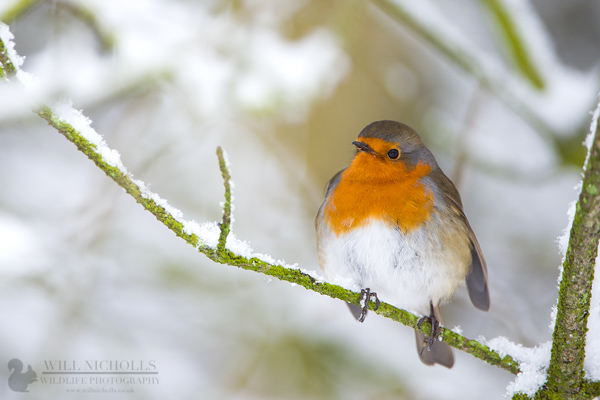
Robin in Snow

Don’t Forget the Ethics

By providing supplementary food to animals, you must not overfeed them. Fill the feeders maybe 2-3 times per week, so that they do not become dependent on you as a food source.

Make sure what you are feeding them is suitable. Ask a garden centre for advice if you need help. If using peanuts, they must be completely natural (not roasted) and unsalted!

If you decide to stop providing food, you must do so gradually. Slowly reduce the amount you are feeding over a month or so, allowing the animals to adjust naturally. Otherwise, you could end up unintentionally starving some individuals.

Getting Close for Photography

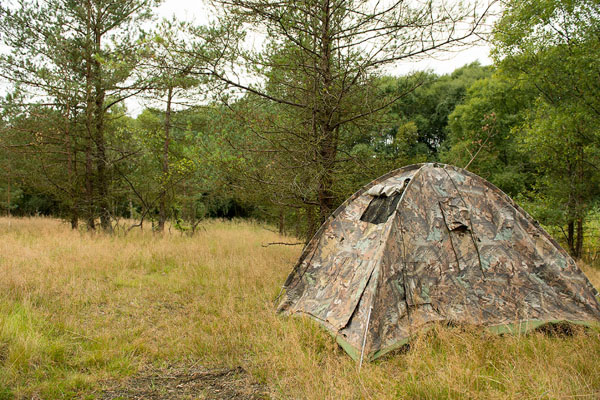
Many garden birds will allow you to sit quietly near the feeders, as they will eventually get used to you. However, if you want more freedom to move without scaring them away, get yourself a small tent hide (blind). These are available on Amazon at relatively cheap prices. A shooting blind will do the job perfectly.

Hide

Making an Area Photogenic

So by now you have the wildlife, but you still need to capture those stunning shots. A bird on a feeder isn’t the most attractive of images, but there are some neat tricks to avoid this.

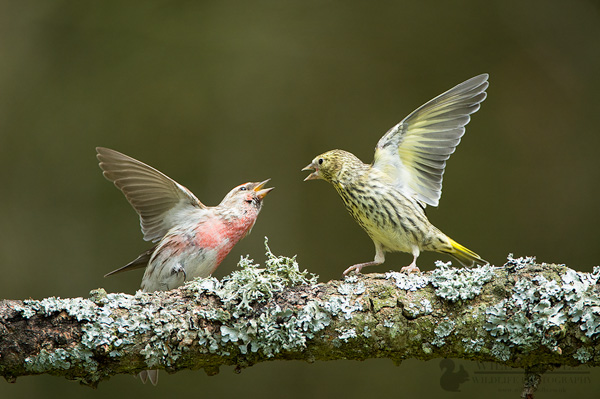
Place some gnarled twigs and sticks around the feeders. If you need to, strap them to a pole so they are held horizontally. Birds will use these as queueing platforms for the feeders, waiting their turn to feed. You can utilize this moment to capture some lovely portraits of the birds on these photogenic branches. If you’re lucky, you may even get two birds fighting for pride of place.

You should also be wary of your backgrounds. If you are photographing with a messy backdrop, it will likely come out in the image and be distracting. If there’s no choice of positioning next to something plainer, then consider hanging a dark green sheet at a distance behind your subjects. This will create a pleasing bokeh for your photographs.

Red Poll and Siskin Fight

Be Patient

The key to wildlife photography is patience. Changes won’t just happen overnight. Provide food and wait, and eventually you’ll see results. It shouldn’t take too long, but birds don’t have a radar which tells them as soon as food is available – they have to find it first!

That’s just about it. Fine-tune your feeding stations overtime, adding or subtracting elements depending on what works and what doesn’t work. Good luck!

The post Guide to Attracting Critters to Your Garden for Backyard Wildlife Photography by Will Nicholls appeared first on Digital Photography School.


Digital Photography School

 
Comments Off on Guide to Attracting Critters to Your Garden for Backyard Wildlife Photography

Posted in Photography


Wildlife photographer Florian Schulz offers shooting tips

12 May

Screen_Shot_2014-05-09_at_12.16.48_PM.png

Known for his conservation projects such as Freedom to Roam, a photographic project designed to encourage the creation of wildlife corridors, photographer Florian Schulz offers some tips and advice for shooting landscapes and wildlife in this six minute video. Learn more

News: Digital Photography Review (dpreview.com)

 
Comments Off on Wildlife photographer Florian Schulz offers shooting tips

Posted in Uncategorized


Remote Wildlife Photography From My Basement

19 Mar

A couple of weeks ago it was -30 Celsius (-22 Fahrenheit) and I was intent on photographing a pair of Red-backed Voles that seem to have established themselves in the backyard of my home in Edmonton, Alberta, Canada. Before I got myself a new gadget, I probably would have suited up in my heavy duty Canada Goose parka, some long underwear, snow pants and about four hand warmers and camped out for a morning to get a few shots of these cute little guys.

But now I’m a bit older and maybe even a bit wiser and I do so love my technology. And one of those technological gadgets allows me to get me shots without having to worry about freezing any of my favourite appendages right off. What’s the gadget I’m talking about? It’s called the CamRanger and it allows me to operate my camera anywhere that I’m within WiFi range (~35m indoors and ~100m outdoors).

CamRanger_SetupThe CamRanger itself is a little white plastic box measuring about 3.5” x 2” that you connect to the USB port of your camera via a USB cable. The device itself is powered by a rechargeable lithium battery. Once the CamRanger is plugged into your camera it sets up its own WiFi network. Connecting a device to that WiFi network (like an iPhone, iPad, Android device, Mac or Windows computer) allows you to wirelessly control your camera from that device.

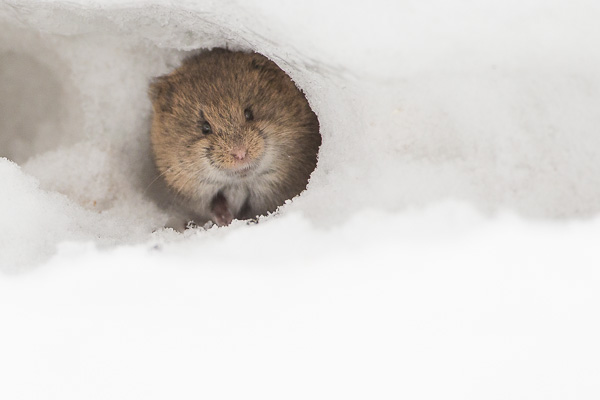
In my case, I used my iPad to connect to the CamRanger attached to my camera. I set the camera up on a tripod with the lens pointing at the holes in the side of a snow bank that the voles were using to access the world outside their lair. Once set up, I could scurry into my own lair which in this case was my home office in our basement.

I activated the Live View feature to keep an eye on what the camera was seeing. I’d been watching these voles for a few days (they set up camp under one of our bird feeders) and I knew that they came out for about an hour each morning just after sunrise. Sure enough, not long after getting everything set up and waiting for my glasses to defrost, the voles started making their appearance.

From my position warmly tucked away in the basement I could consult the live histogram and make adjustments to the exposure (Shutter Speed, Aperture and ISO) to make sure that my exposure was perfect. I turned on a feature in the software app called “Focus Peaking” that allowed me to clearly see what was, and wasn’t in focus and I fine-tuned that focus via controls in the app.

With all that set up, it was just a matter of waiting for the voles to get themselves into a photogenic position and then I’d tap the remote shutter button on the CamRanger app and take a shot. The voles usually spend their time cautiously emerging from their lair, then darting out to find one seed or another, and quickly returning to the shelter of their tunnel entrance to safely eat the seed. If they got a particularly good seed, they’d retreat further within the tunnel, presumably to stash it away.

Northern Red-backed Vole - © Paul Burwell Photography

Northern Red-backed Vole – © Paul Burwell Photography

During these breaks in the action, I used another feature of the CamRanger to download the full resolution images to the iPad so that I could magnify them to check for critical sharpness. There is a bit of lag between what you see on the app’s Live View display and what is happening in the “real world” along with a slight delay between when you press the shutter button on the app and when the signal arrives at the camera to make the photograph. It isn’t long (think milliseconds) but it can be enough that by the time the photo is made the fast little critter isn’t where you thought it should be, and focus is off or the composition isn’t great.

I use my CamRanger a lot and love its ability to remotely initiate photography and video sessions. It also has a built in intervalometer to make time lapse photos and can do advanced bracketing of exposures for HDR type applications. Another favourite CamRanger feature of mine is its ability to provide very precise focus control for macro photography and it can even perform automatic focus stacking to provide enhanced depth-of-field images by running them through some third party software.

Northern Red-backed Vole - © Paul Burwell Photography

Northern Red-backed Vole – © Paul Burwell Photography

A few years ago I’d dreamed of the possibility of having remote operational control of my camera at a distance and now, with the help of the CamRanger, that’s a reality. My toes and fingers are eternally grateful! CamRanger is widely available and sells for about $ 300 US dollars.

More on wildlife photography here:

  • 5 Most Common Mistakes in Wildlife Photography – and How to Avoid Them
  • Manipulating Natural Light in Wildlife Photography
  • Making Sharper Wildlife Photographs – [Part 1 of 2]
  • Making Sharper Wildlife Photographs – [Part 1 of 2]

The post Remote Wildlife Photography From My Basement by Paul Burwell appeared first on Digital Photography School.


Digital Photography School

 
Comments Off on Remote Wildlife Photography From My Basement

Posted in Photography


5 Most Common Mistakes in Wildlife Photography – and How to Avoid Them

05 Mar

Animals, especially wild ones, make such beautiful subjects that we cannot resist turning our cameras on them to capture images of these majestic creatures in their natural state.

Unlike a landscape, creatures are constantly in motion, and unlike most people, they can be pretty uncooperative when it comes to getting their picture taken. This can make for a lot of botched pictures. Here are a few tips on how to avoid some of the common pitfalls of wildlife photography.

1. A Tiny Subject
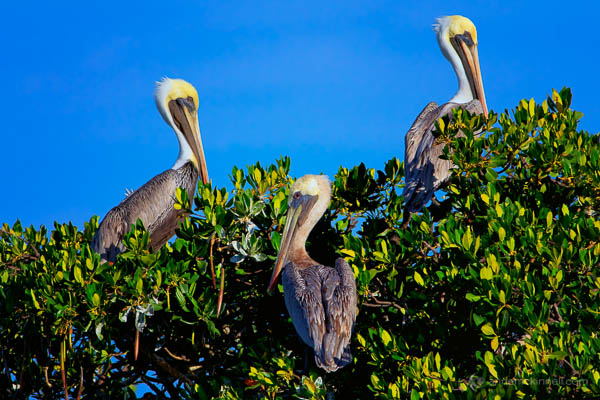
Three Brown Pelicans by Anne McKinnell

It’s tough to approach a wild animal – they are easily spooked. Because of this, many wildlife photos have more wilderness than wildlife, with the animal becoming a tiny speck in its environment. This can be effective in some situations, but for the most part you want the animal to be large enough in the frame to see the detail in its eyes. This is where a good telephoto lens can really help you out. Using a long focal length (over 200mm) will allow you to keep your distance while still filling the frame.

2. Blurry Image

Blur comes in many forms. Your entire image could be blurry due to camera shake; a problem which is magnified by the longer focal lengths needed for wildlife photography.

In landscape photography, using a tripod is a good technique to prevent camera shake, but a tripod is not as practical when photographing wildlife. Wildlife photography requires a more active shooting style – you’ll be moving around constantly – so unless you are using a lens that is too big to hold comfortably, forget the tripod. Also, because the animals are always in motion, you’ll need a fast shutter speed anyway. That leads me to the first method to combat camera shake blur: using a very fast shutter speed.

In landscape photography, you normally use a shutter speed that is at least 1/focal length of your lens. But usually that isn’t going to be fast enough when photographing wildlife because the animals are always in motion (even when they appear to be standing still). To avoid disappointment, you’ll need to use a much faster shutter speed to freeze both your own motion and the motion of the animal.

Here is my rule of thumb when photographing wildlife: if the animal appears to be still, use a shutter speed of 1/500th of a second. If the animal is moving, you’ll have to adjust the shutter speed based on how fast they are moving. I suggest a minimum of 1/1,000th of a second, or faster if the animal is moving faster.
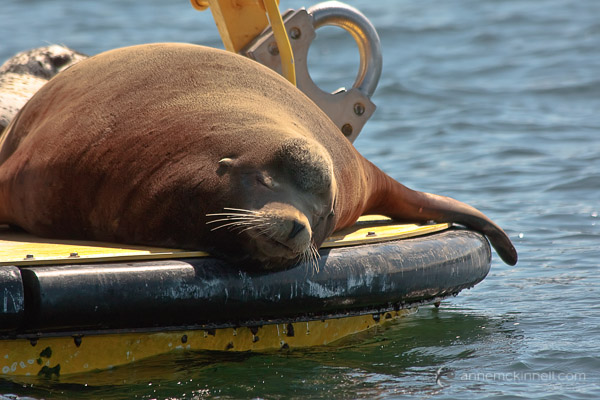
Sleeping Steller Sea Lion by Anne McKinnell

Using a lens with image stabilization will also help prevent camera shake blur. A lens with a wide maximum aperture, say f/2.8 or even f/4, will let more light in, allowing you to use a faster shutter speed. Likewise, a camera with low noise at high ISOs will let you turn up the sensitivity. All of these options will enable you to make faster exposures with better results.

Another type of blur is focus blur. This results from your camera being unable to focus, probably because your subject is moving and the AF motor gets confused. Some cameras and lenses have superior auto focus systems to others, but regardless of what you have, you can get the most out of it by setting it to continuous focus mode, usually called AF-C (Nikon) or AI Servo (Canon). This setting will track the subject’s movement in the frame and focus on it more quickly and accurately.

3. The Missed Moment

We’ve all been there. You see the perfect shot, frame it, and hit the shutter. But by the time the camera focuses and the exposure is made, the animal has moved and all you end up with is the second after the perfect shot.

There are two ways to avoid this heartbreak:

Anticipation

This is a skill that can only come with practice and a keen eye. If you can learn to see when the perfect moment is about to happen, rather than when it is happenning, you can hit the shutter right before the peak moment and cause the camera to snap at just the right time.
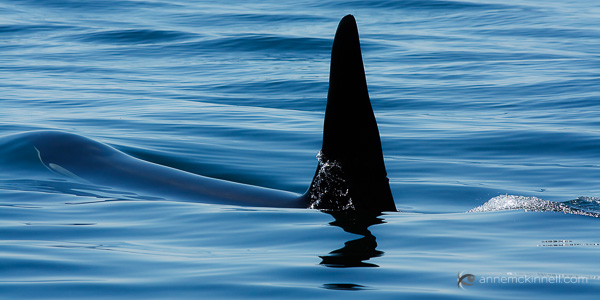
Orca by Anne McKinnell

Continuous Shooting

When animals are in motion, you’ll get the best chance at a good result by using continuous shooting mode (also called “drive mode” or “burst mode”). With this, you can take several images per second and choose the most successful.

Higher-end DSLRs and mirrorless cameras will have a much faster maximum shooting speed, but no matter which camera you have, there are a few things that will help get the highest continuous shooting rate.

One is a fast memory card – both SD (standard digital) and CF (compact flash) cards have a certain speed that they operate at, and a faster card will make sure that your camera doesn’t get bogged down trying to save the images.

The other is a fully-charged battery – as the juice drains, the camera can become sluggish, so it’s a good idea to keep an extra battery or two in your camera bag. For ultimate performance, you can buy a battery grip that fits on your camera. This holds two batteries at the same time for maximum speed.

4. Where Is Everyone???

Sometimes wild animals can be hard to find, and they’re not always where you want them to be. Before you can photograph them, you have to learn a few things about how to find them.

Know your animals

What types of animals live around you? Before you go out shooting, find out who they are, what they eat, when they sleep, and where they like to relax in between. If you’re photographing birds, research which ones are to be found in your area at which times of year. It’s also important to know how animals might react if, and when, they feel threatened – will they fight, or flee?
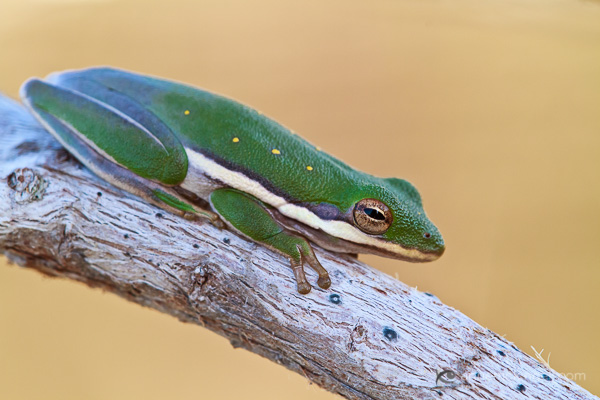
American Green Tree Frog by Anne McKinnell

Know the season

Some animals will be much more active at different times of year – particularly during autumn, as they rummage up enough food for winter, and in the spring when some animals come out of hibernation.

Camp out

I don’t mean overnight (unless you’re into that), but it’s often a very effective practice to find a popular area – probably somewhere with a source of water, food, shade or shelter – where animals like to congregate. Set your camera up on a tripod nearby, and disguise yourself among some trees or brush (some photographers go so far as to buy ,or build, a blind to hide their presence).

Be patient

Animals work on their own schedule, so don’t try to fit a shooting session in between other appointments. Great photos take time, and you must allow nature to unfold at its own pace. Many animals are easily frightened, so being quiet, still, and inconspicuous will help put them at ease.

5. Animal Attack!

We don’t call it “wildlife” for nothing – the biggest mistake you can make is accidentally getting mauled. Animals are not adjusted to polite society, and can be pretty rough customers if you catch them at the wrong time, or in the wrong way. They spend most of their waking lives foraging for food, and a spat over a meal can turn ugly, fast. Never get in the way of lunch, unless you want to take its place.

Don’t approach a wild animal directly, and if they see you, avoid looking them in the eye. This is usually a sign of aggression. If you need to get closer, keep low and move in a broad zig-zag pattern to avoid frightening the animal.
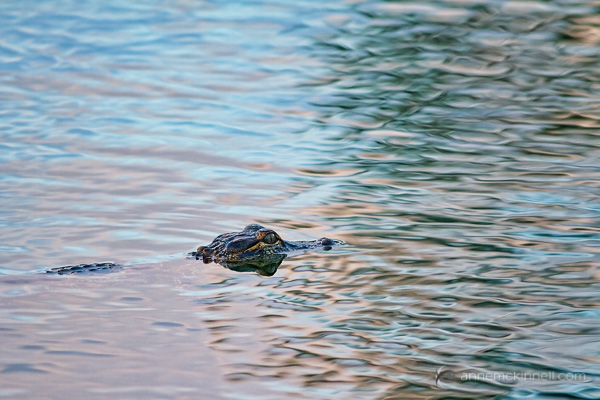
Baby Aligator by Anne McKinnell

Be aware of when mating season (or “running season”) is for the type of animal you’ll be photographing. Male mammals are full of testosterone at this time of year, and can be aggressive, violent, and very dangerous. Avoid photographing at these times. Similarly, find out when animals are likely to be giving birth and raising their young. We all know how risky it can be to get in between a mama bear and her cubs.

Whenever you’re dealing with wildlife, always remember that any creature can be dangerous when provoked, and it’s very important to treat animals and their habitat with the utmost care and respect.

For more tips on wildlife photography try these articles:

  • Manipulating Natural Light in Wildlife Photography
  • How Low Can you Go? An Illustration of Camera Angle for Wildlife Photography
  • Making Sharper Wildlife Photographs – [Part 1 of 2]
  • Making Sharper Wildlife Photographs – [Part 2 of 2]

The post 5 Most Common Mistakes in Wildlife Photography – and How to Avoid Them by Anne McKinnell appeared first on Digital Photography School.


Digital Photography School

 
Comments Off on 5 Most Common Mistakes in Wildlife Photography – and How to Avoid Them

Posted in Photography


Confluence of Wildlife and Man – A Story from the South Platte River

23 Feb

I was looking at paintings by Nancy Rynes, a Colorado artist. I like her texture series and, especially, the picture called “Confluence”. Two red hawks sitting on a wall covered by graffiti. For me the confluence means here the coming together of wildlife and man made objects. It reminds me an old story from the South Platte River paddling – encounter of a young eagle sitting on old trashed car.

I really hated those cars from 1950s and 1960s when I started to paddle the South Platte River years ago. Then, having no choice, I accepted them and started to photograph them. At least they were put into the river for a reason – to protect river banks. It seems that wildlife is accepting them too.

Car Photography Session on the South Platte River
South Platte River – Another View or How to Photograph the River?

Here is my eagle story originally posted in 2007.

October 15 was my first day on the South Platte River in the fall/winter paddling season of 2007. I paddled upstream from Kersey in the Thunderbolt kayak. After exploring the Lone Tree Creek I paddled back down river to Kersey. It was just before sunset when I decided to shoot some pictures of old cars dumped there to protect river banks.

I squeezed my kayak into some standing backwater and started shooting. I didn’t notice anything unusual, but I did sense somebody’s presence …


bald eagle South Platte River

eaglet bald eagle south platte river kayak Colorado

Not farther from me than a length of my kayak there was an old truck and a young eagle was sitting on the top of it. I kept shooting my pictures. However, looking at a beak and powerful talons, I didn’t feel very comfortable balancing my tippy kayak in the front of that chick. Judging from the time stamps in my pictures I spent 12 minutes there. During that time the eaglet did not make the slightest movement.

I wished I had a better camera than my Pentax Optio W10. It was getting dark, so I backed up leaving the eagle on his truck.

I have seen adult bald eagles many times during my paddling on the South Platte, but it was the closest and most exciting encounter. As a first guess I assumed that I saw a juvenile bald eagle. After searching internet it seems that it is quite difficult to distinguish between immature bald and golden eagles. Some comments I got indicate that it was the golden eagle. So, who is that chick?

Breeding Bald Eagles in Colorado

… from the Center for Biological Diversity:

Bald eagles commonly nested in and around Rocky Mountain National Park as late as the 1950s (117). By 1974, just one pair remained in the state (93). The population remained perilously low through the 1970s and 1980s, began growing in 1986 and reached a peak of approximately 65 pairs in 2006 (2, 69, 93, 96). One-third of Colorado’s nesting bald eagles occur east of the Continental Divide in the South Platte River watershed (115). Other breeding concentrations include the Yampa River upstream of Craig, the White River in the vicinity of Meeker, the Colorado River upstream of Kremmling, and La Plata and Montezuma counties.

Bald Eagle – Nesting & Young from American Bald Eagle Information.

Other bird stories and pictures:

Do Wild Turkey Swim? A Photo Story of White Water Turkey Hen for Thanksgiving
Are My Paddlings Days Over?
Blue Heron – Bird Photography from a Racing Kayak with Pentax Optio W10 Camera?
From the Love Life of Canada Goose in My Paddling Pond: Rivals or Mates?


paddling with a camera

 
Comments Off on Confluence of Wildlife and Man – A Story from the South Platte River

Posted in Photography


Manipulating Natural Light in Wildlife Photography

08 Jan


back-light-wildlife-photography-1-edit

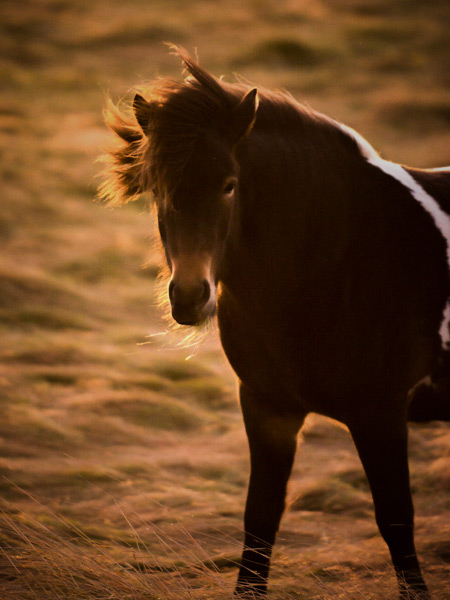
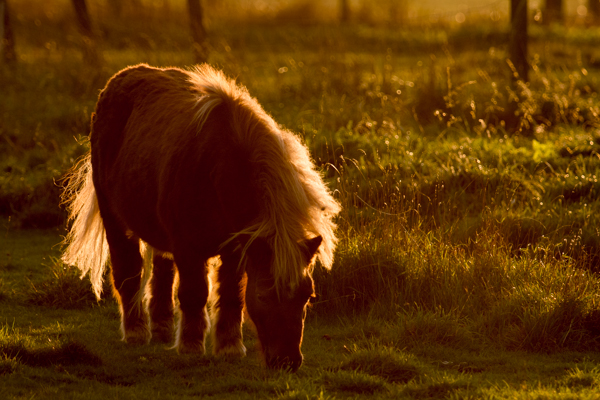
An Icelandic pony, shot against a setting sun

When photographing wildlife, the sun is one of the most useful tools that enables you to create something different or add impact to your images.  By taking control of your position relative to your subject, and to the sun, you can manipulate the available light to your advantage.

Favourable times of day for wildlife photography are at the beginning and end of the day when the sun is low in the sky.  This often coincides with periods of heightened activity of many animals, but also with a warmer directional light from the sun being lower in the sky.  When the sun is low in this way, it lends itself to a number of key natural lighting techniques.

side lighting wildlife photography

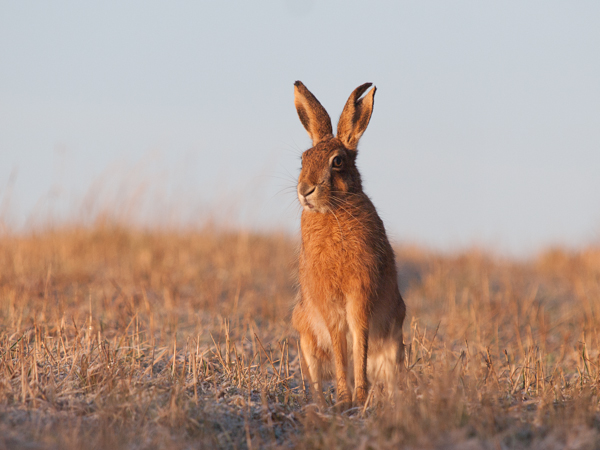
A side lit brown hare (Lepus europaeus)

Side lighting

You can naturally side light your subject by keeping the sun at approximately 90 degrees to the direction that you are facing.  The sunlight will then be lighting your subject from the side which can result in a greater sense of shape, form, and texture from the contrast between the soft light and shadows across the subject.

side lighting wildlife photography

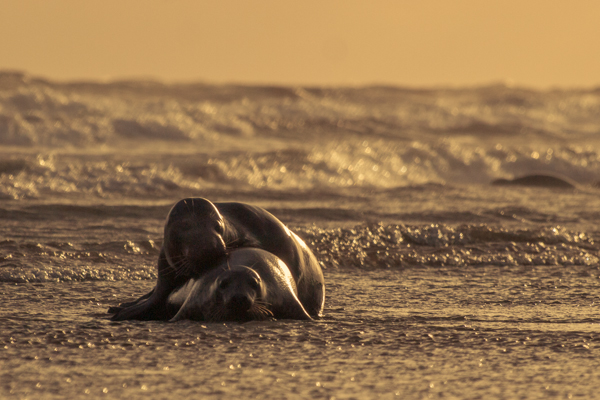
Side lit grey seals (Halichoerus grypus) courting at sunrise

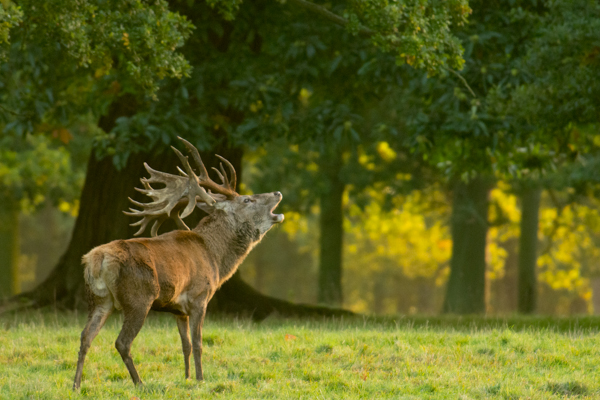
It can add a sense of three dimensionality that full-on front lighting cannot do, and because of the soft nature of the light, the highlights and shadows are not too intense and can be easily captured.

side lighting wildlife photography

A bellowing red deer stag (Cervus elaphus) with light from the side

Back lighting

One of the first tips you often hear when starting in photography is not to shoot into the sun. However, by doing just that you can create striking images.  By positioning yourself so that your subject is directly between you and the sun, you can capture a strong backlit outline of your subject that is almost like a halo of light.  This works best when there are fur or feathers to capture the light, and it is preferable that the outline of your subject is easily recognizable.

back lighting wildlife photography

The hair of this pony create a golden outline when backlit by the low sun

Exposing for backlit subjects can be difficult, as you will be dealing with areas of extreme brightness and shadow. It is best to ensure you retain detail in the highlights (as that will be forming the main detail of the image) by manually underexposing.

Silhouettes

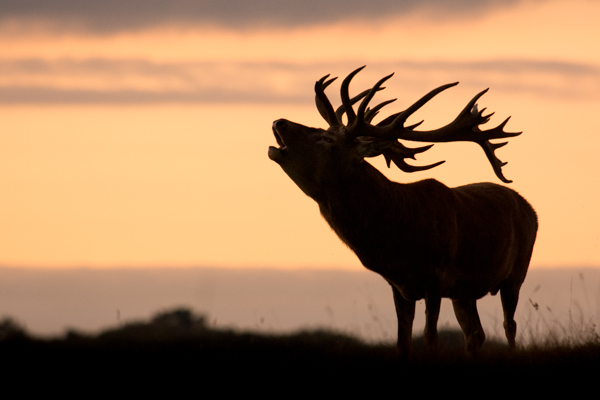
Silhouettes are another way of capturing the strong outline of your subject, but in this instance it is achieved by shooting your subject against a bright background, often the sky.  Just after the sun has gone down is a great time for this technique.  There can often be far more colour in the sky once the sun is below the horizon, and the sky will still be bright enough to easily cast your subject into silhouette.

One tip for shooting wildlife silhouettes is that sometimes it can be good to ensure you retain some detail in the shadows, for example an eye. This can help retain some interest in the large area of black, and to keep a connection between the subject and the viewer.  If you want to do this, you will need to ensure that you do not underexpose the subject too far, such that the shadow detail is lost, to give you flexibility during post-processing.

silhouette wildlife photography

A silhouette of a red deer stag (Cervus elaphus) is an instantly identifiable form against a sunset sky

To conclude

It can be difficult to motivate yourself to get up for sunrise or to be out photographing at sunset, but those times of day give you much more flexibility to use the natural light as a powerful tool in your wildlife photography.  By understanding how the position of the sun relative to you or your subject will influence the final image, you can create images that aren’t possible at other times of day.

So get out there and see how you can use natural light to make you images stand out!

Further reading on wildlife photography:

  • How Low Can you Go? An Illustration of Camera Angle for Wildlife Photography
  • Making Sharper Wildlife Photographs – [Part 1 of 2]
  • Making Sharper Wildlife Photographs – [Part 2 of 2]
  • 5  Big Tips to add Impact and Variety to your Wildlife Images

The post Manipulating Natural Light in Wildlife Photography by Elliot Hook appeared first on Digital Photography School.


Digital Photography School

 
Comments Off on Manipulating Natural Light in Wildlife Photography

Posted in Photography


How Low Can you Go? An Illustration of Camera Angle for Wildlife Photography

26 Nov

This is a guest article by photographer Paul Burwell

Whenever I teach wildlife photography, I inevitably go on at some length about the necessity of trying to get your camera near the height of your subject’s eyes.  This concept doesn’t only apply to wildlife photography, it applies equally well to photography of people, pets or hobbits.  When I teach this concept to a group of students, their eyes tend to glaze over until I put some images in front of them that can really illustrate the point.

Safety first

It obviously isn’t always practical or safe to get into a lower shooting position. This is true if you’re dealing with larger animals and especially predators, getting low may trigger their prey response where they start to consider you a potential snack, or in my case a meal.  It isn’t just your health I’m concerned about, as it seems the regular response to some sort of animal attack is for the authorities to track down the offending critter and end its time on earth.  So, when I’m telling you that your pictures will improve if you can get lower and match your subject’s eye level, you do still need to THINK about what you’re doing and the sort of subject you’re dealing with.  No photograph is worth either your health, or the health of your subject.

How camera angle effects your images

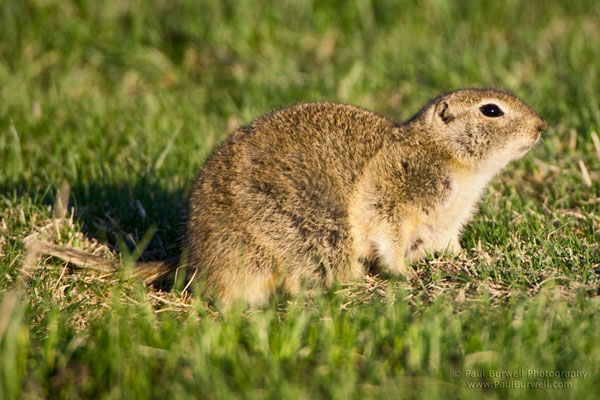
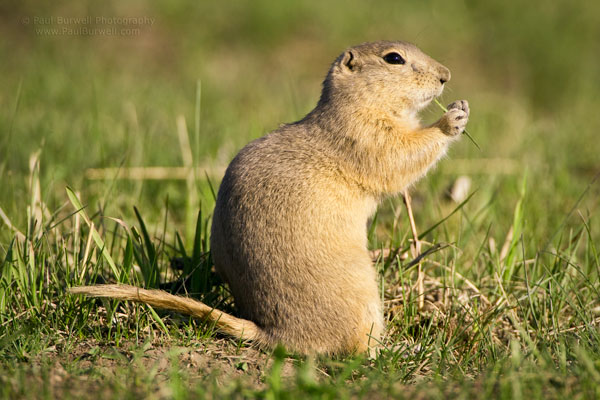
I thought I’d use the following images, of the extremely dangerous and elusive Richardson’s ground squirrel, to illustrate how images improve as the angle of the camera to the subject changes in respect to the level of the subject’s eyes.  This is the perfect critter for this topic because, depending on the squirrel’s posture, its eyes are somewhere between one and six inches (2.5 to 15 cm) above the ground.  All of the images below were photographed with my full-frame Canon DSLR along with the Canon 500mm lens with a 2.0x teleconverter on it for an effective focal length of 1000mm.  All of the images were made at an aperture setting of f/9, the standard setting I use on this lens/teleconverter combination when I’m wanting as little depth-of-field as possible while at the same time stopping down a bit to compensate for the sharpness lost by using the teleconverter. 1000mm is roughly equivalent to about a 20x zoom, if you are using a point-and-shoot type camera, from what our bare eyes would normally see.

Examples

This first shot was taken from my vehicle with the lens resting just on top of the window opening.  The extreme focal length (or magnification factor) of images made with a super telephoto lens does help minimize the apparent difference in height (which ended up being about four feet or 1.2 metres) but you can still tell it was shot looking down at the squirrel.

Richardson's Ground Squirrel sitting on the grass - shot from four feet height

Richardson’s Ground Squirrel sitting on the grass – shot from four feet height (1.2 meters)

On this next photo below, using my tripod with the lens about 18 inches (45cm) above the ground, you can really see how the camera angle has changed and how nicely the background resolves into a whole bunch of nothingness (technically called bokeh), but there is still an element of peering down on the ground squirrel.

Richardson's Ground Squirrel sitting on the grass - shot from 18" camera height

Richardson’s Ground Squirrel eating a piece of grass – shot from 18″ camera height

 The effect of getting your lens closer to your subject’s eye level is that the viewer of your images is able to look at the subject without looking down at it and the innate connection between the viewer and the subject is a lot more intimate and compelling.  So what happens when you get even lower to the point where your lens is as close to the eye level of the subject as possible?

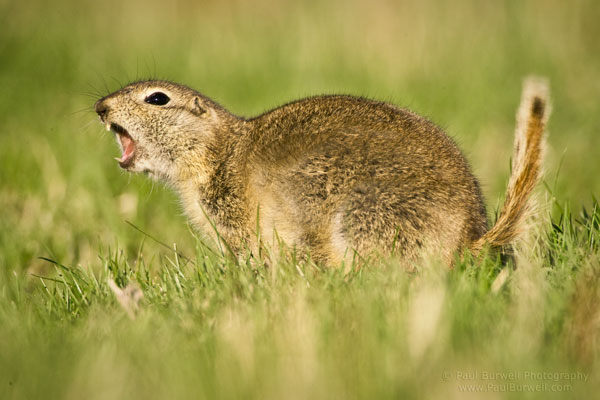
Richardson's Ground Squirrel giving a warning signal - 6 inch camera height

Richardson’s Ground Squirrel giving a warning signal – 6 inch camera height

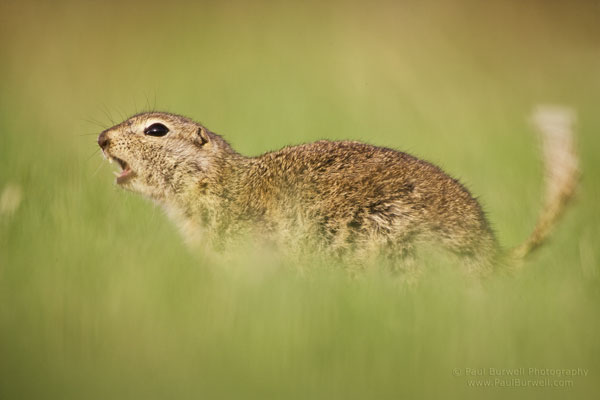
Richardson's Ground Squirrel giving a warning signal - 6 inch camera height

Richardson’s Ground Squirrel giving a warning signal – 6 inch camera height

You can see the image becomes even more compelling with the lens and camera are now at the same level of the squirrel. I was laying in a prone position on the ground for these last two images, with the lens resting on a bean bag.  In the first of the two images above, shot at 6 inches camera height, you can really see the delineation line of what’s in focus and what isn’t (the DOF).  One could argue that the out of focus grass in front of the image is distracting, but, I’d argue that the dreamy effect created adds to the interest of the photo, and the squirrel’s head and eyes are nice and sharp.

Summary and your turn

I hope that these images, along with the accompanying text, help illustrate the point about getting to your subject’s eye-level whenever feasible. It’s not necessary to use a 500mm lens, you will have the same effect with whatever lens you have.

  • Have some feedback on these images?
  • Have questions about different situations?
  • This is the place to ask them or contribute your own thoughts.

Paul Burwell wildlife photographerIn addition to being the owner of the Burwell School of Photography, Paul Burwell is a professional photographer, writer, educator and enthusiastic naturalist with over twenty years experience working with and educating adults. He is a contributing editor and regular columnist with Outdoor Photography Canada Magazine. Paul has been a finalist in the Veolia ‘Wildlife Photographer of the Year’ worldwide competition both in 2009 and 2010 and was named a ‘Top Wildlife Shooter’ by Popular Photography Magazine in 2010. You can find Paul on Google Plus and Paul Burwell.com.

Post originally from: Digital Photography Tips.

Check out our more Photography Tips at Photography Tips for Beginners, Portrait Photography Tips and Wedding Photography Tips.

How Low Can you Go? An Illustration of Camera Angle for Wildlife Photography

The post How Low Can you Go? An Illustration of Camera Angle for Wildlife Photography by Guest Contributor appeared first on Digital Photography School.


Digital Photography School

 
Comments Off on How Low Can you Go? An Illustration of Camera Angle for Wildlife Photography

Posted in Photography


Award-winning wildlife photos capture candid moments

09 Nov

35_Greg-du-Toit-_South-Africa_-Essence-of-elephants.jpg

An owl in mid-flight, a polar bear peering from under icy waters, to a monkey being blasted by snow are some of the winning images from this year’s Wildlife Photographer of the Year competition. Elephants surrounding a watering hole in Botswana by South African photographer Greg du Toit was the overall winner. See gallery 

News: Digital Photography Review (dpreview.com)

 
Comments Off on Award-winning wildlife photos capture candid moments

Posted in Uncategorized