RSS
 

Posts Tagged ‘Wildlife’

Writer’s Favorite Wildlife Lens – Tamron 150-600mm

24 Feb
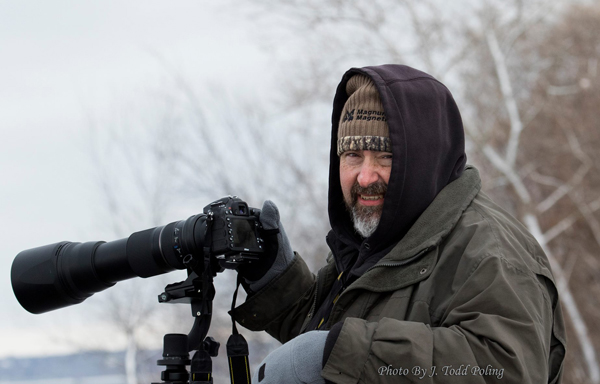
Writer with Tamron 150-600 on his Nikon D7100 in Le Claire Iowa. Photo by: J. Todd Polling

Writer Bruce Wunderlich with Tamron 150-600mm on his Nikon D7100 in Le Claire, Iowa. Photo by: J. Todd Poling

One of my favorite subjects to photograph is wildlife. In the past, great wildlife images were very difficult for me to shoot because my close presence usually meant disturbing the wild creature I had my eye on. I began looking for a longer lens with plenty of reach that wasn’t going to break my piggy bank. So, after much patient and thorough research, I purchased the Tamron 150-600mm SP F/5-6.3 Di VC USD zoom lens for my Nikon D7100.

The reach of this lens gave me some great results right out of the box, but I will have to admit that it takes some practice to photograph moving subjects, such as birds in flight, with this lens. Tamron 150-600mm does have some limitations, but one thing you will find with any telephoto lens is that no matter how much you have, you will always want more.

Technical Specifications:

  • Focal length: 150-600mm (equivalent to 225-900mm on a cropped sensor)
  • Maximum aperture: f/5- f/6.3
  • Available mounts: Nikon, Canon and Sony
  • Minimum focus distance: 8.86′ (2.7 m)
  • Weight: 4.3 lb (1.95 kg)

Compared to Prime lens

Of course, this lens I purchased doesn’t match the quality of a prime lens like the Nikon 6oomm f/4. But besides costing around $ 8000 less then the Nikon lens, it has a few other advantages over its prime equivalent. Besides the heftier price tag, the Nikon prime weighs in at over 11 pounds compared to just over 4 pounds  (1.95 kg) for the Tamron. Unless you are a body builder, hand-holding the prime for an extended period of time is nearly impossible. The Tamron 150-600mm can easily be hand-held, though I recommend using a Gimbal head on your tripod for smoother panning. While the Nikon Prime is a fixed 600mm focal length, the Tamron zooms from 150-600mm, great for those opportunities when you unexpectly get very close to the wildlife, and you can quickly adjust and zoom back.

Be Prepared

The best way to get great wildlife images is to always be prepared. This lens is small enough that I leave it on my camera all the time in my camera bag, so if I happen onto a sudden wildlife encounter I don’t lose time switching out my original lens to the Tamron and miss the opportunity to get the image.

Eagle Shoot in Iowa

Recently, I had the opportunity to take a road trip with friends to Le Claire, Iowa, to photograph bald eagles on the Mississippi River. This was the perfect chance for me to put my Tamron 150-600mm to good use. Here are a few of my favorite images captured with the Tamron on the trip.
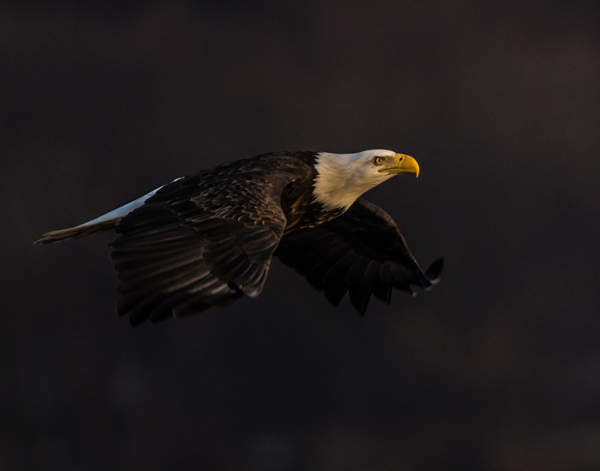
Flying into the Sunset  Focal Length: 600mm 1/1000 of second, f/6.3 with ISO 400

Flying into the Sunset
Focal length: 600mm, 1/1000th of second, f/6.3, ISO 400
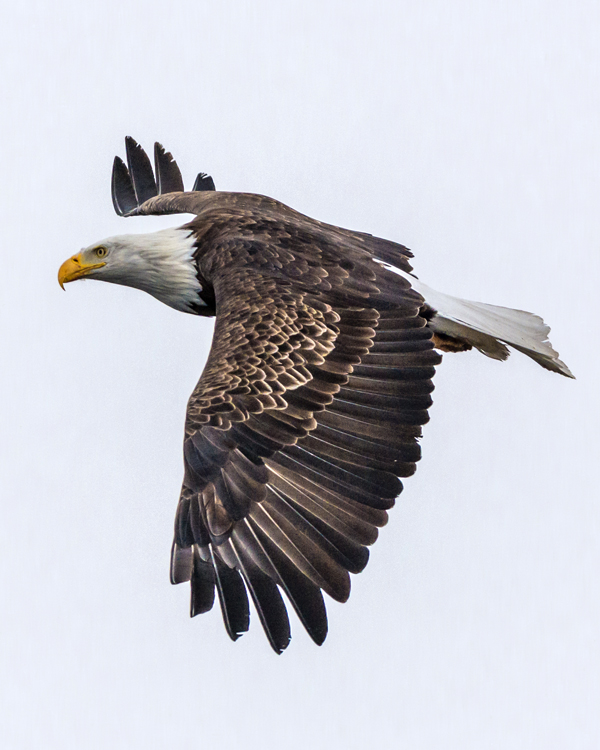
Focal Length 360mm 1/2500 of a second, f/6.3, ISO 1000 im Aperture priority mode.

Focal length 360mm, 1/2500th of a second, f/6.3, ISO 1000 in aperture priority mode.

Sweet Spot

From 150-450 mm, images shot with this lens are really sharp. From 450-600 mm, the results are a little softer, but in most cases it still captures very useable images. In good light the autofocus performs quickly and accurately, while in low light it is some what slower. But for the price, this is a very nice lens.
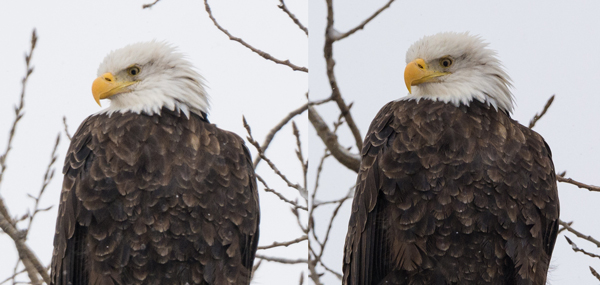
Image of Eagle on left was captured at 600mm and image on right was captured at 450mm. Image on right has a little more detail in the feathers.
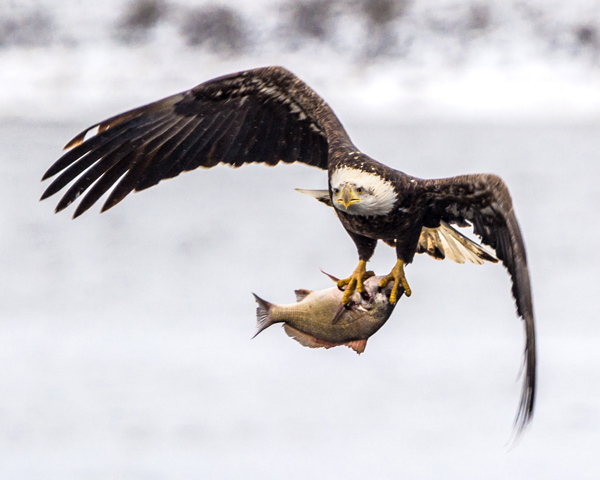
Image of the eagle on left was captured at 600mm and image on right was captured at 450mm. Image on right has a little more detail in the feathers.

Focal Length: 600mm. 1/800th of a second, f/6.3, ISO 320

Focal length: 600mm, 1/800th of a second, f/6.3, ISO 320
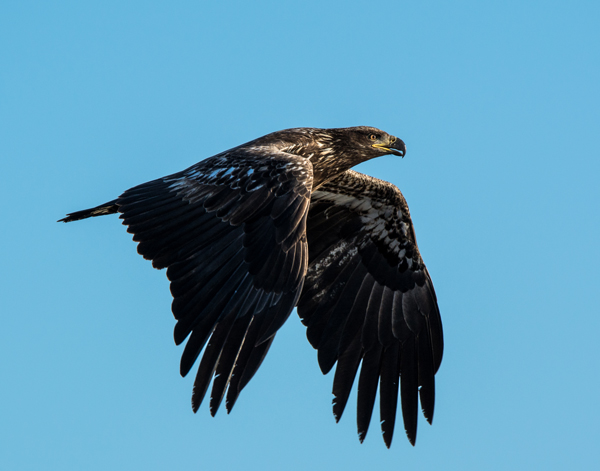
This juvenile Bald Eagle was captured in bright mid day light. Focal Length: 450mm, 1/1000th of a second, f/6.3, ISO 320

This juvenile bald eagle was captured in bright midday light. Focal length: 450mm, 1/1000th of a second, f/6.3, ISO 320

 Conclusion

In my opinion, if you are in the market for a versatile wildlife lens and are on a budget, the Tamron 150-600mm would be a very good choice. I’ve been pleased with the wildlife images I’ve captured with mine, and am looking forward to getting even better ones with practice. That’s why it’s my favorite wildlife lens.

What is your favorite wildlife lens?

googletag.cmd.push(function() {
tablet_slots.push( googletag.defineSlot( “/1005424/_dPSv4_tab-all-article-bottom_(300×250)”, [300, 250], “pb-ad-78623” ).addService( googletag.pubads() ) ); } );

googletag.cmd.push(function() {
mobile_slots.push( googletag.defineSlot( “/1005424/_dPSv4_mob-all-article-bottom_(300×250)”, [300, 250], “pb-ad-78158” ).addService( googletag.pubads() ) ); } );

The post Writer’s Favorite Wildlife Lens – Tamron 150-600mm by Bruce Wunderlich appeared first on Digital Photography School.


Digital Photography School

 
Comments Off on Writer’s Favorite Wildlife Lens – Tamron 150-600mm

Posted in Photography


Close Encounters: Will Burrard-Lucas’ wildlife photography

22 Feb

Based in the UK, nature photographer Will Burrard-Lucas is highly dedicated to wildlife photography. He’s even developed his own remote-controlled camera system for getting as close as you can with dangerous animals like rhinos, lions and… meerkats. The photographer spent an entire year living in Zambia where he used new technologies like drones, camera traps and remote-control devices to capture nature from tricky perspectives. See gallery

Articles: Digital Photography Review (dpreview.com)

 
Comments Off on Close Encounters: Will Burrard-Lucas’ wildlife photography

Posted in Uncategorized


Wild Things: Marsel van Oosten’s landscape and wildlife photography

11 Jan

“Simplicity is the ultimate sophistication,” says wildlife and nature photographer Marsel van Oosten. A talented landscape and wildlife photographer, his imagery has been featured in a number of publications like National Geographic. Check out more of his work and peek inside his camera bag. See gallery

Articles: Digital Photography Review (dpreview.com)

 
Comments Off on Wild Things: Marsel van Oosten’s landscape and wildlife photography

Posted in Uncategorized


Why Manual Exposure is Better for Winter Wildlife Photography?

18 Dec

My winter wildlife photography tours and workshops put us in locations with lots of snow on the ground, which presents a new issue for most people – how to get good exposure without continuously messing around with exposure compensation.

You have to tell the camera to brighten your images by up to two stops of exposure to make whites white, because the meter in your camera wants everything to be a mid-tone gray.

MBP Cranes Exposure Example

For example, here is a photograph of one of our main subjects, the Japanese Red-Crowned Crane (above, left). It’s a predominantly white bird on a snowy white background. For a shot like this if I put the camera in Aperture Priority mode with the aperture set to f/8 for example, the camera would tell me that the shutter speed should be about 1/2000 of a second, which would result in a photo like the under-exposed dark version (above, right).

To avoid under-exposing images like this, one thing you can do is to dial-in +2 stops of exposure compensation in Aperture Priority mode. This would result in a new shutter speed of 1/500 of a second at the same aperture, and a beautifully white image.

There is one fundamental problem with this method though, and this is what most people fail to understand until they’ve missed enough shots for them to take my advice seriously. The moment your subject moves away from their white background, the exposure with +2 stops of exposure compensation is no longer valid.

To prove my point during a recent tour, I switched to Aperture Priority with auto-ISO and photographed this Whooper swan on the snow with +2 stops of exposure compensation dialed in. This gave me a perfectly white bird with perfectly white snow, as we’d expect.

MBP Hokkaido 20140221 0212

Then, just moments later, I photographed a flock of Whooper swans flying into the same location, this time with a darker background, which fooled the camera into increasing my exposure and the result was this totally over-exposed photograph.

MBP Hokkaido 20140221 0217

To avoid this, when photographing wildlife in the snow, the best course of action is to lock your exposure down (using Manual) so that when the opportunity to photograph something with a darker background arises, the exposure doesn’t shift, and the subject and the snow remains perfectly exposed, as in this example.

MBP Hokkaido 20140131 1261

The downside of this method is that you do have to continually check your exposure, especially on a day with patchy cloud for example. Because you’ve locked down your exposure totally, you are responsible for noticing when it gets a bit brighter or darker, and updating your camera settings.

In my experience though, although you sometimes have to tweak the exposure in post-processing, you still return home with many more usable shots, as opposed to the above example with the flock of supernova swans, which is a firm candidate for deletion.

Settings Your Exposure for White

To set my exposure I usually just fill the frame with snow, and adjust the settings in Manual mode, until I see the caret on the camera’s meter indicate that the exposure is now at +2 stops for overcast snow or +1 1/3 stops for brightly lit snow.

MBP Filling the Frame with Snow 640 f8 ISO1001

How you achieve your exposure depends on your subject. Personally, I usually start with the aperture, as that controls depth-of-field, and I want to select that based on how much of the subject or scene I want to be sharp, and how much of it I want to be nice blurry out of focus bokeh.

Then I select the shutter speed, based on my focal length and how much I expect my subject to move. The rule of thumb for the slowest shutter speed you can use without the risk of introducing camera shake, is to use the focal length as the denominator of the fraction in your shutter speed. For example if you are shooting with a 200mm lens, the slowest shutter speed you can safely shoot hand-held is 1/200 of a second.

Of course, image stabilization or vibration reduction in the lens can help you to go slower, but you also have to consider subject movement with wildlife. To freeze a large bird in flight you need at least 1/500 of a second, but ideally 1/1000 or higher if possible.

These are, of course, general guidelines. You may decide to slow down the shutter speed and pan with your subject to use the blur of the wing movement artistically as in this example, but that’s the subject for another article.

MBP Hokkaido 20130207 4320

Once I’ve decided the aperture and shutter speed based on the subject and any artistic decisions I might make, the last setting that I usually change as I lock in on my manual exposure is the ISO. Once the caret reaches +2 on the camera’s meter scale, I make a test shot, and check the histogram.

For a photograph of a field of snow, or a white bird on a white background, most of the data in the histogram should be almost touching the right shoulder of the histogram. This means the image data captured is almost pure white, as it should be. If the data is in the middle of the histogram, the whites will be gray. This is what the camera would do automatically without our help.

MBP White on White Histogram

Also remember to turn on your highlight alert or highlight warnings in your camera’s settings, commonly called “the blinkies”, as these will alert you to any areas of your image that you might be over-exposing. It’s okay to over-expose a few specular highlights, but try not to over-expose large areas of your image, especially on your main subject, or the detail in those areas will be lost, and cannot be recovered on a computer later.

One of the other nice things about photographing birds over snow is that the light from the snow reflects up onto the underside of the birds in flight, as in this example. This means that you really don’t have to worry about where the bird is once you have locked your exposure down in Manual mode.

MBP Hokkaido 20140221 6768

The subject can be on white background, a dark background, or a blue sky, and your exposure will be spot on, leaving you free to concentrate on focusing and composition, instead of frantically trying to adjust your exposure compensation as the action unfolds.

googletag.cmd.push(function() {
tablet_slots.push( googletag.defineSlot( “/1005424/_dPSv4_tab-all-article-bottom_(300×250)”, [300, 250], “pb-ad-78623” ).addService( googletag.pubads() ) ); } );

googletag.cmd.push(function() {
mobile_slots.push( googletag.defineSlot( “/1005424/_dPSv4_mob-all-article-bottom_(300×250)”, [300, 250], “pb-ad-78158” ).addService( googletag.pubads() ) ); } );

The post Why Manual Exposure is Better for Winter Wildlife Photography? by Martin Bailey appeared first on Digital Photography School.


Digital Photography School

 
Comments Off on Why Manual Exposure is Better for Winter Wildlife Photography?

Posted in Photography


creativeLIVE presents ‘The Art of Wildlife Photography’ with Tom Mangelsen

03 Dec

creativeLIVE is hosting a two day live workshop with nature photographer Tom Mangelsen. The class will be broadcast live from 9am today, December 2nd (Pacific time) and will cover everything from gear and location scouting advice to wildlife etiquette. It also includes a critique and portfolio review of viewers’ images. The class is free to watch live and costs $ 99 for the rebroadcast. Click through for a link

Articles: Digital Photography Review (dpreview.com)

 
Comments Off on creativeLIVE presents ‘The Art of Wildlife Photography’ with Tom Mangelsen

Posted in Uncategorized


Natural History Museum announces Wildlife Photographer of the Year 2014 winners

25 Oct

The Natural History Museum has announced winners of its 2014 Wildlife Photographer of the Year competition. This year’s winning photos document all manner of creatures, from a pride of lions in the Serengeti, to a yellow scorpion in the northeast of Spain. The competition recognizes both adult and youth winners and awards the top photo with £10,000 and a trophy. See gallery

Articles: Digital Photography Review (dpreview.com)

 
Comments Off on Natural History Museum announces Wildlife Photographer of the Year 2014 winners

Posted in Uncategorized


Wildlife Photographer of the Year releases images from winners shortlist

11 Oct

Britain’s Natural History Museum has disclosed four of the winning images from the shortlist of the Wildlife Photographer of the Year competition. With a judging panel chaired by Jim Brandenburg, the competition attracted almost 42000 entries from 96 countries this year, and 100 of the best images will form a touring exhibition that the museum says will visit six continents. See gallery

Articles: Digital Photography Review (dpreview.com)

 
Comments Off on Wildlife Photographer of the Year releases images from winners shortlist

Posted in Uncategorized


Nature and Wildlife Photography Tips for Beginners

23 Sep

If you have an interest in wildlife or nature photography there is a good chance you have seen an image at some point that has completely taken your breath away. Maybe it was a photograph of a sweeping landscape washed in the golden light of the dying afternoon sun or close-up of some small natural miracle that you had never noticed before that moment. You might even have asked yourself, “How did they do that?”

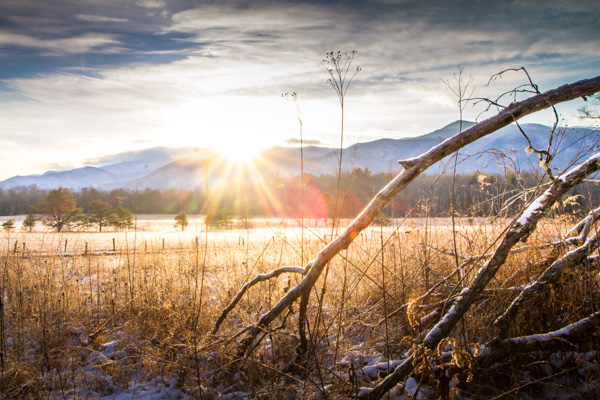
Winter landscape

Well, the majority of those incredible photographs came about through a good deal of physical hardship, practiced patience, and a healthy amount of self-made luck.

Here are some tips to help you become stronger at wildlife photography and better at recording of the natural world.

Do your homework before heading out

Be as educated as possible before you ever make a photo. Doing your homework is one of the most important, yet loathed parts of wildlife photography. It never pays to walk into a situation and be completely clueless. Though you can never be totally prepared for every challenge you will face (that’s part of the fun) you can educate yourself so that you safely make the most of your outing.

What gear to pack

Advanced gear is not a requirement, however, patience and perseverance are essential. You don’t need the latest and greatest zoom lens or space-age gadgetry in order to produce outstanding nature and wildlife photos. At the same, you must also understand any limitations of your kit, so that you will have realistic expectations and avoid disappointment.

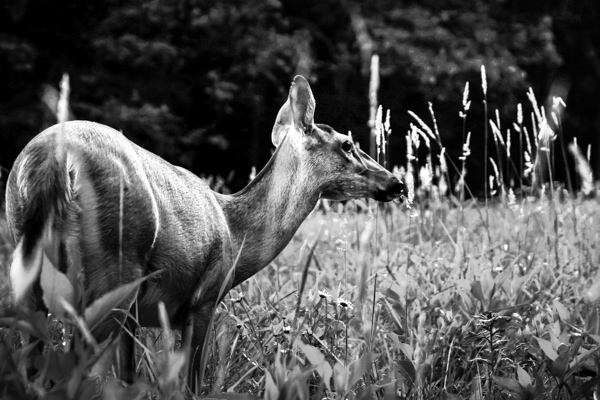
Deer

This photograph was made using the 28-135mm kit lens that came with my camera – after I slowly and quietly crawled into range.

Gear up for what you’ll most likely be shooting. Packing for a photographic outing can cause a lot of anxiety. It’s easy to over pack due to fear of lacking a piece of gear. Over packing though, can be even worse than under packing. You become weighed down and uncomfortable. You find yourself not enjoying what you’re doing which is one of the most preventable of all mistakes, made by photographers. Research the animals and scenes you are likely to encounter. Decide what is most and least important to you. Make choices, commit to them, and then let it go. It will make packing a lot less stressful.

If you plan on photographing wildlife, such as birds and animals that scare easily, then pack your best zoom lens so you can keep distance between you and your subject. Shooting landscapes or scenes where stealth is not a concern? You might consider taking along a wider angle lens to better capture your scene. Ultimately, there is no secret formula and no true all-in-one lens to cover every situation. Be informed before you leave so that you can make the best use of whatever lens you have.

A good bag is worth its weight in gold

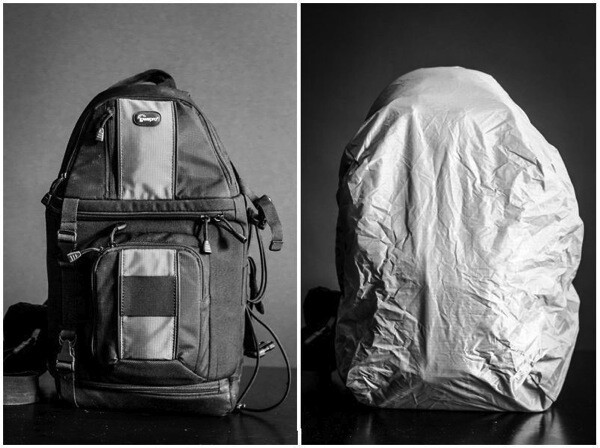
All the planning in the world isn’t worth much unless you can comfortably carry your essential tools with you. Find a camera bag that can carry the gear you need easily, and is equally comfortable on your body. Bags range greatly in price and quality but you usually get what you pay for. For added piece of mind, you might consider a bag that is semi-weatherproof or water resistant.

My go-to lightweight bag for wildlife photography, shown with and without the handy rain cover deployed.

Camerabag

Read reviews and find a bag that fits your body, your gear, and your planned outing. You will have a much more comfortable and enjoyable experience. Speaking of comfort…

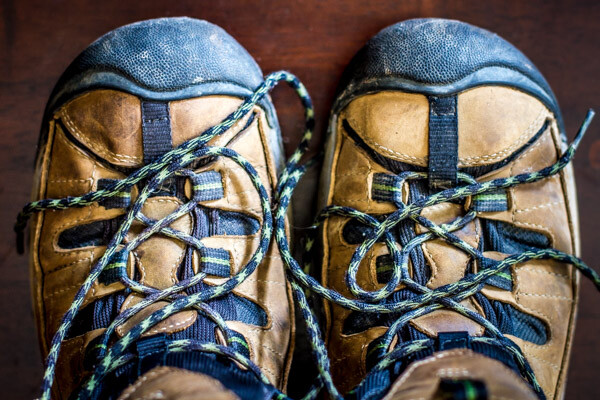
Shoes

Comfort items

Shoes: A good pair of hiking shoes or boots is one of the most important pieces of gear for any wildlife photographer. Grit, dirt, mud, water, insects, rocks, and creepy-crawlies – you need a pair of shoes or boots that can handle all of these elements. Your shoes should be well fitting and suitable for walking long distances. If your feet become uncomfortable it won’t be long before you start thinking about cutting your trip short.

Prepare a checklist

It’s always a good idea to have a mental checklist before beginning any shoot. Before your outing ask yourself the following questions:

  • Are any special permits or permissions required? Some National or State Parks and wildlife sanctuaries require special permits for access to certain areas, especially those deemed as backcountry environments.
  • Where will I park my vehicle? This is very important. Believe me, if you park your vehicle in an unauthorized area you will be stuck with a sizeable fine or worse, return to find your vehicle has been towed.
  • Are there time restraints of any kind? Most natural areas and parks have hours of operation just like a business. You might arrive expecting to shoot a great sunrise only to find out the location you chose isn’t accessible until after daybreak. Also remember that wild creatures and critters are usually most active in the early morning or late evening.
  • What are the expected weather conditions? This is a biggie. Know what to expect as far as the weather is concerned. Check the forecast the day of departure and keep tabs on it throughout the day if possible. NEVER chance endangering yourself or your equipment by venturing out unprepared for bad weather.
  • What are the times for sunrise and sunset? Again, be sure the places you want to capture a sunrise or sunset are accessible during those times. You need to also be aware of the schedule so that you can allow enough time to reach your location and set up your gear before it’s go time.
  • Are there any commonly photographed animals, landmarks, or structures? Research what is usually photographed around the area you plan to visit. Find a park ranger or staff member and ask about lesser known spots that are less travelled by tourists. Knowing what’s popular will save you time and help to avoid shooting a scene the same way it has been done time and time again. Look for ways to be creative and set your work apart!

So, you’ve researched your location and have a good idea of what to expect. Here are a few basic tips that can help you after you’ve reached your destination.

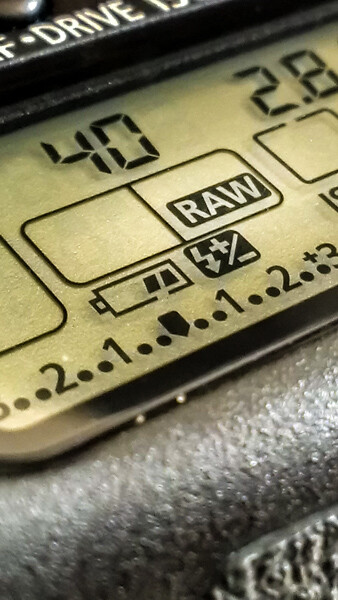
Shoot RAW

Shootraw

If possible, set your camera to capture images in camera RAW format. RAW image files are basically unprocessed, one might say uncooked, straight from your camera’s image sensor. They contain a massive amount of pixel information when compared to JPEG and take up a lot more memory card space. However, this additional information allows more latitude for adjustments in post-processing.

Use the lowest practical ISO

The ISO number of photographic film and image sensors relates to their sensitivity to light. The boiled down explanation is, everything else being equal, the higher the ISO number the less light is required to make an image. Unfortunately with higher light sensitivity comes increased image noise. In most (but not all) situations you will generally want to use the lowest ISO possible. That is not to say you should be afraid of bumping up the ISO. A fast shutter speed is often needed to capture the quick movements of wildlife and increased noise is far less noticeable than a blurred image.

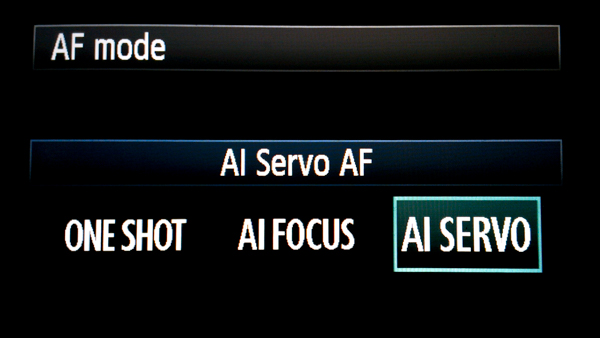
Use AF continuous (AI Servo) mode when photographing wildlife

Afservo

Autofocus (AF) can be your best friend or your worst enemy. When it comes to photographing most wildlife, however, autofocus is a great tool! Animals and birds, especially the wild variety, are almost constantly on the move. They shift positions and move closer or farther away selfishly, with little regard for the photo you are so carefully trying to compose. This is when AF-Continuous and AF-Servo modes come in handy. Though called different names depending on your camera’s make, they both accomplish the same objective which is keeping a moving subject constantly in focus. Place your selected focus area over your subject and half-press the shutter button to engage the AF. Focus will be tracked for as long as you follow your subject while maintaining pressure on the shutter button. Read your camera’s manual (you’ve done that already, right?) for detailed information concerning specific autofocus capabilities for your model, and how each mode can be selected.

Don’t forget the tripod

“I really didn’t think I would need my tripod” are words that usually begin a sad story about how a potentially great shot is missed. In most wildlife and nature photography situations a tripod is always a good idea. It’s better to have access to one and not need it than to need it and not have one available. Find the lightest and most compact tripod that is sturdy enough to handle your camera setup.

Learn so you can prepare. Prepare so you can photograph. Photograph so you can grow.

Photographing wildlife can be difficult but it can also yield huge artistic, personal, and even spiritual rewards. So go out and have fun doing what you do, but don’t forget to put the camera down every now and then to enjoy the world around you.

“Nature never goes out of style.” – Unknown

The post Nature and Wildlife Photography Tips for Beginners by Adam Welch appeared first on Digital Photography School.


Digital Photography School

 
Comments Off on Nature and Wildlife Photography Tips for Beginners

Posted in Photography


A Walk on the Wild Side: A Collection of Wildlife Photography

12 Sep

Nature is an amazing thing. This week I share with you some images of wildlife, animals in nature. Some may have been taken on nature preserves or even in a zoo, but if the image is well done and we can’t tell kudos to the photographer.

If you do any wildlife photography you’ll appreciate how difficult it is to get the perfect shot. So enjoy these and be inspired.

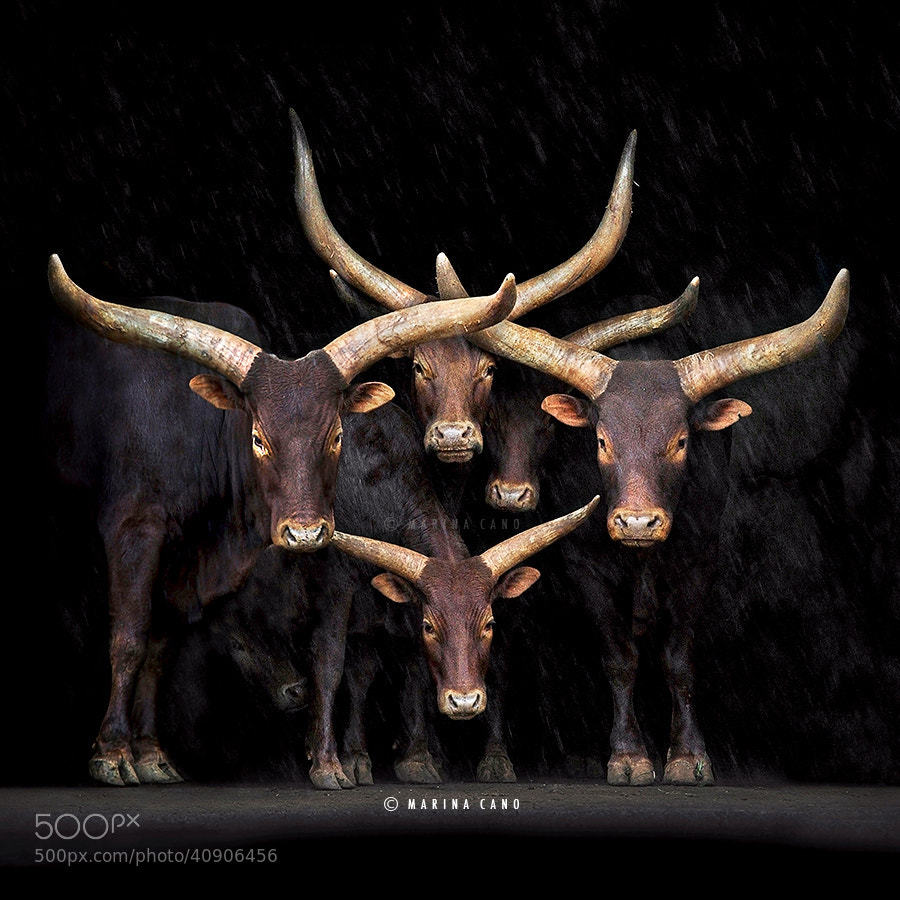
Photograph ONCE in a LIFETIME by Marina Cano on 500px

ONCE in a LIFETIME by Marina Cano on 500px

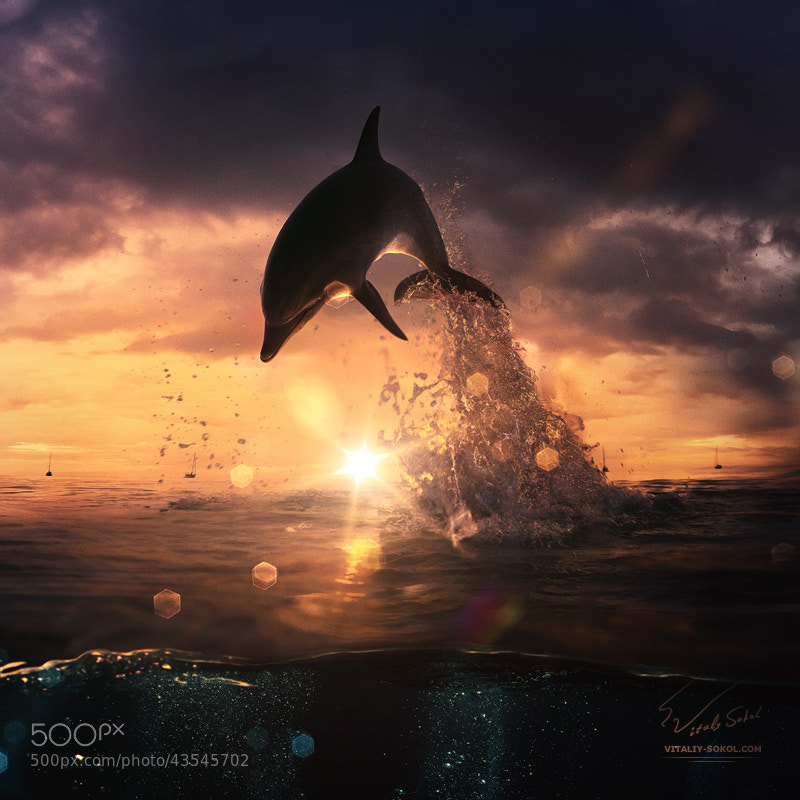
Photograph beautiful dolphin jumping from shining water by Vitaliy Sokol on 500px

beautiful dolphin jumping from shining water by Vitaliy Sokol on 500px

Photograph Winter Ponder by Kyle Moffat on 500px

Winter Ponder by Kyle Moffat on 500px

Photograph Tiger C L A W S by yudi lim on 500px

Tiger C L A W S by yudi lim on 500px

Photograph Happy Fox by Roeselien Raimond on 500px

Happy Fox by Roeselien Raimond on 500px

Photograph Evil Dark Angel by Harry  Eggens on 500px

Evil Dark Angel by Harry Eggens on 500px

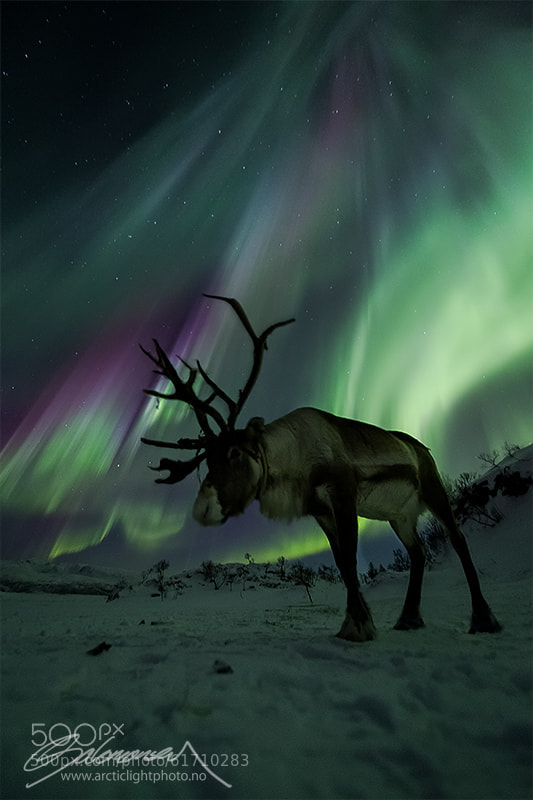
Photograph Norwegian Caribou by Ole C. Salomonsen on 500px

Norwegian Caribou by Ole C. Salomonsen on 500px

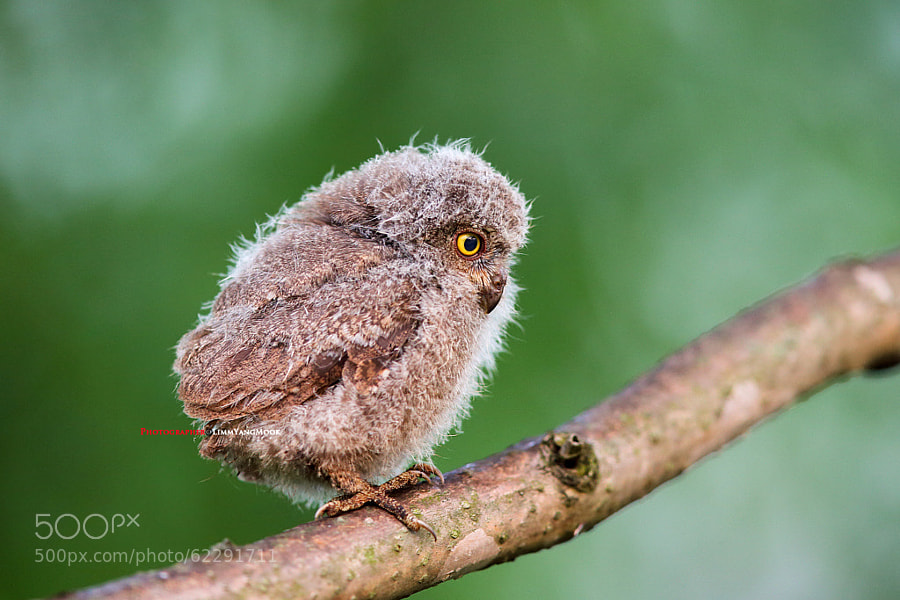
Photograph Baby owl by Limm yangmook on 500px

Baby owl by Limm yangmook on 500px

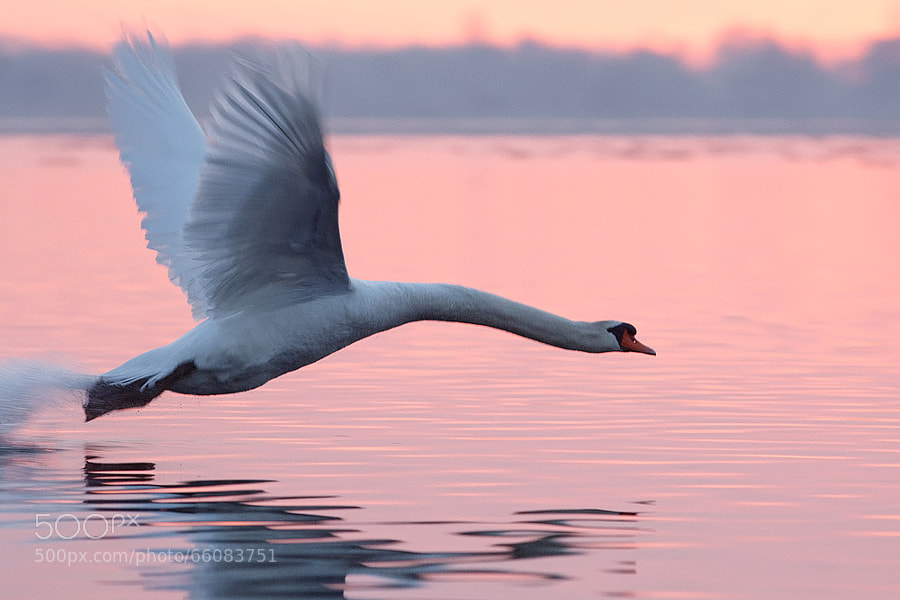
Photograph Swan on a Mission by Roeselien Raimond on 500px

Swan on a Mission by Roeselien Raimond on 500px

Photograph Let me have a Smell first by Julian Rad on 500px

Let me have a Smell first by Julian Rad on 500px

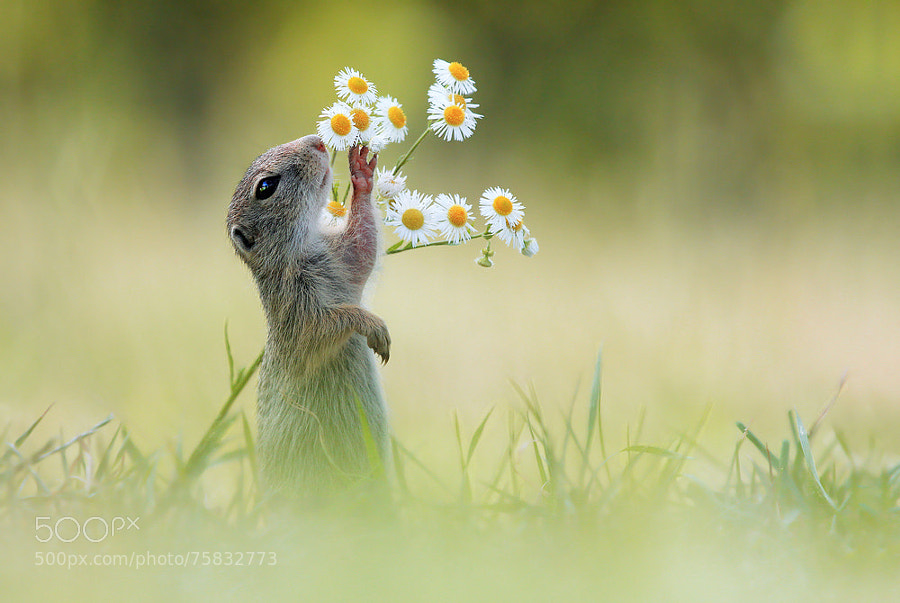
Photograph Thirsty Squirrel by Julian Rad on 500px

Thirsty Squirrel by Julian Rad on 500px

Photograph Surprise! by Simon Roy on 500px

Surprise! by Simon Roy on 500px

Photograph Bye Bye by Massimiliano Orpelli on 500px

Bye Bye by Massimiliano Orpelli on 500px

Photograph Dust by Chris Fischer on 500px

Dust by Chris Fischer on 500px

Photograph Beauty by Chris Fischer on 500px

Beauty by Chris Fischer on 500px

Photograph Awful Close by Chris Fischer on 500px

Awful Close by Chris Fischer on 500px

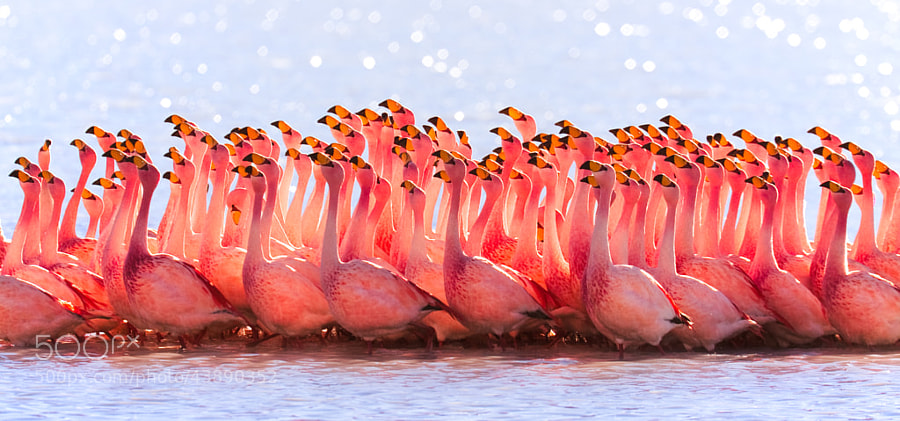
Photograph Bolivian Flamingos by Pedro Szekely on 500px

Bolivian Flamingos by Pedro Szekely on 500px

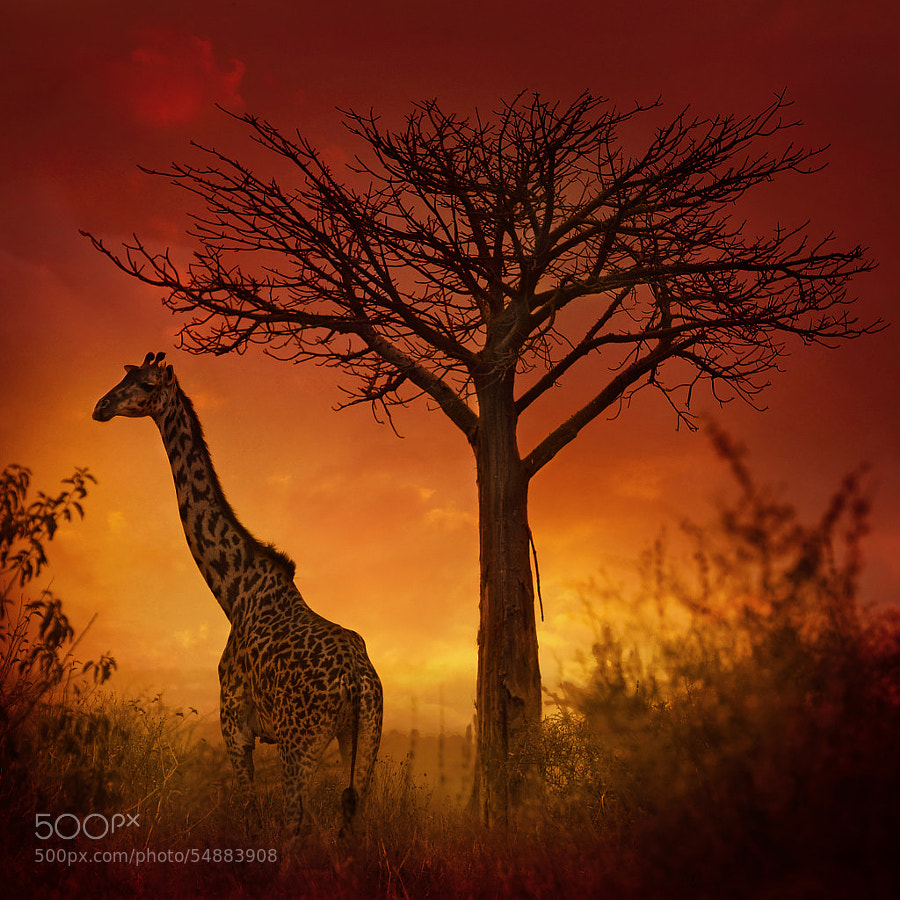
Photograph Wild sunset. by Patrick Galibert on 500px

Wild sunset. by Patrick Galibert on 500px

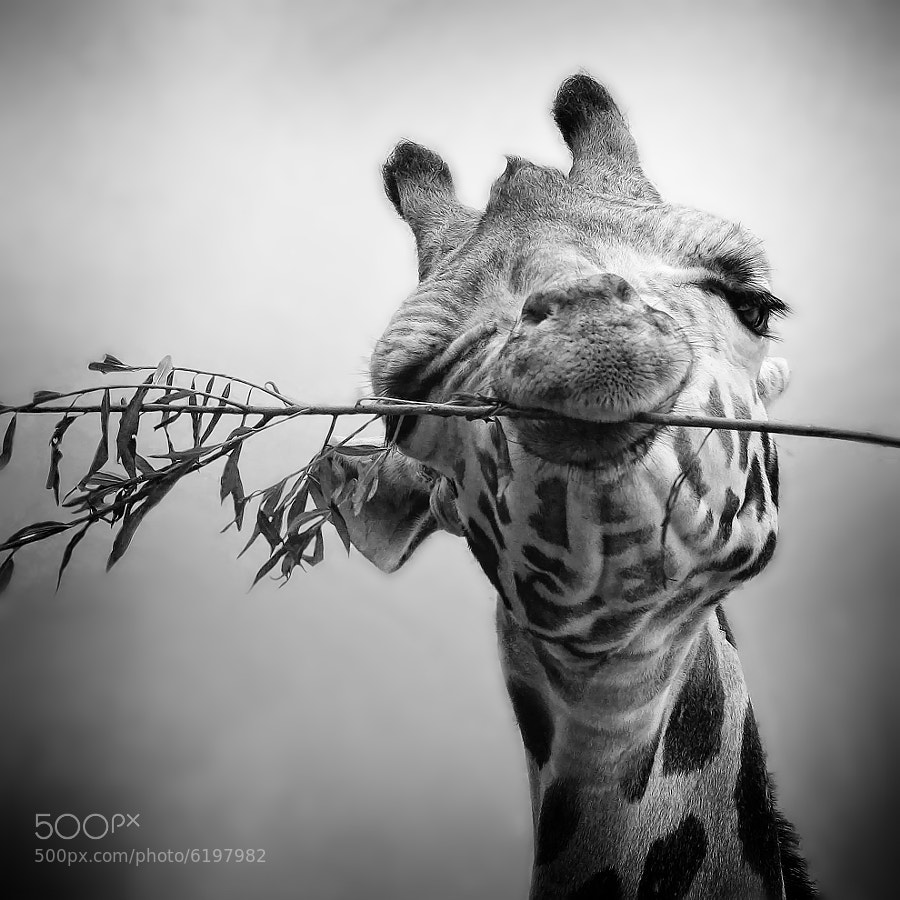
Photograph for you by Gabriele Tenhagen-Schmitz on 500px

for you by Gabriele Tenhagen-Schmitz on 500px

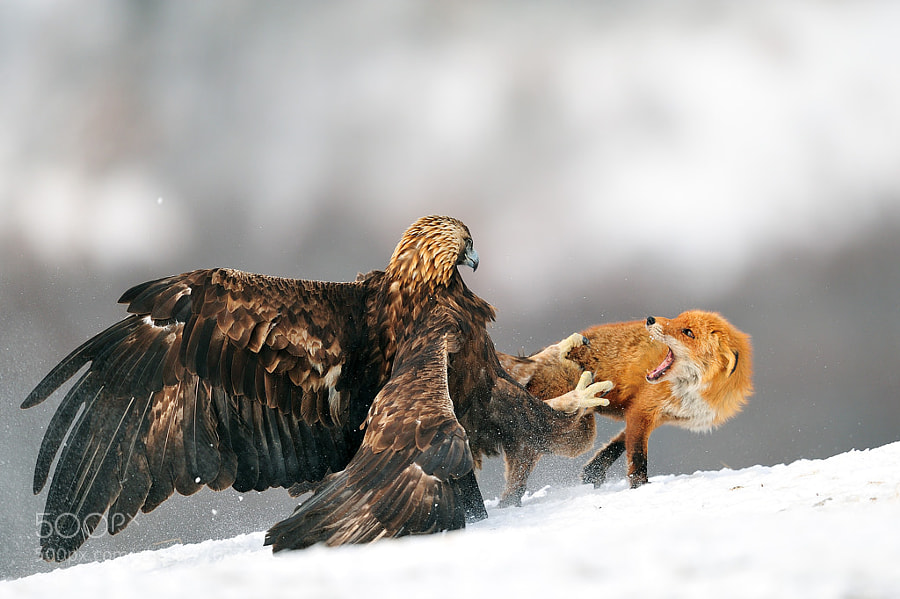
Photograph Golden eagle having a discussion with Red fox by Yves Adams on 500px

Golden eagle having a discussion with Red fox by Yves Adams on 500px

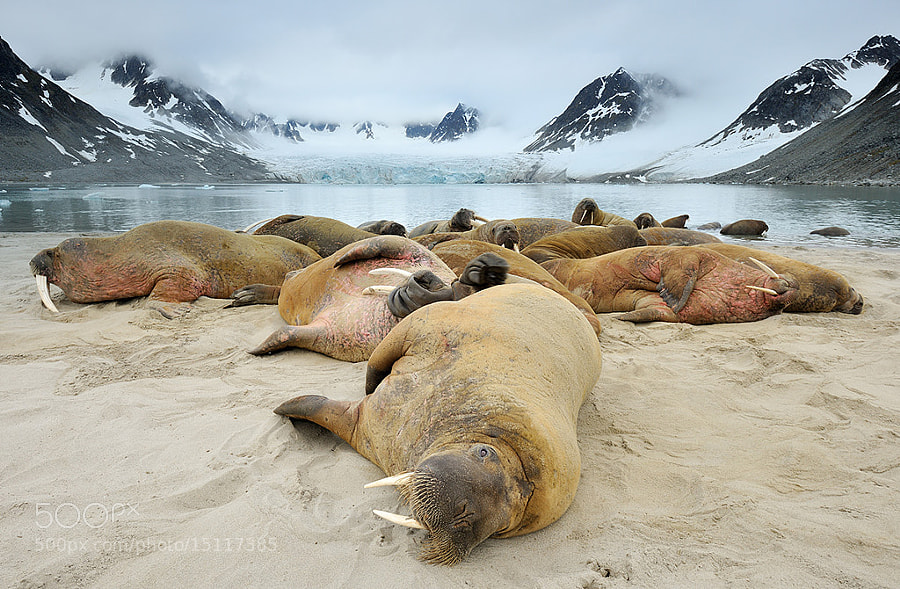
Photograph Midnight in Svalbard by Yves Adams on 500px

Midnight in Svalbard by Yves Adams on 500px

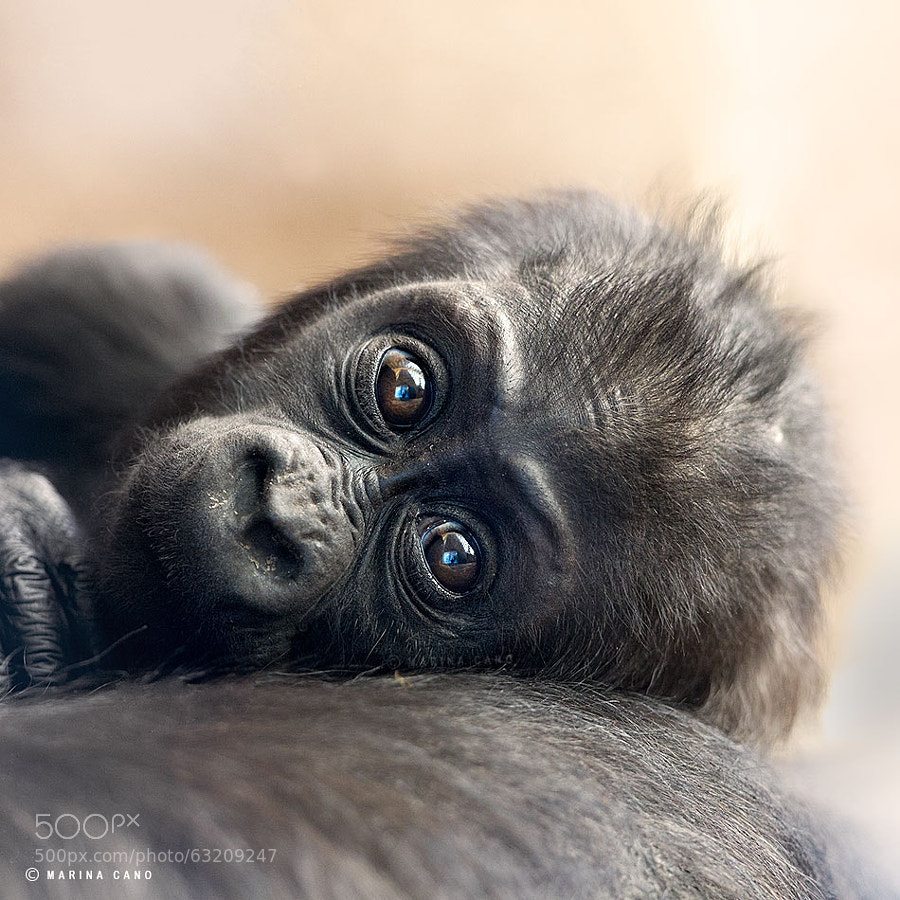
Photograph Vulnerable by Marina Cano on 500px

Vulnerable by Marina Cano on 500px

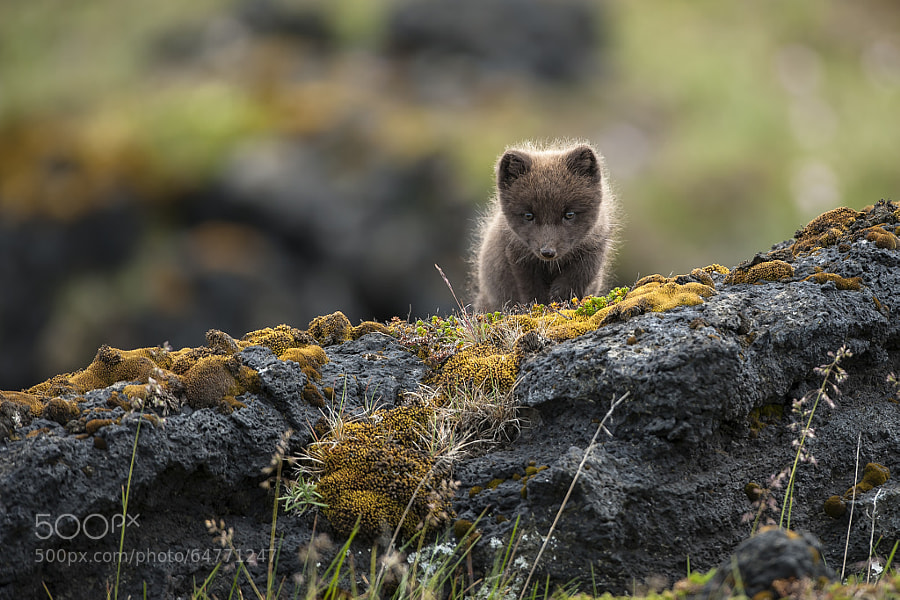
Photograph Arctic Fox (Vulpes lagopus fuliginosus) by Einar Gudmann on 500px

Arctic Fox (Vulpes lagopus fuliginosus) by Einar Gudmann on 500px

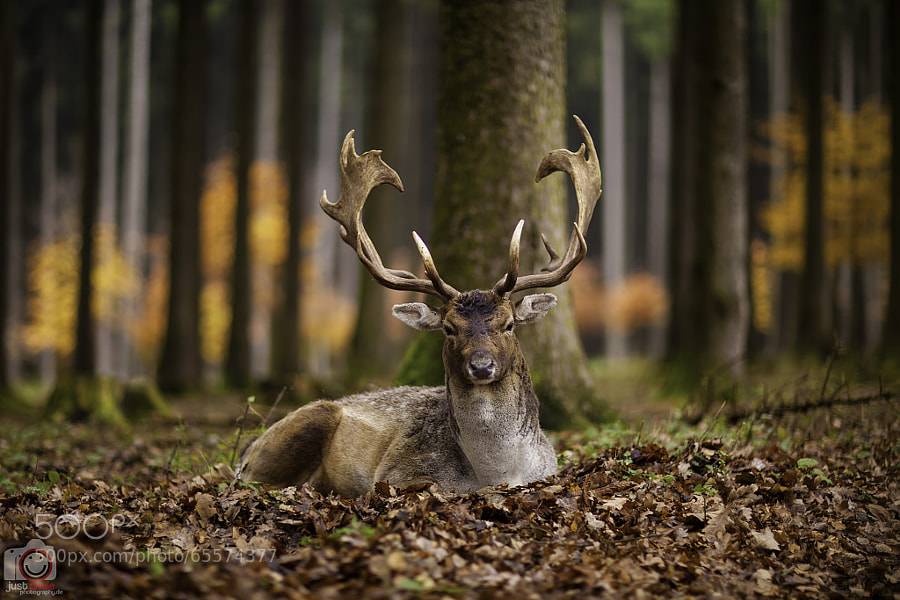
Photograph Csodaszarvas by Just Smile Photography on 500px

Csodaszarvas by Just Smile Photography on 500px

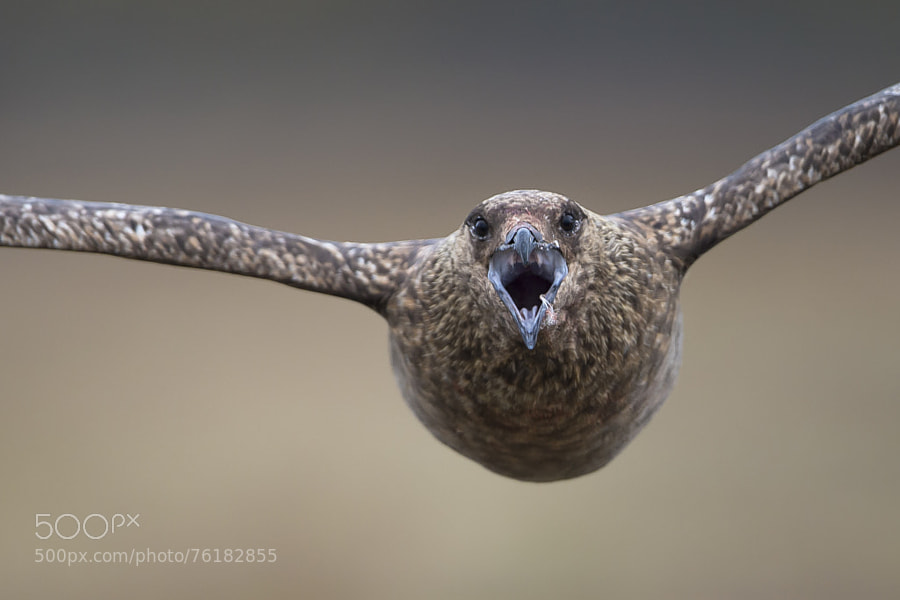
Photograph Skua by Einar Gudmann on 500px

Skua by Einar Gudmann on 500px

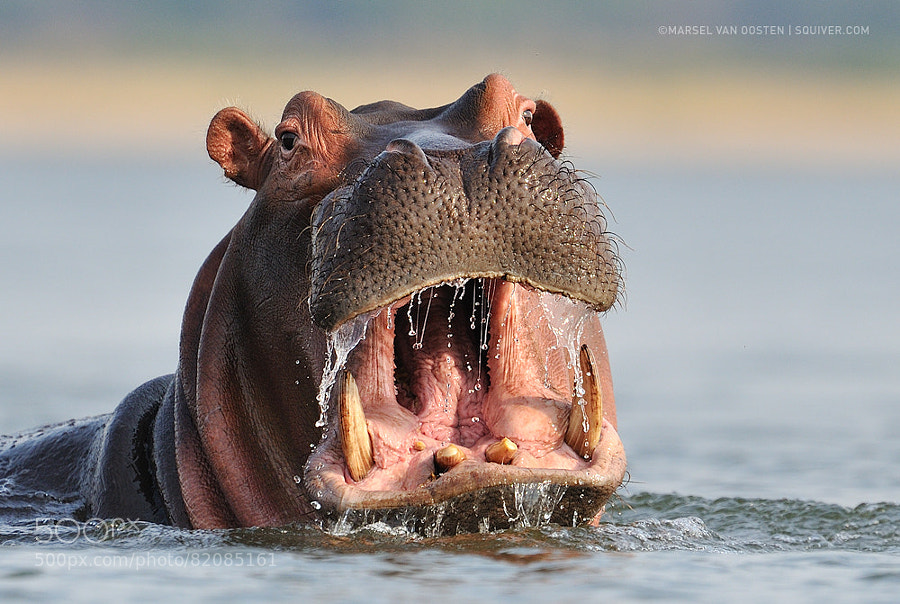
Photograph African Perforator by Marsel van Oosten on 500px

African Perforator by Marsel van Oosten on 500px

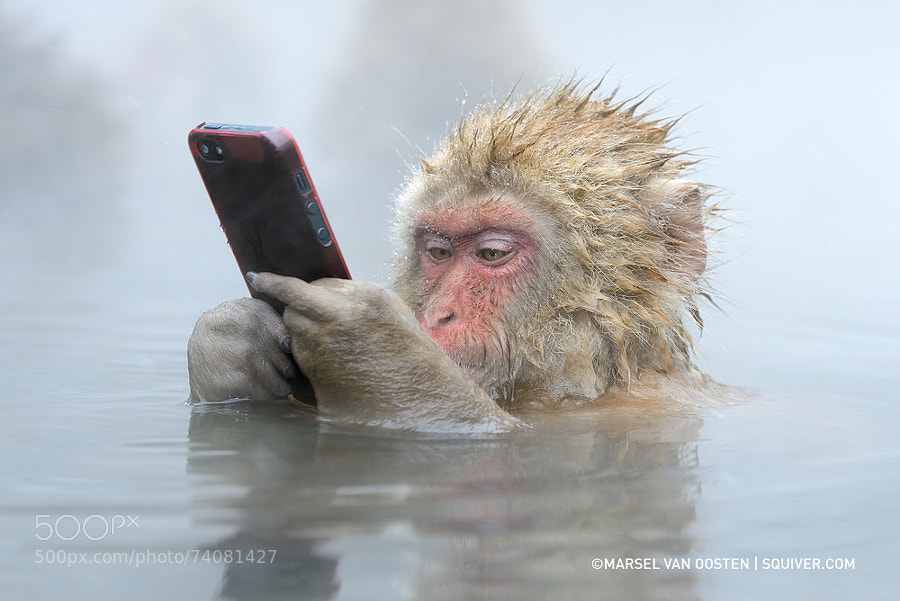
Photograph Facebook Update by Marsel van Oosten on 500px

Facebook Update by Marsel van Oosten on 500px

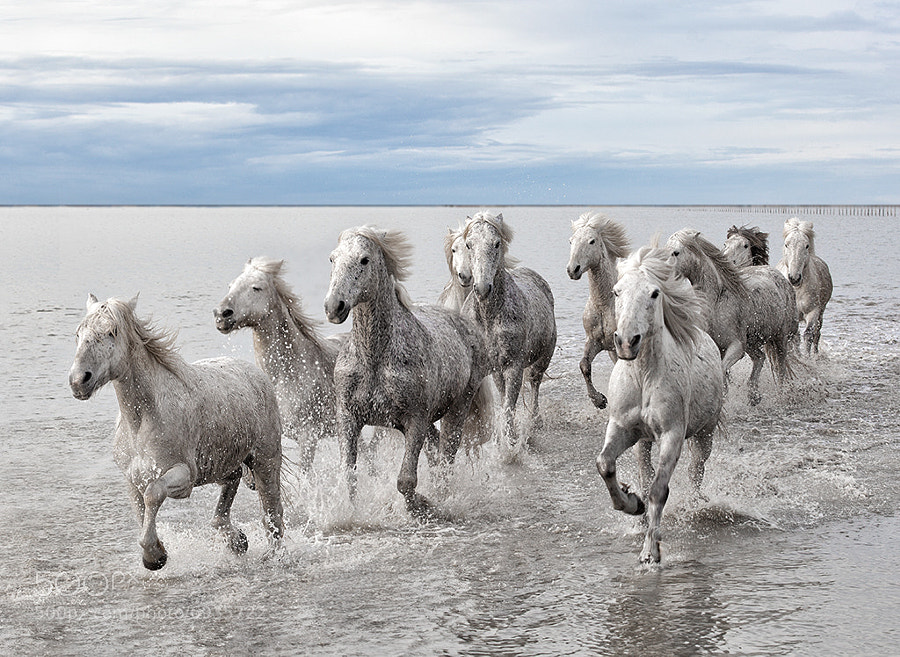
Photograph Run on the water by Marco Carmassi on 500px

Run on the water by Marco Carmassi on 500px

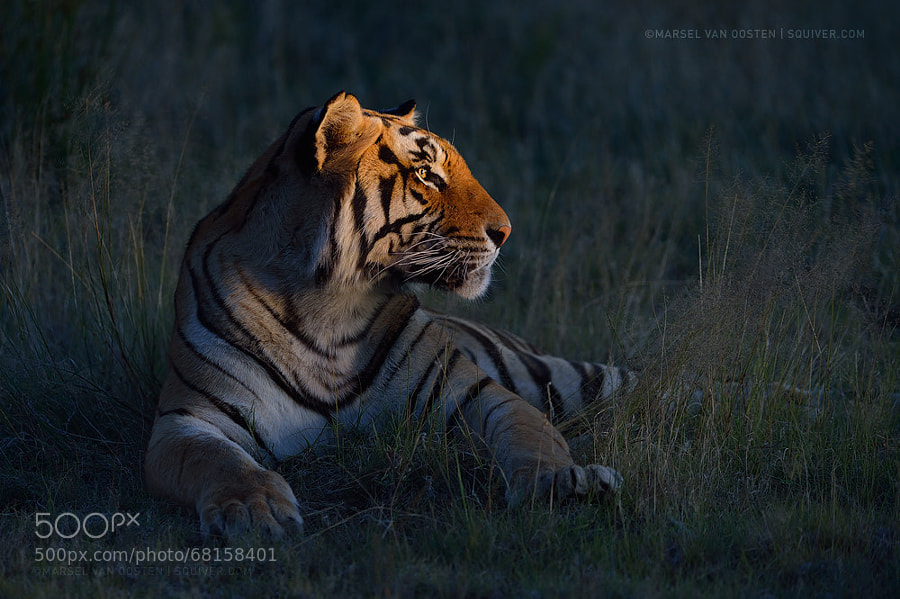
Photograph King Of The Night by Marsel van Oosten on 500px

King Of The Night by Marsel van Oosten on 500px

Photograph Midnight Shake by Marsel van Oosten on 500px

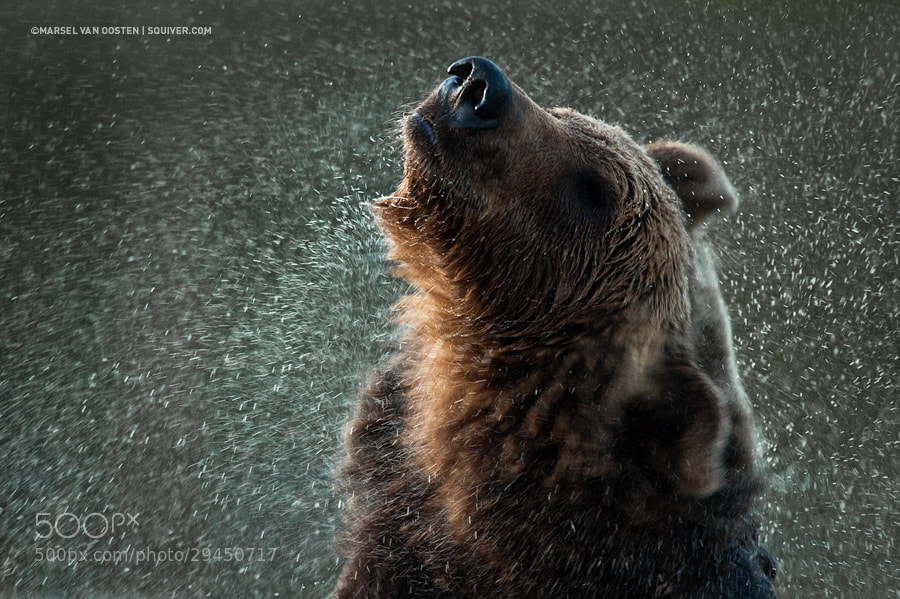
Midnight Shake by Marsel van Oosten on 500px

Photograph Lions, Masai mara by pekka Järventaus on 500px

Lions, Masai mara by pekka Järventaus on 500px

Photograph Morning Lion by Andrew Schoeman on 500px

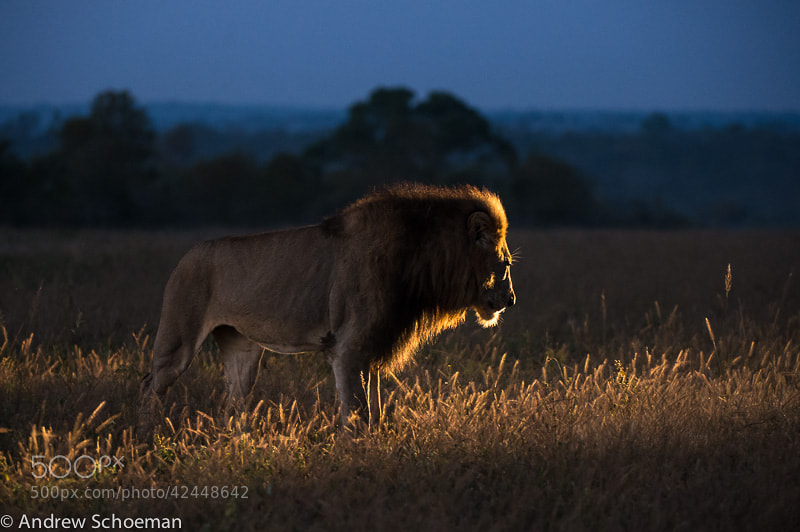
Morning Lion by Andrew Schoeman on 500px

Photograph Serengeti Sunset by Brian Tarr on 500px

Serengeti Sunset by Brian Tarr on 500px

The post A Walk on the Wild Side: A Collection of Wildlife Photography by Darlene Hildebrandt appeared first on Digital Photography School.


Digital Photography School

 
Comments Off on A Walk on the Wild Side: A Collection of Wildlife Photography

Posted in Photography


Winners announced for 2014 British Wildlife Photography Awards

04 Sep

Winners of the 2014 British Wildlife Photography Awards have been announced, with an overall winner, category winners and highly commended photos receiving recognition. Winning entries will be included in an exhibition touring the UK as well as a photo book, and the overall winner will be awarded a £5000 cash prize. Take a look at the photo that took top prize as well as category winners. See gallery
Articles: Digital Photography Review (dpreview.com)

 
Comments Off on Winners announced for 2014 British Wildlife Photography Awards

Posted in Uncategorized