RSS
 

Posts Tagged ‘View’

Video: first person view of a spacewalk, shot by an action cam

19 May
 
There’s literally nothing cooler than outer space. And getting to see a first-person view of a spacewalk, shot by an action camera, is both fascinating and exciting. The above video was taken on March 24th by ESA astronaut Thomas Pesquet. It also shows NASA astronaut Shane Kimbrough.

The two are shown preparing a dock and making repairs to components at the International Space Station. From the Youtube post:

“The primary task was to prepare the Pressurized Mating Adapter-3 (PMA-3) for installation of the second International Docking Adapter, which will accommodate commercial crew vehicle dockings. The PMA-3 provides the pressurized interface between the station modules and the docking adapter. The pair disconnected cables and electrical connections on PMA-3 to prepare for its robotic move, which took place on Sunday, March 26. PMA-3 was be moved from the port side of the Tranquility module to the space-facing side of the Harmony module, where it will become home for the docking adapter, which will be delivered on a future flight of a SpaceX Dragon cargo spacecraft. The spacewalkers also installed on the starboard zero truss a new computer relay box equipped with advanced software for the adapter.

The two spacewalkers lubricated the latching end effector on the Special Purpose Dexterous Manipulator “extension” for the Canadarm2 robotic arm, inspected a radiator valve suspected of a small ammonia leak and replaced cameras on the Japanese segment of the outpost. Radiators are used to shed excess heat that builds up through normal space station operation.”

Articles: Digital Photography Review (dpreview.com)

 
Comments Off on Video: first person view of a spacewalk, shot by an action cam

Posted in Uncategorized


Stacked: Cleverly Designed Chinese Hotel Gives Everyone a Unique View

04 May

[ By SA Rogers in Boutique & Art Hotels & Travel. ]

Despite sharing a tiny footprint of land with other guests at this Chinese hotel, you can practically forget anyone else exists altogether thanks to a clever stacked arrangement that points each level in a different direction. Step out onto your private balcony – located on the roof of the room below – and look out onto the peaceful forest of rural Huang Shan, Anhui Province, China. Designed by Shanghai-based architecture firm Bengo Studio, the Qinyushan Tree House is a beautiful use of space.

A spiral staircase runs up through the center of the hotel, which includes two guest rooms, two bathrooms, one living room, and a ‘landscape room’ located at the top of the building. Each room has its own roof access with a glass railing to avoid interrupting views of the trees.

Elevated off the forest floor, the hotel features curvy volumes fanning out in different directions from the central core, capped on each cantilevered end by floor-to-ceiling windows. Guests ascend an enclosed glass hallway to either walk down into the lowest bedroom and bathroom, or ascend to the upper levels.

Its vertical wooden cladding helps it blend into its natural environment, and the minimalist design is an interesting take on modern treehouse-inspired structures.

Share on Facebook


[ By SA Rogers in Boutique & Art Hotels & Travel. ]

[ WebUrbanist | Archives | Galleries | Privacy | TOS ]


WebUrbanist

 
Comments Off on Stacked: Cleverly Designed Chinese Hotel Gives Everyone a Unique View

Posted in Creativity


Window Shades: Contextual Street Art Frames View of Greek Cityscape

04 Apr

[ By WebUrbanist in Art & Street Art & Graffiti. ]

shades

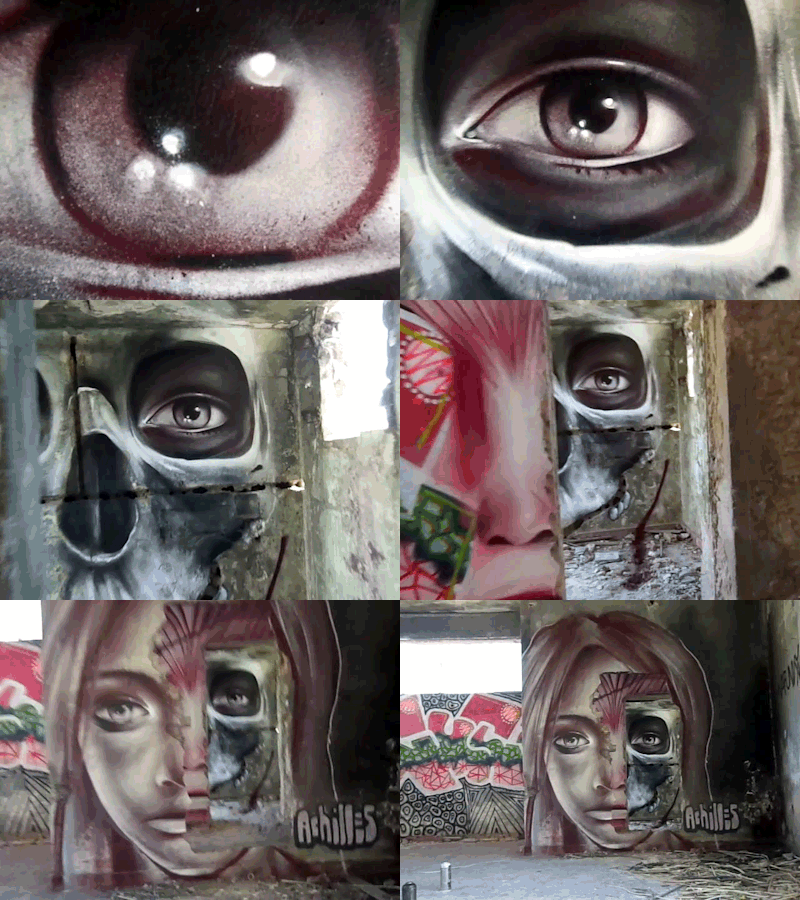
A turn of phrase meets art in this mural made to look like a face, with glass-framed eyes reflecting the world outside.

shades-at-night

Graffiti interventionist Achilles likes to put art in context, using walls and spaces as backdrops for layered works that wouldn’t work quite the same way anywhere else.

streetartsurprise

angles

twistedart

Many of his site-specific works play with perspective and create visual surprises by tucking elements onto different surfaces to create reveals as the viewer approaches.

Compared to his complex works, his artist bio is short and to the point: “Achilles lives and creates in Athens, Greece. He loves street art, graffiti and painting. He works as a freelancer creating murals, portraits, paintings, illustrations etc.”

Share on Facebook


[ By WebUrbanist in Art & Street Art & Graffiti. ]

[ WebUrbanist | Archives | Galleries | Privacy | TOS ]


WebUrbanist

 
Comments Off on Window Shades: Contextual Street Art Frames View of Greek Cityscape

Posted in Creativity


Mitakon launches Mk ll Nikon to Fuji X Turbo adapter that maintains angle of view

17 Mar

Chinese optical manufacturer Zhong Yi Optics has announced availability of a new version of its Turbo adapter that allows full-frame Nikon lenses to be mounted on Fujifilm X series compact system cameras while retaining the intended field of view.

The Lens Turbo ll N/G-FX uses a lens construction that reduces the effective focal length of the mounted lens by 0.726x, which compensates for the crop factor encountered when full frame lenses are used in front of an APS-C sensor – such as those used in the Fujifilm X series bodies. The compensation doesn’t work out exactly though, as a 50mm lens will end up acting as a 55mm would (it’s a net 1.09x crop). The focal length reduction also has the side-effect of increasing the maximum aperture of the lens by one stop.

Mitakon says that the new 4-element version of the Nikon adapter, which is also available for Canon and M42 lens uses, has improved optics which bring better resolution and aberration correction in the corners of the frame. The adapter is 32mm deep, has a diameter of 63mm and weighs 165g/5.82oz, and costs ¥21,000 plus tax/$ 150. For more information see the Mitakon website.

Manufacturer information

The Fuji X Camera Lens Turbo Adapter (Ver II) from Mitakon allows lenses to be mounted to APS-C format Fuji cameras, increasing the angle of view by 0.726x and the maximum aperture of the lens by 1 f-stop.

The four optical elements of the Lens Turbo adapter condense light from the full frame lens and project it onto the camera’s sensor allowing the sensor to capture all of the transmitted light, negating the crop factor and effectively producing full-frame coverage on non-full-frame sensors. A corresponding increase in the maximum aperture of 1 f-stop makes the lens more effective in low-light situations.

This adapter features 4 optical elements including one extra-low dispersion (ED) element which reduces aberrations for better delineated images. The adapter offers a sturdy metal construction and stainless steel mounts, it attaches to both camera and lens with little play and includes a front and rear protective cap. The Lens Turbo is a manual adapter offering no electronic communication between lens and camera. It is not compatible with Blackmagic cinema cameras.

* Allows lens to be mounted to Fuji X camera
* Increases the angle of view by 0.726
* Increases maximum aperture by 1 stop
* 4 lens elements in 4 groups including 1 extra-low dispersion element

This lens turbo adaptor may not fit all lenses due to different extensions at the lens rear mount. Lenses with extension more than 3mm are not recommended to use this lens turbo adaptor. Vignetting may occur if using APS-C lenses.

Articles: Digital Photography Review (dpreview.com)

 
Comments Off on Mitakon launches Mk ll Nikon to Fuji X Turbo adapter that maintains angle of view

Posted in Uncategorized


CP+ 2017 – Fujifilm Interview: ‘We hope that the GFX will change how people view medium format’

24 Feb
Toshihisa Iida, General Manager of Fujifilm’s Optical Device and Electronic Imaging Products Division, posing with the new medium-format GFX 50S.

We’re at the CP+ 2017 show, in Yokohama Japan where Fujifilm is preparing to ship its long-awaited medium format GFX 50S. 

We sat down with three Fujifilm executives, Toshihisa Iida, (general manager of Fujifilm’s Optical Device and Electronic Imaging Products Division), Makoto Oishi, (manager of Fujifilm’s Sales and Marketing Group, Optical Device and Electronic Imaging Products division), and Shinichiro Udono, (Senior Manager for the Sales and Marketing Group of the Optical Device and Electronic Imaging Division), to learn more about the GFX, some of the challenges of creating a medium-format system, and future plans for GX and X series development.

Now that the GFX is ready, and about to ship, this must be quite exciting for you.

Yes, absolutely. For the past four or five years we’ve been concentrating on the APS-C format, and a lot of people were asking us when we’d enter the larger format market. Once some time had passed, and we’d produced a good number of APS-C lenses, we started to look more seriously at large format to attract more customers. That was about two years ago.

The GFX 50S is a mirrorless medium-format camera built around a 43.8 X 32.9mm CMOS sensor. Although the camera borrows a lot of design cues from its smaller X Series cousins, the GFX offers a very different handling experience. Despite being based around such a large sensor, the combination of camera and 63mm prime lens is surprisingly lightweight and very well-balanced. 

Since the development announcement at Photokina we’ve received a lot of positive feedback from photographers. We started a program called the ‘GFX Challenge’, where we loaned GFX cameras to photographers from various fields, in order to get feedback. Based on that feedback we refined the camera’s software. Now that we’re almost ready to ship, I can’t wait to get feedback from customers.

What kind of changes resulted from the Challenge feedback?

Most feedback was more or less as we’d expected. Photographers were surprised by how small and light the camera was. We made a few changes on the firmware side, mostly small refinements, like how the dials work, for example, to make it less likely that you’ll make an accidental control input (etc.)

What were the biggest technical challenges that you faced when moving from APS-C to medium format?

The sensor size is 4X as large, so speed and responsiveness were two major challenges. Readout speed, processing and autofocus.

Makoto Oishi shows off the 50MP medium-format sensor used in the GFX 50S.

The GFX does not offer phase-detection – are the lenses designed to support this in the future?

Yes, definitely.

You’re joining Ricoh in the medium format market, and some long-established brands like Hasselblad and Phase One. Are you expecting other manufacturers to enter this market too?

We don’t know. Obviously, the other brands are focusing on full-frame at the moment. Obviously though we’d welcome any brand that joins this category, because it will increase awareness, and help the category as a whole.

When you were planning a product like the GFX, did you come up with any predictions about the growth of the medium-format market?

At the moment we’re just focusing on making the best product we can. We hope that the GFX will change how people view medium format, and this will help to grow the entire category.

What’s your medium-term strategy for growth in this product line? Will there be longer product cycles, for instance?

Obviously the sales volume will be lower, so the product life cycle will probably be longer. But whenever we have the right combination of the right hardware, the right sensor and the right processor, we’ll introduce a new camera.

When you were planning the GFX, what kind of photographers did you have in mind?

After our experience with the GFX challenge, we actually see a much wider potential audience than we’d originally thought. It will depend on what kinds of lenses we introduce. For example, we didn’t think that street photographers would use medium format much, but [based on feedback] we hope that we can reach a broader audience.

You have a six-lens roadmap for GFX right now – how will this lineup evolve?

After the announcement of the GFX we started to get a lot of requests from photographers about other lenses. For example a lot of photographers are asking us for telephoto lenses, in the 200-300mm range. Nature photographers for example. Also people are asking for a wide-angle, like a 15mm equivalent, and an equivalent to the 70-200mm on full-frame.

Fujifilm’s recently updated lens roadmap for the APS-C X Series, including new lenses coming next year. We’re told that ultra-wide and fast tele lenses have been requested for the GFX platform, too. 

If you do develop those kinds of longer lenses, aimed at wildlife photographers, presumably the autofocus system will need to be able to keep up?

The autofocus algorithm in the GFX is the same as in the X Series, but performance is different. The readout speed of the sensor is critical, and that’s not the same. Compared to the X Series, the speed is more limited.

Is this something you’ll be working on in the future?

Yes absolutely.

When you started coming up with the concept for a medium format camera, did you ever consider using a non-mirrorless design?

When we started studying the possible design, we were aware that some of our customers wanted a rangefinder-style camera. ‘It’s a Fujifilm medium-format, it has to be a rangefinder!’ However, at least in our first-generation camera, we wanted to reach a wider audience. We concluded that a mirrorless design would be much more versatile. Mirrorless gives us more freedom, and more flexibility.

The GFX’s 50MP sensor is 4X larger than the APS-C sensors in Fujifilm’s X Series cameras. This entails a lot of extra processing power, which is one of the reasons why the GFX sensor has a conventional bayer pattern filter array. 

Was it easier, ultimately, to design around a mirrorless concept?

There are fewer mechanical parts, which is simpler. No mirror or pentaprism also means smaller size and weight.

Did you design this camera with the intention that customers could use adapted lenses from other systems?

Yes of course. We made the flange-back distance short enough to accommodate mount adapters for legacy lenses. We are making two adapters, one for H (Hasselblad) mount, and one for view cameras.

When will we begin to see mirrorless cameras take over the professional market?

There are several things that mirrorless manufacturers need to focus on. Number one is speed, still, to attract sports photographers. Also viewfinder blackout, we need to innovate there. Maybe one more processor and sensor generation should be enough to make mirrorless beat DSLRs in every respect.

By the time of the Tokyo 2020 olympics, will there be mirrorless cameras on the sidelines?

I think so, yes.

From Fujifilm?

Hopefully!

Can you tell us about the new Fujinon cine lenses that you’ve released?

Yesterday we announced new Fujinon cine lenses, in what we’re calling the ‘MK series. Fully manual zooms, and manual focus. Initially we’re introducing them in E-Mount versions, but X mount will follow. They’re designed to cover Super 35. The flange-back distance of E and X mount are very similar, so we can use the same optics.

The new Fujinon MK18-55mm T2.9 and 50-135mm T2.9 cover the Super 35 imaging area (~APS-C) and are being released in Sony E and Fujifilm X mount.

We have an optical devices division, which markets broadcast and cinema lenses, and I really want to maximize synergies between the broadcast and photography divisions.

Fujinon is well-known in cinema lenses, but until now, the lenses have been very big and very expensive. But now we’re looking at a new kind of video customer, who’s getting into the market via mirrorless. Mostly they’re using SLR lenses, which aren’t perfect. So a lot of those customers are looking for more affordable cinema lenses.

Do you see most potential in the E-mount, for video?

Yes, we think so. But obviously we’re releasing these lenses in X-mount too, and increasing movie quality in the X Series is very important. Traditionally, Fujifilm has been more of a stills company, but when we introduced the X-T2, we had a lot of good feedback about the 4K video, especially about color. Of course we need to do more, and we need to develop more technology, but I think there’s a lot of potential.

For now, Fujifilm tells us that they see most potential in videographers using Sony’s E-mount mirrorless cameras, but the company has ambitious plans to expand the video functionality of its X Series range. 

Moving on to the X100F – what was the main feedback from X100T users, in terms of things that they wanted changed?

A lot of customers wanted improved one-handed operability. So we moved all the buttons to the right of the LCD, like the X-Pro 2. And the integrated ISO and shutter speed dial, for instance.

The lens remains unchanged – why is this?

We looked into whether we should change it, but it would have affected the size of the camera, and we concluded that the form-factor is one of the most important selling-points of the X100 series. Of course we evaluated the image quality, with the new 24MP sensor, but concluded that it was still good.

If it ain’t broke, don’t fix it. The X100F features the same 23mm F2 lens as its predecessors, but Fujifilm ran the numbers and saw no reason to update the lens for 24MP. We do wish there was a 28mm version, though.  

Do your customers ask you for an X100-series camera with a 28mm lens?

Yes, of course. That’s why we have the 28mm wide converter for the X100, and the X70. And there’s potential to expand the fixed-lens APS-C camera range more.

Will X-Trans continue in the next generation of APS-C sensors?

For APS-C, definitely. For the GFX format, we’ll probably continue with the conventional bayer pattern. If you try to put X-Trans into medium format, the processing gets complicated, and the benefit isn’t very big.

How big is the extra processing requirement for X-Trans compared to bayer?

X-Trans is a 6×6 filter arrangement, not 4×4, it’s something like a 20-30% increase in processing requirement. 


Editor’s note:

It’s exciting to pick up and use a production-quality GFX 50S, after writing about it for so many months, and Fujifilm’s senior executives are understandably keen to get the camera in the hands of photographers. Due to ship in just a few days, the GFX looks like a hugely impressive product,. We’ll have to wait for Raw support to take a really detailed look at what the camera can do, but our early shooting suggests that image quality really is superb. 

$ (document).ready(function() { SampleGalleryV2({“containerId”:”embeddedSampleGallery_3125129958″,”galleryId”:”3125129958″,”isEmbeddedWidget”:true,”standalone”:false,”selectedImageIndex”:0,”startInCommentsView”:false,”isMobile”:false}) });

It was interesting to learn a little about the feedback process, by which Fujifilm gathered notes, impressions, and suggestions from professional photographers after the launch of the GFX last year. The end result is a very nicely balanced camera, both literally (it’s surprisingly lightweight) and figuratively. Although obviously very different to the X series APS-C models, the GFX is simple to figure out, and easy to shoot with. When Mr Iida says that he hopes that ‘the GFX will change how people view medium format’, part of this comes down to handling. 

It was also interesting to hear that Fujifilm considered other types of design for the GFX. Are there concept renderings somewhere of an SLR design, or a rangefinder? Probably. Will we ever see a medium-format SLR or mirrorless from Fujifilm? Personally, I wouldn’t be surprised if the company releases a rangefinder styled medium-format mirrorless. An X-Pro 2-style camera with a medium-format sensor and a hybrid viewfinder? Yes please.

For now though, the GFX is quite enough camera to be getting on with. Beyond medium-format, indeed beyond still imaging, Fujifilm is eyeing the video market. While Fujinon cine lenses have been popular in the film industry for decades, Mr Iida has his eye on a new generation of videographers, who are growing up using mirrorless cameras like Sony’s a7S and a7R-series. This makes sense, but it’s interesting that the new Fujinon zooms will also be manufactured in X mount versions. This level of confidence from Fujifilm in its X series’ video capabilities is good to see, and bodes well for future product development. 

Articles: Digital Photography Review (dpreview.com)

 
Comments Off on CP+ 2017 – Fujifilm Interview: ‘We hope that the GFX will change how people view medium format’

Posted in Uncategorized


Focus ramping intervalometer Timelapse+ View goes on sale

12 Jan

US accessories manufacturer Timelapse+ has announced that its latest on-camera timelapse controller is now on general sale. The Timelapse+ View allows photographers to program complex timelapse sequences and preview them as they happen on its built-in monitor. The controller can itself be controlled via a smartphone app which will also display the progress of a shoot as it is recorded.

Users can select start and end points for focus shifts during the timelapse sequence and determine over how many shots the changes will take place, and the device automatically shifts the focus of the attached camera’s lens during the shoot. Gesture detection allows previews to be activated without the photographer having to actually touch the set-up.

The company says that View also can be connected by Bluetooth to the Dynamic Perception NMX motion controller for moving-camera shots, and the files created are fully compatible with timelapse software LRTimelapse. The device supports a range of DSLR cameras from Canon, Nikon and Sony and costs $ 399.

For more information visit the Timelapse+ website.

Press release

Auto ramping intervalometer enables you to preview your timelapse

Time lapse hardware maker Timelapse+ announced today that after a successful KickStarter campaign, manufacturing for the second batch has already begun, with shipment expected to be around mid-January.

The VIEW ran a successful Kickstarter campaign in April 2016, with Timelapse+ successfully raising $ 131,337 of its $ 100,000 goal in 30 days.

The VIEW is a breakthrough intervalometer for cinematographers and photographers that allows for automatic bulb ramping, live time lapse preview — watched either on the VIEW or a smartphone – and touch-free gesture controls. Since the end of the KickStarter campaign, Timelapse+ has been actively adding new features and working with other vendors to include third-party integrations to the VIEW.

The VIEW now has integrations to automatically connects to the Dynamic Perception NMX motion slider via Bluetooth and LRTimelapse support added to XMP data.

Additional new features include:

  • Automatically optimizes buffer time during ramping
  • Configurable ISO and shutter speed limits for auto ramping
  • Red theme option
  • Power button activates help screen for the currently selected item
  • Supports Canon, Nikon, and Sony Alpha

Elijah Parker, inventor of the view, said, “After reaching both the funding and shipping milestones, I’m excited to start this next phase.”

Pricing, updates, and availability
Retail Price: $ 399.

Pricing may vary by country for non-USD purchases and additional fees may apply,
including tax and shipping costs. Estimated to ship January 21st, 2017.

About Timelapse+
Timelapse+ is an innovator in hardware for time-lapse and HDR photography, with the original Timelapse+ Intervalometer and the new VIEW Intervalometer.

Articles: Digital Photography Review (dpreview.com)

 
Comments Off on Focus ramping intervalometer Timelapse+ View goes on sale

Posted in Uncategorized


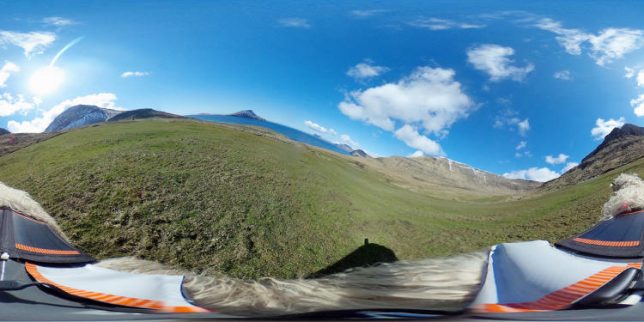
Google Sheep View: Creature-Mounted Cameras Map Rugged Faroe Islands

20 Dec

[ By WebUrbanist in Destinations & Sights & Travel. ]

mapping

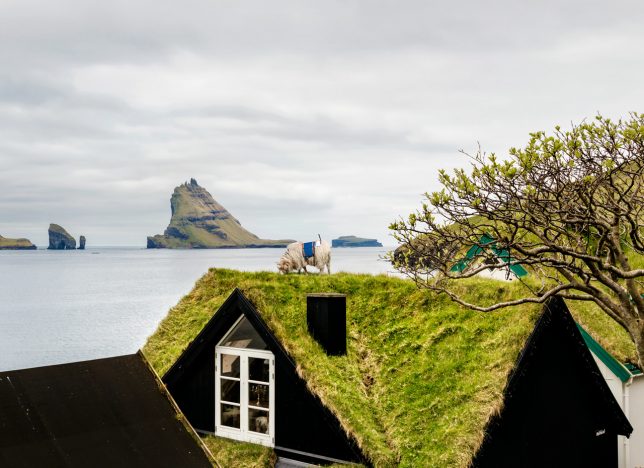
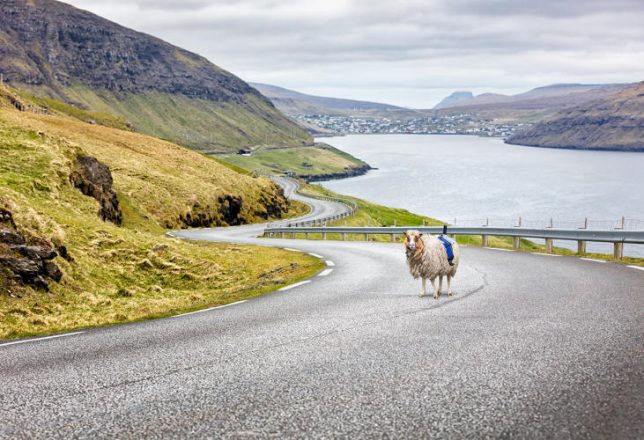
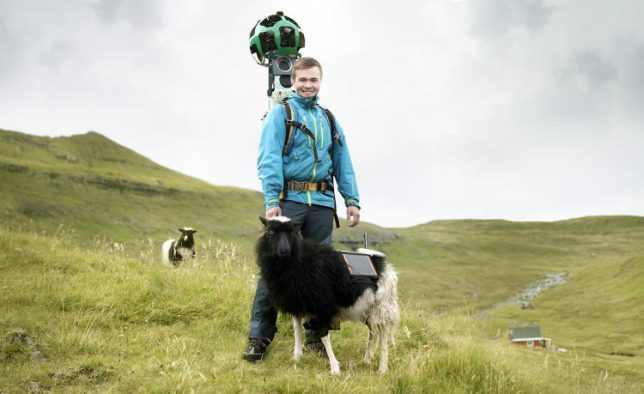
Powered by solar energy and mounted to the backs of sheep, 360-degree cameras are mapping out the Faroe Islands for Google Street View. Since Google was initially reluctant to send cars to the archipelago, locals took it upon themselves to get their own interactive images out into the world, raising awareness of the region’s uniquely beautiful landscapes. In the end, they not only attracted Google’s interest but managed to spawn a creative DIY approach to mapping rugged environments.

Sheep View 360 got its start when resident Durita Dahl Andreassen first strapped a camera to a sheep, let the animal roam free around the island then uploading the results to Google. “I gently placed a 360-degree camera powered by a solar panel on the back of a sheep that would take photographs as the animal freely grazed the open hillsides,” explains Andreassen.

google-sheep-view

“Photos are then transmitted back to my mobile phone so that I can upload them to Google Street View myself, finally putting the Faroes on the map in a very unique way!” Indeed, some of the shots and perspectives would be unlikely or impossible for vehicles or even humans, taken as they are from the tops of roofs and sides of mountains.

sheep-view-mounted

This endeavor and an associated petition eventually did get Google’s attention, but by the time they showed up with vehicles the self-mapping system was well underway with sheep, bikers, backpackers, ships and even a wheelbarrow playing parts.

sheep-view-panoramic

Ultimately, folks from the Faroe Islands have made it a bit of an interactive game — anyone who wants to can come borrow a camera and start mapping the parts not yet uploaded to Google. This presents an interesting challenge for those who want to take it on: can you as a tourist cameraman visit the places most people and cars don’t go to or can’t reach?

sheep-view-hug

“The Faroe Islands have some of the most beautiful roads in the world. It is impossible to describe what it feels like driving through the green valleys and up the mountains, or alongside the ocean, surrounded by steep drops and tall cliffs. It’s an experience like no other.”

Share on Facebook


[ By WebUrbanist in Destinations & Sights & Travel. ]

[ WebUrbanist | Archives | Galleries | Privacy | TOS ]


WebUrbanist

 
Comments Off on Google Sheep View: Creature-Mounted Cameras Map Rugged Faroe Islands

Posted in Creativity


Adobe Lightroom CC and iOS updates add Reference View and new edit interface

09 Dec

Adobe has announced updates to Lightroom CC 2015.8, Lightroom Mobile for iOS 2.6 and Adobe Camera Raw. The Adobe Lightroom CC update brings a new Reference View for comparing a pair of different images to each other, as well as zoom to fill, zoom to fit and performance improvements. This is joined by the Camera Raw update, which adds support for new cameras and lens profiles, as well as bug fixes.

The Lightroom for iOS update is the most extensive of the three, bringing with it a new edit interface that aims to make it easier and faster to find tools and use them to edit images via an iPhone. The new edit interface is complemented by a new info section with options for adding copyright data, captions and titles while on mobile. Additionally, the iOS app has a new capture interface that Adobe describes as similar to the interface in the Android app, and it gives users access to a new ‘Professional Mode’ with better control over the iPhone camera’s features.

All three updates are available now. You can view the full list of new camera and lens profile support in Lightroom CC here, and the full list of new camera and lens profile support in Adobe Camera Raw here.

Via: Adobe

Articles: Digital Photography Review (dpreview.com)

 
Comments Off on Adobe Lightroom CC and iOS updates add Reference View and new edit interface

Posted in Uncategorized


Fujifilm launches ‘Pro’ tethered shooting plug-in for Lightroom with live view and remote control

03 Nov

Fujifilm X-T2 owners will soon be able to shoot tethered to Adobe’s Lightroom image manipulation software application using a new plug-in that will be sold through the Adobe Add-ons website. Tether Shooting Plug-in Pro is an upgrade from the existing version of the company’s Tether Shooting plug-in that is now compatible with the X-T2 as well as the X-T1. The new version brings a Control Panel display that allows users to check their imported images more quickly and to preview the image in live view mode while at the same time being able to control the camera’s settings.

The plug-in features two shooting modes that allow the user to control settings at the camera or via the computer screen, with both modes allowing the captured images to be transferred directly to the computer by USB connection.

The X-T1 and X-T2 cameras both need the relevant firmware to be able to operate with the plug-in, and Fujifilm has announced that v1.10 for the X-T2 will be available on 8th November. This firmware also makes the camera compatible with the standard version of Tether Shooting Plug-in and Tethered Shooting Software HS-V5.

The camera firmware will be free to download, but the Tether Shooting Plug-in Pro will cost $ 79.

For more information visit the Fujifilm website.

Press release:

Tether Shooting Plug-in PRO for Adobe® Photoshop® Lightroom®

PC tethered shooting support for FUJIFILM X-T1/X-T2

FUJIFILM Corporation (President: Kenji Sukeno) is pleased to announce the launch of “Tether Shooting Plug-in PRO for Adobe® Photoshop® Lightroom®” to enable tethered shooting of FUJIFILM X-T1(hereafter X-T1) and FUJIFILM X-T2(hereafter X-T2)* to a compatible computer.

“Tether Shooting Plug-in PRO for Adobe® Photoshop® Lightroom®” is a tethering software plug-in that allows Lightroom users to connect X-T1 / X-T2 to a computer via USB cable for direct saving of captured images onto computer, and controlling the camera from the computer**.

“Tether Shooting Plug-in PRO for Adobe® Photoshop® Lightroom®” will be available from Adobe Add-ons website*** for US$ 79. The launch of the Mac OS X / macOS Sierra version*4 is scheduled for release around the beginning of November 2016, and the Windows version*5 is scheduled for release around the beginning of December 2016. The detail launch schedule will be informed on this page.

(1) Featuring the “Camera Mode” and “PC Mode” to control shooting on camera or from computer
In Camera Mode, the camera is held in hand or set up on a stand. The images taken will be transferred directly and saved onto computer for use in Lightroom. Adjustment of exposure and other shooting settings as well as the shutter release is carried out on the camera. In PC Mode, users can check the viewfinder image of a remotely-setup camera in the LIVE VIEW window, operate the camera and adjust its settings on the computer screen. The user can also take images and have them transferred directly and saved onto a computer for use in Lightroom. Adjustment of exposure and other shooting settings and the shutter releases are carried out from the connected computer.

(2) Featuring the “Control Panel” to check captured image and to control camera
In addition to the features of “Tether Shooting Plug-in for Adobe® Photoshop® Lightroom®” (standard version)*6, “Tether Shooting Plug-in PRO for Adobe® Photoshop® Lightroom®” has Control Panel which can check captured images and to control the camera. The Control Panel PREVIEW window allows users to check transferred images in quicker than before.

The Control Panel also allows users to check shooting angles with LIVE VIEW, to set shooting conditions from computer, to operate interval/bracketing shootings and to backup/restore all the camera settings*7.

* * X-T1 and X-T2 must be upgraded to the tethering-compatible firmware (X-T1: Ver. 3.10 or later, X-T2: Ver.1.10 or later). Internet connection is required for downloading compatible firmware.
* ** Adobe® Photoshop® Lightroom® 6 or CC is required.
* *** https://creative.adobe.com/addons/
* *4 The compatible OS is same as that of Lightroom. To use on macOS Sierra, Lightroom should be upgraded to 6.7 or later / CC 2015.7 or later.
* *5 The compatible OS is same as that of Lightroom.
* *6 The current version (Ver.1.2) of “Tether Shooting Plug-in for Adobe® Photoshop® Lightroom®” (standard version) is compatible only with X-T1. X-T2 will be supported with upgraded version (Ver.1.3) or later.
* *7 Backup/restore is only compatible with X-T2.

Articles: Digital Photography Review (dpreview.com)

 
Comments Off on Fujifilm launches ‘Pro’ tethered shooting plug-in for Lightroom with live view and remote control

Posted in Uncategorized


Ansel Adams’ Arca-Swiss 4×5 View Camera is the first of its kind at auction

14 Oct

$ (document).ready(function() { SampleGalleryV2({“containerId”:”embeddedSampleGallery_5494411773″,”galleryId”:”5494411773″,”isEmbeddedWidget”:true,”standalone”:false,”selectedImageIndex”:0,”startInCommentsView”:false,”isMobile”:false}) });

Heritage Auctions will soon be the first auction house to ever offer an Ansel Adams 4×5 view camera. The camera is part of a complete outfit including an Arca-Swiss 4×5 View Camera, three lenses, a pair of Graflex graphic film pack adapters, compendium lens hood, extra bag bellows, Wratten gelatin filters, a dark cloth, original carrying/shipping case, tripod and more. 

This view camera collection was used by Ansel Adams from 1964 to 1968, according to the auction house, after which point he gave the camera to his then-assistant Liliane de Cock, who used it as part of her own career. The camera and related accessories were acquired directly from the photographer’s family. Heritage Auction doesn’t list the condition, saying only that it is ‘available upon request.’ However, it estimates the lot as being worth between $ 70,000 and $ 100,000, and is seeking an opening bid of $ 35,000.

You can view the auction listing here.

Via: PetaPixel

Articles: Digital Photography Review (dpreview.com)

 
Comments Off on Ansel Adams’ Arca-Swiss 4×5 View Camera is the first of its kind at auction

Posted in Uncategorized