RSS
 

Posts Tagged ‘Tips’

Wildlife photographer Florian Schulz offers shooting tips

12 May

Screen_Shot_2014-05-09_at_12.16.48_PM.png

Known for his conservation projects such as Freedom to Roam, a photographic project designed to encourage the creation of wildlife corridors, photographer Florian Schulz offers some tips and advice for shooting landscapes and wildlife in this six minute video. Learn more

News: Digital Photography Review (dpreview.com)

 
Comments Off on Wildlife photographer Florian Schulz offers shooting tips

Posted in Uncategorized


Beginner Tips for Posing People with Confidence

12 May

How to pose models

In earlier articles I gave you advice about planning a portrait shoot and some reasons for using natural light. Now it’s time to take a look at something that many photographers find difficult – posing.

The reason posing can create problems is because inexperienced models will look to you for direction. If your model is waiting for you to tell her what to do and you freeze up or don’t have any decent ideas you will struggle to create good photos. It’s up to you to take charge and tell the model how to pose. The key is preparation – you need a set of poses you can suggest to the model.

Before the shoot

Here are some points to think about before the shoot:

What kind of shoot is it? The posing requirements for a family portrait are very different than a fashion shoot. You can think about posing once you’ve decided what type of photo you are going to create.

Look for inspiration online. Chances are you have a few favourite photographers you follow on websites like Flickr and 500px. You will find some good poses in their portfolios. Download your favourites to your smartphone (or use Pinterest to create a mood board, covered in more detail in my article How to Plan the Perfect Portrait Shoot). Then you have something you can show to your model. Don’t try and commit the poses to memory – you will forget them under pressure.

Match the pose to your model. This is important. You’ll see some wonderful poses in fashion magazines. But many of them need a professional model to carry them off. Your model may not be able to do that, especially if she has a different body type than the people in the magazine.

Buy the Posing App. It gives you over 300 poses that you can access on your smartphone. The best way to use it is to select five to ten and make them your favourites. Then you can show them to your model so she understands the what you’d like her to do.

How to pose models

Screen shots from the Posing App. The line drawings are easy to understand and follow.

The author of the app has written several articles about posing for Digital Photography School you will find useful (click the link to see a list).

During the shoot

No matter how experienced or inexperienced your model is, here are some tips to help you find the perfect pose during the shoot:

Build rapport. This is essential. If your model likes you and sees what you are trying to achieve she will work harder. If you talk to her about things she likes you will see more life in her eyes and get better expressions, including natural smiles. She will be more relaxed. If your model is tense, you are going to struggle to get natural looking portraits. Take the pressure off her and bring it back on yourself. Assure her that if the photos don’t work out that it’s your fault, not hers. Build her confidence.

Look for natural expression. As you talk to your model you will notice natural expressions and mannerisms that you can use. Don’t be afraid to say “hold that pose” or “do what you did just now again”.

How to pose models

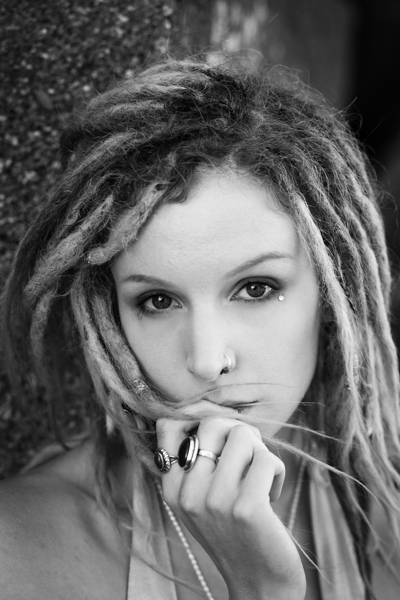
I noticed the model had a interesting mannerism so I asked her to repeat the gesture. This portrait is one of her favourites

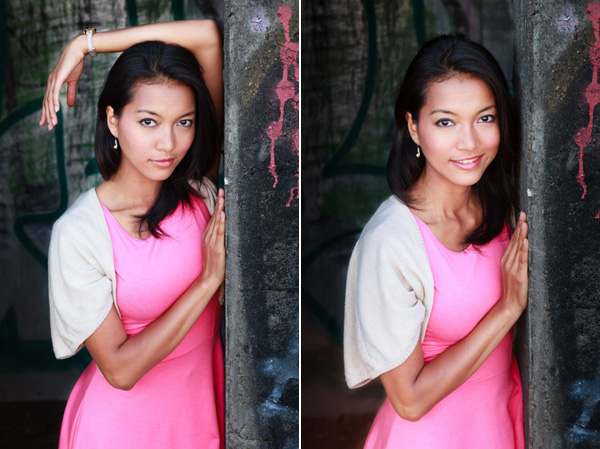
Adapt poses. When you suggest a pose, such as one used in another photo or from the Posing App, treat it as a starting point, then adapt it to suit your model. If she looks unnatural in a certain pose, then adapt it so it suits her body and the clothes she’s wearing.

How to pose a model

The pose on the left is one I found in the Posing App. For the second portrait I asked my model to drop her left arm so I couldn’t see it. Don’t be afraid to tweak poses, sometimes a small change makes a big difference.

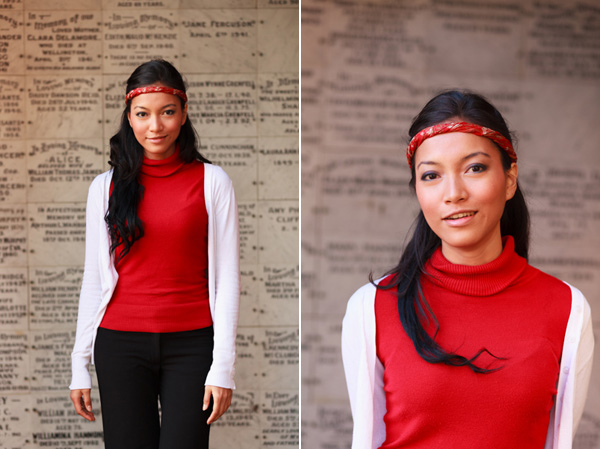
Simplify. Keep everything as simple as possible. That applies to composition and the clothes and jewellery worn by your model. If she has too much jewellery on, ask her to remove some. It will improve the composition. If you’re struggling to find a good full-length pose, move in closer and shoot from the waist up, or do a head and shoulders portrait. The background will go more out of focus, and there will be less of the model in the photo.

How to pose models

Simplification in action. The closer you crop, the easier it is to pose your model. This is a good technique to use if you are struggling to make a certain pose work.

Pay attention to detail. Especially hands, which often look better side on to the camera. Look at photos where the model’s hands look elegant or are otherwise well posed, and ask your model to do the same. Check her hair to make sure stray strands aren’t blowing across her face or eyes. Look at her clothes to make sure they aren’t wrinkled or creased in a strange way.

Find something for your model to lean on. This makes it much easier to find a natural looking pose.

How to pose models

Two different ways to use a wall to give a model something to do. The Posing App has lots of poses for leaning.

Use props. If the model has something to hold or otherwise interact with, it gives her something to do. If she is having fun you’re more likely to get a great expression.

How to pose models

The model in this photo is into hooping. Using the hoop as a prop gave her something to hold and added interest to the portrait.

How to pose models

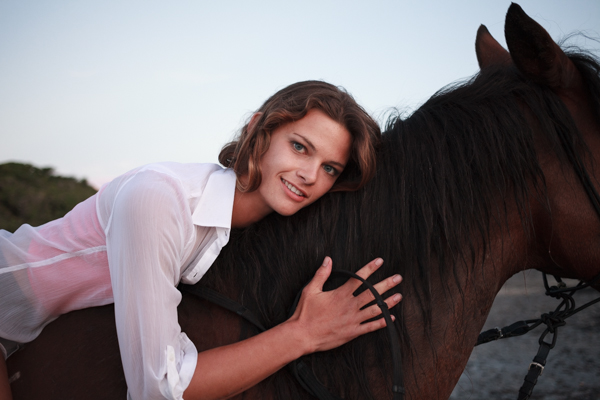
I suggested the model bring her horses along to the shoot. The horses are a natural prop and her interaction with them led to photos like this one.

Over to you

Do you have any tips for our readers about posing models? What has worked for you? Tell us about your experiences in the comments.


The Natural Portrait photography ebookThe Natural Portrait

My ebook The Natural Portrait teaches you how to take beautiful portraits in natural light. This 240 page ebook, published by Craft & Vision, takes you through the entire process of natural light portrait photography through from finding a model, deciding where to shoot, working with natural light and post-processing your images. Click the link to learn more or buy.

The post Beginner Tips for Posing People with Confidence by Andrew S. Gibson appeared first on Digital Photography School.


Digital Photography School

 
Comments Off on Beginner Tips for Posing People with Confidence

Posted in Photography


Equipment for Macro Photography – Video Tips

11 May

Photograph Dreaming by Ondrej Pakan on 500px

Dreaming by Ondrej Pakan on 500px

Macro photography has become really popular lately and there are many tutorials available on how to do it, including these on dPS:

  • How to Focus-Stack Macro Images using Photoshop
  • 6 Tips for Near-Macro Photography with a Telephoto Lens
  • The Wonderful World of Macro Lenses: Close-Up Photography Lesson #4

But let’s talk a little about the gear needed to do macro photography. Here’s a couple video that walk through some of the options to help you get started. In this video from Tamron see: How-To Macro Photography: Equipment, Lighting Tips and More

In this second video by Anthony Morganti you can learn: What You Need To Get Started In Macro Photography

Photograph rate my bike by tustel  ico on 500px

rate my bike by tustel ico on 500px

By Jagadeesh SJ

By Alexey Kljatov

By Julien REBOULET

The post Equipment for Macro Photography – Video Tips by Darlene Hildebrandt appeared first on Digital Photography School.


Digital Photography School

 
Comments Off on Equipment for Macro Photography – Video Tips

Posted in Photography


[MODIFIED] Cell Phone – Six Battery Conservation Tips

07 May

Six ways to keep your cell phone’s battery running as long as possible.

Is your cell phone battery losing power constantly? Have you ever had to stop using your cell phone in the middle of a call because the battery died? Here are a few tips you can use to conserve your cell phone battery’s power:

* If you know you’re traveling to an area without coverage or with only spotty roaming coverage, consider turning off your cell phone. Your phone can use a lot of power trying to find a suitable network, although some phones may stop polling after a while to try to reduce this battery hoggishness. One other option if you need to use your calendar, notes, play Angry Birds, etc. is to put the phone in “airplane mode” where all communications are stopped yet local apps should still be usable….

Read more at MalekTips.
New Computer and Technology Help and Tips – MalekTips.Com

 
Comments Off on [MODIFIED] Cell Phone – Six Battery Conservation Tips

Posted in Technology


Newbie Tips for Working with a Model

02 May

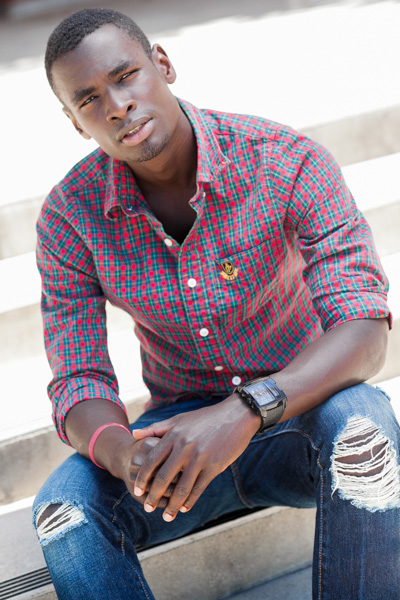
Fashion photography model tips

If you’ve ever tried taking pictures of someone (or something) that isn’t extremely cute and fluffy like a baby or a puppy, you’ll know it can sometimes be difficult to capture people in a flattering way. Some people are extremely shy or don’t like getting their picture taken. Others really do like having their pictures taken. Some even make a living getting their picture taken. They are called models, and today we are going to consider what it is like working with models.

Where can you find a model to practice with?

There are two ways to go about working with a model.

One way to find a model to work with is by going to a model website like Model Mayhem that connects models, photographers, makeup artists, etc. In fact, Model Mayhem is the best resource for up and coming photographers to find models, because a lot of beginning models are on there looking to build their portfolio and will trade their time for pictures (see section below). Check it out today and see who is in your area, ready to shoot. Be clear and specific about times, what you want to shoot, and what they will be receiving. Some sites have a lot of models to choose from, and if you are courteous and professional through correspondence, you can connect with a model and set up a shoot.

Fashion photography model tips

Another way to find a model is to ask around your town or city. There is a good chance there is someone in your town who has the looks or aspirations to do some modeling, whether it’s on a national scale or a local one. If you don’t know someone directly, simply ask around or a make a call out on Facebook. I remember when I was taking a lighting class and needed someone on short notice due to a cancellation. I put out a request on Facebook for a model as replacement and I had two subjects willing to step in within an hour. Some people really love having their pictures taken, it’s simply a matter of putting yourself out there.


Either way, if you have someone who is interested in posing for you, now you have to decide what arrangement benefits both of you.

Trading Time for Pictures or Prints

There is a great rule of thumb that goes something like this – if the model is benefitting the photographer’s portfolio only, the model should be getting paid. If the photographer is benefitting the model’s portfolio only, then the photographer should be getting paid. But if you are both benefitting each other, meaning you both are trying to build up a portfolio of images and you are both more at less at the same stages in your career, then you can do what is called Time for Prints, or TFP.

Fashion photography model tips

Time for prints means the model is giving up his or her time in exchange for images at the end of the collaboration. This could be called a “trade” or, in the commercial modeling world a “test shoot.” It is not expected that you are actually printing images and delivering them to the model. I believe that is a term left over from the glory days of film.

Model Release

When working with a model, it would be wise for you to obtain a model release form. You can find them easily on the web (here’s a PDF you can download immediately), and there are even a few great apps that you can download. I use an app called Easy Release, which is powerful and lets you and the model sign right on your smart phone or tablet.”

A model release form, when signed by the model, grants you the photographer legal permission to use the photos online or in advertising.

If you don’t get a model release, the model has the right to ask you to remove images from websites and even sue you if you end up making money using those photos without permission. I’ve personally never had issues when I’ve forgotten to bring along a model release, but it is always better to be prepared.

Fashion photography model tips

Picking a Location and an Outfit

Now that you’ve done all the prep work, where do you shoot? What should the model wear? This is where the fun begins!

It makes the most sense to either start planning with an outfit or with a location (assuming you aren’t shooting in a studio). If you start with an outfit, say a summery dress on a girl, then the location should probably match the outfit. Maybe think about shooting in a field, or the beach, or in the forest. If you have an amazing location in mind, like a great old building with Victorian architecture, then think about what outfit would match that setting best, in terms of colors, shape, patterns, etc.

Just to give you a few ideas about location, I’ve shot in abandoned buildings, under piers, in wheat fields, in flower fields, at vineyards, against brick walls, yellow walls, graffiti walls, in studios, in parks, on carousels, in casinos, and more.

fashion photography model tips

Working with a Model

The next (and final) step in working with a model is to simply begin shooting. If you have an experienced model, you won’t have to say much to them in terms of posing, because they will already know what to do. The best models I’ve worked with will actually change poses or expressions every time they hear the camera click, so you’re never getting duplicate images.

If you have an inexperienced model consider getting some posing inspiration from sites like Pinterest,fashion magazines, and right here on dPS. Do your homework. Look at lots of images, practice those poses yourself so you can articulate what you want from your model. Here are a few to get you started:

  • Striking the Pose – dPS eBook
  • 67 Portrait Posing Printables – a PDF you can print and take with you to go with the eBook above
  • Posing guide for women part one – 21 different pose ideas
  • 8 Posing guides – for women, men, children, groups

A fun and easy rule to remember is “make triangles with the body” (see photo below). How many triangles can the model make using legs, arms, and body? This advice works better on women than on men, by the way. Sometimes working with models means stretching them in ways that might not feel natural but can look awesome. The best thing you can do is practice, practice, practice. The more you shoot, the easier directing models becomes.

Fashion photography model tips

Now let’s see some of those model photos, please share your images in the comments below and if you have any questions please ask.

The post Newbie Tips for Working with a Model by Phillip VanNostrand appeared first on Digital Photography School.


Digital Photography School

 
Comments Off on Newbie Tips for Working with a Model

Posted in Photography


5 Tips for a Powerful Picture Every Time

02 May

Play-At-First.jpgYou see plenty of landscape, portrait and commercial photographs every day on the web and in magazines. You can tell by the lighting, staging and seemingly overall perfection of everything in those pictures that days, maybe even weeks of planning were needed to pull of such amazing photographs.

With that much planning, all that is left to do when it is time to take the picture is press the shutter. The photographer behind the lens probably even knew exactly what time she was going to press the shutter. In short, the photographer did everything necessary to prepare for the picture.

But what about the other side of photography?

You have also seen equally powerful pictures that captured something spectacular in the spur of the moment. These are the kind of photographs that you may think you could never plan for because they present themselves with no prior notice or warning.

Van Wreck

Have you ever heard the saying that “luck favors the prepared”? No truer statement could ever be said about photographers and photography.

It’s true that luck can find anyone at any given time, but if you want to be able to pull off amazing photos with just a moment’s notice you need to be as prepared as a studio or commercial. But this approach to photography takes a completely different type of preparation.

Here are five photography tips for a powerful picture every time. These tips will help prepare you to perfectly capture once in a lifetime pictures time and time again.

1. Always have a camera

A prepared photographer needs to have a camera close by at all times. It sounds elementary, but any good top five list is going to start off with the basics first. If you don’t have a camera with you, you will not be able to capture that picture of a bald eagle in your backyard. Without your camera, you are left only with your story of a bald eagle. Odds are you have already have a camera on you or near you right now. Your phone! The first tip in photography preparation; always have your camera (any camera) close by.

Eagle

2. Study light

Photography is all about light (and having a camera). Without light there is no photography. But there is so much more to light than just having it. As a photographer you must become a student of light. What color is the light? How strong is the light? Where is the light coming from? How long until the light changes? Where can you find more light right now?

Cowboy Lights Up

As you move through your day (camera at your side), take the time to notice the light sources around you. If you are in a meeting, look around the conference room. Is there light coming through the window? What kind of lights are in the ceiling? Are there desk lamps? What about the light coming from everyone’s computer screens? Could you open the curtains to let in more light?

By reminding yourself throughout the day to recognize and understand your lighting situation you are learning how to master light rather than have it master you. Then you are on your way to taking better pictures at a moment’s notice.

3. Visualize

While you are studying the light around you take a moment and pretend that you are taking a picture. While in that same theoretical meeting, look across the table at your colleagues. Imagine taking a picture of them. Which side of their face has more lighting? Are they backlit? How would you overcome that? Would your picture be better if you moved across the room? Is there a ray of sunlight that, if you could, you would ask your boss to step into because it would highlight her hair color so well?

By taking the time to play pictures out in your mind you are actually training your mind to think like a photographer. You are preparing your mind to be ready. It’s called visualization and athletes do it all the time. Ever wonder why a golfer takes so long to hit the ball? It’s because he is envisioning his swing, and the ball going where he wants it to go before he hits it.

Photographers and photography are no different. Train your mind by constantly imagining that you are taking a picture.

4. Think ahead

This tip goes hand in glove with tip number 3. You should always be thinking ahead, be it five seconds, five minutes or five hours. To be ready to take a photo at the drop of a hat you have to put yourself in a situation that has yet to happen.

Fire Chief On Truck

It’s like the pre-flight safety instructions you hear before a plane takes off. It does no one any good to get that information when the plane is in distress. Knowing where the exit doors are ahead of time saves lives. Knowing what ISO setting you will need if your kids break out in a song and dance routine for the grandparents can save Christmas.

Always be thinking ahead and absorbing your surroundings to better anticipate action that hasn’t yet taken place. Sports photographers may do this better than anyone. The better they understand how the sport is played the more likely they will be to capture the key moments in a game. A photographer covering a baseball game recognizes that there will be a play at first base and he will instinctively put his focus on the first base bag and wait for the play to get to him.

Play At First

To always be ready to capture a picture at the drop of a hat you have to be a student of life, and a student of movement and moments. Learn to anticipate and not just react.

5. Practice

The final tip is one that combines the other four and that is to practice being ready at all times. It may sound silly, but why do you think golfers, baseball players and airplane pilots practice? So that when it comes time to hit the ball, catch the ball or avoid a crash they have already placed themselves in that situation and performed the needed mind and body movements over and over again. Come game time (or in an emergency) instincts take over.

Luck favors the prepared and trust me, if my plane loses an engine I want a pilot who has already thought through what needs to be done to prevent the plane from crashing. I don’t want him fumbling over buttons and dials trying to figure out how to keep the plane in the air. I want him to instinctively know what must be done to save the plane.

As a practical matter, have a friend change your camera settings so that you have no idea how your aperture, ISO and shutter speed are set. Have your friend point at something (it doesn’t matter what because this is practice).Then quickly grab your camera and adjust your settings to best capture that object. Then, do it again with another object or person or passing car. Take your camera on walks with you and have your friends constantly test your skills. Make a game out of it until you instinctively know what to do.

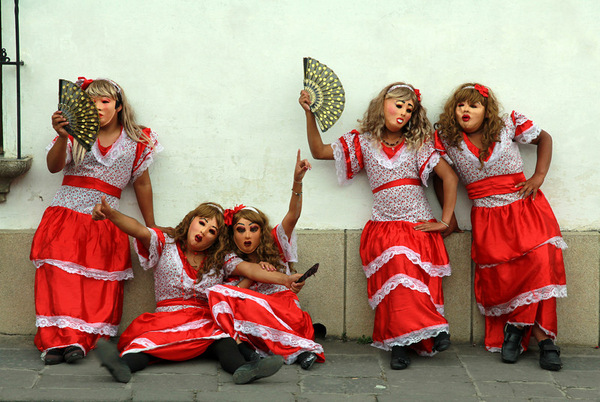
Men In Dresses

To be ready to take a powerful picture at any moment you literally have to be ready to take a picture at any moment. Keep a camera near you at all times. Be aware of your light because it is always changing. Constantly visualize taking pictures. Always be aware of your surroundings to better anticipate action, and to perfect all of this, practice.

Remember, luck favors the prepared. Luck is not a strategy. Do you have any other tips you’d like to share? Please do so on the comments below.

The post 5 Tips for a Powerful Picture Every Time by Scott Umstattd appeared first on Digital Photography School.


Digital Photography School

 
Comments Off on 5 Tips for a Powerful Picture Every Time

Posted in Photography


9 Top Tips for Shooting Waterfalls, Creeks and Streams

28 Apr

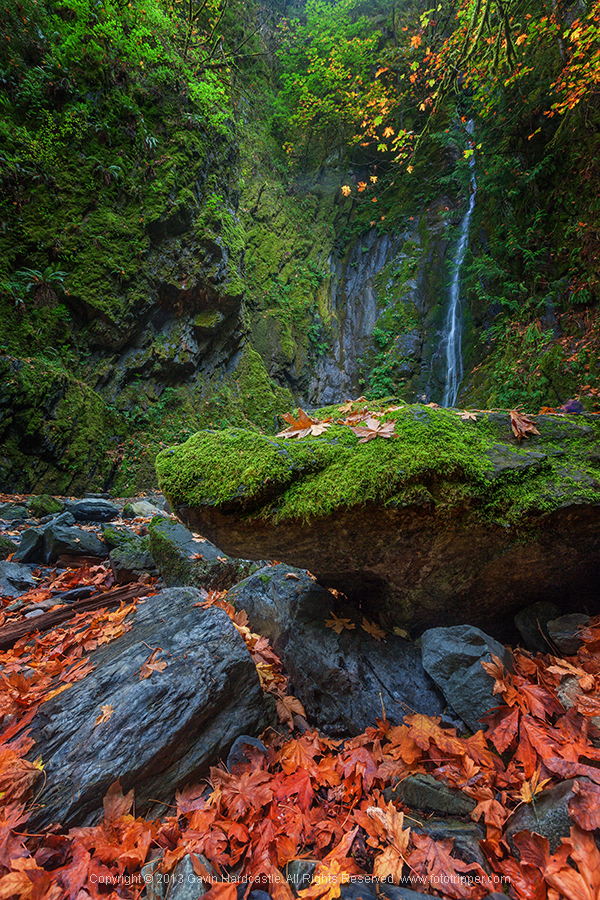
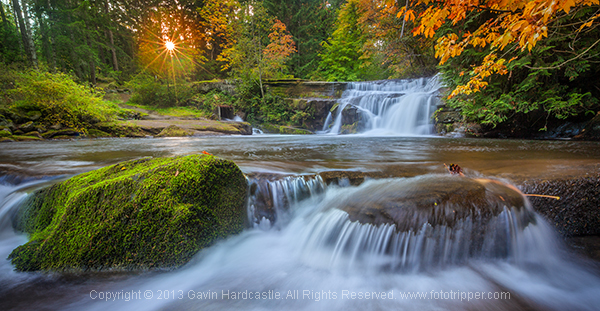
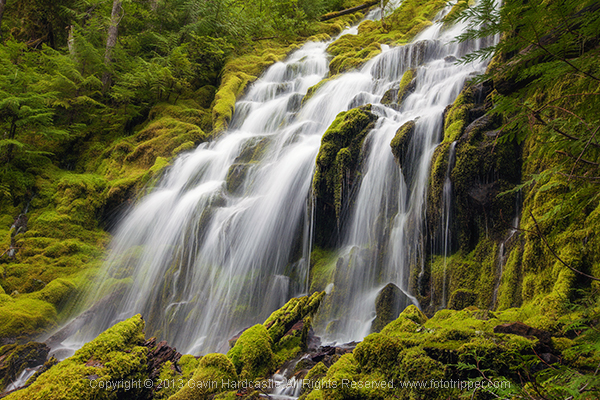
Waterfalls, creeks and streams are something of a photographic specialty for me. Aside from the fact that there are thousands of them at my Vancouver Island Headquarters, they’re also really easy to photograph and often result in magical images that stand the test of time. Whether it’s a moss speckled trickle or a colossal roaring deluge, moving water seems to be irresistible to photographers and when it’s done well, can be utterly gorgeous. Let me share with you my top tips on how to shoot waterfalls, creeks and streams.

Learn how to shoot waterfalls and creeks

1 – Shoot in all weather

I’ll shoot in any kind of weather except for sideways rain. With waterfalls, creaks and streams I have a silly little motto ‘The Wetter the Better’. When everything is drenched you’ll find that your shadows are nicely saturated to deliver powerful blacks. I also prefer the look of wet leaves over dry ones because they looks so much more vibrant and rich.

Rainy or overcast days will also give you softer light with lower contrast, meaning you won’t usually need to bracket in order to capture the dynamic range. If you’re lucky enough to get a cold spell and things get icy you’ll find your local waterfall turns into an enchanted winter wonderland overnight, just watch your footing.

bowen-park-nanaimo-gavin-hardcastle

2 – Don’t always choose a slow shutter speed

Sure, it’s nice to get those silky water shots and capture the motion blur of moving water, but there are times when it’s nice to also capture a frozen moment of action. I’ll usually take two exposures with different shutter speeds and then blend them in Photoshop to create a good mixture of frozen and blurred motion. A four second shutter speed will usually be enough for silky water shots and you can achieve that easily with just a polarizer and a narrow aperture like f/16, unless your scene is in harsh, direct sunlight.

For a quicker exposure that has less motion blur I’ll try and keep the shutter speed under one second by using a slightly wider aperture of f/11 and rotating the polarizer to allow in more light. It’s rare that I’ll require the use of an ND filter. My shot below is a single exposure of about a half second during a rainy day. I tried longer exposures but preferred this one because you can still see some individual water drops in motion instead of just a mushy blur.

How to shoot waterfalls

3 – Explore dark canyons

Don’t just explore those sun dappled streams that catch the light beautifully, that’s just too easy. Often it’s the darker, sun starved slot canyons that yield the most beautiful scenes. Armed with a study tripod you can shoot anything you want without caring about direct sunlight illuminating the scene. This opens up a new world of photo opportunities if you’re only used to shooting handheld.

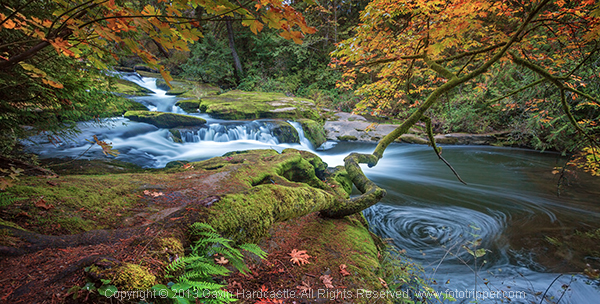
4 – Bubbles turn into spirals

Whenever you see a river that produces a current of bubbles on the surface of the water, you’re in for a treat. With a shutter speed of four to six seconds (depending on water speed) those bubbles will create beautiful spirals in your long exposures. Be careful not to slow things down too much though as a ten second shutter speed will probably blur the motion too much to capture any definition. Here’s an example I shot last fall in Nanaimo, Vancouver island.

How to photograph waterfalls, creeks and streams

5 – Slap that polarizer on

I know I harp on about this all the time as you’ve no doubt read in my ‘Why You Must Use a Polarizer‘ article, but it really does make a huge difference when you’re dealing with wet rocks and reflections caused by water. Your polarizer will allow you to use longer shutter speeds, reduce reflections and make your colours POP!

6 – Avoid the sky

Do you really need a white triangle at the top of your image? Didn’t think so. Almost all of my workshop students suffer from some compulsion that dictates all images must have sky. I think I did the same thing when I was starting out. By omitting the sky completely, you’ll create a more intimate scene that dedicates the entire frame to what matters most and eliminates the triangle of pointlessness.

How to Photograph streams and rivers

7 – Go abstract

This is where you will have an advantage if you don’t have a full frame sensor camera. Rather than trying to fit the entire scene into your frame, it often pays to hone in on a smaller area of a waterfall or creek which removes the viewers sense of scale and direction.

Instead of a river flowing over some rocks and tree stumps, you’ll create an abstract scene of natural beauty that hypnotizes the viewer with an atmospheric study in motion and colour. Just like removing the sky, omitting the top and bottom of a waterfall from our frame leaves room for imagination.

gavin-hardcastle-abstract-waterfall-photography

8 – Perfect the “shoot ‘n swipe” technique

I’m not going to lie to you, shooting waterfalls, creeks and streams WILL result in a wet lens. When dealing with the spray from waterfalls, you’ll need to practice and perfect the “Shoot ‘n Swipe” method that requires a measure of patience. To do this well you’ll need a ball head with just ONE position clamp. If you’re rocking one of those ‘many handled’ tripods that look more like a tower crane control panel, forget it. Here’s how it works.

  1. Compose your shot and dial in all your camera settings to capture the shot. By now your lens will be well coated in spray from the airborne water particles of your waterfall.
  2. With everything perfectly in place and all setup, unwind the ball heads position clamp and point your camera to the floor, being careful only to allow vertical movement.
  3. Using a good quality lens cloth, wipe the lens thoroughly to remove the spray. If you have a filter in place be sure to rub in the opposite direction to the filter thread of you’ll be picking that filter up off the floor.
  4. Once dried, unwind the position clamp on the ball head, lift up the camera back into its previous position for your composition, tighten the clamp and take the shot. You’ll only get a few seconds before you’ll be all fogged up again.

Repeat this procedure until you get a shot that doesn’t have a fogged or water splattered lens. You have now perfected the “Shoot ‘n Swipe” technique (Patent Pending)

9 – Processing – go monochrome

Sometimes it’s nice to convert images of moving water to black and white because often they feature a lot of white. If you find that your waterfall, river or stream shot is lacking punch because of boring light and a lack of colour in the scene, try converting it to black and white then get freaky with the Curves slider in Adobe Camera Raw to pop the contrast. Nice.

Black & White Landscape Photography

So there you have it, all you need to get out there and capture some lovely images of waterfalls, creeks, rivers and streams. Get creative and don’t be afraid of wet weather, just be careful on those slippery rocks.


The post 9 Top Tips for Shooting Waterfalls, Creeks and Streams by Gavin Hardcastle appeared first on Digital Photography School.


Digital Photography School

 
Comments Off on 9 Top Tips for Shooting Waterfalls, Creeks and Streams

Posted in Photography


7 Street Photography Tips and Exercises to Try This Season

24 Apr

You can currently pick up 2 eBooks on Street Photography by James on sale now at SnapnDeals!
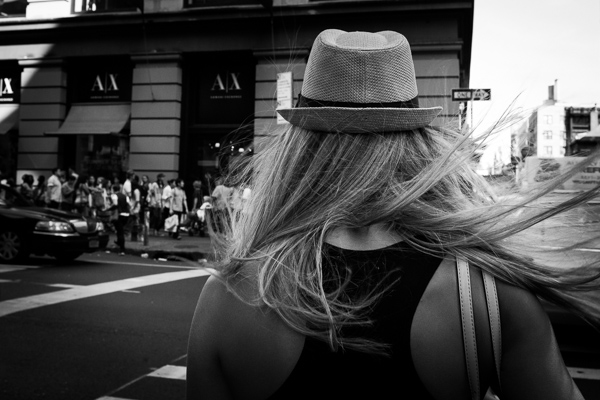
Windswept Hair, Prince and Broadway, SoHo

Windswept Hair, Prince and Broadway, SoHo

If you live near me, the birds are starting to chirp, it no longer hurts your face to walk out the door, and everyone sheds their all black winter outfits and puts on their most interesting attire.

If you live in the southern hemisphere, it’s beginning to cool off nicely. Spring and fall are the best times of the year to capture people and focus on street photography. If ever there’s a time to do it, it’s now.

So here is a list of street photography tips and exercises to get you out there shooting.

1. Linger in the same area
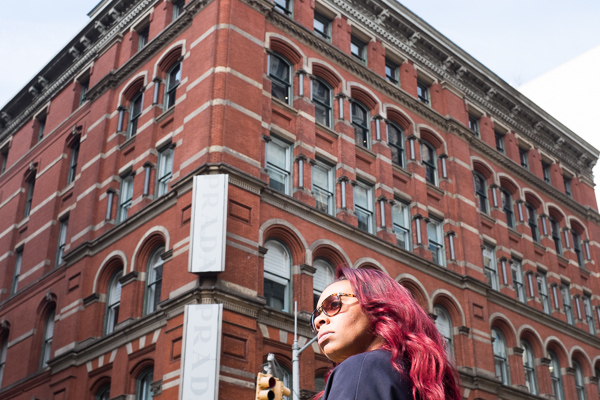
Prada Store, Prince and Broadway, SoHo

Prada Store, Prince and Broadway, SoHo

For this entire list of exercises, we are going to stick to the same general area. If you notice, all of the descriptive images in this article are from the same area of SoHo in New York City, at different times of day and in different seasons. There are so many reasons why this is a beneficial way to shoot.

The more you visit and revisit an area the more you get to know how it works and thinks, and the more you will get to know the characters. You will allow yourself to get familiar with the themes and subjects of the area. In addition, by the end of this exercise you will have a set of cohesive images that will work well when displayed together. Each image will play off the others.

From a technical and learning standpoint, there are a lot of advantages as well. It is common for people to walk around constantly while trying to find content to photograph, which is normal, but often waiting in the same spot or area for something to happen is a more effective strategy. Whether you are walking or waiting, the same amount of interesting moments will happen, and if you are waiting you will be better prepared to see them happen and capture them correctly.

As you visit the same area on multiple days, pay attention to the location of the sun in the sky and how it affects your images. Notice how the illumination of a scene and the appearance of your images change as you photograph into and away from the sun. Notice how the quality of light changes as a cloud moves over the sun and away again. Take the same shot twice at different times of day. Take advantage of the golden hours, as they are the most beautiful times to photograph, but don’t shy away from shooting in the harsh light of midday or at night.

2. Capture a strong facial expression or gesture
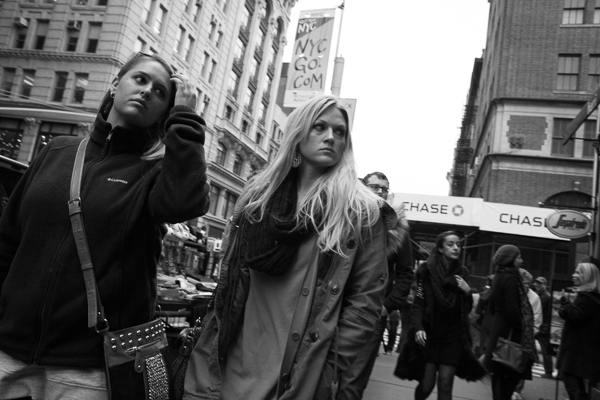
Window Glance, Broadway, SoHo

Window Glance, Broadway, SoHo

A significant percentage of the greatest street photographs have emotion to them. They make the viewer feel something. This is not by accident; it is what most likely drove the photographer to take a shot.

It is difficult to capture someone at the height of their emotion because those moments are so fast and fleeting. More importantly, if you are not actively looking for them then you will not be able to catch the moments before they disappear. Emotion does not only have to be on a subject’s face. It can be in their stride, in their posture, and in their hands.

Hint: It is much easier to capture an image like this if you pick a location and linger.

3. Capture a photo with multiple subjects
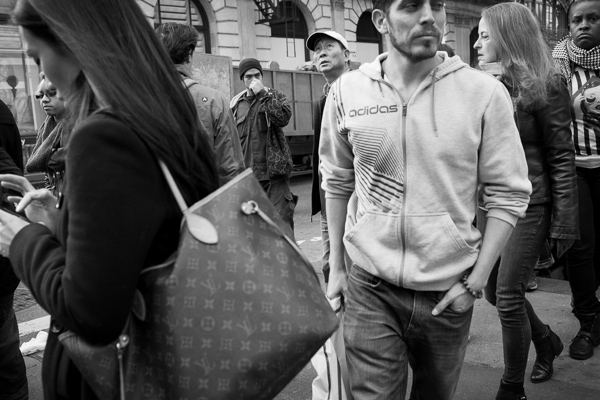
Diverse Crowd, Prince and Broadway, SoHo

Diverse Crowd, Prince and Broadway, SoHo

Create a scene that is busy with delightful things for the viewer to explore. These photographs work extremely well because, in addition to being interesting, they give our eye more to look at, and can help the photo feel more balanced when done right. These elements don’t have to be people – they can be objects, animals, signs, or pretty much anything as long as they are balanced well in the scene.

4. Capture a small detail
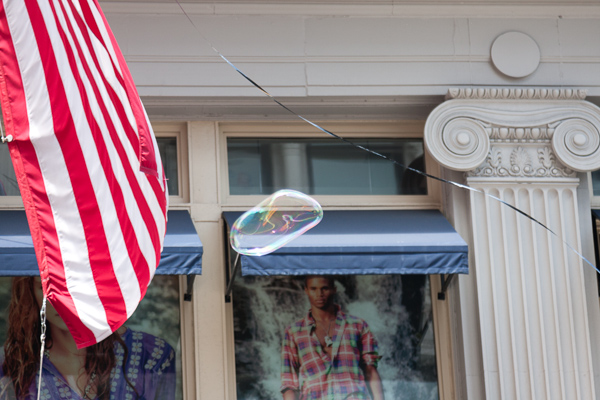
Bubble, SoHo

Bubble, SoHo

The opposite of the last exercise is to hone in on a small detail. Make the entire photograph about some tiny detail that alludes to a larger idea or story.

In the case of the image above, I tend to view the neighborhood of SoHo as a bubble. It has turned into a shopping mall and not much of a true neighborhood anymore. This photo is my way of alluding to that.

What’s the best strategy to finding something like this? Honestly, there isn’t one except for keeping your eyes open. This tip is similar to searching for a strong expression, in that the only way to do it well is to keep your eyes open so you can see it in the first place. You will be surprised at how many of these photographic moments pass you by when you are not actively looking for them. In addition, the more time you spend in the same area the more of these types of images will pop out at you.

5. Take a street photograph without people
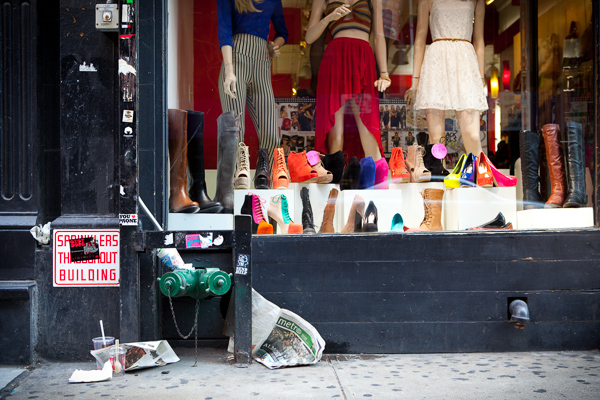
Shoe Store Display, SoHo

Shoe Store Display, SoHo

Street photography is often confused with the idea that you need candid people in the frame. This is a misconception. Street photographs are about people and culture and life, but they can just as easily be devoid of people. Some of the best and most interesting street photographs are devoid of people. Lee Friedlander was an expert at this, take a look at his work for inspiration.

6. Photograph differently
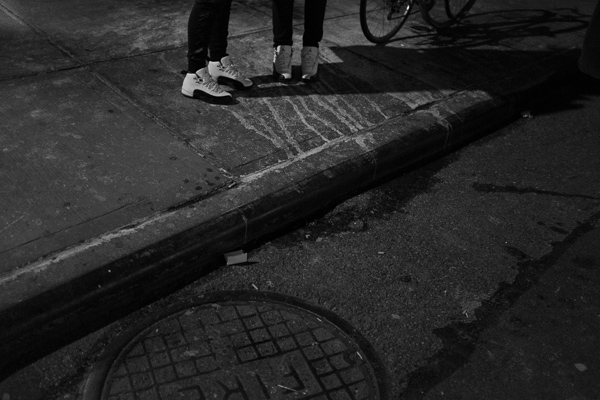
Matching Jordans, SoHo

Matching Jordans, SoHo

If everyone is photographing in one direction, photograph in the other. The key to this type of work is to have fun and to create unique images that mean something to you. Create images where you live or work, where you hang out, and what you know best. Those will turn out to be the most unique and insightful images.

7. Think of an idea and figure out how to capture it
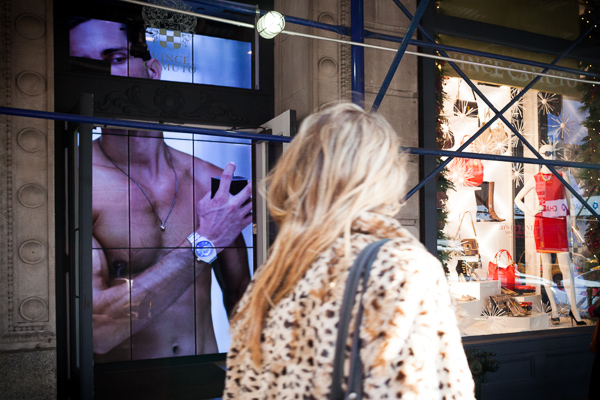
Vince Camuto, SoHo

Vince Camuto, SoHo

A majority of the best street photography is spontaneous, but the more time that you spend in an area the more you will begin to think about ideas to capture.  In some cases, just thinking about these ideas will make you better able to notice and capture them when they do spontaneously happen. In other situations, however, you will be able to find an area and wait for the photo you are thinking of to come along.

In the photo above, I wanted to create an image where it looked like a window display was beckoning to someone. The image of the naked man was on a loop from a video, so it took a some time for the right person to come and make eye contact at the right moment.

Bonus tip – take a ‘boring’ photo

Too often I hear people say, ‘I live in a boring area. Nothing happens here. I can’t do street photography.’ I think you can do street photography anywhere. Focus on step number five. You don’t need to live in the most fashionable area with the most people to do this type of work. Photograph suburban life. Photograph what it’s like to live in a sparse area.

If you live in a sparse area, create a sixteen image essay that explains your neighborhood. Give me a glimpse into what it’s like there. If done well, it can be just as fascinating and interesting as anything else, and it will be unique, which is the most important thing. Explore the work of William Eggleston, Stephen Shore, or Lee Friedlander, who all did a significant portion of their work in sparse areas.

For more street photography tips:

  • Masters of Photography: Bruce Davidson, Master of the Subway
  • In the Dark: 10 Tips for Street Night Photography
  • The Master Henri Cartier-Bresson – the Decisive Moment
  • 30 Street Photography Images to Inspire You

You can currently pick up 2 eBooks on Street Photography by James on sale now at SnapnDeals!

The post 7 Street Photography Tips and Exercises to Try This Season by James Maher appeared first on Digital Photography School.


Digital Photography School

 
Comments Off on 7 Street Photography Tips and Exercises to Try This Season

Posted in Photography


Tips to Prepare for Your First Wedding Photography Gig

24 Apr

When your photography skills reach a certain level, a family member or friend is going to ask you to shoot their wedding. They might even offer to pay you, which could be your first real gig. Score, right? You’ve made it. 😉 Of course, later when you realize the challenge ahead of you, the pride fades to anxiety, and, googling Continue Reading

The post Tips to Prepare for Your First Wedding Photography Gig appeared first on Photodoto.


Photodoto

 
Comments Off on Tips to Prepare for Your First Wedding Photography Gig

Posted in Photography


Waterfall Photography Video Tips

21 Apr

To help you out with this week’s photography challenge of waterfalls, I found a few video tutorials to walk you through how to photograph a waterfall. I also shared a collection of stunning waterfall images to get you inspired, if you missed it you can see those here.

This first video shows you the two choices you have when photographing a waterfall. You can either freeze or blur the water. Watch as he walks you through the camera settings for both options.

In this quick tip Tony Northrup goes over such tips as using a sturdy tripod, using shutter priority mode, and using a Neutral Density filter to block some of the light so you can get longer exposures, and finding a unique camera angle.

In this last video the photographer goes over step by step how to get that nice milky looking water. He talks about using a Polarizing filter, a tripod, and back button focus to help you get everything else in the photo nice and sharp.

I hope those help you get a handle on some of the technical aspects of waterfall photography. Now get out there and get shooting for this week’s challenge!

The post Waterfall Photography Video Tips by Darlene Hildebrandt appeared first on Digital Photography School.


Digital Photography School

 
Comments Off on Waterfall Photography Video Tips

Posted in Photography