RSS
 

Posts Tagged ‘Tips’

5 Tips for Doing Photography from the Hip

12 Jul

Photographing from the hip is, quite literally, having your camera near or resting on your hip and pressing the shutter button. This photography method is typically used in street photography when the photographer wants to take candid, incognito photos. But, sometimes, trying this as a deliberate photography method is just as fun. It forces you to change your perspective, your vision and your creative eye. You start to look at the scene as a bigger picture rather than as a tunnel vision through your viewfinder. Plus, if your family is anything like mine, where they turn away and run the opposite direction when you bring out the camera, this technique is a great way to get candid pictures of difficult, and uncooperative subjects.

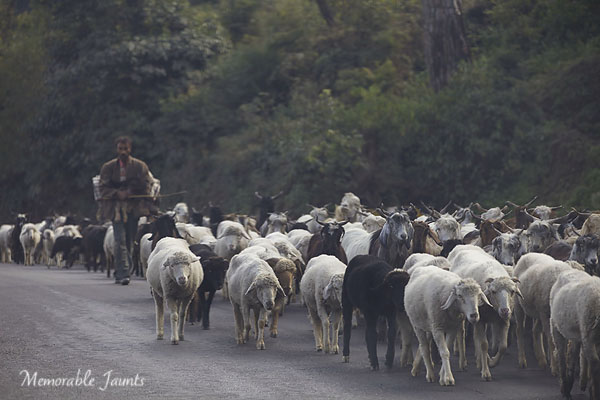
Photographing From The Hip Sheep Herder Walking With Flock of Sheep By Memorable Jaunts

When you put your eye to the viewfinder, often times you lose focus of all the other elements and entities beyond your line of vision. Photographing from the hip gives you, the artist, freedom to shift your perspective and opens up opportunities for alternative compositions for your images. Use it for personal projects or client sessions where you view the scene in front of you quite differently than what you actually capture in your camera. Travel photography is another great place to use this method of photography for an alternative perspective.

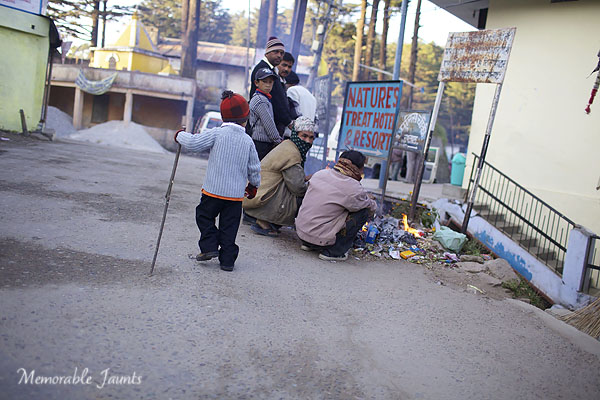
Photographing From The Hip Chilly Morning In India By Memorable Jaunts

There are some tips and tricks you may want to consider to get the best images from this angle of doing photography from the hip.

#1 Preset your settings like exposure and aperture

Since you cannot really change your settings based on what you see through the viewfinder, it is best to preset your exposure ahead of time. If you are a 100% manual shooter, this might be the one time you give yourself the luxury to go into full auto mode of your camera. Additionally, use evaluative metering instead of spot metering to assist with the exposure for this type of photography. In terms of aperture, the general rule of thumb is to have a smaller aperture for photographing from the hip (anywhere from f/8 to f/16). This improves the likelihood that more of the elements will be in focus especially if your subjects are moving. Having a larger aperture is also okay if you want to go for a more artistic image.


#2 Increase shutter speed

Having a higher shutter speed gives you a better probability that your subject will be sharp especially if you are moving or clicking in continuous mode and don’t have the luxury of a steady hand. Try to stay at least 1/250th of a second, or higher. Do not pay too much attention to ISO in this genre of photography, just embrace the noise as part of the creative element of the image. If you had to choose, give more priority to shutter speed. Things like exposure and noise (grain) can always be adjusted in post-processing as long as you have a sharp image.

#3 Preset focal point

This is probably the one time where having a back button focus might be inconvenient. Try auto focus and then throw MF switch on the lens so that the focus point is locked. You can also use center focus point and just move your camera slightly as a way to recompose with the focus locked.

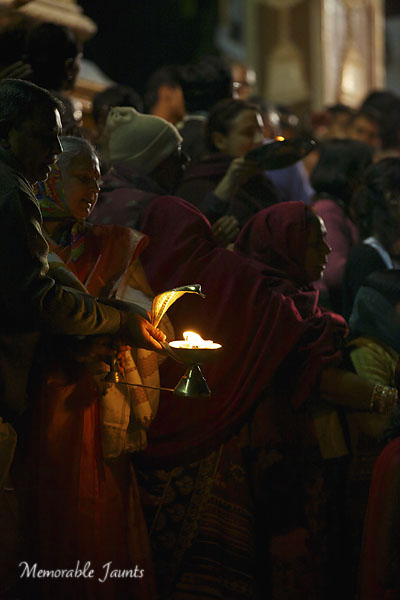
Photographing From The Hip Ganga Aarti In Rishikesh By Memorable Jaunts

#4 Use your camera’s silent mode if you have one

If you really want to go incognito, use the silent drive mode in your camera. Some of the newer DSLRs have this feature. It suppress the sound of the shutter being pressed and you can get some really candid images of the scene in front of you.

#5 Use a fixed focal length lens

Prime lenses work better for this type of photography since you really don’t want to recompose with every movement of the scene in front of you. Just move your feet instead. You can also change the angle by holding the camera at a slight upward or downward angle depending on your relative height in relation to the scene in front of you.

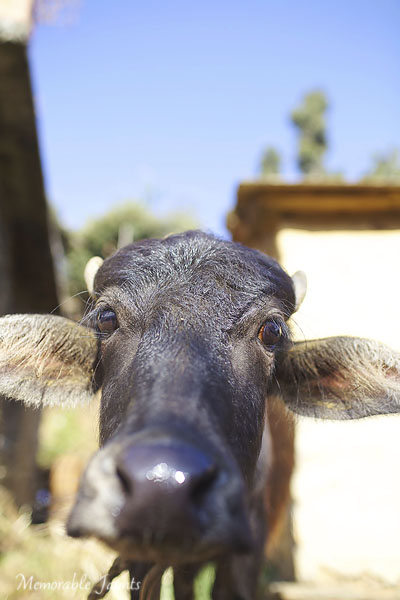
Photographing From The Hip Water Buffalo in India By Memorable Jaunts

Remember to get creative with this type of photography. You may be tempted to bring the camera to your face every once in a while to make sure you are getting some “decent” shots. That’s okay, but resist the urge to chimp every time the shutter is clicked. Try doing this for five to ten minutes at first. Once you get comfortable, take this method out for a spin for longer periods of time. Make a mental note of your settings so that you can reevaluate and reassess what worked, and what did not work, at the end of your shooting exercise.

Remember to have fun and don’t get too hung up on the technicalities. In a worse case scenario, if you take enough shots, there is a chance you will have a few good images that are artistic and technically correct. If nothing else, it gives you the opportunity to view the scene through your eyes rather than your viewfinder. So get out, put the camera around your neck using your camera strap and get clicking.

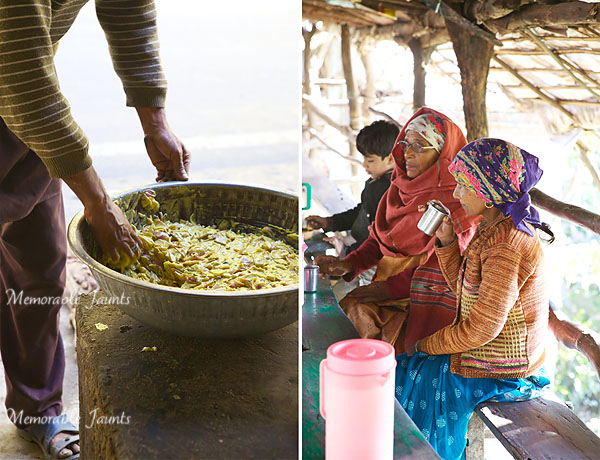
Photographing From The Hip Local Tea Shop in India By Memorable Jaunts


The post 5 Tips for Doing Photography from the Hip by Karthika Gupta appeared first on Digital Photography School.


Digital Photography School

 
Comments Off on 5 Tips for Doing Photography from the Hip

Posted in Photography


Seven more DIY photography tips using household objects

12 Jul

The Cooperative of Photography received a lot of attention recently for a video featuring seven easy photographic hacks using household items. Now they’ve released a follow up video with seven more neat tips and tricks. It might just help you kick of a fun weekend photo project. Learn more

Articles: Digital Photography Review (dpreview.com)

 
Comments Off on Seven more DIY photography tips using household objects

Posted in Uncategorized


Actionable Tips to Get Sharper Photos Every Time

11 Jul

There’s almost nothing (besides maybe losing a memory card) that hurts more than having a great shot that ends up poorly focused! And even though sometimes we can blame our equipment, there are other factors that come into play when focusing. Sharper and crisper photos are the goal of every photographer, so it’s time we cover  the basics to achieve Continue Reading

The post Actionable Tips to Get Sharper Photos Every Time appeared first on Photodoto.


Photodoto

 
Comments Off on Actionable Tips to Get Sharper Photos Every Time

Posted in Photography


Three Tips for Being Ready to Shoot Faster so you Never Miss a Shot

11 Jul

We’ve all heard one of the cornerstones of making better photographs is to slow down; be deliberate and take your time. This is very true. In no way am I advocating not being purposeful in your shooting. However, sometimes there are situations when the difference between getting a good image, instead of a blurred and washed out frame, is separated by only a few precious seconds. This is especially true when it comes to working in action filled situations like sports or street photography, but it can also be just as easy to miss moments in nature and landscape photography if you go into situations ill prepared.

Here are three tips that can improve your reaction time and make you more ready to obtain quality images for processing when you find yourself in those “shoot from the hip” scenarios.

Being Ready to Shoot Faster – Never Miss a Shot

Be Self Aware

Knowbeforeyougo

“Know thyself.” No, Socrates wasn’t a photographer (though I’m sure he would have been awesome). In this case, the saying of “know thyself” means becoming aware of your surroundings more so than having a deep introspective understanding of your own self, although that’s a good thing to have, usually. We exercise this on a daily basis, albeit almost unconsciously. You notice a stain on your shirt, or you see the little boy chasing a ball towards the street, or you see a dark alley that’s just a little too dark to walk down alone. You can incorporate this same inherent awareness into your photography to make you a faster shooter.

Here’s an example: Let’s say you find yourself taking an afternoon to work on your street photography. When you first begin your expedition, it’s very bright outside. You are probably still able to shoot at a reasonably fast shutter speed and low ISO. As the evening starts giving way to night, there is of course less available light. So, a good idea would be to begin thinking about bumping up your ISO so that you can maintain the same exposure settings. Or alternatively, slowing down your shutter speed or increasing the size of your aperture (remember, low F-number means a bigger opening and more light into the lens such as f/2.8). Keep in mind however, that a higher ISO will introduce more noise into your final image, but it will have less of an overall impact than changing the shutter and aperture settings.

In photography, your surroundings are in a state of constant flux. So, to be a good photographer, you must be aware of the changes in your surroundings and mould yourself the best you can in order to produce consistent and quality work. This means learning to understand what is happening around you, whether it be: changing lighting conditions, approaching weather, wind, the presence or absence of people and objects, – the list goes on indefinitely. Anticipate what is going to happen next and make adjustments now, to save time later.

Shoot Comfortably

This would seem to go without saying, but you still see many photographers looking down right uncomfortable or awkward while they’re out shooting. Sadly, the majority of the pain is self-inflicted. To shoot faster and to be ready for the shot when the time is right, your camera must be available for use at a moments notice without restricting your movement or causing discomfort. One of the best ways to make this happen is to have your camera suspended from a quality camera strap. Camera straps, like most things, can become a very personal item for new and seasoned photographers alike. Don’t buy a strap because its got pretty flowers embroidered on it or because its made from the latest space age whatever-foam. Do a quick search for “camera strap” here on dPS and you will find a large number of reviews and write-ups of great camera straps. But don’t stop there. Shop around, read reviews, ask your photographer friends and sift camera forums. Being able to comfortably retrieve your camera quickly is key to not missing great images.

Have a budget? Most of us do, even more of us can’t afford to spend thousands on the latest lens or camera body that we dream of owning. Luckily, the majority of the accessory market is crammed with makers competing to sell you their wares. It’s easier than ever to strike a balance between what you need and what you can afford. If you can, have more than one camera strap in your kit so you can choose what fits best for a particular outing.

Badstrap

Prepare Beforehand

This is the big one, yet many people don’t seem to understand that preparation is golden. A close cousin to situational awareness, research and preparation prior to any photo work should become second nature and will pay huge dividends. It will also make you a faster shooter and help to prioritize your workflow, not to mention make you appear more competent as a photographer.

Preparedness

Know what you’re walking into beforehand and prepare accordingly. Are you going on a hike? Find out what wildlife and plants are native to the area and pack your bag with long lenses so you can get close to your subjects from a distance. Travelling abroad? Be sure to read up on the local attitudes towards photography before you start snapping away to avoid any awkward confrontations or worse. Of course, the most unpopular, but useful, aspect of being well prepared is practice, practice, pactice. Practice, and then practice some more. Want faster and more smoother lens changes? Practice at home, so you lose less time in the field and have fewer fumbles. Practice finding your camera adjustment buttons without looking. This will save you loads of time and frustration when you find yourself shooting at night. If you haven’t figured it out by now, the key word here is practice. Practice everything and you will be amazed at how much easier quicker most things suddenly become.

Do you have any other tips for shooting faster and being ready? Please share them in the comments below.

The post Three Tips for Being Ready to Shoot Faster so you Never Miss a Shot by Adam Welch appeared first on Digital Photography School.


Digital Photography School

 
Comments Off on Three Tips for Being Ready to Shoot Faster so you Never Miss a Shot

Posted in Photography


5 Hot Tips For Improving Your Summer Photography

01 Jul

TopImage

We aren’t going to talk about cleaning your lenses (although you should), I’m not going to tell you to use a tripod (you should know that), and I’m definitely not going to tell you to compare last year’s photography to this year’s (but that’s not a bad idea). No, I’m going to suggest you get out of your comfort zone and do something new.

If you open up your Flickr, 500px, or wherever you store your thousands of kitty cat photographs you might notice that there may be a lot of similar shots. Different subjects, but a similar style perhaps? Different styles, but the same type of subjects? Most of us have done it, it sounds like this: “I only do portraits”, “I only shoot landscapes”, or “I never use a flash”.

So, in an attempt to bust out of your comfort zones I’m going to share 5 tips with you to use this summer that have helped me overcome my own creative plateaus over the years.

Interesting fact: 77% of all photographers have at least one cat photograph in their portfolio. Another interesting fact: I have no idea if that is true, but there is a 50% chance that it is.

Five tips for improving your summer photography

Tip 1 – Same Place, Different Time

It’s time to master light, your photography will improve leaps and bounds with the mastering of one specific element – timing. Mastering the light means many different things in the art of photography; mastering your manual settings, mastering the flash, or mastering your timing. All of these things impact one another but the one that I want to focus on is timing. Besides, they say timing is everything.

ZionTrail

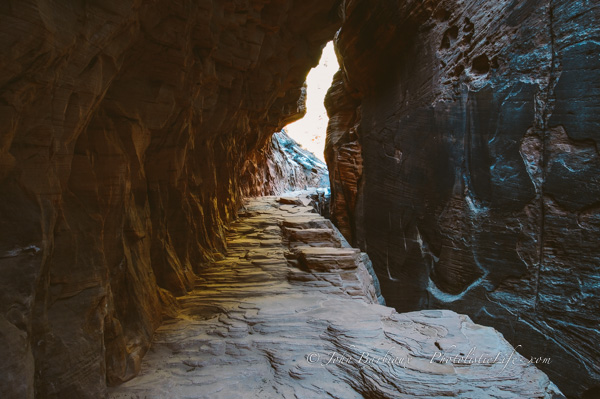
Knowing when and where the light will be gives you a huge advantage over other photographers. Knowing that at around 2:30 p.m. the sun will be at an angle that paints light into the pathway is priceless if you are visiting this place and may not return in the future.

Knowing where the sun sets, where the sun rises, and how the light will illuminate various subjects during different times of the day will help you master your timing. The sun rises in the east and sets in the west, if you know which direction you are facing when the sun is directly above you you’ll have a better idea what time of the day to photograph any interesting subjects or scenes you may find.

There are apps and websites all over the Google machine that can assist you when you are traveling to new and exotic places. There is a program you can download onto your phone, computer, watch (not yet but maybe someday) called The Photographer’s Ephemeris that allows you to input a location and figure out exactly where the sun will be at a given time. You can plot your position on top of a topographical map and determine what direction the sunlight will fall, and then plan accordingly.

*Topographical maps are helpful when planning a photography trip where mountains raise up high enough to throw large shadows on areas you may be planning to photograph. The topographical map gives you the height and depth of the contours of the landscape of your location.

Tip 2 – Be Specific, Don’t Spray And Pray

Do you need a fresh 16GB SD card every time you take a photo walk? Maybe you take 100 photographs in the hopes that one ends up being acceptable. Before you take a photograph ask yourself if it’s really that interesting. Is it throwing a unique shadow? Does the light hit it in a way that will catch viewers eyes? Will it cause viewers to ask a question (other than “Why would you photograph that?”)?

Taking a great photograph doesn’t generally happen by accident. Ansel Adams once said a great photograph is one that fully expresses what one feels, in the deepest sense, about what is being photographed. How many of the thousands of photographs squirrelled away on your hard drive were taken with the type of forethought Ansel Adams described?

This summer, challenge yourself to contemplate each shot, think about whether or not the subject is interesting enough to take the time to photograph. What you will find is that if you take the time to contemplate a shot before you press the shutter you’ll have less overall shots but more “keepers”.

Tip 3 – Use A Different Focal Length

Get out of your comfort zone and force yourself to use a different focal length this summer. If you don’t have multiple lenses then use a different focal length on your zoom lens. By using a different focal length you’re forcing yourself to think before you shoot. You’re forcing yourself to compose the image in your mind before ever putting the viewfinder up to your little peepers.

Renowned photographer Henri Cartier-Bresson used a 50mm lens almost exclusively when he wasn’t on assignment. By using the 50mm lens so frequently he was able to see, and compose, an image without putting the camera up to his eye. If you focus on a single focal length long enough you’ll learn what will be in or out of the frame without having to take the shot.

Tip 4 – Roam Free Like Buffalo. You know, before we shot them all.

Get off the beaten path. Literally, get off of the trails, paths, and otherwise marked walking areas to find hidden gems buried in hard to reach places. The summer’s dry weather creates safer hiking conditions as well as the longer days which allow you to venture further off the beaten path without worry of being eaten by wolves in the dark.

OffThePath

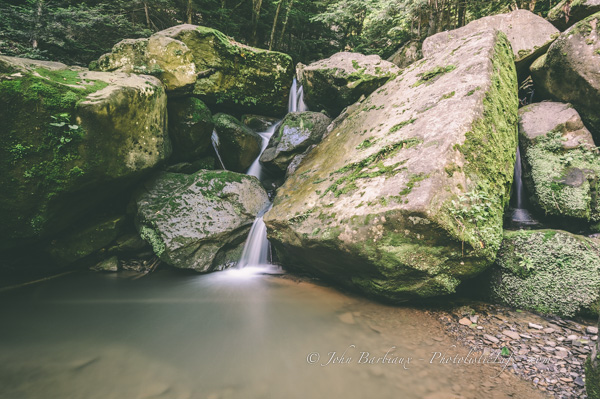
This shot was taken with the Nikon 16-35mm at 19mm, ISO 100, f/10, 15 seconds.

There are a couple of ways to find hidden gems around where you live, searching the internet is the easiest. Flickr is a great resource, you can search the name of your home town and once you find an interesting area you can check the photographs info for a location (assuming the photographer included it). The other way is to grab a hand held GPS (or your phone) and venture off into areas you have not explored before, like Indiana Jones minus the whip and man-purse.

Tip 5 – Photograph In Bad Weather

Bad weather can be a bummer, moods get bent and plans are spoiled. Most people pack up their gear and head home (or don’t go out at all) if the weather is anything but perfect. Take advantage of the warmer weather and plan a photo outing next time the weather looks foul.

Plan to visit places that are normally bustling with people for an opportunity to capture unique shots. When bad weather strikes you’ll have an opportunity to capture people scrambling for a dry place or reflections in puddles. Alternatively, you have an opportunity to capture photographs of places that are normally busy, void of life (think empty sidewalks in the city).

FoggyDay

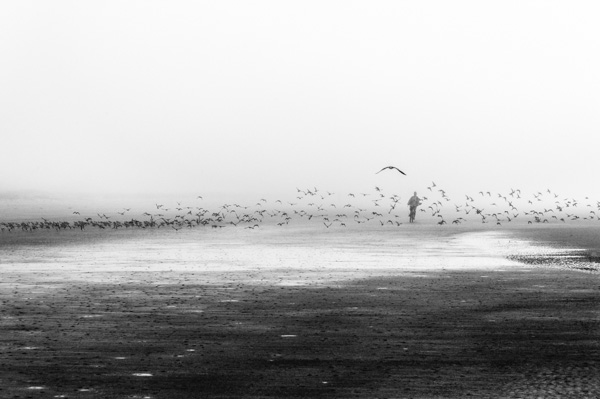
Beaches are a great place to go right before or after a storm, the ominous clouds and rolling fog create dramatic scenes. Be sure to be prepared for rain and/or strong wind, Adorama has cheap covers for your camera that will keep the water and sand from damaging your precious gear. Try not to change lenses in sandy, windy, and wet conditions, there is a good chance that you’ll end up with debris inside your camera or lens.

Summer photography offers hundreds, if not thousands, of opportunities to practice photography morning, noon, and night. The weather is warmer and the days are longer, there are festivals for everything almost every weekend. If you’re having trouble coming up with something to photograph check out local towns websites for their calendar of events, there is a good chance something is going on near you.

The post 5 Hot Tips For Improving Your Summer Photography by John Barbiaux appeared first on Digital Photography School.


Digital Photography School

 
Comments Off on 5 Hot Tips For Improving Your Summer Photography

Posted in Photography


Travel Photography Tips – Video Tutorials

30 Jun

Summer is here in the northern hemisphere and you may be heading out on vacation soon. So today I have a couple videos for you with some travel photography tips.

First up is an interview by This Week in Photo podcast host Frederick Van Johnson with our own dPS writer Ralph Velasco.  They talk about tips on how to scout locations, being prepared, getting out early, avoiding crowds, gear, approaching and photographing people, and more.

See more of Ralph’s images and tips in his dPS articles below:

  • How to Capture the Essence of a Place – Travel Photography Tips
  • 18 Tips for Shooting from a Train
  • The Only Tip You’ll Need for Creating a More Interesting and Well-Rounded Set of Images of Any Destination or Subject

In this second video Justin Weiler from DSLR Traveller shows you his Top 10 DSLR Traveler Tips including: what equipment to bring, vary your shots, shoot  more than you think you’ll need, cut before you share your images, get in some shots yourself, do research, meet the locals, and have a good time.

Do you have any additional travel tips you’d like to share? Please do so in the comments below.

The post Travel Photography Tips – Video Tutorials by Darlene Hildebrandt appeared first on Digital Photography School.


Digital Photography School

 
Comments Off on Travel Photography Tips – Video Tutorials

Posted in Photography


Tips to Establish a Smart Photography Business

27 Jun

Establishing your own photography business is a full time job, if not more. It’s a great gig, don’t get me wrong, but running this or any other business will instantly make you the wearer of many hats. The best way to make it work and avoid headaches along the way is to have a plan, even if it is a Continue Reading

The post Tips to Establish a Smart Photography Business appeared first on Photodoto.


Photodoto

 
Comments Off on Tips to Establish a Smart Photography Business

Posted in Photography


5 Tips for Creating a Photo Essay with a Purpose

24 Jun

As a photographer, you are a storyteller. The nouns are your subject matter; the verbs are the color and contrast that keep the story moving. A cast of characters all working together to get your point across. Instead of proper grammar, you ensure proper exposure. Instead of spelling errors, you watch for tack-sharp focus. For those times when the story is especially important and meaningful, or for when one image doesn’t say it all, there is the photographic essay. With blogging and social media, photo essays are more popular than ever: humorous or emotionally relevant, sparking debate or encouraging compassion, each with a story to tell.
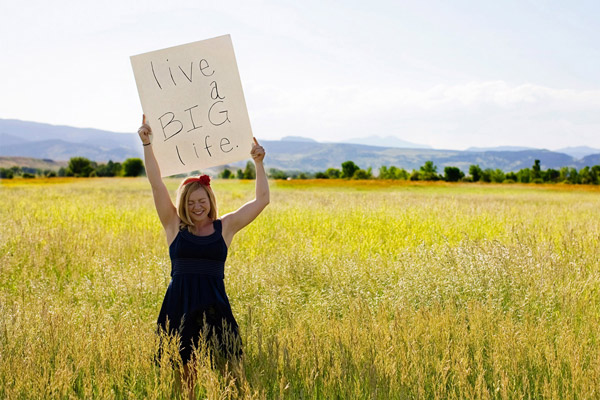
melanie1

I’ve mentioned before that taking on a photo project is one of my favorite ways to reignite my love for photography, but beyond that, it’s a great way to get your message across and have your work seen by a larger group. A photo essay is intriguing; it’s something to talk about after people hear that you’re a photographer and want to know about the glitz and glamour of it all. It’s the perfect thing to tell them after you’re done going on and on about all of the red carpets, the celebrities, the fame, and the fortune. It also can be extremely satisfying and kick-start your creative wonderment.

By definition, a photographic essay is a set or series of photographs intended to tell a story or evoke emotions. It can be only images, images with captions, or images with full text. In short, it can be almost anything you want it to be. Which is where I struggle most–when the options are limitless. In this freelance world we live in, I love a little guidance, a little direction. Ideally, someone to tell me exactly what they want and promise to be thrilled with whatever I produce, for my fragile artist ego can’t take any less. While I continue my quest for that, I offer you these 5 tips for creating your own, completely without bounds, photographic essay:

1) Let it evolve on its own

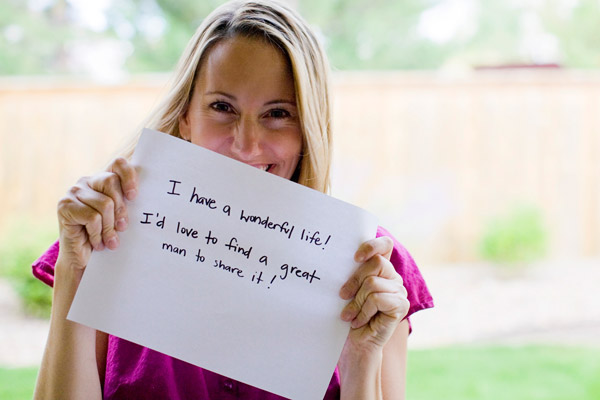
Each time I’ve had a very specific concept in mind before I started shooting, it’s never been the end result. An example: for a hot minute, I offered a “day in the life” session to my clients. I was photographing so many of the same clients year after year that I wanted to be able to offer them a different spin on the portrait sessions I was doing for them. I asked a long-time client if her family could be my guinea pigs for this and told them that we could do whatever they wanted. We went out for ice cream, had a mini dance party in their living room, and I photographed a tooth that had been lost that very morning. Then, very last, I photographed the two young daughters with notes they had written, which to be honest, I’m not even sure how they had come about. I rushed home after the session and edited those last note pictures first just because they were so different from what I usually shoot, and posted them on my personal Facebook page the heading Notes Girls Write.


sarah

gracie

Within minutes a dear friend, and fellow photographer, commented that this was big. Bigger than just the two pictures. She and I would spend the next year working on a photo essay that became a blog, that in turn became a book entitled Notes Girls Write. We photographed hundreds of women of all ages with their notes, each one later expressing having their portrait taken with their own words was an extremely powerful moment for them. Beyond my beautiful children, the fact that I can make a bed with hospital corners like no one’s business, and the award I won in the 4th grade for “Most Patient”, Notes Girls Write is one of my proudest accomplishments. It evolved on its own, starting from a few similar photographs that struck a cord in viewers and becoming a large and powerful project, one of the biggest markers in my career so far.


lindsay1

IMG_6287b

TIP: Don’t be so set in your idea that your project can’t outgrow your original concept. Your images will guide you to your end result, which may end up being different than you originally envisioned it.

2) If you think there’s something there, there’s likely something there

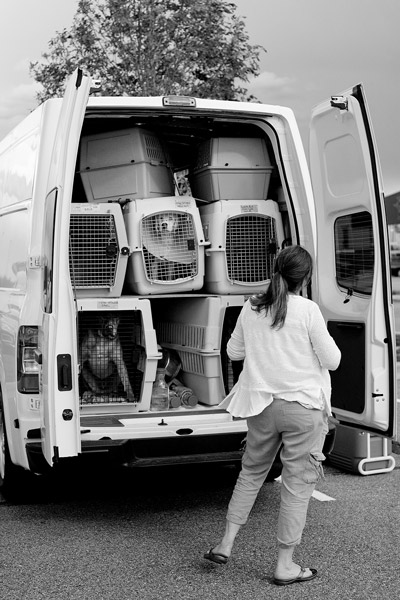
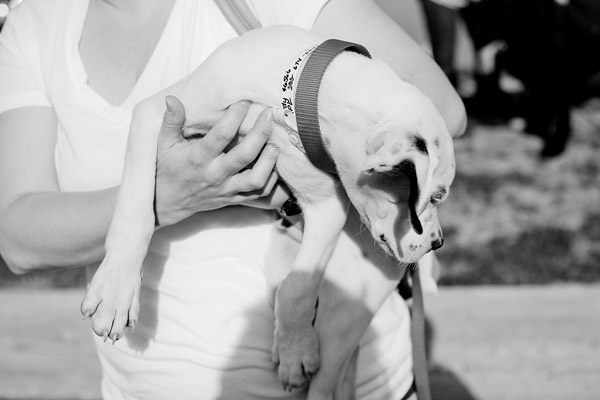
For the last year I have been a “foster mom” with a dog rescue group. Volunteers transport dogs that would otherwise be put down from overpopulated shelters, or seized from terrible situations, to my area, where dog adoption rates are much higher. These dogs live in foster homes while they receive medical care and basic training so that they can be adopted out to loving homes. It’s incredibly rewarding. Especially when I had hardwood floors.

I knew from the first time I met the transport van I wanted to document what it looked like: a van full of dogs that just narrowly escaped death arriving to temporary homes where they will experience a level of love and care which they’ve likely never known. I tear-up every time I see it. I am also put to work every time I am there, so taking photos while holding onto a 100 pound German Shepard is tough. It’s going to take me several trips to have enough images to do anything with, but that’s fine. I have no idea what I will be doing with these photos. I know they will find a home somewhere: maybe with the rescue group to raise awareness, or to help bring in volunteers, or maybe they will do nothing more than document my own story with volunteering, or perhaps something more. I’m not sure yet, but the point is that I have the images, ready for their time, whenever that is.
dog1

dog2

dog3

TIP: If you think there is something to it, there likely is. Even if it’s just a personal passion project. Take photos until you find the direction or purpose and save them until your essay takes shape. You may not end up using all, or any of the images, but in continuing to take photographs, your project will be defined.

3) Shoot every single thing

I’m the “World’s Worst Over-Shooter”. Need one image? Let me take a hundred so we know we have it. Luckily for my bad habit, the photographic essay needs over shooting. Whether you know what your plan is, or have no idea want your end result will look like, the more coverage you have, the better. This is one of the few times I push my luck and ask my subjects to work for me until they never want to see me again (I only photograph people though, so if you are photographing mountains or something, you have the added advantage of not pushing people until they cry or yell). Don’t be shy. Shoot everything you know you don’t need, just in case you need it. Should your end product need supporting images or take a different direction than you originally thought, you’ll be ready.

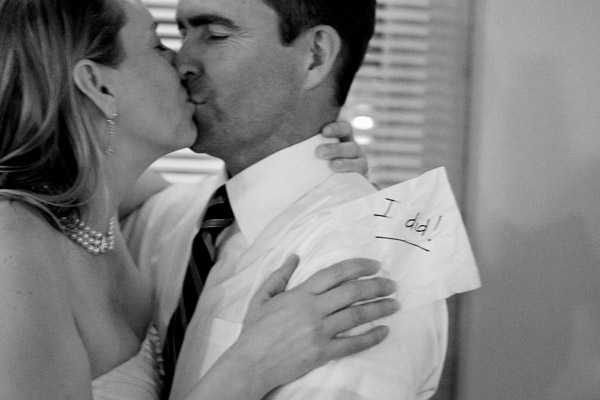
Take advantage of digital (if that’s how you shoot) and fill a memory card. You may end up trashing everything, or you may not. I had no idea that my Notes Girls Write project would span for as long as it did, but because I didn’t turn down anyone who was interested in the very beginning I ended up with some shots that told complete stories and expanded on the original concept.
sarah2

sarah3

TIP:  Think big. If you are shooting an essay where mountains are your subject matter, see the mountain in pieces and photograph the surrounding trees, rocks, and whatever else. This will save you having to return to the beginning of the project for supporting shots, or having to reshoot if your essay takes a different turn than you planned.

4) Ask for help with image selection

I struggle with this one–I let my personal feelings get involved. Throughout our Notes Girls Write project I was constantly picking images based on my personal feelings–the subjects that I had connected with more, and the girls that I knew were most interested in the project. This is where it is so helpful to have someone else help. Someone who has no personal feelings towards the images and will help you pick based only on the strength of the image and not your own feelings. Even if people were not involved as subjects, you tend to have personal feelings toward images that the general public may not see the power behind.

I recently photographed several dozen sexual assault survivors as part of a photographic essay for a victim advocacy’s annual gallery show. This event is meant to put faces on the survivors and raise awareness, and has been a large local event for years. I was thrilled to be selected to be the exclusive photographer, though this was one of the hardest projects I’ve ever taken on. The photo sessions themselves, whether five minutes or 30, were extremely emotional for the survivors and in the time I spent with them, I often learned a lot about their journey and experience. This made it difficult for me to pick which final images would be used for the show, based only on the power of the image and not my personal feelings. In the end several select friends helped me narrow each survivor’s images down, and the subjects themselves selected which would be the final image used, as ultimately this is their story.

SAVA1

SAVA2

SAVA3

TIP: All creative work is personal, and looking at photographs we take ourselves is incredibly hard to do with clear eyes. We see the mistakes, the personal feelings, the shot that could have been better. It’s impossible to always set these aside so when working on a project that is incredibly important to you, or large in scale. Have others help you decide what images to use for your final pieces. Bring in people who are interested in photography and people that aren’t. People that know about your subject matter and people that don’t understand it at all. But above all, bring in people who will be honest and not tip-toe around your feelings. Lastly, also bring a thick skin.

5) Tell your story, in fact shout it from the rooftops if you can

Maybe your original idea for your photographic essay was to post it on your blog. Awesome, nothing wrong with that, but are you sure it can’t be more? Shop it around, who can it help? Does this benefit a group, an organization, or a person? Could it inspire people? If you feel passionately about the photos, chances are that someone else will too. Your photographic eye doesn’t stop when your shooting is done. If you felt compelled to take the time to create a photographic essay, there are likely “readers” for your story.

img_6359b

TIP: This isn’t the time to be humble. Taking on a photo essay is a large endeavour. While there’s nothing wrong with having it be something you only did for your own personal growth, showing it around can be helpful both in experience and longterm benefit. Post it on social media, find appropriate places your essay could be displayed, and think about how it helped you. Every single photo essay I have done has led to an outstanding connection, or more work, and there is nothing wrong with getting those things along with the personal gain of accomplishing something you’re proud of.

The ideas are truly for a photographic essay are limitless. Truly.

Want a few more ideas for projects, try these?

  • Using a Photography Project to Spark your Creativity
  • Photography projects that make you feel alive
  • Jumpstart Your Photography – Start a 365 Project
  • 8 Photo Projects in Your Own Backyard

Have you ever done a photographic essay? What is your experience? Share with in the comments if you have, or have considered it. If you haven’t, what are you waiting for?

The post 5 Tips for Creating a Photo Essay with a Purpose by Lynsey Mattingly appeared first on Digital Photography School.


Digital Photography School
 
Comments Off on 5 Tips for Creating a Photo Essay with a Purpose

Posted in Photography


4 Tips for Taking Better Photographs of Trees

20 Jun

Can’t see the wood for the trees? I’ve often struggled with the challenge of photographing trees in a way that captures the imagination and takes the viewer on a journey. I’ve learned that for me, there are two very effective ways to consider and photograph trees. Try asking yourself these two questions:

  • Which tree is the leading actor?
  • Which tree/trees are the supporting actors?

I have to thank my mother for this interesting perspective. As a boy I was dragged to many a theatrical play and so I tend to look at my images as a stage on which there are certain characters that play out a scene. There’s always a lead character, some supporting roles and some cool props. Understanding the hierarchy of your characters will really help to improve your compositions in general.

How to Photograph Trees

1 – When a single tree grabs your attention

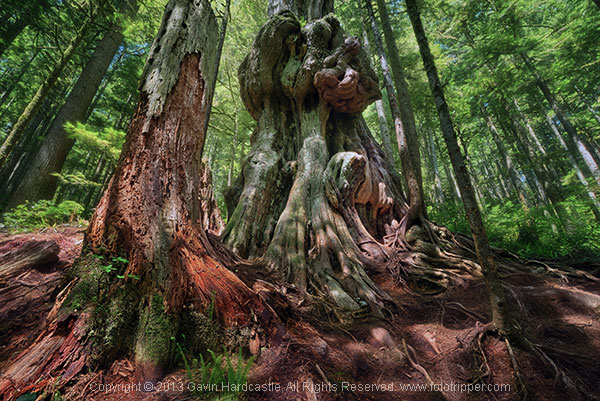
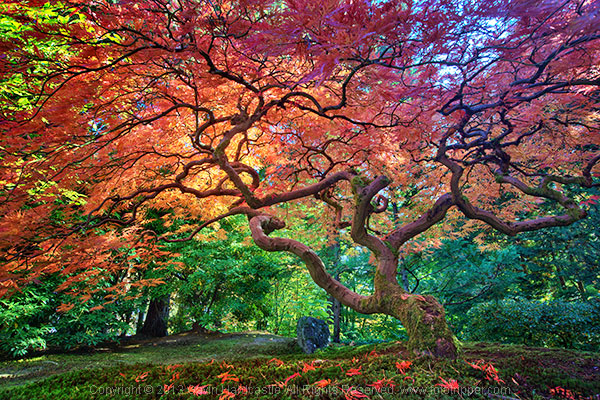
Decide who is the lead and make that your most important subject. With the image above, it’s pretty obvious who the lead character is in this scene. That huge knotted cedar tree is my leading actor, so I place him centre stage and place all other trees around him.

Using an aperture of f/22 means that my entire image (stage if you will) is in focus and the only reason I can get away with this is because my central character is so obvious that I don’t need to accentuate his presence with shallow depth of field.

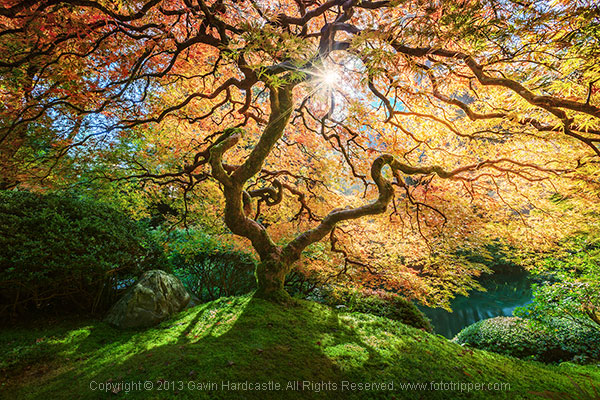
Here’s another example of a very obvious leading actor in my scene. It’s pretty much ALL one tree with the supporting actors being a sun flare, the shadows on the foreground and the Koi Carp gliding through the pond in the background. Again, I used a very narrow aperture of f/16 to ensure maximum focus throughout the image.

How to Photograph Trees - Gavin Hardcastle

2 – When trees play supporting roles

Let’s face it, not all trees are A-list actors, but they don’t need to be. You can use trees to frame another, more interesting character, in your image. When you’ve found an interesting subject such as a waterfall, lake reflection or sea stack, take a look around and see if there are any trees that would make a nice frame or leading line that directs the eye towards your main subject. If there are, place them in your foreground.

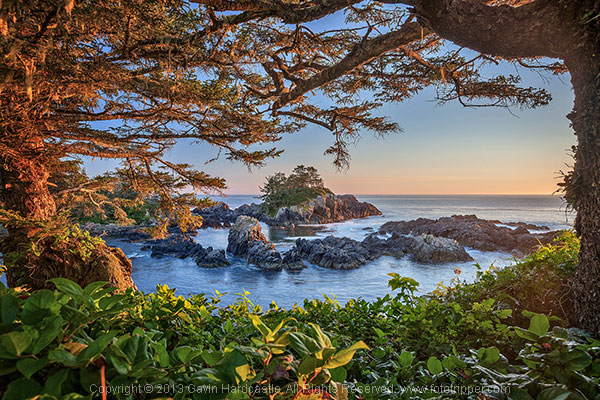
In the image below, I used the trees and shrubs to create a frame for my sea stack. I used an aperture of f/8 to create a subtle bokeh effect in the foreground shrubs because I wanted to draw the viewer’s eye towards the central sea stack.

How to photograph trees

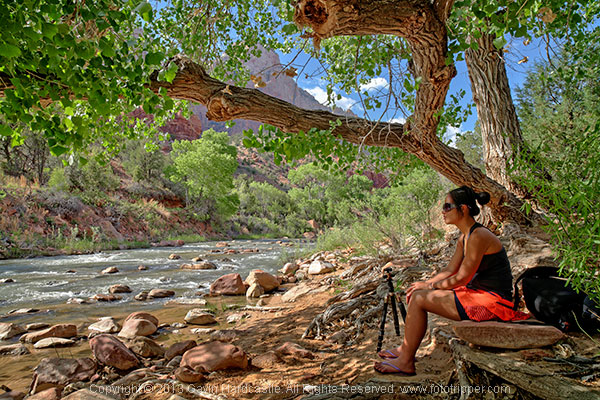
Here’s another example of where the tree was used as a supporting actor in my scene. Once again the tree creates a frame, and although we don’t see the entire tree, the image would be nothing without it.

Tree Photography

3 – When NOT to include people for scale

How to photograph trees in landscape photgraphy

How big do you think that tree above is? Well, let’s just say that only a toddler would be able to stand under the canopy.

There’s often a temptation for photographers to get a person to stand in their tree photograph for scale. That’s a great idea if your tree is massive, it really emphasizes the immense size of your subject. For smaller trees such as the maple shown above, it would have been a disaster to include a person for scale because that tree is tiny. In fact, it’s so small that I was laying prone on the ground in order to get the shot.

4 – When to use shallow depth of field

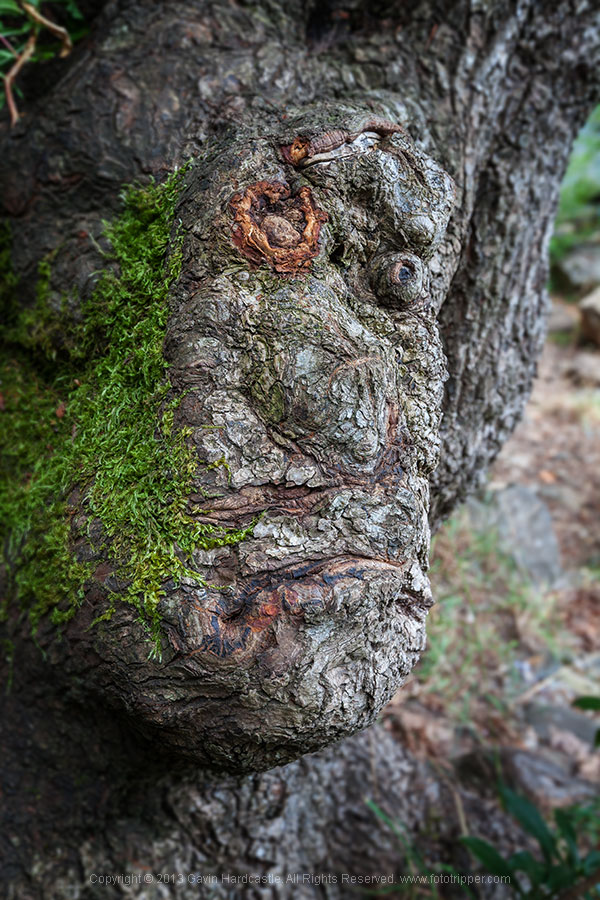
Sometimes it’ll be really obvious that in order to accentuate and bring attention to a certain tree or feature of a tree, you can use a wide open aperture like f/2.8 to create shallow depth of field. This is a creative decision, there’s no right or wrong, only what works for your vision. I rarely use shallow depth of field in my landscape photography, but occasionally I’ll want to bring attention to a certain feature of a tree like this guy below.

Photography tips for shooting trees

Whether you shoot huge landscapes or intimate nature scenes, using these four tips should improve that way that you photograph trees. Try them out and capture your own beautiful tree photographs.

The post 4 Tips for Taking Better Photographs of Trees by Gavin Hardcastle appeared first on Digital Photography School.


Digital Photography School
 
Comments Off on 4 Tips for Taking Better Photographs of Trees

Posted in Photography


3 Tips on How to Approach Photography as a Hobby

12 Jun

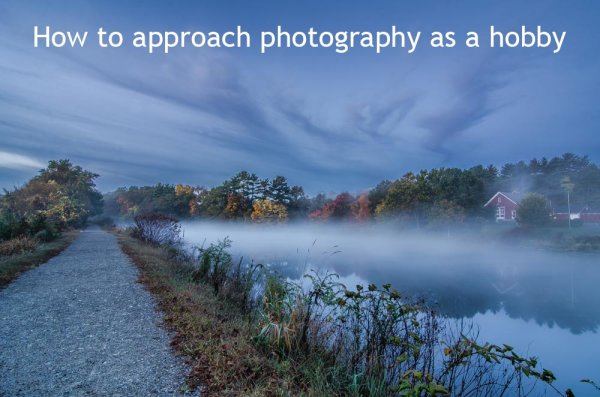
Recently, I gave you a look inside the bag of a hobby photographer on a budget, and after reading all the comments on that post, I got to thinking about a topic that doesn’t really get all that much attention…

approachphotographyhobby-5

There are technical posts that detail things like getting sharper images and even plenty of advice on going pro, but what I have not found in my search, is any solid advice on how to approach photography as a hobby.

Sure you’ll need to learn the technical stuff in order to make quality photos, but there’s more to approaching this craft than just learning, you have to have the right mindset going in or, more than likely, your camera will be collecting dust-bunnies in your closet next month.

First what’s the difference between hobbyist and professional?

I thought about this for a while and really only two standout differences come to mind – money and time.

  • Money – The professional needs to make money from their photography – it’s how they pay bills and put food on the table. As a hobbyist, while you could still make money on the side from time to time, the vast majority of your money comes from another source (i.e. a typical desk job, the retirement fund, spouse, etc.).
  • Time – The professional, by nature, is required to invest time into photography as it directly effects how much money they will make in the end. However, as a hobbyist you’re more likely to have other priorities more important than photography and as a result will spend less time behind the camera than a professional.

Notice that quality is not one of the two differentiating factors. As a hobbyist you can certainly still make great photographs, there are many hobbyists that do just that, but it’s not something you can do overnight. Professional or not – photography is a journey.

Three steps for approaching photography as a hobby

approachphotography-4

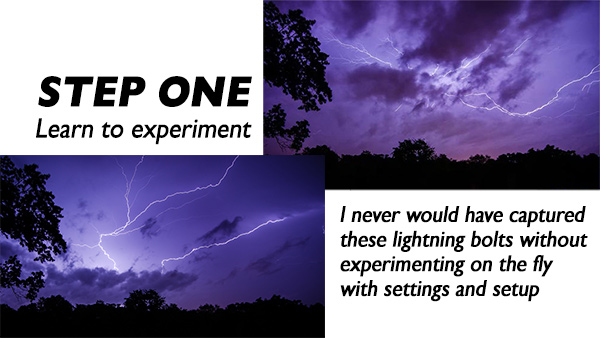
Step one – learn to experiment

One of the best parts of being classified as a hobbyist is you don’t have anyone paying you to take their photos which means you can take your photos.

You can experiment with different styles of photography like HDR, light painting, black and white. You can photograph people or landscapes. I’ve always believed that the best way to learn how something works is to just get out and start using it. After you’ve played around with a camera a bit and done some own experimentation – the tutorials, guidebooks, and even the camera’s manual will make more sense, allowing you to learn even more.

Take action today

One of the best ways to force yourself to experiment is by joining various communities. Digital Photography School runs a weekly challenge in which you are given a theme to photograph for the week and share your result in the comments of the week’s post. It’s fun and really can get you thinking about new ideas.

approachphotography-step2

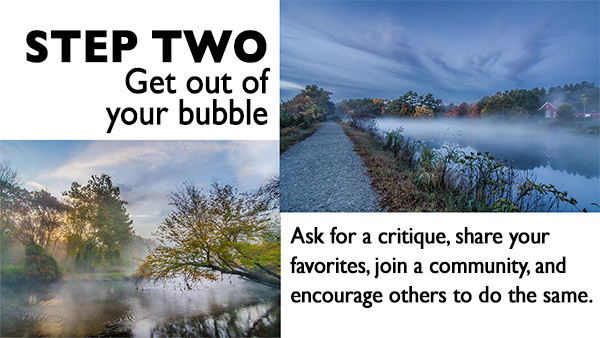
Step two – get out of your bubble

Join a community and share your work. There’s no shame in asking others for help, but it can be a bit scary to do so, especially when you’ve hit a personal breakthrough and are afraid someone might tear your photograph apart.

Making friends – both through the virtual worlds of social media and internet forums, and the real world photography club that meets in the basement of your local town hall – is a great way to gain support and keep the motivation flowing.

Take action today

dPS has a huge forum with thousands of people sharing and critiquing each other’s photography daily. Google+ and Facebook also offer groups specific to various genres of photography. If all else fails you could always start your own website and start sharing your work on a regular basis there or find a local club that will give you a more real world experience. The key is to get yourself out of the bubble.

Step three – invest in yourself

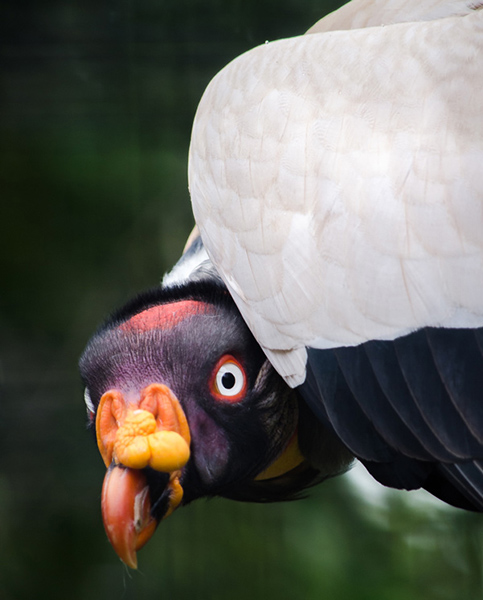
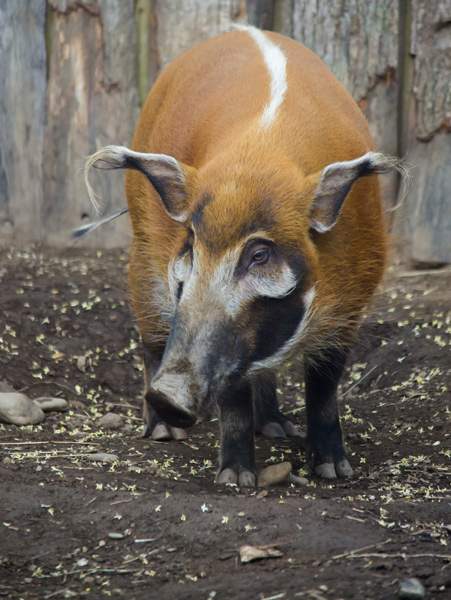
Whether you’re photographing pets or at the zoo

approachphotographyhobby-8b approachphotographyhobby-7b

Or on vacation, or in your backyard. The more you’re willing to invest the more it will show in your work.

approachphotographyhobby-3b

approachphotographyhobby-4b

Yes, this still about photography as a hobby, but it’s an expensive hobby and not just at the wallet, but in time as well – so be prepared to invest both if you want to succeed.

I’m not saying you need to buy pro gear, an entry level camera and kit lens can take you far and get you some great photographs – it may be all you ever need in terms of camera gear. But don’t forget about the accessories – tripods, filters and software are all part of the package as well.

Make sure you’re not only investing money into your hobby though, invest time. Quality gear and software will not fix a lack of experience, so get out and start taking photographs by following step one. Stay motivated by sharing your work and asking for critique by following step two. Then, as finances and time allow, invest both into improvement and you’ll have a winning recipe for success.

Take action today

Block out some time this weekend and try and complete the weekly challenge here on DPS.  Start a ‘photography fund’ even if it’s only five or ten dollars a month. This will go a long way in allowing you to invest in better accessories and new gear which, can’t make you better alone, can certainly improve your images when you combine them with the more experience behind the camera.

How have you approached photography as a hobby?

Finally, I’d love to open this post up for discussion. How have you approached your own photography as a hobby? Or how would you recommend others approach theirs?

The post 3 Tips on How to Approach Photography as a Hobby by John Davenport appeared first on Digital Photography School.


Digital Photography School
 
Comments Off on 3 Tips on How to Approach Photography as a Hobby

Posted in Photography