RSS
 

Posts Tagged ‘Tips’

3 Tips to Help Keep Your Photography Passion Alive

19 Sep

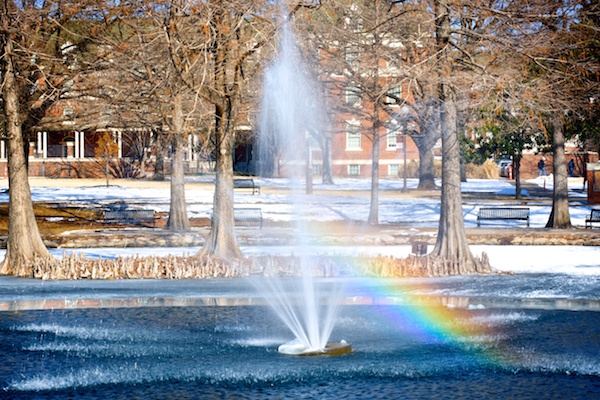
Fountain rainbow

Photography is like any other pursuit in life, in that it requires a great deal of time and practice. Unless you make a living as a professional photographer, you might find that you simply don’t have enough hours in the day to devote to taking pictures. With work, family, school, and plenty of other obligations in our lives, it’s easy to let photography take a back seat to everything else. So, unfortunately we often find our expensive cameras gathering dust on the shelf, and our vibrant photo libraries growing ever more stagnant as the months and years pass. How in the world is it possible for hobbyist or enthusiast photographers, much less beginners who are just entering this brave new world for the first time, to find chances to learn, stretch, and grow, or just do what they enjoy doing? Thankfully there is hope, and I’d like to share a few tips that have worked for me.

1. Hold yourself accountable

When most people get their first camera, or upgrade to a better one, they go through a similar process. Initially it seems like anything and everything is worthy of a photograph – kids, pets, food, cars, flowers, clouds, friends, skylines – nothing is off limits. There’s a newness and excitement to the whole endeavour that seems almost childlike. People in this early phase never seem to have an issue with finding time to indulge their new infatuation, and often they find it hard to stop taking pictures! But soon the veneer wears off, the pressures of life start to add up, and cameras often end up spending more time on shelves and dresser drawers.

Leaves rain

There is beauty all around, but sometimes you have to stop and look for it.

If this sounds like you, one of the best things you can do is find a way to hold yourself accountable for keeping your photography passion alive. Some people decide to take a picture every day or each week. Others join an online photo community and start posting on a regular basis. Most cities have photography clubs where members gather to discuss techniques, photo opportunities, and gear. dPS, and plenty of other sites, have weekly assignments or challenges that are a great way to try something new, while also keeping your photography hobby alive.

When I was in this rut a while ago I started my own blog, Weekly Fifty, where I post one photo each week taken with a 50mm lens. Doing this has forced me not only stay active with my hobby, but to seek out new opportunities that I otherwise might have missed. Having some type of assignment or challenge that forces you to use your camera will often help rekindle the flame that was once burning so bright, and help you fall in love with photography all over again, even if you do have other things going on in your life.
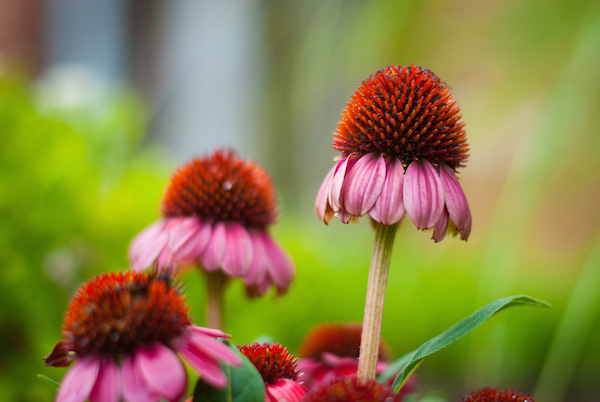
Coneflower

I had to find a photograph for my blog, so I walked around a flower garden for a few minutes and got this shot of a coneflower. Without something to hold me accountable, I probably would never have gotten this shot.

If you do go this route it’s important to find a method that is fun and enjoyable, rather than a burden. Photography should not be a chore, and I have known some individuals who have grown to resent their accountability methods because they took on more than they could handle. If you already find yourself stretched too thin, signing up for a daily challenge will probably not help. But a weekly challenge, monthly assignment, or local club meeting might be just what you need to fit photography into your already busy life.

2. Bring your camera and keep your eyes open

Whether you decide to participate in a photo assignment or not, one thing you can do to fit photography into your packed schedule is simply bring your camera with you. Most of us have similar daily routines involving home, work, school, or other obligations and you might think that the photogenic moments in your daily life are few and far between. But if you keep your camera close at hand, and keep your eyes peeled, you might learn to turn the mundane into the magnificent. That might sound like hollow grandiosity, but it’s true: if you start looking for the beauty in your everyday life, you will likely find a whole new world of picture-taking possibilities that you never noticed before. It’s a great way to keep your love for photography alive without adding another burden to your already crowded lifestyle.

Case in point: the other day I walked up to the office building at work and saw a patch of mushrooms by the door. At first I thought it was nothing special at all:
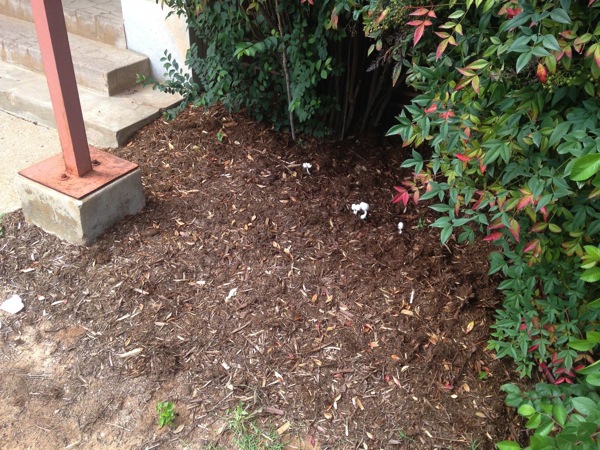
Mushrooms iphone

Shot with my iPhone

But because I almost always have my DSLR with me I was able to take this picture of what might otherwise have been an entirely forgettable scene.
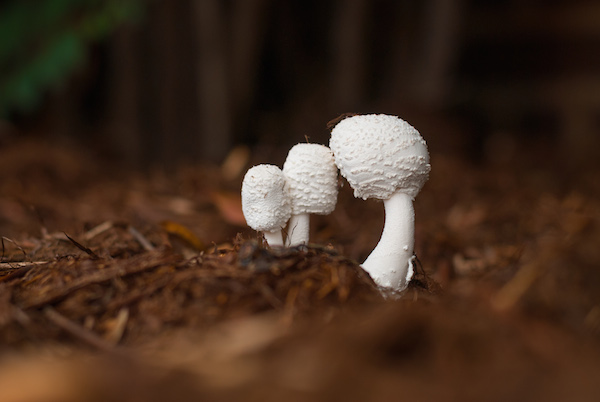
Mushrooms d200

Circumstances like this are all around you, and finding them is not a matter of time but of observation. If you find your expensive camera spending more time gathering dust than taking photos, it wouldn’t hurt to simply start bringing it with you more often and keeping your eyes opened.

3. Get out of your comfort zone and try something new

It’s human nature to grow complacent and comfortable. We are creatures of habit, and change can be difficult, especially when it threatens to upset a careful balance we have achieved in our lives. But stepping away from your comfortable surroundings and trying something new is a fantastic way to inspire you to find photographic opportunities in your life. Whether it’s a new lens, a new filter, a new technique, a new piece of software, or even a new camera, trying something new is a great way to spice up your photography and help you get your camera off the shelf and into your hands again.

Here at dPS there are hundreds of articles with a myriad of tips, tricks, and techniques to try – and that’s just the start. There is no shortage of articles on the internet filled with new ideas, and doing so won’t add any more hours to your day. But it might help you find ways to squeeze more time in for photography than you might otherwise think. For example, when I found myself stuck in a rut several months ago I read some articles on a technique known as panning. Then my friend, (and photography mentor) Ryan, rode around on a bike while I practiced with my camera, and we ended up with this shot. While it’s not perfect, it gave me an idea of a whole new aspect of photography to explore.
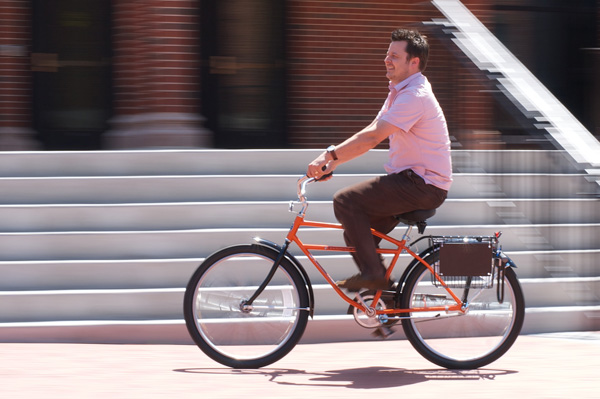
Biking

One of the main selling points of DSLRs and mirrorless models is that they have interchangeable lenses. While the kit lens that comes standard with most cameras is fine for many situations, shooting with a different lens can radically alter your perception of what the camera can do. In the process, you will likely experience the same spark of inspiration and creativity that you had when you first got your camera.

Think of your camera body as a mobile device, and the lenses like applications. Every app on your phone or tablet has a different purpose and allows your device to do different things; in the same way every lens gives you different photographic possibilities for your camera. Using a camera with only one lens, especially the kit lens, would be like buying an expensive new smartphone or tablet but never downloading a single app. You might enjoy it, but you would be severely limiting the capabilities of what your device can actually do. If you want to inject a renewed sense of vitality into your photography, buying, renting, or just borrowing a new lens can do exactly that.

General index

This simple shot of some books in a dimly-lit library would not have been possible with a kit lens, but switching to a 50mm prime lens with wider f/1.8 aperture opened up a whole new set of possibilities like this.

You are busy with plenty of demands on your time; it might seem impossible to fit photography in with everything else going on. But hopefully these tips give you a starting point, and if you have any others that have worked for you feel free to leave them in the comment section below.

The post 3 Tips to Help Keep Your Photography Passion Alive by Simon Ringsmuth appeared first on Digital Photography School.
Digital Photography School

 
Comments Off on 3 Tips to Help Keep Your Photography Passion Alive

Posted in Photography


7 Tips to Help Improve Your Seascape Photos by Controlling the Waves

18 Sep

When photographing outdoors, you generally take the world as you find it, and you have very little control over the elements. You cannot control the weather. The terrain is a given. You certainly cannot control the skies or the clouds.

But when photographing seascapes there is one thing you can control, and that is the waves. At least, you can control the appearance of the waves. This is a fundamental difference between landscapes and seascapes.

Picture1 Pier

In landscapes you have generally static ground and foreground elements, while in seascapes you are dealing with a fluid substance that is in constant motion. If you just treat a seascape as a landscape, you will get an ordinary photo, but with some attention to the waves you can get extraordinary pictures.

You can actually control the appearance of the waves in order to add just the right mood and interesting effects to your photos. It is actually very simple to do; it’s all about controlling your shutter speed. In general, the slower the shutter speed, the more calm and serene the water will appear, while a very fast shutter speed implies power and action.

In this article, I will walk you through some shutter speed ranges that you might try in your own seascape photography next time you are at the coast. So here are some tips to help you take better seascape photos:

#1 Minimal Gear Needed

To photograph moving water successfully at various speeds, you will not need much in the way of extra gear. Other than a camera, a tripod, and perhaps a remote shutter release, the only necessity is a neutral density filter.

It is best to have a few different strengths of neutral density filters. A 10-stop filter is a must, and from there I recommend adding a 3-stop and a 6-stop filter. In a pinch, remember that polarizing filters typically reduce the amount of light reaching the camera by two stops, so you can use a polarizer as well.

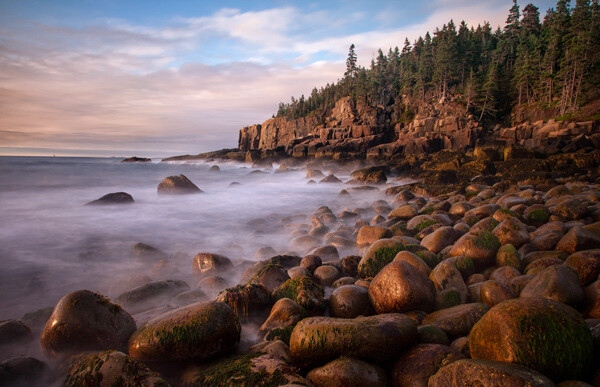
Picture2 AcadiaRocks

#2 Controlling Shutter Speed

Coastal pictures are all about controlling the shutter speed, and you will usually find yourself trying to slow down the shutter speed. If you are shooting in one of the automatic modes, this is a good opportunity for you to step up Manual (M) mode. Just set the shutter speed where you want it, then if you can get the proper exposure by changing the aperture settings, great. But if not, use your neutral density filter to cut down on amount of light entering the camera.

This is also a rare instance where you might consider Shutter Priority (Tv or S) mode. Once you set the shutter speed, the camera will set the aperture for you. Of course, you could also use Aperture Priority (Av) mode and set the aperture with an eye toward where the camera is setting the shutter speed.

When you get to the coast, take a few test shots, Keep an eye on the histogram to make sure your exposure settings work for the mood you are trying to create.

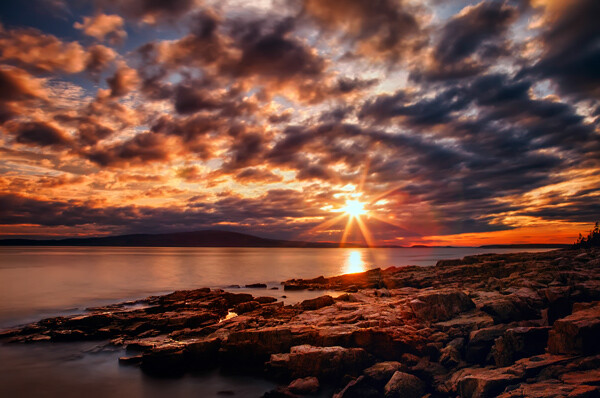
Picture3 SchoodicSunset

#3 Creating Flat Seas with Extremely Long Shutter Speeds (at least 10 seconds)

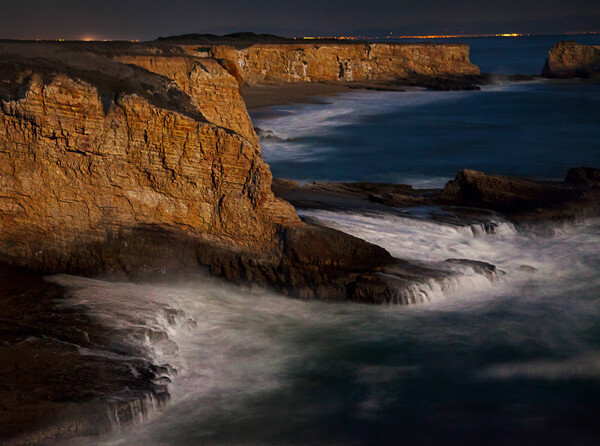
Most of my favorite seascapes were taken at shutter speeds of 10 seconds or more (sometimes a lot more). Under calm conditions this adds a sense of serenity to the seascape. Under other conditions the slow shutter speed can add some drama to the scene.

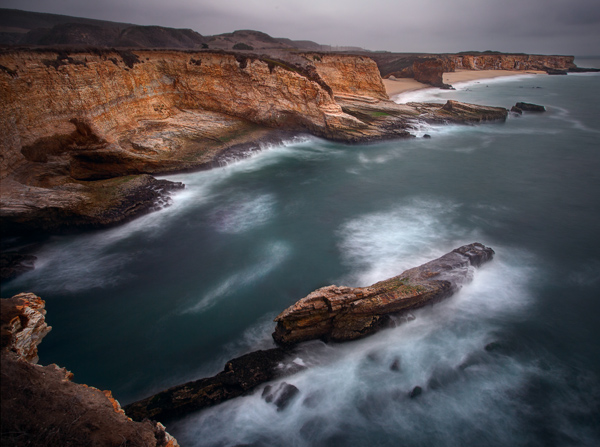
Picture4 DavenportCliffs

To accomplish this effect, you are probably going to need to use the 10-stop neutral density filter. If you are set up for a proper exposure before you put the filter on the lens, you will need to add 10 full stops of light to get the proper exposure once the lens is on the camera. If your camera is set up to adjust in 1/3-stop increments, that will mean 30 clicks (of your dial) of additional light.

This filter is so powerful that it leads to some challenges. You are going to need to focus and set your exposure before you put the filter on the camera. Once you put the filter on, you will not be able to see anything or focus. A great process for these long exposures is this article: Step-by-step Guide to Long Exposure Photography

In addition, keep in mind that the exposure will be quite long and the camera will need to be very stable. If you are on sand or other unstable surface, be sure to jam the legs deep into the sand to make it as stable as possible. If you are near the water, let a wave or two touch the tripod’s feet before shooting because the first wave will shift the tripod a little bit.

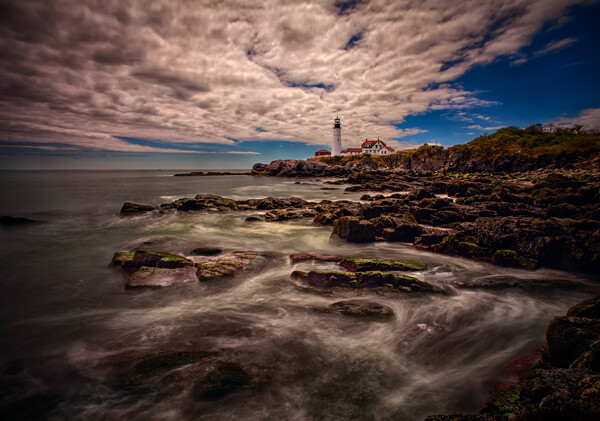
Picture5 PortlandHeadLight

#4 Ocean Trails: Long shutter speeds (2-8 seconds)

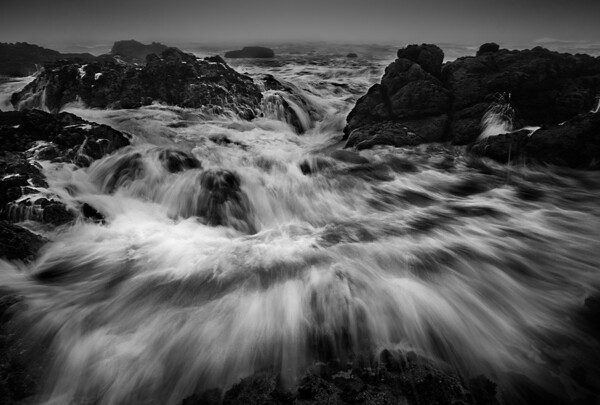
Another great way to capture the sea is with a long shutter speed of at least a few seconds, but not so long as to blur everything out. The advantage of the speed is that it gives the viewer an idea of the rhythm, or currents, of the ocean. This range of shutter speed will often show trails in the ocean and give a general sense of the location of the waves.

Picture6 DavenportSurf

To capture this look, the shutter speed will ordinarily be between two seconds and eight seconds. That also means a neutral density filter, but often not the 10-stop filter. If you have a 3-stop or 6-stop density filter, those usually work best in this situation, depending on the amount of light available.

Picture7 WaveApproaches

#5 Motion and Power: Moderate shutter speeds (1/8 – 1/2 second)

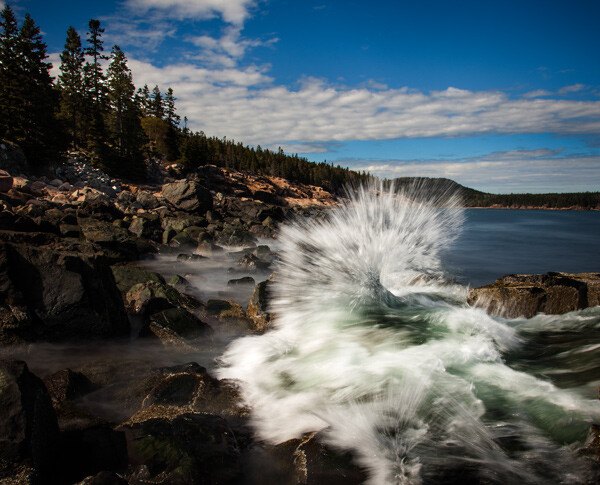
Sometimes you want the viewer to see the actual wave. It still helps to have a little motion to the wave though. This will convey both a sense of motion and give a sense of the power.

To accomplish this, you will typically need to slow the shutter speed down just a little bit. You will find the best shutter speeds for this range are between 1/8th and 1/2 of a second. At these speeds, you can still clearly see the waves, but the slower shutter speed takes the jagged edges off of them.

Picture8 AcadiaWave

While you will still need a tripod at these shutter speeds (they are too slow to hand-hold your camera and get sharp images), you can often get away without using a neutral density filter by stopping down the aperture.

Picture9 DunDochathair

#6 Pure Power: Fast shutter speeds (1/500 and up)

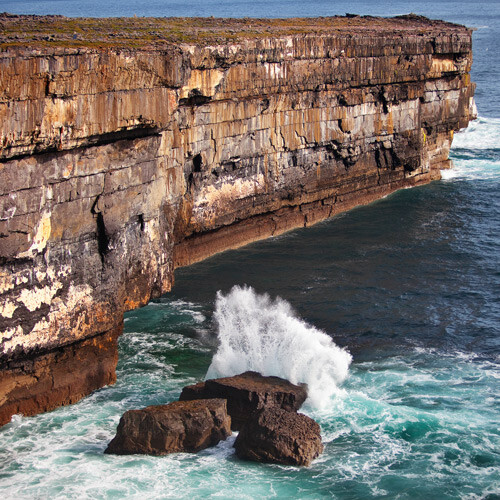
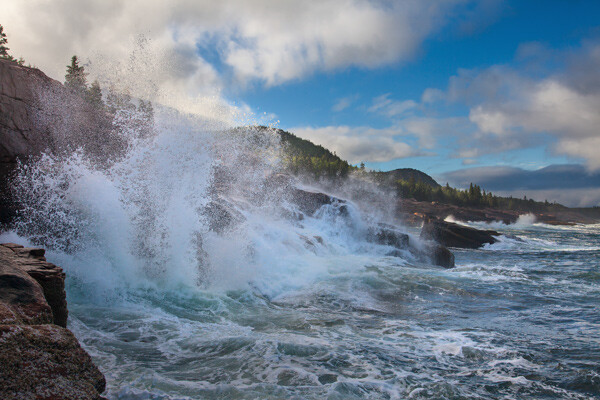
Finally, there are days when the ocean is very active where you will want to stop the motion and really capture the power of the sea. A great way to do that is with a fast shutter speed. Speeds of 1/500 of a second and faster work best.

Picture10 CrashingWave

The good news here is that you will not need to use a neutral density filter. You can also ditch the tripod and just hand-hold your camera. These shots offer maximum flexibility and mobility.

A fun thing to do is try to time the wave at it crashes into a rock or the surf. This means a lot of trial and error, but when you hit one, the results can be spectacular.

#7 Before You Go

Remember that the sea coast is a harsh and unforgiving environment. Salt water and electronics do not mix very well, and just the spray of the ocean can lead to serious camera problems (which, unfortunately, I have experienced firsthand). In addition, the terrain can be slippery and treacherous. If you are not careful, you can also find yourself stranded on some rocks in a rising tide (learned this one the hard way too, I’m afraid).

But if you are careful about what you are doing, there is no better place to be than on the coast at dawn or sunset. So get out there and give it a try, and if you have questions or need additional information just use the comments below.

The post 7 Tips to Help Improve Your Seascape Photos by Controlling the Waves by Jim Hamel appeared first on Digital Photography School.

Digital Photography School

 
Comments Off on 7 Tips to Help Improve Your Seascape Photos by Controlling the Waves

Posted in Photography


8 Tips for Creating an Online Photography Portfolio

12 Sep

Dreaming about a career as a professional photographer? With the right guidance, practice, skills, network, and portfolio, you can make your dream come true.

Developing the necessary skills required to be a professional photographer cannot easily be summed up in a single blog post, let alone many. And networking… well, if you are like most artists, that can be nightmarish, but nevertheless, is absolutely critical. As your referral network grows, so will your business. But that can take years.

So, you may ask yourself, how do I start?

BBB online portfolio

Step 1 – create your portfolio. This is a great starting point to help launch your career as a photographer.

Here are eight tips to get you on the right path to creating an online photography portfolio and securing those potential gigs.

1. Show off your work:

In other professions, people use their resumes to apply for potential jobs. However, as a photographer, your portfolio will act as the resume and will showcase the breadth of your work. It will give potential clients a deeper look into your particular forte and expertise.

2. Organize:

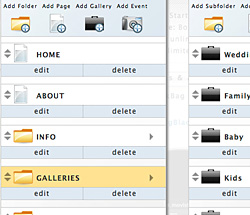
Site organization

Your breadth of work should be arranged according to theme or subject. If your work is presented in an organized and easy to navigate way, chances are, potential clients will appreciate the curation and level of professionalism that went into putting your portfolio site together. It also makes their lives a lot easier when looking through your work.

3. Show your best work:

Remember, this is your portfolio site, not your external hard drive. So, you want to make sure that only the best of the best goes up. No one needs to see every single thing you ever shot. Clients need to know what you are good at, so make sure to show only those images that truly count. You may also want to put your best work at the forefront of your site. Most clients are busy and don’t have the time to scan through every photo in all of your galleries, so make sure the work that you are most proud of is at the beginning of your photo galleries.

4. SEO, SEO, SEO:

Often times photographers create beautiful sites and then wait around hoping that clients will see them. However, they forget that they need SEO (search engine optimization). How will anyone hire you, if they can’t find you in a search? Use a portfolio service that enables you to take control of your SEO, and includes search engine friendly URLs, crawl-able content, and unique meta tags. These features will drive traffic to specific places on your site and build links to more than just your homepage.

Seo friendly page names

5. Website Builder Versus Custom Website:

You may have good intentions to build your own custom portfolio site, wanting it to be a representation of your own unique brand. However, make your life easier and focus on your work, and leave the coding and technicalities to the professionals. Portfolio builder sites will take the guesswork out of the process and will allow you to quickly put together a working, professional site in a short amount of time, so that you can focus on creating and refining your photography.

6. Choose a platform that makes your life easier:

Nowadays, there are so many portfolio sites to choose from that it can be overwhelming. Some highlight cheap services, various levels of efficiency, and different features. For an aspiring photographer, you want a site that is easy to use, and has a large selection of customizable and flexible templates, so that the site you create truly reflects your personal branding and style. You may also want to use a site that includes unlimited photo proofing. As a professional photographer, you may find yourself uploading thousands of visuals, and you don’t want to be stuck paying for each upload. Stick to a platform that allows you to do this without charging exorbitant fees.

7. Choose a platform that makes your client’s life easier:

Look for a platform that makes it easy for potential clients to use. The platform you decide to go with, should make it easy for clients to navigate your portfolio using a desktop computer, tablet, or smartphone. Using a portfolio website service, with responsive design, will allow your clients to see your site perfectly formatted to their device. Also, if you plan a career as a commercial photographer, like focusing on weddings, kids, etc, you may want to give your clients the option to purchase certain images directly from your site. Look for a site that has a built-in e-commerce function that clients can use to easily choose and purchase the images they love.

8. Marketing:

Marketing

Lastly, you want a site that helps you to connect all your social media pages with your portfolio site. This way, visitors can share your photos on social media platforms with just a click, allowing you to gain more visibility for your brand. You also want to look for a platform that helps you manage your client email list, so that you are ready and organized for sending mass emails.

It may at first seem overwhelming all the things you need to do to get your portfolio together. However, if you really sit down and get your plan together and choose the right portfolio website builder, you can create a beautiful, professional site in days. Now get out there and start putting your site together!

More tips on making a portfolio here:

  • Turning Pro Part I: Portfolio and Persistence
  • How To Build A Portfolio Without Clients
  • How to Present Your Photographic Portfolio and Get Photography Work

The post 8 Tips for Creating an Online Photography Portfolio by Julian Dormon appeared first on Digital Photography School.

Digital Photography School

 
Comments Off on 8 Tips for Creating an Online Photography Portfolio

Posted in Photography


Follow our New Facebook Page & Find the Best Photography Tips from Around the Web

10 Sep

I started Digital Photography School as a simple blog in April 2006. My goal was to share the things I knew about photography with those just starting out in their journey – in a time where digital photography was really gaining momentum.

Since that time dPS has changed in many ways.

One of the changes since starting dPS in 2006 is the rise in social media. We’ve embraced this early on by creating an active dPS Facebook page and Twitter account.

These accounts are largely about highlighting new tutorials that we publish each day as well as highlighting some of the 4700+ posts in our archives that readers might have missed.

Many of our readers appreciate these accounts but we’ve always been really aware that there’s a lot of great photography content on the web beyond what we produce at dPS.

In response to this we started a dPS Pinterest page to curate the best content that we’re seeing around the web. This has been well received so we want to extend the idea further and just a few days ago started a new Facebook page which will largely about sharing content we like on other sites.

Do you like photography

The new Facebook page is at Do You Like Photography?

Each day on this page we’ll post a variety of tutorials, inspirational images and ideas to help you in different types of photography. We’ll also occasionally share a post or two from our archives that we think might be relevant but it’ll largely be content from other photography blogs and sites.

So if you’d like more photography tips and tutorials in your Facebook stream (in addition to the dPS page where we will continue to publish the same amount of posts each day as we’ve always done) follow our new page here and you’ll hopefully start seeing them in your feed shortly after.

PS: it’s only been five days since we started our new page but we’ve already had over 43,000 people like it – thanks everyone for your support!

The post Follow our New Facebook Page & Find the Best Photography Tips from Around the Web by Darren Rowse appeared first on Digital Photography School.

Digital Photography School

 
Comments Off on Follow our New Facebook Page & Find the Best Photography Tips from Around the Web

Posted in Photography


8 Quick Composition Tips to Help Improve Your Images

10 Sep
Using different composition techniques can result in more dynamic images

Using different composition techniques can result in more dynamic images

You have likely heard of the Rule of Thirds, in fact it seems as if this is the only rule of composition. To be fair though, the Rule of Thirds is a good go to tool when you are unsure of how to put a scene together compositionally. There are many other techniques that can be used to improve your composition. Techniques like balance, leading lines, symmetry, depth of field, and so on, can all make a big difference to your image.

In many ways a photograph is very similar to a painting. Photographers learned early on that composition is a key component to engage people in an image. Composition literally means to put together, so when you think about composing an image, you need to think about the visual elements that you will put together in your image.

As a photographer, you need to decide when to use certain techniques, and when not to use them. Most compositional techniques are simply guidelines, or frameworks, there are very few hard and fast rules.  What they do offer is a starting point for putting an image together. Perhaps you may look at a scene and not know how to capture it. That is a good time to put some of the techniques into action and work the scene from there. They have been tried and tested by visual artists (painters, photographers and moviemakers) around the world for decades. The only constraint is don’t be dogmatic about applying them. Once you understand how to use the rules, you will then know how to break, and break out of them. By doing this, you will take your photographic creativity to a new level and your images will become that much better.

As always, with anything photographic, you need to experiment and practice. Know your equipment, experiment by shooting different scenes under different lighting conditions. Find what works for you and hone that skill. The art of composition is not a particularly technical art, but it can make an amazing difference to your images.

Good composition can make any subject interesting

Good composition can make any subject interesting

The great thing about composition is that you don’t need specialist equipment. The most important pieces of equipment are your camera and your tripod. I know, I know, we all sigh when we hear about the tripod. Once you see how much easier your photographic life becomes with a tripod, you will not be so reluctant to carry it around. There are also  better options for tripods nowadays (think Gorillapod and other travel-style ones). Remember though, a tripod is a key piece of equipment for successful composition. A tripod will help you to compose your image and keep that composition. Whenever possible, use a tripod to set up your shots, that way you can be sure that there is no movement when you photograph.

A lot of the time, you will be shooting images handheld. That is perfectly fine, and you can apply the compositional techniques to handheld shots. Sometimes you may need to take more than one image and adjust your composition to correct or change it.

Here are eight additional composition tips to help improve your images.

The yellow funicular and the blue house add an element of balance to this scene

The yellow funicular and the blue house add an element of balance to this scene

1. Balance

Often when you place an image on one of the thirds, the rest of the frame may be left without much in the way of anything of interest. This is often referred to as negative space, not because it is bad, it is simply to point out that it is not the centre of interest. In some images, negative space can work well, but in other images there may need to be another object in the frame, or even a colour to balance the centre of interest. Photographers use this compositional tool to do exactly that, balance the centre of interest with another object.

2. Leading Lines

We look at an image in the same way that we read a page of words. In the western world that means we look at an image from left to right. Our eyes are naturally drawn into the image by lines. If you have a road or a river winding through your image, the viewers eye will automatically run along those lines. If your centre of interest is at the end of that river or road, that is a good way to compose the image. Sometimes it is enough to have the river or road meandering through the image as it makes the image interesting to look at.

The lines pull us into, and through the scene. The lines can be straight, diagonal, curving, zigzag, S – Shape and many other types. The important thing is to create as dynamic an entry point to an image if possible.

The numerous lines in this scene direct your eyes down the street

The numerous lines in this scene direct your eyes down the street

3. Symmetry and Patterns

We live in a world that is defined by symmetry and patterns. They are all around us in so many ways. There are natural patterns that are captivating to photograph and there are man-made objects that accentuate balance. It is very gratifying to photograph a perfectly uniform scene. The symmetry brings order to the scene and gives a sense of peace and harmony to your image. Sometimes it is good to break the symmetry, show it in a different way, and by doing so create a sense of tension.

A symmetrical doorway

A symmetrical doorway

4. Viewpoint

Kneel down or lie down to get the eye level of your subject

Kneel or lie down to get to the eye level of your subject

Changing your viewpoint when shooting a subject makes a huge difference to the visual impact. It is natural to shoot everything from your eye level. By doing that you tend to create images that have been seen before. By changing your viewpoint, you immediately give a different perspective on very familiar subjects. If you are taking photos of small children or pets and animals, try and get down to their eye level. This is a view that most adults won’t see very often and will make a big difference in the impact of your image. To change your viewpoint, try a few of these tips:

  • Stand on a chair or ladder to get up higher than your subject
  • Kneel or lie down to get underneath a subject, i.e. for shooting a field of flowers
  • Photograph the subject directly from the top
  • Shoot from a diagonal angle to emphasize shape or texture

The important thing here is to make sure that you change YOUR viewpoint and by doing that, you will breathe new life into a well known subject.

5. Background

A distracting background can completely ruin an image. The human eye will naturally settle on the area of an image that is: the brightest, most colorful, sharpest and has the most contrast. Be aware of what is behind your centre of interest. If there is a pole, a distracting pattern, an awkward colour or some other object, you may need to reconsider your shooting angle. This is not always possible, but sometimes, taking two or three steps to the left or right can make all the difference. Look around for an unobtrusive background, or change your aperture settings to achieve a shallow depth of field and by doing so, soften the background.

Move around your subject until the background is nit distracting to the rest of the image

Move around your subject until the background is not distracting viewers from the subject

6. Depth

Photography is a two-dimensional art form. As a result, you use certain techniques to imply three-dimensionality. One way to do this is to have subject matter in the foreground, middle and background. This creates depth, and the eye will naturally walk through the image. This implies a deep depth of field from a technical point of view, so ensure that you use a smaller aperture (i.e. f/8, f/11 or f/16) making everything in the scene in focus. This technique is particularly important when photographing landscape images.

Sometimes, it is great to have a whole scene in focus

Sometimes, it is great to have a whole scene in focus

7. Framing

The world is full of natural objects that can be used to frame a subject (e.g., archways, tree lined streets, holes, and so on create natural frames). By placing your subject in the middle of these natural frames you will create a strong visual pull towards your centre of interest.

Use natural elements to frame your scene

Use natural elements to frame your scene

8. Get in Tight

Sometimes, closer is better and less distracting.

Sometimes, closer is better and less distracting.

It is often tempting to put more detail into a frame to show more about what was happening, but this can lead to confusion. The important maxim to remember is this: less is more. The art of simplifying an image is not easy, but if done correctly can make an image far more dramatic. When you find that your composition has more than one centre of interest, or seems confusing, try these steps:

  • Get in as close as you can to your subject
  • Simplify the composition
  • Be sure to avoid any distracting colours or objects in the background
  • Use a shallow depth of field

Finally

Composition and the rules around it are flexible. There really is no right or wrong way to compose an image, but there are better ways to do so. Some composition techniques can make a huge difference to an image and take it from being a snapshot to becoming a truly great photo. The important thing is to experiment with these techniques. Combine them wherever possible. Try them out as often as you can on different subject matter, and know when NOT to use them. The important part is to make sure that you master them. Use them when you need to. Find out what works for you and go from there. By doing this, not only will your images improve, so will your ability to see an image in a scene.

This is the most important part of photography and very often what separates an average photographer from a great photographer. The ability to see an image in a scene makes all the difference and these compositional techniques help you to do that.

Don't forget to experiment and break the rules where necessary

Don’t forget to experiment and break the rules where necessary

The post 8 Quick Composition Tips to Help Improve Your Images by Barry J Brady appeared first on Digital Photography School.

Digital Photography School

 
Comments Off on 8 Quick Composition Tips to Help Improve Your Images

Posted in Photography


6 Tips for More Unique Travel Photos in Busy Tourist Locations

10 Sep

Imagine this: you’ve scrimped and saved for months for your dream vacation, and a snazzy digital camera, hoping to capture some unique travel photography images along the way, only to be flustered by the hordes of other tourists with the same intentions. With the increased accessibility of cameras on devices of every kind, this is becoming a common scenario that can frustrate many photographers, both professional and amateur. But don’t lose hope! With these tips, I’ll show you some ways to think of travel photography in a new light so that you can take unique travel photos in busy tourist locations.

DPS Travel Photography 03

1. Take shots from different angles

To get a unique photo, consider your subject from a wide variety of angles. Get down on your knees and shoot from below, or step up on a bench, or use a monopod to shoot from on high. Do whatever you can, within reason, to shoot from different perspectives; this will greatly increase the odds of capturing a unique image.

2. Time your visits to outdoor attractions to coincide with the most ideal natural lighting available

One of the biggest challenges to shooting outdoor attractions can be harsh shadows due to lack of lighting control. You obviously don’t want to bring strobes and excessive flashes with you when you travel, so it’s best to use the sun to your advantage. Do your research with apps, such as The Photographer’s Ephemeris, to see where the sun will be, and plan your trip accordingly. Sunrise and sunset are probably among the most ideal times, but be aware that you’ll likely get competition from other photographers thinking the same thing (see image above).

3. Go where the crowds aren’t going

DPS Travel Photography 05

If the crowd in a tourist attraction is fixated on one particular part, turn around and see what is behind them. Look for details that are being passed by and not given attention. This gives you less competition, in addition to increasing the odds, of capturing a unique image that everyone else is overlooking. While you’re shooting in the opposite direction, this also gives you something to do while waiting for the crowd to thin out so that you have more time to capture a clean shot of the main attraction. Having patience, and waiting for breaks in the crowd, is also a key to shooting unique images.

4. Pull out your zoom lens and focus in on details

Challenge your photography skills and creativity by shooting exclusively with a macro, or zoom lens, for a while. Shooting with a longer focal length will encourage you to take in the intricate details of a place; something that is usually overlooked by other tourists who likely focus on taking selfies and wide-angle shots. There’s beauty in details, and zooming in close eliminates most of the risk of having other people block your shots.

DPS Travel Photography 04

5. Make other tourists part of your shot

Instead of viewing the hundreds of other tourists around you as burdens, why not make them a part of your photo? Pull a fast one on other shooters by pointing your camera in their direction. Many tourists will likely duck or move out of your way, so act fast to catch them in natural poses. The point is, think like a photojournalist, or marketing photographer, and consider the idea that conveying the idea of a full, and popular, tourist attraction is a photo-worthy moment in itself.

DPS Travel Photography 01

6. Take candid shots or portraits of the locals

In and around many tourist attractions, you’ll likely find lots of locals in the forms of security guards, vendors, taxi drivers, and more. If you’re searching for truly unique photo subjects, consider pointing your camera at some of these people who help run the tourist attraction, and making them a part of your photo. You could even get bold and approach some locals for a portrait. This might be tricky if you’re in an area where language barrier is a problem, but if you get creative with your body language, it’s fairly easy to get your point across. Portraits not only give you more opportunities to get creative, but also provide opportunities to chat with people, and perhaps find out other unique photo ideas in the area.

DPS Travel Photography 02

Have you got some great photos from crowded tourist locations? Please share them and your tips in the comments below.

The post 6 Tips for More Unique Travel Photos in Busy Tourist Locations by Suzi Pratt appeared first on Digital Photography School.

Digital Photography School

 
Comments Off on 6 Tips for More Unique Travel Photos in Busy Tourist Locations

Posted in Photography


8 Essential Tips for Travel Photographers

09 Sep

#1 Great travel photos are planned

Just think about what you are going to do, understand the scene, watch the light, the movement of people inside the image. When you take your pictures you have to consider all factors: from the time of day and the light, to the emotional preparation of the characters. It is true that luck exists, that someone at some time photographed just that smile, that you can collect stolen photos using a long lens. But few stolen photos have survived to become part of the history of travel photography.

DPS Plan your photos 8953

#2 The hair in your soup: An error for some people is something creative for others

A hair is a hair, but one thing is having it on your head and another quite different story is finding it in your soup. An error for some people is something creative for others.

Some questions customers usually ask me when traveling together are:

  • Is it okay if I use an aperture of f/8?
  • Hey, what is the right speed for this?
  • Does it matter if it comes out fuzzy?

My answer is always the same: It depends on what you want to do and what you want to highlight.

In sports photography you usually want to focus movement, and for this purpose you use high sensitivity (ISO) and high speed (shutter speed); but great photographers – specialists in their field – leave images fuzzy to emphasize movement, and get splendid results.

The important thing is that viewers of your photo understand the way you have used the error: if you intended to show movement, the viewer must understand it that way. Otherwise the result is just a blurred picture.

DPS  A hair 5636

#3 Eyes are the magnet of every photo

Look into people’s eyes, make personal contact. Eyes say a lot about people’s emotions, so much so that in many cultures people don’t want to look you in the eyes because they fear that you will be able to guess what they are thinking. Look for the light in the eyes – or total darkness. They are a magnificent photographic story line.

DPS  Eye contact

#4 One good photo a day – nothing else – nothing more

There is no rush. You don’t have to go off shooting like crazy. One photo a day is much more than the greatest photographers achieve when traveling. Don’t rush when shooting the photo. Take your time to take a good photo rather than waiting for luck to achieve what you are not capable of doing calmly.

#5 Forget about the long lenses if you are actually interested in real people on the street

The long lens is the perfect instrument to get away from people, and keep them at a distance. It isn’t the best method to create emotions and capture them in a photo. Get close. Look into people’s eyes. Create an emotion! The vast majority of Magnum’s photographers specializing in people prefer 24mm, 28mm or 35mm lenses.

If you want to grow as a photographer, use prime lenses: they force you to be fully aware of the frame and to take your time. If you are too far away, get closer. If you are too close, move away. I assure you that you will notice a tremendous improvement in your photos. If you don’t own fixed lenses, set your lens to the 35mm position using a band-aid.

#6 Many good pictures are made on your knees

Yes, on your knees. You’ll see how your whole concept of photography changes. I always get irritated by tourists taking pictures standing, from above, of a monk who is sitting on the floor. If you want people to have respect for you, the first thing you have to do is to show respect for others. Get down to their same height.

DPS  On your knees

#7 Find the best light and walk uphill or look for the worst light

Get up very early or wait for dusk. The best light appears with sunrise and lasts for the next 20 minutes or at nightfall. Walk where nobody else walks. In cities and villages, you will most certainly find more opportunities than most photographers, by going uphill, because most people look for what is easiest and requires less effort.

It always depends on what you want to show. Many great pictures are made at the worst moment: when the sun is at its zenith. This situation is exceptional for emphasizing shadows and highlighting hard heat conditions.

DPS  The worst Light 88

#8 Don’t act like a pro

Don’t work, just take photos. Many professional photographers who have lost their way in the struggle to create saleable images come to my courses. Try to keep up your freshness. Remember what it was that originally attracted you to photography. Don’t be afraid of taking photos your colleagues don’t like, and especially don’t be afraid of taking photos that don’t sell.

The post 8 Essential Tips for Travel Photographers by Harry Fisch appeared first on Digital Photography School.

Digital Photography School

 
Comments Off on 8 Essential Tips for Travel Photographers

Posted in Photography


Beyond the Postcard – 14 Tips for Creating Unique Photographs in Iconic Locations

28 Aug

Photography has been around since the early 1820’s. Of course, back then the technology of “picture taking” was not accessible to the common person. But have things ever changed! With the availability of digital cameras ever present, even in our cell phones, take a moment to consider these facts. Every two minutes today there are as many photos taken as were taken in the entire 19th century (1800s), and ten percent of all the photos ever taken were snapped within the last twelve months!

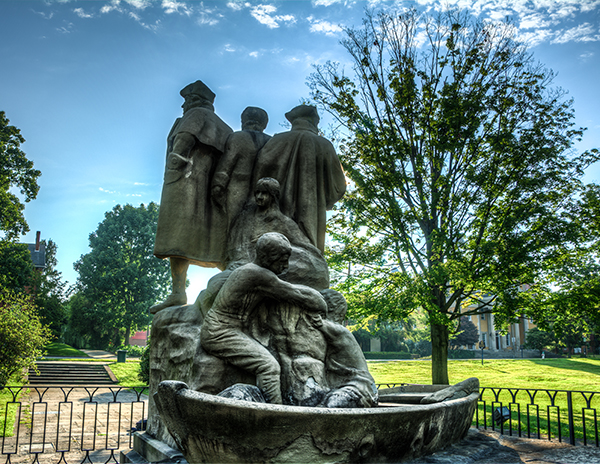
The Postcard: The Start Westward Monument in Marietta, Ohio.  (18mm 1/80th of a second at f/5, ISO 100)

The Postcard: The Start Westward Monument in Marietta, Ohio. (18mm 1/80th of a second at f/5, ISO 100)

So, with nearly 200 years worth of photographs in our collective albums and portfolios, it has become challenging to find an iconic view or subject that hasn’t been overdone by millions of photographers, especially when it comes to state and national outdoor landmarks. In order to look beyond the “postcard shot”, you need to research unique perspectives and techniques to capture that popular subject in a way that creates an original image. But first, go ahead and take that “postcard shot”. (You know you want to!) Then consider the following 14 different suggestions for creating unique photographs of the most popular spots.

#1 Check the internet

This is a resource past generations would have loved to have! By searching Google, Flickr, 500px and other photo sharing sites you can see how other photographers have captured most popular scenes. Besides seeing the images that have already been done, this will give you an idea of the layout of the location before you arrive. You may also find ideas that other photographers have tried and notice something that you might do differently to make the same image better.

#2 Get to know your location

Research the area by downloading maps and brochures from the internet. If your destination is only open certain days and hours, be sure you’ve garnered that information before you head out on your shoot. Stop at the visitor centers and ask questions.

#3 Talk to the locals

Talking to a “local” can often lead you to all kinds of special photo opportunities that may have never been visited before, such as discovering a special lighting effect that only happens at a certain time of the day or year, or maybe a waterfall that is hidden from view.

#4 Shoot at popular sites during the week

Avoid the weekends when the crowds can make it almost impossible to get an image, especially if you are looking for a shot free of human presence.

#5 Look for new angles

While looking for different angles, don't forget to explore all sides of your subject.

While looking for different angles, don’t forget to explore all sides of your subject.

Try to avoid the obvious straight-on shot that presents itself right in front of you,(the typical postcard shot), but look around for other angles instead – high, low or from the right or left. If you must shoot straight in front, try to include a foreground object.

Caution: If you are in a state or national park, be sure to abide by all park rules! Photographers sometimes tend to think that rules do not apply to them, but you will find that most park rangers will not agree with this point of view. These rules are put in place for your safety or to preserve the beauty of the area you are photographing.

#6 Photograph in different seasons

Photograph the scene or subject in all four seasons. Mother Nature provides amazing changes to scenery, from the different angles of the sun to the different colors of the leaves on the trees.

#7 Look for special events in nature

Some natural happenings can make your image unique, such as a full moon which may be included in the image if you are into nighttime photography. Special weather conditions can be conducive to producing a once-in-a-lifetime image. For example, some photographers may reject shooting on rainy days, but if you have the protective gear for your equipment, the rain can add special visual effects such as reflections or rainbows. Ice and snow coatings are often quite striking additions to outdoor objects both in nature or manmade.

#8 Look for special lighting

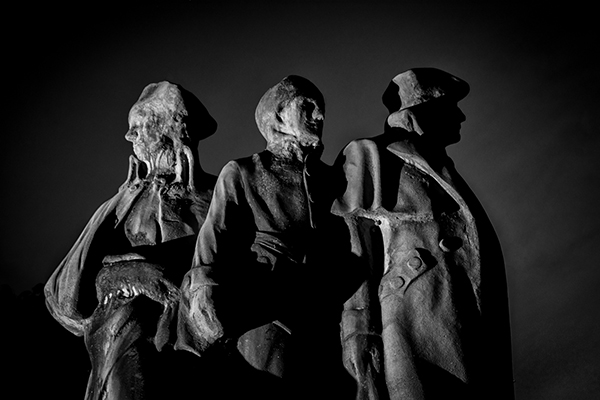
Of course the best light of every day will come during the golden hours, following the early morning sunrise and just before evening sunset. If you must shoot in the harsher lighting of midday, consider black and white images which can often produce some visually appealing contrast. If you are out on a heavily overcast day, you may be able to shoot all day, but in most of these cases avoid including the sky in your image. If you have the option, research natural lighting sources by using computer software, such as The Photographer’s Ephemeris, that show the position of the sun and moon to help you determine when the lighting will be best, and what time to arrive to capture your shot. These kinds of software can allow you to anticipate exactly when and where the best lighting may fall, on just the right spot, to create that once in a lifetime image.

Black and white image shot after dark was lit with an off camera flash from the left side of the image.

Black and white image shot after dark was lit with an off camera flash from the left side of the image.

#9 Add the human element

Including a person in the scene not only will add a sense of scale, but can also add excitement and fun to your photo, which will make your image much more interesting to your viewer.

Special events present an opportunity to include a human element, which add extra excitement to your image.

Special events present opportunities to include human elements, which add extra excitement to your images.

#10 Focus on details

Narrowing your focus to capture details can be an especially effective way to create a unique photo. Whether zeroing in on the part of the vista that makes that site unique, or the feature of the statue that expresses its purpose, an original visual story may be captured in your image.

#11 Include a foreground element

Incorporating a foreground object to frame the subject can add depth to your scene and also enhance the image. A foreground object can also be used to lead the viewer’s eye to the subject of your photo.

#12 Use special effects

Two filters that could help make that standout image are the polarizing and neutral density filters. Use of a polarizing filter will enhance the blue of the sky and add color saturation. Use of a neutral density filter will cut down the light entering your camera, which allows you to slow down shutter speeds to capture interesting motion effects with the sky or water. Experimenting with your white balance can also create some interesting results.

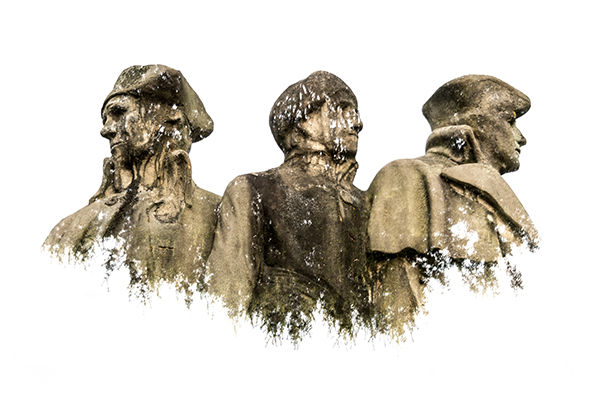
This image was created by using multiple exposures. the first image was of the monument against the sky, in the second the camera was turned upside down and captured the top of some nearby tree tops. In each image the sky was overexposed creating the white background.

This image was created by using multiple exposures. The first exposure was of the monument against the sky.  In the second exposure, the camera was turned upside down, capturing the top of some nearby trees. The sky was overexposed in each image, creating the white background.

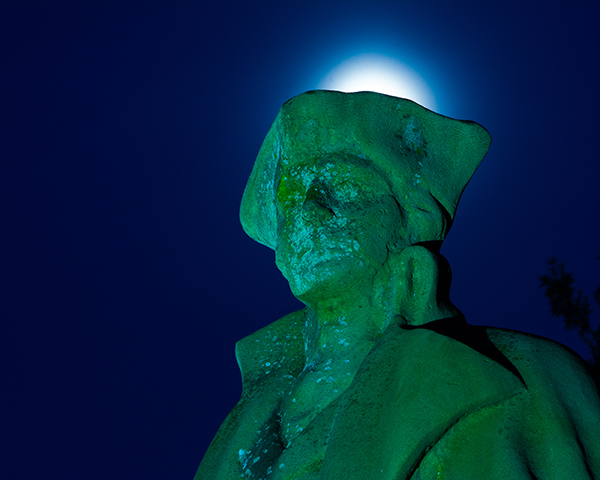
In this image shot at night the white balance was changed to Tungsten, which causes the monument to have a teal color. The glow above the head was created by the moon glow.

This image was shot at night the white balance was changed to Tungsten, which caused the monument to have a teal color. The glow above the head was created by the moon’s glow.

#13 Vary your focal length

Try different lenses to get varied results, for instance a telephoto lens will not only bring the scene closer to you, but will also compress the scene. On the other hand, a wide-angle lens allow you get more of your subject in the view, make background objects appear farther away, which adds depth to the scene.

In this image the monument is captured just after sunrise giving the monument a nice glow. Also by using a telephoto lens at 150 mm @ f4.8 we compress the photo and the background is out of focus to make the monument stand out

In this image the monument is captured just after sunrise giving it a nice glow. Also by using a 150mm telephoto lens at f/4.8 we compress the photo and the background is out of focus to make the monument stand out.

#14 Experiment with DOF

To narrow your depth of field, open your aperture to a lower number, such as f/ 2.8, and make your subject stand out from the background. A distant landscape requires more depth of field to keep objects in focus, so you may want to close your aperture to something like f/16 to sharpen your image.

Researching your options and incorporating some of these tips will enhance the creative bent so many photographers already possess! Just don’t settle for the easiest, most common photographic result if you can take the time to shoot a more memorable image. Think and imagine your own photographic creations “beyond the postcard”. You’ll be glad you did!

Have any unique photographs from iconic locations or landmarks? Please share in the comments.

The post Beyond the Postcard – 14 Tips for Creating Unique Photographs in Iconic Locations by Bruce Wunderlich appeared first on Digital Photography School.

Digital Photography School

 
Comments Off on Beyond the Postcard – 14 Tips for Creating Unique Photographs in Iconic Locations

Posted in Photography


Tips on How to Get New Photography Clients

27 Aug

Aaaaghhhh!!!! Why aren’t people knocking down my door to get me to photograph their most precious moments?!

We’ve all said this. We’ve all had those moments where we just don’t understand where the people are, or the ones that will pay us are. Or you’ve finally built a business and now it’s time to move. I get it.

MonicaDayDPSMarketing-01

I’m a military spouse. I move…a lot. I have to rebuild my business every two to four years. But I’ve done it, and so can you. You don’t have to be a military spouse to benefit from these tips. They can be applied to a new business, a new market, a new city, or a new focus of your business. I’ve implemented these and have been able to standout and be successful in the places I’ve lived.

So here are some tips on how to get new photography clients:

1. Get Involved

I’m sure you’ve heard it before, but I’m saying it anyway. Get involved. How will people know who you are if you don’t put yourself out there? Attend events, your children’s functions, community markets and festivals, and anything that’s going on in your target area. Talk about what you do.

MonicaDayDPSMarketing-02

2. Network

Networking and getting involved are close, but not quite the same thing in my book. When I network, I do so with others in the industry. This means that I seek out hair stylists, makeup artists, wardrobe stylists, designers, models, and even other photographers. These can be great sources of leads.  When I moved to Boston I hooked up with a hair stylist/makeup artist that I’ve worked with continually. I send her clients and she sends me clients. Most of the time we are working together, but I can also refer her to other photographers. This has helped her see the value in continually referring her clients to me.

Do you get your hair done? Your makeup or nails? Bring up what you do in a casual conversation with these service providers. They’ll remember…trust me.  Keep the door of communication open and use them when you can.

3. Build Your Portfolio

Portfolio building is great whether you’re brand new to photography or if you’re a seasoned veteran.  This is a great way to get people talking about what you do. It’s also a great way to find your favorite spots in the new area. I portfolio build whenever I get to a new area. I’m not shooting for free though. I will charge a very reduced price and run it as a special. Don’t give them everything for nothing but be sure to offer them a deal that can’t refuse, or won’t want to.

Whenever I’m portfolio building I have an end goal in mind. I will heavily style these shoots. I will pick out wardrobe, makeup, hair, and location. Use this time to get those key shots that will showcase your new city. Your keywording in blog posts will make much more sense when the images show the actually place you’re targeting.

MonicaDayDPSMarketing-03

4. Blog

We photographers are always trying to figure out a way to move up the search engine rankings. Well here’s a tip. Blog.  That’s right. Blog, blog, blog. Blog about your upcoming move. Blog about your new business. Blog about your preparations. Blog about your work. Be sure to keyword your images and blog posts. Learn good SEO practices and implement them. While word-of-mouth has been one of the best ways I’ve attained new clients, my blog posts bring in quite a few too. People like to search for images, and when they see one they like, they tend to look up the photographer. You want to be that photographer.

MonicaDayDPSMarketing-04

5. Creative Projects

This goes along with portfolio building but is more focused towards shooting projects for fun. The ones that your clients might not “get”, but will get great feedback on Facebook and other social media outlets. These also help you keep your creative juices flowing while you’re building your business in a new area. I love doing “for me” project because there’s no pressure. There’s no pressure to please anyone but me.

So how does this creative project get you new clients? Well, you’re most likely working with hair stylists and makeup artists for this project. You actually put in work to find them because there’s no pressure. These new connections can refer their clients to you. You didn’t seek hair and makeup professionals? No worries. Your amazing photos will be shared on social media and increase your exposure. You’ll also be posting this entire experience on your blog. Your amazing images will catch the eye of new people.

MonicaDayDPSMarketing-05

This image was taken during a photographer shoot out. This image alone brought many new people to my page and brought exposure to more new clients.

6. Maintain Relationships

I get a lot of repeat business from clients from other areas. That’s right. I get repeat business from clients in other cities. One of the most lucrative things I do is the traveling session. I will host boudoir marathons, mini-sessions, etc., in cities that have a substantial group of clients. That way I can capitalize off of all the work I’ve done, and maintain these people as my lifelong clients. Not all of your clients will wait for you, but many will. It’s important to keep those relationships positive. This world is small and your past clients can be your biggest cheerleaders.

I have photographed this family 3 times. They are even coming to visit me in my new location for another family shoot.

I have photographed this family 3 times. They are even coming to visit me in my new location for another family shoot.

Try this tips out and stay in front of your target market. Remember, people won’t know you’re around unless you put yourself out there.

You can also read these dPS articles for more tips:

  • How to Get More Referrals Than You Can Handle
  • 36 of the Best Online Tools to Boost Your Photography Business
  • The Ultimate Guide to Going Pro as a Photographer

The post Tips on How to Get New Photography Clients by Monica Day appeared first on Digital Photography School.


Digital Photography School

 
Comments Off on Tips on How to Get New Photography Clients

Posted in Photography


10 Tips to Improve Your Food Photography

25 Aug

Have you ever tried shooting food? If you have, then you know how hard this can be. There are so many things you have to think about while making sure your food looks as fresh as it can be at the same time. Here is a beginner’s guide to help you get the food shots you’ve always wanted.

01 Food Photography Tips

#1. Do NOT use your on-camera flash

You probably know this already, but I just have to mention this here to make sure. After all, this is Digital Photography School. Your on-camera flash looks horrible on food. You will get loads of specular highlights on any area that has moisture, and these specular highlights are not only distracting, but will make your food look greasy instead of moist. You will also get strange and unattractive shadows either on your food, on the plate, or both. On-camera flash is so harsh. Food usually looks its best with soft light. The shot below on the right has soft backlight coming from a window in a restaurant.
02 No On Camera Flash

#2. Shoot on a tripod

Ok, I just heard all the booing and hissing from this tip but, since I just told you not to use your on-camera flash, you are going to have to shoot using a tripod instead. I actually love shooting on a tripod and I use one anytime I can. Try it! It will completely free up your hands to style your dish, in order to work on your shot. I am a commercial food photographer, so I am either shooting in my studio or some other controlled environment where I can use tripods, so this tip is for those situations.

03 Use a Tripod

Notice in the image above right, there is a a nifty tripod arm extension enabling me to get the camera out over the set. If you are trying to hand hold a camera AND shoot overhead, just schedule an appointment with your chiropractor right now! Not only is it back-breaking to shoot overhead like that, but it’s impossible to line up your shot exactly the same way each time you take a shot. Lock it down on a tripod, focus your set once, then start styling your food.

#3. Or use a high ISO instead of a tripod (last resort)

Now, if you can’t shoot on a tripod for some reason, for example maybe you are shooting an event and have to gets shots of the food, then you have the option of raising your ISO setting on your camera to accommodate for the lack of light. I use this as a last resort. You must keep in mind that raising your ISO will increase the digital noise in your file. Depending on your camera, the digital noise could be very severe if you are in a very low light situation. See in the image below the difference between shooting at ISO 100 and ISO 1600 on a Canon 5D Mark II.

04 High ISO Grain2

For the most part, you can get away with digital noise when using images for the web because of the lower resolution. However, if you need to have the image printed, then this is where you might run into problems with the digital noise. It can be very hard to correct out of the image AND keep the image in sharp focus at the same time. Applications that can correct digital noise in software do so by softening the edges of the pixels creating the noise. This gives the appearance of the image being a little soft with the focus afterwards.

#4. Please use props – but not too many

I see so many food blogs with shots of food in a plate, or a bowl, with nothing else in the shot. This to me is just a documentation of a food dish. There’s no story behind the image when you have no props. I get it – it takes more time. But, if you start real simple, props can dramatically improve your photos. Notice in the shots below that all the props are secondary – meaning the first thing your eye goes to is the pasta in both shots. All the props are low key and not distracting. It’s still all about the food, but it gives the food some visual support to get your viewer to look at your photos. There is a fine balance between just the right amount and too many props that take your eye away from the food.

05 Props Pasta Dishes

You are telling a story with your props. The story of the two images above is that these are nice pasta dinners. That’s it, real simple. You need to use the placement of your props to get the viewer’s eye where you want them to look. The first thing we see in an image is text, if there is any. Second will be a blaring highlight or a very bright color. Third, we look at what’s in focus. Your props should guide your viewer’s eye to look exactly where you want, and eliminate any distractions along the way. If you have a blaring highlight on something that is catching your eye, then guess what, your viewer is going be looking at that same highlight too, so get rid of it, or put a prop in front of it. Get your viewer to look at your food.

#5. Stay away from bold patterns on plates and fabrics

Food photography is all about creating an image that naturally has the viewer’s eye looking right at your beautiful food. As I mentioned above, all the fabulous props in the shot are just the supporting actors in your story. If you have a crazy pattern on a plate, your reader is going to look at the crazy pattern first, then your food (hopefully) second. Your story is not about the plate. Your story is about your food. You might be in love with that pattern on the plate but that’s probably not what your image is about. Beloow is a shot before props have placed, to give you a sense of how the food looks on different plates.

Biscotti Plates

I will test plates with food just like this to find the right one for the photo I’m doing. The problem with patterns is there will be areas of the pattern that will be in focus and competing with the food. A colored plate can be great as long as the color is complementary or a nice contrasting color. Then, white or cream will always make your food stand out.

The same rules generally applies to table clothes and fabrics as well. We never use bold patterns on the surfaces we shoot on. I’m saying “we” here because when I am shooting a job I have a food stylist AND a prop stylist. We all work together in making a shot for our client that is all about their food. When you are shooting on fabric with a bold pattern, that bold pattern will absolutely compete with your food. It’s just human nature. Our eyes are so easily distracted and you only have a few seconds to get your point across to your viewer, don’t blow it on some crazy pattern on the table.

# 6. Get vertical!

07 Get Vertical

Many people take all their photos in a horizontal format. I understand why, it’s a lot more comfortable to work that way. When shooting vertically, all your settings are now on the side and if you’re on a tripod you have to keep cranking your head over to see them. Well, you just have to suffer through it! Shooting vertically can give you nice depth in a photo from foreground to background. This also enables you to have large photos on your blog, if you have one. Shooting vertically can give you room for text like a title. Many sharing sites like Pinterest are better with vertical shots, so think about how this image will be shared and go from there. Mix up the images on your blog. Have some vertical photos and some horizontal ones as well. If you do everything the same way it can get very boring.

#7. Go ahead, crop that plate

The other habit I see a lot of new students doing is being afraid to crop into plates. Here are two shots. One full frame and one cropped in. Now, of course it depends on how the images will be used, and sometimes you might even need two formats of the image, but play around with cropping an image to see if you like it better. It’s okY to crop the plate. You are not selling the plate, remember, so show off that food a little more.

08 Crop 1

Now for the cropped version – a lot fewer distractions and it’s all about the food.

09 Crop 2

#8 – Back up and zoom in

Every student wants to know, what is the best lens for shooting food. For my 35mm DSLR (full frame), I’m always using my 100mm macro lens. I use this about 90% of the time. You really can get great depth of field with that lens. Here is shot I took with three lenses. Many people have a 50mm lens because that is what came with their camera. The only time I use that lens is when there are several dishes on the table that I have to get in one shot. That type of shot requires a wider angle lens, like the 50mm or the 35mm. When I am only focusing on one dish in the shot, I will always use my 100mm macro lens.

10 3 lenses

When using wider lenses, like the 50mm or the 35mm lens, you will need more background in your shot. Also, the wider the angle of your lens, the harder it will be to get very shallow depth of field, unless you get real close to your food, and open up that lens by opening your aperture. Depth of field is referring to how much is in focus versus out of focus in your shot. Which leads me to the next tip…

#9. Use a small f-stop number to get shallow depth of field

The f-stop, or aperture, controls the opening of your lens that lets light into the camera. The f-stop also controls how much of your image will be in focus, and how much will be out of focus.

Here is an f-stop grid showing the most common f-stops that many lenses have. Some lenses don’t open as wide as f/1.4. It seems to be that the more expensive the lens, the wider the f-stop. For instance, the higher end 50mm lenses will go to f/1.2, but you’ll pay for that in cost.

11 Apertures

When you are just starting out, f-stops, or apertures, are very confusing to learn about. You see, the smaller the f-stop number, the LARGER the opening. It’s very counter intuitive. What I always say in class is, the smaller the f-stop number, the smaller your depth of field and the larger the f-stop number, the larger your depth of field. This gives you such creative control with your images. I always suggest you shoot your food with a very “shallow depth of field”. This means less things in focus. See the two images below:

12 Apertures examples

The image on the left has shallow dept of field because I am shooting at f/5.6 on a 100mm macro lens. This shot is all about the olive oil, so that was the only thing I wanted in focus. The shot on the right was shot at f/16 and has a much larger depth of field (more things in focus). I find this distracting. There’s too much in focus and your eye bounces all over the place (see more in my article: Using Focus Creatively with Food Photography. You use your f-stop to control what you want to show in focus. As a very general guide, the f-stops for shallow depth of field are usually from about f/5.6 and below (this can also depend on how wide your lens is as well).

Now, if I was photographing a Thanksgiving table with loads of dishes on it that I wanted in focus, then I would definitely use an f-stop like f/16 or even f/22 with a wider lens, like a 50mm or even a 35mm lens.

#10. Keep your food looking fresh on set

Here I am painting a steak with butter to make it look nice and moist. I’m using butter because when they serve this steak at the restaurant they have melted butter all over it. You can also use vegetable oil, or water and glycerin, or just water on foods. If the food has an oily or fatty content, like meats and poultry do, then use vegetable oil. If you are keeping salad moist, you can just spray it with water.

When shooting burgers, I am always painting an TON of oil on the beef to keep it looking really juicy. There is nothing worse than a dry looking steak. Yuck. Who wants to eat that?

13 Food Fresh

To keep foods that can oxidize looking fresh, use Fruit Fresh or Accent on them. You can usually find these in the spice section of the super markets. I highly suggest you do not eat the foods that you treat with this stuff. It’s actually MSG. I use it two ways. I will soak things that turn brown, like artichokes and pears in a solution of 2 cups water with a few tablespoons of the MSG. The other way I use it is by taking the same solution and painting it onto the food once it’s on set to make sure it doesn’t turn brown.

When I tell people this trick they say, “oh, you can just use lemon”. Lemon works, just know that you will have to keep reapplying it.

14 Food Fresh

This image below would not be possible without using Accent or Fruit Fresh. Artichokes turn brown right away when you cut into them. I soaked both sides in a bath of a lot of Accent and water. I soaked them for 30 minutes too. This artichoke didn’t turn brown for hours!

15 Artichoke

All right! There’s so much more I can say here but hopefully some of these tips will inspire you to try to take your food photos to the next level.

For more food related articles check these out:

  • Food Photography Tips – Some Video Tutorials
  • 5 Tips to Seriously Improve Your Food Photography Techniques
  • 8 Steps to Create Mouth Watering Food Photography
  • 11 Quick Food Photography Tips to Make Mouth Watering Images
  • Snapn Food Guide a sister dPS ebook company

The post 10 Tips to Improve Your Food Photography by Christina Peters appeared first on Digital Photography School.


Digital Photography School

 
Comments Off on 10 Tips to Improve Your Food Photography

Posted in Photography