RSS
 

Posts Tagged ‘Tips’

Home for the Holidays: Christmas Photography Tips

25 Dec

Ahhh, the Holidays. Millions of normally civilized people overextending their budgets and sometimes their left hooks in the pursuit of the perfect gift, stretching their culinary skills (and their smoke alarms) to their furthest heights, and begging and cajoling their extended families into family pictures, lots of them, so that they can forget the stressful, over-emotional, exhausting, sleep deprived knock Continue Reading

The post Home for the Holidays: Christmas Photography Tips appeared first on Photodoto.


Photodoto

 
Comments Off on Home for the Holidays: Christmas Photography Tips

Posted in Photography


Shooting for the moon: Photo tips from a NASA astronaut

24 Dec

Many of us have dabbled in astrophotography, but it’s a fair bet that none of us have captured star trails quite like Don Pettit has. A NASA astronaut and photographer, part of his job aboard the International Space Station has included photographing Earth from space, capturing aurora and vast glowing cities. Want to learn how to shoot like an astronaut? Read his eight tips for shooting in space. Learn more

Articles: Digital Photography Review (dpreview.com)

 
Comments Off on Shooting for the moon: Photo tips from a NASA astronaut

Posted in Uncategorized


Tips for Retouching a Night Photograph using Lightroom

21 Dec

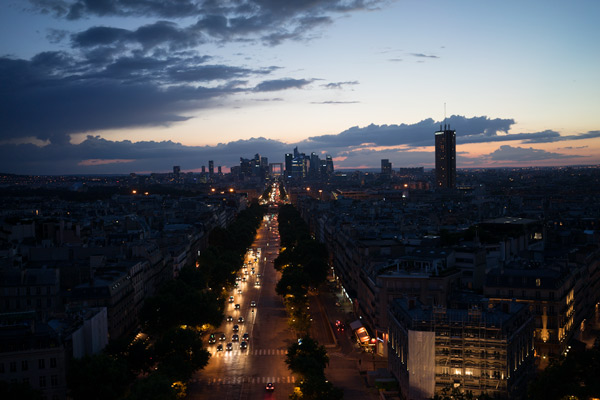
I will show you an experience I had of shooting in the middle of the night after sunset without a tripod. Many monuments don’t allow you to shoot with a tripod but you still want to take a photo. The nicer light in my opinion is usually after sunset or before sunrise, so I will show you how to take and process a photo without a tripod at night.

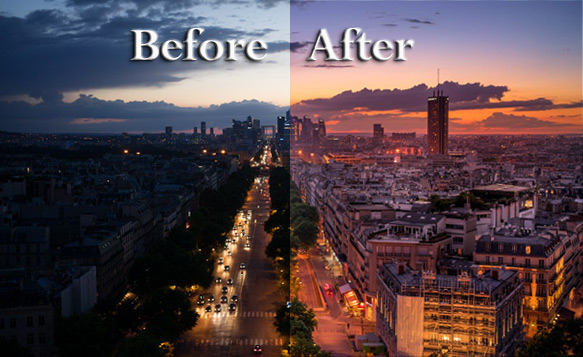
dPS-Before-after

If you have a nice high vantage point to take a beautiful photo but cannot put down your tripod you will see that there
is something we can do about it. The trick is you must put your camera on a timer, (use the built-in 2-second timer) meaning when you press the shutter it counts to two and then takes a photo. This way when you take the photo you are not pressing the button so there is less vibration.

Next go into manual mode and put it on 1/20th of a second. Usually it will be blurry, but if you put your arms on your stomach and stop breathing you should get a sharp photo. Then open the lens as much as you can. As you can see the photo is very sharp and I was only at 320 ISO.

As usual I am always shooting to get the highlights, so what you do is you put your camera at 1/20th of a second, 2 second on timer, approximately f/2.8 aperture (or open as wide as you can), then start going up on the ISO. You take several photos until you see that you have something you like.

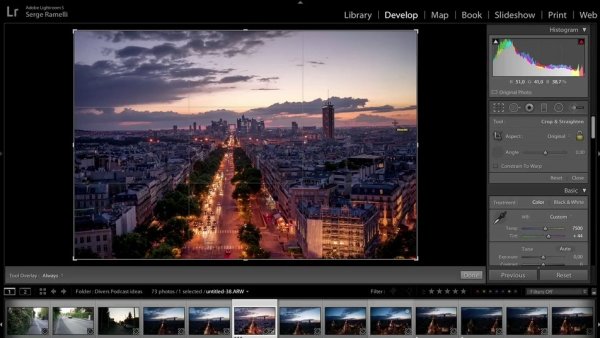
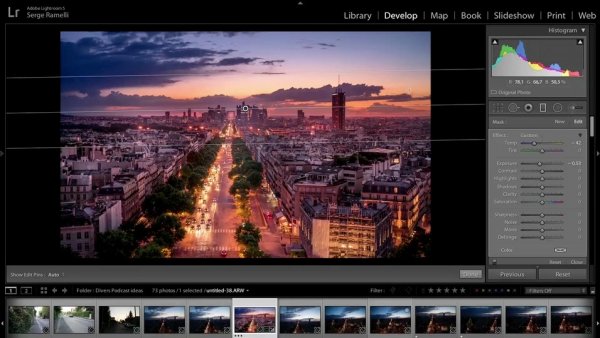
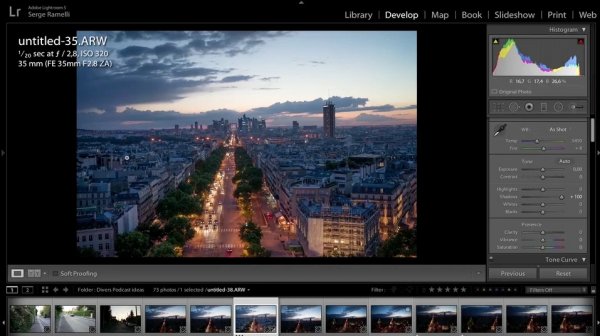
Now let’s see how we are going to retouch this photo. First we are going to open up the shadows; you see how we can see the entire city?

Screen shot 1
Now on the white balance. When you are taking a photo of a sunset in a city there is one white balance that I advise you to use, but it is very difficult to get the right white balance right away. What I usually do is go to the shade preset, and add a bit of magenta, that is something I like.

Then bring down the highlights, and lastly do the white and black points.

Look how incredible this photo is, I took it without a tripod at night, now the only problem is that I don’t have a long exposure so the cars are very sharp, I don’t have the lighting streak behind the cars that I would have liked but it’s still pretty good.

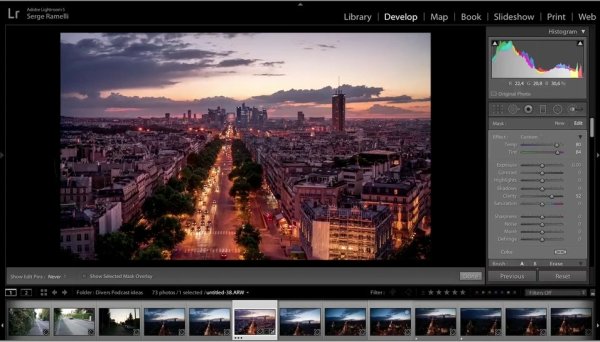
Ok, now let’s crop the photo a bit to get it to look more dynamic.

Screen shot 2

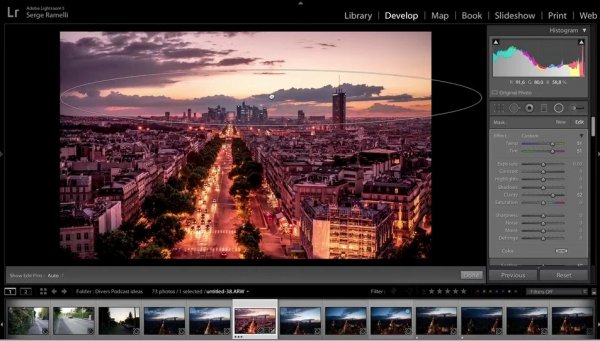
Next, let’s take a brush, select a warm temperature and add some clarity to it and we will now start painting the photo in specific areas where we want to add color.

Screen shot 3

We will now create a graduate filter to accentuate the sunset.

Screen shot 4
Create a new graduate filter to add some highlights to parts of the buildings to make them come out a little bit more.

We will now add a gradient filter on the top of the photo to create more of a blue sky.

Screen shot 5

We will remove some clarity on the overall photo. Last but not least let’s add some sharpness, there is almost no noise as I am using this amazing Sony camera, so we will only remove a bit of noise.

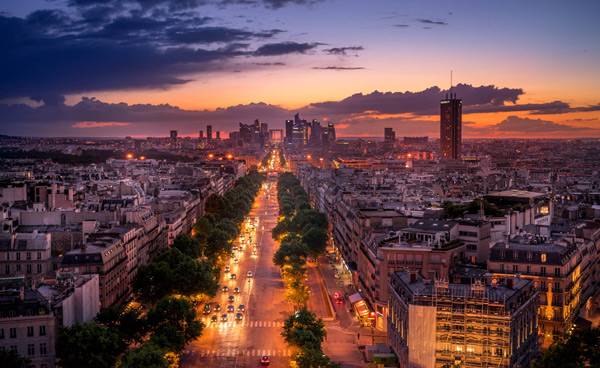
We can now see the end result of this photo that was taken at night without a tripod. I find it quite incredible!

Before

After

For a full walk-through of how this is done check out this video:

If you enjoyed this tutorial you can find more of Serge’s tips and courses here.

PhotoSerge

googletag.cmd.push(function() {
tablet_slots.push( googletag.defineSlot( “/1005424/_dPSv4_tab-all-article-bottom_(300×250)”, [300, 250], “pb-ad-78623” ).addService( googletag.pubads() ) ); } );

googletag.cmd.push(function() {
mobile_slots.push( googletag.defineSlot( “/1005424/_dPSv4_mob-all-article-bottom_(300×250)”, [300, 250], “pb-ad-78158” ).addService( googletag.pubads() ) ); } );

The post Tips for Retouching a Night Photograph using Lightroom by Serge Ramelli appeared first on Digital Photography School.


Digital Photography School

 
Comments Off on Tips for Retouching a Night Photograph using Lightroom

Posted in Photography


6 Tips for Better Portraits on Location

20 Dec

Whew it’s been a while since I actually wrote a tutorial here on dPS so I thought it was time. Some of my most popular articles are about portrait lighting patterns and other aspects of creating great portraits. In this article I want to give you a few tips to help you take better portraits on location, flatter your subjects and make sure you are all happy with the final results.
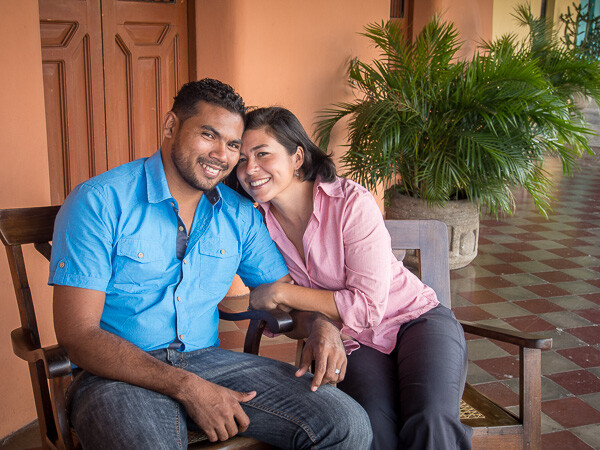
Mayorga Dec14 0018 600px

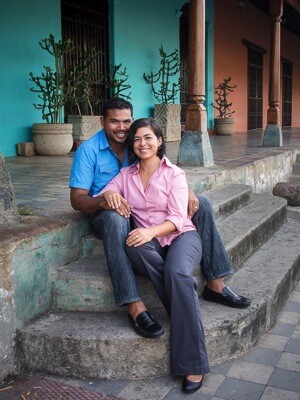
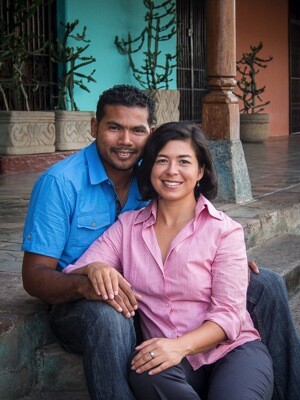
My models for this article are my Nicaraguan friend Luis and his fiancé Sonia. He’s been a great help to us on our tours here and has become a good friend so this was win/win for us as they get a nice portrait of themselves (they don’t have a professional one) and I am allowed to use their photos and their session for teaching purposes here.

Quick summary:

This is a quick list of the five tips, we’ll cover each in more detail and look at some examples.

  1. Ask your subject’s what they like and want
  2. Look for the light
  3. Find a good background
  4. Pose you subjects to flatter them
  5. Communicate with them
  6. Do something they want, even if it’s not art

First a note about gear

A lot of people get hung on up having the top of the line gear, pro lenses, the fancy bells and whistles, and all the extra gizmos. While it is nice to have the best gear, I want to show you it is possible to make great portraits with ANY gear. All the photos in this article were taken in Granada, Nicaragua (where I am currently living/working for 2.5 months) with an Olympus OM-D E-M5 mirrorless camera, and 12-50mm f3.5-6.3 lens (equivalent to a 24-100mm on a full frame camera). NO flash was used only a reflector in a couple situations.

Tip #1 talk to your subjects before the session

Knowing what people want for their portrait, and their expectations is essential to making a portrait they will like. Ask them what kind of clothes they’ll be wearing – formal or casual – that may make certain locations a better choice than others. Talk about feel or mood for the portrait. If it’s a couple are they touchy feely or not. You need to know these things going in, not later when they hate their photos or feel uncomfortable doing something that isn’t really “them”.

For my couple I found out that she liked certain churches here in town, gardens, and the volcano (keep reading to see how I worked some of that into the session). I scouted out a few locations ahead of time with a friend so I could check out the lighting. If you are going to do this, go at the same time of day you want to do the session. I like to work at golden hour with the sun is low and not overhead, which brings us to the next tip.

Tip #2 Look for the light

First and foremost photography is about light. If you have no light or bad light it’s really hard to make good photos. Back to golden hour – this is when the sun is low in the sky either right before sunset or after sunrise. Most portrait photographers choose this time of day as the optimal time to work instead of fighting with midday overhead lighting. Do yourself a favour and make your life easier – whenever possible schedule portraits at golden hour. Find out the sunset time for your area and start an hour or so before that.
Mayorga Dec14 0003 600px

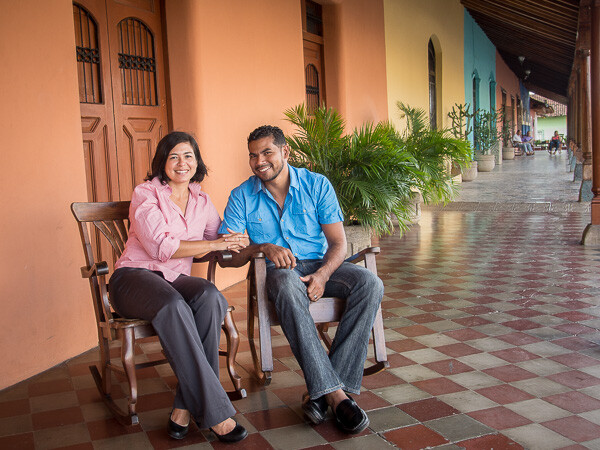
In the first spot for our session we actually started on the porch of the house we’re renting here. Across the street is a big white church reflecting the light back under the porch. There’s an overhang covering the top so there is no direct overhead light. It is the perfect situation for great portrait light and one I seek out wherever I’m shooting. Just by turning the subject’s faces a little bit you can create different lighting on. Read more about that in my first ever dPS article: 6 Portrait Lighting Patterns Every Photographer Should Know.

In the image above you can see the direction of light is coming from camera right (their left). See how he is turned away from the light source slightly and has broad lighting, then watch how it is corrected in the next few images.
Mayorga BTS 0029 600px

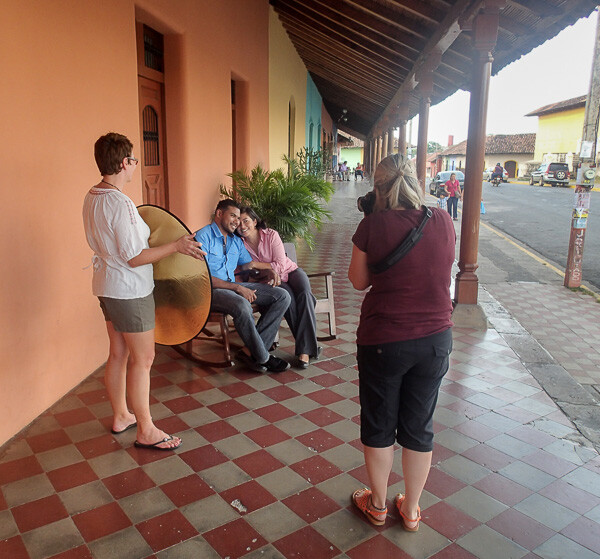
Behind the scenes shot

Mayorga BTS 0041 600px

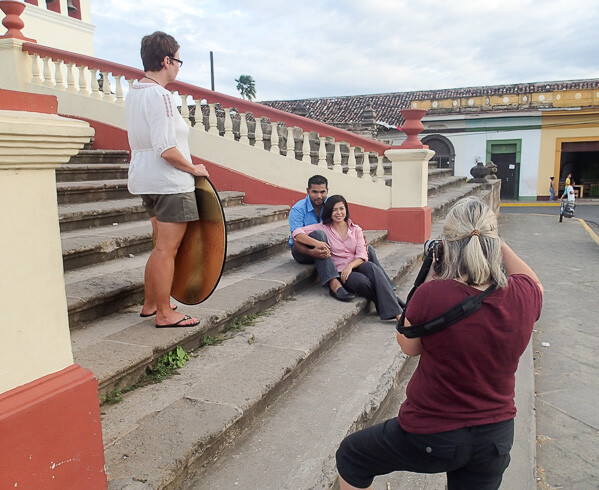
Use an assistant and reflector when you have a chance. Here I had my assistant holding a white reflector to bounce a bit of light into their faces.

Tip #3 Find a good background

Everything in photography is subjective. So how do we define a good background from a bad one? Well there are a few things that can help:

  • Watch for bright spots (and areas of high contrast) in behind your subjects it will draw the viewers eye, usually as a distraction, which is not desired.
  • Avoid bright colours in the background for the same reason. You want the viewers eye to go direction to the people, not the stuff behind them. This is often a problem when your subjects request a garden or flowers in for their background. They do not know this stuff, so it is your job to educate them and make a portrait that is both pleasing to the eye, and to them!
  • Make it appropriate for the subject. Again the idea of a portrait is to portray the person, so sometimes you need to show more of the environment to do so. Just make sure it is fitting for them and helps either flatter them or tell their story.
  • Keep it simple and blur it when possible. A busy and sharp background will draw attention. Use the KISS principle and a large enough aperture to get that background out of focus. A longer lens also helps – something which was limited for me in this situation so do the best you can with what you have.

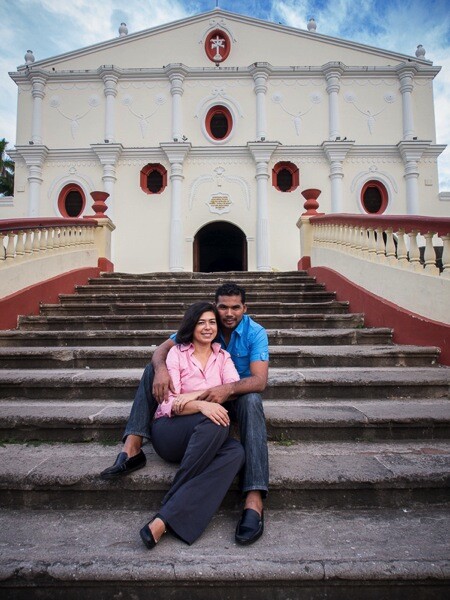
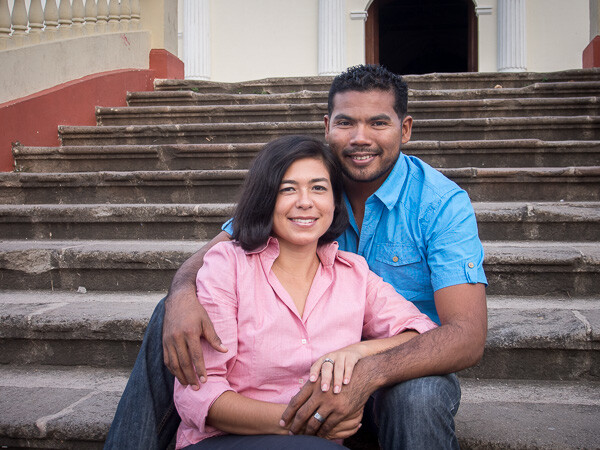
In the examples below see how I started with the full church in the background and made a few alterations to simplify and get the focus more on the people.
Mayorga Dec14 0041 600px

First shot at the church. Notice how the wide angle lens makes their lower bodies and feet look larger? This is also the same church that was bouncing the light in the first setup.
Mayorga Dec14 0049 600px

Much better! In this variation I moved back and zoomed in using a longer lens to get less of the background and crop out the lower bodies.
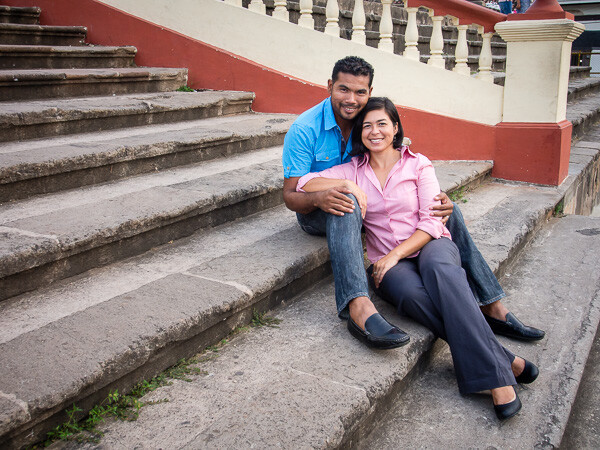
Mayorga Dec14 0030 600px

Next angle shooting from the side on the stairs using the nice leading lines. Again the wider lens makes feet or anything closer to the camera look bigger. Not so much desired, but not horrible in this instance.

Mayorga Dec14 0031 600px

Once again zooming to focus more on their faces and in this case a slightly higher camera angle, is far more flattering to them.
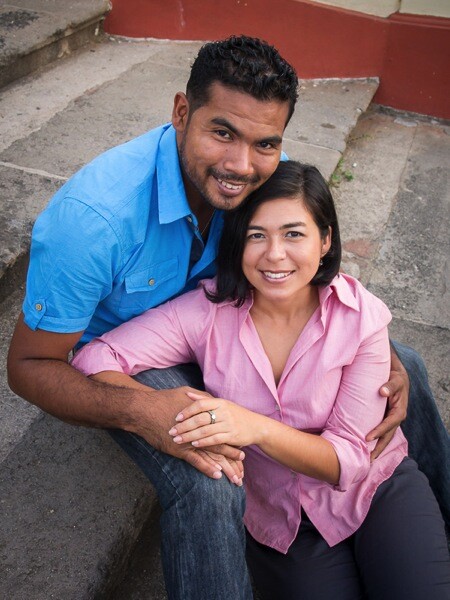
Mayorga Dec14 0034 600px

Lastly try something different. A super high angle and them looking up has a completely different feeling.

Tip #4 Pose to flatter people

Posing people is one of the hardest things to learn but also one of the most important. People are nervous about having their photos taken, and that is often reflected in their body position. It is your job to get them to loosen up and to help them look their best.

The best way I know how to show people a pose is to do it for them, then get them to repeat it. So I’ll go stand in their spot, strike the pose I want them to do and then have them copy me. Or you can face them and have them mirror you.
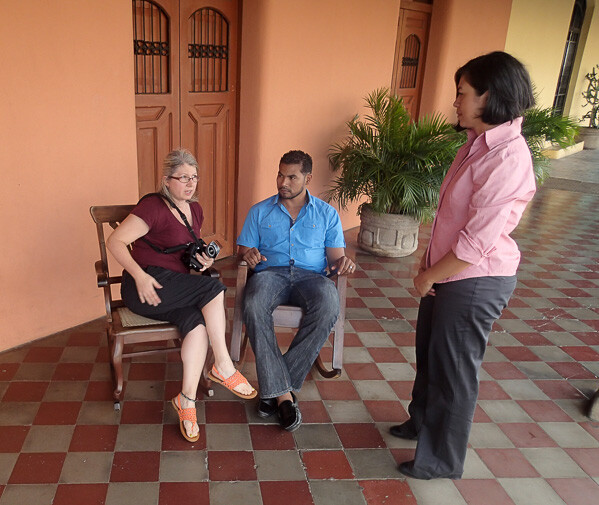
Mayorga BTS 0009 600px

Here I am showing her how to sit and what not to do – stick your butt towards the camera.
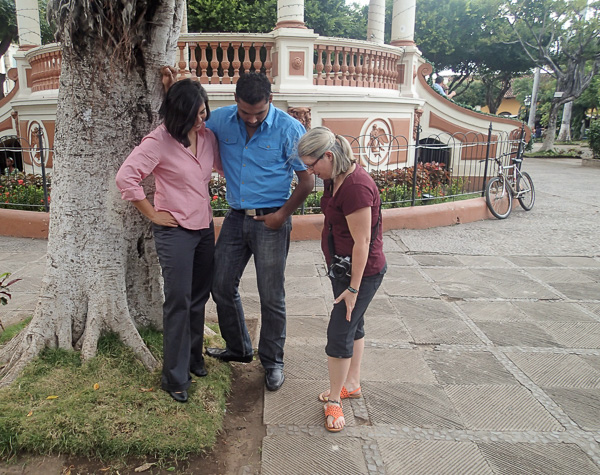
Mayorga BTS 0117 600px

And how to position their feet – very important! How the feet are positioned makes a difference to how the body looks. Pay attention from head to toe, literally. If you want them to turn their body – tell them to turn their feet, the body will follow.

Mayorga Dec14 0051 600px Mayorga Dec14 0054 600px

Here are a few general tips for posing people:

  • If it bends bend it! Get them to shift their weight to one leg (ALWAYS the back one and hip away from the camera) and let one leg bend naturally. Stiff legged = boring = they look nervous and won’t like the photos.
  • Arms too: get them to put a hand in a pocket (but only the fingers not the thumb, that way they won’t shove it too far in there pulling their pant leg funny), hook a thumb in a belt loop, or if you’re working with a couple hold hands and touch. Remember you should already know if they are touchy feely or not (see tip #1 above) so you know what they’ll be comfortable with. Having people who are family, close friends, or couples touch in their portrait helps to add a feeling of connection and usually helps them relax too.
  • Observe their natural body positions and use them. If you see that she sits a certain way, or puts a hand on her hip – get her to do that. Often I’ll give more loose posing directions to start and see what they end up with on their own – then refine it a little if necessary. They’ll relate more to the portrait if it something they do naturally, and you may even get comments like “Oh that is SO me!”
  • Get ladies to cross legs at the ankles not knees. Crossing at the knee is how most of us sit normally but it makes the legs look unnecessarily bulky. Trust me on this – NO woman wants to look bulkier! Ankles crossed looks feminine and makes a nice line for the legs to follow.
  • Posing a couple: If you are dealing with a couple with a large height difference (as I was in this session) get the man to sit and have her drape her arms around him from the side. Or in a standing pose have him widen his stance more. Putting his feet farther apart will actually lower his total height – a neat little trick that really works.
  • Avoid cropping off people’s hands and feet, they end up looking amputated. If you’re going to crop in, come in closer to make it more obvious and crop to the knees (or higher) and elbows.
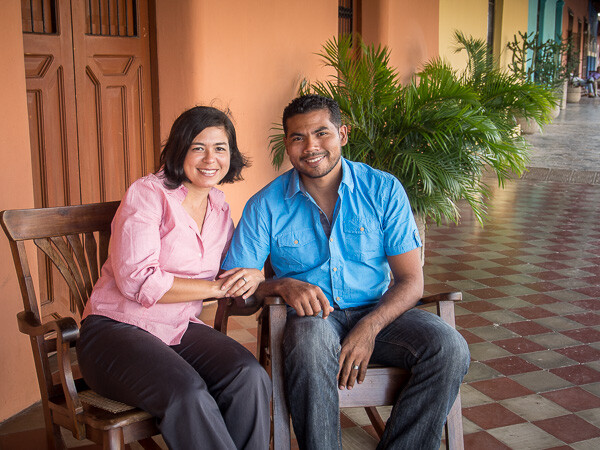
Mayorga Dec14 0006 600px
In this image (above) with her on the left, I felt it wasn’t as flattering when she leaned to the side (exposing more hip area. Remember in the standing pose – hip pushed away from the camera – same with sitting.
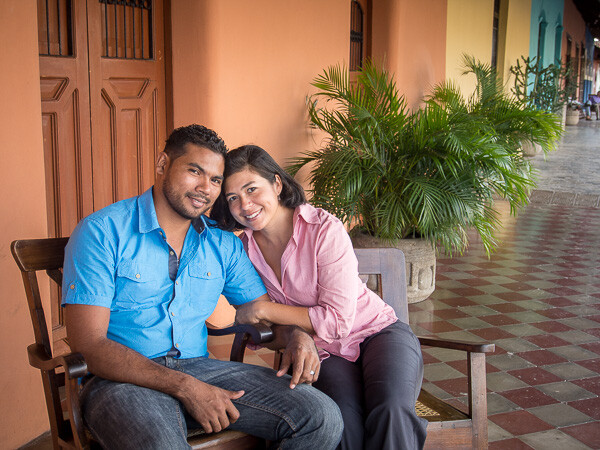
Mayorga Dec14 0015 600px

Pose better. He looks bigger, which he is, and her pose is more flattering. At top of the article when we talked about light he was turned away from the church (light source) and had broad lighting. Now that is reversed and he has short and she has broad lighting. I didn’t mind it so much and the pose and expressions were great so I went with it. But a slight head turn changes that:
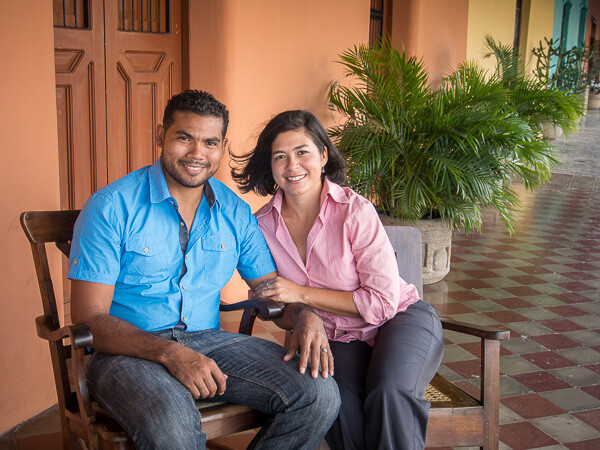
Mayorga Dec14 0012 600px

Tip #5 Communicate with them

Let’s go back to people are nervous getting their portrait done. The best way to help them relax is to talk to them. It’s not rocket science just talk. Tell them what you’re doing, ask them how their day was, find some common ground to talk about while you fuss with your gear. Just talk!

Novice photographers also being nervous tend to clam up and go about their business setting up their camera, tripod, metering, testing, etc., and forget they have real people standing there waiting for direction. Silence is awkward, build a rapport with them and help them relax at the same time.

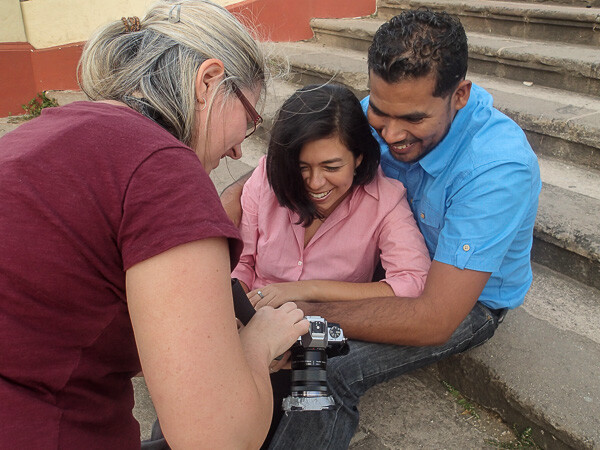
Also show them some of the photos now and then and tell them how great they’re doing and how fantastic they look. When you share with them you think the photo session is going great they almost instantly relax and get into it more. You may even find them wanting to participate more and come up with ideas for photos.
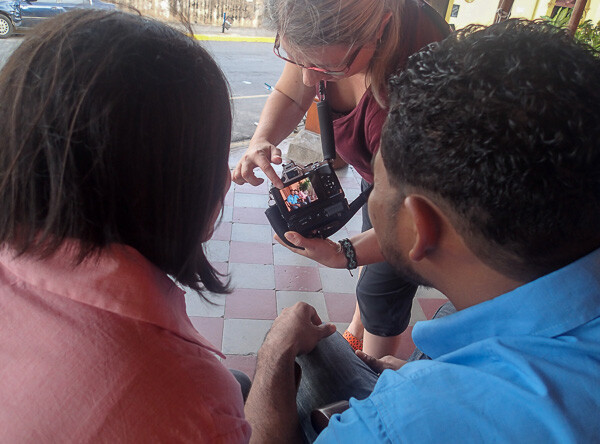
Mayorga BTS 0035 600px

Mayorga BTS 0063 600px

Tip #6 Do one of their ideas

Sometimes people will throw out ideas at the session or in your initial fact finding discussion. Don’t discount these right away. Often the suggestions will have some meaning to them or just simply show their tastes. Try to incorporate at least one or two of their ideas into the portrait session, even if you know it’s not going to be the best shot or come out as art. Do it to have some fun and let them know they are an important part of the process.

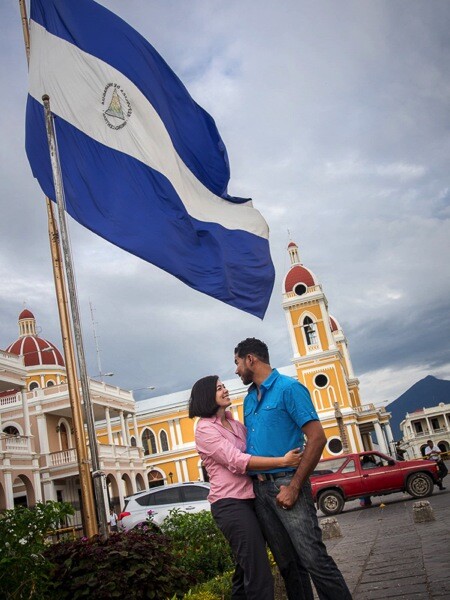
In this example remember she said she like a couple of the churches, to see the volcano, and gardens. Let’s see how that came out:

Mayorga Dec14 0075 600px

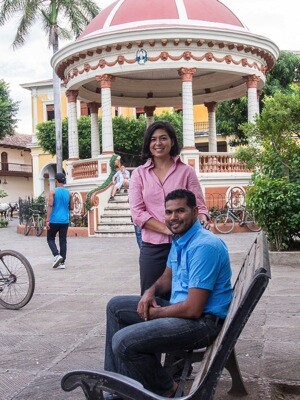
The white church was already used in some of the shots above. We worked the location near our house and then just went for a walk to see what else caught our eyes. The main square here has the big yellow cathedral, and giant Nicaraguan flag, and the volcano in the distance. So I tried to get all of those elements into one shot, and somehow manage to see the couple still. The image above is the result. It doesn’t completely suck but they are pretty small and I wasn’t crazy about the candy cane looking light post.

Once again I zoomed in to a longer focal length and got a bit closer to crop out their feet. Ignoring the annoying cars behind them, I think this is more effective and still shows all the elements. Waiting for the flag to blow was also important to be able to see it. Patience young grasshopper!
Mayorga Dec14 0090 600px

We were losing light fast (happens at sunset) but I wanted to get a few more in for them. Next up they liked the gazebo. I tried to get it in the background but there was a guy sitting there and was near impossible to get him out of the shot and too many people wandering through the background. That and the light just wasn’t working, their eyes and faces were way too dark (below left) and there was no light to get with the reflector (too cloudy).

Mayorga Dec14 0093 600px Mayorga Dec14 0096 600px

Moving them under an overhanging branch of a large tree (above right) helped block some of the overhead light of the cloudy sky and still allowed a portion of the gazebo to show in the image.

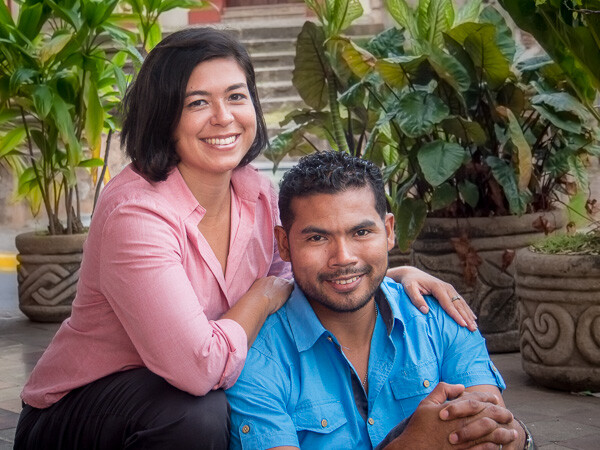
Finally walking back to our house we noticed a row of plants on the stoop. So I decided to make it work as a garden-like shot. It’s not my first choice for background but they liked it and that’s all that really matters.
Mayorga Dec14 0125 600px

Final tips

Being a portrait photographer is part lighting technician, part psychologist, and juggler. You have to take all the elements and make them work together including technical, aesthetic and work with real live people at the same time. Like I said – juggling!

If I can give you one tip to sum up doing portraits on location it would be this:

Don’t be afraid to admit it’s not working and try something else. There are lots of possibilities even in one location
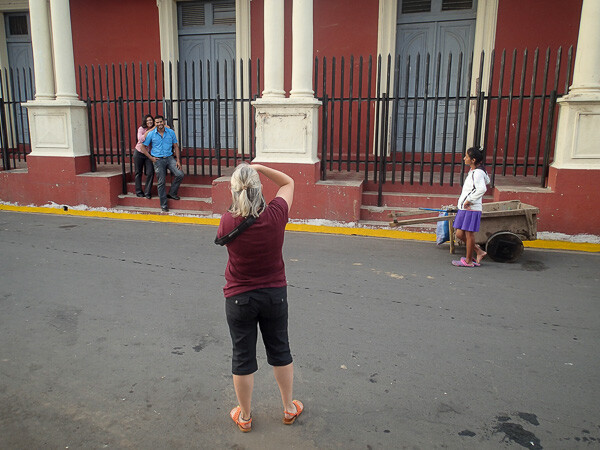
Mayorga BTS 0089 600px
Another behind the scenes shot. I didn’t end up liking the result here but I thought you might like to see the street and a bit of the city of Granada.

googletag.cmd.push(function() {
tablet_slots.push( googletag.defineSlot( “/1005424/_dPSv4_tab-all-article-bottom_(300×250)”, [300, 250], “pb-ad-78623” ).addService( googletag.pubads() ) ); } );

googletag.cmd.push(function() {
mobile_slots.push( googletag.defineSlot( “/1005424/_dPSv4_mob-all-article-bottom_(300×250)”, [300, 250], “pb-ad-78158” ).addService( googletag.pubads() ) ); } );

The post 6 Tips for Better Portraits on Location by Darlene Hildebrandt appeared first on Digital Photography School.


Digital Photography School
 
Comments Off on 6 Tips for Better Portraits on Location

Posted in Photography


9 Tips to Help you get Sharp Focus at Night

12 Dec

Autofocus is so good on modern cameras that most photographers use it all the time. It seemingly never lets you down. But, let’s say it’s nighttime and you are going to do some shooting. You find a good spot. You set up your tripod. You go to focus your camera using the autofocus. You can feel the camera’s focus ring twisting back and forth, trying to focus. But it never gets there. The camera keeps hunting for a focus spot but never finds one.

Uh-oh.  What are you going to do now?

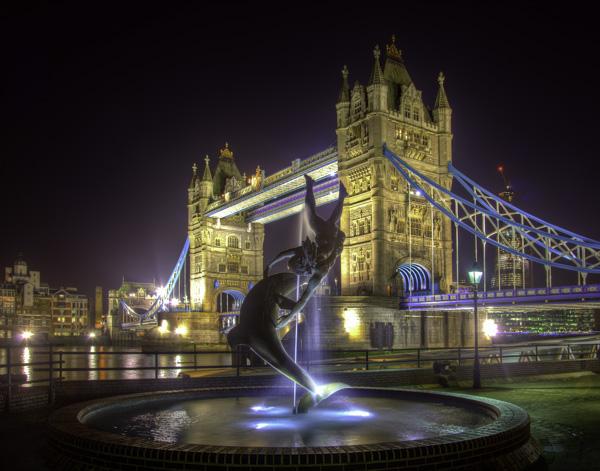
Tower Bridge, March 2011

Actually, this problem doesn’t arise only at night. Your camera will typically have trouble focusing in any really dark scene. So here are some tips for dealing with that situation and focusing your camera when it is dark:

1. Aim for the bright spot

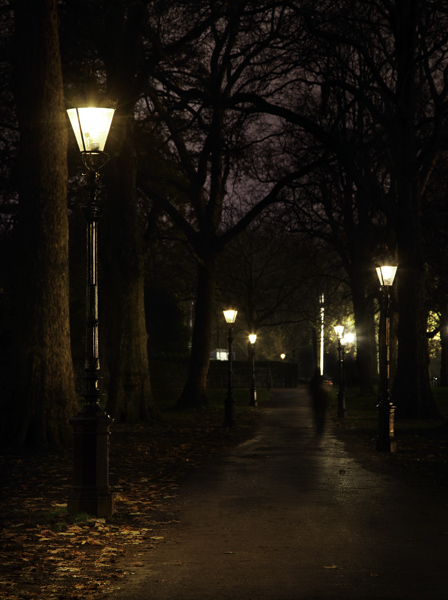
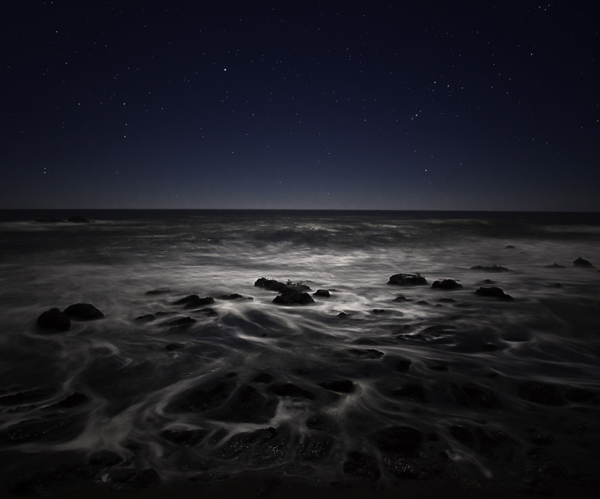
Sometimes you can still use your autofocus. Even though it is dark, most night scenes will have a bright spot or two. They might be streetlights, or a lit-up building, or even the moon. That bright spot can be used to set your autofocus.

To do so, find a bright spot that is reasonably close to your desired plane of focus (i.e., the same distance away as your focal point). Autofocusing on that point should take care of your problem. Just focus on that bright spot in a normal fashion and your camera is now focused on something the same distance away as your subject. You should then be able to take your picture with proper focus.

Green Park, November 2012

2. Focus on the edge

Most cameras focus using something called contrast detection. That means the camera will have the best chance at finding something to focus on if you aim at the area of high contrast between something bright and the dark background.  So don’t aim your focus point at the middle of the bright spot in your frame. Rather, focus on the edge of the bright point. The camera will use the contrast between the very light and the very dark tones to focus.

CaCoast

3. Use a flashlight

If you are attempting to autofocus on a relatively close subject, you can use a flashlight to assist with the focus. This is one of the many reasons to keep a flashlight in your camera bag.

To do that, shine your flashlight on your subject. That will lighten it up enough for the camera to focus on it. Set your focus, then you can turn off the flashlight and take your shot.

4. Recompose after focusing

Assume you now have your focus set using the methods set forth above. But to get that focus, you had to move your camera away from your desired composition to focus on the edge of a bright spot. Move your camera back to your desired composition to get the shot. Don’t refocus as you do so though – just move the camera and take the shot with the focus you’ve already set. (You will need to either hold the shutter button part way down, use focus lock, or focus and then turn off the AF so it doesn’t attempt to refocus once you have recomposed – or see #5 below.)

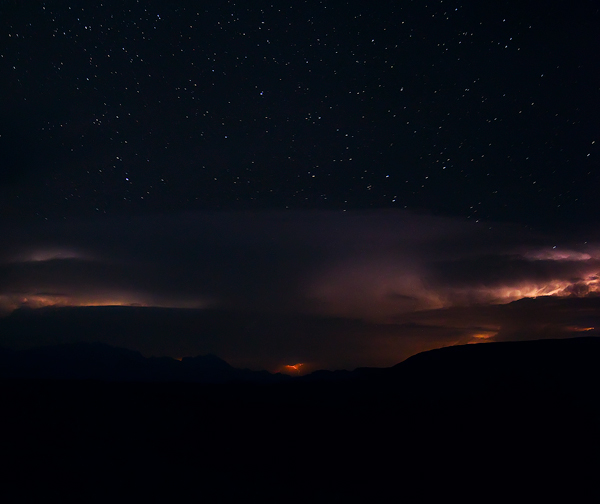
BigBendNight

5. Use back-button focus

It is times like this, when you want to take a shot with out refocusing, that back-button focus really pays dividends. If your camera allows it, go into the menu and set up your focus so that it is not triggered when you press the shutter button halfway down, but rather is triggered when you press a button on the back of your camera. That way since your focus is not set with the shutter button, when you take the picture by pressing it there is no chance that your camera refocuses.

6. Manually focus using the lens scale

If there is nothing for you to use to set your autofocus, you might have to use the dreaded manual focus. But don’t worry, it is not difficult. In the dark, it is often easier to focus manually than hunt for something to use for autofocus.

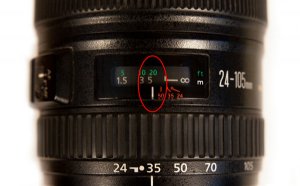
Higher-end lenses make it easier to manually focus. In a high-end lens there should be a scale on the front that tells you the distance (in both feet and meters) at which you are focused. Use that to set the focus.

You might need a flashlight to see the scale.  This is yet another reason to keep a flashlight in your camera bag.

TopOfLens

7. Manually focus by guestimating

If you cannot find a point to focus on, and your lens does not have a distance scale, all is not lost. You can guestimate and get it right in a lot of cases.

To do so, make sure you are shooting with a high aperture value (small opening, large f-number). That will create a wide depth of field to give you some wiggle room in your focus. Specifically, the wide aperture will make a wider range of things acceptably sharp in your frame.

In addition, be sure you are shooting with a wide angle lens. This is not the time to try anything telephoto. The wider angle of view creates a more forgiving environment for your focus.

With a wide aperture and the wide angle of view, you have a broader latitude in your focusing. Now manually focus your camera. If you are shooting a broad scene that extends to infinity, set the manual focus just shy of infinity. The latitude you built-in will make things acceptably sharp all the way to infinity and a certain distance in front of your focus point as well. That will give you the best chance of having the whole scene in focus.

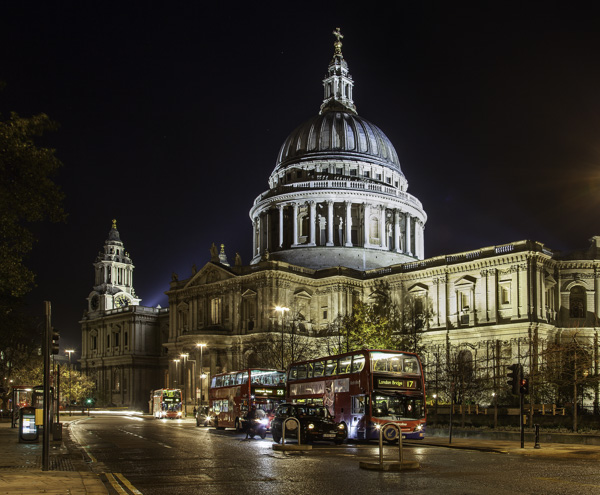
St. Paul, November 2012

8. Use Live View

If you can see anything on your camera’s LCD using Live View, then you can use that to manually focus. This is frequently better because you can zoom in on your subject and clearly see if you have nailed the focus. Try using this whenever possible, as it allows a degree of control over focus that is not otherwise possible.

9. Remember you get a do-over

One of the beautiful things about digital photography is that shooting is free. Unless your scene is moving in front of you, you get a free do-over. Use it liberally. Take a shot, look at it on the LCD, and if the focus isn’t right, just do it again. If your camera allows it, go ahead and zoom in on the preview to clearly see the detail and whether or not you have nailed the focus.

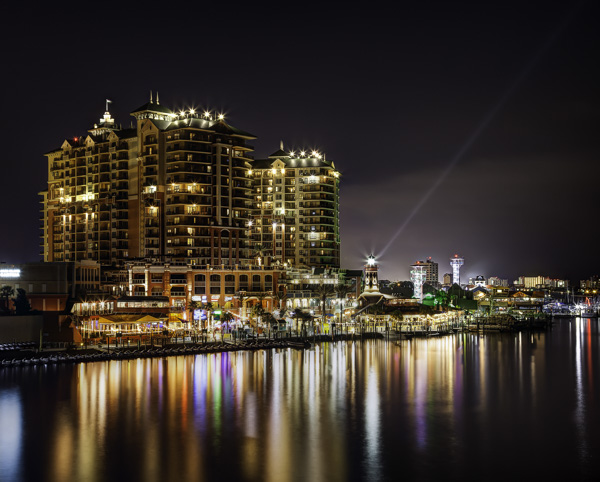
Destin

Conclusion

These tips will help you set your focus at night or when you are in a very dark scene. In fact, some of these tips will also help in broad daylight when the camera thinks it is dark because you are using a 10-stop neutral density filter. Try them when your autofocus is hunting but not finding the focus. You should be able to nail the focus in almost any situation.

googletag.cmd.push(function() {
tablet_slots.push( googletag.defineSlot( “/1005424/_dPSv4_tab-all-article-bottom_(300×250)”, [300, 250], “pb-ad-78623” ).addService( googletag.pubads() ) );
} );

googletag.cmd.push(function() {
mobile_slots.push( googletag.defineSlot( “/1005424/_dPSv4_mob-all-article-bottom_(300×250)”, [300, 250], “pb-ad-78158” ).addService( googletag.pubads() ) );
} );

The post 9 Tips to Help you get Sharp Focus at Night by Jim Hamel appeared first on Digital Photography School.


Digital Photography School

 
Comments Off on 9 Tips to Help you get Sharp Focus at Night

Posted in Photography


7 Tips and Etiquette for Taking Portraits in Public

11 Dec

Facial expressions, skin and hair, and sad or sparkly faces have attracted the artist’s eye since the first caveman recorded his first story on rock. Facial features have the power to convey stories. A single image says more than a thousand words. If you are a photographer who shares this joy in the human form, you would recognize that each person is unique and beautiful in his or her own way. If you are a portrait photographer, you know how humbling it is when you are given the privilege of taking a photo.

Storytelling through portraits requires a code of conduct that should be observed. Through my experience, I have developed some rules that I follow, and I would like to share some tips and etiquette of taking portraits in public with you.

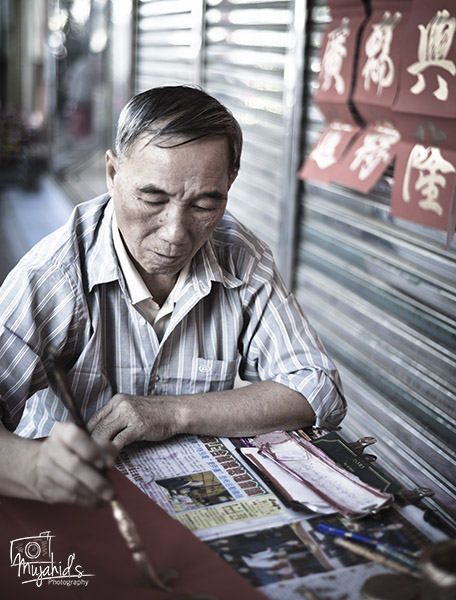
Calligrapher  China Town Bangkok

You can not only admire the beauty of the person, but also his work and workplace.

#1 – Show Your Presence

Smartphone holders, tourists, and casual snappers with DSLRs have made the jobs of serious portrait photographers a bit difficult. Photography overload has contributed toward a sort of over saturation in the population – perhaps the subjects have become weary. You are never sure of the reaction when you point your camera toward a person. If you see someone you would like to take a photo of, try to stand around for a while and become part of the scene. Observe the movements and dynamics, even try to catch their eye, but do not make the person feel uncomfortable.

#2 – Engage

If you don’t know the language, at least learn the local words to greet people. Remember, every culture has its signs of respect and ways to start a conversation, so keep those in mind. Show interest in whatever he or she is busy doing, selling, or offering. Engaging in such a manner normally makes people comfortable, and often less skeptical, of to your forbidding-looking, long lens. You come across first as an individual with a personality. Try to engage with something that you believe will be appreciated, be it about their children or their surroundings – sound them out, gauge a response. Of course, lack of response is answer enough that you do not proceed to take their picture.

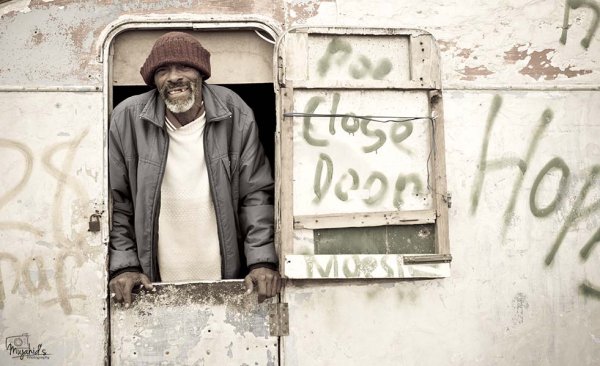
Freek, the fisherman. I said hello to him as I passed by his caravan. We chatted for a while before I opened my camera bag and requested a photo.

Freek, the fisherman. I said hello to him as I passed by his caravan. We chatted for a while before I opened my camera bag and requested a photo.

#3 – Ask Permission

You are allowed to take photos in public spots, even without permission. Portraits need all of what we have discussed so far. However, this is not an hour long process; you need to get to the bottom line soon. Ask permission. If it is given, help the person posing as per your preference. Do not feel bad if they refuse, accept it politely and pleasantly, and remember especially then, to be respectful. A few things I learned along the way:

  • A guard asked me to gain permission from the shop owner first (cool guard!).
  • I was once told by a religious person that his faith doesn’t allow taking photos.
  • A tribesman allowed me to take photos of men and children only, and not of the women.
  • A young girl allowed me to take her photo on condition that I would never upload it; it was for my eyes only as she was comfortable with me but not the general public.

#4 Remember People

You cannot do justice to a portrait if you do not include at the very least the name and background of the person, and preferably also age. You need to know who they were, and what their life was like. It is first and foremost a sign of respect to the person whose image you have used for your own purpose, but secondly you will realize how powerful your portraits become when contextualized. I currently use my smartphone to note down these details, but am considering carrying a dictaphone. A simple notebook will do.

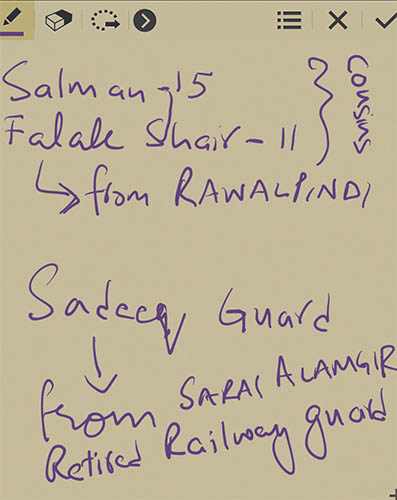
Notes

Capture their names, ages and origin.

#5 Show the results and make people feel good about themselves

If your camera allows previews, show it immediately, and get feedback. Sometime the best ideas come from the person in front of the lens. Make your new friend smile and even chat while you are taking photos. I often ask questions while I am busy taking photos. I believe it is a great technique which helps people calm down. When they are animated about something important to them, it reflects in the photo. If you have a companion with you, sometimes having them strike a conversation allows for the opportunity of candid shots of your subject with spontaneous expressions.

“Wow, you are in grade 2. This is so cool buddy, I wish I was in grade 2 again”.

“Were you a solider before Mr. Sadeeq? I feel that strength in your eyes”.

“Enrique, you remind me of my cousin… he has a beautiful mustache like you”.

Umbrella Lady Serious to smiling

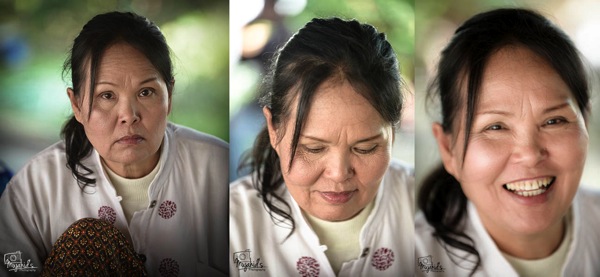
After I showed the first shot to this umbrella-making lady, and told her she looked beautiful, she felt shy and even gave me a big smile.

#6 Respect their possessions

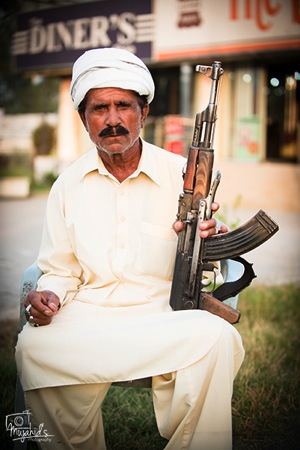
I have not followed this rule strictly, and I have regretted it several times in retrospect, after the moment passed. Once, after taking photo of a guard, I proudly showed it to him, and he asked, “Where is my gun? It is not in the photo”. His voice echoed in my mind for many days, I had missed an important aspect of what made him a guard! Not only was it integral to his identity, but what an important prop I had omitted in error. Take two.

Take a photo of the people with their surroundings to remember what they were doing. It will help you in your story telling one day!

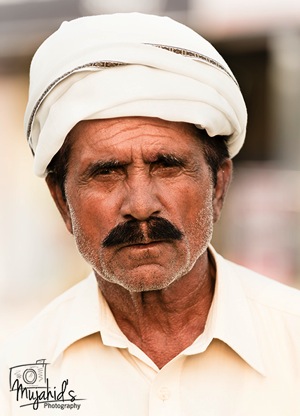
Sadeeq Guard Without Gun

Take #1 – first photo.

Sadeeq Guard With Gun

Take #2 – photo with guard’s belongings, i.e. his gun.

#7 Say Goodbye and inform them of the use of their photo (legal)

Greet properly. Ask if they would mind if it was published or uploaded. Some photographers even carry model releases on their person, for use as required. If this is not feasible, as far as language allows, at the least make your subject aware that you may use the images. Later, if you were to personally or commercially use the images, depending on the laws of your country which are variously lax and stringent, you may either need to submit a model release and/or affidavit along with the photo to make its use legal.

Remember to be informed and aware of not only the etiquette of taking portraits, but also of the legal requirements which will vary from country to country, and are a topic of their own. Be particularly cautious when photographing the faces of minors without formal consent of their parents. I still have inadequate knowledge in this area myself.

I hope these tips would help you in your portrait photography. I look forward to seeing your feedback and learning from you all.

googletag.cmd.push(function() {
tablet_slots.push( googletag.defineSlot( “/1005424/_dPSv4_tab-all-article-bottom_(300×250)”, [300, 250], “pb-ad-78623” ).addService( googletag.pubads() ) );
} );

googletag.cmd.push(function() {
mobile_slots.push( googletag.defineSlot( “/1005424/_dPSv4_mob-all-article-bottom_(300×250)”, [300, 250], “pb-ad-78158” ).addService( googletag.pubads() ) );
} );

The post 7 Tips and Etiquette for Taking Portraits in Public by Mujahid Urrehman appeared first on Digital Photography School.


Digital Photography School

 
Comments Off on 7 Tips and Etiquette for Taking Portraits in Public

Posted in Photography


5 Ninja Tips to Speed Up Your Lightroom Workflow

11 Dec

Currently on for 33% OFF is Johny’s Lightroom Essentials for Landscape Photographers Course. Grab it now, only until December 23rd, 2014.

DSC 8831 Edit
Here are five things that will make a huge difference to your Lightroom workflow by making you more efficient and saving you time.

1. Solo Mode

Solo Mode

Do you get frustrated scrolling up and down the panels looking for the right adjustment or setting? If so, then your frustration is over. Right click on one of the panels and in the drop down menu, select Solo Mode. Solo Mode only allows you to have one panel open at a time, so every time you open a panel the last one you had opened, closes. This allows you to easily see all the panels at once and find what your looking for quickly.

2. Auto Advance

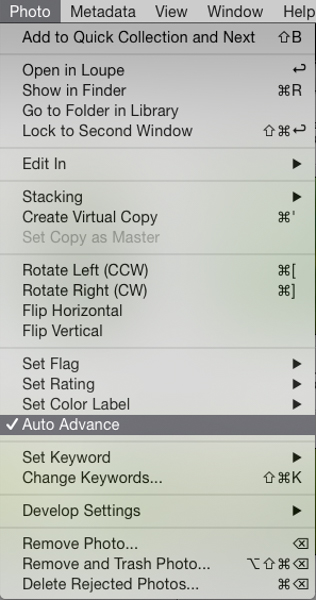
The best way to find your keeper images after a shoot is by using flags. All you need to do is use the keyboard shortcuts; P for pick, and X for reject. This is a super fast way to power through your shoots. The problem is once you pick or reject an image you need to then click a right or left arrow key or mouse click on the next image to make the next selection. That’s where Auto Advance comes in. To turn it on make sure you’re in the Library module, then in the menu under Photo select Auto Advance. With this enabled, each time you flag an image Lightroom will move to the next image in the film strip automatically. This may not sound like a huge thing but believe me, when you have several hundred images to sort through saving one keystroke on each image will save you heaps of time.

Auto Advance

3. Quick Collections

Collections are super important in Lightroom. Using them is the best way to quickly switch between groups of images in the Develop module without switching back to the Library module and digging through your folders. Quick Collections is a term I’ve coined, but honestly this is the quickest way to create a collection. It’s really simple. Just grab a folder of images you want to make a collection from, then click and drag the folder to the collections panel. Once you see a blue bar appear, drop the folder and BOOM, instant collection.

Quick Collections

4. Turning Off Auto Show Panels

To give you more real estate on the screen it’s a great idea to hide the side panels when you are not using them. The perfect place to do this is with left panel in the develop module as most of the time everything you need is in the right panel. The problem is once it’s hidden and every time you mouse over to the left of the screen the panel pops out. That might be fine a couple of times but after a while you’ll find that it becomes annoying and starts to slow down your workflow. It’s easily fixed by right clicking on the panel disclosure triangle, and selecting manual from the drop down menu. This will stop the panel from opening automatically. When you want it back, just click on the triangle to show the panel.

Turn Off Auto Show Panels

5. Decluttering the Lightroom Interface

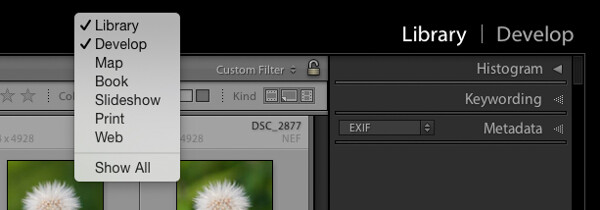
Learning Lightroom can be very overwhelming especially when you see all the modules in the top bar and all the different panels and settings. There is so much going on in the interface, it can lead to what I call Lightroom burnout. The tip here is to turn off the modules and panels you aren’t using by cleaning up the interface. This allows you to only focus on just the things you are learning or need to use regularly. Just right click on the top bar or any of the panels, and in the drop down menu select what module or panel you want to hide, repeat the process to unhide.

Declutter

Like a lot of software there are many ways to achieve the same outcome. I encourage you to keep refining your workflow until you find the perfect system that works for you. Give these five tips a go; they will not only save you time, but help you on your way to achieve what I call Lightroom bliss. That is when you get to a place using Lightroom where there’s no more frustration or confusion, and it’s just all about having fun with your photography and creating beautiful images.

Dancing Gulls

DSC 8638

Currently on for 33% OFF is Johny’s Lightroom Essentials for Landscape Photographers Course. Grab it now, only until December 23rd, 2014.

googletag.cmd.push(function() {
tablet_slots.push( googletag.defineSlot( “/1005424/_dPSv4_tab-all-article-bottom_(300×250)”, [300, 250], “pb-ad-78623” ).addService( googletag.pubads() ) );
} );

googletag.cmd.push(function() {
mobile_slots.push( googletag.defineSlot( “/1005424/_dPSv4_mob-all-article-bottom_(300×250)”, [300, 250], “pb-ad-78158” ).addService( googletag.pubads() ) );
} );

The post 5 Ninja Tips to Speed Up Your Lightroom Workflow by Johny Spencer appeared first on Digital Photography School.


Digital Photography School

 
Comments Off on 5 Ninja Tips to Speed Up Your Lightroom Workflow

Posted in Photography


6 Tips for Photographing Dogs in Action

11 Dec

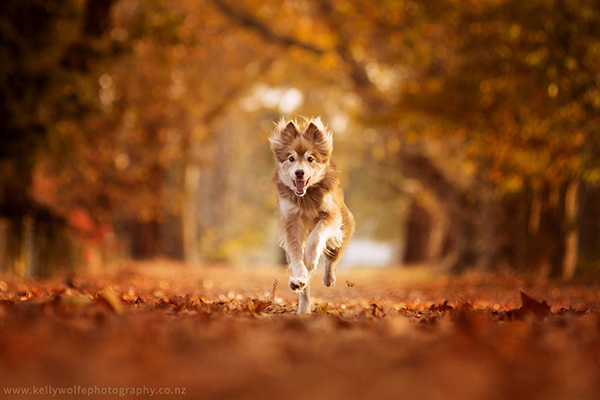
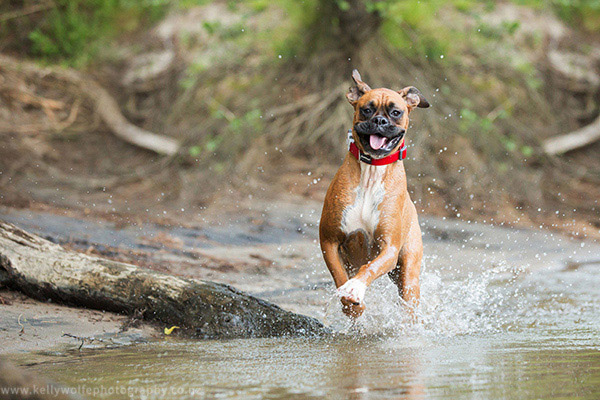
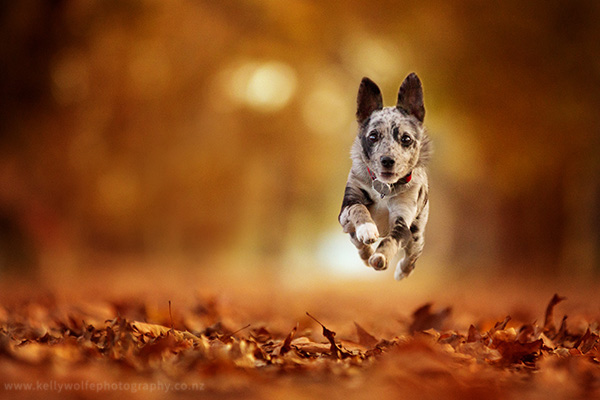
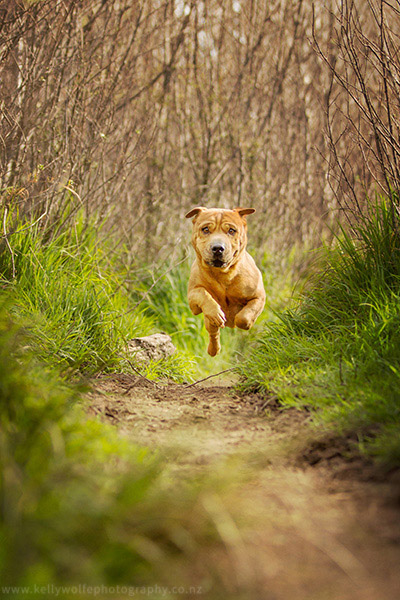
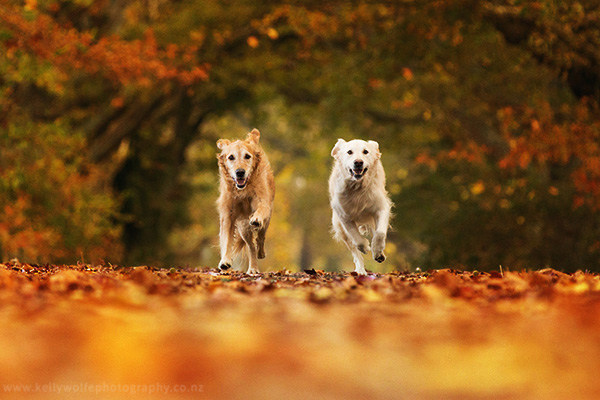
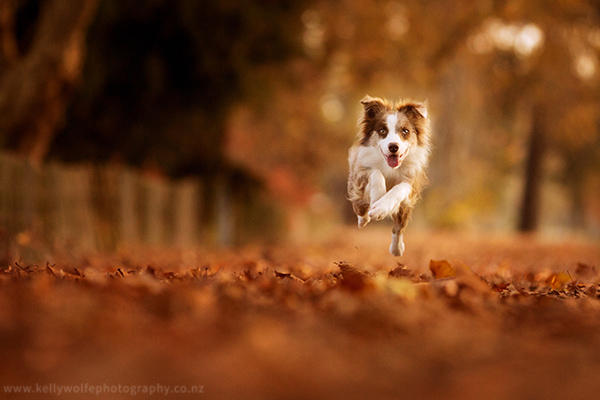
Canine action images are my absolute favourite thing to photograph. The freedom you can see in their expressions that split second as they leap into the air in excitement, and being able to freeze that moment into a single photograph is amazing. It’s a lot of fun for the photographer, dog, owners and is a good challenge too!

ArticleImage1

Safety first

Before you attempt any of the tips in this guide, please remember that no image is worth risking the safety of you or the animal. With dogs it is important that you only choose locations where dogs are permitted, that are secure and well away from hazards such as roads, and that you are able to keep the dog under control while they are moving. Also be aware that some dogs may not be willing or able to go at a full-out run. This is okay. When photographing pets, the goal is to capture the personality of the animal. If they aren’t comfortable running then just capture them at their own pace.

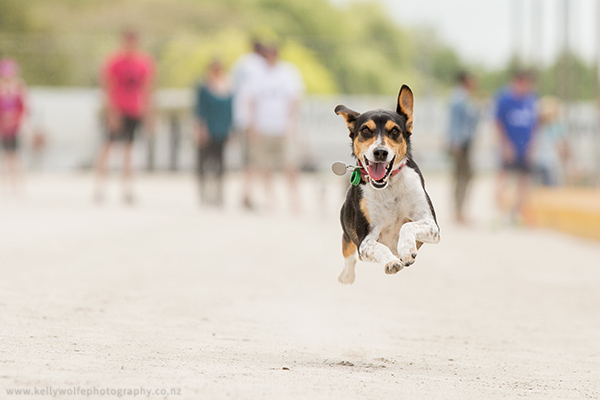
PoochRacing

The dogs need to have fun too!

The key to good animal photography, in my opinion, is remembering that your animal handling skills are equally important to the shot as your photography skills. Anyone can take a perfectly focused photo with a bit of practice, but the expression that you capture in your images is what will set them apart from the rest. To get expression from the dog, it is important that both you and the owner use a very positive, encouraging voice when calling the dog, and have plenty of rewards waiting for them by the camera. Some of my personal favourites include squeaky toys, tennis balls, favourite dog treats and peanut butter.

ArticleImage2

How do you get the dog to run the right way?

It is helpful to know a bit about the dog’s training level, health and personality before you begin. This allows you to create a plan of action for the best way to capture the image you have in your mind. It also gives you the information that you need to keep you and the dog safe.

For well-trained dogs with a reliable sit and stay, I have the owners ask the dog to stay in a spot around 20 metres from where I am shooting. The owners then stands directly behind me and calls them towards the camera. For younger dogs, or ones with less training, using a secure location becomes even more important. I recommend using a quiet dog-friendly park, or even the dogs own backyard to reduce distractions. If you have another person that is able to help keep the dog in place then this can be used in place of the sit/stay. Another option is to keep the dog on a lead and have the owner run alongside them. The lead can be kept or you may choose to remove it later using Photoshop. Also consider whether you need to direct them at all. Some of my favourite action images have been captured while the dogs were simply being themselves, racing around having a blast with their favourite toys during their session!

ArticleImage3

Choose your settings wisely

Now that you have the tools to get the dogs going in the right direction, it’s time to focus on capturing the fun! Grab your camera and your favourite telephoto lens. My current combination is the Canon 5D MkIII with a Canon 70-200mm f/2.8 lens, though many images in this article were created with a Canon 60D. Choose a spot a good distance away from the dog which will give you plenty of opportunity to catch the right moment in their run. Also try and get down to their level. This will give you a fresh perspective of the dog and also make it easier to capture the expressions on their face as they run towards you.

ArticleImage4

I photograph all my sessions in full manual mode as I enjoy having complete control over the final image. Generally I start with a shutter speed of 1/1000, an aperture of f/2.8 and adjust the ISO to suit. If you aren’t comfortable with full manual mode yet, using shutter priority mode or sports mode are both good starting points for these types of images. As you have more practice, you will find the combination of settings that works best for you and the type of photos you like to create.

ArticleImage5

Nail that focus

One of the most difficult parts of photographing dogs in action is nailing the focus. I recommend using a single focus point with the camera in AI servo mode and back button focusing. This means that the camera will continue to refocus on that single point as long as you are holding down that back button. If you aren’t already using back button focusing, give it a try – it is a great tool to have for all types of photography.

ArticleImage6

Timing is everything

Another challenge you face with action images is getting the timing right. I recommend trying a method that many horse riders use. When any new rider starts taking horse jumping lessons, one of the first things they learn is to count the horses strides. Counting aloud each time the horse’s leading leg leaves the ground, this helps riders to feel when a horse is going to take off and be prepared for the jump that follows.

This same technique works for photographing any type of animal photography. Focus on the dog as they run. Each time the dog’s front legs leave the ground, count aloud. This will give you a steady and reliable time to take the photo, and you can easily adjust it to capture different moments in their movement. This technique is definitely easier with larger dogs with longer strides, but with practice it will get easier to see the stride. Keep working at it!

ArticleImage7

Do you enjoy photographing dogs in action? I would love to see some of your work! Share them in the comments below.

googletag.cmd.push(function() {
tablet_slots.push( googletag.defineSlot( “/1005424/_dPSv4_tab-all-article-bottom_(300×250)”, [300, 250], “pb-ad-78623” ).addService( googletag.pubads() ) );
} );

googletag.cmd.push(function() {
mobile_slots.push( googletag.defineSlot( “/1005424/_dPSv4_mob-all-article-bottom_(300×250)”, [300, 250], “pb-ad-78158” ).addService( googletag.pubads() ) );
} );

The post 6 Tips for Photographing Dogs in Action by Kelly Wolfe appeared first on Digital Photography School.


Digital Photography School

 
Comments Off on 6 Tips for Photographing Dogs in Action

Posted in Photography


Tips to Help You Prepare for a Successful Portrait Session

08 Dec

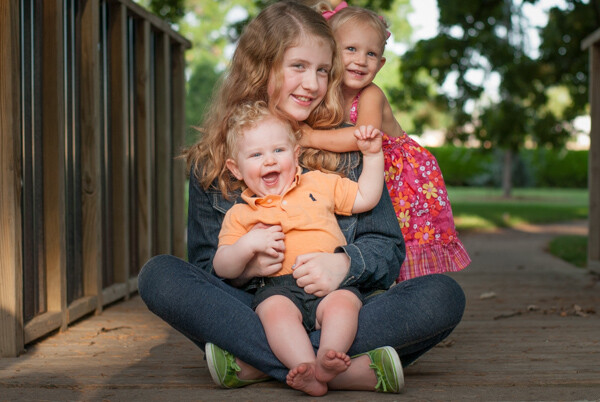
One of my favorite types of photo shoots is families with kids. It’s fun to spend an hour talking and laughing with people while taking photos. I enjoy being a small part of creating images that will preserve their precious memories for the rest of their lives. But these types of sessions don’t always work out as you might like, and even when you think you have all your ducks in a row something might pop up at the last minute that sends everything into a tail spin. Fortunately, with a bit of planning and preparation you can put a few things in place that will help your portrait sessions be freeing, fulfilling, and fun for everyone involved.

kids-bridge

Set Expectations

Whether you are taking photos of friends, family, clients, or even your own kids, one of the most important things you can do is make sure you are going to deliver what they want. Your subjects will have their own preconceived notions of what types of pictures they are looking for, and they might not always be the same as what you have in mind. If you can make sure everyone is on the same page before you even take out your camera, the entire process from posing, to shooting, to editing, will be much, much smoother.

Whether you know your subjects or not, it’s important to make sure they are familiar with, and approve of, your own picture style and portrait process. Showing your subjects some of your existing work is a good way to give them an idea of your style and help them see if you would be a good fit. This can be as simple as sending them some sample photos by email, directing them to an online portfolio, or sitting down and having a conversation about the type of photo shoot they are wanting.

Every photographer has a unique approach to his or her craft, and interacts with people in their own way. Do you take classic headshot portraits or do you like to experiment with various poses? Do you let subjects, especially kids, run around and play or do you like to control every element of the photo shoot? Do you shoot outdoors, in a studio, or a mix of both? Will they be able to share the photos online with a watermark, or do you require them to order physical prints? This might seem a bit too nitty-gritty, but dealing with these issues up front will save you a lot of hassle and headaches down the line.

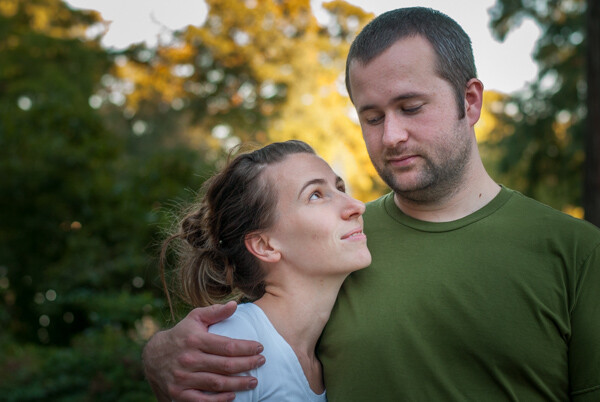
couple-sunset

Not all photographers have their own website, but if you do you can include information such as the types of sessions you normally do, how much you charge, where you are willing to travel, etc. This information is good to know, but it often takes a little more to see if you are really the right person for your subjects. Think of the last time you went to a restaurant: did you just order right from the menu, or did you ask your waiter some questions about the food before deciding what you want? To address this, it’s good to have some sort of dialog with your subjects before you take a single photo. You can encourage people to contact you via email or a form on your website, send you a text or tweet, or post questions on a public Facebook page. It might seem like a lot of work to go through all this, but the more you work to set proper expectations for your subjects, the smoother the entire process will go.

One of the best ways to safeguard yourself against liability in case your subjects are unhappy, is to use a contract. This is especially important if you plan on charging money, and critical if you are doing something big like a wedding or bar mitzvah. If people are paying big bucks for your services, it’s essential that everyone is on the same page upfront. Without a formal contract wherein all parties involved agree on the services to be provided, things can devolve into he-said-she-said after your clients get the photos. Don’t think of this as a punitive measure, though – approach the contract as an opportunity for both you and your clients to help safeguard against miscommunication and make sure what you are going to provide aligns with what they want.

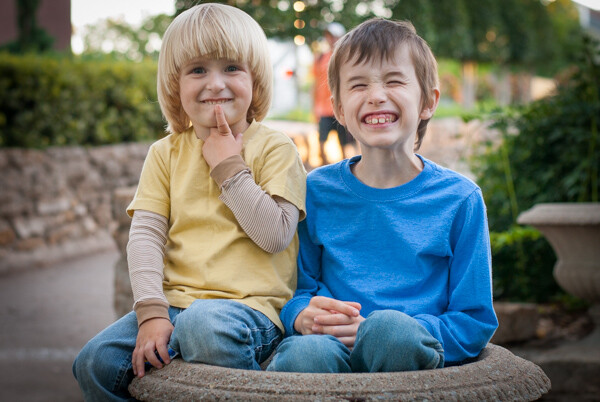
kids-flowerpot

Scout the Location

If you shoot indoors, this step is obviously not all that important. But if you plan on taking pictures outdoors it is critical that you know the area first. Just because you drove past a nice park or a friend told you about a rustic barn, doesn’t mean these places will be good locations for photo shoots. Go to the locations in person, get out of your vehicle, and walk around to see what things are like. If at all possible, do this at the same time of day you plan on taking pictures to make sure the light is similar, and ask yourself questions such as:

  • Where is the light coming from?
  • What features of the location are shaded?
  • What background elements can I use in the shots?
  • What existing features (fence, wall, bench, pond, tree, staircase, etc.) can I use for posing my subjects?
  • Are there lots of people around, and if so, what angle can I shoot from to avoid them in the background?
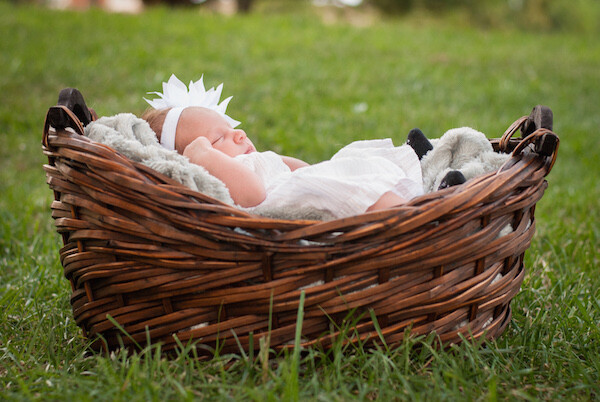
baby-basket

Normally this spot is full of people, but we picked a time to do the shoot when it was relatively quiet.

Even if you have already been to a location such as a field, beach, or alley, it’s still a good idea to check it out before your photo session if you have never used it specifically for taking pictures. If you approach the location with a critical photographer’s eye you will notice many things that have probably escaped your gaze previously, but could severely impact the photo session if not taken into account. It’s also a good idea to have a backup location in mind in case of bad weather, but make sure your clients are well aware of this and are able to meet you there if you do have to change plans.

Bring Blankets (and more)

This last tip might sound trite, but it has saved me on many occasions. And every time I forgot to bring blankets, I wished I had. Since I do most of my photo sessions outdoors there are many things simply out of my control. Some of these can be mitigated, like using reflectors or a flash if the light is poor, or having your subjects wear warm clothes if a cold front comes through the night before, but it’s amazing how many times a simple blanket has saved the day when all hope seemed lost.

Blankets can give your subjects something to sit on, wrap themselves up in, or just play with as you are snapping their photos. Blankets can comfort fussy children, diffuse a tense situation, or even (and yes this has happened to me more than once) cover up the mess left behind by a flock of geese the day before. They can also serve the practical function of adding a bit of color to your photos, or complementing the clothes that your subjects are wearing.

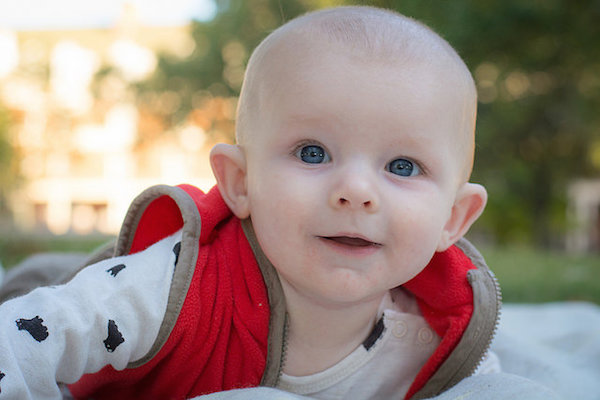
There are other items that come in handy as well. Recently I was photographing a couple and their infant son, and though I had already scouted the location at the specific time the shoot was to take place, I did not take into account one critical element: dew on the ground. I wanted to get some shots of their son holding his head up and looking around, but since the grass was all wet it nearly turned our fun photo shoot into a chore for the parents as well as the child. Thankfully I brought an old piece of canvas along, which not only gave the boy a soft dry surface to lay on, but was also big enough to accommodate the whole family on some wider shots.

baby-canvas

The ground was too wet to lay on, so I asked his parents if we could use a simple piece of canvas. They obliged, and the final result turned out quite well.

If you are taking pictures of children, bring some toys that they can play with, or kid’s books for them to read. Better yet, contact their parents beforehand and have them bring their own favorite toys and books from home. I also like to have some sundry joke items like fake teeth or googly eyes to help make kids smile, which tend to work well for teens and adults too. If your subjects are a bit older, they might want to wear a favorite jacket, bring an artifact such as a football or set of golf clubs, or even have their photo taken with a pet. While you might not be able to provide all of these yourself, a little bit of preparation beforehand will give you an idea of what they want and help you go about planning for the shoot so you are not caught off guard.

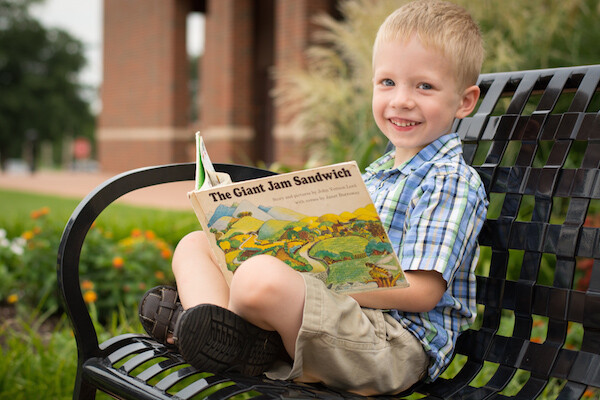
child-book

This boy’s favorite book not only gave him something to do while taking photos, but it will be a nice reminder when his parents look back on this picture years later.

These tips are things that have worked for me, but are there other tips you have for successful photo shoots? Share your ideas in the comments section below.

googletag.cmd.push(function() {
all_slots.push( googletag.defineSlot( “/1005424/_dPSv4_mob-all-article-bottom_(300×250)”, [300, 250], “pb-ad-78623” ).addService( googletag.pubads() ) );
} );

googletag.cmd.push(function() {
mobile_slots.push( googletag.defineSlot( “/1005424/_dPSv4_mob-all-article-bottom_(300×250)”, [300, 250], “pb-ad-78158” ).addService( googletag.pubads() ) );
} );

The post Tips to Help You Prepare for a Successful Portrait Session by Simon Ringsmuth appeared first on Digital Photography School.


Digital Photography School

 
Comments Off on Tips to Help You Prepare for a Successful Portrait Session

Posted in Photography


Tips for Posing Men

08 Dec

In this video clip from a full course, Lynda.com instructor Natalie Fobes talks about, and demonstrates flattering poses for men. Her subject has concerns about his weight and skin, both of which she handles. Watch and find out how!

She does a lot of things I do and recommend to my students as well, such as:

  • Gets permission before adjusting his clothes
  • Gets permission before touching him in any way
  • Explains why she is asking him to do things that might feel odd
  • Tells him that it looks good, he looks good
  • Helps him relax his hand by lightly shaking it

In this second video by Creative Live, instructor Jeff Rojas talks about body language and things to watch for, and also to avoid when posing males. Do you know what clenched fists or hands below the belt line mean? Watch this clip and find out.

Do you apply any of these posing tips in your photography? Do you have any others to add? Please do so in the comments below.

googletag.cmd.push(function() {
mobile_slots.push( googletag.defineSlot( “/1005424/_dPSv4_mob-all-article-bottom_(300×250)”, [300, 250], “pb-ad-78158” ).addService( googletag.pubads() ) );
} );

The post Tips for Posing Men by Darlene Hildebrandt appeared first on Digital Photography School.


Digital Photography School
 
Comments Off on Tips for Posing Men

Posted in Photography