RSS
 

Posts Tagged ‘Tips’

Tips for Black and White Wildlife Photography

16 Aug

South African photographer Heinrich van den Berg once said, “I believe that if black-and-white photography is done correctly, it can convey much more emotion and a deeper meaning than color ever could. It’s as if by subtracting color, the viewer is forced to add his own emotion to the images. Color photography is like a novel that spells everything out in detail, whereas black-and-white photography is like poetry—its strength isn’t in what’s said; it’s in what’s left out.”

Close your eyes for a moment and imagine a deer standing in a forest. Was the image you imagined in color? Most people will visualize the image in color. But are the colors necessary to produce an image of the deer? Let’s take a look at some advantages of wildlife photography in black and white.
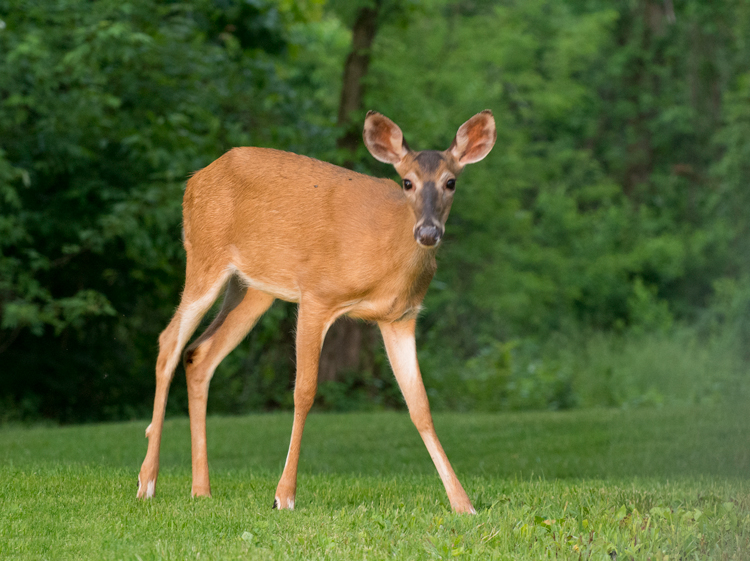
Deer image

Original color image

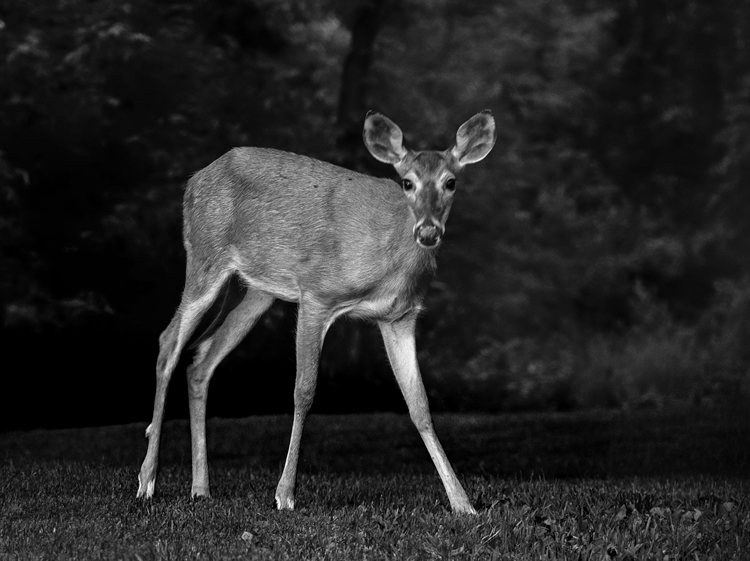
Black and white deer

The black and white processing in Nik Silver Efex Pro 2 in this image converted the green foliage into a dark background.  Now the emphasis is on the deer and the texture of its coat.

Why Black and White?

Color, though admirable, may be a distraction that interferes with the viewer’s ability to see the textures, lines, patterns, and contrasts within an image. Often your wildlife subjects are surrounded by lush green foliage and blue sky backgrounds, and in color photos, the trend is to saturate them. With black and white photos we take the attention away from those colors, and draw it to the wildlife subject. Colorful images may tell a story, while black and white can reveal a more emotional portrait of the wildlife. Color may show the actuality of a scene, black and white is a perception of the captured reality. Black and white can add drama to your wildlife images that color will hide from the viewer.

It is important to note that not every image will make a great black and white one, some images and subjects will require color to make an impact. If color is the purpose of an image –  say, for instance, your subject is a red-headed wood pecker, then black and white may not work for that subject. Some photographers hold the opinion that an image lacking color is a good candidate for black and white conversion; however, even very colorful images may be hiding a dramatic black and white image.
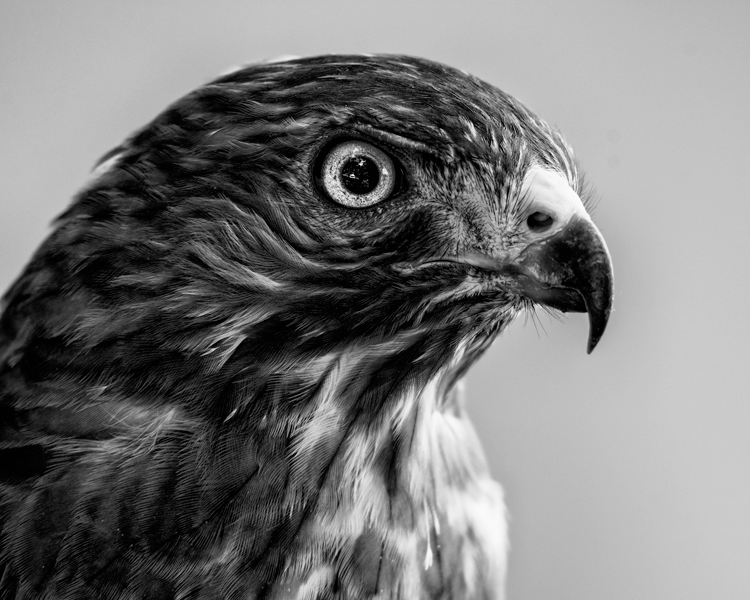
Hawk Eye

The textures, lines and contrast of the feathers create a dramatic portrait of this Broad-winged Hawk.
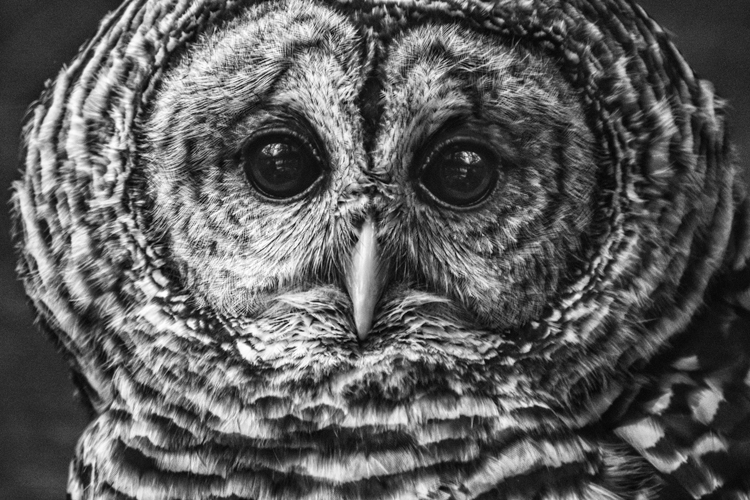
DSC_5418-Edit-Edit

Shooting

Without color, the key ingredients to shaping your image are light, composition, contrast, and tones. When photographing for black and white, lighting can transform an image. Black and white works well in all ranges of lighting conditions. Even the harsh midday sun, (difficult lighting for color shots) can products some fantastic results. How many times on a gloomy, rainy day have you grumbled about terrible lighting? Well, maybe for color photography it isn’t ideal, but the great thing about shooting for black and white results, is that even overcast days can produce some great images. It can allow you to capture the tones and textures of your wild animal subject, features which may be hidden in a color image, shot on a bright sunny day.

Of course, the morning and evening glow hours are going to work great when the low angle of light brings out the textures and lines of wildlife. If you are just starting to develop your skills shooting for black and white wildlife, or you are having problems visualizing your images as you shoot, here is a helpful tip. Most DSLR cameras with allow you to set your picture style to monochrome when you are shooting in RAW. The preview will appear in black and white, but your RAW file will still contain all the image’s color information, that you can use later as you convert to black and white. Stripping out all the color from the preview will help you see the forms of the image without the distractions of color. Use this process to help train your eye to see in black and white.
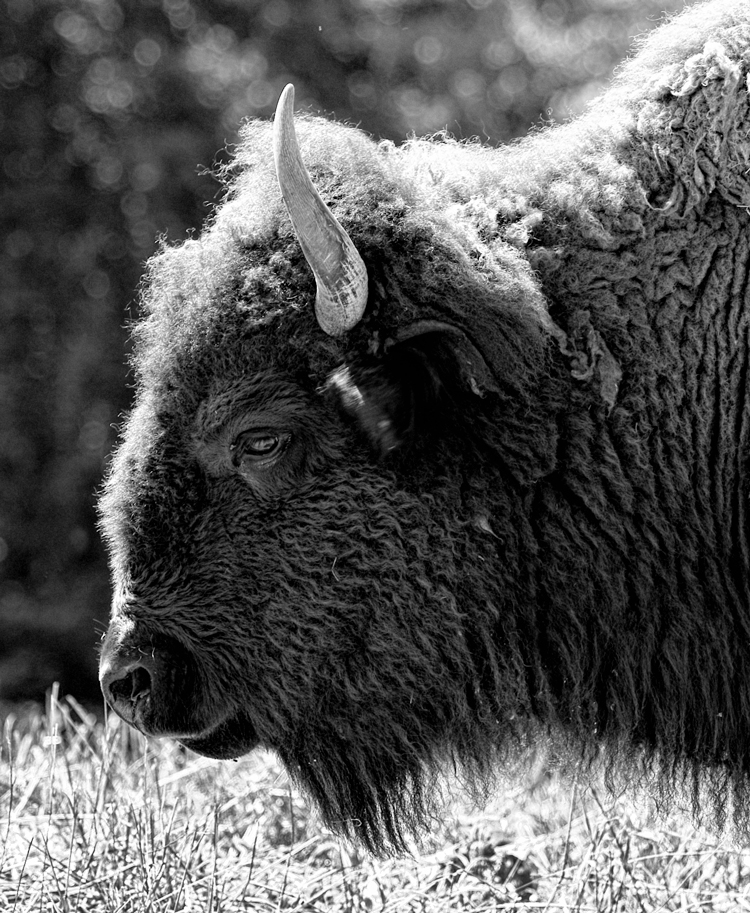
Bison Portrait

In this image, the harsh mid-day sun still produced a dramatically lit portrait of a Bison.
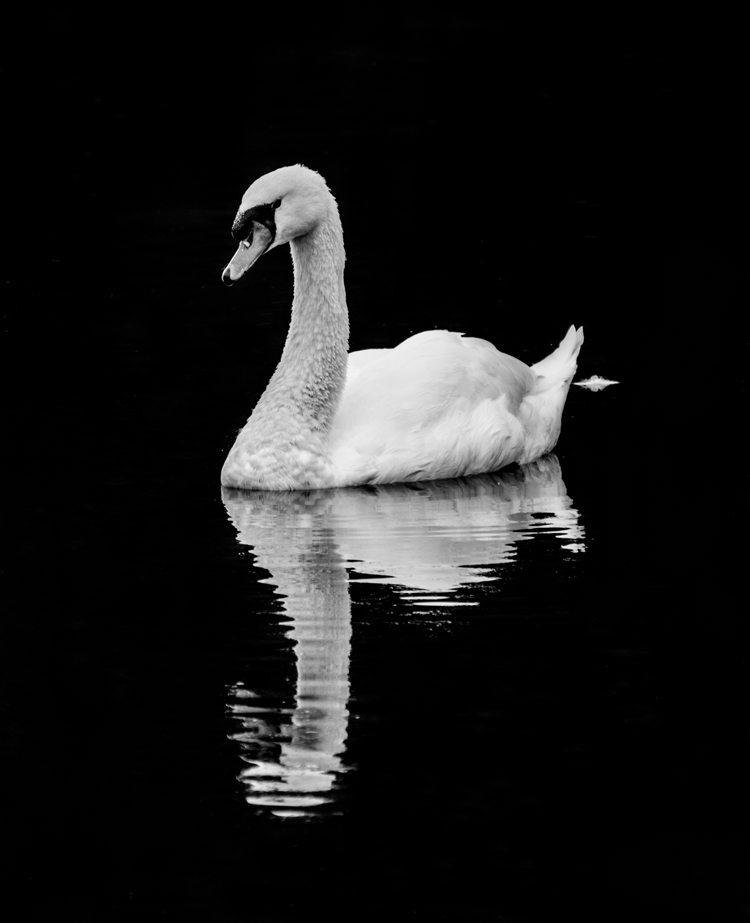
Swan on the lake

When exposing this image to keep the detail in the swan’s white feathers, the background was exposed to nearly black. Converting to black and white required very little processing.

Composition

Composition is even more important in black and white than in color. While a colorful image sometimes hides poor composition, black and white enhances and brings out the composition of your wildlife shot. Use shallow depth of field to isolate the subject, making a dramatic portrait and bringing out the textures of the fur or skin. Remember to use the KISS theory of composition. (Keep It Simple Silly)
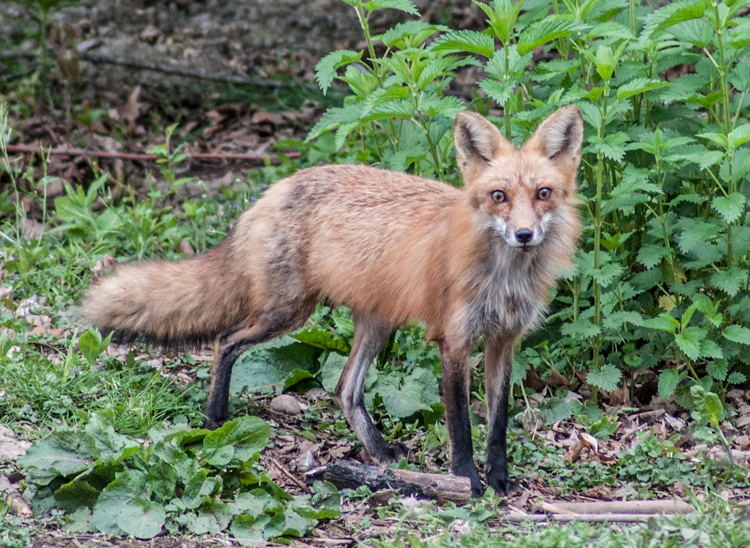
Fox

Original image

black-white-wildlife-photography-fox-final

Without the distractions of color this image becomes a moody and detailed portrait.

Processing

There are too many ways of converting images to black and white to mention them all. But Photoshop, Lightroom and Silver Efex Pro 2 are the three processing means I use the most. Whichever program you use for your conversion, you must learn to take control of the process. Instead of stripping the color out, use the tool in your editing program to turn colors into controlled shades of gray. Different processes applied may produce different emotional reactions to a single image.

As illustrated by the photo of the grazing zebras below, high-key processing creates a cheerful or upbeat image, while a low-key interpretation of the same image reveals a more somber or mysterious aspect to the image. Though a high-key image is very light, it should still have black areas; and conversely, a low-key image is mainly dark but should also contain some white areas.

  • Photoshop: Use a black and white adjustment layer to fine-tune how each color tone is converted to a shade of gray. This is a great starting point, but you may also want to adjust contrast, and dodge or burn areas to dramatize the subject. If you use Photoshop to convert your images to black and white, don’t be afraid to experiment. Never just use the Image Mode – Grayscale to convert your image, that is like “throwing away the baby with the bath water”! You will throw out too much useful color information that could be used to create the mood you are looking for in your image.
  • Lightroom: Using the black and white tab, similar to Photoshop, you can also adjust how each color tone is converted to shades of gray.
  • Nik Silver Efex Pro is a very powerful black and white software. One of its greatest features is the preset effects already preloaded into it. Use one of those presets as a starting point, and follow up with the powerful adjustment panel to really fine tune your images.
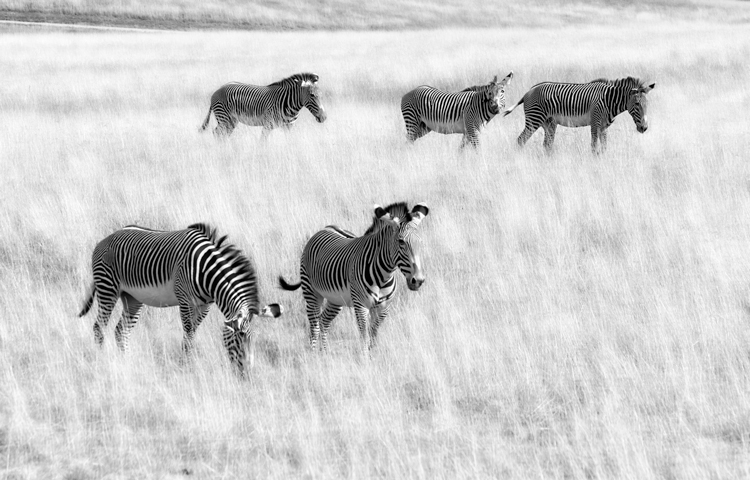
High Key processing

High-key processing in Lightroom creates a cheerful image of zebras grazing in a field. The same image was then opened in Photoshop and the layer was duplicated adding a motion blur.  The layer blend mode was changed to Overlay and a layer mask was added to keep the zebras from being blurred. This gives an artistic effect to the grass.
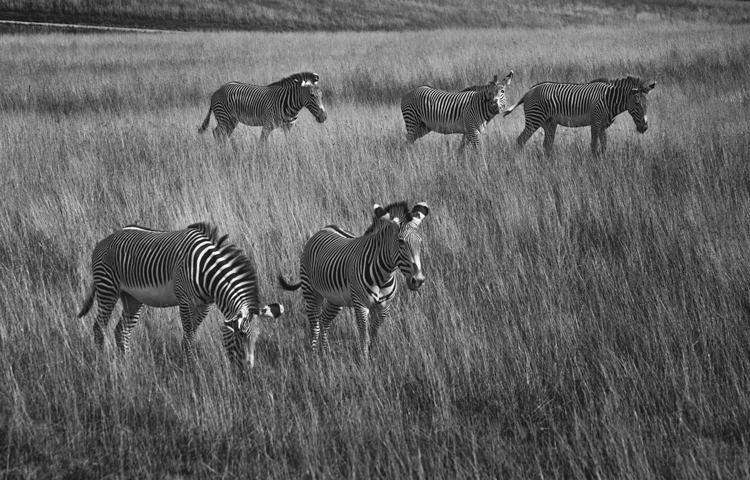
Low Key Processing

Low-Key processing in Lightroom creates a more mysterious effect.

Conclusion

The next time you are out photographing wildlife, look for opportunities to shoot black and white images. What wildlife do you like to photograph? Get out there and discover some stunning black and white wildlife opportunities!

Editor’s Note: This is the second article in a week full of features on black and white photography. Look for 5 Simple Ways to Create Expressive Photos in Black and White earlier today and more daily over the next week.

googletag.cmd.push(function() {
tablet_slots.push( googletag.defineSlot( “/1005424/_dPSv4_tab-all-article-bottom_(300×250)”, [300, 250], “pb-ad-78623” ).addService( googletag.pubads() ) ); } );

googletag.cmd.push(function() {
mobile_slots.push( googletag.defineSlot( “/1005424/_dPSv4_mob-all-article-bottom_(300×250)”, [300, 250], “pb-ad-78158” ).addService( googletag.pubads() ) ); } );

The post Tips for Black and White Wildlife Photography by Bruce Wunderlich appeared first on Digital Photography School.
Digital Photography School

 
Comments Off on Tips for Black and White Wildlife Photography

Posted in Photography


7 Tips for Black and White Portrait Photography

14 Aug

Why would you choose to create black and white photographs in the era of digital cameras that are capable of accurately capturing millions upon millions of colors? Black and white photography seems to be a constant in the history of the medium, with color technology only propagating itself into wide use around halfway between Nicéphore Niépce’s first heliograph and today.

Black and white portrait tips 3201

There’s a lot of debate on both sides of the argument, but for me and many others it’s a simple matter of aesthetics. A good black and white treatment has a way of stripping unneeded information from an image, helping you to emphasize specific elements to your viewer without the distractions color can provide.

Portrait photography is a genre where black and white images can really shine. Like any technique, there are considerations that you should regard that can help to make sure your images have the most impact.

1 – Start with black and white in mind

For many photographers, black and white is more than a creative choice at the post-production stage; it’s a mindset. If you can start the creation of an image knowing that you intend it to be black and white, you can take steps to ensure that all of the elements of a good monochrome image are in place before you press the shutter. Things like contrast in tonality, contrast in lighting, and appropriate expressions from your subjects are all elements that are difficult, if not impossible, to fix after an image is taken.

If you have trouble imagining how an image may look in black and white, try setting your camera to a monochrome setting. While it isn’t recommended to do this for a final image, as long as you shoot in RAW file format, then all of your image’s color data will still be present in the file, and Lightroom and Adobe Camera Raw will reset the photo back to color once it’s imported. Doing this will allow you to have an idea of how an image will work in black and white, while still providing the highest amount of versatility in post-production.

2 – The eyes are more important than ever

Black and white portrait tips 3088

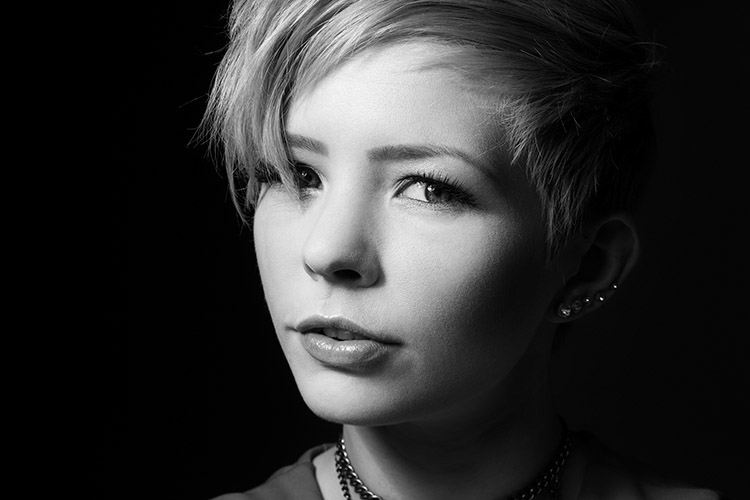
The most important part of the majority of portraits are the eyes. They are usually the focal point that the rest of your image is built around. This is especially true with black and white. With the omission of color, a black and white image often breaks down into graphic forms and shapes. Eyes are shapes that everyone recognizes and they draw immediate focus from your viewers. Make sure that your subject’s eyes are well lit, and focus is critical.

3 – Expressions are emphasized

Black and white portrait tips 3191

Like the eyes, other facial features become more prominent in a black and white portrait. You can use this to your advantage by conveying emotion in your images. Even tiny changes in your subject’s expression can make a difference. Things like a raised eyebrow, a twitch at the corner of a mouth, and smile lines under the eyes can all be used to great effect.

Here is an exercise you can do with your portrait subjects to get a mixture of great expressions. Prepare a list of words or phrases and ask them to react to how they feel to each one. The words you choose can be simple descriptors of emotion like: love, sad, joy, angry and melancholy. For more diverse expressions try more abstract words, or funny ones like: cheeseburger, politics, Teletubbies or Hulk smash. As a bonus, this sometimes works extremely well to lighten the mood when you have a subject who’s tense or nervous during a sitting.

4 – Lighting considerations

Black and white portrait tips 3335

When it comes to lighting a black and white portrait image, there are no hard and fast rules. If you like high contrast images with hard gradations in tone, then choose a harder source of light. If you like soft tones and subtler images, then you want a softer light source.

It’s all about personal preference here. If you’re not sure what yours is, try finding the first ten black and white portraits that stand out to you the most and see if you can deconstruct them in terms of lighting.

5 – Add contrast with light

Black and white portrait tips 3107

If you’re going to create high contrast black and white photos, the best advice is to add it with light, not in Photoshop. Small global adjustments are okay and won’t hurt your images, but definitely do not crank the contrast slider to 100. Try to limit it between +15/-15. For local adjustments, use a dodging and burning technique of your choice. The key point in this, and all post-production, is subtlety.

6 – You can’t save a bad image with black and white

If you’re working on an image that you feel isn’t up to scratch and you ask yourself if it will work in black and white, the answer is probably no. A black and white treatment will often emphasize the flaws that made you question the image in the first place, and a bad photo is a bad photo regardless of its color scheme or lack thereof.

7 – Choose black and white in spite of color

Certain subjects scream out to be shot in black and white. Other subjects may not be so obvious. Bright, punchy colors obviously make for vivid color photos, but by removing the color element you can completely change how a subject or scene is perceived. When you want to ensure your viewer is focused on a particular element, color as a graphic element, can become a distraction. Try removing it.

This can be a difficult concept to understand without seeing it, so I have included an example of a color version of one the images above. Ask yourself: How did your perception of the photos change? What did you notice first in each of the images? Do you feel differently or think differently of it when you view it in color than in black and white?

Black and white portrait tips 3088 colour

Hopefully, you can see that even though bold colors can make for vivid imagery, their absence can as well.

If you’re new to black and white photography, do remember that these are guides and not rules. If you need to stray from them to get the result you’re after, do so without hesitation.

Finally, if you try black and white and you like it: welcome to the addiction!

Editor’s Note: This is one of a series of articles this week featuring black and white photography tips. Look for earlier ones below and more daily over the next week.

  • 5 Simple Ways to Create Expressive Photos in Black and White
  • Tips for Black and White Wildlife Photography

googletag.cmd.push(function() {
tablet_slots.push( googletag.defineSlot( “/1005424/_dPSv4_tab-all-article-bottom_(300×250)”, [300, 250], “pb-ad-78623” ).addService( googletag.pubads() ) ); } );

googletag.cmd.push(function() {
mobile_slots.push( googletag.defineSlot( “/1005424/_dPSv4_mob-all-article-bottom_(300×250)”, [300, 250], “pb-ad-78158” ).addService( googletag.pubads() ) ); } );

The post 7 Tips for Black and White Portrait Photography by John McIntire appeared first on Digital Photography School.


Digital Photography School

 
Comments Off on 7 Tips for Black and White Portrait Photography

Posted in Photography


Freelance Photography Tips from the Experts

11 Aug

We’ve all become a world obsessed with imagery, and this couldn’t be more obvious than the simple fact that the photo heavy social network Instagram currently has 300 million monthly active users. We all see ourselves as amateur photographers, but some of us want our love for a good picture to become far more than a pipe dream. If you’ve Continue Reading

The post Freelance Photography Tips from the Experts appeared first on Photodoto.


Photodoto

 
Comments Off on Freelance Photography Tips from the Experts

Posted in Photography


Tips for Using Speedlights to Create the Right Lighting for Outdoor Portraits

08 Aug

In these two video tutorials brought to us by ExpoImaging, NYC photographer Erik Valind shows two different tips:

#1 – How to create artificial sun with a speedlight

#2 – Creating soft light during midday harsh light

Gear and things mentioned in the videos:

  • ExpoImaging ROGUEGELS-U Rogue Photographic Design Rogue Gels Universal Lighting Filter Kit
  • Rogue Photographic Design ROGUERELG2 FlashBender 2 Large Reflector, Bounce Flash, Snoot, Gobo (Black/White)
  • Other things available from Rogue Photographic Design

googletag.cmd.push(function() {
tablet_slots.push( googletag.defineSlot( “/1005424/_dPSv4_tab-all-article-bottom_(300×250)”, [300, 250], “pb-ad-78623” ).addService( googletag.pubads() ) ); } );

googletag.cmd.push(function() {
mobile_slots.push( googletag.defineSlot( “/1005424/_dPSv4_mob-all-article-bottom_(300×250)”, [300, 250], “pb-ad-78158” ).addService( googletag.pubads() ) ); } );

The post Tips for Using Speedlights to Create the Right Lighting for Outdoor Portraits by Darlene Hildebrandt appeared first on Digital Photography School.


Digital Photography School

 
Comments Off on Tips for Using Speedlights to Create the Right Lighting for Outdoor Portraits

Posted in Photography


5 Simple Tips for Mastering Outdoor Photography

08 Aug

While it is relatively easy to go outside and just “point and shoot,” there are better ways to take pictures in the great outdoors. Snapping photos in the outdoors rather than indoors brings a whole new list of considerations to deal with. From the weight of your pack to the eventual downpour, there are certain preparations you can take before Continue Reading

The post 5 Simple Tips for Mastering Outdoor Photography appeared first on Photodoto.


Photodoto

 
Comments Off on 5 Simple Tips for Mastering Outdoor Photography

Posted in Photography


Tried and Tested Tips for Photographing Kids

07 Aug

Why are kids so seemingly magical to adults? What is it about those young, wild, expressions in photographs that makes us love them so much? It’s their honesty and unwavering outlook on life.

Kids show their emotions freely, and share their feelings with genuine truthful expressions that we love to see. Whether they are excited or frustrated, they are always being honest and letting their personalities shine as they push their limits of learning in any new experience.

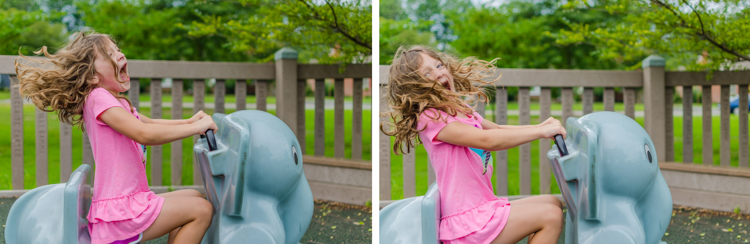
Tips-Photography-Kids-45

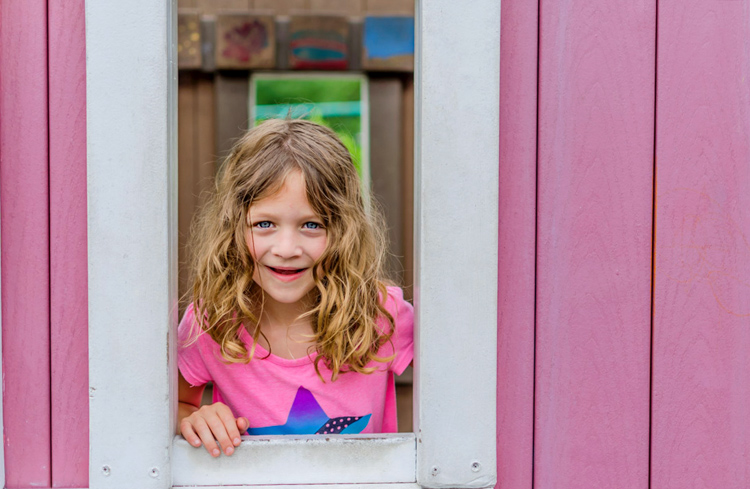
Though it’s something we witness in all children most the time, it is rare to capture a child’s magic in a photograph, the way we actually see it with our eyes. In this article you’ll learn about the psychological aspect of photographing children, with tips and tricks to show you how to create the perfect opportunities to capture those magical expressions and great personalities of kids.


Learn to Control the Scene

As with most photography, before you pick up the camera, become aware of what’s going on in your scene. When photographing children, it is important to know how much control you already have, or can possibly create.

Here are a few things to consider:

  1. Location: Are you outdoors or indoors?
  2. Limiting movement: Is the area confined to a single space with toys the child can play with?
  3. Allowing free movement: Are they running around in a big backyard with open space?
  4. Distractions: What in the environment could become a distraction or problematic?
  5. Get their attention: What can you use in this environment to help get the child’s attention?

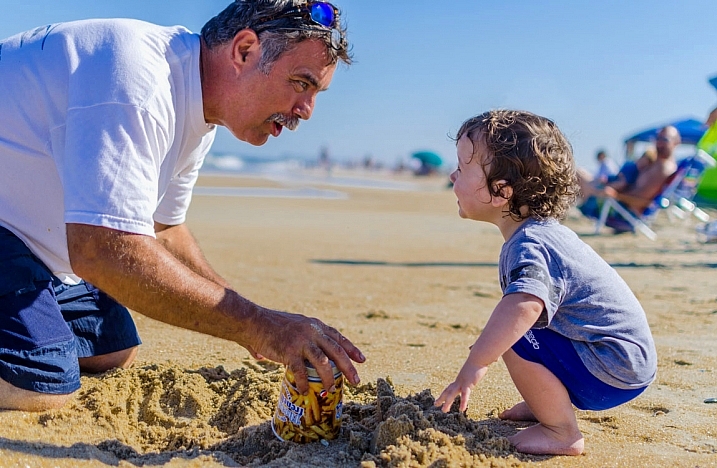
Tips-Photography-Kids-4

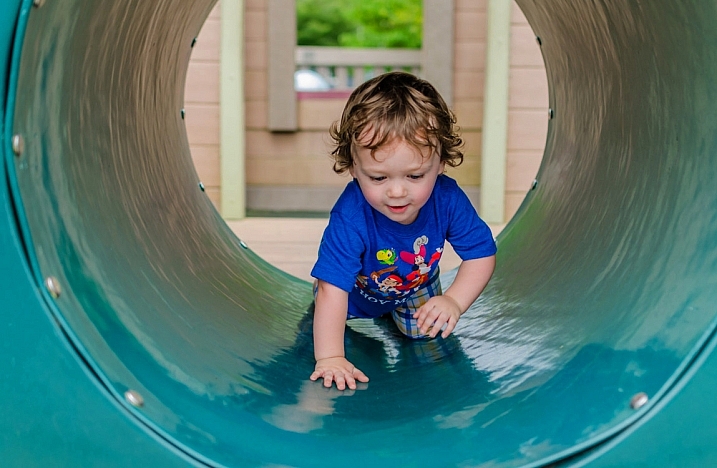
Many times you can capture children before they really notice, you if you plan it right. This gives you the chance to witness the way they act while they are in their own little worlds, with their big imaginations. Be careful not to let the camera become a distraction. If they see you photographing, you don’t always know what immediate reaction you are going to get.

Assess your scene, and start to plan ahead, by preparing for the way you will introduce yourself. First impressions are important. Kids attach to their first instinct all the time. Get down on their level to say hello. The next thing to keep in mind is that you want to force the control as little as possible. This means the more natural the scene is, the more genuine their expressions.

How is the child reacting to you?

  • Do they acknowledge you?
  • Are they playing with you?
  • Are they playing on their own?
  • Are they really hyper active, or are they quiet?

You want to engage with them by relating to them in the moment. Begin by mirroring their behaviour. If the child says hello and wants to play right away, then you’re ready for a game. Sometimes children will be shy or unsure at first. It may take a few minutes before they are willing to trust. This is normal, and it is actually a good thing. So act that way too.

The Best Secret to Photographing Kids

For the purpose of a photo shoot, during your entire interaction with the child, you want to pretend like you are playing a game. Whether it’s a game you make up, or one they already know, make it objective and give the game a winning goal. Be enthusiastic about playing with them.

A game is fun and engaging; it is also a great distraction. Decide what type of game is best for the moment. You can always change the game in a split second. This is good to keep in mind as kids tend to change their behaviour, and mood in a split second.

Tips-Photography-Kids-38

It is always a fun challenge to see how well you can create a specific scenario in a scene. When playing the game, give it a twist or a surprise, addition to working in a benefit for your photo shoot. For example, you may want to direct them towards more light. Depending on the positions you want the kid to be photographed in, you can add that direction as a command into the game.

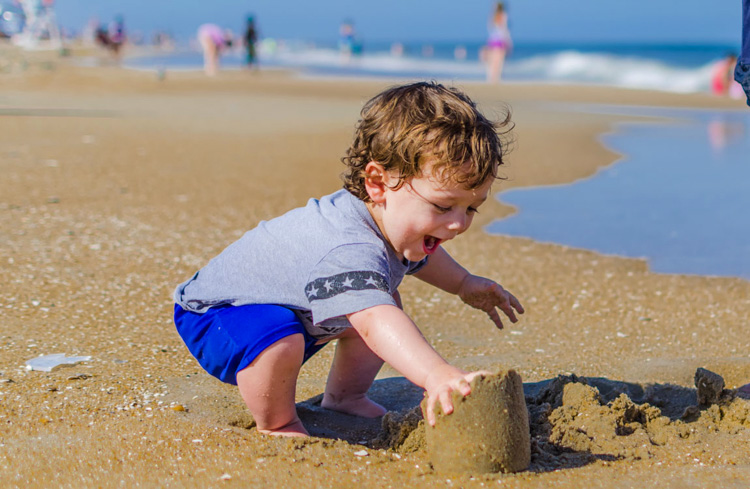
With a game, the beauty of photographing children is knowing you are getting a wide range of expressions and emotions. Sometimes they will be pouty, grumpy or not listening. Other times they can absolutely surprise and amaze you. No matter what, the kid’s personality will shine, and you will be prepared to capture whatever spontaneous reaction they give.

Fun Games to Play

A ball. A single game of rolling or tossing the ball. Always in conversation with them and full of enthusiasm, say, “One… two… three!” and pass the ball as you say three. When you act, notice how they react. When the time is right and it is your turn, alter the moment by giving a small command.

Try asking them to sit a little to the left after a few rounds of tossing the ball, pointing to the spot where you want them to sit. See if they listen to the direction. Say, “Okay, now lets try sitting right there (point the the spot). Great job, are you ready? One… two… three!” Then toss the ball. Doing this will psychologically instill a listening pattern any time in the near future when you say, “Three!”.

photographing children photography tips,

Keep using this method of adding in a twist to offer directions. Once you have them in the right place and pose, you can use the 1-2-3 method to grab their attention for the shots you want. When you get the ball, hold it at camera height and say it again. On three, snap the shot. Something always happens on Three!

Other Great Games

Simon Says: This works well with children four and up. Be animated with them as you participate. Make the moves simple and funny such as, “Simon says – pinch your nose”. Be ready for laughs with this one. Again, continue to test the waters and direct them with small commands during the game.

One toy at a time. If they have their own toys, or you give them ones to play with, let them choose whichever is most interesting to them. Make that toy seem like the coolest thing you’ve ever seen before. Turn it into a game. Use the method of 1-2,-3 in the game to prepare for the pause.

Tips-Photography-Kids-7

Use the camera as a story. It’s a magic camera. Make up a trick. Can you see my eye in this camera? What color is my eye? Is it purple? Be interesting and funny. Give them a reason to react to your words.

Create interest in your scene, and see how they react to what is going on. Point out something interesting around you. Find your point of excitement and go with it until they loose interest. No matter what game you choose to create in the moment, remember you are using it to take control of the situation as naturally as possible.

When all else fails, be a kid!

Ignore the camera to just play for a little while. Walk away and stop playing altogether. Remember you can mirror their actions. Act like them, and you will get a reaction that will make them relate and engage. Just play, don’t think about shooting for a few minutes. It’s all about engaging with their true personality to bring out the best in each kid.

Playing the first game for at least a minute or two before testing your chance to take a photo, is the best way to build trust with a child, especially if you’ve just met them. If you’re photographing your own children, or if the child is more stubborn and/or shy, it might take as long as 10 minutes of playing a game before they are comfortable, and being themselves, even if they are engaging with you.

Your goal is to be engaged without totally taking over the scene, just controlling the moments that are necessary to prepare for a natural expression to capture. You are building trust. Don’t loose patience. Take your time. It’s important to remember you are creating a simple game that allows you to gain control for just long enough (and in the right position) to snap the shutter.

No Games Needed

Tips-Photography-Kids-44

Sometimes the best games are the ones they make up. Always set guidelines for playing but let kids be kids. Ask them what they want to do. Remember to mirror their behaviour, body language, and expressions when you can. As you build that trust you create great photo opportunities for moments coming up.

Many times you don’t even need a game at all. If they are entertaining themselves, that gives you a unique opportunity to become more intimate, and allow their surroundings to just be as they are without needing control. Photograph around the kids without asking for their attention. Instead just have a conversation, or say nothing at all, and watch expressions change.

What expressions do you notice? Often the best ones are not necessarily big, joyful smiles. Look for the soft, serious expressions as you engage by asking questions.

Get your camera ready

Up until now we have discussed very little about the actual process of taking photographs. The above information is the most important part. Once you master patience and the technique of controlling the scene, you are guaranteeing yourself beautiful, and unique portraits of kids. But what’s equally as important, is your role as the photographer.

photographing children photography tips,

As the game is being played, you have the responsibility of making sure your camera is set, and you are in the right position capturing the right angle at any given moment. These tricks will help better prepare you for that role.

First thing is first. Camera settings must be accurate. If they aren’t on point, all those beautiful expressions disappear in the blink of an eye. Most of the time, the important camera setting when photographing children is aperture. The next most important aspect is always the light.

Try this:

Set your aperture between f/2.8 and f/4.5. This is a a very wide aperture which gives you a soft, shallow depth of field. This depth of field bring focus to the child while also allowing for more light to come in through the lens.

From there, choose your ISO based on the lighting conditions, and then find a shutter speed that balances the light to create a proper exposure. Remember, keep your ISO as low as possible to avoid noise, and choose a shutter speed as high as possible to freeze the movement of playful kids.

Tips-Photography-Kids-47

Once proper exposure is achieved, you shouldn’t have to change your settings unless your intention, or the light changes. For example, if you decide want to capture the movement of a scene, your camera settings may change. 

Tried and Tested Tips

There are many simple things that you can control anywhere anytime even if you can’t control the kid in a photo shoot.

  1. Wear comfortable clothes. Clothes can get in the way when you’re trying to move around with a playful kid. Be prepared to move a lot. Wear clothes that you don’t care about getting dirty, and that have pockets to hide things.
  2. Think about the child’s size in relationship to you and the entire scene. Think about their relationship to what they are doing, or playing with. Use these elements to your advantage when shooting.
  3. Get down on their level and when possible, shoot up at them making them look bigger than life.
  4. Change your angles to create interesting view points that are unique to the scene, and incorporate more or less of the scene to add elements that accentuate the child’s size.
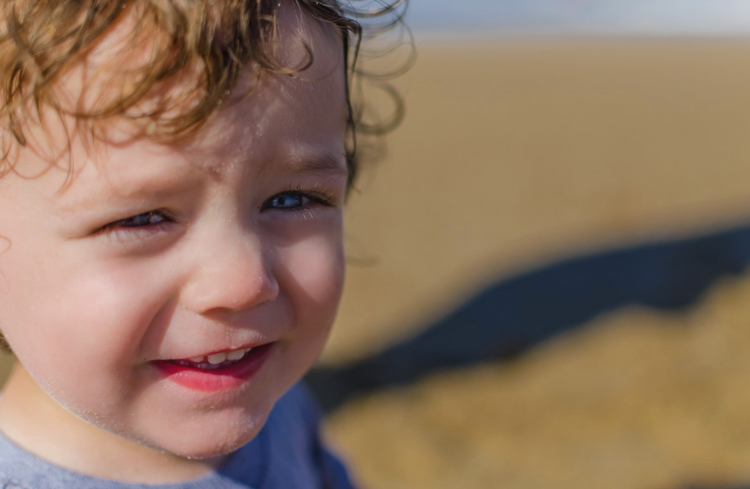
  5. Get in close. Zoom in, or walk close and capture their tiny features. When a child is distracted by a toy this is a perfect opportunity to get up-close and personal.
  6. Do your best to be the only one who is giving commands. Politely prepare the parents for not helping unless you ask for it. Then only ask for their help as a last ditch effort.

How Do You Stop “CHEESE!” ?

Tips-Photography-Kids-16

In the digital world we live in today, most kids are used to cameras, and many times they will create habits of specific, forced facial expressions, and fake poses that aren’t always so cute to capture. While smartphones and tablets are here to stay, so are the fearless kids who use them as a chance to over exaggerate, and get attention.

First, don’t acknowledge it as a bad thing. Don’t even mention it. Instead, change the game. Change the question. Change the whole topic. Give them something else to think about. When they do continue to over exaggerate, you can make it a game to not smile, then your challenge is to make them laugh, with your camera ready to go at a moment’s notice of course.

Be patient with them, and with yourself. Think like them. When they are upset, give them space. If they ignore you, ignore them. Stand back, capture them from afar as you slowly gain trust. All most kids ever want is a little attention. During a photo shoot, you are creating a special time when you can use these tried and tested tricks to give them just that, your undivided attention.

As you gain their trust by playing these games to naturally control the scene, you are creating the perfect scenario to capture real natural expressions, emotions and behaviours that we all love to witness in children. That’s how you capture their magic.

Tips-Photography-Kids-41

Kids are one of the most challenging, yet rewarding subjects, to photograph. I am always up for learning new techniques. Do you have any other great tips or tricks for photographing kids by engaging with them and bringing out their unique personalities and magical expressions?

googletag.cmd.push(function() {
tablet_slots.push( googletag.defineSlot( “/1005424/_dPSv4_tab-all-article-bottom_(300×250)”, [300, 250], “pb-ad-78623” ).addService( googletag.pubads() ) ); } );

googletag.cmd.push(function() {
mobile_slots.push( googletag.defineSlot( “/1005424/_dPSv4_mob-all-article-bottom_(300×250)”, [300, 250], “pb-ad-78158” ).addService( googletag.pubads() ) ); } );

The post Tried and Tested Tips for Photographing Kids by Danielle Werner appeared first on Digital Photography School.

Digital Photography School

 
Comments Off on Tried and Tested Tips for Photographing Kids

Posted in Photography


5 Tips for Golden Hour Photography

06 Aug

It’s pretty much an accepted fact that the earlier and later parts of the day are best for photography, but if you want the absolute richest, warmest, most beautiful light, the hours directly following sunrise and leading up to sunset – known as the golden hours – are prime time for natural light.

This is when the subtle golden light from the low-hanging sun bathes the world in a warm glow, and shadows become long and dramatic, but not harsh.

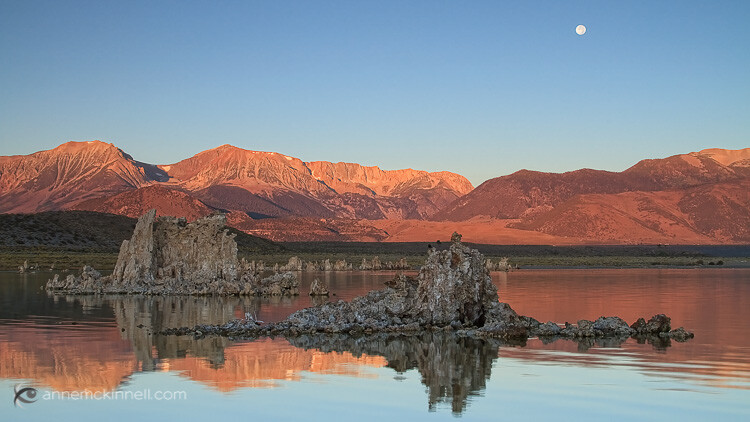
Mono Lake, California, by Anne McKinnell

Those hours can be short-lived, though as once the sun starts to rise or set, it isn’t long before it climbs too high, or disappears altogether. To help you get every second out of each golden hour, consider these tips when you go out shooting.

1. Be There

The first step to making the most of the golden hours is knowing exactly what time that magic light is going to happen. Because the golden light is caused by our view of the sun, the timing will change with the seasons. Exactly what time the sun passes over the horizon depends the time of year and your location.

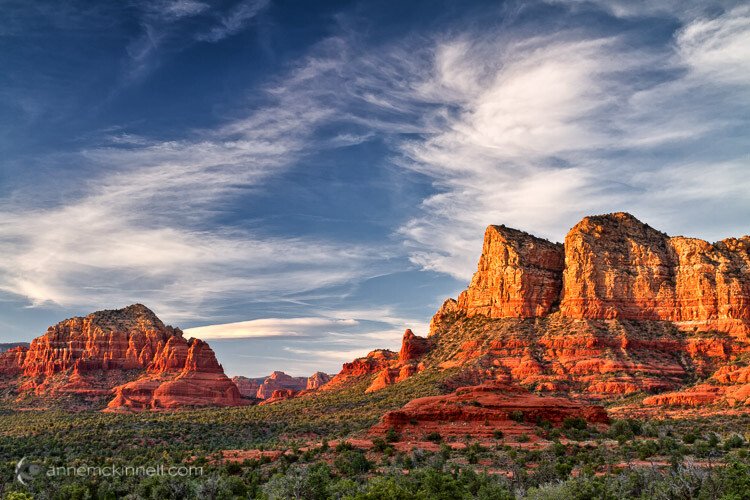
Sedona, Arizona, by Anne McKinnell

The time of sunrise and set is easy to find in your newspaper or online and that is a good place to start to calculate when the golden light will happen. But golden hour may not be anywhere near as long as an hour depending, on the season and your location. For example, near the equator, the sun rises quickly and you may only get golden minutes. On the other hand, in far northern locations the sun may not rise very high in the sky at all and you might get golden light all day.

You also need to watch how the clouds are forming throughout the day, since clouds on the horizon will cut your golden hour short.

2. Prepare Early

The golden hour (or minutes) can pass very quickly, so if you’re not already out shooting when the golden light starts, it’s likely to be over by the time you find your subject, choose a composition, set up your camera, and take the shot. If you know in advance what time you need to be there, you can plan ahead. Go out a couple of hours beforehand so you’ll have time to get to your location, get set up, and be ready to take the photo by the time the horizon starts to glow.

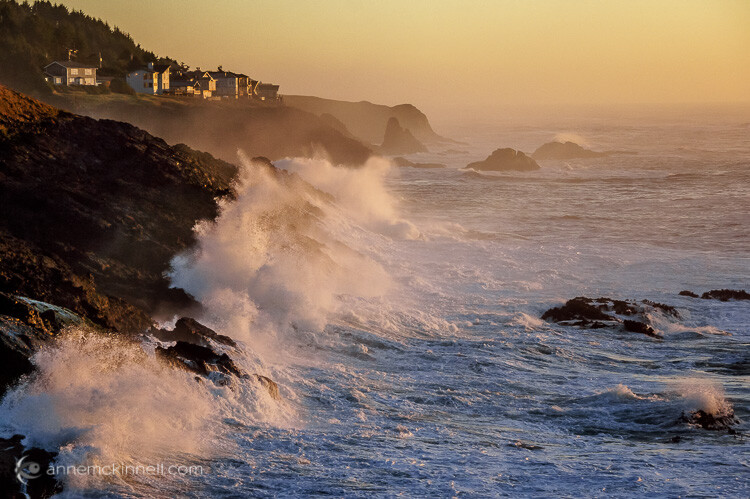
Depoe Bay, Oregon, by Anne McKinnell

By doing this, of course, you have to think into the future a bit. Rather than compose your image based on where the sun is, you must arrange your frame according to where the sun will be. To do this, think about the path the sun takes through the sky. It rises in the east, so you know where you can expect to see it first, and because it sets in the west you know which direction it’s moving. You can even find out the exact position where the sun will set on the horizon using various website and apps. Plan your shots with this information in mind. A compass will come in handy. Compose your photograph where the sun is going to be, then just relax and wait for the moment to present itself.

3. Balance the Exposure

The contrast between light and shadow isn’t as extreme during the golden hours as it is in the middle of the day, but there can still be a huge tonal range between highlights and lowlights (shadows). Especially if you’re trying to capture the sky itself in the picture, its brightness will almost certainly overpower the scene below it.

There are many ways to balance a difference in brightness between two parts of your composition. Bracketing your shots is a good start – use your camera’s exposure compensation feature (+/- button) to take several pictures of a scene with different levels of brightness. There might be a perfect exposure setting that captures both light and shadow areas.

Organ Pipe National Monument, Arizona, by Anne McKinnell

If you shoot in your camera’s uncompressed RAW format you’ll be able to individually adjust your photo’s highlights and lowlights in post-processing, reducing the contrast while preserving as much detail as possible. This way, if one area of your photo is too dark and another is too bright, you can tone down the whiter shades while bringing up the darker shades to create a well-balanced image. This level of control isn’t possible with compressed JPG files, which don’t save the subtle information in those areas.

If the sky is consistently too bright in your photos, consider using a graduated filter that is tinted at one end, but fades out and is transparent on the other. This will reduce the exposure on only half of the image. By putting the tinted half at the top it will darken the appearance of the sky.

Another option is to take your bracketed shots and combine them in post-processing to make a high dynamic range (HDR) image (Merge to HDR in LR or another method).

4. Use Fill-Flash

Rather than take light away from the brighter areas, your other option is to add light to the darker parts instead. You can do this with a continuous light source like a lamp. Moving the light closer to the subject will make it brighter, and pulling the light away will dim it.

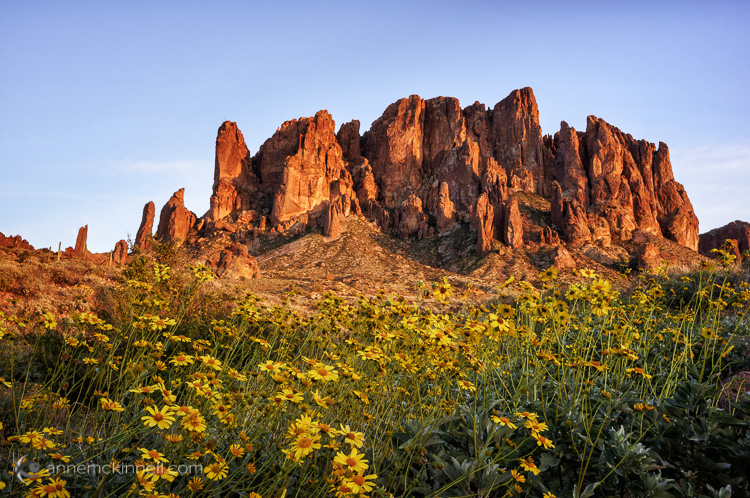
Superstition Mountains by Anne McKinnell

Of course, if you’re outside you probably don’t have a lamp on hand. What you probably do have, though, is your on-camera (or off-camera) flash. Flash doesn’t always have to act as the main light source in a picture – it can enhance an existing light source (such as the sun) by simply adding light into the shadow areas of a photograph.

Flashes also don’t have to be used at full power. Nearly every camera will have a Flash Compensation option. This gives you the ability to turn the brightness of your flash up or down. A dimmer flash will still add light to your scene, but it won’t be strong enough to overtake the primary light source and create new shadows of its own. Using it in this way is known as fill-flash. When your subject is backlit, such as by a fiery sunset, use this method to prevent silhouetting. Bracket your shots using different flash settings to achieve the right balance of brightness between the foreground and background.

5. Set the Colour Temperature

Combining two light sources can cause other complications though – particularly with the white balance. Every light source has a different hue, or colour temperature. Incandescent bulbs have a yellow/orange (warm) cast, while fluorescents are sort of blue/green (cool). Our eyes adjust to those slight shifts on their own, but a camera has to measure the balance of the light so it can alter its colours, and ensure that a white object looks white and not yellow/orange or blue/green. Modern cameras can do this automatically, or you can manually select what kind of light to balance the camera to (daylight, indoor light, candlelight, etc.).

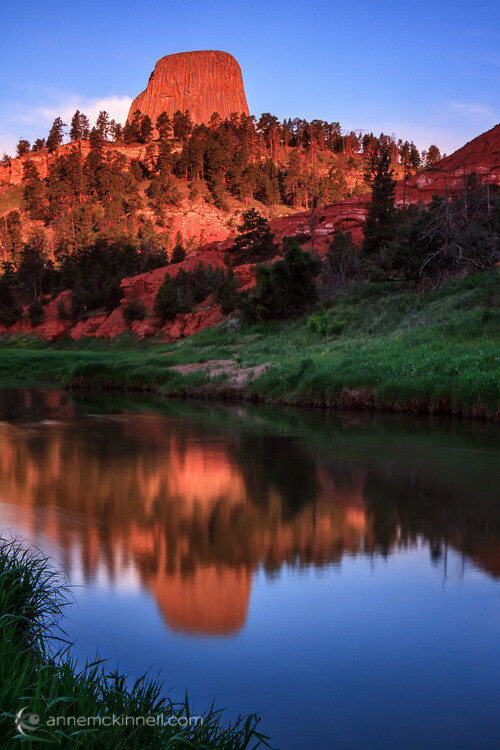
Devils Tower, Wyoming, by Anne McKinnell

The golden hours have a lot of warm coloured light, so if left on auto white balance, the camera will adjust its colours to be a little more blue to compensate. However, if you add in the light of a flash, which is cool in tone, one of two things will happen: the camera will keep the same white balance setting as before, and the flash’s light will appear even more blue, or the camera will re-adjust itself to the white balance of the flash, causing it to look normal but the rest of the picture to appear more orange.

When using two different light sources, it’s important to notice the colour temperature of each. Then, decide which of them you want to appear neutral, and which one should retain its natural colour. Rather than keeping your camera on auto white balance, set it to the type of light you want neutralized. If you shoot in RAW format, this can also be changed in post-processing.

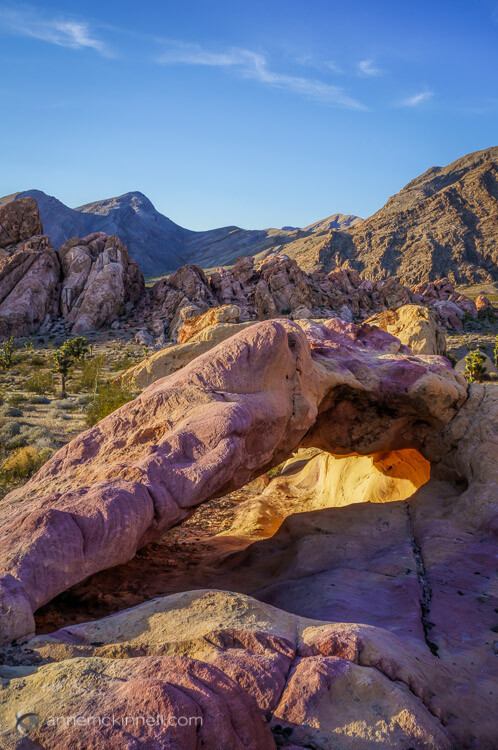
Arch at Whitney Pocket, Nevada, by Anne McKinnell

Remember, golden hour is not sunset or sunrise, but shortly before and after those times when your subject still has direct light falling on it. The magical golden light will transform your photos from ordinary to extraordinary. It’s all about the light!

googletag.cmd.push(function() {
tablet_slots.push( googletag.defineSlot( “/1005424/_dPSv4_tab-all-article-bottom_(300×250)”, [300, 250], “pb-ad-78623” ).addService( googletag.pubads() ) ); } );

googletag.cmd.push(function() {
mobile_slots.push( googletag.defineSlot( “/1005424/_dPSv4_mob-all-article-bottom_(300×250)”, [300, 250], “pb-ad-78158” ).addService( googletag.pubads() ) ); } );

The post 5 Tips for Golden Hour Photography by Anne McKinnell appeared first on Digital Photography School.


Digital Photography School

 
Comments Off on 5 Tips for Golden Hour Photography

Posted in Photography


Lead Finger: Incredible Miniatures Carved Out of Pencil Tips

30 Jul

[ By Steph in Art & Sculpture & Craft. ]

pencil carvings 3

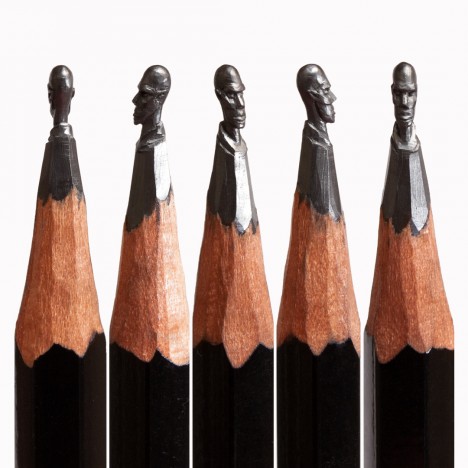
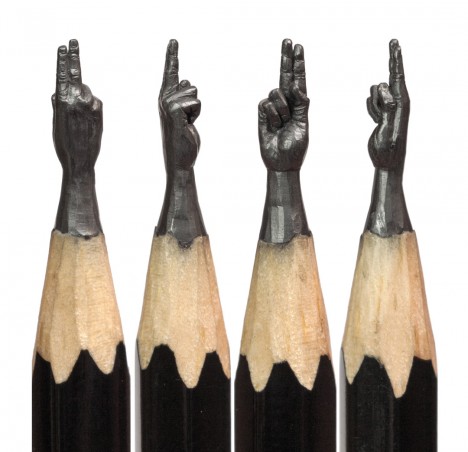
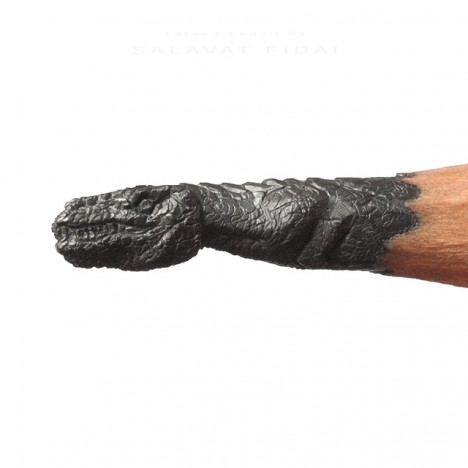
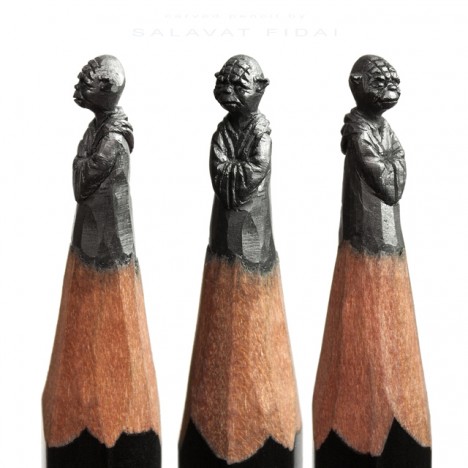
Eagle feathers, the folds on Yoda’s robe and individual bricks on iconic buildings are among the impossibly tiny details captured in pencil lead by miniaturist Salivat Fidai. The Russian artist uses an X-acto knife to carefully scrape away minuscule shavings of graphite, revealing everything from realistic dinosaur heads to the Eiffel Tower.

pencil carving 5

pencil carving 4

Sped-up videos on Fidai’s Instagram give us a look at the process, which starts with scraping away an inch or two of wood to reveal the graphite core. The artist creates the basic shape of each sculpture and then makes the refinements. This technique requires not just an eye for detail but a very light hand as well, to avoid putting too much pressure on the lead and snapping it.

pencil lead carvings 1

pencil carving 9

pencil carving 8

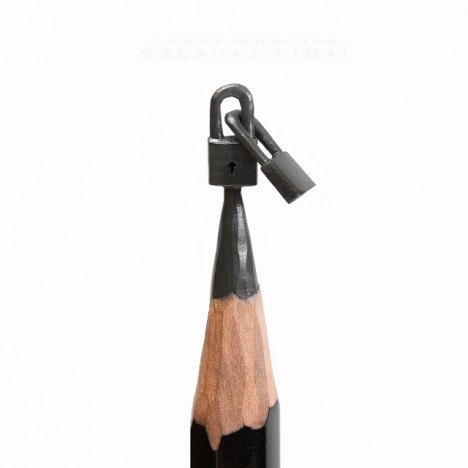
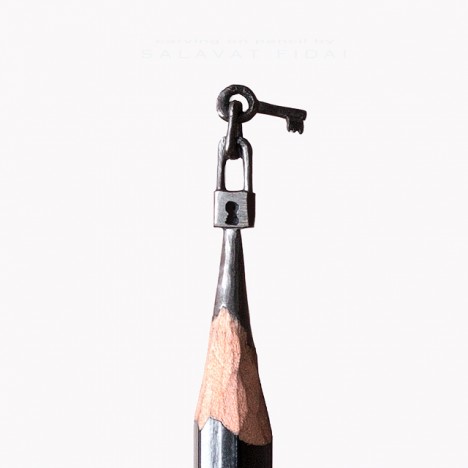
They’re all cool, but perhaps most impressive are the ones featuring little pieces that have been carefully separated from the main graphite core, like this lock. Many originals are up for sale at the artist’s Etsy shop.

pencil carvings 11

pencil carving 6

pencil carving 7

Another artist creating similar works is Dalton Ghetti, a carpenter by trade who uses sewing needles and razor blades to carve entire chains of graphite as well as other sculptures, all without the benefit of a magnifying glass.

Share on Facebook


[ By Steph in Art & Sculpture & Craft. ]

[ WebUrbanist | Archives | Galleries | Privacy | TOS ]


WebUrbanist

 
Comments Off on Lead Finger: Incredible Miniatures Carved Out of Pencil Tips

Posted in Creativity


10 Tips for Photographing Strangers

28 Jul

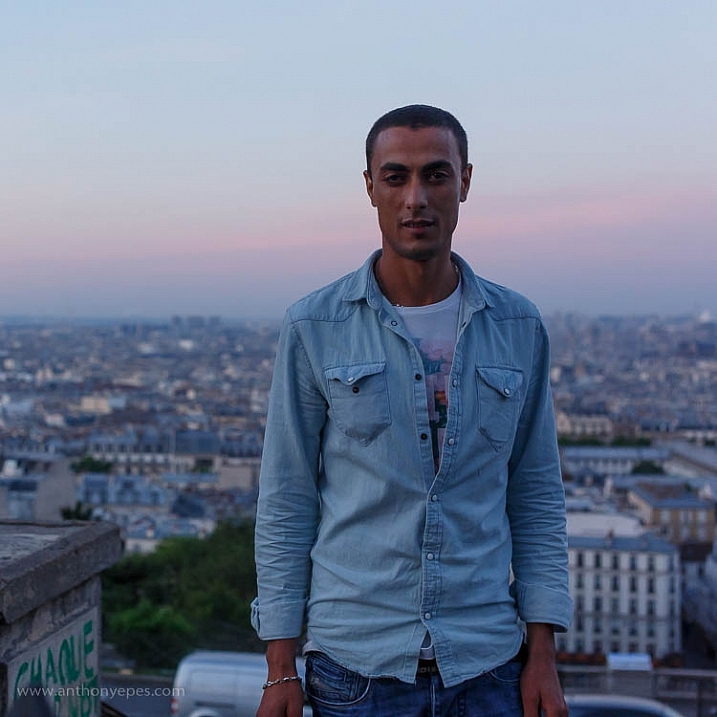
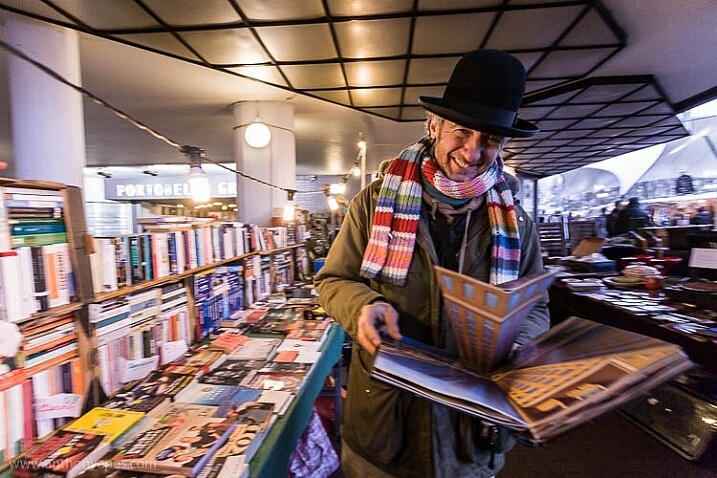
I do a lot of wandering at dawn, taking photos of the city as it wakes. Mostly I am on my own, but occasionally I come across someone, a worker or a person coming home from a party. In Paris, a few summers back, I came across this guy.

AEP_DPS_strangers_001

“Take my photo, friend!” he said to me.

So, of course, I did. He was brash, but when I was done he hugged me and carried on with his early morning adventures.

If only all interactions with strangers, when I’m out with my camera, could be that easy! But, unfortunately, they are not. So when you don’t have random strangers accosting you on the street, here are some thoughts on how to get amazing shots of people you don’t know.

Tips for photographing strangers

Let’s start with what holds most people back from approaching that cool looking stranger, or from raising their camera when they see a great shot of interesting people.

1 – Dealing with your fear

Having fear come up when you are approaching strangers to photograph is totally normal. All photographers who do this have experienced fear, and may continue to. Sometimes we give in to fear and walk away without the shot, but if we can get through it and push ourselves to do what we love, then gradually the practice of photographing strangers becomes much easier.

When you look up the definition of fear it says it is: an unpleasant emotion caused by the threat of danger, pain, or harm. Now I have occasionally been shouted at when out and about – usually in situations I would expect to be shouted at, like in an Italian market where people were selling fake designer handbags – but I’ve never had a threat of danger. So I like to think – “Okay fear, there is nothing that is likely to cause me pain or harm, I’ll just let you hang around until you feel the urge to go.” It probably sounds weird talking to your fear like that, but it works for me. Just letting it be there until it drifts away on its own.

AEP_DPS_strangers_009 EXTRA PHOTO

2 – The secret

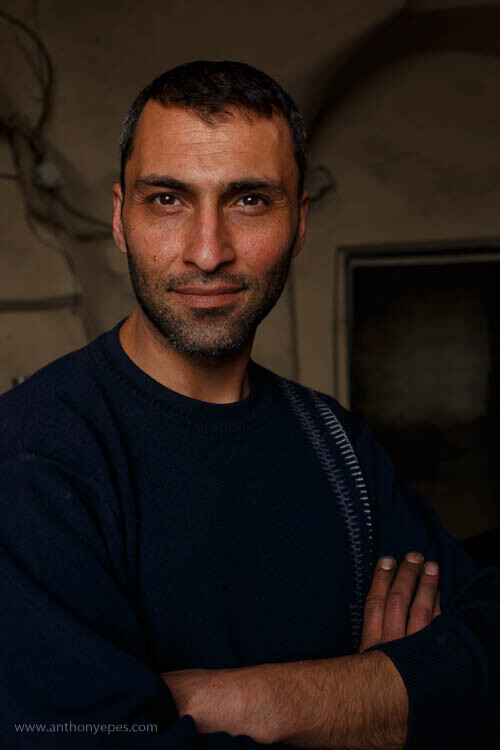
But actually there is a secret to this – most people are not just happy to be photographed, they love to be noticed. It’s a massive compliment to them that you have sought them out and want to take their picture. This is your secret key!

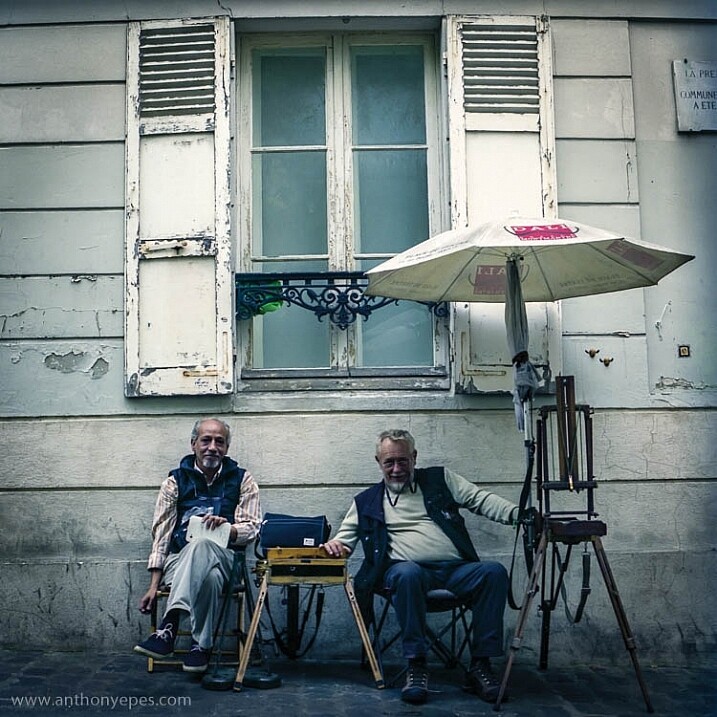
I was wandering around Montmartre in Paris about 5 a.m. and walked past two men having their early morning coffee and chatting. They looked at me curiously, and to be honest I faltered. I walked straight past them. A language barrier can sometimes add to the intimidation. But I knew if I didn’t go back I’d be kicking myself all day. So even though I’ve been doing this for twenty years, even though I’d photographed hundreds, if not thousands of strangers, the fear does sometimes return. Just don’t let it get in the way of taking shots of those awesome strangers that you see!

So I went back and smiled at them. They smiled back, and I gestured to my camera. They both nodded and I took a few shots. It took a minute or two at most, and I loved the result:

AEP_DPS_strangers_002

3 – Break down your fear into bite sized chunks

Diane Arbus talked a lot about her fear of photographing strangers. She described spending a summer hanging around a park in the hope of getting up the courage to talk to a group of people who hung out there most days. Gradually over days and weeks she started to get to know them. Her constant proximity helped to make them trust her and she started to chat to them. Over time, she developed a relationship, and it was only then that she introduced the camera. Because they trusted her she was able to get some stunning portraits of people.

“If I were just curious, it would be very hard to say to someone, ‘I want to come to your house and have you talk to me and tell me the story of your life.’ I mean people are going to say, ‘You’re crazy.’ Plus they’re going to keep mighty guarded. But the camera is a kind of license. A lot of people, they want to be paid that much attention and that’s a reasonable kind of attention to be paid.” Diane Arbus

4 – Be genuine, be human

I’ve had a few occasions where people have been sticking cameras in my kids’ faces, snapping away without asking me or my wife, and it has really irked me. There are photographers who seem to think that anything and everything are your subjects, regardless. I know that the law is on your side in most countries (see note at the bottom) but I don’t think it’s respectful to just treat everyone as a subject regardless – and I think people can feel if you are being respectful of them as human beings.

I will always show the subject the photo if they want to see it and give them my business card or take their details so I can send them photos.

AEP_DPS_strangers_EXTRA PHOTO

5 – How to approach strangers

It doesn’t matter what you say to people, the most important aspect of approaching people is being genuine, warm, friendly and calm. People will read your body language before you open your mouth, so if you come off as tense they will probably think you are shifty. If you are not smiling, people are going to think you’re unfriendly. Of course being a bit nervous is natural, I still get nervous too. It’s totally normal. But the more you practice, the calmer you’ll become. Then you’ll settle into yourself more, get a little pattern going and it’ll be much easier. It doesn’t matter much what you say, how you say it, or what you are working on, how people react to you is almost 100% because of your body language and the feelings you have when you approach them.

“You can find pictures anywhere. It’s simply a matter of noticing things and organizing them. You just have to care about what’s around you and have a concern with humanity and the human comedy.” Elliott Erwitt

6 – Be quick, be prepared

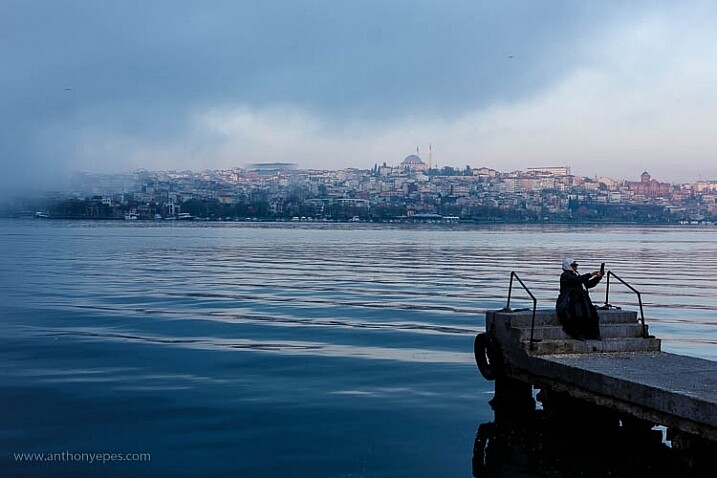
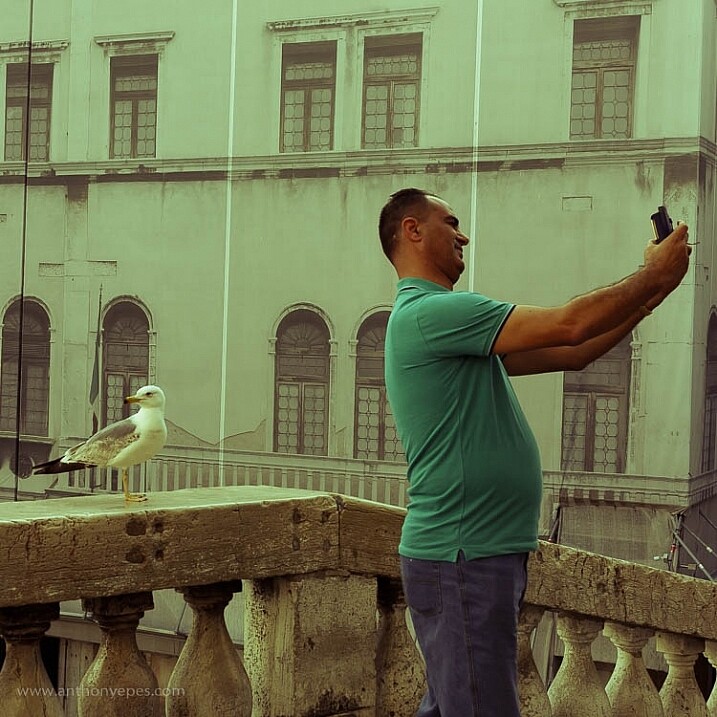
That’s not to say I won’t take a good anonymous portrait – I love them. At the moment I seem to be having a good time with this selfie trend:

AEP_DPS_strangers_003

I took the photo above in Venice a few months back. I was walking up some steps with a group of students and bang, there it was. Because I was prepared with my camera, and because I always see what’s going on around me, I was able to capture it straight away.

AEP_DPS_strangers_004

I also liked this photo because for me selfies feel a bit vacuous, and the background was not of Venice but a large photo of Venice covering a building. Both the background and the selfie seem to me to speak of how most people see the world, just on its surface. We photographers have to be prepared to get deeper and see more of what’s really going on.

7 – Have a project and be professional

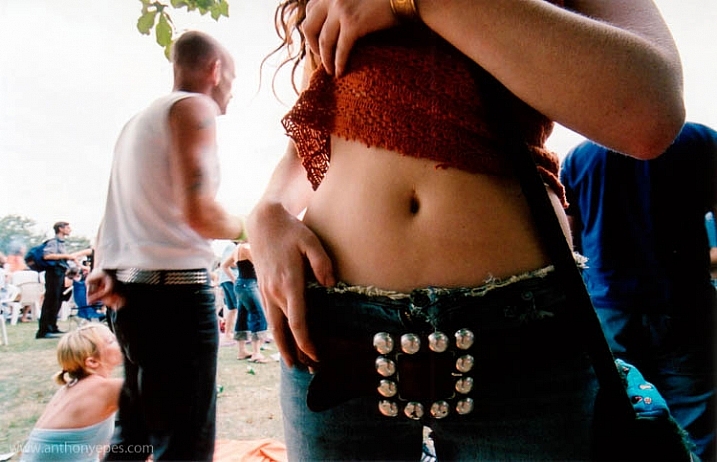
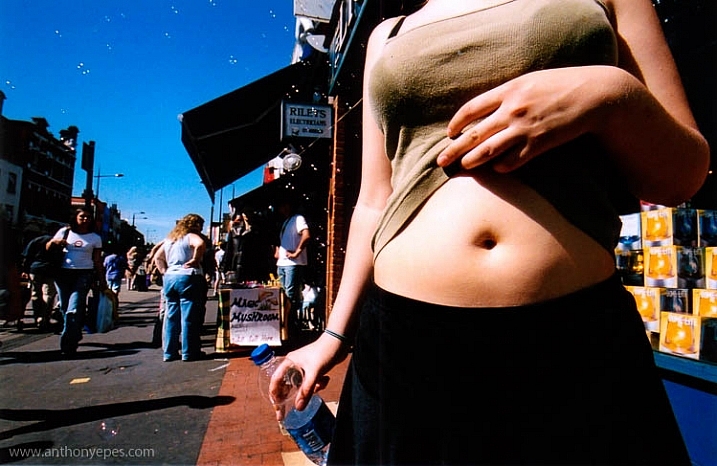
Over the past several summers I’ve been working on a project, photos of people’s bellies. I always felt it was quite an under-appreciated part of the body and I wanted to see how people felt about theirs. So I started out experimenting by asking people if I could take photos of their bellies.

Now for this kind of project it’s a harder sell. I was asking people to reveal a part of their body that they mostly keep covered up. So the way that I did it was I would look for people on the street who were on their own (because for some bizarre reason people are usually more receptive to strangers taking their photo when they are alone and they seem relaxed). I would approach them, explain what I was doing, and give them a business card that I had made about the project – which had all of my business details on one side and a bunch of belly photos on the other.

Image from The Belly Project by Anthony Epes photography

Image from The Belly Project by Anthony Epes Photography

I also got people’s photos by hanging out at my local cafe, hanging around summer festivals, anywhere really where I could just hang out and chat to people. It’s a brilliant way to fall into conversation with people, so the approach can be more subtle and relaxed.

I am not a super chatty guy. I am not known in my private life to fill the space with epic conversation. You do not need to be a master of conversation – you just need to be genuinely curious and people will feel that, and start to open up to you. Most people love talking about themselves, and they love people who are interested in them. It’s a human trait that photographers must be aware of. Once you’ve approached someone, or when you are just hanging out – ask people questions about themselves. “Worked here long? What’s this festival all about? That’s an awesome t-shirt, where did you get it?”

8 – Your background is your second subject

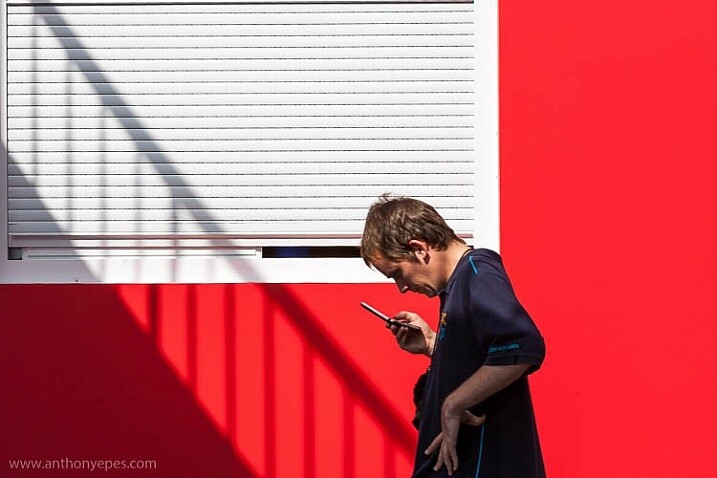
What I hope you see in my shots is that the person is not the only subject – where you place your subject, the colours, the lines, the light – all of that will enhance, or detract from the portrait. Ideally you want to find a background that adds to the portrait in someway – almost like a comment on the appearance or pose of your subject. Ask yourself – what does this background add to the photo?

AEP_DPS_strangers_006

I find that many people use backgrounds that are too busy, so the subject gets lost. The camera can’t distinguish between the layers of a background the way that your eye can, so you almost want to over simplify the background to create the maximum impact for your viewers. Break down the elements that you see, and work out how a person would affect that.

If you are shooting posed portraits this is easier, but before you go about approaching people, get your background organized first. I often wander around looking for interesting locations, interesting elements out on the street, and then once I’ve found something I like, I wait around to see who comes along.

Image from The Belly Project by Anthony Epes Photography

Image from The Belly Project by Anthony Epes Photography

9 – What story are you telling with your photos?

When you are taking someone’s portrait, you are not just putting together an interesting combination of colour, light and shape – you are doing that as well – but there is something else too. You have an amazing opportunity to tell a story, and to communicate the emotion and feeling of your subject. The human face and body are the most expressive and revealing things on this planet.

“A picture of a guy in the street in New Guinea, with a bone through his nose is interesting to look at. But for it to be a really good photograph; it has to communicate something about what it is like to live with a bone through your nose. It is a question of the moment to reveal something interesting and profound about the human condition.” Steve McCurry

10 – How do you get people to reveal their emotions?

When you hold a camera up to a person, you will see that they start out with one emotion, but quite quickly that will change. After a few seconds most people start to get uncomfortable looking into a camera lens, then once they pass through that, other emotions start to appear as their minds move on to thinking about other things – perhaps how uncomfortable they are in the heat, the shopping they have to pick up later. People’s thoughts move at an alarming speed and their faces reveal it all. So just being with them, looking at them, photographing them, you’ll start to see how they peel like an onion.

AEP_DPS_strangers_008

Summary

So to sum up – be friendly, smile, enjoy yourself. Remember this is fun what we do! I have stayed in touch (through Facebook and the like) with a bunch of my subjects whom I’ve met on my travels. It’s a great way to get to know people and create really compelling photographs.

A note about usage and permission

In most countries you only need people’s permission if you are going to sell the photos, or use them for commercial gain. Photos for art and editorial usage usually don’t require individuals’ permission (but there are exceptions – like Hungary where it’s now illegal to photograph anyone without their permission). There are exceptions, especially for children, so always check out the law in the country you’re in, and remember laws change all the time.

Plus, when you are travelling it’s important to be aware of cultural sensitivities before you blaze out there, camera in hand. There is a ton of info out there on the web. Load up on knowledge and that will also help you feel confident as you go out to shoot.

googletag.cmd.push(function() {
tablet_slots.push( googletag.defineSlot( “/1005424/_dPSv4_tab-all-article-bottom_(300×250)”, [300, 250], “pb-ad-78623” ).addService( googletag.pubads() ) ); } );

googletag.cmd.push(function() {
mobile_slots.push( googletag.defineSlot( “/1005424/_dPSv4_mob-all-article-bottom_(300×250)”, [300, 250], “pb-ad-78158” ).addService( googletag.pubads() ) ); } );

The post 10 Tips for Photographing Strangers by Anthony Epes appeared first on Digital Photography School.


Digital Photography School

 
Comments Off on 10 Tips for Photographing Strangers

Posted in Photography


4 Tips on How to Be Creative in Undesirable Photography Conditions

27 Jul

How many times have you arrived at a place and it just is not up to your expectations? There is nothing worse than wasting your time, especially when it was all planned out to be a good day. What a letdown. But, what if you could turn that around and produce something amazing? What if you can do it, and make a great photographic experience out of it? Well you can and it doesn’t take a lot of work, or a lot of camera equipment.

When We Were Young 717px

There are likely many times as a photographer where you have prepared all your gear and scouted your location, only to arrive at your destination and find that it was not all what you thought it was going to be. Maybe the light is not what you imagined, maybe the building was demolished, or maybe there are numerous people when you thought you would be the only photographer there. Many scenarios could come up, and that is why as a photographer you need to think on your toes and improvise.

So, how do you make a bad day of photography, turn into something meaningful that you can still be proud of? Unless you are in a studio, photography is a balance between action and inaction. What are the things you can control and what are the things out of your control? And in the moment of interaction between the two, how do you see and create your vision? The best photographers in the world don’t control more in the situation, they SEE more. So how do you see more in a bad situation?

1. Flip the script

Be flexible in your photographic visions. You may have a favorite type of photography like landscapes or portraiture, but that shouldn’t prohibit you from enjoying other aspects as well. If you expected to shoot people and the streets are empty, then shoot the buildings. If you expected sun and it rains, then shoot the boy playing in the puddles. Don’t struggle to create what the place or situation is not. Change your own narrative to fit the situation. This mindset means you are not always reacting, rather that you can be proactive in a new direction and creative in your story.

001 IBQ 3729 RESIZED

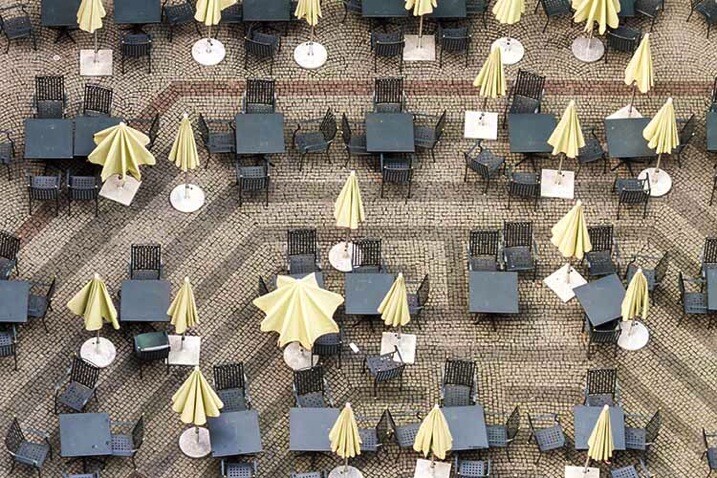
A rainy day in the famous Glockenspiel square of Munich. From the tower above you get a very different feel of the space.

2. Get up close

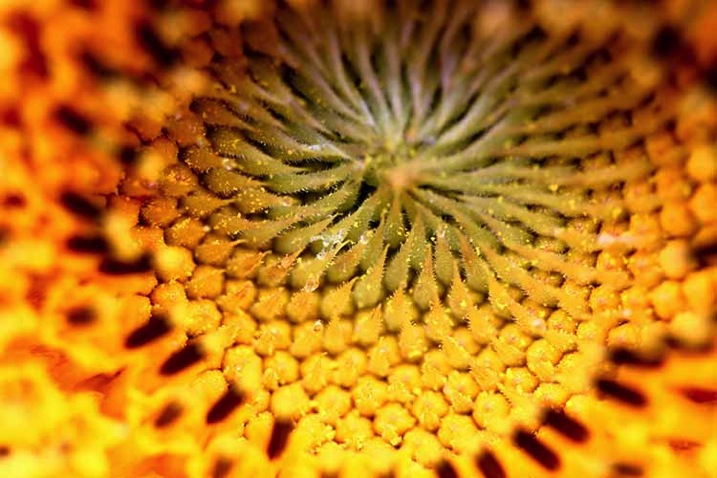
When you change your perspective there is a new world to be discovered. The easiest way to do this is by getting close, and that means to get down on your knees and elbows. There are always amazing creatures, delicate flowers, and wildly uncommon structures in tiny forms below our feet. So, when heading into unfamiliar environments bring your macro lens. In cases where the scenery or situation is really unappealing, something on the micro level will surely amaze you. The opposite of this would be to get further away to obscure the subject and give it a new setting. The point is to change the perspective.

002 When We Were Young  6 RESIZED

Macro photo of a sunflower in the mountains of NE China. You would never know how awful the weather was for the whole week.

3. Get in touch with your reaction

Allow yourself to feel the letdown or disappointment between what you originally hoped to find and what you are actually presented with. But, don’t let it decide your photographic destiny. This means do find creativity in the presented emotions. What are the emotions that are being portrayed in the scene? This could actually be done figuratively in an abstract way by photographing negative space to define your images. Or it could be done by finding images that literally match your mood. What is most important is that you are open to opportunity, not confined or limited by what your expectations were. By getting in touch with your photographic feelings you are freeing your photographic expressions.

003 IMG 3087 RESIZED

A splendid view of the Taj Mahal from Fort Agra was closed for cleaning. A real disappointment or an opportunity for a new story to be told?

4. Experiment

If you are not working professionally, and don’t need to get a specific shot that your customer has commissioned you to do, then you are free to experiment. When doing so, will you come home with some images that are going straight to the recycle bin? Yes. But, you will also learn something in the process. Thus, you will be increasing your photographic experience, discovering new techniques, and pushing your creative self.

Experimenting might mean going from Aperture Priority mode to fully Manual. Or it may mean that you will take some bracketed exposures even though you really don’t know how to combine them in an HDR software (yet). Or how about focus stacking? It could mean that you are adding light by using a flash. Whatever level you are at, or whatever gear you have purchased, think about how it could be used. When conditions don’t present themselves perfectly, it is a perfect situation to experiment.

004 IBQ 4683 Edit Edit 2 RESIZED

An HDR panoramic in the midday sun in the Austrian Alps. The sun was behind the mountains and high noon is not the best time for landscapes, so HDR was a possibility. A sun flare was also added in post-processing to experiment more with the image.

IMG 3836 Edit 2 Double Dip 717px

Double exposure experimentation

The grass is always greener on the other side of the fence. But that doesn’t mean you must be in the green pasture to get great results. There will always be conditions that are not ideal, and as alluded to above, great photographers don’t see constraints in difficult situations they see creative opportunity. So can you. Creativity is not spontaneous; it is habitual. Any creative person will tell you that their successes are predicated upon effort; so too, is much of photography. There are so many variables, that each time you go out with your camera, you really never know what you will get.

Stop thinking about how lucky you are if you get a perfect sunset, but how incredibly lucky you are when you need to be a constructively creative photographer and how you can turn a bad day of photography into a great series of images. So, no more excuses — go out and be the great photographer you are.

googletag.cmd.push(function() {
tablet_slots.push( googletag.defineSlot( “/1005424/_dPSv4_tab-all-article-bottom_(300×250)”, [300, 250], “pb-ad-78623” ).addService( googletag.pubads() ) ); } );

googletag.cmd.push(function() {
mobile_slots.push( googletag.defineSlot( “/1005424/_dPSv4_mob-all-article-bottom_(300×250)”, [300, 250], “pb-ad-78158” ).addService( googletag.pubads() ) ); } );

The post 4 Tips on How to Be Creative in Undesirable Photography Conditions by Branson Quenzer appeared first on Digital Photography School.

Digital Photography School

 
Comments Off on 4 Tips on How to Be Creative in Undesirable Photography Conditions

Posted in Photography