RSS
 

Posts Tagged ‘Tips’

6 Tips for Creating More Captivating Landscape Photographs

07 Sep

2-for-1 special

As part of Landscape Photography Week here on dPS, we’re offering TWO for the price of ONE on our best-selling Living & Loving Landscape Photography ebooks!

Click here to take advantage of this offer.


If landscape photography is your passion, you probably love to visit new places, and photograph beautiful natural scenes. But have you ever been unable to capture the beauty you saw in front of you in your camera? Do your images come out flat and boring? With these six tips, you’ll take your photography to the next level by creating more captivating landscape photographs that really stand out.

1. Time your shoot for the perfect light

Making interesting photographs is all about the light. Boring light creates boring photographs. Dramatic light creates dramatic photographs. Once you find a scene to work with, be patient and wait for the dramatic light that will enhance your image. You may even have to return on a different day to make the most of the scene.
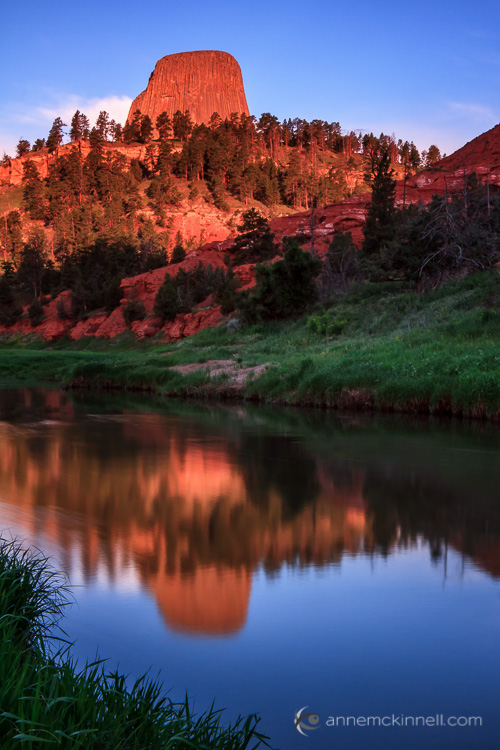
Devils Tower, Wyoming by Anne McKinnell

The quality of the light that illuminates your scene is going to change depending on the weather and the time of day.

Weather

The effect that weather has on your photo is usually obvious – a clear, blue sky gives a distinctly different feeling than dark storm clouds. Direct sunlight causes high contrast and dark, clear shadows – but the light becomes soft and even on an overcast day.

Time of Day

We know that the sun rises in the east and sets in the west, but the direction of the sun with respect to your landscape also makes a big difference. It could mean the difference between the sun being in, or out of the frame. It determines which side of a mountain is lit, and can change the way the shadows fall in a grove of trees.

When you’re scouting your location, try to figure out where the sun will be at different times of day, what effect that will have on your landscape, and when you think the light will be at its best. This can be as simple as deciding whether you are at a sunset or sunrise location, so you know the best time to return to the scene.
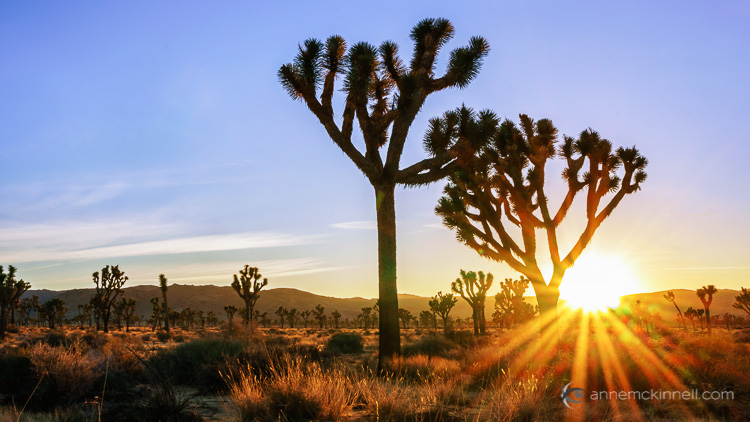
Joshua Tree National Park by Anne McKinnell

Keep in mind, as well, that the colour of the light changes throughout the day. When the sun is low in the sky (towards sunrise or sunset) the light takes on a warm golden hue, but in the middle of the day the light turns a brighter white. Just after the sun sets, and again before it rises, the blue hours give a scene a soft, cool tone.

2. Use the right equipment

Use a tripod to keep your camera steady and allow for longer exposures. A tripod will also help you be more purposeful in the way you compose the frame.

Choose your lens based on the type of photograph you want to make. A grand vista type of landscape photograph is usually made with a wide-angle lens, with a focal length below 35mm. The shorter your focal length, the larger your angle of view, and the more of the scene you can fit in the photo. However, by doing this you shrink everything within the frame.
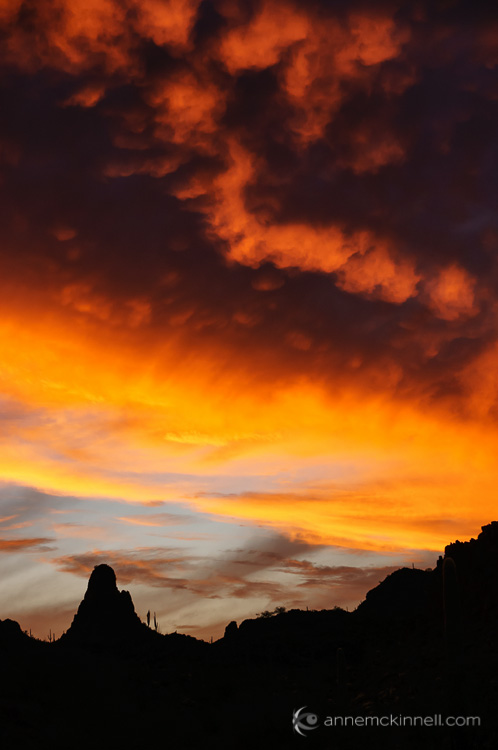
Ajo Sunset by Anne McKinnell

If there is something in your frame that you want to appear large in the scene, using a longer focal length will emphasize it. Longer focal lengths are also excellent for more intimate landscapes that do not include a massive expanse of space.

3. Use the right camera settings

Understanding the exposure triangle is critical when it comes to choosing the best camera settings. Generally, for landscape photographs where nothing is moving in the scene, you don’t need to worry about shutter speed, especially if you are using a tripod (see tip #2 above).

In landscape photography, one very important setting is aperture, since that controls the depth of field in your image. When making a grand vista type landscape, you usually want everything from foreground to background to be in sharp focus.

To get your photo sharp all the way through, use a small aperture, like f/11, to maximize your depth of field. However, smaller doesn’t always mean sharper – because of an optical phenomenon called diffraction, images tend to get softer when the aperture is too small. Therefore, the clearest images are typically made closer to the middle of a lens’ aperture range. I recommend shooting landscapes at f/11 instead of f/22 for the sharpest possible photo.
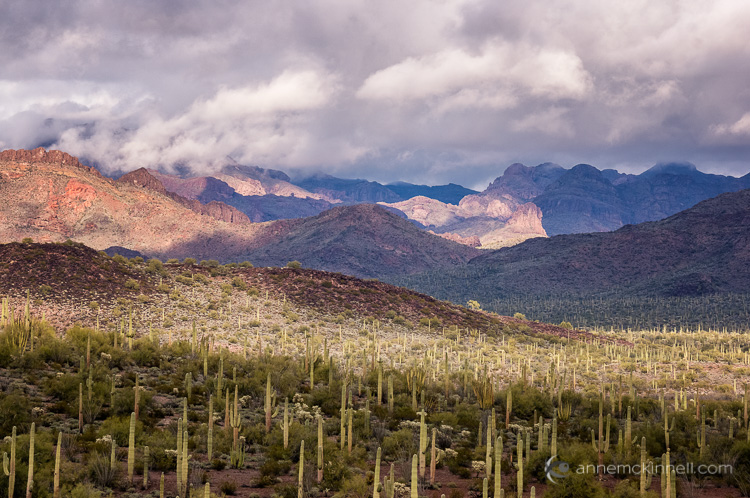
Organ Pipe Cactus National Monument Arizona by Anne McKinnell

That leaves ISO as the last factor in the exposure triangle. For the best image quality, your ISO should be set to a low value, like ISO 100.

If nothing is moving in your landscape, use aperture priority mode, set the aperture to f/11, set the ISO to 100, and then let the camera calculate the appropriate shutter speed to get a good exposure.

However, if there is something moving in the scene, you can set a higher ISO, to allow for a faster shutter speed.

4. Separate your foreground, middle ground, and background

When composing your landscape photo, try to arrange it with elements in the foreground, middle ground, and background. Make sure they are framed to be distinct, and separate from each other, in order to create a sense of depth that draws the viewer into the picture.
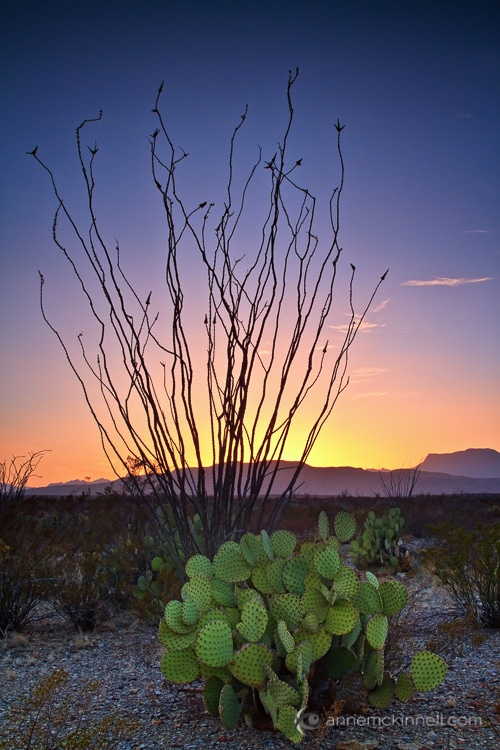
Big Bend National Park , Texas, by Anne McKinnell

Background features are common things like mountains, the horizon, and sky – while foregrounds can be nearby objects such as trees, grasses, man-made objects, and even rocks on the ground in front of the camera. The middle ground, of course, is everything in between that occupies the main part of the scene.

Not all photographs have these three distinct areas, but if you can compose your image so it does, you’ll have a photo with great depth and more impact.

5. Include a point of focus

Sunsets and forests and seashores are beautiful, but they need something small to give them a sense of scale. Almost anything can serve this purpose – a person walking through the scene, a single silhouetted tree, a boat floating in a lake, a dock, or an animal – anything to give scale to the immensity of the landscape and create something for the eye to be drawn to.
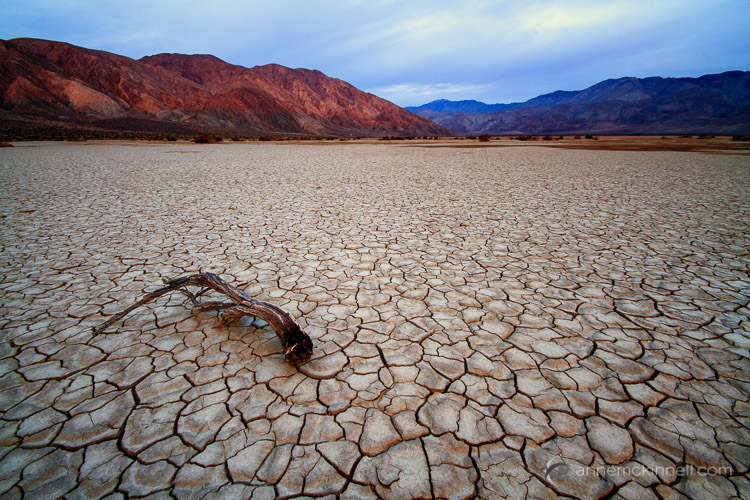
Clark Dry Lake by Anne McKinnell

6. Bracket your shots

Landscape scenes can be very high in contrast, so it’s a good idea to shoot a few different exposures to make sure you get details in both the highlights and shadows. Some cameras will have an automatic bracketing feature built-in, but if not, you can do this manually. Simply take one picture at the recommended settings, then turn your exposure compensation button (+/-) to +1 and take another. Repeat this at -1 and you’ll end up with three pictures of different brightnesses. Later, when editing them on your computer, you can decide which exposure looks best and even combine multiple images in Photoshop or Lightroom (using the new Merge to HDR feature in LR CC or LR 6) to get the most detail possible.

Good light, the right equipment, the right settings, a strong composition, and a good exposure all work hand-in-hand to ensure you’ll make captivating landscape photographs.


Here on dPS this is landscape week – here is list of what we’ve covered so far. Watch for a new article (or two) on landscape photography daily for the next couple days.

  • 6 Tips for Better Low-Light Landscape Photography
  • Landscape Photography and the Human Element
  • 5 Ways a Telephoto Lens Can Improve Your Landscape Photography
  • Landscape Photography from the Side of the Road
  • 32 Majestic Landscape Photos to Inspire Your Wanderlust
  • Weekly Photography Challenge – Landscape
  • Landscape Photography – Shooting the Same Location Through the Seasons
  • How to Solve 5 Composition Conundrums Faced by Landscape Photographers

googletag.cmd.push(function() {
tablet_slots.push( googletag.defineSlot( “/1005424/_dPSv4_tab-all-article-bottom_(300×250)”, [300, 250], “pb-ad-78623” ).addService( googletag.pubads() ) ); } );

googletag.cmd.push(function() {
mobile_slots.push( googletag.defineSlot( “/1005424/_dPSv4_mob-all-article-bottom_(300×250)”, [300, 250], “pb-ad-78158” ).addService( googletag.pubads() ) ); } );

The post 6 Tips for Creating More Captivating Landscape Photographs by Anne McKinnell appeared first on Digital Photography School.


Digital Photography School

 
Comments Off on 6 Tips for Creating More Captivating Landscape Photographs

Posted in Photography


3 Tips For Getting Ahead In The Photography Industry

06 Sep

Photography Industry Leaders Share Their Top 3 Tips For Getting Ahead In The IndustryTop 3 Tips For Getting Ahead In The Photography Industry

Hey there FashionPhotographyBlog.com readers. Our friends from the Dots return to join us on our site to share great tips they have uncovered from their recent masterclass in London, UK. The Dots is a community of creative professionals, designed to connect creatives with collaborators, companies and commercial opportunities. They are just as passionate about collectively building a stronger, more profitable and diverse creative sector as we are and we are very excited to have them featured here again.


For those of you who may not know, The Dots hosted a Photography Portfolio Masterclass at the incredible Spring Studios to give talented emerging Photographers the chance to have their work reviewed by some of the UK’s most prominent Picture Editors and Photographic Agents.


With such a wealth of experience in the room, The Dots team took the opportunity to ask a few questions on how to get ahead in the hugely competitive Photography industry. Here’s what the industry representatives had to say:


Getting Ahead In The Industry – 3 Top Tips


  1. Be original


Photography industry leaders are primarily on the hunt for originality and a unique perspective because, “in the end if you’re presenting a book that looks like someone else, you better be a cheaper version of them, because there’s no reason to hire you just to be a copycat” (Robin Derrick, Executive Creative Director, Spring Studios).


Matt Davey (Co-Founder & Director, Probation London) told us that he looks for “ originality – an ability to express ideas in their work and create something other than just a pretty picture.”


  1. Have a ‘Can-Do’ attitude


Never underestimate the importance of having an upbeat and ‘go-getting’ character. If someone thinks you’re going to respond to a difficult brief with enthusiasm, they’re more likely going to want to work with you.


Dalia Nassimi (Deputy Picture Editor, WIRED) told us “If they have that easy going, very can-do personality and are up for a bit of an adventure you get real magic.”


Similarly, the main thing Jamie Klingler (Publishing Manager, Shortlist/Stylist Magazine) looks for in a photographer is “someone that will do anything and that are part of my team on the day. These are the people who I wanna work with again and again and I wanna have a drink with, and who I’ll hire a million times over.”


  1. Be personable


You’re going to have to work with lots of people throughout a shoot and if you’re unpleasant to be around, chances are noone is going to want to work with you again. “You need to be personable, you need to get on with people, you need to be able to chat and work around an idea.” (Steve Peck, Picture Editor, WIRED Magazine).


It may not seem that important, but as Nicola Kavanagh (Editor in Chief, Glass Magazine) points out, if it’s a toss up between two photographers, “and they both have a really strong portfolio, I’m gonna go with the one that’s easier to get along with, because everyone likes a nice, easy life!”


So it seems that being nice really can help you finish first, hurrah!


To find out  more about The Dots’ next Photography Portfolio Masterclasses here: https://the-dots.co.uk/about/portfolio-masterclasses


You can also check out The Dots’ Vimeo channel for video interviews, tips & highlights from the Photography Portfolio Masterclass here:  https://vimeo.com/album/3444505


Finally, if you have any tips for getting ahead in the industry that you want to share, that hasn’t been mentioned in this post, feel free to share them in the comment section below. 


Fashion Photography Blog

 
Comments Off on 3 Tips For Getting Ahead In The Photography Industry

Posted in Uncategorized


7 Tips For Creating A Standout Photography Portfolio

05 Sep

Photography Industry Leaders Share 7 Top Tips For Putting Together A Standout Portfolio

7 Top Tips For Putting Together A Standout Portfolio

FashionPhotographyBlog.com welcomes our friends at the Dots to join us on our site and share with our readers, the great tips they have uncovered from their recent masterclass in London, UK. The Dots is a community of creative professionals, designed to connect creatives with collaborators, companies and commercial opportunities. They are about collectively building a stronger, more profitable and diverse creative sector and we are excited to have them here with us today.


The Dots hosted a Photography Portfolio Masterclass at the incredible Spring Studios to give talented emerging Photographers the chance to have their work reviewed by some of the UK’s most prominent Picture Editors and Photographic Agents. With such a wealth of experience in the room, The Dots team took the opportunity to ask a few questions on how to get ahead in the hugely competitive Photography industry. Here’s what the industry representatives had to say:


Photography Portfolios – 7 Top Tips


  1. Showcase your work through different platforms


In a digital age, it is important to remember that there are many other ways to showcase your work than through the standard printed photography portfolio and the more widespread your work is, the more likely Creative Directors are going to find (and possibly hire) you.


Robin Derrick (Executive Creative Director, Spring Studios) told us, “I think a traditional portfolio is a rather out-dated way to present work […] I’ve normally discovered a photographer online.”


David Birkitt (Owner & Managing Director, DMB Represents) supported this by telling us to “consider that everything’s a portfolio these days. Anything you’re putting work out on, any platform you’re using – printed, social, online – they’re all different platforms, they’re all different portfolios and they all do different things in different ways for different reasons.”


In short, get your work out on as many platforms as you can and curate each as carefully as you curate your physical photography portfolio.


  1. Have your own style


There will obviously be photographers or magazines that you look up to and admire and it’s hard not to be influenced by them or feel that you have to create the same kind of work in order to get the job. But one of the key points the Masterclass Mentors all agreed on was to have your own sense of style and identity.


Nicola Kavanagh (Editor in Chief, Glass Magazine) strongly advocated this – “I think having your own visual identity is the strongest thing that you can have as a photographer.”


David Birkitt also advised to make sure that your photography portfolio is “an extension of you and it feels comfortable and it forms a part of you, your being, and your character.”


  1. Show personal work


The Masterclass Mentors all agreed that a photography portfolio “is not just about commercial work or editorial, it’s about projects that you’ve done off your own back that show how passionate you are about taking pictures.” (Holly Hay, Photographic Editor, AnOther Magazine & Another Man).


Matt Davey (Co-Founder & Director, Probation London) advises to “never underestimate the value of your personal work […] that’s the stuff that people remember, they want to see what a photographer’s heart and soul is, not just what they’ve been paid to create.” We couldn’t have put it better ourselves!


  1. Put your best foot forward.


Start your photography portfolio really strong and prioritise certain images to go near the front.  


Jamie Klinger (Publishing Manager, Shortlist/Stylist Magazine) explains why… “If the first 6 shots you see are landscape but they want to be a portrait photographer, you’re never going to think about them for portraits because it’s going to be at the end of their book.”


Lauren Ford (Photo Editor & Producer, Dazed) reinforced this point by reminding photographers “to make sure that you’re opening your book with something really strong and something that shows who you are and what your point of view is as a photographer.”


  1. Tell a story. Stimulate a conversation


Holly Hay advised that “there should be a reason for every single image in your portfolio, there should be a story behind every image. There should be a reason for it being there and a reason why you love it and a reason why you want to tell people about it.”


Matt Davey also emphasized this point “construct your portfolio in a way that stimulates conversation. Be able to talk about your work and present it confidently when you’re having a face-to-face meeting, it’s not just about the flow of the images it’s about how you present it.”


So, if you make sure your best work is at the front, your photography portfolio flows well and stimulates conversation, then you’re off to a cracking start.


  1. Edit, edit, edit!


This follows on nicely to our next point – be selective. Don’t add 20 different photos from the same shoot to your photography portfolio when you could have only added two. Whoever is looking through your photography portfolio is either going to get bored or think that is the only thing you can do.


Steve Peck (Picture Editor, WIRED Magazine) indicated the main thing he looks for is, “a lot of variation in someone’s book. If you are a portrait photographer that’s fine, but I don’t want to see the same head and shoulders crop 15 times, I know you can do that after I’ve seen two – so that’s great, move on, show me something else.”


As Nicola Kavanagh points out, “your portfolio is your most valuable tool in an interview, so make sure you present that as best you can, edit harshly […] make sure it’s really succinct.”

So, make sure you keep things short and sweet and ensure there’s a reason or a story behind every image.


  1. Get a second opinion!


You’ve taken amazing shots, edited and arranged your photography portfolio with a fine tooth comb… What else should you do before showing it to a potential client?


Jamie Klingler suggested “to have someone else edit your portfolio. You are too close to your work and you don’t know what your best shots are.”


This point was reinforced by Nicola Kavanagh who told us to “make sure your portfolio is the best it can be: get it up to scratch, try and get feedback from people from agencies before you present to clients or magazines,”


What we’re basically saying is a second (professional) opinion never hurt, and if anyone who knows what they’re talking about is offering to help – take it.


Looking to get feedback on your photography portfolio? Find out about The Dots’ next Photography Portfolio Masterclasses here: https://the-dots.co.uk/about/portfolio-masterclasses


You can also check out The Dots’ Vimeo channel for video interviews, tips & highlights from the Photography Portfolio Masterclass here:  https://vimeo.com/album/3444505 


IMAGE SOURCE: 

Feature image & images 1: courtesy of Jack Woodhouse


Fashion Photography Blog

 
Comments Off on 7 Tips For Creating A Standout Photography Portfolio

Posted in Uncategorized


Insanely Creative Tips ForShooting Gorgeous Interiors

03 Sep

Looking for roommates? Putting your place on the market?

Maybe you just wanna show your IG followers your sweet new setup?

Good thing we’ve got a few simple tricks to help you present the best features of your home! You’ll receive compliments from potential roommates, buyers, and followers in no time.

Read on and your house will be the star of the real estate listings!

(…)
Read the rest of Insanely Creative Tips For
Shooting Gorgeous Interiors (532 words)


© Taylor for Photojojo, 2015. |
Permalink |
No comment |
Add to
Shooting Gorgeous Interiors”>del.icio.us

Post tags:


Photojojo

 
Comments Off on Insanely Creative Tips ForShooting Gorgeous Interiors

Posted in Equipment


6 Tips for Better Low-Light Landscape Photography

02 Sep

2-for-1 special

As part of Landscape Photography Week here on dPS, we’re offering TWO for the price of ONE on our best-selling Living & Loving Landscape Photography ebooks!

Click here to take advantage of this offer.


A glorious sunset will always attract a crowd of photographers. Yet the moment the sun dips behind the horizon, it seems everyone departs in a hurry. What they don’t realize is how exceptional the scene can become at dusk and into the early evening. The hours following sunset are actually ideal for landscape photos. Of course, working in low light isn’t without its fair share of challenges.

With these six tips though, it’s possible to extend the magic hour and continue creating stunning images long into the night.

1) Compose Thoughtfully

It’s easy to be mesmerized by the bold colors of dusk. Yet, the photographer who works to add more visual interest will ultimately create a better image. About a half hour before the sun sets, I start the search for a foreground element that will anchor my composition. This can be a field of flowers, a boulder, a tree, or even a man-made object. The idea is to add visual interest all the way through the frame. As you explore various options, be sure to try different perspectives including the view from the ground. By having this location worked out in advance, you’ll be ready to capture the peak moment of brilliance.

2) Switch to Live View

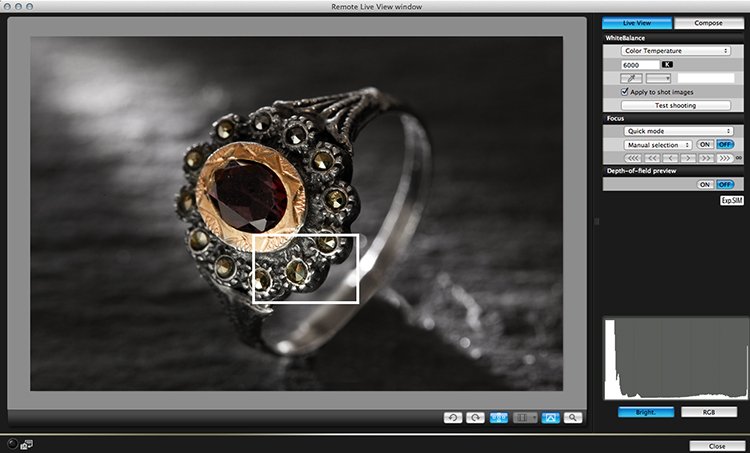
When autofocus struggles, Live View becomes an extremely helpful focusing aid. By switching to manual focus and magnifying the scene on the LCD, you have the ability to carefully micro-focus on whatever is important in your scene. At 5x and 10x magnification, you don’t have to solely rely on your eyesight, making focus easy to achieve. Remember, the enlarged view on your LCD is not representative of the actual focal length, or view the camera sees. Upon pressing the shutter, the entire scene will be captured in sharp detail. With this level of precision, I find this feature ideal for low-light photography.

3) No Tripod? No Problem

It’s true, a tripod is a landscape photographer’s best friend, especially in near darkness. Yet, there are definitely occasions where carrying one is just not possible. With a bit of ingenuity, you can still create a sharp photographs. The key is to set your camera to the two second timer. Compose your shot with the camera resting on a rock or bag and press the shutter release. The timer will count down for two seconds. This is enough time to eliminate any camera shake before firing. Using this technique, you can still use very long shutter speeds even without a tripod.

4) Safety First

In extremely low-light, small camera buttons and dials become difficult to see. A small flashlight, or even your smartphone can provide the proper amount of illumination. This also comes in handy for navigating dark trails and rocks. To keep it from getting lost, I prefer the key ring type that can be attached to a camera bag. While this seems like a common sense item, don’t underestimate its usefulness. Hiking back to your car after dusk can be dangerous without artificial light to lead the way.

5) Cool Down the White Balance

During the day, I often enjoy the warmer White Balance presets like Cloudy or Shade. Similar to a painter adding more yellow to their brush, these settings introduce a golden quality of light to a landscape. At dusk however, this can look artificial and overprocessed. To better match the cooler color temperature of low light situations, Auto White Balance is actually quite accurate. While I do work in RAW, I enjoy shooting in a white balance that best represents the scene. This provides a more complete understanding of how the image will look and allows me to make adjustments accordingly.

6) Stay Just a Little Bit Longer

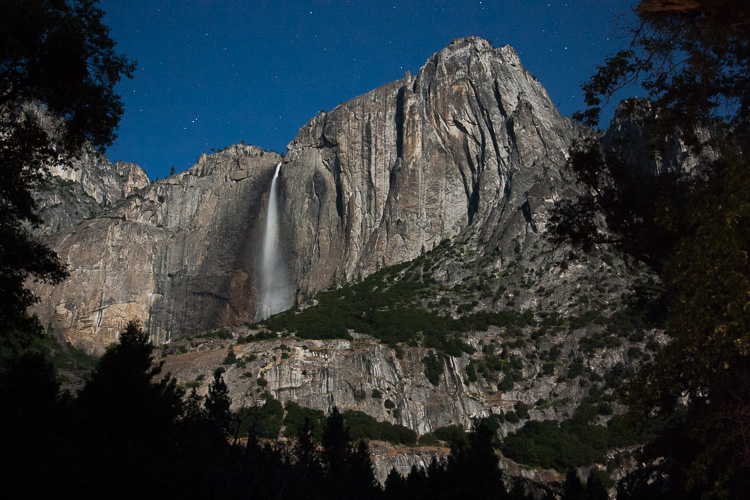
Night photography can offer some spectacular opportunities, especially when the moon is full. You can check this beforehand using apps like the Photographer’s Ephemeris. In these low-light conditions, you will need to take some special steps to get the shot. First, a solid tripod is essential to prevent camera shake. In the mountains, winds can be strong, so opt for a sturdy set of legs. Even with the light of the moon, it was necessary to use a 15″ (fifteen second) exposure. Camera settings: ISO 400, F/4, 15 seconds at 17mm. This same location midday, was a completely different scene with idling buses, flocks of tourists, and harsh contrasty light.

So how can you use these tips in your photography? Do you have any others to add? Please do so in the comments below.

Editor’s note: This is the first of a series of articles we’re featuring here in a deep dive on landscape photography, this week on dPS. Watch for another later today and more daily. 

googletag.cmd.push(function() {
tablet_slots.push( googletag.defineSlot( “/1005424/_dPSv4_tab-all-article-bottom_(300×250)”, [300, 250], “pb-ad-78623” ).addService( googletag.pubads() ) ); } );

googletag.cmd.push(function() {
mobile_slots.push( googletag.defineSlot( “/1005424/_dPSv4_mob-all-article-bottom_(300×250)”, [300, 250], “pb-ad-78158” ).addService( googletag.pubads() ) ); } );

The post 6 Tips for Better Low-Light Landscape Photography by Chris Corradino appeared first on Digital Photography School.


Digital Photography School

 
Comments Off on 6 Tips for Better Low-Light Landscape Photography

Posted in Photography


Tips for Depth of Field Control in Macro Photography

01 Sep

Depth of field is the amount of distance between the nearest and farthest objects that appear in acceptably sharp focus in a photograph, it varies depending on camera type, aperture and focusing distance. If you are into photography you probably already know this and how critical it is when you photograph in macro distances.

01

This image was done with a 100mm macro lens with a life-size converter attached, at a distance of 4 inches to the object to achieve this type of magnification. The Depth of Field you see here is impossible to achieve, as there is no way to have the whole ring in focus with this focal length and this distance to the object.

Here are a couple of test shots to show a comparison between an f/8 and an f/32 exposure of this image:

02

In this particular image f/8 would give you a very shallow Depth of Field, so if you would like to have more then f/32 would seem to be a better choice, right? But if you take a closer look, you will realize it is just not that easy.

03

The magnified image shows you that f/8 has shallow Depth of Field but, because it represents the sweet spot of this lens, it gives you great detail in the focused areas. On the other hand f/32 gives you more Depth of Field, but it lacks detail overall.

This lack of detail is due to diffraction, that is the slight bending of light as it passes around the edge of an object giving the photographed image a soft focus effect. So, sharp focus and deep Depth of Field are impossible to achieve in this image due to optical limitations.

A great work-around for these limitations is Focus Stacking (also known as Focal Plane Merging, Z-Stacking or Focus Blending), which combines images photographed with different focus distances into one final image with a greater Depth of Field.

This technique is only possible if the camera, and all the elements on the image are perfectly still, so the use of a steady tripod is really important.

Another important factor is to shoot, and focus without touching the camera. In this particular image the camera was tethered with a computer and a remote shooting app was used to focus the image.

04

The best way to capture these images is to start by focusing on the closest area first, then keep shooting, making sure you cover all the focusing length (move focus farther away from the camera with each successive shot). Just use the controls of your remote trigger and app to fine-tune the focus for each shot.

The final number of shots depends on how detailed you want your image to be, but keep in mind that the more images you have, the harder it will be to process later on. This particular image was made with a merge of 21 images.

05

After the images are captured it’s time to process them. There are a lot of software options on the market for focus stacking; this image was edited with Adobe Photoshop CC. Here are the steps:

  1. Open Photoshop, go on File > Scripts > Load files into a stack
  2. Select all the pictures and turn on “attempt to automatically align layers”
  3. Select all your files in the layer panel on the right side
  4. Go to edit > Auto-Blend Layers and select “stack Images”

You will end up with a stack of layers with associated masks that look something like this:

06

Each layer mask reveals the best of each focused part of the image, and they can also be manually adjusted for more controlled results. The final images are usually very impressive and allow you to achieve effects that would be impossible to reach any other way.

googletag.cmd.push(function() {
tablet_slots.push( googletag.defineSlot( “/1005424/_dPSv4_tab-all-article-bottom_(300×250)”, [300, 250], “pb-ad-78623” ).addService( googletag.pubads() ) ); } );

googletag.cmd.push(function() {
mobile_slots.push( googletag.defineSlot( “/1005424/_dPSv4_mob-all-article-bottom_(300×250)”, [300, 250], “pb-ad-78158” ).addService( googletag.pubads() ) ); } );

The post Tips for Depth of Field Control in Macro Photography by Ivo Guimaraes appeared first on Digital Photography School.


Digital Photography School

 
Comments Off on Tips for Depth of Field Control in Macro Photography

Posted in Photography


7 Tips to Help When You’re Stuck with Only a Prime Lens

23 Aug

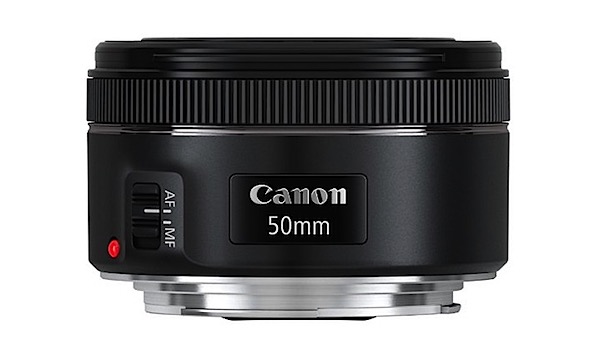
As a photographer you must have flip-flopped back and forth between prime and zoom lenses. “Should I choose a prime today, or a zoom for its advantages?” If you have not done this for a purchase, you must at least have read the numerous articles which weigh the pros and cons of each. But what about when you are stuck with a lens that is not ideal for an event? For the sake of discussion and for this learning opportunity, let’s choose the 50mm prime lens, which is one of the most popular and affordable primes, and is made for every camera body known to man.

Canon-EF-50mm-f1.8-STM-Lens.jpg

If something comes up that is unexpected, that’s a good thing! Not ideal if you don’t have a long enough zoom or wide enough lens, BUT it could be worse. What if you didn’t even have your camera at all? So stay upbeat and realize with some ingenuity you can overcome the confines of being stuck with a prime lens.

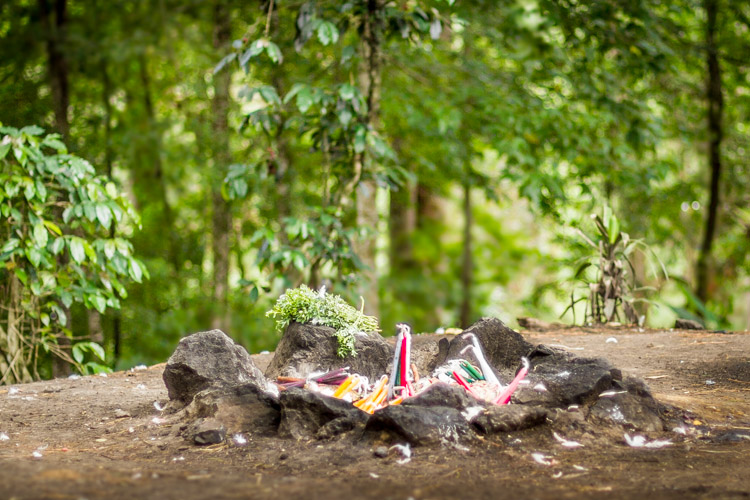
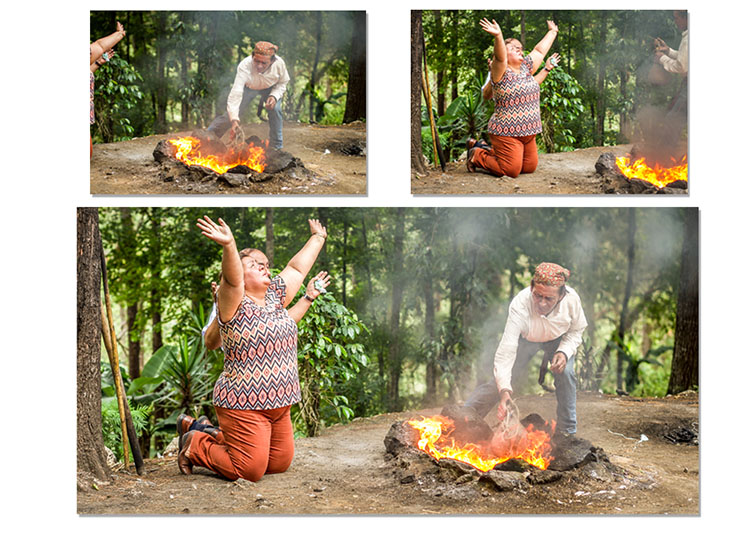
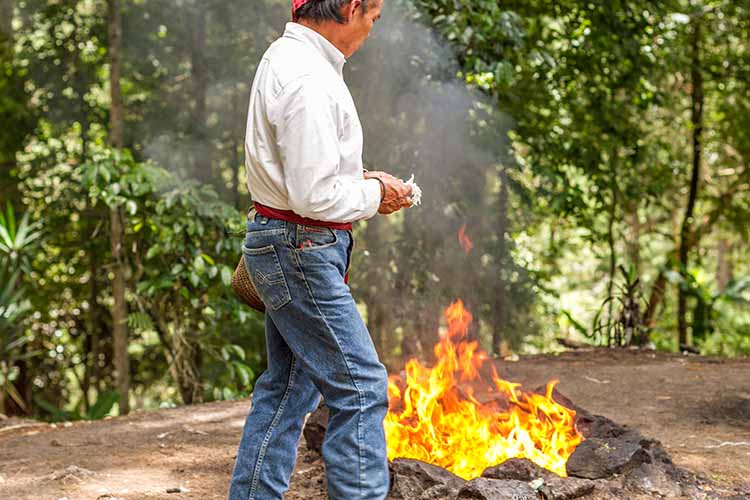
As a personal note: This tutorial was inspired by a real event in Guatemala. I had chosen my 50mm for a walk-around lens as it is light, and I wasn’t expecting much as I went out to get a cup of coffee. Well, with a caffeine buzz I climbed a hill, and at the top an ancient Mayan ritual of sacrifice was being conducted for the dead. Maintaining cultural sensitivity I knew that it would be totally inappropriate to get my lens in their face. It was pertinent to maintain my distance for respect.

1. Use shallow depth of field

Prime lenses are known for being sharp, especially when you close down your f-stop. Yet when you are confined, or have limitations about how close you can get, or how agressive you can come across as a photographer, using your lens creatively is important. Thus, you may sacrifice some sharpness, add a little chromatic aberration (CA), etc., but you will also get a different style of shot from a lens that inherently has focal length limitations. Go for bokeh.

001 F1.4 landscape resized from Lightroom (750px)

2. Panorama for wider angles

Use panorama techniques to combine images later in post-processing. If you can’t get a wide angle view, make one. Yes the feeling of the final composition will not be exactly the same as a true wide angle, as your foreground and background compression will be greater, but you will be able to give a cinematic effect. Combining images is an easy way to encompass more into your scene when you are limited by your focal length.

006 Panorama resized 1

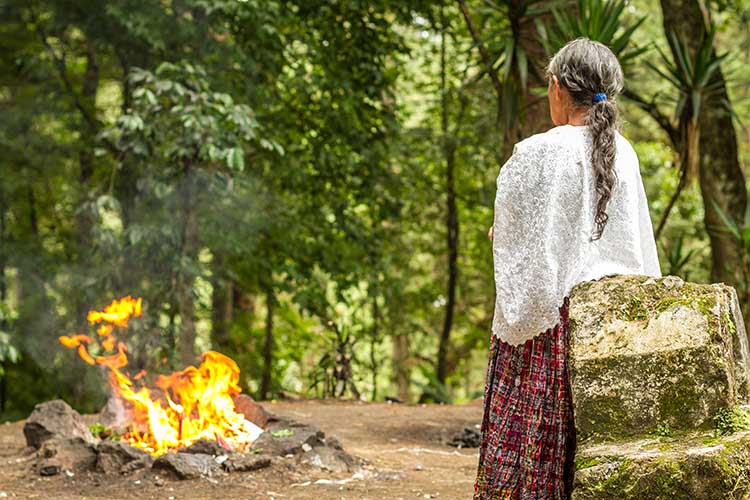
These two images were combined to show the whole event of the shaman and the fire along with the family members.

3. Shoot with the intention of cropping

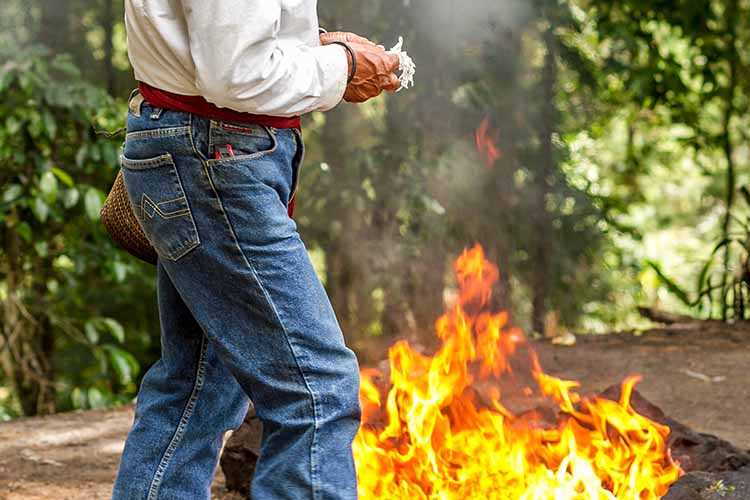
Be conscious that cropping is available to you in post-processing. Don’t worry if a hand creeps into your frame, or there is a plastic bottle in the corner. If you consciously shoot for a crop to be performed later you can zoom-in on something specific. This again gives you flexibility and diversity. If you combine this with a shallow depth of field (suggestion number one) you will find that you can achieve a telephoto effect.

003 Crop Before resized

003 Crop After resized

This image was shot for a crop, so cutting off the top of the head is not a problem if you know you will crop in closer in post-processing.

4. B-roll footage

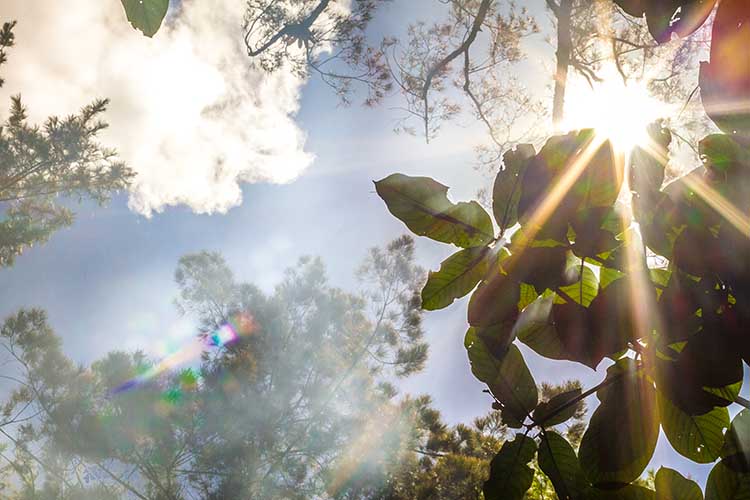
Get photos of activities, reactions, or environmental surroundings which will add to the narrative of the event. If you can’t get any closer, and you have pushed your boundaries of being discreet, then look up, down, and turn around. In film (movies), these are generally called B-roll shots, which helps to transition from one camera angle to another, while also telling the story.

004 B roll resized

The smoke rising up, into the sun, amongst the trees, gives a feeling of the environment around the ceremony.

5. Frame your subject with something in the foreground

Use a leaf, a stone or even another person to cut into the frame, which will both highlight your subject, by leading your eye to what you want the viewer to look at, and it will also create layers in the photograph. Layers add a sense of style and depth to your photography. Trying to use different techniques to create different perspective styles will really improve the overall quality of the group of photos you finally decide to keep.

005 Layer resized

The gravestone, then the grandmother, and finally the fire give layers to the photograph.

6. Use both horizontal and vertical photographs

Again this is about creating diversity in a final product. So turn the camera sideways and you definitely have a different style going for you. Some people get stuck in horizontal mode, or in vertical mode. This is a great opportunity to make a change of pace. When your eye sees a photo it follows a pattern, generally starting in the top left corner then moving, left to right (just as you read) looking for areas of light, contrast, lines, color and patterns. A vertical photo will automatically create a different reading experience to the photo. Or why not crop them into a square even?

002 Verical resized

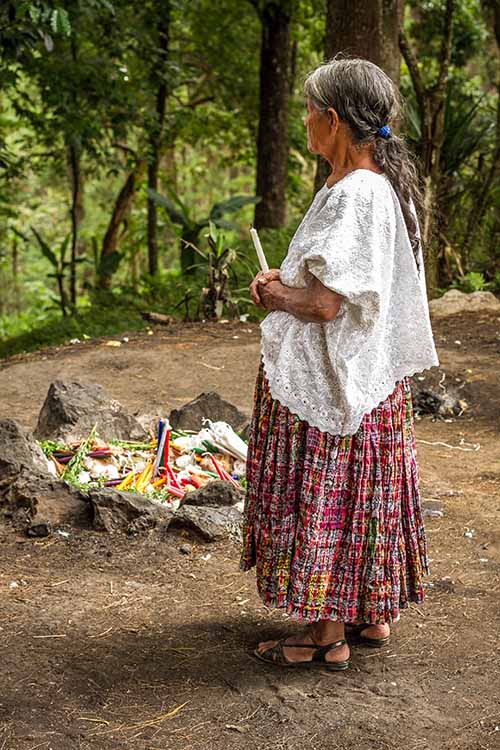
A simple vertical photo changes the pattern during your final composition. Think both horizontally and vertically.

7. Just enjoy the event

See the event not only through your camera, but also with your own eyes. Experience the event, and it will not only give you great memories, but will allow you to feel the mood as well. Understanding the event will give you insight into what out-of-the-box shot may really highlight the event.

Summary

The general idea is to work with what you have, don’t lament what you left at home. If you do, you might just start lugging around simply too much gear to enjoy yourself. Think of how to diversify your perspectives. By confining yourself (in this instance, when confines are placed upon you) there is great opportunity to use your most advantageous feature… your creative brain!

For most people, photography is a hobby turned passion, and enjoying photography should really be priority one. Photography is always a game of tradeoffs, which can be simply exemplified by the basic lesson of the exposure triangle. By gaining one thing you lose another. So begin gaining something even when you are stuck with just a prime lens.

Maybe we could say, you are challenged to be better at what you love!

googletag.cmd.push(function() {
tablet_slots.push( googletag.defineSlot( “/1005424/_dPSv4_tab-all-article-bottom_(300×250)”, [300, 250], “pb-ad-78623” ).addService( googletag.pubads() ) ); } );

googletag.cmd.push(function() {
mobile_slots.push( googletag.defineSlot( “/1005424/_dPSv4_mob-all-article-bottom_(300×250)”, [300, 250], “pb-ad-78158” ).addService( googletag.pubads() ) ); } );

The post 7 Tips to Help When You’re Stuck with Only a Prime Lens by Branson Quenzer appeared first on Digital Photography School.


Digital Photography School

 
Comments Off on 7 Tips to Help When You’re Stuck with Only a Prime Lens

Posted in Photography


5 Photoshop Tips You Probably Didn’t Know

23 Aug

In this video tutorial from the Photoshop Training Channel, Jesús Ramirez goes over five Photoshop tips – you may not know! I have to admit I didn’t know a few of them myself. The things he covers include:

  • Advanced blending options in the layer style panel
  • Add a precise lens flare (using x and y coordinates to place it exactly where you want)
  • Using advanced options for Render Clouds, to get clouds with more contrast
  • Using the Black and White Adjustment layer to control color tones
  • How to open the same image in two windows, one zoomed in and one zoomed out

Do you have any other little known Photoshop tips to share? Please do so in the comments below, I’d love to hear your tips and tricks.

googletag.cmd.push(function() {
tablet_slots.push( googletag.defineSlot( “/1005424/_dPSv4_tab-all-article-bottom_(300×250)”, [300, 250], “pb-ad-78623” ).addService( googletag.pubads() ) ); } );

googletag.cmd.push(function() {
mobile_slots.push( googletag.defineSlot( “/1005424/_dPSv4_mob-all-article-bottom_(300×250)”, [300, 250], “pb-ad-78158” ).addService( googletag.pubads() ) ); } );

The post 5 Photoshop Tips You Probably Didn’t Know by Darlene Hildebrandt appeared first on Digital Photography School.


Digital Photography School

 
Comments Off on 5 Photoshop Tips You Probably Didn’t Know

Posted in Photography


Tips for Avoiding a Foggy Lens

20 Aug
Foggy lens article - example of clear shot taken once lens cleared

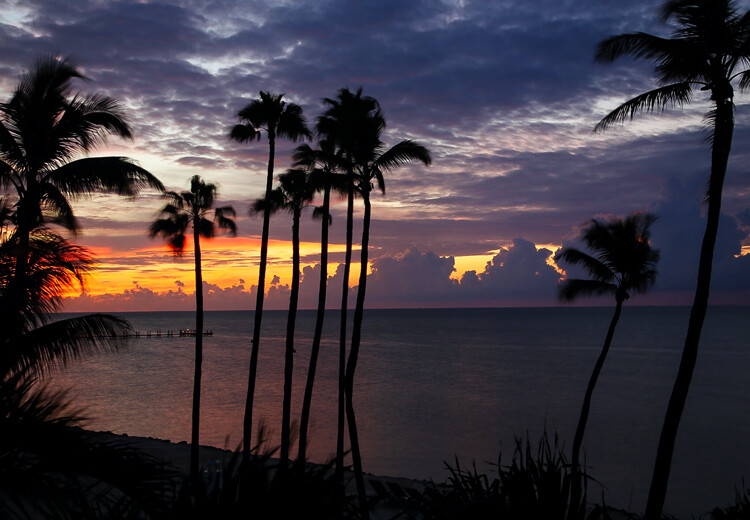
Taken at sunrise in the Florida Keys. Although this shot was okay, see below to see the similar shot taken a few minutes before with a foggy lens. I’m lucky I didn’t miss it entirely.

Has this happened to you?

  • You are on vacation at the beach. You decide to photograph the sunrise or sunset, so you grab your camera from your hotel room and head out. You get to the perfect spot to shoot, and look through the viewfinder at the beautiful sunrise/sunset – only to find that the lens is completely fogged over. You wipe away the condensation from the front of the lens, but it instantly comes right back. Every time.
  • Or perhaps you’re in your car, and you spot something you want to photograph. You pull over, hop out and set up the shot – only to find the same thing. The lens is fogged over, and every time you wipe it away, it comes right back. You miss the shot.

This happens all the time in coastal and tropical environments. Transferring the camera and lens from a cool, low-humidity location like your car or hotel room directly into a warmer, high-humidity environment causes condensation to form on the lens (on the front and back elements).

Making the problem even worse is that these humid environments are likely where you like to go on vacation/holiday, and that is when you tend to take the most pictures. So that means this problem ruins a lot of shots. It has happened to me many, many times.

Dealing with a Foggy Lens

So how do you fix this problem? Well, once it happens, there is no fix. There are a few things you can try, which will be addressed at the end of the article, but you just have to keep wiping off your lens, and waiting for it to acclimate. This can take a while. Sometimes it just takes a few minutes for the lens to acclimatize and stop fogging over, but other times it can take half an hour.

Example of picture taken with lens fogged due to condensation

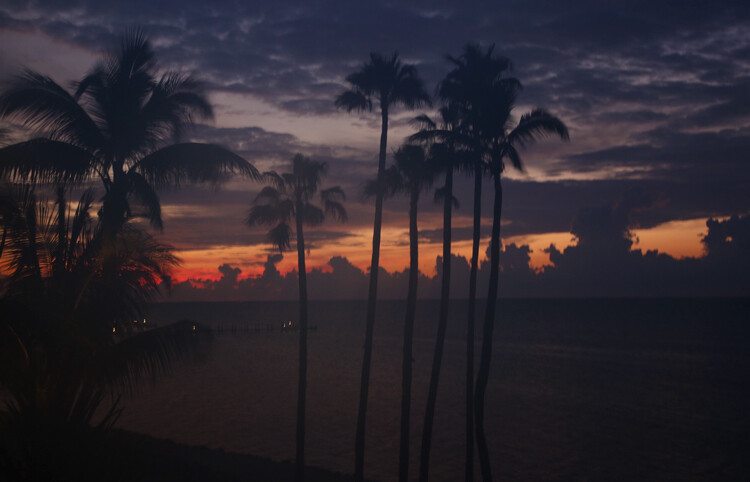
Here is a similar shot to the one above, but this one was taken before the lens had a chance to acclimate to the warm, humid air outside my hotel.

Since you cannot fix it once it happens, you have to avoid the problem in the first place. How do you do that? You have to let your camera or lens acclimate ahead of time.

Obviously, you cannot just leave your camera bag laying around outside. You will need to let everything acclimate while keeping it safe. Here are some tips for decreasing the time necessary for your camera and lens to acclimate to the outside temperature and humidity while keeping it safe:

1. Keep the camera outside (but in a safe place)

If you have a secure hotel balcony, you might put your camera and lens out there to let them acclimate. You probably don’t want to leave them out there overnight though. Even putting aside any security concerns, the coastal environment is not friendly to electronics, and prolonged exposure isn’t great for your camera. You can, however, place the camera and lens out on the balcony or other secure place for a while, as you are preparing to go out. Leaving them outside for a half-hour or so ought to be sufficient.

If you are getting up early to shoot a sunrise, for example, you might place your camera and primary lens out there immediately after you wake up, and let them acclimate while you are getting ready to go. That will give them some time to acclimate.

2. Keep the camera in the trunk

When you are driving around, or heading to a place you plan to photograph, keep your camera and lenses in the trunk of your car. That will keep them out of the air conditioning, and allow them to acclimate to the outside temperature and humidity.

Sometimes, however, you want to keep your camera handy in case you come across a great shot. In that case, keep the AC off and roll the windows down. All you are doing is keeping your camera and lens out of the air conditioning so that they acclimate to the temperature and humidity outside.

3. Get them out of the bag

If you leave your camera and lens in a zipped-up camera bag, then the acclimation process will take exponentially longer. The camera bag, while certainly not air-tight, will prevent air flow and keep your camera and lens surrounded by cool, dry air. You don’t want that.

Instead, when you are acclimatizing the camera and lens – whether that be on the hotel balcony, in the trunk of your car, or some other place – keep them outside the camera bag.

Example of picture taken with lens fogged due to condensation.

Here is another shot taken immediately upon exiting my cool, dry hotel and entering the warm, humid air along the coast in the Florida Keys.

4. Remove the caps and filters

The place where you are likely to have the biggest problem with condensation, is the front of your lens. Therefore, that is the part you should spend the most time and effort acclimating. In doing so, take off any filters or lens caps that are on your lenses. You don’t want a UV filter and a lens cap keeping the warmer, more humid air from getting to the front of your lens and acclimating it to the conditions outside.

5. Keep a micro-fibre cloth handy

Once the condensation happens, you just have to ride it out until your camera and lens acclimate. At the same time, you should periodically wipe off the front of the lens. That way you can see if the condensation is going to return. If you are not wiping it off periodically, you won’t know.

In addition, if the situation is not too severe, you can wipe off the lens and then quickly snap off a shot or two before the lens starts fogging up again. That usually works after the acclimation process has been going on for a while.

Keep a micro-fibre cloth handy for this process. If you don’t have one, you’re going to have to use whatever is available to wipe off your lens – like your shirt (and I’d like to scoff at this notion, but I’ve been forced to resort to that many times). Buy a couple of clip-on micro-fibre cloths that come in little pouches. You can just clip one to your camera strap and you’ll always have it handy. That will also keep you from having to dig through your bag to find one (they always go to the bottom in a hard-to-reach corner).

6. Fix it in post-production?

A picture with any significant fogginess due to condensation is a goner. You will not be able to save it.

If the picture only has a minor amount of fogginess, however, there are some things you can do to try to clear it up. These are by no means sure-fire cures, but they will help a minor case of fogginess. Your first thought will probably be to increase the contrast and clarity in Lightroom or ACR. Those will work a little bit. A slightly stronger move is to take the photo into the LAB colorspace and perform the basic LAB color enhancement move. A fortunate side-effect of the color enhancement move is to remove a haze from the picture. Again, none of these tactics is a magic wand, but they can help.

Foggy lens article - example of clear shot taken once the lens had acclimated

So as to conclude on a positive note, here is a shot taken the same morning as the fogged picture above. The lens cleared in time to capture a great sunrise. Yet another reason to get there early!

Conclusion

Condensation is definitely a trap for the unwary. Light conditions change fast. Optimal conditions at sunrise and sunset are fleeting. You don’t want to be standing around waiting for the condensation on your lens to disappear and miss a shot.

Take steps to avoid the problem and acclimate your camera and lens ahead of time, while at the same time keeping everything safe. Do this either ahead of time, or while you are en route. Then make sure you are wiping off the front of your lens periodically, it will keep you from missing shots when the light is optimal.

Editor’s Note: I have encountered this situation many times. In Bangkok however I found that the image I took with the fog (below) had more feeling and impact than the ones I took after it cleared. So don’t stop shooting, you never know what you’ll get!

Darlene Hildebrandt

By Darlene Hildebrandt

googletag.cmd.push(function() {
tablet_slots.push( googletag.defineSlot( “/1005424/_dPSv4_tab-all-article-bottom_(300×250)”, [300, 250], “pb-ad-78623” ).addService( googletag.pubads() ) ); } );

googletag.cmd.push(function() {
mobile_slots.push( googletag.defineSlot( “/1005424/_dPSv4_mob-all-article-bottom_(300×250)”, [300, 250], “pb-ad-78158” ).addService( googletag.pubads() ) ); } );

The post Tips for Avoiding a Foggy Lens by Jim Hamel appeared first on Digital Photography School.


Digital Photography School

 
Comments Off on Tips for Avoiding a Foggy Lens

Posted in Photography


The Best Photography DIY Tips & Tutorials

17 Aug

When it comes to your passion, there is nothing like a good trick. Being resourceful can bring you so much satisfaction, and don’t mind all the extra learning involved! You may think that photographers take their time to research equipment, patiently saving money from all their commissioned work (haha) and finally invest $ 80 on the new flash modifier in the market. The reality is that, Continue Reading

The post The Best Photography DIY Tips & Tutorials appeared first on Photodoto.


Photodoto

 
Comments Off on The Best Photography DIY Tips & Tutorials

Posted in Photography