RSS
 

Posts Tagged ‘Tips’

12 Tips For Gorgeous Indoor Natural Light Photography

29 Jun

The post 12 Tips For Gorgeous Indoor Natural Light Photography appeared first on Digital Photography School. It was authored by Dena Haines.

12 tips for indoor natural light photography

Feeling frustrated with indoor photography? Want to know how you can capture beautiful indoor photos with only natural light?

Working with natural light indoors can be tricky. So in this article, I’m going to share plenty of tips and tricks I use in my own photography. And I’ll also share plenty of examples along the way – so that you can see my advice in action!

Let’s dive right in.

natural light photography indoors

1. It’s all about the windows

Indoor photography comes with a significant problem:

A lack of light. And without light, you can’t get beautiful, well-exposed photos.

So what do you do? Some photographers turn to artificial lighting, such as studio strobes and flashes. But I prefer to keep things natural, which is why I look for light coming through windows, and I use it to illuminate my subject.

In fact, as soon as you’ve chosen a subject, walk around your indoor space. Think about the quality of light that the different windows provide; does it flood the room softly? Does it beam in, bouncing off the walls and floors? How would it look when illuminating your subject?

Soft light will add a soft glow, and harsh light will give a dramatic or moody look.

Also recognize that the color of light changes throughout the day. Light looks warm at sunrise, cool at midday, and warm at sunset.

Once you know indoor lighting well, you’ll be able to use it to achieve the perfect effects.

indoor natural light photography tips 2

2. Turn off the lights

Natural light doesn’t like competition.

Specifically, natural light doesn’t like electric lights, which cause two problems:

  1. Electric lights cast unexpected shadows and will interfere with the directionality of your main window light.
  2. Electric lights produce warmer or cooler illumination, which contrasts with the color of the natural light.

In particular, skin tones can look odd when artificial and natural light start to mix.

The easiest way to fix this?

Just turn off all electric lights! That way, you can keep your colors looking natural while focusing on a single light source.

3. Shoot in Aperture Priority mode

In Aperture Priority mode, you choose the aperture while your camera chooses the shutter speed. This gives you flexibility over your exposure without stepping over into the Wild West of Manual mode.

Aperture Priority is generally marked with an AV or an A, as shown below:

aperture priority for indoor natural light photos

So what settings should you dial in for the best indoor natural light photography?

I’d recommend starting with a wide-open aperture to let in lots of light. Choose a low f-number such as f/2.8 or f/1.8 to keep your exposure nice and bright.

Plus, when you use a wide aperture, your depth of field will be shallow. So your subject will stay in focus while your background is left soft and blurry. This adds a beautiful effect to portrait, nature, and product shots.

indoor natural light photography

Note that, for portraits, an aperture of around f/5.6 or f/6.3 will keep the entire face in focus (though this will depend on your focal length and your distance from the subject). Focus on your subject’s eyes for best results.

Also, shoot in RAW. A RAW file will give you a lot more to work with when editing – so you can enhance your indoor photos for stunning results.

4. Choose your white balance in advance

Some photographers like to select their white balance during post-processing (so they’ll leave their camera set to Auto White Balance when shooting).

But while this can work, it’s often easier to get the white balance right before taking a photo (plus, it’ll save you lots of time during editing).

So take your camera off Auto White Balance. Observe the light and consider which white balance preset works best for your situation.

For instance, I generally use Daylight for indoor portrait photography, though you might also pick Cloudy for a warmer look. And the other white balance presets can work, too, depending on the effect you’re after.

Honestly, I’d recommend you try several different white balance settings when first starting out – that way, you can determine which looks you like and which looks you’d prefer to avoid.

(Always bear in mind, however, that the white balance results will change depending on the quality of the light. Applying a Cloudy white balance to a shot lit by cloudy light will give a neutral look, while applying a Cloudy white balance to a shot lit by warm evening light will actually enhance the warm effect.)

And remember:

If all else fails, you can always adjust your white balance while editing.

5. Use a light-catching backdrop

Remember how I said that indoor settings tend to lack light?

That’s why you’ll need to maximize existing light. And a simple way to do this is with a reflective backdrop.

Specifically, a white backdrop will help catch the light and bounce it back onto your subject. Here’s the type of setup I’m talking about:

light catching backdrop for natural light photography

The white material helps cradle the light around the flowers:

catch natural light with a backdrop

And creating a simple light-catching backdrop isn’t hard, either. The one featured in the above photo was made with a freestanding collapsible clothes rack and a long piece of white material.

(It’s very easy to set up and very easy to move around!)

6. Use a light box

A light box will create a similar effect as a reflective backdrop, but it will help control the light even more.

In fact, you can construct a light box with lots of cloth – but instead of putting it behind your subject, wrap it all around. Here’s a makeshift light box I used for this food still life:

use a natural light light box for indoor photos

And here’s the final image:

tips for natural light photos

7. Use a reflector

A reflector bounces light back toward your subject.

And it’s a great way to keep your entire subject nicely lit.

For the shots below, I set up a backdrop and positioned my daughter so that her left side faced the window. She held a reflector in her right hand, which helped lighten the shadows:

tips for indoor natural light photography

And here’s a behind-the-scenes photo:

use a reflector for natural light photography

8. Use a mirror

A mirror is another great way to control natural light. Simply hang a mirror in the window; I used a large suction cup with a hook to hang the mirror pictured below:

indoor natural light photography tips

Then have your model look in the mirror. As you take your shot, make sure your reflection doesn’t appear. (It can take some patience to get the angles and reflections under control, but it’s worth it.)

I used a small handheld mirror for this shot. A larger mirror would require less cropping:

tips for indoor natural light photos

9. Tidy up

There are often things lying around the house, especially if you have kids. And this clutter can be distracting in a photograph. It’s worth taking a couple minutes to tidy up before you start shooting.

In fact, a backdrop can serve a double purpose here: it can control light, while also covering up all the background clutter! It can help make a small space more workable.

For most of the photos in this article, I pushed our sofa and table into the middle of the living room, then I set up in front of our largest window. Without the backdrop, this location would look far too busy.

natural light photography indoors 2

10. Place your subject close to the window

Earlier in this article, I talked about the importance of windows when doing indoor photography.

But it’s not enough to just use windows. You also need to carefully position your subject.

Specifically, place your subject a foot or two away from the light source. That way, you’ll make use of the natural light, and you’ll also avoid the harsh contrast that comes from being too close to the window.

One more tip:

Experiment with lighting effects. Try backlighting, sidelighting, and frontlighting (just have your model face in different directions and follow them with your camera!).

11. Use the curtains

If the light is harsh, you’ll get unpleasant shadows and contrasty subjects – unless you can diffuse it!

So here’s what I recommend:

Use curtains or blinds!

If you have translucent curtains, let them cover the window completely. If your curtains are opaque, consider closing them partway, then let the light feather onto your subject.

Alternatively, if your curtains aren’t suitable for diffusing the light, you could hang a piece of diffusive material over your curtain rods.

12. Shoot reflective objects

Natural light can turn the most common thing (like the moisture on the window pictured below) into something beautiful.

Personally, I think reflective objects look gorgeous when hit by sunlight. Here are just a few examples:

natural light on glass objects
natural light on reflective objects

So have fun playing around with reflective objects and natural light. The light will create all sorts of interesting reflections, and it’ll even glisten off shiny objects:

natural light through water on the window

Indoor natural light photography: You’ve got to love it!

It’s easy to love indoor natural light photography.

The setup is inexpensive, portable, and easy to use, plus you can create beautiful photos no matter the weather or time of day. 

Don’t forget to have fun and let that inner beauty shine through!

have fun with natural light

Now over to you:

Have you tried indoor natural light photography? Let me know how your natural light shoots go by commenting below!

The post 12 Tips For Gorgeous Indoor Natural Light Photography appeared first on Digital Photography School. It was authored by Dena Haines.


Digital Photography School

 
Comments Off on 12 Tips For Gorgeous Indoor Natural Light Photography

Posted in Photography


How to Make a Photo Essay: 5 Tips for Impactful Results

19 Jun

The post How to Make a Photo Essay: 5 Tips for Impactful Results appeared first on Digital Photography School. It was authored by Christina N Dickson.

how to make a photo essay

Want to tell meaningful stories with your photos? That’s what a photo essay is all about: conveying concepts and narratives through a series of carefully chosen images.

While telling a story with photos can be a daunting task, there are several easy tips and techniques you can use in your photo essays to create striking, stunning, eye-opening results.

And that’s what I’m going to share in this article: five photo essay tips that you can immediately apply to your photography. You’ll leave as a better photo essayist than when you arrived!

Let’s get started.

What is a photo essay?

A photo essay is a collection of images placed in a specific order to convey certain emotions, specific concepts, or a progression of events.

In other words:

The photo essay tells stories just like a normal piece of writing, except with images instead of words. (Here, I’m using the term “story” loosely; as mentioned above, photo essays can encapsulate emotions or concepts in addition to traditional, time-based narratives.)

fire in the street photo essay

Plenty of world-class photojournalists use photo essays, including Lauren Greenfield, James Nachtwey, and Joachim Ladefoged. But the photo essay format isn’t exclusive to professionals, and photo essays don’t need to cover dramatic events such as wars, natural disasters, and social issues. Whether you are a complete beginner, a hobbyist, or a professional, the photo essay is a great way to bring your images to life, tell relevant stories about your own surroundings, and touch your family, friends, and coworkers.

So without further ado, let’s look at five easy tips to take your photo essays to the next level, starting with:

1. Find a topic you care about

Every good photo essay should start with an idea.

Otherwise, you’ll be shooting without a purpose – and while such an approach may eventually lead to an interesting series of photos, it’s far, far easier to begin with a topic and only then take out your camera.

As I emphasized above, a photo essay can be about anything. You don’t need to fixate on “classic” photo essay themes, such as war and poverty. Instead, you might focus on local issues that matter to you (think of problems plaguing your community). You can also think about interesting stories worth telling, even if they don’t have an activism angle.

For instance, is there an area undergoing major development? Try documenting the work from start to finish. Is there a particular park or nature area you love? Create a series of images that communicate its beauty.

a nice park

One key item to remember:

Photo essays are most powerful when you, as the photographer, care about the subject. Whether you choose to document something major and public, like an environmental crisis, or whether you choose to document something small and intimate, like the first month of a newborn in the family, make sure you focus on a topic that matters to you.

Otherwise, you’ll struggle to finish the essay – and even if you do successfully complete it, viewers will likely notice your lack of passion.

2. Do your research

The best photo essays involve some real work. Don’t just walk around and shoot with abandon; instead, try to understand your subject.

That way, you can capture a more authentic series of photos.

For instance, if you document a newborn’s first month, spend time with the family. Discover who the parents are, what culture they are from, and their parenting philosophy.

a newborn child

If you cover the process of a school’s drama production, talk with the teachers, actors, and stagehands; investigate the general interest of the student body; find out how the school is financing the production and keeping costs down.

If you photograph a birthday party, check out the theme, the decorations they plan on using, what the birthday kid hopes to get for their gifts.

If you’re passionate about your topic, the research should come easy. You should enjoy learning the backstory.

And then, when it comes time to actually shoot, you’ll have a much clearer understanding of the topic. You’ll know the key players in the story, the key ideas, and the key locations. You’ll be able to hone in on what matters and block out the flashy distractions.

Make sense?

3. Find the right angle

Once you’ve done your research, you’ll know your topic inside and out.

At which point you’ll need to ask yourself:

What is the real, authentic story I want to tell?

Every story has a hundred different angles and perspectives. And trying to share the story from every perspective is a recipe for failure.

Instead, pick a single angle and focus on it. If you’re documenting a local issue, do you want to focus on how it affects children? The physical area? The economy? If you’re documenting a newborn’s first month, do you want to focus on the interaction between the newborn and the parents? The growth of the newborn? The newborn’s emotions?

a parent and their child photo essay

As you’ll find out during your research, even stories that seem to be completely one-sided have plenty of hidden perspectives to draw on.

So think about your story carefully. In general, I recommend you approach it from the angle you’re most passionate about (consider the previous tip!), but you’re always free to explore different perspectives.

4. Convey emotion

Not all photo essays must convey emotion. But the most powerful ones do.

After all, think of the stories that you know and love. Your favorite books, movies, and TV shows. Do they touch you on an emotional level?

Don’t get me wrong: Every photo essay shouldn’t cover a sappy, heartstring-tugging tale. You can always focus on conveying other emotions: anger, joy, fear, hurt, excitement.

(Of course, if your story is sappy and heartstring-tugging, that’s fine, too – just don’t force it!)

How do you convey emotions, though? There’s no one set way, but you can include photos of meaningful scenes – human interactions generally work well here! – or you can simply show emotion on the faces of your photographic subjects. Really, the best way to communicate emotions through your photos is to feel the emotions yourself; they’ll bleed over into your work for a unique result.

a protester with lots of emotion

5. Plan your shots

Once you’ve done the research and determined the angle and emotions you’d like to convey, I recommend you sit down, take out a pen and paper, and plan your photo essay.

Should you extensively visualize each photo? Should you walk through the venue, imagining possible compositions?

Honestly, that’s up to you, and it’ll depend on how you like to work. I do recommend that beginners start out by creating a “shot list” for the essay. Here, you should describe the main subject, the narrative purpose of the image, plus any lighting or composition notes. Once you become more experienced, you can be looser in your planning, though I still recommend you at least think about the different shots you want to capture.

You can start by planning 10 shots. Each one should emphasize a different concept or emotion, but make sure to keep a consistent thread running through every composition; after all, the end goal is to create a powerful series of images that tell a story.

One final tip:

While you should stick to your plan pretty closely, at least at first, don’t ignore the potential for spontaneity. If you see a possible shot, take it! You can later evaluate whether it’s a worthwhile addition to your essay.

a toxic container on a beach

Photo essay tips: final words

Now that you’ve finished this article, you know all about what photo essays are, and – hopefully! – how to create a beautiful essay of your own.

a community gardening event photo essay

Just remember: storytelling takes practice, but you don’t have to be an incredible writer to pull off a powerful photo essay. All you need is a bit of photographic technique, some creativity, and a lot of heart.

Once you start to tell stories with your photos, your portfolio will never be the same!

Now over to you:

Do you have any tips for doing photo essays? Do you have any essays you’re proud of? Share them in the comments below!

The post How to Make a Photo Essay: 5 Tips for Impactful Results appeared first on Digital Photography School. It was authored by Christina N Dickson.


Digital Photography School

 
Comments Off on How to Make a Photo Essay: 5 Tips for Impactful Results

Posted in Photography


7 Composition and Lighting Tips to Improve Your Landscape Photos (Video)

13 Jun

The post 7 Composition and Lighting Tips to Improve Your Landscape Photos (Video) appeared first on Digital Photography School. It was authored by Jaymes Dempsey.

Looking to take your landscape photography to the next level?

In this video, professional landscape photographer Nigel Danson takes you through his shooting process and shares 7 simple tips and tricks to elevate your photos. While Danson mostly focuses on composition, he throws in a couple of lighting tips for good measure – and each piece of advice is carefully illustrated with breathtaking video footage and stellar example photos.

So give it a watch! And then leave a comment below, letting us know your favorite tip from the video.

The post 7 Composition and Lighting Tips to Improve Your Landscape Photos (Video) appeared first on Digital Photography School. It was authored by Jaymes Dempsey.


Digital Photography School

 
Comments Off on 7 Composition and Lighting Tips to Improve Your Landscape Photos (Video)

Posted in Photography


4 Tips for Drop-Dead Gorgeous Waterfall Photography

13 Jun

The post 4 Tips for Drop-Dead Gorgeous Waterfall Photography appeared first on Digital Photography School. It was authored by Eric Leslie.

4 tips for gorgeous waterfall photography

Waterfall photography is a lot of fun – but coming home with the best shots can be a difficult task.

In this article, I’ll share four simple tips designed to take your waterfall photos to the next level. I’ll discuss the best gear, settings, and light…

…and by the time you’re done, you’ll be ready to capture waterfalls like a pro.

Let’s get started.

waterfall photography at sunset

1. A camera and a tripod is good enough

Photographers often claim that waterfall photography must be done with neutral density filters, but this is completely false.

All you need is a camera that can shoot in Manual mode and a tripod. Nothing more.

See, the biggest problem that waterfall photographers face is the light. When the sun is bright and overhead, you’ll end up with blown-out highlights and dark shadows that don’t look great. Plus, the light is harsh and flat, not flattering for landscape photography.

And sure, you can put a neutral density filter on your lens, which will block some of the light so you can do long exposures. But even the best ND filter can’t change the quality of the light, which should be your primary concern.

So instead of thinking about your equipment, focus on your timing. Show up at sunrise and sunset, when the light is soft and beautiful. You can also come toward the middle of the day if the waterfall is heavily shaded. Waterfalls are often in deep canyons, so as long as the sun is behind the mountains, you can achieve a long exposure with nice even light, with or without a neutral density filter.

In fact, you can plan ahead to maximize this. Think about it: if the waterfall you want to shoot faces east, the sun will start moving behind the falls in the afternoon. So an east-facing waterfall can be shot with beautiful shade in the late afternoon. You won’t need an ND filter; the shade will let you lengthen the shutter speed all on its own.

cloudy day waterfall

2. Choose a shutter speed based on your waterfall

What’s the best shutter speed for waterfall photography? I think the answer varies – like people’s taste in fast food.

Personally, I put waterfalls into two different categories. There are the falls that rage so hard they take your breath away. And there are the falls that are dainty and delicate.

In general, I don’t want my waterfalls to turn out as a blob of white water. So I set my shutter speed (and my other settings) accordingly.

waterfall photography by a bridge

For big, roaring falls, I try to keep my exposure under a second. Anything between 1/4s to a full second will show the water’s motion and still retain lots of detail.

Small, stringy waterfalls just love putting on a show with longer exposures. These falls look great when you can go as long as possible. If you need to narrow your aperture to get a lengthy shutter speed, that’s okay; don’t be afraid of losing sharpness. Photography is always about compromises, and in this case, the slightest loss in sharpness will be greatly outweighed by capturing the water’s movement. For smaller waterfalls, I recommend an exposure between one and four seconds, so stop down to f/22 if you need it.

I usually start with the lowest ISO my camera offers (ISO 100). Then I set my aperture small enough to maximize focus, usually around f/8 or f/10. Finally, I dial in a shutter speed based on my camera’s meter.

Here, my goal is to create a good exposure while also ensuring beautiful water. So if the shutter speed isn’t in the right range, I’ll adjust the aperture or ISO to get the ideal result.

silky waterfall with snow

3. Take a second exposure to keep the foliage sharp

Have you ever tried to shoot a waterfall with a long exposure and noticed that the leaves on the trees and plants move with just the slightest breeze? And turn into a messy blur?

It happens all the time, and it’s not ideal. So here’s what you do:

After you’ve bagged your main shot of the waterfall, look around the edges of the photograph. See if the plants are soft and fuzzy. If they are, increase your shutter speed to 1/100s or faster (the goal is to freeze the moving plants). To keep a nice exposure, you can open up the aperture, but make sure you don’t lose your maximum focus. If you still don’t have a fast enough shutter speed, boost your ISO until you get the result you’re after.

Back home, take the two exposures and blend them together using layer masks in Photoshop.

autumn waterfall

4. Head out when it’s cloudy

Cloudy days are incredible for waterfall photography. (And rainy days? Even better!)

Cloudy days offer all the benefits of shooting when the sun is low or when the waterfall is in the shade – except you have the freedom to shoot all day long without stopping.

I also find you get much better color when it’s overcast, so mossy rocks and autumn leaves really pop. And you get a wonderfully dark, dramatic mood with lots of beautiful shadows:

heavy falls with blue water

One pitfall to avoid on cloudy days, though:

Including the sky. Cloudy skies are boring and drab and generally poor additions to a waterfall photo.

So if you can get up high to shoot down on the falls, do it; you’ll eliminate the sky for a more pleasing composition. You can also try shooting falls in heavily forested areas, or you can zoom in for a more intimate waterfall shot (one that keeps the sky outside the frame).

Worst-case scenario, you can frame out part of the sky then clone out the rest in post-processing. But this takes an annoying amount of time, which is why I highly recommend getting it right while out shooting.

Waterfall photography tips: final words

As with all things photography, shooting waterfalls takes practice and experimentation.

But if you remember these tips and persevere, you’ll get great shots in no time at all!

Now over to you:

What do you struggle with most in waterfall photography? Do you have any advice for readers? Do you have any waterfall images you’re proud of? Share your thoughts and photos in the comments below!

The post 4 Tips for Drop-Dead Gorgeous Waterfall Photography appeared first on Digital Photography School. It was authored by Eric Leslie.


Digital Photography School

 
Comments Off on 4 Tips for Drop-Dead Gorgeous Waterfall Photography

Posted in Photography


iPad Camera Guide – Where, How, Tips, and More

10 Jun

If you have an iPad or are thinking of purchasing an iPad, the camera app will be your best friend. Most people, even if they have an iPad, don’t use the camera app to its full potential. The iPad camera, just like an iPhone camera, can do a variety of things, many of which you might have not known about. Continue Reading
Photodoto

 
Comments Off on iPad Camera Guide – Where, How, Tips, and More

Posted in Photography


How to Take Good Pictures in Bright Sunlight: 11 Easy Tips

07 Jun

The post How to Take Good Pictures in Bright Sunlight: 11 Easy Tips appeared first on Digital Photography School. It was authored by Darren Rowse.

how to take good photos in bright sunlight

How can you take good pictures in bright sunlight? As you may be aware, harsh lighting can lead to unwanted contrast, blown-out highlights, lens flare, and colors that look overly saturated. (If you’re shooting portraits, direct sunlight can also lead to the “squint factor.”)

So what’s a photographer to do?

It turns out there are simple methods of capturing stunning shots in bright light. You just have to choose your compositions and camera settings carefully – and at times, get a bit creative.

how to photograph in bright sunlight

So to discover 11 quick and simple tips for combating problems caused by bright sunlight, read on:

1. Move into the shade

The simplest way to take beautiful images in direct sunlight?

Just move into the shade.

Obviously, this isn’t always feasible – you certainly can’t move an entire seascape! – but with some subjects, heading into the shade is quick and easy. It’s a good solution when shooting portraits, assuming you’re not tied to a particular location.

After all, sometimes the simplest solutions are best!

2. Make your own shade

For small subjects that aren’t movable – for instance, a small flower in a field – create your own shade!

You have a few different options, some more convenient than others:

  • Block the light with your body
  • Ask an assistant to stand between the flower and the light
  • Hold a piece of cardboard or an umbrella above the flower
  • Use a pop-up diffuser

Note that some of these options will be more effective depending on the direction of the light (e.g., if the bright sun is directly overhead, it’ll be tough to block it with your own body).

And a diffuser, because it softens the light rather than blocks it, will give you the most balanced, flattering results.

how to take good pictures in direct sunlight umbrellas

3. Use fill flash

One of the biggest problems with shooting in direct sunlight is the harsh shadows. For instance, portrait subjects will get unwanted shadows under the chin, flowers will get heavy shadows underneath the petals, and pets will get dark shadows under their head and body.

In general, these harsh shadows look bad, but there’s an easy solution:

Fill flash.

Simply point a flash toward the dark shadows and fire away! Make sure the flash is on a low power setting – after all, you don’t want to make the underside of your subject brighter than its top! – and experiment with different flash angles for the best results.

You also might try putting the sun behind your subject, then using the fill flash to brighten up your subject’s front. It can look really good, though watch out for lens flare.

4. Use a reflector

Want to fill in harsh shadows but don’t like using flash?

You have another easy option:

A reflector.

Reflectors are white or metallic items that bounce light back into darker areas, and they’re really easy to use. Simply point the reflector at the area you want to brighten up, then adjust it until you get some nice fill (by angling the reflector back and forth, you’ll see the reflected light change position, and you can use this “preview” to fine-tune the effect).

Note that you can also try the same tactic I mentioned in the previous section, where you position your subject in front of the sun and bounce light back onto their front. A reflector isn’t as powerful as a fill flash, so you’ll need to carefully angle it for maximum effect – but if you get it right, the results will be amazing.

portrait with backlight

5. Change your perspective

Sometimes, moving your subject into the shade isn’t possible – but moving around your subject can give the same effect.

For instance, if you’re shooting an interesting tree in the forest, you might move to the tree’s other side, you might find an interesting part of the tree that’s shrouded in shadow, or you might get low and shoot up.

bright sunlight looking up at trees

The idea is to observe your subject carefully, looking for ways to maximize shade and minimize bright highlights and annoying contrast.

6. Use a lens hood

Suffering from lens flare?

While flare can be artistic, it can also be very annoying, especially if you’re after a clean, straightforward image.

Fortunately, many lenses come with hoods, which block flare-causing light and keep your photos flare-free.

a lens hood

If you don’t have a lens hood, don’t fret; it’s not that difficult to construct a hood out of cardboard or to use your hand to shield your lens from the sun.

(Just make sure you keep your makeshift lens hood and your hand out of the shot – otherwise, you’ll be doing a lot of cropping in post-production!)

7. Consider using a filter

a filter

Unfortunately, filters don’t offer a magical solution for bright sunlight – there’s no “avoid direct sunlight” filter, at least not currently – but filters can be handy for direct sunlight photography.

For instance, a polarizing filter will help cut down on reflections, plus it’ll help you achieve vibrant colors (including a beautiful blue sky).

And a neutral density filter will reduce the light hitting your camera sensor, allowing for slower shutter speeds and smaller apertures at midday.

(Why might that be useful? Sometimes, you’ll want to shoot with a wide aperture for the shallow depth of field effect, or you’ll want a slow shutter speed to convey motion blur.)

8. Play with your white balance settings

These days, pretty much every digital camera lets you choose between different white balance settings (for instance, you can dial in a white balance preset, such as Cloudy or Daylight, or you can set a custom white balance based on your scene).

Now, you can adjust the white balance later on in post-processing, assuming you’re shooting in RAW. But if you shoot in JPEG, or you simply prefer to get things right in-camera, you’ll want to carefully set your white balance from the start.

How is this helpful for taking good pictures in bright sunlight?

Well, white balances can offer artistic effects that enhance the look of highlights and shadows. A cooler white balance, for instance, can give a neat effect to more monochrome images – while a warm white balance will make bright sunlight appear softer and more inviting.

9. Use spot metering for the best results

Harsh sunlight makes correct metering tricky. So here’s my advice:

Use spot metering. This will force your camera to expose based on a targeted portion of your scene; you can aim at your main subject, then dial in the recommended exposure settings.

woman in the bright sun

Alternatively, you can spot meter off a midtone in your shot – this will ensure the entire scene is exposed relatively well (as opposed to the former technique, which will ensure you expose for your subject).

After taking an image, check the back of your camera for a preview; you may need to adjust your technique depending on the result. Here, your histogram can be very handy, especially because it’s tough to accurately evaluate an LCD preview in bright sunlight.

Also, if you have the luxury of time, try metering off different parts of the scene while taking multiple shots – that way, you can choose the best option later on.

10. Carefully choose the time of day you shoot

Most of us don’t have the luxury of sitting around all day waiting for the perfect light.

But heading out an hour or two earlier or waiting until an hour or two later might be feasible – and if that’s manageable, I highly recommend you consider it.

You see, the time of day can dramatically impact your shot. Midday offers unpleasant, harsh light, but if you go out in the early morning or late afternoon, even direct sunlight starts to look good. You’ll lose the unwanted contrast, you’ll lose the ugly shadows, and you’ll get soft, golden light that’ll flatter your subjects.

Make sense?

camel silhouette

11. Shoot silhouettes

As the saying goes:

If you can’t beat ’em, join ’em!

And that applies when photographing subjects in bright sunlight. If the sun is causing you problems, just use it to your advantage; make your subject stand in front of the bright light, then capture stunning silhouettes all day long.

I recommend getting down low (so that you’re shooting against the bright sky). And compose so your subject is clearly defined against the background.

bright sunlight silhouette

How to take good pictures in bright sunlight: conclusion

Well, there you have it:

Eleven easy tips for shooting in bright sunlight.

Capturing beautiful photos in harsh light might seem difficult – but remember these tips, and your photos will turn out great!

Now over to you:

Do you struggle to shoot in bright sunlight? Do you have any tips or tricks for dealing with these issues? Share your thoughts (and images) in the comments below.

how to take good pictures in direct sunlight city at dusk

The post How to Take Good Pictures in Bright Sunlight: 11 Easy Tips appeared first on Digital Photography School. It was authored by Darren Rowse.


Digital Photography School

 
Comments Off on How to Take Good Pictures in Bright Sunlight: 11 Easy Tips

Posted in Photography


13 Abstract Landscape Photography Tips for Mesmerizing Images

03 Jun

The post 13 Abstract Landscape Photography Tips for Mesmerizing Images appeared first on Digital Photography School. It was authored by Rick Ohnsman.

abstract landscape photography tips

Abstract landscape photography is all about expanding your vision as a landscape photographer. Anyone can go to a pretty place, aim their camera, and click the shutter. To be great, you need to be able to see differently, to look deeper, see what others might miss, and come up with your own interpretation.

Anytime I write about abstract photography, I like to include the quote from the famous photographer Minor White:

“One should not only photograph things for what they are but for what else they are.”

– Minor White

Abstract Landscape Photography - Look for the details
The shot at left is a pleasant landscape image. Zooming tighter, it becomes more abstract. Getting in really tight, it starts to become an abstract landscape photograph. See things for “what else they are.”

Often as landscape photographers, we want to make an image of a scene, perhaps a lake surrounded by trees with mountains in the background. But when doing abstract landscape photography, the idea is to go beyond the obvious, looking for components within the scene, details that catch your eye.

Maybe it’s the texture of the bark on a tree, the colors in water ripples on the lake, or the curving lines of the hazy mountains in the background.

abstract landscape photography tips
What is it? That’s not really the question when making abstract landscape photos. These are the bacterial mats that live in the geothermal waters of the Grand Prismatic Hot Spring in Yellowstone National Park. They make great abstract landscape photo subjects.

It’s not unusual for people observing an abstract photo to ask, “What is it?” They are seeking to identify the subject of your shot. But you must get past that.

You are not trying to make a photograph of the scene or a “thing” here. Abstract landscape photography is more about the look, the feel, the emotion an image conveys and less about what the subject might be. So how do you do it? How do you get great results? Let’s look at thirteen tips, a baker’s dozen, to get you started:

1. Look for details

Look within your scene for things that catch your eye. Pay attention to details, colors, textures, and patterns.

Plan on taking a little more time to study your scene, dissecting it. Abstract landscape photography is not a one-and-done snapshot style of shooting. Slow down, relax, study, and contemplate before you put your eye to the camera. Have a zen moment and feel the scene.

Then make your shot and study the LCD preview. What might you do to improve it? Make another shot. Be purposeful and deliberate. You will find this deeper approach to photography can greatly improve your work.

Abstract Landscape Photography - Look for the details
Look for the details within your landscape scene. Here, the colorful lichens on the rocks make nice abstract landscape images.

2. Use the right lens

Often, landscape photography is done with a wide-angle lens to take in as much of the scene as possible.

But with abstract landscape photography, you’ll be picking out little pieces of the scene. Yes, you can crop into interesting sections of a larger image to create abstract images from the master shot. I do that when I see something later in editing.

But anytime you crop an image, you lose quality, reducing the pixel dimensions of the image. Better to crop in-camera by composing your shot while shooting. It’s also better to learn to see the abstract image from the beginning rather than later as an afterthought.

beach pattern
Watch and nature may present you with an interesting abstract photo op, like this pattern formed by the waves on the sand of an Oregon beach.

So what lens should you use for abstract landscape photos?

You might try a longer focal length lens to capture the rock pattern on a distant mountain, or perhaps a macro lens to study the colorful lichen on a rock within your scene. A zoom lens can help you hone in on a portion of your scene when you’re looking to create an abstract shot, but don’t forget the “sneaker zoom” – zoom with your feet by simply walking closer to your subject.

Abstract Landscape Photography - Get close
A mobile phone camera also works fine for making abstract landscape images; it allows you to get very close to your subjects while retaining great depth of field.

3. Look for the play of light

Good photographers are students of light, observing how light and shadow play across objects to reveal texture and create interesting looks. Sometimes, just the light and shadow on a subject can be the subject of a photo all on its own!

Abstract Landscape Photography - The play of light
Look for how the light plays across your subject. These fantastic natural abstract sculptures are carved in the basalt rock of the Black Magic Canyon in Idaho, a paradise for abstract landscape photography.

So take the time to look at your scene and see if there are sections you can isolate to create a photo that is uniquely yours.

abstract compositions of rock sculptures
Color or black and white? Either can be effective with abstract landscape photography. These are more detail shots from Black Magic Canyon.

4. Consider line, shape, form, tone, and texture

In previous articles, I’ve referred to these five characteristics as the “bones” of a good photograph. Here’s just a brief definition of each:

  • Line: The one-dimensional path between two points. It can be straight or curved. Lines lead the eye through an image.
  • Shape: A two-dimensional outline of an object in a photo. Photography creates a two-dimensional representation of a three-dimensional world and so all objects in a photograph are shapes. We must create the illusion of depth through other means.
  • Form: The simulated three dimensions in a photograph created by other factors. A cube photographed from just one side will have the shape of a square, but when photographed at an angle, then line, tone, and texture will create the illusion of three dimensions (i.e., form).
  • Tone: The range of brightness levels from white to black in a photograph.
  • Texture: The simulated look of the smoothness, roughness, reflectivity, depth, and feel of an object created by light playing over the object.
sand dune abstract
Line, shape, form, tone, and texture – the “bones” of a good abstract landscape photograph.

Understanding the “bones” of a good photo can help you make interesting photos in general and better abstract landscape photos in particular.

Abstract Landscape Photography - Texture
Can you “feel” the texture of the wood in these shots?

5. Photograph water

Abstract Landscape Photography - Watercolors
After making the image of the lake scene, I zoomed in to catch the beautiful “watercolors.”

The unique properties of water – its reflectivity, motion, transparency, translucence, and fluidity – make it a great subject for abstract landscape photographs. Water can even take on a texture of sorts, thanks to the dynamic motion of rushing water and the smooth-as-glass look of static water.

In fact, you could do nothing but water photographs and have more subject matter than you could photograph in a lifetime! I’ve written an article on doing abstract watercolor photography; take a look for more good ideas.

water is spectacular for abstract images
The sand, the surf, and the reflections of the colors in the sky can make for wonderful abstract landscape photographs.
abstract ice
When things turn cold, switch from abstract water images to snow and ice.

6. Focus on textures

We’ve already touched on using texture as a subject in abstract landscape photography. For instance, you can capture abstracts of rocks, wood, and patterns in the landscape – and just like the “watercolors” described above, the images that can be made from texture are infinite.

When capturing images with texture as the main subject, pay attention to the quality of light and its direction. Light coming from behind the photographer to hit the front of the subject tends to minimize texture, whereas cross light (i.e., light coming from the side) helps to maximize it.

Abstract Landscape Photography - At your feet
Sometimes, abstract landscape photographs will be right at your feet. Don’t forget to look down!

7. Try some shoot-throughs

I use the term “shoot-through” to describe photos with materials or objects between the camera and the subject.

These objects could be transparent or translucent materials, such as a rain-streaked window or ice. Shoot-throughs can also use out-of-focus objects in the foreground that frame or change the look of the subject beyond.

For instance, you can shoot through an out-of-focus clump of grass while focusing on a subject in the distance. However you do it, shooting through something can add an interesting abstract feel to your photos!

snowy abstracts
Natural or human-made, keep your eyes open for abstract image opportunities!

8. Use slower shutter speeds and intentional camera movement

A photograph captures a sliver of time, freezing a moment. Shoot with a fast shutter speed and that sliver is small, freezing the motion of objects.

But use a slower shutter speed, and moving objects start to blur and streak, as you capture a lengthier slice of time:

long shutter speeds
Slow down your shutter speed and water becomes a great subject for abstract landscape photography.

Slow shutter speeds combined with moving objects can create abstract images that are unlike anything the eye can see. Moving water can be blurred to create silky waterfalls, and with even longer shutter speeds, ocean waves can be rendered as a blurry fog.

Another fun technique: You can move the camera during a long exposure to blur the image. This is known as intentional camera movement, and it’s definitely a technique worth exploring.

Intentional Camera Movement
Combine a slower shutter speed with intentional camera movement, and you get a special kind of abstract landscape photo. The top shot is a top-to-bottom tilt, and the lower shot is a left-to-right pan.

9. Use focus stacking to improve sharpness

The optics of lenses limit what can be rendered sharply in a single image. We call the extent of the in-focus area in an image its depth of field. How to control the depth of field in a photograph with lens selection, focal length, proximity to the subject, and aperture is something that all photographers should learn.

Depth of field in an abstract landscape photograph can also vary depending on the photographer’s intent. Do you purposely want some things rendered out of focus in your image? Perhaps you want to creatively use bokeh artifacts. However, if you want everything tack-sharp from front to back in a photo, you may need to capture more than one shot in a process known as focus stacking.

Focus Stacking
Focus stacking using multiple shots focused from near to far was necessary to get this kind of depth of field.

Learning the techniques of focus-stacking can be useful in many genres of photography, abstract landscape photography included. Take a look at the abstract photo above of the trees in a tree farm where everything is sharp. Such depth of field in a single image would be practically impossible, but – thanks to focus stacking – it became relatively simple.

Focus stacking trees
It’s not about the forest or the trees, but more about the repeating patterns of the vertical trunks, the texture of the bark, and the shadows in the snow. Abstract landscape photos don’t have to be unidentifiable.

10. Find fresh perspectives

Good photographers seek to show things in a way we don’t usually see them, and abstract photography should take this a step further. Consider it a compliment when an observer of your abstract image says, “I don’t know what it is, but I like it!”

One way to approach abstract landscape photography is to get a new and unusual angle on your subject. Get high, get low, shoot from a bird’s-eye or maybe a worm’s-eye level. Look up, look down, mix it up.

Shooting from eye-level or tripod height is boring. Dare to be different, especially if you’re walking on the abstract side of photography.

Abstract Landscape Photography - Higher perspective
Shooting down off a pier gave the aerial perspective here, and the colors and textures of the ocean waves made for pleasant abstract landscape (or seascape?) photos.

A great way to get abstract landscape photos is from the air. Drones have brought us a whole new view of the world, one previously available only to those who could get up in an aircraft themselves.

Even if you don’t own a drone, you can still get aerial-like perspectives from mountaintops and high structures.

View from above, Palouse
An aerial shot can give you a great perspective for abstract landscape photos – except this isn’t a drone or an aircraft image. Steptoe Butte in Eastern Washington rises high above the Palouse farm country, giving great views of the surrounding area.

11. Make it monochrome

Though the roots of photography are black and white, all monochrome images are abstract in that they are not the way we see the world. So consider how you can use black and white to make abstract landscape images!

A dark black sky over an almost white landscape is an abstraction, yet completely possible with a few editing tweaks. You could easily invert the colors and tones for a negative image or shoot with an infrared-converted camera. There are no rules when you walk on the abstract path, so experiment.

A black and white composition can remove distractions, focus attention, and give an abstract quality to your image.

colorful abstract landscape shot
Color?
black and white abstract landscape shot
Or black and white? Both are nice abstract landscape images, each with its own strengths. These are from the Palouse country, a paradise for abstract landscape photography.

12. Avoid scale

In most photos, particularly landscape scenes, there will be visual clues as to the size of objects. We know the relationships of smaller plants to trees and to mountains. But here’s something fun to try in abstract landscape photography: take away visual clues that would tip off the viewer as to the size of things.

A tight shot of the texture on some rocks could be taken from six inches or six miles, and the viewer might not have any point of reference. Sometimes in standard landscape photography, we might purposely include a person to lend scale to the image; in abstract landscape photography, taking away reference to scale can be the key to a great shot.

abstract landscape photography
Without reference, it’s tough to judge the scale here, and that can make for an interesting abstract landscape photo. In reality, the tree growing out of the crack in this mountainside is easily 20 feet tall!

13. Use minimalism

Unlike still life, portraiture, and most studio photography, landscape photographers don’t usually get to choose what objects are in their shot. You can remove a tree digitally if you don’t like where it stands in your photo, but you certainly shouldn’t get a chainsaw and cut it down.

Instead, you must choose scenes that include what you want in the frame and leave out what you don’t.

minimalist beach composition
The beach is a great place for minimalistic photography. This is minimalist, but is it also abstract? The definition can vary and perhaps it doesn’t matter.

Minimalistic photography is a whole subject unto itself, and one I believe landscape photographers should investigate. How abstract and minimalist photography intersect and differ is a topic worth exploring, as well.

Landscape photographs can be minimalistic but not abstract. Abstract landscape photos can be abstract but perhaps not minimalistic. Do the distinctions matter? Perhaps not, but both are styles that you, as a landscape photographer, would do well to try as you seek to grow your skills.

Yellowstone snowstorm
Minimalistic? Absolutely. Abstract? Maybe. Surreal? For sure. These stark trees against the featureless snow and sky of a Yellowstone snowstorm make for a dramatic shot.

Abstract landscape photography: final words

Let’s come back full circle to the Minor White quote. Abstract landscape photography is not likely to be the first thing you do as a new landscape photographer. Most people see the forest, they might see the trees, but they’re much less likely to pay attention to – or photograph – the way the light reveals the texture of the bark.

To paraphrase White, you should learn to photograph things “for what else they are.” Practicing abstract landscape photography will take you to that place and teach you a whole different way of seeing.

That, for a photographer, is an invaluable lesson.

abstract rock compositions
You’ll find an endless source of abstract landscape photography subjects in rocks.

FAQs

What is abstract landscape photography?

Abstract landscape photography is where the subject of the photograph may not be readily identifiable and the focus is more on the line, shape, form, tone, texture, pattern, and/or colors in the image. It differs from what is called representational photography in that the image is less about a literal depiction of a scene and more about an artistic interpretation.

Why should landscape photographers explore abstract landscape photography?

Rather than simply see a scene for what it is, abstract landscape photography teaches the photographer to look deeper, to study the elements that make a good image, and to be creative. Doing so will expand one’s ability to see the beauty in all things and to create images that are unique.

Name some ways to get started with abstract landscape photography.

1. Look for details.
2. Experiment with focal lengths.
3. Study the light.
4. Pay attention to line, shape, form, tone, and texture.
5. Explore water, ice, and snow as photo subjects.
6. Look for and find ways to depict texture in a photo.
7. Shoot through other objects.
8. Try slow shutter effects and intentional camera movement (ICM).
9. Try focus stacking multiple images for extreme depth of field.
10. Explore various perspectives.
11. Consider monochrome, infrared, or alternative color.
12. Make images where scale is difficult to determine.
13. Consider minimalistic compositions.

What are some challenges in abstract landscape photography?

One of the biggest challenges is getting past the need to accurately portray reality. Often the first question someone may ask when seeing an abstract photograph is, “What is it?” That doesn’t matter. What does matter is how the photograph makes you feel and what it communicates. An abstract photograph is like an instrumental piece of music: it is a way to create emotion without the need for words.

The post 13 Abstract Landscape Photography Tips for Mesmerizing Images appeared first on Digital Photography School. It was authored by Rick Ohnsman.


Digital Photography School

 
Comments Off on 13 Abstract Landscape Photography Tips for Mesmerizing Images

Posted in Photography


10 Flower Photography Tips for Gorgeous Results

30 May

The post 10 Flower Photography Tips for Gorgeous Results appeared first on Digital Photography School. It was authored by Anne McKinnell.

10 tips for improving your flower photography

Are you looking to capture stunning flower photography? You’ve come to the right place!

In this article, I’m going to take you through plenty of tips and tricks for gorgeous flower shots. Specifically, I’ll explain:

  • The best light for flower photography
  • A simple way to create a beautiful soft-focus effect
  • My secret for amazing foregrounds
  • Much more!

So if you’re ready to improve your photos, then let’s get started.

1. Photograph flowers on an overcast day

Did you know that overcast skies are perfect for photographing flowers?

It’s true. The soft light of an overcast day complements the delicate petals – plus, there are no shadows and no harsh bright spots, so you can get a nice, even exposure.

You need to be careful, however. Toward the beginning and end of a cloudy day, the light gets pretty limited, which leads to unwanted blur (especially when shooting at high magnifications). So aim to photograph at midday, then pack up before the sky gets too dark.

Flowers in soft light

2. Backlight will make your flowers glow

As you learned in the previous section, clouds are great for flower photography. But what about clear days? Can you shoot when the sky is bright and cloudless?

Absolutely!

You see, another type of light that is excellent for flower photography is backlight. You get nice backlight when the sun is directly in front of you, lighting your flower from behind.

Because petals are translucent, backlight makes flowers glow, like this:

backlit flower photography

Try to photograph late in the day when the sun is close to the horizon; that way, the backlight will hit your flower petals directly, plus it’ll cast a nice, warm light over the rest of your image.

(You might even be able to catch some rays of light filtering through the trees!)

3. Watch out for wind

When photographing flowers, wind is your enemy. It’ll blow your subjects in every direction, which makes it annoyingly difficult to focus (and if you’re shooting with a slow shutter speed, it’ll introduce plenty of blur).

The easiest way to avoid wind? Do your photography early in the morning when the weather is still calm. And a little wind is manageable; just bring a piece of cardboard or a reflector, then hold it up next to your flower.

If you prefer not to get up early, or if you need to take photos on a windy day, you do have a second option:

Bring your flowers inside. You don’t need a complex studio setup to get beautiful shots indoors – just put the flowers near a window and find a solid backdrop to set behind them. I photographed the flower below by taking it inside and placing it in front of a white sheet:

close-up of gerbera

4. Get closer

Here’s one of the easiest ways to create stunning, unique flower photos:

Get as close as you can.

You can do this a number of ways:

First, you can use a telephoto lens and zoom in on the flower. You’ll want to pay attention to the minimum focusing distance (MFD) of the lens because some lenses just can’t focus especially close. (The MFD is usually marked on the outside of the lens, though you can also look it up online.)

If you’re lucky, your telephoto lens will focus close, and you can use it for beautiful flower shots. But what if you can’t get as close as you’d like?

You have a couple of choices. You can use extension tubes, which mount on your camera and let the lens focus closer. Or you can use a close-up filter, which attaches to the end of your lens and works like a magnifying glass.

Honestly, both of these options come with pretty significant drawbacks; extension tubes are inconvenient, while close-up filters reduce image quality. Sure, they work, and if you’re just getting started with flower photography, either method will help you take interesting close-up shots. But if you want to really improve your images, I’d recommend a dedicated macro lens, which will let you capture intimate images without the need for accessories.

tulips with beautiful background

5. Use a reflector

Here’s a quick tip:

Shaded flowers can make for some stunning photos (especially when you combine a shaded subject and a well-lit background!).

But you’ll need to keep your flower relatively bright. So if your subject is in the shade, use a reflector to bounce some light (this will also make your flower more vibrant!).

6. Avoid a cluttered background

Here’s another quick piece of advice:

In flower photography, the background can make or break the image. A uniform background can look great – whereas a cluttered, distracting background will draw the eye and prevent the viewer from appreciating your main subject.

Before you hit the shutter button, ask yourself:

Does my background complement the flower? Or does it distract?

And if it does distract, try to change your position until the distractions are gone, and you’re left with nothing but a beautiful wash of color.

7. Use a shallow depth of field

Shallow depth of field flower photos can look great – but what is a shallow depth of field, and how do you achieve it?

A shallow depth of field features only a sliver of sharpness. So the flower stays sharp, but the background is blurred, like this:

flower photography tips blue flowers with water droplets

To get a shallow depth of field, make sure to use a wide aperture (i.e., a low f-number) such as f/2.8 or f/4. And get as close as you can to your subject while also increasing the distance between the subject and the background.

8. Keep a part of your flower sharp

A shallow depth of field effect is great – but you’ll still need to keep at least part of the flower sharp so that your viewer’s eye has an anchor point.

So do what’s necessary to get a crisp image. If you’re shooting in good light, raise your shutter speed and focus carefully. If you’re shooting in poor light, use a tripod and a remote release to avoid camera shake.

Remember: Even if there doesn’t seem to be wind, flowers always move a little. So if your flower isn’t sharp, try raising the shutter speed a stop or two.

Finally, check your focus. If necessary, focus manually. Make sure you’ve nailed the most important parts of the flower, such as the petals and the flower center.

9. Change your point of view

If you’re after unique flower photos, don’t just take a standard shot. Instead, move around and try some different angles and focal lengths.

For instance, shoot the flower from behind or from below to capture an interesting point of view. You might also try shooting down from above, getting unusually up close and personal, or zooming out for a wider environmental image.

Morning Glory flower

10. Focus through another flower

“Focusing through” is a popular technique among professional flower photographers, and for good reason:

It looks really, really cool, especially when you get a lot of colorful foreground blur.

Like this:

flowers photographed with the shoot-through technique

But how can you create such a compelling image? How do you get a nice foreground blur?

You simply find a flower you want to photograph, then adjust your position until another flower sits between the lens and the flower. (The closer the foreground flower is to the lens, the better the look.)

Ultimately, the secondary flower will become a blur of color, and your final image will have a more professional feel.

Tips to improve your flower photography: conclusion

Well, there you have it:

10 easy tips to take your flower photos to the next level.

Hopefully, at least one or two of the tips speaks to you – and you feel inspired to get out and start shooting!

Now over to you:

Do you have any flower photos you’re proud of? Which of these tips do you like the most? Share your thoughts (and images!) in the comments below.

The post 10 Flower Photography Tips for Gorgeous Results appeared first on Digital Photography School. It was authored by Anne McKinnell.


Digital Photography School

 
Comments Off on 10 Flower Photography Tips for Gorgeous Results

Posted in Photography


How to Do Storytelling With Your Images: 8 Useful Tips

25 May

The post How to Do Storytelling With Your Images: 8 Useful Tips appeared first on Digital Photography School. It was authored by Ben McKechnie.

how to do storytelling with your images

As a photographer of people and cultures, I spend a lot of time thinking about storytelling with my images – how I can convey emotions and narratives through a few simple frames.

Beginners often fail to think about the storytelling aspect of photography, and that’s okay. When you’re just starting out, it’s important to focus on lighting, composition, and camera settings. But once you’ve familiarized yourself with those key concepts, what’s the next logical step? How do you hook people for more than just a few seconds?

Storytelling.

How to do storytelling With Your Images

In this article, I share eight tips to get you started with storytelling in photography, accompanied by my own images to help illustrate the points. The photos may be taken in far-flung locations, but I promise you: the tips I offer can be applied anywhere on Earth.

1. Include small details to tell a story in a single frame

Imagine your task is to tell the story of a person. A parent, or even yourself.

How would you do it?

A standard portrait wouldn’t tell the full story. A person’s full story is often in the details: a picture of their desk, travel books strewn across a bedroom floor, a close-up of their hands dirty from working in the garden, a wide-angle portrait of them surrounded by a few of their favorite things.

So the next time you’re photographing a person, try to include small details that add to their story.

How to do storytelling With Your Images

I didn’t visit India to focus my lens on poverty alone. However, when trying to tell the story of Mumbai, it would have been dishonest of me not to include it. Confronted with the scene above, I saw the gap between the rich and poor. The small details here are my subject’s plastic bag, the skin condition on his arm, and his frail body. A big (and still important) detail is his juxtaposition with a backdrop of expensive high-rise buildings.

2. Aim for variety in a series of shots

This storytelling tip is related to the last point:

You must take a variety of different images of a single situation. Whether you want to photograph a camel market in India, a farmers’ market in a Chicago suburb, or your niece’s birthday party, just creating one type of photo won’t tell the whole story.

Instead, you need portraits, wide-angle shots, shots from up high, shots from down low, action shots, zoomed-in details, and more. All of these perspectives combined tell the whole story.

In the image series below, I tried to tell the story of a sunrise hot air balloon flight over the ancient, temple-strewn plain of Bagan, Myanmar. Capturing a variety of images was key to my success.

do storytelling images

3. Take control of the entire frame

Now that you’re thinking about telling stories, you’re not just a photographer; you’re a storyteller, too. And that role involves taking control of the whole frame.

In other words:

Don’t just think about your subject, their lighting, their positioning. Be aware of the whole scene in front of you, including surrounding details, backdrops, shadows, bright areas, etc.

Sometimes, I lie flat on the ground with my camera. Why? I want to include environmental details in the frame that improve the shot through storytelling. I get strange looks, but I don’t care; it’s the price of telling the real story.

do storytelling images
The Holy Man of Umananda Island (Assam, India).
Here, I wasn’t just thinking about the position of this gentleman’s face. I was also aware of his three-headed Hindu spear – a key detail in his story – and the flowers on its tips.
do storytelling images riverfront barges
I tried to tell the whole story of this chaotic riverfront by zooming out and including multiple subjects (Dhaka, Bangladesh).

4. Plan ahead with a shot list

Whether you’re heading out into your hometown for some street photography or to the Eiffel Tower for some vacation photography, why not create a shot list? I’m talking about ideas for specific shots, angles you want to try, and people you might include in the frame.

Research the kind of shots that other photographers have taken at your destination. Seek out new angles that’ll produce fresh storytelling even at well-known locations.

do storytelling images taj mahal
A traditional Taj Mahal composition that I just had to include on my shot list. I focused on capturing beautiful light and clean lines instead of a brand-new angle.
do storytelling images dog taj mahal
Sometimes seeking out fresh angles is a real pain in the neck, especially when you’re photographing buildings like the Taj Mahal. I jumped for joy when I saw this dog showing the Taj some serious love at sunset. I’d like to think even animals can appreciate how awesome this building is.

5. Learn to narrow down, trim, and exclude

Uploading a hundred photos to Facebook, all of a similar setting and taken from the same few angles, is a surefire way to lose people’s attention. Those 100 photos could easily be narrowed down to the 10 essential storytelling shots.

So learn to be selective! Start sharing only your best images.

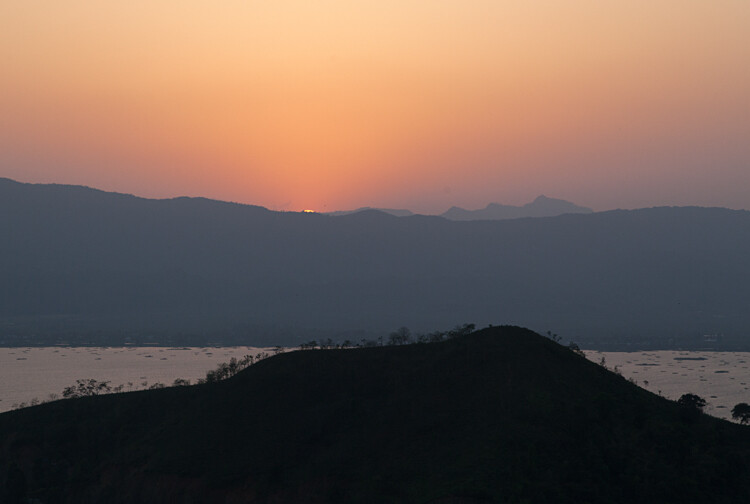
Loktak Lake (pictured below) was so spectacular that I wandered around a single hilltop taking hundreds of images. It was bliss. A lot of the results were great, but would I really want to dump them all online for friends, family, and followers to sift through? No, I would not!

Instead, it’s important to find a few favorites that tell your subject’s story:

How to do Storytelling With Your Images
Manipur, India
How to do Storytelling With Your Images
Manipur, India

6. Emotions are an important part of storytelling

To capture emotions, you’ll primarily need people and faces. Emotion can also be communicated through body language, so capturing whole bodies works sometimes, too.

How to do Storytelling With Your Images

At the marvelous Mother’s Market in Manipur, India, I met these lovely ladies (above) animatedly playing a board game. I broke the ice by asking if I could join in. They said “No,” but it made them laugh and I got permission to shoot away. The best photos came after they’d forgotten about me; their natural expressions returned and I was able to capture their emotions.

7. Don’t forget about the basics

In your bid to learn storytelling, don’t forget about settings, composition, and lighting. It’s all too easy to fall out of touch with photography basics, especially when you’re first learning to tell a story with pictures.

After all, when you’re thinking about storytelling, you might start to drift away from photographic fundamentals.

So instead of replacing composition, settings, and lighting with storytelling, make sure everything works together. A shot with beautiful light, excellent composition, perfect exposure, and a great story? That’s how you capture people’s attention!

How to do Storytelling With Your Images
A lady on a train in Shan State, Myanmar.

8. Use narrative structure

How does a traditional novel or movie work? Novels and movies are stories, so they contain beginnings, middles, and ends.

You can do the same with your photos!

If you’re just starting out taking a series of storytelling pictures, try creating a chronological narrative. It’s by no means the only or even recommended narrative structure to follow, but it’s a fun and easy way to practice.

You might tell the story of a single day in a place you know well. Start with sunrise, then take photos throughout the day as the light changes. Conclude the series with sunset and night shots.

Here, I attempted to tell the story of day and night on the rivers running through the cities of Chittagong and Dhaka:

How to do Storytelling With Your Images

Telling a story with pictures: final words

Now that you’ve finished this article, you’re ready to begin telling stories with your photos!

So remember these tips, get out there with your camera, and have fun.

Now over to you:

Have you tried doing storytelling photography? What was it like? Did you enjoy it? Share your thoughts and storytelling images in the comments below!

The post How to Do Storytelling With Your Images: 8 Useful Tips appeared first on Digital Photography School. It was authored by Ben McKechnie.


Digital Photography School

 
Comments Off on How to Do Storytelling With Your Images: 8 Useful Tips

Posted in Photography


11 Sunset Photography Tips for Beautiful Results

23 May

The post 11 Sunset Photography Tips for Beautiful Results appeared first on Digital Photography School. It was authored by Darren Rowse.

sunset photography tips for beautiful results

If you’re looking to do gorgeous sunset photography, then you’ve come to the right place.

Because in this article, I’m going to share 11 simple tips that will instantly improve your sunset photos.

Specifically, I’m going to explain:

  • How to capture beautiful sunset tones consistently
  • How to create balanced, pro-level sunset compositions
  • The best type of weather for sunset photos
  • Much more!In fact, sunsets (and sunrises) aren’t even difficult to photograph!

Ready to become a sunset photography master?

Let’s dive right in.

1. For the best shots, plan ahead

While you can sometimes capture beautiful sunset shots without any forethought…

…the best shots usually come from real planning.

So scope out places that might be good for sunsets the day or two before your shoot. Look for interesting locations – locations where you can photograph the sun all the way down to the horizon, and where there will be opportunities for shots that include foreground elements and silhouettes.

Sunsets only take a few minutes, which is why you want to think about these elements before the sunset begins. Otherwise, you might miss the best shots.

Find out when the sun will set, then arrive at least half an hour beforehand. It’s often in the lead up to a sunset that the real magic happens.

And keep an eye on the weather. There are a variety of different types of sunsets that produce a range of different types of lights and patterns in the sky. Don’t just head out on clear days, because while these can produce some wonderful colors, it’s usually the days with (partial) clouds when the real action happens.

(Also, dust and smoke in the air can produce amazing results, too.)

Consider the equipment you might need. Take a tripod, lenses with a range of focal lengths, and extra batteries.

That way, when the sky turns beautiful, you’ll be ready!

sunset photography tips dock with boat

2. Shoot at a variety of focal lengths

Most sunsets are photographed with wide-angle lenses, and these focal lengths can make for beautiful images. A lens in the 10-30mm range will give you sweeping shots of your sunset scene.

However, if you want the sun itself to be a main feature of the shot, you’ll need to zoom right in. The sun is just half a degree across, so when you shoot with a wide-angle lens, the sun will be tiny in the frame. If you want to highlight the sun, you’ll need to zoom in with a 200mm lens or longer.

(This, in turn, will increase your need for a tripod!)

Also, be hyper-aware of eye-safety concerns: looking at the sun is always dangerous. And it’s even more dangerous when you look at it through a telephoto lens. So if you do include the sun in your composition, never look through your camera’s optical viewfinder. Instead, use Live View to check your composition and exposure on the rear LCD.

(If you use a mirrorless camera, this won’t be an issue. You can safely look at the sun through the electronic viewfinder.)

sunset over a misty valley

3. Use the rule of thirds to improve your sunset photography compositions

The rule of thirds states that you should position key elements of your scene a third of the way into the frame.

So instead of putting the horizon in the center of the composition, put it toward the top or the bottom, like this:

tree at sunset

Do you see how the horizon is a third of the way up from the bottom? That’s what the rule of thirds suggests.

And it’s not just about horizons. You can also use the rule of thirds to position the sun, foreground elements, background elements, you name it.

Of course, the rule of thirds isn’t a requirement. And you can break the rule of thirds for stunning results in certain situations.

But in general, the rule of thirds is a great starting point – so unless you have a good reason to do otherwise, I highly recommend you follow it!

4. Experiment with different exposures (to achieve a magical result)

First things first:

When doing sunset photography, you should always shoot with a semi-automatic or Manual mode. Don’t let your camera dictate your settings for you (in other words: get off Auto mode immediately!).

So before starting a sunset shoot, switch your camera over to Aperture Priority mode, Shutter Priority mode, or Manual mode.

And don’t just take one shot at one exposure. Instead, take a variety of shots at different exposures.

So while you can try a “standard” exposure based on your camera’s recommendation…

…don’t be afraid to underexpose by raising your shutter speed or narrowing your aperture. And don’t be afraid to overexpose by doing the opposite.

silhouetted skyline

The great thing about sunsets is that there is no one “right” exposure. You can get stunning results with underexposure and overexposure; the key is to experiment.

(Personally, I tend to start with a relatively quick shutter speed, then slowly work down to slower shutter speeds for brighter, more luminous shots.)

5. Bracket often

In the previous tip, I talked about experimenting with different exposures.

But did you know that there’s a technique, called bracketing, that guides you in your exposure experimentation?

Here’s how it works:

First, take a photo using your camera’s suggested settings.

Then adjust the settings (either manually or via exposure compensation) to slightly underexpose the photo and then to slightly overexpose the photo.

So if your camera says to shoot at f/8, you would take your first shot at f/8, as recommended. But your second shot would be at f/5.6, and your third shot would be at f/11.

That way, you’d end up with a “standard” shot, a darker shot, and a brighter shot, all of which will give you different colors and effects.

It’s a good way to guide your experimentation, and it’s also a good way to create “insurance” photos – so that, if you overexpose the standard shot on accident, you still have a darker file on your memory card.

Make sense?

sunset photography tips sunbeams

6. Auto Exposure Lock is your friend

Bracketing can be a lot of fun, but it also takes time – and it’s not the most precise way to create a well-exposed image.

That’s where Auto Exposure Lock (AEL) comes in handy.

Using AEL is simple. First, you point your camera at the area of the scene you want perfectly exposed, such as a beautiful foreground feature.

Then lock the exposure.

Finally, reframe the picture (while maintaining the exposure lock).

Basically, it lets you determine the exposure without interference from the ultra-bright sunset, which can wreak havoc on a camera’s meter.

Also note that you can use Auto Exposure Lock to create beautiful silhouettes; just point your camera at the brightest part of the sky, lock the exposure, and then reframe with a foreground subject. The result will look like this:

horse silhouette

Cool, right?

7. For the best colors, get off Auto White Balance

Your white balance setting adjusts the temperature of the colors in your scene.

So depending on the white balance, you’ll end up with a cooler (bluer) photo or a warmer (redder) photo.

When the white balance is set to Auto, your camera will automatically deal with the color temperature. And while this can sometimes work, it often gives subpar results – where you lose the warm golden tones of your sunset.

So instead of using Auto White Balance, switch your camera to the Cloudy or Shade presets, which will warm things up a little.

Alternatively, if you’re shooting a sunset and you do want a cooler, moody shot, you can experiment with other white balance settings, such as Incandescent.

One more thing:

If you shoot in RAW, it’s true that you can always tweak the white balance during post-processing. However, this is often pretty inconvenient; after all, how much time do you want to spend adjusting the white balance in front of your computer?

Which is why it’s worth getting the white balance right in-camera.

8. Always bring a tripod for the sharpest results

If you’re shooting at longer shutter speeds, such as 1/60s and beyond, then a tripod makes a huge difference.

It’ll keep your camera stable – so that your files remain tack sharp.

When you’re out doing sunset photography, you don’t need to start the shoot with a tripod, because the minutes leading up to a sunset bring plenty of light.

But as the sun sinks on the horizon, a tripod will become more and more necessary. (And by the time the sun is gone, a tripod will be absolutely essential.)

Note that you might want to use a tripod for your whole photoshoot, especially if you plan to capture long exposures that feature moving water, like this one:

long exposure sunset photography

What if you don’t have a tripod? Or you forget to bring one?

In such cases, I recommend you stabilize your camera against an object. You can put it on the hood of a car, or you can just set it on the ground; whatever allows you to minimize movement as much as possible.

9. Don’t be afraid to focus manually

We all love autofocus – but sometimes, when shooting in extreme lighting conditions, autofocus just won’t get the job done. Your lens will hunt all around, and the shot will end up out of focus.

That’s where manual focus comes in handy.

Now, not all lenses support manual focus. Some only allow for autofocusing, in which case you’re out of luck.

But many lenses do let you focus manually (and you can generally activate manual focus by pushing the AF/MF switch on the lens barrel to MF).

So when your lens starts to hunt, don’t fret; just swap over to manual focus and keep shooting!

10. Shoot more than just the sunset

Here’s one of the many wonderful things about sunsets:

They don’t just create wonderful colors in the sky; they also cast a beautiful golden light that is great for other types of photography!

So as the sunset progresses, keep an eye on other photographic opportunities around you. For instance, you can capture portrait, landscape, or macro shots. In the light of the setting sun, it’ll all turn out amazing!

portrait silhouette with sunstar

11. Keep shooting (even after the sun is gone)

A sunset constantly changes over time – which means that every additional minute is an opportunity for a different shot.

So don’t take a few shots and call it an evening. Instead, stick around and photograph the sun as it goes down. You can continue to capture the same composition, or you can test out different compositions; the key is to keep your camera out and your finger on the shutter button.

Also make sure to capture different exposures (bracket!) and consider working with different focal lengths, as I’ve discussed above.

And finally:

Don’t pack up once the sun is gone. The period after the sun has disappeared – called the blue hour – can be great for photography, too, thanks to its beautiful colors and ethereal light. So if you still have the energy, keep finding compositions until the colors have vanished completely from the horizon.

sunset photography tips

Sunset photography tips: conclusion

Now that you know these tips, you’re well on your way to capturing some stunning sunset photography of your own.

So the next time the sun starts to get low in the sky…

…grab your camera and head outside!

Amazing images await.

Now over to you:

Which of these sunset photography tips is your favorite? Are you going to use any of them the next time you photograph a sunset? Share your thoughts (and sunset photos) in the comments below!

The post 11 Sunset Photography Tips for Beautiful Results appeared first on Digital Photography School. It was authored by Darren Rowse.


Digital Photography School

 
Comments Off on 11 Sunset Photography Tips for Beautiful Results

Posted in Photography