RSS
 

Posts Tagged ‘Three’

Olloclip launches three lens kits for the iPhone 7 and iPhone 7 Plus

12 Oct

Olloclip has announced the launch of three lens kits for the iPhone 7 and iPhone 7 Plus: the Active Lens Set, Core Lens Set, and Macro Lens Set. All three sets, of which there are eight lenses total, are joined by the new Connect interchangeable lens system, which makes quick work of swapping between the various iPhone 7 Connect lenses. The Connect system sits flush with the iPhone’s two cameras, and can be used alongside screen protectors up to 0.5mm in width.

According to olloclip, the new iPhone 7 lenses are designed to offer ‘similar perspectives’ to what you get with DSLR lenses; they offer coated glass optics and ‘edge-to-edge clarity.’ 

Core Lens Set ($ 99.99):

  • ‘Near 180-degree spherical effect’ Fisheye lens
  • ‘Advanced 4-element’ Super-Wide lens with greater than 120-degree field-of-view
  • Macro 15x lens

Active Lens Set ($ 119.99):

  • Telephoto 2x optical zoom lens
  • Ultra-Wide 155-degree FOV lens

Macro Pro Lens Set ($ 79.99):

  • Macro 7x lens
  • Macro 14x lens
  • Macro 21x lens

Speaking about the lenses, company founder Patrick O’Neill said, “olloclip is committed to continually enhancing the mobile photography experience. That means giving full respect to mobility with no oversized, heavy lenses and paying strict attention to delivering beautiful photography with the simplest, quickest and most versatile user experience possible.”

All three lens kits are available to pre-order now from Olloclip’s website and are expected to ship in early November. 

Articles: Digital Photography Review (dpreview.com)

 
Comments Off on Olloclip launches three lens kits for the iPhone 7 and iPhone 7 Plus

Posted in Uncategorized


In Europe? You Don’t Want to Miss Pop_UP Berlin in Three Weeks

11 Oct

At the end of the month, GPP PopUp is coming to Berlin. If you are in Northern Europe, this city is within reach for you. And for a variety of reasons, it’s almost certainly the last time Pop_UP will be held in Europe.

Here’s why you shouldn’t miss it.

A Compact, Info-Filled Weekend

This will be my third time teaching at Pop_UP. Over the course of one weekend—two days—the instructors there work hard to bring you a learning experience that centers on photography, but hits it from four unique and different perspectives.

That’s important, because no two photographers’ environments are the same. And learning from people who have successfully navigated various waters in different ways can be very valuable.

The sessions are all pretty fast paced. We each have a lot to cover and only a few hours to do it. For that reason, we each tend to step back from the daily cacophony and concentrate on things that might spark you to think about your own situation in a different way.

I wouldn’t expect to learn 500 things. If past Pop_UPs are a guide, I think the more likely experience is that you’ll get a deeper look into a couple dozen new concepts—many of which will be things that you have never really considered before.

People don’t learn sequentially. Accumluated knowledge kind of builds up, then something causes that dam to burst and important concepts come together in a very concentrated way. Which is why there are times when you suddenly realize multiple things at once.

Creating those intersections is the main goal of my session at Pop_UP. But more on that in a minute.

Greg Heisler is a One-Off

Consider Greg Heisler. And yes, I realize there is a Joe and a Zack involved. But they each have their own online venues to talk about their approach to Pop_UP. But Greg really doesn’t.

So let’s talk about him for a minute.

First, Greg is one of the world’s pre-eminent portraitists. You’ve grown up seeing his work. And you think there is this gap, for lack of a better word, that separates his work from yours. And in some ways you are right. The technical gaps are there, because he has a mastery of photography and lighting and color that few can match.

But what I have learned, watching him teach in his very open way, is that the camera-related gaps only partly explain the difference between his work as compared to that of the average “good” photographer.

I have learned that there are other gaps. Important gaps. Probably more important than the photography-related gaps that we can easily identify.

His work ethic, his thought ethic, his approach to dealing with the people in front of his camera, his respect for (and knowledge of) the history that came before us as photographers—all of that is at least as important as his mastery of photography or lighting.

Probably more important, actually.

Spending a half a day seeing that is something that is hard to put a value on. You go in expecting F/stops and you coming out realizing the important stuff had nothing to do with F/stops. If you have read 50 Portraits, you already have some idea of what I am talking about.

(And if you own his book, bring it. Get him to sign it. In 100 years, no one is going to remember me. But Greg Heisler will still be alive and well in the lexicon of photographers.)

Yes, he will almost certainly be shooting at Pop_UP. And it will be a learning experience to watch him work. He might use a Profoto light, or he might use a cheap fluorescent tube from a local hardware store. To Greg, it’s all just light. His versatility and unflappability is a lesson in itself.

Lastly, back to the idea of this being a one-time opportunity. Because for the most part, Greg has been taken off of the market.

Syracuse University in upstate New York has very wisely snapped him up to keep largely for themselves. He loves it there. It’s a wonderful college town with a steady stream of curious (and lucky) young minds for him to mold.

Which means he almost never teaches externally these days. And because of his academic schedule, when he does teach it is generally close to home.

If you are in Europe, this might well be the only chance you have to learn from him.

And I Have to Follow That

I have taught in a lot of places—many cities, many countries. And suffice to say that following Greg Heisler in any kind of teaching environment is its own little nightmare. Not unlike the one where you show up at school without pants.

It stems from a deep-seeded fear of relative inadequacy, something I readily confess as a “lighting guy” in the context of Greg. So you can damn-well be sure I won’t be talking about lighting.

“What an amazing cooking presentation by Julia Child! Please stick around for David Hobby, who is next and will show you how to make toast…”

No.

So my class on Sunday afternoon will be more about the things that surround photography:

• How do you find the areas in photography where you are particularly well-suited?

• How do you identify—and create—areas of extreme competitive advantage?

• How do you create the ecosystems that, in turn, create the positive feedback loops you need?

• Which “outputs” from those systems do you optimize for? (Not just money.)

• Is it a good idea to optimize for money? (Not usually.)

• What balance do you need to create to foster sustainability?

• Where do your best ideas come from?

• Is it possible to engineer a stream of strong incoming ideas? (Yes, definitely.)

I have watched for ten years as my particular field—editorial/photojournalism—has largely collapsed. Many assignment fees today don’t even cover the cost of periodic gear replacement. It’s crazy.

So my last ten years have been spent studying and practicing new ways to approach the “new” world of photo and its related professions. To learn to adapt to a world that has completely shifted under my feet, and to anticipate those changes still yet to come.

This is not something I write about on this site, simply because it is way out of the lighting niche. But it is something that I feel is existentially important for photographers to understand.

That’s the deep dive we’ll be taking on Sunday afternoon.

So That’s One Day

Like I said, I’ll let Joe and Zack speak for themselves. Feel free to ping them on Twitter if you have any Q’s. But for those of you joining us in Berlin, this is what’s on tap for your Sunday.

Pop_UP is not a forever thing. We have been to UK, Asia, US—and this month, EU. If it continues, it would almost certainly be in South America or Africa.

If you are in Europe, and you want to attend one, this is your chance. Come join us.

And if you have photo friends in Europe, please help to spread the word. None of us live there, so we would very much appreciate your help in that way.

Thanks—and see you there,
David

:: GPP Pop_UP Berlin, Oct 29-30 ::
Strobist

 
Comments Off on In Europe? You Don’t Want to Miss Pop_UP Berlin in Three Weeks

Posted in Photography


Voigtlander shows off three new lenses including 65mm F2 Macro for E-mount

06 Oct

$ (document).ready(function() { SampleGalleryV2({“containerId”:”embeddedSampleGallery_9965740614″,”galleryId”:”9965740614″,”isEmbeddedWidget”:true,”standalone”:false,”selectedImageIndex”:0,”startInCommentsView”:false,”isMobile”:false}) });

Lens manufacturer Voigtlander is set to introduce three unusual lenses this autumn and has posted pictures and specifications on its website, but isn’t letting on when they will arrive.

The most interesting, visually at least, is a VM 50mm F3.5 Heliar designed for M-mount bodies. It uses an almost symmetrical configuration of five elements in three groups and forms a conical shape reminiscent of the Tessar 50mm lenses of the Carl Zeiss Jena Werra cameras. The lens will have a minimum aperture of F22 and will use a 10-bladed iris that promises nice circular out-of-focus highlights. Remarkably, the aperture ring will be without click stops.

A more popular lens will be the 65mm F2 Macro Apo-Lanthar for the Sony E-mount system. This will have a closest focusing distance of 0.31m and will be able to transmit EXIF data to the camera as well as trigger manual focus assistance such as automatic magnification and peaking. It will have 10 elements in 8 groups and will offer apertures down to F22. The company has yet to decide whether the aperture ring will feature click stops, but again the iris will use 10 blades.

The third lens on display is a SL ll – S 58mm F1.4 Nokton designed for Nikon AI-S bodies. This new version of the company’s existing SL ll – N lens appears to be optically unchanged but it offers a more retro barrel design that echoes Nikon’s own manual focus lenses, and it has the addition of a meter coupling prong that will allow it to be used with much older bodies.

The company has not given any information on pricing or delivery dates, but you can read more specification on the Voigtlander website.

Articles: Digital Photography Review (dpreview.com)

 
Comments Off on Voigtlander shows off three new lenses including 65mm F2 Macro for E-mount

Posted in Uncategorized


Time-lapse captures fast-changing Singapore skyline over three years

13 Jun

Time-lapse and tilt-shift specialist Keith Loutit’s latest project has been years in the making. The Lion City II – Majulah is a follow-up to another impressive feature, documenting the rise and fall (but mostly rise) of skyscrapers on Singapore’s skyline over the course of three years.

Channel NewsAsia reports that the four-minute video is the culmination of 500 hours of shooting from June 2013 to June 2016. The soundtrack was composed for the project by Michael Adler Miltersen in collaboration with Loutit. 

The Lion City II tells a compelling story about daily life in the shadow of urban growth. And as someone who played way too much Sim City as a kid, I’m pretty sure I could watch this on repeat all morning. Are you inspired to start a time-lapse project of your own? Let us know in the comments.

Articles: Digital Photography Review (dpreview.com)

 
Comments Off on Time-lapse captures fast-changing Singapore skyline over three years

Posted in Uncategorized


Sigma says three of its lenses are not fully compatible with the Canon EOS-1D X II

03 Jun

Sigma has announced that three of its lenses, the 20mm F1.4 DG HSM Art, 35mm F1.4 DG HSM Art and the 85mm F1.4 EX DG HSM, aren’t ‘fully compatible with’ Canon’s newly released EOS-1D X Mark II. When one of these lenses is used with the camera, the resulting images may be underexposed. The company is developing firmware to correct the issue.

According to Sigma, the issue manifests when users choose ‘Center-weighted Average Metering’ or ‘Evaluative Metering.’ In addition, the company recommends users disable lens correction settings in the camera when using one of Sigma’s interchangeable lenses. This includes Chromatic aberration correction, Peripheral illumination correction, Distortion correction and Diffraction correction.

The latter point likely refers to an issue with the 35mm F1.4 Art lens and 1DX Mk II that surfaced last month in which images taken with the pair showed unusual banding around the edges. As SLR Lounge noted, turning off Peripheral illumination correction in-camera fixed the issue, which now appears to be Sigma’s official workaround. The camera maker also says that the Manual Override focus function isn’t available with the 1D X II when using its lenses.

Via: Sigma

Articles: Digital Photography Review (dpreview.com)
 
Comments Off on Sigma says three of its lenses are not fully compatible with the Canon EOS-1D X II

Posted in Uncategorized


Win One of Three Lenses from Tamron – Enter the Sunshine Photography Contest

09 May

Win one of THREE lenses from Tamron! Enter the “Sunshine” photography contest today.

Win one of the following:

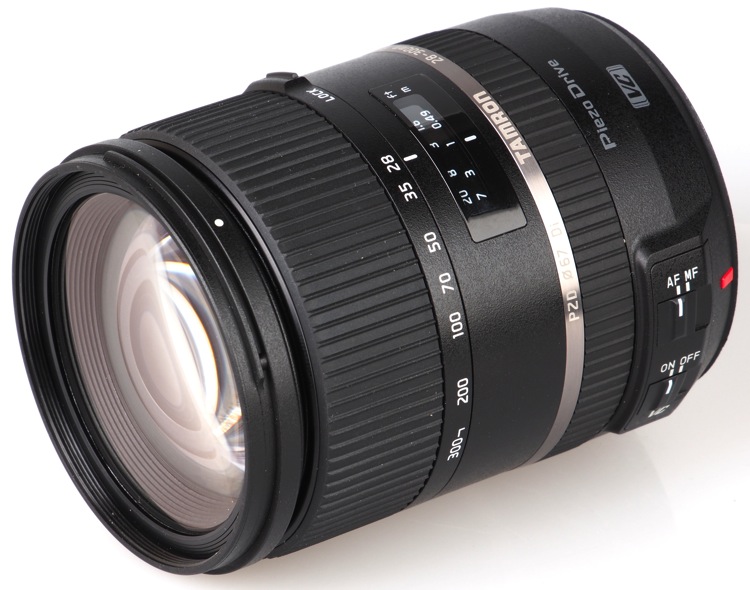
  • A Tamron 28-300mm Di VC PZD lens
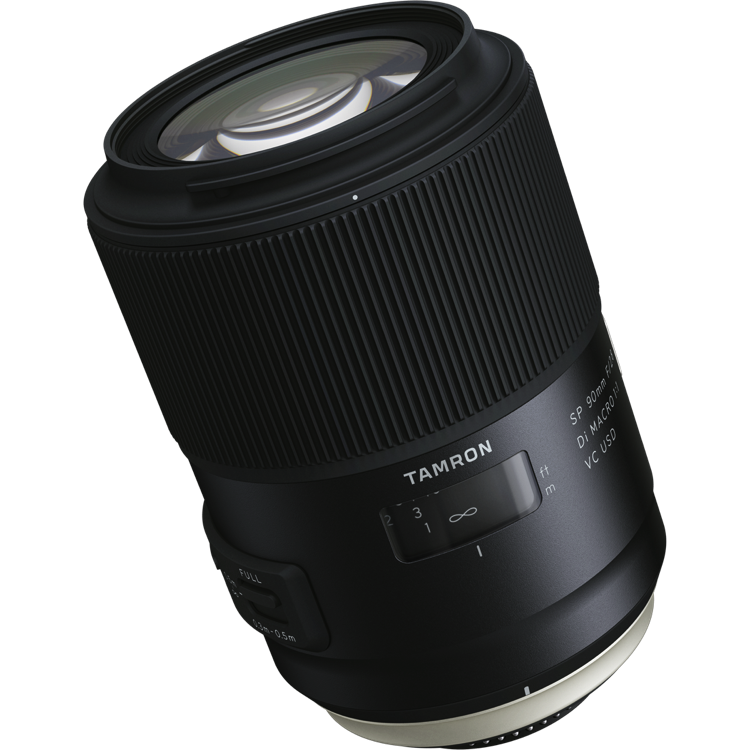
  • A Tamron SP 90mm F/2.8 Di VC USD lens
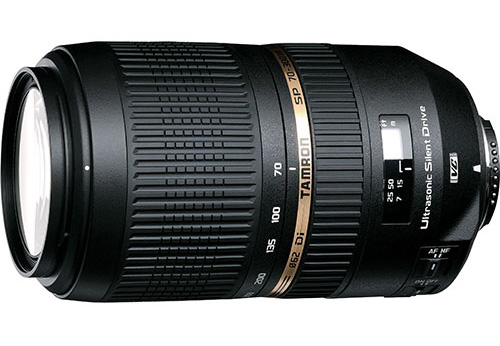
  • A Tamron SP 70-300mm Di VC USD lens

Over the last few years here at dPS, we’ve run very some very popular competitions with our partners, to give away to lucky dPS readers some of their great photographic products. We are lucky enough to be able to do it again.

For this contest, Tamron is giving away three lenses!

These three unique prizes are designed to help every level of photographer create better pictures. Tamron is the world’s most awarded photographic lens line. Each will be won by a different dPS reader. Here’s what you could win:

Our First Prize Winner will receive:

A Tamron 28-300mm Di VC PZD (model A010) – $ 849 value, for canon, Nikon or Sony cameras.

Tamron 28 300mm

The Second Place Winner will receive:

A Tamron SP 90mm F/2.8 Di VC USD Macro Lens (model F017-new) – $ 649 value, for canon, Nikon or Sony (without VC) cameras.

Second Prize SP 90mm

The Third Place Winner will receive:

A Tamron SP 70-300mm Di VC USD Zoom Lens (model A005) – $ 449 value, for canon, Nikon or Sony cameras.


Tamron-70-300

Learn a little more about Tamron here: Tamron USA

How to win

To win this competition you’ll need to:

  • Visit the above lens information pages and learn more about the lens and its core use.
  • Post your sunshine photo, along with a few words on how you feel one of the above Tamron lenses would help your photography. It’s as easy as that!
  • Do this in the next 21 days and after June 1st, 2016, the team at dPS will choose the best three photos and we will announce the winners in the following days.
  • The deadline to enter is May 30th at 11:59pm PST (UTC-7). Photos and comments left after the deadline will not be considered.

Bee Image

By best – we’re looking for people who have an understanding of photography, the role of lenses, and how they will best suit your needs. So you’ll need to check out the product pages to put yourself in the best position to win.

There’s no need to write essay length comments to win – but we’re looking to hear what you like about the lens, and how it would help your development as a photographer. Don’t forget to include your favorite sunshine themed photo. We encourage you to have fun and be creative.

This competition is open to everyone, no matter where you live – but there is only one entry per person. To enter – simply leave your photo and comment below.

Tamron logo

Disclaimer: Tamron is a paid partner of dPS

googletag.cmd.push(function() {
tablet_slots.push( googletag.defineSlot( “/1005424/_dPSv4_tab-all-article-bottom_(300×250)”, [300, 250], “pb-ad-78623” ).addService( googletag.pubads() ) ); } );

googletag.cmd.push(function() {
mobile_slots.push( googletag.defineSlot( “/1005424/_dPSv4_mob-all-article-bottom_(300×250)”, [300, 250], “pb-ad-78158” ).addService( googletag.pubads() ) ); } );

The post Win One of Three Lenses from Tamron – Enter the Sunshine Photography Contest by Darlene Hildebrandt appeared first on Digital Photography School.


Digital Photography School

 
Comments Off on Win One of Three Lenses from Tamron – Enter the Sunshine Photography Contest

Posted in Photography


Nikon covers all focal lengths with three ‘DL’ enthusiast compacts with 1″-type sensors

26 Feb

$ (document).ready(function() { SampleGalleryV2({“containerId”:”embeddedSampleGallery_8751365762″,”galleryId”:”8751365762″,”isEmbeddedWidget”:true,”standalone”:false,”selectedImageIndex”:0,”startInCommentsView”:false,”isMobile”:false}) });

Nikon is entering the 1″-type premium compact market in a big way, introducing three new models: the Nikon DL18-50, DL24-85 and DL-24-500. Between them, they cover pretty much every focal length. The ‘guts’ of all three ‘DL’ models are the same, in that they share a sensor, image processor, autofocus system and support for 4K video (with clean HDMI output, no less). Parts of the design, especially the control layout and font, strongly resemble that of Nikon’s 1-series mirrorless cameras.

Sensor-wise, the DLs use what is possibly the same 20.8MP 1″-type BSI CMOS sensor as Nikon’s J5 mirrorless camera. It’s paired with the company’s new EXPEED 6A image processor, which allows for a top ISO of 12800 and 4K/UHD video recording at 30p. All three cameras have ‘Dual Detect VR’, which combines data from the cameras’ angular velocity sensors and the scene itself to reduce shake. They also have fluorine coatings on their lenses to keep moisture and oil away. Each has a manual focus ring around the lens, as well.

They also have 3″ touch-enabled OLED displays, tilting on the 18-50 and 24-85 and fully articulating on the 24-500. Naturally, they all have Wi-Fi with NFC, plus Nikon’s ‘SnapBridge’ technology, which uses Bluetooth to maintain a connection between camera and phone, so there’s no need to re-pair. Battery life on all three DL models is rated at 290 shots/charge (per the CIPA standard).

One of the features that may set the DLs apart from the other 1″-type cameras is its Hybrid AF system, which combines 105 phase-detect with 171 contrast-detect points. This allows the camera to shoot at 20 fps with continuous autofocus, which is, by far, best-in-class (spec-wise). If you can live with single AF, then the DLs can shoot even faster: 60 fps.

Nikon DL18-50

The first camera is perhaps the most interesting, as it has the widest lens of any enthusiast compact on the market. That lens has an equivalent focal length of 18-50mm and a fast maximum aperture range of F1.8-2.8. The lens has a 3-stop ND filter and is Nikon’s first compact to have a Nano Crystal Coating, which reduces flare and ghosting. The lens has seven aperture blades and has a top shutter speed of 1/1600 sec (an electronic shutter, found on all three models, maxes out at 1/16000 sec). There is also built-in perspective correction, which is especially useful when shooting architecture.

The camera has full manual exposure control, Raw support, tilting touch OLED display and aforementioned 4K/30p support. The DL18-50 also supports an optional tilting OLED electronic viewfinder with 2.36M dots. The 18-50 is the only one of the camera cameras to lack a built-in flash, though like its siblings it does have a hot shoe.

Nikon DL24-85

The DL24-85 is very similar to its wider sibling, both inside and out. The main difference is its lens, which is a 24-85mm equiv. F1.8-2.8 model, though it lacks the Nano Crystal Coating. Its standout feature is the ability to take life-size, 1:1 macro photos, with a minimum focus distance of 3cm. Macro shooters can also take advantage of focus peaking and bracketing as well as manual priority AF. Again it includes a built-in ND filter.

Nikon DL24-500

For those seeking a long zoom model, there’s the DL24-500. As its name implies, it has a 24-500mm equiv. lens, with a max aperture range of F2.8-5.6. Unlike the other two models, the 24-500 has a fully articulating display and a built-in OLED viewfinder. It’s also the only of the DL models with a mic input jack, with support for Nikon’s ME-1 shotgun mic. 

All three cameras will be available in early summer with suggested retail prices of $ 649 (24-85), $ 849 (18-50), and $ 999 (24-500).

Press Release:

THE NIKON DL PREMIUM COMPACT SERIES: PUTTING POCKETABLE POWER AND LEGENDARY NIKKOR LENS PRECISION INTO THE HANDS OF PASSIONATE PHOTOGRAPHERS

Pairing a Large 1-Inch Sensor with Superior NIKKOR Lens Technology, Nikon’s New Compact DL24-85, DL18-50 and DL24-500 Will Help Capture Stunning Images and 4K UHD Video

MELVILLE, NY (Monday, February 22, 2016 at 11:01 P.M. EST) – Today, Nikon Inc. announced the new DL Series of premium compact cameras. These pocketable yet powerful imaging tools offer an elite level of imaging prowess that fits easily in one’s palm. Equipped with a variety of focal lengths optimized for different types of shooters, the DL24-85, DL18-50 and DL24-500 combine powerful NIKKOR optics with a large 20.8-megapixel (CX-format) 1-inch BSI CMOS sensor to produce stunning image quality and amazingly detailed images, even when shooting in low-light. Cameras in the new DL line will also feature powerful performance, with high-speed Autofocus (AF) and 20 frames-per-second (60 fps with fixed AF) continuous shooting capability for fast action moments, as well as 4K UHD video recording for users to tell their stories in new ways. Ergonomically designed and familiar for advanced users, all three cameras will utilize the new Nikon SnapBridge connectivity to make it easier than ever to shoot and share with ease.

“We recognize consumers’ desire for smaller cameras capable of outstanding image quality,” said Masahiro Horie, Director of Marketing and Planning, Nikon Inc. “With the new DL line, Nikon is proud to fuse legendary NIKKOR optics with the latest innovations in imaging to provide advanced photographers amazingly compact tools capable of capturing photos and video that even the most discerned professional would be proud of.”

The Nikon DL Series: Powerful Performance, Superior Optics

The new DL line of premium compact cameras packs innovative and powerful imaging technology into elegantly designed yet remarkably compact camera bodies, making it easier than ever to carry pure imaging prowess in the palm of one’s hand. All of these new cameras are designed with a 20.8-megapixel CX-format (1-inch) BSI CMOS sensor, which when combined with fast, high quality NIKKOR glass, help to create stunning image quality for stills or 4K UHD video. Working alongside the new sensor is the new EXPEED 6A image processor that allows for impressive noise reduction and powerful, fast performance, making it possible to capture stunning low-light street photography, beautiful portraits or spectacular landscapes with ease. 

For fleeting moments and fast-action, the DL line incorporates a high-speed hybrid autofocus (AF) system featuring 105 phase detect focus areas (with 171 focus points in contrast detect AF mode), as well as continuous shooting up to an incredible 20 fps, with capability to capture up to a blazing fast 60 fps with focus locked on the first frame. The DL series also features Dual Detect Optical VR technology to compensate for camera shake while handheld or at slower shutter speeds.

Continuing the impressive legacy of NIKKOR glass, each new DL camera features a unique lens design capable of amazing resolution and beautiful background blur (bokeh), with impressively fast apertures. The lens barrel also includes a manual focus ring, giving users enhanced control over focus on any subject.

Each NIKKOR lens is also equipped with a fluorine coating that helps repel dirt, water and oil, and also facilitates easy cleaning. For the first time in a Nikon compact camera, the DL18-50’s NIKKOR lens will utilize Nano Crystal Coat to help reduce ghost and flare, particularly useful when shooting at a wide-angle. With the best NIKKOR technologies now integrated into compact camera models, users will be able to capture phenomenal images with amazing detail time and time again. 

Control and Versatility

The DL24-85, DL18-50 and DL24-500 put creative control in the hands of each photographer and are all operated using the familiar Nikon DSLR menu design and an assortment of physical controls. The series also supports RAW (NEF) image capture, full PSAM manual controls and over 20 preset creative options, for use in both still and video shooting (including Picture Control, Creative mode, Multiple Exposure Lighten) to help challenge each user to expand their photographic horizons.

The DL line provides the tools to frame nearly every shot, with all three cameras sporting high-resolution 1,037k-dot OLED Touch displays. While the DL24-85 and DL18-50 allow for tilting, the DL24-500’s display provides full Vari-angle capability, vitally important when shooting from unique perspectives. Even further customization and control is possible utilizing the hot shoe/accessory shoe available on DL24-85 and DL18-50 models that allows for complete system expandability with the DF-E1 optional electronic viewfinder. The DL24-500 also sports a hot shoe and a stereo microphone input jack, while all three models are compatible with Nikon i-TTL Speedlights. 

Seamlessly Shoot and Share

Nikon SnapBridge makes it easier than ever to shoot and share amazing images with friends and family. Available throughout Nikon’s newest line of premium compacts, SnapBridge utilizes Bluetooth®1 low energy technology (BLE) to provide an “always on” connection to a compatible2 smart device. Users can now seamlessly send images from their camera to a smart device (utilizing the new SnapBridge app) for easy sharing via social networks or to the cloud for instant storage. An unlimited number of thumbnails and 20 GB of storage will also be available for registered Nikon owners and SnapBridge users on Nikon Image Space, Nikon’s free image storing service. Additionally, built-in Wi-Fi3 and NFC remain available to help facilitate easy connection and sharing. 

Through Nikon SnapBridge, users can also operate their cameras remotely using the app, automatically synchronize time and location information to any image utilizing the camera’s constant connection to a compatible smart device, as well as embed information on any image, including copyright or photographers’ names. Lastly, firmware updates have never been easier, as Nikon will send registered users firmware information via the new SnapBridge application, directly to their smart device.

4K Video Capability

The DL series will be among Nikon’s first compact offerings to support 4K UHD video capability [3840×2160] at 30p, affording users the ability to capture incredibly beautiful video with remarkable detail, all with a compact camera. Multimedia photographers will have free reign over their creative vision with the ability to utilize PSAM selectable exposure modes while recording, alongside popular movie features like HDMI output to an external recorder, slow motion to 1200 fps and the ability to grab stills from video. Other creative video functions available include: Full HD movie, HD movie, Motion Snapshot, Slow motion, 4-second movie, Time-lapse movie, Superlapse movie and Jump cut.

DL24-85: The Premium Compact Camera Ready for Anything

Great for travel, portraits and general photography, the DL24-85 offers pocket-sized imaging power with a fast and versatile 24-85mm focal range. Compatible with 40.5mm threaded filters, the newly designed NIKKOR lens (11 elements in 9 groups) features a 3.6x zoom range (7x with Dynamic Fine Zoom4) and a wide f/1.8-2.8 aperture, empowering users to capture a wide variety of subjects with incredible detail and natural bokeh, even in low-light. The 24-85mm offering also features Dual Detect Optical VR, AF bracketing and a tilting Touch OLED display to make composing from creative angles easier than ever.

Exclusive to this DL model is a new Super Macro Mode (1:1) that helps capture even small subjects in life-size detail. Setting manual zoom on the camera to super macro position allows the user close-up shooting at a 35mm equivalent magnification, providing amazing detail whether shooting flowers in bloom or a wandering ladybug. Macro photographers can utilize a variety of camera functions within the mode, including focus bracketing, manual priority AF (M/A) mode and peaking indication, to truly customize the look and feel of every image.

DL18-50: A Premium Pocket Camera That Can Capture It All

For landscape and architecture shooters looking for compact, ultra-wide angle DL option, the DL18-50 provides a solution that fits easily into any photographer’s pocket. Starting at a wide 18mm and expanding to 50mm (2.8x zoom, 5.5x with Dynamic Fine Zoom) the camera sports a powerful NIKKOR lens with a wide f/1.8-2.8 aperture that makes it easier than ever to produce natural bokeh in any image, while capturing tack-sharp stills and video. This lens is compatible with 46mm filters and features Nikon’s Nano Crystal Coat to help reduce ghosting and flare. 

Those who choose the wide-angle DL premium compact can also take advantage of perspective controls to help compensate for image distortion, particularly for shooting tall objects from the ground like landmarks and skyscrapers. Tailored for architecture shooters, this feature helps to capture the correct perspective with ease.

For use with the DL24-85 and DL18-50, a newly designed optional DF-E1 electronic viewfinder (EVF) will be available for discerning photographers who desire for a traditional eye-level viewfinder to frame their photos. The compact DF-E1 features a 2,359k-dot resolution with eye sensor, alongside a tilting mechanism, diopter adjustment and anti-reflection coating, helping provide further clarity and versatility for DL shooters. 

DL24-500: Get Close and Connect

The DL24-500 offers the longest zoom capability of any DL premium compact, reaching an incredible 500mm focal length and 21x optical zoom (42x with Dynamic Fine Zoom). Combining Nikon’s new 1-inch sensor with this impressive super-zoom NIKKOR lens, the DL24-500 is an ideal choice for users eager to photograph and share anything from concerts to wildlife. Featuring an f/2.8-5.6 aperture, this lens (compatible with 55mm filters) integrates the newest NIKKOR technologies to help render amazing images and background blur, even from afar.

The DL24-500 also features Dual Detect Optical VR, particularly useful when shooting at extremely long focal lengths or without a tripod, a built-in electronic viewfinder (EVF) with 2,359k-dot OLED display and an eye-sensor and a Vari-angle 1,037k-dot OLED screen.

Price and Availability

The new DL24-85, DL18-50 and DL24-500 will be available in early summer 2016 for suggested retail prices (SRP) of $ 649.95*, $ 849.95*, and $ 999.95*, respectively. Pricing and availability for the optional DF-E1 electronic viewfinder, compatible with both the DL24-85 and DL18-50, is TBD. For more information on these new Nikon products, please visit www.nikonusa.com.

1 The Bluetooth® word mark and logos are registered trademarks owned by Bluetooth SIG, Inc. and any use of such marks by Nikon Corporation and its affiliates is under license. 

2. WI-FI COMPATIBILITY This camera’s built-in Wi-Fi® capability can only be used with a compatible iPhone®, iPad®, and/or iPod touch® or smart devices running on the Android™ operating system. The Nikon SnapBridge application must be installed on the device before it can be used with this camera. The SnapBridge app is not yet available (coming soon in spring 2016) Apple, the Apple logo, iPhone, iPad and iPod touch are trademarks of Apple Inc., registered in the U.S. and other countries. App Store is a service mark of Apple Inc.

3. Wi-Fi and the Wi-Fi logo are trademarks or registered trademarks of the Wi-Fi Alliance. N-Mark is a trademark or registered trademark of NFC Forum, Inc., in the United States and/or other countries.

4. Dynamic Fine Zoom magnification is calculated from the full-wide end of optical zoom

* SRP (Suggested Retail Price) listed only as a suggestion. Actual prices are set by dealers and are subject to change at any time.

Nikon DL18-50 / DL24-85 specifications

  Nikon DL18-50 Nikon DL24-85
Price
MSRP $ 849 $ 649
Body type
Body type Large sensor compact
Sensor
Max resolution 5584 x 3712
Image ratio w:h 3:2
Effective pixels 21 megapixels
Sensor photo detectors 23 megapixels
Sensor size 1″ (13.2 x 8.8 mm)
Sensor type BSI-CMOS
Processor Expeed 6A
Color space sRGB
Color filter array Primary color filter
Image
ISO Auto, 100-12800
White balance presets 7
Custom white balance Yes
Image stabilization Optical
Uncompressed format RAW
File format
  • JPEG (Exif v2.3)
  • Raw (NEF)
Optics & Focus
Focal length (equiv.) 18–50 mm 24–85 mm
Optical zoom 2.8× 3.5×
Maximum aperture F1.8 – F2.8
Autofocus
  • Contrast Detect (sensor)
  • Phase Detect
  • Multi-area
  • Center
  • Selective single-point
  • Tracking
  • Single
  • Continuous
  • Touch
  • Face Detection
  • Live View
Autofocus assist lamp Yes
Digital zoom Yes (4x)
Manual focus Yes
Normal focus range 15 cm (5.91) 30 cm (11.81)
Macro focus range 3 cm (1.18)
Number of focus points 171
Screen / viewfinder
Articulated LCD Tilting
Screen size 3
Screen dots 1,037,000
Touch screen Yes
Screen type OLED
Live view Yes
Viewfinder type Electronic (optional)
Photography features
Minimum shutter speed 30 sec
Maximum shutter speed 1/2000 sec 1/1600 sec
Maximum shutter speed (electronic) 1/16000 sec
Exposure modes
  • Program AE
  • Shutter priority
  • Aperture priority
  • Manual
Scene modes
  • Bird Watching
  • Close-up
  • Food
  • HDR
  • Landscape
  • Multiple Exposure Lighten
  • Night Landscape
  • Night Portrait
  • Portrait
  • Selective Color
  • Sports
Built-in flash No Yes
Flash range 5.00 m (at ISO 100)
External flash Yes (via hot shoe)
Continuous drive 60.0 fps
Self-timer Yes (2 or 10 secs)
Metering modes
  • Multi
  • Center-weighted
  • Spot
Exposure compensation ±5 (at 1/3 EV, 1 EV steps)
Videography features
Resolutions 3840 x 2160 (30p, 25p), 1920 x 1080 (60p, 50p, 30p, 25p), 1280 x 720 (60p, 50p, 30p, 25p)
Format MPEG-4, H.264
Videography notes Slow motion: 1080/120p, 720/240p, 800 x 296 (400p), 400 x 144 (1200p)
Microphone Stereo
Speaker Mono
Storage
Storage types SD/SDHC/SDXC
Connectivity
USB USB 2.0 (480 Mbit/sec)
HDMI Yes (micro-HDMI)
Microphone port No
Headphone port No
Wireless Built-In
Wireless notes Wi-Fi with NFC and constant connection via Bluetooth
Remote control Yes (via smartphone)
Physical
Battery Battery Pack
Battery description EN-EL24 lithium-ion battery & charger
Battery Life (CIPA) 290
Weight (inc. batteries) 365 g (0.80 lb / 12.87 oz) 350 g (0.77 lb / 12.35 oz)
Dimensions 106 x 63 x 58 mm (4.17 x 2.48 x 2.28) 105 x 61 x 50 mm (4.13 x 2.4 x 1.97)
Other features
Orientation sensor Yes
Timelapse recording Yes (video)
GPS None

Nikon DL24-500 specifications

Price
MSRP $ 999
Body type
Body type Large sensor compact
Sensor
Max resolution 5584 x 3712
Image ratio w:h 3:2
Effective pixels 21 megapixels
Sensor photo detectors 23 megapixels
Sensor size 1″ (13.2 x 8.8 mm)
Sensor type BSI-CMOS
Processor Expeed 6A
Color space sRGB
Color filter array Primary color filter
Image
ISO Auto, 100-12800
White balance presets 7
Custom white balance Yes
Image stabilization Optical
Uncompressed format RAW
File format
  • JPEG (Exif v2.3)
  • Raw (NEF)
Optics & Focus
Focal length (equiv.) 24–500 mm
Optical zoom 20.8×
Maximum aperture F2.8 – F5.6
Autofocus
  • Contrast Detect (sensor)
  • Phase Detect
  • Multi-area
  • Center
  • Selective single-point
  • Tracking
  • Single
  • Continuous
  • Touch
  • Face Detection
  • Live View
Autofocus assist lamp Yes
Digital zoom Yes (4x)
Manual focus Yes
Normal focus range 30 cm (11.81)
Macro focus range 1 cm (0.39)
Number of focus points 171
Screen / viewfinder
Articulated LCD Fully articulated
Screen size 3
Screen dots 1,037,000
Touch screen Yes
Screen type OLED
Live view Yes
Viewfinder type Electronic (optional)
Viewfinder coverage 97%
Viewfinder resolution 2,359,000
Photography features
Minimum shutter speed 30 sec
Maximum shutter speed 1/2000 sec
Maximum shutter speed (electronic) 1/16000 sec
Exposure modes
  • Program AE
  • Shutter priority
  • Aperture priority
  • Manual
Scene modes
  • Bird Watching
  • Close-up
  • Food
  • HDR
  • Landscape
  • Multiple Exposure Lighten
  • Night Landscape
  • Night Portrait
  • Portrait
  • Selective Color
  • Sports
Built-in flash Yes
Flash range 10.00 m (at ISO 100)
External flash Yes (via hot shoe)
Continuous drive 60.0 fps
Self-timer Yes (2 or 10 secs)
Metering modes
  • Multi
  • Center-weighted
  • Spot
Exposure compensation ±5 (at 1/3 EV, 1 EV steps)
Videography features
Resolutions 3840 x 2160 (30p, 25p), 1920 x 1080 (60p, 50p, 30p, 25p), 1280 x 720 (60p, 50p, 30p, 25p)
Format MPEG-4, H.264
Videography notes Slow motion: 1080/120p, 720/240p, 800 x 296 (400p), 400 x 144 (1200p)
Microphone Stereo
Speaker Mono
Storage
Storage types SD/SDHC/SDXC
Connectivity
USB USB 2.0 (480 Mbit/sec)
HDMI Yes (micro-HDMI)
Microphone port Yes
Headphone port No
Wireless Built-In
Wireless notes Wi-Fi with NFC and constant connection via Bluetooth
Remote control Yes (via smartphone)
Physical
Battery Battery Pack
Battery description EN-EL20A lithium-ion battery & charger
Battery Life (CIPA) 290
Weight (inc. batteries) 780 g (1.72 lb / 27.51 oz)
Dimensions 123 x 90 x 139 mm (4.84 x 3.54 x 5.47)
Other features
Orientation sensor Yes
Timelapse recording Yes (video)
GPS None

Articles: Digital Photography Review (dpreview.com)
 
Comments Off on Nikon covers all focal lengths with three ‘DL’ enthusiast compacts with 1″-type sensors

Posted in Uncategorized


GoPro to discontinue three cameras and exit entry-level market

06 Feb

This week, GoPro announced it will discontinue three of its six available action cameras and abandon the entry-level market. This follows the company’s preliminary fourth quarter results revealed last month. GoPro had stated at the time that poor holiday sales would likely result in low quarterly revenue, and that it would layoff 7% of its workforce as a result.

In a conference call this week, GoPro’s founder and CEO Nick Woodman said the company’s recent misfortunes aren’t due to increased competition. ‘Growth slowed in the second half of the year,’ said Woodman, ‘and we recognize the need to develop software solutions that make it easier for our customers to offload, access and edit their GoPro content.’

GoPro is banking on the improved software reversing its sales numbers, but it isn’t clear what other plans may be in place. Woodman said the company will be ‘delivering this new experience in 2016, period.’ In the meantime, though, GoPro anticipates its first quarter sales will be below analysts’ $ 300 million expectation, falling between $ 160 and $ 180 million.

GoPro will stop selling its HERO+ LCD, HERO+ and HERO entry-level cameras in April, making the $ 200 HERO4 Session its least expensive model.

Via: Financial Times

Articles: Digital Photography Review (dpreview.com)
 
Comments Off on GoPro to discontinue three cameras and exit entry-level market

Posted in Uncategorized


Sony releases three premium ‘G Master’ lenses for FE-mount

03 Feb

$ (document).ready(function() { SampleGalleryV2({“containerId”:”embeddedSampleGallery_6678742178″,”galleryId”:”6678742178″,”isEmbeddedWidget”:true,”selectedImageIndex”:0,”startInCommentsView”:false,”isMobile”:false}) });

Sony has created a new lineup of lenses for its full-frame cameras known as G Master (GM). These are the company’s high-end lenses that sit above its ‘G-series’ lenses and, as you might imagine, command a premium price. The first three GM lenses include FE 24-70mm F2.8, FE 85mm F1.4 and FE 70-200mm F2.8 OSS.

In addition to the lenses, Sony also released a pair of teleconverters (1.4x and 2.0x) for use with the new 70-200mm F2.8 lens.

At the press conference announcing the new lenses the company placed enormous emphasis on the importance of high resolution and high quality bokeh. Says Senior Technology Manager Mark Weir: “Being a leader in image sensor technologies, we have a unique insight into where sensor and camera technology is going, and we put this insight into our lens design.”

Sony mentioned they’re now designing G Master lenses to a 50 lines per mm standard, a step up from the 10 and 30 lines/mm MTF traces we’re used to seeing. Regarding bokeh, Sony explained that the lifelike nature of an image in either still or video is determined by the nature of the transition from in-focus to out-of-focus areas, and that an abrupt shift between the sharp region and the background can look artificial. Their research shows that this often comes down to a lack of precision in the preparation of the lens elements, and less than optimal positioning the optical cavity. Sony indicated that G Master lenses can be shaped to within 1/100th of a micron of their design spec to address this problem. 11 aperture blades on the new 85mm and 70-200mm lenses also indicate a serious commitment to smooth out-of-focus areas.

Additionally, each G Master lens employs a different drive mechanism for optimal AF performance. The 24-70mm uses a Direct Drive Supersonic motor (SSM), which we’ve previously noted to confer incredibly fast, accurate, and silent AF to the FE 35mm F1.4 lens. Sony boasts this focus motor to offer 0.01mm precision of focus group placement. The 85mm F1.4 uses a ring drive. The 70-200 sports a dual implementation: two focus groups at either end of the lens are drive by different actuators. A ring drive SSM drives the front AF group while dual linear motors drive a floating rear group. The result is fast continuous autofocus and silent AF for video, as well as in impressive minimum focus distance of <1m.

Sony also emphasized their development of advanced simulation techniques that make it possible to control things like bokeh right from the design stage. Previously, it was difficult to judge the effects of optical design without first building the lens – simulation technologies now help Sony see the effects of iterations on the optical design.

The first G Master lenses will be available in March, with the 24-70mm listing for $ 2200 and the 85mm listing for $ 1800 in the U.S. The 70-200mm will follow in May, with pricing yet to be determined.

Press release:

Sony Launches New G Master Brand of Interchangeable Lenses

Three new models including 24-70mm F2.8 Zoom, 85mm F1.4 Prime and 70-200mm F2.8 Zoom deliver unrivaled imaging experiences 

NEW YORK, Feb. 3, 2016 – Sony Electronics, a worldwide leader in digital imaging and the world’s largest image sensor manufacturer, has today introduced their flagship G Master™ brand of interchangeable lenses.           

Sony’s new brand includes three new E-mount full frame lenses including a 24-70mm constant F2.8 standard zoom, an 85mm F1.4 prime and a 70-200mm constant F2.8 telephoto zoom.   Representing the ultimate blend of high resolution and beautiful bokeh, the new lenses feature Sony’s innovative optical element technology, design and calibration.  This allows them to produce still image and video content with a level of detail and expression that has never before been possible. 

“The new G Master brand represents the finest and most impressive group of lenses that Sony has ever brought to market,” said Neal Manowitz, Vice President of Digital Imaging at Sony Electronics.  “With our knowledge of what the future will bring for digital imaging, we have designed these lenses and can ensure that the G Master brand will inspire and ‘wow’ photographers and videographers for years to come.”

New FE24-70mm F2.8 GM Standard Zoom Lens

Featuring some of the most advanced lens technologies in market today, the new FE 24-70mm F2.8 GM (model SEL2470GM) is the ultimate choice for those seeking the highest possible optical performance for portrait, travel and event photography or even simple everyday shooting1

The new lens is built with three aspherical elements including a newly developed, extremely precise XA (extreme aspherical) element that reduces aberration and delivers the ultimate resolution throughout the entire zoom range and aperture range, as well as from corner to corner of all image files. Additionally, an ED (Extra-low-Dispersion) glass element and Super ED glass element keep chromatic aberration to a minimum while maximizing resolution and bokeh without any unnatural coloration. 

The lens features a 9-bladed aperture that maintains a near circular shape at all settings and is coated with Sony’s original Nano AR coating to suppress reflections and ensure spectacular contrast and clarity.    

The new FE24-70mm F2.8 GM lens has a direct drive SSM (Super Sonic Wave Motor) focusing system that works with incredible efficiency thanks to a new set of algorithms that positions the lens elements quickly and accurately. The motor is smooth and quiet, making it an ideal choice for shooting both still images as well as movies.

To maximize usability, the lens is dust and moisture resistant and features a compact, streamlined design that includes AF/MF switch as well as focus hold, zoom lock and hood release buttons.

Two new matching filters for the FE24-70mm F2.8 GM lens have also been introduced, including the VF-82MP MC protector and VF-82CPAM Circular PL filter..

New FE 85mm F1.4 GM Telephoto Prime Lens

Designed as the ultimate portrait lens, the long-awaited new FE 85mm F1.4 GM telephoto prime lens (model SEL85F14GM) strikes a perfect balance between resolution and bokeh in a compact package.

The lens features a new XA (extreme aspherical) element as well as three ED glass elements that work together to ensure that the in-focus areas are captured in extremely high resolution while the surrounding out-of-focus areas dissolve smoothly into a beautiful soft backdrop. It has a circular aperture with 11 blades – the most ever used in an ? lens – that ensures bokeh is smooth and visually appealing.  Externally, the new model has Sony’s original Nano AR Coating, which is of particular importance in a portrait lens as it reduces flare and ghosting, even with backlit subjects or similarly challenging lighting conditions.

For accurate autofocusing, the FE 85mm F1.4 GM lens includes a ring drive SSM motor system that provides ample power and speed to drive the lens’ large, heavy focus group. It’s also equipped with two position sensors to support flawless focus control of the large, heavy lens elements.   

This new professional portrait lens is dust and moisture resistant and also has an aperture ring with on/off switchable click stops that can be adjusted based on whether a user is shooting still images or movies.  It also has an AF / MF switch and a focus hold button.2

New FE 70-200mm F2.8 GM OSS Telephoto Zoom

Covering the frequently used 70-200mm focal range, the new FE 70-200mm F2.8 GM OSS telephoto zoom lens (model SEL70200GM) offers extremely high rendering, AF performance and image stabilization, making it a versatile choice for shooting wildlife, sports, weddings and a variety of other events and locations1.

The new flagship telephoto zoom model delivers extraordinary sharpness and clarity throughout the entirety of its zoom range thanks to its three advanced lens elements including XA, Super ED and ED glass components, as well as its Nano AR coating. 

The new FE 70-200mm F2.8 GM OSS lens features a floating focusing system – implemented in an ? zoom lens for the first time – that contributes to an impressive minimum focusing distance of merely 0.96m and ensures AF performance is optimized during both still and video shooting. The lens includes a SSM (Super Sonic Motor) plus dual linear motors that work together to move large lens elements quickly – a task that requires a high level of drive control and ensures focus accuracy. The new model also has built in Optical SteadyShot™ image stabilization for capturing sharp, blur-free subjects at all focal lengths and a rotating tripod mount that allows the camera to be quickly removed from a connected tripod as needed. 

The new 70-200mm telephoto zoom lens is dust and moisture resistant with an additional fluorine coating added to the front lens.  It also has a focus hold button as well as a focal range limiter. 

Sony has also announced new compact 1.4x and 2x Teleconverters  – models SEL14TC and SEL20TC respectively – that offer even greater reach while maintaining the overall streamlined design and feel of the 70-200mm lens.3   

Pricing and Availability

The new FE 24-70mm F2.8 GM Standard Zoom and 85mm F1.4 GM Telephoto prime lenses will be available in March for about $ 2,200 and $ 1,800, respectively.  In Canada, they will be sold for $ 2,900 CA and $ 2,400 CA, respectively. 

The new 70-200mm F2.8 GM Telephoto Zoom Lens and its compatible 1.4x and 2x Teleconverters will be available in May.  Pricing is not yet available for these models. 

The new G Master Series of interchangeable lenses will be sold at a variety of Sony authorized dealers throughout North America.  

1.      A software update may be required to provide compatibility of lenses with some cameras. See the Sony support site www.esupport.sony.com for additional details.

2.      Limitations apply to AF operation when shooting movies with certain camera bodies. A software update may be required to provide AF compatibility of FE 85mm F1.4 GM with some cameras during movie shooting. See the Sony support site for lens/body compatibility details.

3.      SEL70200GM is only compatible lens at the time of announcement

Sony 24-70mm F2.8 GM & 70-200 F2.8 GM OSS specifications

  Sony FE 24-70mm F2.8 GM Sony FE 70-200mm F2.8 GM OSS
Principal specifications
Lens type Zoom lens
Max Format size 35mm FF
Focal length 24–70 mm 70–200 mm
Image stabilisation No Yes
Lens mount Sony FE
Aperture
Maximum aperture F2.8
Minimum aperture F22.0
Aperture ring No
Number of diaphragm blades 9 11
Optics
Elements 18 32
Groups 13 18
Special elements / coatings One extreme aspherical, one super ED, one ED element + Nano AR coating One double-side aspherical and one extreme aspherical element + Nano AR coating
Focus
Minimum focus 0.38 m (14.96) 0.96 m (37.8)
Maximum magnification 0.24× 0.25×
Autofocus Yes
Motor type Piezoelectric Ring-type ultrasonic
Full time manual Yes
Focus method Internal
Distance scale No
DoF scale No
Focus distance limiter Yes
Physical
Weight 886 g (1.95 lb) 1480 g (3.26 lb)
Diameter 88 mm (3.45) 88 mm (3.46)
Length 136 mm (5.35) 200 mm (7.87)
Sealing Yes
Colour Black Gray
Zoom method Rotary (extending)
Power zoom No
Zoom lock Yes
Filter thread 82.0 mm 77.0 mm
Hood supplied Yes
Hood product code ALC-SH141 ALC-SH145
Tripod collar No Yes

Sony 85mm F1.8 GM specifications

Principal specifications
Lens type Prime lens
Max Format size 35mm FF
Focal length 85 mm
Image stabilisation No
Lens mount Sony FE
Aperture
Aperture ring Yes
Number of diaphragm blades 11
Optics
Elements 11
Groups 8
Special elements / coatings Extreme Aspherical, Super ED, ED elements + Nano AR coating
Focus
Minimum focus 0.80 m (31.5)
Maximum magnification 0.12×
Autofocus Yes
Motor type Ring-type ultrasonic
Full time manual Yes
Focus method Internal
Distance scale No
DoF scale No
Focus distance limiter No
Physical
Weight 820 g (1.81 lb)
Diameter 90 mm (3.52)
Length 108 mm (4.23)
Sealing Yes
Colour Black
Filter thread 77.0 mm
Hood supplied Yes
Hood product code ALC-SH142

Articles: Digital Photography Review (dpreview.com)

 
Comments Off on Sony releases three premium ‘G Master’ lenses for FE-mount

Posted in Uncategorized


How to Identify Three Common Image Problems and Fix Them in Lightroom

06 Dec

I hear it over and over, “I have a nice camera but my pictures just don’t come out as good as I expect.”

What ensues is an interrogation first about equipment selection, settings, and general technique. More often than not when we finally get down to the nitty gritty, the fact is that many people not only have a difficult time identifying what’s wrong with their photos, let alone determining how to prevent it, or fix it in post-processing.

jumping through hoops

Common problems that plague your images might be able to be fixed, but you might have to jump through some hoops to do it.

Although there are two sides to this topic (one side being nailing the shot in-camera), we are going to take a look at some common image problems that might be plaguing your photos, and ways to fix them in post-processing. This may be helpful if you want to revisit images you have in your library that may be salvageable.

I’ll be referring to Lightroom (LR) as the post-processing software, although the general adjustments can be adapted for use in other software.

#1 Washed Out

The term washed out refers to a photo which seems to have been shot through a translucent fabric. There is a uniform haze which reduces color saturation, sharpness, clarity, and contrast. There are several factors that can contribute to your pictures being washed out. It could be anything from poor quality lenses, to ghosting from shooting directly into a light source (lens flare).

The good news is that with the features and power that we have in LR, this problem can often be overcome.

Let’s look at this photo of a beautiful wave, shot early in the morning. It was shot at 200mm with a 2x teleconverter (an effective focal length of 400mm). Teleconverters increase focal length, but are notorious for eating light, and reducing contrast and sharpness.

washed out image

Although teleconverters can wreak havoc on your images, all is not lost.

As you can see, the original shot is not very appealing. In an attempt to bring it back from the brink of unacceptability, I have made the following adjustments:

Basics panel

  • Contrast increased (+)
  • Highlights decreased (-)
  • Shadows decreased (-)
  • Whites increased (+)
  • Blacks decreased (-)
  • Clarity increased (+)
  • Vibrance increased (+)
  • Saturation increased slightly *+)

Tone Curve panel

  • Lights decreased
  • Darks decreased
  • Shadows increased

The trick here is to go back and forth between the different sliders that control darks and lights. For example, I will adjust the Highlights and Whites sliders, go to the Tone Curve panel and adjust the Highlights and Lights, then return to the Highlights and Whites again to fine tune how I want that end of the spectrum to look.

#2 Color or Tint

In my opinion, this is one of the strongest arguments for shooting in RAW format. Shooting in RAW allows you way more control correcting White Balance in post-processing, opposed to other file formats – and incorrect White Balance is the primary cause of off-colored images, or ones with a color tint.

If you haven’t developed an eye for identifying this problem, you might miss it. I see many really nice photos that have a slight tint, which is unintentional. The key is to look at areas of the image which are a neutral color, or white – this is where it is easiest to notice the off-color tint. Note that editing on a monitor which is not color calibrated may limit your ability to achieve correct White Balance.

incorrect white balance and tint

Sometimes noticing if an image has incorrect White Balance, or a color tint, can be tricky. I used LR’s White Balance eye dropper tool where the red square is (top image) – it got pretty close, but still a bit too magenta.

The first line of defence is to give LR’s Auto White Balance tool a shot. I find it to be somewhat inaccurate, but a good starting point nonetheless. Once activating the eye dropper tool, a pop-up window will show a magnified view to allow you to select pixels as close to a neutral color as possible.

From this point, you can use the White Balance and Tint sliders to fine tune the image. If there are people in the photo, your goal should be making the skin tones look as natural, and pleasing as possible.

#3 Too Much Variation in Contrast

Being confronted with a drastic contrast range is one of the most common problems you are likely to face in your shooting. After all, this is why many photographers are equipped with a polarizing filter, and why new camera models strive for an expanded dynamic range.

Luckily, you are not stuck with the image that you download onto your computer. If you are shooting in RAW there is a lot of information about details, color, etc., which you can exploit in post-processing.

Let’s take a look at this photo I snapped from inside a bookstore. It was pretty dark inside with the midday sun shining outside the window. Sure, I could have shot bracketed photos to merge into an HDR (high dynamic range) image, used a flash to balance the dark interior with the lighter exterior, or used a polarizer to darken the window portion of the scene. But I only had my camera with one lens, just grabbing some snapshots while out and about for the afternoon, so I didn’t have the means.

high contrast image

The camera struggled with this high contrast scene, but a little work in LR breathed new life into it.

So to what extent can this image be salvaged?

As you can see, the camera actually captured a lot of information, and it was just a matter of telling LR what to do with it. Here is a list of changes made to this image to give you an idea of how to do this yourself:

Basics panel

  • Contrast decreased slightly (-)
  • Highlights decreased (-)
  • Shadows increased (+)
  • Whites decreased (-)
  • Blacks decreased (-)
  • Clarity increased (+)
  • Vibrance increased slightly (+)
  • Saturation increased slightly (+)

Tone Curve panel

  • Highlights decreased
  • Lights decreased
  • Darks increased
  • Shadows decreased

Lastly, I used the Adjustment Brush to mask off the window portion and made these adjustments:

  • Exposure decreased (-)
  • Contrast increased (+)
  • Highlights increased (+)
  • Shadows decreased (-)
  • Clarity increased (+)

Conclusion

Of course, there are a host of other problems you can run into while out shooting, but these are a few of the most common you’re most likely to encounter. Don’t overlook the fact that you should try and get the best image possible while out in the field. Although editing software is very powerful, you will get best results when you don’t have to push the limitations of your editing software.

Hopefully this article has given you some guidance on how to salvage images that you may once have considered lost. Show us some examples of photos that you have saved in the comments below.

googletag.cmd.push(function() {
tablet_slots.push( googletag.defineSlot( “/1005424/_dPSv4_tab-all-article-bottom_(300×250)”, [300, 250], “pb-ad-78623” ).addService( googletag.pubads() ) ); } );

googletag.cmd.push(function() {
mobile_slots.push( googletag.defineSlot( “/1005424/_dPSv4_mob-all-article-bottom_(300×250)”, [300, 250], “pb-ad-78158” ).addService( googletag.pubads() ) ); } );

The post How to Identify Three Common Image Problems and Fix Them in Lightroom by Jeremie Schatz appeared first on Digital Photography School.


Digital Photography School

 
Comments Off on How to Identify Three Common Image Problems and Fix Them in Lightroom

Posted in Photography