RSS
 

Posts Tagged ‘this..’

This is the first photo of a total solar eclipse ever taken, shot in 1851

01 Aug
The first successfully captured photograph of a total solar eclipse, this daguerreotype was shot on July 28, 1851, by Prussian photographer Johann Julius Friedrich Berkowski.

Here’s a little history lesson to help you pass the time between now and the next total solar eclipse on August 21st. The photograph above, a daguerreotype captured almost exactly 166 years ago, is the first successfully-captured photograph of a total solar eclipse.

The photo was captured by master daguerreotypist Johann Julius Friedrich Berkowski, a Prussian photographer who was commissioned by the Royal Prussian Observatory at Königsberg to do what nobody else had managed up until that point: capture an appropriately-exposed photograph of a total solar eclipse.

Up until that point, every photograph taken had been over or under-exposed, and/or didn’t capture sufficient contrast between the bright corona and the obscuring disk of the moon.

According to a paper in the journal Acta Historica Astronomiae, the photograph was captured using a small refracting telescope attached to the hour drive of the 15.8-cm Fraunhofer heliometer. Berkowski began exposing the image shortly after totality, and the final daguerreotype took 84-seconds to capture.

To learn more about this photograph, click here. And if you want to learn how to capture the August 21st eclipse for yourself (and why you should maybe put the camera down for this one…) check out our own eclipse how-to.

How to photograph the August eclipse, and why you probably shouldn’t try.

Articles: Digital Photography Review (dpreview.com)

 
Comments Off on This is the first photo of a total solar eclipse ever taken, shot in 1851

Posted in Uncategorized


This video compares a $50 Sony camcorder with a $50,000 RED Epic Dragon

28 Jul

Ever wonder whether a more expensive camera is truly worth the cost? Sam and Niko of Corridor recently set out to compare footage from a $ 50 Sony HD camcorder and the RED Epic Dragon, a $ 50,000 6K cinema camera. As you’d expect, the differences are immediately apparent, cost aside, when the two cameras are put side-by-side: the RED camera’s lens alone is about the same size as the entire Sony camcorder.

The RED Epic Dragon has proven capable many times throughout its life, with perhaps one of the model’s most notable achievements being a trip into space where it was used by NASA astronauts to capture images from the International Space Station. The RED camera has also been used for several major Hollywood movies. The Sony HD camcorder used in the video, however, is a simple model with a low price point aimed at the average consumer.

At nearly 15 minutes in length, the comparison video above runs through several major aspects of both cameras’ footage, looking at things like noise level, exposure, low-light performance, post-processing results and more. As expected, the RED camera dominates in each category. More of the team’s videos can be found on the ‘Sam and Niko’ YouTube channel.

Via: iso1200

Articles: Digital Photography Review (dpreview.com)

 
Comments Off on This video compares a $50 Sony camcorder with a $50,000 RED Epic Dragon

Posted in Uncategorized


This Nat Geo cover was shot with a 10-year-old DSLR and an iPhone flashlight

24 Jul
European astronaut Paolo Nespoli sitting in a Soyuz launch module simulator, illuminated by a single iPhone flashlight. Photo © Alessandro Barteletti.

Photographer Alessandro Barteletti has spent the last year creating a photo essay for National Geographic, in which he tells the story of 60-year-old European astronaut Paolo Nespoli. The project has taken him all over the world with Paolo, but it’s the photo above that stuck with him, and that Nat Geo in fact picked for the cover of the July issue of National Geographic Italia.

For this project, Barteletti received access to the training centers in Europe, the US, and Russia, trailing Paolo and capturing photos honoring the astronaut as the first 60-year-old ever to be enrolled in a 6-month-long mission.

Behind the scenes with Barteletti, shooting Paolo Nespoli for National Geographic. Photo © Alessandro Vona

The memorable cover photo was captured in Star City, Russia, while Paolo sat inside the Soyuz launch module simulator.

“I came into the Soyuz with my Nikon D3 and a wide angle lens, ready to shoot Paolo when, suddenly, something unbelievable happened: all lights off, everything was dark and from the outside they started knocking on the door telling me I had only one minute left,” Barteletti tells DPReview. “I didn’t know what to do: that was the perfect setting for THE PHOTO, probably one of the best ones ever. Outside I had some led lights but if I had come out the module, they wouldn’t have let me come in once again.”

Paolo agreed that leaving the module wasn’t an option, and so they tried to come up with some way to capture the shot in the next 60 seconds… with no professional lighting anywhere in sight.

“I had an idea, one of those crazy ideas that only come to you when you are desperate,” says Barteletti. “I took my iPhone—the only electronic device I had with me—I turned on the torch, and I put it between two panels behind the astronaut.”

As it turns out, his idea worked perfectly. “The module was so small, less than 2 meters of diameter, that the torch was enough to properly light the setting,” he told us. “I had only the time for two landscape shots and two portrait ones, just a few seconds before I was literally obliged to leave the module.”

In the end, Barteletti was right: it was THE PHOTO. National Geographic chose this shot for the cover. Barteletti still can’t quite believe they chose a photo “shot with a ten-year-old Nikon D3 and lit with an iPhone torch.”

To learn more about Alessandro or see more of his work, visit his website by clicking here.

Articles: Digital Photography Review (dpreview.com)

 
Comments Off on This Nat Geo cover was shot with a 10-year-old DSLR and an iPhone flashlight

Posted in Uncategorized


Out of This World Architecture: 16 Real Buildings Inspired by Science Fiction

20 Jul

[ By SA Rogers in Architecture & Public & Institutional. ]

From a Star Wars-inspired house in South Korea to a blob-shaped ‘friendly alien’ museum in Austria, these structures make no attempts to hide the sci-fi sources of their inspiration. All 16 of these futuristic buildings are completed or in progress – not just concept art – including flying saucers, pavilions that quiver in the wind, spaceship houses and even murals of Neo from the Matrix in a Buddhist temple.

Faraday Future Campus by MAD Architects

MAD Architects has designed a science-fiction inspired campus for Faraday Future, a company in the midst of producing “the world’s fastest-accelerating electric car.” Set on a former Navy base in Northern California, the campus features a reflective ‘user experience center’ tower that rises above the low complex of buildings. A bridge shoots the customers’ cars right out of the warehouse and into the showroom to meet them.

Star Wars House in Korea by Moon Hoon

The Star Wars House in suburban South Korea by Moon Hoon pays tribute to the film series with its blocky concrete proportions and horizontally banded windows. Inside, there’s a secret room hidden within the shelving water on a wall, and the top floor is conceived as “a control room for the future Darth Vader or Jedi.”

2010 UK Pavilion for the World Shanghai Expo by Thomas Heatherwick

When the renders were released for this incredible pavilion by Heatherwick Studio, many people thought it could never be built as it was illustrated. Its strange blurred form seemed difficult to translate into a 3D structure. But the architects managed to pull off the ‘Seed Cathedral,’ which is made of 60,000 slender transparent fiber optic rods that move in the wind. Each one contains embedded seeds as well as built-in lighting

The United States Air Force Academy Cadet Chapel

Designed by architecture firm Skidmore, Owings & Merrill (SOM) and built in 1962, the United States Air Force Academy Cadet Chapel in El Paso, Colorado mimics the speaks of the Rocky Mountains in which it’s set, featuring seventeen rows of 150-foot-high spires. A steel frame of 100 identical tetrahedrons makes up the base of the structure, enclosed with aluminum panels, the gaps between them filled with colored glass.

The Atomium by Andre Waterkeyn & Andre and Jean Polak

Originally built for the 1958 Brussels World’s Fair, the Atomium stands 335 feet tall, with nine 60-foot-diameter stainless steel spheres connected into the shape of a unit cell of an iron crystal. Five of the spheres are habitable, containing exhibition halls and other public spaces, and the top sphere holds a restaurant with panoramic views of the city.

Next Page – Click Below to Read More:
Out Of This World Architecture 16 Real Buildings Inspired By Science Fiction

Share on Facebook


[ By SA Rogers in Architecture & Public & Institutional. ]

[ WebUrbanist | Archives | Galleries | Privacy | TOS ]


WebUrbanist

 
Comments Off on Out of This World Architecture: 16 Real Buildings Inspired by Science Fiction

Posted in Creativity


This $31 lens will turn any room into a camera obscura

20 Jul

Turning a room into a camera obscura is as easy as blacking out the room and poking a pinhole into one of the window covers. But if you want to take your camera obscura game to brighter, more colorful heights, the Bonfoton Camera Obscura Room Lens is definitely worth a look.

This portable lens was designed to snap onto blackout curtains or into some other window cover. Then, once the room is dark enough and the outside world is bright enough, the lens will project the outside in: plastering a picture of the view from that window onto your walls, upside-down.

Here’s an example from the Bonfoton website:

A hotel room can become something else entirely through the magic of the camera obscura.

The lens was designed by husband and wife team Tommi and Annika, who say they founded the store because of the joy the camera obscura brought to their friends and family.

“We founded the Bonfoton store after we saw what the Camera Obscura room does to people emotionally when they see the effect for the first time,” explains the couple. “From a child only a few years old to a grandpa age 65 the amazement is the same. First a WOW! Or the OMG!? And then the silent stare when they realize that the image is alive and moving.”

The little company is based in southern Finland, where every lens is made more-or-less by hand. To buy one for yourself, head over to their shop and be ready to drop 27 Euro (~$ 31 USD)

Articles: Digital Photography Review (dpreview.com)

 
Comments Off on This $31 lens will turn any room into a camera obscura

Posted in Uncategorized


This is what happens when your camera’s frame rate matches a bird’s wing flap

19 Jul

Here’s a neat trick you might not have realized is possible. If your camera’s frame rate matches the flapping rate of a bird’s wings, you can create a video where it seems like the bird is floating ‘magically’ on frozen wings.

The video above is going viral today after YouTuber Ginger Beard shared it on his nascent channel. As he explains on Reddit, the video was captured with a Hikvision DS-2CD2342WD-I security camera set to “max resolution” at 2688×1520 and 20 frames per second. Apparently, the bird’s wings were also set to 20fps, because this ‘magic’ video is what popped out the other side.

And if you like this, check out this similar video shared on the DPReview forums a few months ago. In that one, the camera’s frame rate is perfectly synced to a helicopter’s rotor.

Articles: Digital Photography Review (dpreview.com)

 
Comments Off on This is what happens when your camera’s frame rate matches a bird’s wing flap

Posted in Uncategorized


This Olympus OM-D E-M5, lenses and accessories are made entirely from paper

18 Jul

$ (document).ready(function() { SampleGalleryV2({“containerId”:”embeddedSampleGallery_8758668443″,”galleryId”:”8758668443″,”isEmbeddedWidget”:true,”standalone”:false,”selectedImageIndex”:0,”startInCommentsView”:false,”isMobile”:false}) });

Japanese paper artist Kamihasami (his artist name means ‘paper-scissors’ in Japanese) has recreated the Olympus OM-D E-M5, a few lenses, and accessories using nothing but paper and paste.

The faithful recreation is identical to the original models, and includes things like an SD card, battery and battery charger, underwater housing, and flash. In fact, the models are so precise that the paper lenses can be attached to and removed from the paper camera body!

According to Kamihasami’s website, the entire creation process for this artwork took more than three months. Fortunately, his effort was not a waste, the paper OM-D E-M5 earned Kamihasami an award in the prestigious Kamiwaza Grand Prix competition.

To see more of Kamihasami’s paper artwork, visit his website or follow his page on Facebook.

Articles: Digital Photography Review (dpreview.com)

 
Comments Off on This Olympus OM-D E-M5, lenses and accessories are made entirely from paper

Posted in Uncategorized


Flat-Pack Mobile Architecture: This Building Will Self-Construct in 8 Minutes

11 Jul

[ By WebUrbanist in Architecture & Offices & Commercial. ]

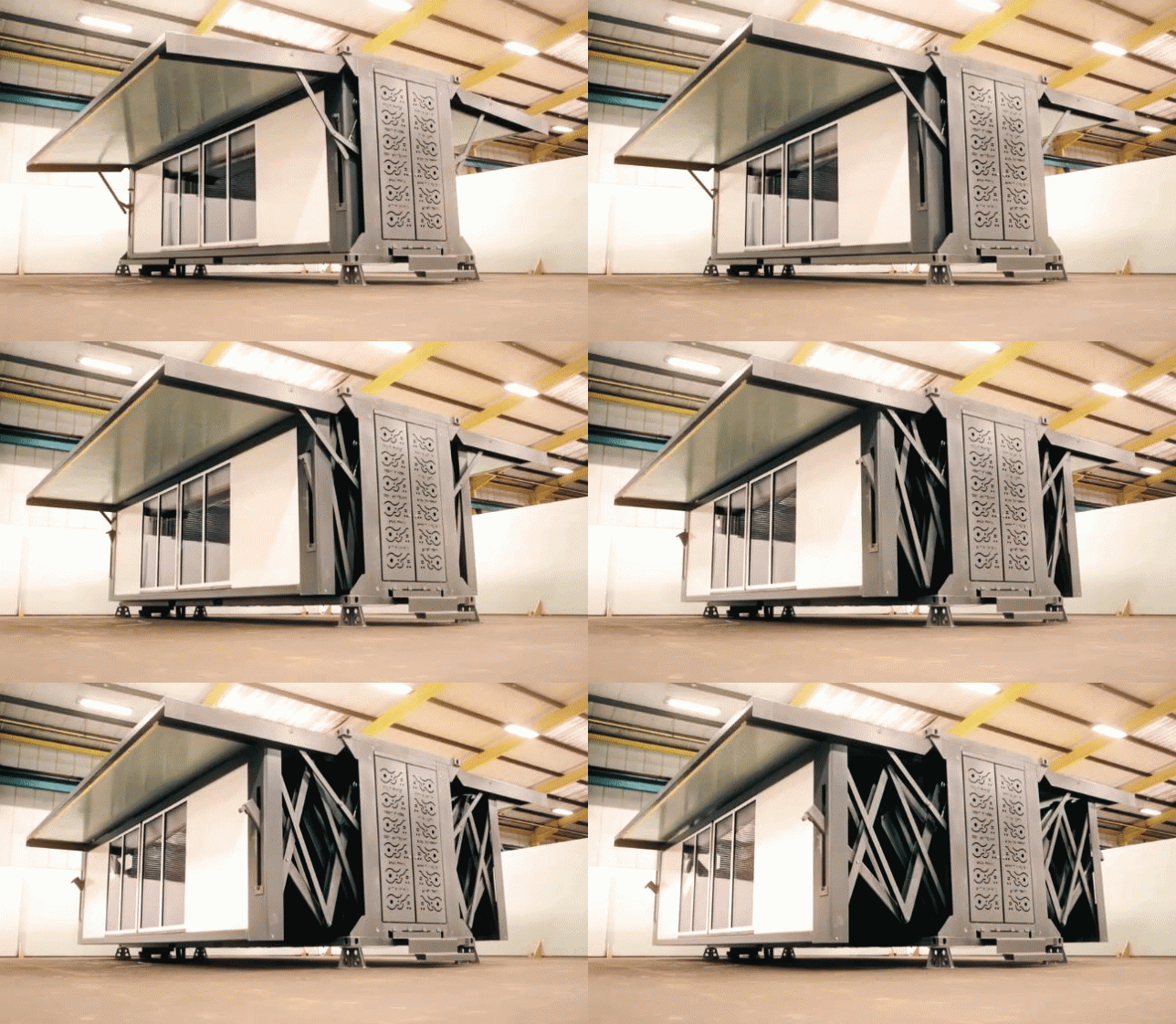
Requiring a single tool and very little power, these self-deploying structures are ready for use in minutes, expanding themselves to multiple times their compact travel size.

Based in the United Kingdom, Ten Fold Engineering’s structures can be packed onto ordinary trucks, conforming to road-worthy dimensions for maximum flexibility.

The company boasts myriad possible uses, from medical clinics and mobile hotels to on-demand offices and private retreats — the sale pitch in the video above is a bit blandly corporate, but the mechanics of the thing unfolding are gorgeous.

Their custom pin-jointed linkages help them open and close easily with minimal energy requirements and using just a single (presumably sonic) screwdriver. They are modular and can be customized with various arrangements of floors, doors, windows and dividers — they can even be shipped with furniture inside.

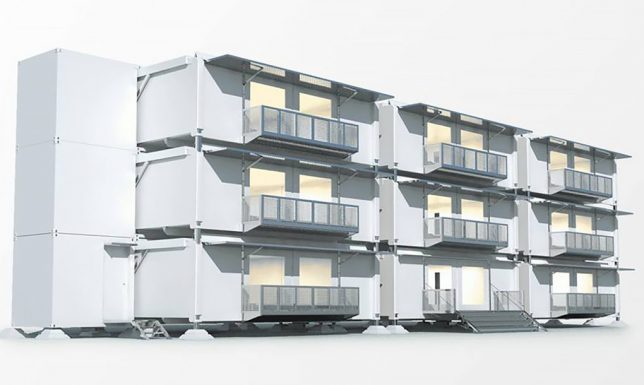
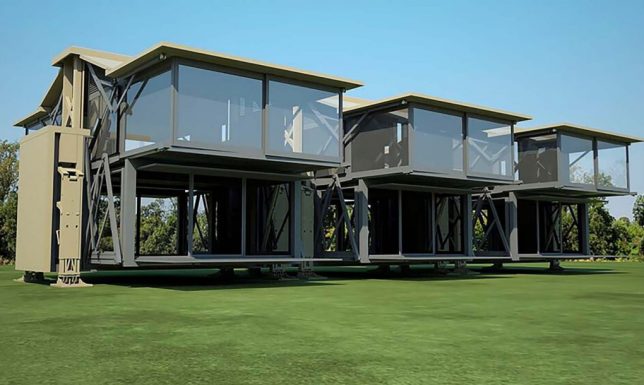
The company is also experimenting with designs for multi-story structures as well as stackable variants, opening up a whole world of possibilities.

Even the designs show an appealing variety of aesthetic possibilities, including dynamic modern looks and spacious expanding ceilings that go a step beyond typical prefab home possibilities.

Thanks to their variable footings, the units can be put up on uneven or sloped ground, stabilizing to sit flat from the perspective of the occupant.

The buildings can go off the grid but also feature optional attachments for solar panels and batteries, presenting an array of potential power possibilities.

At around 700 square feet and $ 130,000 the base models aren’t cheap, but for someone with the urge to roam they make a pretty stylish and comfortable option for a semi-mobile home.

Share on Facebook


[ By WebUrbanist in Architecture & Offices & Commercial. ]

[ WebUrbanist | Archives | Galleries | Privacy | TOS ]


WebUrbanist

 
Comments Off on Flat-Pack Mobile Architecture: This Building Will Self-Construct in 8 Minutes

Posted in Creativity


This is the first ever permanent photography exhibition in space

07 Jul

Duggal Visual Solutions has teamed with its client, Dubai-based photographer Dr. Hersh Chadha, to create what they say is the first-ever permanent photography exhibition in space.

The exhibition consists of five photographs of flowers that Dr. Chadha donated to three astronauts aboard the International Space Station, where the photos are currently zooming around the Earth at 4.76 miles per second.

You can see two of them below:

Col. Valery Korzun of Star City, Moscow made the arrangements to have Dr. Chadha’s photographs on-board the ISS Expedition 49-50, which took place last year. In addition to donating these photos, Dr. Chadha donated a hard drive containing 500 of his photos, as well as his ‘Visions of Nature’ book, to the Yuri A. Gagarin State Scientific Research-and-Testing Cosmonaut Training Center in Star City.

Talking about his donation, Dr. Chadha explained, “Photography is a great medium of expression, and my purpose of doing this was to let the human beings who live on the Space Station for so many months still be connected to Mother Earth.”

You can hear more from Dr. Chadha and watch the photographs’ journey into space in the video below:

Articles: Digital Photography Review (dpreview.com)

 
Comments Off on This is the first ever permanent photography exhibition in space

Posted in Uncategorized


Trash Beats Tesla: This Powerful DIY Electric Car Cost Just $13K to Build

20 Jun

[ By SA Rogers in Technology & Vehicles & Mods. ]

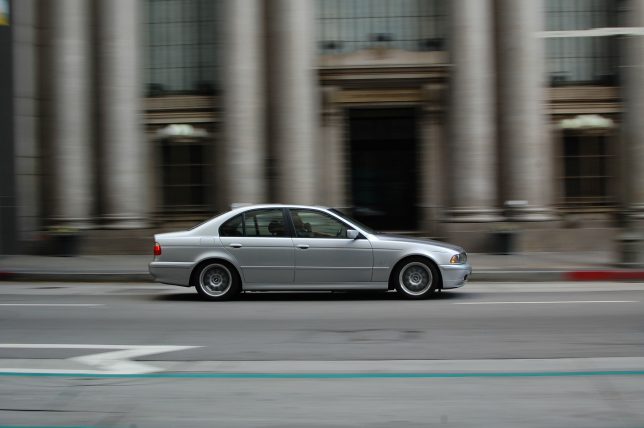
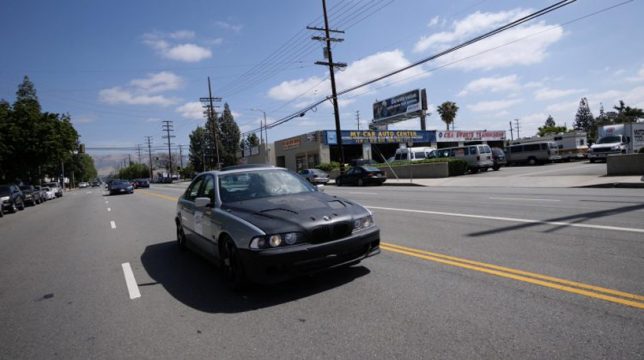
Made from the corpse of a 1997 BMW 528i salvaged from a junkyard and other recycled parts, this DIY electric car beats the Tesla Model S P100D’s mile range at a tiny fraction of the cost. The Tesla boasts a range of 335 miles per charge, while the ‘Phoenix’ by Eric Lundgren gets 380 miles. Lundgren and his team built the Phoenix in 35 days for just $ 13,000, and hopes the attention his trash car is getting will encourage carmakers with more cash to do more material recycling.

Founder and CEO of information technology organization ITAP, Lundgren bought the 20-year-old E39 generation BMW 528i and removed most of the interior – including the rear seats, dashboard, center console and trim – in order to save weight (yes, that’s the catch.) He added a 130kWh battery pack that uses cells from EV and laptop batteries to power the car, which takes up most of the space where the backseat would normally be.
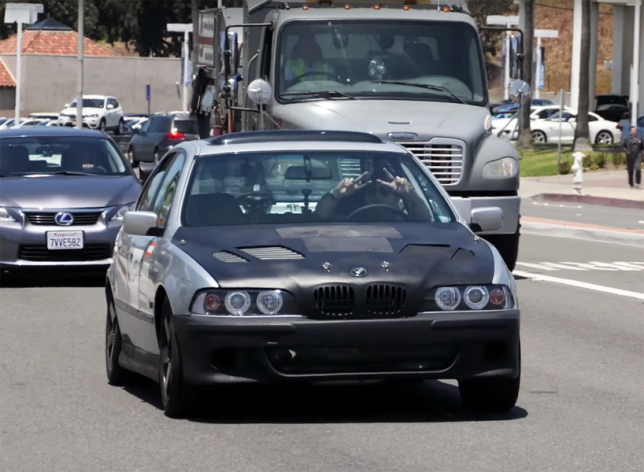
To test his creation, Lundgren pitted it against three popular electric vehicles: the Tesla, a Chevy Bolt and a Nissan Leaf. All four competed in a trip across Southern California to see which one would last the longest. The Leaf ran out of juice first after 81 miles, followed by the Model S at 238 miles. The Bolt managed to squeak out 271. The BMW never ran out of range at all – instead, it blew a fuse after 340 miles with 32 percent of its charge left on its battery pack. In a second test, the Phoenix ran directly against the Tesla, getting 382 miles to the 100D’s 315.

Clearly, the fact that so much of its weight has been removed while the Tesla is loaded down with luxury options makes a difference in the result, but so should the fact that Tesla is working with top-quality, brand-new parts. For Lundgren, that’s not really the point.

“Re-use is the purest form of recycling. It creates zero carbon footprint. Re-using parts/components within broken/obsolete electroncis is called ‘hybrid recycling.’ This is a much-needed and often missing part of the recycling ecosystem.”

Share on Facebook


[ By SA Rogers in Technology & Vehicles & Mods. ]

[ WebUrbanist | Archives | Galleries | Privacy | TOS ]


WebUrbanist

 
Comments Off on Trash Beats Tesla: This Powerful DIY Electric Car Cost Just $13K to Build

Posted in Creativity