RSS
 

Posts Tagged ‘this..’

This simple web tool helps you find the lenses you like best

10 Sep
Photo by Brandi Redd

If you’re having trouble deciding what lens to buy next, and diving into the technical details isn’t helping (we have no idea what that’s like… but we hear it happens), a simple web tool called What the Lens might be able to help. Created by photographer Willie Chik, the tool reveals your lens preference by having you pick your favorite photos from a gallery.

The site pulls images from 500px, automatically sorting them by brand—so you can use What the Lens to find your favorite Canon, Nikon, Fuji, Sony FE, Sony A, Olympus, or Panasonic lens. Then, once you’ve selected your brand, you can further break down the gallery by category—selecting either Landscapes, Macro, Animals, Travel, People, and City.

Finally, once you’ve done all that, it’s time to pick your favorite 20 photos. You can scroll down as far as you’d like, loading more shots until you find 20 you really like, and once you’re done the site will reveal what lens suits you best. In my case, after selecting 20 canon portraits, it came up with this:

Of course, we prefer a more technical approach here at DPReview… one that’s not liable to be skewed by your post-processing preference, what kind of landscapes you like best, or the variety of other issues that come up when you really start to think about this tool as a buying guide.

But if you’re looking for a simple and possibly even fun way to determine what lens deserves to go next on your to-buy list, What the Lens might be worth a go. Just be careful with the “People” category… that one can get a bit not safe for work (NSFW).

Articles: Digital Photography Review (dpreview.com)

 
Comments Off on This simple web tool helps you find the lenses you like best

Posted in Uncategorized


You’ll Never Want to Leave This All-in-One Bed Full of Gadgets & Storage

07 Sep

[ By SA Rogers in Design & Furniture & Decor. ]

Blow-up dolls and boyfriend-shaped body pillows may make you feel a little less lonely, but they can’t give you a massage – unlike this multifunctional bed that performs so many functions, you half-expect it to cook you breakfast in the morning. Sold by a variety of Asian retailers for roughly $ 600 USD, including SG Shop and English TaoBao, this slightly bonkers piece of furniture incorporates virtually everything you can imagine (reasonably) wanting to be built right into your bed, from USB chargers, speakers, power outlets and a pop-out laptop table to an actual built-in massage chair with multiple settings.

Lift up the mattress to find plenty of storage underneath for extra bedding and ubiquitous pillows. There’s also hidden storage in the bench at the foot of the bed, and shelves all along both sides. Optional features include leather upholstery instead of the default fabric, which comes in a multitude of colors, and even a freaking safe to hold your valuables.

If there’s one glaringly obvious feature this bed doesn’t have to offer, it’s a mattress long enough for the average American. The small size measures just 4’11” while the large size adds a foot. So if you’re larger of stature, this bed might not be for you – at least, not to sleep in. It would still make a pretty cool living room lounger. If you were designing your own all-in-one dream bed, what would you add? A mini fridge? A built-in coffee maker?

h/t My Modern Met

Share on Facebook


[ By SA Rogers in Design & Furniture & Decor. ]

[ WebUrbanist | Archives | Galleries | Privacy | TOS ]


WebUrbanist

 
Comments Off on You’ll Never Want to Leave This All-in-One Bed Full of Gadgets & Storage

Posted in Creativity


This interactive fall foliage prediction map helps photographers plan for the season

06 Sep

Believe it or not, it’s already September. In 16 short days and some change, autumn will officially begin in the Northern Hemisphere, and photographers across the US (and the world) will go hunting for the perfect orange-and-red peppered photograph of the season. Well, if you’re in the United States, you’re in luck: there’s an interactive map available that will help you plan your trip to capture the best possible colors.

It’s called the Fall Foliage Prediction Map, and the 2017 version is officially live on SmokyMountains.com.

Using the map is straightforward: simply go to this link, drag the slider to your desired date and watch as the interactive map of the United States changes color to reveal when any particular area will be at No Change, Minimal, Patchy, Partial, Near Peak, Peak, and Past Peak fall foliage conditions.

The map isn’t perfect, of course, but SmokyMountains.com has been putting this resource together for several years now and many photographers swear by it. To check it out for yourself, click here.

Articles: Digital Photography Review (dpreview.com)

 
Comments Off on This interactive fall foliage prediction map helps photographers plan for the season

Posted in Uncategorized


Pencil Art: 50+ Sculptures Explore the Hidden Beauty of This Utilitarian Object

04 Sep

[ By SA Rogers in Art & Sculpture & Craft. ]

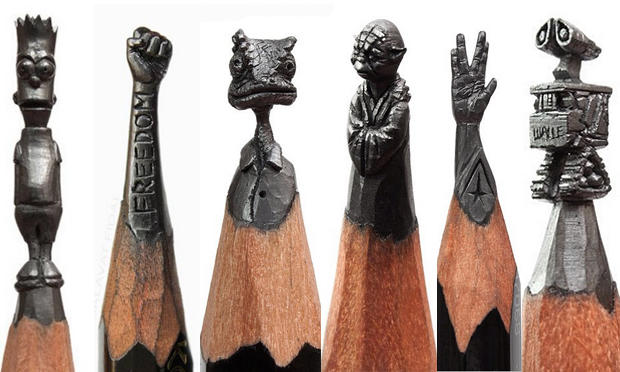
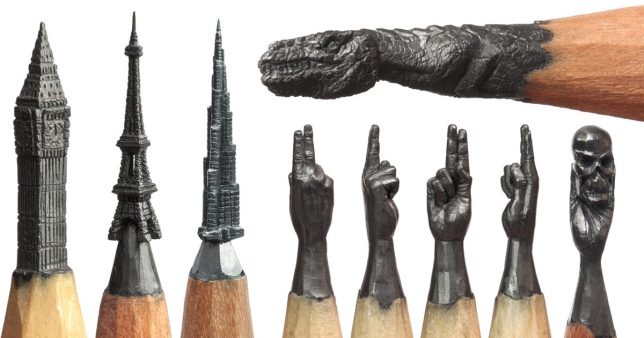
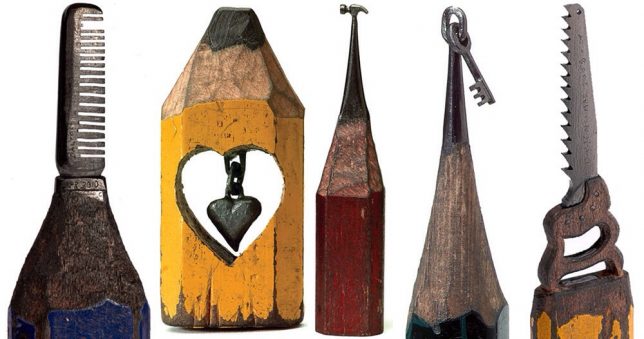
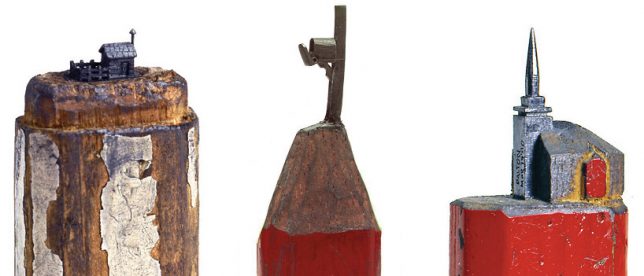
A pencil is usually a tool, but what happens when artists subvert its common usage, transforming it into a medium for sculpting instead? Extraordinary sculpting skills paired with a steady hand and a magnifying glass make it possible to carve amazingly tiny figures out of the pencil’s lead. Some artists see flowers or portraits in cast-off pencil shavings, or glue masses of the writing instruments together to sculpt and sand them into new forms punctuated by the graphite or colored pigments inside each pencil’s core.

Pencil Lead Carvings by Salavat Fidai

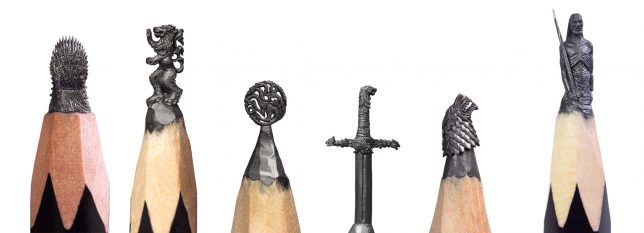
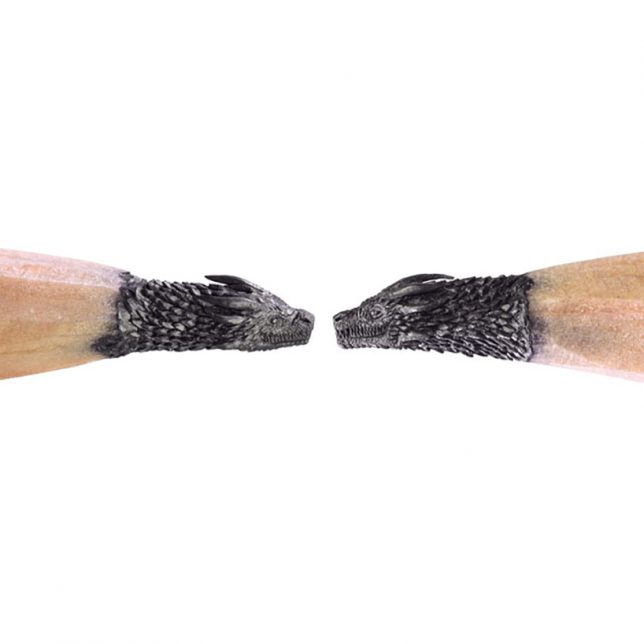
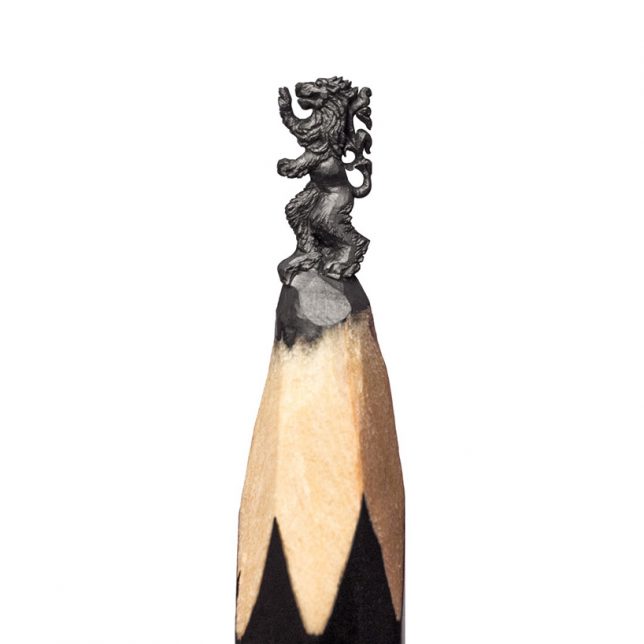
HBO Asia recently commissioned an incredible set of Game of Thrones-themed pencil lead carvings from Russian artist Salavat Fidai, including the sigils of each House, a White Walker, the dragons and the Iron Throne. It takes Fidai about 6 to 12 hours to sculpt each one using a craft knife, a magnifying glass and a microscope. The artist says the most challenging piece in the collection was the throne, which took over three weeks to perfect. Of course, the Game of Thrones pieces are just the latest works from Fidai, who has also carved tiny architecture, superheroes and other fictional characters, and much more.

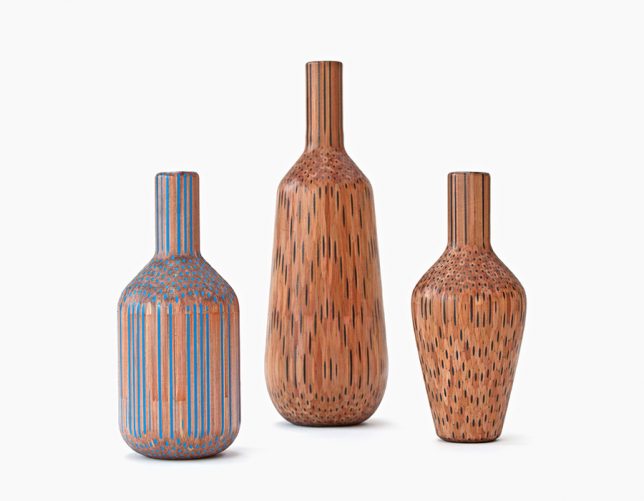
Vases Made of Pencils by Studio Markunpoika

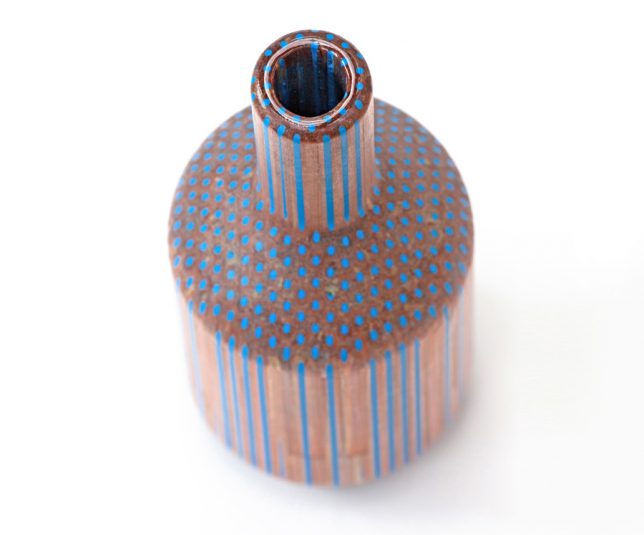
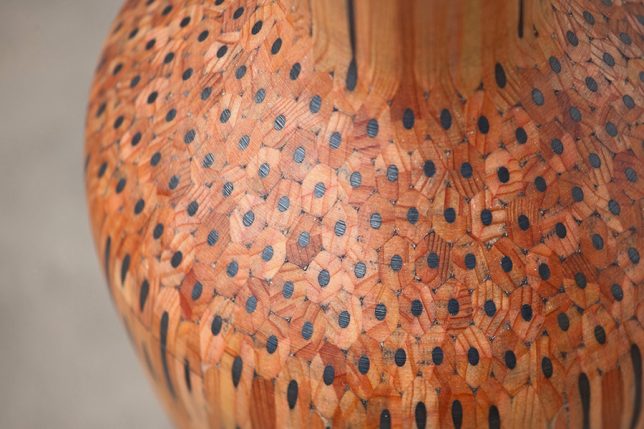
Hundreds of pencils are glued together into a solid mass and then carved on a machine lathe to create vases and other decorative objects, revealing the insides of the pencils. Studio Markunpoika describes their process: “‘Amalgamated’ is a collection which explores the relationship of a mass produced ‘tool’ and its individual purpose. The beauty of the pencil as an object seems to go unnoticed if utilized only for their primary purpose. ‘Amalgamated’ is a visual and tactile investigation using pencils as a raw material. This holistic principle has been the fundament for creating this set of vases; let the pencils become a thing themselves.”

Pencil Lead Carvings by Dalton Ghetti

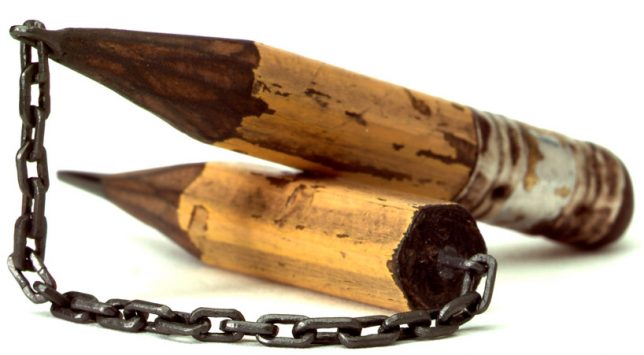
The most impressive works by Dalton Ghetti are undoubtedly those which turn single pencil leads into chains. You can’t help but stare at each one for a while, wondering how he managed to pull them off. The fact that the artist has been refining his process since childhood might tell you a thing or two about how he’s able to pull pieces like these off – or that some of his pieces can take months or even years to complete. He also carves his tiny sculptures without the aid of a microscope or magnifying glass, using sewing needles and razor blades.

Pencil Sculptures by Jennifer Maestre

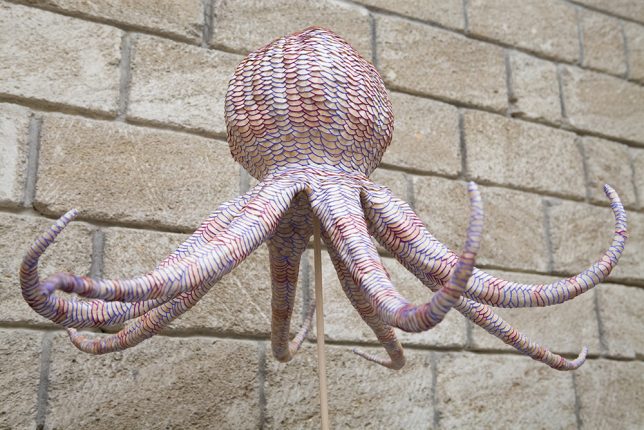
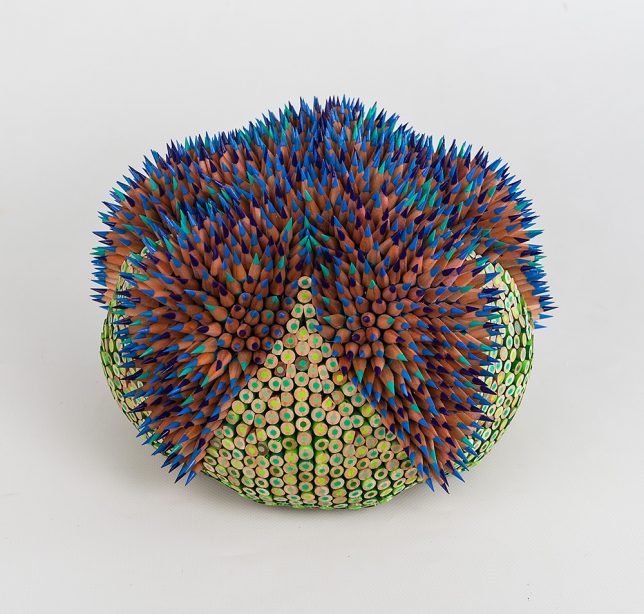
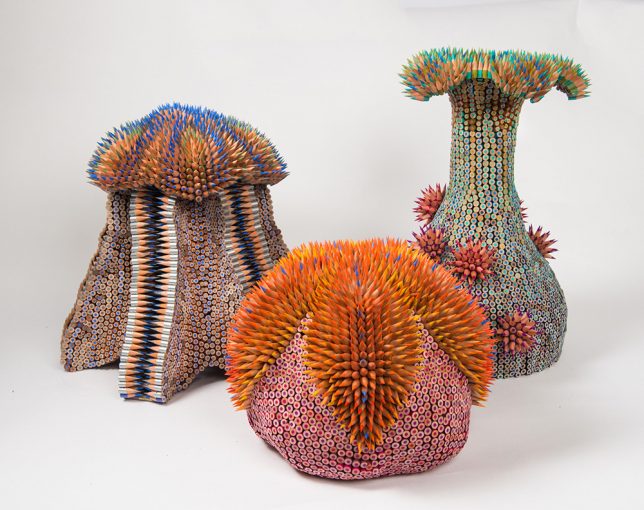
The colorful bristling creatures of Jennifer Maestre seem to have come from the depths of the sea, their appendages recalling the natural shapes of urchins, anemones, coral, octopi and jellyfish. The artist uses colored pencils as a medium for her unusual sculptures. “The spines of the urchin, so dangerous yet beautiful, serve as an explicit warning against contact. The alluring texture of the spines draws the touch in spite of the possible consequences. The tension unveiled, we feel push and pull, desire and repulsion. The sections of pencils present aspects of sharp and smooth for two very different textural and aesthetic experiences. Paradox and surprise are integral in my choice of materials.”

Pencil Lead Carvings by Cindy Chinn

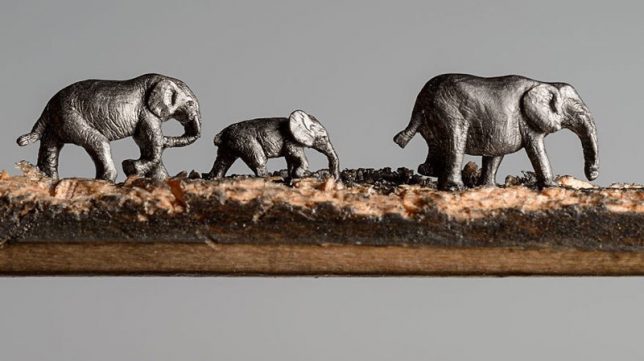
Cindy Chinn takes advantage of the length of graphite contained within a pencil, tunnel-like inside the wood, and translates it into lines of marching elephants or trains. Her ‘Elephant Walk’ series was commissioned by the California-based Epiphany Elephant Museum. Of the train piece, Chinn says “This piece was designed using straight lead pieces for the rails, with the tiny carved train placed and securely glued on top of the rails. The train engine is only 3/16” of an inch tall. The pencil is 5-5/8” long and mounted in a wood shadowbox frame as shown in the photos.”

Next Page – Click Below to Read More:
Pencil Art 50 Sculptures Explore The Hidden Beauty Of This Utilitarian Object

Share on Facebook


[ By SA Rogers in Art & Sculpture & Craft. ]

[ WebUrbanist | Archives | Galleries | Privacy | TOS ]


WebUrbanist

 
Comments Off on Pencil Art: 50+ Sculptures Explore the Hidden Beauty of This Utilitarian Object

Posted in Creativity


This eclipse photo shows the crazy dynamic range of today’s image sensors

23 Aug
Nikon D750 without any filters at 1/8s, F11, and ISO 100. Photo by Dan Plucinski

We talk about dynamic range (or lack thereof) a lot here at DPReview. But with all of the granular comparisons between the newest models, it’s easy to forget how incredible many of today’s image sensors have gotten in this regard. So here’s a quick example from photographer Dan Plucinski, who captured this photo in Oregon during the total solar eclipse on Monday.

The photograph on the right is a single image, not a composite. Plucinski simply took the shot on the left and pulled the shadows up in post; what you see on the right is the same image, with all of the shadow detail recovered.

The lesson is pretty straight-forward: always shoot Raw.


Photo by Dan Plucinski and used with permission.

Articles: Digital Photography Review (dpreview.com)

 
Comments Off on This eclipse photo shows the crazy dynamic range of today’s image sensors

Posted in Uncategorized


This iconic still life photo was shot at f/240… for 6 hours!

20 Aug

Editor’s Note: The video contains a fine art nude print that is spoken about starting at 7:50 and appears in the background throughout most of the video from that point on. Potentially NSFW.


What’s the smallest aperture you’ve ever used? F22? Maybe the max you’ll find on some large format lenses: F64? When iconic photographer Edward Weston needed more depth of field to capture his famous still life Pepper No. 30, F64 wasn’t nearly enough. He shot it at F240, using only natural light and exposing the shot for 4-6 hours!

This curious piece of photo trivia came up during the latest episode of Marc Silber’s show Advancing Your Photography, in which he visits Weston’s house and speaks to Weston’s grandson Kim about the legendary photographer’s work and technique.

Edward Weston’s famous ‘Pepper #30’ was shot at f/240, with an exposure time of between 4 and 6 hours using all natural light. Photo: Edward Weson, screenshot from video.

Silber and the younger Weston touch on several of the renowned photographer’s best known photographs, and finish the episode with a teaser from inside Weston’s darkroom. To hear about these techniques in more detail and see more of Weston’s work and home, click play up top.

Articles: Digital Photography Review (dpreview.com)

 
Comments Off on This iconic still life photo was shot at f/240… for 6 hours!

Posted in Uncategorized


A forgotten solution: Why this strange 1975 zoom lens is so sharp

15 Aug

For a few years now, I’ve had in my collection one very strange lens. I bought it primarily for it’s value as a collectible so, up until now, I haven’t really spent much time playing with it.

Made in 1975, this manual focus Minolta MC Rokkor-X 40-80mm F2.8 lens is one strange puppy. When it was first introduced, no other zoom lens could top its image quality and it really didn’t have much competition until more recent years. This is largely due to its very unique Gearbox design that sought to overcome the problem with zoom lenses that we still face today.

Way back in 1959, the first commercially-available 35mm still camera zoom lens, the Bessematic-mount Zoomar 36-82mm F2.8, was released by Voightlander. It’s mechanical design would not be unfamiliar to you since the focus and focal length were adjusted via a few round-turns of the lens barrel.

This simple helicoid design remains the only common method manufacturers use to make our lenses zoom in and out and focus. When you twist the zoom/focus ring(s) of a lens, the optics are carried forward or backward through a threaded barrel. This design results in a fixed movement ratio of the optical groups mounted inside that helicoid. The problem with this is every focal length requires a slightly different adjustment of the lens element/group spacing to properly correct aberrations and the fixed ratio of a helicoid cannot provide that kind of variance.

The helicoid is relatively simple, easy to make, and its shape tailors to a fitting physical design of a lens. If a lens were designed to have as few compromises as possible, it might look vastly different from what we see sitting on store shelves. For simplicity though, manufacturers have stuck with the helicoid and instead invested in overcoming its mechanical shortfalls with optical solutions.

Over the years, lens designers, aided by computers, have learned how to improve the optical designs of the zoom lens to work around most of the limitations of the locked-ratio helicoid. Modern zooms still aren’t quite as good as a prime lens but, with aspherical lens elements and fancy coatings to help out, they’re getting pretty darn close.

Back in the early 1970’s, Minolta’s engineers, armed with their slide rules and cigarettes, had a go at thinking outside the box to come up with a lens design that would allow for precise positioning of the optical groups in a zoom lens. What they came up with was so clever that it required they put it inside a box—a gearbox, to be precise.

Rather than work with the limitations of a helicoid design, this clever bunch decided to abandon that whole concept and create a new one where lens groups would be blessed with the freedom to move independent of each other. They came up with this unorthodox gearbox design that drives 12 optical elements in 12 separate groups along linear, gear-operated rails. With the chains of fixed-ratio movement cast from them, the entire lens design could be “geared” for precise positioning of the optics to best correct for aberrations throughout the range of focal lengths.

What they did was figure out how to make a hand held zoom lens that is as well corrected across its range of focal lengths as a fixed focal length lens would be at its one—that’s the theory anyway. In spite of the weird and wart-like appearance of their solution, Minolta’s engineers achieved with this lens something that is truly unique and special. There is no mistaking this lens for any other, that’s for sure.

Weighing in at 19.75 ounces (560 g), it isn’t particularly big or heavy. In fact, even with all the metal machinery inside this lens, it’s almost exactly half the weight of Nikon’s current 24-70mm f/2.8 VR.

Focus is adjusted by turning the big wheel while focal length is controlled by moving the lever arm. Both controls are very smooth and easy to move across their fairly short range of motion. The focus wheel features a precise distance scale with Infrared Index.

The lens has a 55mm diameter coated front element. Here you can see the profile of the gearbox which is fixed to the left-hand side of the lens body.

Did I mention it has a macro mode? The lens has a metal stem poking out of the gearbox which, when twisted anti-clockwise and pushed in, shifts everything inside the lens out toward the front, essentially putting more space between the film/sensor plane and the rear element (same thing an extension tube does). The result of this forward-shift is a reduction in the Minimum Focal Distance from 3.3 ft (1.01 m) to 1.2 ft (.37 m) @40mm.

Here, the stem is shown in the Macro position. When pushing in this stem, the focal length lever shifts forward with the internal glass. What a cool, whacky design!

Let’s see how well all of the engineering effort translates into actually making images with this lens.

My sister told me about this row of old silos that sit alongside a two-lane road not too far from where I live. Yesterday, I had to go by it while I was on errands. On the return trip I pulled over for this shot.

I had the lens set to 40mm and the aperture was wide-open at F2.8. This was the first shot I took and I kind of hurriedly grabbed it because of the unique lighting. That isn’t vignetting in the grass. Passing over head was a thick, dark cloud that cast the strangest light over this scene. No sooner I had shot this and the sun was back out in the open.

On the same errand run, I came across this old Chevrolet police car. Focal length was 80mm @ F8.

I was very interested to see how well the lens would control chromatic aberrations when shooting this brightly lit chrome.

I’ve not used a pre-1980’s zoom lens that didn’t produce some purple-fringing in a shot like this. Kudos to Minoltas engineers because there was none. Zoomed 400% in the 42 megapixel RAW file I could see nothing but bright chrome and colorful rust. 80mm @ F4

The Jelly Palm in our front yard is full of fruit this time of year. I shot this with the lens’ Macro mode enabled. 40mm @ F2.8

Just a bowl of bananas on the dinner table. Shot somewhere around 50mm @ F5.6

The Magnolia tree in the yard is sprouting new buds. Macro mode, 40mm @ F2.8. In the shade and backlit, color and contrast is good and the out-of-focus background is pleasantly smooth and non-distracting.

My second oldest daughter was kind enough to pause a moment for this final shot. 80mm @ F2.8

What can I say? The lens is awesome. All the effort put into designing this strange Gearbox-driven lens seems to have resulted in an excellent mid-range zoom lens. When I first started shooting with it, I did find it a little fiddly using a lever and wheel to make adjusts but after awhile I grew fond of it; it’s actually really fun to handle.

You don’t hold this lens like you would a traditional zoom, with your hands wrapped around the barrel. I keep it propped with the gearbox resting on the up-turned palm of my left hand and use my thumb to move the focal length lever and index finger to turn the focus wheel. The travel distance of both is just right so that you aren’t moving your fingers outside their natural range or having to make repetitious movements.

I can highly recommend this lens to anyone wanting to own a piece of history and/or turn some heads on their next photo walk. Comparing this to my favorite zoom lens, the incredible Minolta MD 35-70mm f/3.5, I would say it at least equals it. They’re both around the same size and weight and have a similar range of focal lengths. In fact, this Minolta 40-80mm f/2.8 lens is the antecedent to the 35-70mm f/3.5 (thus, for giggles, I used it to shoot the lens photos).

Minolta likely found that the unusual design and complexity of making this Gearbox lens was cost prohibitive and went back to the drawing board to come up with a balanced compromise. They only made two versions of it before canning the whole idea. The lens I have is the 1st Gen ‘MC’ version. An ‘MD’ version was made in 1977 and after that they called it quits.

Both versions can still be found for sale online, but I’ll warn you, this lens is priced for the committed collector.


Tom Leonard is an engineer, amateur photographer, and gear collector who travels around the world for work 30 days at a time. You can read more about Leonard’s travels and see his photography on his website.

This article was originally published on Tom’s blog, and is being republished on DPReview with express permission.

Articles: Digital Photography Review (dpreview.com)

 
Comments Off on A forgotten solution: Why this strange 1975 zoom lens is so sharp

Posted in Uncategorized


Cylinder House: This Residence is Just a Cluster of Glass Tubes

11 Aug

[ By SA Rogers in Architecture & Houses & Residential. ]

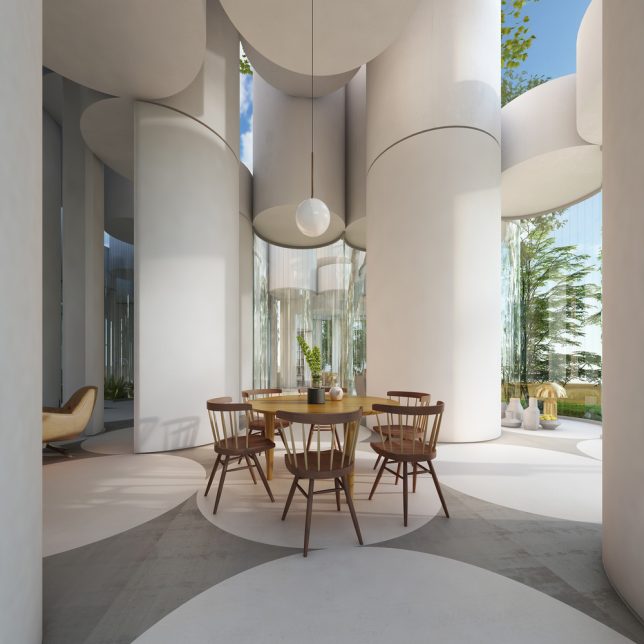
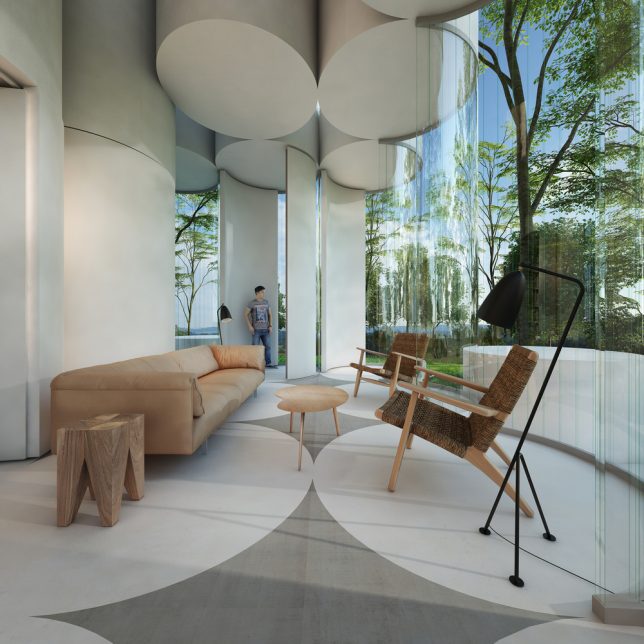
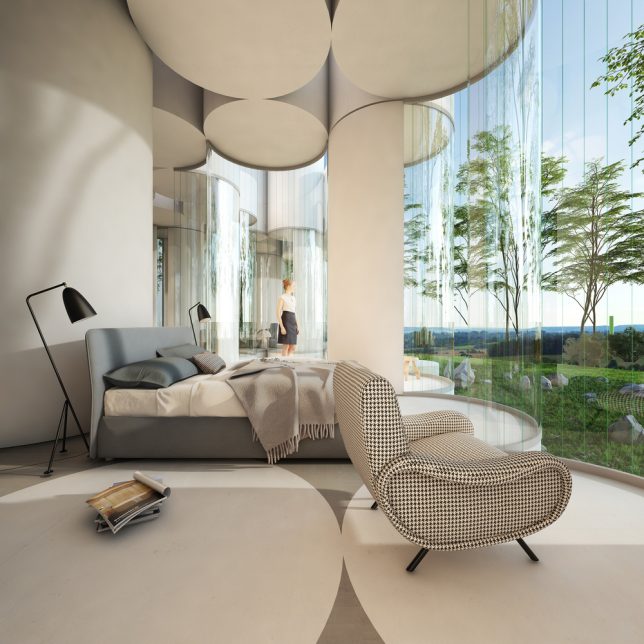
You know those glass tubes at the bank drive-through that shoot your deposits and withdrawals back and forth between you and the tellers? This house is like living in a cluster of them. Sadly, they’re not full of money, but it’s still pretty cool. ‘Cylinder House’ by lead architect Cyril Lancelin of the firm Town and Concrete is a modular glass residence in Lyon, France that can easily be expanded and rearranged without disturbing the trees around it by adding or subtracting one glass tube at a time.

Set on plinths, the tubes are narrow enough to allow for optimal malleability, conforming to the site. Some are taller than others, and some seem to hover above the landscape. The tubes can be fully open to each other, partially open or closed off altogether for smaller spaces. There are no walls or hallways inside other than the curving glass.

“The furniture marks space, but its movement can reinvent the house,” say the architects. “The plan is not fixed, to follow the evolution of the lives of these occupants. From the outside, the facades undulate… this system of cylinder juxtaposition allows to enlarge the house but also to have a blurred outer delimitation of the house with its context.”

The effect is definitely unusual when viewing the house from outside. As modular designs become more popular, their inventiveness only increases. It’ll be interesting to see how architecture as a whole is affected by the trend in the coming years.

Share on Facebook


[ By SA Rogers in Architecture & Houses & Residential. ]

[ WebUrbanist | Archives | Galleries | Privacy | TOS ]


WebUrbanist

 
Comments Off on Cylinder House: This Residence is Just a Cluster of Glass Tubes

Posted in Creativity


This video game offers an in-game photo studio for shooting exotic cars

08 Aug

Players of the next version of PlayStation’s Gran Turismo Sport will be able to create professional looking photographs of their cars using a new feature that offers a surprising amount of ‘photographic’ control over the way the images turn out. For us mere photographic mortals, it might be the closest we’ll ever get to shooting a $ 2.5 million car with a $ 50,000 camera…

The Gran Turismo features is called ‘Scapes’, and it lets players place their favorite cars in a wide range of scenes—from landscapes to city streets and interiors—and adjust their camera ‘controls’ to dial in things like depth of field.

A control panel down the side of the screen has software-like sliders for exposure compensation, aperture, shutter speed and focus. The car can be turned and parked where you like, the lights switched between beam settings, and the color temperature of the whole scene can be adjusted to create warm and cool effects.

More than a passing thought has gone into creating the Scapes mode, and the control of the images really seems extensive.

Users can alter the color balance of shadows, mid-tones and highlights using RGB sliders, while grain effects can be added along with vignetting and distortion corrections. And if that’s not enough, you can even blur the background using a panning effect, to deliver a race day atmosphere in one of around 1000 scenes.

For more information, check out the Gran Turismo website.

Information from PlayStation:

‘Scapes’, the New World of Photography

Go on a photography trip with your favorite car.

The ‘Scapes’ feature is a new format of photography, borne from a True HDR workflow and physics based rendering technologies. Each photo spot contains all the light energy information of that scene as data. Even the incredible brightness of the Sun is physically recorded and contained in each of these photos; and because each image also contains spacial information for that scene, it is now possible to ‘place’ cars into real world photographs.

Articles: Digital Photography Review (dpreview.com)

 
Comments Off on This video game offers an in-game photo studio for shooting exotic cars

Posted in Uncategorized


This crazy fire-and-water wedding portrait was shot in a single exposure

06 Aug

Photographer Markus Hofstaetter doesn’t shy away from challenging projects. Inspired by a previous fire-background hot-rod photo shoot he did, Hofstaetter had the idea to try this same technique with a portrait. There would just be one key difference: this one would be a single exposure.

A photo shoot like this is all about safety, and Hofstaetter did everything he could to ensure his subjects, assistants, and the backyard stayed nice and unburnt.

He got himself a heat-proof suit from the Muckendorf-Wipfing fire department, moistened the entire backyard, cut away stray branches to ensure he had enough room, had damp sheets at the ready, and actually built a little pond in his backyard. That last part did keep the couple a bit safer, but it was actually all about getting a killer reflection in the final photograph.

You can see how the photo shoot came together in the behind the scenes photos and video below:

$ (document).ready(function() { SampleGalleryV2({“containerId”:”embeddedSampleGallery_3170715563″,”galleryId”:”3170715563″,”isEmbeddedWidget”:true,”standalone”:false,”selectedImageIndex”:0,”startInCommentsView”:false,”isMobile”:false}) });

Once it came time to shoot the actual photo, he used a Canon 5D Mark IV and 35mm lens set to F22. The full exposure was 4.4 seconds long. The fire background was made by dipping a 6-foot-long Kevlar wick into one liter of lamp oil, hanging it on an aluminum stick, and setting it ablaze.

The exposure lasted as long as it took for the fire to cross the frame, with a nice burst from two Hensel strobes to light the couple.

The final photograph took 4 or 5 tries, as you can see from the BTS video above, but in the end Hofstaetter managed to capture the memorable portrait he was after:

The photo has made its way around the Internet over the past week, but something people don’t know is that Hofstaetter’s initial plan was to capture the shot on both digital and large format film (his specialty).

“You see there also a large format camera (Linhof Master Technika) in one photo,” he tells DPReview. “I wanted to shoot film too, but it was too stressful to handle both cameras, because I had to light the fire too. Plus, I couldn’t get the analog camera in a good position with the lenses I had available… next time I’ll try to shoot it on film too, and maybe get a wider angle lens for the Linhof.”

To see more of Hofstaetter’s work, head over to his website, follow him on Instagram, or follow along on his blog as he continues to experiment with all sorts of crazy ideas.


All photos © Markus Hofstaetter and used with permission.

Articles: Digital Photography Review (dpreview.com)

 
Comments Off on This crazy fire-and-water wedding portrait was shot in a single exposure

Posted in Uncategorized