RSS
 

Posts Tagged ‘Them’

[MODIFIED] Mozilla Firefox – Misc – Organize Downloads Better by Saving Them Where You Want

07 Apr

Force Mozilla Firefox to save downloaded files to a folder of your choosing.

Many people are fine with Mozilla Firefox downloading files to the standard Downloads folder. However, if you grab many different types of files it may make things easier to save files in different places. Store downloaded DRM-free music in one folder, game demos in another, backups of work documents from Google Docs in yet another location, etc. Making this Firefox configuration change is easy.

1. Access the Firefox Options dialog box. You can either click the Firefox logo button and choose “Options” – “Options”, but I prefer just pressing ALT + T, then the letter O….

Read more at MalekTips.
New Computer and Technology Help and Tips – MalekTips.Com

 
Comments Off on [MODIFIED] Mozilla Firefox – Misc – Organize Downloads Better by Saving Them Where You Want

Posted in Technology


10 Bad Photography Habits and How to Break Them Now

31 Mar

There are some very common habits that we develop as photographers. Especially in the beginning when there is so much to learn! Among the tips and secrets to good photography, a valuable one is to avoid bad habits that will be hard to shake off later. Bad habits are fairly common to create, as we  create habits in everything we do. Continue Reading

The post 10 Bad Photography Habits and How to Break Them Now appeared first on Photodoto.


Photodoto

 
Comments Off on 10 Bad Photography Habits and How to Break Them Now

Posted in Photography


Let’s Talk About Light – 3 Types of Lighting Conditions and how to Use Them

27 Mar

What‘s all this talk about light?

About light photography 04

When I started my photography journey I remember every article (or so it felt like), blog or book I read talking about light. “Find the light!”, “SEE the light!”, “It’s all about the LIGHT!”, “Follow THE LIGHT!”… AHHHH WHAT’S ALL THIS TALK ABOUT LIGHT!!!

Sound familiar?

I soon became obsessed about light. I would stare at people as they were talking to me; daydreaming, watching how the light was falling on their faces. When I was out walking I would always be looking at the direction of light and the way it behaved at certain parts of the day. It seemed however, that the harder I looked for The Light, the less I was able to see it. I honestly thought I would never be able to see the light!

Then something happened. I can’t tell you exactly when, but after months of obsessing about light, I finally saw ‘it’; its beautiful, soft, illuminating quality and its ability to change the mood and style of a scene.

Light plays a huge part in my photography style and the soft, romantic images I create. There are so many different types that I could easily write a whole book about light alone. For now however, I’m going to focus on three types of lighting conditions and how I use them to their advantage.

Open shade

Open shade is that spot between the sun and shade. The shade can be created by a building, a tree, a wall, etc. When using open shade it’s important to ensure that you still have available light reflecting into the shaded area. Choosing areas that have white, or light pastel, walls or floors will also help create additional soft, illuminating light by reflecting light off their surfaces. The reflected light will bounce all over your model giving them a lovely soft, gentle and even glow.

About light photography 01

The above image was taken in open shade. Can you see the line in the bottom left of the frame that divides the light and shade area? I’ve placed my model just with in it, so that the light is still reflecting onto her. The limestone wall also acts as a reflective surface and bounces light back onto my model.

Another thing to consider when using open shade is the direction your model is facing. If facing in the wrong direction, open shade can leave your image looking dull and flat. Make sure to look at where the light is coming from and have your model facing it. Use reflective surfaces, or a reflector, to direct the light back towards your subject. By doing this, the light is still illuminating their face and you’re still getting those beautiful catch lights in their eyes. Open shade offers the flexibility to shoot any time of day. It’s a great tool to use when shooting in midday light, when the sun is high in the sky and is creating harsh shadows on your model.

About light photography 02

Overcast days

Overcast days are my favourite sort of days to shoot. It’s like shooting in open shade, but instead the open shade is everywhere! While it’s still important to look for where the light is coming from, overcast days don’t limit you to shaded areas. The clouds act as a giant diffuser or soft box, giving you gentle, even light.

When shooting on an overcast day, I always look at where the sun is. Even if I can’t see it behind the clouds, I make sure I know where it would be if the clouds weren’t there. There are plenty of mobile phone apps available that will tell you where the sun is situated at that specific moment in time. They will also usually tell you where the sun sets and rises, which is a great tool to help you plan your shoot in advance.

The image below was taken on a wet, grey, overcast day. I still wanted to make sure that my models face was illuminated by light. For this frame I made sure that the sun was behind me. Although I couldn’t see it through the clouds, I could still see its brightness lighting up the area in the sky. Although my model was facing directly towards the sun, he wasn’t squinting and there were no harsh shadows being cast. The clouds where acting as my soft box giving me beautiful even light.

About light photography 03 About light photography 07

When starting out, many photographers are put off shooting on cloudy, overcast days. On the surface, the light appears dull; but look a bit deeper and you’ll see its wonderful illuminating quality. Some of my favourite images have been captured on days like this.

About light photography 05 About light photography 06

Backlighting

About light photography 08Backlighting, if done properly, can create some beautiful atmospheric and dramatic images. It takes a lot of practice to nail a backlit shot, but I think it’s worth the effort.

There’s different ways of positioning the sun in your frame. You can have it directly behind your model, just outside the image or in the shot completely. Each one will create a different effect and will influence how much sun flare and haze is captured in your image.

When backlighting, your metering plays a huge part in how successful the image will be. Shooting in manual mode will help ensure that perfect shot. When shooting towards the sun, I always meter for the models face, usually just under the eye closest to me. I know that this might blow out some of the highlights in the background or areas around my model, but I like the added glow that this creates.

About light photography 09

Camera’s aren’t always too keen to shoot directly towards the sun. This is where having a lens hood comes in useful. However, sometimes even this isn’t enough and you’ll hear the whirring of your lens struggling to focus on your chosen spot. When this happens, try creating a small spot of shade for the camera by holding your left hand above the lens to bloke out the light. This usually does the trick but if not, the other option is to focus manually.

Some food for thought…

One of the best pieces of advice I ever got when starting out was to always look for the light first and the background second. It’s easy to be drawn into standing you models in front of something that looks pretty or interesting, but if the lighting in that location is poor, you’ll end up with a dull lifeless image, or a model that’s squinting and has harsh shadows on her face.

I’d love to know how you get on finding the light! Please share your comments and images below.

For more articles on lighting try these:

  • 6 Portrait Lighting Patterns Every Photographer Should Know
  • Setting the Mood with Low Key Lighting
  • Lighting Ratios to Make or Break your Portrait
  • 14 Amazing Portrait Recipes – a dPS eBook

The post Let’s Talk About Light – 3 Types of Lighting Conditions and how to Use Them by Daniela Beddall appeared first on Digital Photography School.


Digital Photography School

 
Comments Off on Let’s Talk About Light – 3 Types of Lighting Conditions and how to Use Them

Posted in Photography


5 Most Common Mistakes in Wildlife Photography – and How to Avoid Them

05 Mar

Animals, especially wild ones, make such beautiful subjects that we cannot resist turning our cameras on them to capture images of these majestic creatures in their natural state.

Unlike a landscape, creatures are constantly in motion, and unlike most people, they can be pretty uncooperative when it comes to getting their picture taken. This can make for a lot of botched pictures. Here are a few tips on how to avoid some of the common pitfalls of wildlife photography.

1. A Tiny Subject

Three Brown Pelicans by Anne McKinnell

It’s tough to approach a wild animal – they are easily spooked. Because of this, many wildlife photos have more wilderness than wildlife, with the animal becoming a tiny speck in its environment. This can be effective in some situations, but for the most part you want the animal to be large enough in the frame to see the detail in its eyes. This is where a good telephoto lens can really help you out. Using a long focal length (over 200mm) will allow you to keep your distance while still filling the frame.

2. Blurry Image

Blur comes in many forms. Your entire image could be blurry due to camera shake; a problem which is magnified by the longer focal lengths needed for wildlife photography.

In landscape photography, using a tripod is a good technique to prevent camera shake, but a tripod is not as practical when photographing wildlife. Wildlife photography requires a more active shooting style – you’ll be moving around constantly – so unless you are using a lens that is too big to hold comfortably, forget the tripod. Also, because the animals are always in motion, you’ll need a fast shutter speed anyway. That leads me to the first method to combat camera shake blur: using a very fast shutter speed.

In landscape photography, you normally use a shutter speed that is at least 1/focal length of your lens. But usually that isn’t going to be fast enough when photographing wildlife because the animals are always in motion (even when they appear to be standing still). To avoid disappointment, you’ll need to use a much faster shutter speed to freeze both your own motion and the motion of the animal.

Here is my rule of thumb when photographing wildlife: if the animal appears to be still, use a shutter speed of 1/500th of a second. If the animal is moving, you’ll have to adjust the shutter speed based on how fast they are moving. I suggest a minimum of 1/1,000th of a second, or faster if the animal is moving faster.
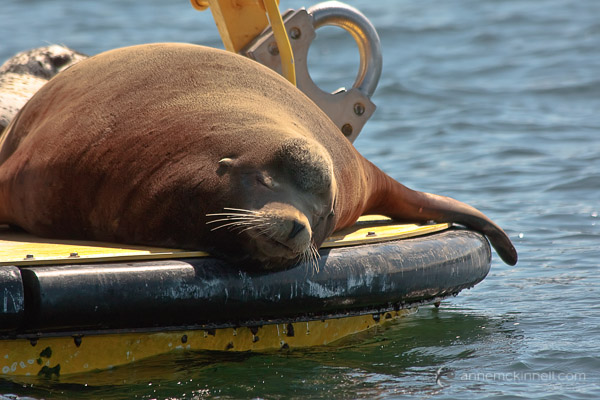
Sleeping Steller Sea Lion by Anne McKinnell

Using a lens with image stabilization will also help prevent camera shake blur. A lens with a wide maximum aperture, say f/2.8 or even f/4, will let more light in, allowing you to use a faster shutter speed. Likewise, a camera with low noise at high ISOs will let you turn up the sensitivity. All of these options will enable you to make faster exposures with better results.

Another type of blur is focus blur. This results from your camera being unable to focus, probably because your subject is moving and the AF motor gets confused. Some cameras and lenses have superior auto focus systems to others, but regardless of what you have, you can get the most out of it by setting it to continuous focus mode, usually called AF-C (Nikon) or AI Servo (Canon). This setting will track the subject’s movement in the frame and focus on it more quickly and accurately.

3. The Missed Moment

We’ve all been there. You see the perfect shot, frame it, and hit the shutter. But by the time the camera focuses and the exposure is made, the animal has moved and all you end up with is the second after the perfect shot.

There are two ways to avoid this heartbreak:

Anticipation

This is a skill that can only come with practice and a keen eye. If you can learn to see when the perfect moment is about to happen, rather than when it is happenning, you can hit the shutter right before the peak moment and cause the camera to snap at just the right time.
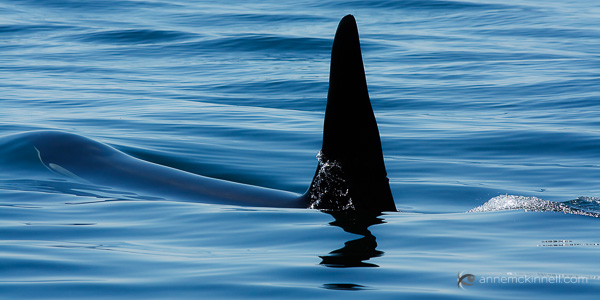
Orca by Anne McKinnell

Continuous Shooting

When animals are in motion, you’ll get the best chance at a good result by using continuous shooting mode (also called “drive mode” or “burst mode”). With this, you can take several images per second and choose the most successful.

Higher-end DSLRs and mirrorless cameras will have a much faster maximum shooting speed, but no matter which camera you have, there are a few things that will help get the highest continuous shooting rate.

One is a fast memory card – both SD (standard digital) and CF (compact flash) cards have a certain speed that they operate at, and a faster card will make sure that your camera doesn’t get bogged down trying to save the images.

The other is a fully-charged battery – as the juice drains, the camera can become sluggish, so it’s a good idea to keep an extra battery or two in your camera bag. For ultimate performance, you can buy a battery grip that fits on your camera. This holds two batteries at the same time for maximum speed.

4. Where Is Everyone???

Sometimes wild animals can be hard to find, and they’re not always where you want them to be. Before you can photograph them, you have to learn a few things about how to find them.

Know your animals

What types of animals live around you? Before you go out shooting, find out who they are, what they eat, when they sleep, and where they like to relax in between. If you’re photographing birds, research which ones are to be found in your area at which times of year. It’s also important to know how animals might react if, and when, they feel threatened – will they fight, or flee?

American Green Tree Frog by Anne McKinnell

Know the season

Some animals will be much more active at different times of year – particularly during autumn, as they rummage up enough food for winter, and in the spring when some animals come out of hibernation.

Camp out

I don’t mean overnight (unless you’re into that), but it’s often a very effective practice to find a popular area – probably somewhere with a source of water, food, shade or shelter – where animals like to congregate. Set your camera up on a tripod nearby, and disguise yourself among some trees or brush (some photographers go so far as to buy ,or build, a blind to hide their presence).

Be patient

Animals work on their own schedule, so don’t try to fit a shooting session in between other appointments. Great photos take time, and you must allow nature to unfold at its own pace. Many animals are easily frightened, so being quiet, still, and inconspicuous will help put them at ease.

5. Animal Attack!

We don’t call it “wildlife” for nothing – the biggest mistake you can make is accidentally getting mauled. Animals are not adjusted to polite society, and can be pretty rough customers if you catch them at the wrong time, or in the wrong way. They spend most of their waking lives foraging for food, and a spat over a meal can turn ugly, fast. Never get in the way of lunch, unless you want to take its place.

Don’t approach a wild animal directly, and if they see you, avoid looking them in the eye. This is usually a sign of aggression. If you need to get closer, keep low and move in a broad zig-zag pattern to avoid frightening the animal.
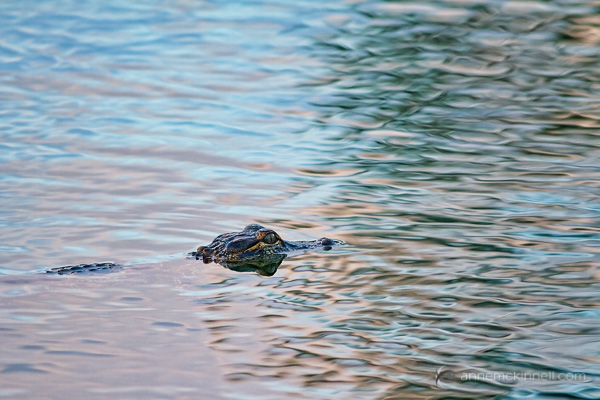
Baby Aligator by Anne McKinnell

Be aware of when mating season (or “running season”) is for the type of animal you’ll be photographing. Male mammals are full of testosterone at this time of year, and can be aggressive, violent, and very dangerous. Avoid photographing at these times. Similarly, find out when animals are likely to be giving birth and raising their young. We all know how risky it can be to get in between a mama bear and her cubs.

Whenever you’re dealing with wildlife, always remember that any creature can be dangerous when provoked, and it’s very important to treat animals and their habitat with the utmost care and respect.

For more tips on wildlife photography try these articles:

  • Manipulating Natural Light in Wildlife Photography
  • How Low Can you Go? An Illustration of Camera Angle for Wildlife Photography
  • Making Sharper Wildlife Photographs – [Part 1 of 2]
  • Making Sharper Wildlife Photographs – [Part 2 of 2]

The post 5 Most Common Mistakes in Wildlife Photography – and How to Avoid Them by Anne McKinnell appeared first on Digital Photography School.


Digital Photography School
 
Comments Off on 5 Most Common Mistakes in Wildlife Photography – and How to Avoid Them

Posted in Photography


Personalities and Portraits – and Getting Them to Mix

04 Feb

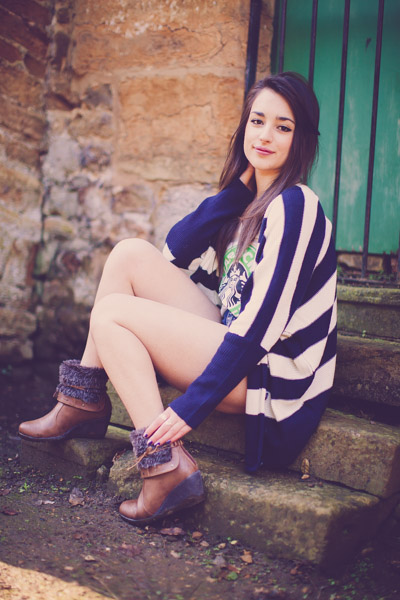
Portraiture can be a lot of fun; capturing entertaining characters and drawing out quieter personalities, but sometimes it can be a challenge as those ‘entertaining’ characters can soon become too much to handle and getting the shyer folk to even look in your direction can be like getting blood out of a stone. So here are a handful of tricks, tips and techniques to use when dealing with four of the most problematic personality types.

Personalities and portraits . . .

©Natalie Denton 2013

©Natalie Denton 2013

The loud ones – identified by volume and wise cracks

You know the type; the person who is constantly wise-cracking and trying to make everyone around them laugh, usually at the expense of you, the photographer. You’ll tend to find this person when you take group shots, and there’s always one at a wedding.

Often these people are only acting that way because they are deflecting their own insecurities and are actually really uncomfortable with having their photograph taken so they go overboard and say very witty things like “I’m ready for my close up now” or “If you sell these images to Vogue I want a cut.”

In these situations, it’s better to go along with it rather than get prickly or confrontational. Smile, and have a joke. A splash of playful banter will probably put them at ease, and you’ll soon notice real smiles on the faces of the people around them, which helps to make the resulting shots look much more genuine and natural. If you’re photographing this person as part of a group, it might help you to break off into smaller groups first and photograph this person with their close friends or family first, helping them to relax. Better still, try and get a portrait of them on their own, away from others which will soon bring them down to earth and ease down their barriers, especially if there’s no one for them to entertain. That way when it’s time for the group shot, they’ll be more relaxed and have more respect for you and your work. You can even use them to your advantage in getting them to round people up and getting others into line.

The shy ones – identified by nervous laughter and lack of eye contact

Having photographed numerous shy brides over the years I’ve realized there are a number of ways you can put those who aren’t comfortable in front of the camera, at ease. The first thing to do is to test the water. Take a few shots and see how they respond. Some slowly relax into it, and these first few timid frames can often make for stunning imagery (especially in black and white) – and if this is who they are as a person they may embrace the resulting pictures. The problem is, while a few frames of the model looking away from the camera can be charming, after a while the lack of diversity and eye contact can become awkward and restrictive.

©Natalie Denton 2013

©Natalie Denton 2013

Put the camera down and take time to talk to them about something else, like the scene around you or the clothes they are wearing. Making them laugh can always help to break the ice and commenting on how great they look as you reap the images can help to settle their nerves. I usually then take a little time to show them a few of the images collected so far, on the back of the camera, and explain how they look stunning in them.

Ultimately the trick with the shy ones is ‘slowly, slowly, catch the monkey’. There’s no point rushing them or being over the top with them. Keep your manner calm yet confident and reassure them that they are doing well. Start with them in a group and then move them away on their own, after a while they’ll start to relax and the images will shine as a result. Then move them back into a group and you can bet your bottom dollar the second round of group shots will be ten times more sincere, relaxed and memorable than the first.

The wannabe model types – identified by pouting and uncontainable enthusiasm

Usually this type of subject has watched too much model-focused reality TV and thinks they are the next undiscovered talent. Normally these (tends to be younger females in my experiences, but not exclusively) people are pleasant just extremely excited and want to try a whole portfolio of expressions and outfits, in a catalogue of scenes and scenarios. If you’ve got the time and they’ve got the energy then great – this is surely a recipe for success.

©Natalie Denton 2013

©Natalie Denton 2013

Yet when you are restricted by time, or if this individual is overshadowing a group shot, then you might need to step in to calm things down. Furthermore if the images are looking too posed and fake, there’s a risk the client won’t be happy with them. So the key is to tame them, without killing off their enthusiasm.

For most people, having your picture taken is a novelty and as such after a few frames they will usually start to relax, settle and tone the drama down. It can help to praise others (usually younger siblings or the parents) in the group; pulling them out of the wannabe’s shadow. If things get too ‘posey’, suggest some more natural poses and reference famous celebrities who are known for more subtle trademark looks. Distract their attention by having the family or group interact by doing something fun together –  as though you weren’t there; such as a game of catch, piggy back races or if weather permits – a water fight, and catch them off guard. Often people look much more attractive in these candid exposures than the posed ones. Show them evidence of this on your camera and you’ll soon have them acting like a professional rather than a wannabe.

The fellow photographer – identified by taking their own shots and eagerness to divulge camera trivia at every turn

Enthusiastic or secure fellow photographers- great. Know-it-all or insecure photographers – bad. It’s this latter category who can be the hardest of all types of people to photograph, because ultimately they think they can do a better job than you – usually to the disagreement of the client, otherwise they wouldn’t have hired you.

©Natalie Denton 2013

©Natalie Denton 2013

The best thing to do is to indulge them, if time permits, and throw a little peacocking into the mix. Take the time to discuss their gear, find out what they like to shoot and let them impart any pearls of wisdom they wish to share. Now comes the fun part, you get to show how talented you are by giving them advice and taking their image. Show it to them and discuss the lighting and exposure values you’ve used and explain why you used them. They are sure to be impressed (again, they would have been hired if they were better than you) and they’ll probably back off and let you do job, but may hassle you for tips or a discussion on something incredibly geeky such as hyper-focal distances, after the shoot.

Bottom Line

At the end of the day; as humans, we share similar quirks and personality traits but everyone is different and that’s what makes portraiture so appealing. It’s the chance to capture these little idiosyncrasies in a beautiful visual representation. So go on! Embrace the ‘loud ones’, excite the ‘shy ones’, flatter the ‘wannabe models’ and indulge your ‘fellow photographers’, as long as you’re having fun doing it, then where’s the harm?

For more help on doing portraits and relating to your subjects try these:

  • How to Help Your Clients Feel Comfortable In Front of Your Camera
  • How do YOU get Portrait Subjects to Relax?
  • Posing for Portraits: A Quick Way to Get Inside Your Subjects Head

The post Personalities and Portraits – and Getting Them to Mix by Natalie Denton (nee Johnson) appeared first on Digital Photography School.


Digital Photography School
 
Comments Off on Personalities and Portraits – and Getting Them to Mix

Posted in Photography


10 Most Common Mistakes in Landscape Photography – and How to Overcome Them

04 Feb

If you’re serious about landscape photography, it won’t take you very long to realize the fundamental problem of the craft: not every landscape that catches your eye will easily translate into a compelling photograph.

When we experience a place, the smells, sounds, the warmth or chill in the air, and our own emotions combine to give us an overall impression. Our job as photographers is translate that overall impression into a photograph.

Every landscape photo needs to be carefully crafted with the final image in mind.

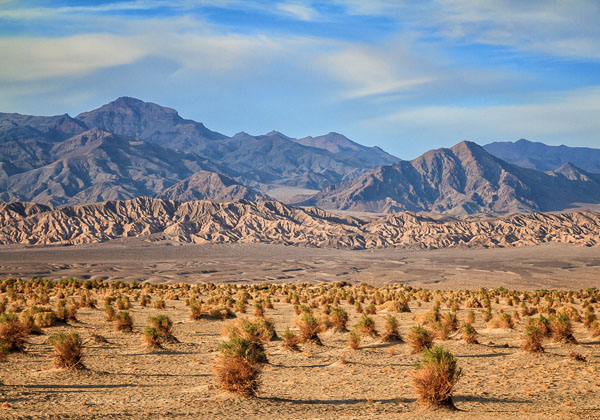
Devil's Cornfield, Death Valley National Park, California, by Anne McKinnell

There are many problems we run into along the way that can prevent our overall impression of a scene from shining through in the final image. The following are the most common traps to expect, and how you can avoid them.

1. Crooked Horizons

Most landscape photos will feature the horizon – a dead giveaway to the picture’s overall perspective. That means that if the line dividing land and sky is not perfectly straight across, the whole picture looks totally out of whack. There are a few ways to make sure your horizon squares up right:

  • Grid Overlay
    On most DSLRs (and some compact cameras), you can overlay a grid on either your viewfinder, your live view screen, or both. Align your horizon with one of these lines.
  • Electronic Horizon
    Newer, higher-end cameras often have a built-in electronic level. When turned on, it will gauge the camera’s position in space and tell you when it is evenly aligned.
  • Bubble Levels
    Some cameras have a bubble level attached and some tripods will have one as well. If you don’t have one built into your gear, you can purchase one that affixes onto the camera’s hot shoe. Just like a spirit level in construction, this will help you straighten your camera out.
  • Post-Processing
    If all else fails, every major photo editing software will feature a “straighten” tool which allows you to draw a line tracing the horizon. Using this, the program will automatically crop the image on an angle to make sure that the line is perfectly horizontal.

2. Eye-level Perspective

Most people photograph from an eye-level standing position producing photos that look as you would expect to see things if you were there. For a more interesting composition, try climbing on top of something, or getting close to the ground to achieve a different point of view.

3. Empty Skies

Without clouds, birds, or some other interesting feature, empty skies can turn out pretty flat and boring in a photo. Try to compose your picture with something interesting in the sky. If there is nothing interesting to show, raise your horizon line to the top third of the image to minimize how much space the sky occupies in the frame.

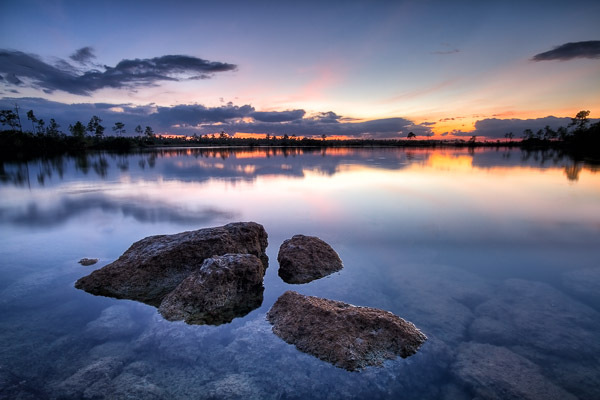
Pine Glades Lake, Everglades National Park, Florida, by Anne McKinnell

4. Hand Shake Blur

A blurry photograph loses almost all of its impact. Either use a tripod or use a fast shutter speed combined with image stabilization.

When it comes to landscapes, securing your camera onto a sturdy tripod will always yield better results. Even if you’re using short exposures, a tripod will allow you to compose your shot more precisely and lock its position into place while you shoot.

5. No Focal Point

Skies and mountains are lovely, but a picture can’t be all background. Your photo needs a focal point to hold the viewer’s interest. This can be anything – an interesting tree, a boat, a pier, a log – but no landscape photo is complete without a main subject.

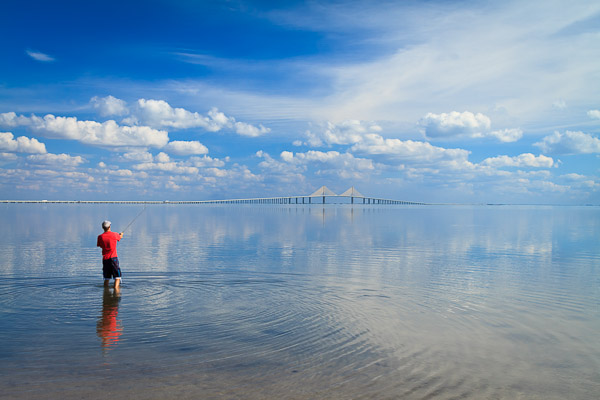
Fisherman at Fort DeSoto, Florida, by Anne McKinnell

6. Cluttered Backgrounds

The opposite also applies – be careful not to focus too much on the subject and forget about how the background comes together. Pay attention to what is behind your main subject. If the background elements don’t add to the composition remove them if possible. Be careful that you have separation between each element, and don’t let them visually blend together (ie. two or more trees merging into a greenish blob). This is especially problematic when the objects are backlit or silhouetted.

7. Poor Lighting

When you rely on the sun to light your shots, you’ll find that some days the weather just doesn’t cooperate. Grey, cloudy days will give you muted, washed-out colours and not much in the way of shadows or contrast. Extremely sunny days might do just the opposite. Carefully consider the lighting conditions on your scene before you decide how to approach it.

  • If the sun is out, position it to one side of the camera to take advantage of the shadows and textures created by sidelight.
  • If the sun is in front of the lens, your scene will be backlit and you can make some dramatic silhouettes.
  • If the sun is behind you photographing the scene will be more difficult because the direct light will make the scene appear flat. Consider changing direction.
  • If there is no sun and the sky is white, use the soft lighting conditions to make close-ups.

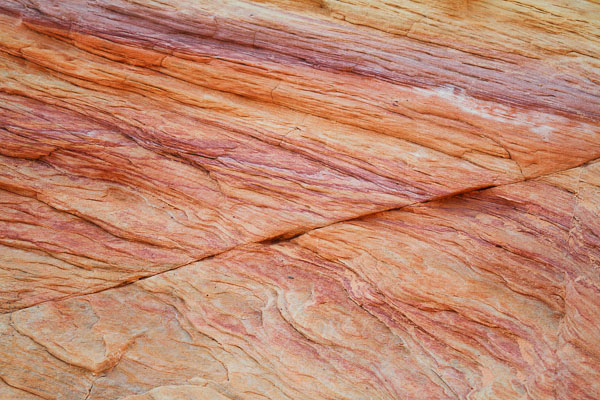
Rainbow Rock, Valley of Fire, Nevada, by Anne McKinnell

8. Underexposing

If the sky is overly bright (say, in the middle of the day), it can confuse the camera’s light meter, which will try to compensate by underexposing the rest of the image, resulting in a dark foreground. If this happens, use the exposure compensation to turn up the brightness, but not so much that the sky becomes blown out (turns white).

If you’re having this problem, try re-composing your image to include a darker area of the sky. This type of scene is a good time to use a graduated neutral density filter. These filters are dark on the top and clear on the bottom. You place it in front of your lens to darken the top half of the image and even out the exposure.

9. Hot Spots and Blown Out Highlights

It’s not just the sky that can blow out, though – a hot sun can cause glare on many surfaces. Watch your scene for bright spots caused by reflections or excess sunlight. Most cameras have a “highlight warning” viewing mode on the image preview which will show any pixels that have turned pure white. If you have blown out highlights, use the exposure compensation to reduce the exposure slightly until they are gone.

10. Lack of Dimension

Even though a photo is a two-dimensional image, a strong landscape composition gives the illusion of depth. When you’re setting up your shot, make sure to populate the frame in the foreground, mid-ground, and background.

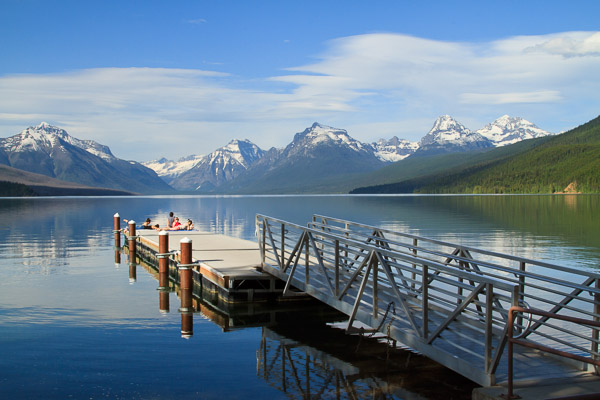
Lake McDonald, Glacier National Park, Montana, by Anne McKinnell

When you are learning photography it can be hard to critique your own work and understand how to improve. After your next photo shoot, examine your images for these problems so you can avoid them next time. Looking at each of your images with a critical eye and considering how they could be improved will quickly improve your artistic eye and make you a better photographer.

The post 10 Most Common Mistakes in Landscape Photography – and How to Overcome Them by Anne McKinnell appeared first on Digital Photography School.


Digital Photography School
 
Comments Off on 10 Most Common Mistakes in Landscape Photography – and How to Overcome Them

Posted in Photography


8 Types of Pictures so Amazing That All Photographers Should Master Them

17 Jan

What is your next step in photography? If you feel you are retaking the same picture over and over, a good idea is to take a break and look the other way. In photography, this is easy: We can change memory cards, try a different lens and shoot something new! Most importantly, cover your basics. Go over all the controls Continue Reading

The post 8 Types of Pictures so Amazing That All Photographers Should Master Them appeared first on Photodoto.


Photodoto

 
Comments Off on 8 Types of Pictures so Amazing That All Photographers Should Master Them

Posted in Photography


Your Biggest Photography Fears (And How To Beat Them)

16 Dec

It’s not the quality of your images that’s stopping you from making more sales and building even a part-time photography business. It’s your fears. To get them out of the way and create the growth you deserve, you first have to identify them — then squish them. You’ll probably find at least one — and possibly five — of those fears here.

Fear of Specialization

This isn’t a fear that’s unique to photography; it applies to just about everyone entering an industry for the first time. You don’t know where the best opportunities lie. You’ve got an empty schedule book and no sales to your name. You’re afraid that stating that you specialize in one topic or one style will limit your opportunities. So you create a website that declares you’re available for any work at all. You offer portraits and weddings, seniors and baby shots. And you create a portfolio of generic images that are attractive but predictable. They have no particular style that marks them out from the competition.

That’s an approach that might work for a while. But it should soon become clear which images clients like the most, and are willing to pay the most for. Once you’ve figured that out, you can earn more by specializing. When Christian Keenan switched from news photography to wedding photography, for example, he stuck with the documentary style that had won him a World Press Photo award. His images are black and white. There are no formals, no family photos and no engagement shots. His approach is clear and it won’t suit everyone. Clients looking for traditional color photography won’t use him. But there are enough couples who want the kind of unique images that he supplies to make him one of the UK’s most successful wedding photographers.

Fear of Rejection

Thousands of outlets are looking to buy and sell images created by talented photographers. Photo editors at magazines care less about who shot the photo than what that photo will do for their readers. Gallery owners love nothing more than discovering and nurturing new talent. It’s what brings them into the business. The Photographers Market, a guide to publications, agencies and galleries that buy images, is nearly 700 pages long and in its print form could double as a house-brick.

Somewhere among those pages are enough buyers to keep you shooting and earning from your photography for as long as you want.

But to reach them you’re going to have to contact a lot of people who won’t want your photos.

They won’t want them because they don’t match their market or their readers. They won’t them because they already have a list of image suppliers that they’re happy to buy from or because they only buy from professionals or because they couldn’t be bothered to wait for your website to load.

They won’t want them because they don’t think your pictures are good enough.

You’ll hear all of those reasons and they’ll hurt every time you hear them. And every now and then, you’ll hear a yes. “Yes, we’ll take that picture.” “Yes, we can put your photo in an exhibition.” “Yes, I like that. Do you have any more?”

Rejection will happen. But it’s just something you have to hear to land acceptance.

Fear of High Prices

Take a look through photography section of craft site Etsy and you’ll find plenty of the kinds of images that you could shoot easily. There are pictures of places (which tend to sell well) and of people, of animals and of flowers. They’ve usually been carefully edited to make them more artistic and to suit the site’s buyers, but the prices for prints usually fall somewhere between $ 30 to $ 60.

It’s no surprise that if you pitch the prices too high, sales will fall off. But it’s also true that if you pitch them too low, sales will fall off. As one photographer on the site has told us:

It’s important not to lowball yourself even if you think it might help you sell at first (it usually won’t!). Buyers will only value your work if you value it yourself.

Demanding an amount for your images that would make you think twice about buying them can feel scary. But you have to cover your costs, including the printing, the framing and the delivery charges. And you have to show that your work is rare enough and good enough to be attractive. Look at what other photographers are charging in the same outlet and keep your prices in the same range — even if those prices look high to you. They won’t look high to the buyers.

Fear of Investment

Photography costs money. Cameras have come down in price but they’re not free and lenses aren’t cheap. Once you’ve laid out on the basic equipment, you still have to pay for a website, travel costs and advertising.

If you’re serious about earning from photography, you will have to make those investments.

There are ways you can reduce them. Time on Facebook can spread the word about your business cheaper than an ad in The Knot. SEO can win your site clicks for less money than experimenting with AdWords. Renting, borrowing or sharing a display tent can let you experiment with art fairs before investing in your own booth. Usually, what you save in dollars, you’ll lose in hours.

But rather than think about the amount you’ll be paying, consider the amounts you’ll be making when you land sales. Being willing to make those investments in yourself is the most important sign that you’re serious about earning from photography.

Fear of Commissions

There are two ways to make money from photography: you can create an image and try to find someone who wants it; or you can accept a commission from someone to shoot images that they know they want.

The first only carries a risk to yourself. The second carries a risk to the client. Come back from the wedding without the pictures the couple expects, and you could find yourself with a lawsuit.

Being willing to accept a commission shows that you’re ready to step up. You can start small: shoot friends’ weddings instead of giving them a gift or take pictures of the products made by a family business so that they won’t get mad if they’re less than professional. Start with commissions that either have low expectations or which can be fixed.

It doesn’t take more than a few successful, low-scale commissions to give you the confidence to say “yes” to the big jobs, beat your fears and build your business.


Photopreneur – Make Money Selling Your Photos

 
Comments Off on Your Biggest Photography Fears (And How To Beat Them)

Posted in Equipment


Want a Great Gift for a Photographer This Holiday Season? Get Them a Scottevest

29 Nov

Brother and Sister Bonding Time
Brother and Sister Bonding Time, by April Joy Gutel.

On Wednesday I spent the afternoon shooting the Oakland Museum of California with my sister April Joy Gutel (her photo of me above, thanks April). I always love shooting in museums and find myself inspired by the art even as I create new art in that sort of a space.

A lot of museums don’t allow photography, but the ones that do almost always disallow backpacks. Because I shoot mostly prime lenses, I need a lot of different lenses wherever I go.

On Wednesday I tried shooting in a museum in my new Scottevest for the first time. It worked great. I was able to pack an iPhone 5s, 4 different lenses (my 8-15 fisheye, 14mm, 24mm, 135mm), an extra battery and two CF cards easily into the vest. This was in addition to the Canon Mark 3 and 50mm lens on my camera. While I definitely felt the weight as I shot (those lenses are heavy), it felt much better than wearing a backpack. The lenses were also much more accessible to me as I didn’t have to take a backpack off to get to them. I simply unzipped the pocket and pulled out what I needed.

Even with this much gear, I still had lots of room to pack more stuff into the vest if I needed it.

The vest has sleeves that come on or off, in case you want to wear it as a jacket. It was very light weight and very comfortable to wear. It’s a great thing to have around for those times when you want more than just your camera, but don’t want to (or can’t) take your whole backpack set up with you.

You can check out photos I’ve taken at the Oakland Museum of California here.


Thomas Hawk Digital Connection

 
Comments Off on Want a Great Gift for a Photographer This Holiday Season? Get Them a Scottevest

Posted in Photography


3 Reasons to Shoot Vertical Aspect Landscapes and 6 Tips on How to Shoot Them

08 Aug

A Guest Contribution by Todd Sisson – author of our brand new Landscape Photography eBook (currently 33% off for 7 more days only).

The majority of landscape images are photographed in the horizontal aspect. I guess this because the horizontal format approximates the way in which we perceive ‘reality.’ However landscapes look stunning in the vertical format and often the unique characteristics of the upright format suit a scene better than a horizontal* composition. I am guilty of undershooting verticals these days, primarily for commercial reasons, but in any given shooting situation I try to remind myself to seek both a vertical and a horizontal composition from a scene.

Here’s why I think you should photograph vertically and some quick tips for successful upright image making.

Reason One: Verticals are Easy to Learn

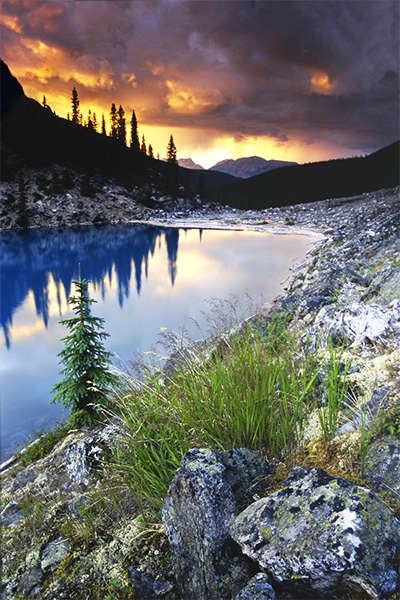
Vertical composition using a wide angle or ultra-wide lens is the fast track to making interesting landscape images. My first successful landscapes were all vertical compositions where I found a moderately photogenic foreground object and used this to lead into the greater scene. To this day I find it easier to frame up an interesting sunset in the vertical format. I use rocks, grasses, flowers – just about anything with form to introduce the viewer’s eye to the scene.

Moraine Lake, Alberta Canada (1997).  Nikon F601, Nikkor 24mm, f/16, (shutter speed unknown), Fuji Velvia and most importantly, Lee 3 stop GND filter.  This was the first image that I ever made that actually turned out how I thought it would!  Note that foreground elements don't have to be spectacular to work, they just have to be well arranged in the frame and complement the rest of the scene.  When I was learning, I found it easier to eliminate foreground distractions and make a 'tight' composition in the vertical format. As a result, I shot far too many verticals in my early days and very few good horizontal images...

Moraine Lake, Alberta Canada (1997). Nikon F601, Nikkor 24mm, f/16, (shutter speed unknown), Fuji Velvia and most importantly, Lee 3 stop GND filter. This was the first image that I ever made that actually turned out how I thought it would! Note that foreground elements don’t have to be spectacular to work, they just have to be well arranged in the frame and complement the rest of the scene. When I was learning, I found it easier to eliminate foreground distractions and make a ‘tight’ composition in the vertical format. As a result, I shot far too many verticals in my early days and very few good horizontal images…

Reason Two: Vertical Compositions can be more Dynamic

In this dPS blog post, I explained the principles of ‘dynamic landscape compositions’. What I didn’t reveal in that article (for some inexplicable reason) was that vertical compositions can often accentuate the dynamic qualities of an image – particularly when using an ultra-wide lens.

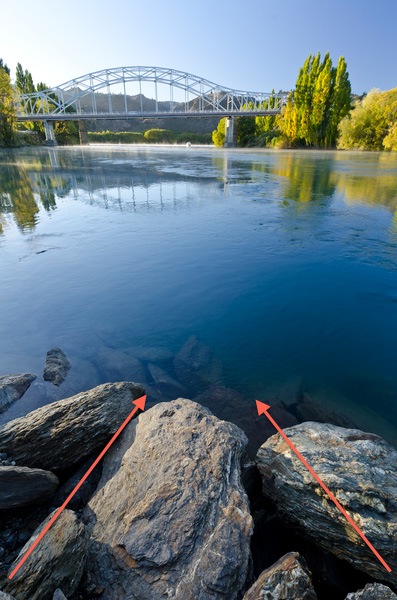
The Clutha River at Alexandra (it's not wonky, the bridge slopes downhill...).  Nikon D7000, Nikkor 12-24mm f/4 DX, Marumi Polarizer. 12 mm, f/11, 1/13th, ISO100.  The vertical format accentuated the leading lines present in the foreground rocks.  Getting low and tilting down on an ultra-wide lens distorts and extends the perceived length of leading lines in the foreground.

The Clutha River at Alexandra (it’s not wonky, the bridge slopes downhill…). Nikon D7000, Nikkor 12-24mm f/4 DX, Marumi Polarizer. 12 mm, f/11, 1/13th, ISO100. The vertical format accentuated the leading lines present in the foreground rocks. Getting low and tilting down on an ultra-wide lens distorts and extends the perceived length of leading lines in the foreground.

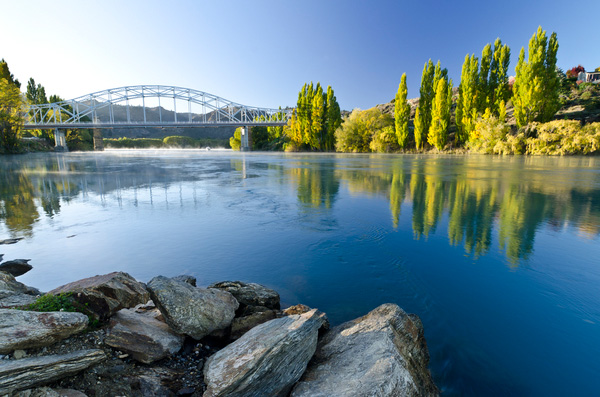
The Clutha River at Alexandra (the bridge still slopes downhill – I promise!).  Nikon D7000, Nikkor 12-24mm f/4 DX, Marumi Polarizer. 12 mm, f/11, 1/13th, ISO100.  When shooting horizontally, the bridge and trees would not be in frame if we used the same camera angles and proximity that were applied in the vertical format. In this case I had to step back and recompose to include everything, which reduced the dynamic impact of the rocks.

The Clutha River at Alexandra (the bridge still slopes downhill – I promise!). Nikon D7000, Nikkor 12-24mm f/4 DX, Marumi Polarizer. 12 mm, f/11, 1/13th, ISO100. When shooting horizontally, the bridge and trees would not be in frame if we used the same camera angles and proximity that were applied in the vertical format. In this case I had to step back and recompose to include everything, which reduced the dynamic impact of the rocks.

Reason Three: Verticals Sell Well

In the introduction I polluted the artistic sanctity of the article by mentioning ‘commercial reasons’. Five years ago we made most of our living from selling postcards of our images – horizontal postcards vastly outsell vertical postcards, and they fit better on a display stand, so I found myself inadvertently locked into a horizontal mindset (as I mentioned last week, deep thought and self-awareness are not my strong point). This sales trend is definitely mirrored in our website where the bulk of our print sales are horizontal.

However, In the past year we have ramped up our stock photography activity and this is one area where vertical images sell extremely well – especially for editorial usage and magazine covers where the format works beautifully with the vertical layout of printed media. Consequently, we are shooting a lot more vertical images. You may not be a full-time photographer but there are myriad ways to earn money from your photographic hobby these days, don’t leave money on the table – shoot verticals along with your horizontal compositions.

Vertical Shooting Tip 1: Get Low and Close

As I noted in the previous image, getting low and close accentuates the visual power of leading lines and dramatically increases the visual weight of foreground features. To go low you will need to use a tripod that has no centre column in order to get super close to the ground, I have detailed our tripod advice here which may be of interest if you are perplexed by the ins and outs of the tripod purchasing process.

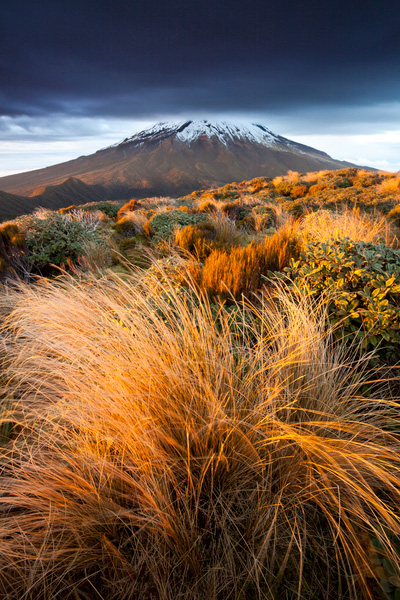
Mount Egmont New Zealand. Canon 5d mkii, Canon 17-40mm f/4 ultra-wide, Marumi polarizer. 17 mm, f/16, 1 sec, ISO100. By getting implausibly close to the foreground grass in this scene I have eliminated other distracting elements, increased the visual weight of the grasses and accentuated the leading lines in the bottom right of shot. As well as being close, I was also very low to the ground while making this image.

Mount Egmont New Zealand. Canon 5d mkii, Canon 17-40mm f/4 ultra-wide, Marumi polarizer. 17 mm, f/16, 1 sec, ISO100. By getting implausibly close to the foreground grass in this scene I have eliminated other distracting elements, increased the visual weight of the grasses and accentuated the leading lines in the bottom right of shot. As well as being close, I was also very low to the ground while making this image.

Vertical Shooting Tip 2: Get High and Close

When using an ultra-wide lens it is possible to include the full sweep of a scene and accentuate the visual dynamics of the image by getting above the foreground elements and composing vertically. To achieve this you will need a tripod that extends well above the height of your subject matter and then angle the camera downwards.

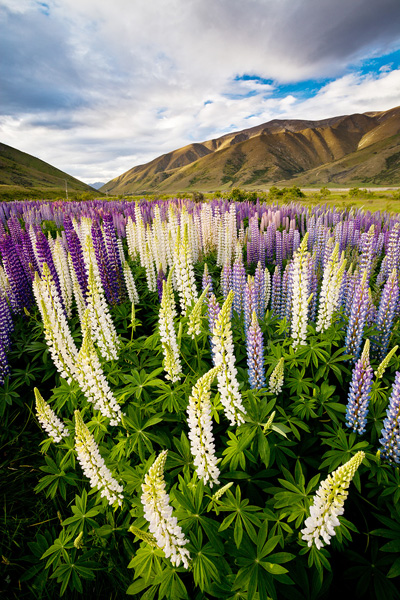
Lupine flowers, Mackenzie basin New Zealand (by Sarah Sisson). Canon 5d mkii, Canon 17-40mm f/4 ultra-wide, Marumi polarizer. 17 mm, f/16, 1/8th sec, ISO100. Sarah had to fully extend her tripod and stand on a box in order to get the camera above these chest high lupin flowers.  The high perspective meant that all of the meadow is visible  and accentuated the space between flowers in the foreground.

Lupine flowers, Mackenzie basin New Zealand (by Sarah Sisson). Canon 5d mkii, Canon 17-40mm f/4 ultra-wide, Marumi polarizer. 17 mm, f/16, 1/8th sec, ISO100. Sarah had to fully extend her tripod and stand on a box in order to get the camera above these chest high lupin flowers. The high perspective meant that all of the meadow is visible and accentuated the space between flowers in the foreground.

Vertical Shooting Tip 3: Break down the Composition

When composing strong verticals I tend to ‘break down’ the scene into foreground, midground and background (the same thinking helps with horizontal images of course). A good composition will contain interest in all three of these visual zones – which roughly approximates the rule of thirds compositional guidelines.

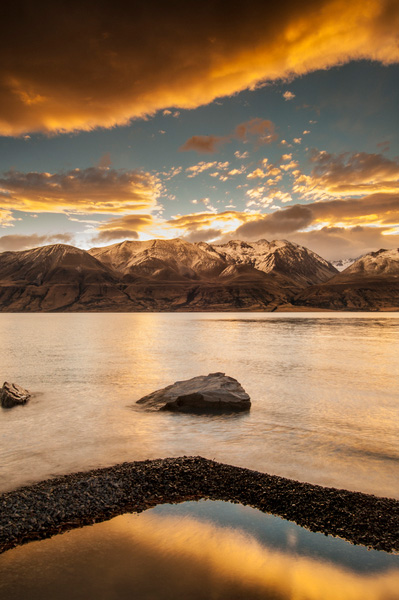
Lake Pukaki New Zealand.  Nikon D800e, Nikkor 17-35mm f/2.8 ultra-wide lens, Marumi Polarizer and Singh Ray 3 stop GND filter. This image has layers of visual interest in the foreground (gravel bar and rocks) mid-ground (reflected color & mountains) and the background (the sky). Note that the terms foreground, mid-ground and background align loosely with the principles of the rule of third – I find that I shoot more in sync with the rule of thirds for verticals than horizontals.

Lake Pukaki New Zealand. Nikon D800e, Nikkor 17-35mm f/2.8 ultra-wide lens, Marumi Polarizer and Singh Ray 3 stop GND filter. This image has layers of visual interest in the foreground (gravel bar and rocks) mid-ground (reflected color & mountains) and the background (the sky). Note that the terms foreground, mid-ground and background align loosely with the principles of the rule of third – I find that I shoot more in sync with the rule of thirds for verticals than horizontals.

Vertical Shooting Tip 4: – Leave some Space

Having just referred to the dreaded rule of thirds, I feel it my duty to throw a spanner into the works. Try messing with your vertical compositions by leaving ‘too much’ empty space. Dead space can look cool and graphic designers love it for dropping text into (sales tip).

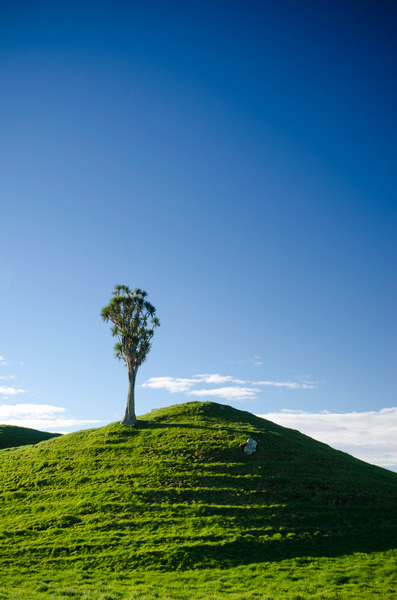
Lone cabbage tree, Taranaki New Zealand.  Nikon D7000, Nikkor 16-85mm DX, Marumi Polarizer. 35 mm, f/11, 1/20h, ISO100.  I think that vertical images often look great with plenty of empty real estate (I am a gleeful recidivist breaker of the rule of thirds). This image has sold several times as an interior page with text dropped over the sky portion.

Lone cabbage tree, Taranaki New Zealand. Nikon D7000, Nikkor 16-85mm DX, Marumi Polarizer. 35 mm, f/11, 1/20h, ISO100. I think that vertical images often look great with plenty of empty real estate (I am a gleeful recidivist breaker of the rule of thirds). This image has sold several times as an interior page with text dropped over the sky portion.

Vertical Shooting Tip 5: Try Telephoto Verticals

Telephoto verticals are a particularly attractive compositional option, particularly around mountains. Because the long edge is oriented top to bottom you can exploit telephoto compression more effectively (by allowing more foreground into the frame at longer focal lengths and emphasizing the height differential across the scene).

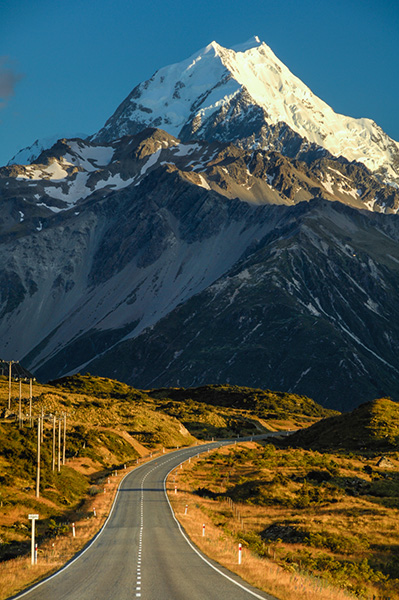
The road to Mount Cook New Zealand.  Nikon D7000, Nikkor 70-200mm f/2.8 Vrii, Marumi Polarizer. 135 mm (202mm 35mm equivalent), f/11, 1/15h, ISO100. The vertical aspect exaggerates the effects of telephoto compression in scenes like this.

The road to Mount Cook New Zealand. Nikon D7000, Nikkor 70-200mm f/2.8 Vrii, Marumi Polarizer. 135 mm (202mm 35mm equivalent), f/11, 1/15h, ISO100. The vertical aspect exaggerates the effects of telephoto compression in scenes like this.

Vertical Shooting Tip 6: Invest in an L-Bracket

An L-bracket or ‘L-plate’ is an L­-shaped (surprise, surprise!) tripod mounting plate that wraps around your camera body. This allows you to effortlessly mount your camera in the vertical orientation without having to flop the ballhead’s mounting point over on it’s side. Never again will you have to fight gravity and adjust tripod legs in order to get the camera leveled when shooting vertically – genius!

You will find a bit more information on the benefits of L-plates here on our website.

*I use the terms vertical or horizontal because the commonly used ‘portrait’ and ‘landscape’ terminology makes me abnormally irascible and grumpy. These terms are a nonsensical hangover derived from a Windows 95 printer options dialog box (maybe this riles my inner Mac Veteran). After all, a portrait can be photographed vertically or horizontally and likewise a landscape…..

Todd & Sarah Sisson are full-time landscape photographers based in Central Otago New Zealand. They are the authors of our new eBook Living Landscapes: A Guide to Stunning Landscape Photography.

Their work can be found as fine art prints & canvas prints at www.sisson.co.nz  They can be found on Facebook, Google Plus and Twitter.

Post originally from: Digital Photography Tips.

Check out our more Photography Tips at Photography Tips for Beginners, Portrait Photography Tips and Wedding Photography Tips.

3 Reasons to Shoot Vertical Aspect Landscapes and 6 Tips on How to Shoot Them


Digital Photography School

 
Comments Off on 3 Reasons to Shoot Vertical Aspect Landscapes and 6 Tips on How to Shoot Them

Posted in Photography