RSS
 

Posts Tagged ‘their’

Photojournalists reveal their favorite publications to work with and what they pay

02 May
Photographer Genna Martin on assignment for Seattle PI.

Columbia Journalism Review recently surveyed a group of photojournalists on their favorite publications to work with based on several criteria, including arguably the biggest one – pay. As a result, they’ve published an article revealing the day rates for some top publications as well as some insight into other factors, such as balancing a lower day rate with exposure to a wider audience.

So by the numbers, how do top publications stack up for freelance photographers? CNN comes out on top with the best day rate at $ 650, though National Geographic is close behind with typical rates between $ 500-650. Harper’s Magazine’s rate was hard to pin down but reported rates varied from $ 500 up to $ 1000 per day. 

The New York Times’ recently boosted rate of $ 450 per day makes it more competitive with the top-paying outlets, but CJR notes that the photographers they spoke with acknowledged the Times’ wider reach and top-notch editorial staff go a ways to compensate for the lower pay. Coming in with the lowest day rate of the bunch is the Washington Post, offering $ 350. 

Check out the full article at Columbia Journalism Review for some interesting insights on working for these top publications.

Articles: Digital Photography Review (dpreview.com)

 
Comments Off on Photojournalists reveal their favorite publications to work with and what they pay

Posted in Uncategorized


Big Sky Country: Local photographers share their favorite Montana photo spots

14 Apr

$ (document).ready(function() { SampleGalleryV2({“containerId”:”embeddedSampleGallery_0904372940″,”galleryId”:”0904372940″,”isEmbeddedWidget”:true,”standalone”:false,”selectedImageIndex”:0,”startInCommentsView”:false,”isMobile”:false}) });

Montanans celebrate an unofficial holiday on April 6th every year since ‘Big Sky Country’ as it’s known is covered by just one area code: 406. In honor of the day, Resource Travel recently rounded up a list of locals’ favorite photography spots across the state. Take a look at just a few examples of Montana’s gorgeous scenery and then head to Resource Travel for exact locations and more photos to whet your travel appetite.

Articles: Digital Photography Review (dpreview.com)

 
Comments Off on Big Sky Country: Local photographers share their favorite Montana photo spots

Posted in Uncategorized


We asked three Canon lens masters to name their first and favorite lens designs

22 Mar

What is your first and your favorite Canon lens?

It’s not everyday you get to sit down with three master lens designers, but it’s also not every day you tour Canon’s Utsunomiya lens factory (read the interview and take the tour). Each of the three gentlemen we posed our two questions to – what was the first lens you designed and what is your favorite lens – has decades of experience designing Canon glass.

Masato Okada (center), the Deputy Chief Executive of Image Communication Products and Operations, first began designing lenses for Canon back in 1982. Meanwhile, Kenichi Izuki (right), the Plant Manager and Masato Okada (left), the Deputy Chief Executive of Image Communication and Products Operations, have each been designing Canon lenses since the late 80’s/early 90’s.

It takes decades of experience to design a lens like the Canon EF 16-35mm F2.8L III USM.

What was the first lens design you worked on at Canon?

Masato Okada: “It would go back many years, maybe you weren’t even born yet (Editor’s note: I was not), but the first lens I worked on was the FD 150-600mm F5.6L. It was one of those lenses where it was on a box and you actually had a one-touch action to do the zoom and one-touch action to do the focus. That was a big revelation.”

Masato Okada is the Deputy Chief Executive of Image Communication and Products Operations at Canon’s Utsunomiya lens factory. 

What was the first lens design you worked on at Canon?

Shingo Hayakawa: “It launched in 1991, the 75-300mm F4-5.6 USM, was the first lens I worked on and also the very first lens in that series. At the time, we actually launched the product at a lower price than the third party manufacturers, which was big news. The version “III” of that lens is still on the market.”

Shingo Hayakawa is the Deputy Group Executive of Image Communication and Products Operations at Canon’s Utsunomiya lens factory.

What was the first lens design you worked on at Canon?

Kenichi Izuki: “Because I joined Canon as a technical engineer I have so many memories of all the products I’ve worked on. Initially, I handled maybe 10 products over the course of a year. But the very first one that I worked on, which is now discontinued, is the EF 100-300mm F4.5-5.6 USM. It’s also one of my favorites.”

Kenichi Izuki is the Plant Manager at Canon’s Utsunomiya lens factory.

What is your favorite Canon lens design?

Masato Okada: “For me I’d have to say the 11-24mm F4L USM, because when launched, it allowed the widest angle possible on a full frame with no distortion. And I was torn at the time of production because we could have gone for the 12-24mm F2.8, which I thought would be more customer-prone. But I was developing the lens more in terms of particular users: a videographer for example, needing that extra field of view, even if they can’t physically back out. Other manufacturers were doing the 12-24mm, but only Canon was doing 11-24mm. We thought it was something we should go for. And it was really difficult in terms of the design for mass production. So because of those challenges, I’d say this would be my pick.”

Masato Okada is the Deputy Chief Executive of Image Communication and Products Operations at Canon’s Utsunomiya lens factory.

What is your favorite Canon lens design?

Shingo Hayakawa: “I can say that in terms of the lenses we’ve been launching over the years, we’re proud of them all. But the ones that came out last year in 2016, the 16-35mm F2.8L III USM in particular, was very highly spec’d at the time of its release. I’m proud of it because it has amazing performance and resolution. But if I were to narrow it down, my choice would be a lens that came out in 2012: the Canon 24-70mm F2.8L II USM. And if I were to choose a telephoto, I’d say the 200-400mm F4L IS USM with the 1.4x internal extender. But the 24-70mm II is my overall pick.”

Shingo Hayakawa is the Deputy Group Executive of Image Communication and Products Operations at Canon’s Utsunomiya lens factory.

What is your favorite Canon lens design?

Kenichi Izuki: “My favorite, which I truly remember because it was so hard to design, was the original Canon 70-200 F2.8 L USM non-IS. I actually worked on the 70-200mm F2.8L USM version II with IS when I became a manager of the division. That posed a challenge because we had to exceed the requirements of the previous version.”

Kenichi Izuki is the Plant Manager at Canon’s Utsunomiya lens factory.

Have your say, what’s your favorite Canon lens?

So what do you think of the responses we received – were there any surprises? And what is your all time favorite Canon lens? Let us know in the comments!

Articles: Digital Photography Review (dpreview.com)

 
Comments Off on We asked three Canon lens masters to name their first and favorite lens designs

Posted in Uncategorized


Uninterrupted Views: Billboards Blended Into Their Natural Backdrops

03 Mar

[ By SA Rogers in Art & Installation & Sound. ]

desert X billboards 1

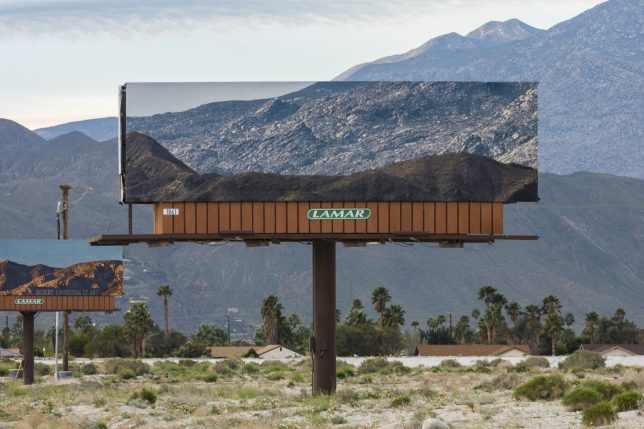
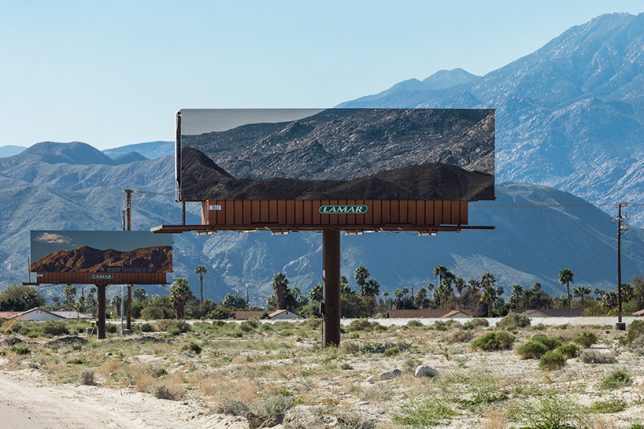
For just a split-second as you zoom by in your vehicle, you’ll catch the perfect alignment of 2D imagery on a billboard and the real, three-dimensional mountains in the background, eliminating advertising to refocus your attention on what’s really important. Set along Gene Autry Trail in California as part of Desert X, an outdoor exhibition of site-specific art installed across the Coachella Valley, the billboard series by Jennifer Bolande demonstrates an unusual form of camouflage.

desert X main

desert X billboards 2

The installation is particularly effective for the close placement of the billboards, which are glimpsed in quick succession. Real and artificial environments blend together in an illusion that’s particularly effective on a bright, sunny afternoon when the sky is at its bluest. The work is specifically made to be experienced from a passing car, drawing inspiration from an old Burma Shave ad that used sequential placement to create a message that could only be read from a moving vehicle.

desert x

‘Visible Distance/Second Sight’ is particularly effective in this desert environment, where most structures are low-lying and there are no towering trees. This setting ordinarily makes billboards pop out from the landscape even more than they would in a city.

circle of land and sky philip k smith

curves and zigzags

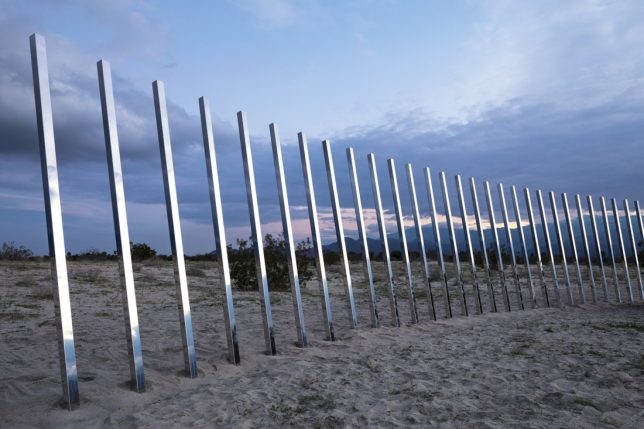
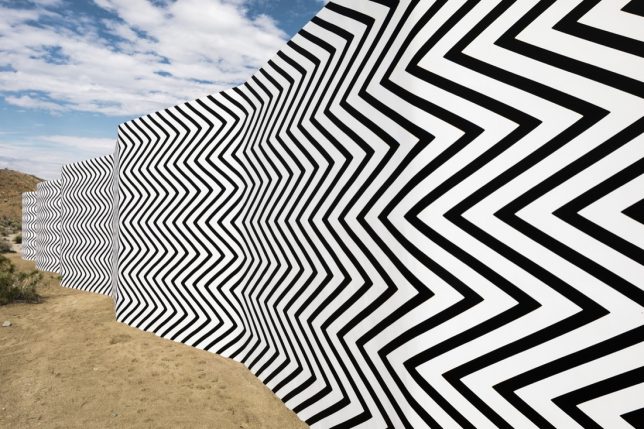
Other striking installations in the Desert X series include ‘The Circle of Land and Sky’ by Phillip K. Smith III, a composition of 300 geometric reflectors angled at 10 degrees to engage with the surrounding Sonoran Desert, and ‘Curves and Zigzags’ by Claudia Comte, a series of scuptural freestanding walls.

All photos by Lance Gerber Studio

Share on Facebook


[ By SA Rogers in Art & Installation & Sound. ]

[ WebUrbanist | Archives | Galleries | Privacy | TOS ]


WebUrbanist

 
Comments Off on Uninterrupted Views: Billboards Blended Into Their Natural Backdrops

Posted in Creativity


50 Sweet Valentine Gifts for Photographers and Their Sweethearts

26 Jan

The season for love is here but finding a perfect gift for your lover isn’t easy. Whether you’re an amateur photographer or a real pro, you can give your sweetheart a photography Valentines gift that would be a winner for sure. I know you want to make this Valentine’s day unforgettable. Here I showcase 50 amazingly creative and romantic Valentine Continue Reading

The post 50 Sweet Valentine Gifts for Photographers and Their Sweethearts appeared first on Photodoto.


Photodoto

 
Comments Off on 50 Sweet Valentine Gifts for Photographers and Their Sweethearts

Posted in Photography


Kano Camera Kit lets anyone build and program their own camera

29 Sep

Kano, a maker of DIY educational tools, is seeking crowdfunding for a trio of DIY project kits, one of which is its new educational Camera Kit. The Camera Kit enables anyone to build a simple camera and then program it with various functions using drag-and-drop code, the goal being to impart an overall knowledge of how cameras and their related software work.

The camera is assembled from pre-made parts using an included instructional ‘storybook.’ DIYers can choose which lens they want to use — a macro, fisheye, or wide-angle — and can add both a flash and a trigger. The Camera Kit also includes a Tripwire Sensor which, when added, emits an infrared beam. If someone or something moves through the beam, the camera will snap a picture.

Various functions can be added via the programming software, including features like triggering photos via sound using an integrated microphone, adding real-time data to photos like the current weather, and more. The software also enables users to create their own photo filters.

Overall, the Camera Kit features the camera ‘brain,’ an LED ring flash, tripwire sensor, mode dial, lenses, viewfinder, battery, charging cable, tripod, lanyard, camera case, storybook and stickers.

The Camera Kit is one of three project kits Kano is seeking funding for on Kickstarter. As with the other two kits, the Camera Kit is offered as a $ 99 pledge, with estimated retail cost being $ 129.99. Kano anticipates shipping its Camera Kit to backers in March 2017.

Articles: Digital Photography Review (dpreview.com)

 
Comments Off on Kano Camera Kit lets anyone build and program their own camera

Posted in Uncategorized


Wise Words: Famous Photography Quotes and Their Relevance Today

19 Sep

In the early years of my study, I remember leaning over the photography department work bench, trying not to look disheartened, as my lecturer scribbled notes on the glossy finish of yet another proof sheet in red marker. +1, -5, underexposed, out of focus, crop, the irrefutable question mark with an arrow pointing to a light leak of frustratingly mysterious origin, or worse – the dreaded RESHOOT.

At the time, I was frustrated with my inconsistency both behind the camera and in the darkroom. My tutor’s favorite saying, “Your first 10,000 photographs are your worst” formed in my mind an image of piles and piles of failed photographs stacked up like an impassable mountain before me.
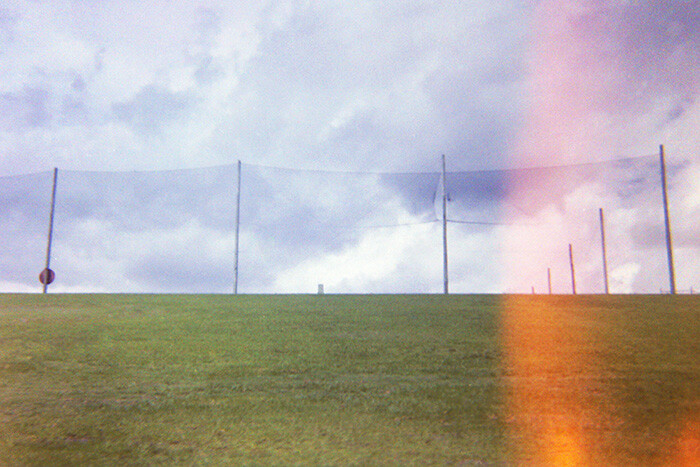
Filmexample2megankennedy

Light leak from a film camera.

It was only later in my career that I realized that what my teacher was saying was not a criticism, but her way of encouraging me to take advantage of the opportunity that the worst 10,000 provided. A foundation for the photography I hoped to produce in the future. Without those 10,000 duds my photographic feet would be steeped in the muddy waters of ambition with no way to see my visions through to a complete body of work.

Those initial 10,000 photos – many of which I have kept stacked in visual diaries and negative sheets to look back on fondly – provided a solid launching pad for my photographic practice and the impetus to advance. Nowadays I find myself delving into the words of photography masters for inspiration, tried and true technical advice, and occasionally a kick in the butt when motivation is lacking.

Henri Cartier-Bresson

“Your first 10,000 photographs are your worst”

Beingaware megankennedy

Be aware and ready for anything.

The inventive work of Henri Cartier-Bresson in the early 1930s opened up the creative possibilities of photography forever. Though he is known for his mastery of street photography, Cartier-Bresson was also known for his patience. The mythology of Cartier-Bresson’s “decisive moment” suggested that most of the photographs he took from the very start of his photographic career were taken with a single shot, at the precise instant of opportunity. In reality however, Cartier-Bresson honed his skill by making the most of a potential moment, sometimes shooting 20+ images of one scene. His single greatest images were preceded by the first 10,000 images that fell by the wayside.

Elliott Erwitt

“I always make it a point to carry a camera with me at all times…I just shoot at what interests me at that moment”

In photography, the whole world is a canvas. The special agony reserved for an unarmed photographer witnessing the perfect shot pass before their eyes, is something we have all experienced. Making a habit of always carrying a camera with you (beyond a camera phone, everyone has those!) is rewarding, and makes sure you will never suffer the regret of wishing you had.
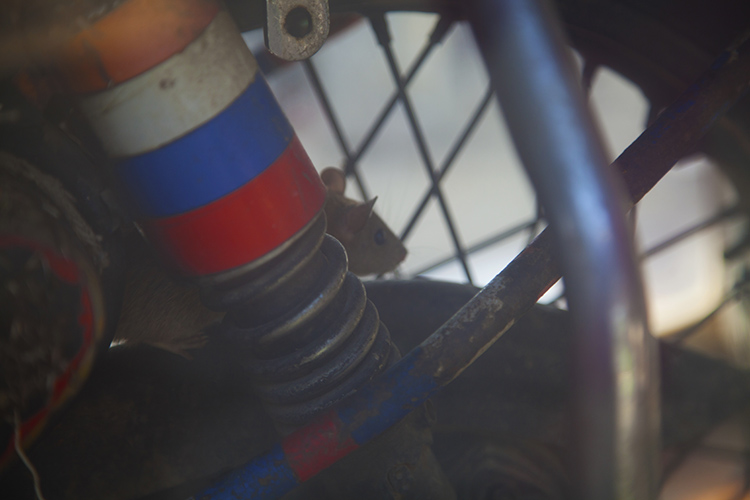
Keepyourcameraonyou megankennedy

I personally keep a disposable (play) camera with me if my larger camera is too bulky. Not only do the plastic disposables ease the anxiety of being camera-less, they afford a less formal quick-draw camera for street photography. They also provide a refreshing aesthetic, and the occasional surprise. I always enjoy the odd incidental light-leak mark, a quirk of cheaper cameras that adds a real incidental feel to the image. Another upside is disposable cameras are inexpensive and (speaking from experience) they are also a bit bouncier if you drop them.

Robert Mapplethorpe

“The more pictures you see, the better you are as a photographer.”

Rainy shoots in the wilderness, urban exploration, and late night post-processing, means that often photography can be a lonely experience. But taking the time to check out other photographer’s work – from the past and present – can be a great way to get motivated and to immerse yourself in the photography headspace. Studying other artists’ work and dissecting their techniques can help you improve your own work or allow you to ease up a little and be open to experimentation.

If you usually take photographs of bustling subjects with loud, vibrant colors, try focusing on black and white minimalism for a change. Asking for advice, or perhaps even sharing your own insights, is a great way to build relationships with fellow photographers too.
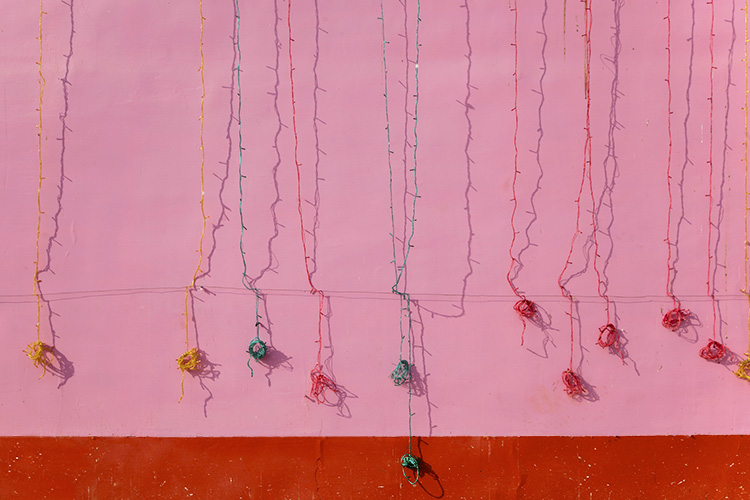
Newthings megankennedy

Mary Ellen Mark

“Learning how to use different formats has made me a better photographer. When I started working in medium format, it made me a better 35mm photographer. When I started working in 4×5, it made me a better medium-format photographer.”

Taking the time to shake up your photographic practice is not only a liberating experience but an educational one. As memory cards get bigger, faster, and larger, the temptation to shoot rapid-fire and hope for the best is strong. When shooting with a film camera, however, you are restricted by the limited number of frames on the roll as well as developing costs. As a result, you will immediately start thinking much more about composition, subject matter, movement, and the technicalities of composing the shot correctly in terms of exposure, aperture, ISO, etc.
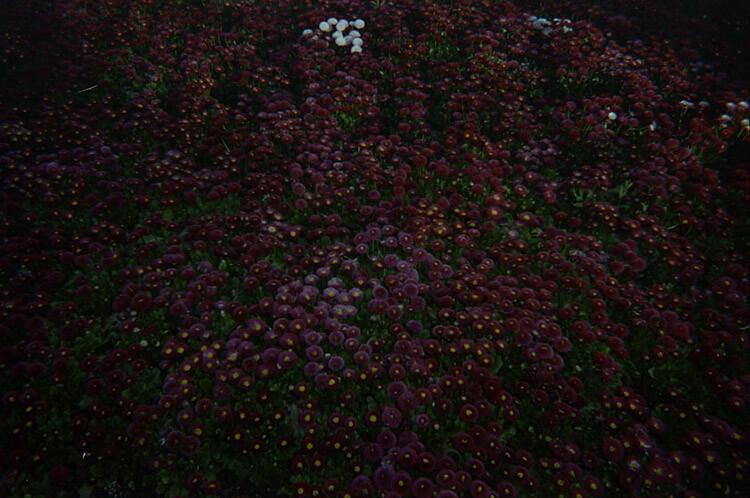
Filmexample megankennedy

Shoot with film for a different experience.

Taking the time to step back and focus on your craft will no doubt improve your technique and help you to slow down and reconnect with the process of capturing a great photo.

Imogen Cunningham

“Which of my photographs is my favorite? The one I’m going to take tomorrow.”

While it can be exhausting at times, maintaining the hunger for new and better photographs is what drives us photographers to keep going. We’re never satisfied, we never stop learning, and we never stop shooting. As with any artistic endeavor, creativity comes in waves. But to ride the good waves you’ve got to keep surfing.

Keep striving for that great shot, and when you get it, strive for the next one. You never know what’s coming, so be prepared!
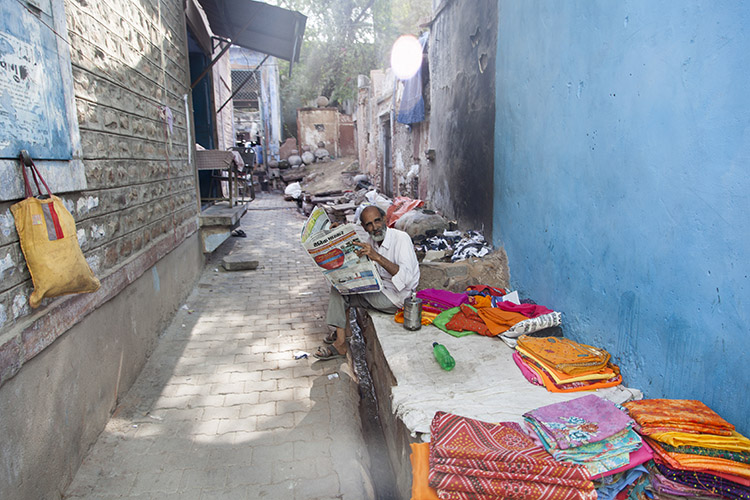
Beprepared megankennedy

Ansel Adams

“You don’t take a photograph; you make it.”

The word take is often used to describe the process of capturing an image. But the difference between assuming an image is simply there to be taken and taking control of the image are two completely different things.

We all unconsciously make decisions about how to take a photo in terms of location, weather, time of day, etc., based on what catches our eye. So we are already exerting a lot of control over our photography. By being more aware of detail, the formal technique and execution of a photograph will invariably result in better considered and aesthetically pleasing images, which at the very least saves time on editing later.
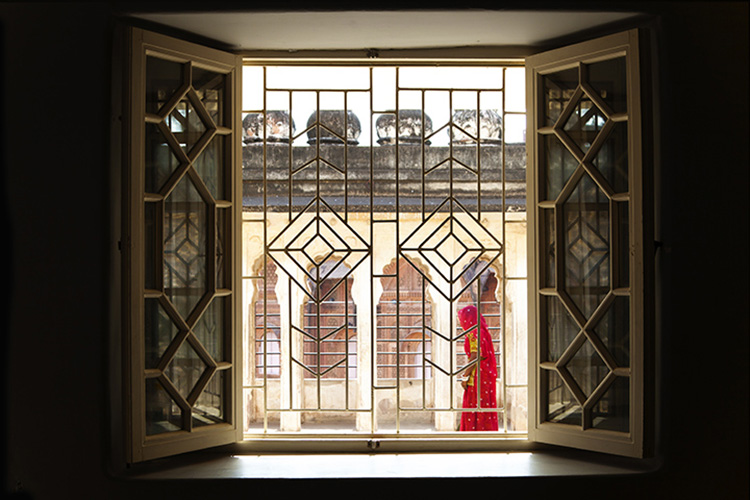
Wisewords2 megankennedy

Do you have any favorite quotes from photographers past or present? What can we take from them and apply to our own photography? Please share your thoughts in the comments below.

googletag.cmd.push(function() {
tablet_slots.push( googletag.defineSlot( “/1005424/_dPSv4_tab-all-article-bottom_(300×250)”, [300, 250], “pb-ad-78623” ).addService( googletag.pubads() ) ); } );

googletag.cmd.push(function() {
mobile_slots.push( googletag.defineSlot( “/1005424/_dPSv4_mob-all-article-bottom_(300×250)”, [300, 250], “pb-ad-78158” ).addService( googletag.pubads() ) ); } );

The post Wise Words: Famous Photography Quotes and Their Relevance Today by Megan Kennedy appeared first on Digital Photography School.


Digital Photography School

 
Comments Off on Wise Words: Famous Photography Quotes and Their Relevance Today

Posted in Photography


Tips for Photographing Your Child and Their First Moments

10 Aug

Seeing your little one begin to explore their world with their first solid food, crawl on the floor, or enjoy independent playtime is an amazing experience. But, photographing your child and capturing those moments to cherish forever is even more enjoyable!

While you may not always capture the exact the moment a “first” happens, as little ones can be full of surprises, these tips will help you to capture beautiful storytelling images of those moments to look back on for years to come.

Katenesi com 01

1. Be prepared

Anticipation of key moments in your child’s life will come naturally as they grow. An important piece of capturing those first moments is being prepared at all times, with a camera nearby. As they say, the best camera is the one you have with you. It doesn’t matter what camera you use, but having it on hand will be paramount to capturing those fleeting firsts.

Oftentimes, I keep my DSLR in my living room, on the mantel, where it’s easily accessible in a moment of activity or at feeding times. It is in the On position ,with ISO settings at the lowest, and the aperture at f/2.8 for a nice shallow depth of field, and one that works with the natural lighting in my living and dining rooms. In addition, my mobile device is always ready in my purse hanging in the living room, or generally nearby in any room I walk into as well.

child-photography-firsts-08

When something new happens, you can quickly grab your camera and capture the moment!

2. Get on their level

As adults, we often forget what it is like to live so low to the ground. You might find yourself capturing your child’s firsts from the high perspective of standing upright, or from above.

Katenesi com 10

While this isn’t a bad perspective, over time your little one will become aware of your paparazzi-like actions and shy away. Try to get down low while playing, with your camera nearby, and capture the moment from their perspective. Often, they are unaware you are photographing them if you’re on their level, as it doesn’t appear as obvious from a distance than when you might be hovering above.

Katenesi com 06

3. Find your light

If you are planning to take a few photos of your child when you know they might be headed into a first moment, or have done it maybe once before, scope out the scene. Where is the best light coming from? What time of day is best in that room or that location?

Katenesi com 05

You may want to position a toy, or your child, in a certain way to capture the moment with a better angle of light hitting their face for a smile, or backlight them for more of a story. Practicing often before those first moments, in your home with a camera and light angles, helps you to define the best locations and lighting, as well as camera settings to be prepared.

Katenesi com 02

4. Try new locations

Firsts come in all shapes and sizes, as well as for years beyond the first 12 months of life. While most firsts just appear without planning, there are many moments you can create, and prepare for ahead of time.

Katenesi com 09

Eating their first solid food is one you can set-up and plan in advance, as well as capturing their reaction to the first time touching the beautiful plush grass.

Katenesi com 07

Plan to go to a new location and practice your photo, before you bring your child into the setting. Go to the beach at the best time for lighting, or for your child’s energy level, and prepare to photograph the first moment they set foot or fingers in the sand.

Katenesi com 04

5. Tell their story

You know your children the best. You have spent countless hours with them, at all times of the day and night, and can read their responses and personalities the best. As a new parent, you have those gut feelings when something new is about to happen.

Katenesi com 03

When you’re photographing those moments, take time to tell their story. That is the story you’ll want to remember. Their favorite toy, their first moment peeking out the window, or touching the sand or grass. Keep in mind your child’s story, and how you want to tell that story with your images.

In the end, firsts will come and go, but you’ll always have these beautiful storytelling images to share with them as they grow. Being prepared, change your position, lighting, or locations, and remember who your child is at heart, is the key to capturing those amazing moments in your heart and through your lens.

Share your child’s first moments in the comments below. We’d love to see them.

googletag.cmd.push(function() {
tablet_slots.push( googletag.defineSlot( “/1005424/_dPSv4_tab-all-article-bottom_(300×250)”, [300, 250], “pb-ad-78623” ).addService( googletag.pubads() ) ); } );

googletag.cmd.push(function() {
mobile_slots.push( googletag.defineSlot( “/1005424/_dPSv4_mob-all-article-bottom_(300×250)”, [300, 250], “pb-ad-78158” ).addService( googletag.pubads() ) ); } );

The post Tips for Photographing Your Child and Their First Moments by Kate Nesi appeared first on Digital Photography School.


Digital Photography School

 
Comments Off on Tips for Photographing Your Child and Their First Moments

Posted in Photography


Photographers to Get (Small) Reward for Their Creative Commons Images

19 Jul

dotspin

Image courtesy: Dotspin

Someone is benefitting from your Creative Commons-licensed images, and it probably isn’t you. Sure, you might get a little thrill out of knowing that you’re helping a designer with a small budget (or a blogger with no budget) to use an attractive image. And if you’re able to see your pictures in use, the validation can be a fun boost. But that’s a big ‘if’ and it’s pretty much where the benefits end. One new company, though, believes that photographers willing to give away their pictures should receive more for their efforts. Dotspin is trying to line up gifts for photographers who apply Creative Commons licenses to their pictures and give them away on social media sites.

The company has been online since the beginning of May and is still in beta. Its aim, says co-founder Gastón Paladini, is to reward photographers for their contributions to the Internet.

“The idea come from a vision to have a more fair web for all. We think that social media users should be recognized for good content (photos) shared and to be protected in a legal way (copyrights).”

Dotspin is connected to both Instagram and Twitter. Having signed in using an account on either one of those services, Dotspin’s users can take a picture, apply their filters and upload it to their account, tagging the image with the hashtag #dotspin.

The hashtag ensures that the photo is also submitted to Dotspin where, by default, it is licensed as Creative Commons. A settings page, however, allows photographers to change the type of license applied. Rather than selecting one of the various Creative Commons licenses in use, they’re asked whether they’re willing to allow modifications and commercial usage in addition to personal use.

The image will appear in Dotspin’s galleries watermarked with a colored dot, but not before the community has voted on it. Users are presented with two random pictures and asked which they prefer. Images that receive a large number of votes receive “dotcredits,” points which they can redeem for rewards.

At the moment those rewards come from Dotspin, based on “some agreements with Amazon.”

“But we think that soon the suppliers and brands will come to us to offer their products on the Dotspin catalogue,” says Gastón.

Put Your Ads in Front of… Picture-Takers

He may be right.  Instagram currently has more than 100 million users, offering a massive potential market for sellers looking to promote their goods. It’s likely that Dotspin will be able to find some companies who are willing to offer vouchers or freebies in the hope of turning the winners, as well as the site’s users, into future customers.

But the site will face a number of challenges too.

The first is the lack of demographic data. Awarding points that users can redeem means that suppliers can’t target their advertising. They’ll have to settle for offering their products to a demographic made up of roughly of people who like taking pictures. That’s a broad category.

The voting system, too, leaves much to be desired. At the moment, two images are placed against each other at random, forcing users to choose between a picturesque sunset and a mirror-shot selfie, for example. A voting system that pitched two images showing similar topics or that were shot in similar styles against each other might be a more serious way of judging talent.

But a bigger problem is the site’s goal itself. Gastón’s aim to reward people willing to give away their images may be fair and reasonable, but the lack of rewards on offer so far hasn’t stopped people from sharing their pictures. Flickr alone has more than a quarter of a billion photos available under one form of Creative Commons license or another. Donors of those images have made them available with no hope of reward. Gastón wouldn’t say how many photographers have signed up since the site’s beta launch but he did indicate that the numbers are “much more than we thought.”

That could be a good sign but it will be interesting to see whether Dotspin is able to capture a good chunk of the photographers willing to allow people to use their images.

Creative Commons Users Want Tracking for Their Photos, Not Thanks

The most likely outcome is that some photographers currently sharing their images through Instagram and Twitter will sign up to Dotspin and start adding the hashtag. They’ll enjoy the extra feedback provided by the voting system, especially if it’s enhanced. And if the site is able to bring in donors, they might feel a rush if they’re able to win enough credits to pick up a free app download or a discount from a printing service.

But none of those rewards is likely to have an impact on photo-sharing as a whole. They aren’t likely to encourage it and the odd prize isn’t going to come close to rewarding photographers for giving away for free an asset that costs other photographers a great deal to produce.

That’s because when photographers add a Creative Commons license they aren’t doing it for the reward. They’re doing it because they want people to use their images — even the images that few people are ever likely to use. And most of all they want to see their pictures in use.

That would have been a much more powerful reward than goodies redeemable against voted credits. If a platform were produced that highlighted the best of the most recent Creative Commons-licensed images, helped publishers, bloggers and editors to find them, and informed the photographers each time an image was downloaded and told them where it was going to be used, that would be much more rewarding.

And if that service also gave the photographers a share of the page’s revenues, then photographers who applied Creative Commons licenses to their images would really start to feel the benefits.


Photopreneur – Make Money Selling Your Photos

 
Comments Off on Photographers to Get (Small) Reward for Their Creative Commons Images

Posted in Equipment


Figurative Furniture: 15 Designs With Life of Their Own

15 Jun

[ By SA Rogers in Design & Furniture & Decor. ]

anthropomorphic fleshy chair 2

Does the human tendency to place a higher value on living things that resemble our own image even extend to furniture? You might think so from the range of anthropomorphic designs we’ve created for our own comfort and entertainment, especially when the objects are designed to mimic human contact. These creations seem like they could spring to life at any moment, bringing a sense of anticipation to an otherwise ordinary indoor setting.

Companion Stools by Phillip Grass

anthropomorphic companion stools 3

anthropomorphic companion stools

anthropomorphic companion stools 2

Standing curiously or sitting in contemplation, Phillip Grass’ ‘Companion Stools’ stare back at us with a single oversized eyeball affixed to the wooden seat.

Fleshy Seats That Smell Like Human Skin

anthropomorphic body of skin

Not only do these rounded skin-toned stools look like lumps of human flesh – they smell like it, too. Artist Gigi Barker’s A Body of Skin collection is made of silicone that matches the body’s temperature when you sit on it. Leather covers are infused with pheromones and aftershave to add to the effect.

Nel & Maria Bedside Tables

anthropomorphic nel maria

anthropomorphic nel maria 2

With hat-shaped lampshades and drawer holes resembling faces, ’Nel & Maria’ bring a little bit of abstracted anthropomorphism to your bedside. The straw hats are reminiscent of those found in the Portuguese region of Baixo Minho, the home of the designers at DAM.

Man-Shaped Collection from Samal Design

anthropomorphic man 1

anthropomorphic man 2

Designer Dzmitry Samal fuses realistically sculpted human bodies with lockers and tables for this strange series. The human legs definitely take up more space than average furniture designs, but most of the pieces are still surprisingly functional for all their dramatics.

Free Hug Chair

anthropomorphic free hug chair 1

anthropomorphic free hug chair 2

anthropomorphic free hug chair 3

Somewhere between a living human and an oversized stuffed animal, the ‘Free Hugs’ chair is a soft fur-covered creation with extra-long arms made to wrap around you when you take a seat or provide cushioning on the floor.

Next Page – Click Below to Read More:
Figurative Furniture 15 Designs With Life Of Their Own

Share on Facebook


[ By SA Rogers in Design & Furniture & Decor. ]

[ WebUrbanist | Archives | Galleries | Privacy | TOS ]


WebUrbanist

 
Comments Off on Figurative Furniture: 15 Designs With Life of Their Own

Posted in Creativity