RSS
 

Posts Tagged ‘Taking’

Opinion: Does the arrival of the EOS M3 mean Canon is finally taking mirrorless seriously?

11 Feb

The Canon EOS M3 has 24 million pixels, an APS-C sensor, DSLR features and it looks like a camera. So, does this mean Canon is now taking the mirrorless market seriously? Senior DPR contributor Damien Demolder weighs in. Read more

Articles: Digital Photography Review (dpreview.com)

 
Comments Off on Opinion: Does the arrival of the EOS M3 mean Canon is finally taking mirrorless seriously?

Posted in Uncategorized


7 Tips and Etiquette for Taking Portraits in Public

11 Dec

Facial expressions, skin and hair, and sad or sparkly faces have attracted the artist’s eye since the first caveman recorded his first story on rock. Facial features have the power to convey stories. A single image says more than a thousand words. If you are a photographer who shares this joy in the human form, you would recognize that each person is unique and beautiful in his or her own way. If you are a portrait photographer, you know how humbling it is when you are given the privilege of taking a photo.

Storytelling through portraits requires a code of conduct that should be observed. Through my experience, I have developed some rules that I follow, and I would like to share some tips and etiquette of taking portraits in public with you.
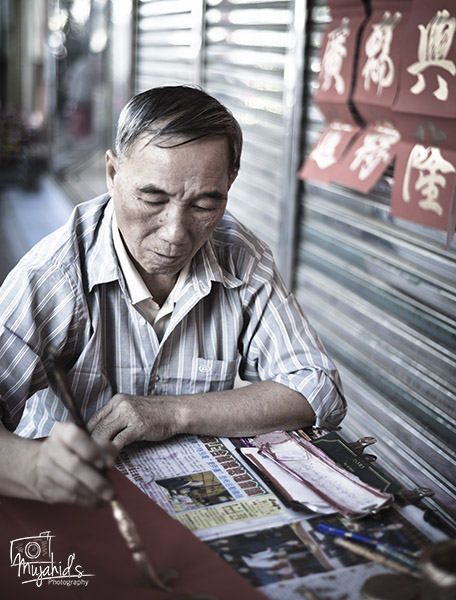
Calligrapher  China Town Bangkok

You can not only admire the beauty of the person, but also his work and workplace.

#1 – Show Your Presence

Smartphone holders, tourists, and casual snappers with DSLRs have made the jobs of serious portrait photographers a bit difficult. Photography overload has contributed toward a sort of over saturation in the population – perhaps the subjects have become weary. You are never sure of the reaction when you point your camera toward a person. If you see someone you would like to take a photo of, try to stand around for a while and become part of the scene. Observe the movements and dynamics, even try to catch their eye, but do not make the person feel uncomfortable.

#2 – Engage

If you don’t know the language, at least learn the local words to greet people. Remember, every culture has its signs of respect and ways to start a conversation, so keep those in mind. Show interest in whatever he or she is busy doing, selling, or offering. Engaging in such a manner normally makes people comfortable, and often less skeptical, of to your forbidding-looking, long lens. You come across first as an individual with a personality. Try to engage with something that you believe will be appreciated, be it about their children or their surroundings – sound them out, gauge a response. Of course, lack of response is answer enough that you do not proceed to take their picture.
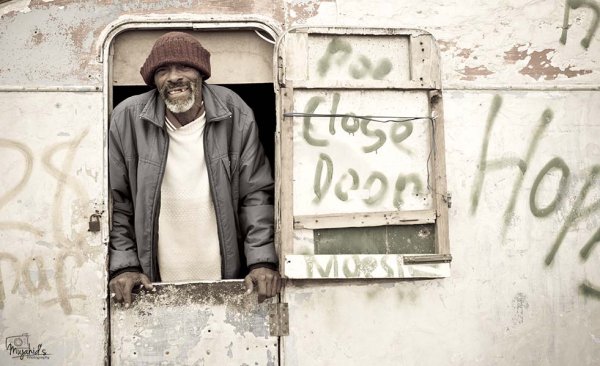
Freek, the fisherman. I said hello to him as I passed by his caravan. We chatted for a while before I opened my camera bag and requested a photo.

Freek, the fisherman. I said hello to him as I passed by his caravan. We chatted for a while before I opened my camera bag and requested a photo.

#3 – Ask Permission

You are allowed to take photos in public spots, even without permission. Portraits need all of what we have discussed so far. However, this is not an hour long process; you need to get to the bottom line soon. Ask permission. If it is given, help the person posing as per your preference. Do not feel bad if they refuse, accept it politely and pleasantly, and remember especially then, to be respectful. A few things I learned along the way:

  • A guard asked me to gain permission from the shop owner first (cool guard!).
  • I was once told by a religious person that his faith doesn’t allow taking photos.
  • A tribesman allowed me to take photos of men and children only, and not of the women.
  • A young girl allowed me to take her photo on condition that I would never upload it; it was for my eyes only as she was comfortable with me but not the general public.

#4 Remember People

You cannot do justice to a portrait if you do not include at the very least the name and background of the person, and preferably also age. You need to know who they were, and what their life was like. It is first and foremost a sign of respect to the person whose image you have used for your own purpose, but secondly you will realize how powerful your portraits become when contextualized. I currently use my smartphone to note down these details, but am considering carrying a dictaphone. A simple notebook will do.
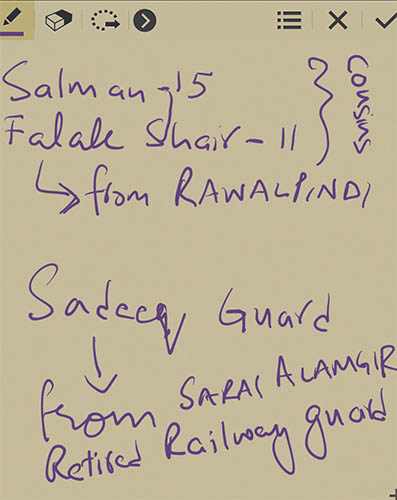
Notes

Capture their names, ages and origin.

#5 Show the results and make people feel good about themselves

If your camera allows previews, show it immediately, and get feedback. Sometime the best ideas come from the person in front of the lens. Make your new friend smile and even chat while you are taking photos. I often ask questions while I am busy taking photos. I believe it is a great technique which helps people calm down. When they are animated about something important to them, it reflects in the photo. If you have a companion with you, sometimes having them strike a conversation allows for the opportunity of candid shots of your subject with spontaneous expressions.

“Wow, you are in grade 2. This is so cool buddy, I wish I was in grade 2 again”.

“Were you a solider before Mr. Sadeeq? I feel that strength in your eyes”.

“Enrique, you remind me of my cousin… he has a beautiful mustache like you”.
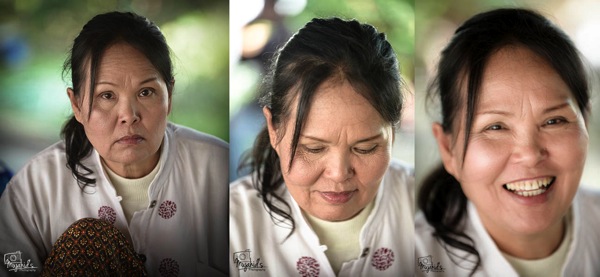
Umbrella Lady Serious to smiling

After I showed the first shot to this umbrella-making lady, and told her she looked beautiful, she felt shy and even gave me a big smile.

#6 Respect their possessions

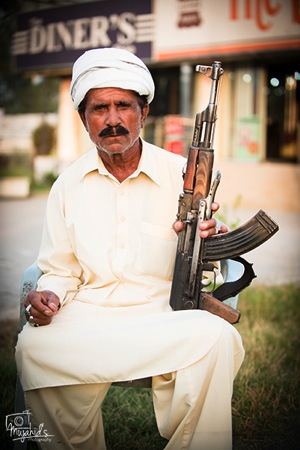
I have not followed this rule strictly, and I have regretted it several times in retrospect, after the moment passed. Once, after taking photo of a guard, I proudly showed it to him, and he asked, “Where is my gun? It is not in the photo”. His voice echoed in my mind for many days, I had missed an important aspect of what made him a guard! Not only was it integral to his identity, but what an important prop I had omitted in error. Take two.

Take a photo of the people with their surroundings to remember what they were doing. It will help you in your story telling one day!
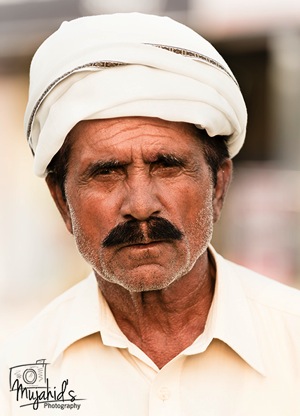
Sadeeq Guard Without Gun

Take #1 – first photo.

Sadeeq Guard With Gun

Take #2 – photo with guard’s belongings, i.e. his gun.

#7 Say Goodbye and inform them of the use of their photo (legal)

Greet properly. Ask if they would mind if it was published or uploaded. Some photographers even carry model releases on their person, for use as required. If this is not feasible, as far as language allows, at the least make your subject aware that you may use the images. Later, if you were to personally or commercially use the images, depending on the laws of your country which are variously lax and stringent, you may either need to submit a model release and/or affidavit along with the photo to make its use legal.

Remember to be informed and aware of not only the etiquette of taking portraits, but also of the legal requirements which will vary from country to country, and are a topic of their own. Be particularly cautious when photographing the faces of minors without formal consent of their parents. I still have inadequate knowledge in this area myself.

I hope these tips would help you in your portrait photography. I look forward to seeing your feedback and learning from you all.

googletag.cmd.push(function() {
tablet_slots.push( googletag.defineSlot( “/1005424/_dPSv4_tab-all-article-bottom_(300×250)”, [300, 250], “pb-ad-78623” ).addService( googletag.pubads() ) );
} );

googletag.cmd.push(function() {
mobile_slots.push( googletag.defineSlot( “/1005424/_dPSv4_mob-all-article-bottom_(300×250)”, [300, 250], “pb-ad-78158” ).addService( googletag.pubads() ) );
} );

The post 7 Tips and Etiquette for Taking Portraits in Public by Mujahid Urrehman appeared first on Digital Photography School.


Digital Photography School

 
Comments Off on 7 Tips and Etiquette for Taking Portraits in Public

Posted in Photography


4 Tips for Taking Better Holiday Photos

02 Nov

With the holiday season just around the corner, many of us will be toting our cameras to festivals, parties, and family gatherings to preserve our precious memories for years to come. Unfortunately, you might look back at some of your pictures and wonder why they were blurry, out of focus, or just not all that interesting. Whether you have a smartphone or DSLR, here are a few simple techniques you can use to make your photos not only stand out, but help you learn a bit more about photography along the way.

4 tips for taking better holiday photos

ChildChristmasTree

#1 Get down to eye level with the kids

While you might be tempted to pass the time visiting with adults and catching up with friends at holiday gatherings, some of the best photos years down the road often end up being the ones of kids. It’s fun to see them grow and change over time, and when browsing photo collections people will often linger on photos of children for all the memories they bring back. When you have your camera out, though, remember to get on eye level with the little ones! It can feel a bit strange to squat down or sit on the floor to get a good shot of your three-year-old niece while all the adults are visiting in the other room, but the results will be well worth it. It’s tempting to shoot down at kids from your eye level, but this often results in unflattering pictures that seem cold and distant. Putting yourself physically at the same level as the kids offers a much more interesting view of their world, and makes for photos that are far more personal and memorable.

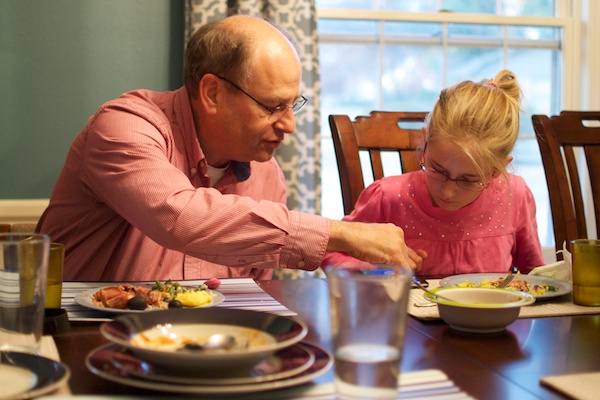
ThanksgivingFriends

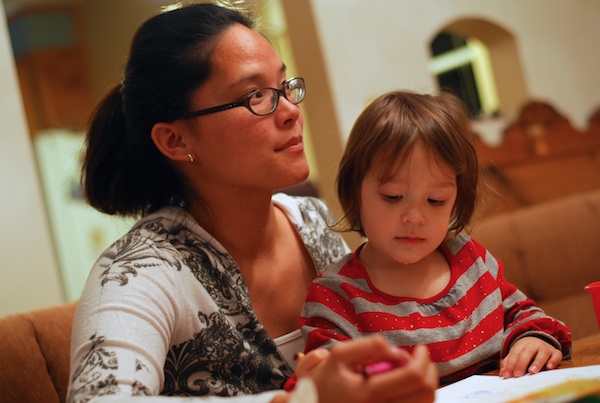
My friend and her daughter before a Thanksgiving feast. I had to crouch down to get on eye level with the girl, but the results make for a much more interesting picture.

#2 Adjust the ISO instead of using the flash

If you leave your camera on Automatic mode, you might notice the flash constantly going off which can result in washed-out colors and unnatural shadows across people’s faces. But if you try to disable the flash, your photos will often come out blurry or out of focus. To fix this, you can set your camera to Program mode instead of Auto, which will allow you to have more direct control over the ISO setting and get better shots in low-light conditions (like indoor holiday parties) without using the flash.

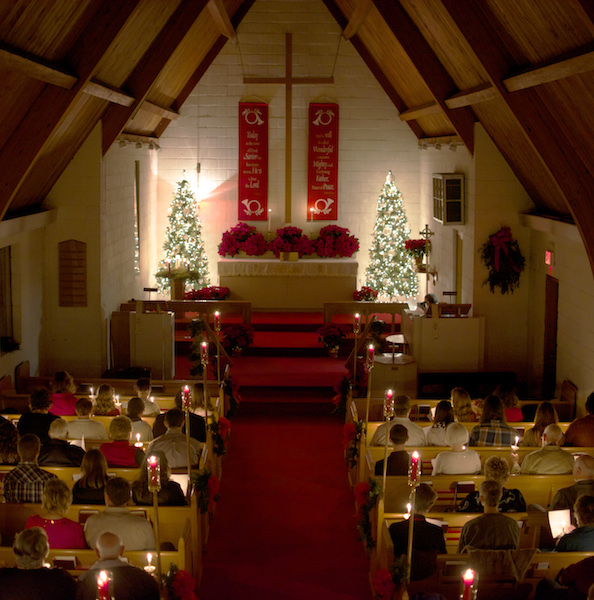
ChristmasEveService

Using a flash would ruin this photo of a candle-lit Christmas Eve service. I got this shot by bumping the ISO up to 3200.

The higher you set your ISO, the less light your camera needs in order to take a photo. This is nice if you want to avoid blinding people with your flash, but the trade-off is that your pictures might look noisy or grainy. Fortunately, most modern cameras do a fine job even at ISO settings as high as 3200 or even 6400 – particularly if you just want to share the photos online or print at smaller sizes like 4×6.

Make sure to practice beforehand so you are comfortable not only setting the ISO, but knowing the limits of what your camera can do. But if used carefully, adjusting the ISO instead of using the flash can result in much better holiday photos with the added bonus of not blinding your guests or having to deal with red-eye corrections later on.

ThanksgivingDinner

If you really want to use your camera to its full potential, ditch Auto or Program mode entirely and try shooting in aperture priority (A or Av) mode where you choose the lens aperture and ISO while your camera calculates the best shutter speed. Or you could try shutter priority (S or Tv) mode, where you choose the shutter speed (1/60 to 1/90 second are good starting points when shooting indoors, such as holiday gatherings) and ISO, and your camera figures out the best aperture. I would recommend getting lots of practice with these modes and making sure you know how to adjust your settings accordingly before the holidays, though. You don’t want to try something new for the first time when everyone is opening presents and have a bunch of dark or out of focus photos as a result!

Finally, it’s worth noting that many modern digital cameras have user-programmable Auto ISO settings. You can use this to tell your camera to select the best ISO when using the semi-automatic (A/Av, S/Tv, or P) modes but stay within a few parameters that you define. For instance, if you know that your camera gets too noisy above ISO 3200, you can set that to be the maximum allowable ISO but let your camera do the rest. Or you can also set a minimum shutter speed before the Auto ISO kicks in.  If you don’t want to shoot anything slower than, say, 1/30 of a second, your camera will do everything in its power to maintain proper exposure by adjusting the ISO in order to stay above that shutter speed.  This can be quite handy at holiday gatherings when you don’t want to spend all night fiddling with your camera’s menus and settings but also want to make sure you get the best shots possible without the pop-up flash constantly blinding your guests.

#3 Shoot moments, not poses

It might be tempting to run around with your camera at holiday parties barking out orders like “Smile,” “Look here!” and “Say Cheese!” But a better option is to be a little more discreet and attempt to shoot moments instead of poses. Capturing the essence of what people are doing – talking, laughing, opening presents, sharing a drink – often makes for much more interesting photos as well as better memories in years to come. There is certainly nothing wrong with posed photos or having people look at you and smile while you take their picture, but these often lack context aside from the clothes people have on. What else was happening? Who else was present? What sort of activities were people doing? By taking a documentary-style approach and shooting pictures of people just being themselves (particularly if you turn the distracting flash off and adjust the ISO instead) you will capture memories that will strike a chord years down the road.

ThanksgivingCardGame

This picture of a game of cards over the holidays carries a great deal more meaning to me than if I had told everyone to look at the camera and smile.

#4 Know when to put your camera down

This might sound counter-intuitive for an article about how to get better holiday photos, but as the saying goes, there is a time for everything under the sun. This includes a time to shoot pictures and a time to just be with friends and family. Rather than 100 photos of your family opening presents, just take a handful and use the rest of your time to simply be with your loved ones and enjoy your time together. Try to be intentional when taking fewer photos, and the result will be more keepers that you want to look at years down the road instead of dozens and dozens of images of the same scene.

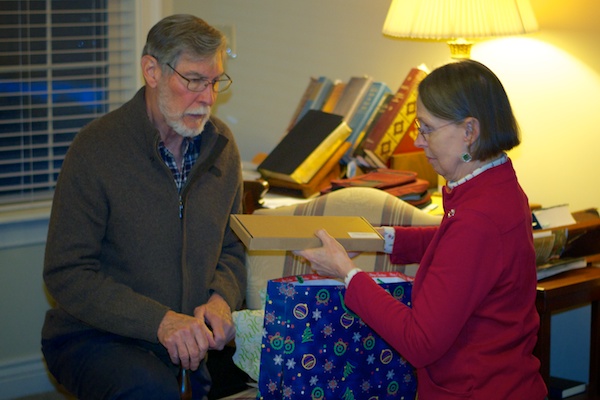
ChristmasPresents

Rather than a boat load of present-opening photos, just a handful will likely suffice and the rest of your time can be used to visit, laugh, and share memories.

Bonus tip: Invest in a prime lens

If you are still shooting with the kit lens that came with your camera, now is a fantastic time to spend a little money on a prime lens and get used to it before the rush of the holiday season. While these lenses don’t zoom in and out, the trade-off is an ultra-wide aperture that lets in so much more light (especially compared to a kit lens) that you will rarely have to use the flash even at lower ISO values. You will get the added bonus of having a lens capable of smooth blurry backgrounds that can capture the beauty of even the most mundane subjects. The Nikon 35mm f/1.8 is a fantastic choice, as is the Canon 24mm f/2.8, but there are plenty of options to suit your needs depending on your camera and shooting style.

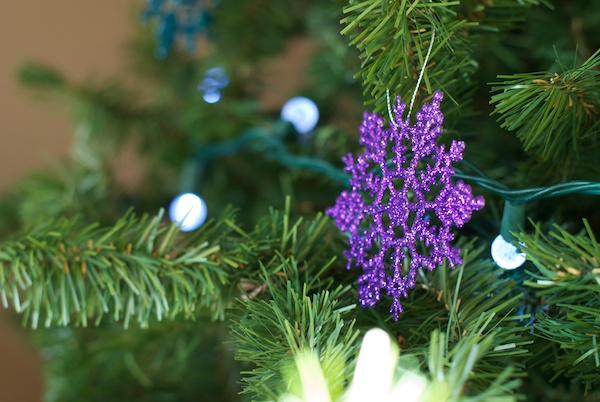
TreeOrnament

What other tips do you have for getting good pictures at this time of year? Leave any in the comments below, and maybe share a few of your favorite holiday memories too!

The post 4 Tips for Taking Better Holiday Photos by Simon Ringsmuth appeared first on Digital Photography School.


Digital Photography School
 
Comments Off on 4 Tips for Taking Better Holiday Photos

Posted in Photography


Fall Foliage Photography Guide for Taking Better Autumn Photos

29 Oct

The world is filled with Red and Gold…Get out there and Shoot!!! So, as many of you know, I have never actually lived in a place with true fall. I’m from Los Angeles, lived in Hawaii, both of which basically are perfect always, did an eight year stint in North Dakota, where it’s frigid for ten months, then there’s a Continue Reading

The post Fall Foliage Photography Guide for Taking Better Autumn Photos appeared first on Photodoto.


Photodoto

 
Comments Off on Fall Foliage Photography Guide for Taking Better Autumn Photos

Posted in Photography


Taking out the Garbage – 7 Tips for Choosing Your Best Photos Fast

07 Oct

style2

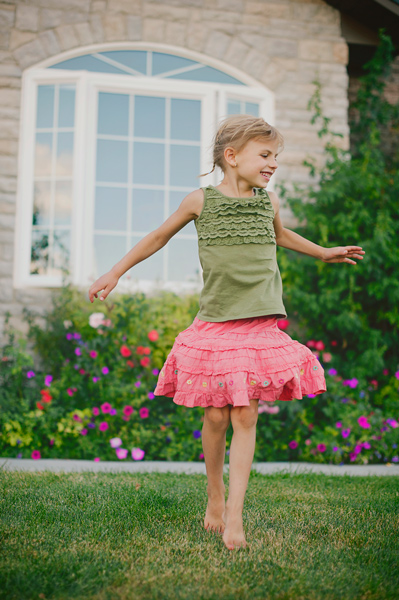
One of the most time-consuming and difficult things in photography is going through all the unedited images you took and choosing your best photos, the ones to keep, and which images to pass by. When I first started out as a photographer, I’d get hung up on this every time. I’d spend way too much time agonizing over every photo, and worrying so much about throwing away a good one. If this sounds like you, then read on, maybe I can save you a lot of time and headaches with a few simple tips!

#1 Don’t take so many in the first place

When you take hundreds of images at a time, the idea of looking through every photo and choosing the best is daunting! If you take each photo with intent, and wait for the right moments before pushing the shutter, you won’t have so many throw-aways to wade through. Be careful to notice composition as you shoot, and focus carefully. Time is money (and if not money, time is sanity), so don’t waste your time with so many extra images to go through.

#2 Choose images that reflect your style

It’s actually quite surprising how much the images you choose reflect who you are as a photographer. Two different photographers could take the same set of images and they’d choose completely different images to keep or toss. This is actually a great thing. It’s what makes you stand out from all the rest, and it lets your heart and soul shine through. I might keep images that others wouldn’t, and toss some that they’d keep, but many people have told me that they can always tell a Melinda Smith, and that is one of the greatest compliments anyone could give me.

#3 Watch for distractions

style

You may notice something in the photo that you know you’ll have to fix in post-processing. You have to decide if this is a deal-breaker, or if it’s worth the fix. In the image above, there was a garden hose (I should’ve moved it before we took the photo, but it was someone else’s home, and I didn’t know how much I should disturb). I decided that I loved the style of the image (my style) enough that it was worth fixing the garden hose. Other times I might decide that I have enough images that don’t require extra work, and it’s not worth the hassle. It’s your call, but try not to keep too many that require extra time.

 #4 Blurry photos go

blurry

If any photos have softness, or blurriness, they’re automatically out. What if the client wanted to print that particular image on a huge canvas? I don’t want to be the one to have to tell them that yes, the expressions are adorable, but it’s going to look horrible when it’s blown up big. It’s so hard sometimes when everything else is great, but if you missed it, you missed it. You can’t fix blurry. You might have to pick a second choice photo, but do you want to be the photographer that gives out blurry photos? There are rare exceptions to this; sometimes a photographer will shoot out of focus on purpose, or a particular photo will work as an abstract blurry image, but be very picky. This rule can also apply to any photos that are way off with exposure. Just let them go!

#5 Eliminate similar photos

same

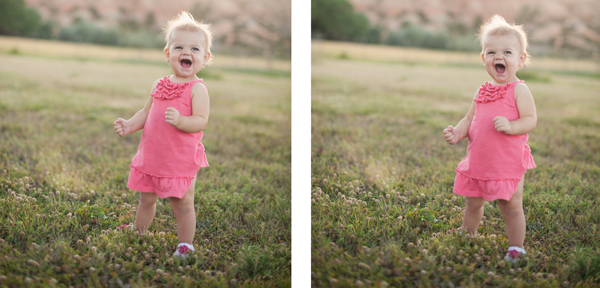
You may have two (or more) photos that are very similar. They might both be cute, but one must go. You will lose a lot of impact with your collections of photos if many of them look the same. I know that it can be hard to give up a photo that you like, but nobody needs five photos of nearly the same look and pose. Decide which one speaks to your style better, check sharpness, or choose the one that shows the subject’s personality a little better. In the above set I chose the photo on the right. They are almost the same photo, but the one on the right was slightly more enthusiastic, and this little girl was FULL of enthusiasm! I had to keep it.

#6 Don’t miss the hidden gems

potential

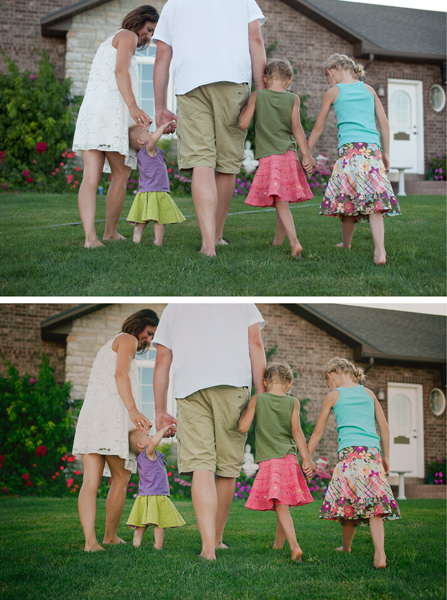
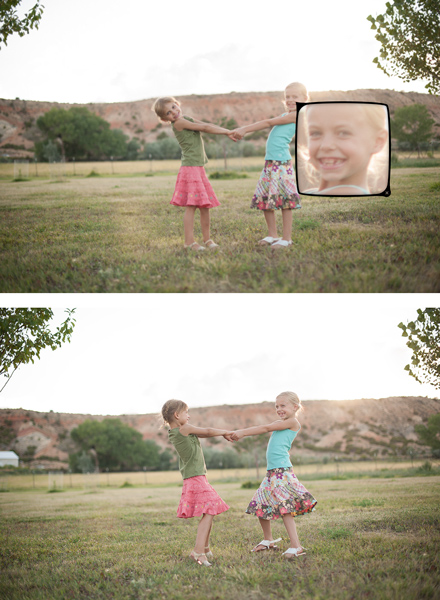
You might have a photo that you know could be really great with just a little bit of work. Maybe a head swap, or a little bit of magical editing will make it into a photo you absolutely love. Sometimes photos that you might pass by initially may end up being your favorite. Watch for those photos that might be your favorites with a little wave of your editing wand.

#7 Be ruthless, be quick

ruthless

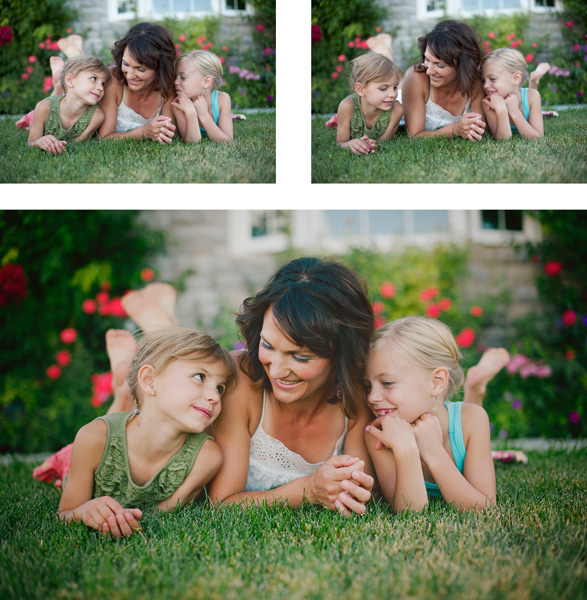
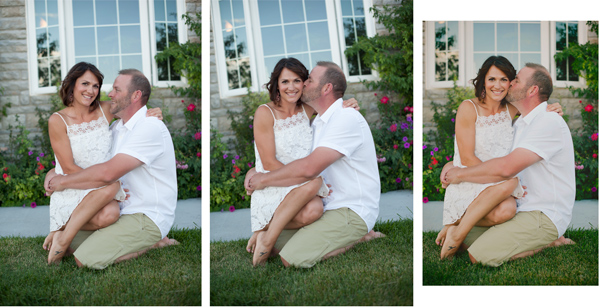
I know, this sounds like a contradiction of the last tip, but unless you want to be agonizing over every photo for hours, you have to move quickly. You have to be somewhat ruthless as you go through your photos. You can’t edit every single one, and sometimes you just have to make quick judgment calls and move on. In the photos above, the one on the left is cute, but I decided that I liked the connection in the one in the middle the best, so that’s the one that I kept. If I’m having a really hard time giving photos up, I will give them star ratings as I go through them; five stars for definite keepers and four stars for maybes. I usually end up with more five stars than I need, so the four stars automatically go. Sometimes it’s easier to let them go after you’ve given them a fair trial.

What are some strategies that you use to choose which photos to keep and which to toss? I’d love to hear your ideas in the comments:

The post Taking out the Garbage – 7 Tips for Choosing Your Best Photos Fast by Melinda Smith appeared first on Digital Photography School.


Digital Photography School
 
Comments Off on Taking out the Garbage – 7 Tips for Choosing Your Best Photos Fast

Posted in Photography


Tips for Taking Great Portraits in 10 Minutes or Less

20 Aug

Portraits 10 minutes or less 01

Yes, you read that right. 10 minutes tops (not counting editing time), and you could have a set of photos worthy to hang on the wall. Don’t get me wrong, I’m not telling you that every session should be that speedy, but sometimes that’s all the time you have.

Portraits 10 minutes or less 02

Maybe you’re dealing with some kids that aren’t too happy about being there, and 10 minutes is all they’re going to give you before the meltdown. Maybe you’ve got awful weather, and you’ve got 10 minutes before the tornado hits. Maybe you decide 10 minutes before the sun goes down that it’s the perfect day for some photos, and you must do them right then (or your model shows up an hour late and you’re losing light fast). Maybe you want photos of your favorite pet, and you know that you’ll be lucky to get 10 minutes of attention.

Maybe, like me, you like to do little mini-sessions sometimes, and you stack them in 10 minute increments. Maybe, just maybe, you like a challenge. So, here’s your challenge: see if you can follow these tips and get great portraits you’ll love in 10 minutes or less. Ready, set, go!

Portraits 10 minutes or less 03

Pick one location

For a portrait session in a time crunch, you must choose ONE location. Just one. Find a spot that has good light, a nice background, and stick with it. Moving around is great if you have lots of time, but our goal right now is speed and quality. Use a tried and tested spot, or scout out a good spot ahead of time. This would also be a good time to use a great indoor studio spot, but stick with just one backdrop.

Portraits 10 minutes or less 04

Make a plan

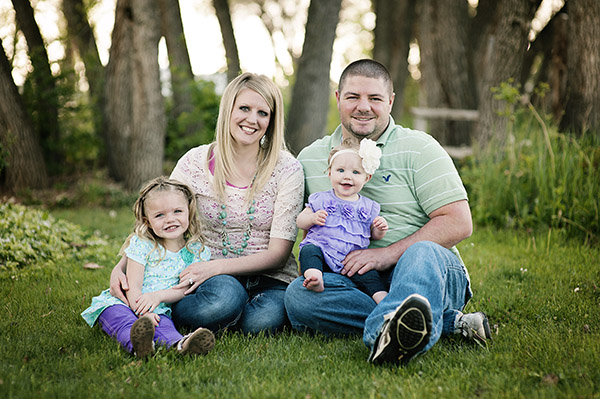
Go into your 10 minute session with a plan. For example: Let’s say you have a family who wants to hang a family photo collage on their wall. You know you’ll need a family photo, one of each kid, one of the kids together, and one of the parents together. You might want to give an option of portrait orientation (vertical), or landscape orientation (horizontal), especially for the family photo. So, take one of each of those. You may want to do one of family photo standing, and one seated. Maybe plan for one close-up and one full-body portrait of each kid. Whatever your scenario is, plan out ahead of time what you’re going to need, then stick to the plan. This isn’t the time to experiment.

Portraits 10 minutes or less 05

Put your subjects at ease quickly

Normally, you’d get to know your subjects a little bit, and put them at ease. You still need them to feel comfortable, so don’t skip this, just put it on fast-forward. The second you greet them, be happy, be enthusiastic, be fun! Every minute counts, so let them know right away that for this 10 minutes, your only focus is them. Let them feel your confidence in them, and in yourself. You don’t have time for awkward photos, so they have to be on board and comfortable right from the start. You could say something like, “Are you ready for the most painless photo session you’ve ever had? Let’s do this!”. It might get a laugh, and put them at ease right away. Who doesn’t want a painless photo session?

Portraits 10 minutes or less 06

Know your camera well

Finally, know your camera. When you’re in a time crunch, you don’t want to be fiddling with the settings, and panicking if things aren’t going how you expect. The more time you practice with your camera when you’re not under pressure, the better you’ll perform when it really counts. Know what settings you like, and when to use different apertures, shutter speeds, and ISO settings. If you are comfortable with these, you’ll be able to change them on the spot, in between photos, without wasting time.

If you aren’t comfortable with your camera yet, this would be a good time to use aperture priority, or even the auto setting. This isn’t the time to learn; this is the time to apply what you have already learned.

Portraits 10 minutes or less 07

So, are you ready? I’m sure we’ve all got 10 minutes to spare. Give it a try, see if you can shoot at least eight portraits you love in 10 minutes or less using these tips. Let me know how it goes. The photos I shared here are an example of a real life less-than-10-minute session.

Portraits 10 minutes or less 08

The post Tips for Taking Great Portraits in 10 Minutes or Less by Melinda Smith appeared first on Digital Photography School.


Digital Photography School
 
Comments Off on Tips for Taking Great Portraits in 10 Minutes or Less

Posted in Photography


3 Tips for Taking Great Cloud Photos

10 Aug

You may already have your own method of effectively shooting cloud photos. If so then you understand that conditions may vary greatly. Some days, your photos may turn out happy and light. On other days they may turn out dull and grey. However, there are at least three techniques you might consider in order to capture better sky and cloud photos.

Shoot when the sun is brightest and cloud movement is dynamic

01 DSC 1788

The best time to photograph an epic cloud shot is when the sun is at its brightest and is directly appearing and disappearing from behind the clouds. The above photograph was shot on a day in Prague when the clouds were particularly dynamic. It was windy so the clouds kept hiding and revealing the face of the bright sun.

Below is an example of why shooting when the sun is directly behind the clouds may be more compelling. Although the clouds in the photo below are interesting, the result is not as mysterious or as epic in my opinion as the one above. This is of course a matter of personal preference. Be patient, observe the situation and find out, which you like better.

02 DSC 1838

Wait for sunset to capture vibrant colors

03 DSC 8130

Many different techniques come into play when you want to photograph sky and clouds of different colors, but one of the more important factors to consider is the time of day. Sunset is the easiest time to capture vibrant colors. The reason is that as the sun goes down on the horizon, the sky and clouds will take on various hues of pink, orange, yellow and blue. The above photo was shot in Los Angeles where the sunset colors change every few minutes. At first, the clouds turned a bright orange and yellow.

Compare this to the photo below, where just a few moments later, some of the clouds cleared, the sky became a lighter blue and the remaining clouds turned reddish pink.

04 DSC 8135

By shooting clouds during sunset you will be able to capture a variety of unique colors.

Shoot on a tripod and bracket exposures to produce different moods

If you’re shooting with a DSLR, I recommend using a tripod and taking multiple photos in “Auto bracketing mode” or “Auto exposure mode”.

First, set your camera to Aperture Priority and then turn on Auto bracketing (AEB). It’s best to set your bracket exposures to -1, 0, and +1. This will give you three pictures of the clouds at various exposures. The three photos below were shot at -1, 0 and +1 exposures. Notice how distinctive they are in terms of mood.

05 DSC 8164

This image was shot at -1 has a dark and sinister mood.

06 DSC 8162

This photo, shot at 0 exposure, has a serene mood.

07 DSC 8165

Lastly, this image, shot at +1, has a light mood.

If you prefer, you can combine all three to create an HDR photo, which aggregates all the details from the different exposures. You may then edit the HDR photo to produce a photo with your own desired mood.

What other tips can you think of for shooting great cloud photos?

Do you ever shoot during thunderstorms? What’s the best cloud photo you’ve ever shot, and in what conditions? Share with us some examples and of course, if you have any other tips for great cloud photos that you think I’ve missed, please share those as well.

The post 3 Tips for Taking Great Cloud Photos by Ry Sangalang appeared first on Digital Photography School.


Digital Photography School

 
Comments Off on 3 Tips for Taking Great Cloud Photos

Posted in Photography


Taking your DSLR into the Backcountry Safely

23 Jul

In the Northern Hemisphere summer is finally here and that means it’s the beginning of camping season. It’s time to haul out the tent, the propane stove, the canoe, the bug hat and the DSLR. You visit all these beautiful places, gain a sense of peace and respect for Mother Nature, then come home and wish you were still there. Having beautiful, sharp images of the brutal trail you faced, the noisy bird that woke you at dawn, or the incredible sunset you experienced can make the experience all the more rich. The added bonus is you have some fantastic images you can hang on the wall and gaze at as you plan your next trip.

Back country photography5

Taking a DSLR into the back country isn’t as costly or as expensive as you would think. You don’t need the super high end gear. Your DSLR is fairly rugged, it can handle rain, heat, a few bumps, water, dust, campfire smoke, etc. It’s not as breakable as you might think. Whether you are hiking or canoeing/kayaking, taking your gear into backcountry is easy. I’ve been taking my DSLR into the backwoods of Northern Ontario for years and have never regretted the decision. It’s taken practice, but through trial and error, you too can find a system that lets you take your DSLR into the woods. When packing for a backcountry trip remember to consider the following.

How will you pack and protect your gear but make it easily accessible?

OPTION 1: A hard case

These are easy to access, and when closed properly are airtight. Your camera and lenses will be completely safe using this method. They are easy to access on the trail, just lift the lid. Hard cases can be adapted to fit a camera and a lens by removing some of the foam padding from within. You customize the case to your gear. The drawback is the added weight you will have to lug and the cases are awkward. Picture yourself dragging a tired body, a backpack containing a tent, food, clothing and a suitcase like object through the bush. It’s not easy. But if you want the 100% protected guarantee then this type of case is for you.

OPTION 2: A dry bag

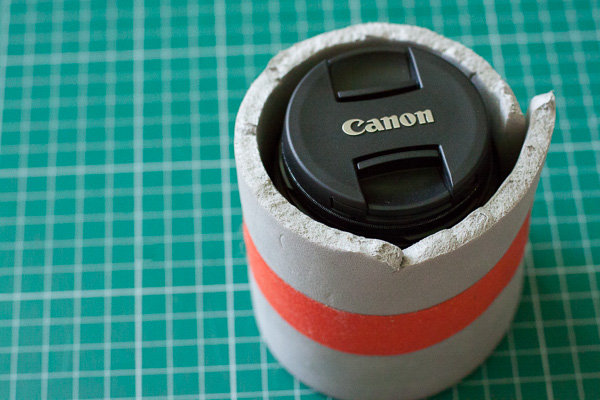
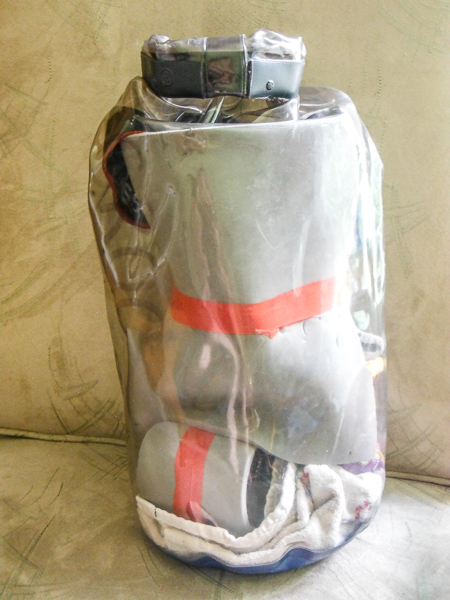
This method doesn’t guarantee complete protection. If you capsize in a canoe or drop the gear into a river, dry bags don’t promise watertight protection. However, a dry bag is easy to strap to the canoe or kayak and can be packed into a standard tripping pack quite easily. The dry bag keeps it safe from the elements. The handle at the top makes it easy to carry. The trick is to create a padding system within the dry bag. I use an old foam mattress to pad my gear.

Back country photography1

Back country photography7

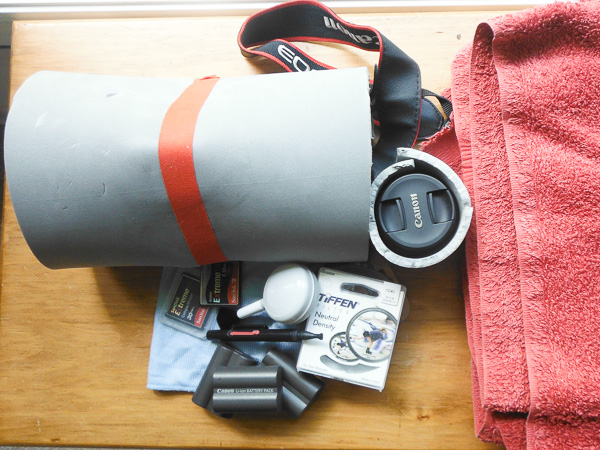
Basically, cut up the mattress to fit your camera and bag. You can wrap spare lenses in the same foam and place them in the bottom of the bag. Dry bags can be purchased in varying sizes so you don’t have to buy a new bag for each combination of gear. This method is the cheapest, it’s fairly accessible and it’s certainly the easiest to carry.

OPTION 3: A tripping pack designed for carrying camera gear

There are several tripping packs that are designed to carry your tent, clothes, food and camera gear. These are excellent at protecting your gear and are designed for just such an outing. The problem is they aren’t very waterproof. They do come with a rain cover, but let’s face it, the gear is ruined if you drop the bag in a lake. If you are just hiking, then this is a fantastic option, these bags are designed for this job.

The drawbacks come for those of us who are smaller in stature or female. Most of the overnight backpacking bags are huge and become difficult to carry, especially for women. Sometimes chest straps don’t sit where they should and can be very uncomfortable. Comfort on the trail is extremely important: you don’t want to be in agony. Whatever you choose, make sure the pack fits properly. The comfort factor is the key to an enjoyable hiking trip.

How far will you travel? Can you really carry all that gear?

Tripping in the back country is hard work. You have to carry everything you need. You want to make sure enjoy your trip. If you are crippled under the weight of carrying, or portaging your camera gear, it isn’t going to be fun. Pack light and smart. Try to limit yourself to a few lenses, a filter or two, a few batteries and memory cards.

Back country photography6

Make it a fun challenge, take along one lens. Do you really need your 85mm lens if your 70-200 range zoom will cover this focal length? Be frugal with what you carry. This will push you to be creative in the types of shots you take. Also, it’s important to take a tripod for super sharp shots. Investing in a lightweight model is a good idea. The lightweight versions are pricier but worth it.

Use Common Sense

If you are going on a trip and serious about taking some great photos then make sure you plan for it.

  1. Cut down the number of kilometres (miles) you cover in a day in order to build in some time for photography.
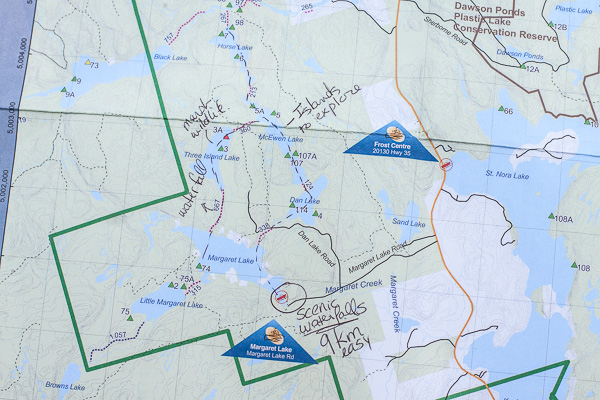
  2. Choose a route that has some beautiful photographic locations. Plan in advance and do your homework.Back country photography2
  3. If canoeing or kayaking plan a route that doesn’t contain huge multi-kilometre portages that will drain you of energy.
  4. Make sure you tie your camera gear to your canoe/kayak for added safety in the event you dump.
  5. Portage through challenging rapids to avoid soaking gear.
  6. If the weather is challenging, stay undercover. You can get moving tomorrow.
  7. Don’t take your gear out of its protective bag if the water is really rough, especially if you’re a novice paddler.
    Back country photography4

Finally, there’s one essential piece of gear that weighs almost nothing but you are guaranteed to regret it if you don’t take it. Always take a lens pen, and a couple of microfiber cloths, they are a must. Your gear will get dirty. Accept this fact now and simply remember to book your camera in for a thorough cleaning after you return. It will feel like a new camera afterwards, that’s a bonus.

It’s a little more work but it will be worth it. People will “oooh” and “ahhhh” at your photos, and who knows maybe you will inspire a friend to take same trip because they just have to visit the place they’ve seen in your photographs.
Back country photography3

The post Taking your DSLR into the Backcountry Safely by Erin Fitzgibbon appeared first on Digital Photography School.


Digital Photography School
 
Comments Off on Taking your DSLR into the Backcountry Safely

Posted in Photography


4 Tips for Taking Better Photographs of Trees

20 Jun

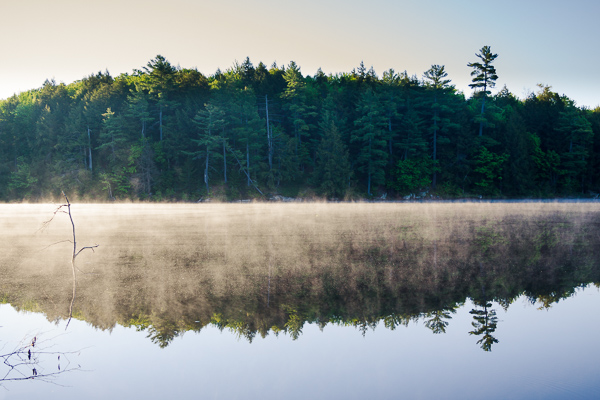
Can’t see the wood for the trees? I’ve often struggled with the challenge of photographing trees in a way that captures the imagination and takes the viewer on a journey. I’ve learned that for me, there are two very effective ways to consider and photograph trees. Try asking yourself these two questions:

  • Which tree is the leading actor?
  • Which tree/trees are the supporting actors?

I have to thank my mother for this interesting perspective. As a boy I was dragged to many a theatrical play and so I tend to look at my images as a stage on which there are certain characters that play out a scene. There’s always a lead character, some supporting roles and some cool props. Understanding the hierarchy of your characters will really help to improve your compositions in general.

How to Photograph Trees

1 – When a single tree grabs your attention

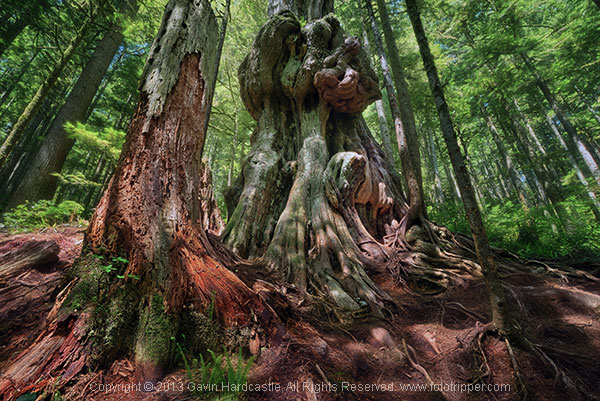
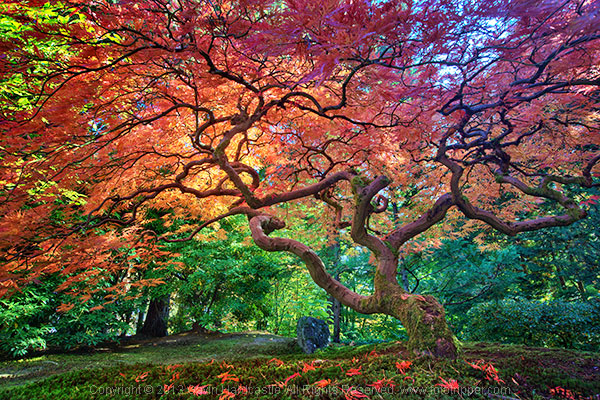
Decide who is the lead and make that your most important subject. With the image above, it’s pretty obvious who the lead character is in this scene. That huge knotted cedar tree is my leading actor, so I place him centre stage and place all other trees around him.

Using an aperture of f/22 means that my entire image (stage if you will) is in focus and the only reason I can get away with this is because my central character is so obvious that I don’t need to accentuate his presence with shallow depth of field.

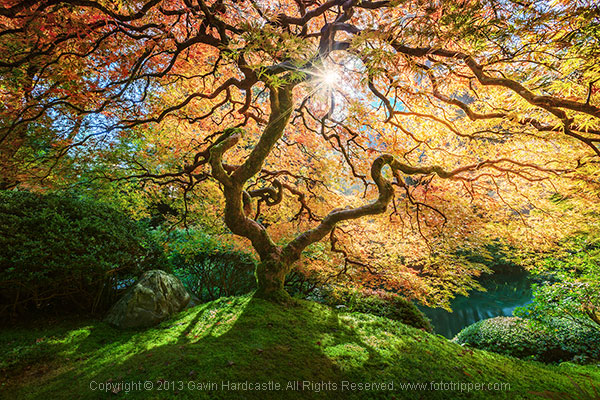
Here’s another example of a very obvious leading actor in my scene. It’s pretty much ALL one tree with the supporting actors being a sun flare, the shadows on the foreground and the Koi Carp gliding through the pond in the background. Again, I used a very narrow aperture of f/16 to ensure maximum focus throughout the image.

How to Photograph Trees - Gavin Hardcastle

2 – When trees play supporting roles

Let’s face it, not all trees are A-list actors, but they don’t need to be. You can use trees to frame another, more interesting character, in your image. When you’ve found an interesting subject such as a waterfall, lake reflection or sea stack, take a look around and see if there are any trees that would make a nice frame or leading line that directs the eye towards your main subject. If there are, place them in your foreground.

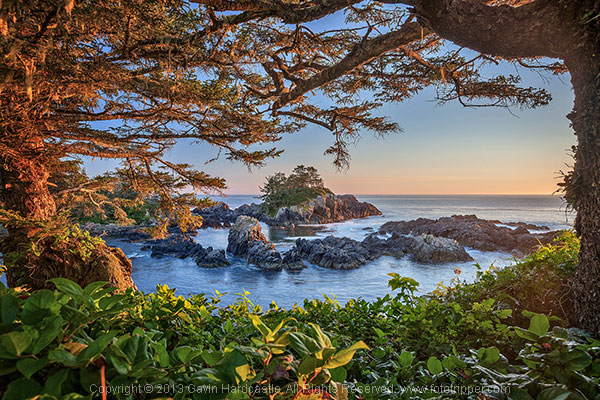
In the image below, I used the trees and shrubs to create a frame for my sea stack. I used an aperture of f/8 to create a subtle bokeh effect in the foreground shrubs because I wanted to draw the viewer’s eye towards the central sea stack.

How to photograph trees

Here’s another example of where the tree was used as a supporting actor in my scene. Once again the tree creates a frame, and although we don’t see the entire tree, the image would be nothing without it.

Tree Photography

3 – When NOT to include people for scale

How to photograph trees in landscape photgraphy

How big do you think that tree above is? Well, let’s just say that only a toddler would be able to stand under the canopy.

There’s often a temptation for photographers to get a person to stand in their tree photograph for scale. That’s a great idea if your tree is massive, it really emphasizes the immense size of your subject. For smaller trees such as the maple shown above, it would have been a disaster to include a person for scale because that tree is tiny. In fact, it’s so small that I was laying prone on the ground in order to get the shot.

4 – When to use shallow depth of field

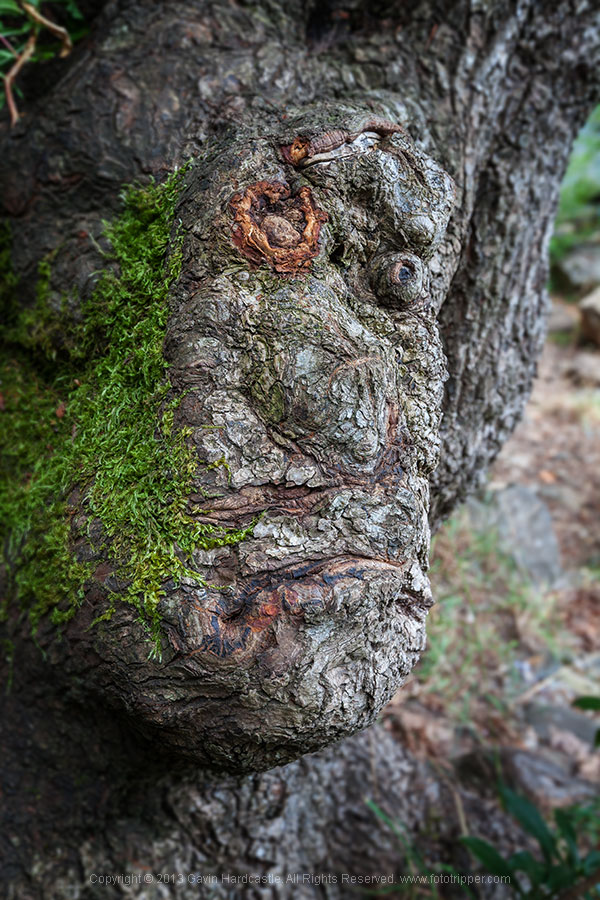
Sometimes it’ll be really obvious that in order to accentuate and bring attention to a certain tree or feature of a tree, you can use a wide open aperture like f/2.8 to create shallow depth of field. This is a creative decision, there’s no right or wrong, only what works for your vision. I rarely use shallow depth of field in my landscape photography, but occasionally I’ll want to bring attention to a certain feature of a tree like this guy below.

Photography tips for shooting trees

Whether you shoot huge landscapes or intimate nature scenes, using these four tips should improve that way that you photograph trees. Try them out and capture your own beautiful tree photographs.

The post 4 Tips for Taking Better Photographs of Trees by Gavin Hardcastle appeared first on Digital Photography School.


Digital Photography School
 
Comments Off on 4 Tips for Taking Better Photographs of Trees

Posted in Photography


Master Easily Taking Candid Photos of Your Friends

21 May

Taking photos of your friends is an accessible way to improve your picture-taking skills. But it can be difficult to do this well and get good photographs, improve your skills, and not offend your friends. It seems simple, of course… you and every person with a smartphone these days are taking photos of your lunches like it’s the top of Continue Reading
The post Master Easily Taking Candid Photos of Your Friends appeared first on Photodoto.


Photodoto

 
Comments Off on Master Easily Taking Candid Photos of Your Friends

Posted in Photography