RSS
 

Posts Tagged ‘Take’

How to Take Better Sunset Photos

24 Jan

A beautiful sunset is one of the most desirable subjects for photographers to shoot and can be achieved any time of the year when the light is right. Most outdoor photographers will tell you that this is their favourite time of day to take photos when the landscape is bathed in golden light and the rich colours and last rays of the day can be magical. Photographing these moments can be truly satisfying so here are six useful tips to help you capture better sunset photos.

1 – Shoot into the light

Sunset photography tips 3F6A3213 HDRAB

You are more likely to snap a stronger image of the setting sun during the hour leading up to sunset, known as the golden hour. If you aim to shoot directly into the sun when it is low on the horizon you are more likely to capture a better scene than if you were to shoot into the light earlier in the day when the glow of the sun can be too strong and harsh.

That is when lens flare is likely to be present in the image due to the sun hitting the front of the lens element directly. It can sometimes, however, be used to your advantage.

Remember to take care when staring into the sun and don’t do this for too long to prevent damaging your eyes.

2 – Turn around (and shoot what’s behind you)

Have you ever been so focused on capturing the scene in front of you with the sun setting before your very eyes, to then notice that the view behind is just as spectacular? Novice photographers often make this mistake when starting out.

When you’re setting up the camera and composing for the shot in from of you, it is worth turning around to see whether the scene behind you offers any photographic potential. If it does, be sure to capture this alternative view as well.

Sunset photography tips 3F6A5279Deadvlei Namibia

3 – Hide the sun

If you have found a view you like and it is too bright shooting towards the sun, try hiding the sun behind an object to further improve the image. You can experiment by partially shielding the sun behind a tree, rock, or person, for example, to find different compositions.

This technique can result in striking images where you can create great silhouettes or even sun flares by partially masking the sun.

Sunset photography tips 3F6A3116 HDR

4 – Change focal length

Your focal length setting and choice of the composition will make a big difference to the overall picture. Experiment with different focal lengths and figure out what works well and what doesn’t.

If you want to photograph the setting sun in isolation and for it to be the main feature, zoom in and take close-ups. If you want to capture a broad and breathtaking landscape, choose a wider field of view to take in a larger area and include more elements that may provide a more visually pleasing scene.

Sunset photography tips 3F6A0444

5 – Experiment with the White Balance

You will find most cameras are set to Auto White Balance where the camera works out the color tone automatically and therefore sets the color of your photographs. This is the simple option and is great for capturing images where color shifts are not required.

However, if you want to change the color temperature of your image don’t be afraid to experiment with different White Balance settings to create a more interesting and visual image. To add warmth to your image, you will want to select a White Balance such as Cloudy or Shade, whereas if you want to create images with a cooler look and feel, try Tungsten or Fluorescent.

Sunset photography tips 4X8A4732

6 – Stick around after sunset

Once the sun disappears, don’t be tempted to pack up your camera bag and head home as you may get lucky with the light and witness a wonderful afterglow. Stay around after sunset, the sky will usually light up in color 25 minutes after the sun has set below the horizon, which can often give spectacular and colorful light.

Cloud formations can bring another dimension of beauty compared with clear skies especially when their colors start to pop and ignite.

Sunset photography tips 3F6A4514

Conclusion

Without a doubt, sunset photography can be very enjoyable. Using the techniques above may help you improve your pictures and capture a shot you like. Please share your sunset photos and tips in the comments below.

The post How to Take Better Sunset Photos by Jeremy Flint appeared first on Digital Photography School.


Digital Photography School

 
Comments Off on How to Take Better Sunset Photos

Posted in Photography


How to Take Unique Crystal Ball Portraits

23 Jan

The search is always on to try something new in photography. That process is often about taking a technique and applying it in a new way. A crystal ball is a great addition to any landscape photographer’s camera bag. In this article, you’ll see why this is also true for portrait photographers.

You’ll learn to take the perfect crystal ball portrait. There are some special characteristics of refraction photography to consider. You will learn the technical side of refraction photography, and how to use this for your portraits.

How to Take Perfect Crystal Ball Portraits

In this photo, the model is seated, with her legs near her body. This made it easier to “eclipse” her behind the ball.

What is refraction photography?

Refractions is an effect that is produced when the light is bent upon passing through an object of denser mass. In the case of a crystal ball, this has the effect of inverting the background image inside the ball. This can be great to use for photography, as the ball becomes an external optic for your camera. You can read more about refraction photography in one of my previous articles.

This effect is mostly used for photographing landscapes, as it creates a super wide-angle scene within the glass ball. However, there are occasions you’d use a wide angle lens for portrait work, and the same is true with the crystal ball.

As with all crystal ball photos, try to ensure your subject is well lit, this will enhance the image coming through the ball. If you try to use strobes for this you need to position yourself carefully, the ball will pick up the light from the flash as a reflection very easily. The best advice I can offer is to position the strobes in a parallel line with the glass ball.

How to Take Perfect Crystal Ball Portraits

In this, photo the model is silhouetted against the dawn sky. The distance from the model to the crystal ball is quite far, so the person appears small in the ball.

How to create your crystal ball portrait

Now you know what refraction photography is and how to do it, the next step is to apply this to a portrait.

There are three main types of crystal ball portraits you can make, each uses the ball in a slightly different way. The three types of photo are shooting close to the ball, photographing the ball in the scene, and using the ball as a prop. Let’s take a look at each one.

1 – Fill the frame with the crystal ball

This composition type has the crystal ball fill the entire frame, or become the dominant part of the frame. In this photo, your model will be the main subject inside the glass ball, which means they’ll need to be quite close to the ball itself. To succeed with this type of photo look at the following points, and apply them to your portraits.

How to Take Perfect Crystal Ball Portraits

You can avoid distortion by placing the model in the center of the ball.

Center the model

  • The model needs to be in the center of the ball so that you avoid ugly distortion of the face on the edges of the ball. To do this consider the following steps.
  • Don’t have your model standing up strait, a sitting position where there body is more compressed will fit better inside the ball.
  • Take the portrait from the chest up, and center the composition on the eyes.

Compress your scene

Use a long focal length to hide the model behind the glass ball, essentially eclipsing the model. The larger the glass ball the easier this will be.

Position the ball

The ball should be level, or a little higher than the model. This will avoid distortions on the edge of the ball, and by having the ball higher than the model, it will focus the viewer’s eye more on the face.

Avoid bad bokeh

The background in a crystal ball photograph can make or break your image. With your model close to the ball, the background is likely to contain some bokeh. Use an appropriate aperture to blur them out, or consider using post-processing to remove them.

How to Take Perfect Crystal Ball Portraits

You can enhance your crystal ball portrait by using good light on the model.

A photo of this type is best achieved with a macro lens, or a long telephoto lens. Both these lenses will allow you to fill the frame with the crystal ball, and then it’s simply about avoiding a bad background.

2 – Use the crystal ball as part of the overall picture

The next option for incorporating the crystal ball into your portrait shoot is to include much more of the background, and make the ball a smaller part of the frame. In this type of photo the focus will be on the ball, but the background bokeh will be equally important in telling the story.

How to Take Perfect Crystal Ball Portraits

Use the bokeh in the image to create your crystal ball portrait.

  • The ball is smaller – The ball will be more of an accent within the overall frame. It’s likely the ball will be placed on the ground, or perhaps on a wall and will take up between 10-25% of the frame.
  • The background will be bolder – The shape of your model is important, so have them strike an interesting pose. As the focus is on the ball, the focus on the model will be soft.
  • Use the correct aperture – Adjust the aperture to a suitable level, so defined shapes can be seen in the background. The background should be neither to blurred nor too sharp. An aperture of around f/4 is a good place to start.
  • Wider focal length – Now that you are including a large amount of the background a wider lens will be needed to achieve this.

3 – Use it as a prop in your crystal ball portrait

You can also use the ball in the more traditional way, as a prop for your model. In this type of crystal ball portrait your model will be directly interacting with the ball. This will mean that the refraction effect inside the ball may or may not be seen, depending on the way you arrange your photo.

How to Take Perfect Crystal Ball Portraits

Have your model hold the ball, and interact with it.

  • Tell the story – As a prop, the ball will be a focal point for your photo. You can use the crystal ball to show tropes like fortunetelling and magic. Use these ideas when composing your photo.
  • Do you refract? –  When using the ball as a prop you don’t have to show it producing refraction; however, it will add more interest if you do so.
  • Using strobes – A glass ball is a very reflective surface. When using strobes you need to decide if you want your strobe light reflecting on the surface of the ball. Moving your strobe to a side light position will eliminate most of the reflection on the ball, so this is a solution.
How to Take Perfect Crystal Ball Portraits

Using more than one ball gives you more storytelling potential.

Go out and create your magical crystal ball portrait!

Have you ever tried using a crystal ball in portrait work? Let’s see your results if you have. What difficulties did you encounter when you tried this style?

If you bought the ball primarily for landscape photography, how about trying your hand at a portrait?  Give it a go and let us know how it turns out.

How to Take Perfect Crystal Ball Portraits

The ball can help you make some unusual portraits.

How to Take Perfect Crystal Ball Portraits

Experiment with your crystal ball portrait, how about using other techniques like light painting?

How to Take Perfect Crystal Ball Portraits

When your model looks into a crystal ball, there is a story to that photo.

The post How to Take Unique Crystal Ball Portraits by Simon Bond appeared first on Digital Photography School.


Digital Photography School

 
Comments Off on How to Take Unique Crystal Ball Portraits

Posted in Photography


Take a look inside Hasselblad’s camera factory in Sweden

02 Jan

Take a look inside Hasselblad’s camera factory in Sweden

Hasselblad’s factory is located in Gothenburg – Sweden’s second largest city. The company has operated in Gothenburg since 1841, but it only became a camera manufacturer in 1941. Today’s HQ, down the river from the city centre, is where the company makes both the H-series cameras and the newer X1D mirrorless model.

During a recent visit I was shown around the factory and was lucky enough to get permission to photograph the production line in detail. They knew I was coming so any secret stuff was tucked away safely out of sight, but it was just as interesting speaking to the staff and finding out about the components of the cameras, what they do and seeing how they are made.

There were three things that really struck me about the factory. The first is that it is a lot smaller than other similar plants I’ve visited in the past. I was escorted almost all the time I was there, but there was no reception desk where I had to sign in, and I didn’t even have to wear a visitor’s badge – I guess because everyone knows everyone else and strangers stand out. The company employs 180 people worldwide, with only 40 people at the factory – and 30 of them working in production.

The second thing that caught my interest is the number of components that have been designed to be used in both H6D and X1D, thus making manufacturing more efficient. The third is the hand-made nature of the products. I’m used to factories powered by robots and automation, but this was a world of hand-tools and humans.

Click through this article for a tour.

The factory floor

This is the main area of the assembly line where the H6D and X1D are produced. I had expected to see the processes in a linear fashion from start to finish, but actually it seems different components are assembled as they are needed and each worker performs a range of tasks. This photo doesn’t show the whole factory, as there is an R&D area that I couldn’t go into, but this is where the current shipping products are put together. Hasselblad designs all the components itself but has most of them made by external suppliers, mostly from Sweden.

In this picture an X1D’s audio system is being tested in the foreground, and to the left a H6D body is being put together. In the distance, shutter units are being made.

Making the shutters

The shutter units start with a moulded ring of plastic onto which the components are attached. The company makes two sizes of shutter unit, both of which can be used in HC and XCD lenses for the H cameras and the X1D. The smaller, a 20mm shutter, uses one piezo-electric motor to open and close the iris, while the 28mm version has two.

A detailed shot of shutter unit, mid-assembly.

Making the shutters

So far the XCD lenses have only used the 20mm unit, but I’m told future lenses will use the larger one as well. The upcoming fast 80mm XCD lens will be a candidate for the larger shutter as its maximum aperture will be wider than f/2.

Measuring tension

The worker assembling the shutter units tests the tension of the shutter release mechanisms with her thumbs, as over time she has come to know what the right tension feels like. Once she thinks she has it right she tests each switch with a meter to verify her instincts.

After hand-testing the shutter release tension, the technician checks with a measuring tool.

Building the iris

Each blade of the lens iris is riveted by hand. It is then cleaned and attached to the main shutter mechanism.

Testing shutter accuracy

Each shutter unit is tested for accuracy and consistency of performance using a collimator and a device that measures the shape and size of the iris opening. Each aperture setting is tested multiple times, as is each shutter speed. If the unit isn’t up to scratch the operator on the testing desk either fixes it or sends it back a stage for investigation.

This shows a short sequence from a shutter accuracy test, measuring the shutter opening time and iris size. Other long term tests are carried out about once a week, and involve a shutter unit being put in a machine that triggers it for days on end. I was told the shutter life of Hasselblad lenses is quoted as over 1 million actuations.

H6D handgrips

The day I was at the plant, handgrips for the H6D were being made. There’s quite a lot of circuitry to fit into a small space.

50MP back for the A6D aerial camera

Here is the back of an A6D aerial camera being assembled. The main parts that go into the back are the 50MP sensor unit, the processing board and the control board. I was amazed that the company uses 32GB micro SD cards in these backs, but was told the calibration and firmware files the back uses are very big.

The ribbon cables and the boards are all connected by hand and fitted into the back during a delicate, pains-taking process.

Tilt and shift adapter

Here’s a HTS 1.5 tilt and shift adapter being put together. The adapter provides ‘large format’ movements for six of the company’s H system lenses. It allows up to 18mm of shift in both directions and 10° of tilt, while multiplying the focal length by approx. 1.5x because of its thickness.

Tilt and shift adapter

Again, the device is assembled by hand, with each screw being secured in place with thread-locking glue.

Assembling the auxiliary shutter

Between the mirror box and the sensor of the H series cameras there’s an auxiliary shutter that has to be sprung with exactly the right tension. Again this shutter unit is assembled by hand from a number of small components and then tested by touch while the tension is adjusted.

The man working at this station told me he needed the tension to be about 0.9 Newtons, and then tested the one he had just made to find he was only 0.02 N out. He said it took a few months of continuous manufacturing for him to be able to get the tension right by touch.

Adding the AF module and shutter mechanism

The aluminum chassis of the H6D is made at a foundry not far from the factory and has remained very much the same since the original H1. The final assembly of the body looks very complicated, as there is a mass of ribbon cable to fit between the boards, as well as the auxiliary shutter, the mirror mechanisms and the AF module. The chassis, the steel mount and the body shell are all made in Sweden.

The shot on the left shows the AF module of the H6D, which sits behind the main mirror. The last shot shows the chassis loaded with electronics and ready to be fitted into the body and to have the handgrip attached.

Mechanical tests for the H6D

In this picture, H6D bodies await mechanical testing and measuring. The length of the body can’t vary by more than 0.02mm in order for the autofocus to work. This machine is used to measure the position of the AF module and the AF mirror, and to match the view of the viewfinder with the sensor via the position of the mirror.

Each body is then attached to a metal block for the orientation sensor to be calibrated – a process that helps facilitate the company’s True Focus feature. This feature measures the angle the camera moves during a focus-lock-and-recompose routine, so that the added distance between the image plabe and the subject can be compensated for in the focusing.

Calibrating the H6D

In a clean room each H6D undergoes its individual calibration procedure. First the sensor and filters are checked for dust and dirt, and cleaned until they are spotless. Then the sensor is checked for dead pixels and the color characteristics, dynamic range and brightness response are measured.

Calibrating the H6D

Each camera has its own calibration program which is loaded onto the body and fired up every time the camera starts. The calibration data is saved at the factory should it ever need to be reloaded to the camera.
It takes about an hour to calibrate each body.

X1D mechanical tests

Once assembled the cameras go through a series of mechanical and systems tests to ensure they are functioning correctly. Operators take a series of pictures with each model and check the audio system, among other things.

X1D mechanical tests

The technician looking down a long dark box is checking there’s no light leaking from the side of the rear LCD panel.

Profiling X1D bodies

Color response is recorded and adjusted so that the camera will produce ‘Hasselblad Color’. As with the H6D, each X1D body has its own tailor-made calibration which is loaded to the internal memory. That’s why the cameras take a couple of seconds to start up.
Each camera takes about 700 pictures during the calibration process.

Profiling X1D bodies

Here an X1D is being calibrated, and the monitor shows the characteristics that are being checked with. As can be seen, in this example the sensor (which is CMOS, not CCD as marked) isn’t aligned within tolerances, so it will be adjusted.

Final checks and cleaning

The last part of the process involves a bright light and a high powered magnifying glass. A lady personally inspects every model that leaves the factory for dirt, dust and marks. She cleans each body very carefully, rubs and polishes, before she is satisfied and it can be boxed.

Final checks and cleaning

X1D bodies towards the end of the production and checking process, before being boxed and shipped to customers all over the world.

Articles: Digital Photography Review (dpreview.com)

 
Comments Off on Take a look inside Hasselblad’s camera factory in Sweden

Posted in Uncategorized


5 Ways to Take More Meaningful Photos This Christmas

13 Dec

Christmas goes by in the blink of an eye. But taking photos helps us to savour the moments long after the tree is gone and the kids are grown up. When you follow these 5 tips, you’ll have better and more meaningful photos this year.

First - 5 Ways to Take More Meaningful Photos This Christmas

1. Don’t Get Caught Off Guard

The first step to photographing an upcoming event like Christmas is to do a little planning. Start by considering the traditions and moments that you want to look back on in photos. Write an actual list so that you don’t forget what’s on it.

When you’re finished writing out your list, do this exercise to help you figure out what is truly meaningful about those moments. When you do this exercise, you’ll be able to capture deeper themes in your photos.

Take each moment and ask yourself, “What about this moment is important to me?”

For example, you might put “opening presents on Christmas morning” on your list. That’s an obvious one. But ask yourself, “What about the kids opening presents is important to me?” Perhaps the answer is something like, “seeing the look of delight on their faces.”

But don’t stop there; you’ve only gone a little bit below the surface. Now ask yourself, “What about seeing the look of delight on their face is important to me?” Maybe the answer is, “I remember what it was like as a kid and I want to pass that magic and excitement on to my kids.”

Sleep - 5 Ways to Take More Meaningful Photos This Christmas

Do you remember when you were a kid how hard it was to fall asleep on Christmas Eve? After putting the presents under the tree, I snuck in to take this photo of my son as he lay sleeping. This is the book we were reading for his bedtime story.

Now you’re getting somewhere! But you can still keep asking that question until you get right to the bottom. What about “passing on magic and excitement” to your kids is important to you? “Well, this is such a short time in their life. Soon they’ll be grown up and stressed out like me. I just want to slow that down and make their childhood good.”

You’re finally getting deep, so ask the question one more time. “What about slowing down and making their childhood a good one is important to me?” Maybe the answer is that “these are the most formative years of their life. If their childhood goes well, they’ll likely grow up and become good and strong adults themselves.”

By asking the question, “what about this moment is important to me,” you will discover the deeper themes in your photos. Now you can look for those themes in other moments too. Where else do you find the magic and excitement of growing up?
Get in touch with the things that will shape your children as they grow and the things you care most about.

Instead of a few random snapshots of Christmas morning chaos, you can photograph all sorts of meaningful moments to look back on.

Better Christmas photos 01

This is one of the most meaningful photos I have of Christmas time. Not only do I love the quiet moment and beautiful candlelight, but the photo was taken at my grandma’s church on Christmas Eve. It was my son’s first Christmas Eve church service and it was our first Christmas without my Grandma. The photo reminds me of the traditions and hope that is passed down the generations in our family.

Sick - 5 Ways to Take More Meaningful Photos This Christmas

A tender moment between mom and daughter. Our daughter came down with a fever this Christmas. Giving our kids gifts is an exciting part of parenting, but so is comforting them when they are sick. I knew this was a moment worth capturing.

2. Prepare for the Light

You’ve got your list of moments to photograph and you’ve checked it twice! Now you need to consider the type of light in which you will be photographing. When you’re able to handle the light, your photos will look better.

Go ahead and use the flash on your camera (or phone) if you have to. It’s better to have a photo lit with flash than a dark and blurry photo that isn’t worth looking at.

Better Christmas photos 02

This was our first Christmas together as a family. I had read that you shouldn’t use the flash on your camera, so I didn’t. Unfortunately, the photo is so dark you can’t see us. I wish I had used the flash!

Better Christmas photos 03

I used the popup flash on my camera for this photo. It doesn’t always work out this nice though. If you’re going to use the little built-in flash on your camera, then get as close as you can to your subject. The flash will light them up, but not affect things in the background so much.

If you have a DSLR camera and you’re going to use flash, consider using an external flash called a speedlight. When you use an external flash you can bounce the light and your photos will look far better than the little pop-up flash on your camera.

Better Christmas photos 04

An on-camera speedlight was used to light this photo. It was pointed up toward the ceiling so that the light would become softer as it bounced back down toward my son. The Christmas lights in the background are far enough away that they weren’t affected by the flash.

But whenever possible, use natural light. When you’re taking indoor photos, one of the best sources of natural light during the day is a large window. Many of your holiday events will happen in the living room, and most living rooms have a large window which lets in lots of light.

Place your Christmas tree beside the window instead of in front of it and allow the window to become a large, soft light source, making your photos look beautiful.

Better Christmas photos 05

Here the kids are at Grandma’s house. There is a large window to the right which is lighting them up. The Christmas tree is tucked into a corner away from the window.

Better Christmas photos 06

Again, there is a large window providing light for this photo. The tree is tucked away from the window allowing the lights to keep their glow.

When the sun goes down, and you don’t want to use flash, try using lots of lamplight in your photos. The lower placement of lamps simulates the position that the sun is in during golden hour or sunset. The lampshade diffuses the light making soft sidelight for your photos.

Better Christmas photos 07

This photo was lit with two lamps. The warm, soft light provides ambiance for the moment.

3. How to Make Your Photos Look More Exciting

There is a secret that will instantly make your photos look more exciting. Use a low angle! It sounds simple and it is. Just crouch down a little bit and look up at the person you’re photographing. If it’s an exciting moment then use a low angle to make it look exciting in the photo.

You should take note that low angles are not generally good for formal portraits. A low angle exaggerates a person’s size and adults don’t usually like that. But, if it’s a portrait of an athlete or rock star then a low camera angle is a must.

Better Christmas photos 08

We all remember how fun it was to play with the empty wrapping paper rolls as kids. I wanted to make this moment look epic so I crouched down for a low angle.

Better Christmas photos 09

When my son unwrapped his emergency set he wanted to play with it immediately. I went for a low angle because in real life we always look up to see a helicopter flying. It’s just a photo of a boy with his toy helicopter, but I wanted a more dramatic effect. Notice the burst of backlight coming from the big window in the background.

Better Christmas photos 10

This low angle gives us the fun perspective of the toys looking up at everyone.

4. Tell a Story With Your Photos

As you’re photographing your most important moments, in beautiful light, from interesting angles, be mindful of the fact that you’re photographing a story. Your story is filled with characters (your friends and family), with an emotional plot that takes place in many settings (around the dinner table, the Christmas tree, at church, in front of the fireplace).

Photograph the unique personality of each character. Take more than one photo of each moment and link them together to show the plot-line. Make sure to include the background as part of the setting for your character’s story.

The photos below illustrate a story being told over time.

Better Christmas photos 11

This was the year that my son first learned to print letters and read simple words. Here, he’s writing the tags for Grandma’s presents.

Better Christmas photos 12

The following Christmas he had begun to spell out words on his own.

Better Christmas photos 13

After our family Christmas trip to Grandma’s house was over, both of the kids were really sad. So as they went to bed that night, they drew pictures to mail to Grandma. But my son wrote her a whole letter. He had never done anything like that before.

It’s exciting when we bring our kids into our traditions. Something as simple as filling out a gift tag is a huge step in their growth and part of a bigger story.

5. Practice Before Christmas Day

Christmas isn’t just about what happens on December 25th. For most families, Christmas has a month-long lead up. So work on your list of things to photograph, but remember to start photographing Christmas before it even gets here.

Practice looking for deeper moments in beautiful natural light (or using your external flash). You’ll be far more confident when the big day arrives and you don’t have time to over think the photos you’re taking.

Better Christmas photos 14

This was my first Christmas using a speedlight with my camera. As soon as our tree was up I began experimenting so that when Christmas arrived I would know how to use it. This shows a pretty good balance of ambient light from the tree mixed with the light from my flash.

Listen to Your Heart

When your heart tells you to pick up your camera and snap a photo, do it. Don’t hesitate, just take the photo. It may not turn out to be the perfect moment or the best angle. But at least you’ve got a photo.

Better Christmas photos 15

This is one of the most precious photos I have.

The photo above is my daughter and my grandma. It was just a fun little moment that they were having together. My camera is never out of arm’s reach at Christmas time. I saw this moment and clicked a few photos. I didn’t know then that these would be the last photos I would take of my grandma. My little girl won’t remember this moment, but she will always be able to look back and see the love that her great-grandma had for her.

Your Checklist for Deeper Christmas Photos Than You’ve Ever Taken Before

  1. Make your list of important moments
  2. Look for beautiful light and have your external flash ready
  3. Use low angles to make exciting events actually look exciting in your photos
  4. Tell a story with your photos
  5. Practice before Christmas day

The post 5 Ways to Take More Meaningful Photos This Christmas by Mat Coker appeared first on Digital Photography School.


Digital Photography School

 
Comments Off on 5 Ways to Take More Meaningful Photos This Christmas

Posted in Photography


How to Take the Pain Out and Put Personality Into Assembly-Line Photos

04 Dec

Taking the Pain Out and Putting the Personality Into Assembly-Line Photos

Assembly-line photos are a whirlwind of craziness and fun. These can include school dance photos, team sports, drill team, preschool, business headshots, and anything else that involves a whole lot of people that you have to photograph the same way in a short period of time.

These sessions can be a nightmare if you aren’t prepared, and can be boring if you aren’t creative. I’m going to share some of my secrets for making these sessions some of your favorites and delivering photos that will please moms, coaches, teachers, and kids alike.

Taking the Pain Out and Putting the Personality Into Assembly-Line Photos

1. Make a List

Before the day of your big assembly-line session, write out a list of exactly what you need to capture that day. Do not deviate from this list, especially if you have a large group. If you are working with teens especially, you’ll get requests for “just one more” picture, or requests to see what they look like in their photo. You might get requests to take photos not on your list, like best friends, or for a clothing change. If you want to keep your sanity, you have to smile, express how sorry you are, but give them a firm, “No”.

Taking the Pain Out and Putting the Personality Into Assembly-Line Photos

My lists might look something like the following. You can use this list as a starting point, and adapt it to your needs.

PRESCHOOL FALL

  • Close-up face, horizontal
  • Reading a book, vertical
  • Holding an apple, vertical
  • Entire class – with teachers and without

PRESCHOOL SPRING

  • Close-up face, horizontal
  • Name o a chalkboard, vertical
  • Graduation gown, vertical
  • Entire class with teachers and without

Taking the Pain Out and Putting the Personality Into Assembly-Line Photos

PROM

  • Individual couples; up close, full length, something fun (they choose)
  • Group photos; smiles, serious, silly
  • All girls together, all boys together

Taking the Pain Out and Putting the Personality Into Assembly-Line Photos

SWIM TEAM

  • An individual photo in team jacket on the “blocks”
  • Entire team smiling, hugging, serious, silly
  • Each class (seniors, juniors, etc.) smiling, silly
  • All girls together, all boys together
  • Coaches together and individually
  • Individual fun photo (off the diving board, in pool, they choose ONE)

Taking the Pain Out and Putting the Personality Into Assembly-Line Photos

DRILL TEAM

  • Individual horizontal, vertical, and something fun (they choose)
  • Shots of “big sister” and “little sister” together
  • Entire team smiling, hugging, “model pose” with coaches and without
  • Each class (seniors, juniors, etc.) smiling, one more their choice

Taking the Pain Out and Putting the Personality Into Assembly-Line Photos

2. Stay Professional and Organized

Let everyone know right at the beginning how things will go, and keep everyone moving through quickly. It’s always good to have an assistant helping you line everyone up, and get the next in line prepared before they get in front of your camera. I usually use one of the coaches or teachers to help guide their kids, but you could bring a friend along too.

Taking the Pain Out and Putting the Personality Into Assembly-Line Photos

Things can become chaotic quickly, especially with kids and teens. Be firm, decisive, and even a little bit loud if necessary. Let everyone know what is coming up next, and have them line up and wait for their turn so you aren’t trying to gather people every time you need to do the next photo.

If there’s something they need to decide (like what their class “silly” pose will be) warn them ahead of time, so they have time to prepare and think of something before it’s their turn.

Taking the Pain Out and Putting the Personality Into Assembly-Line Photos

3. Give them a Chance to Show their Personality

Whether I am photographing the entire class, a team, a group together, or photographing each individual, I like to give them a chance to show a little bit of who they are.

If it’s a younger group, like preschool, the teacher and I collaborate to have something fun for at least one of the photos. We’ve done holding apples, writing their name on a chalkboard, graduation caps and gowns, reading a cute children’s book, sitting on a stack of books, etc.

Taking the Pain Out and Putting the Personality Into Assembly-Line Photos

For organized team photos, I let them know that after we do all of the basic photos, I will let them each do one fun photo. For example, for the swim team, I give them two location options, either jumping off the diving board or in the water at the end of the pool.

Everyone who wants the diving board option lines up there, and everyone who wants in the pool lines up at that location. I don’t let them do both because if you start that, they all want to do both, and there’s just no time for it. Once they are at their location I let them do whatever they’d like to do, but they only have one chance, and only a few seconds to set it up.

Taking the Pain Out and Putting the Personality Into Assembly-Line Photos

When school dance couples start to arrive, I let them know that they will be doing one “fun” pose together, and to start thinking of what to do. Many of them are “regulars”, and know that’s what I’ll be doing, so they come ready with ideas. If they can’t think of something, I give them a few ideas. They might go back-to-back, or make serious faces. Maybe one wants to pick the other one up. They could dance together, or make silly faces.

When I do the group silly pose, I don’t give them time to plan. There are too many kids, and they’d be there all day trying to agree on something. Instead, I take the regular smiling photo first, then a serious face photo, then I say, okay, on the count of three, something crazy! Then, I count to three as they hurry and do their thing, and then I snap about 10 photos or so and choose the best one later.

Taking the Pain Out and Putting the Personality Into Assembly-Line Photos

4. Relax and Have Fun

It’s easy to forget to breathe, let alone remember to have fun when you are photographing 60 kids at the same time. However, it’s important that you don’t get too robotic with your assembly-line photos. If you can have a little bit of fun interaction with each person, you’ll get much better photos.

Help them relax, and you’ll get some genuine smiles that will be much better than those old school photos we used to get, where half of the time you were mid-blink, looking away, or not smiling. Assembly-line photos are a great way to get to know a whole bunch of wonderful people at once. Smile at them, and forget about the cheese.

Taking the Pain Out and Putting the Personality Into Assembly-Line Photos

The post How to Take the Pain Out and Put Personality Into Assembly-Line Photos by Melinda Smith appeared first on Digital Photography School.


Digital Photography School

 
Comments Off on How to Take the Pain Out and Put Personality Into Assembly-Line Photos

Posted in Photography


New Ayesha Curry, Michael Mina San Francisco Hot Spot International Smoke, A Contemporary Take on Barbecue

20 Nov

International Smoke
International Smoke, San Francisco’s newest restaurant in the lobby of the Millennium Tower

International Smoke

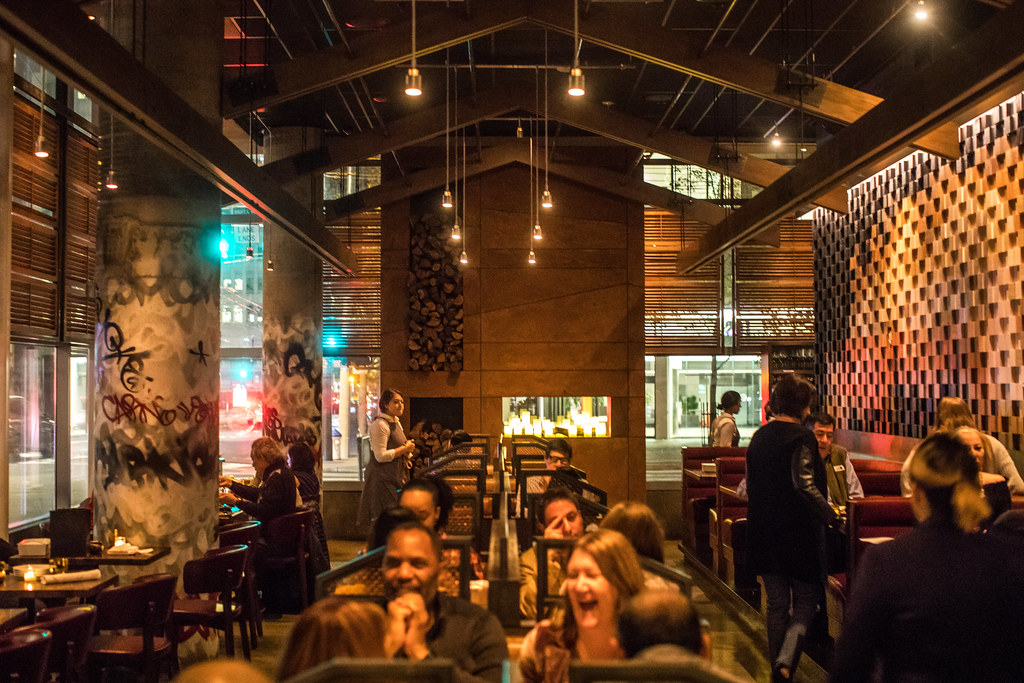
Last night mrsth, the four kids and I had the opportunity to dine at San Francisco’s newest restaurant hot spot from celebrity chefs Ayesha Curry and Michael Mina, International Smoke. The restaurant is the latest lobby tenant in the great leaning tower of Millennium at 301 Mission Street in San Francisco’s SoMA district.

Only a week old, International Smoke is already solidly booked for months. The good news though is that they take walk ins at the bar and have several tables that can seat up to six in the bar. Before getting into my thoughts on the food, I will say that with a big family (six of us) one of my frequent disappointments is when too many diners are crammed into a small table at a bar. In the case of International Smoke this is not the case for their 6 tops. They are large, roomy and comfortably accommodated our large group. There are also several 4 tops in the bar and of course you can also dine seating at the bar itself. We luckily got the last table in the bar last night just before dinner service started at 5:30 pm.

The bar also has several televisions which can be viewed from almost every seat and which were appropriately tuned in last night to the Warriors 124-116 win over the Philadelphia 76ers during dinner.

Although barbecue features prominently on the International Smoke menu, it would be misleading to call it a “barbecue” restaurant. While definitely a place for carnivores, the barbecue has a more modern and international presentation and the menu also includes many non-barbecue offerings.

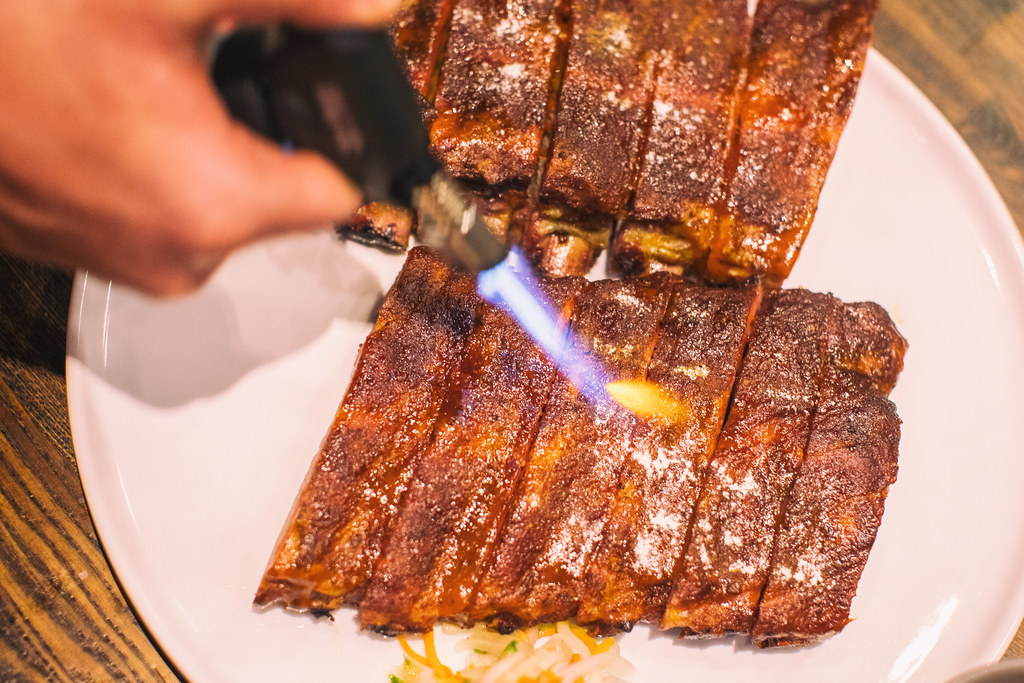
Many of the offerings are also fairly theatrical in nature, not quite what you’d find at say Edith’s down in Cabo San Lucas, but they incorporate smoke prominently to give you your fun little dinner show to go along with the food. In addition to serving two of our dishes (the smoked burrata and instant bacon) in glass encased smoke filled canisters, they prepare the Wagyu Shaking beef in a hot skillet tableside and use a cooking torch to caramelize the sugar while serving the ribs. It’s always nice to get a little extra pizzaz at the table when taking the kids out.

So let’s get into the cocktails and food.

I started off the evening with the Curry Up Now cocktail, because, well Steph Curry right? Plus I like bourbon. The drink is made with Wild Turkey 101 Bourbon, Madras Curry, Amontillado Sherry, and Corazon Bitters. It was served in a beautiful Waterford crystal style tumbler over one of those giant ice cubes you get at fancy bars these days. Although I’m not sure that Steph drinks one of these things every day at cocktail hour, it was a well balanced, slightly sweet bourbon based cocktail and it worked just fine for me.

We also tried the Rhinestone Cowboy, made with Hangar One Kaffir Lime Vodka, Espolòn Blanco Tequila, and Coconut Calamansi, refreshing served over that nice soft crushed ice that you also find at fancy bars these days.

WAGYU SHAKING BEEF, International Smoke
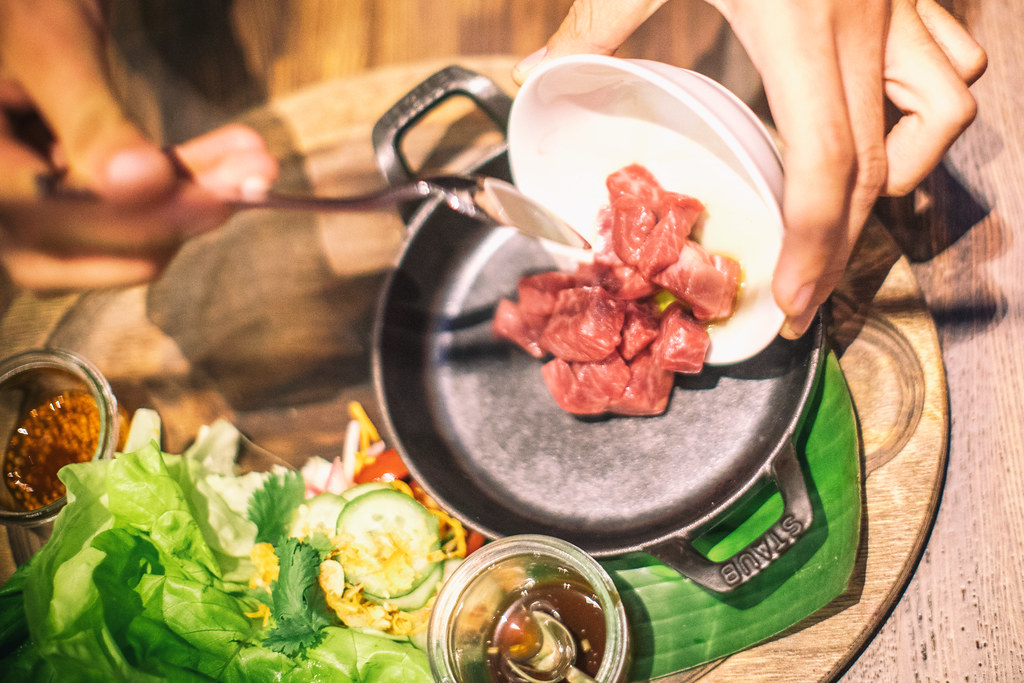
International Smoke’s Wagyu Shaking Beef

International Smoke
International Smoke’s Wagyu Shaking Beef

Our first dish was the aforementioned Wagyu Shaking Beef, cooked in that black hot skillet tableside. It comes with lettuce and you make little lettuce wrap taco like things. This was a favorite. The beef was delicious, cooked slightly rare and very juicy. They added a marinade to the beef as it was cooking. It’s Wagyu so it’s bound to be tasty, but as expected for things labeled Wagyu, it’s also expensive and you wish you got a lot more of it. I would probably order this again, and probably again, and again.

Classic American Wedge, nternational Smoke

Smoked, Burrata, International Smoke

Next up was International Smoke’s take on an all time classic, the wedge salad. It’s prepared cut in half with everything served up on top. Again, a little small, but delicious and a beautifully balanced mixture of dressing, bacon, onions and tomatoes.

The burrata was served at the same time as the wedge and came in the previously described smoke filled canister. The aha moment comes as the canister lid is lifted and the smoke disappears into the air, leaving you with a very creamy piece of smoke flavored cheese. The brussel sprouts went well with the cheese and it was a nice bit of salad before getting into the meats.

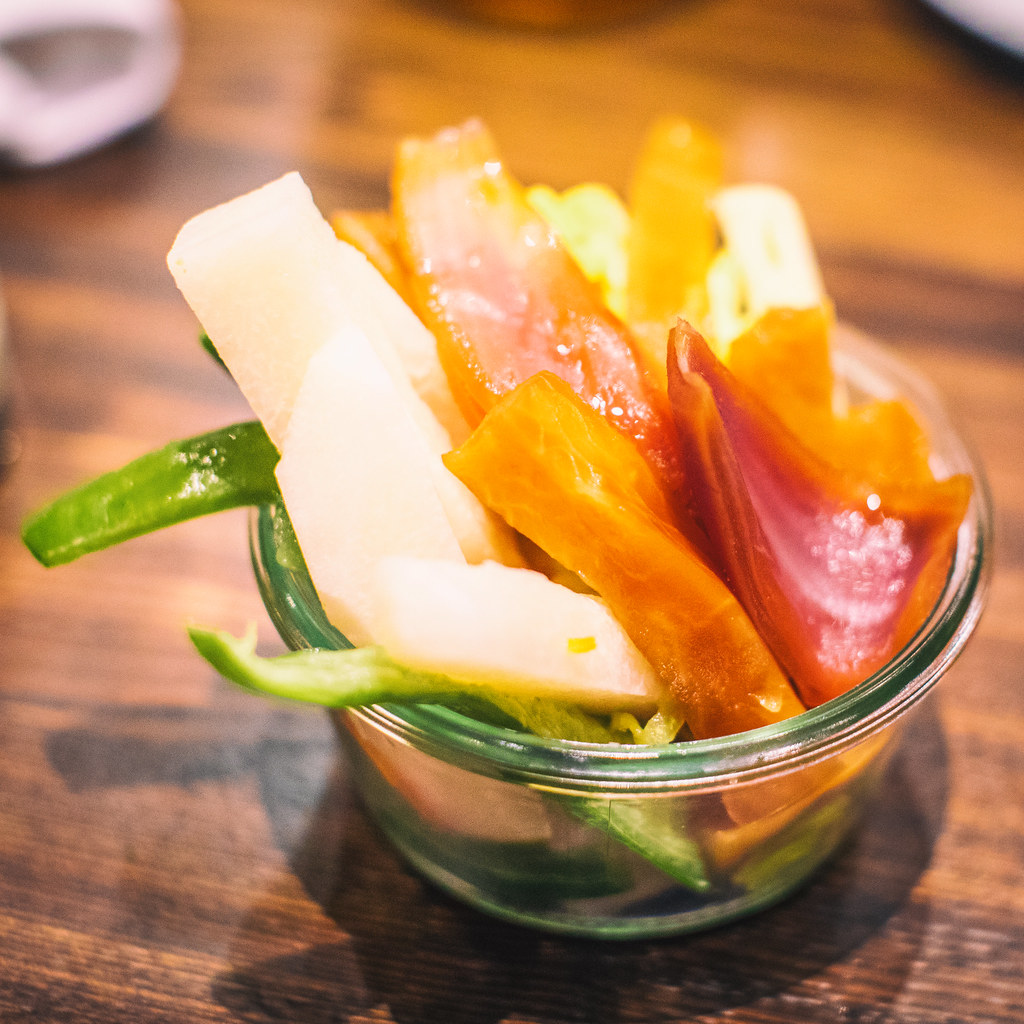
We also ordered a mixed pickle jar which is a myriad of pickled vegetables. At $ 6 it felt like a bargain on the menu and if you like pickled veggies I’d recommend it. I liked the pickled onions the best.

Kalua Style, Instant Bacon, International Smoke
The big reveal, Kalua Style, Instant Bacon, International Smoke

Kalua Style, Instant Bacon, International Smoke

The Kalua “Instant Bacon” is more like a pork bun than anything, served in another one of those smokey canisters with the big reveal — a very rich piece of pork served in a bun — again very tasty, but two to a plate a bit on the small side.

Smoked Pork Shoulder, International Smoke

We tried two orders of the Trio Sampler smoked pork shoulder. This consisted of an American pulled pork slider, Cuban Mojo Tostones and Korean Scallion Crepes. The American pulled pork slider was the favorite (especially with the kids) but I liked the Cuban Mojo Tostones the best myself. I did not care for the Korean Scallion Crepes.

Double Duck Wings, International Smoke

The double duck wings were up next. These were ok but my least favorite dish of the evening. They were pretty basic and a bit bland. The sauce they came in was tasty and interesting, but I would not order this again. We didn’t eat most of this dish and took it home with us in a box. I tried it again for breakfast this morning and it tasted a little better cold, but still not a favorite.

Smoked Pork Ribs, St. Louis Cut, International Smoke

Up next was the main event, a full slab of the smoked pork ribs. As previously mentioned, they bring these out with a cooking torch and torch the sugar on the ribs right there tableside. As far as ribs go these were perfectly adequate but nothing spectacular. The ribs probably had too high a bar to live up to in my mind though. When I read “St. Louis Cut” on the menu the only thing I could think about from then on was how much I love the ribs at Pappy’s in St. Louis. Those juicy, beautiful bone dripping ribs at Pappys, or if not Pappy’s at least all of the great sauces at St. Louis’ latest downtown barbecue spot Sugarfire with one of the best neon signs ever.

International Smoke’s ribs were just fine, but they were not as good as what you’d get at the best spots in St. Louis, or Kansas City, or Texas or Alabama. Again, I’m spoiled having experienced some spectacular barbecue over the years though. I probably should have known San Francisco celebrity chefs would be no match for hardcore pitmasters who’ve been doing their thing for 30 years.

Along with the ribs we ordered the french fries, which were pretty much the same basic fries you’d get anywhere and three sides of the mac and cheese.

Smoked Rib Tip Mac and Cheese, International Smoke

The mac and cheese was interesting — actually it was my favorite dish of the evening, but I’m a big mac and cheese fan. It’s served with rib tips and cornbread crumble on top. It was very good. I was very happy with this dish… but… would I rather have International Smoke’s mac and cheese or the buffalo chicken mac from Homeroom? See, again, it’s a high bar in my opinion, so while I was perfectly happy with this dish it was probably doomed from the start in my mind.

Anyways, there you have it. We ordered too much food for dinner so didn’t have room for dessert. Apparently my youngest daughter Kate was promised ice cream earlier in the day, however, so we stopped by Fenton’s on the way back home to pick up a half gallon of toasted almond. I’m sure International Smoke’s ice cream is probably just fine, but I doubt they hold a candle to Fentons. ?

More on International Smoke from Business Insider, SF Eater and the San Francisco Chronicle.

International Smoke
Bar at International Smoke

Curry Up Now, International Smoke
Curry Up Now cocktail

International Smoke
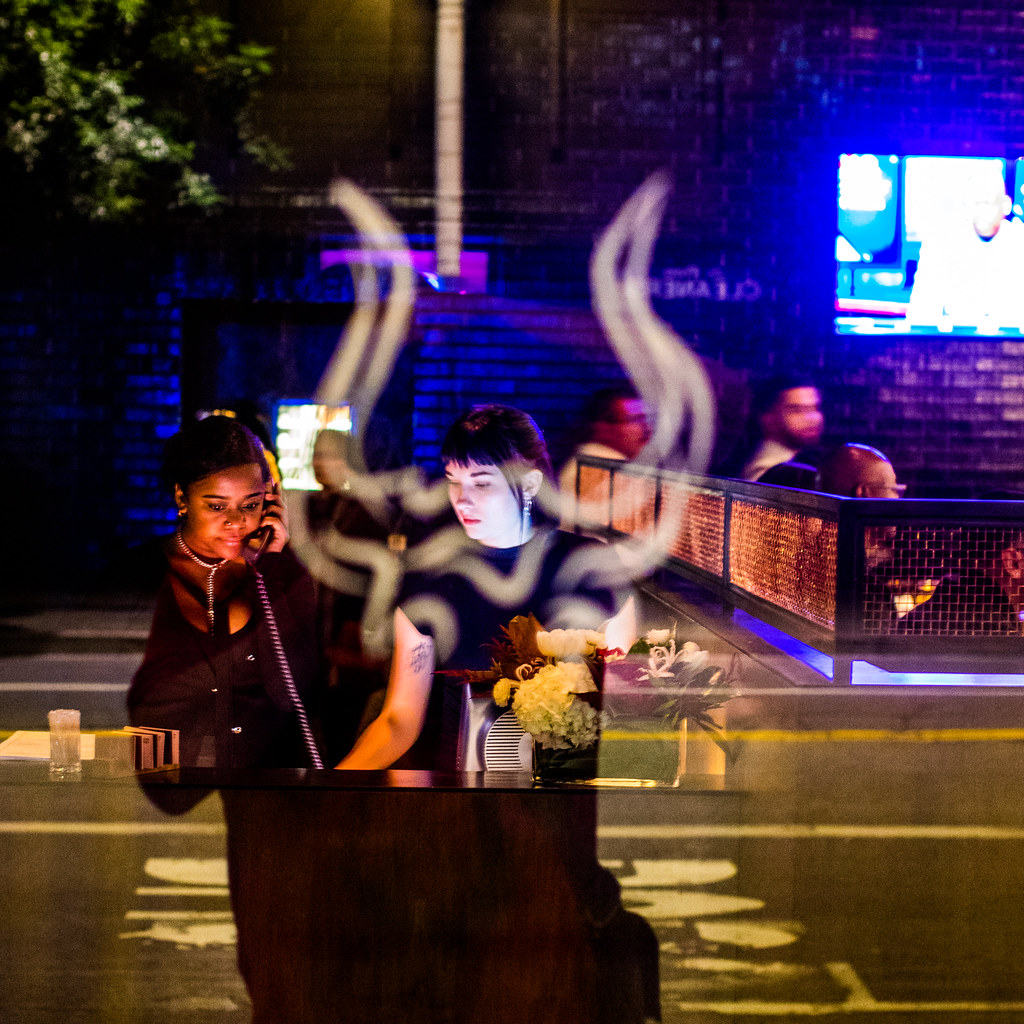
Front desk at International Smoke

Rhinestone Cowboy, International Smoke
Like a Rhinestone Cowboy

Mixed Pickle Jar, International Smoke
Pickles at International Smoke

French Fries, International Smoke


Thomas Hawk Digital Connection

 
Comments Off on New Ayesha Curry, Michael Mina San Francisco Hot Spot International Smoke, A Contemporary Take on Barbecue

Posted in Photography


3 Simple Photography Tips for Parents – How to Take Better Pictures of Your Kids

15 Nov

One of the most frequently asked questions I receive as a writer here at Digital Photography School is, “How do I take better pictures of my kids?”. There’s just something about becoming a parent that helps you understand exactly how fleeting childhood is, as well as how important it is to capture it. Whether you’re using a pro-level DSLR camera, a point-and-shoot, or your phone’s camera, here are a few quick and easy tips that will help you take your momtography or dadtography to the next level and take better pictures of your kids.

3 Simple Photography Tips for Parents - How to Take Better Pictures of Your Kids

1. Emotion Trumps Perfection

It’s never a bad idea to learn about the technical aspects of photography. But when it comes to photographing your own kids, the truth is that the photos you’ll treasure the most are the ones that capture genuine emotion. When you pull your camera out, don’t just look for the perfect smiles. Look for genuine expression and emotion, which tends to happen most often when your kids don’t realize you’re watching them.

Similarly, when you’re culling images, don’t automatically trash every image with soft focus or strange cropping. Sometimes, those technically imperfect photos may capture genuine emotion so perfectly that it would be a shame to delete them just because they’re not perfect. You may not want to blow those imperfect images up onto a giant canvas, but definitely keep them for your own records!

3 Simple Photography Tips for Parents - How to Take Better Pictures of Your Kids

Let go of perfection

Technically speaking, there are a few things about the above image that I don’t like. I wish I hadn’t cropped off some of one daughter’s fingers, and I wish the other daughter was in focus. I was super tempted to delete this photo right away because it’s not quite up to my standards. However, every time I look at this image it makes me smile to see the absolute joy on their faces. I remember their excitement at seeing the cherry blossoms covering the ground like snow, scooping them up by the handful, and throwing them up into the air while laughing and squealing with delight.

As family and friends flip through photo albums, they don’t comment on the other image I took that day of the girls standing perfectly still while looking at the camera and smiling, they comment on this photo. They mention how happy the girls look, and how much they love this photo. This image is beloved not because it’s technically sound, but because emotion always trumps perfection when it comes to photography.

3 Simple Photography Tips for Parents - How to Take Better Pictures of Your Kids

2. Find Beauty in the Ordinary

When it comes to photographing your kids, don’t wait for the moments when everyone is perfectly dressed in coordinating outfits at golden hour. Those moments are beautiful, but they’re few and far between. Instead, look for ways to capture the beauty in the ordinary everyday moments.

Snap a photo of your kids reading a bedtime story every once in awhile. Take a quick snapshot of their messy faces after spaghetti night. Capture the mismatched crazy outfits that they put together when they dress themselves. Quietly sneak out your camera as they’re practicing writing their name at the kitchen table.

3 Simple Photography Tips for Parents - How to Take Better Pictures of Your Kids

Life isn’t always perfectly styled, it’s messy and full of mundane, repetitive moments. It’s really tempting to wait to pick up your camera until your house is cleaner, or the kids are dressed in something that isn’t stained, or until the flowers in the backyard have bloomed. Don’t wait.

Take the opportunity to photograph your kids just as they are right at this moment, and see if you can’t find some beauty in the ordinary.

3 Simple Photography Tips for Parents - How to Take Better Pictures of Your Kids

3. Capture What Your Kids Love

At any given point in time, your kids are likely to have at least one thing that they’re absolutely obsessed with. It may be a stuffed dinosaur, their favorite book, a hat that they want to wear every single day or a best friend.

Regardless of what their current favorite thing is, taking photos of your childen with the things that they absolutely love is a really sweet way to remember them at the different stages of their lives.

3 Simple Photography Tips for Parents - How to Take Better Pictures of Your Kids

Chances are that in a year or two, your child will move on to a new favorite thing. You’ll forget all about that stuffed dinosaur or favorite blanket much more quickly than you’d probably think. It’s fun for both you and them to be able to look back and say “Remember when you used to….”

3 Simple Photography Tips for Parents - How to Take Better Pictures of Your Kids

Bonus Tip: Get the Photos Off Your Computer!

How many of us are guilty of taking hundreds of photos of our kids, maybe uploading a few to social media, and then letting them hang out on our hard drives in perpetuity? In all honesty, one of the most important parts of photographing your kids is to actually print the photos you take of your kids.

There are so many great resources out there now, whether you want to send prints off to a professional lab or print a photo book right from your Instagram feed, there truly is something for everyone. You don’t have to do it all, but just pick something, and get those images off your computer and into your lives!

3 Simple Photography Tips for Parents - How to Take Better Pictures of Your Kids

Do you have any non-technical tips that you’d share with moms and dads just trying to take great photos of their kids? If so, please chime in below in the comments.

The post 3 Simple Photography Tips for Parents – How to Take Better Pictures of Your Kids by Meredith Clark appeared first on Digital Photography School.


Digital Photography School

 
Comments Off on 3 Simple Photography Tips for Parents – How to Take Better Pictures of Your Kids

Posted in Photography


How to Take Interesting Photos in Uninteresting Places

07 Nov

Having spent the past several months traveling extensively to some pretty exciting places, coming back home to small-town suburbia was a rude awakening for me to say the least. I was so used to having interesting subjects – be it people, landscapes, flora and fauna – at my doorstep everyday. I didn’t have to think much about what I wanted to photograph, I could just step outside and find something new and interesting every time.

But once I got home and settled into my routine, I started to experience PW (photographer withdrawal). There really was nothing for me to photograph, right? How many times can I photograph the same bush, the same tree, the same pond and the same ducks?

You see being smack-dab in the middle of American suburbia, this is the extent of my daily views. But then I realized that there are some simple ways to make an uninteresting location a bit more interesting! Here are six tips to help you do that.

#1 Change the way you look at things

Sometimes it’s just about changing perspective. Literally. Let’s say you have pine trees in your neighborhood. Nothing fancy – simple pine trees that are quite abundant in most areas.

Have you ever tried to look at one through a macro lens? Maybe you can capture individual blades of pine needles. How does the tree look when it snows? Can you isolate the snow on the pine needles? How do pine cones look under a macro lens? All of these things provide a potential for interesting photographs. Just change your perspective a complete 360 from what you normally do!

Get in close

Try looking at the same boring thing with a new or different lens. A macro lens or even a close-up filter is a nice way to get up close and personal to an otherwise boring subject.

Pine Tree in ice rain winter - How to Take Interesting Photos in Uninteresting Places

The image on the left is the neighborhood pond in winter. Nothing exciting ever happens there. But this past winter we had an ice storm and the pine tree was covered in ice. It made for some interesting compositions and also very cool macro shots!

Try wide-angle

The opposite of close is to try something that encompasses the whole scene. Using a wide-angle or ultra-wide angle lens to change your perspective of the scene in front of you.

Pine Tree in ice - How to Take Interesting Photos in Uninteresting Places

Here I used a wider angle to try and encompass the whole extent of ice on the tree. I quite like how the ice is hanging off the branches. I almost got frostbite from being outside in this cold but quite worth the shot, don’t you think?

Get the details/textures

Textures are a wonderful way to look at the details in and around an object. The play of color, age and grain make for great abstract imagery.

How to Take Interesting Photos in Uninteresting Places

#2 Experiment with different light

Light is one of the most important elements in photography. Sometimes boring doesn’t have anything to do with the location, but with the quality of the light at the time that you are shooting. If you feel that what you have around you is really uninteresting, try photographing the scene or subject in lighting that is different from what you usually do.

Get your tripod out and try photographing at night with a flash or a long exposure (slow shutter speed) combined with some light painting. Try early morning or golden hour light when the light is softer and the shadows are longer. Or go completely against the norm and try photographing in the harsh midday sun and embrace the play of light and shadows.

How to Take Interesting Photos in Uninteresting Places

Sometimes when the light is just right, I don’t have a model handy, so my dog is the one who poses for me. I just loved the way he was sitting in the light basking in the warmth of the setting sun.

Portraits in shadows - How to Take Interesting Photos in Uninteresting Places

This was a little bit more staged but she just happened to be sitting there when the setting sun entered the house from the left. I positioned her a bit so she was half in the light and half in the shade. No props needed at all – just a willing model and looking for the right or different kind of light.

photos of the setting sun - How to Take Interesting Photos in Uninteresting Places

Sunsets and sunrises are perfect to spruce up your boring location. You just need get outside and photograph that great light!

#3 Simple special effects

This ties into the point above. Using simple tools like a tripod, off-camera flash, gels, etc., can add an element of interest and change to your otherwise boring images.

Some other ideas to try are motion-blur with a really low shutter speed and a fast-moving subject, intentionally missing focus to create an artistic image, panning while tracking a moving object, double exposures, free-lensing, etc.

double exposure photography - How to Take Interesting Photos in Uninteresting Places

I absolutely love double exposures. When all else fails and there is nothing of interest to photograph, I try to combine nature and portraits to create some cool double exposure effect. More often than not, my pet is the only willing and able model!!

How to Take Interesting Photos in Uninteresting Places

#4 Break photography composition rules

We all know the basic rules of compositions such as; the rule of thirds, filling the frame, cropping effectively without cutting body parts, using leading lines and shapes, symmetry and patterns, pay attention to the background, etc. But sometimes when you are not quite feeling motivated and inspired or when you are dealing with an uninteresting background, try breaking some or all these rules to add some interest and drama to your images.

Dramatic Light Food Photos - How to Take Interesting Photos in Uninteresting Places

Most food photographs are always in perfect light on perfect white backdrops. I decided to break some rules and photograph my morning smoothie in the hard afternoon light that was streaming through my kitchen window to get some shadows in the frame and also give a more imperfect look to the blackberries.

How to Take Interesting Photos in Uninteresting Places

I loved the way my neighbor’s tree burst into flowers over the spring. So after much coercion and bribing, my daughter agreed to pose – but she refused to look at the camera. So I covered her eyes, cropped off her arms and create a different kind of portrait with the florals that I loved.

#5 Try some street photography

Street photography is an interesting genre of photography because it involves people and people watching is always fun and entertaining, no matter where you are.

#6 Experiment in post-processing

If none of these ideas inspire you, try to create something fun and interesting in post-processing. My post-processing software of choice is Lightroom. Perhaps you want to try HDR processing for your images, or a black and white theme. You can also use selective blur, gradient filters, and other tools to try sprucing up your images to create something interesting and fun.

How to Take Interesting Photos in Uninteresting Places

If you have been following my work for a while, you know that my style is very light, bright and airy. My images are clean and give a sense of freshness even in my processing. The image on the left is more of my normal style. But for this article and also to show that experimenting with post-processing is another way to overcome boredom, I edited all the images in a more dark and moody style throughout.

How to Take Interesting Photos in Uninteresting Places

Left is how I would normally process this image, and the image on the right is just experimenting with darker, moodier tones. I quite like them both and spend hours playing around with editing styles for this article.

Your turn

I hope these ideas get your creative juices flowing in terms of things to try and experiment with in your photography when you feel your location is uninteresting and boring. Remember, memorable images don’t always happen in cool, popular places – they happen when something simple or mundane tells an interesting story.

The post How to Take Interesting Photos in Uninteresting Places by Karthika Gupta appeared first on Digital Photography School.


Digital Photography School

 
Comments Off on How to Take Interesting Photos in Uninteresting Places

Posted in Photography


Why it’s a Good Idea to Take Lots of Photos

05 Nov

Take lots of photos. Lots and lots of photos. Make mistakes. Lots of them. The more photos you take and the more mistakes you make, the better the photographer you will become.

I’m not encouraging you to blaze away with your camera like you’ve got a machine gun and are an actor in a B-grade action movie, you won’t improve your photography doing that. You need to carefully consider many aspects of what you are doing and make sure every frame you shoot is different than the previous one.

Why it's a Good Idea to Take Lots of Photos

Increase your odds

Whether you’re photographing your kid’s birthday party, a street protest, graduation portrait or studio product shot for your website, there’s always a multitude of variables. Taking minimal photos is going to reduce your chances of success.

Varying the composition, timing, and exposure for each picture you take will give you more options when you come to edit your photos and choose the best of them.

Vary the composition and move around

Even the slightest changes in composition can produce significantly different photos. So if you only take one or two frames without moving your camera you might be missing the best angle.

Why it's a Good Idea to Take Lots of Photos

Small variations in composition can make a significant difference.

Moving your position from side to side and up and down, even just slightly, or adjusting the focal length when you are shooting a static subject will provide you with a series of different images.

Then later, when you’re editing, you will have the benefit of multiple different photos to choose from.

Moving subjects

Why it's a Good Idea to Take Lots of Photos

Taking a series of photos when one or more elements in your composition are moving gives different results.

When photographing a moving subject it’s always best to take lots of photos. As the location of your subject changes the dynamic of the photo can be varied in many ways. The relationship of your subject to the background will alter, for better or for worse.

The distance between your subject and your camera may change, possibly resulting in an out of focus photo. When your subject is moving, their position within your frame will be different from moment to moment. So it makes good sense to take a series of images, rather than just one or two.

Timing the moments you choose to make an exposure has a major impact on the outcome of your photo, especially when you have more than one element in your composition that’s moving. If you limit the number of photos you make you will risk the missing the best opportunity.

Continuous shooting mode

Why it's a Good Idea to Take Lots of Photos

In many situations, holding the shutter release button down with your camera set to continuous shooting (burst) mode will not often give you the best results unless you carefully consider your actions.

If you are observant and know your subject, taking time to track the action and choosing the moments you make your exposures will give you better results. Use continuous shooting mode carefully when you need it, otherwise, you will be trying to choose your best photos later from a myriad of exposures with insignificant differences.

Exposure variations

Why it's a Good Idea to Take Lots of Photos

Experiment with exposure settings.

Experimenting with different exposure setting is another good way to produce an interesting variety of images of the same subject, especially if the contrast range in your composition is broad.

If you prefer making photos using one of your camera’s auto modes, make a few exposures like that, then switch to Manual mode. Make more photos, adjusting the exposure slightly for each one.

By taking exposure meter readings from different locations with your camera’s spot meter and adjusting your settings accordingly, it can give you a range of more diverse photos than you would have if you only use an automatic exposure mode.

It’s all in the details

Why it's a Good Idea to Take Lots of Photos

Recomposing slightly avoided the bright line connecting with the flower.

Paying attention to detail when you are photographing can make the biggest difference in achieving fabulous photos or just mediocre ones. Taking your time to carefully observe the elements within your frame as you line up your camera to take a photo is essential.

Watch for changes to the light that will affect your exposure. Watch for movement and make deliberate adjustments to your composition. These are all ways that will add depth and an extra dynamic to your photography. However, if you are simply not taking enough photos you are truly limiting your opportunities to be making your best photographs.

Oftentimes the first angle you think of and photograph will not be the best. And, if you only make one or two exposures, you will not get the best photograph. The second composition you choose may be smarter, but all the smart people will do the same. The third step you make with your camera angle, composition, timing, etc., will likely give you a more pleasing, unique result and even lead to more inspired choices for subsequent frames.

Why it's a Good Idea to Take Lots of Photos

Over to you

By taking your time, observing carefully, and considering the various options of how you can set your exposure and frame your subject – it will give you an opportunity to get a diverse range of photos.

Time your exposures so the action is at its peak and your composition works. Then making variations on your choices will return you considerably more options of good photos to choose from. If you just make one or two exposures without making any changes it’s highly possible you will be missing out on making the best photographs possible. So always take lots of photos.

The post Why it’s a Good Idea to Take Lots of Photos by Kevin Landwer-Johan appeared first on Digital Photography School.


Digital Photography School

 
Comments Off on Why it’s a Good Idea to Take Lots of Photos

Posted in Photography


iOS apps can secretly record and take pictures once you’ve given them camera permission

31 Oct

If you want to be sure nobody is spying on you through your laptop’s webcam, the best thing you can do is cover the lens—but the same might actually be true for the camera on your Apple smartphone.

Felix Krause, a developer at Google, has found that any iOS app could secretly use the iPhone’s camera to record images and video of the user, once given permission to access the camera at all. Krause developed an app for demonstration purposes that shows how an app could use either front or rear cameras to capture images and video in the background. The resulting footage or images could be directly transferred to cloud servers without the user being aware or receiving any notifications.

The camera could also be used to run real-time face recognition, possibly even identifying the user.

The good news is that Krause’s app is not approved for distribution through the iTunes App Store; hopefully such malicious behavior would be picked up during Apple’s pretty strict review process. However, if you want to be entirely certain you’re not being spied on, the best options seem to be covering the lens or not granting camera access to any app you don’t 100 percent trust.

For a better idea of the issue, watch the video below that shows Krause’s proof-of-concept app in action, or read the full report on his website.

Articles: Digital Photography Review (dpreview.com)

 
Comments Off on iOS apps can secretly record and take pictures once you’ve given them camera permission

Posted in Uncategorized