RSS
 

Posts Tagged ‘Take’

6 Ways to Improve Your Images and Take Better Vacation Photos

17 May

Have you ever been on a vacation only to return home disappointed with your images? Many people take pictures while on holiday but find they are unsatisfied with their results. You can improve your chances of capturing better vacation photos by learning the basics and applying a few simple techniques.

better vacation photos - trees in Namibia

1. Choose the right equipment

Firstly, you don’t need expensive equipment to achieve photos from your travels that are satisfying. If you’re looking to buy a camera, choose one that suits your needs and budget. Digital cameras now range from professional DSLRs to great compacts that can produce quality images. Even mobile phones can give you stunning results.

Generally, a camera with more megapixels will provide a better picture resolution and higher quality images when printed. Whichever camera you decide to use, choose a compact with a good quality lens and broad optical zoom or a digital SLR with a zoom or telephoto lens depending on the subjects and angle of view you want to capture.

For example, a wide zoom would help to photograph a wide sweeping landscape and a telephoto can be used to capture wildlife. Also consider the size and weight of your equipment and make sure you can carry your camera kit comfortably.

Lion's roar Ngorongoro Crater Tanzania - better vacation photos

2. Make mistakes

A common mistake people tend to make is to pick up a camera and shoot a scene without giving any thought to what they are actually photographing.

You can dramatically improve your images by learning from your mistakes and analyzing why an image may not look as good as the view that you saw when you took the image.

Appraise your work and think about how you could improve your images next time. It’s good to recognize your mistakes, such as poor camera technique and poor composition and improve on those things next time around.

Zhangjiajie China scene - better vacation photos

3. Improve your camera technique

A great photograph is rarely achieved without some initial technical knowledge and photographic skills. Learn the basics about your camera and how it works. Study your camera manual and read up on other technical areas such as depth of field.

Know the limits of your equipment and how to use it effectively to create the style of images you want to capture.

Handling your camera in advance of your trip can help familiarize yourself with the buttons and you will be more comfortable with how it works when you’re away. Time spent understanding your camera will help take your photography to the next level and make for a more enjoyable experience when on vacation.

town with mountains and a lake - Take Better Vacation Photos

4. Improve your composition

A thoughtless composition can let your image down. Too many different subjects can complicate a scene. Look for features, shapes and patterns that may work in harmony to strengthen your images. Take time to manufacture your shot, trust your instinct and aim for a composition that you like.

The image of trees and the towering sand dunes shows an example where the different subjects of the composition can work well together and strengthen an image.

Camel thorn trees Deadvlei Namibia - Take Better Vacation Photos

5. Focus on details

You can choose to photograph specific and interesting subjects to improve your holiday pictures. Focusing on details allows you to reduce the number of variables in the frame and concentrate on the different shapes and forms that can be found within your subject.

By shooting only a portion of a famous building or scene of nature, you can isolate an image to concentrate on the aspects that appeal to you. Try zooming in or moving closer to your subject to narrow your point of interest and make it stand out.

scenice view of a town with church steeple - Take Better Vacation Photos

6. Consider the time of day

The quality of light varies throughout the day and can have a huge impact on your final image. Most holiday snappers go on vacation for a break, rest in the mornings and go out and shoot during the middle of the day. However, bright sunlight at noon provides harsh shadows and flat lighting.

Try and shoot outside this time for better vacation photos and more dramatic light. Instead of sleeping in, set the alarm clock and get out early at least once when on vacation, or stay out late to capture the beautiful tones from the sun.

The light at this time of day can make a pleasing difference to your images. Be aware of the effects light can create and use it to capture better images. For example, look for shadows and highlights that may improve your images by providing contrasting shapes.

The Grand Canyon USA - better vacation photos

Conclusion

Taking photographs during a vacation is a wonderful way to improve your photography. By applying the tips above you can achieve better images while capturing lasting memories of the places you have visited that can give you immense pleasure for years to come.

Do you have any other vacation photography tips and photos? Please share them in the comments area below.

The post 6 Ways to Improve Your Images and Take Better Vacation Photos appeared first on Digital Photography School.


Digital Photography School

 
Comments Off on 6 Ways to Improve Your Images and Take Better Vacation Photos

Posted in Photography


4 Reasons Why Putting Your Camera Down Can Help You Take Better Photos

15 May

We’ve all been there; in a new country, a new city or just a new part of your local town. Camera in hand, you shoot and shoot and shoot as your memory card never seems to fill up. It’s thrilling and you don’t want to waste a moment because there is so much to capture. But what if putting your camera down, even just for 20 minutes, can help you take better photos?

I don’t mean leave it unattended. But I do mean put it away or leave it behind as you go for a walk in your new environment.

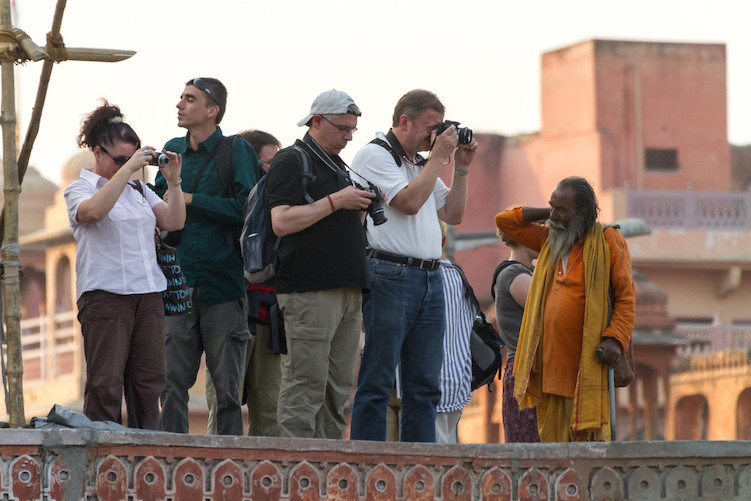
group of photographers shooting - What Happens When You Put Your Camera Down

I know some of you are getting the shakes at the mere thought of being without your camera in a new area, but indulge me for a moment. In this article, I will bring to light a few thoughts on why putting away your camera might actually help your photography.

1 – Greater Awareness

How can you truly capture the essence of a location without first experiencing it? There are always bright and colorful things to shoot. But if you go around grabbing each little scene like a bird grabbing nectar from a cherry blossom, you risk miss seeing the whole tree.

Jordan ruins at night in candlelight - 4 Reasons Why Putting Your Camera Down Can Help You Take Better Photos

I had time to visualize the shot above while watching an evening program at the Treasury in Petra, Jordan. While the program played, I was seated and limited in my movements, so I looked around at the space and tried to imagine photos from each location. At the end of the program, I was only allowed 10 minutes to get my shot (which took one minute to set up and 30 seconds to take), so my time spent gaining a greater awareness for my surroundings helped me greatly to take better photos in the time allotted.

Being aware of your surroundings is also important for safety. We all know the feeling of looking through our viewfinder, or camera screen, and losing all sense of what’s going on around us. It’s the feeling of “flow” when everything else melts away and there is just the joy of photography. That lack of awareness can work against you when in unfamiliar locations.

Beyond safety, having an awareness of your surroundings will also alert you if the clouds are about to cover the sun or if your scene is becoming more or less active. Watching others around you for clues on what to shoot is the next step.

2 – Observe Others

I love people watching in new environments. Even at home, if I go shopping with my wife I will typically end up on a bench just taking in the plethora of different shoppers passing by. Even we introverts can enjoy watching how people interact.

Look for clues about relationships and friendships while observing others. Do most people seem aloof or is there a lot of interaction? Watch how transactions are negotiated in markets. Is there a lot of haggling over price before money changes hands? These clues will help you anticipate when you can get those key shots when you return with your camera.

hat selling in Peru - take better photos

Because I took some time to people watch when the previous train came through town in the Urubamba Valley of Peru, I knew this colorful hat-seller would work the crowd when the next train arrived. So I waited and watched and was able to capture this image.

Is there a flow to the traffic of people around you? If so, look for a good location to set up and get some candid street photos. While crowds always draw attention, look for those standing back from the bustle if you want to capture a variety of everyday life.

Now is also a good time to realize who around you might not want their picture taken. Or who is charging photographers to pose for photos?

4 Reasons Why Putting Your Camera Down Can Help You Take Better Photos - officers in Jordan

In this shot of officers in Jordan, I hung around for a few moments with my camera down, said “Hi” and let the men get back to their conversations before taking the shot. I had noticed that they all looked intently at anyone new coming through the door and that wasn’t the shot I wanted. This more relaxed version was my goal.

3 – Observe Patterns

With patterns, I don’t mean just the cool shapes made by architecture or found in nature. I also mean the patterns humans create as they go about their day. Observing patterns will help you return with your camera (or simply get it out of your bag) and better anticipate the moment for shutter release and ultimately you will take better photos.

4 Reasons Why Putting Your Camera Down Can Help You Take Better Photos

For instance, watching a worker at the leather tannery in Fez, Morocco or a gentleman unloading chickens in Kathmandu, Nepal, with my camera down for a minute or two, helped me to visualize the action I wanted to capture and better time my shots.

4 – Interact Differently

Imagine someone came up to you on the street and instantly lifted a camera to snap a photo of your face. How would you feel?

Empathy for strangers and how they will react to my camera pointed in their direction is why I will typically recommend you ask permission first before taking a shot. Or better yet, with your camera down or put away, interact with your subject first. See what they are doing and ask questions if you can. Something about them made you want to take their photo, so take it one step further and interact before snapping away.

Peruvian kids - 4 Reasons Why Putting Your Camera Down Can Help You Take Better Photos

I played with these kids in Peru for a bit before having them ham it up for the lens. I don’t speak Quechuan and only poor Spanish, but I can recognize kids playing “shop” with weeds and flowers when I see it. I could tell who was in charge and I played along for a few minutes, trying in vain to get a good deal on my ugly weeds, before snapping this photo.

People will interact differently with you if you approach them first with your camera down or put away. Sometimes there is a fleeting moment that most feel needs to be caught candidly. But far more often a richer image can be created when you make human-to-human contact first. Rather than human-to-camera-to-human contact.

Conclusion

If you’ve never left your camera behind for even 10 minutes, I suggest giving it a try. It’s unnerving, I know! But it can lead to seeing your new environment in a way not possible with a camera constantly popping up to your eye.

Now you tell me; do you think you can take a walk and experience a new location without your camera? Do you think it might change the way you see the world before photographing it? Will it lead to helping you take better photos?

The post 4 Reasons Why Putting Your Camera Down Can Help You Take Better Photos appeared first on Digital Photography School.


Digital Photography School

 
Comments Off on 4 Reasons Why Putting Your Camera Down Can Help You Take Better Photos

Posted in Photography


Tips for Selecting What Gear to Take Along for Travel Photography

28 Apr

Travel photography is exciting. There’s always this sense of finding new and exotic places to capture. Of course, if you work hard you can find new and exotic places to photograph right near home. But there’s something about travel that truly sparks the imagination.  It’s really about capturing the look and feel of a place that isn’t your home.

Tips for Packing for Travel Photography

I used a 70-200mm lens here to compress the space between the sheep and the village beyond.

The thing is that it’s difficult to travel with camera gear, especially large DSLRs and their rather bulky lenses. Then there’s the expense. You could potentially be traveling with some very expensive equipment.

If you’re a hobbyist photographer, the loss of that gear could be devastating. I’ve known several individuals who have lost their gear while out traveling and have found that their insurance didn’t cover the whole loss. For these hobbyists, it was a blow from which they couldn’t recover.

So while travel photography with a DSLR can be exciting, it can also be stressful. That’s why every professional travel photographer will tell you all about the importance of packing wisely when traveling with your DSLR.

So without further ado let’s take a look at some helpful tips for traveling the world with your DSLR.

Be economical in choosing lenses

Weight is a factor if you don’t want to pay the fees for extra baggage. So when packing for travel photography, it’s best to economize your lenses. Instead of taking every lens you own, consider packing ones that give you a full range of focal lengths without doubling up.

If you have a 70-200mm lens why pack the 85 mm prime? Instead, a wise decision may be to take your zoom lenses. Choose a wide angle like the Canon 16-35mm. Granted the lens is heavy. The 70-200mm isn’t a lightweight either, but if you are only going to take two lenses then it’s not such a big issue.

Tips for Packing for Travel Photography - truck in a driveway

Shot with a wide angle lens. This image was taken from the rooftop of a hotel.

Choose lightweight lenses

Prime lenses aren’t a bad idea for travel either. They usually have a wider aperture which is great for low light, and if you’re visiting a dark castle somewhere in Europe that can be really useful. Primes are much lighter than their zoom counterparts, and with a little practice, you can get used to shooting with just prime lenses.

It takes a little more thought than zooming in and out but you can capture amazing images with prime lenses. If you’re going to pack a general set of lenses for travel your bag might include the following, a 24mm for wide angles, the 50mm for general shots and an 85 mm for a little more range.

Tips for Packing for Travel Photography - gnarly tree branches

I had to use a zoom lens for this shot. The tree just wasn’t accessible from up close and I wouldn’t have been able to shoot at this level if I were closer. The telephoto was essential for this shot.

Choose lenses for a purpose

The lenses you choose to take with you might also be determined by the type of photography you’re planning on doing while you’re traveling. Perhaps you’re going on safari to Kenya. If that’s the case, you’re going to be focused on capturing wildlife, so your longer telephoto lens is going to be essential, and you might choose to take something in the 100-400mm range. I would argue that adding a nice light 50mm prime to your bag might be all that you need in that situation.

I recently visited the city of Havana, Cuba. I knew I wasn’t going to be going outside of the city and that my focus was on shooting architecture and street scenes. So, in that case, I left my telephoto lenses at home. On the busy streets, it would have been difficult to pull out my 100-400mm and shoot comfortably. So I chose to pack a wide-angle lens and my nifty 50mm. That was all I needed within the cramped streets of Havana.

This is in contrast to a trip I took last month to Wales. I was going to shoot both landscapes as well as city scenes, and I was hoping to capture some images of birds as well. So I chose to pack a little more weight. I chose to leave my prime lenses at home and took three zoom lenses; the 16-35mm, the 70-200mm and the 100-400mm.

Tips for Packing for Travel Photography - garbage can in an alley with graffiti

Shot with a prime lens. Graffiti alley in Toronto is a great place to use a mid-range focal length.

Just use your phone

I know a number of travel photographers who challenge themselves to shoot just one trip a year using nothing but their phones. The results are truly beautiful and they love the ease of traveling with just a phone.

Many smartphones have fantastic cameras and can capture huge RAW images. So it’s definitely worth a try. Limit yourself to your phone and see what kinds of images you can capture.

Tips for Packing for Travel Photography - city scene

I took this shot using my phone. It’s 5000 px on the long edge, a large file. I could never have gotten this with the gear I had with me that day.

Embrace the excitement

Travel photography is exciting. Taking your camera to places that are new and different from home can truly raise adrenaline levels. It’s a lot of fun, and I highly recommend you get out there to visit other places and explore with your camera.

Embrace the challenges of packing for the trip as well. It’s part of the excitement. You’ll be challenged to shoot great images with a limited amount of gear. There’s nothing wrong with that. Take the challenge by the horns, pack wisely, and push yourself to try and capture great images of far-off places with just a few simple tools.

Tips for Packing for Travel Photography - forest shot

This would have been impossible to capture without my wide angle lens. We were just too close to the falls for anything mid-range.

The post Tips for Selecting What Gear to Take Along for Travel Photography appeared first on Digital Photography School.


Digital Photography School

 
Comments Off on Tips for Selecting What Gear to Take Along for Travel Photography

Posted in Photography


Tips for Learning How to See the Light and Take Better Photos

13 Apr

Your camera can’t see the light and tones as well as you can. Cameras have not yet been developed to a stage where they can record a tonal range in a single, unmanipulated image as broad as you can see with your eyes.

Portrait of a senior woman being made by a photographer - Tips for Learning How to See the Light and Take Better Photos

Our brains are constantly evaluating the light and making adjustments dynamically so you get to see far more detail in the brightest and darkest areas of whatever you are looking at, as well as in the mid-tones. Understanding this difference between what you see and what your camera records will help you to become a more creative photographer, (and save you time post-processing your photos.)

Different Types of Light

Basically light can be hard or soft, direct or diffused. Direct light, usually from a relatively small light source, creates a hard-edged shadow, like on a sunny day. Light that is diffused, like you experience when the sun is behind a cloud, makes soft shadows or virtually no shadows at all.

Woman selling fresh fruit at a market in Chiang Mai - Tips for Learning How to See the Light and Take Better Photos

Hard light – characterized by high contrast, hard edges, and lots of texture and detail.

Unloading produce at a market in Chiang Mai, Tips for Learning How to See the Light and Take Better Photos

Soft light is characterized by gentle or no shadows, lower contrast, and less texture and detail.

Light will have various other qualities as well depending on the time of day, season, atmospheric conditions, and geographic location. Light can be warm and have a golden tone, mostly in the mornings and evenings. It can also be cold and have a bluish tone, often in city streets where buildings block the sun or on heavily overcast days.

Different Tonal Ranges

Typically with soft light, you have a narrower tonal range (lower contrast). In conditions with soft light, your camera will be more capable of producing images with detail in the shadows and also the highlights, if you expose your photos well.

Tricycle Taxi Rider in Chiang Mai, Tips for Learning How to See the Light and Take Better Photos

Soft Light

With hard light, the tonal range between the brightest and darkest parts of an image can be far more extreme. Your camera may not be capable of recording detail in the highlights and in the darkest parts of your image, in a single frame (I am not concerned with HDR or other manipulations here).

Street scene in Thailand with tricycle taxis and traffic - Tips for Learning How to See the Light and Take Better Photos

Hard Light

As you learn to see light and understand the type of light in which you are photographing, you will get a feel for it and become more creative and more precise technically with your photography.

Using Light to Fit the Mood

If you want to create a gentle portrait with soft, relaxing tones you will not just need your subject to be in the right mood, but you will need the lighting to fit with the mood as well. A soft, diffused light will help you reach your goal whereas trying to create this style of portrait outdoors in the middle of a bright sunny day will be far more difficult.

Portrait of a young Kayan girl - Tips for Learning How to See the Light and Take Better Photos

Soft light here allows for detail in all areas of the image and for a flattering portrait of the girl.

Sometimes working with soft light can be challenging if it is just too flat and dull and offers very little tonal range in your subject. In these situations, I will look to add some alternative light source from a flash or reflector to add a more dynamic look to my photos.

Hard light can make for more dramatic pictures. Using the contrast range so parts of your composition are isolated, either because they are too bright or too dark for your camera to record, is often an effective method towards producing more creative photographs.

Close up of a Hmong woman hand sewing - Tips for Learning How to See the Light and Take Better Photos

The hard light here highlights the hands making the background completely black.

Carefully Control Your Exposures

Taking control of your exposure so you are only rendering the detail in the highlights and allowing the shadow areas to show little or no detail, is a great technique to learn. Alternatively, in hard light situations, you can set your exposure for the dark areas of your composition and you will lose detail in the highlights.

Photographers who are more technically oriented and believe you must have an evenly exposed image with no loss of detail may struggle with this concept.

Buddhist monks walking in the morning, Tips for Learning How to See the Light and Take Better Photos

When you have a concept for a photograph (or series of photographs) you want to make, creating the photos in the best lighting will have a significant impact on your results. Choosing the optimum lighting to create the feeling you want to capture in your photo brings a greater depth to your pictures and more feeling of connection with those who view them.

Concerning yourself primarily with technical details will not have the same effect in many cases.

Getting Creative With Light

Lighting can be a bit of a dilemma if it does not fit the mood or scenario you are wanting to photograph. Pushing yourself to create interesting, captivating images even when you are faced with adverse lighting conditions is a great challenge to embrace and will help you grow as a photographer.

Street festival in Mae Hong Son - Tips for Learning How to See the Light and Take Better Photos

I used some off-camera flash here because the ambient light was very flat.

Pay attention to the light wherever you are, even if you don’t have a camera with you, just see light. Think about it. Consider the qualities of light and how they will affect the photos you take.

Will the light help you or hinder you in creating the style of photographs you want to make?

Buddhist monk lighting a candle taken during a Chiang Mai Photo Workshop

Learn to See Light

If the light is not right for what you want to achieve in your photos you will need to make changes by adding light, from a flash or reflector or another additional light source. Sometimes even just changing your point of view in relation to your subject will have a significant influence on the mood and look of the lighting. For example, using backlighting instead of front or side lighting.

The more you can learn to see the light and understand how it will affect your images, the more creative you can become with your camera. There are some additional tips in the video below to help you see the light.

The post Tips for Learning How to See the Light and Take Better Photos appeared first on Digital Photography School.


Digital Photography School

 
Comments Off on Tips for Learning How to See the Light and Take Better Photos

Posted in Photography


Tips for Working the Scene to Take Your Image from Good to Great

02 Apr

My wife can be very unkind about my photography. She’ll often flick through my edits and ask me where the good shots are… I don’t think she has cottoned on to the fact that us creative types are deeply sensitive.

Tips for Working the Scene to Take Your Image from Good to Great

She said to me recently:

Wouldn’t it be amazing to show people how many bad shots you take before you get any good ones?

She is most obviously not a photographer…

But then I started to think about how much time we photographers spend putting out our very best work, and only our best work – as we should!

Tips for Working the Scene to Take Your Image from Good to Great

I started to think that perhaps she was right. Maybe it would be good to show you the photos I took before I got the shot before I nailed it. Definitely a good teaching idea.

There’s a book I love by Magnum photographers who published a collection of their contact sheets. It shows all the mediocre shots of some of the great masters of the art. That is kind of reassuring, right? If even the masters can’t get it right with one shot, there’s hope for the rest of us!

But also shows the process of refining an interesting scene into a great shot.

Tips for Working the Scene to Take Your Image from Good to Great

Photographic composition is all about being able to see interesting elements out there in the world and arranging them in a pleasing, interesting way. That sounds easy enough, right?

Here are some examples of what kinds of things I notice – and how I work the shot from being a good to great composition.

Tips for Working the Scene to Take Your Image from Good to Great

Scene One

I was in Hong Kong and I was totally awed by the density of skyscrapers, the busy port, intensely colorful lights and the tropical weather.

I am usually a great lover of capturing the emptiness of cities at first light – but for me, Hong Kong was all about evening and nighttime. The play of lights and finding intriguing moments to capture amongst the density of excitement of the city became my goal.

Walking around on my first evening in Hong Kong I saw a red sign in the blue twilight that caught my eye. It had a great contrast of colors. I noticed a nice shapely arrangement of skyscrapers in the distance that created an impressive background across the image.

I’d use a wide aperture to make them a bit soft and create more depth with my red sign. Good start, I’m thinking!

Tips for Working the Scene to Take Your Image from Good to Great

But this isn’t very interesting, right? So I tell myself, “Stop fixating on the red!” Red does tend to keep our attention longer than it really deserves. I start to look around for something else to add to the frame because the elements I have so far are not super-interesting.

I ask myself, “Where are the balance and harmony? Why did I cut my subject in half? Was I so drawn to the skyscrapers that my subject became a secondary thought?”

Yes, that is what I did. I fixated on the red sign and I took a rubbish shot because of it. Where was all my great compositional skill? The image could definitely be improved. So, I move around the scene and moved back.

Tips for Working the Scene to Take Your Image from Good to Great

Okay, this is getting better. Although – can you see in the top right-hand corner there is a little wedge of something. Now I know you can remove things in post-production – but I always aim to get the frame as perfect as possible in camera. It’s more fun for me that way. Plus, if you aren’t checking your corners you are not considering the whole frame, the whole composition.

There is one important point that is obvious here which I tell all of my students – check your corners! I am a believer that you will not create consistently great images if you do not practice total photography. Your subject is only one piece of the perfect puzzle you are attempting to create.

That image you have in your head needs to be constructed – all the pieces assembled with intent. This is a skill separate from camera skills that you must also practice. Just keep shooting with intent and it will come.

Getting back to my images, “Now I’m getting somewhere” I thought. These elements next to the sign, including the circular mirror (why didn’t I see that first? I blame the red!) and the orange light look very compelling to me. So I recompose ever so slightly…

That time though the orange light was off – it was blinking! It took me several frames to get the timing right and capture the orange light.

So after a few minutes of working the scene, I end up with this:

Tips for Working the Scene to Take Your Image from Good to Great

Bang! Now, this is the one. Can you see what’s different in this shot? What I got by moving a little more, and also by timing the shot just right?

You want to get the most impact with every element in your photo. And those details in the mirror are very cool.  You can see how I made the reflection really pop in post-production by creating a circular mask just on the mirror and increasing the contrast, exposure, and clarity some. Sweet.

Scene two

I was in a very industrial part of the city. There were shipping containers everywhere and signs of work around the port. It was an intriguing scene because the ubiquitous skyscrapers were looming in the background.

Tips for Working the Scene to Take Your Image from Good to Great

But the first shot I took, above, is not very interesting, even with decent composition (again it was me thinking that red is really good!) Can you see where I might have thought that there are some interesting elements here that I could work to juxtapose?

I walked up a little further and some vests caught my eye which could be juxtaposed with a backdrop of buildings. But the next shot is not right either.

Tips for Working the Scene to Take Your Image from Good to Great

I saw the work vests and the skyscrapers and thought of the disparity of wealth in this world, especially in cities like Hong Kong – it’s staggering! I got the idea to juxtapose these elements and work a narrative into the image (always a good idea).

I also like this contrast of imagery. You have the workers’ vests draped over the rails – almost like they are exhausted – with the strength and power of the vertical lined building next to them. There is lots of structure contrasted against the softness (weakness) of the workers’ vests.

Even if the narrative was coming together, the photo was not. So I moved around and see what else I could conjure up.

Tips for Working the Scene to Take Your Image from Good to Great

In the shot above I moved back and took in a wider view of the scene. I was really liking this now. The shape of the shipping containers shot at this angle, with the skyscrapers looming in the background works. I still had that strong structure but now with the addition of dynamic lines. Juicy!

I wasn’t totally happy yet – the balance was still not right between the foreground and the background. I needed balance to make the composition neutral and let the viewer pick a side, so to speak.

So I moved a bit more and then – bang – I got the shot.

Tips for Working the Scene to Take Your Image from Good to Great

I am proud of this shot because it displays some of my favourite techniques to compose with – line and form.  These all help to construct a narrative.

I often see people on my workshops who will work a scene, but they stop before they have taken their very best shot because they are thinking “Oh, I can work this in post-production. I can crop it, etc.” Or they’re thinking that it’s “good enough”.

Working to find the very best composition definitely pays off. You will never regret spending those extra minutes just being still and looking at a scene for angles and new ideas. You need to make that kind of effort all of the time. And don’t forget to use your imagination. Make up a story. Open yourself to random crazy thoughts. You never know where they may take you creatively.

The cool thing is – you’re loving every moment because you’re out making images. What could be better right?

Scene Three

Tips for Working the Scene to Take Your Image from Good to Great

This last series of images was taken in Havana, Cuba. I was walking about with my assistant just absorbing some back streets when we came upon this scene with the factory smokestack over a residential neighborhood. Ouch! The light couldn’t have been better – it was just before sunset and the light was very warm.

My first instinct when I come upon something that strikes me is to take a shot. I think we all do it. But it is not necessarily a bad thing, as long as you accept that there is more to be done.

So I took the reactionary shot above. Dull and uninspired I thought. After looking at the scene a little more I felt motivated to get something, anything else.

I had a dedicated flash on my camera for some other types of images I was making so took this next shot, with the idea of getting a great image with the smoke. But this too was more of a reaction to the young man in the frame – maybe if I timed it right I would get a good pose.

Tips for Working the Scene to Take Your Image from Good to Great

Nope.

I realized at that point that I was shooting way too wide for what I saw in my head as a vision for this scene. It wasn’t totally clear what that was yet but I knew those first two shots were not it. No way.

I kept moving towards the smoke (at that point our eyes started to itch and our mouths had the taste of bad oil). Next, I took this image:

Tips for Working the Scene to Take Your Image from Good to Great

The man on the fourth floor stands out to me but not to my lens. Way too wide for that – still, this is somewhat better than the previous two shots. I didn’t really want to take an image of the old man sitting at the bottom left of the frame. It is really not my style to be invasive without being social to people first and I was interested in the smoke (fixated really).

At that point, though (a good 3-4 minutes since the first frame shot), I was after a great image. So I took one of the old guy sitting down (I said hello first):

Tips for Working the Scene to Take Your Image from Good to Great

Better. This is a very good image but I wanted one where the smoke was more prominent. I knew I could create that image in my head if I just kept looking for it. So I walked a bit more. I still had my 17-40mm on the camera (I believe it or not, that was all I had with me) and got really close to the smokestack, regardless of my burning eyes and itchy skin.

But right underneath the smokestack, it became substantially more ominous and horrible and I instantly knew how I felt about it – confused and frightened. So I took this last shot and was really pleased with it.

Tips for Working the Scene to Take Your Image from Good to Great

It is an odd composition without a lot of “rules”, which I feel is reflected well in the chaotic nature of the wires and the industrialness of the location, even though there were children practically under my feet. Finally, I got my smoke!

Conclusion

I hope you enjoyed that little meander through my shots. I like to think that turning my head inside out can give you a bit of insight into the creative process.

Here are the key ideas points covered in this article:

  • Find a subject or scene that you are fascinated by.
  • Work the scene until you have the best shot you can get.
  • Move around!
  • Be patient – wait for the best light, best weather, interesting people or expressions – whatever it takes.
  • Have perseverance.
  • Use your imagination to create narratives. Open up.

Tips for Working the Scene to Take Your Image from Good to Great

I would love to know if you found this process I go through to capture my shots useful? Does it help to see that we all take a bunch of boring shots? Taking photos is more than just pressing a shutter (anyone can do that), but an artist is something we all are inside and photography is our journey/path in finding that inner artist.

Please comment below and let me know what you have learned or how this might have helped you. Thanks!

The post Tips for Working the Scene to Take Your Image from Good to Great appeared first on Digital Photography School.


Digital Photography School

 
Comments Off on Tips for Working the Scene to Take Your Image from Good to Great

Posted in Photography


Five Ways to Take Your Macro Photography to the Next Level

30 Mar

Macro photography can be incredibly rewarding. However, it can also be frustrating if you find yourself shooting the same photographs over and over again, struggling to improve. You find yourself uninspired. Trust me, I’ve been there.

Clemantis macro photography

But there are a few simple tips that you can take to improve your macro photography, right now. The tips that follow will help you take your macro photography to the next level, and they won’t bog you down with technical details, either.

1. Move in close (and keep going closer)

You might be tempted to shoot subjects such as flowers the way that you would a headshot – putting space around the subject, so that flowers are fully recognizable as, well, flowers. However, I urge you not to take a step back, but rather to take a step closer. If you can, think not in terms of “flower” and “background,” but in terms of shapes and lines.

If you have a dedicated macro lens, use it. Experiment with high magnifications and see how that opens up whole new worlds for you to shoot. Look for abstract compositions that make use of shapes and color.  Fill the frame completely with your subject.

dahlia macro photography colorful

I used my macro lens to emphasize the lines and colors of this dahlia.

2. Consider the light

Lighting is incredibly important in macro photography. However, you can boil things down to a few simple rules of thumb:

  • Photograph in the morning.
  • Photograph in the evening.
  • Only photograph at any other time of day if it’s cloudy.

Photograph in the morning and evening

When I say “morning,” I’m talking about very early, during what photographers often call the “golden hours“. Essentially, these are the first two hours after sunrise.

The same goes for the evening. If it is sunny, I suggest you wait until two hours before sunset. One hour before is even better.

flower macro photography golden

I took this image in the evening, which ensured some great golden light.

These morning and evening hours are the times when soft, golden light falls on your subject. Not only does this result in a more evenly lit subject and an easier exposure, but the golden cast simply looks beautiful.

If conditions seem a bit too bright, you can also create really interesting images by using the shade. For instance, try working with a subject that is in the shade, while the background is lit by the (hopefully setting) sun.

flower macro sun shade - Five Ways to Take Your Macro Photography to the Next Level

I photographed this flower as the sun was setting, positioning myself so that the background was well lit, but the flower itself remained shaded.

Photograph in cloudy midday light

Midday sunlight tends to be incredibly harsh and results in photographs that are very washed out and contrasty.

Hence: if you’re shooting in the middle of the day, make sure that it’s cloudy. The clouds will serve to diffuse the light, allowing for wonderfully saturated colors.

coneflower macro color - Five Ways to Take Your Macro Photography to the Next Level

I photographed this coneflower on a cloudy day, ensuring that the colors were nicely saturated.

If you find yourself in a situation where you absolutely must take images and you cannot wait until conditions become better, then you can try to offset the harshness of the sun by shooting in the shade, using a reflector, or by using a flash.

daisy background night macro

The artificial lights plus this flower made for a fun photography session.

3. Consider the angle

One of the mistakes that I made most when I was first starting macro photography was not thinking about my angle to the subject. For instance, I would point my camera down at a 45-degree angle, so that I would capture subjects as if I were a few feet in front of me as I walked.

While intuitive, this approach often results in a less appealing image. It causes elements of the subject to become messy, to cross over one another. It also tends to distort the shape of the subject, so that the overall impact is lessened.

Instead, I recommend two main approaches:

First: place the subject at eye level. For instance, if you are photographing a tulip, crouch down so that the tulip is directly before you. If you are photographing an insect, you should be staring directly into its face.

macro flower pink - Five Ways to Take Your Macro Photography to the Next Level

By photographing this flower at eye level, I was able to create an even composition.

Second: place the subject directly below you. That is, you should be looking straight down so that the petals of an open flower are parallel to the camera sensor.

Hibiscus flower macro photography

By composing from directly above this hibiscus, I was able to emphasize its geometry.

Of course, these are just starting points. Pleasing images can be made from many angles, and a lot depends on the subject itself. But these are good places from which to begin.

4. Think about the subject quality

This tip is very simple – before taking an image, look your subject over. Is it at its peak? Or is it on its way out, wilting, or dying?

If the latter is the case, then try to search for a better-looking flower. Unfortunately, such elements can really detract from an otherwise excellent image.

Rose macro close up - Five Ways to Take Your Macro Photography to the Next Level

I found this rose in excellent condition.

Also, look for things like bugs, dirt, and torn petals. These are all indicators that you should search for a better subject.

Though it’s worth noting that sometimes wilting flowers can make for very interesting images. Just be sure that, if you are photographing a subject that’s on its way out, you compose with that in mind.

daisy macro - Five Ways to Take Your Macro Photography to the Next Level

I focused on this wilting daisy in order to create a more somber photograph.

5. Consider the background

One final tip for really enhancing your macro photographs is to think about the background before taking that shot. This is probably the most important of all these tips because careful attention to background can make for incredibly special images.

What should you consider?

First and foremost, look for backgrounds that are simple and uncluttered. A background that doesn’t distract is often enough to ensure a great image. However, it can also pay to be creative, by shifting your position so that colorful elements, such other flowers, or a sunset, sit behind the subject.

You might also use bright spots to your advantage, working so that they frame your subject.

flower macro cosmos - Five Ways to Take Your Macro Photography to the Next Level

The colorful flowers behind this subject made for an interesting background.

In Conclusion

By moving in close, considering the light, angle, subject quality, and the background, you can quickly improve your macro photography. Hopefully, you’ll have a lot of fun doing it as well.

If you have any other tips for people just starting with macro photography, please share them in the comments below.

peony macro flower - Five Ways to Take Your Macro Photography to the Next Level

The post Five Ways to Take Your Macro Photography to the Next Level appeared first on Digital Photography School.


Digital Photography School

 
Comments Off on Five Ways to Take Your Macro Photography to the Next Level

Posted in Photography


What sort of Persons Should Just take Yoga Teacher Coaching On-line?

06 Mar

Lots of people opt to become yoga classes in Dallas instructors, in many cases by getting yoga teacher teaching on the web. Even so, you’ll find several yoga students who have considered undergoing instructor training, but aren’t confident if this job route is right for them. When there is certainly certainly a difference between a university student who’s passionate about yoga in addition to a full-fledged instructor, both of those share a passionate interest in yoga, meditation and advancing their observe. That can help figure out irrespective of whether or not teacher coaching is true in your case, here are some of the traits which make for any very good yoga teacher.

An individual Who Life and Breathes Yoga – When you wake up each morning as well as initial matter you think that about is heading off into a class, then you really could possibly just be described as a best applicant for instructor education. Yoga instructors share a deep and common love for their exercise. They say that those that do what they adore won’t ever get the job done daily within their lives. If yoga is your passion, a job as an instructor could possibly be best.

An individual Who want to Assist People – In the media, yoga has gotten the name of staying absolutely nothing more than the usual mere exercise. Nonetheless, passionate yogis know that this can be simply not the case. Yoga has actually been known to take care of a wide variety of bodily and psychological ailments, from melancholy to actual physical injuries to sleeplessness plus much more. Those who feel that it is actually their contacting to assist people might be joyful ready as being a yoga teacher. Like a teacher, you can not just help your pupils to advance their apply, but to manage challenges that they have been struggling with inside their lives.

A person Who would like to Possess a Studio – Many yogis harbor the not-so-secret dream of someday owning their particular studio. Even though some studio house owners don’t have their certification, the vast majority do. By owning your instructor certification, you will be an even better studio owner. You may use a excellent idea of what tends to make an incredible trainer and also have the choice to likely teach a few courses all on your own.

A person Who would like to Deepen Their Follow – Not everybody who requires instructor instruction on the web is completely beneficial which they want to switch careers and become an teacher. In some cases, enthusiastic yogis enroll in teacher coaching with the uncomplicated rationale that they are all set to deepen their observe and get an even better comprehension of yoga. Even when you aren’t guaranteed that you choose to choose to turn into a teacher full-time, investing in teacher schooling will let you to increase your observe and develop into a better yogi.

Trainer training might be a must have to some big range of yogis. Even though you aren’t beneficial that you’ll be able to grow to be a full-time teacher, passionate yogis normally discover that trainer instruction programs assist them to boost their own follow and get a greater comprehension of the further indicating of yoga. For people that are wanting to absolutely turn into yoga instructors, instructor teaching could be the vital very first move to commencing your new journey as an instructor. By devoting your lifetime to yoga, you are going to acquire a way of peace and joy that every one amateur yogis aspire to obtain. Namaste.

The post What sort of Persons Should Just take Yoga Teacher Coaching On-line? appeared first on Photonovice.

Photonovice

 
Comments Off on What sort of Persons Should Just take Yoga Teacher Coaching On-line?

Posted in Equipment


How To Take Good Photos If You Wear Glasses

22 Feb

Taking beautiful photos should not be a problem for those who wear eyeglasses. When you take pictures, it’s obvious that the photographer gets as close as possible to the viewfinder to get the best view as possible. However, people with eyeglasses have a problem in doing so. If you are using eyeglasses,  this problem can be solved if you follow Continue Reading

The post How To Take Good Photos If You Wear Glasses appeared first on Photodoto.


Photodoto

 
Comments Off on How To Take Good Photos If You Wear Glasses

Posted in Photography


Simplifying Manual Mode to Help You Take Control of Your Images

05 Feb

As the owner of a DSLR camera, you may have heard the pros encouraging you to graduate to Manual Mode or M on your camera’s dial. While there are different schools of thought on which mode to use, Manual Mode allows you the greatest control over your settings.

Simplifying Manual Mode to Help You Take Control of Your Images

So why are so many people still daunted by it and how do you take next step to start working with Manual Mode? In this article, I’ll try to simplify it for you so you can understand how to use it and take better images.

Simplifying Manual Mode to Help You Take Control of Your Images

Why Manual Mode?

If you use the other modes, the camera helps you figure out some or all of the settings. For example, if you choose Aperture Priority mode, the camera works out the shutter speed and vice versa if you choose Shutter Priority. So if it already does all this, why bother with manual?

Sometimes these automated or semi-automated settings are not always in line with your vision. They may even be incorrect or tricked by unique lighting situations. This is where you take back control by using Manual Mode. You tell the camera how you want your output and your photos to look.

Simplifying Manual Mode to Help You Take Control of Your Images

Understanding the Big Three

As stated before, with Manual Mode you have control over “everything”- but what exactly does this mean? Well simply put, there are three variables that determine the exposure of your photograph and Manual Mode puts you in control all of them. These variables are the aperture, shutter speed, and ISO, which together make up what is known as the Exposure Triangle. The balance of these three points of the exposure triangle is what Manual Mode is all about.

Aperture

Also known as f-number or f-stop, aperture refers to the size of the hole in your lens that lets in light. With a larger aperture (smaller f-number like f/2.8), more light hits your camera sensor. The reverse is also true (a larger f-number like f/16 lets in less light).

NOTE: It is often confusing for beginners because the smaller the number, the larger the hole. Just remember that the aperture is a ratio or fraction so f/2 is like 1/2 and f/20 is like 1/22. So remember that one half of anything is larger than 1/20th. 

Your control of aperture determines the depth of field in your photo – or how much of your image is sharp. A wider aperture (like f/2.8) results in a shallow depth of field. This means that only a part of your image is sharp, leaving the rest blurred or out of focus. Portraits are a good scenario to use wider apertures.

Simplifying Manual Mode to Help You Take Control of Your Images

Here a shallow depth of field has been combined with a fast shutter speed to get this shot.

If you want most of your image to be sharp, use a smaller aperture. Smaller apertures (higher f-numbers like f/16) are commonly used when shooting outdoor or landscape scenery.

Shutter Speed

Shutter speed refers to the length of time that the shutter inside your camera is opened and light is allowed to hit the sensor. So to double the amount of light, you can double the length of your exposure.

If you want to freeze motion, use faster shutter speeds to limit the amount of time that light hits the sensor. Conversely, if you want to blur motion in your scene, use slower shutter speeds (or long exposure photography).

Simplifying Manual Mode to Help You Take Control of Your Images

Taking control of your shutter speed can change your usual day shots. Here a long exposure was used to add a motion blur to the moving water.

ISO

To keep the definition of ISO simple, it is the way your camera controls its sensitivity to light. Increasing your ISO value allows you to shoot in lower light conditions without a tripod. Note that higher ISO values add digital noise to your image which affects image quality. Fortunately, most cameras now handle digital noise better that those of times gone by, so experiment with it as it can be quite useful.

Simplifying Manual Mode to Help You Take Control of Your Images

Higher ISO values can add noise (grain) to your image but it is sometimes necessary to do this.

How to use Manual Mode

Now that you are familiar with what Manual Mode controls, how do you start working with it? Well, after you decide what you want to shoot, pick one the points of the exposure triangle as your starting point.

To shoot a landscape, for example, decide how much you want in sharp focus. Let’s say you choose an aperture of f/16. After your aperture is set, turn your shutter speed dial until the exposure is balanced. You can use the camera marker on your exposure chart as a guide. Theoretically, you have just balanced your aperture and shutter speed.

Start with your ISO at 100 and take a shot. Is your photo too bright or too dark? Based on the results, adjust your settings and retry. When working with the exposure triangle, most times when you adjust one setting, you usually have to adjust one of the other two (in the opposite direction) to get a balanced result and a proper exposure.

Simplifying Manual Mode to Help You Take Control of Your Images

Conclusion

Manual Mode may seem daunting, but as you learn more about controlling light, it becomes easier with time. While nothing is wrong with using the other available modes of your camera, the ability to control the final output of your vision is a great skill to develop.

If you have any tips or tricks that worked for you when you were learning Manual Mode, please share with us in the comments below.

The post Simplifying Manual Mode to Help You Take Control of Your Images by Nisha Ramroop appeared first on Digital Photography School.


Digital Photography School

 
Comments Off on Simplifying Manual Mode to Help You Take Control of Your Images

Posted in Photography


How to Take Control of Color in Lightroom

27 Jan

Back when everybody used film cameras, photographers had to match the film type to their subject. For example, landscape photographers liked Fuji Velvia 50 because it produced deeply saturated slides. But portrait photographers liked films like Fuji Reala which rendered good skin tones. Today, as long as you use the Raw format, you can take the same approach in Lightroom.

It doesn’t matter what camera you have, Lightroom gives you a great deal of power when it comes to adjusting the colors of your photos. To give you an idea of Lightroom’s potential, take a look at the different versions of the photo below. The first is more or less straight out of the camera. I developed the others with customized Lightroom Develop Presets.

Color in Lightroom

Now let’s look at some of the tools Lightroom has for altering color.

Vibrance and Saturation

The Vibrance and Saturation sliders are located at the bottom of the Basic panel. They alter the intensity of the colors in the photo in different ways.

  • The Saturation slider changes the intensity level of all colors in the photo equally.
  • The Vibrance slider affects the most deeply saturated colors in the photo the most. It evens out the saturation levels and is a more subtle adjustment than Saturation.

I prefer to reduce Saturation and Vibrance rather than increase them as desaturated colors are more subtle and atmospheric than saturated ones. These photos illustrate the difference between Vibrance and Saturation.

Color in Lightroom

Camera profiles

Most digital cameras come with a set of color profiles. Every manufacturer gives their color profiles a different name. For instance, Canon uses Picture Style and Fujifilm uses Film Simulation. Check your camera’s user manual if you’re unsure. Regardless of your camera maker’s terminology, the color profiles all appear in the Camera Calibration panel in Lightroom.

Color profiles are the digital equivalent of the idea of using different films for different subjects. Most cameras have profile names like Landscape, Portrait, and Monochrome. The exception to this is Fujifilm, which names its profiles after real Fuji films, such as Velvia, Provia, and Astia. You’ll find most of these in Lightroom as well, ready for you to use.

The color profile setting is important as it sets both the color and contrast. You need to select the best profile before adjusting other Develop module sliders. For example, if you apply a preset intended for landscapes to a portrait then it’s unlikely you will get good skin tones.

This photo shows three different color profiles. I made the photo with a Fujifilm camera and the color profiles are specific to that model.

Color in Lightroom

HSL / Color / B&W panel

The HSL / Color / B&W panel contains a set of powerful tools for adjusting colors in Lightroom. The HSL and Color tabs both contain the same sliders, just arranged in a different order.

I prefer to use the HSL tab, so let’s look at that. It lets you adjust Hue, Saturation, and Luminance individually.

Color in Lightroom

Hue

The Hue sliders let you change the colors in your photos. The colors on the sliders (see above) tell you how they work. For example, if you move the Red slider to the left you will turn anything that is colored red in your photo to magenta. If you move the slider right then red colored objects become orange.

In the example below, you can see that I moved the Red, Aqua, and Blue sliders to change some of the hues (colors) in the photo.

Color in Lightroom

Saturation

The Saturation sliders let you change the intensity levels of the colors in your photo individually. This is different from the Saturation and Vibrance sliders, which change the color saturation levels across the entire frame.

The photo below shows how it works.

Color in Lightroom

Luminance

The Luminance sliders let you adjust the brightness levels of individual colors in your photos. In turn, this affects the apparent saturation. If you make a color darker (by moving the corresponding slider left) the color appears to be more deeply saturated. If you make it lighter (by moving the slider right) the color appears to be less saturated.

The example below shows it in action.

Color in Lightroom

Putting it all together

Now it’s time to look at how you can put these techniques into action. We’ll do that by looking at the portrait I showed you at the beginning of the article.

Here is the before version and one of the after versions.

Color in Lightroom

These are some of the settings I adjusted that affected the colors.

Camera profile

I set the Camera Profile to Adobe Standard. This is a standardized setting created by Adobe specifically for your camera. The idea is that if you take a photo of the same scene with two different cameras, then apply the Adobe Standard Profile to each one, the colors will look the same in each.

The benefit of using Adobe Standard is that it lets you create a Develop Preset that you can apply to photos made with any camera with consistent results. If you don’t want to do this, then you can use one of Lightroom’s camera specific profiles instead.

Color in Lightroom

Saturation

Next, I reduced the overall Saturation using the Vibrance slider.

Color in Lightroom

I reduced the Saturation of specific colors using the sliders in the HSL tab.

Color in Lightroom

Luminance

Then, I increased the brightness of some of the colors using the Luminance sliders.

Color in Lightroom

Tone Curve

Next, this isn’t related to the color, I made a Tone Curve adjustment to create the faded effect. The result of this Tone Curve Adjustment is that there are no true blacks in the photo.

Color in Lightroom

The techniques in this article don’t cover all the color adjustment tools in Lightroom as there are too many for one article. But these are the main ones and they will get you started. Let us know in the comments if you have any questions about any of them.


Faded Glory Presets for Lightroom

Want to get a head start with creative colors in Lightroom? Take a look at my Faded Glory Presets for Lightroom, created to help photographers like you apply powerful creative color fade effects to your photos.

The post How to Take Control of Color in Lightroom by Andrew S. Gibson appeared first on Digital Photography School.


Digital Photography School

 
Comments Off on How to Take Control of Color in Lightroom

Posted in Photography