RSS
 

Posts Tagged ‘Take’

DEAL: How to Take Your Landscape Photography to the Next Level

12 Jul

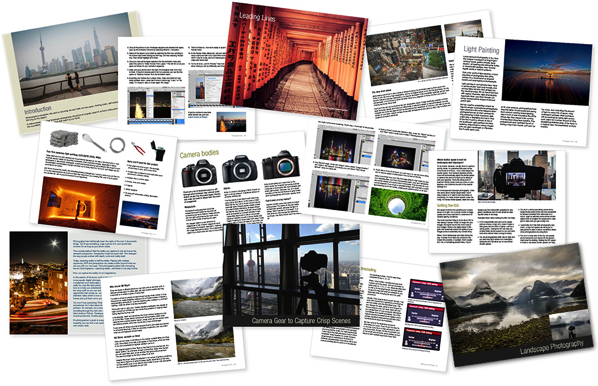
It’s Day 6 of our 7 Day Mid Year Sale, and for the next 24 hours you can grab a copy of The Complete Photography Tutorial Ebook by Richard Schneider at 61% off.

NewImage

Richard’s guide normally sells for US$ 99. But he’s made it available to the dPS community for just US$ 39, today only.

At over 250 pages, this may be the most in-depth ebook on how to capture amazing photography anywhere whether it be countryside landscapes or cityscapes!

It also comes with bonus Lightroom Presets to help you make your photos pop.

Richard has worked as a photography educator for over 10 years, as well as a pro landscape photographer.

He wrote The Complete Photography Tutorial Ebook to help people learn the core concepts of photography quickly and avoid the same mistakes he made.

Now you can learn everything you need to get started and capture your own stunning photos.

Grab your copy today for just US$ 39 – 61% off.

But remember this offer only lasts for 24 hours.

googletag.cmd.push(function() {
tablet_slots.push( googletag.defineSlot( “/1005424/_dPSv4_tab-all-article-bottom_(300×250)”, [300, 250], “pb-ad-78623” ).addService( googletag.pubads() ) ); } );

googletag.cmd.push(function() {
mobile_slots.push( googletag.defineSlot( “/1005424/_dPSv4_mob-all-article-bottom_(300×250)”, [300, 250], “pb-ad-78158” ).addService( googletag.pubads() ) ); } );

The post DEAL: How to Take Your Landscape Photography to the Next Level by Darren Rowse appeared first on Digital Photography School.


Digital Photography School

 
Comments Off on DEAL: How to Take Your Landscape Photography to the Next Level

Posted in Photography


DEAL: Learn How to Take Beautiful Black and White Photos for just $6

10 Jul

NewImageToday is deal 4 of our mid year sale and you’re sure to love this one…

Our Essential Guide to Black & White Photography ebook – just $ 6!

We’ve never offered this best selling eBook at this price – so save 70% today only.

Grab your copy using this link: http://resources.digital-photography-school.com/summer/day4

Not only do black and white images have undeniable beauty, they can also bring added emotion, passion and drama to your photography portfolio. So if you’re looking to ramp up any of these things in your work, then this is definitely the deal for you.

Remember, each deal this week is open for 24 hours only. So get in early or risk missing out on this exceptional $ 6 price!

Snap it up here before it’s gone.

Note: as with all our eBooks this one comes with a money back guarantee. If you don’t find it suits your needs simply contact our support team within 60 days and we’ll refund your money – no questions asked.

googletag.cmd.push(function() {
tablet_slots.push( googletag.defineSlot( “/1005424/_dPSv4_tab-all-article-bottom_(300×250)”, [300, 250], “pb-ad-78623” ).addService( googletag.pubads() ) ); } );

googletag.cmd.push(function() {
mobile_slots.push( googletag.defineSlot( “/1005424/_dPSv4_mob-all-article-bottom_(300×250)”, [300, 250], “pb-ad-78158” ).addService( googletag.pubads() ) ); } );

The post DEAL: Learn How to Take Beautiful Black and White Photos for just $ 6 by Darren Rowse appeared first on Digital Photography School.


Digital Photography School

 
Comments Off on DEAL: Learn How to Take Beautiful Black and White Photos for just $6

Posted in Photography


6 Ways of Using Reflector to Take Better Portraits

03 Jul

I’ve been making my living as a photographer for over 20 years, and have accumulated thousands of dollars of gear over time. I have the latest Canon SLRs, a full complement of lenses, strobes, light stands, gels, filters, soft boxes, tripods, and even some video and audio gear. But the one thing that often makes the biggest difference in the quality of my portraits is a simple $ 20 reflector. I never leave home without it and neither should you.

When shooting outdoor portraits, the first thing many photographers think about is the background, but the pros consider the quality of the light first and foremost. They know, for example, that a portrait with nasty overhead lighting is not going to work, no matter how cool the background.
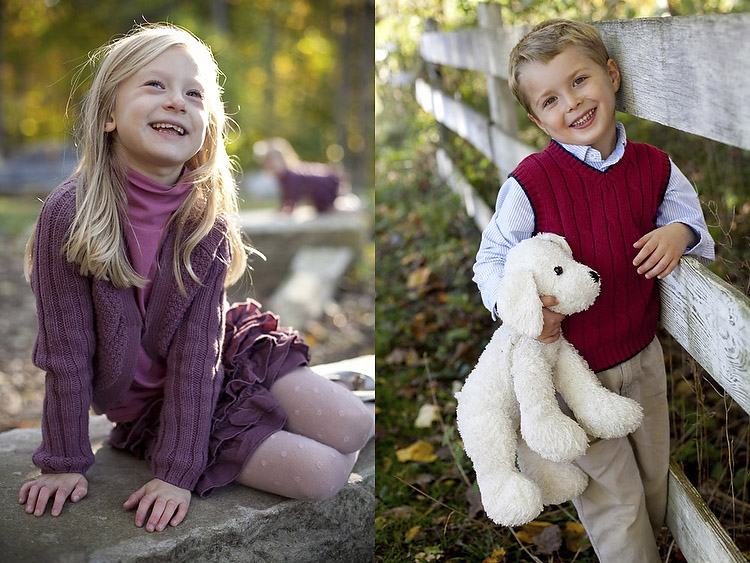
Photo12

A reflector can help you salvage bad light, and turn okay light into something magical. You can use your reflector from below to fill in shadows, or from above to block distracting light. You can bounce the sun from the silver reflector to create a main light, or you can use a reflector with a black side to create deeper shadows. You can even sit on your reflector to keep your pants clean when shooting outside, or pop it open dramatically to dazzle young children.

Most of the photos in this article were shot with a 5-in-1 reflector you can buy for less than $ 20. 5-in-1 refers to the fact that the reflector and cover can combine to give you five different options: white, silver, gold, and black sides, as well as a diffuser.

Here are 6 tips to help you use this versatile tool, a reflector, to transform your photos.

1. Using a Reflector for Fill Light

The most traditional use of the reflector is to simply reflect light into the shadows. I took my wife Karen out into our local park to demonstrate this.

Photo1

In the photo on the left (above), she is photographed in nice soft light, but there are still pretty deep shadows under her eyes and chin. In the photo on the right, she is holding a reflector at her waist. The shadows on her face are noticeably lighter and there is a subtle catch-light (reflection of the reflector) in her eyes. If she were an older person with more textured skin, the contrast would be even more dramatic.
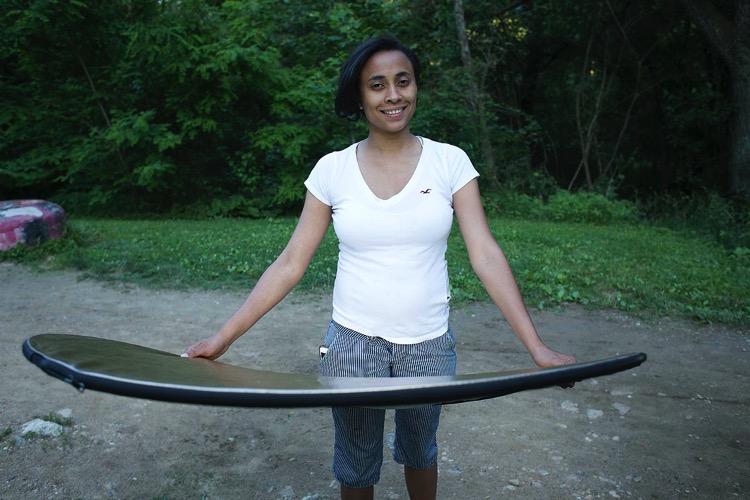
Photo2

Of course, you may not always want to fill in the shadows in this way, but if you are trying to flatter someone it almost always helps. You don’t even need an official photo reflector. Anything that reflects light will work. In a pinch I’ve used everything from old newspapers to a nearby person wearing a white shirt.

2. Using a Reflector as the Main Light Source

This is one of my go-to reflector moves, and an easy way to wow your friends and family. You place your subject with the light hitting them from behind, then use a reflector to bounce the light back into their face. You will get nice soft light on their face, with a dramatic rim light on the back of the subject’s head. The only trick is positioning yourself so the light doesn’t go straight into your lens and create lens flare (unless you like that look, of course).

Photo3

In the photo above the is sun hitting the left side of her face and arm. The light from a reflector is bouncing back some of the sun to light up her face.

You may also notice the shallow depth of field in this photo. If you are lighting with a reflector, you can jack up your shutter speed as much as you like to allow for a wide aperture (this photo was shot at 1/1250th of a second at f/2.0, with a 50mm lens). If you were using flash to create this same effect, you would have to lower your shutter speed (to 1/250th or whatever matches your camera’s maximum) to sync with the flash, requiring a larger aperture and greater depth of field (killing the whole look).

Yes, yes, some of you are no doubt thinking, “What about high speed sync?!” Well, yes, that could give you the same effect if you had the right equipment (and know how to do that). Or, you know, you could just use an old newspaper.
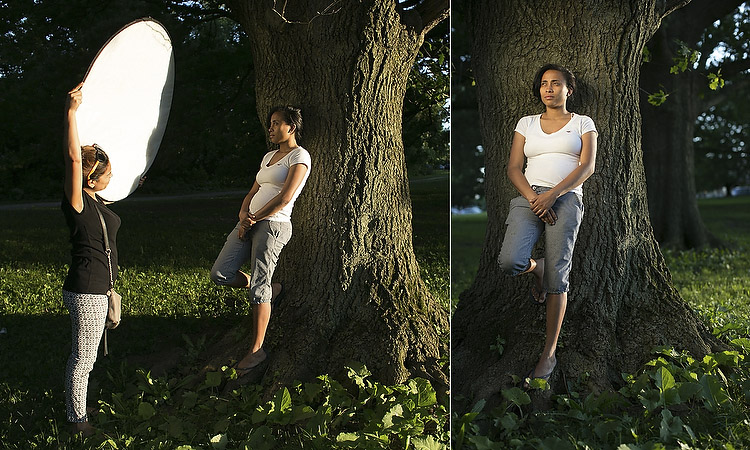
Photo4

In the next example above, we positioned Karen against a tree and had her cousin Claudia reflect a spot of sunlight on her from about 10 feet away. At this distance, the light from the reflector looks more like it is coming from a grid spot or snoot (hard light) – in other words, it’s a focused and dramatic beam (notice the fall-off of light on her legs). It’s a cool look that you can recreate with a reflector, a few feet of aluminum foil, or your bathroom mirror. Your friends will be wowed, and ask what fancy gear you used for the shot (and your family will ask what happened to the bathroom mirror).

Using a slight variation of this technique, we moved the reflector slightly behind the subject (relative to the camera) to created a dramatic rim light on the face in a profile shot (see below).
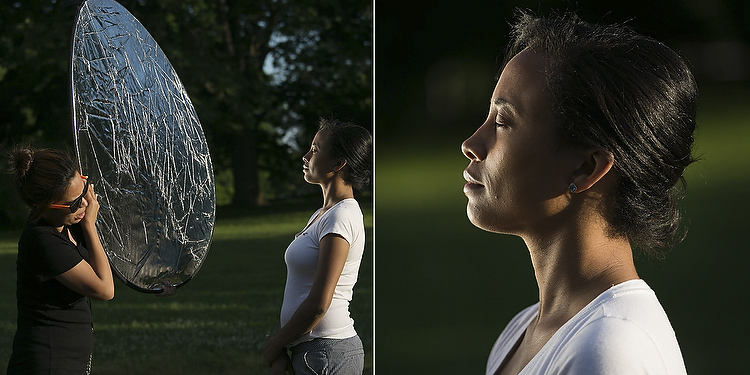
Photo4a

3. Using a Reflector to Block Light

Sometimes you’ll find yourself in some beautiful shady light under a tree, except for that pesky sunbeam that finds its way through the leaves to light up your subject’s left ear. When this happens, turn your reflector into a light blocker (sometimes called a flag or gobo).

A few years ago, I was doing a maternity portrait in a local park, when a newspaper photographer snapped my picture using just this technique. If you look at the reflector, you can see the bright spots of sunlight that it’s blocking (imagine how those spots would have ruined the final image if we didn’t block them).
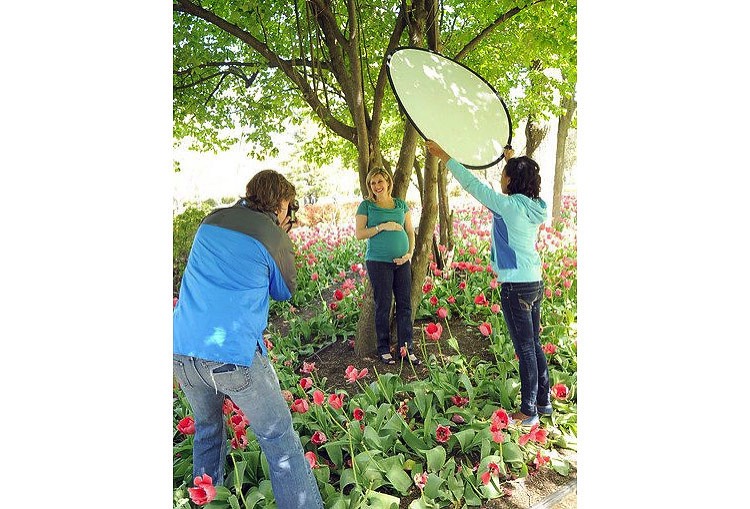

Photo5

Photo6

4. Using a Black Reflector to Create More Dramatic Shadows

Sometimes you actually want to deepen the shadows. I use this technique all the time in my headshot studio. Below is a photo of me with a white background. In one shot, I have a silver reflector opposite the main light, sending light back towards my left cheek. In the other, the reflector has a black cover on it, gobbling up reflected light, leaving a dark shadow on the cheek.
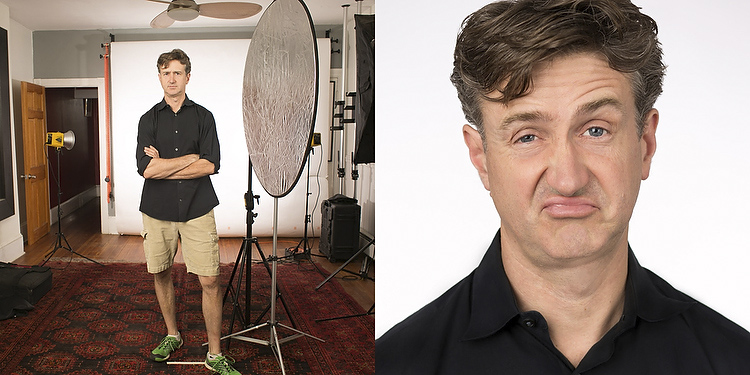
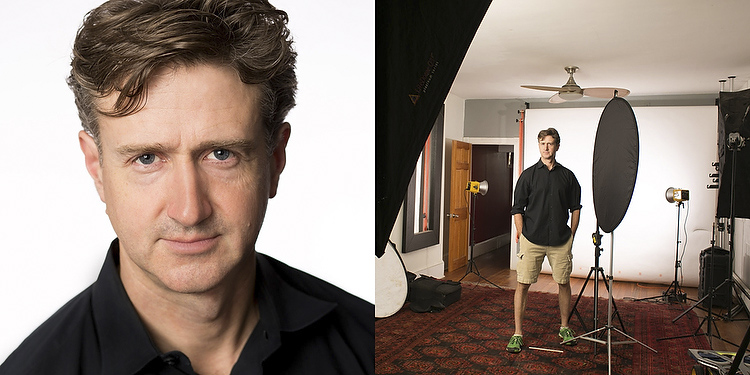
Photo7

Photo8

Except for the small change of literally flipping the reflector from one side to the other, the lighting setup is identical, but as you can see the difference is pretty dramatic. (For you studio lighting enthusiasts out there, my key light here is a large soft box, and there are two bare heads pointing at the background to make sure it is nice and bright white).

This is the same technique used in the famous Steve Jobs portrait where he has his hand on his chin. In addition to creating a little drama, you can also use this technique to give someone a photographic face-lift by trimming pounds from the dark side of their face and under their chin.

5. Who Holds the Reflector?

You may be saying to yourself, “But, I don’t have an assistant! Who’s going to hold the reflector for me?”. I usually don’t have an assistant either, but there is usually someone nearby who is more than happy to help, be it a family member, passerby, intern, wedding guest, etc. Sometimes you can even have the subject of the photo hold the reflector themselves (as in the photo of my wife holding the reflector at her waist in the photo above). Of course if you’re in the studio, or outside on a day without too much wind, you can just pop your reflector onto a light stand (like in the studio shots of me above).

In the photo below, I was shooting wedding portraits on a beach in the Florida Keys. My reflector assistant that day was one of the bridesmaids, who truly enjoyed helping her friends out with their portraits.

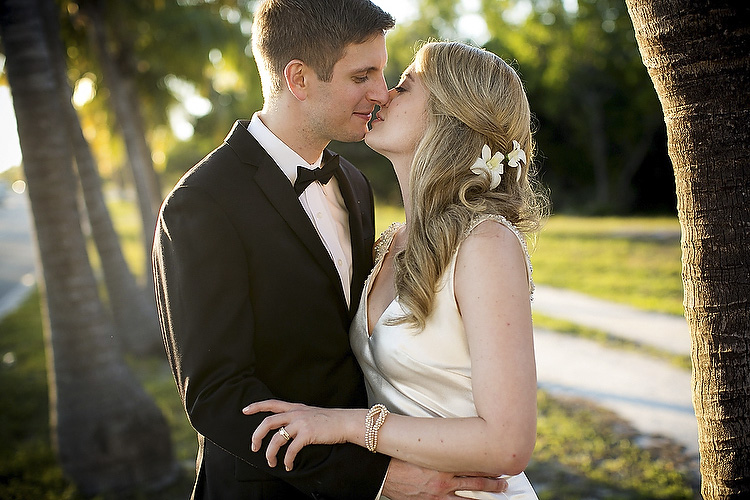
Photo9

Photo10

6. Reflectors in the Environment

Once you get the hang of reflectors, you’ll probably start noticing reflected light everywhere. Ever see a white building getting blasted by the sun? Well that’s nothing but a giant reflector! Depending on what’s around it, you may have found yourself a giant studio, with no rental fee.

Mind you, anything that reflects enough light can work as a reflector. A brick building, large truck, flock of seagulls flying by at just the right moment…

Final Notes

Although they may not be as sexy as strobe kits, reflectors can often yield similar, or superior results for your portraits, and are cheaper and easier to use. I will leave you with a few more assignment photos, shot using nothing more than a reflector.

In the child portraits below, note that there is light behind the kids in both cases, but there is still beautiful light on their faces. Same goes for the athlete portraits.
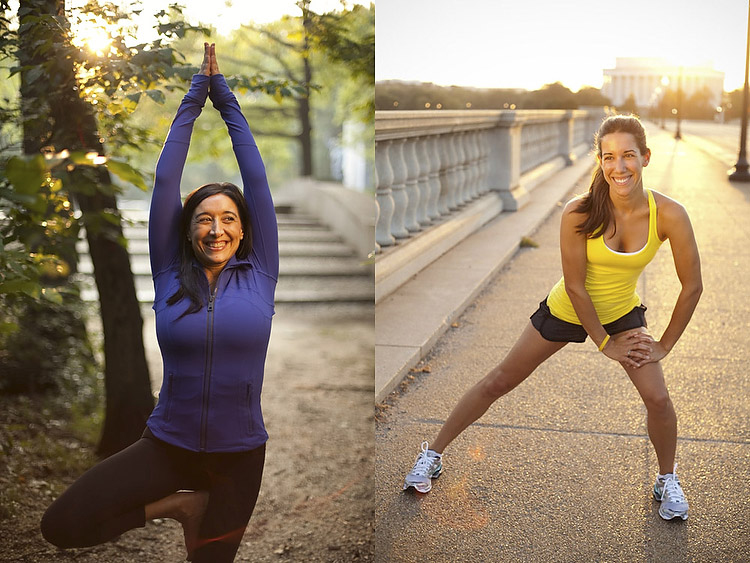
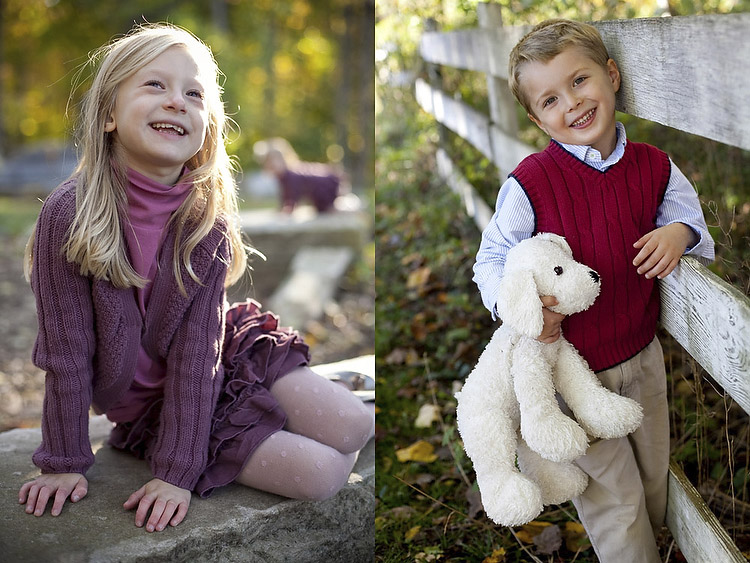
Photo11

Photo12

As a final image, I leave you with a group of wedding guests who were so enamoured of my reflector that they wanted a picture with it. Hopefully you will soon have similar feelings towards your own reflector!
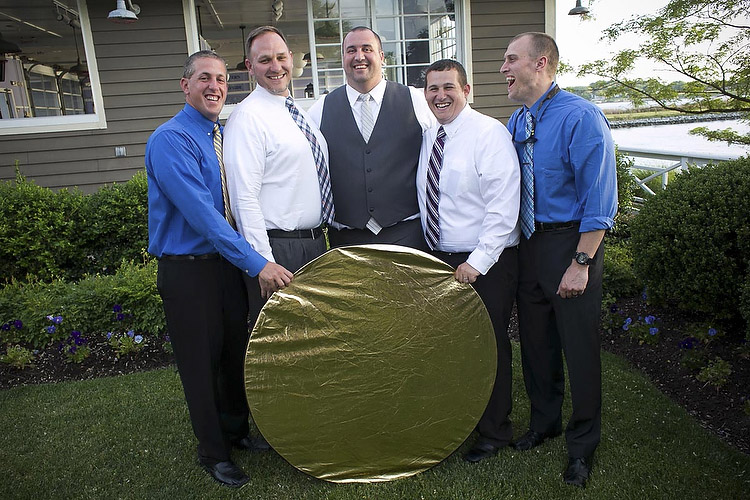
Photo13

Do you have any additional reflector tips to add? Please do so in the comments below.

googletag.cmd.push(function() {
tablet_slots.push( googletag.defineSlot( “/1005424/_dPSv4_tab-all-article-bottom_(300×250)”, [300, 250], “pb-ad-78623” ).addService( googletag.pubads() ) ); } );

googletag.cmd.push(function() {
mobile_slots.push( googletag.defineSlot( “/1005424/_dPSv4_mob-all-article-bottom_(300×250)”, [300, 250], “pb-ad-78158” ).addService( googletag.pubads() ) ); } );

The post 6 Ways of Using Reflector to Take Better Portraits by Dennis Drenner appeared first on Digital Photography School.


Digital Photography School
 
Comments Off on 6 Ways of Using Reflector to Take Better Portraits

Posted in Photography


Study finds that yes, you can take photos and enjoy an experience too

15 Jun

As smartphone picture-taking has become ubiquitous, so has criticism of it. It’s become a common refrain to hear that taking pictures detracts from fully enjoying and experiencing an event, whwther that’s a concert or a papal visit. To be truly in the moment, you shouldn’t be taking photos.

Depressing stuff, but a new study presents a different view, one that photographers would probably agree with: taking photos enhances enjoyment of experiences, rather than detracting from enjoyment.

A previous and much-cited study looked at the effect of photo-taking on memory, and found that people taking photos of objects at a museum were more likely to forget what they’d seen than people who hadn’t taken photos. This new research focuses rather on enjoyment rather than recall. 

According to lead author Kristin Diehl, ‘unlike checking your email or texting, […]  photo-taking actually directs you towards the experience’.

The research mostly focuses on use of a simple camera for taking snapshots, both in real-life situations like a city bus tour, and simulated scenarios. Again and again, participants in the study who were directed to take photos reported higher enjoyment of the experience than those who could not take pictures. 

Articles: Digital Photography Review (dpreview.com)

 
Comments Off on Study finds that yes, you can take photos and enjoy an experience too

Posted in Uncategorized


Take a closer look inside Canon’s impressive EF 200-400mm F4L IS

11 Jun

Canon has posted a video showing its massive EF 200-400mm F4L IS USM Extender 1.4 X reduced to its component parts.

The Canon 200-400mm is an impressive lens. This hefty telephoto uses no fewer than 33 elements arranged in 24 groups, including Fluorite and Ultra-Low Dispersion glass, and features a built-in 1.4X teleconverter. Canon’s stop-motion video is rather charming, and makes a nice change from the computer-generated exploded imagery that we’re used to seeing. 

Articles: Digital Photography Review (dpreview.com)

 
Comments Off on Take a closer look inside Canon’s impressive EF 200-400mm F4L IS

Posted in Uncategorized


Google Art Camera uses robotic system to take gigapixel photos of museum paintings

19 May

The Google Cultural Institute, an online virtual museum with high-quality digitizations of artifacts from across the globe, recently added more than 1,000 ultra-high-resolution images of classic paintings and other artwork by Monet, Van Gogh and many others. A new robotic camera system Google has developed called ‘Art Camera’ has made it possible for the organization to add digitizations faster than ever before.

Previously, Google’s collection included only about 200 digitizations, accumulated over approximately five years. Art Camera, after being calibrated to the edges of a painting or document by its operator, automatically takes close-up photos of paintings one section at a time, using a laser and sonar to precisely adjust the focus. This process results in hundreds of images that are then sent to Google, where they’re stitched together to produce a single gigapixel-resolution photo.

Instead of taking the better part of a day to photograph an item, as the old technology did, Art Camera can complete the process in less than an hour; speaking to The Verge, Cultural Institute’s Marzia Niccolai said a 1m x 1m painting can be processed in half an hour. Google has built 20 Art Cameras and is shipping them to museums around the world for free, enabling the organizations to digitize their artwork and documents. The resulting gigapixel images can be viewed here.

Via: Google Official Blog
 

Articles: Digital Photography Review (dpreview.com)

 
Comments Off on Google Art Camera uses robotic system to take gigapixel photos of museum paintings

Posted in Uncategorized


EyeEm launches The Roll for iOS, an intelligent take on your Camera Roll

13 May

If you’re an iPhone owner, you know one thing about the beloved Camera Roll: it can get messy. While it seeks to bring some order to the chaos with built-in dating and geotagging, it doesn’t help high-volume shooters zero in on specific content or locate their best shots from multitudes of thumbnails.

EyeEm, the global community and photography marketplace, is here to help with today’s release of The Roll, an app that uses a proprietary image recognition algorithm to classify, tag, keyword and select your best photos. In addition to its organizational function, the app also displays metadata such as aperture, ISO, geolocation and more.

When launched, The Roll examines each of your photos for content and then groups similar shots together, whether or not they were taken on the same day or in the same place (and ignoring all of those screenshots living on your phone). Then, it classifies and tags photos under broad searchable categories like Pets, Water, Fun, Cute, or a predominant color or location, placing the best shot on top. The same photos or groups can appear under different headings. Within each broad classification are smaller subgroups of similar photos of varying quality that you can choose to keep or delete in order to save room on your device or to immediately share with others.

The app’s keywording and scoring functionality are based on EyeEm Vision, the company’s server-based computer vision tech. Powered by deep learning technology, photos are assigned an Aesthetic Score from 1 to 100 percent that seeks to replicate how professional photographers and curators judge a composition.

Each photo also features a multitude of keywords, which are derived from a shot’s content and an artificial intelligence algorithm’s judgment of the photo’s mood and emotion. The algorithm can identify thousands of concepts to help you search for photos in your catalog. EyeEm assures privacy to all users and promises that all synced photos are deleted after scoring and keywording.

The app contains all the information you need to understand how it works, though there is no further analysis on why one cat picture may score 10 points more or less than another taken at the same time or place — though scrolling through each selection often makes the rational for the score more obvious. I did not necessarily agree with all of The Roll’s judgments about my images, of course, but it provides a starting point if a user is in a quandary about what to immediately share or delete.

The Roll is not the first to come up with automatic sorting and keywording: Google Photos and Flickr’s Magic View already do that. The Roll also did not move at lightning speed through my relatively small collection, which is typically filled with screenshots. Its real value is having a reliable analysis of resident images and an assist in deciding what is immediately sharable.

The Roll is offered free of charge and while it only runs on iOS 9 or later for now, an Android version is in the works.

Articles: Digital Photography Review (dpreview.com)

 
Comments Off on EyeEm launches The Roll for iOS, an intelligent take on your Camera Roll

Posted in Uncategorized


How to Take Low Key Lighting Portraits

07 May

Low key lighting when taking portraits is an effective technique that can leave you with some beautiful images.

Low key lighting portrait

In this video Gavin Hoey explains how to set up a low key lighting portrait in a small home or portable studio. It really is achievable with a relatively simple setup.

If you give some low key lighting portraits a go we’d LOVE to see your results in comments below.

Further Low Key Lighting Portrait Reading

Interested in learning more? Here’s some tutorials in our archives on low key lighting.

  • How to Create Dark Moody Low-Key Portraits with Minimal Gear
  • Get an Invisible Black Background to Your Portraits – Shooting Anywhere
  • Setting The Mood With Low Key Lighting
  • Low-Key Lighting for Dramatic Portraits
  • Low Key Lighting Portrait Example

googletag.cmd.push(function() {
tablet_slots.push( googletag.defineSlot( “/1005424/_dPSv4_tab-all-article-bottom_(300×250)”, [300, 250], “pb-ad-78623” ).addService( googletag.pubads() ) ); } );

googletag.cmd.push(function() {
mobile_slots.push( googletag.defineSlot( “/1005424/_dPSv4_mob-all-article-bottom_(300×250)”, [300, 250], “pb-ad-78158” ).addService( googletag.pubads() ) ); } );

The post How to Take Low Key Lighting Portraits by Darren Rowse appeared first on Digital Photography School.


Digital Photography School

 
Comments Off on How to Take Low Key Lighting Portraits

Posted in Photography


Let’s take a look: Canon PowerShot G16 iFixit disassembly guide

30 Apr

Canon PowerShot G16 iFixit disassembly guide

Before Sony ever put a 1″-type sensor in a compact, there was the Canon PowerShot G series. If you wanted extensive controls without all the weight of a DSLR, the G-series compacts were where you looked. The PowerShot G16 was the last in that line, sporting a 12MP 1/1.7″ sensor before Canon ushered in a series of 1″ compacts with a similar form factor.

The G16 may be gone from retailer’s shelves, but it is not forgotten. It’s also the subject of a recently published iFixit disassembly guide. The good people at iFixit publish product-specific disassembly guides, written to help common folk make simple repairs to their own electronic devices. They’re also an easy way to peek inside a modern digital camera without voiding your warranty. This week, we look inside the Canon PowerShot G16.

Canon PowerShot G16 iFixit disassembly guide

The first disassembly step (after taking the battery out, of course) is an easy one. The G16 offers an accessory attachment point around the lens, which is covered when not in use by a metal ring. Pressing the button on the front panel next to the lens frees the ring.

Canon PowerShot G16 iFixit disassembly guide

Next comes the removal of the screws. Many screws. Including this one hiding next to the viewfinder…

Canon PowerShot G16 iFixit disassembly guide

…And another tucked next to the ports. 

Canon PowerShot G16 iFixit disassembly guide

With the first round of screws removed the back chassis can be removed from the body, revealing just a peek at the motherboard. 

Canon PowerShot G16 iFixit disassembly guide

The front panel can also be carefully removed…

Canon PowerShot G16 iFixit disassembly guide

…And after removing another screw, the port cover is ready to go.

Canon PowerShot G16 iFixit disassembly guide

This ribbon cable on the back panel connects the buttons to the motherboard, and can be carefully removed.

Canon PowerShot G16 iFixit disassembly guide

The button circuit board comes free with the removal of a couple of tiny screws, revealing a cable connecting the motherboard to the LCD. Got your spudger handy?

Canon PowerShot G16 iFixit disassembly guide

In order to free the cables you’ll need to lift this little tab. A spudger is just the tool for the job.

Canon PowerShot G16 iFixit disassembly guide

And with that, the LCD is free.

Canon PowerShot G16 iFixit disassembly guide

The copper shield (likely for heat dissipation) can be removed. 

Canon PowerShot G16 iFixit disassembly guide

More screws are removed, freeing the viewfinder casing.

Canon PowerShot G16 iFixit disassembly guide

With the metal shield removed, the network of cables underneath is revealed. The ribbon highlighted here connects the top panel with the motherboard and will need to be removed from the motherboard with the trusty ol’ spudger.

Canon PowerShot G16 iFixit disassembly guide

The top panel is ready to go once it’s free of its connections to the motherboard. 

Canon PowerShot G16 iFixit disassembly guide

Lose a few more cable connections and the motherboard is ready for removal.

Canon PowerShot G16 iFixit disassembly guide

The front lens covering is next to go after the five screws connecting it to the front plate are removed.

Canon PowerShot G16 iFixit disassembly guide

At this point there’t not much camera left, and the lens module can be removed from the rest of the housing with one last screw removed.

Canon PowerShot G16 iFixit disassembly guide

But why stop at removing the lens? The viewfinder can be taken right off the top of the lens assembly.

Canon PowerShot G16 iFixit disassembly guide

A few more odd screws removed and that’s it – the Canon PowerShot G16 is reduced to its bare bones. 

Articles: Digital Photography Review (dpreview.com)

 
Comments Off on Let’s take a look: Canon PowerShot G16 iFixit disassembly guide

Posted in Uncategorized


How to Take Better Wildlife Photos: Be a Naturalist First

29 Apr

I love birds. In fact, I’ve dedicated much of my adult life to the study of birds. In college, I spent days exploring the beaches, forests, and wetlands surrounding southern Puget Sound, strictly in the interest of finding and watching birds. Birds lured me north to current home in Alaska, when I took a job banding songbirds in Denali National Park. My interest in migrant birds carried me into graduate school where I spent several years studying the spring migration in the Sierra de Los Tuxtlas of eastern Mexico. After grad school, I took a job as a Research Biologist here in Fairbanks, where I looked into all kinds of questions about breeding and migrating birds around the state.

Now, though I no longer work as a full-time research biologist (writing, photography, and guiding now rule my life), my passion for feathered creatures is no less strong.

AK-FAI-CreamersField-Migration-Aug2009-39

I give you these biographical tidbits, because I want you to understand something about me: I care about, and understand birds. Knowledge and passion are the two most important tools I know of for better wildlife photography.

Ask someone what a wildlife photographer needs and the first thing you are likely to hear is a big lens. That helps, make no doubt, but it’s hardly the most important. No, the most important thing is an understanding of the critters you want to photograph. It doesn’t matter if your lens is as long as your leg, if you can’t find the animal you’re after.

AK-FAI-RUBL-17

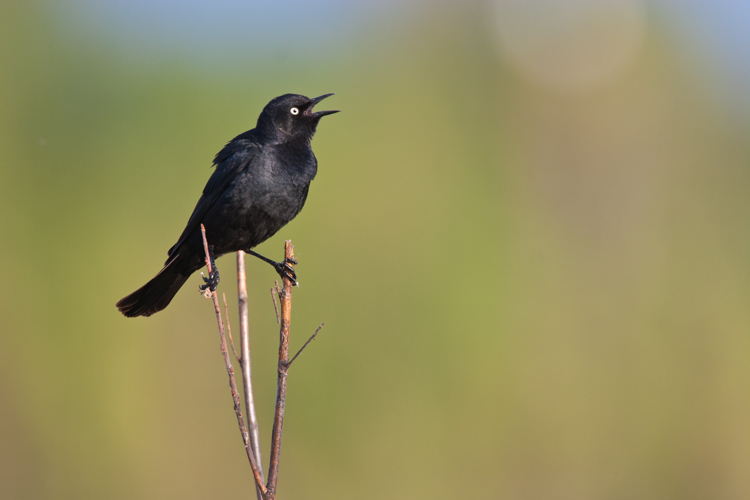
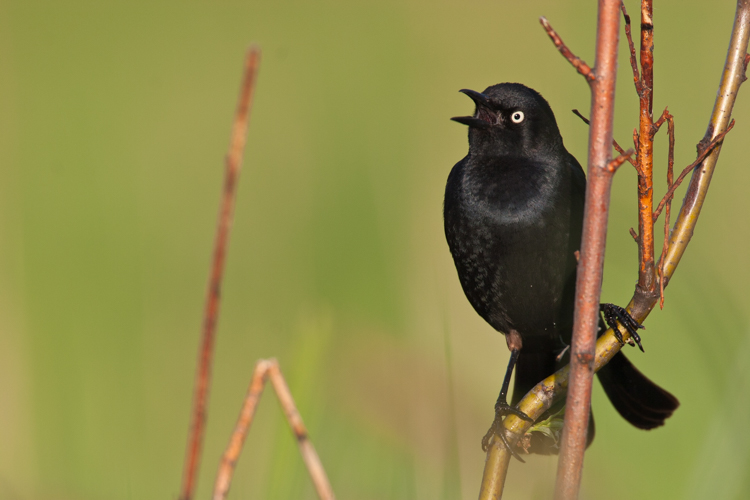
An example: During my years as a Research Biologist, I spent several seasons studying an imperiled species of songbird that breeds in the wetlands of the Boreal Forest, the Rusty Blackbird. This species has been declining in abundance across its range for the past 50 to 100 years, and no one really knows why. In the winter, they are easier to find, when they mix with flocks of other blackbirds in the south-central United States, or forage in small groups in the wetlands of the southern Mississippi basin.

In summer, however, when the males are attired in their crisp, shiny, black plumage, they are very difficult to find. Rusty Blackbirds nest in some pretty unpleasant places: thick, mosquito-infested swamps in the northern forest of Alaska, Canada, and the northeastern states.

AK-FAI-RUBL-44
Having studied them for years, I had a distinct advantage when I set out to photograph this species. I knew where to find them, right down to a specific pair of birds, and I knew where to position myself for the best chance of getting foraging birds to appear within the range of my camera.

AK-FAI-RUBL-48

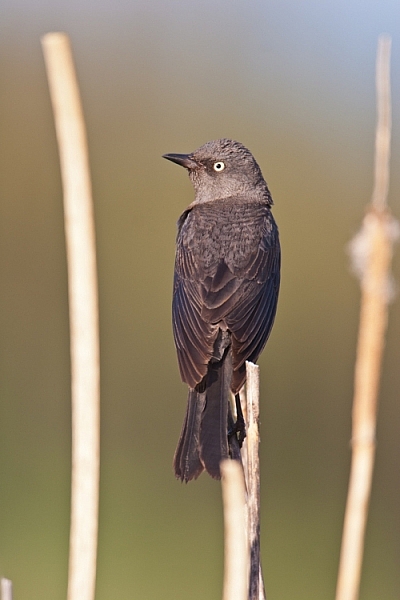
Thanks to that personal knowledge, I got some great photos of both males and females in breeding plumage, and the rarity of these images has made them some of my most published wildlife photos.

Though it helps, you don’t need the extensive personal knowledge that I was lucky to have of Rusty Blackbirds. You do, however, need a basic understanding of your quarry.

Some things to consider:

Seasonality

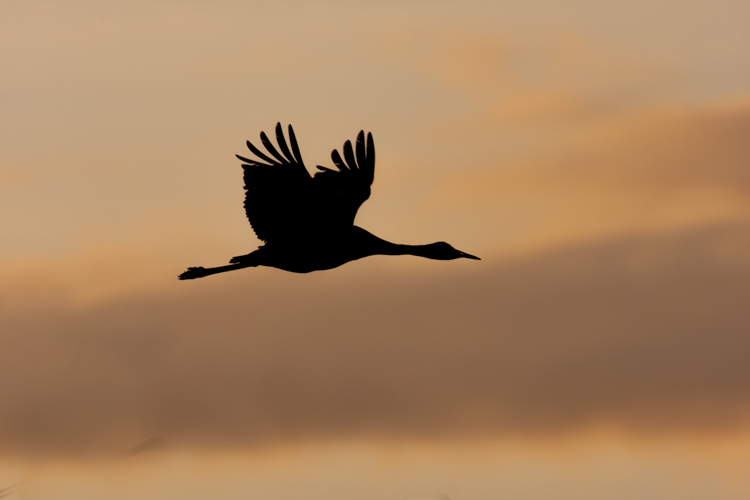
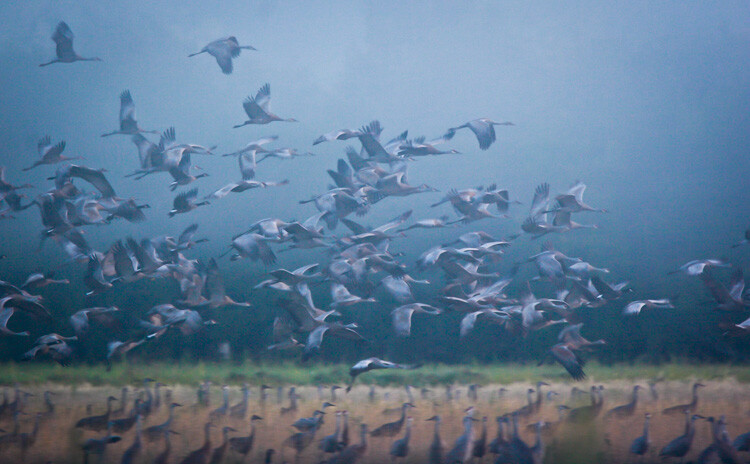
Many species migrate, or are difficult (or easy) to find during certain times of year. Birds are an obvious example. If you want to photograph congregations of migrating Sandhill Cranes and waterfowl, then you need to know when the birds are going to be present. A hint: It isn’t during the summer.

A flock of Sandhill Cranes during migration. You only get a few weeks each years to catch big flocks of this species, so you need to be ready.

A flock of Sandhill Cranes during migration. You only get a few weeks each years to catch big flocks of this species, so you need to be ready.

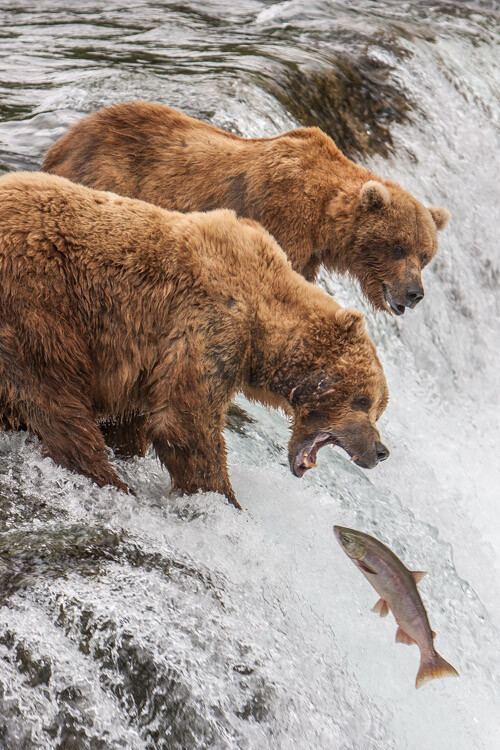
Seasonality isn’t limited to birds, many mammal species may only be available during a narrow time window. The Brooks River in Katmai National Park, Alaska is a famous spot to photograph bears. Though bruins are present in the area just about anytime from May to early October, if you want to photograph them catching salmon at the falls, you are likely to be disappointed if you schedule your trip in any month but July.

Red Salmon, which run up the Brooks River and leap the falls, are most abundant in July. If you don't catch the run, you won't see the bears trying to catch them at the falls.

Red Salmon, which run up the Brooks River and leap the falls, are most abundant in July. If you don’t catch the run, you won’t see the bears trying to catch them like this.

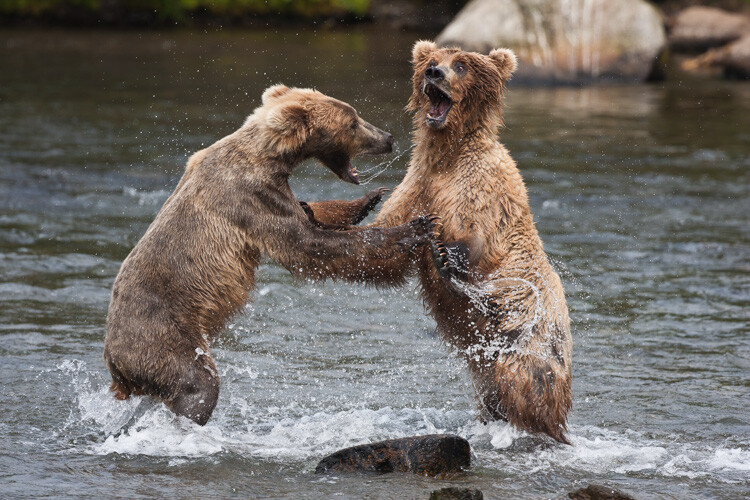
During the salmon run, the bears get close together and juveniles like these, are forced to bicker for a good fishing spot.

During the salmon run, the bears get close together, and juveniles like these are forced to bicker for a good fishing spot.

Range and habitat

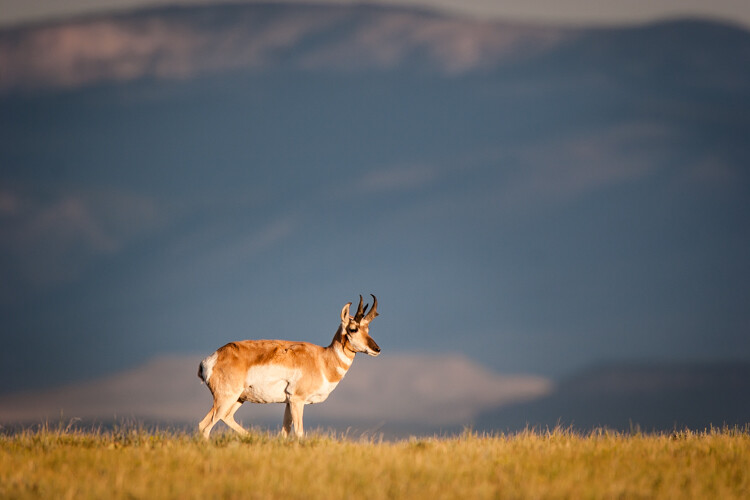
Some species have a continent-wide distribution, others may be extremely limited. Almost all wildlife has preferred habitat that will dictate where, within their larger range, they are likely to be found. The range of Pronghorn includes the better part of the American west, but their habitat, intact grass and sagebrush prairie, is much less abundant. Pronghorn habitat also changes with the season, so you can see how range, habitat, and seasonality, all interact to guide you to the best place at the best time.

A Pronghorn in southern Wyoming, first light.

A Pronghorn in southern Wyoming, first light.

Behavior

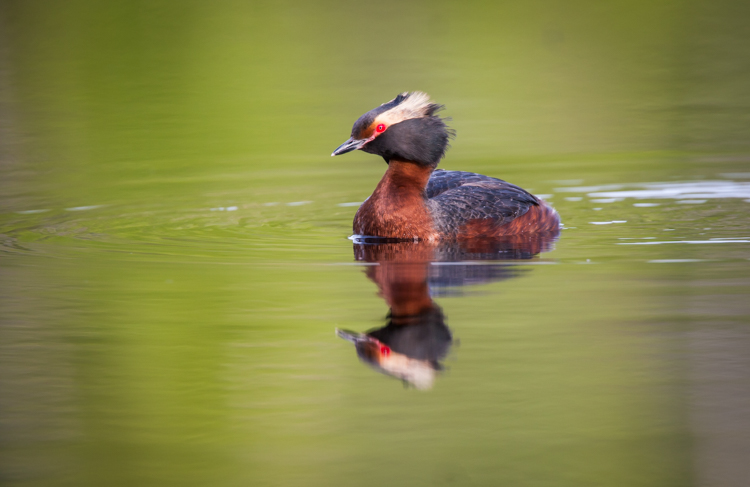
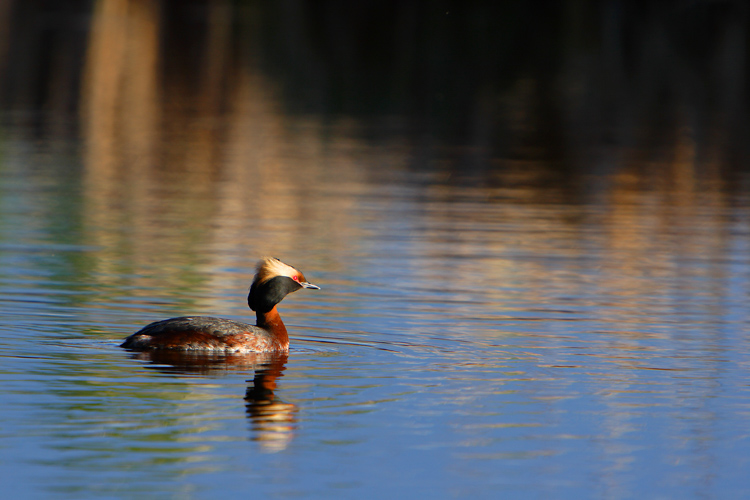
You may have particular behavior that you’d like to observe or photograph. Many bird species look their best, and are most active during the breeding season, but for some species, that season can be very, very short. Where I live in the interior of Alaska, the courtship period is extremely short, lasting only a few days to a couple of weeks depending on the species. Birds like the Horned Grebe are commonly found on small boreal forest ponds near my home, but they are most easily photographed during a couple of weeks in late May, when the males are setting up territories.

AK-FAI-HOGR-10

Resources

Thanks to the internet, most of the information you need to explore your target species is available right at your finger tips. In fact, they are so numerous, that there isn’t nearly enough space here to list them all, but I do want to make not of a few of my favorites:

  • eBird:  This site, run by the Cornell Lab of Ornithology is a citizen science site where you can document your sightings of birds. While great for birders, it is also a useful tool for photographers. You can explore data here submitted by birders from across the country and world. The mapping function allows you to look, in very close detail, about where different species are found during the year.
  • iNaturalist:  Though put together in a similar way to eBird, iNaturalist is not limited to birds. Here you can find sighting and identification information on plants, mammals, insects, birds and just about everything else.
  • Field Guides:  Classic paper, or digital field guides are still one of the best sources of information on distribution and behavior of wildlife. I’ve got dozens in my collection, and I use them all.
  • Experts:  You can outsource your research by hiring an expert guide to get you where you need to go. If you want to photograph bears or caribou in Alaska, or the wildebeest migration in Africa, there are people who can help you decide on the best time to do it, get you where you need to go, and even point your camera in the right direction for you. Local expertise is very valuable, and though it saves time, it costs money, and may not be as rewarding as learning about, then finding and photographing your target species on your own.

AK-Tflats-HOGR-02

Ethics

Though a discussion of ethics in wildlife photography warrants a post of its own, I want to emphasize the importance of being respectful of the animals you are trying to photograph and the people with whom you share the view. Don’t disturb the animal, if it moves away, bolts, or flushes, you have gotten too close. Such impacts, when they occur again and again, can cause stress, low reproductive success, nest abandonment, or any number of other problems for wildlife. The animal’s welfare matters more than your image, so please, please, please be careful and respectful.

Conclusion

I take great pleasure in being a naturalist. I’d say I’m a naturalist first and foremost, and a photographer second. That might sound strange, but for me, the two go hand in hand. I find a greater understanding of the creatures I photograph leads to better images, and just as importantly a much more rewarding experience. To be a better wildlife photographer, put down the camera, and pick up a book.

googletag.cmd.push(function() {
tablet_slots.push( googletag.defineSlot( “/1005424/_dPSv4_tab-all-article-bottom_(300×250)”, [300, 250], “pb-ad-78623” ).addService( googletag.pubads() ) ); } );

googletag.cmd.push(function() {
mobile_slots.push( googletag.defineSlot( “/1005424/_dPSv4_mob-all-article-bottom_(300×250)”, [300, 250], “pb-ad-78158” ).addService( googletag.pubads() ) ); } );

The post How to Take Better Wildlife Photos: Be a Naturalist First by David Shaw appeared first on Digital Photography School.


Digital Photography School

 
Comments Off on How to Take Better Wildlife Photos: Be a Naturalist First

Posted in Photography