RSS
 

Posts Tagged ‘System’

Manfrotto introduces Xume magnetic holder system to make switching filters easier

08 Feb

Accessory manufacturer Manfrotto has launched a new filter suite that features a magnetic adapter and filter holders that it says make fitting and removing filters quicker and easier. The new Xume system uses a magnetic adapter ring that screws into the front of the lens, while the filter itself screws into a metal filter holder. The two parts then connect securely when they are held close together and can be separated just by pulling them apart. The system removes the part of the attaching-a-filter process where the filter is screwed onto the front of the lens.

The filter holders and lens adapters are available now in eight sizes: 49mm, 52mm, 58mm, 62mm; 67mm, 72mm, 77mm and 82mm and are priced from $ 10.99 to $ 34.99.

For more information see the Manfrotto website.

Press release

Manfrotto Launches Innovative Lens Filter Suite

Providing precision and ease to capture every shot

Manfrotto, a leading global innovator and manufacturer of premium photo, video and lighting support products and accessories, has launched a new, groundbreaking Manfrotto Lens Filter Suite, a combination of Manfrotto’s successful high-quality lens filters and innovative Manfrotto XUME magnetic adapters.

The new Manfrotto Lens Filter Suite enables professional and amateur photographers and videographers to avoid the hassle and frustration of changing filters while subjects wander or light slips away. With the Manfrotto Filter Suite, photographers instantly and precisely connect the filter to their lens so that they never miss the perfect shot.

The Manfrotto Lens Filter Suite is comprised of a Manfrotto Lens Filter, a Manfrotto XUME Lens Adapter and Filter Holder plus an optional Cap (available only for 77mm diameter). It is the perfect choice for long exposures, wedding photography, macro, architectural photography, fine art photography – any style requiring the use of filters.

Manfrotto’s camera lens filters are built to the highest quality standards. They feature flawless multi-coating which minimizes reflection and maximizes light transmission, consistently delivering the effects photographers wish to achieve. Each filter is provided with a practical, reusable storage case, ensuring the highest level of protection off-camera. Depending on the model, Manfrotto filters feature reliable water-repellent, oil-repellent and anti-static characteristics.

  • UV filters block out UV light, preventing it from entering the lens, reducing blurring, haziness and blue casting.
  • Circular Polarizer filters enhance color, contrast and saturation as well as removing undesirable reflections from non-metallic surfaces.
  • Neutral Density filters help control exposure times by reducing the amount of light hitting the camera sensor without altering the color of the scene.
  • Protect filters provide maximum protection against scratches, oil and moisture, without affecting overall image quality.

Manfrotto XUME Adapters are the revolutionary magnetic solution which securely locks filters onto lenses, quickly and easily. Photography gear stays safe in-use with the filter magnetically secured to the lens. Manfrotto XUME accessories are safe for the lens’ focus mechanism, media cards, drives or other electronics.

Unique to the market, Manfrotto’s XUME Adapters:

  • Install in an instant.
  • Are secure; no moving parts and completely safe to use.
  • Have very low profile rings and are completely unobtrusive.

Manfrotto XUME Filter Holders and Manfrotto XUME Lens Adapters are now available nationwide in eight sizes: 49mm, 52mm, 58mm, 62mm; 67mm, 72mm, 77mm and 82mm. The Manfrotto XUME CAP is available only for the 77mm size. Manfrotto Filters range in price from $ 19.99 to $ 134.99 and Manfrotto Xume Adapters range in price from $ 10.99 to $ 34.99.

The Manfrotto Lens Filter Suite will be on display at WPPI in Las Vegas, Feb. 7–9, at the Manfrotto Distribution booth, No. 349.

Articles: Digital Photography Review (dpreview.com)

 
Comments Off on Manfrotto introduces Xume magnetic holder system to make switching filters easier

Posted in Uncategorized


Ricoh announces Pentax KP with new Shake Reduction system and 24MP sensor

26 Jan

$ (document).ready(function() { SampleGalleryV2({“containerId”:”embeddedSampleGallery_6919353376″,”galleryId”:”6919353376″,”isEmbeddedWidget”:true,”standalone”:false,”selectedImageIndex”:0,”startInCommentsView”:false,”isMobile”:false}) });

Ricoh has announced the Pentax KP, the follow-up to the K-3 II, which features a new ‘high sensitivity’ 24MP sensor and improved in-body image stabilization system.

The new CMOS sensor brings with it a top ISO of 819,200 and an electronic shutter that tops out at 1/24000 sec (the mechanical shutter goes to 1/6000 sec). The KP uses the new 5-axis ‘Shake Reduction II’ IBIS system, first seen on the K-1 full-framer, which offers up to 5 stops of stabilization according to Ricoh. As with other Pentax models, the KP supports Pixel Shift Resolution as well as AA Filter Simulation. The KP uses the same SAFOX 11 autofocus system as the K-3 II, meaning that it has 27 points, 25 of which are cross-type.

The KP’s body is relatively compact, sealed against dust and moisture, and functional down to +14F/-10C. It has a pentaprism viewfinder with ‘nearly’ 100% coverage and a 0.63x equivalent magnification, as well as a tilting 3″ touchscreen display. A nice extra is the ability to change the camera’s grip, with three sizes to choose from.

Typical of Pentax DSLRs, the KP is heavily customizable and features both Sensitivity and Shutter & Aperture Priority modes, a star tracking feature and built-in wireless flash control. The KP has added new Motion and Depth-of-Field options to the already large selection of bracketing modes it’s inherited from its predecessors. It can capture Full HD at 60i, 50i, 30p, 25p and 24p. The KP can shoot continuously at up to 7 fps. It also has built-in Wi-Fi. Something the KP doesn’t have is an HDMI port, instead using something called SlimPort, which can send HD video over a microUSB port. If you want HDMI, you’re going to have to drop $ 25 on a dongle.

The KP’s battery life is rated at 390 shots/charge – which is on the low end for a DSLR – though an optional battery grip can hold an additional D-LI109 battery or the significantly more powerful D-LI90.

The KP will be available in your choice of silver or black in late February for $ 1099/£1099 body-only.

Ricoh Unveils Ultra-Compact PENTAX KP, a Weatherproof DSLR That Provides Outdoor Photographers with New Standard for Quality, Customization and Ease of Use

Heir to K-3 legacy, Slim-Body Camera Incorporates New Features and Controls Optimized to Deliver Outstanding Images, Even in the Most Challenging Conditions

First PENTAX APS-C Camera to offer Shake Reduction II

WEST CALDWELL, NJ, January 25, 2017—Ricoh Imaging Americas Corporation today announced the PENTAX KP, an ultra-compact and highly portable DSLR with features and controls that facilitate capturing outstanding images, even in the most demanding conditions. The PENTAX KP packs many of the advanced capabilities of the award-winning PENTAX K-3 series into a modern, slim-body design that lends itself to applications from casual snapshots to serious outdoor photography while mountain climbing or trekking. The PENTAX KP also adds a new generation of innovations including a new, highly sensitive APS-C CMOS sensor and is the first PENTAX APS-C camera to incorporate Shake Reduction II (SR II), which features a five-axis mechanism to compensate for camera shake up to 5 steps.

The new 24-megapixel CMOS sensor enables shooting in extremely low-light conditions, with sensitivity to ISO 819200, making the camera ideal for night photography. The PENTAX KP features an electronic shutter option in live-view to enable high-speed shooting up to 1/24,000-second, which greatly broadens shooting capabilities when using large aperture lenses to achieve a shallow depth of field on a bright sunny day.

The PENTAX KP’s compact body is the result of a complete internal re-design to produce an advanced DSLR camera with an extremely slim profile for optimal comfort and handling. The KP’s rugged exterior is dustproof and weather-sealed to enable use in the most challenging outdoor conditions. The camera will perform in temperatures as low as 14 degrees F (-10 degrees C).

The PENTAX KP incorporates additional advanced technologies and ease-of-use features that have long been the hallmark of PENTAX cameras and enable them to be used comfortably and reliably in a wide range of conditions. These include:

  • 5-Axis Shake Reduction System: The PENTAX KP is the first PENTAX APS-C DSLR to offer the new generation SR II system, which uses a five-axis mechanism to compensate for camera shake caused by horizontal and vertical shift (often generated in macro photography), roll (difficult to handle by lens-installed shake reduction mechanisms), as well as pitch and yaw. The SR II unit is controlled with great precision as soon as the camera’s power is turned on, providing a wide compensation range—as much as five shutter steps—to further expand the limits of handheld shooting. With the addition of an optional accessory GPS module (O-GPS1 GPS unit), the PENTAX KP, simplifies astro-photography, making it possible to record stars as points of light rather than star trails during extremely long exposures.
  • Pixel Shift Resolution: This acclaimed PENTAX technology enables producing color-accurate still-life subjects with the highest resolving power. The technology uses the KP’s in-body Shake Reduction System to move the image sensor in single-pixel increments, to capture four separate images that are subsequently combined into a single, high-definition image.
  • A vertical-tilt LCD monitor that facilitates high- and low-angle shooting.
  • A grip replacement system that lets photographers choose their preference of grip based on shooting style or lens choice. In addition to the standard grip that comes with the PENTAX KP, accessory grips include medium (M) and large (L) grips (these will come packaged with KP bodies sold in North America), as well as the optional D-BG7 Battery Grip.
  • Control panels, button settings and dial controls that can all be customized, based on a user’s preference.

“We designed the PENTAX KP to appeal to the world’s most discerning outdoor photographers, who will appreciate its rich and powerful feature set and rugged, compact design, whether they are shooting a landscape on a trek in Patagonia or capturing an eclipse,” said Kaz Eguchi, president, Ricoh Imaging Americas. “From Pixel Shift Resolution to our new generation of Shake Reduction, PENTAX proudly continues to lead the way in photographer-friendly innovation.”

| Pricing and Availability |

 The PENTAX KP camera will be available on February 25 for a suggested list price of $ 1,099.95 at www.us.ricoh-imaging.com as well as at Ricoh Imaging-authorized retail outlets throughout North America.

Main Features 

1?Super-high-resolution images assured by approximately 24.32 effective megapixels and super-high-sensitivity photography at a top sensitivity of ISO 819200

The PENTAX KP features a new-generation APS-C-sized CMOS image sensor with approximately 24.32 effective megapixels to produce super-high-resolution images. By coupling this sensor with an AA-filter-free optical design, it optimizes the image sensor’s imaging power to deliver well-defined images with true-to-life reproduction of gradation and texture. Thanks to the combination of the PRIME IV imaging engine and a state-of-the-art accelerator unit, it assures dependable, high-speed operation and highly effective noise reduction to optimize both image resolution and super-high-sensitivity performance. As the result, it allows the photographer to handhold it in snapshot photography of night scenes at the super-high sensitivity of ISO 819200.

2?Compact, portable body perfect for snapshots, with a weather-resistant structure for harsh outdoor shooting

After a thorough review of the camera’s internal structure, PENTAX designed a completely new body that was far more compact and slim than existing models to optimize the PENTAX KP’s performance, operability and portability. When combined with a compact, lightweight PENTAX-DA-series lens, it can be carried comfortably and effortlessly for a wide range of applications, from casual snapshots to serious outdoor photography while mountain climbing or trekking. Its front, back and bottom exterior panels are all made of durable, lightweight magnesium alloy. With 67 sealing parts applied across the body, it provides a dustproof, weather-resistant structure, with outstanding cold-proof performance at temperatures down to -10°C. Thanks to these features, the PENTAX KP performs superbly and dependably even in such demanding settings as in the rain or at locations prone to dust and freezing temperatures. 

3?A range of customization features, including an exchangeable grip

The PENTAX KP provides a grip replacement system for easy, quick change of a grip to accommodate the photographer’s shooting style or a mounted lens. In addition to the standard Grip S, it offers a choice of two replacement grips (Grip M and Grip L). It also provides a variety of customization functions to simplify and enhance camera operation, including Smart Function for speedy selection and easy setting of desired camera functions using the Fx (Function) and setting dials; and control panel customization to change the panel’s layout to suit the photographer’s preference. 

4?PENTAX-original SR II five-axis shake-reduction system featuring the Pixel Shift Resolution System

(1) In-body SR mechanism

Thanks to the built-in SR II shake-reduction mechanism, the PENTAX KP effectively minimizes camera shake and delivers sharp, blur-free images, even in camera-shake-prone conditions such as when using a telephoto lens, shooting low-light scenes without flash illumination, or photographing sunset scenes. In addition to more common camera shake caused by pitch and yaw, this five-axis mechanism also compensates for camera shake caused by horizontal and vertical shift (often generated in macro photography) and camera shake caused by roll. It assures a compensation effect of approximately five shutter steps (CIPA standard compliant, smc PENTAX-DA 18-135mmF3.5-5.6ED AL [IF] DC WR?f=135mm) — a level equivalent to that of PENTAX’s flagship model — to expand the limits of handheld photography. When taking a panning shot, this mechanism efficiently controls the SR unit to compensate for all affecting factors without requiring any switching action. 

(2) Pixel Shift Resolution System

The PENTAX KP features Pixel Shift Resolution System,* the latest super-resolution technology, which captures four images of the same scene by shifting the image sensor by a single pixel for each image, then synthesizes them into a single composite image. Compared to the conventional Bayer system, in which each pixel has only a single color-data unit, this innovative system obtains all color data in each pixel to deliver super-high-resolution images with far more truthful colors and much finer details than those produced by conventional APS-C-sized image sensors. To make this system more useful with a wider range of scenes and subjects, the PENTAX KP also provides ON/OFF switching of the motion correction function,** which automatically detects a moving object during continuous shooting and minimizes negative effects during the synthesizing process.

(3) PENTAX-original AA filter simulator

By applying microscopic vibrations to the image sensor unit at the sub-pixel level during image exposure, the PENTAX KP’s AA (anti-aliasing) filter simulator*** provides the same level of moiré reduction as an optical AA filter. Unlike an optical AA filter, which always creates the identical result, this innovative simulator lets the user switch the AA filter effect on and off and adjust the level of the effect, making it possible to set the ideal effect for a particular scene or subject based on the prevailing photographic conditions.

* When using this system, the user is advised to stabilize the camera firmly on a tripod. When a moving subject is captured in the camera’s image field, its image may not be reproduced clearly, either in part or as a whole.

** The movement may not be sufficiently corrected when the object is moving in a certain direction and/or pattern. This function does not guarantee that the movement is properly corrected with all subjects.

*** This function works more effectively with a shutter speed of 1/1000 second or slower. This function may not be compatible with some shooting modes, including the Pixel Shift Resolution System.

5?Electronically controlled shutter unit for super-high-speed shooting at 1/24000 second

The PENTAX KP’s shutter unit combines a reliable mechanical shutter mechanism (with a top speed of 1/6000 second) with an electronically controlled shutter mechanism.* The electronic shutter mode provides a super-high shutter speed of 1/24000 second with reduced noise and vibration at shutter release, making it ideal for low-noise, low-vibration shooting in Live-view and mirror-up applications. The camera also provides a high-speed continuous shooting function with a top speed of seven images per second.

* In the electronic shutter mode, the camera’s SR II mechanism and AA filter simulator are inoperable. During high-speed continuous shooting, the subject may suffer some deformation.

6?Optical viewfinder with nearly 100% field of view

Within its compact body, the PENTAX KP incorporates a glass prism finder featuring the same optics and coatings as those used in higher-class models. With a nearly 100-percent field of view and magnification of approximately 0.95 times, it provides a wide, bright image field for easy focusing and framing.

7?High-speed, 27-point autofocus system with the SAFOX 11 module

The PENTAX KP features the high-speed SAFOX 11 phase-matching AF sensor module to deliver dependable, responsive autofocus operation. Of its 27 focus sensors, 25 are cross-type sensors positioned in the middle to assure pinpoint focus on the subject at a minimum brightness level as low as -3 EV. A completely new, much-improved algorithm assures better autofocusing accuracy and speed than models equipped with the conventional SAFOX 11 module. The camera also provides useful customization features to assist in autofocus operation, such as a choice of operation modes—focus-priority, release-priority or advance-speed-priority—and the Selected-area Expansion function to automatically refocus on a subject when it moves away from the initial point.

8?Full HD movie recording with a range of functional settings

The PENTAX KP captures flawless, high-resolution Full HD movie clips (1920 x 1080 pixels; 60i/30p frame rate) in the H-264 recording format. It also provides an external microphone terminal for manual setting of the audio recording level and monitoring of the sound pressure level for microphone input. In addition to various visual effect modes available during movie recording,* it features a range of movie recording functions, including a 4K Interval Movie mode that connects a series of 4K-resolution still images (3840 x 2160 pixels) at a fixed interval to create a single movie file, and the Star Stream mode to record the traces of stars in the Interval Movie mode. 

* When a special visual effect is applied, the frame rate may differ depending on the selected effect mode.

9?Vertical-tilt-type LCD monitor

The PENTAX KP’s 3.0-inch LCD monitor has approximately 921,000 dots, and provides a vertical tilt function to facilitate high- and low-angle shooting. In addition to its wide-view design, it features an air-gapless construction, in which the air space between LCD layers is eliminated to effectively reduce the reflection and dispersion of light for improved visibility during outdoor shooting. It also comes equipped with such convenient features as: the Outdoor View Setting mode, which instantly sets the optimum monitor brightness level for a given lighting condition; and a red-lighted monitor display function, which facilitates monitor viewing when the photographer’s eyes have become accustomed to a dark location during nighttime photography.

10?PENTAX Real-time Scene Analysis System

Supported by the combination of the approximately 86,000-pixel RGB light-metering sensor and the high-performance PRIME IV imaging engine, the PENTAX Real-time Scene Analysis System accurately and efficiently analyzes such factors as a brightness distribution in the image field and the subject’s primary color and motion. By adopting a breakthrough artificial intelligence technology called deep learning to its image detection algorithm,* this system assesses each individual scene more accurately while selecting the most appropriate exposure level and finishing touch for a given scene.

* Deep learning technology is available when the exposure mode is set to Scene Analyze Auto, or when the Custom Image mode is set to Auto Select. 

11?Other features

  • Switching lever to activate various settings during still-image and Live-view shooting and movie recording
  • New Motion Bracketing and Depth-of-field Bracketing functions to capture three images of same scene by automatically shifting aperture and/or shutter-speed settings in user-selected steps.
  • Wireless LAN connection to support operation with smartphones and tablet computers
  • DR II?Dust Removal II? mechanism to shake dust off from the image sensor surface using ultrasonic vibrations
  • Clarity control and Skin Tone correction functions, two of the latest image processing technologies developed by RICOH Central Laboratory
  • Compatibility with the optional O-GPS1 GPS Unit for the recording of shooting position data and simplified astronomical photography
  • A selection of imaging tools, such as Custom Images, Digital Filters
  • Compatibility with the optional PENTAX IMAGE Transmitter 2 tethering software

Optional Accessories 

Grip M (O-GP1671) and Grip L (O-GP1672)

Designed for exclusive use with the PENTAX KP camera body, these grips can be easily replaced with the standard Grip S (O-GP167) to accommodate the photographer’s shooting style or a mounted lens, or improve the camera’s operability and holding comfort. (Note: In North America, these accessory grips will come with the PENTAX KP.)

D-BG7 Battery Grip

Designed for exclusive use with the PENTAX KP, this battery grip features a dustproof, weather-resistant structure, and provides an extra set of control buttons (shutter release, AF/AE lock, exposure compensation/Fx3, and green), and a pair of electronic dials to facilitate vertical-position shooting. It comes with the Grip L for improved handling when a telephoto or large-aperture lens is mounted on the camera. In addition to the exclusive D-LI109 Lithium-ion Battery, it can also be powered by the large-capacity D-LI90 Lithium-ion Battery (a dedicated battery tray included), which is used to power the PENTAX K-1 and K-3II digital SLR cameras.

Pentax KP specifications

Price
MSRP $ 1099 (body only)
Body type
Body type Mid-size SLR
Body material Magnesium alloy
Sensor
Max resolution 6016 x 4000
Other resolutions 4608 x 3072, 3072 x 2048, 1920 x 1280
Image ratio w:h 3:2
Effective pixels 24 megapixels
Sensor photo detectors 25 megapixels
Sensor size APS-C (23.5 x 15.6 mm)
Sensor type CMOS
Processor PRIME IV
Color space sRGB, Adobe RGB
Color filter array Primary Color Filter
Image
ISO Auto, 100-819200
White balance presets 9
Custom white balance Yes (3 slots)
Image stabilization Sensor-shift
Image stabilization notes 5-axis, up to 5 stops
Uncompressed format RAW
JPEG quality levels Best, better, good
File format
  • JPEG (Exif v2.3)
  • Raw (Pentax PEF or DNG)
Optics & Focus
Autofocus
  • Contrast Detect (sensor)
  • Multi-area
  • Center
  • Selective single-point
  • Tracking
  • Single
  • Continuous
  • Touch
  • Face Detection
  • Live View
Autofocus assist lamp Yes
Manual focus Yes
Number of focus points 27
Lens mount Pentax KAF2
Focal length multiplier 1.5×
Screen / viewfinder
Articulated LCD Tilting
Screen size 3
Screen dots 921,000
Touch screen Yes
Screen type TFT LCD
Live view Yes
Viewfinder type Optical (pentaprism)
Viewfinder coverage 100%
Viewfinder magnification 0.95×
Photography features
Minimum shutter speed 30 sec
Maximum shutter speed 1/6000 sec
Maximum shutter speed (electronic) 1/24000 sec
Exposure modes
  • Program
  • Sensitivity priority
  • Shutter priority
  • Aperture priority
  • Shutter & aperture priority
  • Manual
  • Bulb
Built-in flash Yes
Flash range 6.00 m (at ISO 100)
External flash Yes (via hot shoe)
Flash modes Auto, auto w/redeye reduction, flash on w/redeye reduction, slow sync, trailing curtain sync, manual, wireless
Flash X sync speed 1/180 sec
Drive modes
  • Single
  • Continuous
  • Self-timer
  • AE bracketing
  • DoF bracketing
  • Motion bracketing
  • Mirror-up
  • Multi-exposure
  • Interval shooting
  • Interval composite
  • Interval movie record
  • Star stream
Continuous drive 7.0 fps
Self-timer Yes (2 or 12 secs)
Metering modes
  • Multi
  • Center-weighted
  • Spot
Exposure compensation ±5 (at 1/3 EV, 1/2 EV steps)
AE Bracketing ±5 (2, 3, 5 frames )
WB Bracketing Yes
Videography features
Format MPEG-4, H.264
Microphone Stereo
Speaker Mono
Storage
Storage types SD/SDHC/SDXC (UHS-I supported)
Connectivity
USB USB 2.0 (480 Mbit/sec)
HDMI No (requires SlimPort adapter)
Microphone port Yes
Headphone port No
Wireless Built-In
Wireless notes 802.11 b/g/n
Remote control Yes (via remote cable or smartphone)
Physical
Environmentally sealed Yes
Battery Battery Pack
Battery description D-LI109 lithium-ion battery & charger
Battery Life (CIPA) 390
Weight (inc. batteries) 703 g (1.55 lb / 24.80 oz)
Dimensions 132 x 101 x 76 mm (5.2 x 3.98 x 2.99)
Other features
Orientation sensor Yes
Timelapse recording Yes
GPS Optional
GPS notes O-GPS1

Articles: Digital Photography Review (dpreview.com)

 
Comments Off on Ricoh announces Pentax KP with new Shake Reduction system and 24MP sensor

Posted in Uncategorized


GearEye is an RFID-based gear management system

30 Dec

A new Kickstarter campaign is looking to fund further development and production of the GearEye gear management system. GearEye uses inexpensive, battery-free adhesive RFID tags, which are attached to all your equipment. This enables photographers to make sure that they’ve got everything that they need in their gear bag when going to a shoot and that they don’t leave anything behind when returning home.

The GearEye RFID reader comes in two form-factors, either as a stand-alone device, which you leave in your bag, or a phone-cover that doubles as charger. Once your items have been tagged and the reader is in place everything in your bag can be accounted for via a single tap in the GearEye smartphone app. If something is missing the system also helps you locate it within its range.

Additionally you can organize your equipment into customized lists. This way you can make sure to only bring the equipment you need for a specific type of photo shoot and leave unnecessary items at home, thus minimizing the weight of your bag. For this purpose the app tells you if there is anything in your bag which you won’t need. 

GearEye has been created with photographers in mind, but of course would work with any other type of equipment or tools as well. The project has already passed its funding goal, so if all goes well the first units should be delivered in July 2017. Until tomorrow you can still secure a GearEye standard pack by pledging $ 129. This gets you a GearEye dongle or phone case and 20 RFID tags. Larger packages are available for those who need to tag more items. More information is available on the GearEye Kickstarter page and in the video below.

Articles: Digital Photography Review (dpreview.com)

 
Comments Off on GearEye is an RFID-based gear management system

Posted in Uncategorized


Ricoh Keenai photo management system launches with smart tagging

07 Dec

Ricoh has announced the launch of a new photo storage and management service called Keenai. With Keenai, photographers can upload and store original resolution photos and videos, sync the content across multiple devices and share the content with others. According to Ricoh, Keenai features smart technologies that facilitate rapid image searches via smart tagging and image recognition, as well.

Once uploaded, photos and videos can be shared with others, including 360-degree panoramas. In addition to syncing across devices, Ricoh says Keenai stores content for offline access at ‘device-friendly resolutions.’ Each account allows an unlimited number of photos, including raw images, to be stored at original resolution, but only up to 300 15-minute videos can be uploaded per month.

Ricoh Keenai is available for iOS, Android, Windows Phone, macOS, and Windows, and supports direct photo and video transfers from Toshiba FlashAir and Eyefi Mobi WiFi SD cards and WiFi-enabled cameras. The service is available for $ 4.99-per-month or $ 49-per-year. The service’s mobile and desktop applications are available here.

Ricoh Innovations Corp. Debuts Keenai, One-Stop Smart Photo Management for All the Latest Smartphones and Digital Cameras

Keenai automates the most tedious part of being a photographer: centralizing and managing your photos and videos; Keenai’s intelligent solution eliminates the frustration of managing photos and videos from different devices, and makes enjoying and sharing digital memories a simple and pleasant experience

CUPERTINO, CA–(Marketwired – Dec 6, 2016) – Ricoh Innovations Corp. (RIC), a Silicon Valley-headquartered subsidiary of Ricoh Company, Ltd., has launched Keenai, a smart photo-management service that keeps digital memories safe and organized. Available immediately in eight languages on all popular platforms (macOS™, Windows®, Android®, iOS™ and Windows Phone®), Keenai is the only photo service that connects all your devices and cameras, and unifies all your photos and videos for viewing and sharing on any device.

“Consumers are struggling to keep track of all the photos and videos they capture using the different devices they own. Keenai provides a smart solution to this problem, and is designed so that non-technical people can gain control of all their photos, share them with friends and family, and feel confident that their memories are safe,” said Toshinori Arita, senior vice president of Ricoh Innovations Corp.

Finally, an app that handles everything: all devices and platforms — photos and videos

Keenai is perfect for non-technical people with lots of photos (often, on different devices) who prefer to not be locked into any one vendor’s cloud services. Keenai delivers a beautiful, unified, cable-free photo sharing experience on every device. Plus, it is the only application that can transfer photos and videos directly from Wi-Fi® cameras, Eyefi Mobi, or Toshiba FlashAir™ Wi-Fi SD cards to all the latest smartphones and tablets (Android, iOS and Windows Phone).

Some of Keenai’s standout features include:

  1. Automatic cloud backup of unlimited, original-resolution photos and videos. Users can store an unlimited number of original photos (including RAW) and up to 300 15-minute videos per month in the Keenai service.
  2. Syncs collections of photos and videos so they can be enjoyed on all your devices. Keenai lets you bring your entire photo collection with you, wherever you go — online or offline. Keenai’s smart syncing keeps the originals safe in the cloud, and stores only device-friendly resolutions on your local device.
  3. Bring your adventures to life as mixed-media experiences for family and friends. Keenai provides sharing of stories as gorgeous albums that combine photos, videos and even 360° images. Albums can be privately shared with friends and family via email or shared links, and accessed via any web browser.
  4. Automatic image recognition and smart tagging for fast photo search. Keenai’s intelligent suite of applications does all the tedious tagging work for you, and makes enjoying and sharing your memories a simple and pleasant experience, every step of the way.

How to get started with Keenai

All members start with a free trial of 30 days. Thereafter, membership costs only $ 4.99/month or $ 49.99/year. There are three easy on-ramps to Keenai: web, mobile app or desktop:

  1. Keenai Web Application: Create your account at www.keenai.com. No download required. After creating your account, simply visit app.keenai.com in your favorite browser for easy access to all your original-resolution photos and videos. You can upload and download photos and videos via the web application, and use intelligent tools like Smart Views and Discover dashboards.
  2. Keenai Mobile Applications: Use Keenai mobile applications to transfer images directly from your camera to your device, or upload photos directly to the cloud from your smart phone. Your entire collection is instantly synced with the cloud and can be browsed on all your devices — even later when you’re offline. Download here.
  3. Keenai Desktop Applications: Use the Keenai desktop utilities to upload photos and videos from your desktop collection to Keenai. You can also set up a folder to automatically sync your original resolution photos from the Keenai service to your desktop or networked drive. Download here.

Articles: Digital Photography Review (dpreview.com)

 
Comments Off on Ricoh Keenai photo management system launches with smart tagging

Posted in Uncategorized


Leica re-launches the miniature Summaron 2.8cm F5.6 lens for the M system

20 Oct

$ (document).ready(function() { SampleGalleryV2({“containerId”:”embeddedSampleGallery_9516636456″,”galleryId”:”9516636456″,”isEmbeddedWidget”:true,”standalone”:false,”selectedImageIndex”:0,”startInCommentsView”:false,”isMobile”:false}) });

A modern version of the 1955 L-mount Summaron 2.8cm F5.6 lens is to be introduced by German camera manufacturer Leica. The new lens will be fitted for the current M series and will be named the Summaron-M 28mm F5.6. The company appears to have kept the optical design the same as was used in the original model – and indeed makes a feature of the vignetting – but has changed the mount and added 6-bit coding so the lens can communicate EXIF data to modern camera bodies. Internal mechanics remain as they were when the lens was first introduced, but the aperture ring and focusing knob have been redesigned to match the placement and feel of the current M series optics.

With such a small maximum aperture the lens itself is especially compact and lightweight – measuring 51mm across and extending 18mm. This makes it ideal for street and documentary work on occasions when the photographer wants to remain unnoticed. It seems though that at this stage the lens will only be available in silver chrome, like the original, with no black paint alternative for those with black cameras.

Leica says the focus throw is particularly long which should make focusing accurate, and the small aperture will deliver quite an extensive depth of field even when used wide open. The closest focus will be one meter and the smallest aperture will be F22.

The original Summaron 2.8cm F5.6 was produced between 1955 and 1963, and was made in relatively small numbers – so prices have remained high for these older models. It was introduced as a replacement for the even flatter Hektor 2.8cm F6.3 and bought with it that faster aperture.

There is no date for delivery yet for the new lens, but the company is asking users to pre-order due to ‘expected strong demand’. The price will be £1900.

For more information visit the Leica website.

Press release

The Return of a Classic:
The Ultra-Compact LEICA SUMMARON-M 28 mm f/5.6 wide-angle lens for Unobtrusive Reportage Photography with a Vintage Look

October 19, 2016 – With the Leica Summaron-M 28 mm f/5.6, Leica Camera expands the lens portfolio of the Leica M rangefinder system with the modern reincarnation of a classic Leica lens. First introduced as a screw mount lens in 1955, the predecessor of this new lens is still one of the most compact wide-angle lenses in the Leica M-System and is famed for its characteristic visual signature. The new Summaron-M 28 mm f/5.6 takes its lead from the classically compact construction of its ancestor and brings the unique, analog look of its pictures into the age of digital photography.

The optical design and mechanical construction of the Summaron-M 28 mm f/5.6 are identical to those of its predecessor, which was manufactured at the Leitz factory in Wetzlar until 1963. The perfect fusion of the latest optical developments, such as the highest quality finishing and manufacturing techniques, with this classic optical design make this new edition of the Summaron-M 28 mm f/5.6 much more than a reconstruction of an existing lens. While only slightly modernizing the shape and design of the lens, the new version of the Summaron-M 28 mm f/5.6 is reduced to the essentials but loses none of the character of its legendary ancestor. Its exceptionally short length of less than two centimeters makes it incredibly unobtrusive, and together with the inherent unassuming nature of a Leica M it is an ideal lens for street photography. The combination of a clearly laid out depth of field scale and long focus throw allow for very precise and easy zone focusing.

The optical design of 6 elements in 4 groups, arranged symmetrically around the iris of the new Leica Summaron-M 28 mm f/5.6, is identical to that of its ancestor. The historic optical design of the original lens has remained completely unchanged. When shot at wide-open aperture, the new Leica Summaron-M 28 mm f/5.6 renders subjects with rich contrast across nearly the entire image field. The combination of a large depth of field, natural contrast rendition, excellent resolution of details and a slight visible vignetting create a unique visual signature, and lend pictures a special classic look reminiscent of earlier days of analog photography.

The outward appearance of the new Leica Summaron-M 28 mm f/5.6 has been harmonized with the contemporary look and mechanics of the current portfolio of Leica M-Lenses. This is exemplified in the Leica M bayonet mount with 6-bit coding, the shape of the focusing lock button, the diameter of the aperture ring and the style of the knurling on the barrel and rings. The style and construction of the lens hood reflects the original, and recalls memories of the beginnings of rangefinder photography. It is machined from solid brass and finished in an elaborate manufacturing process.

As is the case for all other Leica lenses, the Leica Summaron-M 28 mm f/5.6 was designed and developed by the precision engineers and optical specialists in Wetzlar. As a product made to stand the test of time with enduring value, the lens is made in Germany from only the finest materials, and assembled entirely by hand. The combination of cutting-edge technologies and painstaking manufacturing processes guarantees consistently excellent quality and long-lasting reliability.

Customers wishing to purchase a Leica Summaron-M 28 mm f/5.6 lens must place a pre-order with a Leica Store, Boutique or Dealer. Deliveries will follow according to the sequence in which the orders are received. Due to the strong demand, long delivery times must be taken into account, especially in the first few months.


Articles: Digital Photography Review (dpreview.com)

 
Comments Off on Leica re-launches the miniature Summaron 2.8cm F5.6 lens for the M system

Posted in Uncategorized


PocketWizard introduces FlexTT5 TTL radio system for Panasonic

19 Sep

$ (document).ready(function() { SampleGalleryV2({“containerId”:”embeddedSampleGallery_7935285546″,”galleryId”:”7935285546″,”isEmbeddedWidget”:true,”standalone”:false,”selectedImageIndex”:0,”startInCommentsView”:false,”isMobile”:false}) });

PocketWizard is making its FlexTT5 TTL radio system available to Panasonic shooters, bringing wireless control to Panasonic’s speedlights without requiring a line of sight configuration. When used with the DMW-FL360L and DMW-FL580L the FlexTT5 will allow for sync speeds of 1/8000sec. TTL compatibility will be limited to those two flash units and the Lumix GH4 at launch; PocketWizard plans to add support for other bodies and flashes with firmware updates.

The PocketWizard FlexTT5 for Panasonic will be available worldwide at the end of October at $ 186 for a single radio or $ 299 for two radios and a bag.

Press release

{PressRelease}

PocketWizard Launches FlexTT5 TTL Radio System for Panasonic

Panasonic photographers can now benefit from PocketWizard’s wireless transceiver radio technology for remote TTL flash and camera triggering.

So. Burlington, VT (September 19, 2016)– LPA Design, Inc., manufacturers of PocketWizard brand products, the world leader in reliable wireless control of cameras, flash lighting and light meters, developed the first TTL radio system specifically for Panasonic ‘s mirrorless cameras. Panasonic photographers can now take advantage of PocketWizard’s patented wireless TTL, HSS and HyperSync® technology, enabling them to be more creative in every lighting setting.

“We have been developing a TTL radio system for Panasonic’s mirrorless gear, specifically the GH4 which is targeted towards professional photographers. Now at last, we have optimized the PocketWizard TTL operating system specifically for their cameras and flashes,” states Steve Padnos, Senior Firmware Engineer and Project Manager.

The benefits of off-camera flash are impactful and dynamic. PocketWizard is the global leader in wireless triggering, range and reliability with patented technologies engineered into every radio. With the FlexTT5 for Panasonic, GH4 photographers can now trigger any number of remote flashes without line of site limitations.

HSS with Panasonic DMW-FL360L and DMW-FL580L speedlights will allow for a full range of sync speeds up to 1/8000- often overpowering bright sunlight in outdoor settings. Studio flash is easily incorporated into a lighting set up with PocketWizard’s HyperSync® technology, which allows photographers to shoot at higher sync speeds, stop action and control both ambient light and flash at the same time.

“With the FlexTT5 for Panasonic, we’re giving a whole new group of photographers access to the PocketWizard family of products and opening up unlimited possibilities in their work. PocketWizard engineers have made this possible,” noted Karen Marshall, CEO of LPA Design.

PocketWizard is currently developing a remote camera cable which will allow Panasonic photographers to trigger a remote camera with their FlexTT5 or any other PocketWizard radio.

At release, the PocketWizard FlexTT5 for Panasonic is currently TTL compatible with the Lumix GH4 camera and DMW-FL360L and DMW-FL580L flashes. Compatibility with other Panasonic camera and flash models will be offered through firmware updates. The FlexTT5 for Panasonic is compatible with existing PocketWizard transceivers including the Plus IV and Plus III in manual trigger mode. It also communicates with all PocketWizard-enabled photo gear including select Profoto, Dynalite, Norman and Photogenic flash systems and Sekonic light meters in manual mode.

The FlexTT5 for Panasonic will be on display in the Panasonic booth at the Photokina trade fair in Cologne, Germany from September 20-25, 2016. There will be a daily 15 to 20 minute presentation in the Panasonic booth for the duration of the show. Any press interested in learning more about the product are either encouraged to attend this presentation or contact heather@pocketwizard.com to set up an appointment to learn more about the new FlexTT5.

The PocketWizard FlexTT5 Transceiver for Panasonic will be available at PocketWizard Authorized dealers across the globe at the end of October, 2016. Photographers will have the option of purchasing individual radios or a set of two. The US MAP price of a single FlexTT5 for Panasonic radio will be $ 186.00 and a set of two radios which includes a PocketWizard G-Wiz Trunk bag will come in at $ 299.00 US MAP.

{PressRelease}

Articles: Digital Photography Review (dpreview.com)

 
Comments Off on PocketWizard introduces FlexTT5 TTL radio system for Panasonic

Posted in Uncategorized


Qualcomm launches Clear Sight dual-camera system for smartphones

18 Sep

Chipset-maker Qualcomm has today announced its new Clear Sight dual-camera system. Clear Sight is not designed for optical zooming, like the dual-cameras in the LG G5 or iPhone 7 Plus, but instead adopts a similar concept as the Leica-branded dual-camera setup in the Huawei P9.

Both lenses have the same focal length but one captures image data on a color sensor, the other on a monochrome imager. The sensors are technically identical but the monochrome variant does not use a color filter. This means it cannot record any color information but in turn can capture three times as much light as the color sensor. As a result the black and white images have better contrast, lower noise levels and increased sharpness. By merging the image information from both sensors, color is added to the final output image.

This task is handled by Qualcomm’s Spectra ISP which is featured in the company’s Snapdragon 820 and 821 mobile chipsets. Clear Sight consists of a hardware module with two cameras, plus the corresponding computational algorithms that enable the Spectra ISPs to capture both images at exactly the same time and merge them. Qualcomm has not yet provided any detailed specifications, nor do we know what upcoming devices will feature Clear Sight. It certainly looks like dual-cameras are here to stay, though.

Articles: Digital Photography Review (dpreview.com)

 
Comments Off on Qualcomm launches Clear Sight dual-camera system for smartphones

Posted in Uncategorized


Cats, Not Ads: Feline Photos Take Over London Tube System

15 Sep

[ By SA Rogers in Design & Guerilla Ads & Marketing. ]

subway cats 1

The same ad spaces that shouted about insurance and laundry detergent last week now contain nothing but fluffy cats, as an art collective uses the internet’s number-one obsession to temporarily transform the London Tube system. The Citizens Advertising Takeover Service (CATS) is the result of a Kickstarter campaign by brand-new collective Glimpse aiming to “create a rip in the space time continuum.”

cat ads 3

The group raised enough money to buy all of the ad spaces in the Clapham Common station – a total of 68 – for a two-week period, and the new posters feature cats from the Battersea Dogs and Cats Home and the Cats Protection charity. The organizers are careful to note that they’re not against advertising per se, but rather hope that the project will “inspire people to think differently about the world and realize they have the power to change it.”

The Citizens Advertising Takeover Service replaced 68 adverts in Clapham Common tube station with pictures of cats. Organisers say they hope the pictures will help people think differently about the world around them. Credit: CatsnotAds.org

But the broader point – and appeal – of CATS is the citizen takeover of public spaces, with everyday people getting to decide what they want to look at as they navigate their cities. Wouldn’t you rather be surrounded by what essentially functions as an ad for animal rescue services than dozens of posters pushing a bunch of junk corporations want you to purchase?

cat ads 2

“Back in February we asked ourselves to ‘imagine a world where friends and experiences were more valuable than stuff you can buy,’” says Glimpse founder James Turner in a post on Medium. “The team began thinking about crowdfunding to replace Tube adverts with something else. Beautiful forests? Time spent with family? Hmmm. We wanted this to become famous, so we needed something the internet would love. Frame it that way and the answer’s obvious. Cats.”

The Citizens Advertising Takeover Service replaced 68 adverts in Clapham Common tube station with pictures of cats. Organisers say they hope the pictures will help people think differently about the world around them. Credit: CatsnotAds.org

“We’ve been on the news in China, and one of our backers is flying in from America to see his cat in one of the final posters. This project has uncorked a kind of energy that I haven’t experienced before. When you talk about CATS, eyes light up and new ideas start to flow. We don’t know exactly how Glimpse is going to work, but we want to carry this energy with us as we grow up.”

Share on Facebook


[ By SA Rogers in Design & Guerilla Ads & Marketing. ]

[ WebUrbanist | Archives | Galleries | Privacy | TOS ]


WebUrbanist

 
Comments Off on Cats, Not Ads: Feline Photos Take Over London Tube System

Posted in Creativity


Overview of the Lensbaby System – Is it for you?

06 Sep

Are you interested in taking your photography to another level? Do you like the bokeh effect, or images that have a painterly look to them? Then perhaps you might want to give the Lensbaby lenses and optics a try.

leannecole-lensbaby-macro-flower-colour

Taken in the garden with using the macro converters, giving this image a very soft, painterly look.

Lensbaby is a system that allows you to insert, and use, different optics to a base lens. The most common one is the Composer Pro which has a rotating ball so you can use different angles when taking photos. You can get interesting effects with them by using selective focus, great bokeh, and you can achieve very painterly style images.

The company, Lensbaby, makes the lenses for cameras with interchangeable lenses, like DSLRs and mirrorless bodies. They have been designed to help you photograph the world in a new way. You can achieve some amazing results and can very quickly become addicted.

How long has Lensbaby been around?

Their story began in 2004 when one of their founders, Craig Strong, “joined an old Speed Graphic lens with a short Shop-Vac hose to shoot images otherwise impossible with an DSLR lens, which inspired the original Lensbaby lens.” From there the company has continued to grow and develop the lens swap system.

What is a Lensbaby?

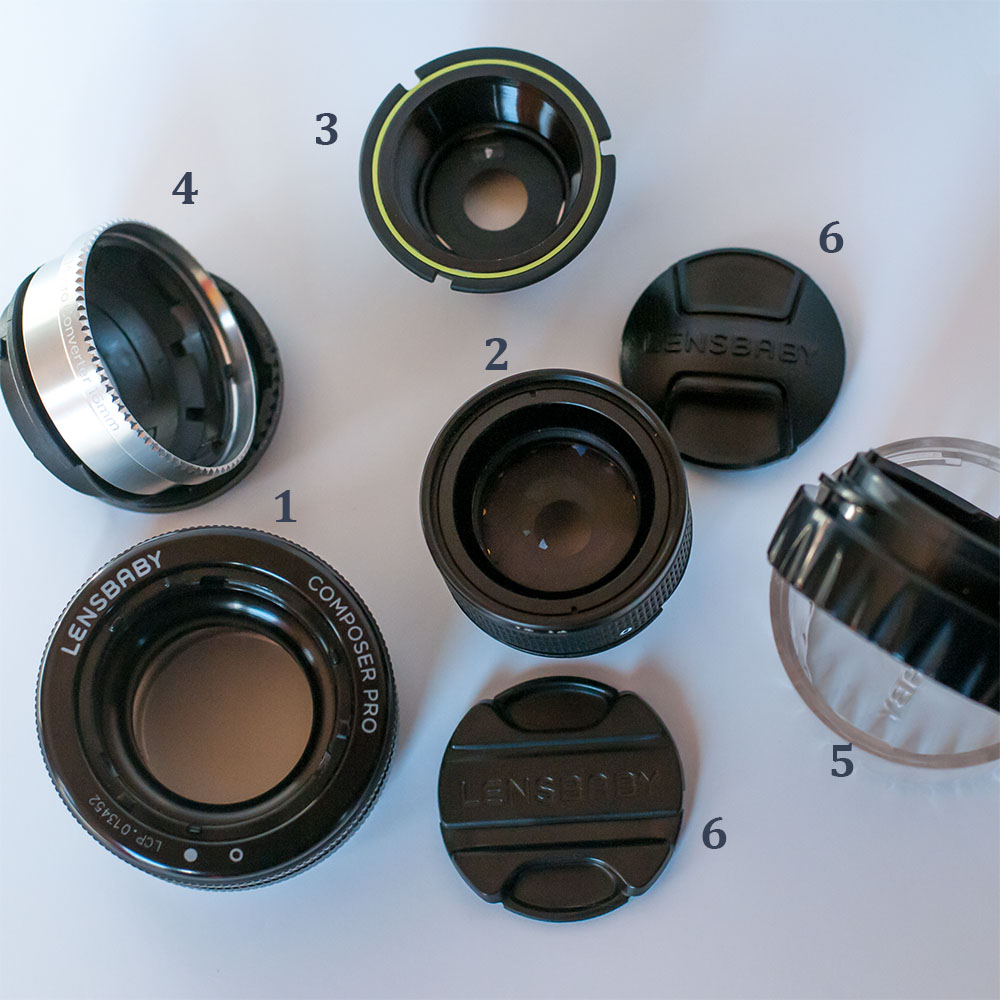
The idea behind Lensbaby is an optic swap system. You get one of the systems that can use various optics, such as the Composer Pro. This is the part that connects directly to your camera, like a lens. There are two components to it, which are joined via a metal ball, that allows the second part to rotate so you can change your point of focus.

leannecole-lensbaby-lenses-optics

The Lensbaby lenses I have, 1) The Composer Pro, 2) Edge 80 Optic, 3) Double Glass Optic with f/4, 4) Macro Converters, 5) The containers they come in that are also tools, and 6) lens cap.

You put the optics into the Composer Pro. There is a range of options available that allow you to use the lens as a normal lens, a fisheye, a macro lens, etc. Each of the optics give you different effects. For this article the optics used where the Edge 80, Fisheye Optic and the Double Glass optics.

There is also a range of optics available for the iPhone. You can put them on your phone to get similar results.

Lensbaby also has a new lens now, the Velvet series. They look like real lenses, but deliver a soft, glowing effect at larger apertures. They don’t have optics that you swap in and out, however, and are also manually focused.

What do the lenses do and what effects do you get?

With the different optics you can get a lot of different effects. You can create images that have a tilt-shift look, so the subject in the image looks miniature. You can isolate certain areas, or the subject. For example, if you want to photograph a flower that is in amongst many others, you could isolate it so only that one flower is in focus.

One thing it is great for is bokeh. That same flower can have a fantastic blurred background by using a large aperture. The out of focus areas often look like they were painted as well, which, again, depends on the optic and the aperture that you use.

You don’t really get what you expect with normal photography or lenses, meaning really sharp images. You have to take a different approach to using a Lensbaby. If you are the type of photographer who is very technical, where the light and sharp focus is very important, you may not like these. However, if you like to experiment, see what you can achieve, and like dreamy painterly images, then you will love the Lensbaby.

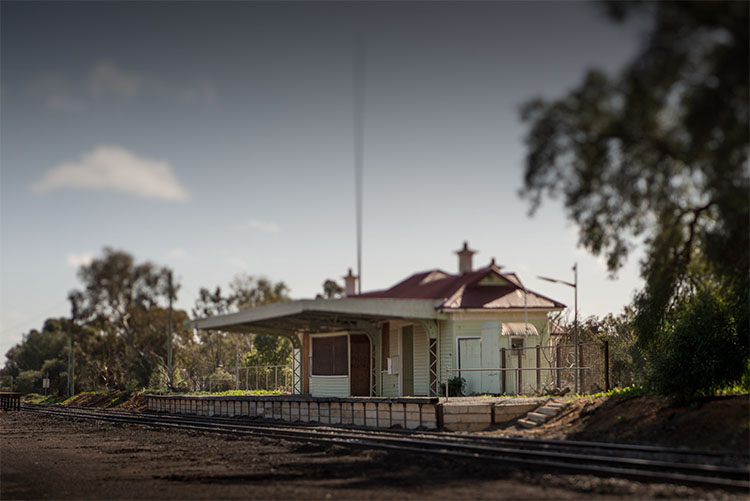
leannecole-lensbaby-old-train-station

The Edge 80 Optic is also good for creating tilt shift images, to make your subject seem miniature.

What do you need to use a Lensbaby?

When compared to normal lenses the price is not too bad. But it does depend on how addicted you become, and how many different ones you want to try. I was given quite a few different optics, but I still went and purchased more.

However when starting with the system, you can begin with something simple, such as the Spark. It comes with one optic, and you can just go out and use it. The Composer Pro can also be purchased with an optic, and is perhaps the easier of the two to use.

To decide which one is for you, take a look at the Lensbaby gallery on their website. See what looks appeal to you, and which products were used to create them. Start there.

leannecole-lensbaby-old-car

Using the Double Glass Optic again, it has given focus to just a small part of the old car.

How easy are they to use?

They take a bit of getting used to, and there is a steep learning curve. You can’t simply put them on your camera and begin. To get the best results you need to do some research and learn how to use them. Once you have a good idea, then it is just a matter of getting out there to try it. You need to experiment a lot, and you will delete many photos, but as you gain experience you will get images that you are proud to show.

The focusing system seems to be the hardest to get used to, at least it was for me. Having to manually focus the lens is a task in itself. For some of the optics it is easy though. Once the focus is sorted at the start, you can just move the composer pro around on the ball, and get it to the point and look that you want.

As with anything new, there is some trial and error. So be prepared to mess up a lot. It isn’t a good idea to take your new Lensbaby somewhere really important the first time you use it, like a wedding. Get to know it first before using it for anything critical.

leannecole-lensbaby-old-shearing-shed

Focusing on just a small part of the shearing shed to emphasis where the viewer should look.

Why are they better than other similar effects?

The results you get with the lenses are quite unique to the system. You can try and emulate the effects in Photoshop, but they don’t quite work the same.

Who would use them?

Anyone who is interested in trying something different, and to test themselves, should give Lensbaby a try. If you are interested in trying new types of photography, then you will love the Lensbaby. The effects are different every time, especially when you use different angles.

Through the lens, you see a whole new world. As you find yourself succeeding at taking photos with them, you will become addicted. The softness of the blur is very different, and being able to concentrate attention exactly where you want in the scene is wonderful.

leannecole-lensbaby-old-windmill

The Double Glass optic has helped to lessen the effect of the distracting foreground so you focus only on the windmill.

Manual focus

All the lenses are manually focused. If you aren’t very good at doing that, then the Lensbaby may not be for you. However, if you don’t have an issue with it, you will have a lot of fun as you experiment.

One problem was the aperture rings. The further you close it down, the darker it gets in the camera viewfinder, and it can be hard to focus. This is especially the case when you are using the Edge 80 optic with the Composer Pro. When the aperture is wide open you can see through your viewfinder quite well. But as you start to close it down to around f/8, the light dims and it is harder to see, and therefore focus.

The farther away the subject is, the easier it is to focus. Anything up close is harder, and requires a lot of practice. If you have trouble focusing and holding the camera still, use a tripod. There is some literature out there that says you can’t use a tripod with a Lensbaby, but that is not true.

Perhaps using the lens straight on will also be of benefit at the beginning. Learn to use them in a basic way first, then you can start to see what is possible as you experiment.

leannecole-lensbaby-macro-flower

A macro flower taken using the Double Glass Optic in the Composer Pro. The camera was on a tripod to ensure sharp focus.

Are they for you?

If you have read this far, then you are probably interested in trying them out. The Lensbaby website has some great resources for helping you to learn about their products. There are also lots of tutorials on YouTube that help you to figure them out.

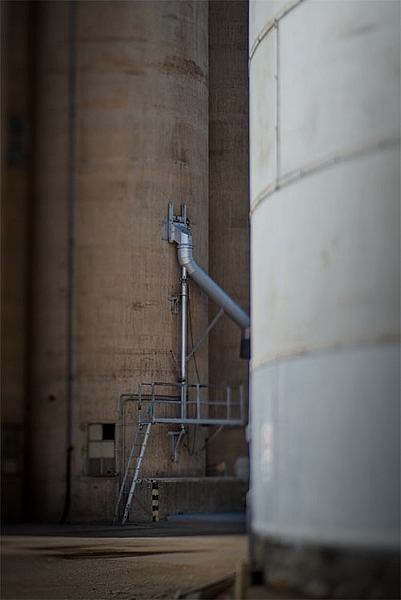
leannecole-lensbaby-old-silos

The Edge 80 Optic is ideal for doing straight parts of the image. I used it to help highlight the silo in the background.

The Lensbaby lenses and optics are a great addition to any kit bag. The effects that are created from them are unique, and can give your photography a whole new look. They will help the artist in you, achieve the artistic impressionist images that you haven’t been able to get, with regular photography lenses that are available.

Here is a video from Lensbaby to give you a quick overview of some of the options.

Have you tried a Lensbaby before? Please share your thoughts and images in the comments below.

googletag.cmd.push(function() {
tablet_slots.push( googletag.defineSlot( “/1005424/_dPSv4_tab-all-article-bottom_(300×250)”, [300, 250], “pb-ad-78623” ).addService( googletag.pubads() ) ); } );

googletag.cmd.push(function() {
mobile_slots.push( googletag.defineSlot( “/1005424/_dPSv4_mob-all-article-bottom_(300×250)”, [300, 250], “pb-ad-78158” ).addService( googletag.pubads() ) ); } );

The post Overview of the Lensbaby System – Is it for you? by Leanne Cole appeared first on Digital Photography School.


Digital Photography School

 
Comments Off on Overview of the Lensbaby System – Is it for you?

Posted in Photography


Hands-on with Sony’s wireless flash system, arriving in August

11 Jul

$ (document).ready(function() { SampleGalleryV2({“containerId”:”embeddedSampleGallery_7699465702″,”galleryId”:”7699465702″,”isEmbeddedWidget”:true,”standalone”:false,”selectedImageIndex”:0,”startInCommentsView”:false,”isMobile”:false}) });

Sony’s wireless radio flash trigger system, introduced back in March, is headed to retailers this August. The system is comprised of a ‘commander’ (FA-WRC1M) and a receiver (FA-WRR1). There can be up to 5 groups, each of which can contain 15 flashes. A standard sync port on the receiver allows for control of studio strobes with ease, though of course you’ll lose TTL capabilities. High Speed Sync (HSS) is also supported. The system has a maximum range of 30m/98ft, and the commander unit sports a large LCD with an intuitive user interface.

What we like

At a recent shooting event in San Diego, CA, I got some brief hands-on time with the new transmitters and receivers, and was pleased with how intuitive the user interface was (not something you can always take for granted with flash systems). For the shot below, I used E-TTL with three flashes (groups) – one (A) at camera right for some harsh side-lighting, one (B) front left of model Eliza as the key, and one (C) directly in front of her for a tiny bit of balance to the overall light. I dialed in my exposure manually to ensure ambient was drowned out, then varied the ratios of groups A, B, and C on the transmitter’s LCD with ease until I got the lighting just as I wanted it. Essentially, it all worked just as I’d expect it to. Adjust flash ratios, groups, Manual power, Flash Exposure Compensation are all very intuitive and direct. Furthermore, the option of triggering studio probes was very handy. Studio shooters: rejoice.

What we’re less pleased with

If you’re an event shooter, I was less pleased with the lack of an AF assist beam on the transmitter. This speaks to a larger problem with Sony mirrorless: no Sony E-mount camera will trigger any off-camera AF assist beam. Red/IR AF assist beams are a boon to any event photographer; for example, I rely on it for fast AF at dim wedding receptions, where all my flashes are off-camera for dramatic lighting. In such scenarios, AF assist beams on transmitters allow the camera’s AF system to focus in near-darkness, obviating the need for a heavy flash on-camera. Sony’s continued lack of any support of off-camera assist beams on transmitters or flashes is unfortunate, given Sony’s desire for acceptance by pros, and considering that in our own lab tests, Sony’s a7R II and a6300 focus incredibly well with red/IR assist beams triggered by Canon/Nikon systems (contrary to the belief of many that on-sensor phase-detect AF systems can’t ‘see’ these beams).

While one can fault both Canon and Nikon for similar oversights in their latest radio triggered flash systems, we find the omission increasingly unforgivable given that 3rd party options like Phottix and Yongnuo do offer AF assist beams on their radio triggers. Yet while these 3rd party options do at least work on Canon and Nikon DSLRs, they fail entirely to trigger AF beams on Sony FE cameras, due to Sony’s continued lack of support of AF assist beams (save for the largely useless one built into the camera).

We’re hopeful that this is something Sony will address in the future. It’s by no means a deal-breaker though for what appears to be a very capable radio trigger system that should find a way into your kit if you shoot with Sony flashes.

Both the commander and receiver will be available in August at $ 350 and $ 200, respectively.

Pricing and Availability – New FE 70-200mm f/2.8 GM OSS G Master lens. Teleconverters and Wireless Lighting Control System

Today, Sony has also released pricing and ship timing for the FE 70-200mm f/2.8 GM OSS G Master lens, 1.4x and 2.0x teleconverters plus their new wireless lighting control system. All products were introduced earlier this year.

One of the most eagerly anticipated lenses of the year, the Sony FE 70-200mm f/2.8 GM OSS G Master lens takes its place as the flagship telephoto zoom in the Sony lens lineup. Featuring built in Optical Stead Shot (OSS) and a fast f/2.8 maximum aperture across the zoom range, the lens will be an ideal fit for nature, sports, travel, fashion, beauty and wedding photographers. This lens will ship this July for a retail price of $ 2,500 US and $ 3,300 CA.

Designed exclusively to fit the 70-200mm F2.8 G Master lens, the new 1.4x and 2.0x teleconverters (models SEL14TC and SEL20TC) will both be sold for the same retail price of about $ 550 US and $ 700 CA, and will ship this July.

The versatile new wireless flash and control system – comprised of the FA-WRC1M wireless radio commander and the FA-WRR1 wireless radio receiver – was designed to meet the growing demands of professional Sony photographers. With a maximum range of 30m (approx. 98 feet) and the ability to control a maximum of 15 separate flash units in 5 different groups, it offers a flexible wireless flash shooting experience with exceptional performance.

The FA-WRC1M commander will be sold for about $ 350 US and $ 480 CA. The FA-WRR1 receiver will be sold for about $ 200 US and $ 280 CA. Both products will ship this August.

The new lenses, teleconverters and wireless lighting system will be sold at a variety of Sony authorized dealers throughout North America.

Articles: Digital Photography Review (dpreview.com)

 
Comments Off on Hands-on with Sony’s wireless flash system, arriving in August

Posted in Uncategorized