RSS
 

Posts Tagged ‘Sony’

Samyang AF 14mm F2.8 for Sony E-mount set to ship in September

18 Aug

Samyang Optics has completed its launch of five new lenses over the summer with the announcement that its full-frame 14mm F2.8 autofocus lens for Sony E-mount is ready to hit stores.

The Samyang AF 14/2.8 FE, as it is known, includes 14 elements in 10 groups, 3 of which being aspherical and two extra-low dispersion. The lens has nearly a 114° field-of-view when mounted to a full-frame body and about 90° on a crop body. The 14mm has a minimum focus distance of 20cm/7.9in and sports 7 circular aperture blades.

The lens will be available in September for €699. US and UK pricing was not available at press time.

Press release:

Samyang Announces the Release of AF 14/2.8

August 15th, 2016, Seoul, Korea – The global optics brand, Samyang Optics (http://www. samyanglensglobal.com) today announced the long-awaited release of autofocus lens: 14mm F2.8 for Sony E mount Mirrorless cameras with full frame sensor size. The new Samyang AF 14/2.8 FE is the widest lens in its class offering superb quality images to photographers. This launch follows the recent availability announcement of Samyang AF 50/1.4 FE.

Optimised Optical Design for Full Frame Mirrorless Camera Lens
Samyang AF 14/2.8 FE is specifically designed to work in harmony with full frame mirrorless cameras in Sony E mount. The flow of light is devised based on the uniqueness of the distance from glass to sensor in mirrorless cameras to create optimal performance. Along with portability of mirrorless lenses, the 14mm F2.8 is compatible with full frame sensors to deliver the wideness and sharpness of image to photographers.

The 14mm F2.8 is the widest angle available in the market in its class, broadening the sight of photographers to capture the world. Based on Samyang Optics’ exceptional optical technology, Ultra Multi Coating and three aspherical lenses have been included among 14 glasses in 10 groups to minimise aberration and unnecessary light dispersion, delivering high resolution from the centre to the corners of the image.

AF Performance and Ergonomic Design Based on Class-Leading Technology
This new product will be one of the first autofocus lenses in over 40 years of Samyang’s class-leading core optics technologies. Samyang has captured the essence of world leading image technology with their manual focus lenses and reinterpreted it into autofocus lenses. Photographers now can enjoy the prime manual lens image quality and autofocus lens. Samyang AF 14/2.8 FE is compatible with both phase detect and contrast detect sensors to operate fast and accurate focus detection.

The 86mm of maximum diameter is also the result of years of R&D for best handling, by adding stability. Also the minimal and sleek design and metal-housing solidify the build quality with the internal focus system.

Available from September 2016
This launching expands the boundaries of Samyang Optics photo lens line-up from manual focus only, to now include autofocus lenses. With the addition of 14mm to 50mm, Samyang now has two autofocus lenses along with 39 manual focus photo & cine lenses and 6 professional cine lenses, XEEN. The lens will be globally available from September, and the suggested retail price is EUR 699.

More information will be released soon on Samyang Optics official website (http://www.samyanglensglobal.com), Facebook page (http://www.facebook.com/samyanglensglobal) and Instagram (http://www.instagram.com/samyanglensglobal).

Samyang AF 14mm F2.8 specifications

Principal specifications
Lens type Prime lens
Max Format size 35mm FF
Focal length 14 mm
Image stabilization No
Lens mount Sony FE
Aperture
Maximum aperture F2.8
Minimum aperture F22
Aperture ring No
Number of diaphragm blades 7
Optics
Elements 14
Groups 10
Special elements / coatings 3 aspherical elements + Ultra Multi Coating
Focus
Minimum focus 0.20 m (7.87)
Maximum magnification 0.12×
Autofocus Yes
Focus method Internal
Distance scale No
DoF scale No
Physical
Weight 505 g (1.11 lb)
Diameter 86 mm (3.37)
Length 98 mm (3.84)
Sealing No
Colour Black
Hood supplied Yes
Tripod collar No

Articles: Digital Photography Review (dpreview.com)

 
Comments Off on Samyang AF 14mm F2.8 for Sony E-mount set to ship in September

Posted in Uncategorized


Canon and Sony dominate EISA awards for photographic equipment

16 Aug

The European Imaging and Sound Association (EISA) has awarded Canon and Sony four titles each from the 19-strong list of photography products it has held up as the best of the year. The European DSLR Camera award, which is the main photography title, went to the Canon EOS 80D, while the EOS-1D X Mark ll won the European Professional DSLR category. Canon also picked up awards for its EF 35mm F1.4L II USM lens (Professional Lens of the Year) and for its imagePROGRAF Pro-1000 printer.

Sony’s awards came in the Premium Compact  for the Cyber-shot RX1R II, Professional Compact System Lens for the FE 85mm F1.4 GM, Prosumer Compact System Camera  for the a6300 and Photo & Video Camera for the a7S II categories.

Sigma collected the DSLR Zoom Lens title for its 50-100mm F1.8 DC HSM Art lens, while Tamron won the overall DSLR Lens award for the recent SP 85mm F1.8 Di VC USD. Other notable awards are Prosumer DSLR of the Year for the Nikon D500 and Fujifilm’s X-Pro2 collecting the Professional Compact System Camera title. The Photo Innovation award went to Panasonic’s DUAL IS system as demonstrated in the GX80.

The EISA Awards have been running since 1982 when the only title was Camera of the Year – which went to the Minolta X700. Today’s awards are decided by the 14 editors of the Photography Experts group who represent weekly, monthly and bi-monthly photography magazines from 14 countries across Europe.

For more information visit the EISA website. 

Articles: Digital Photography Review (dpreview.com)

 
Comments Off on Canon and Sony dominate EISA awards for photographic equipment

Posted in Uncategorized


Canon EOS 80D vs Sony a6300: vying for the stills/video hybrid crown

15 Aug

Introduction

The Sony a6300 and Canon EOS 80D are visually very different cameras. One looks like Canon DSLRs always have, the other looks a lot like Sony’s original NEX line of mirrorless cameras.

Yet, despite their clearly distinct roots, dig a little deeper and you find hints of convergent evolution. The on-sensor phase detection of the a6300 helps it offer autofocus that can compete with DSLRs, while the dual-pixel design of the EOS 80D helps it offer better live view operation and focus than any previous Canon DSLR.

What’s true of both is that they’re their maker’s offering for the stills enthusiast who might want to try their hand at video. In many respects they’re still as different as they are similar, but their relative strengths and weaknesses aren’t necessarily quite as you’d expect. All of which can make it hard to know which one to choose…

DSLR vs Mirrorless

Some of the differences between the cameras come down to the fact that one is a DSLR while the other is mirrorless. No matter how much technology closes the gap in performance between the two systems, the DSLR structure allows the provision of a TTL optical viewfinder, while a mirrorless camera is more likely to include an electronic viewfinder.

Many people, in part as a consequence of familiarity, prefer an optical viewfinder, but there are advantages to each approach. The a6300’s viewfinder is able to show a corrected preview when working with the super-flat S-Log gamma profiles, as well as being able to overlay focus peaking and exposure warnings into its viewfinder, in a way that can’t be done with an optical viewfinder. This is on top of the ability to visualize the exposure and white balance of the final image.

Finally, an electronic viewfinder need not be constrained by the size of the sensor format, as the optical view of a DSLR’s mirror is. In this instance, the a6300’s finder is around 20% larger than that of the Canon. Its fast refresh means it’s better able to help you follow the action than ever before.

DSLR vs Mirrorless

However, one of the traditional advantages of a mirrorless camera is that they can be smaller and the a6300 certainly has the edge in that respect. Its kit zoom may not be the best-loved or most consistent lens on the market, but it does a great job of keeping the size of the overall package down.

There’s a well worn adage that the best camera is the one you have with you and all but the most dedicated photographers are likely to find the a6300 much more convenient to carry with them. Disregarding macho nonsense about carrying the weight of a DSLR, the a6300’s much smaller form factor may well be the difference between you keeping a camera with you and only bringing it along when you expect to need it.

That said, the 80D’s optical viewfinder means it doesn’t have to have its screen on all the time. This certainly helps towards it having a CIPA battery rating 2.4x greater than the Sony (960 shots per charge, vs 400 on the Sony or 350 through the electronic viewfinder).

Handling

Some of the differences between the two cameras don’t directly stem from the DSLR/mirrorless distinction. There are plenty of mirrorless cameras that offer DSLR-like control points, but the a6300 doesn’t follow that path.

While Sony has increasingly stepped away from its innovative but simplistic NEX interface, the a6300 doesn’t offer the level of at-your-fingertips control that you’d usually get for this much money. There are two command dials but both of them are operated with the same digit, and the one on the rear face of the camera requires you to move your hand out of a shooting grip (which makes it unnecessarily fiddly). The camera does at least give plenty of customization of its buttons and Fn menu, so you can choose which options to get fast and semi-fast access to, but there remain features we want access to that are unassignable, and we’ve sometimes found ourselves running out of assignable buttons. I don’t think even its most strident supporter would consider the a6300’s handling to be amongst its strengths. 

By contrast, the Canon does a great job of blending its well-worn stills control layout with a simple but effective level of touchscreen control, making the 80D a much more engaging and direct-feeling camera to shoot with. Yes, it’s very traditional approach, but it works well for stills and has been adapted pretty well for shooting video, too. And I doubt many people would have guessed that it’d be Canon, rather than Sony, that brought touchscreens to its enthusiast cameras first.

Autofocus

The days of being able to simply say ‘DSLRs are better at focusing’ is long gone, but that isn’t to say that all cameras are now equal – different technologies have different areas of strength.

The EOS 80D’s through-the-viewfinder focus is generally good when shooting approaching subjects but seems to struggle at the camera’s highest frame rate. The hit rate falls further if the camera has to track subjects moving around the frame. Like most DSLRs, it can also exhibit some focus imprecision on close-up, shallow depth-of-field photos.

By comparison, the a6300 offers excellent autofocus in a lot of circumstances. Its subject tracking is generally very good and will follow a single, clearly defined subject around the frame as it moves, though it’s not reliable enough to use in lieu of manually positioning the AF point over a subject. This is a pity because, without a touchscreen or joystick, the manual positioning of an AF point is rather slow and clunky.

Eye AF, which you’ll need to assign to a custom button to gain access to, is superb though. Point the camera at your subject, hold down the Eye AF button and the camera will generally stick to its target well, even as you and your subject move around. It’s particularly good with fast primes where you can be fairly confident of your subject’s eye being perfectly sharp. That said, it’s not without its limitations, jumping off to other subjects from time to time.

However, the EOS 80D is based around a Dual Pixel AF sensor, which means it can offer depth-aware phase detection autofocus across much of its sensor if you’re willing to use the rear LCD and shoot in Live View. This is especially good at identifying and following faces (or other objects) within the scene, meaning it can compete pretty effectively with the a6300’s Eye AF mode, even with a fast prime lens.

a6300 – the videographer’s choice

What really sets the two cameras apart is their approach to video. Not just in terms of specifications, but how you shoot. The Sony has the upper-hand on paper, since it can shoot 4K video, but it’s not as simple as all that.

The a6300 is very well equipped when it comes to video. It can shoot UHD 4K at up to 100 Mbps. It includes adjustable zebra patterns for helping you set exposure. It also includes focus peaking and during-capture magnification to help you confirm and adjust focus, and it also offers a huge variety of video-centric gamma responses including Log curves and a mode that gives an ITU 709 preview while shooting log. 

Which is lovely, if you know how to make use of all of those things. And knee, and master pedestal. But, while it can be fun to learn, it’s a little daunting at first. Of course you can ignore these options and shoot autofocus if you want but, while good, AF is not immune from refocusing off to infinity. And, without a touch screen, moving the focus point is impractical.

The Sony can sometimes, especially in warm conditions, overheat before reaching its 29:59 limit. This and the more involved shooting technique needed to get the very best from the its frankly stunning 4K quality means isn’t suited to every type of shooting. Its 1080 is also oddly disappointing. But if you put in the work, it’s sensational.

EOS 80D – the still photographer’s video cam

The EOS 80D is a really interesting camera, when it comes to video, and its limitation to 1080 shouldn’t see you write it off. The Canon can’t compete with the Sony’s video quality or its laundry list of support features. But what it does offer are simple autofocus and ease-of-use.

The 80D’s dual pixel autofocus really comes into its own for video shooting. Touch on the screen and the camera will refocus with absolute confidence. Set a target and the camera will keep your subject in focus. You can dictate the focus speed and be confident that the camera will do what you want, without the constant wobble or occasional catastrophic mis-focus that most of its rivals will deliver.

Of course, being a DSLR, you can’t resort to using the viewfinder when it’s bright outside.

The footage isn’t great, even by the standards of 1080 video, but it’s more than usable and is just so easy to shoot. The lack of exposure monitoring tools is also a pain, but overall, the 80D a great camera for stills shooters who want to shoot video without having to learn how.

Lens choice

While Canon’s APS-C lineup isn’t quite as comprehensive as its offerings for full frame, it’s still pretty comprehensive, especially when you include those full frame lenses that remain useful on the smaller format. The native APS-C range includes a variety of zooms at different price levels, an a 24mm F2.8 STM prime if you’re trying to keep the overall size down.

The same can’t be said for Sony’s E-mount lineup. There are some useful lenses, including stabilized 35 and 50mm primes for APS-C and a 28mm F2 that makes an effective normal, but it’s certainly worth checking that the lenses you need exist, affordably, in the Sony range before you commit to the system.

That said, the short flange-back distance of the E-mount means that all sorts of lenses can be adapted to work on the Sony (some of them with AF), which is especially valuable for video work.

Overall

It might seem tempting to draw the conclusion that you buy the Sony for video and the Canon for stills, but it’s not quite that clear-cut. The ease of shooting video with the Canon, along with the very capable autofocus of the Sony mean that both cameras have something to offer in what  you might otherwise assume to be the other’s areas of strength.

The a6300 has a slight edge in terms of image quality and huge advantage in terms of video quality. However, the EOS 80D is undeniably a more enjoyable camera to shoot with. It would be hard to choose a winner in terms of autofocus (heretically it’s the 80D’s live view AF that keeps it in the hunt), meaning a lot of it comes down to personal priorities.

If you want probably the most capable camera that’s easy to keep with you, then the Sony is the easy choice. But if you want a more traditional or hands-on shooting experience and still want some of that stills/video flexibility, then the Canon might be the better choice.

Yet again, the simple idea that most modern cameras are great is true. But that doesn’t mean they’ll all be equally good for you.

Articles: Digital Photography Review (dpreview.com)

 
Comments Off on Canon EOS 80D vs Sony a6300: vying for the stills/video hybrid crown

Posted in Uncategorized


Elinchrom adds Sony compatibility to its high speed sync Skyport Plus HS wireless controller

11 Aug

Lighting manufacturer Elinchrom has introduced a version of its high speed sync Skyport remote flash trigger and controller that is compatible with Sony cameras. The new Skyport Plus HS transmitter allows Sony camera users to synchronize their shutter with Elinchrom flash heads using speeds of up to 1/8000sec. The system has been in use for some time for Canon and Nikon users, but now Elinchrom has added Sony to the list of camera brands with which the transmitter works.

Elinchrom’s high speed sync system is called Hi-Sync and varies from hotshoe style flash units in the way it produces light for short shutter speeds. While HSS modes in speedlights tend to use pulsing flash that gradually covers the camera sensor as the shutter slit passes by, Hi-Sync just uses a relatively long-duration burst. The company has introduced a system it calls OverDrive Sync that allows the user to calibrate the timing of the burst to the opening and closing of the individual camera’s shutter to ensure the two events coincide. This ODS system also allows a certain degree of exposure manipulation as photographers can tailor their shutter to different segments of the flash output curve.

The Skyport Plus HS 2.4GHz radio transmitter has a range of 200m/656ft when used without obstruction between the camera and the head, and 60m/196ft when used indoors. It system offers 20 channels for normal shooting and 20 more for high speed shooting, which can be arranged in 4 groups, and an AF illuminator to assist in low light conditions.

The Elinchrom Skyport Plus HS costs $ 249.95 USD / €249 EUR / £199 GBP.

For more information see the Elinchrom website.

Sony camera compatibility

 A7  A7 ll  A7r  A7r ll  A7s
 A7s ll A33 A37 A55 A57
A77 A77 ll A99 A100 A230
A290 A330 A350 A380 A390
A450 A500 A550 A560 A580
A700 A850 A6000 RX1 NEX-7K

Press release:

Elinchrom expands the family of EL-Skyport Plus HS transmitters to Sony users !

Since the launch of the Skyport Plus HS for Canon and Nikon, Sony users have been patiently awaiting their dedicated Transmitter. As promised, the most advanced Skyport ever is now available to Sony users. This will give them the ability to control and visualize power settings for all their compatible Elinchrom lights and the capability to shoot at speeds up to 1/8000s in Hi-Sync mode.

Visual Feedback Interface
The Large LCD display of the Skyport HS features two-way control via a visual feedback interface that lets you see the exact power up to 10 compatible Elinchrom lights in your setup right on the transmitter.

Users can control the modelling lamp and power of each flash unit directly from the Skyport transmitter, which instantly shows the updated settings.

This provides unsurpassed levels of “two-way communication and control” for every light in your setup, right from your camera.

Hi-Sync opens up the world of flash photography
Elinchrom Hi-Sync technology lets you go beyond the X-Sync of your camera. Photographers can simply switch to Hi-Sync mode and access sync speeds up to 1/8000s to freeze motion, overpower the sun, darken backgrounds or use a wider aperture. The ODS (Over Drive Sync) enables users to fine tune the Skyport Plus HS transmitter’s trigger signal to optimize exposure at high shutter speeds while gaining up to 2 more f-stops of light.

Even more
The Skyport HS has 20 frequency channels that can be used for either Normal or Speed mode. The transmitter attaches easily and securely to the hotshoe with its one-touch quick-lock mechanism, and is powered by 2x AA batteries. Users can also enjoy a range of up to 656ft (200m) outdoors, and up to 196ft (60m) indoors.

The Skyport HS continues the Elinchrom commitment to quality
Providing photographers with tools to enhance their shooting experience whilst also showing how Elinchrom is looking firmly ahead to the future. The Skyport HS represents a seamless extension of the EL-Skyport family since it is also compatible with the three previous generations of Elinchrom flash units (those using the EL-Skyport Transceiver RX module for Style RX, Digital RX, and Ranger RX systems, and those with integrated EL-Skyport modules for the BRX, D-Lite RX, ELC Pro HD, and ELB series.)

Other camera systems are currently being evaluated for future release.

EL-Skyport Plus HS Features
* Large LCD with unique, real-time display of remote flash power settings
* Easy access buttons and rotation ring for fast setup and control
* 20 Channels, 4 Groups for Normal and Speed Sync Modes
* Hi-Sync, up to 1/8000sec with Sony, Canon and Nikon cameras
* Extended working range up to 656ft (200m)
* AF Illuminator and sure-lock mounting foot
* USB port for future-proof upgrades

The EL-Skyport Transmitter Plus HS is now available for Sony, Canon and Nikon cameras.
EL19371 – EL-Skyport Transmitter Plus HS for Sony
EL19366 – EL-Skyport Transmitter Plus HS for Canon
EL19367 – EL-Skyport Transmitter Plus HS for Nikon
Street Price: $ 249.95 USD / €249 EUR / £199 GBP

Specifications
Frequency Band : 2.4 GHz
Channels : 40; (20 in Normal mode – green / 20 in Speed mode – red)
Groups : 4: 1, 2, 3, 4
Flash synchronization :
Normal: limited to the native X-sync of your camera
Hi-Sync mode: up to a 1/8000 sec.*
2nd curtain sync: only Canon
Range : Up to 200m (656’) for triggering
AF Assist Beam : Yes
Connection :
Foot for Sony hotshoe (19371) Canon hotshoe (19366) and Nikon hotshoe (19367)
Mini-USB for firmware updates
2.5 mm remote release
Power source : 2x AA batteries
Indicators and Controls :
LCD screen display:
Sync mode, group, channel, ODS activation, Hi-Sync activation, shutter mode, remaining battery power, flash unit name, flash unit ID, flash unit power level, flash unit modelling level.
Buttons:
Group selection, test, rotation ring to change values, confirmation, on/off and refresh.
There are also 4 buttons with variable functionality:
Power +/-, Modelling lamp off/prop/free, Individual unit selection and setup on the dashboard. Menu up, menu down and exit in the setup menu.
Dimensions : 84.1 x 68.3 x 58.5 mm (3.3 x 2.7 x 2.3”)
Weight : 120 g ( 0.27 lbs.) without batteries

Articles: Digital Photography Review (dpreview.com)

 
Comments Off on Elinchrom adds Sony compatibility to its high speed sync Skyport Plus HS wireless controller

Posted in Uncategorized


Sony a7R II versus a7 II: Eight key differences

07 Aug

Sony a7R II versus a7 II: Eight key differences

Sony’s a7-series marked the debut of full-frame mirrorless, and Sony still dominates this market with its a7S II, a7 II and a7R II. Sony has developed a reputation for rapid development cycles, and since they all look basically the same, it can be hard to figure out the differences between its current a7-series offerings.

The higher resolution a7R II costs almost twice as much as the a7 II, and in this article we’ll be explaining why. So join us, as we take a detailed look at the major differences between the Sony a7 II and the a7R II.

Resolution

The a7R II was the first camera to offer a BSI-CMOS full-frame sensor, when it was released last year. The additional resolution compared to the a7 II makes it possible to print significantly larger images, and of course there’s lots of scope for cropping.


Like all of the cameras in Sony’s a7-series, the a7 II and a7R II are both built around full-frame CMOS sensors, and the a7 II uses the same 24MP as its predecessor, the first-generation a7. The a7 II’s sensor is perfectly capable, and can deliver excellent image quality, but it’s not a patch on the 42MP sensor in the a7R II.

The increase in resolution isn’t the only reason we say that. The flagship a7R II features a back side illuminated (BSI) CMOS sensor, which offers significantly greater dynamic range, far better low light performance, and features 399 phase detection autofocus points (more on that later).

Dynamic range

The Sony a7R II boasts a significantly higher base ISO dynamic range than the a7 II, and this relationship is maintained until the two camera’s highest ISO settings. Both are superior to Canon’s EOS 5D III. Source: Bill Claff


The a7 II’s older 24MP sensor lags behind the newer a7R II in terms of dynamic range at all ISO sensitivity settings. At the all-important base ISO (ISO 100 in both cameras) the difference is a little under one stop. The gap closes a touch from ISO 200-400 but widens again thereafter.

Very few things ignite (or should that be ignorate…?) quite as much argument on DPReview forums and comment sections as dynamic range, but the basic fact is this: greater dynamic range, especially at base ISO, means greater latitude for exposure adjustment in Raw mode. In cameras that offer very good dynamic range, like the a7R II and Nikon D810 (just to take two examples) this effectively negates the requirement for graduated neutral density filters, and greatly expands a photographer’s ability to capture a full tonal range in a single exposure.

The a7R II is better than the a7 II in this regard, but both are better than full-frame DSLRs in this class (we’ve plotted the EOS 5D III in this graph, from Bill Claff), which are also limited by relatively high levels of noise in shadow areas. This can become problematic when Raw files are manipulated too heavily.

ISO sensitivity / low light

Even at ISO 12,800, the a7R II’s Raw files contain bags of detail, and more dynamic range than the a7 II. When normalised at 24MP, the higher-resolution a7R II also offers superior perceptual detail and lower noise levels than the a7 II. As well as image quality, the a7R II scores over the older camera again in terms of low-light AF performance.


In the good old days, it was generally believed that the more pixels you packed onto a sensor, the noisier the images you’d get out the other end. These days of course we’re much more enlightened, and as we all know, the idea that more pixels = more noise isn’t necessarily true. And everybody is happy now because we all understand that pixel-level noise isn’t the whole story, and the time we used to spend arguing about such things on the Internet we now spend with our families, when we’re not out in the sunshine taking photographs.

Only some of that last sentence is true, but what is true is that despite having almost twice as many photo-sites as the a7 II, the 42MP a7R II offers superior high ISO image quality. When files are normalized to 24MP and viewed side-by-side, the a7R II offers at least one stop better perceptual image quality in terms of Raw noise levels, and in terms of detail retention it’s more like two stops better than its 24MP cousin.

Part of the reason for this performance gap is simply the fact that the a7R II’s sensor is a couple of years newer than a7 II’s, and sensor technology (especially at Sony) moves quickly. But fundamentally, the sensor in the a7R II is of a very different design. BSI-CMOS sensors move a lot of per-pixel electronics to the back of the sensors, out of the way, so they’re more efficient when it comes to converting photons into usable signal. As such, the a7R II isn’t just better than the a7 II, it’s better than almost every other full-frame camera we’ve ever tested. Up to around ISO 25,600 it even holds its own (when files are normalized at 20MP) against the Nikon D5.

Shutter

Another benefit of BSI-CMOS sensors is the extra room afforded for more sophisticated circuitry – in the case of the a7R II that means faster readout circuitry. This allows the camera to record high frame-rate video (more on this shortly), autofocus faster than any comparable full-frame mirrorless camera (again, more shortly), and also to offer a fully electronic shutter.

Shutter-induced vibrations plagued our experience of using the original a7R, and have proved a serious headache in several other high-resolution cameras, including the Nikon D800-series. The a7 II and a7R II mitigate these issues with an electronic first-curtain shutter feature, but the a7R II also offers a totally electronic shutter option that comes with an almost negligible penalty in terms of additional noise (a traditional side-effect of electronic shutters).

We don’t recommend shooting with the fully electronic shutter option all the time, because there is the risk of some rolling-shutter distortion (i.e. if you’re panning to follow a fast-moving subject). But it is extremely handy for situations where you want to be discreet, like a performance space or a wedding ceremony.

Video

The a7R II is a 4K-capable camera with a raft of high-end features, intended to appeal to professional videographers just as much as stills shooters. 


The a7 II is increasingly looking like the odd one out in Sony’s current a7-series lineup, due to its lack of a 4K video capture. Of the two cameras, the a7R II is significantly more capable for shooting video, thanks not only to the addition of 4K, but numerous other features aimed specifically at the needs of professional filmmakers.

These include an oversampled Super 35mm (~APS-C) crop mode for 4K, internal recording in both HD and 4K modes and the super flat S-Log2 profile, for additional flexibility when it comes to grading footage.

The quality of the a7R II’s footage blows away the a7 II. Not only can the older camera not record 4K video, but its HD footage is softer and less detailed than the full-frame 1080 output of the a7R II. Interestingly, while the a7R II delivers superior quality 4K footage in its oversampled Super 35mm crop mode (notwithstanding a higher risk of rolling shutter), it gives much more detailed 1080 video when using its entire sensor. But the basic takeaway here is that regardless of the resolution or crop mode, the a7R II delivers better-looking video than the a7 II.

Autofocus

When combined with continuous focus, Eye-AF is a great feature for capturing portraits – especially of kids that won’t stay still.


The a7 II uses the same AF hardware as its predecessor the first-generation a7, but Sony claims that autofocus performance has been improved by around 30%. In our testing we have no reason to dispute this figure, and in everyday use the a7 II’s AF is more than capable of keeping up in most situations.

The a7 II’s autofocus might be perfectly acceptable, but the a7R II is in another league. Both cameras use a ‘hybrid’ system which combines on-sensor phase-detection pixels with conventional contrast-detection but with more than twice as many phase-detection AF points as the a7 II, and the ability to focus third-party lenses (later added to a more limited extent to the a7 II via firmware) the a7R II’s AF specification impressed us greatly when it was first announced.

While it can’t keep up with the action as well as the market-leading 3D AF Tracking system found in Nikon’s current DSLRs, the a7R II’s ability to find and track an eye in Eye-AF mode for example is incredibly useful for wide-aperture portraits, and low-light AF reliability with fast lenses is almost a match for the best DSLRs.

That’s the good news – the bad news is that there’s still no way to position AF point by touch on either camera, and the a7RII and a7 II’s control and menu ergonomics make it annoyingly tricky to find, set and master their extensive autofocus settings.

Performance

In terms of autofocus, the a7R II roundly outperforms the a7 II but when it comes to general operational speed it is markedly more sluggish in some ways. Image review especially can be very frustrating, as the a7R II’s huge files (made even larger if you select uncompressed Raw) can take several seconds to become available to review and zoom to check focus after they’ve been shot. When capturing sequences of images, the a7R II gives the kind of buffer-clearing times that we’ve not been used to since the early days of digital DSLRs. And we don’t say that in a nostalgic way.

The a7 II isn’t exactly a speed champion when it comes to processing speed, but it’s a little more nimble than its 42MP cousin.

Battery life

Although both the a7 II and a7R II have relatively poor rated battery life, it is possible to charge the cameras over USB, and you can continue shooting while they’re charging.


With a CIPA-rated battery life of 350 shots, the a7 II offers greater endurance than the a7R II, which clocks in at a mere 290 shots per charge. But it’s a bit of a stretch to call 60 hypothetical exposures a ‘key difference’ in battery life. Honestly, they’re about in the same ballpark, and both are pretty poor. Both the a7 II and a7R II offer significantly less endurance than equivalently-priced DSLRs at 350 shots and 290 shots per charge, respectively (CIPA standard in both cases).

The a7 II has a better CIPA-rated battery life than the a7R II, but endurance in heavy real-world from either camera varies from just ok-ish to downright terrible, depending on things like the ambient temperature and the amount of video you end up shooting. We’d strongly recommend taking at least one spare battery out with you when working with either camera, but if possible, take a couple. Ideally, take several. Pop round and borrow a couple of ours. We trust you.

The somewhat lower quoted battery life of the a7R II can be explained by its more power-intensive 4K capture mode, but even if you’re mostly shooting stills and keeping image review to a minimum, don’t expect to get through a busy day’s shooting with either camera without changing your battery at least once. The good news is that both cameras feature in-camera USB charging and can still be used while charging. This might not help much if you find yourself in the middle of nowhere, but could be a life-saver when shooting at an event or in a studio.

In summary

It should be obvious if you’ve read this far that the Sony a7R II is a significantly more capable camera than its stablemate the a7 II. They might look identical, but a quick run-down of just the major feature differences makes the distinction obvious enough: more pixels, 4K video, a vastly more capable autofocus system, fully electronic shutter, and more complete support for third-party lenses.

Whether these differences justify the enormous increase in price over the more basic a7 II is of course something that you have to decide for yourself. If you’re primarily or exclusively a stills shooter and you don’t have much need for continuous autofocus, the a7 II might suit you just fine. Its 24MP sensor isn’t the best around, but it’s not bad, and its 5-axis image stabilization system is very useful when shooting hand-held in poor light or at long focal lengths.

All this being said, if you’re new to the Sony a7 system, the a7 II doesn’t bring much to the table that you can’t find duplicated or outmatched in other, competitive DSLR models. The a7R II, on the other hand, offers some unique features that we suspect will make it distinct from competitive DSLRs for some time yet.

  • Read our full Sony a7 II review
  • Read our full Sony a7R II review

Did we miss anything? Let us know in the comments.

Articles: Digital Photography Review (dpreview.com)

 
Comments Off on Sony a7R II versus a7 II: Eight key differences

Posted in Uncategorized


Throwback Thursday: a fresh look at the Sony Mavica FD-91

04 Aug

The year was 1999. Y2K loomed large, people actually used America Online via 56K modems, and I had just been taken out of school early by my parents to see Star Wars: The Phantom Menace at the Cinerama. As a fifth-grader, I remember thinking it was mostly alright.

People in 1999 probably thought the Sony Mavica FD-91 was mostly alright, too. Phil Askey certainly thought so. It has an optically stabilized zoom lens with plenty of reach, abundant external controls, a viewfinder, and… XGA resolution. As such, the image quality was pretty poor, even by contemporary standards. Now that’s saying something.

So, with the benefit of seventeen years of hindsight and experience (yes, I know now that the Phantom Menace was pretty terrible), what stands out about this quirky camera today?

High on the list of things I will never be nostalgic about – garish stickers adorning my high-end electronics. The 20-cent stamp on the ‘e-mail’ portion is a nice touch, though.

One thing’s for sure: there’s only so much detail you can get when you’re talking XGA resolution. My favorite part of having this camera in the office so far (apart from the amazing Gameboy-esque beeps it makes – listen to them in the video at the end of the page) was Sam opening up some images in Adobe Bridge, going full-screen to see the image at 100% – and it actually shrank compared to the filmstrip view.

But that resolution did allow you to use floppy disks as storage, and depending on your settings, you can fit anywhere from 6-13 images on one. If you work in corporate America, I can all but guarantee you that there’s boxes of unused floppies sitting at the back of some copy room drawers. And guess what? You can still read them.

1.44MB, in all its floppy glory. The sound of the camera spinning these up and writing images to them – now that’s something I can get nostalgic about.

So the image quality generally stinks, and when light levels approach dusk, you may as well be shooting with the lens cap on. But despite that and the wonky (but comfy-to-hold) form factor, the FD-91 is remarkably well-specced.

You get a 14x optically stabilized zoom (the big block at the front of the camera is the stabilizer unit), auto and manual focus, white balance control, full manual controls (the slowest shutter speed is 1/60 sec), a selfie-friendly flip screen and a built-in flash. It even records movies to floppy disk at a maximum resolution of 320×240 pixels. Amusingly, the clips max out at five seconds long. And we thought the original three minute limit on 4K for the D5 was questionable. 

How did Sony know to make a top-hinged selfie screen way back in 1999? With foresight like that, we should all have been using Betamax.

In the end, the Mavica FD-91 is a fun toy, or a great conversation piece. Or you can use it to teach your kids about the upsides and downfalls of technologically ancient storage solutions (what, am I the only one who thinks about that sort of thing?). The batteries are still easy to find, even. But as a fun, classic digital camera to actually use for photography – there are better options out there.

Did you ever have a camera that used floppy disks? How about the follow-up models that used CDs or DVDs? Let us know in the comments!

$ (document).ready(function() { SampleGalleryV2({“containerId”:”embeddedSampleGallery_6427989411″,”galleryId”:”6427989411″,”isEmbeddedWidget”:true,”standalone”:false,”selectedImageIndex”:0,”startInCommentsView”:false,”isMobile”:false}) });

Hear the sounds of the past

Articles: Digital Photography Review (dpreview.com)

 
Comments Off on Throwback Thursday: a fresh look at the Sony Mavica FD-91

Posted in Uncategorized


Feast your eyes on a Sony 24-70mm F2.8 G Master teardown

03 Aug

Teardowns are a handy way to satisfy the urge to see what’s inside expensive and prized electronics, while remaining a safe distance away and keeping warranties intact.

Behold, a teardown of the Sony 24-70mm F2.8 GM, a lens that sells for $ 2200. Sony’s own SGNL YouTube channel does the dirty work of prying it apart for us, giving us a close-up look at the inner workings of the fast full-frame zoom.

Articles: Digital Photography Review (dpreview.com)

 
Comments Off on Feast your eyes on a Sony 24-70mm F2.8 G Master teardown

Posted in Uncategorized


Sony Xperia X Performance achieves top score in DxOMark Mobile ranking

29 Jul

DxoMark has published its test results for Sony’s flagship device in the Xperia X series, the Xperia X Performance. At 88 points the Sony achieves the same score as the HTC 10 and Samsung Galaxy S7 and now shares the top spot in the DxOMark Mobile rankings with those phones. 

The DxOMark testers were particularly impressed by the Xperia X Performance’s fast and accurate AF system, good exposure and dynamic range, well-controlled noise in low light and good detail in flash images. On the downside, the HDR mode does not always trigger when it should, small amounts of chroma noise are visible in outdoor conditions and the white balance is inconsistent when shooting with flash. 

The Xperia X Performance comes with a very similar camera specification to the Xperia Z5. A 23MP 1/2.3-inch Sony Exmor multi-aspect sensor is coupled with a F2.0 aperture in a wide angle lens with an equivalent focal length of 24mm. A predictive AF system, developed in collaboration with the engineers in Sony’s Alpha camera division, allows for improved subject tracking and low light mode ISO to be increased to 12800. You can read the full test report on the DxOMark website.

Articles: Digital Photography Review (dpreview.com)

 
Comments Off on Sony Xperia X Performance achieves top score in DxOMark Mobile ranking

Posted in Uncategorized


Comparison Review: Sony FE 50mm F1.4 ZA vs 55mm F1.8 ZA

20 Jul

Sony has announced a high-end ‘normal’ prime for its Alpha E-mount line of cameras: the Planar T* 50mm F1.4 ZA lens. As the third normal prime for the system, we wanted to know what it offers over the already excellent FE 55mm F1.8 ZA, so we set about performing some benchmark tests.

We’ll take a look at sharpness on this page, and bokeh, coma, and longitudinal chromatic aberration on the next.

Sharpness

Below, you’ll see a series of aperture progressions for the 50mm F1.4 ZA and 55mm F1.8 ZA. Have a look around the scene at various apertures to get an idea of the capabilities of these two lenses – with the caveat that this performance is only representative of our single copy of each lens.

$ (document).ready(function() { ImageComparisonWidget({“containerId”:”reviewImageComparisonWidget-27965628″,”widgetId”:381,”initialStateId”:null}) })

Wide-open, the 55/1.8 is slightly sharper than the 50/1.4, both centrally$ (document).ready(function() { $ (“#imageComparisonLink2690”).click(function() { ImageComparisonWidgetLink(2690); }); }) and peripherally$ (document).ready(function() { $ (“#imageComparisonLink2691”).click(function() { ImageComparisonWidgetLink(2691); }); }) (the advantage is retained on the left side$ (document).ready(function() { $ (“#imageComparisonLink2692”).click(function() { ImageComparisonWidgetLink(2692); }); }) of the frame as well, despite the fact that our 55/1.8 is slightly decentered and has poorer left side performance). But none of this should be too surprising, since sharpness at F1.4 is far more challenging than at F1.8. In fact, the 50/1.4 holds up very well considering the 2/3 EV disparity in f-stop.

Comparing both lenses at F1.8 (a more level playing field), the 50/1.4 catches up to the 55/1.8 in terms of center sharpness$ (document).ready(function() { $ (“#imageComparisonLink2695”).click(function() { ImageComparisonWidgetLink(2695); }); }), but still lags in peripheral sharpness on the left$ (document).ready(function() { $ (“#imageComparisonLink2693”).click(function() { ImageComparisonWidgetLink(2693); }); }) and right$ (document).ready(function() { $ (“#imageComparisonLink2694”).click(function() { ImageComparisonWidgetLink(2694); }); }) sides of the frame. By F2, though, the 50/1.4 just surpasses$ (document).ready(function() { $ (“#imageComparisonLink2701”).click(function() { ImageComparisonWidgetLink(2701); }); }) the 55/1.8 in central sharpness, though off-center it still lags a bit$ (document).ready(function() { $ (“#imageComparisonLink2702”).click(function() { ImageComparisonWidgetLink(2702); }); }). By F2.8 though, the 50/1.4 pulls ahead$ (document).ready(function() { $ (“#imageComparisonLink2703”).click(function() { ImageComparisonWidgetLink(2703); }); }) of the 55/1.8 even here off-center, and particularly at center$ (document).ready(function() { $ (“#imageComparisonLink2696”).click(function() { ImageComparisonWidgetLink(2696); }); }) where it pulls and stays ahead at higher F- numbers. Peripherally, though, the 50/1.4 never quite catches up to the 55/1.8, not at F2.8$ (document).ready(function() { $ (“#imageComparisonLink2697”).click(function() { ImageComparisonWidgetLink(2697); }); }), and not even by F5.6$ (document).ready(function() { $ (“#imageComparisonLink2698”).click(function() { ImageComparisonWidgetLink(2698); }); }) (the lenses are a bit more even on the left side at F2.8$ (document).ready(function() { $ (“#imageComparisonLink2699”).click(function() { ImageComparisonWidgetLink(2699); }); }) and F5.6$ (document).ready(function() { $ (“#imageComparisonLink2700”).click(function() { ImageComparisonWidgetLink(2700); }); }) due to the weaker performance of our 55/1.8 on the left but, technically, the F1.4 is still a little bit behind).

What does this mean?

The new 50/1.4 ZA displays impressive sharpness and contrast at F1.4. Not quite as much as the venerable 55/1.8 wide open, but a respectable amount considering the 2/3 stop light and depth-of-field advantage. These new lens designs deliver sharp and punchy images wide open, instead of the soft and hazy images you may be used to getting if you slap on old F1.4 designs on such high resolution sensors (remember that we’re using the unforgiving 42MP a7R II for this test).

That said, the new 50/1.4 does not retain this sharpness across the field as well as the 55/1.8, which offers better field uniformity at all apertures. By F2, though, the new 50/1.4 ZA matches the 55/1.8 in central sharpness, and surpasses it at all smaller apertures. Considering the high bar set by the 55/1.8 ZA, this is very impressive. However, you give up off-center sharpness at the widest apertures. If we were forced to pick an overall winner here in terms of sharpness, we’d probably go with the 55/1.8, but really there isn’t a huge difference between the two.

Roger Cicala over at LensRentals found the Sony 50mm F1.4 lens to be the sharpest centrally of any 50mm prime, outperforming the 55mm F1.8 ZA. However, peripherally, the 50/1.4 takes a plunge in terms of resolution, and the 55mm F1.8 pulls ahead. In fact, just 4mm out from center in the image circle, tangential resolution (which we assess by considering the highest frequency MTF trace: 50 lp/mm) drops below that of the 55/1.8 (solid purple line). Source: LensRentals Blog

It’s worth noting that Roger Cicala at LensRentals found the central sharpness wide open of the 50/1.4 to exceed the 55/1.8 (see MTF traces above), while our visual results don’t show the 50/1.4 to exceed the 55/1.8 until F2.8. We can’t rule out the possibility that our copy of the 50/1.4 slightly under-performed relative to the average, perhaps due to decentering; however, it’s reassuring that he found the 55/1.8 to offer greater uniformity. This difference in peripheral sharpness may be the reason for the apparent discrepancy in our results.

Below, we show our infinity scene overlaid with red and blue rings representing image heights of 4mm and 16mm, respectively: the two points where the 50 lp/mm MTF traces of the two lenses intersect. Between these rings, Roger’s 50/1.4 sagittal 50 lp/mm trace falls well below the 55/1.8. Hence, our visual shootout seems to agree with Roger’s results: aside from a very small region in the center, the 55/1.8 does outperform the 50/1.4 wide open (though we don’t see the improvement towards the edges of the 50/1.4: our 55/1.8 remains better). 

Our infinity scene with red and blue rings that represent 4mm and 16mm image heights (distance from center in the image circle). Between these regions, Roger’s own MTF data indicate a dip in sagittal resolution. It’s likely only the small region in the center (within the red circle) where the 50/1.4 resolves more than the 55/1.8 wide open, which would explain the apparent discrepancy between Roger’s results and ours. 

All that said, sharpness isn’t everything. How does the new 50/1.4 fare in terms of bokeh, coma, and purple/green fringing? Let’s take a look on the next page.

Articles: Digital Photography Review (dpreview.com)

 
Comments Off on Comparison Review: Sony FE 50mm F1.4 ZA vs 55mm F1.8 ZA

Posted in Uncategorized


Side by Side Comparison: The Sony a6300 Versus Fujifilm X-Pro2

17 Jul

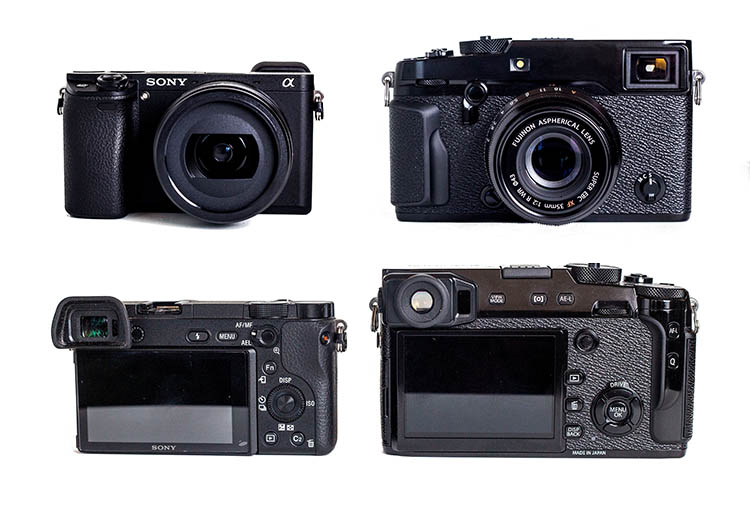
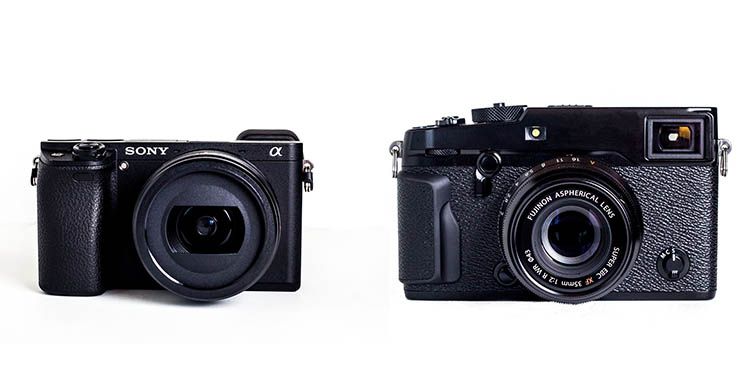
The Sony a6300 and Fujifilm X-Pro2 are two mirrorless cameras that debuted very recently as updated versions of their popular and beloved predecessors. Both cameras are comparable in technical specs and appeal, but how does each fare when compared side-by-side? Find out below!

Fujifilm X-Pro2 versus Sony a6300 6

Technical Specs: Main Similarities

Camera Sensors and Format

Both the a6300 and X-Pro2 are APC-C crop sensor bodies with a 1.5x crop factor. Each has a CMOS sensor with 24-megapixel resolution and is capable of shooting in both JPG and RAW on SD memory cards.

Solid, Weather-Resistant Body

Perhaps the biggest cosmetic upgrade that Sony made to the a63000 was including a tougher, more weather-resistant body. Like the X-Pro2, the a6300 is composed of magnesium alloy promises to be dust and moisture resistant.

Fujifilm X-Pro2 versus Sony a6300 6

In-Camera Wi-Fi

Like most modern digital cameras, both the X-Pro2 and a6300 have built-in Wi-Fi, making it a snap to transfer photos from your camera to your mobile phone, or shoot remotely via a mobile app.

Technical Specs: Main Differences

Price

The a6300 can be purchased body-only for $ 998.00, while the X-Pro2 is quite a bit more expensive at $ 1,699.00. Accompanying Fujifilm lenses also tend to be pricier than Sony equivalents.

Size and Weight

The X-Pro2 is quite a bit bulkier and heavier, weighing in at 15.70 ounces (445 g) body-only compared to the a6300’s 14.25 ounces (404 g). In terms of dimensions, the X-Pro2 is also slightly bigger with dimensions of 5.5 x 3.3 x 1.8″ (141 x 83 x 56 mm), compared to the a6300’s dimensions of 4.7 x 2.6 x 1.9″ (120 x 67 x 49 mm). Accompanying Fujifilm lenses are also heavier and larger than Sony equivalents.
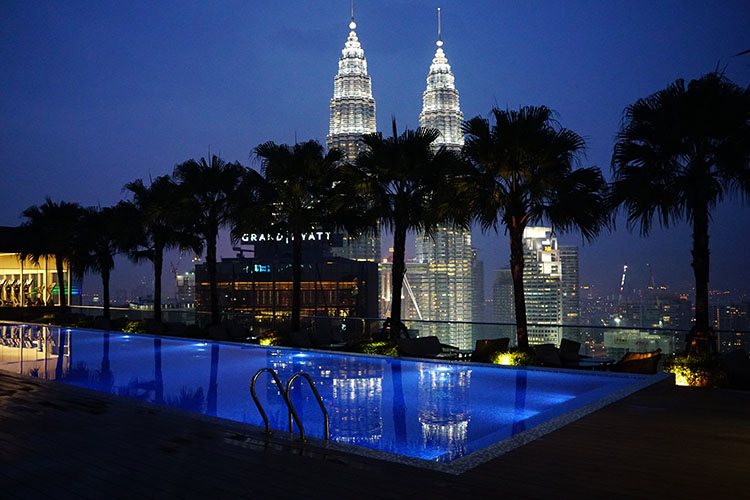
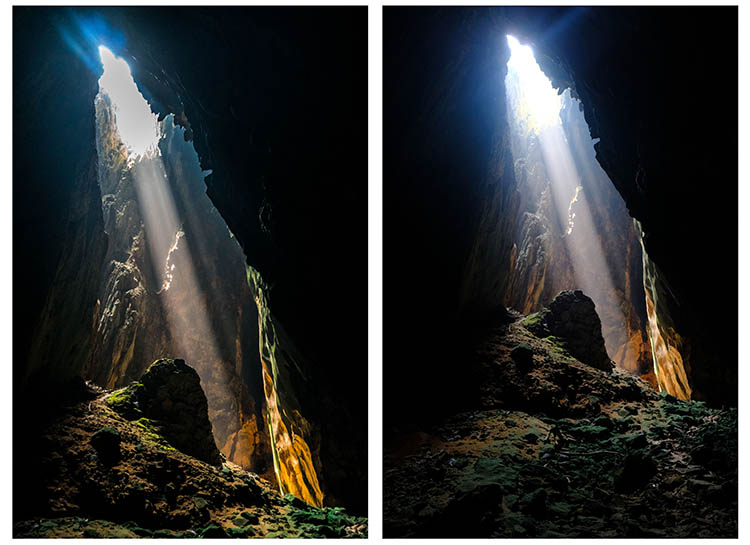
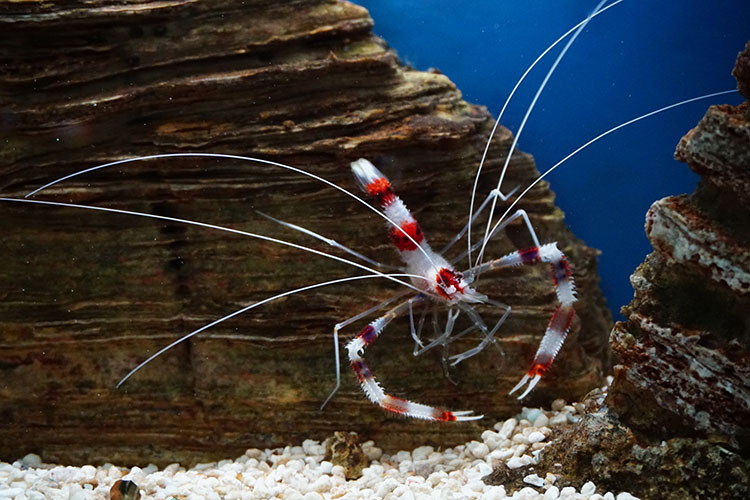
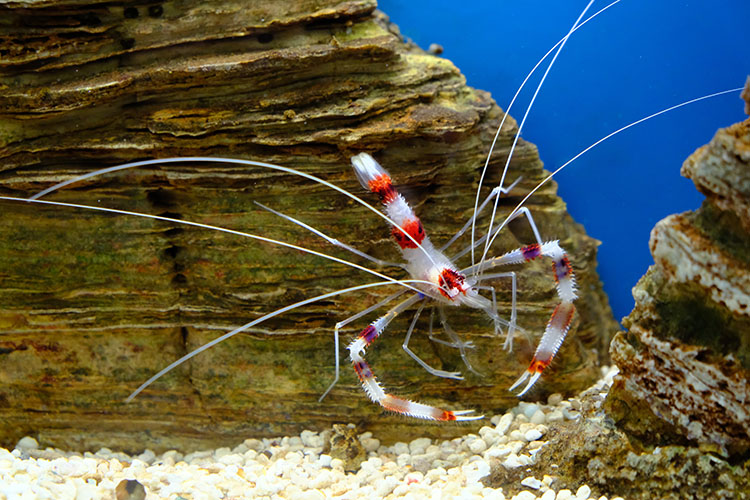
Sony a6300

Sony a6300

Fuji X-Pro2

Fuji X-Pro2

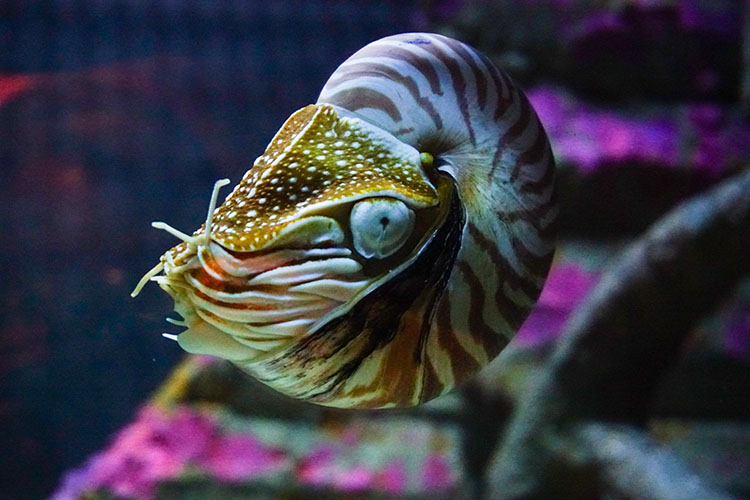
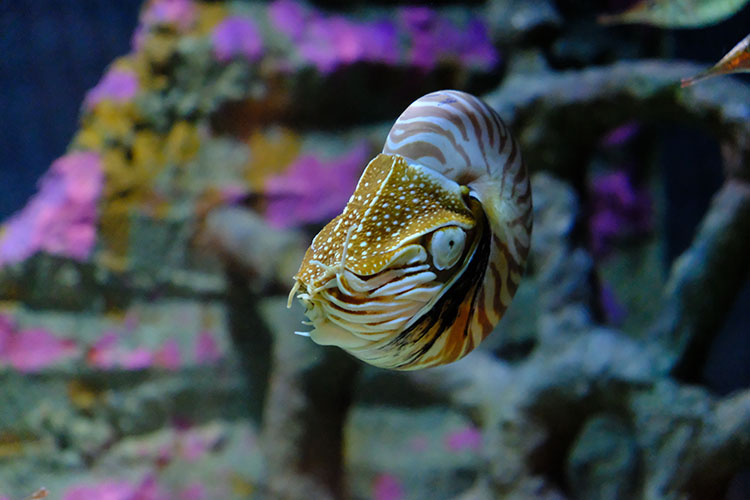
Both shot with the same settings. Images are straight from the camera, unedited.

Video

The a6300 can record 4K video, while the X-Pro2 can only record video at 1080p. Interestingly, the Fujifilm offers two SD-card slots compared to the Sony’s single SD-card slot. You’d think Sony would squeeze in another slot to accommodate their higher-quality video formats.

Viewfinders

Among the unique features of Fujifilm’s digital cameras is their signature hybrid viewfinder which really shines on the X-Pro2. For those unfamiliar, the hybrid viewfinder offers the ability to switch between optical (rangefinder style) and electronic viewfinders , which can be a huge advantage for photographers who dislike shooting with electronic viewfinders only, which is what you get with the a6300.

Focus Tracking

Besides the inclusion of 4K video, the main selling point of the a6300 was its brand new sensor, and what Sony claims is the world’s fastest autofocus (dubbed “4D focus”) with 425 phase detection autofocus points. Combined with the Sony’s ability to shoot at up to 11 frames per second and accurate lock-on AF, the a6300 is a beast for shooting sports and action photography.

Comparatively, the X-Pro2 sports a total of 273 AF points including 169 embedded phase-detect AF points, plus a maximum burst rate of 8 frames per second.

Sony a6300

Sony a6300

Fuji X-Pro2

Fuji X-Pro2

Display Screen

While both cameras have a 3-inch rear LCD screen, the a6300 has a pop-out tilting screen, while the Fujifilm’s screen is melded to the camera body.

Built-in Flash

The a6300 offers a small pop-up flash that can be angled to bounce off the ceiling, in addition to a hot-shoe mount, while the X-Pro2 does not have a built-in flash (only a hot-shoe mount).

In Practice

Given the technical similarities and differences above, how did it actually feel to handle both cameras? The Fujfilm’s weight and size were definite factors, especially while switching between the smaller, lighter-weight Sony. With that being said, one could definitely argue that Fujifilm’s heavier, more solid camera and lenses felt like a higher-quality investment compared to some of Sony’s lightweight, plastic-based lenses.

Sony’s newly engineered 4D focus tracking was incredibly spot-on and accurate, especially compared to the Fuji. However, unless you’re shooting a ton of action scenes, Sony’s ultra-fast autofocus is a luxury that isn’t a make or break feature. One feature on the Sony that did come in handy was the flexible pop-up flash that would have been nice to have on the Fuji.

Fujifilm X-Pro2 versus Sony a6300 6

Sony a6300 photo on the left; Fujifilm X-Pro2 photo on the right. Both shot with the same settings. Images are straight from the camera, unedited.

The X-Pro2 has a clear vintage, rangefinder look and feel to it, which some photographers may prefer. Personally, I preferred the feel and overall button placement of the Sony, and was ultimately able to customize buttons and settings to operate it similarly to my Canon 5D Mark III.

On both cameras, the built-in Wi-Fi was a little tricky to set up, but from then on was incredibly intuitive and easy to wirelessly transfer images straight from the cameras to cell phones.

Sony a6300

Sony a6300

Fuji X-Pro2

Fuji X-Pro2

One last consideration – lens availability

Since both the a6300 and X-Pro2 are interchangeable lens cameras, compatible lens selection is another crucial difference between the two brands. Fujifilm lenses, while more solid and often more expensive, are contained to primes with a rather limited selection of zoom lenses, most of which have variable maximum apertures. In comparison, Sony offers a slightly more varied selection of lenses from primes and wides to mid-range and telephoto zooms.

Which is better for you?

Both the X-Pro2 and a6300 are feature-packed, brand new cameras that will appeal to different types of photographers.

Go Sony: If you value wicked fast autofocus, enhanced video recording capabilities, and/or are on a bit of a budget, the Sony a6300 is probably best for you.

Go Fuji: If you love the look and feel of a rangefinder camera, value Fuji’s unique hybrid viewfinder, and/or have a larger budget, the X-Pro2 will be your new favorite camera.

Sony a6300

Sony a6300

Fuji X-Pro2

Fuji X-Pro2

Have you tried either or both of these cameras? What are your thoughts?

googletag.cmd.push(function() {
tablet_slots.push( googletag.defineSlot( “/1005424/_dPSv4_tab-all-article-bottom_(300×250)”, [300, 250], “pb-ad-78623” ).addService( googletag.pubads() ) ); } );

googletag.cmd.push(function() {
mobile_slots.push( googletag.defineSlot( “/1005424/_dPSv4_mob-all-article-bottom_(300×250)”, [300, 250], “pb-ad-78158” ).addService( googletag.pubads() ) ); } );

The post Side by Side Comparison: The Sony a6300 Versus Fujifilm X-Pro2 by Suzi Pratt appeared first on Digital Photography School.


Digital Photography School

 
Comments Off on Side by Side Comparison: The Sony a6300 Versus Fujifilm X-Pro2

Posted in Photography