RSS
 

Posts Tagged ‘Sony’

Sony 35mm FE lens firmware update improves manual focus reliability

15 Jul

Sony has issued firmware updates for its 35mm full-frame primes which claim to improve focus point reliability when using manual focus for long periods of time. The new firmware is offered for the FE 35mm F1.4 ZA and FE 35mm F2.8 ZA Zeiss-branded lenses.

Articles: Digital Photography Review (dpreview.com)

 
Comments Off on Sony 35mm FE lens firmware update improves manual focus reliability

Posted in Uncategorized


Sony prices 70-200mm F2.8 GM OSS G Master at $2600

12 Jul

Sony’s premium telezoom for full-frame will cost $ 2600 when it reaches US consumers in July. The 1.4x and 2.0x teleconverters designed for the 70-200 will each cost $ 550 and are also expected to ship in July.

A recent announcement from Sony Japan indicated that the 70-200 would be delayed until September, but according to Sony US, the lens will indeed be available to customers in North America this month. The September release date still stands for Japan.


Press release:

Pricing and Availability – New FE 70-200mm f/2.8 GM OSS G Master lens. Teleconverters and Wireless Lighting Control System

Today, Sony has also released pricing and ship timing for the FE 70-200mm f/2.8 GM OSS G Master lens, 1.4x and 2.0x teleconverters plus their new wireless lighting control system. All products were introduced earlier this year.

One of the most eagerly anticipated lenses of the year, the Sony FE 70-200mm f/2.8 GM OSS G Master lens takes its place as the flagship telephoto zoom in the Sony lens lineup. Featuring built in Optical Stead Shot (OSS) and a fast f/2.8 maximum aperture across the zoom range, the lens will be an ideal fit for nature, sports, travel, fashion, beauty and wedding photographers. This lens will ship this July for a retail price of $ 2,600 US and $ 3,300 CA.

Designed exclusively to fit the 70-200mm F2.8 G Master lens, the new 1.4x and 2.0x teleconverters (models SEL14TC and SEL20TC) will both be sold for the same retail price of about $ 550 US and $ 700 CA, and will ship this July.

The versatile new wireless flash and control system – comprised of the FA-WRC1M wireless radio commander and the FA-WRR1 wireless radio receiver – was designed to meet the growing demands of professional Sony photographers. With a maximum range of 30m (approx.. 98 feet) and the ability to control a maximum of 15 separate flash units in 5 different groups, it offers a flexible wireless flash shooting experience with exceptional performance.

The FA-WRC1M commander will be sold for about $ 350 US and $ 480 CA. The FA-WRR1 receiver will be sold for about $ 200 US and $ 280 CA. Both products will ship this August.

The new lenses, teleconverters and wireless lighting system will be sold at a variety of Sony authorized dealers throughout North America.

A variety of exclusive stories and exciting new content shot with the new lenses, accessories and other Sony ? products can be found at www.alphauniverse.com, Sony’s new community site built to educate, inspire and showcase all fans and customers of the Sony ? brand.

Articles: Digital Photography Review (dpreview.com)

 
Comments Off on Sony prices 70-200mm F2.8 GM OSS G Master at $2600

Posted in Uncategorized


Sony announces FE 50mm F1.4 ZA prime lens

11 Jul

$ (document).ready(function() { SampleGalleryV2({“containerId”:”embeddedSampleGallery_0676890121″,”galleryId”:”0676890121″,”isEmbeddedWidget”:true,”standalone”:false,”selectedImageIndex”:0,”startInCommentsView”:false,”isMobile”:false}) });

Sony has announced its new Planar T* FE 50mm F1.4 ZA lens. This full-frame fast prime features an 11-blade aperture for circular out-of-focus highlights even as you stop down, ‘Advanced Aspheric’ and ED lens elements and Zeiss’ T* coating. Sony says that the lens’ Planar design minimizes distortion. 

The lens is similar in construction to the FE 35mm F1.4. It’s weather-sealed and uses Sony’s Super Sonic Wave Motor for quick and quiet autofocus. A clicked aperture ring can be de-clicked if desired for smooth aperture control in video.

At a recent shooting event in San Diego, we had a chance to go hands with this fast prime (view our gallery here). Despite being a bit heavy, the lens handles beautifully. We were very impressed by sharpness: subjects placed far off-center remained sharp even wide open, despite the 42MP Sony a7R II sensor resolution. Indeed, MTF curves indicate an impressive 60% response is maintained across the frame wide open even at 40 line pairs / mm. Our initial shots also indicate that axial chromatic aberration (green and purple fringing) are very well controlled, and bokeh appears very smooth, both of which add to this lens’ appeal over options like the Sony FE 55mm F1.8 ZA.

The FE 50mm F1.4 ZA lens will be available this month at a price of $ 1500.

Sony Planar T* FE 50mm F1.4 ZA specifications

Principal specifications
Lens type Prime lens
Max Format size 35mm FF
Image stabilisation No
Lens mount Sony FE
Aperture
Aperture ring Yes
Number of diaphragm blades 11
Optics
Elements 12
Groups 9
Special elements / coatings 2 aspherical + 1 ED element + Zeiss T* coating
Focus
Minimum focus 0.45 m (17.72)
Maximum magnification 0.15×
Autofocus Yes
Motor type Ring-type ultrasonic
Full time manual Yes
Focus method Internal
Distance scale No
DoF scale No
Physical
Weight 778 g (1.72 lb)
Diameter 84 mm (3.29)
Length 108 mm (4.25)
Sealing Yes
Colour Black
Filter thread 72.0 mm
Hood supplied Yes
Hood product code ALC-SH143

Press Release:

Sony Releases Full-Frame FE 50mm F1.4 ZA Prime Lens

A quintessential wide-aperture 50mm “normal” lens, the new ZEISS® Planar F1.4 offers high resolution, high-contrast and overall exceptional performance

SAN DIEGO, July 11, 2016 – Sony Electronics, a worldwide leader in digital imaging and the world’s largest image sensor manufacturer, has today introduced a new full-frame lens for their E-mount camera system, the Planar T* FE 50mm F1.4 ZA (model SEL50F14Z).

This 50mm prime lens features a large F1.4 maximum aperture that offers impressive contrast and outstanding resolution that are hallmarks of the ZEISS® brand. It produces these consistently strong qualities throughout the entirety of the frame – from center to corner – and at all aperture settings, even while shooting wide open at F1.4. The cutting edge optical structure includes high-precision AA (Advanced Aspherical) and ED (Extra-low Dispersion) glass elements that reduce spherical and chromatic aberration, as well as a ZEISS® T* Coating that minimizes flare and ghosting creating the classic ZEISS® clarity. Additionally, its Planar design ensures minimal distortion.

The large F1.4 maximum aperture of the FE 50mm F1.4ZA lens provides a level of brightness and speed that are advantageous for dimly lit indoor shots, night scenes, and portraits, while its 11-bladed circular aperture allows for stunning “bokeh”, or background defocus, in images. The lens also features an aperture ring with an adjustable ON/OFF switch, an AF/MF focus mode switch, and a dust and moisture resistant design¹, further increasing its functionality.

The new lens is also equipped with a ring drive SSM (Super Sonic wave Motor) system, which allows it to efficiently lock focus with speed, precision and in near silence, making it particularly useful for shooting movies.

Pricing and Availability – FE 50mm F1.4 ZA Lens

The new FE 50mm F1.4 ZA lens will ship this July for a retail price of $ 1,500 US and $ 1,950 CA. The new FE interchangeable lens will be sold at a variety of Sony authorized dealers throughout North America.

Articles: Digital Photography Review (dpreview.com)

 
Comments Off on Sony announces FE 50mm F1.4 ZA prime lens

Posted in Uncategorized


Sony Planar T* FE 50mm F1.4 ZA Sample Gallery

11 Jul

Sony has just announced its Planar T* FE 50mm F1.4 ZA lens, a high quality normal for its E-mount Alpha line of cameras. At a shooting event in San Diego, we had a chance to go hands-on. It’s a formidable lens, smaller than the 85mm GM with its 72mm filter thread, but significantly larger than the FE 55mm F1.8 ZA already available for the system.

So what does that extra heft and glass get you besides top notch build quality and ergonomics? Have a look at our gallery where we’ve posted a smattering of real-world portraits at fast apertures shot using Eye AF on the 42MP Alpha 7R II, some shallow focus shots at various apertures to get an idea of axial CA, as well as some infinity horizons at various apertures for the assessment of sharpness (day scene) and coma (night scene).

We’re duly impressed by the lens’ sharpness across the field wide open, lack of axial CA (green/purple fringing just outside the focal plane), and pleasing bokeh, but to keep things objective, we’ll be following up soon with a brief comparison of these attributes against the already stellar FE 55/1.8 ZA. Look for updates to this gallery as well in the coming days.

Articles: Digital Photography Review (dpreview.com)

 
Comments Off on Sony Planar T* FE 50mm F1.4 ZA Sample Gallery

Posted in Uncategorized


Sony delays 70-200mm GM lens until September

30 Jun

Sony has said that the FE 70-200mm F2.8 GM OSS lens for its E-mount cameras is to be delayed until September. When the lens was announced in February this year the company expected to be delivering the tele-zoom to stores this month. No reason is given for the delay, but the statement thanks users for their patronage and apologies for the inconvenience.

Along with the zoom the company will also push back the release of the two tele-converters that are supposed to go with it – the SEL14TC 1.4x converter and the SEL20TC 2x converter.

The FE 70-200mm F2.8 GM OSS is part of a new G Master range of lenses designed with the company’s full frame a7 series of cameras in mind – though they are also compatible with the APS-C models. Other GM lenses announced along with the 70-200mm F2.8 are the FE 24-70mm F2.8 GM and the FE 85mm F1.4 GM.

For more information see the Sony website.

Articles: Digital Photography Review (dpreview.com)

 
Comments Off on Sony delays 70-200mm GM lens until September

Posted in Uncategorized


Sony Alpha SLT-A68 real-world samples

29 Jun

The Alpha SLT-A68 is Sony’s entry-level Translucent Mirror camera and the follow-up to the a58. Despite its position in the entry-level class, it borrows many components from its big brother, the Sony SLT- A77 II. This includes a 79 point AF system with 15 cross-type points, Bionz X processor and a stabilized sensor. It all adds up to quite a lot of camera.

The weather is just starting to really warm up here in Seattle and the long days offer plenty of sun-filled hours for shooting. We’ve been out and about with the a68; click the link below to get a sense of its real-world image quality.

Articles: Digital Photography Review (dpreview.com)

 
Comments Off on Sony Alpha SLT-A68 real-world samples

Posted in Uncategorized


Sony announces camera shipment delays due to Kumamoto earthquake

29 Jun

The earthquake that hit Japan’s Kumamoto prefecture in April affected multiple camera companies with facilities in the region, including Sony. In its most recent statement about the matter, Sony revealed several camera models that will be delayed getting to customers.

The following models are mentioned in Sony’s statement: 

  • a7
  • a7R
  • a7S
  • a5100
  • a77 II
  • a99

It’s interesting to note that the delays primarily affect older models, suggesting the company is concentrating its supplies and efforts on its most popular models. Sony also states that other models not specifically mentioned above might be delayed as well.

Via: Sony

Articles: Digital Photography Review (dpreview.com)

 
Comments Off on Sony announces camera shipment delays due to Kumamoto earthquake

Posted in Uncategorized


Sony a6300 Mirrorless Camera – Thoughts and Field Test

29 Jun

Sony has spent recent years charging full steam ahead into the full-frame mirrorless camera market. But they have also managed to satisfy the desires of APS-C shooters, mainly through their widely-popular a6000 mid-range mirrorless camera. In March 2016, just two years after the debut of the a6000, Sony released the a6300 with improved features, that still retain many of the characteristics of the older model.

To be clear, Sony doesn’t intend for the a6300 to be a replacement for the a6000, meaning the older camera is still in production and can be purchased at a very attractive price point (around $ 549.00 for the body only).
Sony a6300 Mirrorless Camera

My Camera Background

Before diving into this review, I want to clarify my digital camera experiences to make my perspective more apparent. The Sony a6300 is the very first mirrorless camera I’ve owned, besides my very brief experiment with the a6000 for comparison purposes. Until recently, I’ve shot almost exclusively with Canon DSLRs, namely the 5D Mark III and 6D. As a result, many of the a6300’s features such as its pop-out LCD screen and electronic viewfinder might seem like standard features to other mirrorless shooters, but for a Canon DSLR user like myself, these are newfound novelties that turned my world upside down. With that being said, let’s move on to the a6300’s specs.

Key Features of the Sony a6300
Sony a6300 Mirrorless Camera

The main improvement with the Sony a6300 is a newly developed sensor with a pixel count of 24MP (same as the a6000) that is packed with a whopping 425 phase-detection AF points, which is significantly higher than the a6000’s 179 AF points. According to Sony, the a6300 has the greatest number of phase-detection points to date, on an interchangeable-lens camera ,and makes the a6300 the camera with the world’s fastest autofocus.

Video is another aspect that Sony upgraded on the a6300, with the inclusion of 4k video recording capabilities, the addition of a mic socket, and the ability to record time code. Besides the autofocus and video systems, the a6300 sees an OLED 2.36M-dot viewfinder, an improvement from the a6000’s OLED 1.44M-dot viewfinder. Battery life is also slightly improved at 400 shots versus 360 shots.

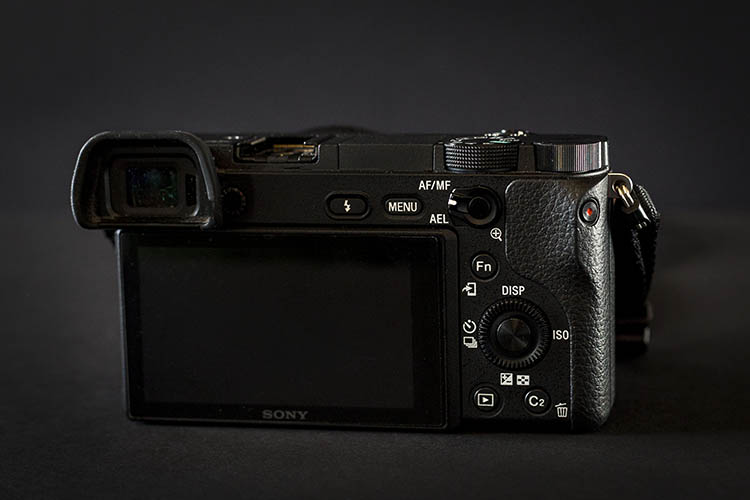
Physically, the a6300 is only 2 ounces heavier than its predecessor, although it feels much more solid with its weather-sealed magnesium alloy build, that was lacking on the a6000. An AEL button with an AF/MF switch has also been conveniently added to the back of the camera, which sports and action shooters should find handy. Other than these few additions, the Sony a6300 doesn’t look or feel much different than the a6000.

Overall, these added features of the a6300 clearly appeal to shooters looking to focus on action, sports, and video.

Sony a6300 Mirrorless Camera

Sample action shot with a Sony 16-50mm f/3.5-5.6 kit lens.

Pros of the a6300

While discussing the pros and cons of the a6300, it should be noted that many of the same features are also available on the a6000.

Extremely compact

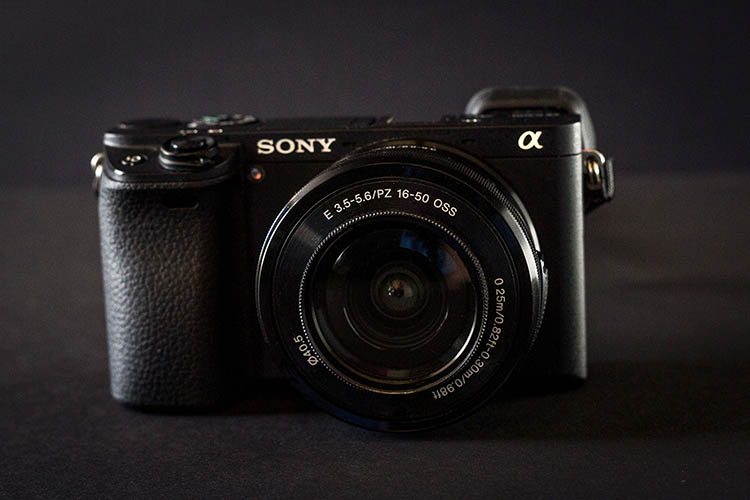
As a DSLR shooter, the a6300’s compact size was particularly appealing. While testing the Sony a6300, I used both the kit 16-50mm f/3.5-5.6 retractable zoom lens, and the Sony 20mm f/2.0 pancake lens, and was amazed that both were incredibly lightweight and basically the same size. There is of course, the trade-off of both lenses being made of plastic and not feeling as robust as say a Fujifilm lens, but they both perform very well and weigh close to nothing. Pairing either lens with the a6300 makes for a very compact, low-profile camera system that is perfect for travel.

Sony a6300 Mirrorless Camera

An informal food photo taken at a restaurant table moments before consumption. Shot with a Sony 20mm f/2.8.

Silent Shutter

While many DSLRs offer a Silent Shutter that is still quite noisy, the a6300’s silent shutter feature makes the camera so quiet you wouldn’t even know a photo was being taken. It’s a great feature for undercover or candid photography moments when you truly want no sound associated with taking a photo. With that said, non-silent shooting on the a63000 produces a very crisp shutter snap, especially when firing away at the camera’s highest shutter speed of 11 frames per second.

Panoramic shooting feature that actually works (most of the time)

After consistently trying, and failing, to take advantage of panoramic shooting on a variety of devices from point and shoots to cell phone cameras, I was beginning to think that on-the-go panoramic shooting was a myth, until I tried it with the a6300. Unlike other devices, the a6300 will shoot and stitch together a near-perfect horizontal or vertical panorama even when your manual panning isn’t spot on. There were a few times when the camera insisted that I wasn’t panning straight enough to make a clear pano shot, but most of the time even my wobbly panning techniques were good enough for the a6300 to make sense of.

Sony a6300 Mirrorless Camera

Sample panorama shot with a Sony 16-50mm f/3.5-5.6 kit lens.

Focus Modes + Face Recognition

Easily two of the best features of the a6300 are the Face Registration and Eye AF (autofocus) features, which do pretty much what their names imply. Activating Face Registration allows you to program the a6300 to recognize and prioritize up to eight faces. This feature is incredibly handy when shooting a crowd of people, and the a6300’s accuracy of picking out the correct face is astounding. Eye AF works very similarly, but without the need to register (program them in) the eyes. Simply enable Eye AF on the a6300 and the camera will automatically search for your subject’s eyes and track them using continuous autofocus. This feature is so spot-on that the a6300 will even lock onto artistic renderings of eyes, such as a painted portrait.

Sony a6300 Mirrorless Camera

Sample portrait shot with a Sony 20mm f/2.8 lens.

Quick Wi-Fi connection

Like most newer digital cameras today, the a6300 has Wi-Fi and NFC, to connect with smartphones and tablets for remote camera shooting, and wireless image transfer via Sony’s PlayMemories Mobile app. Setting up Wi-Fi on the camera is very quick and intuitive, and Sony’s accompanying app also includes an array of other options that can further enhance your shooting experience, such as time-lapse and multiple exposure apps, among many others.

Built-in flexible flash
Sony a6300 flash

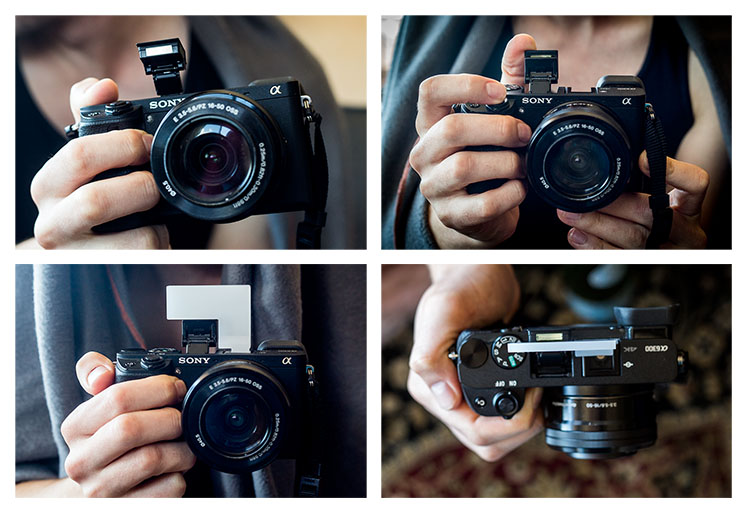
Thankfully, Sony kept one of the a6000’s best features on the a6300: a built-in pop-up flash. Extremely compact and flexible, the little flash can bend 45 degrees to tilt upwards, allowing for bouncing the flash off the ceiling.  Next to the pop-up flash is a hot shoe mount that can fire Canon or Nikon Speedlight flashes when used with an adapter.

One accessory that can help fully utilize the pop-up flash are plastic bounce cards which attach to the a6300 via the hot-shoe mount, and hold the flash in an upright position.

Sony a6300 Mirrorless Camera

Sample night shot with a Sony 20mm f/2.8 lens.

Sony Lens Options

Currently, there are over 70 Sony lenses that you can purchase to go along with your new a6300 body. Options range from compact, low-priced primes and larger, higher-priced zoom lenses. Cheaper prime options include the 16mm f/2.8, 20mm f/2.8, 28mm f/2, 30mm f/3.5 macro, 35mm f/1.8, and 50mm f/1.8, all ranging in price from $ 249.99-$ 449.99. Wide-range zoom lenses, without a fixed f-stop, are also somewhat affordable, such as the 18-200mm f/3.5-6.3 ($ 749.99) or the 24-240mm f/3.5-6.3 ($ 998.99)

Sony 18-200mm f/3.5-6.3 ($ 749.99)

However, Sony’s higher-quality lenses are much higher in price, which may be difficult to swallow if you’re converting from a DSLR kit. Larger, high-quality Sony primes such as the 24mm f/2 and 35mm f/1.4, prices are upwards of $ 1,200.00 and more. The same is true for Sony’s versions of traditional DSLR lenses such as the 16-35mm f/2.8 ($ 2,248.99), 24-70mm f/2.8 ($ 2,098.00), and 70-200mm f/2.8 ($ 2,999.99). If you’re a DSLR shooter with an array of lenses, you can always invest in a converter to use your DSLR lenses with your Sony camera body, but at the expense of slower autofocus.

When you purchase either the Sony a6000 or a6300, you have the option of buying it body-only, or with a 16-55mm f/3.5-5.6 E-mount retractable zoom kit lens, which is valued at approximately $ 260.99 if purchased separately. For its size, range, and overall performance, the kit lens, plus a Sony prime lens, aren’t a bad starter combination, especially if you’re looking to keep your gear compact and lightweight, and aren’t quite ready to invest in higher-priced Sony E-mount lenses yet.

ISO Performance

Sony opted to improve the a6300’s high-ISO performance by including a native ISO range of 100-25,600 with the possibility of extending that ISO to 51,200. While the ability to shoot at higher ISO is great in theory, I found that ISO 6400 was the highest I could comfortably push the a6300 in darker environments, without sacrificing too much image quality. Even my RAW photos shot at ISO 6400 were a little too grainy for my taste, no matter how much noise-reduction I did in post-processing.

Sony a6300 high ISO2

Cons of the a6300

Sony’s bloated camera menu

A common complaint among Sony shooters, that I have to agree with, is that the camera menu is very difficult to navigate. It truly seems like Sony outfitted the a6300 with so many features, and tried to stuff them all into a menu, that it can take weeks for new Sony shooters to get used to using the camera.

This could be easily solved if Sony allowed users to customize the menu a bit more, so that frequently-used features can be quickly accessed. As it stands, Sony only allows assigning custom functions to the camera’s physical buttons, and there aren’t nearly enough of those.

With that being said, the trick to making sense of Sony’s menus is to customize as much of the camera’s settings as possible. Presently, I’ve customized the buttons and settings on the a6300 set to shoot almost identically to the way I shoot with my Canon 5D Mark III, making it easier to switch from one system to another.

Sony a6300 Mirrorless Camera

Sample action shot with a Sony 16-50mm f/3.5-5.6 kit lens.

LCD screen sometimes blanks out

When it comes to the a6300’s LCD screen, I was grateful for its pop-out rotating feature, something that has been sorely lacking on Canon DSLRs. Some other reviewers complained about the a6300 lacking a touch screen LCD, but again, this is something I’ve never had on a camera, so the fact that it’s missing doesn’t bother me.

One feature of the a6300’s LCD that was troublesome, was its occasional blackouts, which usually occurred right after rotating the screen. Oftentimes, the only way to get the LCD working again was to turn the camera off and on. With that said, using the electronic viewfinder (EVF) always worked without fail, even when the LCD blanked out.

Over to you

Do you already shoot with the Sony a6300, or are you considering making the move? What do you love about it, or what hesitations remain? Let me know your thoughts in the comments below.

googletag.cmd.push(function() {
tablet_slots.push( googletag.defineSlot( “/1005424/_dPSv4_tab-all-article-bottom_(300×250)”, [300, 250], “pb-ad-78623” ).addService( googletag.pubads() ) ); } );

googletag.cmd.push(function() {
mobile_slots.push( googletag.defineSlot( “/1005424/_dPSv4_mob-all-article-bottom_(300×250)”, [300, 250], “pb-ad-78158” ).addService( googletag.pubads() ) ); } );

The post Sony a6300 Mirrorless Camera – Thoughts and Field Test by Suzi Pratt appeared first on Digital Photography School.


Digital Photography School

 
Comments Off on Sony a6300 Mirrorless Camera – Thoughts and Field Test

Posted in Photography


Cactus promises 1/8000sec flash sync with V6 II transceiver, new version for Sony users

28 Jun

Hong Kong-based flash and flash trigger manufacturer Cactus has upgraded its V6 wireless transceiver system to allow flash sync speeds of up to 1/8000sec. The company, claiming its transceivers can apply TTL control to multiple brands of flash at the same time, says that the V6 ll will be compatible with units from Canon, Nikon, Olympus, Panasonic and Pentax. Cactus also plans to bring high speed flash to Fujifilm X cameras even though Fuji doesn’t support the feature with its own flash units. Cactus has, at the same time, announced a V6 lls for Sony users with the same capabilities, but offers a Sony-compatible hotshoe foot.

The Cactus V6 ll offers an LED AF-assist light and remote control of the flash’s power output and zoom head position, as well as the features of the previous version. Also new is the ability to detect the on-camera flash in the network and to assign an automatic profile to that flash on start-up. This should make the system easier to work with.

The Cactus V6 ll will be available from July priced at $ 95. The Sony version is scheduled for an August release. For more information and a list of pre-installed flash profiles visit the Cactus website.


Press release:

Go high-speed sync! Cactus launches the V6 II, a newest version of its popular Wireless Flash Transceiver to add cross-brand HSS and the V6 IIs, a dedicated Sony version.

After two years in the making, Cactus V6 II & IIs – the second generation of the World’s First cross-brand wireless flash transceiver, NOW supports high-speed synchronisation (HSS)!

Besides the revolutionary remote power control of Canon, Fujifilm, Nikon, Olympus, Panasonic and Pentax flashes all at the same time, the new models now support HSS / FP mode in the same cross-brand environment.1 This unique function gives photographers flexibility undreamed of. Matching flashes with same camera system for off-camera flash photography is over.

Two High-Speed Sync Modes
1. Normal HSS: Supports shutter speed up to 1/8000s.
2. Power Sync: Boosts flash contribution above camera’s x-sync speed, perfect for extreme conditions where Normal HSS is not powerful enough. 2

Cactus also extends HSS capabilities to Fujifilm cameras despite them not yet
supporting high-speed sync at the time of writing.

AF-assist
Both the V6 II and IIs now has an automatic LED AF-assist light that makes autofocusing in dark environments possible – even in pitched-black!3 Besides the camera-mounted V6 II/IIs, off-camera units will also activate the AF-assist light, which helps focusing even when camera is far from the subject.

V6 IIs for Sony
The dedicated Sony version – V6 IIs, embodies all the desirable functions of its sibling V6 II but with a Sony compatible hot shoe on the transceiver body, ensuring a seamless and secured connection with Sony cameras and flashes. Mounting the V6 IIs on a Sony Alpha camera allows the photographer to shoot above camera’s maximum x-sync speed and control power and zoom of Sony, including those with a Minolta/Sony hot shoe via an adapter, and other V6 II compatible flashes. 4 It is the perfect wireless flash trigger for existing and new users of Sony Alpha cameras, especially those who may still have non-Sony system flashes in their camera bags.

Highly Intelligent
V6 II and IIs can now auto-detect the on-camera portable flashes at device start-up by selecting the system the flash belongs to and assigning an Auto flash profile. Similarly, the V6 II will auto-detect the camera and selects the system accordingly. 5 This simple plug-and-play makes the setting up extremely quick and easy that both amateurs and professionals appreciate.

Expands Flash Compatibility
Remote zoom control now applies to all compatible TTL flashes, gives the photographer much quicker controls. Better still, previously unsupported digital TTL flash models on the V6 are now being supported.

Features at a Glance
1. Cross-brand wireless manual power and zoom control with HSS support of Canon, Fujifilm, Nikon, Olympus, Panasonic, Pentax and Sony flashes;

2. Two cross-brand high-speed sync modes:
•?Normal HSS supports shutter speeds up to 1/8000s;
•?Power Sync boosts flash contribution above camera’s x-sync speed;

3. Multi-master supports up to 20 photographers firing the same set of flashes at their own power settings;

4. AF-assist light assists focusing in low light environment;

5. Flash profile customization ensures accurate power output;

6. Work seamlessly with the RF60 series to support HSS and Power Sync;

7. Other useful features inherited from the V6 including:

  • Lo Power
  • Absolute Power
  • TTL Pass-through
  • Group Sequence
  • Sport Shutter
  • Remote Shutter
  • Relay Mode
  • Delay Mode
  • Firmware Update support

Price and Availability
Cactus V6 II and IIs are currently scheduled to be available in 2016 July and August respectively and both are priced at US$ 95.00 (ex VAT).

Articles: Digital Photography Review (dpreview.com)

 
Comments Off on Cactus promises 1/8000sec flash sync with V6 II transceiver, new version for Sony users

Posted in Uncategorized


Metabones unlocks native Sony focus modes for Canon-mount adapters

24 Jun

Updated firmware allows Sony users to use all their AF modes when shooting Canon EF-mount lenses with Metabones adapters. It does so by emulating a native Sony lens, much like the recent Sigma MC-11 adapter. This update to the Metabones line of Smart Adapters and Speed Boosters enables the use of modes such as continuous Eye-AF and Direct Manual Focus. Updated firmware also brings smoother aperture control to most of Metabones’ adapters. And though the company doesn’t make any claims as to video focusing, if the adapters do truly emulate native E-mount lenses, we’d expect full phase-detect AF functionality during video.

The Metabones is only the second E-mount adapter to offer ‘native’ lens functionality with adapted lenses, with the Sigma being the first.* However, in practice the Sigma MC-11 has had many issues, too often reverting to contrast-detect AF off-center, and constantly hunting back and forth in minute increments in AF-C.

It’s not surprising, then, that Metabones lists a series of caveats and exceptions, most of which reflect the range and diversity of EF lenses that people might use. There are also warnings of increased battery usage and of poor continuous AF performance from lenses that aren’t designed to be driven in the pattern required for fast contrast-detection AF. Finally, Metabones mentions potential problems when shooting stopped down, undoubtedly a result of Sony’s ‘stop-down focusing’ that cripples the AF system if you shoot at smaller apertures by depriving the AF system of light, and literally shutting off phase-detection altogether at apertures smaller than F8.

Firmware for the latest adapters can be downloaded from the Metabones website. Owners of Mark I, II or III Smart Adapters and original Speed Boosters will need to return their adapters to the factory, where they will be updated free-of-charge. We’ll keep you apprised of actual performance once we’ve had an opportunity to try out the new firmware with a variety of lenses.


Press Release:

Metabones® Adds “Native” AF and Smooth Iris to EF Mount Speed Boosters® and Smart Adapters by Firmware Upgrade

Vancouver, Canada, June 23, 2016: Metabones® releases Metabones App 2.3, a major firmware update with the following additional features.

  • Eye-AF (A6300/A7series).
  • Fast contrast detect AF for all E-Mount cameras.
  • DMF (direct manual focus) for E-Mount cameras, where the camera switches to MF as soon as AF completes. This is useful for checking AF accuracy when used with focus peaking.
  • Smooth iris for Sony E-Mount and FZ-Mount cameras and Blackmagic, JVC and Panasonic Micro Four Thirds Mount cameras.

Metabones® has already added fast EF lens autofocus to its Micro Four Thirds Mount Speed Boosters® and Smart Adapters™ last year. With this speedy advantage now extended to E-Mount, EF-Mount lenses are now capable of focusing quickly across the widest variety of mirrorless cameras with trusted Metabones precision and reliability.

The smooth iris feature slows down the movement of the electromagnetic aperture diaphragm so that video footage transitions smoothly when the aperture changes, with reduced tick noise from the lens. The latest Canon and Tamron SP lenses have special support for this feature and Metabones® makes use of it if the lens supports it.

Limitations:

  • E-Mount “native” autofocus features may not work with all lenses.
  • “Native” autofocus may be lesser in performance and/or accuracy compared to the original “Green” mode phase-detect autofocus for A6300, A7 Mark II and A7R Mark II.
  • AF-C and video autofocus may have unsatisfactory AF performance and/or accuracy. This is a limitation inherent in DSLR lenses, which lack the low latency required for making many fine movements in rapid succession during AF-C and video focusing.
  • Excessive hunting may occur if a small aperture is used with AF-C, video or “Liveview Display Setting Effect” turned on.
  • The first few autofocus attempts may result in false positives where the camera gives focus confirmation but the subject is not in focus. This issue goes away on its own after a few trials with most lenses.
  • No support for in-camera correction such as peripheral shading, CA and distortion.
  • Power consumption may increase compared to the original “Green” mode autofocus. We recommend turning off the “Pre-AF” option to conserve battery power. On A7 series cameras and A6300 the option is on page 3 under the “gear” tab.
  • Actuations of the electromagnetic aperture diaphragm and/or the focus motor of the lens result in noises which may be picked up by the camera’s internal microphone during video recording. Use of an appropriately placed external microphone is required for video work.
  • The aperture moves in 1/3 stop steps with most Panasonic cameras and 1/8 stop steps with other cameras, which may be noticeable in video recordings. Programmed exposure mode and shutter priority exposure mode should not be used for video. Lenses supporting “smooth iris” smooth out the transition but do not increase iris resolution.

The following lenses have been tested for “native” AF. Refer to Metabones’ web site for the most up-to-date list. Lenses equipped with smooth iris support are marked with asterisks. APS-C lenses are not compatible with Speed Booster®.

  • Canon EF 8-15mm f/4L USM Fisheye*
  • Canon EF-S 17-55mm f/2.8 IS USM
  • Canon EF-S 18-55mm f/3.5-5.6 IS II*
  • Canon EF 24-105mm f/4L IS USM
  • Canon EF 28-80mm f/3.5-5.6 II
  • Canon EF 40mm f/2.8 STM*
  • Canon EF 50mm f/1.2L USM
  • Canon EF 50mm f/1.4 USM
  • Canon EF 70-200mm f/2.8L IS II USM*
  • Canon EF 70-200mm f/4L USM (non-IS)
  • Canon EF 70-300mm f/4-5.6L IS USM*
  • Canon EF 85mm f/1.2L II USM
  • Canon EF 100mm f/2.8L IS USM Macro*
  • Canon EF 100-400mm f/4.5-5.6L IS USM (I)
  • Canon EF 100-400mm f/4.5-5.6L IS II USM*
  • Canon EF 200mm f/2.8L II USM
  • Canon EF 300mm f/4L IS USM
  • Sigma 18-35mm f/1.8 DC HSM Art 013
  • Sigma 24-105mm f/4 DG OS HSM Art 013
  • Sigma 50mm f/1.4 EX DG HSM
  • Tamron SP 24-70mm f/2.8 Di VC USD A007
  • Tamron SP 45mm f/1.8 Di VC USD F013*
  • Tamron SP 70-200mm f/2.8 Di VC USD A009*

Incompatible lenses: (“Green” mode PDAF is still supported on A6300, A7 Mark II and A7R Mark II.)

  • Canon EF 50mm f/1.8 II
  • Canon EF 100mm f/2.8 USM Macro
  • Canon EF 135mm f/2L USM
  • Contax N lenses modified to EF mount by Conurus Canada
  • Sigma 18-125mm DC OS HSM
  • Tamron SP 17-50mm f/2.8 Di II VC B005
  • Tamron 28-300mm f/3.5-6.3 (IF) Macro A20

OSX and Windows versions of the firmware updater are available for download from Metabones’ web site. The same download updates Speed Booster® ULTRA, Smart Adapter™ Mark IV, EF to FZ Mount Smart Adapter and all EF Mount to Micro Four Third mount products. Updates to earlier Smart Adapters™ (I, II and III) and the original Speed Booster® are by factory only and are free of charge except for shipping.


* A TechArt adapter was technically the first to offer native lens functionality, but it was so highly unreliable that we never considered it a viable option.

Articles: Digital Photography Review (dpreview.com)

 
Comments Off on Metabones unlocks native Sony focus modes for Canon-mount adapters

Posted in Uncategorized