RSS
 

Posts Tagged ‘Social’

Why Blocking is Important for a Social Network

14 Dec

Why Blocking is Important for a Social Network

Earlier today Twitter reversed their decision to change how user blocks are handled after a backlash reaction on their network.

From the Twitter blog:

“Earlier today, we made a change to the way the “block” function of Twitter works. We have decided to revert the change after receiving feedback from many users – we never want to introduce features at the cost of users feeling less safe. Any blocks you had previously instituted are still in effect.”

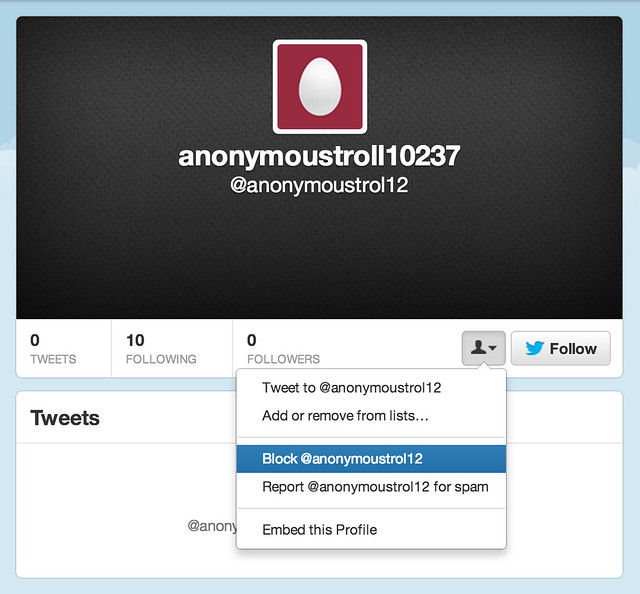
In a way, the current block at Twitter is sort of ineffective. If I block someone, the only thing it really does is prevent them from seeing my tweets when they are logged in (which also serves as notification to them that I’ve blocked them). They can still open up an unlogged-in version of Twitter (as easy as cmd-shift-N in Chrome, or cmd-shift-P in Firefox) and see everything I’ve tweeted publicly. Still, Twitter’s reversal shows that users really do care about blocking functionality and want more control and powerful blocking tools, not less.

I would argue that there are three key benefits that come from strong blocking tools on a social network.

1. Users feel empowered when they are more forcefully able to deal with harassment on a network. If someone is saying something offensive, why shouldn’t I personally be able to take control over that situation? If someone is making me uncomfortable, why shouldn’t I be empowered to deal with that for my own personal experience?

2. More effective blocking tools encourage more civil interaction. The thing that most trolls, haters, griefers, offensive jerks, etc. want on a social network is attention. By making it super easy to mute them or diminish them (especially by an intended target) it provides a disincentive for anti-social behavior in general.

3. Empowering users with blocking tools provides immediate relief for a user. Since oftentimes harassment is happening in real time, this can be more effective than waiting for customer service / community management reps at a social network to respond to reports of community violations. It is frustrating for a user to have to suffer even an additional 12 hours of harassment while a complaint works its way through to a community manager.

As far as best practices go, I’d hold up Google+ and Facebook as the networks that provide users the best blocking protection on the internet today.

Like Twitter, on Google+ and Facebook when you block someone they cannot see your public posts.

Google+ and Facebook take it one important step further though. Not only do they prevent someone you’ve blocked from seeing your public posts, they *also* filter the blocked user entirely out of your G+ or Facebook experience.

On G+ and Facebook when you block someone they become completely invisible to you everywhere on the network. It’s like they no longer exist in your social utopia.

That second block function is even more important than the first.

Flickr by contrast has some of the weakest blocking tools on the internet. When you block someone on Flickr, all it does is prevent them from private messaging you or commenting/faving your photos. Because of Flickr’s weak blocking tools, I’ve seen many of the most active, social accounts on Flickr leave due to harassment. This is bad design.

What makes harassment even worse on Flickr, is that (unlike G+ and Facebook) they allow anonymous troll accounts. So if a Troll1022 is harassing you anonymously on Flickr, and you report them, and three days later that account is deleted, all they need to do is set up Troll1023 and continue with the practice. Flickr’s weak blocking function allows virtually unlimited harassment on their network by anonymous trolls.

Protecting users and providing more control over your experience on a social network is important. It’s your most social and active users who will most likely sooner or latter run into friction. These are the users that any social network should be striving to empower.

I’m glad Twitter reversed their block policy after user reaction, and hope all networks realize how important the block feature is.


Thomas Hawk Digital Connection

 
Comments Off on Why Blocking is Important for a Social Network

Posted in Photography


DPReview Recommends: Best Cameras for Social Photography

01 Dec

Screen_Shot_2013-11-29_at_11.20.25_AM.png

Smartphones are great for casual picture-taking, but they’re at their absolute worst in poor lighting, or when using flash. One of the reasons smartphones are so popular is that they’re small, but better images don’t require enormous cameras, and increasingly, good-quality compacts are shipping with social-friendly options including built-in wireless connectivity. Click through to read our recommendations. 

News: Digital Photography Review (dpreview.com)

 
Comments Off on DPReview Recommends: Best Cameras for Social Photography

Posted in Uncategorized


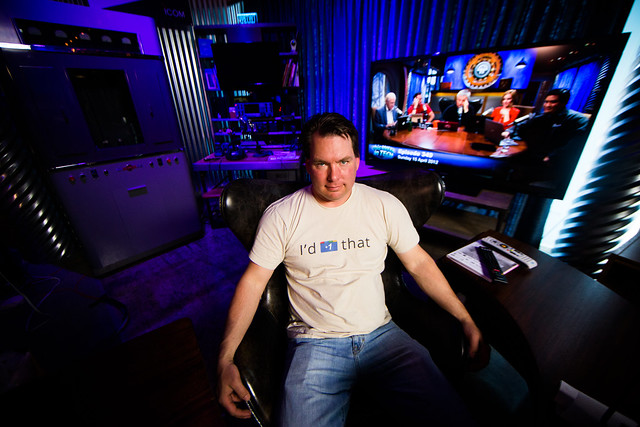
I’d Plus One That! Why I Think Google’s Shared Endorsements Are a Good Thing for Social Media, Influencers and Consumers

12 Oct

Are You On Google+ Yet?  If You're Not You Should Be

There’s been a lot of talk today online about the upcoming change in Google’s TOS that will allow them to begin selling ads with your endorsement of various products and services on the web. I’ve seen different reactions from some people who dislike this idea and others who are largely apathetic about it.

Because Google gives everyone an opportunity to opt out of shared endorsements, it’s easy to dismiss a lot of the criticism by simply pointing folks to how easy opting out is. Some people are very anti-advertising though and certainly this new advertising channel will naturally be met by some with healthy skepticism. It’s also worth noting that these ads are not going to appear on Google+. Google+ will remain ad free. The new ads simply will use Google+ data to advertise in places where Google is already advertising, like search.

Personally speaking, for myself, I embrace change. In general I’d rather see more change, than less. I think change represents innovation (usually) and I probably tend to look for the positive in change rather than the negative. I’m a glass half full sort of guy when it comes to change.

I think most of us see how today’s announced change in the TOS is good for businesses who advertise. Personal endorsements by our friends are incredibly powerful motivators. Ads which feature personal endorsements by people we know, trust and respect, will be far more effective than other ads that an advertiser might come up with.

I think we can also see where this new product would be good for Google. Google gets paid by the click. If they can run ads that produce way more clicks and are more effective, it would seem to stand that they can make more money selling ads. The more clickable an ad the more revenue per page view it represents.

The last part of this equation though is the user, and I think a lot of people are trying to figure out if this is a good, bad, or indifferent thing for the user.

My opinion is that this is a good thing for the user and here’s why.

1. I believe that this change will push brands, products, services, businesses, etc. to allocate more of their marketing budgets towards social media and social media influencers than in the past. It’s ridiculous to me how much money companies like Canon and Nikon and other old brands, that just don’t get it, spend on things like tired old photography magazines and traditional print media vs. social media.

Social media is the future. By increasing the value of our possible endorsements through advertising buys, companies will spend more time, effort and money to court social influencers.

My favorite lens is the Canon 135 f/2. I love that lens so much. By allowing Canon the opportunity to buy that love in the form of a Google ad and promote it, that gives Canon a more powerful incentive to work with me to be more public about my love for this lens. I love lots of other things too. I’m not shy about telling folks when I like something. I had dinner last night at A 16 in Oakland, and it rocked. I like to spread the good word.

I predict that individuals with large followings on G+ will increasingly be seen as potential partners for brands whose products they use. If you consider yourself a social media type, this will be one more important reason why you’ll want to devote time to building out your presence on G+.

There will be a risk of course that some influencers will be bought off by brands for positive endorsements, but I think most of the time this stuff is pretty easy to sniff out. It’s the true, authentic, natural posts (available for purchase after the fact as ads) that will be most valuable. I bet brands spend more time showing us their cool new tech and products as the value of these ads become apparent and more of their budgets are spent on promoting products to G+ users.

2. When a company buys an ad with your endorsement, this is one more place that your social media footprint is shared on the web. I’m not sure if the endorsements will actually link back to your profile or the actual product review itself, but as I’ve seen it, it will at least include your name and your avatar.

One of the reasons why I never change my avatar is that I believe having a strong avatar that is consistent over the years with your brand helps you build recognition. When I see Robert Scoble’s avatar, I immediately know that it is him — I’m biased of course because I took the photo Robert uses for his avatar. :)

Even faster than I can read Robert’s name, I know it’s him.

When Facebook first started showing brands that your friends liked, Robert jumped right on that bandwagon. For about 2 months every time I logged into Facebook, I was seeing another brand that Robert liked. Were the brands paying Facebook for that? Probably. But it also constantly reminded me of a good friend and also linked back to him in the like. I have to admit that I ended up liking a lot of the same brands Robert did, when it was something I really liked.

3. Knowing that one of my friend’s has endorsed a product helps *me* make buying decisions. Let’s say I’m in the market to buy a new filter for my camera. Wouldn’t it be a positive for me to know that another photographer I respect (like Joe Azure) seems to like his Lee Big Stop Filter? Isn’t that a lot better than just a generic ad? Especially if I see a lot of my friends endorsing one product, this may be a good signal to me that this product is worth checking out more than others.

I saw a report earlier today that said that by 2014 10-15% of online reviews will be fakes. With all the fake reviews and astroturfing out there, I’m more inclined to trust the word of a friend on a product or service, than a stranger.

This is why I don’t really use yelp anymore. Every time I go to yelp I wonder if the review I’m reading is legit or whether or not someone from India or China has been paid to write it up and give it a five star rating. When I was recently in New York City, rather than rely on a service like Yelp to figure out where to eat, I instead relied on my good friend Daniel Krieger, whose opinion I respect and know I can trust. Would a five star dinner recommendation for a new restaurant in the form of a Daniel Krieger advert get my attention? You bet it would. As a consumer, this is a win for me.

Certainly there may be things that go wrong with the implementation of all of this. What if I’m not really endorsing something but my endorsement is slapped on it? Some of this will likely have to be worked though. As far as the general idea of shared endorsement goes though, I think I like it.

Oh, and by the way, if you were wondering whether or not those sea salt and vinegar chips in the dark blue bag by Kettle Chips were the BEST CHIPS IN THE ENTIRE WORLD? Yep, they pretty much are — and if Kettle Chips wants to send a few bags of those over to our place, my daughters and I would totally be down with that. ;)


Thomas Hawk Digital Connection

 
Comments Off on I’d Plus One That! Why I Think Google’s Shared Endorsements Are a Good Thing for Social Media, Influencers and Consumers

Posted in Photography


Recommended Reading: Move Forward With Social Media

03 Sep
Move Forward With Social Media

Move Forward With Social Media

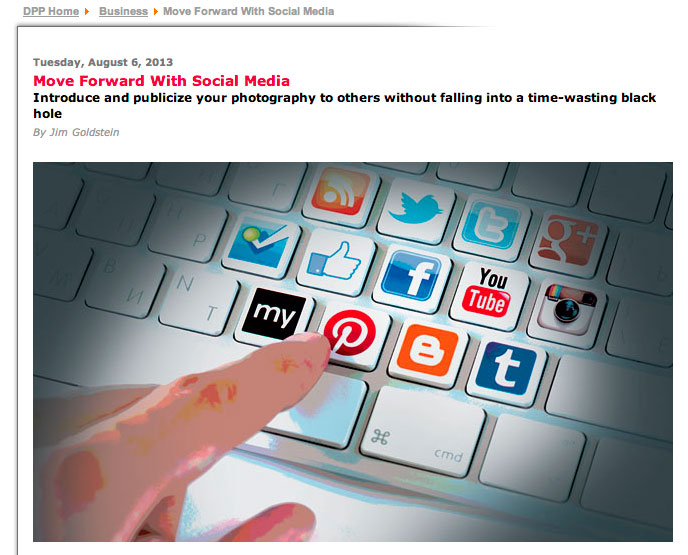
Curious how to leverage social media to gain exposure of your photographic work while saving a little time? In the latest issue of Digital Photo Pro magazine I cover this and more in my latest article, “Move Forward with Social Media”. As a bonus I include a web site comparison to help you weight the pros and cons of taking part in each site. Check out the article:  Move Forward With Social Media – Introduce and publicize your photography to others without falling into a time-wasting black hole


Also if you’ve missed my other Digital Photo Pro articles you can find them here:

  • Search Engine Optimization 
  • Social Media & ­­­­­Copyright
  • Social-Media Marketing Essentials
  • Creative Commons
  • PLUS Coalition Standardized Licensing Codes
  • How I Evaluate Terms of Service for Social Media Web Sites – Google+ (my blog)
  • Evaluating Terms of Service Documents: Resources (my blog)

More of my articles on Social Media for Photographers

Copyright Jim M. Goldstein, All Rights Reserved

Recommended Reading: Move Forward With Social Media

The post Recommended Reading: Move Forward With Social Media appeared first on JMG-Galleries – Landscape, Nature & Travel Photography.


Related Stories

  • Recommended Reading: Move Forward With Social Media – Enclosure
  • Talking Lightroom & Photography
  • Talking Lightroom & Photography – Enclosure
Feed Ads by FeedBlitz
powered by ad choices


JMG-Galleries

 
Comments Off on Recommended Reading: Move Forward With Social Media

Posted in Equipment


Fotografie und Social Media – muss das sein?

02 Sep

Vor Kurzem hatten Sebastian und Martin eine kurze Unterhaltung auf Twitter: Martin fragte, ob er in Zukunft Fotos, die er mit der Fuji macht, auf Instagram posten solle. Sebastian meinte, er solle seinen Instagram-Account löschen. Die Diskussion um Instagram, Social Media-Plattformen, Fotografie (und deren Meta-Ebene) führen sie hier nun fort.

Sebastian: Lösch Deinen Instagram-Account.

Martin: Nein. Warum sollte ich?

Sebastian: Weil Du Fotografie magst. Ich finde, Instagram kann man nicht wirklich benutzen, wenn man Fotografie mag. Es ist eine unendliche Suppe an einheitlich brutal zurechtgefilterten und sehr oft auch belanglosen Fotos.

Martin: Das kommt drauf an, wem man folgt. Wie überall.

Sebastian: Ja, bestimmt. Aber ich rede ja auch nicht von der persönlichen Nutzererfahrung. Sondern vom generellen Problem, dass solche Dienste Fotografie entwerten. Drück auf’s Knöpfchen, mach Dein Bild hübsch mit dem Retro-Style, den jeder mag und lass Deine Bilder wie die von jedem anderen aussehen.

Martin: Ich finde nicht, dass diese Dienste entwerten. Denn das Ziel von Instagram ist nicht in erster Linie, großartige Fotografie zu unterstützen, sondern es ist in erster Linie sozial. Das heißt: Wir teilen unser Leben. Und somit all die Dinge, die unser Leben betrifft. Und das posiert nicht. Es ist nicht technisch perfekt. Es ist, wie es ist. Und das mag ich daran.

Sebastian: Lustigerweise würde ich genau das als Argument gegen Instagram ins Feld führen. Die Plattform und ihre Nutzer haben überhaupt kein Interesse an Fotografie, sondern nur daran, sich gegenseitig Bildchen von ihrem Essen und ihren Haustieren zu zeigen. Deswegen kann ich im Gegenzug Plattformen wie 500px und Behance gar nicht hoch genug schätzen. Was benutzt Du denn überhaupt für Internetplattformen und Tools, um Deine Bilder zu zeigen, zu bearbeiten und so weiter?

Martin: Bisher habe ich mit dem iPhone auf der Straße fotografiert. Diese Bilder habe ich in meine „Zentrale“ Tumblr eingestellt und von dort zu Flickr (da bin ich seit 2005), Facebook, 500px und auch Instagram geleitet. Bearbeitet habe ich meine Fotos kaum, nur ein wenig mit Snapseed geradegerückt, Helligkeit und Kontraste angepasst. Fertig.

Sebastian: Bei Facebook und Twitter poste ich inzwischen auch öfter mal Bilder (meist mit Links auf die kompletten Serien anderswo) und bei Tumblr so übrig gebliebenes Zeug. Aber recht widerwillig, wie ich zugeben muss. Ich empfinde es als entwertend, wenn man seine Sachen x Mal in verschiedene Streams irgendwie reinkippt, um da Leute zu erreichen. Ein eigenes Blog oder eine Galerie auf einer Plattform hat doch irgendwie mehr Stil. Ein Bild bei Facebook ist in fünf Minuten untergangen in einem endlosen Stream aus Kram.

Martin: Wieder „nein“. Auf Flickr bin ich, seitdem ich fotografiere und es gibt einige Leute, die dort meinem fotografischen Prozess folgen. Auf Facebook sind einige Freunde und Künstler, deren Meinung ich sehr schätze – und die auch hin und wieder kommentieren. Bei Instagram gibt es eine wachsende Zahl ambitionierter Straßenfotografen, die mit dem iPhone versuchen, das Beste herauszuholen.

Absolute Augenweiden sind da dabei und die sehe ich sonst nirgendwo. Würden wir alle unser eigenen Süppchen kochen, wäre es vielleicht origineller, aber das ist mir nicht in erster Linie wichtig. Ich möchte dort sein, wo die Leute sind, die mir wichtig ist. Deswegen poste ich eher selten auf Google+. Dort kenne ich von den 15.000 Followern vielleicht 10.

Sebastian: Aber das heißt im Endeffekt: „Ich gehe dahin, wo die Leute sind und reibe ihnen permanent meine Bilder unter die Nase.“ Ich könnte mir das niemals antun. Dazu kommen dann noch diese ekelhaften Bewertungsfunktionen auf allen Plattformen und die Tatsache, dass künstlerische Sachen nun einmal von der Masse deutlich weniger geschätzt werden als derber Kitsch (ganz normales Phänomen).

Wenn ich bei Facebook ein sinnloses Katzenbild poste, das ich mal so nebenbei gemacht habe und es 200 Likes bekommt und das aufwändige Naturfoto dann unbeachtet durchflutscht, dann merke ich immer, dass das eigentlich nicht die richtige Herangehensweise für mich ist. Ich finde, da ist das eigene Süppchen, das auch dann genau die Leute anzieht, die sich wirklich genug interessieren, um aktiv danach zu suchen, deutlich lohnender.

Martin: Für mich gibt es hier keinen Endeffekt – dafür ist das Thema zu fluide und verändert sich ständig. „Unter die Nase reiben“ finde ich eine interessante Definition, jedoch führt mich das wieder an den Beginn: Wer meine Fotos mag, darf mir folgen. Wer das Gefühl hat, Fotos unter die Nase gerieben zu bekommen, geht von allein. Finde ich gut und okay.

Und zu einem reifen Interpretationsprozess gehört auch, dass ich einschätzen kann, was ein Like bedeutet. Meine Fotos sind weder auf Instagram noch in anderen Netzwerken großartig erfolgreich. Ich bin es gewohnt, dass Katzenfotos mehr Likes bekommen. Doch die Bedeutung eines Likes ist abhängig davon, vom wem er kommt. Wenn mein Bürokollege Egon von Euwensz ein Foto mag, ist das für mich sehr wertvoll. Der würde meine Fotos gar nicht sehen, wenn ich sie bloggen würde. Weil er keine Blogs liest. Ist auch kein Problem für mich.

Sebastian: Zum ersten Punkt: Da müssen wir wohl zwei Sachen unterschieden – so reine Portfolio-Plattformen oder Facebook-Pages, bei denen der Nutzer selbst entscheidet im Sinne von „Ich abonniere das mal, weil es mir gefällt“, da stimme ich absolut Deiner Meinung zu.

Schwierig wird es bei richtigen Social-Media-Plattformen, bei denen eben das „social“ im Vordergrund steht. Dort ist man ja grundsätzlich mit Leuten aus völlig verschiedenen Kontexten als Privatperson verbunden, die eben teilweise auch gar nichts mit Fotografie zu tun haben. Und genau dort wird es irgendwann penetrante Eigenwerbung, wenn man so agiert.

Zu einem reifen Interpretationsprozess bezüglich Favs, Likes und dem Kram gehört anders herum meiner Meinung nach aber auch, dass man akzeptiert, dass man sich Feedback grundsätzlich schwer entziehen kann. Wenn Dir jemand dumme Kommentare unter Deine Bilder schreibt, kannst Du das nicht „unlesen“, genausowenig wie Du Dich dem entziehen kannst, wenn eines Deiner Bilder auf solchen Plattformen plötzlich „viral“ ist.

Ich glaube, das ist auf Dauer sehr fatal für den eigenen Schaffenprozess, jedes einzelne Bild immer sofort einer Öffentlichkeit zur Bewertung hinzuwerfen. Und das ist auf Facebook, Twitter und Instagram ein viel größeres Thema als auf dem eigenen Blog, wo es solche Mechanismen eben nicht gibt.

Martin: Das mit der Bewertung sehe ich anders. Ich zeige meine Fotos nicht, damit sie bewertet werden. Das war mir zu Beginn sehr wichtig, heute ist mir das nahezu egal. Ich zeige, was ich tue. Wenn das jemandem gefällt, schön. Wenn nicht, auch okay. Und wenn jemand sagt BUUUUUH, sehr gut. Dann habe ich einen Nerv getroffen. Passt für mich. Und in einem Netzwerk, bei dem mich jemand mit Eigenwerbung zuballert, kann ich ohne Probleme entfolgen, entfreunden, was auch immer. Das mache überhall. Kein Problem.

Sebastian: Ich zeige meine Bilder auch nicht, damit sie bewertet werden, ganz im Gegenteil, ich will sie im Netz ganz neutral ausstellen. So sind Facebook, Instagram und Konsorten aber nicht konstruiert. Die gewichten Inhalte nach Bewertung und heben sie hervor oder blenden sie entsprechend aus, denn die wollen ja, dass die Masse massenkompatibles Zeug anguckt und klickt und entsprechend wiederkommt, weil sie dort gut unterhalten wird. Und dann wird das noch extrem mit Dir als Person verknüpft, das heißt, das Bild an sich steht in keiner Weise irgendwo im Fokus.

Die Wirkung nach außen kommt zuletzt noch obendrauf und ist vielleicht sogar das größte Problem. Stell Dir vor, Du liest ein Buch oder gehst in eine Ausstellung und auf jeder Buchseite stehen irgendwelche Leserkommentare von Freunden des Autors unter dem Text oder neben den Bildern hängen Like- und Dislike-Anzeigen von den Arbeitskollegen des Künstlers. Etwas Scheußlicheres kann ich mir überhaupt nicht vorstellen; das macht jede eigene Interpretation und Beschäftigung mit Kunst kaputt. Deswegen deaktiviere ich überall dort, wo es geht, diese Sachen.

Martin: Instagram hebt meine Fotos nicht hervor, wenn sie mehr Likes haben als sonst. Und falls das irgendwann mal kommen sollte (mit „popular“ war es schonmal da), freut es mich, wenn es vorkommt, genauso wie Explore auf Flickr. Was für Dich hier ein Problem ist, ist für mich keines.

Außerdem: Wenn auf instagramm nur Bullshit-Bilder landen (was wie gesagt schwer davon abhängt, wem Du folgst), dann ist das nur noch mehr ein Grund, gute Fotos zu zeigen. Außerdem sage ich da frei nach Martin Parr: Du kannst nur wissen, was gut ist, wenn Du genügend Scheiße gesehen hast. Durch das ansehen schlechter Fotos kann man jede Menge lernen.

Sebastian: Den letzten Satz würde ich direkt umdrehen: Du kannst nur besser werden, wenn um Dich herum Leute und Bilder sind, die besser (vielleicht ist „erfahrener“ das bessere Wort, ich mag bei Fotografie nicht so gern von besser und schlechter reden) als Du selbst sind.

Wenn Du hingegen ständig Lob bekommst, weißt Du gar nicht, ob Du vielleicht der Einäugige unter den Blinden bist. Soziale Netzwerke, die Bilder berurteilen, sind mir jedenfalls höchst suspekt. Kunst ist ja nun keine Demokratie, in der eine Abstimmung funktioniert, die anzeigt, was die meisten Leute mögen. Oder siehst Du das anders?

Martin: Auf gar keinen Fall. Und Likes sagen nichts darüber aus, ob ein Foto gut oder schlecht ist. Sie sagen nur aus, dass es ganz vielen oder vielleicht nur einer Person gefällt. Die Gewichtung, was man dem beimisst, ist wohl das Entscheidende. Aber das pure Zeigen an sich finde ich nicht falsch, sondern wichtig. Warum bist Du eigentlich noch auf Facebook?

Sebastian: Kommunikation, auch Gruppen zu Fotografie und schlussendlich wohl auch das pure Zeigen der eigenen Arbeit. Darauf können wir uns ja offenbar einigen, auch wenn das so ein Sisyphos-Ding ist, das direkt wieder ins Niemandsland ruscht, weil niemand alte Facebookpostings liest.

Nochmal: Es ist ja egal, wie viel Gewichtung man Kommentaren und Likes beimisst. Spätestens durch andere lesende Personen und nach außen durch das System bekommt es Gewichtung. Gerade Facebook zeigt Dir ja oft nur „important posts“ von Deinen Kontakten überhaupt erst an, die durch diese Zahlen bestimmt werden. Und Du kannst ja nicht leugnen, dass Klickzahlen sogar auf vermeintlich seriösen Nachrichtenseiten die Messgröße sind, sich das fortsetzt auf alle diese Plattformen und inbesondere auch Bilder stark betrifft.

Martin: Das stimmt. Jedoch zeigt mir Instagram nicht nur „important posts“ an, sondern alle, denen ich folge. Zurück zum Thema: Die Demokratisierung der Fotografie hat eine Seite, die nicht allen Fotografen gefällt. Leute fotografieren ihr Essen, ihr Essen und … ihr Essen. Dass das vom anspruchsvollen Standpunkt gesehen nicht besonders wertvoll ist, will ich gar nicht widerlegen.

Jedoch das ganze Netzwerk dafür zu verteufeln, ist für mich keine besonders effektive Strategie. Da zeige ich lieber Fotos, die ich aus dem iPhone herausholen kann – und bewege vielleicht auch andere, es mir gleich zu tun. Übrigens gibt es viele Leute (und Freunde), über die ich auf Instagram viel mitbekomme. Das schätze ich sehr. Mit und ohne Anspruch. Allein deshalb würde ich nie auf die Idee kommen, meinen Account zu löschen.

Sebastian: Ich will ja auch gar nicht das ganze Netzwerk verteufeln, sondern eher diese „Ich geh da als ernsthafter Fotograf hin und zeige meine Bilder“-Seite hinterfragen bzw. fragen, ob sie wirklich sinnhaft ist. Als Portal für Katzenbilder und Fotos von Essen kann ich Instagram bequem ignorieren. Aber wie gehst Du mit der Vermischung um? Da stehen dann Deine Fotos neben verwackelten Urlaubsbildern, verschwinden im Stream, weil keiner zurückscrollt und alte Postings anguckt und Du weißt auch nie, ob Du jetzt für Freunde ein Privatbild oder für Follower ein ernsthaftes Foto einstellen sollst oder ob das nicht alles eh dasselbe ist. Es entwertet doch ein bisschen das eigene Tun.

Martin: Ehrlich gesagt habe ich darüber noch nie nachgedacht, egal in welchem Netzwerk. Denn selbiges findest Du auf Flickr, Deviantart, egal wo. Es gibt immer Tendenzen, zu denen ein Netzwerk neigt, aber nie 100% gleiche Fotos. Und wenn Du mein Blog abonnierst, verschwinden meine Postings genauso im Feed-Stream wie sonstwo auch. Ich sehe hier einfach keinen Unterschied.

Dazu kommt: Das iPhone als Kamera wird von immer mehr Menschen ernsthaft benutzt. Und das Netzwerk, das für diese Fotos gemacht ist, heißt instagram. Denn da werden zu 98% Smartphone-Bilder gepostet. Was auch der Grund ist, warum ich meine Fotos von der Fuji nicht dort zeigen werde. Dafür ist das Netzwerk nicht gemacht.

Sebastian: Also siehst Du ja offenbar doch einen Unterschied, wenn Du sagst, dass Du Deine Bilder von der Fuji nicht bei Instagram reinstellen würdest. Das Netzwerk sagt ja nirgendwo ausdrücklich „hier nur Smartphone-Bilder posten“. Instagram, Facebook und Twitter sind meiner Ansicht nach einfach mehr Social Networks, die für Unterhaltung und Kommuikation gemacht wurden. Dazu gehören dann natürlich auch Fotos, aber man sollte sich fragen, ob man Teil dieser sich endlos drehenden Unterhaltungsmaschine sein will.

Flickr, Deviantart und 500px sind für mich eher Netzwerke, auf denen Bilder ausgestellt werden. In ersteren geht es mehr um die Personen und ihre Verbinungen, in der zweiten Kategorie eher um die Bilder. Ich würde sagen, dass es von Vorteil ist, wenn man sich diese Unterschiede klar macht und genau überlegt, wo man seine Bilder überall reinwirft.

Martin: Den Unterschied mache ich deshalb, weil Instagram explizit aus dem Mobilen geboren und für’s Mobile gemacht ist. Das ist der Rahmen. Und Fotos vom iPhone sind für mich dort auch gut aufgehoben. Das ist auch der Grund, warum ich die Fuji-Fotos dort nicht poste. Ich respektiere das ungeschriebene Gesetz, dass dort nur Handy-Fotos gepostet werden. Außerdem glaube ich, dass es völlig egal ist, wo ein Foto zu sehen ist, wichtig ist, dass es überhaupt sichtbar gemacht wird. Ob das nun in einem Café, einer Kneipe oder einem Hochglanzmuseum ist. Das ist nur der Rahmen. Der Inhalt ist, was zählt.

Sebastian: Vor nicht allzu langer Zeit war mein Gedanke auch immer: Vergiss das Medium, nur der Inhalt zählt und das, was Du daraus machst. In Bezug auf verschiedene Netzplattformen würde ich inzwischen aber hinzufügen: Aber manche Kanäle begünstigen sehr stark bestimmte Inhalte und man muss gucken, wo man wirklich reinpasst. Also lösch endlich Deinen Instagram-Account.

Martin: Nein. Warum sollte ich?


kwerfeldein – Fotografie Magazin
 
Comments Off on Fotografie und Social Media – muss das sein?

Posted in Equipment
 

GoPro’s iOS and Android apps updated with social sharing

01 Aug

TS520x0~cms_posts-5051836885-GoProApp_ImageMain_web.jpg

GoPro has updated its iOS and Android apps with more robust control and sharing capabilities, allowing you to share pictures and videos directly to the usual social networks. In addition to viewing the content stored on your GoPro, users can now share clips and stills without leaving the app. Right now it supports Facebook, Instagram, Twitter, as well as email and text, but it’s indicated that support for other apps is on its way as well. Click through for more details on connect.dpreview.com.
News: Digital Photography Review (dpreview.com)

 
Comments Off on GoPro’s iOS and Android apps updated with social sharing

Posted in Uncategorized


Nikon gets social with Facebook app

12 Jul

TC4x3AS520x0~cms_posts-5262806050-gallery.jpg

After company president Makoto Kimura made it clear that Nikon really is forward-thinking in an interview earlier this week, the camera manufacturer has launched its My Nikon World Facebook application and community. My Nikon World is designed for photographers to display and share images, compete in challenges and learn from pros and peers. Click through for more details at connect.dpreview.com.

News: Digital Photography Review (dpreview.com)

 
Comments Off on Nikon gets social with Facebook app

Posted in Uncategorized


Social Signage: Digital Street Sign Gives Dynamic Directions

28 Jun

[ By WebUrbanist in Gaming & Computing & Technology. ]

digital signpost display

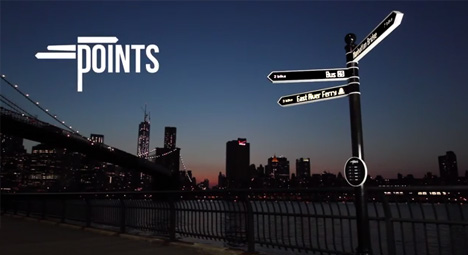
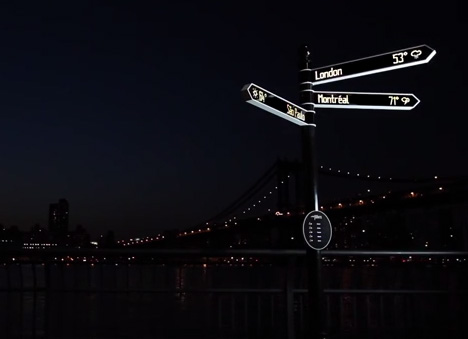
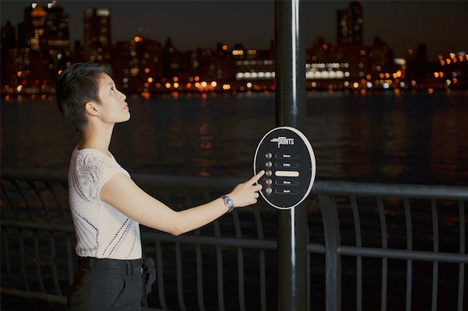
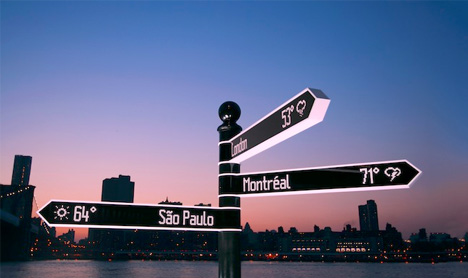
The shape is a familiar classic – a central post pointing toward different destinations, sometimes near and other times a world away. This evolved version, however, replaces static locations and fixed directions with interactive ones.

Designed by Breakfast of Brooklyn, Points lets you input a query and receive both a written response and an orientation to go with it, giving distance and location along with other information.

digital all points sign

The device is programmed with API data from real-time sources including regional public transit and, more broadly,Twitter, FourSquare and RSS feeds.

digital street sign design

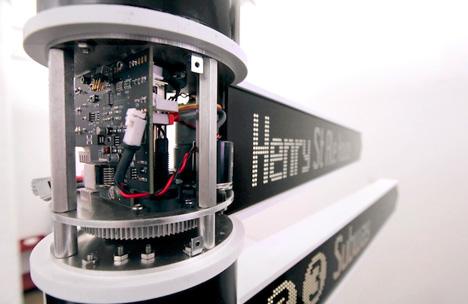
The resulting database gives passers by up-to-the-minute info as requested, displayed on 16,000 LED lights. It can also potentially display default local information automatically – about current news, events, performances or venues – when not otherwise (manually) engaged.

digital interactive local directions

The intention here is to go beyond a simple touch screen, creating something recognizable at a distance, familiar to pedestrians and interactive both digitally and physically.

digital sign technology design

Aside from the creative challenges, fitting the required mechanisms for a smoothly-rotating effect into such a small space proved difficult but the designers are close to a finished product.

Share on Facebook


[ By WebUrbanist in Gaming & Computing & Technology. ]

[ WebUrbanist | Archives | Galleries | Privacy | TOS ]


WebUrbanist

 
Comments Off on Social Signage: Digital Street Sign Gives Dynamic Directions

Posted in Creativity


Hell is Other People: Avoid Your Friends Using Social Media

14 Jun

[ By Steph in Gadgets & Geekery & Technology. ]

Hell is Other People Smartphone App 1
Social media was invented to bring people closer, but the more antisocial among us can use it in a different way: to avoid the people we know. ‘Hell is Other People‘ is an interactive smartphone app that will show you exactly where your friends are based on Foursquare check-ins, and provide ‘safe zones’ where you can hang out without fear of being recognized.
Hell is Other People Smartphone App 2

Using the GPS function on your phone and your contacts’ public check-ins or location updates on Facebook, Twitter, Foursquare and other social media, the app will show you yellow points on a map that indicate where your friends are. The green points represent ‘safe zones.’
Hell is Other People Smartphone App 3

Of course, the map only works if your friends are avid social media users, checking in to virtually every place they go, and you still run the risk of running into them when they’re in route. You also might be relegated to unexpected places in the city. But as creator Scott notes in the video, “It’s kind of nice that I’ve been pushed into parks.”

Share on Facebook


[ By Steph in Gadgets & Geekery & Technology. ]

[ WebUrbanist | Archives | Galleries | Privacy | TOS ]


WebUrbanist

 
Comments Off on Hell is Other People: Avoid Your Friends Using Social Media

Posted in Creativity


Why Aren’t Search Engines Making Better Use of Their Social Networks for Image Search?

06 Jun

One thing I’ve noticed more and more over the past few years is what a poor job traditional image search engines do vs. social networks.

By using social information around photos (likes, faves, comments, +1s, etc.), social networks typically produce much superior image search results than traditional image search.

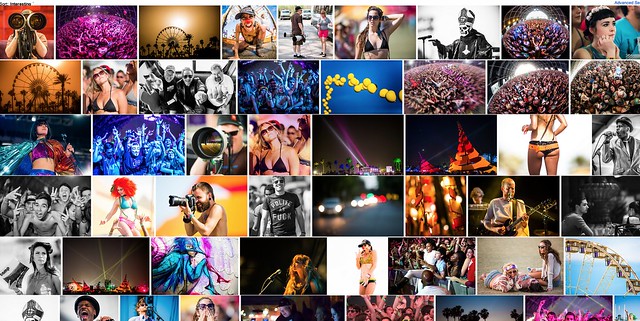
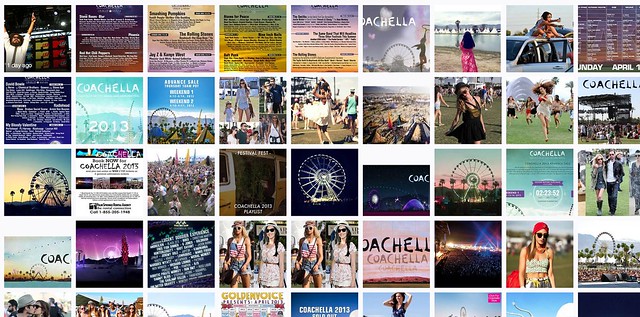
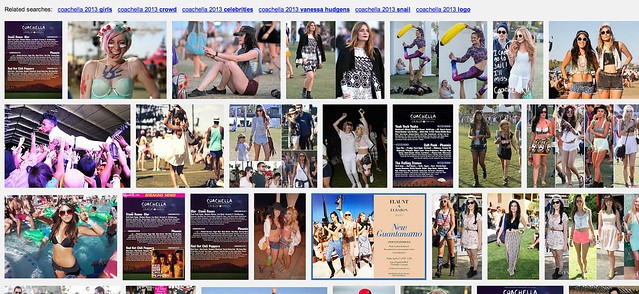
Take this search of Coachella 2013 for example.

Screen Shot 2013-06-05 at 10.45.53 AM
Yahoo Image Search: “Coachella 2013″

Screen Shot 2013-06-05 at 10.46.24 AM
Google Image Search: “Coachella 2013″

Screen Shot 2013-06-05 at 10.47.28 AM
Flickr Image Search: “Coachella 2013″

The first image comes from Yahoo (or is it Microsoft these days, I can’t keep it all straight). It’s not very good. It shows too many images of just the lineup vs. actual fun interesting photos of the event itself.

Google’s image search results are better, but still not as good as many of the images I find on social networks.

Now I may be biased (as I shot this particular event) but I think Flickr’s search results are *far* better than either Google or Yahoo Image search.

I’m working on a project right now to photograph the 100 largest American cities. When I’m researching things to photograph in these cities I almost always go first to Flickr (because it’s the largest database of highly organized quality photos on the web). I will also look at Google+ too, sometimes. Google+ doesn’t have as many high quality images in the total database as Flickr, yet, but I find some pretty good stuff there sometimes still. Most of Flickr’s advantage here over Google+ just has to do with the fact that they are older and have more images indexed.

Lately I’ve also played around with graph search on Facebook for images — I haven’t been very impressed there at all though.

The one place I hardly ever go is to the actual Google or Yahoo image search engines — because the results are so inferior.

Here’s what I don’t get: *why* are the results at Yahoo and Google Image search inferior? Google and Yahoo have access to proprietary internal social data around photos in their social networks, why isn’t that coming through better in the signal for high quality images.

On my example search using Coachella 2013, not a single Flickr photo appears on Yahoo’s first page image search and not a single Google+ image appears on Google’s first page image search.

Shouldn’t these search engines be better mining organically and socially ranked superior content? It’s not that these engines don’t index it, they do, it’s just not ranking well.

Beyond just better image search, Google and Yahoo *should* have another significant incentive to better include their social images into image search.

All things being equal, assuming you could improve image search results, wouldn’t you want to drive more traffic to your own internal social network, rather than to some unrelated destination — and wouldn’t you want to reward the best photographers on your social network with more traffic vs. some random SEO rigged site somewhere?

Why aren’t image search engines doing a better job with social?

Another added benefit to driving image search traffic to your social network, is that the presentation there is usually better, more uniform and consistent. When I’m tempted to go further on an image from Yahoo or Google, I may end up at some odd sized photo, in some odd format. With a G+ or Flickr result I get a strong consistent image experience that I’m familiar with.

As an unrelated topic dealing with image search on Flickr — the best social image search on the web today — Flickr needs to give us the ability to block certain users from our search results. Many popular photographers will pollute image search on Flickr by falsely tagging things that are not in their popular photos, just to try to garner traffic.

Take this search on Flickr for dog for example. So many of the first page results are not photos of dogs at all. Flickr should allow us to block certain users from our search results in order to better refine them. When we block people from our search results, this should also be a signal to Flickr that this user should rank much worse in search. If users get the message that they will be penalized for purposely mistagging their photos, they will be less likely to try and game the system this way, resulting in better image search on Flickr for all of us.


Thomas Hawk Digital Connection

 
Comments Off on Why Aren’t Search Engines Making Better Use of Their Social Networks for Image Search?

Posted in Photography