RSS
 

Posts Tagged ‘Sigma’

It’s finally here: Sigma 85mm F1.4 DG HSM Art sample gallery

15 Nov

The Sigma 85mm F1.4 Art is finally here, with units of the $ 1199 lens shipping now. The big question, almost as big as the lens itself: is it worth the wait? And, is it worth the weight? To find out, we wasted no time taking it out to shoot some portraits. Lots and lots of portraits.

Articles: Digital Photography Review (dpreview.com)

 
Comments Off on It’s finally here: Sigma 85mm F1.4 DG HSM Art sample gallery

Posted in Uncategorized


Sigma introduces trio of firmware updates for Quattro, MC-11 and 150-600mm F5-6.3

28 Oct

Lens and camera manufacturer Sigma has released three firmware updates that improve the functionality of its sd Quattro camera, the company’s MC-11 mount adapter and the two versions of its 150-600mm F5-6.3 zoom lens.

The update to the sd Quatrro camera deals with an issue that causes the camera to freeze when being controlled via the company’s Capture Pro tethered-shooting software package, while the update for the MC-11 prepares the device for Sigma’s new and forthcoming 12-24mm F4, 500mm F4 and 85mm F1.4 lenses. The MC-11 allows users to mount certain Sigma EF- and SA-mount lenses to Sony E-mount cameras, and the update improves AF accuracy of EF-mount lenses that aren’t fully compatible with the system. It also allows lenses with Optical Stabilizer built-in to switch off in-body stabilization systems to use the in-lens system even when the lens isn’t fully compatible with the MC-11. With the firmware installed the start-up time of the combination is also improved.

AF accuracy is also the main theme of the update to the 150-600mm F5-6.3 DG OS HSM Sports and Contemporary lenses in the Canon and Sigma mounts. The lenses will perform better when used with the MC-11 mount adapter, and with the sd Quattro in the case of the Sigma mount version. The update also reduces the sound made by the aperture blades in the Canon mount versions during filming both with and without the MC-11 – and the lenses are now fully functional with the Canon Digital Cinema Camera EOS C300 Mark ll.

Those with the Sigma USB dock can install these updates themselves, and those who don’t have it can take their lenses and MC-11 to a Sigma approved service center and have the firmware updates installed for free. For more information visit the Sigma website.

Manufacturer information:

SIGMA sd Quattro firmware download

Thank you for purchasing and using our products.
Sigma Corporation is pleased to announce that new firmware of SIGMA sd Quattro is available for download.

Benefit of the firmware update;

SIGMA sd Quattro [Ver.1.03]
It corrects the phenomenon where the camera stops responding to any operation after pressing [AF Capture] button, [AF Drive Only] button, and/or [MF Capture] button on SIGMA Capture Pro during shooting using SIGMA Capture Pro.

SIGMA sd Quattro firmware Ver.1.03 download page
http://www.sigma-global.com/en/download/cameras/firmware/

* SIGMA Photo Pro 6.4.1 is required to develop RAW data (X3F files, X3I files) taken with sd Quattro cameras with firmware Ver1.02 or later.

SIGMA Photo Pro 6.4.1 Download page
http://www.sigma-global.com/en/download/cameras/sigma-photo-pro/

Firmware Update for SIGMA 150-600mm F5-6.3 DG OS HSM | Sports / Contemporary in SIGMA and Canon mount

We would like to announce the availability of a new firmware update for the SIGMA 150-600mm F5-6.3 DG OS HSM | Sports in SIGMA and Canon mount, and the SIGMA 150-600mm F5-6.3 DG OS HSM | Contemporary in SIGMA and Canon mount. The firmware can be updated using SIGMA Optimization Pro.

The lens firmware update improves the AF accuracy and reduces the operating sound of the diaphragm blades when it is attached with the SIGMA MOUNT CONVERTER MC-11.

For customers who own the following applicable products and the SIGMA USB DOCK, please update the lens firmware using SIGMA Optimization Pro.

Applicable products
SIGMA 150-600mm F5-6.3 DG OS HSM | Sports – SIGMA and Canon mount
SIGMA 150-600mm F5-6.3 DG OS HSM | Contemporary – SIGMA and Canon mount

Benefits of this firmware update

  • It has improved the AF accuracy when the lens is attached with the SIGMA MOUNT CONVERTER MC-11.
  • For customers who own SIGMA MOUNT CONVERTER MC-11, it is necessary to update this to the latest firmware Ver1.02.
  • It has improved the AF accuracy of this lens when mounted on the SIGMA sd Quattro (SIGMA mount only).
  • It has reduced the operating sound of the lens diaphragm blades when attached with the SIGMA MOUNT CONVERTER MC-11 EF-E and used for shooting movies (Canon mount only).It has improved the AF accuracy when the lens is used for shooting movies as well as Live View on EOS DIGITAL SLR cameras (Canon mount only).*1
  • It has reduced the operating sound of the lens diaphragm blades when used for shooting movies on EOS DIGITAL SLR cameras (Canon mount only).*1
  • It is fully functional with the Canon Digital Cinema Camera EOS C300 Mark II.
  • *1 The degree of improvement differs depending on the camera used.

Please ensure the SIGMA Optimization Pro has been updated to Ver1.3.1 or later from the following download page before updating the lens firmware.

SIGMA Optimization Pro Download page
http://www.sigma-global.com/en/download/lenses/sigma-optimization-pro/

For customers who do not own the SIGMA USB DOCK, the lens firmware update will be provided free of charge but you will need to provide the proper documentation as listed in the instructions on the Service & Support section of our website

Firmware Update for SIGMA MOUNT CONVERTER MC-11

We would like to announce the availability of a new firmware update for the SIGMA MOUNT CONVERTER MC-11 EF-E and SA-E.

This firmware update supports the following new products; SIGMA 12-24mm F4 DG HSM | Art, which we started the delivery from October 2016, SIGMA 500mm F4 DG OS HSM | Sports and SIGMA 85mm F1.4 DG HSM | Art, which are scheduled to be delivered from November 2016. In addition, it has improved the operation when some lenses that are not fully compatible are attached. It has also corrected the phenomenon where the distortion correction figure is not indicated properly in the camera when the SIGMA 24-105mm F4 DG OS HSM | Art is attached.

For customers who own the SIGMA MOUNT CONVERTER MC-11, please update the firmware using SIGMA Optimization Pro.

Please ensure the SIGMA Optimization Pro has been updated to ver1.3.1 or later from the following download page before updating the MC-11 firmware.

SIGMA Optimization Pro Download page
http://www.sigma-global.com/en/download/lenses/sigma-optimization-pro/

Applicable products
 SIGMA MOUNT CONVERTER MC-11 EF-E
 SIGMA MOUNT CONVERTER MC-11 SA-E

Benefits of this firmware update

  • It is fully functional with the SIGMA 12-24mm F4 DG HSM | Art, the SIGMA 500mm F4 DG OS HSM | Sports and the SIGMA 85mm F1.4 DG HSM | Art lenses.
  • It has reduced the startup time between turning on the camera and taking an image by not initially driving the focus when the camera is turned on.
  • When lenses with Optical Stabilizer (OS) function that are not fully compatible with the SIGMA MOUNT CONVERTER MC-11 are attached with the SIGMA MOUNT CONVERTER MC-11 and mounted on a camera which incorporates a stabilizer unit, it enables the camera’s stabilizer unit to be turned off and the lens’s OS function to be turned on and off.
  • It has improved the AF accuracy of Canon EF lenses that are not fully compatible with the SIGMA MOUNT CONVERTER MC-11 (EF-E only).
  • It has corrected the phenomenon where the distortion correction figure is not indicated properly in the camera, when the SIGMA 24-105mm F4 DG OS HSM | Art is attached.

Articles: Digital Photography Review (dpreview.com)

 
Comments Off on Sigma introduces trio of firmware updates for Quattro, MC-11 and 150-600mm F5-6.3

Posted in Uncategorized


Sigma announces pricing for 18-35mm T2 and 50-100mm T2 Cine lenses

20 Oct

Sigma announced its new line of cinema lenses back in September. Today it announced that the first two lenses in that line to go on sale, the 18-35mm T2 and 50-100 T2, will both ship on December 9, 2016 for $ 4000 each. Both will be available in EF, E and PL mounts.

These weatherproof lenses are completely mechanical and designed for use with ultra high resolution cameras, including those capable of 6 and 8K capture. And another five lenses are slated to join the new cinema line over the course of 2017 including a 24-35 F2.2 and a 20mm, 24mm, 35mm, 50mm and 80mm set of T1.5 primes.

Press release:

Sigma Announces Cine High Speed Zoom Lens Pricing and Availability

Cine High Speed Zoom 18-35mm T2 and 50-100mm T2 lenses begin shipping on December 9 for a retail price of $ 3999.00 USD

New York, NY – October 20, 2016 – Sigma Corporation of America, a leading DSLR lens, camera, flash and accessory manufacturer, announced today that the Cine High Speed Zoom 18-35mm T2 and 50-100mm T2 lenses will begin shipping on December 9, 2016 for a retail price of $ 3999.00 USD. Born from the new Sigma Cine family of products, the High Speed Zoom lenses leverage the outstanding optical design of the company’s world-renowned Global Vision still photography lenses. Combined with the 100% new mechanical lens body design, the Cine lenses meet needs of advanced 6k and 8k cinema production with the core optical quality DNA that has defined the Sigma benchmark of imaging excellence.

See the Sigma Cine Family of Products at PDN/PPE 2016 Expo
Demonstrated for the first time to the public in the United States, attendees to the 2016 PDN PhotoPlus International Conference + Expo (PPE), held at the Javits Convention Center in New York City from October 20-22, 2016, can see first-hand the new Sigma Cine family of lenses:

Cine High Speed Zoom Line – 18-35mm T2 and 50-100mm T2
The high speed zoom line, which is compatible with the Super35 image size standard, offers the constant aperture of T2 throughout the zoom range with superior optical performance that is capable of high-resolution 6K-8K shooting. Delivering the highest image quality in its class, the High Speed Zoom is ergonomically compact and designed for E, EF and PL camera system mounts.

Cine FF Zoom Line – 24-35mm T2.2 FF
Compatible with a full-frame image sensor, the FF Zoom’s outstanding optical performance also supports 6K-8K shooting. Because so few lenses cater to the requirements of the latest digital cinema cameras’ image sensors, this line provides a rare option for cinematographers. The FF Zoom is designed for E and EF camera system mounts.

Cine FF High Speed Prime Line – 20mm T1.5 FF, 24mm T1.5 FF, 35mm T1.5 FF, 50mm T1.5 FF and 85mm T1.5 FF
The Cine High Speed Prime lineup features lenses ranging from 20mm to 85mm, with all five touting an aperture of T1.5. Highly compact and compatible with full-frame sensors, these lenses offer superior resolution. They bring a consistent level of light to the production, offering greater consistency to any film’s color, contrast and overall look before it enters post-production. The FF High Speed Prime line is designed for E, EF and PL camera system mounts.

For more information on the Sigma Cine Lenses, please visit https://www.sigmaphoto.com/cinema-lenses/?link=Sept-M-cine.

About Sigma Corporation
Craftsmanship. Precision. Dedication. Since 1961, Sigma has been devoted the pursuit of advancing photographic technology. Unique to the industry, the family-owned business produces its high-quality, award-winning camera lenses, DSLR cameras, flashes, filters and accessories from its state-of-the-art manufacturing facility located in Aizu, Japan.

In 2012, the company introduced the Sigma Global Vision with three distinct lens lines: Art, Contemporary and Sport. Designed for industry camera mount systems including Canon, Nikon, Olympus, Pentax, Sony and Sigma, each lens is handcrafted and tested in Japan to ensure a high-performance, premium product that is purpose-built to last.

Sigma continues its tradition of imaging excellence with the mirrorless sd Quattro, sd Quattro H and the compact dp Quattro camera line. Leveraging the ultra-high resolution Foveon sensor, the Sigma Quattro cameras are designed to produce the highest quality image with every shot.

Articles: Digital Photography Review (dpreview.com)

 
Comments Off on Sigma announces pricing for 18-35mm T2 and 50-100mm T2 Cine lenses

Posted in Uncategorized


Sigma 30mm F1.4 DC DN Contemporary Micro Four Thirds Lens Review

12 Oct

The Sigma 30mm F1.4 DN DC Contemporary was announced February 2016, and sits atop Sigma’s line of DN mirrorless lenses, with a two-stop advantage over their previous 30mm F2.8 offering.

As a Micro Four Thirds lens, it is one of only several current autofocus F1.4 prime lenses available, with its closest competitor being the Panasonic Leica Summilux DG 25mm F1.4. While the Panasonic offers a field-of-view equivalent to a ‘classic’ 50mm lens, the Sigma ends up around 60mm. While that makes its focal length possibly a bit long for street shooting, it helps a little when it comes to portraiture and close-up work.

Let’s see how the basic specifications between the Panasonic Leica 25 and Sigma 30 compare:

  Panasonic Leica Summilux DG 25mm F1.4 Sigma 30mm F1.4 DC DN | C
Price $ 598 $ 339
Image Stabilization No No
Max Aperture F1.4 F1.4
Minimum Aperture F16 F16
Aperture Ring No No
Diaphragm Blades 7 9
Minimum Focus 0.30 m (11.81?) 0.30 m (11.81?)
Maximum Magnification 0.11x 0.14x
Motor Type Micromotor Stepper motor
Full Time Manual Yes No
Weight 200 g (0.34 lb) 265 g (0.58 lb)
Dimensions (DxL) 63 mm (2.48?)  X 55 mm (2.15?) 65 mm (2.56?) X 73 mm (2.87?)
Sealing None None
Filter Thread 46mm 52mm

Regardless of where it sits in terms of focal length and usability, the Sigma enters the opposite of a crowded marketplace as an autofocus F1.4 Micro Four Thirds prime. It also gets the advantage of being the cheapest autofocus F1.4 Micro Four Thirds prime available, even undercutting the price of some F1.8 options as well. 

Thankfully, the Sigma doesn’t feel entirely cheap. The barrel is well made with a satin black finish and ridges for grip when mounting or removing the lens. Sadly, the plastic hood feels a little inexpensive, and doesn’t feel like it clicks in to position with much confidence. Build quality of the lens itself is on par with the Pana-Leica, with both having smooth, sturdy focus rings with rubberized ridged grips.

The extra bit of diameter and length on the Sigma make it a bit bulky and unbalanced when mounted to some of slimmer Micro Four Thirds cameras, like the Olympus PEN series, or the E-M5 II. When mounted to a larger SLR shaped body, like the GH4, the Sigma fits nicely.

We’re assuming the extra size, relative to the Panasonic stems from it needing to be large enough to cover an APS-C sized sensor, in its E-mount incarnation.

Does the discounted price mean the Sigma comes with discount performance? Can it shake off past stigmas about third party lenses and go toe-to-toe with a lens touting one of the most revered names in the business? Let’s take a closer look at the numbers.

Articles: Digital Photography Review (dpreview.com)

 
Comments Off on Sigma 30mm F1.4 DC DN Contemporary Micro Four Thirds Lens Review

Posted in Uncategorized


Sigma 30mm F1.4 DC DN Contemporary Micro Four Thirds Lens Review

11 Oct

The Sigma 30mm F1.4 DN DC Contemporary was announced February 2016, and sits atop Sigma’s line of DN mirrorless lenses, with a two-stop advantage over their previous 30mm F2.8 offering.

As a Micro Four Thirds lens, it is one of only several current autofocus F1.4 prime lenses available, with its closest competitor being the Panasonic Leica Summilux DG 25mm F1.4. While the Panasonic offers a field-of-view equivalent to a ‘classic’ 50mm lens, the Sigma ends up around 60mm. While that makes its focal length possibly a bit long for street shooting, it helps a little when it comes to portraiture and close-up work.

Let’s see how the basic specifications between the Panasonic Leica 25 and Sigma 30 compare:

  Panasonic Leica Summilux DG 25mm F1.4 Sigma 30mm F1.4 DC DN | C
Price $ 598 $ 339
Image Stabilization No No
Max Aperture F1.4 F1.4
Minimum Aperture F16 F16
Aperture Ring No No
Diaphragm Blades 7 9
Minimum Focus 0.30 m (11.81?) 0.30 m (11.81?)
Maximum Magnification 0.11x 0.14x
Motor Type Micromotor Stepper motor
Full Time Manual Yes No
Weight 200 g (0.34 lb) 265 g (0.58 lb)
Dimensions (DxL) 63 mm (2.48?)  X 55 mm (2.15?) 65 mm (2.56?) X 73 mm (2.87?)
Sealing None None
Filter Thread 46mm 52mm

Regardless of where it sits in terms of focal length and usability, the Sigma enters the opposite of a crowded marketplace as an autofocus F1.4 Micro Four Thirds prime. It also gets the advantage of being the cheapest autofocus F1.4 Micro Four Thirds prime available, even undercutting the price of some F1.8 options as well. 

Thankfully, the Sigma doesn’t feel entirely cheap. The barrel is well made with a satin black finish and ridges for grip when mounting or removing the lens. Sadly, the plastic hood feels a little inexpensive, and doesn’t feel like it clicks in to position with much confidence. Build quality of the lens itself is on par with the Pana-Leica, with both having smooth, sturdy focus rings with rubberized ridged grips.

The extra bit of diameter and length on the Sigma make it a bit bulky and unbalanced when mounted to some of slimmer Micro Four Thirds cameras, like the Olympus PEN series, or the E-M5 II. When mounted to a larger SLR shaped body, like the GH4, the Sigma fits nicely.

We’re assuming the extra size, relative to the Panasonic stems from it needing to be large enough to cover an APS-C sized sensor, in its E-mount incarnation.

Does the discounted price mean the Sigma comes with discount performance? Can it shake off past stigmas about third party lenses and go toe-to-toe with a lens touting one of the most revered names in the business? Let’s take a closer look at the numbers.

Articles: Digital Photography Review (dpreview.com)

 
Comments Off on Sigma 30mm F1.4 DC DN Contemporary Micro Four Thirds Lens Review

Posted in Uncategorized


Sigma 12-24mm F4 DG HSM Art real world sample gallery

04 Oct

Hot on the heels of its Photokina announcement, the Sigma 12-24mm F4 Art arrived on our doorstep last week, meaning it was time to shoot wide. Just 1mm shy of matching the world’s widest rectilinear zoom, the Canon 11-24mm F4 L, the Sigma gives a large amount of the Canon’s focal range for a much lower price of $ 1599. To see if its images are as tempting as the specs are, we wasted no time getting it out in the real world mounted on the new Canon 5D Mark IV, the 5DSR, and a Sony a7R II with Sigma’s MC11 adaptor.  

See our Sigma 12-24 F4 Art real world samples

Articles: Digital Photography Review (dpreview.com)

 
Comments Off on Sigma 12-24mm F4 DG HSM Art real world sample gallery

Posted in Uncategorized


Lens Review: Sigma 18-35mm f/1.8 DC HSM Art Lens

21 Sep

In the world of photography, there are several different schools of thought when it comes to third party lenses. Some photographers love them, some photographers choose to only purchase lenses made by their camera manufacturer. Personally, I have never had a problem with third party lenses, and they make up about half of my current camera bag. So when I had the chance to try out the Sigma 18-35mm f/1.8 DC HSM lens for APS-C cameras for about a month, I happily jumped on the opportunity to put it to good use!
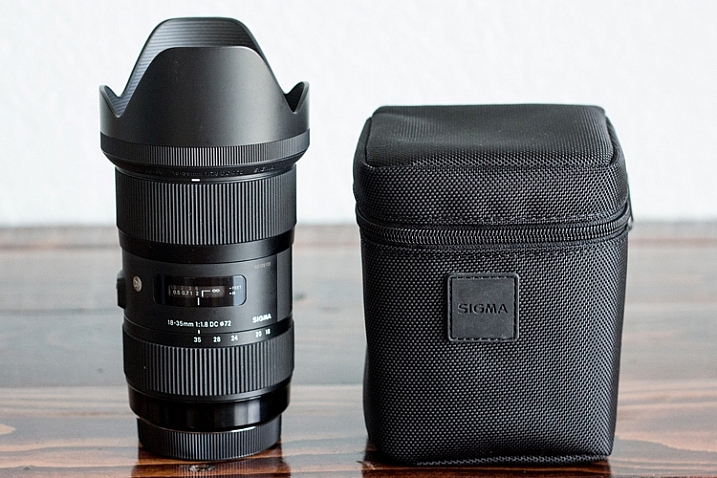
sigma-lens-review-8

Lens Features and Build

Right out of the box, it was evident that this lens is something special. Sigma 18-35mm f/1.8 Art Lens offers a focal range that makes it useful for a number of different genres of photography such as weddings, portraits, and family photography. As an added bonus, it offers a fast constant aperture (f/1.8) that’s practically unheard of in similar zoom lenses.

Sigma’s Art line has been getting a lot of buzz over the past couple of years for being high-quality lenses at an affordable price point, and this one certainly did not disappoint. Some third party lenses can have the tendency to feel plastic-y, but this lens is made of Thermally Composite Material, which both looks and feels sturdy and professional.
sigma-lens-review-9

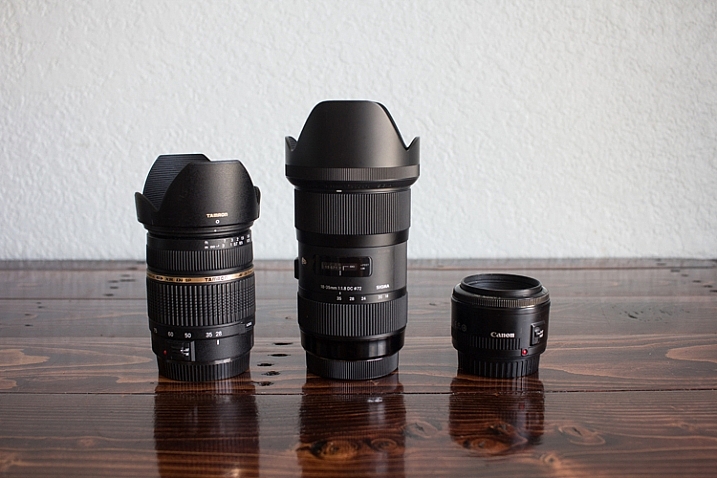
For size comparison: Left: the Tamron 28-75mm f/2.8 | Center: the Sigma 18-35mm f/1.8 | Right: the Canon 50mm f/1.8

This particular lens was physically larger than I expected based on other lenses in my bag, and it felt quite a bit heavier than I imagined as well. One weekend I took this lens to an RC air show, and several people commented to me that they wished they’d brought a telephoto lens like I had! It definitely isn’t a particularly small and compact lens. In terms of functionality, the zoom was heads above any other lens I own in terms of smoothness, and the auto-focus is fast and silent.

Sharpness Test

In order to test edge-to-edge sharpness of this lens, I used a tripod to photograph a brick wall at different focal lengths and apertures. Then I zoomed in and compared the top left-hand corner of each image to check for sharpness and vignetting.
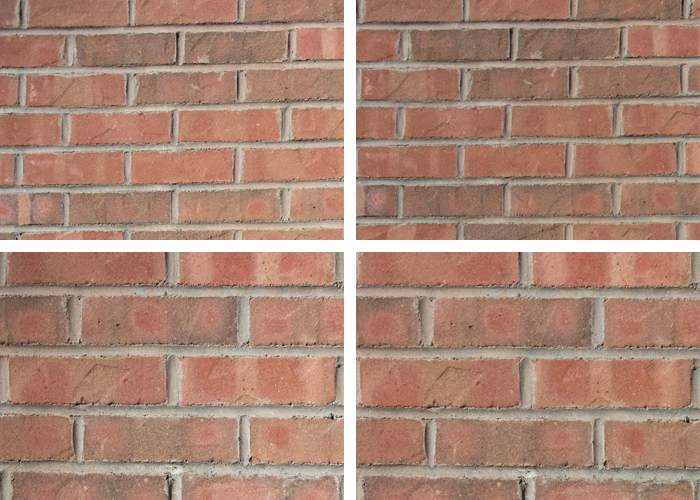
Clockwise from Upper Left: 18mm at f/1.8, 18mm at f/16, 35mm at f/16, 35 mm at f/1.8. I cropped to include only the upper left hand corner of each image to check for edge to edge sharpness.

Clockwise from upper left: 18mm at f/1.8; 18mm at f/16; 35mm at f/16; 35 mm at f/1.8. I cropped to include only the upper left-hand corner of each image to check for edge-to-edge sharpness.

When shooting wide open, some consumer lenses have a tendency towards vignetting and/or have a loss of sharpness towards the edge of the image that can be very frustrating as a photographer. In this case, I noticed no discernible difference in sharpness along the edge of the image whether I was shooting at f/1.8 or f/16, even when zooming in significantly on the image. I also didn’t notice any vignetting even when shooting at small apertures. In fact, any vignetting that you see on any of the images in this article was added in the post-processing phase.

I was really pleased with the performance of this lens, and had no issues with its edge-to-edge sharpness, vignetting, or lens creep, in the month that I tested it out.

In the Field: People Photography

sigma-lens-review-1

Newborn photography

I’m primarily a child and family portrait photographer, so those genres were the first places that I put the Sigma 18-35mm f/1.8 to the test. In terms of newborn photography, I typically shoot on location in the client’s home for newborn sessions. While I find this works very well for the comfort of both mom and baby, the one variable that can sometimes be difficult is the available natural light. In the case of photographing newborns in unpredictable lighting situations, having a zoom lens with such a fast aperture is a huge asset.

sigma-lens-review-2

Kids photography

Next, I took the lens to the park with my kids, my nieces, and my nephew. Half of these kiddos were just about to move across the US, and so I wanted to be sure to take a few photos of them all together for our family. The Sigma 18-35mm stayed on my camera nearly the entire time we were at the park because it transitioned from a few semi-posed portraits to candid images of the kids playing together so seamlessly.

sigma-lens-review-3

Single portraits

Though I typically prefer using a 50mm lens on the 60D for portraits (which is closer to 85mm when considering the crop factor), I was surprised at how useful the 18-35mm lens was for single-person portraits as well. The thing that I really loved about this lens was that with my kids, I often have to choose whether I want to photograph an event with a portrait bent, or a photojournalism one because sometimes there’s just not enough time to do both.

If we head to the fire station with the girls, I can capture portraits of them in the fire gear with my 50mm lens, or I can capture pullbacks of them with the trucks with my 24mm lens. I could have taken my zoom lens, but it doesn’t have the ability to shoot as wide open as I often prefer in portraits. The Sigma 18-35mm lens is the best of all worlds–it’s wide enough to shoot pullbacks with the firetrucks and offers the functionality to zoom in and shoot portraits with a beautiful smooth bokeh at the aperture that I prefer.

Overall, this is a really fantastic and functional lens for people photography. Whether you’re interested in portraits or weddings, this lens can handle nearly any people photography situation absolutely beautifully.

In the Field: Nature and Landscapes

sigma-les-review-10

Though my real passion is in people photography, there are lots of other genres of photography that I enjoy as a hobbyist. I figured that in reviewing this lens, it only made sense to put it through some of those paces as well.

Whether photographing wide landscapes or flower blooms up close, this lens didn’t disappoint. I should mention that this lens features a maximum aperture of f/16, which may or may not be sufficient for someone who specializes primarily in landscapes. For me, as someone who shoots people photography but occasionally wants to be able to photograph a beautiful sunset or landmark, a maximum aperture of f/16 is more than sufficient.

sigma-lens-review-7

I did notice that even when shooting during the golden hour, this lens doesn’t tend towards large sun flares. Rather, it tends towards smaller sunbursts or small flares, which I find to be a benefit for both nature photography and for photographing people during the golden hour.

sigma-lens-review-5

Astrophotography

Lastly, I decided to use this lens to try out astrophotography. I’ve dabbled with photographing the moon before. But I haven’t had much success photographing stars because I just didn’t have the right lens that offered both a fairly wide angle and a fast aperture.

I was really pleased with the results of shooting the Sigma at 18mm, f/2.2, and 1600 ISO. Though I did notice some minor lens coma, it was far less noticeable than any other lens I’ve ever tried at similar settings. Again, astrophotography is not my specialty. However, it is something that I’ve enjoyed experimenting with on occasion, and it’s a bonus to me that a lens I’d primarily use for photographing people could also be used in this way as well!

sigma-lens-review-4

Overall Impressions

This is a really fantastic lens. If I owned it, I’m certain that it would get a ton of use. I could absolutely envision it as being my “walking around” lens that is attached to my camera most of the time.

That said, the one thing that would prevent me from purchasing it is that at $ 799, it’s more than I typically like to spend for a lens that only works for APS-C cameras. My photography budget is definitely not unlimited, so I think long and hard before I make any new purchases. When I do make a purchase, I typically try to choose lenses and other equipment that will serve me now, while also being good investments as I look to the future. I love my Canon 60D, and it currently suits all of my photographic needs just fine. However, I can’t say with 100% certainty that I would never eventually upgrade to a full-frame camera.  So I would be hesitant to invest this significantly in a lens that would not be able to transition with me.

All that said, this is where it is absolutely crucial that you consider your own approach to photography. Not every photographer in the world needs or wants a full-frame camera, and that is perfectly fine. If you are fairly certain that you don’t have plans to transition to full-frame in the near future, then I really cannot recommend this lens highly enough. It is well-made, high quality, and useful in so many different situations. Kudos to Sigma for producing a really extraordinary product with the Sigma 18-35mm f/1.8 DC HSM Art Lens!

googletag.cmd.push(function() {
tablet_slots.push( googletag.defineSlot( “/1005424/_dPSv4_tab-all-article-bottom_(300×250)”, [300, 250], “pb-ad-78623” ).addService( googletag.pubads() ) ); } );

googletag.cmd.push(function() {
mobile_slots.push( googletag.defineSlot( “/1005424/_dPSv4_mob-all-article-bottom_(300×250)”, [300, 250], “pb-ad-78158” ).addService( googletag.pubads() ) ); } );

The post Lens Review: Sigma 18-35mm f/1.8 DC HSM Art Lens by Meredith Clark appeared first on Digital Photography School.


Digital Photography School

 
Comments Off on Lens Review: Sigma 18-35mm f/1.8 DC HSM Art Lens

Posted in Photography


Sigma adds the 85mm F1.4 Art, 12-24mm Art, 500mm F4 Sport lenses to its Global Vision line

20 Sep

$ (document).ready(function() { SampleGalleryV2({“containerId”:”embeddedSampleGallery_4713538649″,”galleryId”:”4713538649″,”isEmbeddedWidget”:true,”standalone”:false,”selectedImageIndex”:0,”startInCommentsView”:false,”isMobile”:false}) });

Sigma has announced three new full-frame lenses for its Global Vision Line. The long-rumored and long-awaited 85mm F1.4 Art, the 12-24mm F4 Art, and the 500 F4 DG OS HSM Sport.

The 85mm F1.4 Art has been designed with resolution and bokeh in mind. A stronger HSM AF motor produces 1.3x the torque of the previous setup hopes to improve autofocus speed as well. The lens will be available in late October at a price $ 1199.

The Sigma 12-24mm F4 DG HSM Art is a new ultra-wide-angle zoom. It too features the stronger AF module, and also features the largest aspherical glass mold in the industry, which helps produce minimal distortion, flare and ghosting. The lens will be available in late October for $ 1599.

The Sigma 500mm F4 DG OS HSM Sport uses lightweight materials like carbon fiber and magnesium alloy and features a dust and splash resistant construction. In Nikon mount it features a brand-new electronic diaphragm. The Sigma 500mm F4 Sport lens, in Canon and Sigma mounts, will be available in late October. The Nikon mount will be available in late November. The 500mm F4 will retail for $ 5999.

Press Release:

Sigma Adds the 85mm F1.4 DG HSM Art, 12-24mm F4 DG HSM Art, and 500mm F4 DG OS HSM Sport Lenses to Its Global Vision Line

Outstanding optical performance, ultra-wide zoom range, and versatile flagship sports lens headline the Sigma line-up at Photokina 2016

Cologne, Germany – September 19, 2016 – Sigma Corporation of America, a leading camera, DSLR lens, flash and accessories manufacturer, unveiled its new 85mm F1.4 DG HSM Art, 12-24mm F4 DG HSM Art and 500mm F4 DG OS HSM Sport Global Vision lenses at the Photokina 2016 event (hall 4.2, stands B020, B028 and C029).

“We are thrilled to announce three state-of-the-art additions to the Global Vision line. The Sigma 85mm 1.4 Art has been a highly requested lens and we are very confident those customers who have been waiting for us to deliver this lens will be more than pleased with the superior optical performance and zero compromise,” states Mark Amir-Hamzeh, president of Sigma Corporation of America. “In addition, the re-engineered 12-24mm F4 and highly competitive 500mm F4 Sport lens both embody the world-class performance our Global Vision lenses are known for. We look forward to seeing the incredible images our customers will create using these new Sigma lenses.”

Sigma 85mm F1.4 DG HSM Art – The Ultimate Portrait Lens
Delivering the ultimate in creative expression, the new Sigma 85mm F1.4 Art lens is engineered to support the highest resolution sensors on the market with an exceptional degree of sharpness. The high-performance optical system is purpose-built by Sigma R&D to produce the attractive bokeh effect sought after by discerning photographers. The lens’ advanced architecture features two SLD (special low dispersion) glass elements and one glass element with a high rate of anomalous partial dispersion and refraction. A re-engineered AF system brings 1.3X the torque of its predecessor, while other features such as a full-time manual focus override have been added, which can be controlled when the focus ring is rotated, even during continuous AF.

The Sigma 85mm F1.4 DG HSM Art lens supports Canon, Nikon and Sigma mounts. The Nikon mounts feature a brand new electromagnetic diaphragm.

The Sigma 85mm F1.4 Art lens will be available in late October and retails for a recommended street price of $ 1199.00 USD.

Sigma 12-24mm F4 DG HSM Art Ultra-Wide Angle Zoom for the Era of Ultra-High Resolution Digital Cameras
Boasting the renowned Global Vision image quality from center to edge, the new Sigma 12-24mm F4 features the largest aspherical glass mold in the industry, offering photographers an ultra-wide angle zoom with virtually no distortion, flare or ghosting. Encompassing the long history of Sigma wide angle lens development expertise, the new 12-24mm F4 performance highlights include constant F4 brightness and the brand new Sigma AF system with 1.3X torque boost. The 12-24mm F4 features lens elements made with FLD (“F” Low Dispersion) glass, which is equivalent to calcium fluorite in performance. Combined with an optimized power distribution, the result is outstanding image quality from center to edges. With a minimum focus distance of 9.4 inches at 24mm, photographers can compose incredible close-up shots with expansive backgrounds.

The all new Sigma 12-24mm F4 DG HSM Art lens supports Canon, Nikon and Sigma mounts. The Nikon mounts feature the brand new electromagnetic diaphragm.

The Sigma 12-24mm F4 Art lens will be available in late October and retails for a recommended street price of $ 1599.00 USD.

Sigma 500mm F4 DG OS HSM Sport Lens – Pro Fast-Aperture Prime Super Telephoto
The flagship Sigma super telephoto 500mm F4 Sport lens incorporates the very latest in Sigma optical technology and innovation. Designed for the professional sports and wildlife shooter, the ultra-durable lens features magnesium alloy components, a carbon fiber hood, a water and oil resistant front element, and is dust and splash proof. The 500mm F4 features a drop-in rear filter slot for polarizers, UV and other critical filters. To help prevent damage during shooting and maintenance, the lens is also compatible with the exclusive SIGMA Protector LPT-11 (sold separately).

The lens incorporates two FLD and one SLD glass elements, while the optimized power distribution helps minimize spherical aberration and axial chromatic aberration. The optical system also effectively minimizes transverse chromatic aberration, which can affect the edges of the shots taken in the telephoto range. In addition, image quality remains exceptional when the lens is used with a Sigma Telephoto Converter (sold separately).

Other key performance features include Sigma’s two-mode Optical Stabilizer for enhanced performance when shooting handheld for still subjects or panning and tracking for moving subjects. There is also a customizable AF “return” function for setting the focus position of one’s choice and returning to that preset distance.

The all new Sigma 500mm F4 supports Canon, Nikon and Sigma mounts. The Nikon mounts feature the brand new electromagnetic diaphragm.

The Sigma 500mm F4 Sport lens, in Canon and Sigma mounts, will be available in late October. The Nikon mount will be available in late November. The 500mm F4 will retail for a recommended street price of $ 5999.00 USD.

All Sigma Global Vision lenses, including the new 85mm F1.4 DG HSM Art, 12-24mm F4 DG HSM Art, and 500mm F4 DG OS HSM Global Vision lenses, can be updated with the latest lens firmware from a workstation or laptop using the Sigma Optimization Pro software and Sigma USB Dock (sold separately).

Tested for Optimum Performance

Sigma lenses are born of well thought-out design concepts, exceptional Japanese craftsmanship and manufacturing, and advanced lens performance testing and evaluation. To this end, Sigma has developed its own A1 proprietary MTF (modulation transfer function) measuring system using 46-megapixel Foveon direct image sensors. Even the most elusive high-frequency details are within the scope of Sigma’s quality control inspections. Every Global Vision lens is A1 tested, analyzed and approved before leaving the factory, ensuring maximum performance out of the box.

For more information on Sigma’s industry leading testing, please visit http://blog.sigmaphoto.com/2012/a1-mtf-testing-for-new-sigma-lenses/.

About Sigma Corporation
Craftsmanship. Precision. Dedication. Since 1961, Sigma has been devoted the pursuit of advancing photographic technology. Unique to the industry, the family-owned business produces its high-quality, award-winning camera lenses, DSLR cameras, flashes, filters and accessories from its state-of-the-art manufacturing facility located in Aizu, Japan.

In 2012, the company introduced the Sigma Global Vision with three distinct lens lines: Art, Contemporary and Sport. Designed for industry camera mount systems including Canon, Nikon, Olympus, Pentax, Sony and Sigma, each lens is handcrafted and tested in Japan to ensure a high-performance, premium product that is purpose-built to last.

Sigma continues its tradition of imaging excellence with the mirrorless sd Quattro, sd Quattro H and the compact dp Quattro camera line. Leveraging the ultra-high resolution Foveon sensor, the Sigma Quattro cameras are designed to produce the highest quality image with every shot.

For information about Sigma, please visit www.sigmaphoto.com or follow the company on Twitter, Instagram and Facebook.

Articles: Digital Photography Review (dpreview.com)

 
Comments Off on Sigma adds the 85mm F1.4 Art, 12-24mm Art, 500mm F4 Sport lenses to its Global Vision line

Posted in Uncategorized


Sigma 30mm F1.4 DC DN Contemporary for Sony E-mount lens review

13 Sep

The Sigma 30mm F1.4 DN DC Contemporary was announced in February 2016, and sits atop Sigma’s line of DN mirrorless lenses, with a two-stop advantage over their previous 30mm F2.8 offering. It’s currently the only APS-C F1.4 autofocus lens currently available for the Sony E-mount and has an MSRP of $ 339.00.

With F1.4 and a 45mm equivalent field of view, this lens on paper appears to be a good choice for a ‘walkaround’ normal prime lens. The bright aperture will satisfy low light shooters and bokeh fanatics, and the near 50mm field of view puts it right inside the versatile ‘normal’ lens range. While it won’t replace a dedicated macro lens with its magnification ratio of 1:7, it still is able to focus down to a working distance of 30cm (less than a foot).

The relatively low price, especially for an E-mount lens, means it’s also accessible to beginners and enthusiasts alike, making it sound like an ideal prime lens that may never leave the front of the camera once it’s mounted.

Within the E-mount system this lens has one natural competitor: the Sony 35mm F1.8 OSS. Let’s look at how the two stack up on paper:

  Sony E 35mm F1.8 OSS Sigma 30mm F1.4 DC DN | C
MSRP $ 448 $ 339
Image Stabilization Yes No
Max Aperture F1.8 F1.4
Minimum Aperture F22 F16
Aperture Ring No No
Diaphragm Blades 7 9
Number of elements 8 9
Number of groups 6 7
Special elements/coatings 2 aspherical elements 1 aspherical and 1 double-sided aspherical
Minimum Focus 0.30 m (11.81?) 0.30 m (11.81?)
Maximum Magnification 0.15x 0.14x
Motor Type Stepper motor Stepper motor
Full Time Manual No No
Weight 155 g (0.34 lb) 265 g (0.58 lb)
Dimensions (DxL) 63 x 45 mm (2.5 x 1.8 in.) 65 x 73mm (2.6 x 2.9 in.)
Sealing None None
Filter Thread 49mm 52mm

In terms of just spec we see a couple of major differences. First, while the Sony is 2/3 of a stop slower than the Sigma, it does include optical image stabilization. That alone gives it a better chance at being the preferred lens for video, although when shooting 4K the slightly wider FOV of the Sigma might fare better on any body that gives an additional crop.

In stills terms, though, there’s little real-world difference between the Sigma’s 45mm equivalent view and the 52.5mm equivalent of the Sony. The difference between them doesn’t suddenly open one up to a type of photography that couldn’t be achieved with the other.

Build quality between the Sigma and the Sony is fairly similar. They both use a machined metal chassis with plastic internals. Compared to older Sigma DN lenses, the 30mm F1.4 doesn’t let its focus elements rattle about when unmounted, which is a very welcome change. The focus ring is also an improvement, and a step above the Sony. The rubber grip turns smoothly and easily with minimal effort, making the Sony feel a bit stiff. The only downfall in terms of build is the Sigma’s lens hood, which doesn’t seem to confidently click in to place, and is made of rather fragile feeling plastic.

The long barrel of the Sigma, and even longer overall dimensions do make it quite large in comparison to APS-C Sony Alpha cameras, but the weight isn’t entirely off-balance. While heavier and much bigger, it is less expensive and brighter than the Sony 35 F1.8. The question is, does the extra weight and lack of OSS keep it from topping the Sony as the ideal ‘normal’ for APS-C E-mount shooters?

Articles: Digital Photography Review (dpreview.com)

 
Comments Off on Sigma 30mm F1.4 DC DN Contemporary for Sony E-mount lens review

Posted in Uncategorized


Sigma gets into the cinema lens game starting with 18-35mm T2 and 50-100mm T2 zooms

07 Sep

$ (document).ready(function() { SampleGalleryV2({“containerId”:”embeddedSampleGallery_5923700790″,”galleryId”:”5923700790″,”isEmbeddedWidget”:true,”standalone”:false,”selectedImageIndex”:0,”startInCommentsView”:false,”isMobile”:false}) });

Sigma has announced its own line of lenses for filmmakers. Sigma Cine Lenses are weatherproof and designed with an emphasis on optical performance and making the most of high-resolution sensors. An 18-35mm T2 and 50-100mm T2 for APS-C bodies will be the first introduced. 

A full-frame 24-35mm T2.2 and an assortment of primes will follow in 2017 and beyond. All lenses will be introduced in EF- and E-mounts, with PL versions coming later for each except the 24-35mm T2.2 FF. Pricing isn’t given at this time; Sigma says the first lenses will be available near the end of 2016 starting with Japan and the US.

Press release:

SIGMA ANNOUNCES NEW CINE LENSES

Amsterdam, The Netherlands — September 7, 2016 – The SIGMA CORPORATION is pleased to announce that it will enter into the cinema lens market with the release of its SIGMA CINE LENSES, designed specifically for cinematography. In the world of digital film production, there is an increasing demand for higher resolution, and SIGMA’s new lineup of high-performance lenses is compatible with the latest, high-resolution digital cinema cameras. SIGMA has developed its own production system by establishing the required technology for mass production of high-performance lenses for ultra-mega-pixel shooting. The company feels this valuable new lens line could create a fundamental change in digital film production, and provide a new solution for cinematographers.

  • Unbeatable value – the highest optical performance in its class and outstanding compact design
  • Wide range of lenses for professional use
  • Optimized for the latest digital moviemaking technology

For the first phase, SIGMA will release two zoom lenses in Japan and the USA for EF and E mount camera systems. Furthermore, another zoom lens and five prime lenses will be released to the market in sequence from 2017 onward. SIGMA plans to develop additional zoom and prime lenses as well as add support for PL mount camera systems. The latest release information will be sequentially updated on its official website.

High Speed Zoom Line
High Speed Zoom Line offers the constant aperture of T2 throughout the zoom range, and the optical performance is ready for high-resolution shooting such as 6K – 8K. Furthermore, while offering the highest image quality in its class, the High Speed Zoom Line has a compact construction and offers amazing value.

FF Zoom Line
FF Zoom Line is compatible with a full-frame image circle, and the optical performance is ready for high-resolution shooting such as 6K – 8K. It provides a rare option for cinematographers since very few lenses can cater to the requirements of the latest digital cinema cameras’ image sensor, which is larger than Super 35, and expand the range of compatible cameras. This is the cinema zoom lens offering the highest image quality and compact design. This lens is not available in PL mount.

FF High Speed Prime Line

The lineup ranges from 20mm to 85mm, and all five lenses are T1.5. They are compatible with full-frame sensors and, while being more compact, can offer superior resolution than other high-end prime sets do. With the five prime lenses from FF High Speed Prime Line, there is no need to change the lighting to shoot a variety of cuts. These lenses bring a consistent level of light to the production and offer greater consistency with regards to the film’s look and color/contrast before it enters post-production.

Each CINE lens model is weatherproof and has luminous paint markings to aid in changing and operating the lens in the dark. It touts a long focus rotation of 180 degrees and is guided by cams for smooth operation and accuracy. The CINE lens design features standardized essentials such as an 82mm front for ND filters* and a 95mm front diameter for matte box use and standard gear positions for accessories like follow focus. They also include a manual linear iris control and electronic mounts that provide vital camera metadata. Each lens is manufactured and inspected in the Sigma factory located in Aizu, Japan.

Availability/Pricing

Availability: toward the end of 2016 (in Japan and USA in the first phase)
Pricing: TBD
Mounts: Initially Canon-EF and Sony-E to be followed later by PL**

*20mm T1.5 FF doesn’t accept filters.
**24-35mm T2.2 FF is not available in PL mount. The appearance and specifications are subject to change without notice.

Articles: Digital Photography Review (dpreview.com)

 
Comments Off on Sigma gets into the cinema lens game starting with 18-35mm T2 and 50-100mm T2 zooms

Posted in Uncategorized