RSS
 

Posts Tagged ‘Sigma’

Sigma 14mm F1.8 DG HSM Art pre-production sample gallery

01 Mar

The newly announced Sigma 14mm F1.8 DG HSM Art has the low light shooters on our staff all excited. Super-wide lenses with such fast maximum apertures are rare, and we’ve got high hopes for one with Sigma’s ‘Art’ designation. We jumped all over the chance to take a pre-production version of the lens out for a spin in Yokohama, Japan during CP+ 2017. We’re looking forward to spending more time with the lens, but for now here are some initial samples. 

See our Sigma 14mm F1.8 DG HSM Art
pre-production samples

$ (document).ready(function() { SampleGalleryStripV2({“galleryId”:”1628118141″}) })

Sample photoSample photoSample photoSample photoSample photo

Please note that all samples in this gallery were taken with a pre-production lens

Articles: Digital Photography Review (dpreview.com)

 
Comments Off on Sigma 14mm F1.8 DG HSM Art pre-production sample gallery

Posted in Uncategorized


CP+ 2017 – Sigma interview: ‘We’ve learned that some customers require exceptional lens performance’

27 Feb
Kazuto Yamaki, CEO of Sigma Corporation, pictured at CP+ 2017, with Sigma’s new 14mm F1.8.

Sigma released four lenses at this year’s CP+ show in Yokohama – the 14mm F1.8 DG HSM Art, 24-70mm F2.8 DG OS HSM Art, 135mm F1.8 DG HSM Art and 100-400mm F5-6.3 DG OS HSM. We’re at the show, where we made time to sit down with Kazuto Yamaki, CEO of Sigma, to find our more about the new lenses. 


You’ve told me previously that you really want Sigma to make more wideangle lenses. Do you think you’re achieving that goal with the 12-24mm and new 14mm?

Yes, but I’m still not satisfied. I think we need to make more wide-angle lenses. A fast 14mm was one of the lenses that our customers were asking for. Most existing 14mm lenses are F2.8, so F1.8 was a challenge.

The new Sigma 14mm F1.8 is the fastest lens of its kind, and according to Sigma, should outperform competitive, slower designs from other manufacturers.

What have you learned, from making the Art series?

We’ve learned that some customers require exceptional lens performance. We believe that our mission is to make products that other manufacturers don’t have. If we just released similarly-specified lenses to existing models, we wouldn’t be contributing to the industry, or benefiting customers. So our Art series is meant to provide the best performance.

They’re bulky and heavy, it’s true, but our customers like them because of the performance. That’s what we learned.

Hands-on with Sigma MC-11 (CP+ 2016)

You now make a mount adapter for Sony E-mount, but are you planning native support for the Sony E-mount in the future?

Yes, that’s our plan. Our plan is to develop full-frame lenses for Sony E mount, and in the future we will have more E mount lenses. But it takes time. Normally it takes about two years to develop one lens, sometimes three. So even if I start the process now, the lens might come out in two years time.

Sigma’s new Art-series lenses have a degree of weather-sealing – why now?

It’s based on customer demand. Some of our customers said that rain and snow sometimes got into the lens mount, so they wanted sealing. And the other reason is that it’s becoming a trend. Other manufacturers are offering sealed mounts.

Does that make the design process more complex?

No, not really. The only seal is around the lens mount. It’s not a perfect weather-proofing like our Sports series. The 150-600mm for instance has sealing everywhere, on the focus ring and zoom ring.

Of the lenses in the Global Vision line, which were the most complex to bring to market?

Our 12-24mm zoom. Because that lenses uses a very large aspherical element, and at the time, no other company was producing an element of this kind, and there were no machines capable of producing it. So we designed a custom machine to make that element. But as a result of developing that technology, we were able to create this new 14mm F1.8.

The Sigma 12-24mm ultra-wide zoom is a complex design, containing a very large aspherical (front) element.

The Global Vision line is almost five years old. What are you most proud of?

Firstly, I’m still not satisfied. We need to do more. But these days, I’m pretty happy that people regard Sigma as a high-quality company. In the past, some people regarded Sigma as just another third-party lens manufacturer, and maybe even as a cheap, low-quality lens supplier. But people’s perception has been changing, gradually, and I’m very happy about that.

One of the things that professional Canon and Nikon photographers rely on is the support networks for service, like CPS and NPS. Is a professional service support system something that Sigma is interested in creating?

I think we’ll have to. In Japan we’ve already started a pro support project, and I hope we can create a global professional support system very soon.

In the past you’ve expressed concern that you don’t want Sigma to grow too much, too quickly, because this might threaten some the magic of being a small company. Is this something that you’re still worried about?

Growing too fast is not good. We need to grow, but we should grow gradually. We need to develop our capability to produce higher-quality products. That’s the priority. Then turnover, and sales, and profit will follow. We do not prioritize making the company bigger. We focus on product quality, and technology.

Over the past five years, we’ve actually been making fewer lenses, because we decreased the number of cheaper lenses we were producing. But we’ve expanded our manufacturing capacity, because the higher-end lenses use more glass. Cheaper lenses might use 10-15 elements, but these higher quality lenses use 15-20, sometimes even more elements. So more capacity is needed to make a single lens. We’ve actually invested massively in the past five years.

Sigma and Fujifilm have recently introduced lineups of cine lenses. How much growth do you see in this segment?

We don’t know. Even before I decided to get into the cine lens market, I tried to collect market data, but there’s no data out there. It’s not available. It’s only anecdotal. But we guessed that this segment will grow in the future.

Video has lower resolution demands than stills, but we’ve been designing lenses for 36+ megapixel sensors for several years. That is equivalent to 8K, in video terms. A lot of traditional cine lenses aren’t that high resolution. Our lenses might be more affordable, but they’re top quality.

The Sigma Cine lens range includes a geared version of the company’s 18-35mm F1.8, now known as the 18-35mm T2. The lens covers the Super 35 format and requires a roughly 350 degree rotation to zoom from 18-35mm, allowing very precise control.

Do you have a market share target for your cine lenses?

No, we’re waiting to see how the market develops. We can dream, but it’s not the same thing!


Editors’ note:

We always enjoy speaking to Mr Yamaki, partly because on the occasions when we get the opportunity to do so, it’s usually because he’s just unveiled something really interesting. Mostly though, we enjoy speaking to Sigma’s CEO because he’s a nice guy. Open, honest, and candid about Sigma’s plans and ambitions, Mr Yamaki is well-liked in the photography industry, even by his competitors.

Speaking of competitors, I get the feeling that Mr Yamaki was compelled to deliver the new 14mm F1.8 partly out of a general disappointment with the available options for photographers. Sigma has a strong history of innovating in the wide and ultra-wide market, and the new 14mm, alongside the previously-released 12-24mm certainly look like a confident statement of intent. If the 14mm is as good as Mr Yamaki claims (and we are rarely disappointed by the optical performance of Sigma’s Art series) it looks set to be a reference lens for landscape, architectural and astrophotographers. We’re hoping to be able to post a gallery of samples very soon – watch this space.

Also interesting, is another statement of intent – Sigma’s move into affordable cine lenses. While the company is not competing (yet) with the Arris of this world, or with Canon’s Cinema EOS optics, Sigma (like Fujifilm) sees an opportunity to cater to a newer generation of videographers who are working with mirrorless systems. Optically, Sigma’s cine lenses should be top notch, although being based on existing stills lens designs, we’re told that some qualities, such as focus breathing, might cause issues for professional broadcast and film cinematographers. There is a reason, after all, that high-end professional cine lenses can cost tens of thousands of dollars.

So what next for Sigma? We wouldn’t be surprised if Mr Yamaki is working on more wideangle lenses, and following the new 24-70mm F2.8, it seems likely that the company will refresh its 70-200mm F2.8 in the near future, too. More Sony E-mount optics are also on the way, we’re told, which will be welcome news to Sony a7-series users.  

Articles: Digital Photography Review (dpreview.com)

 
Comments Off on CP+ 2017 – Sigma interview: ‘We’ve learned that some customers require exceptional lens performance’

Posted in Uncategorized


Sigma Announces 100-400mm F5-6.3 DG OS HSM lens

22 Feb

$ (document).ready(function() { SampleGalleryV2({“containerId”:”embeddedSampleGallery_4367973287″,”galleryId”:”4367973287″,”isEmbeddedWidget”:true,”standalone”:false,”selectedImageIndex”:0,”startInCommentsView”:false,”isMobile”:false}) });

Sigma has announced the 100-400mm F5-6.3 DG OS HSM, a relatively compact and lightweight optically stabilized super-telephoto lens with with a dust and splashproof mount. The lens weighs 1160g/41oz, is 182mm/7.2in long, and the lens’ front element has a 67mm diameter filter thread.

For zooming, the lens utilizes a standard twist mechanism, or the front of the lens can be pushed or pulled. It can focus down to 1.6m/5.2ft, and features a maximum magnification ratio of 1:3.8. The optical design comprises of 21 elements in 15 groups with four SLD (Special Low Dispersion) elements and a hypersonic motor with an updated algorithm.

Pricing will be announced at a later date.

Press Release

SIGMA 100-400mm F5-6.3 DG OS HSM

 Introducing the light bazooka-a new approach to the ultra-telephoto zoom

  1. Top performance with the specification and functionality of a more expensive unit
  2. Compact packaging with uncompromising image quality
  3. Push/pull zoom mechanism incorporated
  4. Telephoto plus macro functionality
  5. Other features?

A compact body and top performance in one complete package

An ultra-telephoto lens with an optical stabilizer (OS) system has several advantages. The OS allows the photographer to take photographs in unstable circumstances. The narrow angle of view makes it possible to dramatically compress perspective and flexible handling of the background. The photographer can thereby make the subject appear to jump out of the image, with the area in focus impressively sharp and clear. Nevertheless, ultra-telephoto lenses have traditionally had some disadvantages as well. As the nickname “bazooka” implies, they have tended to be big, heavy, and therefore burdensome to carry around. With the goal of creating an ultra-telephoto lens that is far more accessible, SIGMA incorporated all of its latest technologies into SIGMA 100-400mm F5-6.3 DG OS HSM | Contemporary. With its outstanding combination of optical performance and compactness, this is an ultra-telephoto lens that is a joy to carry and use. While keeping the robust functionality and exceptional image quality of an ultra-telephoto zoom lens intact, SIGMA has achieved amazingly compact packaging enclosing 400mm optics. Introducing the new and greatly enhanced “light bazooka” ultra-telephoto zoom lens.

SIGMA 100-400mm F5-6.3 DG OS HSM | Contemporary offers the compact size, lightweight, and high cost performance of a 70-300mm lens while delivering 400mm telephoto performance. This approach results in a tempting new ultra-telephoto choice for photographers. Offering a combination of stunning image quality and outstanding functionality, this lens satisfies the needs of pros and amateurs alike.

?Key features?

  1. Top performance with the specification and functionality of a more expensive unit

Since its release, the SIGMA 150-600mm F5-6.3 DG OS HSM | Contemporary has won photographers over with its strong fundamental performance and exceptional image quality. The new lens retains all of this performance in a compact 400mm ultra-telephoto zoom package with a filter size of just ?67mm and weight of just 1,160g. Yet it also comes with the full range of features and functions expected of an ultra-telephoto zoom: optical stabilizer (OS), hypersonic motor (HSM) with updated algorithm for fast autofocus, focus limiter, and more. In addition, this uncompromising specification becomes customizable with the available SIGMA USB Dock accessory.

  1. Compact packaging with uncompromising image quality

In designing this lens, SIGMA strived to push both compactness and image quality to the limit. Four SLD (Special Low Dispersion) glass lens elements and an optimized power distribution help minimize optical aberrations. Moreover, by taking special care to minimize transverse chromatic aberration, which cannot be corrected via aperture control, SIGMA has ensured outstanding image quality throughout the zoom range. 

  1. Push/pull zoom mechanism incorporated

For quick control of the angle of view, the zoom ring incorporates a push/pull mechanism in addition to the regular twist mechanism. The exclusive lens hood has also been designed to accommodate push/pull zooming and overall lens maneuverability. By making it possible to adjust the angle of view instantly, this lens gives photographers an even better chance of getting that crucial shot.

  1. Telephoto plus macro functionality

With a minimum shooting distance of 160cm and a maximum magnification ratio of 1:3.8, this lens can shoot either from a distance or up close. 

  1. Other features
  • Dust- and splash-proof mount

Since the area of the lens most vulnerable to dust and other foreign bodies is the mount, rubber sealing helps provide peace of mind.

  • All-new optical stabilizer (OS) unit with exclusive algorithm

Featuring a newly developed gyroscopic sensor and a new and exclusive algorithm, the all-new OS unit provides a powerful stabilization effect. An acceleration sensor detects camera shake in any direction—horizontal, vertical, or diagonal. This technology allows the OS to stabilize the image very effectively, regardless of whether the camera is being held in horizontal or vertical orientation.

  • Nikon electromagnetic diaphragm mechanism included

The Nikon mount version of this lens includes an electromagnetic diaphragm mechanism that allows it to receive the appropriate signals from the camera body. This feature ensures precision diaphragm control and stable Auto Exposure (AE) performance during continuous shooting.

Note: Functionality may be limited on some camera bodies. 

  • Rounded diaphragm 
  • Designed to minimize flare and ghosting
  • Compatible with the newly developed tele converters
  • Fast AF with full-time manual override

Note: The operation of full-time MF may vary based on mount type

  • Compatible with Mount Converter MC-11
  • Available SIGMA USB DOCK (Makes customization and flexible adjustment possible)
  • Available Mount Conversion Service (Allows use with another camera body)
  • High-precision, durable brass bayonet mount
  • Evaluation with SIGMA’s own MTF measuring system “A1”
  • Made in Japan (With outstanding craftsmanship)
  • The lens barrel is engraved with the year of release

Sigma 100-400mm F5-6.3 DG OS HSM | C specifications

Principal specifications
Lens type Zoom lens
Max Format size 35mm FF
Focal length 100–400 mm
Image stabilization Yes
Lens mount Canon EF, Nikon F (FX), Sigma SA Bayonet
Aperture
Maximum aperture F5–6.3
Minimum aperture F22
Aperture ring No
Number of diaphragm blades 9
Optics
Elements 21
Groups 15
Special elements / coatings Four SLD elements
Focus
Minimum focus 0.16 m (6.3)
Maximum magnification 0.26×
Autofocus Yes
Motor type Ring-type ultrasonic
Full time manual Yes
Focus method Internal
Distance scale No
DoF scale No
Physical
Weight 1160 g (2.56 lb)
Diameter 86 mm (3.4)
Length 182 mm (7.18)
Sealing Yes
Colour Black
Zoom method Push/Pull (extending)
Power zoom No
Filter thread 67.0 mm
Hood supplied Yes
Hood product code LH770-04
Tripod collar No
Other
Notes Rotating or push/pull zoom.

Articles: Digital Photography Review (dpreview.com)

 
Comments Off on Sigma Announces 100-400mm F5-6.3 DG OS HSM lens

Posted in Uncategorized


Sigma announces 14mm F1.8, 24-70mm F2.8 and 135mm F1.8 Art lenses

21 Feb

$ (document).ready(function() { SampleGalleryV2({“containerId”:”embeddedSampleGallery_7013646430″,”galleryId”:”7013646430″,”isEmbeddedWidget”:true,”standalone”:false,”selectedImageIndex”:0,”startInCommentsView”:false,”isMobile”:false}) });

Sigma has released a trio of its high-end ‘Art’ lenses: two primes and one zoom. All three are designed for full-frame Canon, Nikon and Sigma bodies.

The first is the ultra-wide 14mm F1.8 DG HSM, which Sigma claims is the ‘world’s first and only F1.8 ultra-wide-angle lens.’  The lens has 16 elements, three of which are FLD (low dispersion) and four are SLD (super-low-dispersion). It also has a large (80mm) aspherical front element to reduce distortion and ‘deliver outstanding image quality from the center to the edges.’ The 14mm F1.8 has 9 rounded aperture blades, a minimum focus distance of 27cm/11in and a ring-type ultrasonic (HSM) focus motor.

Next up is the Sigma 24-70mm F2.8 DG OS HSM Art. This lens features three SLD and four aspherical, nine rounded aperture blades and optical image stabilization. The lens is weather-sealed and made of a combination of metal and ‘thermally stable composite’ material. The minimum focus distance of the 24-70 is 37cm/1.5in and it uses 82mm filters.

Last, but certainly not least, is the 135mm F1.8 DG HSM telephoto prime. Sigma says that this lens ‘offers the […] resolution required for 50MP or higher ultra-high-megapixel DSLRs.’ It has a hypersonic (ring-type ultrasonic) focus motor that delivers fast (and ‘exceptionally stable’) focus speeds, while an acceleration sensor ‘detects the orientation of the lens’ so the AF system can respond to ‘varying loads on the focusing group due to gravity.’

The lens has 9 rounded aperture blades, dust and splashproof construction, and a weight of 1130g/40.2oz.

Pricing and availability for all three lenses will be announced at a date to be determined.

Press Releases:

SIGMA 14mm F1.8 DG HSM
Introducing the world’s first and only* F1.8 ultra-wide-angle lens

A true high-speed lens that delivers a new dimension of visual experience

*Among interchangeable lens for digital SLRs as of February 2017

  1. 14mm ultra-wide angle of view and F1.8 brightness deliver a new dimension of visual experience
  2. Seventh 35mm full-frame prime lens to join the Art line
  3. Other features 

A true high-speed lens that delivers a new dimension of visual experience

In taking photographs of starry skies or other celestial scenes at night, or of the seashore with a wide perspective, a large-diameter lens is a strong ally, since it allows the capture of a moving subject by adjusting shutter speed without relying on ISO sensitivity. With its full-frame 35mm coverage, 14mm focal length for an ultra-wide angle of view, F2 barrier-breaking F1.8, the SIGMA 14mm F1.8 DG HSM | Art is the true high-speed ultra-wide-angle lens for which so many photographers have been waiting. Although some zoom lenses are available that can cover 14mm, the large diameter delivering F1.8 brightness is a singular advantage. Going beyond fast shutter speed, this lens can capture a swarm of fireflies with crystal clarity, a beautiful bokeh effect, and outstanding control of light streaking.

?Key features?

  1. 14mm ultra-wide angle of view and F1.8 brightness deliver a new dimension of visual experience

By leveraging its extreme angle of view and the dramatic perspective this creates, an ultra-wide-angle lens can get up close and personal with a subject while at the same time taking in a vast background—an example of photography going beyond normal human vision.

SIGMA 14mm F1.8 DG HSM | Art combines the extremely deep depth of field that comes from an ultra-wide angle of view with the extremely shallow depth of field that comes from F1.8 brightness. The result is a sharply captured subject set against a vast background dramatically blurred with a beautiful bokeh effect. It is a highly impressive mode of photographic expression that until now simply has not existed.

  • Minimized chromatic aberrations

Three FLD (“F” Low Dispersion) glass elements and four SLD (Super Low Dispersion) glass elements help minimize transverse chromatic aberration, which tends to be noticeable in shots taken with ultra-wide-angle lenses. The result is outstanding image quality from the center of the image to the edges.

  • Featuring a large-diameter aspherical lens element

The SIGMA 12-24mmF4 DG HSM | Art was the first SIGMA lens to feature a large ?80mm aspherical lens element. Building on the expertise derived from this success, the new lens features a large ?80mm precision-molded glass aspherical lens as its front element. This technology has made possible the 14mm F1.8 specification—the first of its kind.

  • Minimized distortion

Serving as the front lens element, the large ?80mm precision-molded glass aspherical lens effectively minimizes distortion. Offering excellent peripheral brightness, this lens delivers outstanding image quality from the center to the edges.

  • Distinctive bokeh effect

Even at the 14mm ultra-wide-angle of view, F1.8 brightness makes possible a very shallow depth of field with the subject standing out dramatically against a bokeh background. It’s the unique mode of expression that only a large-diameter lens can deliver. 

  1. Seventh 35mm full-frame prime lens to join the Art line

Launched in 2012, the SIGMA 35mm F1.4 DG HSM | Art was the first lens in the Art line. Since then, SIGMA has developed a wide variety of lenses for the line, and the SIGMA 14mm F1.8 DG HSM | Art is the seventh prime lens in the line to offer 35mm full-frame coverage. Now even stronger, the Art line sets the new standard for prime lenses in the ultra-high-megapixel era.

  1. Other features
  • Fast AF with full-time manual override

Note: The operation of full-time MF may vary based on mount type

  • Compatible with Mount Converter MC-11
  • Available SIGMA USB DOCK (Makes customization and flexible adjustment possible)
  • Available Mount Conversion Service (Allows use with another camera body)
  • Rounded diaphragm
  • Designed to minimize flare and ghosting
  • High-precision, durable brass bayonet mount
  • Evaluation with SIGMA’s own MTF measuring system “A1”
  • Made in Japan (With outstanding craftsmanship)
  • The lens barrel is engraved with the year of release

SIGMA 24-70mm F2.8 DG OS HSM
Top-level performance optimized for the era of ultra-high-megapixel cameras

  1. The large-diameter standard zoom ideal for today’s ultra-high-megapixel digital cameras
  2. OS functionality and newly designed HSM for success on any shoot
  3. Lens barrel designed for high rigidity
  4. Other features?

The definitive large-diameter standard zoom lens for any shoot

What photographers demand from the 24-70mm F2.8 specification is much more than outstanding image quality. They want all the features that make this a go-to lens for a wide range of photographic opportunities, including optical design ideal for the latest ultra-high-megapixel digital cameras, hypersonic motor (HSM) for high-speed autofocus, optical stabilizer (OS) with powerful stabilization effect, dust- and splash-proof mount with rubber sealing, and a metal barrel for a stable, rigid feel. This all-new 24-70mm F2.8 lens from SIGMA delivers the performance and functionality that help pros succeed in news, nature, and many other fields of photography.

?Key features?

  1. The large-diameter standard zoom ideal for today’s ultra-high-megapixel digital cameras 
  • Outstanding optical performance

Three SLD (Special Low Dispersion) glass lens elements and four aspherical lens elements help minimize optical aberrations. To ensure outstanding image quality from the center to the edges of the photograph, the optical system minimizes coma, which causes points of light to streak, and transverse chromatic aberration, which cannot be corrected via aperture control, The optical system also minimizes distortion, which can be particularly evident in wide-angle shots, resulting in excellent optical performance throughout the zoom range.

  • A 24-70mm F2.8 lens that meets the high standards of the Art line

SIGMA has continuously pioneered 24-70mm F2.8 lenses that are a step ahead of the times. The first model of this specification, SIGMA 24-70mm F2.8 EX DG ASPHERICAL DF, launched in 2001. Representing the fourth generation of the family, the new SIGMA 24-70mm F2.8 DG OS HSM | Art accomplishes a challenging feat in optical design: incorporating optical stabilizer functionality in a large-diameter standard zoom. By leveraging all of its design and manufacturing expertise, SIGMA has ensured that this new lens fulfills the uncompromising requirements of the Art line for image and build quality.

  • Bokeh that is a cut above

At wide-open aperture, this lens offers outstanding photographic expression. The area in focus is extremely sharp, while the background exhibits a beautiful bokeh effect with only slight spherical aberration. Since large-diameter zoom lenses are often used at wide-open aperture, SIGMA has paid close attention to the shape of the bokeh, aiming for perfect circularity. 

  • Incorporating advanced aspherical lens processing technology

Aspherical lenses necessitate refined expertise in the design and manufacturing of advanced, high-performance lenses. SIGMA’s first products to feature this technology were the SIGMA 12-24mm F4 DG HSM | Art and SIGMA 14mm F1.8 DG HSM | Art, which both incorporated a large ?80mm aspherical lens as their front lens element. Building on the success of these predecessors, the SIGMA 24-70mm F2.8 DG HSM | Art incorporates an aspherical lens element that helps achieve extremely high resolution. This element is much thicker at the center than the edges, and forming its unusual shape is a feat of manufacturing technology. Moreover, SIGMA processes the surface of this aspherical lens element with ultra-precise tolerances that are measured in hundredths of a micrometer. This extremely fine surface allows the SIGMA 24-70mm F2.8 DG HSM | Art to deliver a very natural and smooth bokeh effect, without the visible concentric rings that afflict typical aspherical lens elements.

  1. OS functionality and newly designed HSM for success on any shoot

Designed for advanced utility in a wide variety of situations, the optical stabilizer (OS) offers a powerful stabilization effect. The newly designed large hypersonic motor (HSM) offers 1.3 times the torque of its predecessor and exceptionally stable performance even at lower speeds.

* Based on CIPA’s guideline. Measuring at telephoto end, when it is attached to the camera with 35mm image sensor.

  1. Lens barrel designed for high rigidity

Since large-diameter standard zoom lenses tend to serve as a go-to lens and see frequent use, the SIGMA 24-70mm F2.8 DG HSM | Art is designed to stand up to the challenging shooting environments that pros encounter. To this end, the lens barrel contains a large amount of metal, while the external moving parts feature thermally stable composite (TSC), which is resistant to thermal expansion and contraction. This structure contributes not only to the outstanding optical performance of the lens but also to its high rigidity and confidence-inspiring build quality.

  1. Other features
  • Mount with dust- and splash-proof design

Since the area of the lens most vulnerable to dust and other foreign bodies is the mount, rubber sealing helps provide peace of mind. In addition, the front lens element features a water- and oil-repellent coating that helps the lens perform well in the rain, near water, and in other challenging conditions.

  • Nikon electromagnetic diaphragm mechanism included

The Nikon mount version of this lens includes an electromagnetic diaphragm mechanism that allows it to receive the appropriate signals from the camera body. This feature ensures precision diaphragm control and stable Auto Exposure (AE) performance during continuous shooting.

Note: Functionality may be limited on some camera bodies.

  • Fast AF with full-time manual focus
  • Compatible with Mount Converter MC-11
  • Available SIGMA USB DOCK (Makes customization and flexible adjustment possible)
  • Available Mount Conversion Service (Allows use with another camera body)
  • Rounded diaphragm
  • Designed to minimize flare and ghosting
  • High-precision, durable brass bayonet mount
  • Evaluation with SIGMA’s own MTF measuring system “A1”
  • Made in Japan (With outstanding craftsmanship)
  • The lens barrel is engraved with the year of release

SIGMA 135mm F1.8 DG HSM
With F1.8 brightness, this telephoto lens for full-frame cameras further strengthens the Art line’s prime options

  1. The ultimate 135mm telephoto designed to prioritize optical performance
  2. Fast and nimble autofocus photography
  3. Sixth 35mm full-frame prime lens to join the Art line
  4. Other features? 

Introducing the ultimate 135mm telephoto featuring top-level performance

135mm telephoto lenses are often categorized as the foundational telephoto, the first one to add to a lens collection. This focal length delivers a strong perspective compression effect, while the large diameter with F1.8 brightness provides a dramatic bokeh effect. By minimizing axial chromatic aberration, the SIGMA 135mm F1.8 DG HSM | Art makes this bokeh effect not only impressive but also beautiful while delivering superb contrast and sharp image quality in every shot. It offers the outstanding resolution required for 50MP or higher ultra-high-megapixel DSLRs. By incorporating its latest innovations in design and optical glass and rethinking every aspect of the lens, SIGMA has ensured outstanding image quality all the way to the edges, establishing the new standard in 135mm telephoto lenses.

With resolution so crystal-clear that individual hairs can be discerned in a portrait, this large-diameter lens also delivers a beautiful bokeh effect, giving photographers everything they need. It is ideal for close-ups and full-body shots, with subjects standing out against a pleasantly blurred background. In addition to standard portraits, including bridal shots, this lens is a top performer for live events, with its super-fast autofocus capturing subjects with ease.

?Key features?

  1. The ultimate 135mm telephoto designed to prioritize optical performance
  • Image quality optimal for ultra-high-megapixel DSLRs

To deliver the ultra-high resolution that brings the best out of 50MP or higher ultra-high-megapixel DSLRs, the focus mechanism features SIGMA’s floating system. No matter what the distance from the subject, this lens offers top performance from the center to the edges of the image. By minimizing distortion as well, the lens delivers impeccable image quality—no need for digital adjustment during image processing.

  • Ideal for portraits requiring a dramatic bokeh effect

The 135mm focal length delivers a stunning compression effect: even fairly close to the subject, the telephoto ring allows the photographer to establish a variety of dramatic perspectives. The compression effect truly shines in both close-ups and full-length portraits, making composition easy. Moreover, the large diameter with F1.8 brightness makes possible a body shot with an impressive bokeh background. In sum, this lens puts a full menu of compositional options at the photographer’s fingertips.

  1. Fast and nimble autofocus photography

The large hypersonic motor (HSM) offers two benefits. It delivers ample torque to the focusing group for outstanding speed, ensuring exceptionally stable performance even at lower speeds. The acceleration sensor detects the orientation of the lens, allowing the autofocus system to respond to varying loads on the focusing group due to gravity. Along with the optimized AF algorithm, these features deliver fast autofocus photography. In addition, the focus limiter makes AF highly responsive to distance from the subject for even more nimble performance.

  1. Sixth 35mm full-frame prime lens to join the Art line

Launched in 2012, the SIGMA 35mm F1.4 DG HSM | Art was the first lens in the Art line. Since then, SIGMA has developed a wide variety of lenses for the line, and the SIGMA 135mm F1.8 DG HSM?Art is the sixth prime lens in the line to offer 35mm full-frame coverage. Now even stronger, the Art line sets the new standard for prime lenses in the ultra-high-megapixel era.

  1. Other features 
  • Fast AF with full-time manual override

Note: The operation of full-time MF may vary based on mount type

  • Compatible with Mount Converter MC-11
  • Mount with dust- and splash-proof construction
  • Nikon electromagnetic diaphragm mechanism included
  • Available SIGMA USB DOCK (Makes customization and flexible adjustment possible)
  • Available Mount Conversion Service (Allows use with another camera body)
  • Rounded diaphragm
  • Designed to minimize flare and ghosting
  • High-precision, durable brass bayonet mount
  • Evaluation with SIGMA’s own MTF measuring system “A1”
  • Made in Japan (With outstanding craftsmanship)
  • The lens barrel is engraved with the year of release

Sigma 14mm F1.8 DG HSM / 135mm F1.8 DG HSM specifications

  Sigma 14mm F1.8 DG HSM Art Sigma 135mm F1.8 DG HSM Art
Principal specifications
Lens type Prime lens
Max Format size 35mm FF
Focal length 14 mm 135 mm
Image stabilization No
Lens mount Canon EF, Nikon F (FX), Sigma SA Bayonet
Aperture
Maximum aperture F1.8
Minimum aperture F16
Aperture ring No
Number of diaphragm blades 9
Optics
Elements 16 13
Groups 11 10
Special elements / coatings Three FLD and four SLD elements
Focus
Minimum focus 0.27 m (10.63) 0.88 m (34.65)
Maximum magnification 0.1× 0.2×
Autofocus Yes
Motor type Ring-type ultrasonic
Full time manual Yes
Focus method Internal
Focus notes Floating focus mechanism
Distance scale Yes
DoF scale No
Focus distance limiter No Yes
Physical
Weight 1170 g (2.58 lb) 1130 g (2.49 lb)
Diameter 95 mm (3.76) 91 mm (3.6)
Length 126 mm (4.96) 115 mm (4.52)
Sealing Yes
Colour Black
Filter thread 82.0 mm
Hood supplied Yes
Tripod collar No

Sigma 24-70mm F2.8 DG OS HSM specifications

Principal specifications
Lens type Zoom lens
Max Format size 35mm FF
Focal length 24–70 mm
Image stabilization Yes
Lens mount Canon EF, Nikon F (FX), Sigma SA Bayonet
Aperture
Maximum aperture F2.8
Minimum aperture F22
Aperture ring No
Number of diaphragm blades 9
Optics
Elements 19
Groups 14
Special elements / coatings Three HLD and four aspherical elements
Focus
Minimum focus 0.37 m (14.57)
Maximum magnification 0.21×
Autofocus Yes
Motor type Ring-type ultrasonic
Full time manual Yes
Focus method Internal
Distance scale Yes
DoF scale No
Physical
Diameter 88 mm (3.46)
Length 108 mm (4.24)
Materials Metal
Sealing Yes
Colour Black
Zoom method Rotary (extending)
Power zoom No
Zoom lock No
Filter thread 82.0 mm
Hood supplied Yes
Hood product code LH876-04
Tripod collar No

Articles: Digital Photography Review (dpreview.com)

 
Comments Off on Sigma announces 14mm F1.8, 24-70mm F2.8 and 135mm F1.8 Art lenses

Posted in Uncategorized


Has a new champion been crowned? Sigma 85mm F1.4 Art lens review

08 Feb

The Sigma 85mm F1.4 Art hasn’t been on the market long, but it has already begun to make some serious waves. Lenstip and DxO have rated it the sharpest 85mm lens ever created, beating out even the legendary 85mm F1.4 Zeiss Otus, which isn’t something that we take lightly. We were lucky enough to get our hands on the lens back in mid-November and we were very impressed to say the least, so much so that it took top honors for the ‘Best Prime Lens of 2016’ as chosen by our staff.

It has, without a doubt, been a pretty big topic of discussion not only amongst our staff members, but also amongst portrait photographers around the world. With that said we just had to get our hands on it to see how it really performs and to see how it holds up next to some very stiff competition at 85mm. The Sony FE 85mm F1.4 GM is a very formidable competitor and arguably the best modern 85mm F1.4 on the market (behind the manual focus Zeiss Otus, of course). With that in mind, the question is; can the Sigma hold its own? Our review will answer that question and more.

APS-C   

With an equivalent focal length of 136mm and an equivalent aperture of F2.2, this lens can be usefully used on an APS-C camera. Even with its slightly longer focal length, it does still fit into the focal range that’s often used by portrait photographers and the fast aperture does allow for it to be used in low-light situations as well. However, its size, weight and price makes it worth considering 85mm F1.8 lenses instead.

Sigma 85mm F1.4 DG HSM Art headline features

  • F1.4 maximum aperture
  • 85mm max fixed focal range
  • 2 FLD glass elements (low-distortion glass with fluorite-like performance)
  • 1 Aspherical SLD element
  • Canon EF, Nikon (FX) and Sigma SA Bayonet mounts

Specifications Compared

  Sony FE 85mm F1.4 GM Sigma 85mm F1.4 DG HSM Art
 MSRP $ 1800.00  $ 1199.00
 Lens Type Prime Prime
 Focal Length 85mm  85mm 
 Filter Thread 77mm 86mm
Image Stabilization No No
Lens Mount  Sony FE Canon EF, Nikon (FX), Sigma SA Bayonet 
Aperture Ring Yes (w/ d-click feature) No
Maximum Aperture  F1.4 F1.4
Minimum Aperture F16  F16
Minimum Focus  0.80 m (31.5?) 0.85 m (33.46?)
Diaphragm Blades  11 9
Elements  11  14
Groups  8 12
Special Elements/Coatings  1 ‘Extreme Aspherical’ element, 3 ED elements and ‘Nano AR’ coating 2 FLD glass elements and 1 Aspherical SLD element
Autofocus  Yes Yes
Motor Type  Ring-type Supersonic Wave Ring-type Hypersonic
Full Time Manual  Yes Yes
Focus Method  Internal Internal
Distance Scale  No Yes 
DoF Scale  No Yes
Full Weather Sealing  Yes No (dust and splash proof)
Weight 820g (1.81 lb) 1131g (2.49 lb) 
Dimensions  108 mm (4.23?) x 90mm (3.52?) 126mm (5.0″) x 95mm (3.7″)
Hood  Yes ( ALC-SH142) Yes

As you can see the lenses are fairly different in terms of build and design. The Sony 85mm has a manual aperture ring that can not only function on its own, but the aperture can also be adjusted with the camera by switching the ring to ‘A’. This ring also features a special de-click feature for smooth, silent aperture changes while shooting video. The Sigma 85mm lacks the weather sealing that the Sony has and there’s also a fairly substantial difference in size and weight as the Sony 85mm is a fair bit smaller and lighter. The price point is one area of the where the Sigma really prevails over the Sony, on paper, at least.

Specifications are fun to look at, but the real question is how do these lenses perform? Read on, to find out.

Articles: Digital Photography Review (dpreview.com)

 
Comments Off on Has a new champion been crowned? Sigma 85mm F1.4 Art lens review

Posted in Uncategorized


Sigma 85mm F1.4 Art DxO results: a new king is crowned

03 Feb

$ (document).ready(function() { LensWidget({“containerElement”:”#reviewLensWidget”,”allowProductChange”:false,”enableKeyboardShortcuts”:false,”state”:{“lensId”:”sigma_85_1p4_dg_hsm_a”,”cameraId”:”nikon_d810″,”version”:”0″,”view”:null,”aperture”:null,”focalLength”:null}}) })

DxO just published its score for the Nikon mount Sigma 85mm F1.4 DG HSM A. Drumroll please: it received the highest score ever for a lens on DxO, a 50 when mounted to a D810 and a 51 when mounted to the D800E. What’s even more impressive is that it actually scored a perfect 36 P-Mpix for image sharpness on a D810, which has a 36MP sensor.

That’s pretty incredible. We know that sharpness isn’t everything when it comes to shooting portraits, but you have to admire the sheer feat of engineering that Sigma was able to accomplish with this lens. 

See our Sigma Art 85mm F1.4
sample gallery

Articles: Digital Photography Review (dpreview.com)

 
Comments Off on Sigma 85mm F1.4 Art DxO results: a new king is crowned

Posted in Uncategorized


Sigma 85mm F1.4 Art sample gallery updated

25 Jan

The Sigma Art 85mm F1.4 DG HSM is one impressive piece of glass. We’ve got a number of portraits in our gallery, but we wanted to see how it fared in the streets too. In this update you’ll find a collection of street, architecture and cityscape photography.

See our Sigma Art 85mm F1.4
sample gallery

Articles: Digital Photography Review (dpreview.com)

 
Comments Off on Sigma 85mm F1.4 Art sample gallery updated

Posted in Uncategorized


Review of the New Sigma 500mm F4 DG HSM OS Sport Lens

10 Jan

The Sigma 500mm F4 is a big lens. I shoot with bigger lenses because I need the longer focal lengths when I’m on the wild horse ranges but this is a really big lens – the biggest I’ve ever used, actually. It’s a big ticket item too, as my dPS editor Darlene gently reminded me. Be extra careful.

Sigma has their lens safely back and I didn’t trip, fall, drop or dunk it so I guess it’s okay to share now that I’m very hard on my gear. This lens withstood two weeks with me and emerged unscathed. Bonus points to Sigma. This lens is built like a tank.
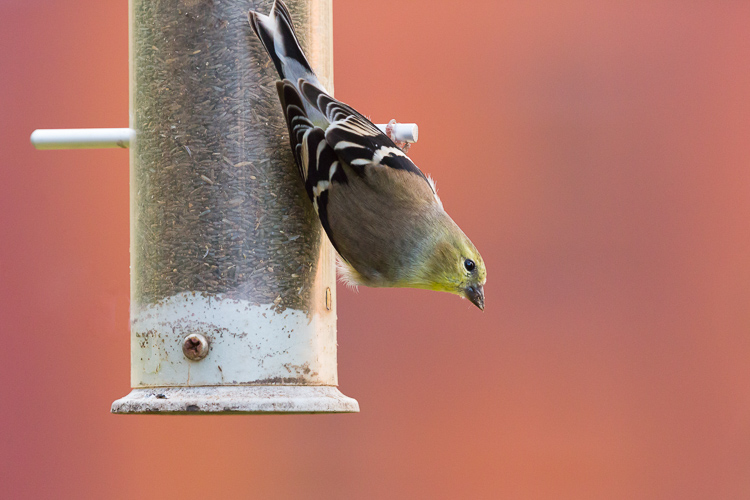
Sigma 500mm F4 Sport Lens Review 7

Finch on feeder, Chicago Botanic Garden, Glencoe, IL
Canon 5DIII, Sigma 500mm F4, ISO 6400, 1/1000th, f/8, monopod with a gimbal head.

What I really wanted to know when I tested this lens

When I tossed my name in the hat as a reviewer for this lens, what I really wanted to know was if a large 500mm prime lens is a practical focal length for the rigors of photographing horses, birds, and wildlife? How is it to shoot using support, rather than hand held as I normally do? Is the autofocus responsive? Does the lens make ultra sharp images?

I tested it in as many situations as possible in the limited time that I had it, starting with a few birding trips to the Chicago Botanic Garden. Birding was followed by visits to the Lincoln Park Zoo to get up close with the lions and tigers. I wrapped everything up by using it for the “at liberty” portion of an equine portrait session with four polo ponies. I love my results. Read on to find out why.

Sigma 500mm F4 Sport Lens Review 5

Striding goose, Chicago Botanic Garden, Glencoe, IL
Canon 5DIII, Sigma 500mm F4, ISO 400, 1/1000th, f/6.7, monopod with a gimbal head.

A few technical specs

  • Weight/Size: 7.3 pounds (3.3 kg), approximately 5.7″ wide x 15″ long (144.8 x 380.3 mm)
  • Focal length: Fixed 500mm prime, the lens does not extend further when focusing.
  • Maximum aperture: F/4.
  • Filter: Rear drop-in, 46mm.
  • Mount: Available for Canon, Nikon, and Sigma
  • Recommended uses: Nature, wildlife, sports and action
  • Price: $ 5999 USD
  • Release date: December 2016, shipping January 2017.

You can read more detailed specifications here.

Shop for the Sigma 500mm F4 for Canon or for Nikon mount at B&H Photo Video.
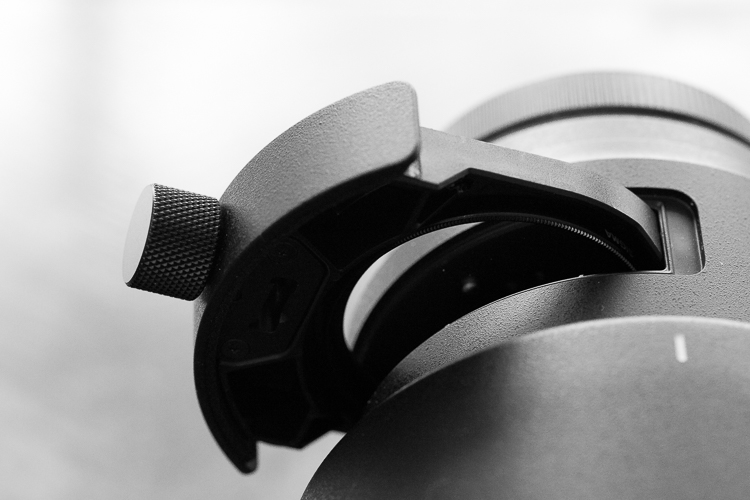
Sigma 500mm F4 Sport Lens Review 11

Detail of Sigma 500mm drop-in rear filter slot.

Supporting the lens

When photographing animals, birds, and wildlife, your typical gear is probably similar to mine. I mostly use the affordable Canon EF 100-400mm f/4.5-5.6L IS II USM lens with either the Canon 7D Mark II or Canon 5D Mark III. If I’m a bit further from my subject, I add a Canon Extender EF 1.4X III. Normally I shoot handheld.
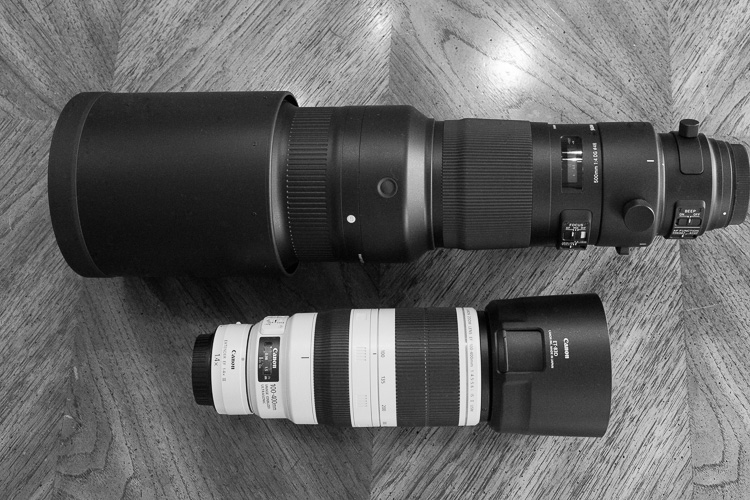
Sigma 500mm F4 Sport Lens Review 9

Comparison of my 100-400mm lens with the Sigma 500mm F4.
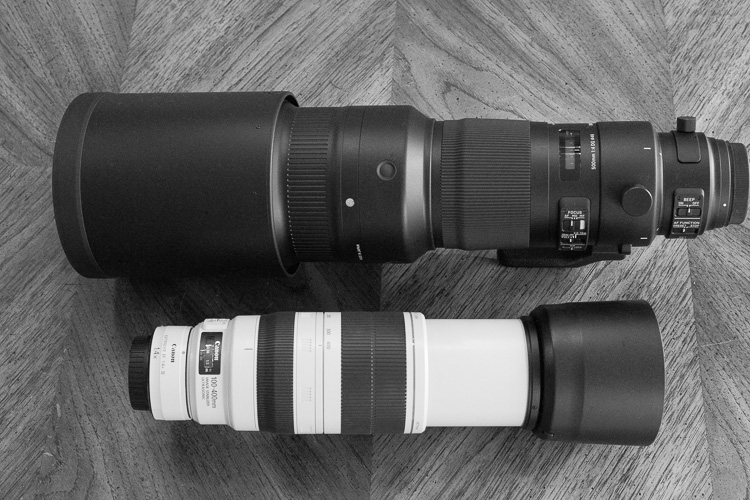
Sigma 500mm F4 Sport Lens Review 10

Comparison of my extended 100-400mm with the Sigma 500mm F4.

The Sigma 500mm lens with my Canon 5D Mark III (which also has an L-bracket on it) weighed approximately 10 pounds. That’s about three pounds more than my typical gear. It initially seemed possible to hand hold but fatigue and a resulting loss of sharpness set in quickly. My solution was to use a quick release plate to attach the foot of the Sigma 500mm F4 DG HSM OS Sport lens to my heavy-duty Feisol monopod with a Jobu gimbal head.

This combination supported the weight of the lens/camera combination while allowing me to position the lens exactly where I wanted it. It wasn’t as flexible as hand holding, but far more so than using a tripod.

Sigma 500mm F4 Sport Lens Review 6

Backward glancing goose, Chicago Botanic Garden, Glencoe, IL
Canon 5DIII, Sigma 500mm F4, ISO 400, 1/1000th, f/6.7, monopod with a gimbal head.

Using support, I was able to shoot for a lot longer without fatigue – and without the shaky shots that come from fatigued hands. I also found the gimbal/monopod combination very portable and easy to maneuver when using this lens.

I would recommend using a sturdy tripod (rather than a monopod) to anyone setting up in a blind, with the intention of waiting for wildlife to approach a known watering hole or feeding spot. Over time, balancing this lens and camera combination on a monopod did take its toll on my shoulders. You wouldn’t want to miss a shot that you’d been waiting hours for, because your body was too fatigued from supporting your gear on a monopod, so use a tripod in that situation.
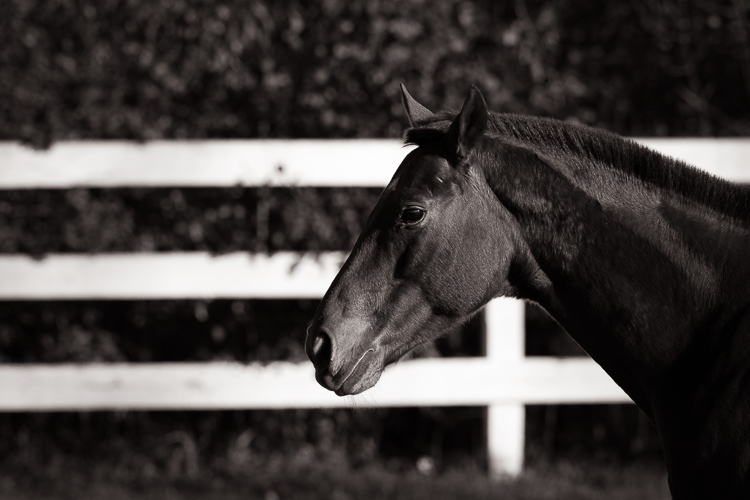
Sigma 500mm F4 Sport Lens Review 14

Horse profile with fence, Somewhere in Suburbia, IL
Canon 5DIII, Sigma 500mm F4, ISO 500, 1/1000th, f/8, monopod with a gimbal head.
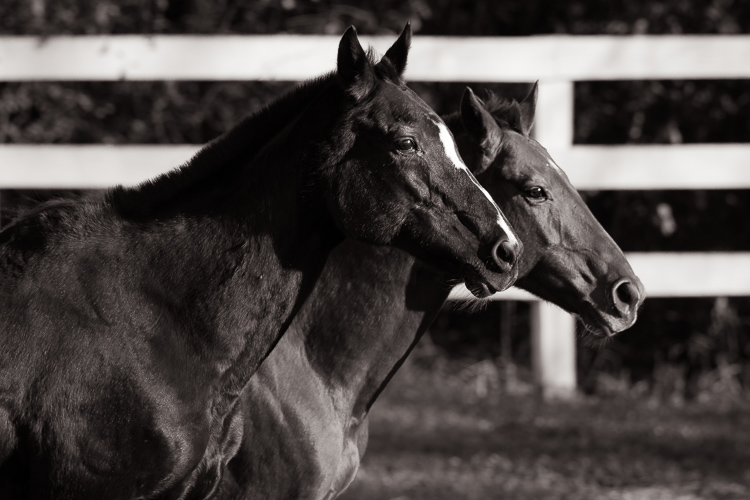
Sigma 500mm F4 Sport Lens Review 15

Profile of two horses with fence, Somewhere in Suburbia, IL
Canon 5DIII, Sigma 500mm F4, ISO 500, 1/500th, f/8, monopod with a gimbal head.

Sigma 500mm F4 Sport Lens Review 17

Three “guilty” horses II, Somewhere in Suburbia, IL
Canon 5DIII, Sigma 500mm F4, ISO 500, 1/500th, f/8, monopod with a gimbal head.

Performance in adverse weather

Illinois in the fall is mainly cool. It’s rainy sometimes but more dry than humid. It is also often very windy. I did not have a chance to test the Sigma 500mm F4 DG HSM OS Sport lens in rainy conditions but it shot flawlessly in the cold (the coldest temperature tested was about 30 degrees Fahrenheit, -1 celsius). Wind was more of a factor because of the large profile of the lens. Some gusts would really grab it and that movement caused a loss of sharpness.

Of course, this isn’t an issue specific to this lens – any larger, longer focal length lens will be affected by gusty winds. Solutions would be to shoot in a more protected area, to use higher-than-normal shutter speeds, or to wait for a less windy day to shoot (which is what I would have done if I wasn’t reviewing the lens in a limited timed frame).

Sigma 500mm F4 Sport Lens Review 8

Japanese Macaque (Snow Monkey), Lincoln Park Zoo, Chicago, IL
Canon 7DII, Sigma 500mm F4, ISO 800, 1/100th, f/10, monopod with a gimbal head.

Autofocus performance

The autofocus on the Sigma 500mm F4 DG HSM OS Sport lens is flawless.

First, you can turn the annoying autofocus beep off with a simple switch right on the barrel of the lens. Turning the autofocus beep off is essential when photographing wildlife since the noise can make your subjects anxious. Thumbs up to Sigma for putting this feature in such an accessible location.
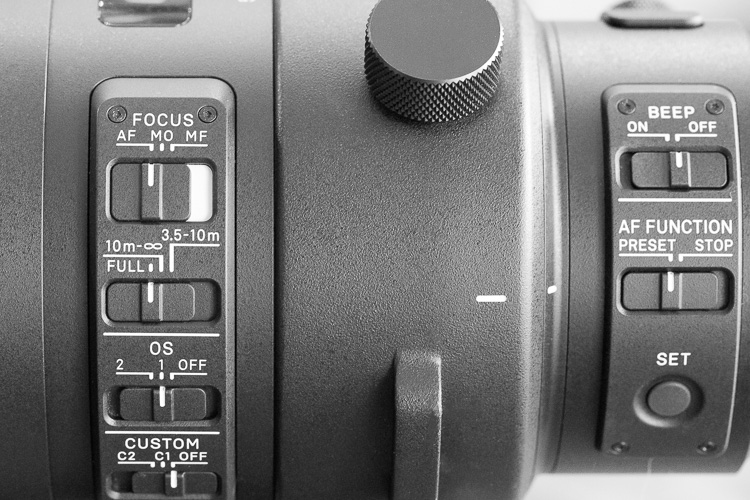
Sigma 500mm F4 Sport Lens Review 13

Detail of Sigma 500mm F4 option switches.

There are also settings for autofocus, manual focus, and manual override. The point of the manual override mode is to have the lens in auto but be able to easily switch it into manual by grabbing the focusing ring. Because I could manually override the autofocus at any time, even when the lens was in auto mode, that’s the mode I preferred to use.

Stabilization

I tested the Sigma 500mm F4 DG HSM OS Sport lens with and without the stabilization turned on. There are two options; OS1 for handheld photography, and OS2 for panning and tracking. While using my monopod and gimbal head, I didn’t see a noticeable difference in sharpness between OS1 and OS2. There was, however, a noticeable difference in sharpness when OS was turned to the off position. Ultimately I switched it to OS1 and left it there.

More convenience at your fingertips

In addition to the stabilization, beep, and autofocus options there is a “focus limiter.” This switch allows you to choose within which range you need the lens to focus. For example, if you know you aren’t focusing on anything close to you, you can set the lens to focus only from 10 meters to infinity. Setting this limiter allows the lens to focus a smidge faster and that gives you a better chance of sharply capturing fleeting moments.

My favorite feature
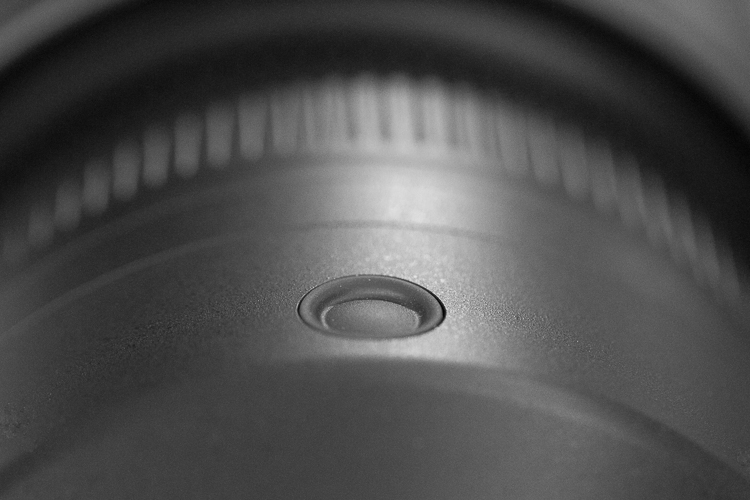
Sigma 500mm F4 Sport Lens Review 12

Detail of the Sigma 500mm F4 Recall Button.

Perhaps my favorite feature is the group of four rubber buttons circling the front of the lens.

To use them, find a location you want to have as a primary focusing point, hold down one of the buttons and hit the set button on the lens barrel. This action programs the lens to focus on the specific point you selected. The focus lock on that point is based on distance so if you move, you need to reset your buttons.

If you are stationary, sitting in a blind photographing birds or wild animals, this is an amazing feature. You can essentially compose four different shots in four different locations by assigning one of these buttons to each location. When a bird lands in one of your four locations, press the button for that focus point, press the shutter and grab your shot. I tested this with some of the spunkier zoo inhabitants and it worked like a charm.

Again, the advantage here is that this is a little faster than asking the lens to refocus. That millisecond is a precious advantage when photographing wildlife.

Sigma 500mm F4 Sport Lens Review 4

Approaching lion, Lincoln Park Zoo, Chicago, IL
Canon 7DII, Sigma 500mm F4, ISO 1000, 1/640th, f/8, monopod with a gimbal head.

Image quality

Image quality is a subjective thing but without it, state-of-the-art features and well-placed buttons don’t mean a thing. I was blown away by the images I produced with this lens.

Straight out of camera the colors rendered beautifully. They were soft, nuanced and creamy. Backgrounds blurred softly away creating a clean canvas for wildlife compositions. The separation between elements was also phenomenal. I had a lot of fun experimenting with “layering,” like the series of four monochrome equine images above and the zebra image below.
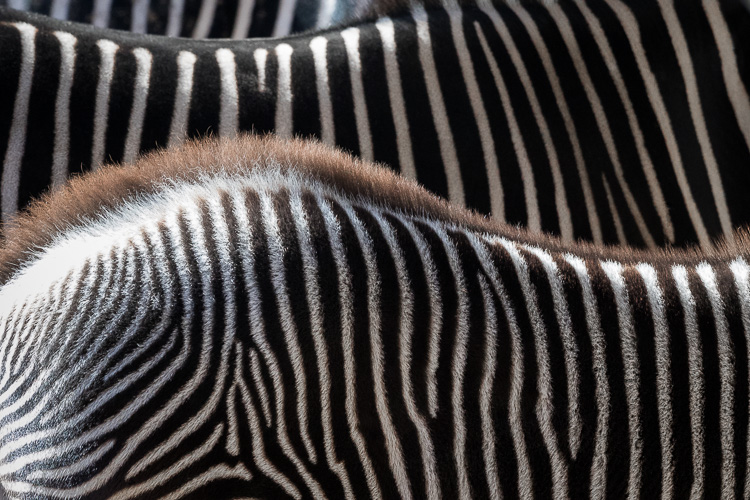
Sigma 500mm F4 Sport Lens Review 3

Layered zebras, Lincoln Park Zoo, Chicago, IL
Canon 7DII, Sigma 500mm F4, ISO 2500, 1/640th, f/8, monopod with a gimbal head.

Images made with this lens are tack sharp. Details of eyes, fur, and feathers are crisp and well-structured. There is no visible distortion and only very minimal vignetting. For wildlife images, I prefer the  range of f/8 to f/11 but I didn’t find any unusable apertures. I could have happily shot at f/4 if the circumstance called for it.

Because I was so happy with the quality, all of the wildlife and bird images included in this review were very minimally processed in Lightroom CC. I sharpened the RAW files, adjusted the white balance, and made a few targeted adjustments to enhance details.

Transporting and carrying the lens

While the weight and length of Sigma’s 500mm F4 lens aren’t unusual for this lens category (the Canon version is almost exactly the same weight and dimensions, and also $ 3000 more!) it is a factor when using it. First, you need to be careful about how you carry a large lens like this to prevent damaging your camera’s lens mount. During a typical shoot you might normally hold your camera by its grip, and let the weight of the lens hang off of the camera body. With a lens this large, that isn’t recommended. Instead, make it a habit of holding onto a lens of this size by the foot, and support the camera’s weight with your other hand. You can also cradle the lens like a baby, which I did often (I didn’t sing it any lullabies, though).

You also need to consider carefully the logistics of hiking to your destination with such a large lens. Investing in a special large lens backpack like this one might be a solution for ease of carrying. Lastly, if you have weight and bag restrictions when you travel, you’ll have to find a workaround for that.
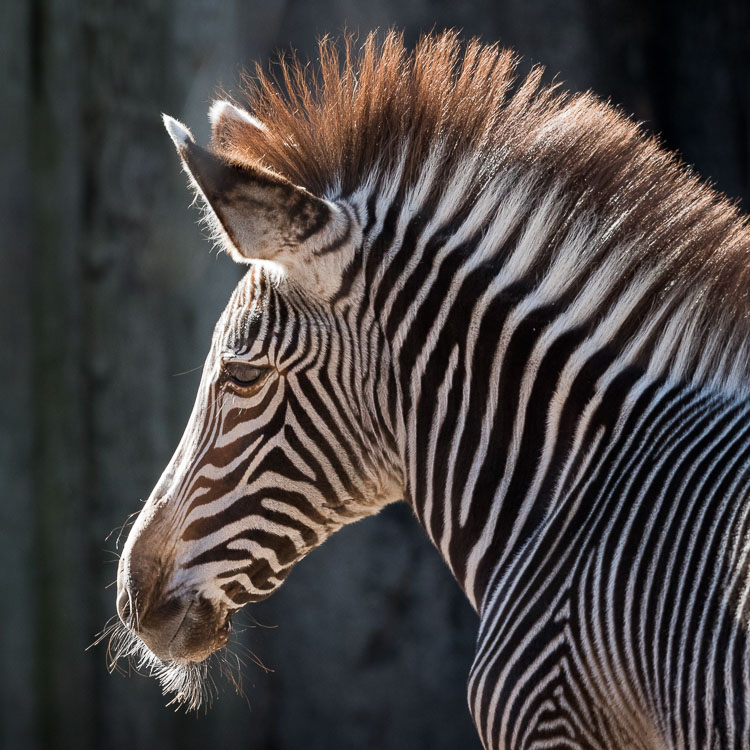
Sigma-500mm-F4-Sport-Lens-Review-2.jpg

Baby zebra portrait, Lincoln Park Zoo, Chicago, IL Canon 7DII, Sigma 500mm F4, ISO 1600, 1/640th, f/8, monopod with a gimbal head.
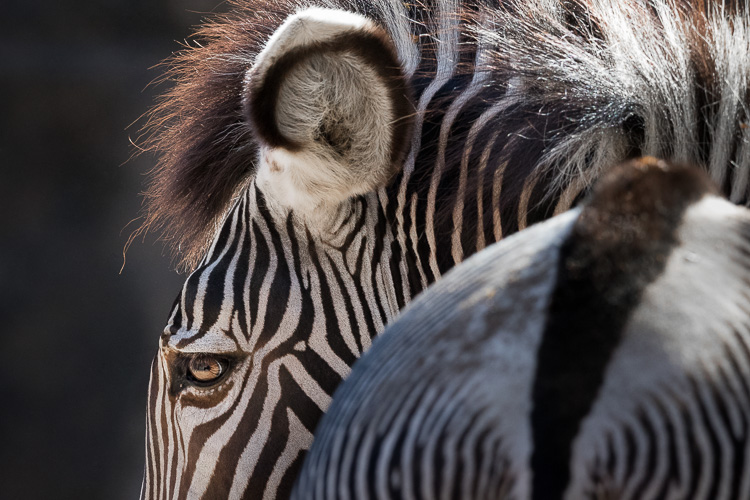
Sigma 500mm F4 Sport Lens Review 1

Zebra with turned head, Lincoln Park Zoo, Chicago, IL
Canon 7DII, Sigma 500mm F4, ISO 2000, 1/640th, f/8, monopod with a gimbal head.

Bottom line

This lens performed very well for me. Images were sharp and overall quality was excellent. For me, because I am often hiking (or recently, biking!) to locate and then keep up with very mobile herds of wild horses, the size and weight of the lens were a bit difficult to manage. Horses are also unpredictable and I often need a shorter focal length to capture all of their behaviors as their curiosity overcomes them and they start to approach me.

If you’re like me, I’d recommend the Canon 100-400mm I mentioned earlier in this review. For an affordable option with an even longer focal length, try Sigma’s own 150-600mm that weighs in at around 4 pounds for under $ 1000.

I would recommend the Sigma 500mm F4 DG HSM OS Sport lens for a birder, or any type of wildlife photographer that stations herself in a blind, and waits for the animals to come into view. If you’re that photographer, sign up at B&H to be notified when this lens will ship (here for Canon mount, or click here for Nikon) to ensure you get one of the first copies. You won’t be disappointed.

googletag.cmd.push(function() {
tablet_slots.push( googletag.defineSlot( “/1005424/_dPSv4_tab-all-article-bottom_(300×250)”, [300, 250], “pb-ad-78623” ).addService( googletag.pubads() ) ); } );

googletag.cmd.push(function() {
mobile_slots.push( googletag.defineSlot( “/1005424/_dPSv4_mob-all-article-bottom_(300×250)”, [300, 250], “pb-ad-78158” ).addService( googletag.pubads() ) ); } );

The post Review of the New Sigma 500mm F4 DG HSM OS Sport Lens by Lara Joy Brynildssen appeared first on Digital Photography School.


Digital Photography School

 
Comments Off on Review of the New Sigma 500mm F4 DG HSM OS Sport Lens

Posted in Photography


Sigma releases price and availability for sd Quattro H

15 Dec

Lens and camera manufacturer Sigma has announced UK pricing for its forthcoming sd Quattro H APS-H interchangeable lens mirrorless camera: it will cost £1500, and will be available for sale in January 2017. We’ve reached out to Sigma to confirm US pricing and will update this story when we have that information.

The camera was first introduced almost a year ago in February 2016 at the CP+ show in Japan. It uses a 26.6×17.9mm Foveon sensor that the company says offers resolution on a par with a 51MP sensor of traditional design. The sensor actually uses 25.5 million pixels, but due to the unique layout of the sensor Sigma claims it can record twice the detail of standard models.

The camera shoots DNG Raw files, uses both phase and contrast detection AF systems, a 2.36-million-dot EVF and Sigma’s SA mount lenses.

For more information see the Sigma website.

Press release

SIGMA sd Quattro H

The SIGMA Corporation is pleased to announce the SIGMA sd Quattro H, the new high-image-quality digital camera that incorporates the Foveon X3 direct image sensor (generation name: “Quattro”).

The RRP of the SIGMA sd Quattro H is £1,499.99 and they will be available in January 2017.

The SIGMA sd Quattro H is the first camera to feature the newly developed APS-H size Foveon X3 Quattro direct image sensor with incredible 51-megapixel-equivalent resolution. Featuring the SIGMA SA mount, the new camera is compatible with all of the SIGMA GLOBAL VISION lenses in the Contemporary, Art and Sports lines, and it is designed to take full advantage of these lenses’ superb optical performance. In addition, it is compatible with DNG format, and imaging software from other companies is also available for higher versatility. The DC Crop Mode, which is automatically activated when DC lenses are attached, makes it possible to take full advantage of your lens assets.

[Key features]

Foveon X3 Quattro direct image sensor
Leveraging the light absorption characteristics of silicon, the Foveon X3 Quattro direct image sensor comprises three layers of photodiodes, each at a different depth within the silicon and each corresponding to a different RGB color. Since it is the only sensor to use this superior vertical color separation technology, it is also the world’s only direct image sensor. Requiring no low-pass filter needed to correct the interference caused by a color filter array, the Foveon X3 Quattro direct image sensor is able to take full advantage of the information carried by light, including color information. The sensor features a pixel ratio of 1:1:4 in the bottom, middle, and top layers and applies the brightness data captured by the top layer to the middle and bottom layers. This unique structure makes possible fast resolution and high-speed data processing.

51 megapixel-equivalent ultra-high image quality
Other camera typically uses a single-layer photo sensor covered by a Bayer filter mosaic, which comprises 50% green, 25% blue, and 25% red squares. In contrast, the Foveon X3 Quattro direct image sensor uses no low-pass filter and is able to capture 100% of the data for blue, green, and red in each of its three layers. Due to this unique structure, the Foveon X3 Quattro direct image sensor can generate up to twice the resolution data of sensors using a Bayer filter. The SIGMA sd Quattro H features a newly developed APS-H size sensor (26.7 x 17.9mm) with 25.5 megapixels in its top layer for an equivalent total of approximately 51 megapixels. This larger sensor takes Foveon image quality to the next level, delivering more detailed images than ever before.

Dual TRUE III for high-speed processing of high-volume data
TRUE (Three-layer Responsive Ultimate Engine) III is the dedicated image processing engine for the Foveon X3 Quattro direct image sensor. SIGMA’s original algorithm processes data without loss of color detail or other image degeneration to deliver extremely detailed image expression with a noticeable 3D pop. In addition, by using two separate TRUE III engines, the camera is able to process data from the Foveon X3 Quattro direct image sensor at extremely high speed.

14-bit RAW data
RAW data records the light information captured by the Foveon X3 Quattro direct image sensor. Using 14-bit (16,384 gradations) signal processing to convert the analog output signal to digital results in photographic data with fine gradations that effectively represent the smooth, natural gradations of the original subject. RAW data uses lossless compression that prevents image degradation. Moreover, processing RAW data with SIGMA Photo Pro results in images with incomparable natural balance.

DNG format
In addition to SIGMA’s original RAW format (X3F), DNG (Digital Negative) format is available. DNG is the RAW image data that is developed by Adobe Systems Incorporated. DNG file makes it possible to develop images on other softwares, which gives more choices of expression.
*It is not possible to record the image data in DNG and JPEG simultaneously. In addition, the number of pixels to be recorded will change depending on the aspect ratio of shooting images.

New Super-Fine Detail exposure mode
The new Super-Fine Detail (SFD) exposure mode brings out the full performance of the Foveon X3 Quattro direct image sensor. One push of the shutter generates seven different exposures, creating RAW data in the X3I file format. Using this data with the SIGMA Photo Pro software package, the photographer can create noiseless images with an extensive dynamic range. With this new mode, the more detailed imaging potential of the Foveon X3 Quattro direct image sensor is fully leveraged. From each X3I file, individual X3F files may also be generated. The value of SFD exposure mode is especially apparent in studio photography.
Note: To prevent camera shake, SIGMA recommends the use of a tripod.

DC Crop Mode
The Sigma sd Quattro H incorporates an APS-H sized image sensor, and it automatically switches to DC Crop Mode, when DC lenses are attached. Also, it is possible to select On/Off of the DC Crop Mode manually. When a DG lens is mounted and the DC Crop Mode [On] is selected, the coverage of the LCD monitor and the view finder automatically becomes within APS-C size, which makes it easy determining the composition.
*If [On] is selected, the angle of view will be equivalent to 1.5 times longer than the focal length of the lens and the number of pixels to be recorded will be smaller.

Exclusive SIGMA Photo Pro software
SIGMA Photo Pro makes possible intuitive processing of RAW data, leveraging the full power of the information captured by the Foveon X3 Quattro direct image sensor. Operation is easy: the user simply adjusts horizontal sliders while viewing the photographs to create images that perfectly match his or her vision. In addition, the software turns X3I files created using the camera’s Super-Fine Detail function into high-resolution, noiseless images with outstanding dynamic range. Various modes allow the user to take full advantage of the image sensor’s fine tones and gradations and create monochrome images of impressive depth.

SIGMA Capture Pro software
SIGMA Capture Pro allows the user to control and capture photographs with the camera via a personal computer. After connecting the camera to the computer with a USB cable, the user can take photos and adjust the aperture value, shutter speed, and other settings. The photographs taken using the software may be downloaded to the camera’s SD card, to the computer, or both at the same time. The software also allows the user to continuously shoot a set number of photographs. While connected to the computer, the camera may still be operated and used to take photographs manually.

RAW onboard data processing
The camera can process RAW data (X3F files) into JPEGs without the need for a personal computer. The user can adjust the exposure correction, white balance, color mode, and aspect ratio while viewing the photographs on the LCD monitor.

Combination of two AF detection methods
Phase detection AF is superior for speed performance, while contract detection AF is superior for focusing accuracy. Combining these two methods in a single system delivers AF that is fast and precise at the same time. In addition, this approach to autofocus takes full advantage of the characteristics of high-performance lenses. The Single AF mode is optimal for everyday photography, while the Continuous AF mode is optimal for focusing on a moving object. In the latter mode, pressing the shutter button halfway causes autofocus to operate continuously, while Movement Prediction AF operates at the same time for more accurate autofocusing. A variety of other AF modes are also available. 9-Point Selection AF mode allows the user to select among nine focus frames. Free Movement AF mode allows the user to select the focus frame with high precision. Face Detection AF mode detects human faces and prioritizes focusing on them. The AF assist light incorporated in the camera body makes possible the use of AF even in low-light conditions.

Focus peaking function
This function puts a colored outline (white, black, red, or yellow) around the subject in the viewfinder for instant confirmation of the person or object currently in focus.

Continuous shooting of up to 8 images in RAW format
The DDR III high-speed, high-volume memory is approximately twice the capacity of that of the SIGMA dp Quattro. This allows the SIGMA sd Quattro H to capture up to 8 RAW images (X3F files) in High size during continuous shooting. Leveraging high-speed data transfer and processing, the SIGMA sd Quattro H offers a continuous shooting speed of up to 4.4 frames per second. (4.8 frames per second when it is set as DC crop Mode.?As a further option, when Low size is used, the SIGMA sd Quattro H offers a continuous shooting speed of up to 6.2 frames per second and continuous shooting of up to 16 images. (6.8 frames per second when it is set as DC crop Mode.

Aspect ratio selection
To accommodate various photographic needs, six different aspect ratios are available, including 3:2 (standard), 1:1 (square), 21:9 (similar to cinema widescreen), and 7:6 (similar to 6×7 camera format). When using an aspect ratio other than 3:2, the user may select a black or semi-transparent frame. The semi-transparent frame can serve as a sports finder, allowing the user to monitor activity outside the frame. The aspect ratio of images recorded as RAW data can also be changed in SIGMA Photo Pro.
*It is not possible to change the aspect ratio of DNG files after shooting.

High-resolution electronic viewfinder
The high-resolution 2.36 mega-pixel electronic viewfinder features near-100% viewfinder coverage and a 1.09 magnification ratio. The viewfinder incorporates three lenses with the outermost lens specially coated to ensure a clear field of view. Using a switch next to the viewfinder, the user can toggle between displaying the image in the viewfinder and the monitor. In AUTO mode, the camera automatically switches to the viewfinder display when the user is looking through it and to the monitor when he or she is not. This mode allows seamless use of the viewfinder to take photographs and use of the monitor to access settings and confirm results. For extra convenience, many functions of the monitor are available via the electronic viewfinder itself, such as setting values, grid lines, electronic level, zoom, focus peaking and more.

Dual monitors
In addition to the 1.62 mega-pixel 3.0 inch TFT LCD main monitor, the rear of the camera features a sub-monitor that displays the number of remaining shots on the SD card, shutter speed, aperture value, ISO level, and more. This extra monitor makes it easy to watch the live view and confirm key information at the same time. A sheet of special material lies between the two LCDs and the protective glass that covers them. This sheet prevents air pockets from forming and minimizes reflections, ensuring excellent display visibility in sunlight.

Electronic level
Allowing the user to view the camera’s horizontal and vertical position while shooting, this function is useful in precisely establishing composition.

Tough magnesium alloy body
The exterior and main frame of the camera body features a tough magnesium alloy. The rigidity and strength of this alloy significantly contribute to the reliability and quality of the camera as a whole.

Dust- and splash-proof design
O-rings and sealing material effectively seal buttons and seams to prevent the intrusion of dust and water, making the camera an excellent choice for pros working under tough conditions.

Dust protector on lens mount
To prevent the intrusion of dust and debris into the camera body, the lens mount features a dust protector sealed with optical glass. Additional sealing around the mount further lessens the chance of dust entering the camera body.

Intuitive user interface helps user focus attention on creative work
Building on the success of previous SIGMA user interfaces, the new UI is more intuitive than ever. Located next to the shutter button, the Quick Set button provides instant access to the Quick Set Menu, which allows the user to quickly adjust commonly used settings while continuing to look through the viewfinder. Located on the top of the body, the LOCK switch prevents the accidental pressing of buttons, helping keep the user’s attention on the creative work. The buttons that are locked with this switch may also be customized by the user. Located on the rear of the camera near the selector are several controls for commonly used functions. Easily accessed with the thumb of the right hand, they include the menu button, focus frame button, and AEL/AF button with lever.

Quick Set Menu
Located next to the shutter button, the Quick Set button provides instant access to eight commonly used functions, including aspect ratio, ISO, white balance, and color mode. The user can quickly adjust settings using the selector and front and rear dials. Users can also customize the functions included in the Quick Set Menu and the order in which they appear.

System camera compatible with all SIGMA GLOBAL VISION lenses
Featuring the SIGMA SA mount, the new camera is compatible with all of the SIGMA GLOBAL VISION lenses in the Contemporary, Art and Sports lines, and it is designed to take full advantage of these lenses’ superior optical performance.

High-resolution Super-High size images
A variety of file sizes is available to accommodate a wide range of user needs. Using High-size files brings out the best performance from the image sensor, while using Low-size files increases the number of shots that can be stored in memory. In both of these file sizes, the camera can simultaneously create RAW and JPEG data. In addition, the camera can create JPEG files in S-HI size, appropriate for large prints, as well as in S-LO size, which is ideal for online sharing.

Higher-precision white balance
A new algorithm enhances the precision of auto white balance, even optimizing white balance in images with multiple light sources. The Auto (Lighting Source Priority) mode leaves the color of light sources intact for extra atmosphere, while the Auto (Default) mode allows the camera to automatically make white balance adjustments. In total, twelve white balance modes are available, including three custom modes. It is also possible to adjust white balance based on the specific image and to set the color temperature in Kelvin. Moreover, each white balance mode can be fine-tuned for detailed correction of white balance and creative filter effects.

Full range of Color Modes
Color Modes can adjust color tones and contrast to best suit each photographic scene. The range of color modes includes Cinema, which reduces saturation and emphasizes shadows for a film-like effect; and Sunset Red, which emphasizes red for more impressive sunset shots. Color Modes make artistic expression easier than ever.
* It is not possible to select some of the Color Modes when it is set as DNG.

Custom bracketing display
This function allows the user to take a single shot but save several versions of the photograph with customized white balance, Color Mode, and other settings. This function can be combined with auto bracketing to help increase the chance of getting the perfect shot.

Monochrome options
The Filtering Effect allows contrast to be changed as if the images had been taken using a color filter for black and white photography. The Toning Effect allows warm, cold, sepia, and other color tones to be added to monochrome photos to emphasize the subject in creative ways. SIGMA Photo Pro makes possible optimal monochrome processing of RAW data without any color processing, producing high-resolution monochrome images with exceptional dynamic range and outstanding reproduction of the tones of highlights and shadows.

SD card
The camera is compatible with compact and portable SD, SDHC, and SDXC cards. The camera features the UHS-I standard, allowing large volumes of data to be recorded at high speed. The camera is also compatible with Eye-Fi, allowing wireless transfer of images to personal computers, smartphones, and more when an Eye-Fi card is inserted (sold separately).

Dedicated high-capacity rechargeable lithium-ion battery
The camera includes the high-capacity BP-61 lithium-ion battery and BC-61 charger. The optional SAC-7 AC adapter allows the camera to run AC power from a wall outlet.

Dedicated cable release
By connecting the dedicated CABLE RELEASE CR-31 (sold separately) to the camera’s USB port, the user can release the shutter without touching the camera. This function is useful when the user wishes to release the shutter from a distance, avoid camera shake, or shoot with a low shutter speed.

USB 3.0 port
The USB 3.0 Micro B port allows the user to connect the camera to a personal computer to download high-volume image files at high speed.

HDMI port
The MINI HDMI Type C port allows the user to connect the camera to an HD television with an HDMI cable (sold separately) and view photographs, camera menus, and even the viewfinder image in high definition on a big screen.

Articles: Digital Photography Review (dpreview.com)

 
Comments Off on Sigma releases price and availability for sd Quattro H

Posted in Uncategorized


Sigma 12-24mm F4 DG HSM Art Lens Review

23 Nov

The Sigma 12-24mm F4 DG HSM Art was first announced September 16th, 2016. This is Sigma’s widest zoom lens offering to date and joins Sigma’s growing list of Art lenses. The lens is priced at just under $ 1600, which makes it a fierce competitor to Canon’s EF 11-24mm F4L USM lens which is priced at just under $ 3,000.

The Sigma is available in Canon, Nikon F (FX) and Sigma SA Bayonet mounts and will most likely appeal to landscape and architecture photographers that are looking for an extremely wide field-of-view (12mm gives around a 122° diagonal field of view).

The looming question is: does the extreme difference in price effect the build quality and performance of the Sigma? In this review we will be looking at the Sigma’s performance and just how it stacks up against the Canon 11-24mm F4L.

APS-C

If you’re an APS-C shooter, the Sigma can be utilized on that platform with an equivalent focal length of 19-38mm and an equivalent aperture of F6.4. It’s worth noting however that Sigma already offers a considerably less expensive 10-20mm F3.5 which would be a 16-32mm F5.6 equivalent, which would be a much better wide-angle option. For this reason we’re not going to consider this lens for use on APS-C in this review.

Sigma 12-24mm F4 DG HSM Art Headline Features

  • 12-24mm focal length
  • F4 maximum aperture
  • Ring-type Ultrasonic Focusing
  • Available in Canon EF, Nikon F (FX) and Sigma mounts

Specifications Compared

  Sigma 12-24mm F4 DG HSM Art Canon EF 11-24mm F4L USM
Price (MSRP) $ 1,599.00 $ 2,999.00
Lens Type Wide-Angle Zoom Wide-Angle Zoom 
Focal Length 12-24mm 11-24mm
Filter Thread  None None (rear insert-type)
Image Stabilization No No
Lens Mount Canon, Nikon F (FX), Sigma SA Bayonet Canon EF
Aperture Ring No No
Maximum Aperture F4  F4 
Minimum Aperture F22 F22
Minimum Focus 0.24 m (9.45?) 0.28m (11″)
Diaphragm Blades   9 (rounded) 9 (rounded)
Elements   16 16
Groups   11 11
Special Elements/Coatings Super Multi-Layer Coating, F-Low Dispersion and aspherical elements, including an 80mm large-diameter molded glass aspherical element

Super UD, UD, and 4 Aspherical Elements, SWC, Air Sphere, and Fluorine Coatings, Rear element fluorine coatings

Autofocus Yes Yes
Motor Type Ring-type Hypersonic Ultrasonic
Full Time Manual Yes Yes
Focus Method Internal Internal
Distance Scale  Yes Yes
DoF Scale No No
Weather Sealing  Dust and Splash Proof Construction with rear rubber gasket Full Weather Sealing
Zoom Method  Rotary (extending) Rotary (internal)
Weight 1151g (2.54 lb) 1180g (2.60 lb)
Dimensions 132mm (5.2″) x 102mm (4.0″) 132 mm (5.2?) x 108 mm (4.25?)
Hood Included Yes (built in) Yes (built in)

The Sigma and the Canon share a rather large number of the same features with respect to lens design. The main differences between the two lenses are highlighted in green. The Canon has a slight edge over the Sigma in terms of build quality with full weather sealing, where the Sigma offers a ‘moisture resistant’ rubber gasket on the lens mount and water-repellent coatings on the front and rear lens elements.

Both lenses are very heavy and are nearly identical in size and shape, and both feature built-in lens hoods. Neither lens accepts standard screw type filters, but the Canon has a slot to accept rear gel filters. The Sigma has that familiar Art build that feels very robust in hand but lacks the same ‘sealed’ feeling that the Canon lens provides due to its water resistant external construction.

The Canon has a slight advantage over the Sigma in terms of the zoom method as the Sigma has an external extending zoom whereas the Canon’s is internal. Being that the Sigma isn’t fully weather sealed this could be a weak point in the design in terms of moisture penetrating the lens during adverse or wet weather conditions. 

With these specifications in mind, we will now be looking at how well the Sigma performs to determine how it fairs in our head-to-head comparison with the Canon 11-24mm F4L. 

Articles: Digital Photography Review (dpreview.com)

 
Comments Off on Sigma 12-24mm F4 DG HSM Art Lens Review

Posted in Uncategorized