RSS
 

Posts Tagged ‘Sigma’

Lens Review: Sigma 20mm F1.4 DG HSM Art Lens

10 Aug

In my opinion, one of the best developments to happen in photography recently is the stepped-up offerings of third party lens manufacturers. Early in my photography career, third party lenses were decent alternatives for a lower cost option, but my own experience was that the cost savings also came at a cost in performance. Those lenses weren’t as sharp, focused slower, and weren’t built to the same quality of similar lenses by Nikon and Canon (and other camera brands).

Sample image from Sigma 20mm f/1.4 DG HSM Art

The Sigma 20mm lens allows for capturing expansive views when photographing landscapes.

Enter Sigma’s Art lineup of lenses. When the Sigma 35mm f/1.4 Art lens was introduced in 2012, it ushered in a new era of third party lenses, giving users lower cost options while maintaining high image quality and performance. As Sigma has continued to build out their Art lineup, adding a 50mm f/1.4, a mind-boggling 50-100mm f/1.8 zoom for APS-C cameras, and others – photographers are gaining new respect for Sigma as a lens maker. Recently, Sigma announced a new entry, the 20mm f/1.4 DG HSM Art lens, and I was thrilled to have an opportunity to try it out.

First Impressions: Sigma 20mm f/1.4 Art Lens
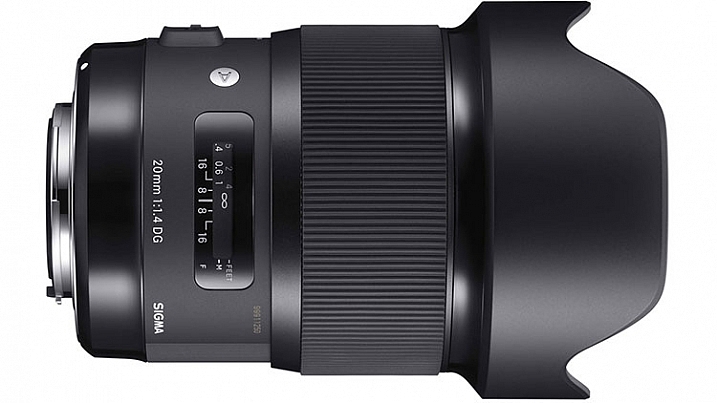
Sigma 20mm f/1.4 DG HSM Art

Image courtesy of Sigma

When the lens first showed up on my doorstep, I immediately unpacked it to see what Sigma has done.  It is impressive. An ultra-wide angle lens with an ultra-fast maximum aperture, the 20mm f/1.4 Art lens is one with quite a few applications including; photojournalism, wedding photography, street photography, and landscapes, to name a few. If the image quality for this lens lives up to the reputation of previous Art lenses, it’s going to be an incredible lens to work with.

A quick glance at the major manufacturers’ websites reveals that no other lens maker builds a 20mm lens with a maximum aperture as large as the Sigma 20mm f/1.4 Art lens. That fast aperture allows a lot of room for use of shallow depth of field, or for working in low light conditions. It also makes applications such as astrophotography a bit easier as well. The minimum aperture is only f/16, as opposed to f/22 on lenses such as the Canon Ef 24mm f/1.4. While that is not a huge issue, it does mean that when you’re trying to use slow shutter speeds on sunny days, a filter may be necessary.
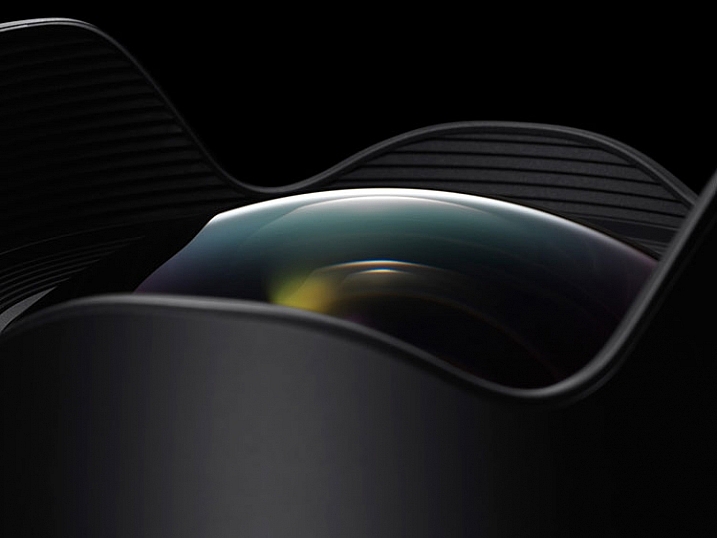
Detail image of Sigma 20mm f/1.4 DG HSm Art

The bulbous front element of the Sigma 20mm f/1.4 DG HSM Art lens. Photo courtesy of Sigma.

Out of the box, the lens is fairly sizable (90.7mm x 129.8mm / 3.6  x 5.1 inches) and is a bit heavy (950 g / 33.5 oz.). It is considerably larger than my Nikon 24mm f/1.4 G or the Canon EF 24mm f/1.4L II. The outer barrel does have a bit of plastic feel to it, but the brass mount and considerable heft, assuage any fears of cheap build quality. Constructed of 15 elements in 11 groups, including F Low Dispersion, Special Low Dispersion, and aspherical elements, Sigma claimed class-leading image quality. I found minimal distortion and chromatic aberration in images I shot with this lens, and what I did find was easily corrected in Lightroom or Photoshop. The lens features a 9-blade rounded diaphragm aperture, excellent for soft rounded bokeh in out of focus areas of the image. Minimum focusing distance is 27.6 cm or 10.9 in.

My one disappointment with the lens is the bulbous front element, which eliminates the ability to use either screw-in filters such as polarizers, or the smaller 100mm drop-in filters. While I have a set of 150mm filters, my adapter would not fit the lens, and other manufacturers had yet to build an adapter that works. I am told by several filter manufacturers that they are working on a suitable adapter for the 150mm filter kits on the market.

The Sigma 20mm in the field

Sample image from Sigma 20mm f/1.4 DG HSm Art

Being a landscape photographer, the first thing I wanted to do was take this lens for a spin at one or two of my favorite local spots. While the lack of filters meant I had some difficult choices to make when photographing the sunset, I was anxious to use the wide angle lens to accentuate the foreground and the sky.

The Sigma 20mm f/1.4 Art gave me no issues and focused smoothly on my subject. The 94.5° field of view on a full frame sensor provides a nice panoramic image, allowing you to emphasize the immediate foreground while creating context in showing the background. The necessity of filters will be more dictated by your camera sensor’s dynamic range, but I found on my Nikon D810, I was able to expose for the highlights and recover the shadows in post-production. Sharpness throughout the scene was excellent, with minimal distortion and loss of resolution at the corners. Color and contrast are excellent as well.

20160624_Maureen-Chuck_0611b

My next test was to try the lens at a wedding. I will often employ a wide angle lens for capturing action on the dance floor, and occasionally for environmental portraits of the bride and groom like the image above. I found the Sigma 20mm f/1.4 Art lens excelled in both instances.

On the dance floor, even in low light, I found the lens to focus quickly and accurately. The fast aperture allowed me to minimize my use of flash in the reception hall (below), and use the ambient lighting for a more natural, festive look. In addition, for the formal portraits I used the lens outdoors at sunset for some bridal portraits, and was impressed with the image quality in a high contrast situation. I used an external strobe to light the bride and groom (image above), with the sunset in the background, and stopped all the way down to f/16 for a starburst effect on the sun.

Sample wedding image from Sigma 20mm f/1.4 DG HSM Art lens

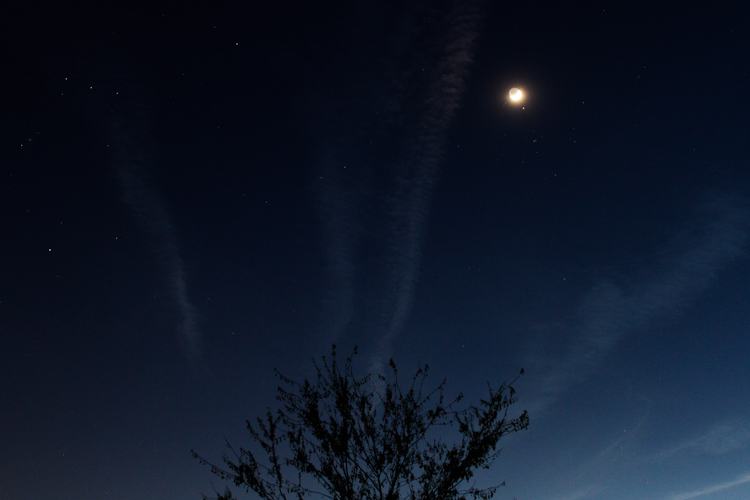
My final test was to do some astrophotography with the lens. In the past, I’ve used both the Nikon 24mm f/1.4 and the Canon EF 24mm f/1.4L II lenses, and while both were satisfactory, each has a tendency to produce some comatic aberration, especially in the corners.

While I did find some coma using the Sigma 20mm f/1.4 Art, I found it to be less noticeable than either the Nikon or the Canon. The fast f/1.4 aperture allowed me to capture the stars, while using an ISO of 800 and a 15 second exposure time. If nothing else, this lens is an astrophotographer’s dream, being wider than any other f/1.4 lens currently on the market, which allows for capturing expansive sections of the night sky.

Sample images from Sigma 20mm f/1.4 Dg HSM Art lens.

Summary

In the 20mm f/1.4 Art lens, Sigma has managed to build an exceptional, wide aperture, wide angle lens that will suit a variety of photographers, from photojournalists, to landscape artists, street photographers and wedding photographers. Priced at $ 899, it’s less than half the price of the equivalent Nikon or Canon 24mm lenses, and provides a wider angle. Nikon’s 20mm f/1.8G is as close as the major manufacturers get to this lens, at a cost of $ 100 less than the Sigma. The Sigma 20mm f/1.4 DG HSM Art is available in Canon, Nikon, and Sigma mounts.

I highly recommend this lens to anyone in the market for an ultra-wide, ultra-fast lens. My one caveat is that if you’re not already invested in a 150mm filter system, you will need to do so if you want to use filters with this beast.

googletag.cmd.push(function() {
tablet_slots.push( googletag.defineSlot( “/1005424/_dPSv4_tab-all-article-bottom_(300×250)”, [300, 250], “pb-ad-78623” ).addService( googletag.pubads() ) ); } );

googletag.cmd.push(function() {
mobile_slots.push( googletag.defineSlot( “/1005424/_dPSv4_mob-all-article-bottom_(300×250)”, [300, 250], “pb-ad-78158” ).addService( googletag.pubads() ) ); } );

The post Lens Review: Sigma 20mm F1.4 DG HSM Art Lens by Rick Berk appeared first on Digital Photography School.


Digital Photography School

 
Comments Off on Lens Review: Sigma 20mm F1.4 DG HSM Art Lens

Posted in Photography


Sigma updates 150-600mm firmware to solve overexposure with Nikon D500

02 Jul

Sigma has announced new firmware for one of its super tele zooms that has a problem with exposure when used with the Nikon D500 and Sigma’s 1.4x tele convertor. Both Sports and Contemporary versions of the 150-600mm F5-6.3 DG OS HSM will need the new firmware if owners want to use the lenses with the company’s TC-1401 1.4x teleconverter on the Nikon D500. The company says it has discovered that when the three items are combined there is an issue with overexposure, and that the new firmware will fix it.

The TC-1401 can be used with the 150-600mm F5-6.3 lens because both it and the Nikon D500 can support autofocus at apertures up to F8.

Users who own the Sigma USB lens dock can update their firmware themselves, while those who don’t can receive the update free of charge from a Sigma service center.

For more information see the Sigma website.

Lens firmware Update for SIGMA 150-600mm F5-6.3 DG OS HSM |Sports / Contemporary in Nikon mount

Thank you for purchasing and using our products.

We would like to announce the availability of a new firmware update for the SIGMA 150-600mm F5-6.3 DG OS HSM | Sports in Nikon mount and the SIGMA 150-600mm F5-6.3 DG OS HSM | Contemporary in Nikon mount.

This firmware update can be installed using SIGMA Optimization Pro.

The lens firmware update corrects the phenomenon of overexposure when the lens is attached to the SIGMA TELE CONVERTER TC-1401 on Nikon Digital SLR camera “D500”, released by NIKON CORPORATION.

For customers who own the following applicable products and also SIGMA USB DOCK, please update the lens firmware using SIGMA Optimization Pro.

For customers who do not own SIGMA USB DOCK, the lens firmware update will be provided free of charge. Please contact your nearest authorized subsidiary/distributor of SIGMA.

Applicable products

  • SIGMA 150-600mm F5-6.3 DG OS HSM | Sports – Nikon mount
  • SIGMA 150-600mm F5-6.3 DG OS HSM | Contemporary – Nikon mount

Benefit of this firmware update
It has corrected the phenomenon that it shows some overexposure when it is attached with
SIGMA TELE CONVERTER TC-1401 on Nikon D500.

*For customers who are using SIGMA Optimization Pro Ver1.1 or earlier, please ensure to update it to Ver1.3 from the following Download page before updating the lens firmware.

Download page: http://www.sigma-global.com/download/

We appreciate your continued support for our company and products.

Articles: Digital Photography Review (dpreview.com)

 
Comments Off on Sigma updates 150-600mm firmware to solve overexposure with Nikon D500

Posted in Uncategorized


Sigma announces pricing and availability for sd Quattro and EF-630 flash

24 Jun

$ (document).ready(function() { SampleGalleryV2({“containerId”:”embeddedSampleGallery_4930243882″,”galleryId”:”4930243882″,”isEmbeddedWidget”:true,”standalone”:false,”selectedImageIndex”:0,”startInCommentsView”:false,”isMobile”:false}) });

Sigma Corp. has announced pricing and availability for its sd Quattro mirrorless camera, a bundle including the camera and a 30mm F1.4 Art lens, as well as the EF-630 external flash.

The sd Quattro is a mirrorless camera with an APS-C-size Foveon sensor (which Sigma claims is ‘equivalent’ to 39MP), hybrid autofocus system, 2.36M-dot electronic viewfinder and ‘Super-Fine Detail’ mode that combines seven exposures into one for high dynamic range. The sd Quattro will priced at $ 799 body-only when it ships in July.

The sd Quattro will also come bundled with Sigma’s 30mm F1.4 DC HSM Art lens for $ 999.

The company also released pricing for its EF-630 external flash. It will initially be available for Sigma cameras, with Nikon and Canon versions to follow. The flash covers a range of 24-200mm (and can go down to 17mm via its built-in wide panel), supports high speed sync and offers an easy-to-use interface via its dot matrix display. The EF-630 will set you back $ 379 when in ships in July.

Press release:

Sigma Announces Pricing and Availability for sd Quattro, new sd Quattro bundle and Sigma EF-630 Flash

Pricing and availability announced for the Sigma sd Quattro camera, a new sd Quattro camera and 30mm 1.4 Art lens bundle, as well as new EF-630 Flash

Ronkonkoma, New York — June 24, 2016 – Sigma Corporation of America, a leading camera, DSLR lens, flash and accessories manufacturer, today announced the pricing and availability of the sd Quattro camera along with a new bundle including the sd Quattro and 30mm 1.4 DC HSM Art lens, as well as pricing for the new Sigma EF-630 external flash. The Sigma sd Quattro features an APS-C sized sensor and a redesigned mirrorless system among other advancements, and will be available in July for the street price of $ 799 USD. The sd Quattro and Sigma 30mm 1.4 DC HSM Art bundle is expected to be available in July for the street price of $ 999 USD. The Sigma EF-630 flash is the latest external flash from Sigma and boasts an overhaul from previous models, including a new docking station that allows users to update the flash via personal computer. The ideal match with the new sd Quattro, the new Sigma EF-630 flash will be available in July for Sigma mount for the street price of $ 379 USD, along with its dedicated USB Docking station for $ 79 USD. Additional mount availability for systems including Nikon and Canon are to be announced at a later date.

“Our goal with the sd Quattro and 30mm 1.4 Art bundle is to make our new camera available to more photographers interested in the unique aspects of our Foveon Quattro sensor,” stated Mark Amir-Hamzeh, President of Sigma Corporation of America. “The cameras are truly exciting and showcase some great advancements including a new mirrorless design, updated auto-focusing system, a rugged build, and paired with our renowned 30mm 1.4 Art lens make for an extraordinary pair. Additionally, our new EF-630 flash system shows Sigma’s dedication to photography with updated performance from previous models, and makes for an ideal pairing with our new sd Quattro cameras.”

About the sd Quattro and 30mm 1.4 DC HSM Art
The sd Quattro utilizes our proprietary Foveon Quattro sensor renowned for its high-resolution capabilities. A magnesium alloy body makes the sd Quattro durable and rugged, while a dust and splash proof design make it ideal for photographers facing harsh conditions. On top of the new design, these cameras boast a list of useful advancements. These include a two-mode Autofocus detection that combines Phase detection for focus speed and Contrast detection for focus accuracy. The focus settings have also been enhanced with such modes as Movement Prediction, Face Detection, Free Movement, Focus Peaking and a variety of others. The new 2.3 megapixel viewfinder displays close to 100% of the field of view, and when placed in “Auto” will toggle between the viewfinder when the user has the camera to their eye and then to the LCD when the user lowers the camera. A new “Super-Fine Detail” mode brings out the full potential of the Quattro sensor by capturing seven different exposures with one shot and merging them for exceptional dynamic range (images can be extracted individually as well). The Sigma 30mm 1.4 DC HSM Art is a staple prime lens in Sigma’s lineup. This compact prime lens is designed for APS-C sensors and touts a bright 1.4 aperture. Part of the Sigma Global Vision lineup, every Sigma 30mm 1.4 Art is individually tested before leaving our single factory in Aizu, Japan and can be updated and fine-tuned with the Sigma USB dock and Sigma Photo Pro software. 

About the Sigma EF-630 Flash
Compatible with most well-known digital SLR cameras, the EF-630 flash will be available in Sigma mount in July with additional mounts, including Canon and Nikon, in the future. The FP Flash function of the EF-630 makes flash photography possible at shutter speeds greater than the normal sync speed, which is typically limited at shutter speeds up to 1/250 second for most cameras. The FP Flash function for high shutter speeds is necessary when setting a larger aperture to limit depth of field when shooting in daylight, as high shutter speeds are used to balance the daylight and the flashlight at any shutter speed.  

EF-630 features:

  • Intuitive user interface: dot matrix LCD screen for improved menu visibility, D-Pad and dial settings controls, and easy one-click disengage function improve ease of use
  • Slave flash function: for use with multiple flash systems
  • Modeling flash function: check for intense reflections and shadows before capturing the shot
  • AF assist light: accurate auto-focus in low light conditions
  • Auto Power-off: flashgun automatically powers off after a period of non-operation to conserve battery life
  • Manual flash power level control: manually set the flash power level from 1/1 to 1/128

The new EF-630 Flash can be updated with the latest software from a workstation or laptop using the Sigma Optimization Pro software and Flash USB Dock FD-11 (sold separately).

Articles: Digital Photography Review (dpreview.com)

 
Comments Off on Sigma announces pricing and availability for sd Quattro and EF-630 flash

Posted in Uncategorized


Fast telezoom: Sigma 50-100mm F1.8 sample images

10 Jun

The Sigma 50-100mm F1.8 DC HSM Art is a fast telezoom lens designed for APS-C format cameras, on which it provides an equivalant focal length range of approximately 75-150mm. Its fast F1.8 maximum aperture makes it the brightest lens of its type on the market. But is it any good? Take a look at our sample images to find out.

Articles: Digital Photography Review (dpreview.com)

 
Comments Off on Fast telezoom: Sigma 50-100mm F1.8 sample images

Posted in Uncategorized


Sigma says three of its lenses are not fully compatible with the Canon EOS-1D X II

03 Jun

Sigma has announced that three of its lenses, the 20mm F1.4 DG HSM Art, 35mm F1.4 DG HSM Art and the 85mm F1.4 EX DG HSM, aren’t ‘fully compatible with’ Canon’s newly released EOS-1D X Mark II. When one of these lenses is used with the camera, the resulting images may be underexposed. The company is developing firmware to correct the issue.

According to Sigma, the issue manifests when users choose ‘Center-weighted Average Metering’ or ‘Evaluative Metering.’ In addition, the company recommends users disable lens correction settings in the camera when using one of Sigma’s interchangeable lenses. This includes Chromatic aberration correction, Peripheral illumination correction, Distortion correction and Diffraction correction.

The latter point likely refers to an issue with the 35mm F1.4 Art lens and 1DX Mk II that surfaced last month in which images taken with the pair showed unusual banding around the edges. As SLR Lounge noted, turning off Peripheral illumination correction in-camera fixed the issue, which now appears to be Sigma’s official workaround. The camera maker also says that the Manual Override focus function isn’t available with the 1D X II when using its lenses.

Via: Sigma

Articles: Digital Photography Review (dpreview.com)

 
Comments Off on Sigma says three of its lenses are not fully compatible with the Canon EOS-1D X II

Posted in Uncategorized


Review of the Sigma 150-600mm Contemporary Lens Plus TC-1401 Teleconverter Bundle

31 May

One of my favorite subjects to photograph is wildlife, so when asked to review the Sigma 150-600mm lens, I was excited about the opportunity to see how its results compared to my Tamron 150-600mm.

Sigma 150-600mm

In addition, Sigma recently began offering a bundle for their 150-600mm with a 1.4x teleconverter. Since I shoot mainly with a Nikon D750 full frame, the lens bundled with a 1.4x TC interested me very much. The 1.4x TC makes the 600mm, an 840mm on a full frame camera, so in theory this allows my full frame camera to shoot wildlife with nearly the same zoom factor as a crop sensor. (Nikon crop sensors are 1.5 and Canon, 1.6)

There are two things to consider when looking at a new lens:

  1. First is its ease of use
  2. Second is the quality of its optics.

In this article I’ll be applying both of these considerations as I review Sigma’s new bundle, and make comparisons between the Sigma and Tamron lenses. All images in this article were captured with the Sigma 150-600mm with the 1.4x TC.

sigma-150-600-4

Focusing

The Tamron features a larger, thicker focusing ring than the Sigma, which makes it easier to manually focus the lens. As for the Sigma, it has an extra setting on the autofocus switch for manual override (MO) which combines autofocus with an option to manually focus. I did not notice any major difference in the focusing responsiveness between the two lenses. Both did a fair job when grabbing focus, though neither lens is going to focus as quickly as a much more costly 600mm prime lens. The minimum focusing distance on the Tamron is just slightly less than the Sigma – not a game changer, but nevertheless a plus for the Tamron.

Focus Limiter switch

While both lenses have a focus limiter switch, with settings between Full and 10m (Sigma) or 15m (Tamron) to infinity, the Sigma features a third option on the limiter switch for 10m to 2.8m. In my testing, this third option proved very useful and was easy to locate and use, in order to focus on closer objects much quicker.

Customization

A feature the Sigma lens offers that the Tamron does not is an extra customization switch, which provides for an optional USB docking station (purchased separately). This allows a photographer to create two customized setting for OS (Optical Stabilization), AF, and focus-distance limits, and can also be used to download firmware updates directly to the lens.

sigma-150-600-5

Zoom Lock

Both the Tamron and the Sigma have a locking switch to prevent zoom creep at 150mm. However, the Sigma can also lock at several other focal settings, and what is even better, a quick twist of the zoom ring will unlock the it, without having to fumble around to find the switch. (In some cases this might be the difference between capturing and missing a killer shot!)

I found that my Tamron lens crept more than the Sigma, but this could be caused by the fact that it is an older lens with more use. Still, the lock switch on the Sigma is a great feature, especially since one can “soft lock” at many focal lengths.

Image Stabilization

Both lenses have their own image stabilization systems: Tamron’s VC (Vibration Compensation) and Sigma’s OS (Optical Stabilization). The Tamron has a simple on and off for the VC, while the Sigma has two settings: #1 is the standard setting for normal lens movement, and setting #2 is used for hand-held panning on a vertical plane, which will correct for up and down movement in subjects, such as birds in flight.

sigma-150-600-3

Zoom Ring

The zoom ring on the Sigma turns counter clock-wise, which is no big deal for Canon shooters. But for Nikon users, this is opposite from the normal zoom rotation on most Nikon lenses. It’s not a big deal, but does take some getting used to.

Tripod Collar

Both lens come standard with a tripod collar, but the foot on the Sigma collar is much smaller than the Tamron’s. This is only a minor problem, but I found a solution for it. I added a 5 inch quick release plate to the foot, which makes a great handle to carry the Sigma lens, as well as a plate to connect to a tripod.

sigma-150-600-1

Image Quality

Here is where the comparison gets tougher, as both lenses are much sharper at the shorter focal lengths, and both are softer at the longer focal lengths. Both are sharper when stopped down to f/8 or f/9, than wide open. In my opinion, the difference in image quality between the two is negligible. There is no clear winner here, both having areas where they are slightly better than the other.

The addition of the 1.4x TC to the Sigma when stopped down, doesn’t seem to affect the image quality. The Sigma seems to have a clear advantage when it comes to chromatic aberration (CA), and even using the 1.4x TC there was noticeably less fringing in high contrast areas, when compared to the Tamron. Of course, CA is very easily corrected in Camera RAW or Lightroom when shooting in RAW.

sigma-150-600-7

sigma-150-600-6

Warranty

The advantage for warranty goes to Tamron, which offers a 6 year one, compared to 4 years with the Sigma. Still, in my opinion, both lenses are well constructed, and I am not convinced how much of an advantage that is, as most warranty issues show up early on.

1.4x Teleconverter

Adding the bundle of the 1.4x TC, and the 150-600mm Sigma can get your full frame camera back in the field when it comes to wildlife photography. While adding the teleconverter seems to slow the autofocus a bit, I shot with this bundle on both my crop sensor and full frame sensor cameras, and I believe the autofocus was more responsive on the full frame.

NOTE: Before purchasing the 1.4x TC, make sure the camera will autofocus at f/8. Many entry model DSLRs will not autofocus above f/5.6, so while this bundle may fit those cameras, manual focus will be necessary. Other models may only autofocus on the center focus point, and still others may have a limited number of focus points with the 1.4x TC.

Adding the 1.4x TC did seem to give a softer image when the lens was extended to 600mm (840mm), but if you stop down to f/10 to f/11 the images are nearly as sharp as at 600mm without the TC. Of course, stopping down means either using a slower shutter speed or a higher ISO, which may add some blur or noise to an image. I did find that the OS on the Sigma did a nice job of reducing camera shake, when hand holding at slower shutter speeds.

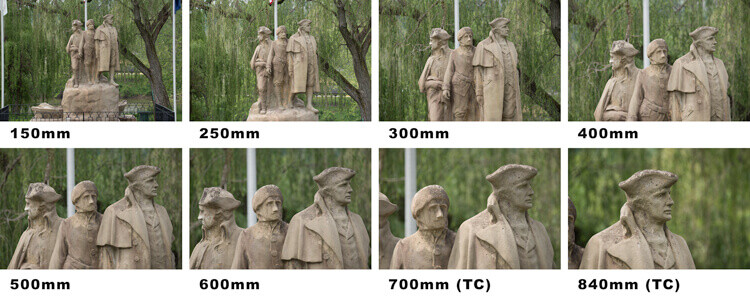
The above images show the range and extra reach of the Sigma 150-600mm with the last 2 images having the 1.4 TC added for an extra 240mm of reach.

The above images show the range and extra reach of the Sigma 150-600mm with the last two images having the 1.4x TC added for an extra 240mm of reach.

Tips

The rule of thumb when shooting with long focal lengths is to set the shutter speed equal to, or greater than the focal length, so remember that when by adding the 1.4x TC to a 600mm, one is now shooting at 840mm on a full frame, and 1260 mm on a crop sensor. For sharp images, a shutter speed over 1/1000th of a second is a must.

When carrying your camera with a large lens such as these 150-600mm lenses, it’s best to hold them by the lens rather than your camera. These lenses weigh much more than your camera and can put a lot of stress on the lens mount if carried by the camera. Likewise, when mounting on a tripod, always use the tripod collar to reduce stress on your camera’s lens mount (it is better balanced using the collar and won’t be front heavy).

Conclusion

Both the Tamron and Sigma lenses are well designed, and for the price range are great equipment investments. As mentioned earlier, I feel the image quality compared very closely. The Sigma does offer some useful extra features, out-weighing the issues of the smaller focusing ring and the counter-clockwise turning of the zoom ring for a Nikon shooter.

If you currently have a Tamron it may not be worth making a switch. But with the addition of the 1.4x TC, the Sigma bundle offers a great setup for full frame cameras, as well as crop sensors for some extra reach. So if you are looking for some extra reach (and we all are) the addition of the 1.4 TC to the Sigma may be a game changer. It was for me!

As a result of my review of the Sigma bundle for this article, I sold my Tamron 150-600mm, and purchased the Sigma 150-600mm bundled with the 1.4 TC, to extend the usage of my full frame Nikon D750, especially for photographing wildlife.

googletag.cmd.push(function() {
tablet_slots.push( googletag.defineSlot( “/1005424/_dPSv4_tab-all-article-bottom_(300×250)”, [300, 250], “pb-ad-78623” ).addService( googletag.pubads() ) ); } );

googletag.cmd.push(function() {
mobile_slots.push( googletag.defineSlot( “/1005424/_dPSv4_mob-all-article-bottom_(300×250)”, [300, 250], “pb-ad-78158” ).addService( googletag.pubads() ) ); } );

The post Review of the Sigma 150-600mm Contemporary Lens Plus TC-1401 Teleconverter Bundle by Bruce Wunderlich appeared first on Digital Photography School.

Digital Photography School

 
Comments Off on Review of the Sigma 150-600mm Contemporary Lens Plus TC-1401 Teleconverter Bundle

Posted in Photography


Sigma offers part replacement to prevent lenses scratching Pentax K-1

13 May

Lens manufacturer Sigma has announced that it will replace parts on its Pentax-mount lenses that are known to scratch the new Pentax K-1 full-frame camera. The company says that certain lenses that it produces clash with the shape of the upper part of the mount on the K-1 and that using one of the listed lenses ‘could leave a small scratch on part of the camera body’.

Sigma has issued a list of current and past lenses that it knows create a problem, and advises Pentax K-1 owners not to use them until the repair is carried out. Three current lenses are included in the advisory: the 30mm F1.4 DC HSM Art, 35mm F1.4 DG HSM Art and APO 50-500mm F4.5-6.3 DG OS HSM. A time scale for the repair service to begin has yet to be announced though.

The company also says that some of its lenses are not recognized automatically by the K-1, and that users will need to manually enter whether the lens is designed for full frame or APS-C sensors via the camera’s menu system. The announcement makes no mention of whether this issue will also be fixed.


Press release:

Use of Pentax mount SIGMA interchangeable lenses when attached to the Pentax K-1

Thank you for purchasing and using our products.

We have found that some SIGMA interchangeable lenses for Pentax mount could leave a small scratch on part of the camera body when they are attached to the PENTAX K-1, released by RICOH IMAGING COMPANY, LTD. on April 28th, 2016. In this circumstance, please do not use the following lenses for Pentax mount on the PENTAX K-1.

We are planning to provide a repair service to replace a part of the lens for this issue. We will make a further announcement on our website when specific details, such as the service period, are finalized.

In addition, please also refer to the usage notice related to this announcement below.

Phenomenon
When some SIGMA interchangeable lenses for Pentax mount are attached to the PENTAX K-1, the upper part of the mount can be scratched.

This phenomenon is due to the interference with the shape of the upper part of the mount on the PENTAX K-1 camera body and it does not occur to any cameras other than PENTAX K-1.

Applicable products
Current Line-Up

  • 30mm F1.4 DC HSM| Art
  • 35mm F1.4 DG HSM| Art
  • APO 50-500mm F4.5-6.3 DG OS HSM

Discontinued Lenses

  • 50mm F1.4 EX DG HSM
  • 85mm F1.4 EX DG HSM
  • 24-70mm F2.8 IF EX DG HSM
  • APO 70-200mm F2.8 EX DG OS HSM
  • APO 70-200mm F2.8 II EX DG MACRO HSM
  • APO 50-150mm F2.8 II EX DC HSM
  • APO 120-400mm F4.5-5.6 DG OS HSM
  • APO 150-500mm F5-6.3 DG OS HSM

Usage Notice for customers who are using Pentax mount SIGMA lenses on a PENTAX K-1
In some cases, depending on the lenses to be attached on the camera, the angle-of-view cannot be recognized automatically. Please select an angle-of-view that is appropriate for the lenses to be attached from “Crop” in the camera’s menu.

When DG lenses are attached, please select “FF”.
When DC lenses are attached, please select “APS-C”.

We appreciate your continued support for our company and products.

Articles: Digital Photography Review (dpreview.com)

 
Comments Off on Sigma offers part replacement to prevent lenses scratching Pentax K-1

Posted in Uncategorized


Sigma 30mm f/1.4 DC HSM Art Lens Review

08 May

The world of camera lenses can be separated into two main groups: zooms and primes. Prime lenses are those which have a fixed focal length, meaning that they don’t zoom in and out. Once upon a time there were only primes. With the advent of zoom lenses photographers no longer had to rely on just their feet in order to get achieve the desired composition. This versatility brought with it a trade-off. Zoom lenses have more moving parts and components, which adds weight and reduces the speed of the lens, along with sharpness. Optically, primes are generally much faster and sharper than zoom lenses but limit the shooter to only one focal length, which can be off-putting to some.

But times change. Today we see a new generation of photographers realizing the merits of shooting with prime lenses. This paradigm shift is reflected by lens manufacturers who are beginning to produce more prime lenses for a hungry new market.

Sigma 2

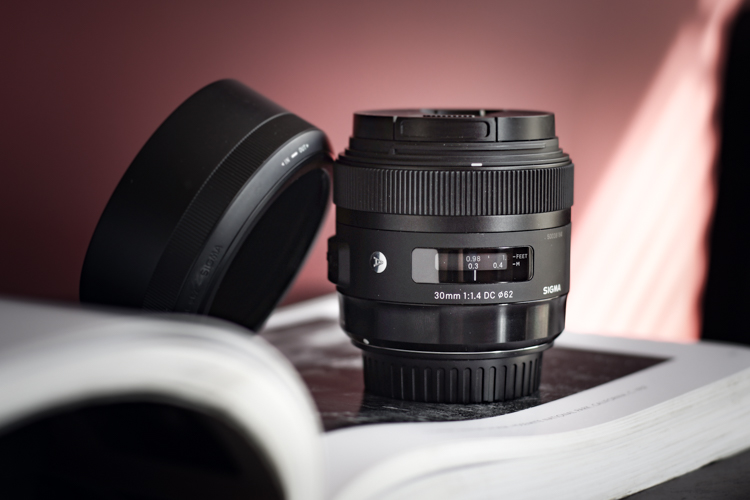
The 30mm f/1.4 DC HSM Art lens from Sigma is among one of these that is meant be an all-purpose fast prime, for those needing a lens with excellent sharpness and great low light capabilities. I put the Sigma 30mm f/1.4 through its paces and have a feeling you will be well pleased.

Build Quality

Sigma 4

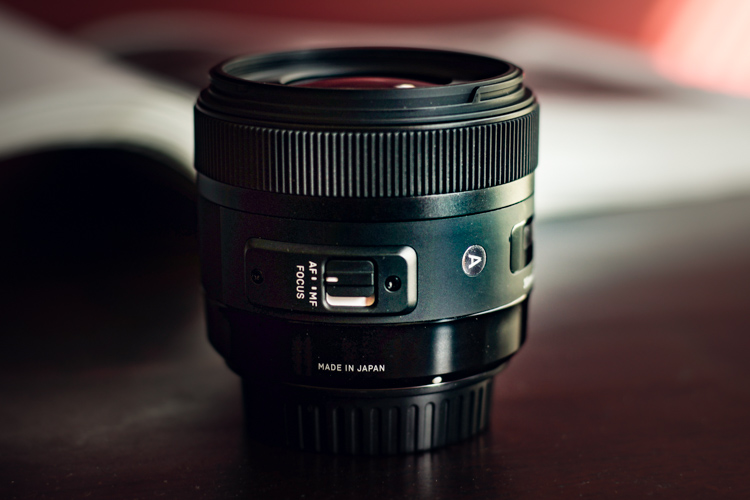
Being part of Sigma’s well regarded Art line of lenses, I expected the 30mm to be highly refined and well-built; it did not disappoint in this area. It’s manufactured from the same thermally stable composite (TSC) which is incredibly metallic in its heft and appearance. The entire lens looks very smooth and professional, with all markings and indicators being commendably well executed. The focusing ring has that perfect feel of silk when it’s turned. It moves very smoothly, being neither overly tight, nor too loose. The travel from minimum focus distance to infinity is just right, and it still leaves a lot of cushion for focusing accurately when in manual mode. The AF/Manual switch is ideally placed for no-look operation, and is very crisp when it is clicked from one to the other.

Sigma 5

Sigma 3

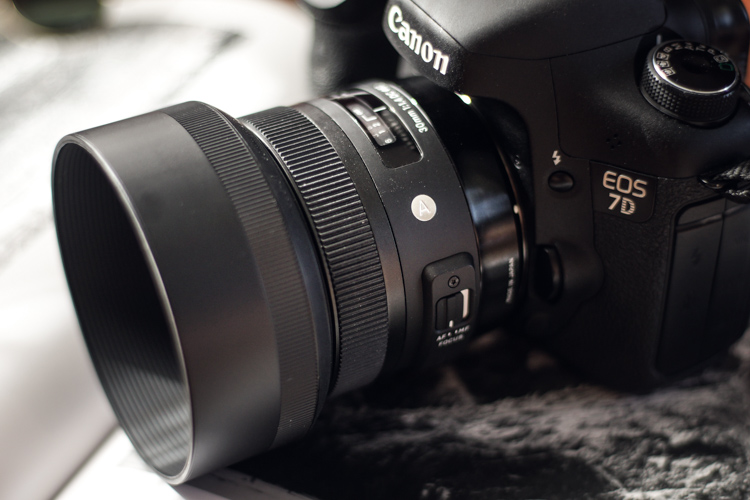
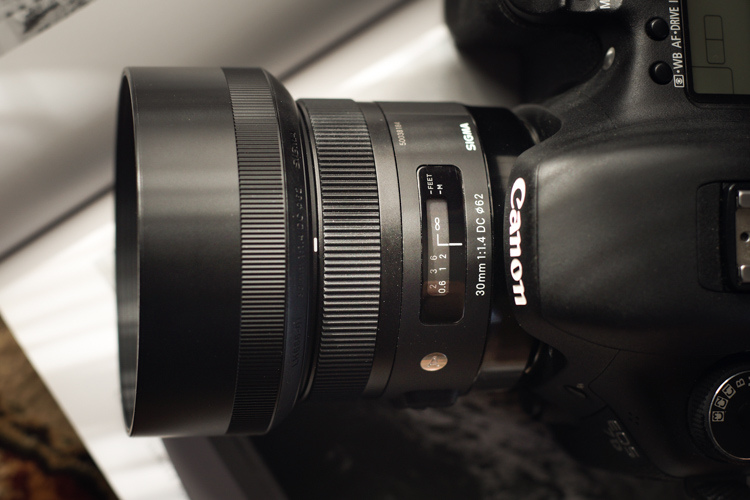
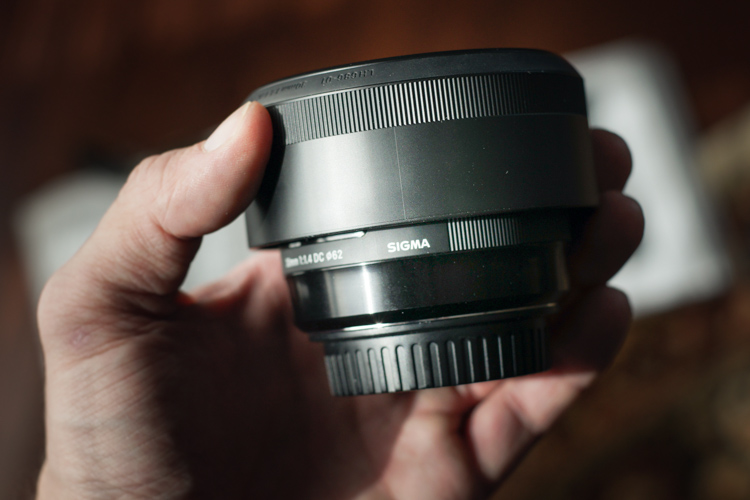
Included in the package is also a great looking lens hood which causes a bit of deception when attached because it makes the lens appear markedly larger than it actually is in reality. But it does a superb job of reducing the amount of contrast-robbing peripheral light from making its way to the lens’s front element. Overall, the quality of workmanship displayed in the 30mm is outstanding. It feels very well balanced when mounted to the camera (Canon 7D).

Sigma 1

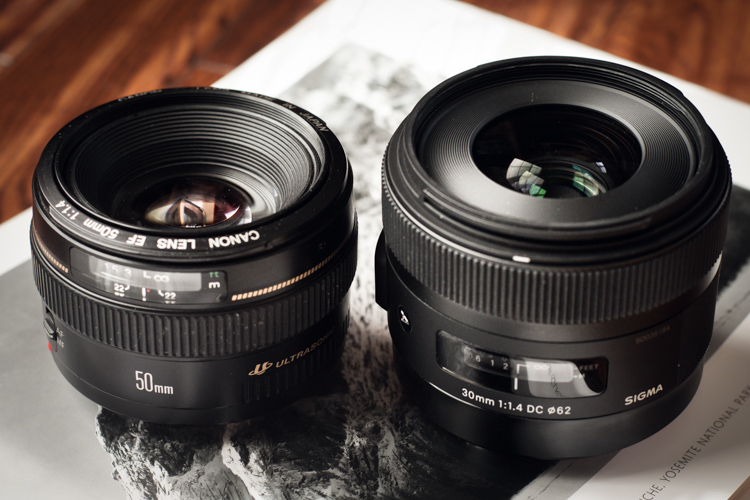
It leans towards the robust side in terms of weight for a normal (close to the naked eye’s field of view) prime lens at 15.3 ounces (434g), but it is by no means clunky or difficult to shoulder for long periods. Here we see the Sigma 30mm f/1.4 compared to another prime work horse, the Canon 50mm f/1.4.

Canon Sigma

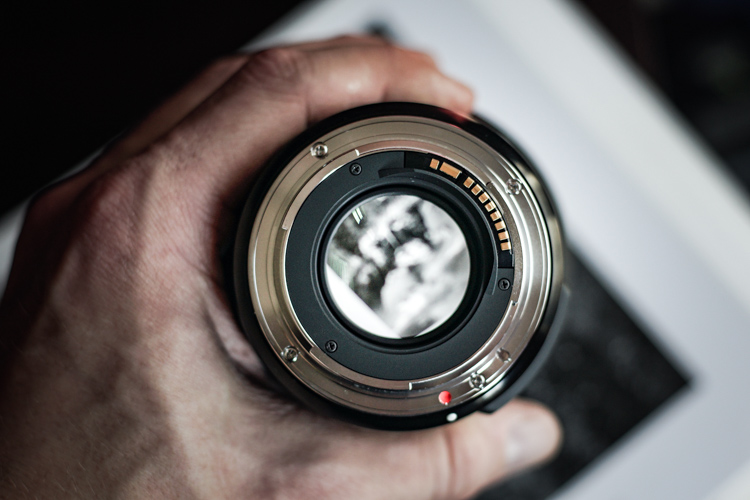
With the lens hood reversed for storage, it’s easy to see just how compact this lens really is in the hand.

Sigma in hand

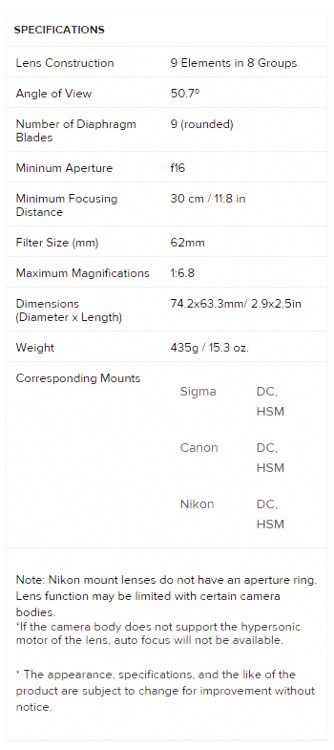
Here are the official lens specifications and element array provided via Sigma USA.

Sigma 30 Specs


Image Quality

The Sigma 30mm f/1.4 is quite the beast, photographically speaking. The 30mm focal range is very close to what could be considered wide angle, yet it shows no perceivable distortions at the corners. The bokeh is absolutely beautiful; the nine curved aperture blades produce an incredibly smooth, nearly dream-like, background blur when shooting at wide apertures. Some portraits today are being shot with alarmingly short focal lengths with very positive results. This lens would serve that purpose well, and offers richly vibrant colors across the entire aperture range. This great color rendition will make for a love at first sight situation with landscape photographers also. If you shoot a lot of nightscapes this lens will appeal to you as well. Of course the f/1.4 aperture capability makes for great low light work, but the coma was found to be very low likewise. This means all your great shots of the night sky will be produced clearly, with little distortion of those small points of starlight.

The autofocusing of the Sigma 30mm f/1.4 is also a point of praise. Focusing was very fast and accurate, and very quiet. It’s great to see a prime lens with AF that is on par with its other features. While manual focusing is always a good idea, the benefit of a high-performing autofocusing mechanism can’t be understated when shooting at the wide open apertures which this lens is capable of achieving.

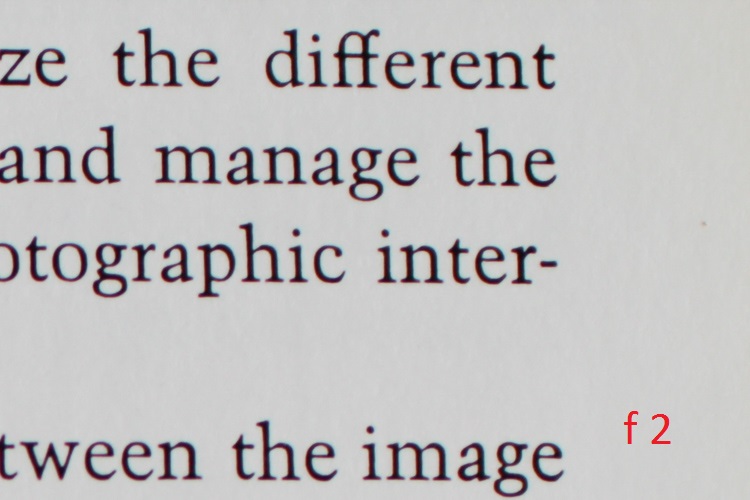
This brings us to one of the only two downsides thus far found in the 30mm; its sharpness at small and large apertures. It is certainly not uncommon to see a marginal reduction in sharpness when approaching minimum and maximum apertures, from even the most highly prized lenses. From f/2.2 through to f/11, the sharpness of this lens is wonderful. Anything smaller than f/11 or wider than f/2.2 however, saw a significant drop in overall sharpness in my tests. Happily though, that leaves an enormous range of possibilities for optimal image sharpness, and in my opinion, should not diminish the respect this lens deserves.

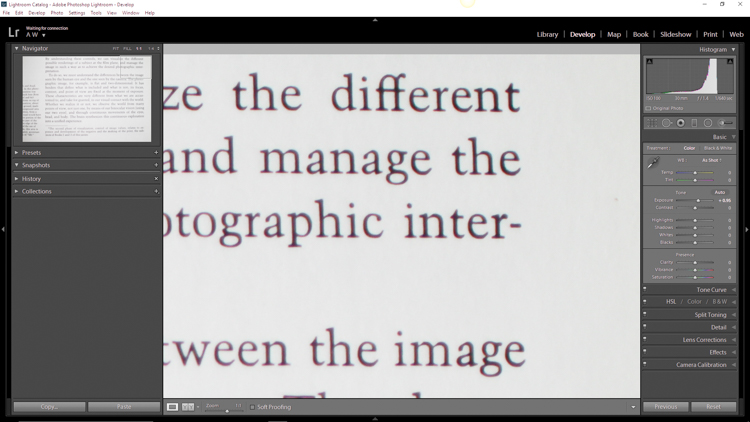
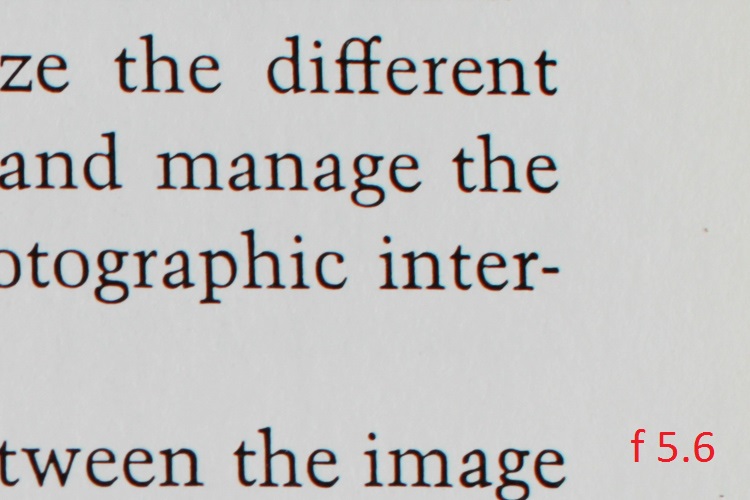
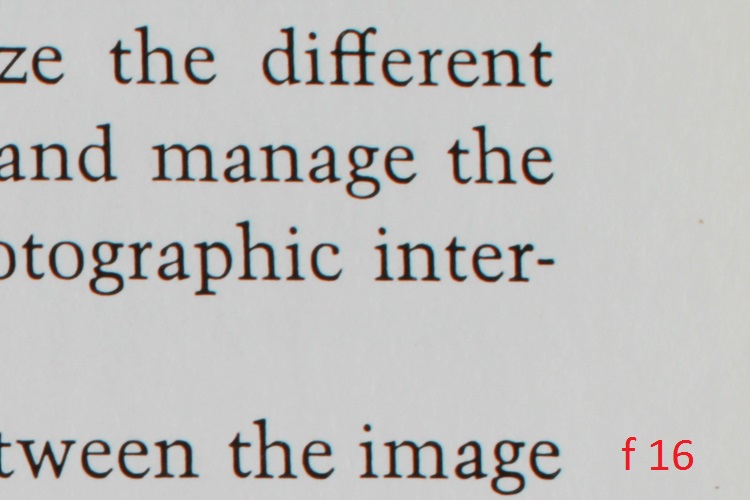
Here are some sample images to demonstrate the corner sharpness over a range of apertures from f/1.4 through to f/16. The first picture is for reference to the 1:1 magnification applied to the samples.

Corner 1 to 1

And now for the samples:

F 1 4

F 2

F 2 8


F 5 6

F 8

F 11

F 16

The other downside is relatively noticeable chromatic aberrations at wide apertures. Of course this is to be expected, but it bears mentioning nonetheless. For a lens of this quality the chromatic aberration is a little more than expected when the lens is wide open at f/1.4. These aberrations drop extremely quickly past f/1.8 and diminish completely around f/2.2.

Even at their most noticeable, Lightroom handled the fringing easily in post-processing. Much like the sharpness issue, for most shooters, the chromatic aberrations shouldn’t be a concern, or at the very least should be manageable.

The 30mm F1.4 DC HSM | Art is a terrific lens, despite any marginal concerns with sharpness and aberrations. It performs quite well across a wide range of situations, and will be a great addition to those looking for a low light prime lens with low distortion. Astro photographers will love it for its low coma and sweeping perspective, and landscapers will be drawn to its wonderful color rendition. Even street photographers would be elated to have this lens in their bag due to its incredible bokeh.

Here are a few real world sample images which were shot with the Sigma 30mm F1.4 DC HSM | Art lens, mounted to a Canon 7D, processed in Adobe Lightroom CC.

Sigma 30 Sample 1

Sigma 30 Sample 2

Sigma 30 Sample 3

Sigma 30 Sample 4

Sigma 30 Sample 5

Sigma 30 Sample 6

I would recommend this lens to virtually anyone who needs a sturdy low light prime lens. It fits a myriad of circumstances when high grade professional quality photographs are needed. When shooting at common apertures it is an incredible value for a prime lens at this price point.

googletag.cmd.push(function() {
tablet_slots.push( googletag.defineSlot( “/1005424/_dPSv4_tab-all-article-bottom_(300×250)”, [300, 250], “pb-ad-78623” ).addService( googletag.pubads() ) ); } );

googletag.cmd.push(function() {
mobile_slots.push( googletag.defineSlot( “/1005424/_dPSv4_mob-all-article-bottom_(300×250)”, [300, 250], “pb-ad-78158” ).addService( googletag.pubads() ) ); } );

The post Sigma 30mm f/1.4 DC HSM Art Lens Review by Adam Welch appeared first on Digital Photography School.


Digital Photography School

 
Comments Off on Sigma 30mm f/1.4 DC HSM Art Lens Review

Posted in Photography


Prime time: Sigma 30mm F1.4 DC DN | C full-production sample gallery

20 Apr

We had our first opportunity to shoot with the Sigma 30mm F1.4 Contemporary at CP+, spending some time with a pre-production lens taking in Japan’s freshly snow-coated landscapes. With a full-production lens in hand and good weather in the air, we’ve put the Sigma 30mm through its paces a little closer to home. Designed for Micro Four Thirds and Sony E-mount cameras, the featherweight prime is at home on Sony’s a6300 and a6000. Take a look at what this combo can do.

Articles: Digital Photography Review (dpreview.com)

 
Comments Off on Prime time: Sigma 30mm F1.4 DC DN | C full-production sample gallery

Posted in Uncategorized


Sigma claims new firmware makes 150-600mm F5-6.3 AF up to 50% faster

15 Mar

Lens manufacturer Sigma has announced new firmware for its 150-600mm F5-6.3 DG OS HSM | Sports and Contemporary lenses, saying that it makes the autofocusing system up to 50% faster. The firmware applies to lenses fitted for Canon EOS and Nikon F cameras, and can be installed via the company’s USB dock and the Optimization Pro software program.

The company says that in normal conditions the improved HSM algorithm boosts the AF speed of the lenses by between 20% and 50%. The Optimization Pro software needed to install the firmware can be downloaded from the Sigma website.

Press release:


SIGMA 150-600mm F5-6.3 DG OS HSM | Sports / Contemporary
Firmware update for Canon and Nikon mount

We would like to announce the availability of a new firmware update for the SIGMA 150-600mm F5-6.3 DG OS HSM | Sports in Canon and Nikon mount, and the SIGMA 150-600mm F5-6.3 DG OS HSM | Contemporary in Canon and Nikon mount. This firmware update can be installed using SIGMA Optimization Pro, the dedicated software for the SIGMA USB DOCK.

Benefit of this firmware update
The latest firmware update improves the AF algorithm of 150-600mm F5-6.3 DG OS HSM lenses and further enhances AF speed by optimizing HSM (Hyper Sonic Motor) drive control. Depending on shooting conditions, it is expected to increase autofocus speed by approximately 20%, to a maximum of 50%, during normal shooting as well as when using “Speed Priority” set through SIGMA Optimization Pro.

For customers who own the SIGMA USB DOCK and applicable products listed below, please update the firmware using SIGMA Optimization Pro. Please ensure SIGMA Optimization Pro is updated to Version 1.2 before updating the lens firmware.

For customers who do not own a SIGMA USB DOCK, please contact Sigma Imaging (UK) Ltd for details about updating the firmware free of charge.

SIGMA Optimization Pro Download page
http://www.sigma-global.com/download/en

We appreciate your continued support for our company and products.

Articles: Digital Photography Review (dpreview.com)

 
Comments Off on Sigma claims new firmware makes 150-600mm F5-6.3 AF up to 50% faster

Posted in Uncategorized