RSS
 

Posts Tagged ‘Shoot’

How to Shoot Portraits without People

18 Jun

Here’s a riddle! Or the toughest photo assignment ever.

How do you shoot a portrait without any people in it? Or a landscape without any land?

While thinking about how Ansel Adams might shoot that second one is fun, we’re totally enamored with Camilla Catrambone’s response to the first.

She shoots portraits of people not by having them sit for her but by laying out a person’s belongings and photographing that instead!

Camilla shows us her grandfather with an old rotary phone, a watch, a well-worn leather briefcase. Her grandmother — a red comb, a collection of silver spoons, a pearl necklace.

It’s the things we choose to surround ourselves with that tell the story of who we are.

Photographing a person’s possessions is a way of bringing that person to life. What a way to solve a riddle.

Also, see: Scanography — self portraits via scanner and What’s in your bag?

Portraits of My Family by Camilla Catrambone

Related posts:

  1. How to Shoot Impromptu Street Portraits This weekend, spend some time outdoors, explore a new neighborhood,…
  2. How to Shoot Dreamy Double Exposure Portraits + 5 Awesomely Inspirational Photographers Haunting, dreamy, and gorgeous all at once, double exposures of…
  3. Did Simon Hogsberg Shoot the Widest Photo Ever Taken? The trouble with photographers like Simon Hoegsberg is that it’s…


Photojojo

 
Comments Off on How to Shoot Portraits without People

Posted in Equipment


Readers Shoot Back: Vivian Chung

13 May

Dontcha hate it when your bride-and-groom portrait gets photo-bombed?

Okay, maybe not if it's by a Beluga whale. And for Vancouver wedding photographer (and Strobist reader) Vivian Chung, this well-planned cameo was no accident.

Complicating things, she only had a little time—and a key technical restriction—to make this shot.

Read more »
Strobist

 
Comments Off on Readers Shoot Back: Vivian Chung

Posted in Photography


The Photographic 100: One Hundred Places You Must Shoot Before You Die

06 May

They say that imitation is the sincerest form of flattery. And that is true of our subject today, a list to end all lists, and what I like to call the Photographic 100. Admittedly, I’m a bit of a foodie, and regularly read a few coffee and food blogs to get my fill of the subject. Recently, a post by Continue Reading

The post The Photographic 100: One Hundred Places You Must Shoot Before You Die appeared first on Photodoto.


Photodoto

 
Comments Off on The Photographic 100: One Hundred Places You Must Shoot Before You Die

Posted in Photography


Reflections on Shoot For Love

19 Apr

I have been spending a lot of time on the Shoot for Love project lately and haven’t been shooting much, ironically enough. If you’d like to participate in the latest …
Jake Garn Photography

 
Comments Off on Reflections on Shoot For Love

Posted in Uncategorized


29 March, 2013 – HDR and How to Shoot Into The Light

29 Mar

There are many approaches to HDR, some better than others. In our latest techniques tutorial Glenn Guy explores the topic with HDR and How to Shoot Into The Light.

Don’t forget our "win-an-iPad 
with all our software included" contest.

Win a New 128GB iPad with Retina Display
Including all Major Luminous Landscape Videos
– Pre-Installed –


Find Out More 


The Luminous Landscape – What’s New

 
Comments Off on 29 March, 2013 – HDR and How to Shoot Into The Light

Posted in News


What to do When there’s Nothing to Shoot

09 Mar

A Guest Contribution by Draycat

There are always days when you want to take photographs but you feel that there is nothing to shoot. Here are a few ideas for days like that.

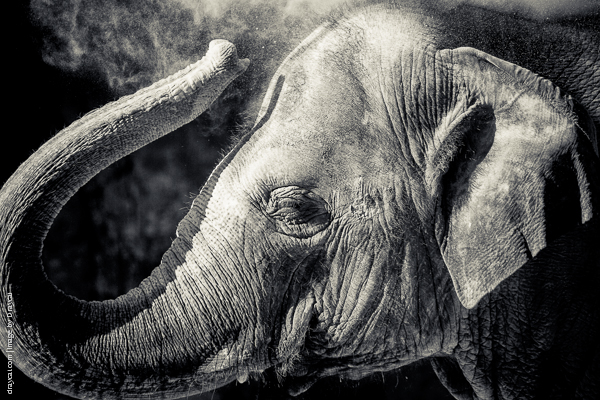
1. Go to the Zoo
a shot from my local zoo

a shot from my local zoo

The key here is to get out of your house and go somewhere where there will be something to shoot. This could be a zoo, a park, or even a local market. What you need to do is to decide a place and give yourself an assignment to help you to focus. In a park it could be that you focus on shooting abstract images of swings and slides or try some outdoor macro shots of insects and flowers.

In a local market you could shoot images of the produce as if you were shooting for a local newspaper food section. I recently took a trip to a zoo and set myself the task of photographing the animals so they didn’t look like they were in a zoo. This helped me to consider how best to shoot them. You will also often have a few restrictions to overcome, which can help you to develop your problem-solving skills. For example, when I was shooting the elephants the compound was surrounded by a fence which consisted of thick metal ropes; as a result I had to shoot between the gaps which limited what I could do. As a result I decided to use a long zoom and shoot the elephants a lot more close up, which resulted in some interesting images.

2. Eat a Biscuit
Don't be afraid to experiment

Don’t be afraid to experiment

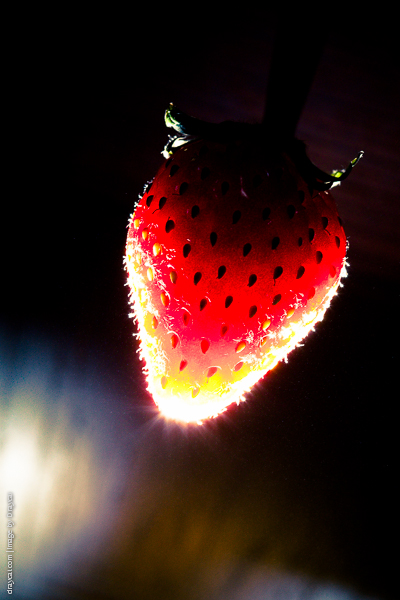
Food photography can often be a lot of fun and is very easy to do in your house. It’s not even necessary to photograph a whole meal; you can photograph some ingredients, or even something as simple as a biscuit or a strawberry. Don’t be afraid to experiment – play around with lighting, angles, distance and even focal lengths. Here is an example using a strawberry – I started off by shooting it in a traditional way, but then started messing around with my flash.

3. Pick up some Paperclips
be creative and shoot something different

be creative and shoot something different

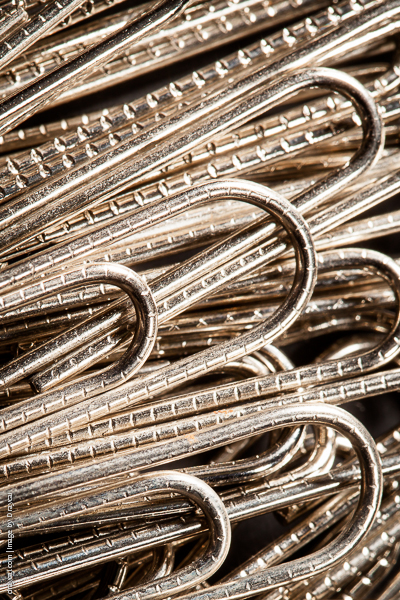
We are used to seeing macro images of insects and flowers, but if you have a macro lens why not try and shoot something else; something as simple as a group of paperclips can make an interesting image, so be creative and don’t be afraid to shoot more unusual or even mundane things.

4. Hit the Streets
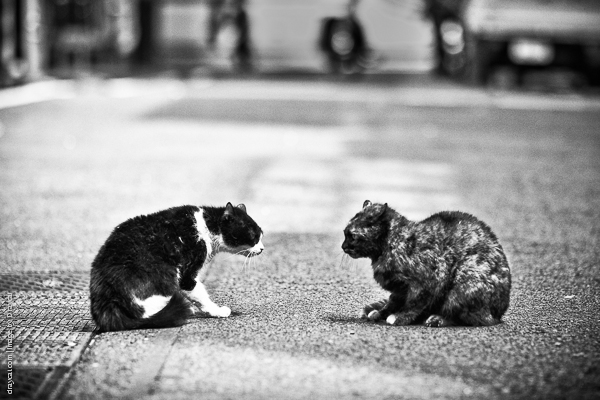
Street photography is not just about people

Street photography is not just about people

Street photography is a great thing to do if you like to shoot people; it will also help you to build confidence. When I first started shooting street it was a nerve-wracking experience, but after the first couple of times I began to develop more confidence. It also helps you to improve your photographer’s eye as you begin to look for stronger images. I took literally 100′s of pictures of people using their mobile phones when I started because it was easy, but eventually I realised that it doesn’t make for strong images. After that my eye really developed.

5. Go see a Friend
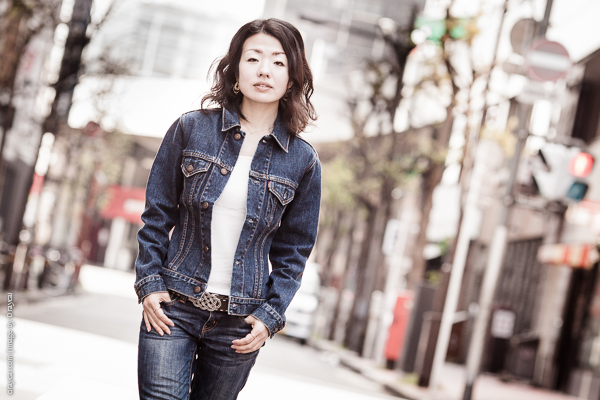
A portrait of a friend

A portrait of a friend

Friends can be a great source of photography practice. Either invite a friend around or go to their house with your camera and shoot their portrait. Friends will generally be supportive, and will also be happy if they can get a nice picture to use on things like social media. I always used it as a chance to catch up with them and have a beer too. Photographing my friends was basically how I got into portrait photography, and I still do it now to practice new styles or lighting when I need to.

6. Shoot Yourself
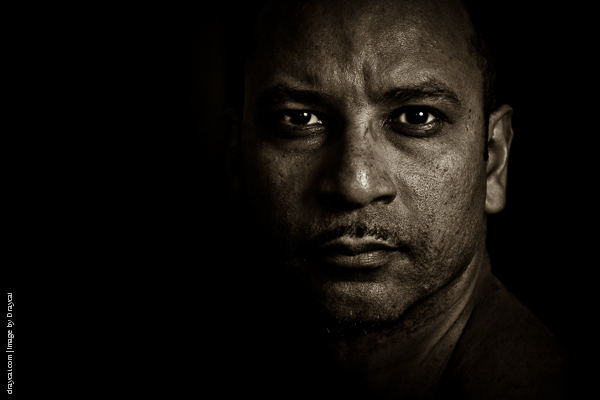
self portrait

If your friend can’t make it then you always have one model that you can rely on – yourself. Self portraits can be fun and interesting. Again don’t be afraid to experiment, it’s good to try something new. Play around with lighting, focal lengths, angles, even locations. Remember as well that a self portrait doesn’t have to be your face; you can focus in on a part of your body, such as your eyes, hands or feet.

7. Grab a Beer

As much fun after the shoot as during it!

As much fun after the shoot as during it!

Product photography is a good way to develop creativity. Just look around your house and you’ll see lots of products. Choose one and shoot it. Play around especially with different angles and lighting if you can. You could even imagine that you have a brief from a company to shoot for a particular magazine, so that you have to shoot in a style that will appeal to the readers. Shooting beer was always one of my favourites…for obvious reasons!

8. Practice your technical skills

The best photographers know their equipment back to front so that they can react quickly. It also means that they can spend more time thinking about the image itself, rather than considering what exposure they should be shooting at, because the technical side of things has become instinctive. It’s good to practice so that it can work the same way for you. Examples of things that you could do are:

Exposure guessing – try to guess the exposure of a scene without using the camera’s light meter. Put the settings into the camera and take a shot, and then see how close you were. Practice in many different lighting situations.

Get to know the buttons on your camera – close or cover your eyes and try to set particular exposures and change settings. This will help you to be able to make changes quickly in the future when you need to.

Play with focal lengths – shoot the same object at different focal lengths and compare the images. This will help you to know how different lenses capture things differently so that you have a better idea of what focal length to use for each situation.

These are just a few ideas to start you off, but the key thing is to be creative and not just limit yourself to things you’ve done before. Happy shooting!

Draycat is British photographer, teacher and writer currently based in Tokyo, Japan. See more from him at his Website on Twitter on Facebook and on Youtube.

Post originally from: Digital Photography Tips.

Check out our more Photography Tips at Photography Tips for Beginners, Portrait Photography Tips and Wedding Photography Tips.

What to do When there’s Nothing to Shoot


Digital Photography School

 
Comments Off on What to do When there’s Nothing to Shoot

Posted in Photography


How to Shoot Nude with an Infrared Camera

13 Feb

Jean-François O’Kane, The Studio Coach, shows how to use an infrared camera in studio. His infrared Olympus camera was modified by PrecisionCamera.com www.thestudiocoach.com www.jeanfrancoisokane.com


How to shoot HDR timelapse

08 Feb

Here’s a tutorial on shooting HDR timelapse with the Dynamic Perception Stage Zero system. I go into detail on some advanced features of the MX2 controller as well (ramping) – Finally can post it here on youtube after they lifted the video length limitation.
Video Rating: 4 / 5

This week Mark Wallace talks about high key and low key lighting. In it’s simplest terms a high key image is a bright image full of light and mostly white tones whilst a low key image is a dark with minimal lighting and rich in black tones and lots of shadow areas. Let’s explore these two dramatic lighting alternatives.
Video Rating: 4 / 5


Photographer to shoot 50 weddings in one day with his iPhone

08 Feb

R0~TS520x0~cms_posts_2355497650_IMG_1302.jpeg

Professional photographer Kevin Kuster, who lives in Chicago, was recently approached by the charity Watts of Love  to help with an interesting photography project that seemed a perfect opportunity to make use of his newfound love of mobile photography. He will now travel to the Philippines and shoot 50 weddings in one day  – with his iPhone 4s.

News: Digital Photography Review (dpreview.com)

 
Comments Off on Photographer to shoot 50 weddings in one day with his iPhone

Posted in Uncategorized


Shoot Like Henri Cartier-Bresson: A Quick Guide To Becoming An Amazing Photojournalist

07 Feb

“Most of my pictures are grounded in people. I look for the unguarded moment, the essential soul peeking out, experience etched on a person’s face. I try to convey what it is like to be that person, a person caught in a broader landscape that I guess you’d call the human condition.” It’s by Steve McCurry, whom I didn’t know Continue Reading

The post Shoot Like Henri Cartier-Bresson: A Quick Guide To Becoming An Amazing Photojournalist appeared first on Photodoto.


Photodoto

 
Comments Off on Shoot Like Henri Cartier-Bresson: A Quick Guide To Becoming An Amazing Photojournalist

Posted in Photography