RSS
 

Posts Tagged ‘REVIEW’

Light it up: Phottix Mitros Flash for Canon review

08 Apr

Phottix-Mitros-Feature.jpg

The Phottix Mitros flash is a high-end TTL flash designed to compete with Canon’s 580EX II at well over half the price. The Mitros for Canon shares many features with the 580EX II, including high-speed sync and built-in IR triggering with Master and Slave modes. But is the Mitros mighty enough to match one of Canon’s most beloved flash models? Find out in our review

News: Digital Photography Review (dpreview.com)

 
Comments Off on Light it up: Phottix Mitros Flash for Canon review

Posted in Uncategorized


The MagMod Speedlight Modifier – a Review

07 Apr
The MagMod speedlight modifier solves several problems and challenges posed by other systems.

The MagMod speedlight modifier solves several problems and challenges posed by other systems.

Until now, most speedlight modifiers on the market have been pretty inconvenient to use. I’m not talking about the quality of their output– just the lengths we’ve had to go in order to attach them to our flashes, and– perhaps more importantly– get them to stay on our speedlights over the course of a photo shoot. If your flash has a permanently attached strip of Velcro, or you have a collection of assorted straps, bands, tapes, attachment accessories, and other DIY solutions for your modifiers, you know what I’m talking about. If you’ve ever had a gel break, tear, bend, or just blow away in a stiff breeze, you’ve probably found yourself wishing for something better at least once or twice.

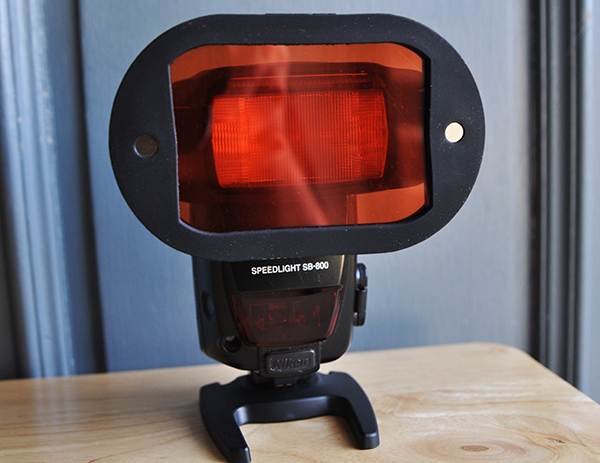
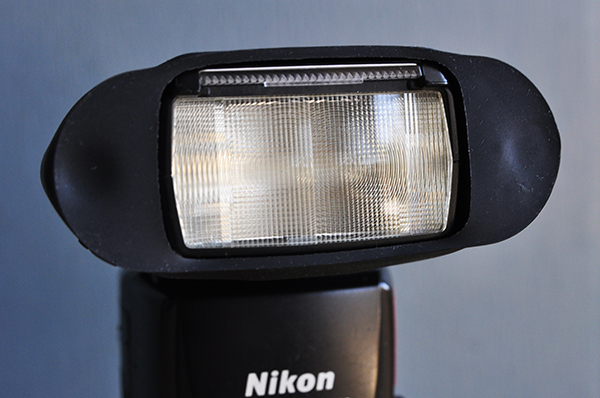
Enter the MagMod system. Made from high-quality silicone rubber, each piece of the MagMod system is compact, easy to attach, and gets the job done with minimal hassle.

The MagGrip

The MagGrip is the foundation of the MagMod system. Designed to fit virtually any hot shoe flash available, the MagGrip fits tightly and securely around the flash head. Despite my best efforts to shake it off or “accidentally” dislodge it from a Nikon SB800, it wouldn’t budge. At all. It’s easy enough to remove when you want it off, but there’s no need to worry about it while on a shoot.

Another key feature of the grip are the two neodymium (rare earth) magnets that hold the actual modifiers in place. I won’t bore you with the research I did into the science of these magnets. All you need to know is that they are the strongest type of permanent magnet commercially available, which means they’ll do their job without losing any of their magnetism over time.

madmod-review-dps-002

The MagGrid

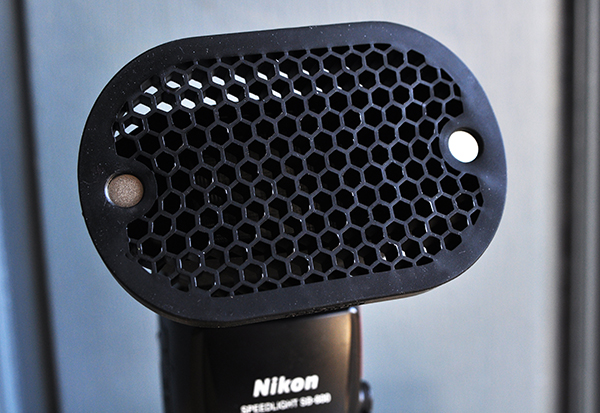
The basic purpose of a lighting grid is to give you more control over where the light falls, either on the subject or the background. It can be a useful tool for highlighting the subject, a specific part of the frame, or for creating interesting background effects. The MagGrid attaches magnetically to the grip in pretty much the blink of an eye. With no need for attachment straps or bands, I was able to spend more time on shooting and less on managing the equipment.

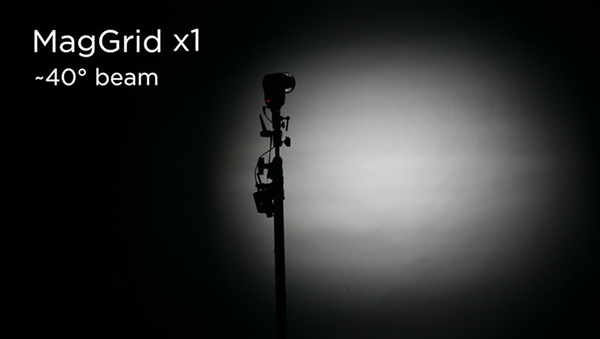
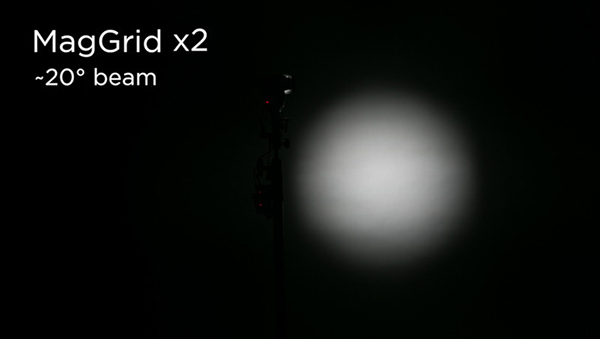
The single grid included in the basic kit casts a -40° beam with minimal spill and hot spots. The beam can be narrowed even further by attaching a second or third grid to the first. The grid is made from the same silicone rubber as the grip, which prevents the grid cells from cracking or chipping–a fairly common problem with hard plastic grids.

madmod-review-dps-003

The images below illustrate how stacking multiple grids affects your ability to concentrate the light precisely where you want it.

madmod-review-dps-008

madmod-review-dps-009

The MagGel Kit

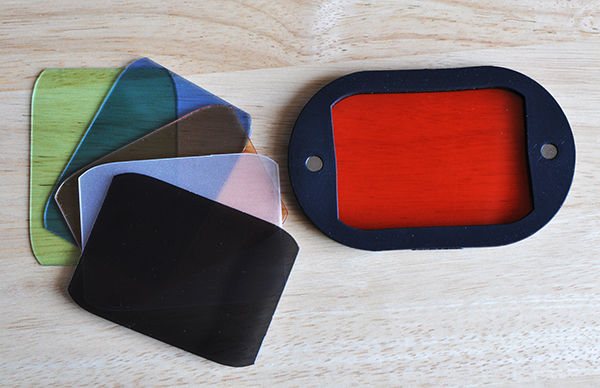
Let’s face it–gels are awesome, but they are also a pain. They help you fine-tune your lighting, but they are also flimsy, often difficult to attach, and need to be replaced fairly regularly. The rigid sheets of the MagGel Kit, however, are made to last and are held securely in place through tension and friction. They are also stackable, giving you more freedom to create different lighting effects.

madmod-review-dps-004

The Basic Gel Kit includes one of each of the following:

  • Full CTO (Rosco #3407)
  • 1/2 CTO (Rosco #3408)
  • 1/4 CTO (Rosco #3409)
  • 1/2 Blue (Rosco #3204)
  • 1/2 Tough Plusgreen (Rosco #3315)
  • 1/2 CT Straw (Rosco #3442)
  • 3-stop Neutral Density (Rosco E-211)
  • Opal Frost Diffuser
madmod-review-dps-006

Gel sheets from the Basic Gel Kit. The MagGel can hold multiple sheets at once. In this photo, it’s holding three warming gels.

The Creative Gel Kit includes one each of the following:

  • Purple
  • Blue
  • Teal
  • Green
  • Yellow
  • Orange
  • Red
  • Magenta
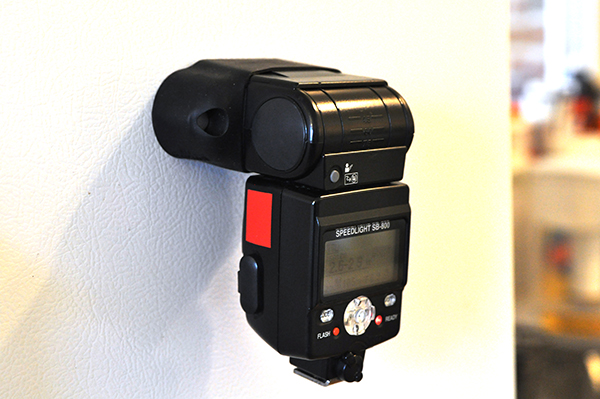
Probably not the smartest idea to use a speedlight as a refrigerator magnet, but you get an idea of how strong these magnets are.

Probably not the smartest idea to use a speedlight as a refrigerator magnet, but you get an idea of how strong these magnets are.

Wrap-up

Speedlights have become more powerful and versatile than ever before. When combined with a solid grasp of off-camera lighting techniques, speedlights can often narrow the technical and creative gaps between small flashes and their bulky studio counterparts. The MagMod system closes that gap even further, simply by making some of photography’s most basic lighting modifiers easier to use. Obviously, it doesn’t address every lighting scenario or every type of modifier. While the gel kit does include a diffuser, for instance, it’s certainly not going to address the needs of the photographer who relies heavily on softboxes or umbrellas for casting a wide spread of light. It does, however, address some of the most common lighting challenges facing photographers who depend on speedlights to tell their stories.

For more information, check out the MagMod website.

The post The MagMod Speedlight Modifier – a Review by Jeff Guyer appeared first on Digital Photography School.


Digital Photography School

 
Comments Off on The MagMod Speedlight Modifier – a Review

Posted in Photography


MindShift Gear’s rotation180 Panorama Rotating Backpack – a Review

04 Apr
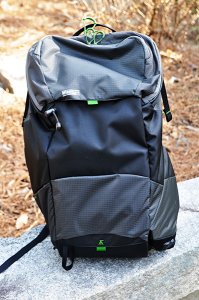
The rotation180 Panorama from MindShift Gearis designed around the needs of outdoor photographers.

The rotation180 Panorama from MindShift Gear is designed around the needs of outdoor photographers.

Last time I checked, I think I had something like 14 camera bags. I think it was when I got #8 or #9 that my wife asked me how many would be enough. I made the egregious mistake of replying with something along the lines of, “I don’t know. How many pairs of shoes will be enough?” Thankfully, I have quick reflexes and was able to dodge the flying stiletto and we’ve never spoken of our addictions again.

Seriously, though. Regardless of whether you are a professional photographer or an avid enthusiast, at some point along the way it becomes abundantly clear that a single camera bag is simply insufficient. Sometimes the bag that gets the gear to the gig is too big and cumbersome for the actual assignment. Sometimes you need to travel light with a bag that can handle a few essential pieces of equipment. Two of my bags don’t hold cameras or lenses at all, having been reconfigured for lights and cables. The point is, there’s no shame in being a camera bag addict. Between my shoulder bags, rolling bags, backpacks, and belt systems, I’m fairly well-covered for every eventuality. There is one type of bag, however, that I’ve wanted for a very long time. Unfortunately, it didn’t exist until just recently.

Photo backpacks are great for travel and location shooting, but they are rarely designed to allow room for anything but camera gear. Even when they are, though, you still have to deal with the inconvenience of stopping, taking off the backpack, getting the camera out of the bag, taking the shot, putting the camera back, closing the bag, putting it back on, etc. The backpack I’ve been craving can handle both the gear for a day’s photography outing, as well as plenty of room for a jacket, lunch, gloves, or other essentials…without having to stop and take the pack off my back.

Enter MindShift Gear and their rotation180° backpacks. Founded just a couple of years ago by the creators of Think Tank Photo and conservation photographer Daniel Beltrá, MindShift currently has two backpacks– the rotation180° Professional and the rotation180°Panorama– that solve the problem of accessing the gear without taking off the backpack or even missing a stride.
mindshift-panorama-camera-bag-dps-review-001

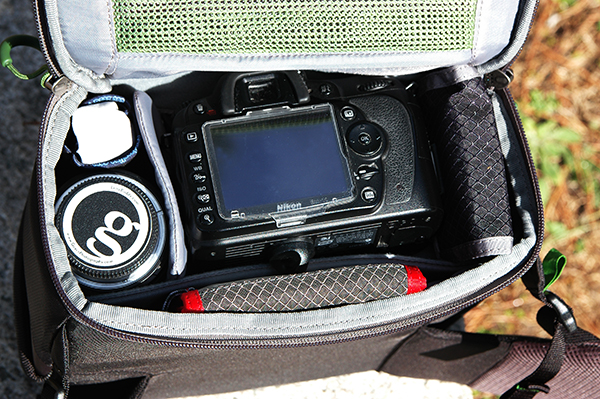
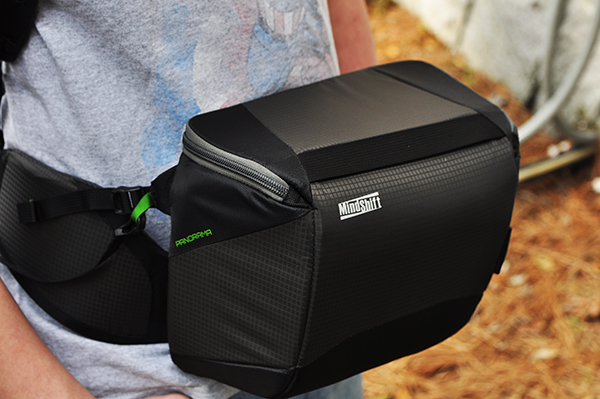
Panorama beltpack, containing Nikon D90 (85mm prime attached), 16-35mm lens, spare cards and batteries, lens cloth, and Hoodman Loupe (not shown).

rotation180° Panorama Backpack – the Specs

Weight

  • Backpack: 2.o lbs (0.9 kg)
  • Beltpack:  0.9 lbs (0.4 kg)
  • Total:  2.9 lbs (1.45 kg)

Dimensions

  • Backpack Exterior: 9.8″ W x 20.5″ H x 8.3″ L (25 x 52 x 21 cm)
  • Beltpack Interior: 9.4″ W x 7.5″ H x 4.7″ L (24 x 19 x 12 cm)
  • Beltpack Exterior: 9.8″ W x 8.2″ H x 5.1″ L (25 x 21 x 13 cm)

Volume

  • Backpack:  329 cubic inches or 5.4 litres
  • Beltpack:  1013 cubic inches or 16.6 litres
  • Total:  1342 cubic inches or 22 litres
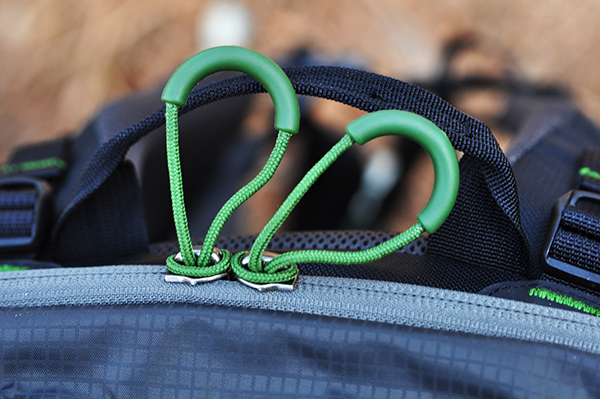
The zipper pulls are definitely high-quality and built to last, but got a little awkward while wearing gloves. Just took a little getting used to.

The zipper pulls are definitely high-quality and built to last, but got a little awkward while wearing gloves. Just took a little getting used to.

First Impressions

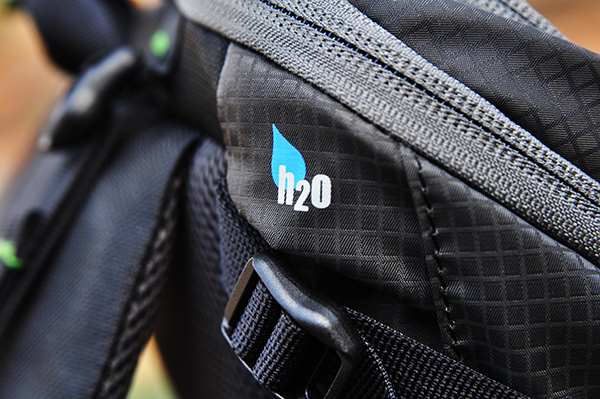
It’s obvious as soon as this bag comes out of the box that it boasts the same high-quality construction and attention to detail as its cousins at Think Tank. The all-fabric exterior is treated with a durable water-resistant coating, while the fabric underside is treated with polyurethane for superior water resistance when you put it down on a wet trail. While I’m not a huge fan of the zipper pulls on this bag – they were a little tough to grip with gloves on – the YKK zippers themselves are fairly indestructible, which is a huge plus. Available in either Charcoal or Tahoe Blue, it’s nice having a bag that goes beyond the basic black that takes up most of the space in my gear closet. With plenty of pockets and storage space, this bag seems to address every aspect I’ve been looking for in a photo day pack – especially the fully rotating beltpack and dedicated hydration pocket that can hold up to a three-litre reservoir.
mindshift-panorama-camera-bag-dps-review-003

The dedicated hydration pocket can hold up to a three-litre reservoir (not included)

The Beltpack

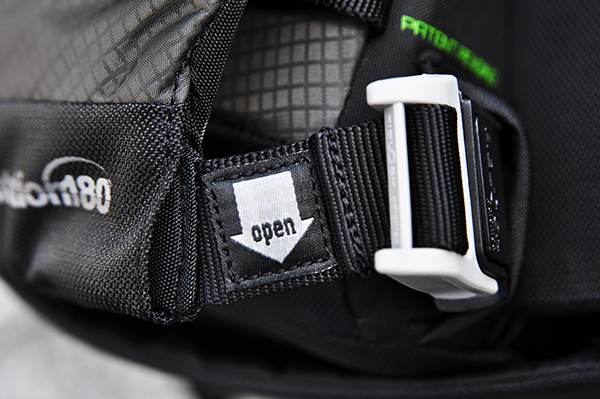
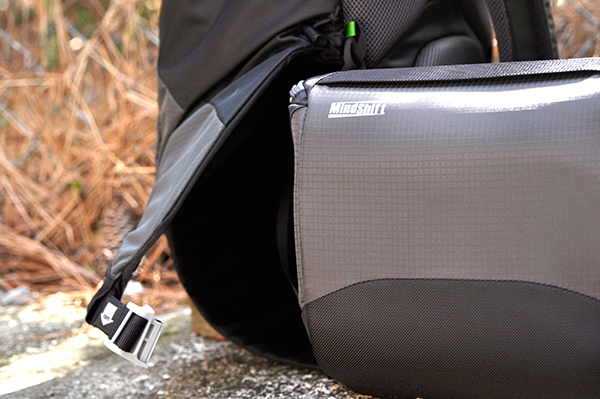
It’s the rotating beltpack that makes this bag really special. Without it, it’s just another camera backpack that doesn’t fully address my needs. Secured in the lower section of the backpack with a sliding magnetic clasp, retrieving your camera, binoculars, maps, or other essentials is as easy as unhooking the clasp and pulling the beltpack around to the front. As an added bonus, the beltpack can be completely removed and used by itself for shorter outings or location shooting.
mindshift-panorama-camera-bag-dps-review-005

The sliding magnetic clasp is easy to release, but holds the beltpack securely in place.
mindshift-panorama-camera-bag-dps-review-006

Hitting the Trails

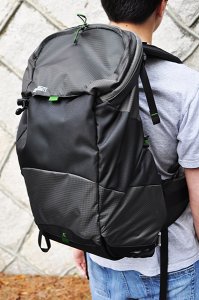
Beyond the quality of its materials and components, it’s once the Panorama is loaded and on your shoulders that you realize just how comfortable it is. Obviously, this is a pretty important factor. If a bag is designed around the concept of not having to take it off as often, it had better be comfortable. Starting out at a lightweight 2.9 pounds empty, the Panorama includes load-lifter straps on both the beltpack and shoulder harness, as well as a breathable padded airflow harness and curved back panel for increased stability. All this translates into a bag that can hold a lot of stuff, while keeping the load balanced, comfortable, and secure.mindshift-panorama-camera-bag-dps-review-007
Additional Accessories

While the Panorama is an awesome bag straight out of the box, MindShift has obviously given a great deal of thought to the needs of outdoor photographers. There are several accessories available which have been designed to enhance the overall experience of this bag. Each is sold separately, including:

  • Photo insert that fits the upper compartment of the bag. providing additional padded gear storage.
  • Two-piece rain cover for the main bag and beltpack
  • Tripod suspension kit
  • Filter Hive
  • Lens Switch Case
  • Contact Sheet ground tarp
  • For more information on the rotation180° Panorama and accessories, check out the MindShift website.
mindshift-panorama-camera-bag-dps-review-008

Wrap-up

The best thing I can say about any product I review is that it does what it says it does, and does it well. The rotation 180° Panorama Backpack from MindShift Gear is just such a product. Designed around the special needs of outdoor photographers and enthusiasts, this bag is going to set a new standard–one that takes into account not only how you transport your gear, but also how you use it along the way.

Have a favorite bag? Or a wish list of features in your ideal bag? Share your comments with us below.

The post MindShift Gear’s rotation180 Panorama Rotating Backpack – a Review by Jeff Guyer appeared first on Digital Photography School.


Digital Photography School

 
Comments Off on MindShift Gear’s rotation180 Panorama Rotating Backpack – a Review

Posted in Photography


Budget lighting: Flashpoint 180 Monolight review

01 Apr

Flashpoint-Monlight180-1.jpg

Adorama’s Flashpoint 180 Monolight is a battery-powered 180-watt strobe designed for on-location shooting in the middle of nowhere. The kit comes with everything needed to provide adequate fill light for scenes or soft key-light for portraits, minus the stand, which must be purchased separately. Despite its budget price tag, does the 180 Monolight have what it takes for professional use? Find out in our review

News: Digital Photography Review (dpreview.com)

 
Comments Off on Budget lighting: Flashpoint 180 Monolight review

Posted in Uncategorized


Get up high: Orion DVC210 DLSR crane review

28 Mar

DVC210-1.jpg

As more and more video production companies and independent videographers rely on DSLRs to shoot a majority of their work, finding more compact equipment is becoming easier. A decent fully-loaded DSLR jib setup can cost anywhere between $ 500 and $ 3,000, and the ProAm Orion DVC210 resides at the lower end of the spectrum. Can the Orion DVC210 take your DSLR video to the next level? Find out in our review

News: Digital Photography Review (dpreview.com)

 
Comments Off on Get up high: Orion DVC210 DLSR crane review

Posted in Uncategorized


“The Language of Light with Joe McNally” – a Review

26 Mar

language-of-light-digital-photography-schoolOn the one hand, I could make this article one of the shortest I’ve ever written– a rousing recommendation of only three words: “It’s Joe McNally!”

Thank you. Good night. Drive safely.

Okay…I get it. Some of you may not be convinced. I respect that. That’s why we’re going to take a closer look.

For those who may not know, Joe McNally is one of the very best in the business. In a career spanning 30 years and 50 countries, his work has appeared in National Geographic, LIFE Magazine, Sports Illustrated, TIME, Newsweek, Entertainment Weekly, and a host of other magazines you’ve probably read. Even if you’ve never heard his name (where have you been hiding?), I’m pretty sure you’ve seen his work. If you are ever able to attend one of his workshops, I highly recommend it.

Joe is a master (a word I don’t use lightly) of at least two things–lighting and teaching. As a photographer, light defines or plays a part of everything you do. Regardless of whether you are talking about speedlights, studio lights, street lights, or sunlight, it’s a given that every light source has three attributes–color, quality, and direction. Since every photograph requires light, it stands to reason that having a firm understanding of how to control, manipulate, and manage light would be an important step towards raising the bar on your photography. As he puts it himself in the intro,

“Light is how we speak as photographers.” – Joe McNally

A typical Joe McNally seminar or workshop tends to be filled with sentences that begin with things like, “The photo editor at National Geographic once told me…” or “My editor at LIFE Magazine used to say…”  These are your cues to start feverishly writing down every word that follows.  The Language of Light lets you put the pen down and take it all in–a three-hour guided tour through the how and why of Joe’s “big world of small flash.”

There are a few things that really stand out, separating this DVD lighting class apart from the rest. For starters, it’s conversational. To the extent that this language of ours has words and concepts that need explaining, who better to do it than the man who’s written some of the best books on the subject? The other huge advantage to The Language of Light is the ability to watch as Joe starts each shoot with a basic premise, then explains and demonstrates each step in the process–walking you through from concept to finished image.

Remember that old line? “Those who can, do. Those who cant’ teach?” Well, here’s a guy who does both and doesn’t hold anything back. If he knows it, he wants you to know it. It’s not just about the “how.”  It’s also about the “why.” And that, my friends, is worth the price of admission.

Here is a basic breakdown of the set.

Disc 1 – the Language of Light

They say the best place to start is at the beginning, and The Language of Light takes that to heart. Disc 1 gets you going, explaining light and why it does what it does in simple terms. Prepare to be blown away by what he can do with a single speedlight. Topics include:

  • Turning one small flash into one big light
  • Controlling harsh natural light
  • Dramatic one light portraiture
  • Tour of small flash light modifiers
  • Light placement

Check out the Disc 1 preview in the video below:

Disc 2 – the Language of Light

Disc 2 moves out of the studio and goes on several location shoots, with lighting setups ranging from the basic to the complex. Topics include:

  • Location assessment
  • Basic strategies for one and two lights, as well as three or more
  • Getting the most out of a location
  • Environmental portraits
  • Conquering the sun with high speed sync
  • Mixing color temperatures
  • Athletic portraits
  • Lighting in small places
  • Group portraits
  • Engaging your subject

Take a look at the Disc 2 preview:

The three hours of photographic education contained in this set is some of the best I’ve ever seen. Knowledge, talent, energy, and passion come together in what I can only describe as a moment of enlightenment (no pun intended), where all the pieces seamlessly come together– and it all makes sense. It’s perfect for beginners just learning how to get the flash off the camera, as well as seasoned veterans looking for a refresher.

The Language of Light is available on Amazon.  Still hungry for more? Check out our very own e-book, “Portraits- Lighting the Shot” in the Digital Photography School Bookstore.

The post “The Language of Light with Joe McNally” – a Review by Jeff Guyer appeared first on Digital Photography School.


Digital Photography School
 
Comments Off on “The Language of Light with Joe McNally” – a Review

Posted in Photography


Pentax K-3: Six pages added to our ongoing review

26 Mar

K3.jpg

As we’re working towards finishing our full in-depth review of Ricoh’s Pentax K-3, we’ve decided to publish pages of the review that are complete so far instead of making you wait. You’ll find the new sections of the ongoing review in our original first impressions review. The additional pages include: A shooting experience report, our take on the operation and controls, a look at the K-3’s video mode, our two test scene pages and a new real-world samples gallery. Click through for more

News: Digital Photography Review (dpreview.com)

 
Comments Off on Pentax K-3: Six pages added to our ongoing review

Posted in Uncategorized


Accessory review: Ona Lima camera strap

25 Mar

Strap4_2.jpg

Camera straps are not, on the face of it, the most exciting accessories in the world but they do inspire strong feelings on the part of many photographers. While most people stick with the strap that came in the box with their camera, for a lot of enthusiasts the quest for the ‘perfect strap’ is an ongoing diversion. DPReview Editor Barney Britton recently picked up the Ona Lima strap. Find out if it makes practical sense. Read his review

News: Digital Photography Review (dpreview.com)

 
Comments Off on Accessory review: Ona Lima camera strap

Posted in Uncategorized


24 March, 2014 – Uinta 30L Camera Backpack Review

24 Mar


If there is one thing worse than gear addiction it is camera bag addiction.  I know vey few photographers who do not suffer from this particular affliction.  Today Nick Devlin shares his views of the NEW Uinta 30L Camera Backpack from Guru Gear.  Nick as usual covers all aspects of this bag while actually using it.

Looking for the ultimate summer photography vacation.  We still have a few berths lefts on our Svalbard – Land Of The Polar Bears workshops this July.  This is a small boat cruise into the ice pack to photograph Polar Bears as well as numerous excursions around Svalbard for other wildlife photography and landscapes. This will be an unforgettable trip with a maximum of only 11 particpants.


The Luminous Landscape – What’s New

 
Comments Off on 24 March, 2014 – Uinta 30L Camera Backpack Review

Posted in News


“The Language of Light with Joe McNally” – a Review

24 Mar

language-of-light-digital-photography-schoolOn the one hand, I could make this article one of the shortest I’ve ever written– a rousing recommendation of only three words: “It’s Joe McNally!”

Thank you. Good night. Drive safely.

Okay…I get it. Some of you may not be convinced. I respect that. That’s why we’re going to take a closer look.

For those who may not know, Joe McNally is one of the very best in the business. In a career spanning 30 years and 50 countries, his work has appeared in National Geographic, LIFE Magazine, Sports Illustrated, TIME, Newsweek, Entertainment Weekly, and a host of other magazines you’ve probably read. Even if you’ve never heard his name (where have you been hiding?), I’m pretty sure you’ve seen his work. If you are ever able to attend one of his workshops, I highly recommend it.

Joe is a master (a word I don’t use lightly) of at least two things–lighting and teaching. As a photographer, light defines or plays a part of everything you do. Regardless of whether you are talking about speedlights, studio lights, street lights, or sunlight, it’s a given that every light source has three attributes–color, quality, and direction. Since every photograph requires light, it stands to reason that having a firm understanding of how to control, manipulate, and manage light would be an important step towards raising the bar on your photography. As he puts it himself in the intro,

“Light is how we speak as photographers.” – Joe McNally

A typical Joe McNally seminar or workshop tends to be filled with sentences that begin with things like, “The photo editor at National Geographic once told me…” or “My editor at LIFE Magazine used to say…”  These are your cues to start feverishly writing down every word that follows.  The Language of Light lets you put the pen down and take it all in–a three-hour guided tour through the how and why of Joe’s “big world of small flash.”

There are a few things that really stand out, separating this DVD lighting class apart from the rest. For starters, it’s conversational. To the extent that this language of ours has words and concepts that need explaining, who better to do it than the man who’s written some of the best books on the subject? The other huge advantage to The Language of Light is the ability to watch as Joe starts each shoot with a basic premise, then explains and demonstrates each step in the process–walking you through from concept to finished image.

Remember that old line? “Those who can, do. Those who cant’ teach?” Well, here’s a guy who does both and doesn’t hold anything back. If he knows it, he wants you to know it. It’s not just about the “how.”  It’s also about the “why.” And that, my friends, is worth the price of admission.

Here is a basic breakdown of the set.

Disc 1 – the Language of Light

They say the best place to start is at the beginning, and The Language of Light takes that to heart. Disc 1 gets you going, explaining light and why it does what it does in simple terms. Prepare to be blown away by what he can do with a single speedlight. Topics include:

  • Turning one small flash into one big light
  • Controlling harsh natural light
  • Dramatic one light portraiture
  • Tour of small flash light modifiers
  • Light placement

Check out the Disc 1 preview in the video below:

Disc 2 – the Language of Light

Disc 2 moves out of the studio and goes on several location shoots, with lighting setups ranging from the basic to the complex. Topics include:

  • Location assessment
  • Basic strategies for one and two lights, as well as three or more
  • Getting the most out of a location
  • Environmental portraits
  • Conquering the sun with high speed sync
  • Mixing color temperatures
  • Athletic portraits
  • Lighting in small places
  • Group portraits
  • Engaging your subject

Take a look at the Disc 2 preview:

The three hours of photographic education contained in this set is some of the best I’ve ever seen. Knowledge, talent, energy, and passion come together in what I can only describe as a moment of enlightenment (no pun intended), where all the pieces seamlessly come together– and it all makes sense. It’s perfect for beginners just learning how to get the flash off the camera, as well as seasoned veterans looking for a refresher.

The Language of Light is available on Amazon.  Still hungry for more? Check out our very own e-book, “Portraits- Lighting the Shot” in the Digital Photography School Bookstore.

The post “The Language of Light with Joe McNally” – a Review by Jeff Guyer appeared first on Digital Photography School.


Digital Photography School
 
Comments Off on “The Language of Light with Joe McNally” – a Review

Posted in Photography