RSS
 

Posts Tagged ‘REVIEW’

The best 50 yet? Our Sigma 50mm F1.4 DG HSM in-depth review

28 May

50mm-news-520.png

The Sigma 50mm F1.4 DG HSM ‘Art’ is a fast normal prime for full frame cameras, with an unusually complex optical design. However at $ 950 / £850 it’s substantially more expensive than either its predecessor, or Canon and Nikon’s 50mm F1.4 lenses. We’ve already published lab test data showing that its optically excellent, but what does this mean in real-world use? Read our detailed review to find out.

News: Digital Photography Review (dpreview.com)

 
Comments Off on The best 50 yet? Our Sigma 50mm F1.4 DG HSM in-depth review

Posted in Uncategorized


HTC One M8 camera review

28 May

HTCONEM8.jpg

The HTC One M8 is HTC’s latest flagship smartphone and competes with the Samsung Galaxy S5, Sony Xperia Z2, Nokia Lumia 930, LG G2 and Apple’ iPhone 5s. While HTC has stuck with the design language of the original One, the new model is slightly larger and comes with a faster processor, more RAM, bigger screen and new software functions. Images are captured on a 1/3-inch 4MP CMOS sensor but with the assistance of a secondary chip that records depth information. Read our review to find out how it performs

News: Digital Photography Review (dpreview.com)

 
Comments Off on HTC One M8 camera review

Posted in Uncategorized


Review – Lensbaby Circular Fisheye

26 May

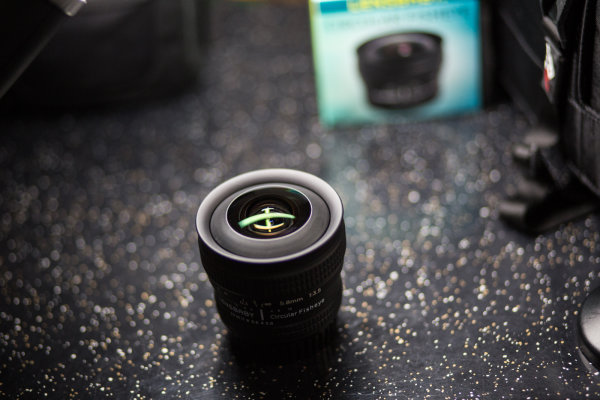
A dedicated circular fisheye lens from Lensbaby for under $ 300.00 sounds great, but how does it perform?

Lensbaby Circular Fisheye

Lensbaby Circular Fisheye 5.8mm f/3.5 Lens

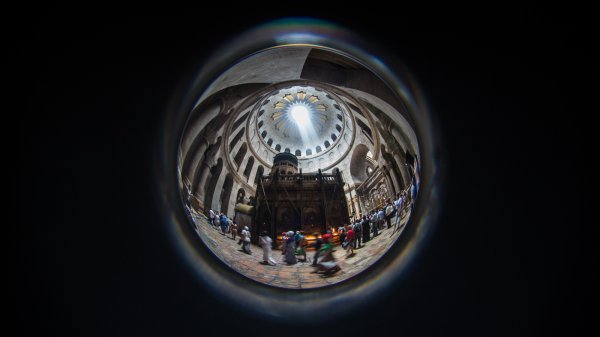
Lensbaby kindly sent me their new Circular Fisheye lens (the Canon version) to review about four weeks ago, and I can tell you that I’ve had a load of fun with it since then! The Lensbaby Circular Fisheye is best used (or optimized for) APS-C sensor sized cameras. I’ve been using it on a full frame Canon 5D and actually quite like the results it gives. You can see in the photographs below that it is a full circle, you might also note the shiny outer ring in the photographs – this is because the little lens has a polished barrel. With the barrel being polished, you can mess about getting neat flare and shine into your images, but you can also avoid that by tilting the lens away from direct light and moving it around to suit.

The 5.8mm f/3.5 circular fisheye from Lensbaby is a full manual lens, it doesn’t talk to your camera, it only talks to your hand – aperture ring and focus ring are within easy reach, feels good in your hand, sturdy and solid enough. The little lens has a pop-on, pop-off plastic lens cover and a plastic mount.

lensbaby circular fisheye review

The Lensbaby Circular Fisheye will focus (manually, remember everything is manual) really really close – 1/4″ close and then out to infinity.. Which means it’s hilariously perfect for when your baby decides to lick the lens – a photo series I thought about producing, but strangely nobody else wanted to lick it after baby slobber! Ah well.

Lensbaby Circular Fisheye Review

With a maximum aperture of f/3.5 it’s fast enough for most situations and with an ISO bump in dimly lit rooms, I wasn’t left wanting.

Lensbaby Circular Fisheye Review

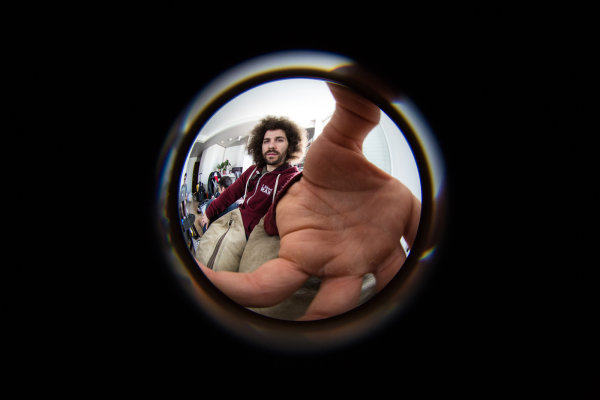
The field of view is 185° which is very very wide… like, see behind you wide – well, almost!

lensbaby circular fisheye fro knows photo

Yes, that’s Fro Knows Photo, yes he was holding my lens… We were together for a week in Israel – more on that later!

I’m not going to talk about edge to edge sharpness or chromatic aberration, I think we’re sort of missing the point if we’re looking at those factors in a $ 299 lens – this lens is about making fun photographs. It’s sharp enough, it’s well built and pretty sturdy – I’ve taken it from Melbourne, to Coffs Harbour, to Israel and back and it’s performed really well. Is it worth the price tag, yes absolutely. 

Who would buy this lens?

I’d say people that enjoy exploring different types of photography would enjoy this lens, people that like making fun pictures will love it. Sure, it’s not the Canon 8-15mm L series Fisheye, but then it’s not $ 1500 either.

Who wouldn’t buy this lens?

People that have a spare $ 1500 to drop on the L series Canon (or Nikon.. sorry, not sure which Nikon fits the bill)

In closing…

My opening line “how does it perform” is kind of a silly thing to ask on a cheap lens, and lets face it, this is a cheap lens by comparison to other available options. So for the fun the lens brings and for its affordable price point, Lensbaby, I give you five of the available five stars – good stuff! (And no, you can’t have your lens back!)

The post Review – Lensbaby Circular Fisheye by Sime appeared first on Digital Photography School.


Digital Photography School

 
Comments Off on Review – Lensbaby Circular Fisheye

Posted in Photography


Case Logic SLRC 205 Sling Camera Bag Review

22 May

Case Logic SLRC 205 Sling Camera Bag Review

If you’ve ever bought a case for a tablet or a hard drive then you’re probably familiar with Case Logic products. The ubiquitous logo is hard to miss in the accessories section of computer and electronics stores.

Case Logic SLRC 205 Sling Camera Bag Review

What you may not know is that Case Logic also make some very good camera bags, up there in quality and design with established brands such as Lowepro, Crumpler, Kata and Think Tank.

So when David from Love Cases got in touch asking if I’d like to review a camera bag sold in his store, I selected the Case Logic SLRC 205 sling style backpack to test out.

Why a sling bag?

The type of camera bag I use depends on the nature of the shoot and the amount of equipment I need. For example, I like to use my ThinkTank Retrospective 20 on portrait shoots. It’s a shoulder bag into which I can easily fit everything I need. But, it’s a heavy bag and all the weight is on one shoulder. After a while it hurts, and becomes uncomfortable to walk with – that limits its use to shoots where I don’t have to walk very far.

Sling bags are ideal when I need to walk some distance to arrive at the location of the shoot. I can put my gear in the bag, then take out what I need when I arrive.

I like to use a Black Rapid RS-Sport camera strap, which leaves my camera hanging down by my right side ready to use. If I have a sling bag I can keep it on my back while I shoot, held in place by the straps so it doesn’t move around. I don’t have to worry about where it is, or someone stealing it if I put it down.

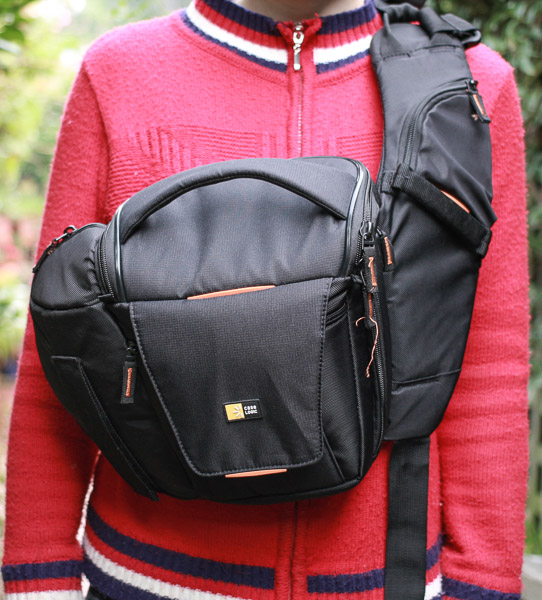
However, I don’t use sling bags in one way they are intended. I never bring them around to the front to remove gear, as I find they are so high on my body that it’s an uncomfortable process. Not everybody feels this way, I’m sure. This photo shows where the camera bag lies when you swing it around to the front.

Case Logic SLRC 205 Sling Camera Bag Review

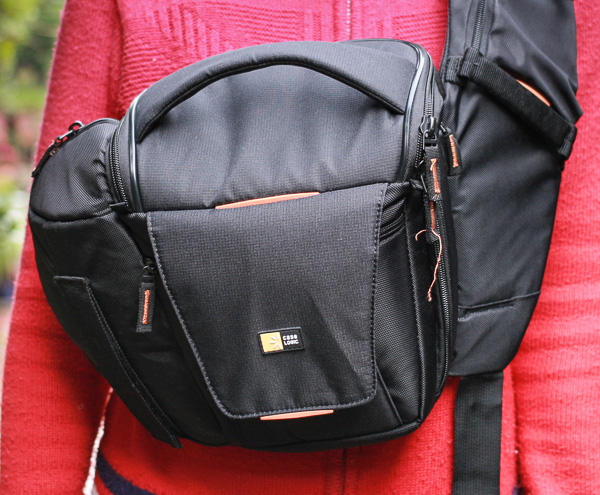
The Case Logic SLRC 205 bag

I’ve used this Case Logic sling bag on several shoots and I’m very pleased with it. It would suit me better if the main camera compartment was a little bigger, and it would be nice if it had a waterproof cover. But apart from that I’m delighted with it.

Case Logic SLRC 205 Sling Camera Bag Review

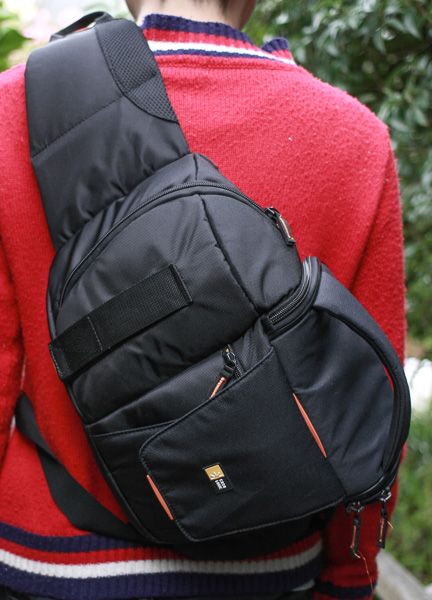
The Case Logic SLRC 205 from the back.

Case Logic SLRC 205 Sling Camera Bag Review

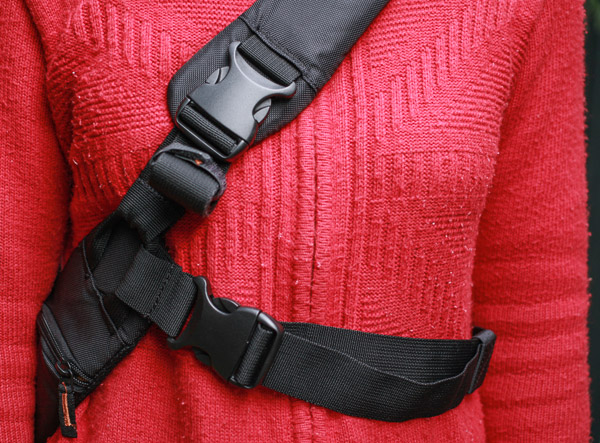
The bag straps from the front. The waist strap (bottom right) provides extra support and prevents the bag from sliding around on your back.

Features

I really like the design of this camera bag. It has a number of well thought out features that make it easy to use.

Main camera compartment

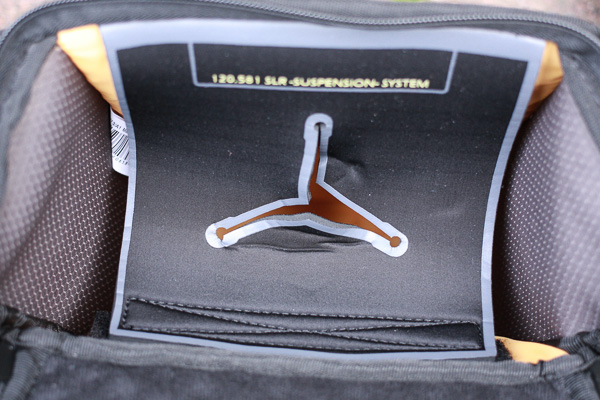
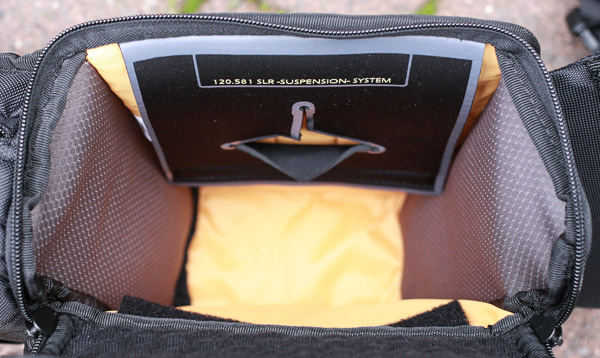
This is for your camera and lens. Case Logic use a hammock system to support your camera. There is a flap with a hole in it at the top of the compartment, and you can place the lens through the hole and rest your camera on top. It keeps your camera ready to hand and provides extra protection if you drop the bag.

Case Logic SLRC 205 Sling Camera Bag Review

It’s a great idea, but the only drawback for me is that the compartment is too small for my camera, (an EOS 5D Mark II), when the hammock is in position. In terms of size, this bag is best suited for small digital SLRs or mirrorless cameras.

However, if I fold the hammock down (it is supported by velcro) I can fit my camera inside. The camera rests on the lens in this position, so I attach the lens hood to prevent the lens cap being dislodged by rubbing against the side.

Case Logic SLRC 205 Sling Camera Bag Review

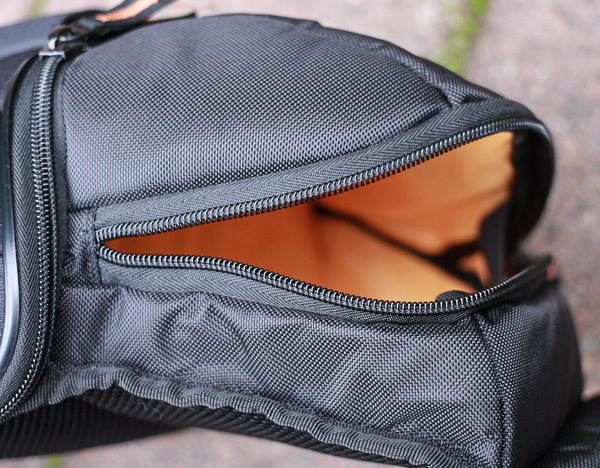
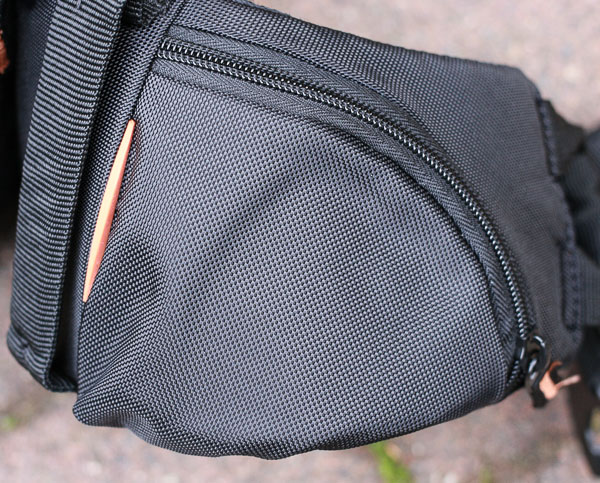
Small side compartment

This is big enough to store another lens or accessories. I use it for my Black Rapid camera strap and a small prime lens. It’s not designed for another body, so if you want to take two cameras on a shoot then you’ll need another bag.

Case Logic SLRC 205 Sling Camera Bag Review

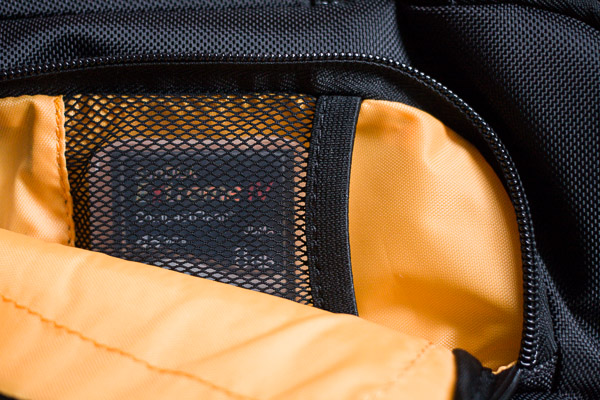
Memory card storage

On the other side is a zipped compartment that opens to reveal memory card space storage.

Case Logic SLRC 205 Sling Camera Bag Review

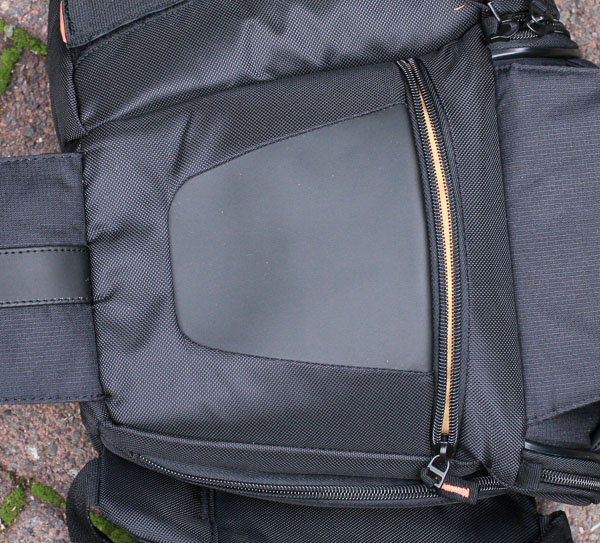
Wallet compartment

You can put anything that fits in here, but it’s ideal for a wallet. It’s hidden behind the velcro flaps used to support a tripod, making it virtually impossible for someone to steal the contents unnoticed.

Case Logic SLRC 205 Sling Camera Bag Review

Mobile phone compartment

One of the straps has a small flap ideal for storing a small mobile phone. My iPhone 3Gs fits inside, just. If you have a larger phone than this you’ll need to find somewhere else to keep it.

Case Logic SLRC 205 Sling Camera Bag Review

Tripod support

There’s a hook-n-loop strap to support a tripod. It’s a nice idea, best suited to small, lightweight carbon fibre tripods rather than heavier models.

Case Logic SLRC 205 Sling Camera Bag Review

Bag quality

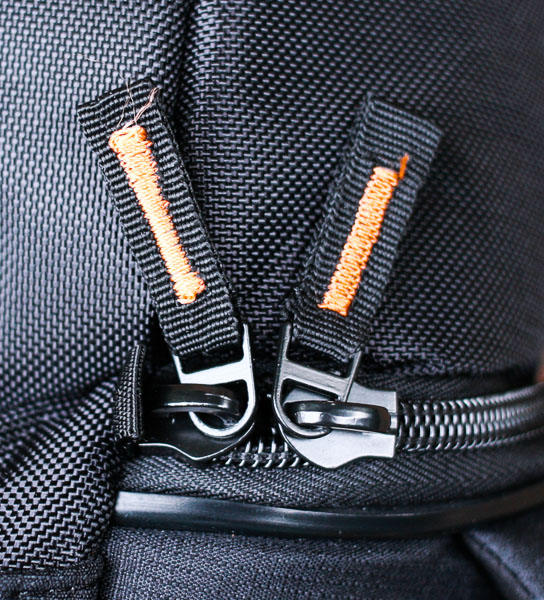
The quality of this bag is excellent. The outside of the bag is made from hard-wearing nylon. The zips are strong and durable and have tags marked with orange thread, making it easy for you to see them.

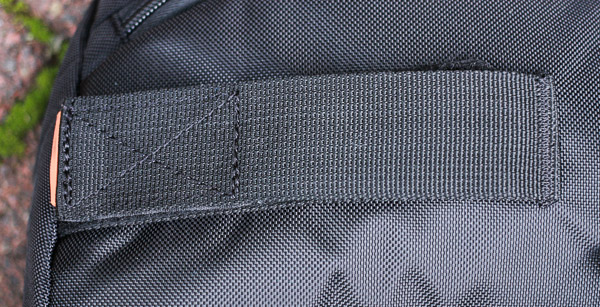
There are three strong, conveniently placed, handles that make the bag easy to pick up. The shoulder strap is well padded and nice and wide to spread the weight. The interior is bright yellow, so it is easy to see your black accessories such as lens caps. The support straps come with velcro tabs so any unused straps don’t dangle down.

Case Logic SLRC 205 Sling Camera Bag Review

Conclusion

This is a high quality camera bag ideal for anybody who takes a minimal amount of equipment on a shoot. It is most suited for photographers who use small SLR or mirrorless cameras. It is comfortable and easy to use. The only drawbacks are the size (if you have a large camera body) and lack of a waterproof cover.

Thanks to David from Love Cases for supplying the bag for review. Love Cases is a UK based company with international delivery. You can also buy the Case Logic SLRC 205 from Amazon.

Mastering Photography – additional learning

Mastering Photography ebook

My ebook Mastering Photography: A Beginner’s Guide to Using Digital Cameras introduces you to photography and helps you make the most out of your digital cameras. It covers concepts such as lighting and composition as well as all the camera settings you need to take beautiful photos like the professionals.

The post Case Logic SLRC 205 Sling Camera Bag Review by Andrew S. Gibson appeared first on Digital Photography School.


Digital Photography School

 
Comments Off on Case Logic SLRC 205 Sling Camera Bag Review

Posted in Photography


Faster glass: Sony RX100 III First Impressions Review

16 May

RX100-III_Right-1200.png

Few compact cameras have garnered as much attention as the Sony Cyber-shot RX100 and RX100 II. Sony had managed to squeeze a much bigger sensor into cameras only a little larger than the Canon S-series enthusiast compacts. The RX100 III continues the tradition by adding a wider, faster 24-70mm F1.8-2.8 lens and a built-in, pop-up EVF. Along with a 20MP 1″-type sensor, does the RX100 III remain the ultimate compact for enthusiasts? Learn more in our First Impressions Review

News: Digital Photography Review (dpreview.com)

 
Comments Off on Faster glass: Sony RX100 III First Impressions Review

Posted in Uncategorized


Syrp Genie Robotic Tripod Head Review

16 May

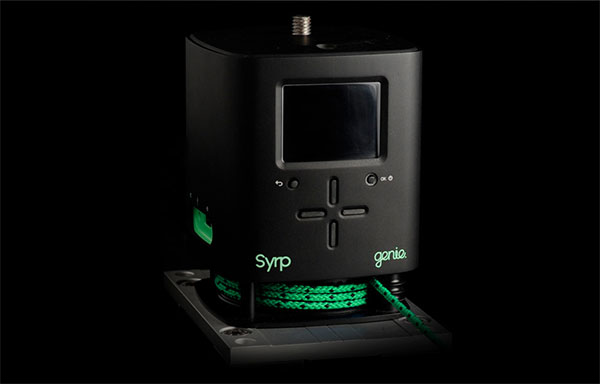
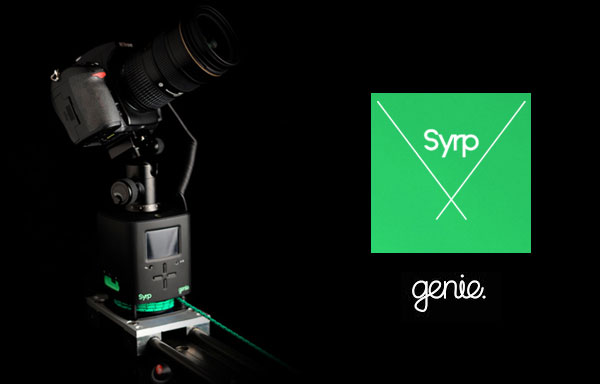
If you’re in the market for an ultra portable robotic tripod head that pans and tilts and is super easy to setup, you’ll be wanting to take a look at the Syrp Genie. The guys at Syrp have done their Kickstarter backers proud with a solid product that looks as good as it performs.

While it can’t pan and tilt at the same time, the Genie has a little trick up its sleeve to add an extra layer of motion control to its arsenal.

When you want to put the Genie on to a slider you won’t need any extra motors or cables to get things moving. The Genie comes complete with the linear accessory which utilizes a thin yet strong rope which you attach to either end of your slider. The motor inside the Genie will then pull the unit along the slider to add production value to your video recordings or time-lapse footage. You could even put the genie on a skate board or cart and then attach the ropes to trees or fences while it pulls itself through your scene.

While this might not be the most advanced method of motion control, you’ve got to love the sheer simplicity of the Genie, and with its built-in battery it really takes up very little space in your camera bag. If you’re off on a long haul flight and don’t relish the idea of packing lots of complex toys, you’ll appreciate the compact form of this device.

Syrp Genie Review - Gavin Hardcastle

Build Quality

I was really impressed with the build quality of the Genie and its accessories. The packaging was like something you’d expect from Apple and everything has a solid, ruggedness about it that feels reassuring. I had some problems with the battery on the first unit that I received so Syrp promptly replaced it and the second unit had no problems with the battery lasting as advertised.

Ease of Use

The Genie is about as easy as it gets. Time-lapse photographers will love the presets and how the time calculations are adjusted based on your input. The interface is really easy to navigate and pretty intuitive. I only had to refer to the manual on a couple of occasions. Setting up a panning shot is pretty easy but I found the tilt shots more of a challenge to get things lined up with the horizon and also struggled a little with the ball head that Syrp kindly included. Once you’ve done it a few times it gets easier.

Syrp Genie Motion Control Review - Gavin Hardcastle

Accessories

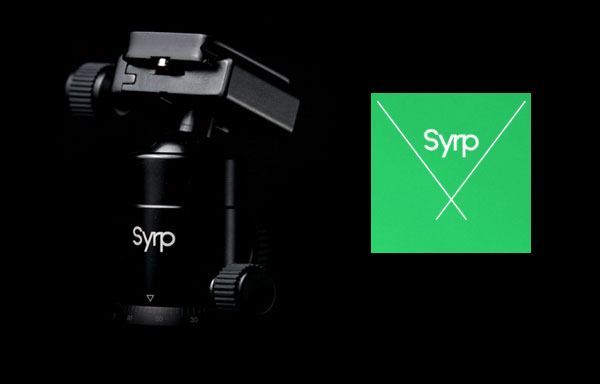
My first impression of the ball tripod head that Syrp included was that it might not be up to the job. After putting it to some serious stress tests it turned out to be a very sturdy little head that can handle a lot of weight and some hefty abuse.

Syrp Genie Review Ball Head

The infra red transmitter stalk is a really cool addition for time lapse photographers who don’t fit into the Canon/Nikon mold and can’t connect up to the Genie with a cable. The IR transmitter plugs into the Genie and then sticks out of the side like one of those gooseneck desk microphones. The idea is that you point it at the IR receiver on your camera and it triggers the camera for time lapse shoots. I shoot with a Sony A7R so this was essential for me. I just wish the IR transmitter was a couple of inches longer so that I didn’t have to strap it to my lens with an elastic band. Anyway, it works and is much easier than fiddling about with a long IR cable.

The rope that you use for linear motion on sliders is really good quality and you can order different lengths to suite your needs.

Tech Support

I found the tech support from Syrp to be pretty quick and effective. When I had any big problems they jumped on it quickly and were patient when I was just being thick and didn’t get how things worked. I get the impression that even if I wasn’t a writer for dPS, I’d still get taken care of well.

Is it Worth the Price?

This is a tricky one and it really depends on your needs. Currently priced at $ 890 USD, the Genie cannot pan and tilt at the same time. It can only pan, tilt or slide. There are other robotic ‘motion control’ heads out there that offer more functionality for around the same price, but it’s kind of unfair to compare the Genie to more advanced units because they don’t have the built in battery and they require motor accessories in order to slide. With that in mind your decision to buy the Genie might come down to its two greatest features – simplicity and portability.

The Results

Here’s some quick and rough test footage that I shot with the Genie straight out of the box. Please watch at 1080p.

I am a confessed pixel peeping perfectionist. A snob of the worst kind when it comes to image quality and the finished product of a shoot.

My main use of the Genie was for shooting time-lapse sequences and I have to say that the results I got were not as smooth as I’ve had with other devices on the market. I don’t know if this can be fixed with a firmware update or if it’s down to a mechanical limitation of the Genie design. That being said, whether or not my obsessive ‘buttery’ motion requirements would make much of a difference once a finished video is butchered by the compression ogre from Vimeo or YouTube remains to be seen.

I suspect that for most time-lapse and video shooters, the motion of the Genie will be more than sufficient. I’m just a picky bugger.

Things I Love

  • Portability
  • Ease of use
  • The Preview Function (others could learn from this)
  • Build quality
  • Built in battery

Things I Don’t Love

  • Can’t pan and tilt at the same time
  • Not the smoothest results for time-lapse
  • The little bit of ‘play’ that makes the first few frames of your time lapse completely static. You can see this in the second clip of my test footage video above.

All in all, the Genie is a really cool product that I feel is ideal for time lapse beginners and budding cinematographers. When you factor in the portability and the ease of use, the Genie comes in at a very fair price point with excellent build quality. Time-lapse shooters that are looking for something more advanced will have to spend a little more to move up to the next level of production value. I give the Syrp Genie 4 out of 5 stars.

More time-lapse tips and info here:

  • Time-Lapse Photography Equipment Guide to Getting Started
  • Discover the Wonder of Time-Lapse Photography
  • 10 Pro Motion Control Time-Lapse Tips

The post Syrp Genie Robotic Tripod Head Review by Gavin Hardcastle appeared first on Digital Photography School.


Digital Photography School

 
Comments Off on Syrp Genie Robotic Tripod Head Review

Posted in Photography


Smaller, faster … better? Canon G1 X Mark II review

08 May

gx1_ii.jpg

The Canon PowerShot G1 X Mark II is an ambitious product that addresses some of the shortcomings of its predecessor by adding a 24-120mm F2.0-3.9 lens, faster AF system, tilting LCD, and 5.2 fps continuous shooting. Its 1.5″-type CMOS sensor also allows for image quality that should rival consumer or midrange interchangeable lens cameras. But do these improvements make the G1 X Mark II the large-sensor compact for enthusiasts? Read full review

News: Digital Photography Review (dpreview.com)

 
Comments Off on Smaller, faster … better? Canon G1 X Mark II review

Posted in Uncategorized


Review of the Olympus TG-850 ‘Tough’ Waterproof Camera

06 May

I’ve discovered a flexible companion for all weather action, adventure, and family fun.

JillSnorkeling-TG-850-HD-video-frame

I’d been researching the ideal pocket-sized, waterproof, and shock-resistant camera to take to Hawaii for one of my Land and Sea Photography workshops. I’d compared every “tough” camera available online, but not one jumped out and said “Buy Me!”

Besides the full DSLR kit that I’d haul to the islands, I wanted to test and demonstrate a well-featured compact for capturing outdoor sports and vacation adventures. Almost every small durable camera available had been on the market for at least a year. Surely something ideal had been unveiled at the recent 2014 CES show in Vegas, but nothing was to be released in time for my imminent sailing.

My wish list of desirable features was brief:

  • Pocket-sized
  • Light weight, solid build
  • Comfortable, intuitive controls
  • Button-triggered Movie mode
  • Real wide-angle zoom below 28mm
  • Articulating LCD screen
  • Good LCD visibility in bright daylight and underwater
  • Fast power-up to shoot time
  • Fast to focus
  • Intelligent Auto ISO and low minimum ISO
  • One-button navigation to common shooting options
  • Exposure compensation
  • Underwater shooting modes
  • LED illumination for extra lighting
  • HD 1080p video
  • Hi-Speed 60fps or faster video for Slow-Motion fun
  • Sequential timer for action capture effects
  • Fast frame rate for recording bursts of action
  • Eye-Fi SD card compatible to shoot and upload images and video
  • Under $ 300 USD
  • Oh, and it must be crushproof, droppable and waterproof to at least 25 feet depth

I held out patiently, but my departure date was nearing and I was reluctant to purchase last year’s technology. Then I learned of the new Olympus ‘Tough’ TG-850, loved what I read on the Olympus Website. I made contact and a pre-release sample was sent overnight to my hotel just in time.

Olympus TG 850 camera 4VIEWS sm

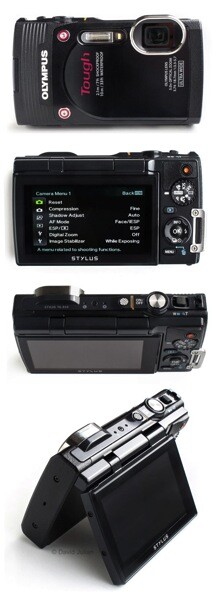
I charged it up with the supplied direct-connect USB–>MiniUSB cable and secured a fast SD card into the waterproof double-locking connection, memory and battery compartment. My test camera had arrived in a generic box without instructions, yet I was delighted to find that the camera’s menus are the most intuitive I’ve seen, and feature a brief description for each selected menu option.

Once I’d configured some favorite user options, I tethered the camera’s supplied strap to my wristband for some body surfing to see how the TG-850 handled pounding surf breaks. The TG responds well to capturing spontaneous action and the lens clears of water drops easily. Power-on to shoot time feels very responsive at about 1.3 seconds. Weighing under 8oz (226g), it’s easy to use for hours without fatigue.

Features and User Experience

LCD screen

The TG-850′s hinged 3″ diagonal 460k-dot LCD screen is a unique feature in today’s compact waterproof camera market. The sturdy LCD screen can be flipped upwards to 180º, and is also one of my favorite features. It allows the convenience of shooting at low and high angles, or when snorkeling along at the surface or wanting an ant’s eye view of nature. Flip the LCD all the way facing forward and it’s great for solo selfies and group portraits.

Wide lens

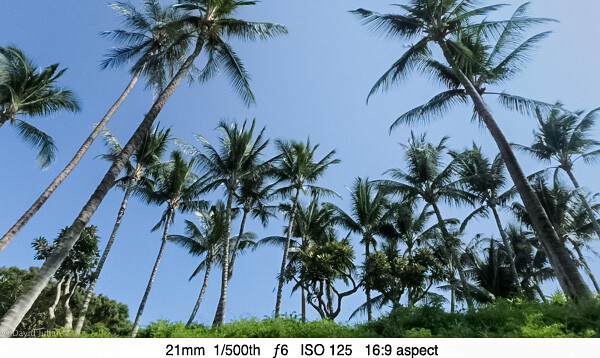
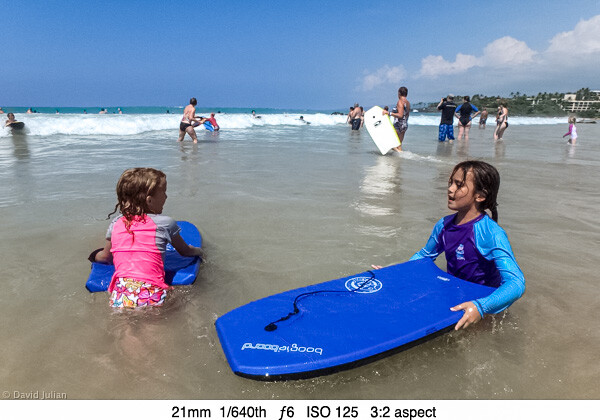
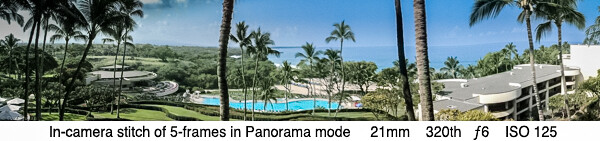
The very wide 21mm lens is my favorite feature of this camera. At review time, it’s the only waterproof pocket compact lens that is that wide without needing any extra attachments. Such a wide view allows more dramatic landscape compositions, in-the-action sports captures and easier group portraits. A digital zoom feature add extra reach, but as can be expected, there is some loss of quality. The on-off, zoom, Shutter, Movie, Mode and Playback controls are placed well for my single-handed operation. The TG-850 contains Olympus’s latest 16mp back-side illuminated CMOS ½.3 sensor coupled the powerful TruePic VII processor, for faster frame rates, video processing and other options.

DJulian Palm Trees 21mm

DJulian Kona kids boogieboards

Exposure settings

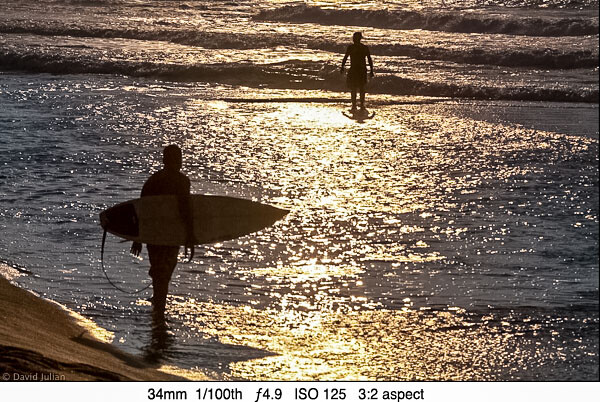
The sensor’s light sensitivity (ISO) can be set from 125 to 6400, HIGH or AUTO. My test of ISO settings revealed better quality than expected at settings from 200-1600, and after that it’s noisy as expected under magnification. With shutter speeds from 4 seconds to 1/2000th, there is plenty of room for creativity under many conditions. Set to Sports mode, my photos revealed very crisp water droplets shaken from a wet pooch. The onboard flash helps fill in harsh shadows or in backlit portraits. Metering can be switched from ESP Auto to Spot Center for more accuracy when needed. High contrast backlit scenes are easily balanced using the Exposure Compensation.

DJulian Backlit surfers Kona

File format and image quality

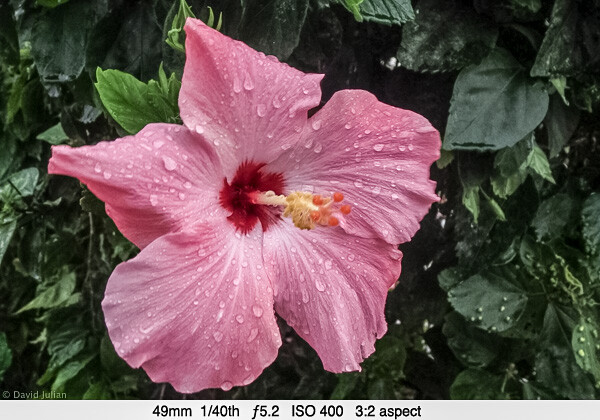
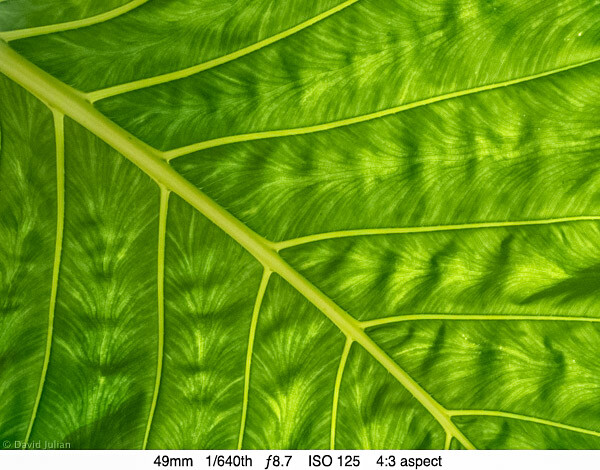
This camera does not shoot RAW format. No waterproof compacts do at this time, and I’m not expecting RAW anytime soon. Apparently the manufacturers uniformly conclude that this market segment isn’t after RAW processing. The good news is that the full-resolution 16mp JPGs I shot under varying conditions appear quite sharp when viewed in Lightroom at 1:3 magnification. At full-screen and 1:1 viewing, one can see the typical effects of compact sensor JPG processing that results in a rather painterly appearance. Photos shot at ISO 125-200 revealed the best shots of the trip.

DJulian Pink Hibiscus

DJulian Molokai Leaf Detail

Video

The TG-850 can shoot video at 1080 60p, 1080p, 720, VGA, high-speed 120fps at 640×480 and even 240fps at 432×324 video captures. Dual-mode lens-shift stabilization reduces normal handheld camera shake, and Hybrid mode reduces rhythmic shake during video shooting. I was ready to take the camera snorkelling off Lanai. Truly crisp contrasty underwater photography is a challenge for compact cameras, but the TG-850 produced very acceptable video for my online posts. Water depth plays a big part in color temperature and contrast, and three Underwater scene options help warm up the underwater blues.

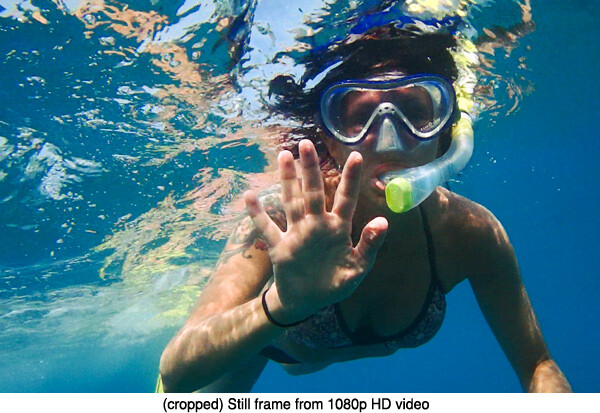
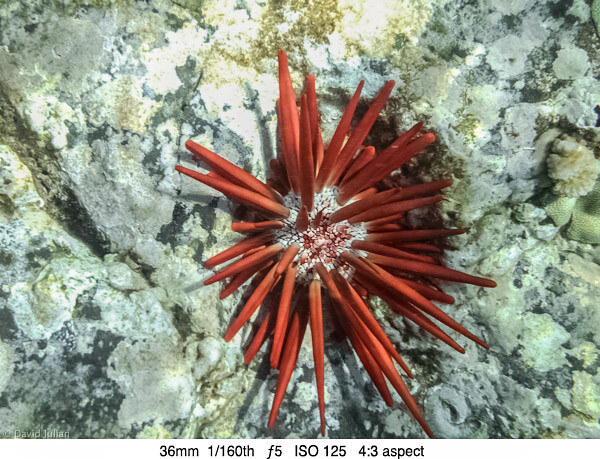
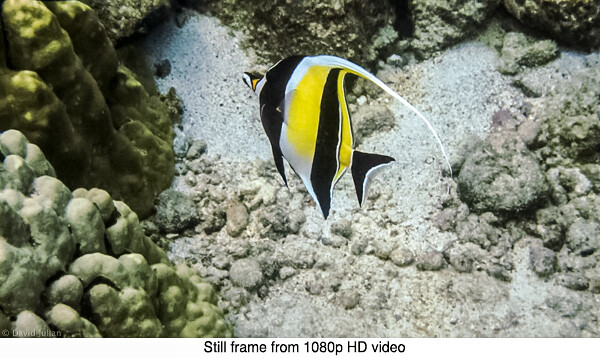
I am impressed with the sharp stills I clipped right from the 1080p video using a menu option. My use of the 120fps High Speed video produced fairly smooth slow-motion playback, though not quite as smooth as a Hero3 camera. The TG-850 videos are not distorted at the corners and edges as those I made with the Hero3. I found auto-exposure struggling when panning in uneven light conditions, but worked well enough for pleasing videos.

DJulian-Hawaii-Red-Urchin.jpg

DJulian Moorish Idol HD still

DJulian Sea Turtle Makena Maui Video Still

Here is a couple samples video done with the TG-850, the second one is done using 120fps high speed shooting mode.

Another feature that’s a lot of fun is the sequential shooting modes that allow fast frame bursts. Options include four different sequence settings including the ability to record a 60-frame burst in one second, a 60-frame burst at 20 fps for 3 seconds, or a 200-frame burst at 2.5fps for 80 seconds. A built in interval timer is also completely configurable for start delay time, interval time and sequences up to 99 frames. To replay the shot sequence you select the image ‘stack’ and the images show automatically in sequential order. Smart, easy and intuitive. For those who want to upload their images to a smartphone for social media, the TG-850 even has a menu setting to enable Eye-Fi SD card wireless transfers. I look forward to testing this soon.

DJulian Kona pool 21mm PANO TG 850 iso125

DJulian Kona pool TG850 ZOOM illo 3

DJulian Jill pool twirling frame sequence TG850

The 5-way control pad’s center button gives instant access many common shooting options:

  • 18 Picture styles including: Natural, Interval, Night Scene, Miniature, Backlight HDR, three underwater modes and some artsy effects you will at least try once
  • Flash control and LED assist lamp on/off – helps add light for closeups, macro and even video in low light
  • Exposure Compensation, +/- up to 2 stops helps compensate for difficult lighting
  • White Balance, including two custom WB settings
  • ISO including a very smart AUTO ISO mode
  • Timer and Multi-Frame speed modes
  • Image Size settings from 16mp to 3mp and VGA, which is great for emailing and social media
  • Aspect Ratios of 4:3, 16:9, 3:2, and 1:1 (square)

Other creative features accessible in the camera menus include:

  • AF Face/ESP detection – locks focus onto faces for quick grabs at gatherings
  • AF Spot – tracks the center of the frame. Works well when the subject is in a busy environment
  • AF Tracking – when a subject is moving across the frame or towards you
  • Spot or ESP pattern metering
  • Four sequential frame modes
  • The eighteen scene modes include the common standards as well as three underwater modes
  • Custom self-timing mode
  • Regular and Hybrid Stabilization for smoother video
  • Super Macro mode

Conclusions

The TG-850 is an excellent value for the features provided. It’s ease of use will appeal to families, and creative features will win over active enthusiasts. I cannot wait to take it back out into the wilds and have more fun.

Pros:

  • Well designed, fully-featured and very durable compact camera for outdoor and family adventures
  • Sturdy tilting LCD encourages experimentation
  • 16mp images and HD video quality are just right for most web and print publishing needs
  • 400-1600 ISO photos are better than other cameras we tested
  • Solid build and double-locked battery/card/cable door has a strong yet easily replaceable gasket
  • Little motor noise recorded when zooming video
  • Excellent creative options for shooting action
  • Face-detection ESP AF is rapid and helpful
  • Fast power-up to shoot time
  • Intuitive menu navigation and quick-button access to shooting options
  • Eye-Fi card ready for WiFi transfers
  • Recessed lens is well protected and clears easily when wet

Cons:

  • No RAW format
  • High quality JPGs seem overly processed when viewed full screen
  • The TG-850 has forgone the 720p high-speed video of its predecessor, the TG-830. Even my iPhone 5s can shoot 120fps High-speed in HD
  • Ridged plastic grip could be a durable rubber for wet hands
  • Slight jumpiness and motor noise at times when zooming during video
  • HD Video crops slightly into wide angle, appearing more like 24mm
  • Zoom switch could be sturdier, with smoother video zoom

Advice

  • Buy a floaty strap if you plan to use the camera around deep water. At the time of this review, Olympus is offering a free one with each camera purchase.
  • Try attaching a mini tripod or telescoping monopod such as the ones from iStabilizer for even more active shooting fun.
  • You will want at least one spare battery. I found a set of two Halcyon 1500 mAh batteries and a matching AC+Auto charger from Amazon for under $ 20. The Halcyon batteries are higher capacity than the originals, though I have not compared their actual hard-use longevity. (Note from the Editor: please note that using off market batteries can cause a void in your warrantee if anything should go wrong – be cautious and proceed at your own risk)
  • Check the battery/card door gasket for tiny particles of sand before every use in water. Any residual particles can admit water if under pressure.

The post Review of the Olympus TG-850 ‘Tough’ Waterproof Camera by David Julian appeared first on Digital Photography School.


Digital Photography School

 
Comments Off on Review of the Olympus TG-850 ‘Tough’ Waterproof Camera

Posted in Photography


A newfound focus: Sony SLT-A77 II First Impressions Review

01 May

beautyshot.jpg

It may look the same as its predecessor, but the Sony SLT-A77 II’s insides are quite a bit different. Featuring a new 24MP CMOS sensor and image processor, along with a dramatically improved AF system, this SLT could be one of the best subject-tracking cameras out there. While we’ve yet to test its performance, we did spend some brief time with the a77 II and have put together our first impressions.

News: Digital Photography Review (dpreview.com)

 
Comments Off on A newfound focus: Sony SLT-A77 II First Impressions Review

Posted in Uncategorized


Lens Review Tamron SP 150-600mm f/5-6.3 Di VC USD

30 Apr


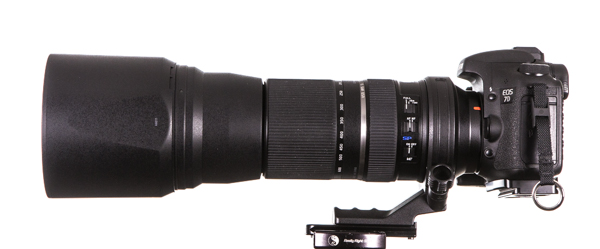
Tamron SP 150-600mm

Tamron SP 150-600mm f/5-6.3 Di VC USD was tested in April 2014.  The version of the lens tested is for the Canon DSLR mounts and it is compatible with both crop and full frame sensor bodies. The lens is also compatible with Nikon and Sony bodies.

On a Canon crop factor camera body the lens provides a field of view equivalence of 240-960mm. The lens has fast, silent focusing, Vibration Compensation and eBAND (Extended Bandwidth and Angular-Dependency) lens coating in addition to the conventional BBAR (Broad-Band Anti-Reflection) coating. These coatings are designed to reduce flare and ghosting, and to increase contrast. The lens has a moisture-sealed construction, and has 20 lens elements in 13 groups including three low dispersion (LD) elements and an iris diaphragm with nine rounded aperture blades.

What is in the box

The lens, a large lens hood, a removable tripod mount collar and a large fold out guide  or manual.

Specifications of the lens tested

  • Focal Length (full frame): 150-600mm
  • Aperture Maximum: f/5.0-6.3 Minimum: f/32.0-40.0
  • Camera Mount Type: Canon EF Format
  • Compatibility: 35mm Film / Full-Frame Digital Sensor, Canon (APS-C), Canon (APS-H)
  • Angle of view: 16° 25′ – 4° 8′
  • Minimum focus distance 8.86 ft (2.7 m)
  • Maximum reproduction ratio: 1:5
  • Lens elements/groups 20/13
  • Diaphragm blades: 9
  • Filter thread front: 95 mm
  • Dimensions (DxL): 4.16 x 10.15 in (105.6 x 257.8 mm)
  • Weight: 4.30 lb. (1.95 kg)

Handling and Features

This is a fairly large lens compared to the Canon 100-400 f/4-5.6 push-pull L series lens, and weighs 4.3 pounds as compared to the Canon 100-400 at 3.2 pounds. Tamron have used high quality plastics for the lens barrel in order to keep the weight down. Had this lens been made as an all metal construction, it would be much heavier and would not be as well balanced.
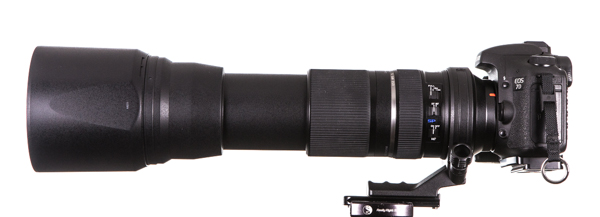
Tamron SP 150-600mm extend to 600 mm

The lens extend to 600 mm

The lens was tested using a Canon 5D Mk III and a Canon 7D. I found the lens reasonably well balanced while hand holding. It does get to be a bit of a strain during extended shooting so a tripod with a smaller gimbal style tripod head is advisable.
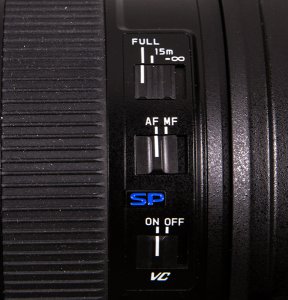
Switches on the Lens Barrel

Switches on the Lens Barrel

The lens is equipped with tripod mount, footed lens collar. An Arca Swiss style long lens plate was mounted for all tripod based testing.

The lens has three switches; each is a two position switch which is flush mounted on the lens barrel. The switches have a positive click and an audible feedback when operated. The switches are for: Autofocus/Manual focus, Vibration Compensation on or off, and focus limit. A lens lock at 150mm is also provided.

Lens Zoom Creep

The lens barrel tends to zoom creep over an extended period of time when positioned at an acute angle downward .  There is also some zoom creep when pointed directly upward.  The greater the angle the greater the creep. Extending an index finger to grip the lens barrel just beyond the zoom ring prevents any creep when the lens is handheld. Tamron has provided a lens barrel lock that will keep the lens locked in the 150 mm focal length position.  This is good during transport but Tamron should have considered making the lens lockable at all the major focal length positions.

Focusing

The autofocus is fast and fairly accurate. The lens uses a USD (Ultrasonic Silent Drive) focusing motor. The lens barrel has a two-stage focus limiter switch with a full and a 15 meter (49.2 feet) to infinity limited range. This is a very nice feature that prevents the lens from hunting through the whole focus range particularly when the subject is beyond 15 meters.

Manual focusing is reasonable as the focus ring is damped and very smooth. The position of the manual focusing ring could be improved as the lens collar comes in the way. For hand held operation it is preferable to rotate the collar 180 degrees or remove it entirely. Manual focus adjustments can be made in Auto or Manual focus modes as Full Time Manual is fully supported. The minimum focus distance is 8.9 feet/2.7 meters provides a magnification of 1:5. A focus window provides distances in meters and feet from the minimum focusing distance to infinity.

The front filter tread is 95mm and the front element does not rotate while focusing. This is a welcome feature, particularly for polarizing and split/graduated ND filter use.

TESTS
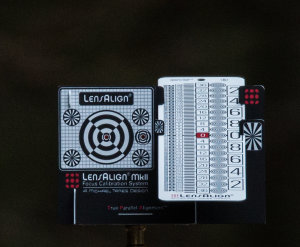
Micro Focus Calibration Tool

Micro Focus Calibration Tool

I set up the lens to test auto focus accuracy. Using a LensAlign Mk II micro focus adjustments were made at 150mm and 600mm. At 150mm no adjustment was needed while at 600mm a -5 was needed to correct for some back focusing.

The Ultrasonic Silent Drive (USM) motor in the lens is very quiet when focusing and the speed is comparable to the Canon 100-400mm f/4.05.6 IS L lens. At 600mm the lens first retracts to the closest focus distance before extending to the focus on the distant subject. Overall it does not affect the focus speed, as this phenomenon is controlled by the camera body. This issue was prevalent using both camera bodies.

Manual Focus

As mentioned earlier the manual focus ring is in an awkward position for my liking. The total rotation is 120 degrees and very manageable at shorter focal lengths but is not as well tuned at focal lengths greater than 450mm, and focus appears to have a slight lateral shift.

Once focus is established on a subject, varying the focal length does not maintain focus. Refocusing is required for any change in focal length.

Autofocus

The lens was tested using the most accurate center focus point on the Canon 5D MarkIII as well as the focus assist group.

With both bodies the “One Shot” (AF-S on Nikon) and “AI Servo” (AF-A on Nikon) focus methods performed well from focal lengths of 150mm to 400mm. At 500mm through 600mm the lens did not track well in AI Servo mode due to the high magnification, but was fine in One Shot (AF-S) mode. The lens was erratic, and if it dropped focus lock on the subject it rarely recovered to lock on again. Re-focusing was the only way to track a moving subject again. The loss of tracking is more apparent for subjects that are approaching the lens and less problematic for subjects moving left to right, or vice versa.

Vibration Compensation

Overall performance of image stabilization was very good. At focal lengths of 150 through 500 the lens maintains stability 2 to 3 stops below the hand held shutter speed guideline of 1/focal length as the minimum shutter speed. Hand holding at ISO 200 while looking through the viewfinder, one notices an image shift when the VC (IS) motors kick in.

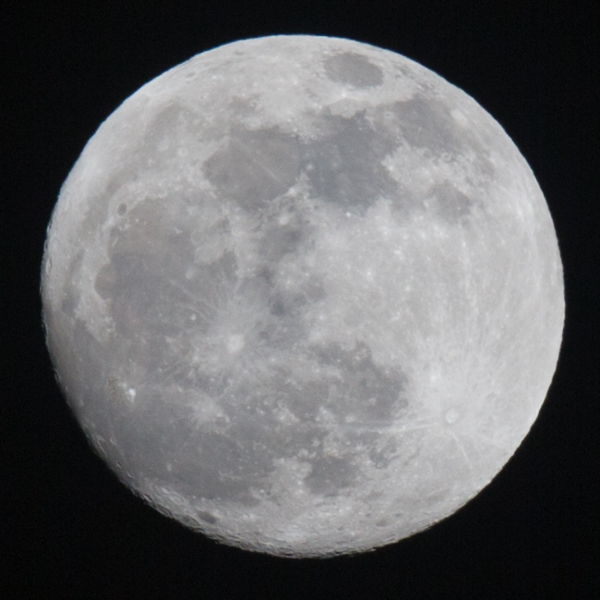
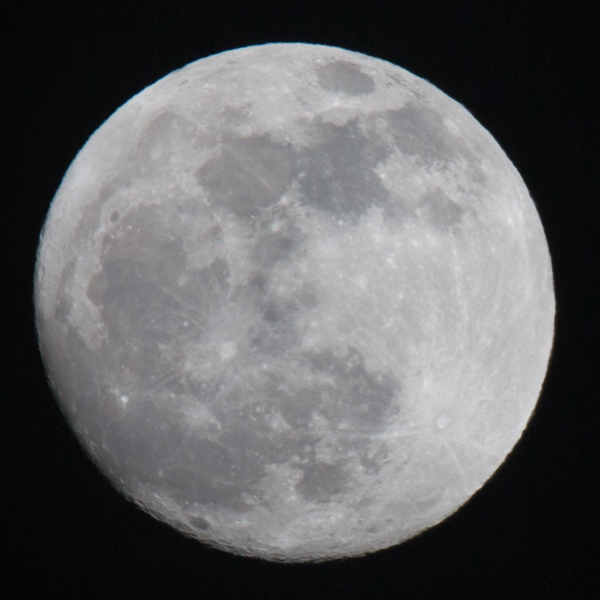
Here are some images of the full moon (cropped and sized to the same frame size) Settings used were: ISO 250, f/6.3, at 1/400th of a second, at focal lengths of 600mm, 500mm, 400mm and 300mm. The VC (IS) functions very well and is a pleasure to use.
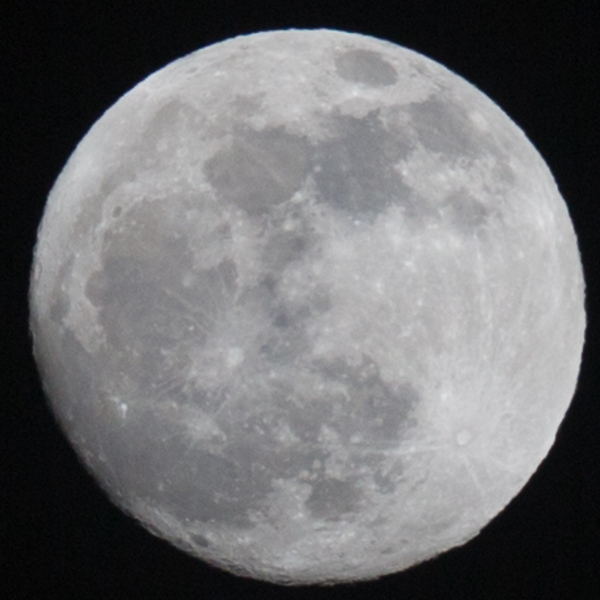
Focal length 300 mm

Focal length 300mm

Focal length 400 mm

Focal length 400mm

Focal length 500 mm - some chromatic aberration is visible

Focal length 500mm – some chromatic aberration is visible
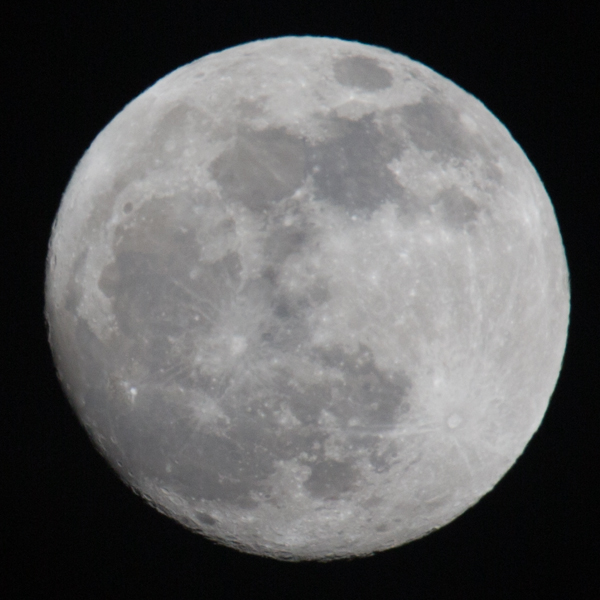
Focal length 600 mm - some chromatic aberration is visible

Focal length 600mm – some chromatic aberration is visible and there is a slight drop in sharpness

Test Results

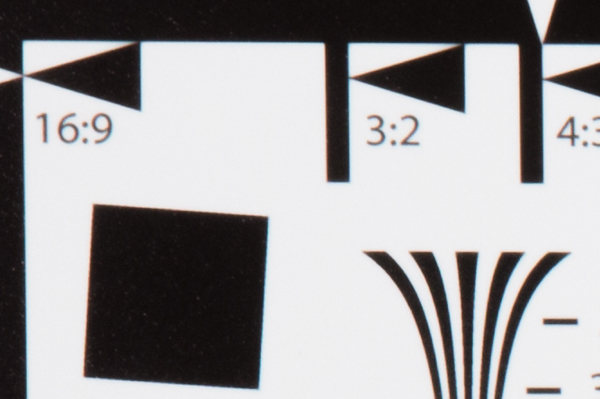
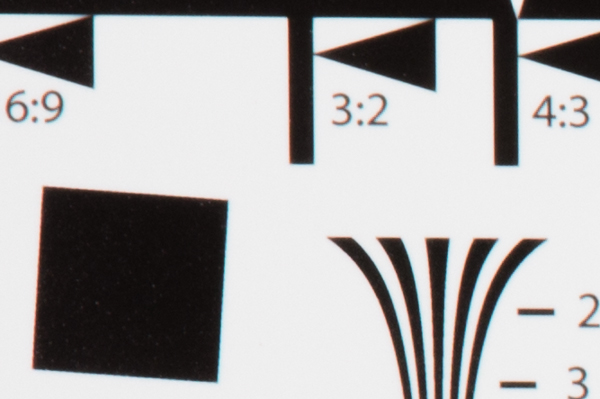
All controlled environment testing was done in the studio with constant lights and and a test chart as shown below.
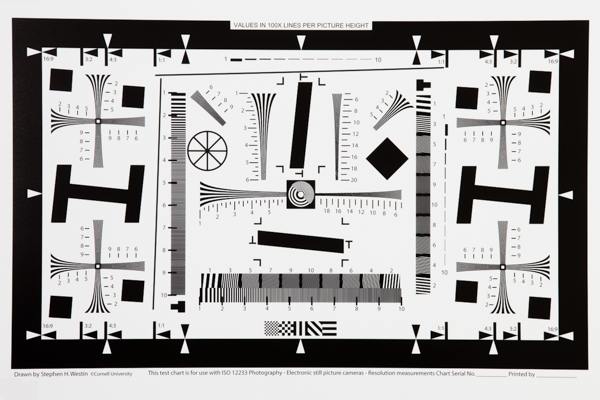
lens sharpness chart

The Sweet Spots

f/8.0 from 150-250mm:  at 300mm there is a loss of sharpness both in the center, as well as on the edges. At 400-600mm the center is sharp with some fall off toward the edges.

During tests, f/11 was found as a good aperture from 300-600mm. At 600 mm the edge fall off is pronounced, but that is also a factor of chromatic aberration. At the widest aperture in the 150-300mm range the lens has better overall sharpness from 200-300mm than at 150-200mm.

Aperture settings of f/8 through f/11 provide the best performance across the frame on a full frame sensor. f/5.6 through f/6.3 are good in the center. On a crop factor camera like the 7D the edge sharpness is acceptable in the f/6.3 to f/8.0 range at focal lengths of 300mm and higher while f/5.6 to f/6.3 is acceptable at focal lengths 300mm and below.

Pincushion Distortion

There is a slight amount of pincushion distortion through the entire focal length range of this lens. This distortion however, is minimal and very easily corrected using lens correction in Adobe Camera Raw or in Lightroom.

Edge Exposure Fall Off

Only visual testing was conducted for this test. The lens handles light fall off very well. It is most noticeable at f/22 but does not pose a problem at f/20. On the 7D body the frames captured at f/22 were acceptable with no cropping applied. f/20 is a very safe aperture for maximum “Depth of Field” and minimum edge fall off.

Chromatic Aberration

There is fringing at apertures of f/16 through f/22 at focal lengths of 400-600mm. Progressively getting pronounced as the focal length increases, it should be noted that though there is chromatic aberration it is not bad compared to other lenses in this class and could be considered low.

Chromatic aberration at 300 mm

Chromatic aberration at 300mm

Chromatic aberration at 400 mm

Chromatic aberration at 400mm

Chromatic aberration at 500 mm

Chromatic aberration at 500mm

Chromatic aberration at 400 mm

Chromatic aberration at 600mm

Pros and Cons

Pros

  • Great value for the price point
  • Very good build quality
  • Well damped focusing
  • Center sharpness throughout the range
  • Very quiet operation
  • Very good Vibration Compensation (Image Stabilization)
  • Low distortion and chromatic aberration

Cons

  • Position and rotational direction of focusing ring
  • Image shifting when VC (IS) engages
  • Edge sharpness fall-off at 600mm on a full frame body
  • Focus speed decreased at longer focal lengths

Conclusion

You might conclude from this list of cons, and some of the criticism, that the Tamron 150-600mm is not exceptional, but that would be very wrong. There are very few perfect lenses and the issues should be taken under consideration based on their significance for type of photographer who will use this lens, and the type of photography they do with it. This lens is a great performer, and the price point just can’t be beat. Used properly, and keeping its small limitations in mind, this lens will deliver excellent images and is a highly recommendable lens. It is an ideal hand holdable lens for nature and sports photographers.

Sample Images
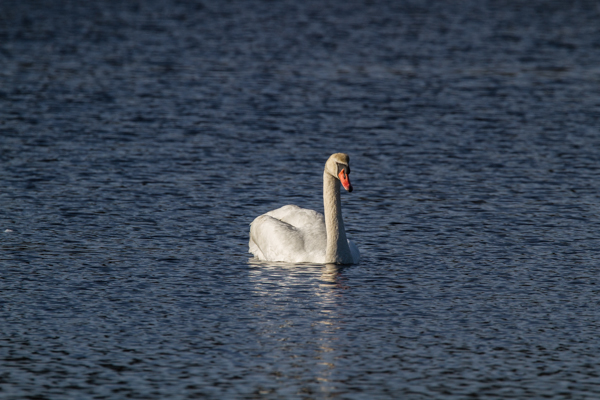
Canon 7D, Tripod, ISO 250, f/9, 1/640 sec. As shot.

Canon 7D on tripod, at 600mm, ISO 250, f/9, 1/640th. As shot.
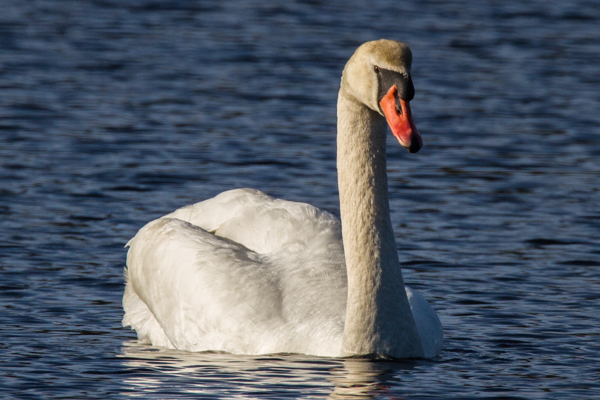
Image as above cropped to fill frame.

Image above, cropped to fill the frame.
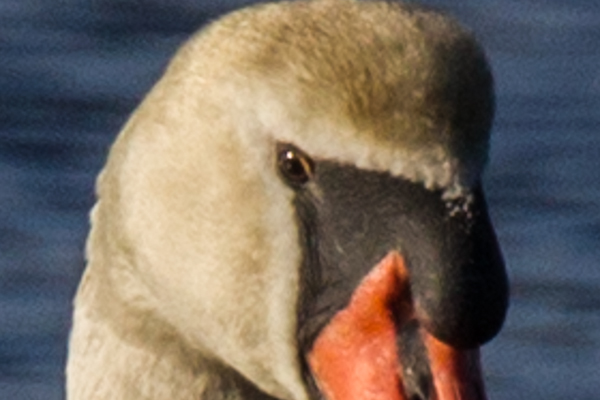
Same image cropped to show head detail - crop size 280 x 187 pixels then zoomed to 600 pixels (Greater than 2X magnification)

Same image cropped to show head detail – crop size 280 x 187 pixels then zoomed to 600 pixels (Greater than 200% magnification)

_MG_8911-5

Canon 7D, at 500mm, hand held, ISO 2000, f/6.3, 1/125th

_MG_8801-2

Canon 7D, at 450mm, hand held, ISO 250, f/6.3, 1/1000th

_MG_8808-3

Canon 7D, at 600mm, on tripod, ISO 250, f/6.3, 1/200th

Image as above cropped to fill frame.

Image above, cropped to fill the frame.

Canon 7D, at 600 mm, hand held, ISO 250, f/6.3, 1/800 sec.

Canon 7D, at 600mm, hand held, ISO 250, f/6.3, 1/800th

A recent press release from Tamron announced  – TAMRON WINS TIPA AWARD 2014 FOR SP 150-600MM F/5-6.3 DI VC USD (MODEL A011) “BEST EXPERT DSLR LENS” These awards are presented each year by the Technical Image Press Association (TIPA) to top photo and imaging products.

The post Lens Review Tamron SP 150-600mm f/5-6.3 Di VC USD by Shiv Verma appeared first on Digital Photography School.


Digital Photography School

 
Comments Off on Lens Review Tamron SP 150-600mm f/5-6.3 Di VC USD

Posted in Photography