RSS
 

Posts Tagged ‘REVIEW’

Capture One Pro 8 software review

20 Jul

Capture One Pro is a software package designed to perform as a Raw processing application as well as a host for those who like to shoot tethered. Created by Phase One, which also makes medium format backs, cameras and lenses, the application emerged first in the professional studio environment. Having expanded into the consumer market, it can handle Raw files from over 300 cameras. We tested out some of its newer capabilities. Read more

Articles: Digital Photography Review (dpreview.com)

 
Comments Off on Capture One Pro 8 software review

Posted in Uncategorized


Week in Review: To boldly go

18 Jul

It’s been quite the week, both in the world of camera technology and beyond… way beyond. We’ve been making steady progress on our full review of the Sony Cyber-shot DSC-RX100 IV, Panasonic announced the first-even 20MP Micro Four Thirds camera, and us earthlings got our first good look at Pluto. Join us as we look back at a week of leaps and bounds. Read more

Articles: Digital Photography Review (dpreview.com)

 
Comments Off on Week in Review: To boldly go

Posted in Uncategorized


LG G4 camera review

17 Jul

The LG G4 follows on last year’s G3, and like its predecessor puts a lot of emphasis on camera specification. The 16MP 1/2.6-inch CMOS sensor is a touch larger than the 1/3-inch sensors in many other phones, and the F1.8 aperture is the fastest among the current crop of high-end mobile devices. We put its mobile imaging capabilities to the test. Read more

Articles: Digital Photography Review (dpreview.com)

 
Comments Off on LG G4 camera review

Posted in Uncategorized


Product Review: F-Stop Gear Lotus Backpack

14 Jul

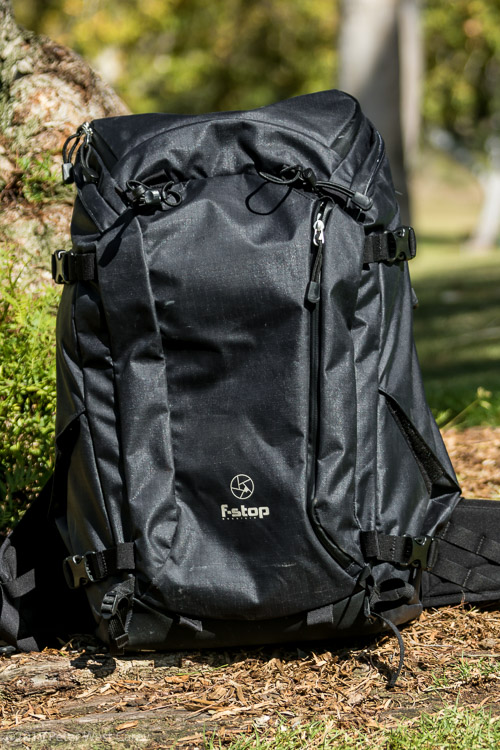
PWC-Lotus2015-0622-0001Rather than run down the long list of the Lotus Backpack’s features, I’m going to point you to f-stop’s webpage which has far more complete specs. To sum up this pack; it is built for the serious outdoor photographer who wants an all-weather backpack for their camera. They don’t want to spend all weekend out in nature (f-stop has larger packs for that) and they will be carrying a camera, maybe two, a few lenses and a flash, plus food and clothes.

Let’s dive right into what works and what doesn’t with this backpack.

The Good – F-Stop Gear Lotus Backpack

Weather and sand protected

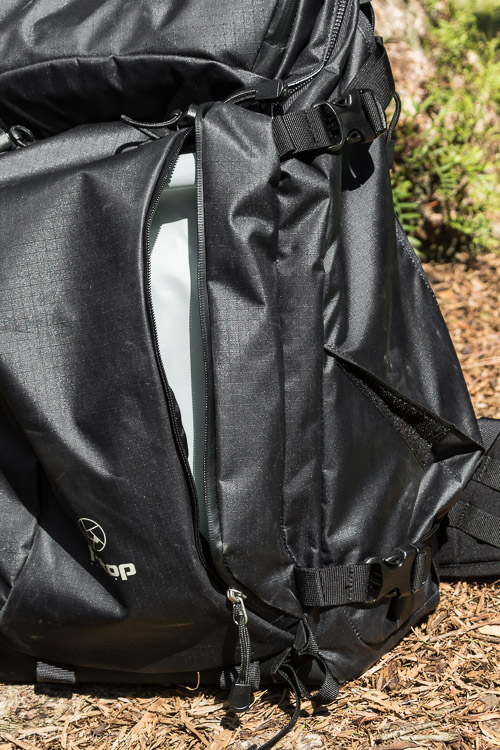
The Mountain Series from f-stop is all about getting into the elements and keeping your photography gear safe. The water resistant fabric sheds downpours but also helps to keep other elements off your gear. It’s not entirely waterproof as the back access panel is foam and nylon, so I wouldn’t use this pack as a primary on rafting trips. But for trekking the backcountry and scaling peaks, it is nice to not have to deal with a separate pack cover.
PWC-Lotus2015-0622-0024

The thicker hide of this pack gives it some heft, but a lot of protection as well.

Easy, big zippers and it holds a medium sloped ICU

I have a couple of other f-stop packs and I can say without a doubt that the large zippers for the back access panel, and top access are an improvement. They work well with one hand, which is important while handling gear, and they round the corners with ease.
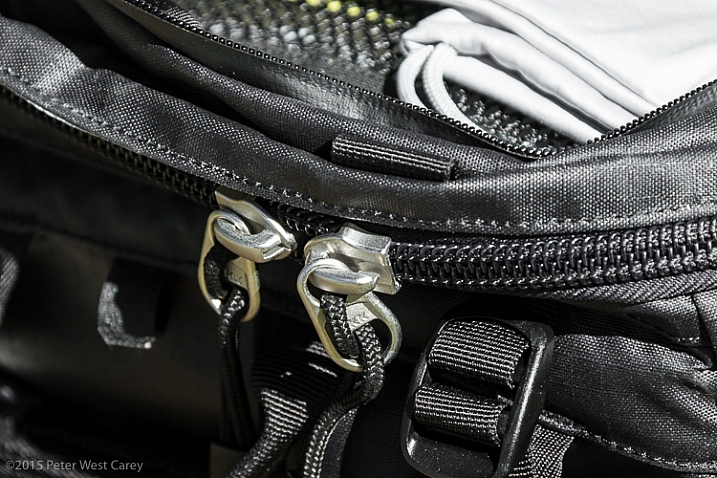
PWC-Lotus2015-0622-0021

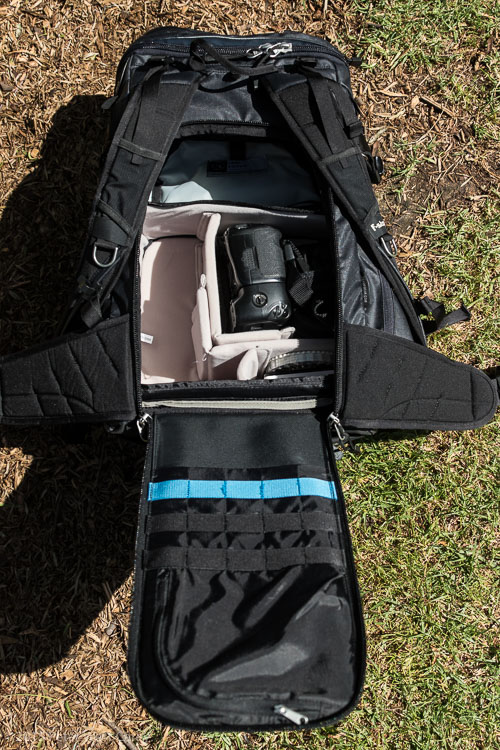
Behind one set of large zippers and the back panel is just enough room for the f-stop medium sized sloped ICU (Internal Camera Unit). F-stop uses interchangeable inserts to hold your camera gear, which I have found optimal for maximizing space inside the pack depending on how much gear I want to bring. Sometimes I travel light (camera and two lenses) and a small ICU works fine, leaving me more space inside the pack for food and hiking gear.
PWC-Lotus2015-0622-0016

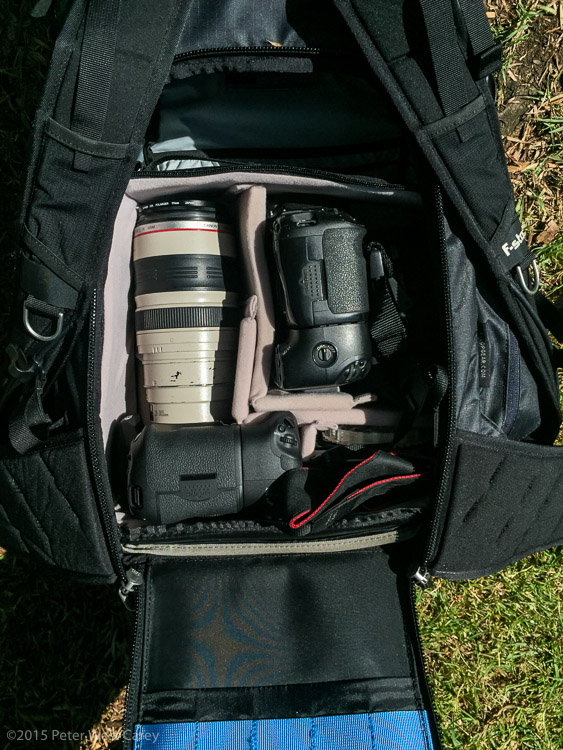
The sloped medium ICU will hold two DSLR bodies and two lenses, including lenses equivalent to a 70-200mm f/2.8 (pictured here is the Canon 28-300mm L lens, which is the same size as a Canon or Nikon 70-200mm f/2.8) and battery grips, laid on their side. This makes me quite happy.
PWC-Lotus2015-0622-9298-2

Canon 7D Mark II w/28-300mm L and Canon 7D w/10-22mm, both with power grips. Plus rooms for filters and batteries.

Super comfortable

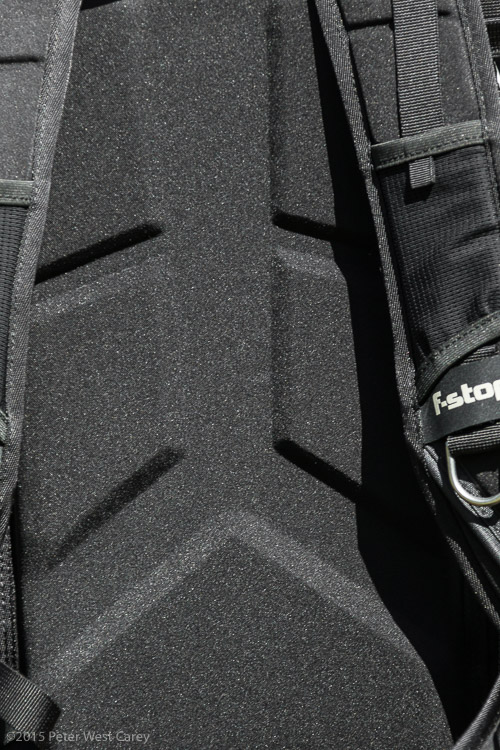
Every pack manufacturer tries to make their bags comfortable; some resort to gimmicks and odd designs. I thought f-stop was doing this with their back support and its multiple channels leading away from the center. It turns out, that center channel is just deep enough to brace your spine and add support to the rest of your back. The hip belt, while not robust (a plus for travel and fitting in overhead bins) gets the job done with enough fabric to take 100% of the pack weight while remaining comfortable. When overstuffed, the hip belts can be lacking, but keep the load under 40lbs/18kg and you should be fine.
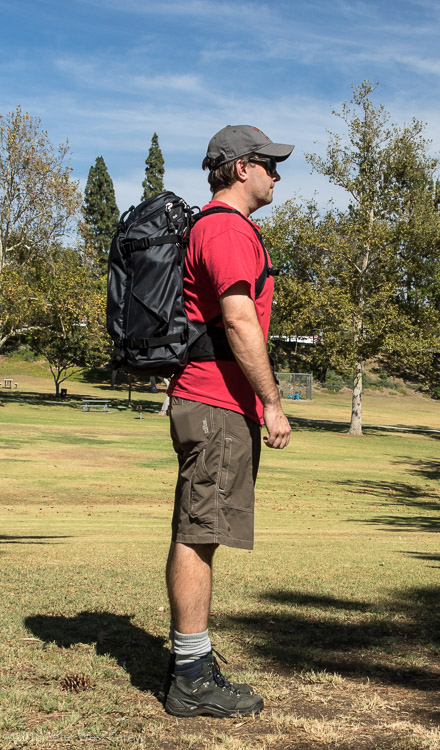
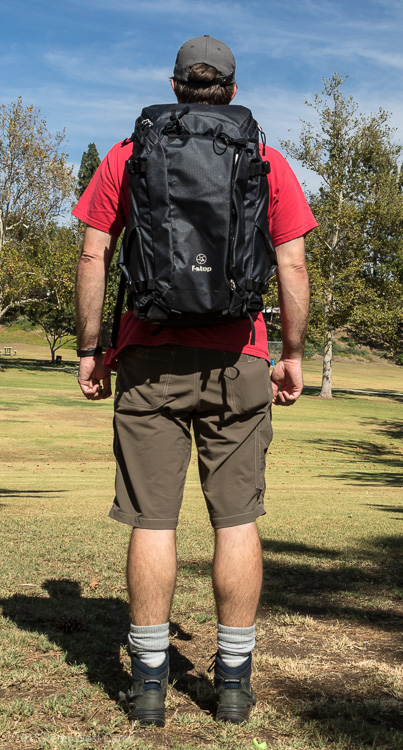
PWC-Lotus2015-0622-0033

PWC-Lotus2015-0622-0034

PWC-Lotus2015-0622-0009

Garbage pocket

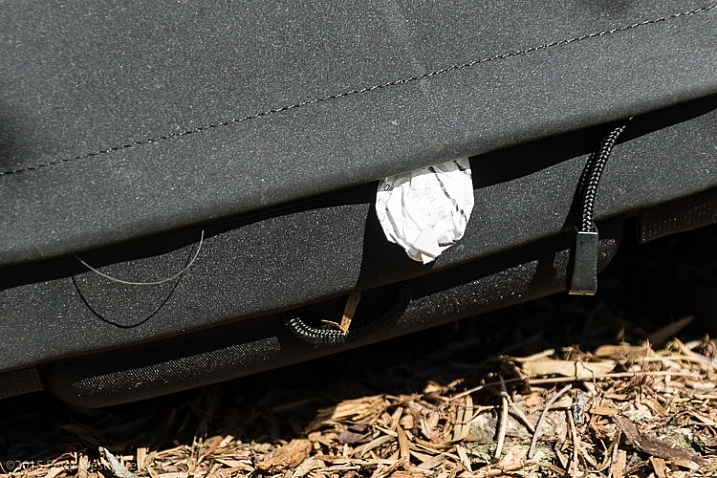
I’m one of those hikers who likes to keep nature clean and the bottom zippered area of the pack is perfect for garbage. It’s not easy to get into with the pack on and it could have other uses, but as it will constantly get crushed when the pack is set on the ground, I have chosen to take a clue from f-stop’s other packs and keep this area reserved for trash.
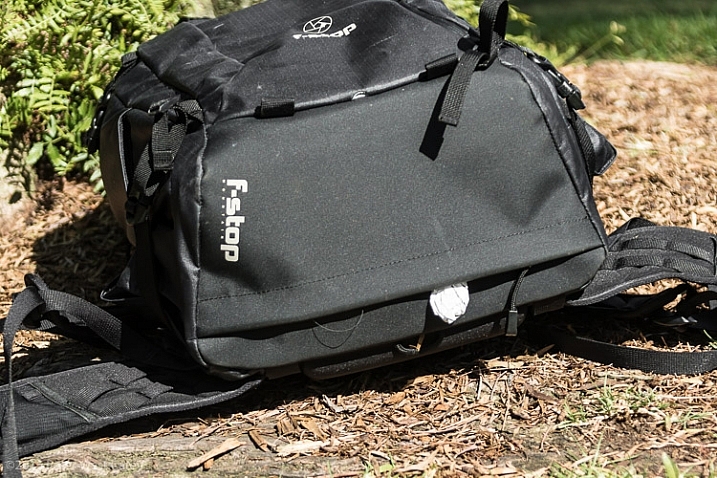
PWC-Lotus2015-0622-0014

PWC-Lotus2015-0622-0015

All the add-on space

F-stop makes sure you are not limited when their bags can’t contain all of your gear. The hipbelt has loops for an extra lens case or accessory pouch. On the back and sides are loops for f-stop’s Gate Keeper system. While company promo pictures show people strapping snowboards and skis in these location, they also work great for tripods, hiking poles and a wet raincoat.

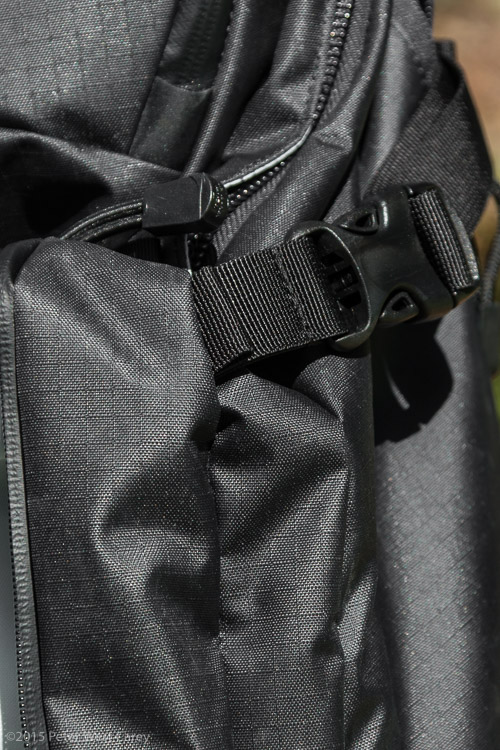
PWC-Lotus2015-0622-0005

PWC-Lotus2015-0622-0025

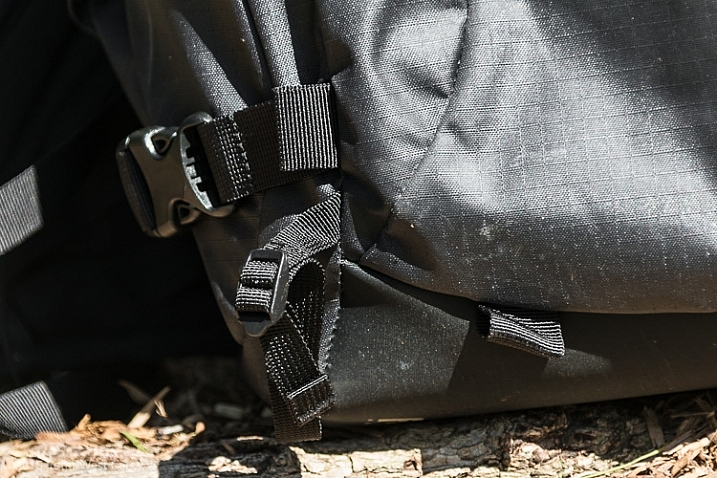
The small tab is for f-stop’s Gate Keeper add on straps

Ice axe loops

After I note you probably won’t strap a snowboard to the back of this pack, I do have a soft spot for adventure backpack companies who include ice axe loops. Seemingly eons ago I climbed mountains and used those loops regularly. Were I to scale another mountain, I would greatly appreciate their inclusion on this pack. You can kind of use them for trekking poles or a monopod as well.
PWC-Lotus2015-0622-0002

Just enough pockets, maybe one more though?

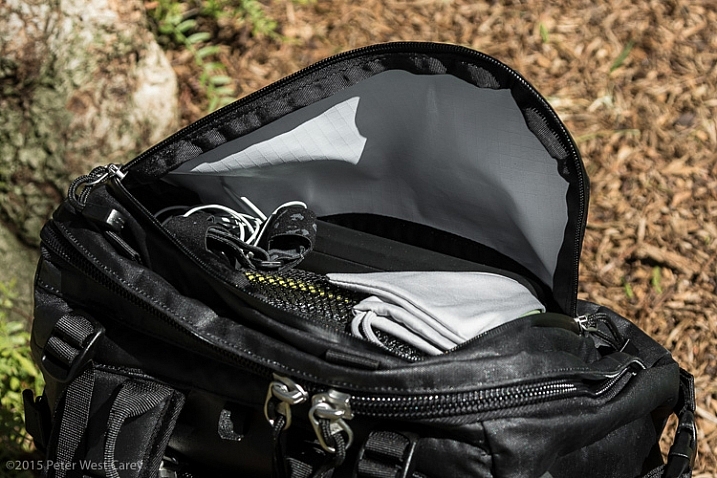
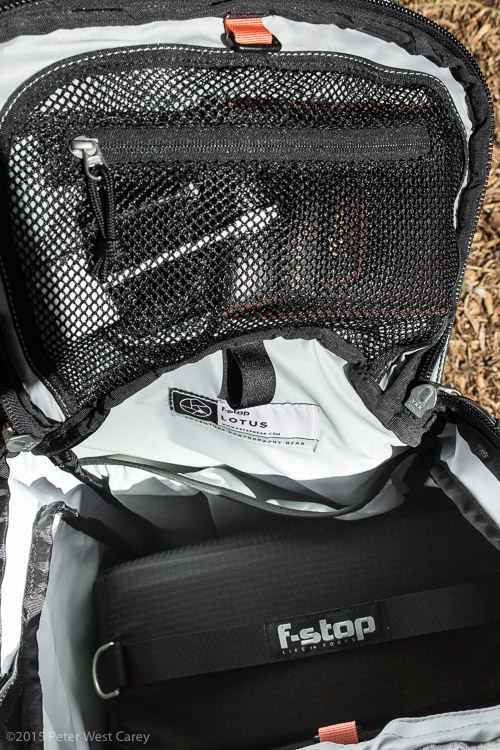
Inside and out, the Lotus has a fair number of pockets. I appreciate the divider in the top compartment and the pocket for either a tablet or a water bladder (complete with discrete opening in the top of the bag to route a drinking tube) on the inside of the pack. There is a small pocket on the inside of the main back panel that can hold just a filter or some cards. Under the top lid is another mesh pocket that holds a couple of filters at most.
PWC-Lotus2015-0622-0020

PWC-Lotus2015-0622-0029

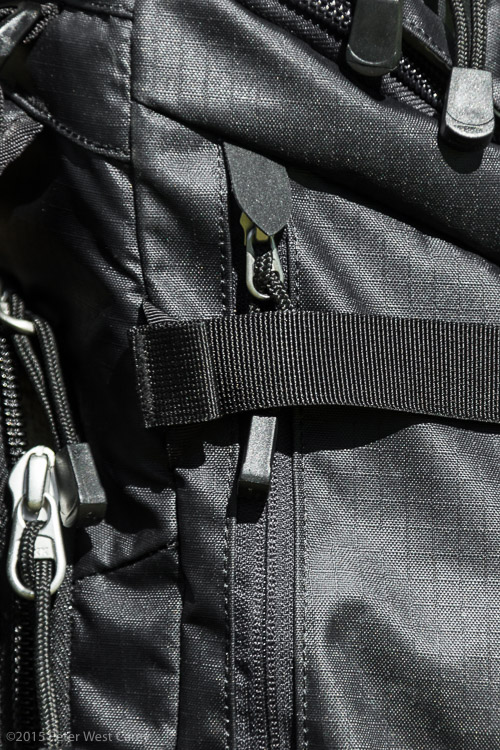
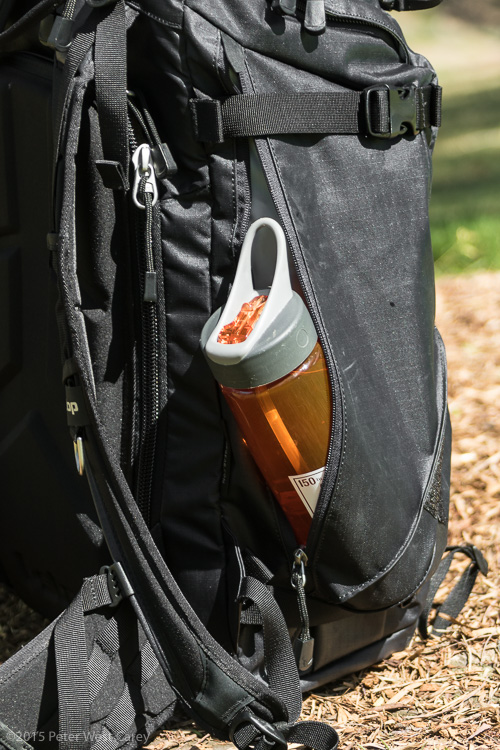
On the front of the bag is an ample, lengthy, zippered pocket great for maps or tablets or other long, thin items. It can hold a lightweight jacket as well. The sides have these odd little pockets. I see what I think they were trying to do here (economize space and streamline the sides so they don’t stick out) but it makes the pockets, well, odd. I can shove in a water bottle if the pack is not filled to capacity on the inside, so they work in that regard.
PWC-Lotus2015-0622-0024

PWC-Lotus2015-0622-0013

Not easy access, but it works.

For my liking I’d like to see at least one more pocket for items larger than a filter. I’m not sure where it would go, but I have grown accustom to enough pockets on my Mindshift Gear Rotation180 Pro and my f-stop Satori EXP that this pack certainly feels like a downsize in terms of pockets. Given the real estate and target market, that is understandable though.

Good range on the sternum strap

I love the sternum strap on this pack. I’m weird that way, but I also have a long torso and most packs have a sternum strap that ranges from choking me to just about choking me. The Lotus understands a longer torso and the sternum straps extend down further than most packs. As is often the case, the clip for the strap contains a whistle for signaling in the backcountry.
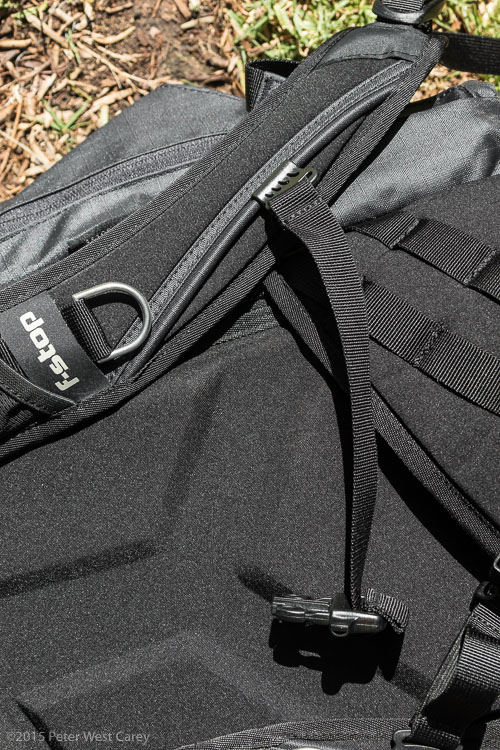
PWC-Lotus2015-0622-0032

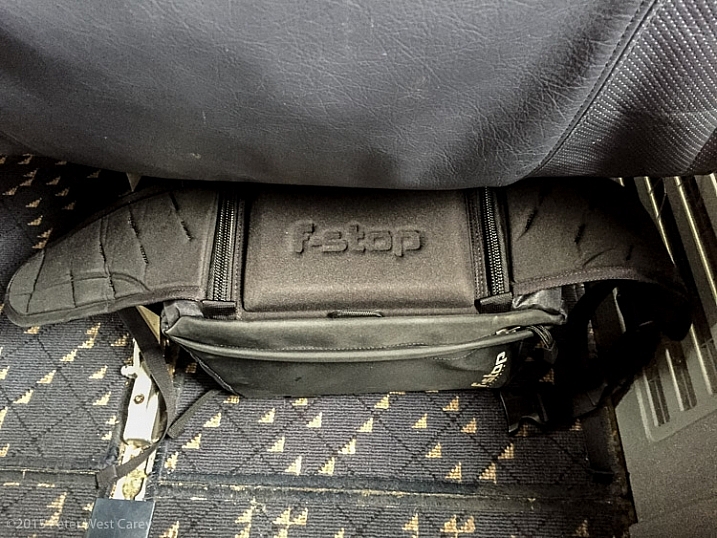
Fits under an airplane seat

Lastly, this pack fits under the seat of most average planes! Here it is pictured under a seat in a 737-800. Not much room for your feet (I could fit one foot on one side) but the nice part is being able to get to cameras, or other items, easily while flying. Even when fully packed it also fits comfortably in overhead bins.
PWC-Lotus2015-0603-8562

Loops, clips and sneaky pockets

The metal attachment loops on the shoulder straps are easy for clipping spare gear to, and there is a clip on the right shoulder strap to help with routing a hydration tube. There are also two mini-pockets on the hip belt for small items, like a pocket knife, spare memory card or chapstick.
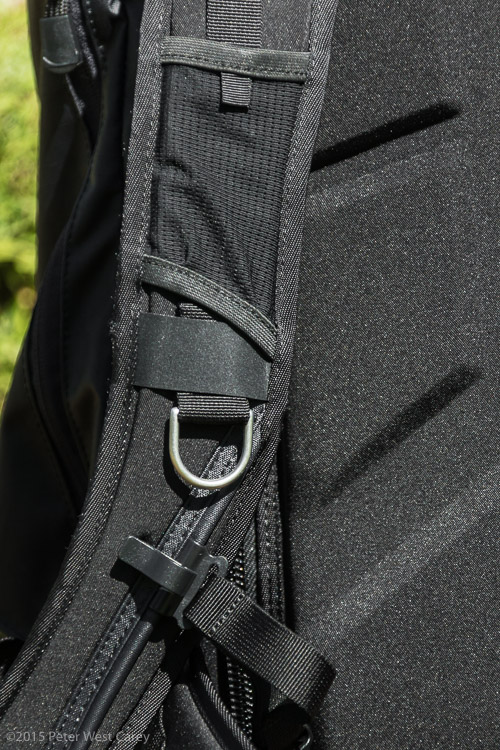
PWC-Lotus2015-0622-0008

What about the bad?

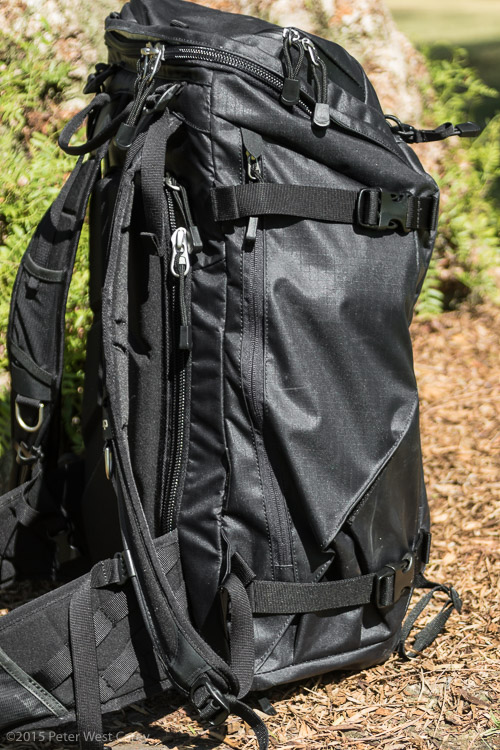
Side zippers get covered by compression straps

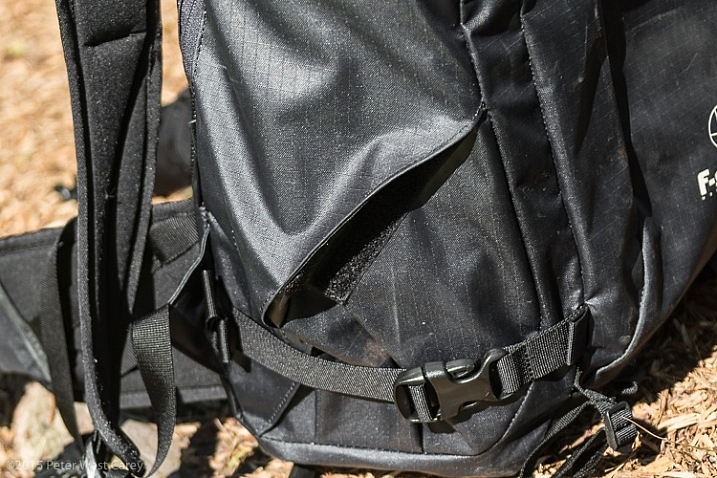
Those side pockets with the funky velcro gussets? The zippers for those pocket start at the top of the pack and are usually covered by the side compression straps. It’s a little annoyance but sometimes requires using both hands to get to a water bottle, or other items stored within.
PWC-Lotus2015-0622-0010

PWC-Lotus2015-0622-0012

PWC-Lotus2015-0622-0011

A little loud (crinkly)

I kept trying to place the sound of this pack. It makes a crinkle noise, as the material for the pack is stiffer for waterproofness. I finally figured out the sound is the same as that for a SCUBA BCD, the jacket you see divers wearing that helps keep them neutrally buoyant. If you plan to use this pack for silent ninja work, you might want to think again.

No water bottle, quick pockets

Getting a water bottle in and out of this pack is not a quick affair (see above). I enjoy the side mesh pocket of other packs for this purpose, and the Lotus is missing them. Again, this is probably to keep the bag streamlined. I might get a pouch to keep a bottle up front on the hip belt as an alternative.

Small zippers are a little stiff, certainly need two hands

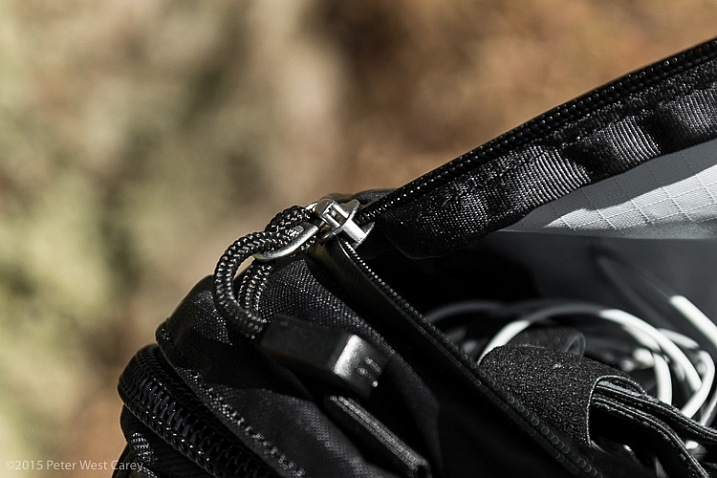
While the big zippers on the back panel are heaven, the smaller pocket zippers are tough, at least when the bag is new (ask me again in a year for an update). This is just the nature of the beast when wanting a zipper to keep out the elements, I suppose. I have to use two hands when opening the top most compartment, or jerk the zipper around multiple times. Same goes for the side zippers.
PWC-Lotus2015-0622-0022

Top pocket a little shallow

I don’t like the top pocket because of its shallowness, and tendency to allow items to spill out. There is a velcro patch and a net inside this pocket which does help keep valuables in place (sized perfectly for a Moleskine notebook or a passport) and there is a detachable clip for keys. But overall, I worry about things easily falling out of this pocket each time I open it.

Conclusion

F-stop knows what they are doing, and this bag fills the need for a smaller day pack that is protected against the elements. Some things aren’t as convenient as on other packs of this size (water bottle access, small zippers are stiff) but when compared to employing a pack cover and the trouble that brings, it is a fair tradeoff. I’m 6’1″ and I loved how well the bag is sized for my torso; how well it stuck with me as I climbed over rocks or dashed through the airport.

If you want a day pack where you don’t have to worry about the weather ahead, and you desire hours of comfort while traversing mountain ridges, the f-stop Lotus is worth a look. With its interchangeable, padded camera carriers and room for the 10 essentials, this bag ensures you and your gear will get out there to get the shot in comfort and style.

Disclaimer: f-stop furnished me with a test model for this review which I was allowed to keep. The opinions above are entirely my own and they know I will call them out if their gear stinks. I don’t want any of our readers to pick a bad camera bag.

googletag.cmd.push(function() {
tablet_slots.push( googletag.defineSlot( “/1005424/_dPSv4_tab-all-article-bottom_(300×250)”, [300, 250], “pb-ad-78623” ).addService( googletag.pubads() ) ); } );

googletag.cmd.push(function() {
mobile_slots.push( googletag.defineSlot( “/1005424/_dPSv4_mob-all-article-bottom_(300×250)”, [300, 250], “pb-ad-78158” ).addService( googletag.pubads() ) ); } );

The post Product Review: F-Stop Gear Lotus Backpack by Peter West Carey appeared first on Digital Photography School.


Digital Photography School
 
Comments Off on Product Review: F-Stop Gear Lotus Backpack

Posted in Photography


Sony Cyber-shot DSC-RX100 IV first impressions review posted

13 Jul

The fourth iteration of Sony’s Cyber-shot RX100 series brings a host of high-speed features from super slow-mo movies to 4K video with virtually no rolling shutter. It all stems from the RX100 IV’s 20MP stacked CMOS sensor and the additional room for high speed circuitry that the design allows. Our full review is well under way; for now take a look at the first installment. Read more

Articles: Digital Photography Review (dpreview.com)

 
Comments Off on Sony Cyber-shot DSC-RX100 IV first impressions review posted

Posted in Uncategorized


G whiz: Panasonic Lumix DMC-G7 review posted

06 Jul

Panasonic’s newest DSLR-styled mirrorless camera is the Panasonic Lumix G7, offering a 16MP Four Thirds sensor capable of 4K video recording. It boasts an improved autofocus system, 2.36 million-dot EVF and a fully articulated 3″ 1.04 million-dot touch-sensitive LCD. It’s a strong feature set on paper, but how does it perform in real-world and studio testing? Read more

Articles: Digital Photography Review (dpreview.com)

 
Comments Off on G whiz: Panasonic Lumix DMC-G7 review posted

Posted in Uncategorized


Quick Review: Photographers.pro

03 Jul

Many services exist that allow non-developers to create their own websites without too much hassle, but only a handful cater specifically to photographers. The service Photographers.pro aims to stand out by offering an all-inclusive package for photographers that provides a website (including a custom domain address and email) for a yearly fee of $ 70. Does it distinguish itself from other options available to photographers? We recently took it for a spin to find out. Read more

Articles: Digital Photography Review (dpreview.com)

 
Comments Off on Quick Review: Photographers.pro

Posted in Uncategorized


Week in review: Lights in the sky

26 Jun

Mother Nature put on a show for us this week when the Northern Lights dipped down into our part of the country. But around here it’s been fireworks for the past couple of weeks, with plenty of new product introductions and exciting review samples rolling in the door. Let’s reflect, shall we? Read more

Articles: Digital Photography Review (dpreview.com)

 
Comments Off on Week in review: Lights in the sky

Posted in Uncategorized


Eye for an ‘i’: Canon EOS Rebel T6i review posted

23 Jun

The Canon EOS Rebel T6i (750D) bears quite the resemblance to its Rebel T6s (760D) sibling. It’s essentially the same model, down to the 24.2MP APS-C sensor and 19-point AF module. What it doesn’t offer are the higher-end controls of the T6s, including a top-plate status LCD. Does the Rebel T6i hit all the right notes for a beginning photographer? Read more

Articles: Digital Photography Review (dpreview.com)

 
Comments Off on Eye for an ‘i’: Canon EOS Rebel T6i review posted

Posted in Uncategorized


Camera Bag Review – Miggo Agua

18 Jun
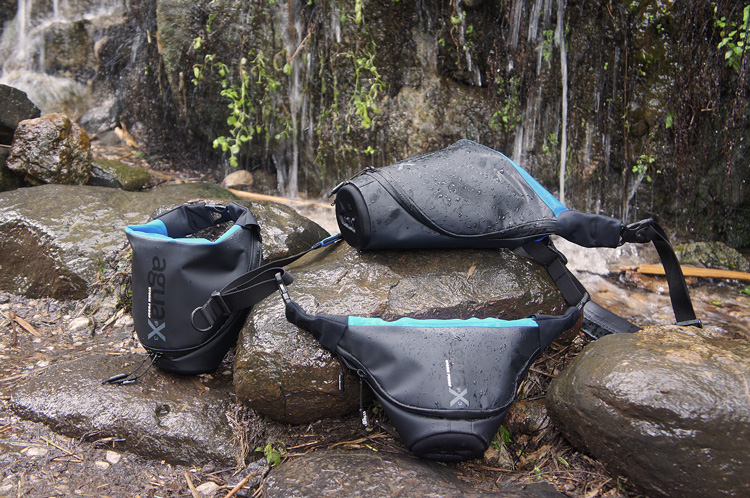
Miggo Agua Stormproof Holster SLR 45 MAIN

Image courtesy Miggo

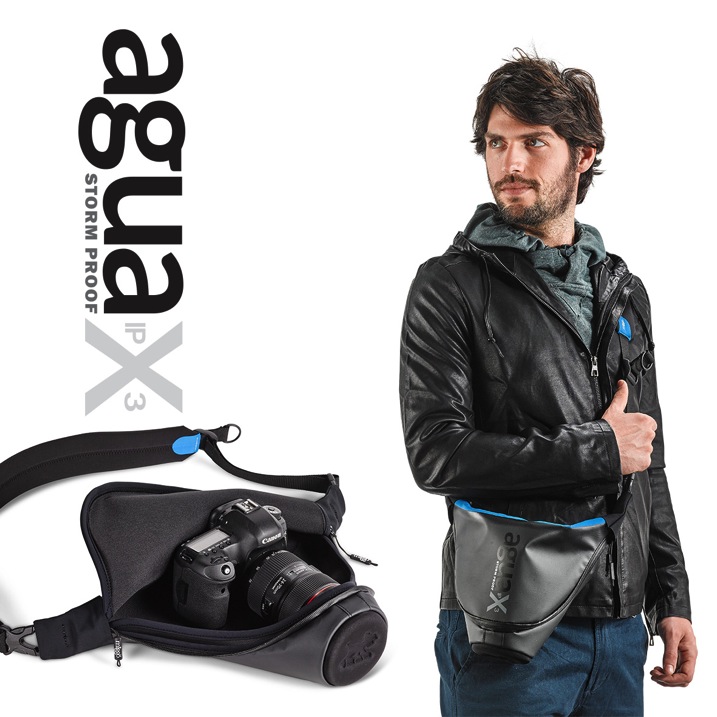
As the Editor here at dPS I don’t usually do gear reviews here any more, but Miggo sent me a beta version of their new Agua bag to try out so here are my thoughts.

Miggo Agua Features

Directly from their product brochure, here are some of the main features of this bag:

  • Comes in three sizes from large SLR down to small for mirrorless cameras.
  • Storm-proof: water, sand, wind, snow, it keeps it all out and your camera safe from the elements.
  • Quick-draw ability (more on my thoughts about that later)
  • QUick-adjusting padded strap
  • Dual-use strap: connect to the bag or to your camera
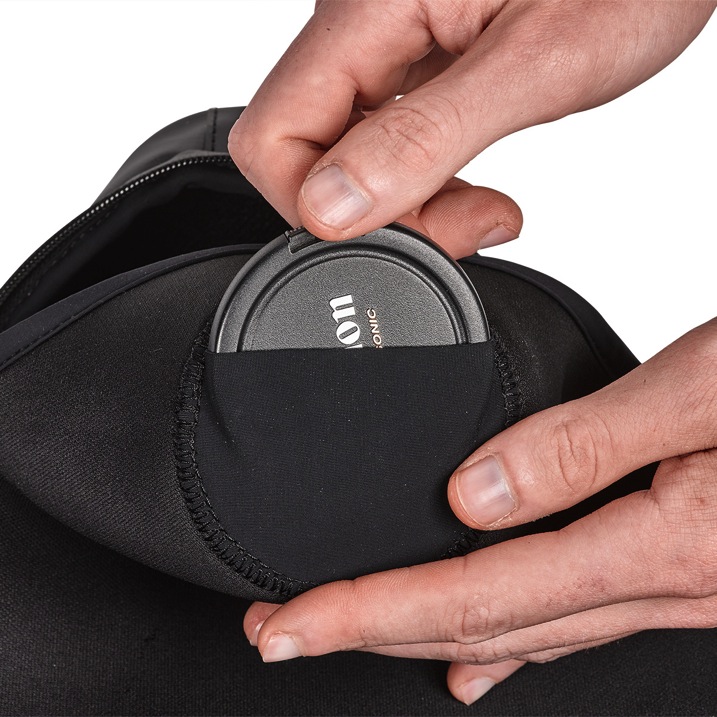
  • Lens cap inner pocket (never lose your cap again)
  • Thermo-forming front lens protector – put your camera in the bag without the cap on and it it still protected
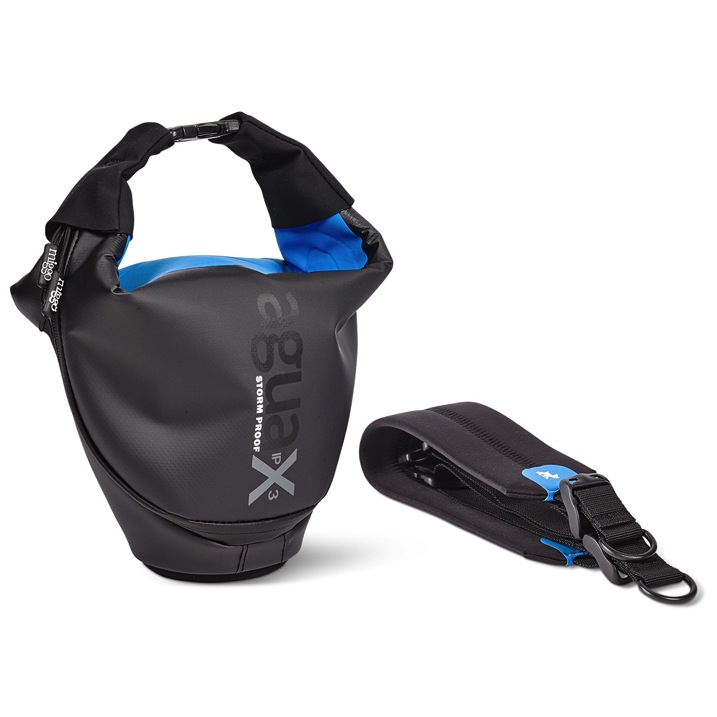
Miggo agua bag and strap

Image courtesy Miggo

Miggo agua lens cover pocket

Image courtesy Miggo

Is it really waterproof?

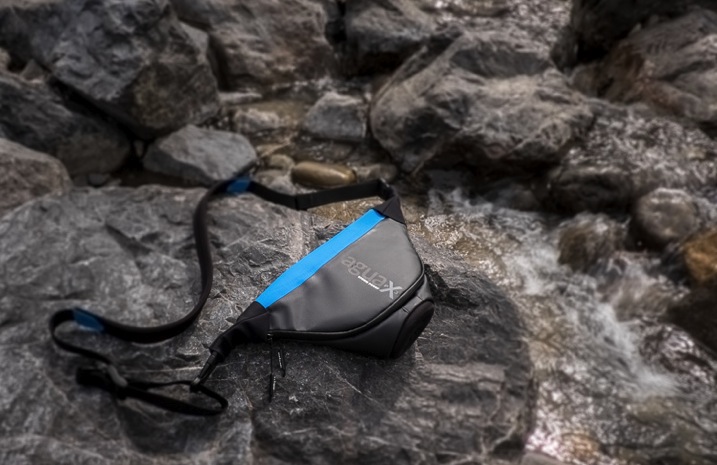
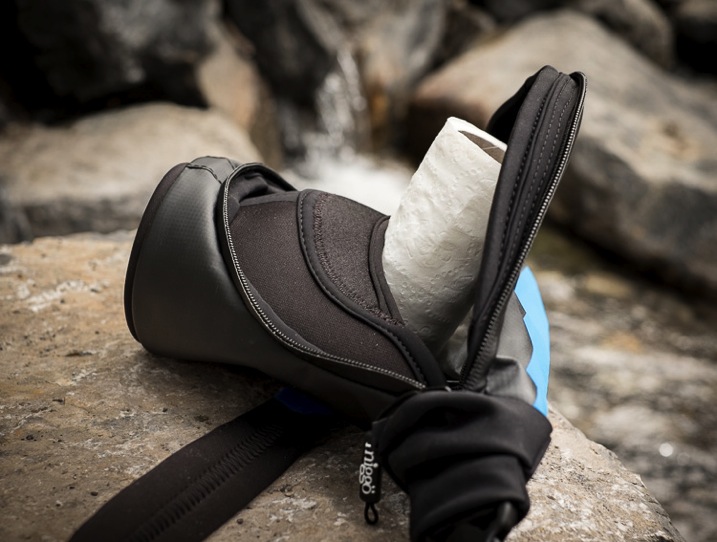
I wanted to challenge their claims that it is storm and waterproof but not risk my camera just in case. So I decided to use a roll of toilet paper, tucked inside the bag to test its ability to stay watertight. As I was relaxing in the Canadian Rocky mountains last week I took it with me and went off in search of a stream. I decided this one would do nicely – it had nobody around to watch me and think I was a complete weirdo.

Miggo Agua review 750px 03

Stream I found to test the waterproof claims for this bag.

So I borrowed the tissue from my hotel bathroom and stuffed it inside the bag.

Miggo Agua review 750px 15

Test subject – hotel toilet tissue.

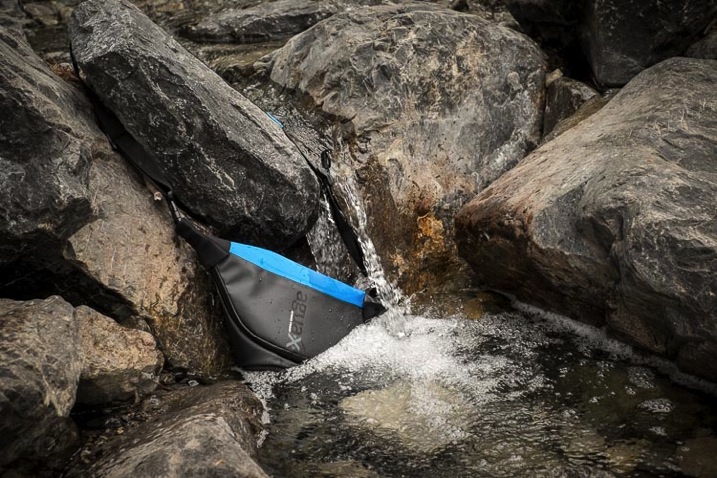
Zipped it up and plunged it fully into the stream. First thing I noticed is that the zippers are a bit stiff and sticky. Could be a symptom of being a beta version, perhaps something they are working on for the final release.

Miggo Agua review 750px 16

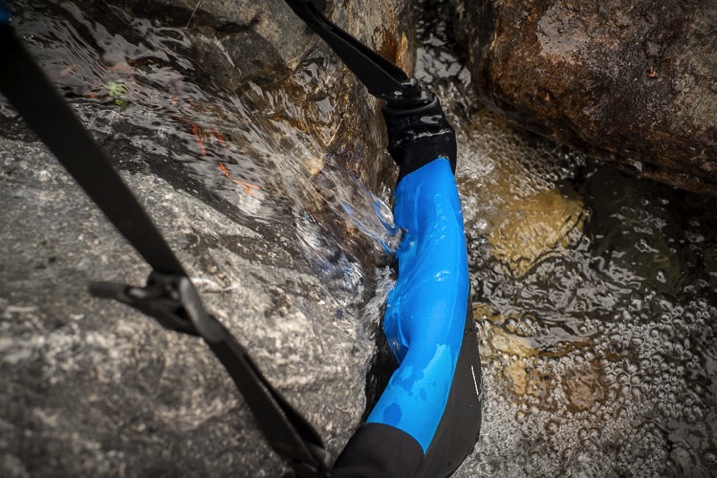
I put the bag right into the running water.

Miggo Agua review 750px 17

I moved it around to cover all areas of the bag, and left it there for a couple minutes.

So did it hold true to its claims? Did the little Miggo Agua bag keep the paper dry? Watch this little video I made and find out!

How did the bag handle?

Okay the next thing I tested was how comfortable and usable is the bag. They had sent me the mirrorless size so I put my Fuji X-T1 inside with the standard 18-135mm lens that comes with that rig. It did not fit! I removed the lens hood, and took my tripod insert off the bottom of the camera and still it did not fit. Hmmm . . .

Miggo Agua review 750px 08

The bag would not close with my Fuji X-T1 with 18-135mm lens attached (no lens hood).

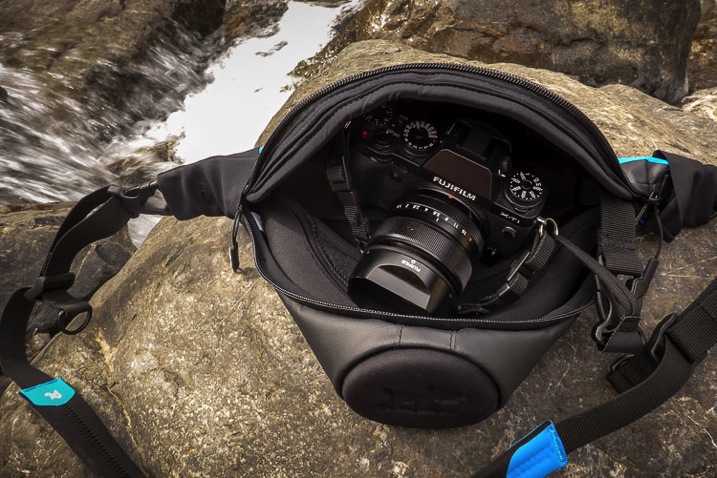
I had to switch lenses to my 35mm f/1.4 which is much more compact and finally it fit inside the bag.

Miggo Agua review 750px 09

Had to resort to the smaller 35mm lens to give this a go.

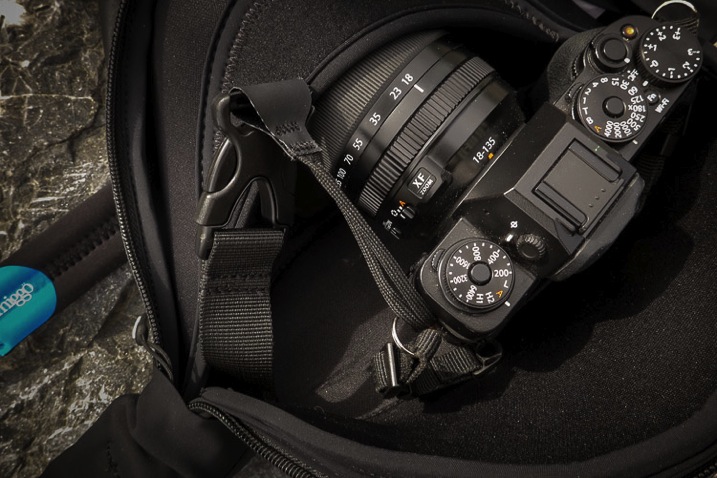
Attaching the camera to the little quick-draw thing was a bit finicky and a bit annoying. I already have my regular camera strap in the o-rings attached to the camera. To get it to work with the Miggo I had to also add one of their straps as well. You can see how it goes on and clips inside the bag in the image below.

Miggo Agua review 750px 06

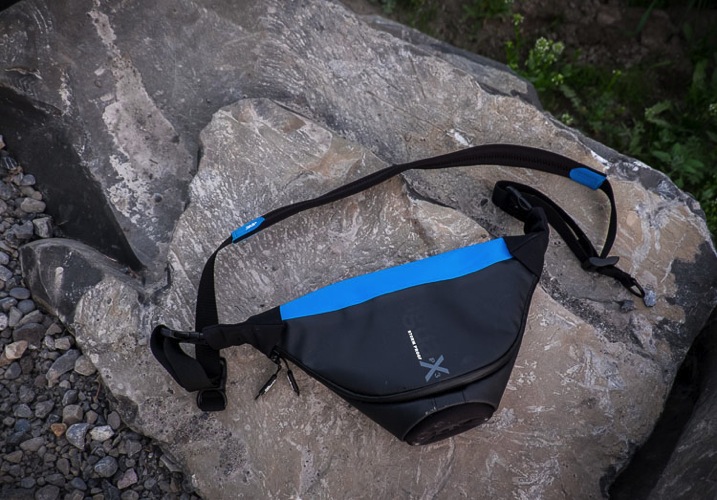
The camera attaches only to the left side of the bag via this strap and buckle.

It only attaches on one side of the camera (left), then tucks inside the bag. I found using it in this manner was a bit cumbersome actually. I couldn’t leave the bag undone or the camera would pop out (not good), so I was forced to zip it up after each shot. Once again the sticky zipper was a bit annoying as it took two hands to do it up and undo it each time.

I found the little cloth strap that attaches to the camera bit thin too. I find that with most camera straps there is wear and tear and the straps start to get frayed and worn through by rubbing on the o-ring and the camera itself. I could see this one getting worn through fairly quickly, but then again maybe not because it’s always inside the bag.

Miggo Agua review 750px 12

Notice how the bag doesn’t really bend? It’s very stiff.

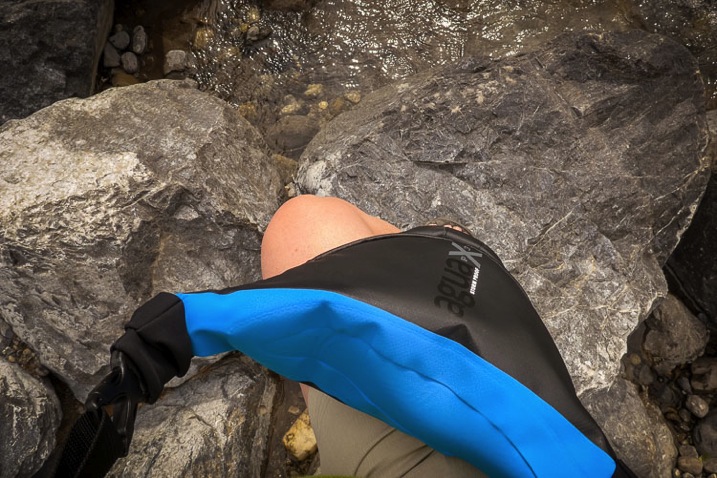
Overall I found the bag a bit crunchy. The fabric is very sturdy but a bit inflexible, it doesn’t mould to the body or bend much at all. I didn’t hike around with it all day but could see it rubbing if one were wearing shorts.

Size

I already mentioned that my Fuji didn’t fit inside the size designed for mirrorless cameras – perhaps I’d need to go a size up, but that would be good to know before you buy it. I also found that I had to carry a second bag with me because there is no room inside the Miggo Agua for anything other than one camera and lens attached. Nothing!

Miggo Agua review 750px 19

Bag size comparison for reference.

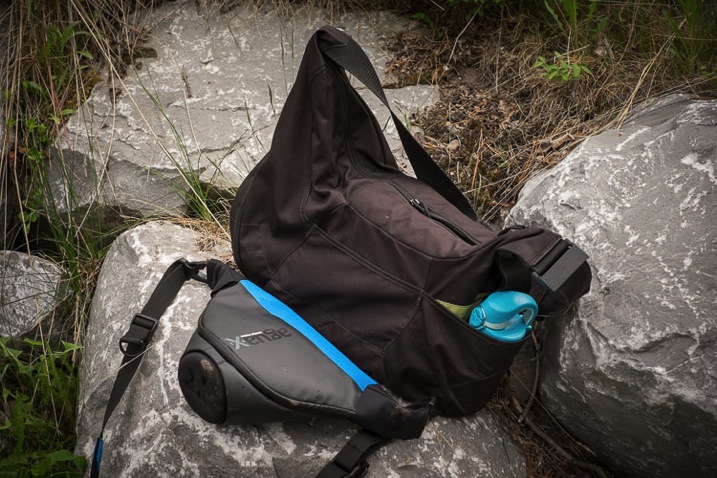
Above you see the size comparison to my LowePro Passport Sling bag, which I often use as a small day bag. It holds two lenses, batteries, a water bottle (as you can see in the photo), and personal items like a jacket, book, etc.

I would have loved to see an extra pocket for a spare battery or memory card, maybe even one small lens. As it is it’s pretty limiting.

Construction and build

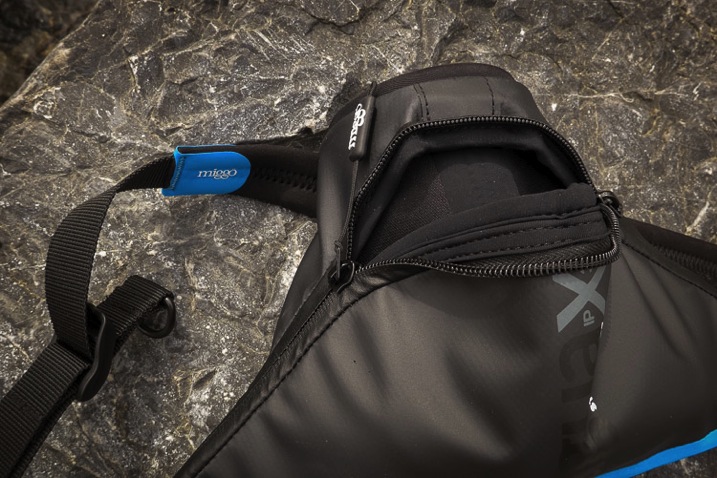
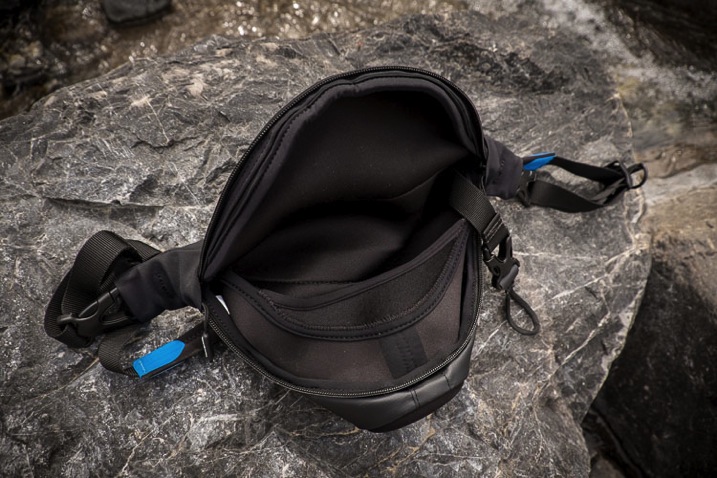
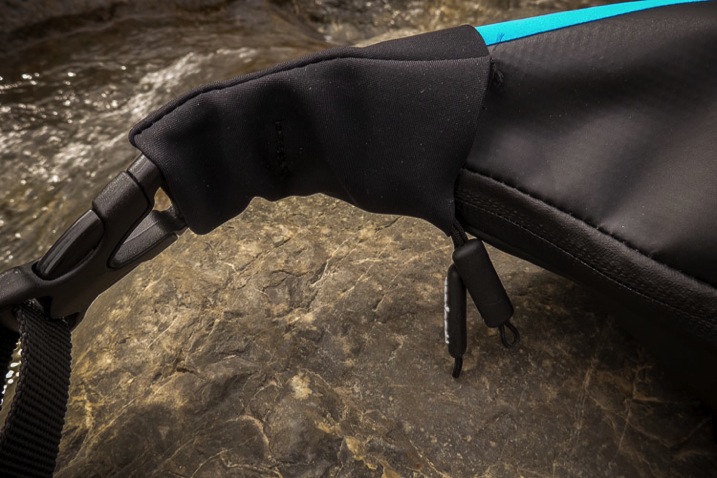
No beefs here with construction and build, it is solidly made. The inside is double padded, the zippers tuck up under little flaps to keep the bag waterproof and the bottom is extra protected so you can put your lens inside without a cap and not worry.

Miggo Agua review 750px 01

Miggo Agua review 750px 04

Miggo Agua review 750px 11

Pros and Cons

Pros of the Miggo Agua

  • It certainly does what it claims and keeps the water out.
  • It is compact.
  • The strap is comfortable and adjustable.
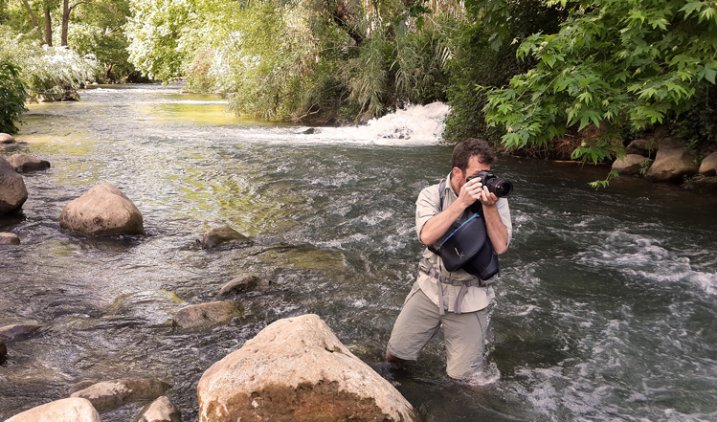
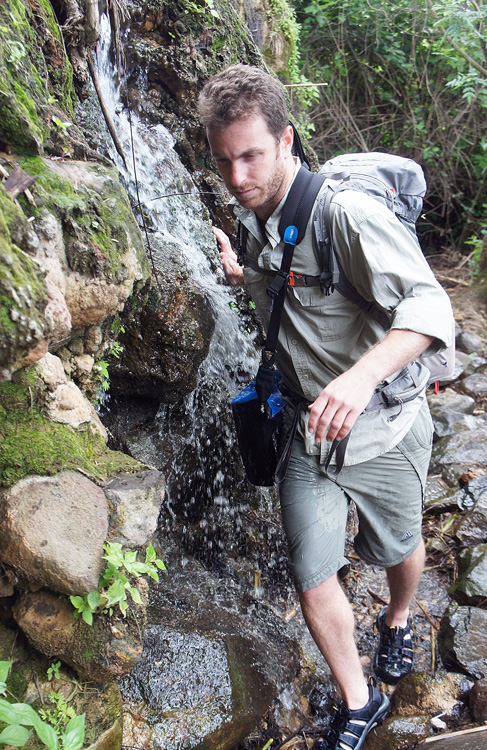
  • Great for adventurers that want to have their camera handy when hiking.
SONY DSC

Image courtesy of Miggo

miggo-river-man-shooting-wide-750px

Image courtesy of Miggo

Cons of the Agua

  • It isn’t big enough to fit all mirrorless cameras. Size description needs to be more clear or a list of which cameras fit into which size nicely available before you purchase a bag.
  • There is no room for anything else – just one camera and lens attached – so it’s application is limited.
  • The attachment of the camera inside the bag just feels “off”. The strap is thin and having it only attached to one side makes it feel unbalanced somehow.
  • The zipper is a bit stiff and sticky.
  • It’s nearly impossible to leave the camera out, it has to be tucked away and zipped up after every use or shot.

Who is this bag good for?

SONY DSC

Image courtesy of Miggo

I’m giving this bag 3.5 out of 5 stars, mostly because there are a few things that could use improvement and I’m guessing that because this is a prototype some of those bugs will be worked out before the final version is released.

I would recommend this bag if you are a backcountry hiker, like to kayak, do extreme sports, or spend a lot of time on the beach. This little bag will allow you to take your camera along and keep it safe in conditions you might otherwise leave it behind.

This bag is likely not for you if you just do mostly city shooting and tend not to push the boundaries of where you take your camera. Also if you like to drag around all your lenses and extra stuff you may find its size limits too much for you and another option like a rain cover on your existing bag may be all you need.

Learn more – get it early

You can find out more about the bag in this video from the manufacturer or check out their Kickstarter campaign (already funded!) and get in on getting one of these bags early.

googletag.cmd.push(function() {
tablet_slots.push( googletag.defineSlot( “/1005424/_dPSv4_tab-all-article-bottom_(300×250)”, [300, 250], “pb-ad-78623” ).addService( googletag.pubads() ) ); } );

googletag.cmd.push(function() {
mobile_slots.push( googletag.defineSlot( “/1005424/_dPSv4_mob-all-article-bottom_(300×250)”, [300, 250], “pb-ad-78158” ).addService( googletag.pubads() ) ); } );

The post Camera Bag Review – Miggo Agua by Darlene Hildebrandt appeared first on Digital Photography School.


Digital Photography School
 
Comments Off on Camera Bag Review – Miggo Agua

Posted in Photography