RSS
 

Posts Tagged ‘REVIEW’

Benchmark performance: Nikon D810 in-depth review

12 May

I’m pleased to announce that our in-depth review of the D810 is now published. A lot of you will be asking why it took so long. That’s a good question. There’s no single, simple answer, but believe us when we say that over the past two years there has rarely been a day when we have not been working on the D810 review in some way or other.

As we started to dig deeper and deeper into things like its class-leading dynamic range, its 3D tracking autofocus and numerous other details, we realized that not only did we have to revisit some of our existing testing methods, but that to properly test a camera like this we had a responsibility to create entire new tests.

You’ve seen the results of those new testing methods in our reviews of other major cameras like the Sony a7R II and Canon EOS 5DS/R. When we started looking into shutter-induced vibrations at certain shutter speeds for example, we had to devote a lot of time to tedious repeated testing of several cameras, not just the D810, to figure out what was going on. We did that because we don’t like guessing. Because when we suspect that a certain camera (or class of camera) displays a behavioral quirk that photographers should know about, we like to be able to prove it.

This process of evolving old tests and developing new ones is ongoing. Ironically, none of our recent reviews of major new flagship cameras could have been written to the standard that they were without some of the tests we developed when working on the D810.  We’re just very sorry that it took so long before we could show you our workings. 

And with that – we hope you enjoy the review!

Articles: Digital Photography Review (dpreview.com)

 
Comments Off on Benchmark performance: Nikon D810 in-depth review

Posted in Uncategorized


Sigma 30mm f/1.4 DC HSM Art Lens Review

08 May

The world of camera lenses can be separated into two main groups: zooms and primes. Prime lenses are those which have a fixed focal length, meaning that they don’t zoom in and out. Once upon a time there were only primes. With the advent of zoom lenses photographers no longer had to rely on just their feet in order to get achieve the desired composition. This versatility brought with it a trade-off. Zoom lenses have more moving parts and components, which adds weight and reduces the speed of the lens, along with sharpness. Optically, primes are generally much faster and sharper than zoom lenses but limit the shooter to only one focal length, which can be off-putting to some.

But times change. Today we see a new generation of photographers realizing the merits of shooting with prime lenses. This paradigm shift is reflected by lens manufacturers who are beginning to produce more prime lenses for a hungry new market.

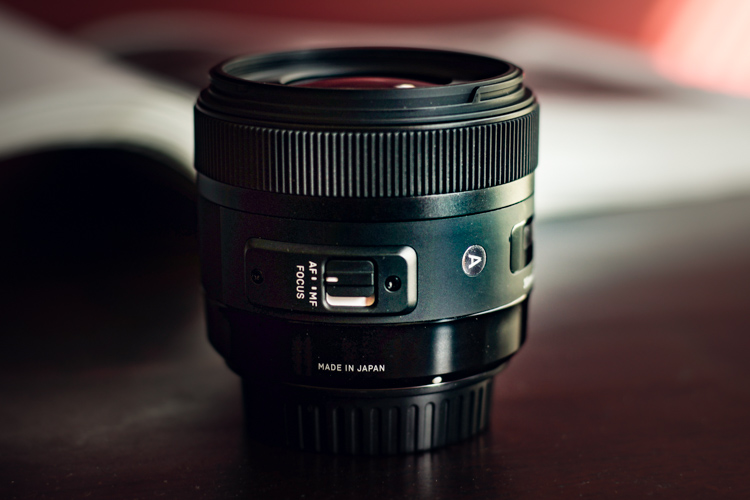
Sigma 2

The 30mm f/1.4 DC HSM Art lens from Sigma is among one of these that is meant be an all-purpose fast prime, for those needing a lens with excellent sharpness and great low light capabilities. I put the Sigma 30mm f/1.4 through its paces and have a feeling you will be well pleased.

Build Quality

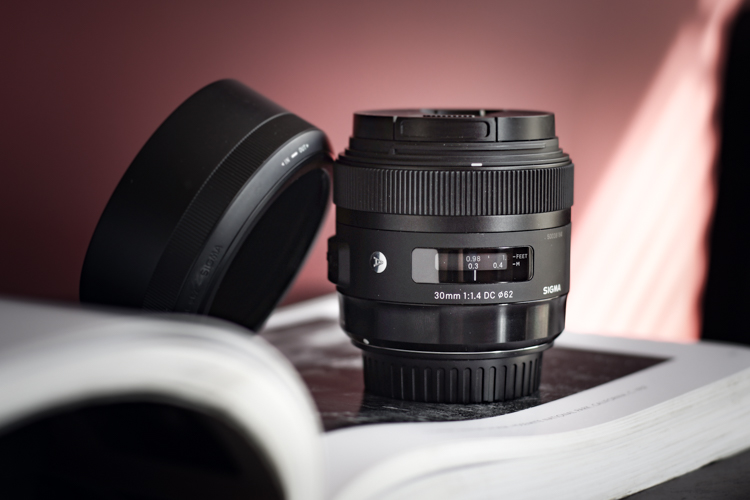
Sigma 4

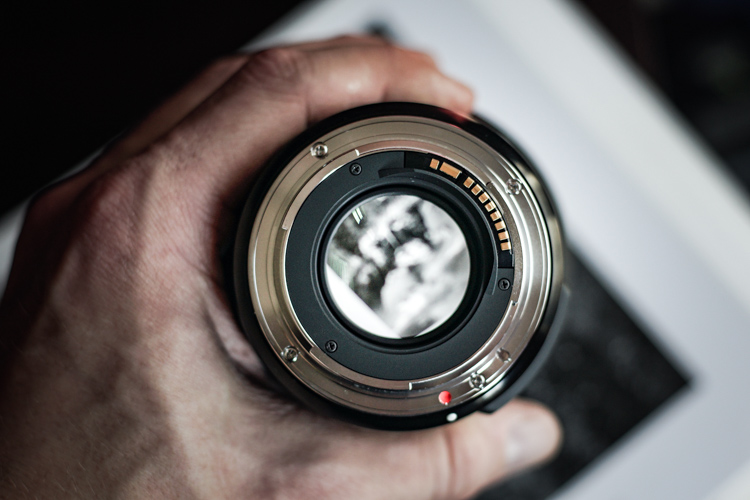
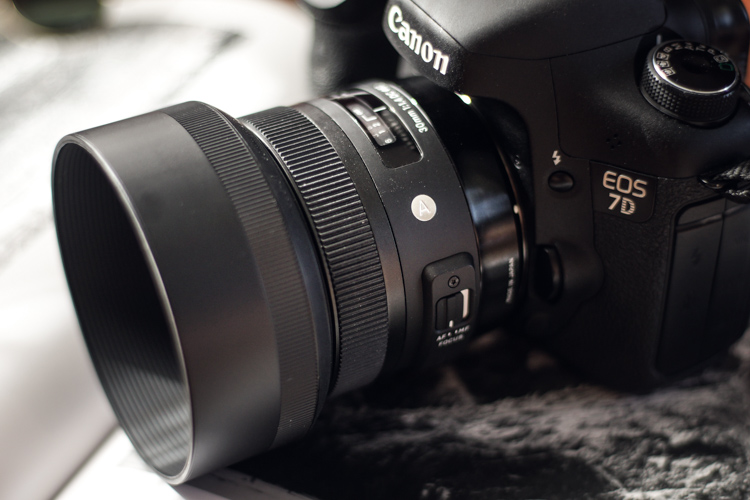
Being part of Sigma’s well regarded Art line of lenses, I expected the 30mm to be highly refined and well-built; it did not disappoint in this area. It’s manufactured from the same thermally stable composite (TSC) which is incredibly metallic in its heft and appearance. The entire lens looks very smooth and professional, with all markings and indicators being commendably well executed. The focusing ring has that perfect feel of silk when it’s turned. It moves very smoothly, being neither overly tight, nor too loose. The travel from minimum focus distance to infinity is just right, and it still leaves a lot of cushion for focusing accurately when in manual mode. The AF/Manual switch is ideally placed for no-look operation, and is very crisp when it is clicked from one to the other.

Sigma 5

Sigma 3

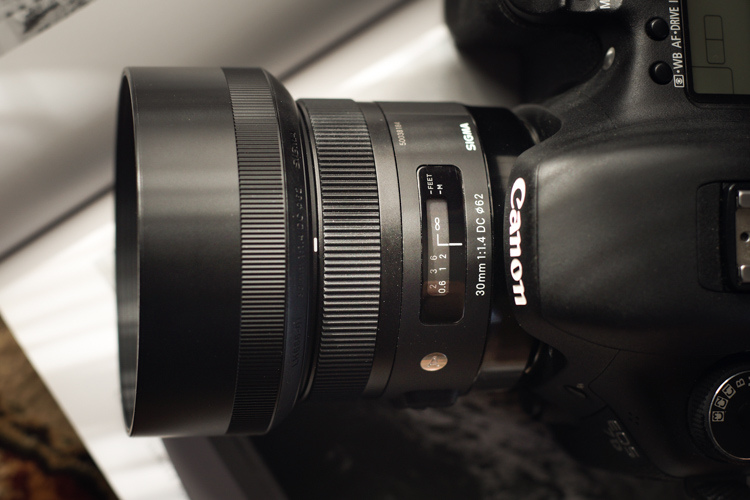
Included in the package is also a great looking lens hood which causes a bit of deception when attached because it makes the lens appear markedly larger than it actually is in reality. But it does a superb job of reducing the amount of contrast-robbing peripheral light from making its way to the lens’s front element. Overall, the quality of workmanship displayed in the 30mm is outstanding. It feels very well balanced when mounted to the camera (Canon 7D).

Sigma 1

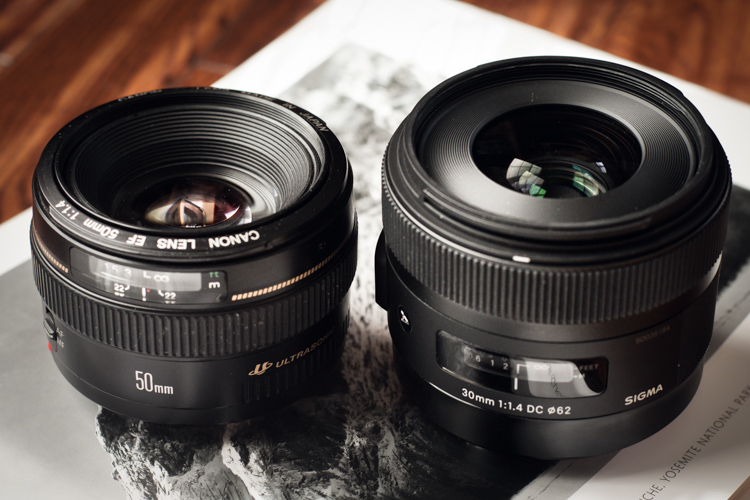
It leans towards the robust side in terms of weight for a normal (close to the naked eye’s field of view) prime lens at 15.3 ounces (434g), but it is by no means clunky or difficult to shoulder for long periods. Here we see the Sigma 30mm f/1.4 compared to another prime work horse, the Canon 50mm f/1.4.

Canon Sigma

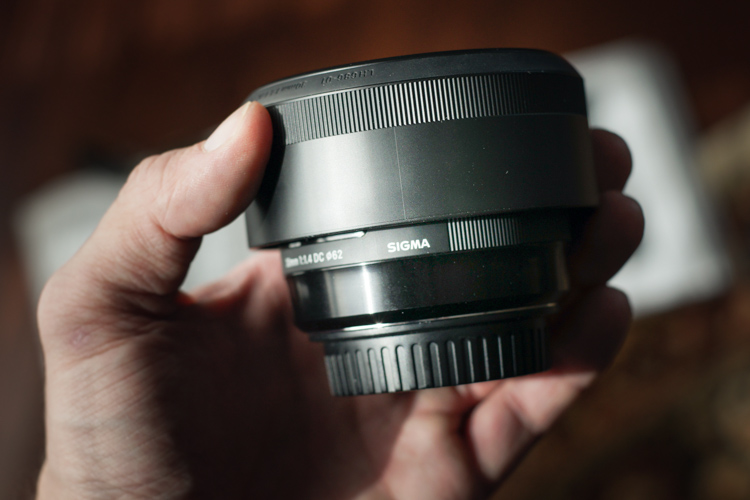
With the lens hood reversed for storage, it’s easy to see just how compact this lens really is in the hand.

Sigma in hand

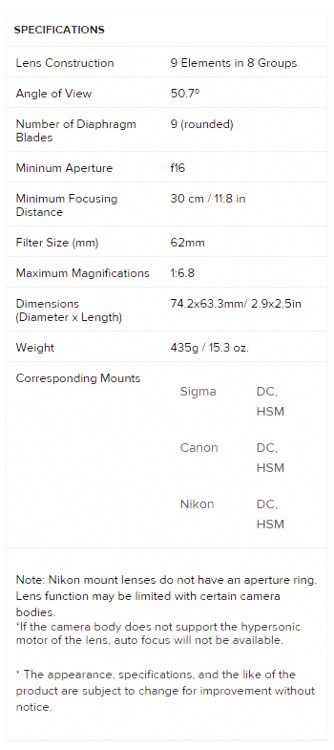
Here are the official lens specifications and element array provided via Sigma USA.

Sigma 30 Specs


Image Quality

The Sigma 30mm f/1.4 is quite the beast, photographically speaking. The 30mm focal range is very close to what could be considered wide angle, yet it shows no perceivable distortions at the corners. The bokeh is absolutely beautiful; the nine curved aperture blades produce an incredibly smooth, nearly dream-like, background blur when shooting at wide apertures. Some portraits today are being shot with alarmingly short focal lengths with very positive results. This lens would serve that purpose well, and offers richly vibrant colors across the entire aperture range. This great color rendition will make for a love at first sight situation with landscape photographers also. If you shoot a lot of nightscapes this lens will appeal to you as well. Of course the f/1.4 aperture capability makes for great low light work, but the coma was found to be very low likewise. This means all your great shots of the night sky will be produced clearly, with little distortion of those small points of starlight.

The autofocusing of the Sigma 30mm f/1.4 is also a point of praise. Focusing was very fast and accurate, and very quiet. It’s great to see a prime lens with AF that is on par with its other features. While manual focusing is always a good idea, the benefit of a high-performing autofocusing mechanism can’t be understated when shooting at the wide open apertures which this lens is capable of achieving.

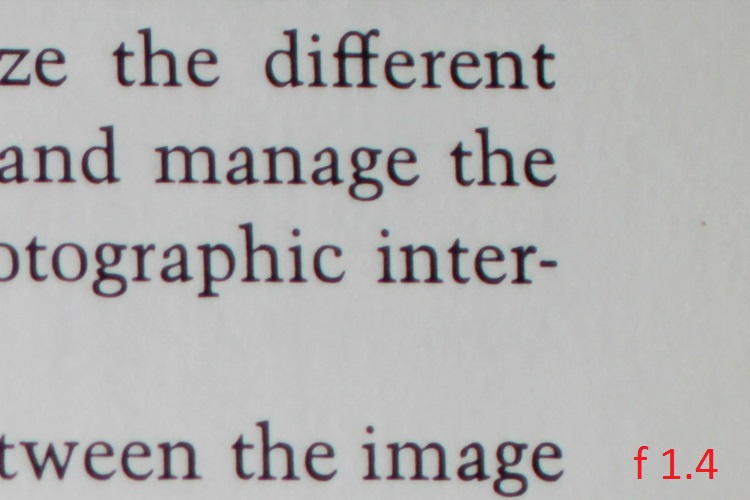
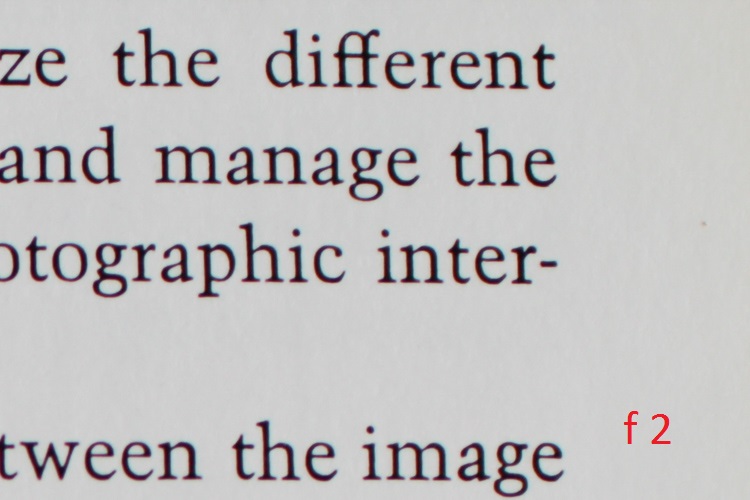
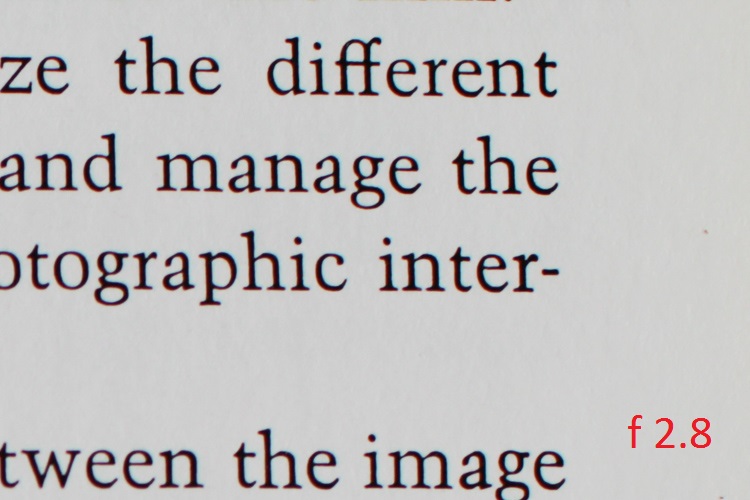
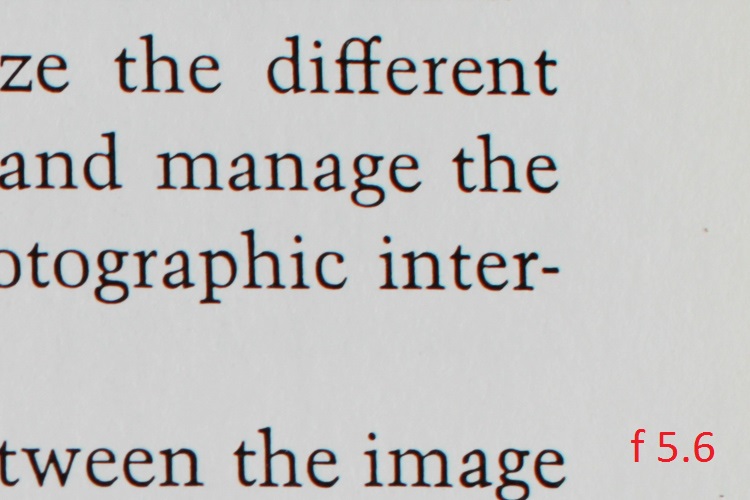
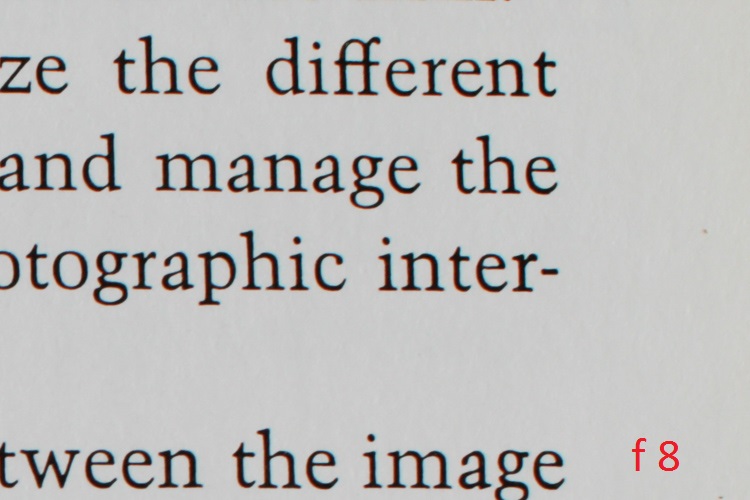
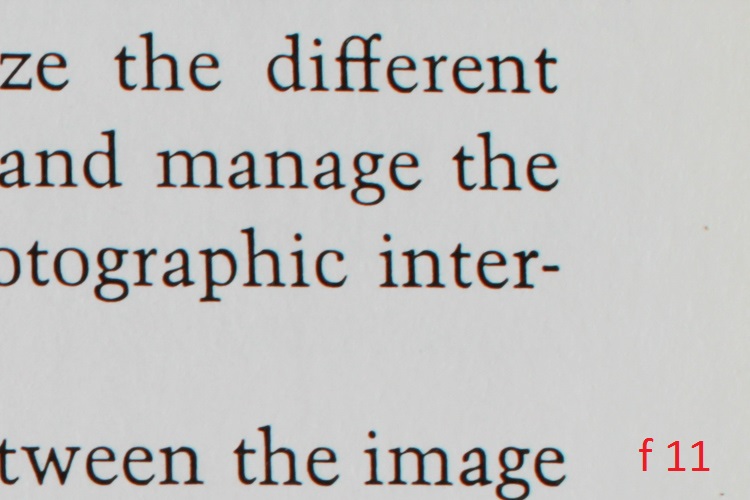
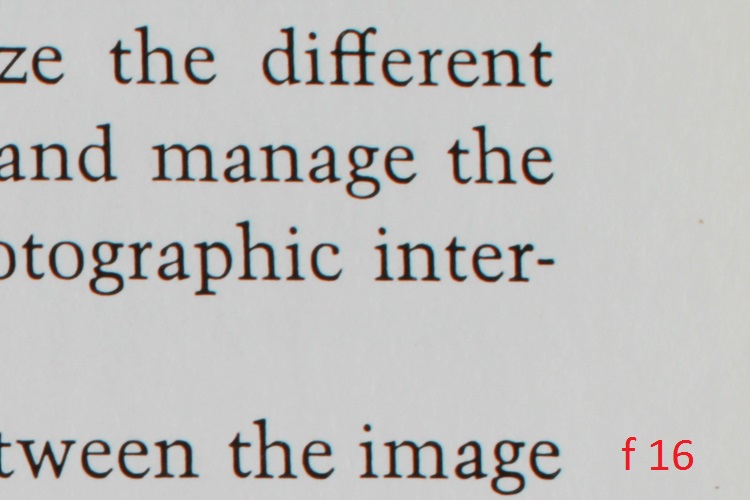
This brings us to one of the only two downsides thus far found in the 30mm; its sharpness at small and large apertures. It is certainly not uncommon to see a marginal reduction in sharpness when approaching minimum and maximum apertures, from even the most highly prized lenses. From f/2.2 through to f/11, the sharpness of this lens is wonderful. Anything smaller than f/11 or wider than f/2.2 however, saw a significant drop in overall sharpness in my tests. Happily though, that leaves an enormous range of possibilities for optimal image sharpness, and in my opinion, should not diminish the respect this lens deserves.

Here are some sample images to demonstrate the corner sharpness over a range of apertures from f/1.4 through to f/16. The first picture is for reference to the 1:1 magnification applied to the samples.

Corner 1 to 1

And now for the samples:

F 1 4

F 2

F 2 8


F 5 6

F 8

F 11

F 16

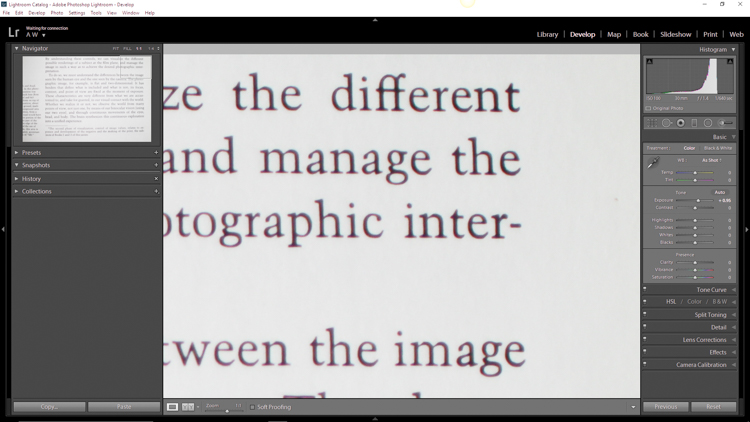
The other downside is relatively noticeable chromatic aberrations at wide apertures. Of course this is to be expected, but it bears mentioning nonetheless. For a lens of this quality the chromatic aberration is a little more than expected when the lens is wide open at f/1.4. These aberrations drop extremely quickly past f/1.8 and diminish completely around f/2.2.

Even at their most noticeable, Lightroom handled the fringing easily in post-processing. Much like the sharpness issue, for most shooters, the chromatic aberrations shouldn’t be a concern, or at the very least should be manageable.

The 30mm F1.4 DC HSM | Art is a terrific lens, despite any marginal concerns with sharpness and aberrations. It performs quite well across a wide range of situations, and will be a great addition to those looking for a low light prime lens with low distortion. Astro photographers will love it for its low coma and sweeping perspective, and landscapers will be drawn to its wonderful color rendition. Even street photographers would be elated to have this lens in their bag due to its incredible bokeh.

Here are a few real world sample images which were shot with the Sigma 30mm F1.4 DC HSM | Art lens, mounted to a Canon 7D, processed in Adobe Lightroom CC.

Sigma 30 Sample 1

Sigma 30 Sample 2

Sigma 30 Sample 3

Sigma 30 Sample 4

Sigma 30 Sample 5

Sigma 30 Sample 6

I would recommend this lens to virtually anyone who needs a sturdy low light prime lens. It fits a myriad of circumstances when high grade professional quality photographs are needed. When shooting at common apertures it is an incredible value for a prime lens at this price point.

googletag.cmd.push(function() {
tablet_slots.push( googletag.defineSlot( “/1005424/_dPSv4_tab-all-article-bottom_(300×250)”, [300, 250], “pb-ad-78623” ).addService( googletag.pubads() ) ); } );

googletag.cmd.push(function() {
mobile_slots.push( googletag.defineSlot( “/1005424/_dPSv4_mob-all-article-bottom_(300×250)”, [300, 250], “pb-ad-78158” ).addService( googletag.pubads() ) ); } );

The post Sigma 30mm f/1.4 DC HSM Art Lens Review by Adam Welch appeared first on Digital Photography School.


Digital Photography School

 
Comments Off on Sigma 30mm f/1.4 DC HSM Art Lens Review

Posted in Photography


Week in Review: The flagships are here! The flagships are here!

07 May

Week in Review: The flagships are here!

It’s been a busy week here as three high profile cameras have come sailing through our doors in (roughly) the past seven days: the Pentax K-1, the Canon EOS-1D X II and the Nikon D500. As a result, lots of studio work and samples made their way onto the site. And in an exciting plot twist, we actually had some decent weather! In early May! In Seattle! Let’s recap, shall we?

Week in Review: The K-1 impresses early

We waited a long time for the Pentax K-1 to arrive. And let’s not even start on how long Pentax shooters have been waiting for full-frame digital. Here at last, the K-1 has already impressed us in the studio. And we don’t have to wonder any longer what the camera’s Pixel Shift mode will be like – so far it’s nothing short of spectacular.

Week in Review: Nikon D500 on the town

Fate smiled upon Seattle last weekend and bestowed us with summer-like weather, which is by no means guaranteed on any day before July 4th around here. The Nikon D500 had already made its way through our preliminary round of studio tests so plenty of shooting out and about was in order for Nikon’s APS-C flagship, and that’s just what happened. 

Week in Review: Canon’s revamped sport shooter arrives

Completing the triple threat is Canon’s update to its full-frame sports shooter, the EOS-1D X II. And with a new 20.2MP sensor, improved 61-point AF system and 14 fps shooting with AF, it is a thing to behold. We’re just getting started and have plenty of fast-action shooting to do with the 1D X II, but for starters we took a look at its performance in our studio tests. In short, we saw a slight dip in high ISO performance compared to its rivals, but the 1D X II shows a marked improvement in dynamic range. Check out the full results for yourself.

Week in Review: Samyang throws an AF curveball

It was a quiet week in terms of new gear but Samyang surprised us with its first ever autofocus lenses: a 50mm F1.4 and 14mm F2.8. They’ll debut for Sony FE and no pricing has been made public yet, but we’re optimistic that this means more AF Samyang lenses are in the works.

Week in Review: Round ’em up

We rounded up the current crop of 1″ sensor long zoom compacts to help make the tough job of picking a camera a little easier. If you want something pocketable or want to shoot for the moon, you’ll find it in this group.

Week in Review: Sony on a winning streak

It’s pretty much a given that every camera maker is selling fewer cameras than they were in the past. Financial reports have tended to follow the same trend of bad news in recent years too, but Sony seems to have found a path through the darkness. In its latest financial year, the company’s imaging division posted some impressive gains in income, even with a decrease in sales.

Until Elon Musk can find a way to get average schmoes like us into orbit, this neat footage from a GoPro on a rocket might be as close as we get. The HERO4 took a ride on UP Aerospace Inc.’s SL-10 rocket and made a quick roundtrip return back to Earth with a NASA-designed capsule. 

Articles: Digital Photography Review (dpreview.com)

 
Comments Off on Week in Review: The flagships are here! The flagships are here!

Posted in Uncategorized


Two in one: LG G5 camera review

06 May

DPReview smartphone reviews are written with the needs of photographers in mind. We focus on camera features, performance, and image quality.

$ (document).ready(function() { SampleGalleryV2({“containerId”:”embeddedSampleGallery_4023333010″,”galleryId”:”4023333010″,”isEmbeddedWidget”:true,”standalone”:false,”selectedImageIndex”:0,”startInCommentsView”:false,”isMobile”:false}) });

The LG G5 succeeds last year’s G4 and is the first LG smartphone with a dual-camera setup. With an F1.8 aperture and optical image stabilization, the main 16MP module is very similar to the G4 in terms of specification and provides a 78-degree angle of view which is in line with most current high-end smartphone cameras.

But here’s where things get interesting: the second lens comes with an F2.4 aperture and 8MP sensor and captures a 135-degree super wide-angle image. In the camera app you can switch between lenses via a button, and when using the digital zoom the camera switches seamlessly between the two modules. As before, the autofocus is assisted by a laser that measures the subject distance.  

There is also an optional camera grip that should make the G5 particularly appealing to mobile photographers. The G5’s 2,800mAh battery is removable and slots into the device from the bottom. The latter clips away when a release button is pressed which allows you to attach a number of replaceable modules, one of which is the CAM Plus camera grip. It comes with an additional 1,200mAh of battery capacity and offers power, shutter, video and zoom buttons. It also lets you lock exposure and provides a more comfortable grip. We’ve put the G5 and the CAM Plus grip through its paces. Read our full review to find out how they performed.

Key Photographic / Video Specifications

  • 16MP main camera
  • F1.8 aperture
  • Optical image stabilization
  • 8MP secondary super wide angle camera with F2.4 aperture
  • 8MP, F2.0 front camera
  • 4K video
  • 120 fps 720p slow motion video
  • Optional camera grip with shutter button and control dial

Other Specifications

  • 5.3-inch 1440p display
  • Snapdragon 820 chipset
  • 4GB RAM
  • 32GB internal storage
  • microSD support
  • 2,800 mAh battery

Our 9-page review

We’ve considered every aspect of the LG G5 with the photographer in mind. We examined the user interface of the native camera app and its special features. We experimented with the camera’s performance when taking stills and video, and had a play with the device’s many special feature modes. Click any of the links below for more information of specific functions and continue to our conclusion for a final summary of our findings.

  • Page 2: Design and Hardware
  • Page 3: Camera Operation
  • Page 4: Camera Features
  • Page 5: Camera Features cont.
  • Page 6: Image Quality and Performance
  • Page 7: Image Quality Wide Angle
  • Page 8: Video Mode
  • Page 9: Conclusion and gallery

Articles: Digital Photography Review (dpreview.com)

 
Comments Off on Two in one: LG G5 camera review

Posted in Uncategorized


Accessory Review: Peak Design Slide Camera Sling strap

01 May

Peak Design Slide Camera Sling
$ 59/£45 | www.peakdesign.com | Buy Now

I admit, I’m generally not much of a camera strap user. Oh sure, I have a few straps, but they tend to be utilitarian affairs more there for emergencies or #dadlife convenience (‘What do you mean your feet hurt and I have to carry you the rest of the way through the zoo?’). Even when I was in the thick of my years as a working pro, I tended to work out of a bag far more often than I worked off my shoulder.

That said, shoulder straps have a lot going for them. They protect your camera from accidental drops, allow you to use both hands without putting your camera away, provide a way to keep multiple bodies at hand and the ease of access they offer cuts down on shots missed because you were digging your camera out of a bag or pack. So when I was asked to take a look at the Slide sling strap from Peak Design, I figured it was time to give straps another try.

Specifications

  • Maximum Length: 145cm/57in
  • Minimum Length: 99cm/39in<
  • Weight: 171g/6oz
  • Width: 45mm/1.8in
  • Strength Rating: 200lb (This is the rating for the Dyneema-corded Anchor Link anchors. The 45mm seat belt webbing could probably lift up your car.)

It is worth noting that Peak Design also offers a narrower version of the Slide, the SlideLITE, for mirrorless systems and other smaller cameras. Specs are virtually the same save for the width being 32mm/1.25in and the weight being cut to 141g/5oz. The reduction in weight is likely due to the narrower width and the fact that the SlideLITE is unpadded.

In Use

$ (document).ready(function() { SampleGalleryV2({“containerId”:”embeddedSampleGallery_8737464020″,”galleryId”:”8737464020″,”isEmbeddedWidget”:true,”standalone”:false,”selectedImageIndex”:0,”startInCommentsView”:false,”isMobile”:false}) });

Attaching the Slide took less time than any strap I have ever installed. The Anchor Link connector design is clever and quick. So much so, even when I wasn’t using the strap, I left the Anchor Link anchors installed on my camera. Sure, they look a little silly and flap around like little ears, but they don’t get in the way and allow me to install the strap again in seconds. With four anchors included, it would be easy to move the Slide between bodies. The anchors loop around your camera body’s strap eyelets and then click the anchor into the connector at the end of the Slide strap. To remove, you press down on the anchor and slide it back out again. You could easily do it in the dark and yet there is virtually no chance of it happening accidentally. 

There are two different options to connect the Slide to your camera. The first is the traditional connection to your body’s strap eyelets, suitable for the classic ‘neck strap’ style with the camera hanging down in front of you. The second makes use of the included Arca-Swiss compatible tripod plate.

The plate has small cutouts in each corner that allow attachment of an anchor. When connected to a strap eyelet and the plate, the camera hangs more naturally at your side when worn across your shoulder/chest as a sling. There are other products on the market that allow you to attach a strap to your camera’s tripod mount, but virtually all of them must be removed if you wish to use a tripod. Integrating an Arca-Swiss compatible plate into its design means that users of the Slide can easily tripod mount their camera without making any changes to the strap setup. 

The Slide is surprisingly comfortable. The wide soft seatbelt material combined with the internal padding makes carrying even heavy DLSRs manageable. It has been a long while since I’ve had a ‘padded’ camera strap. I have either found them exceedingly bulky or made out neoprene that allowed the camera to ‘bounce’ on my shoulder more than I liked. The Slide’s padding is only 1/4 of an inch thick or so, but it has enough firmness to it that it can support and distribute the weight of the camera. One side of the padded section is smooth and the other has rubberized ‘gripper’ lines added, allowing you to choose between the two options.

$ (document).ready(function() { SampleGalleryV2({“containerId”:”embeddedSampleGallery_1824827107″,”galleryId”:”1824827107″,”isEmbeddedWidget”:true,”standalone”:false,”selectedImageIndex”:0,”startInCommentsView”:false,”isMobile”:false}) });

The one drawback to the Slide’s padding is that it is somewhat stiff and doesn’t fold up particularly well. This isn’t noticeable on your shoulder, but can be a little awkward when putting your camera into a bag. I suspect that the padding will soften up with age and be more flexible, but I wonder if that will take away any of the cushioning abilities. Only time will tell I suppose.

Length adjustment is quick and easy, even one-handed. You just pull up on the quick adjust handle to release the strap and slide up or down to the desired length. It’s really handy to be able to lengthen the strap for when you are actively shooting and to tighten it back up again when you’ve got some hiking to do. This does, however, bring me to the most glaring problem with the Slide.

While the metal adjustment handles are nice looking and give a sense of quality to the strap, they are also a significant hazard to equipment for those of us who put our cameras in bags. I was constantly afraid that the handle was going to scratch a body or LCD or worse, chip a lens that had somehow been put away without a cap on. As far as I’m concerned, there is no way that the Slide should have used metal in this design. The added weight was unneeded and the danger to camera gear too great. I would love to see this exact design, but with plastic adjustment handles. 

What’s the Bottom Line?

The Peak Design Slide Sling Strap is a well-made, innovative camera strap with a premium price tag. Its construction and materials show quality. The namesake ‘slide’ feature works exceedingly well, the minimal padding and wide strap width tames even heavy DSLR/lens combos and the Anchor Link connectors are a clever and quick way to install and remove a strap.

However, for all the good points about the Slide, the fear that the aluminum quick adjustment handles will scratch or chip expensive equipment is a significant drawback. This is particularly true for those of us who tend to work out of a bag more often than we carry a camera around our shoulder or neck. If you are in that boat and want a strap that still offers many (though not all) of the Slide’s features, it might be worth checking out the Peak Leash strap. 

What we like:

  • Ease of length adjustment, even one handed
  • Innovative hidden non-bulky padding
  • Wide enough to be comfortable
  • Easily installed/removable, can use on multiple cameras
  • Versatile attachment system
  • Material is soft and flexible
  • Arca-Swiss style tripod plate attachment 

What we don’t like:

  • Stiffness of padding makes it difficult to put in bag
  • Metal adjustment buckles can bang against camera/gear in bag
  • Most would consider it expensive for a camera strap

Final Rating:

Articles: Digital Photography Review (dpreview.com)

 
Comments Off on Accessory Review: Peak Design Slide Camera Sling strap

Posted in Uncategorized


The Canon that can: Canon EOS 80D Review

28 Apr

The Canon EOS 80D is an enthusiast-level DSLR, and the successor to the 70D. It sports a new 24MP APS-C CMOS sensor which, like the 70D, offers Canon’s Dual Pixel on-sensor phase-detection autofocus system. The 80D also gains a new 45-point hybrid AF system with all of the points being cross-type. This is a step up from the 19-point AF system in the 70D, though not quite at the same level as the 65-point coverage offered by the more professionally-oriented 7D Mark II.

Featuring a body sealed against dust and moisture, the 80D has a polycarbonate exterior and magnesium alloy chassis. It is nearly identical in design to its predecessor, with the majority of controls accessible via the articulating rear touchscreen, as well as via physical control points. Video is a major part of the 80D’s total package. While it cannot shoot 4K, it does offer 1080/60p capture and continuous autofocus during video. A headphone socket has been added to compliment its microphone port.

Canon EOS 80D key features:

  • 24MP AP-C CMOS sensor with Dual Pixel AF
  • 45-point AF system with all cross-type points
  • 3″ 1.04M-dot articulating touchscreen
  • 1080/60p video capture
  • 7 fps continuous shooting with AF
  • Weather-sealed body
  • 7560-pixel RGB+IR Metering Sensor
  • Wi-Fi + NFC

Other improvements come in the form of a new mirror vibration control system (similar to the 5DS and 7D Mark II), which should help reduce the blur-inducing effects of shutter shock. The 80D also gains the same 7560 pixel RGB+IR metering sensor found in the Rebel T6s and T6i, a serious improvement over the 63-zone dual layer sensor found in the 70D. This new sensor gives the camera some degree of human subject awareness for subject tracking through the viewfinder. However, unlike the 7D Mark II, the 80D does not have Canon’s ‘Intelligent Tracking and Recognition’ (iTR) system, which uses the metering sensor along with distance info to subject track.

The new sensor

It’s no secret that some Canon shooters have been frustrated as of late, as Sony’s sensor technology marches ahead in terms of dynamic range. Fortunately, the 80D marks a significant step forward in Canon’s sensor development, offering much better DR than the 70D or 7D Mark II. But the new sensor isn’t interesting just because of the pictures it can capture. Dual Pixel AF not only allows for continuous focus during video capture, but during still capture (in live view mode) as well. We first saw this feature in the Rebel T6s and it is exciting to see it now making its way up Canon’s food chain to enthusiast-level cameras.

Compared to its siblings

  Canon EOS 80D Canon EOS 7D Mark II Canon EOS 70D  Canon EOS 6D
Sensor 24MP APS-C 20.2MP APS-C 20.2MP APS-C 20.2MP full-frame
ISO range 100-16000 (expands to 25600)

100-16000
(expands to 25600)

100-12800
(expands to 25600)
100-25600
(expands to 50-102800)
AF (viewfinder) 45 all cross-type points 65 all cross-type points 19 all cross-type points 11 point, center point is cross-type
 AF (Live view/video)  Dual pixel AF  Dual pixel AF  Dual pixel AF Contrast Detect, Phase Detect (in ‘Quick’ mode)
Intelligent Tracking and Recognition No Yes No No
C-AF in live view during still shooting Yes No No No
 AF joystick  No Yes No No
 Video capabilities 1080/60p 1080/60p 1080/30p 1080/30p
Burst rate 7 fps 10 fps 7 fps 4.5 fps
 LCD spec 3″ 1.04M-dot articulating touch LCD  3″ 1.04M-dot fixed LCD 3″ 1.04M-dot articulating touch LCD 3″ 1.04M-dot fixed LCD
 Weight 730 g (1.61 lb) 910g (2.0 lb) 755g (1.7 lb) 770 g (1.70 lb)

Aside from the 70D, the closest sibling to the 80D is the more professionally-oriented Canon EOS 7D Mark II. It uses a slightly lower resolution chip and offers less dynamic range than the 80D. While the two share the same basic video specs, the 7D Mark II is better equipped for fast action, thanks to greater AF point coverage, a dedicated AF joystick and the inclusion of Canon iTR, as well as a faster shooting rate. On the other hand, the 80D’s touch focus capabilities make it a more appealing choice for video.

Of course the full frame Canon 6D now falls into a similar price class to the both the 80D and 7D Mark II, making it worthy of consideration. Although it’s far from new the 6D remains a solid and popular camera despite its comparatively simplistic AF system.

Accessories

The 80D shown with PZ-E1 Power Zoom Adapter connected to the EF-S 18-135mm F3.5-5.6 IS USM kit zoom. This adapter allows for smooth zooming at variable speeds. 

Along with the announcement of the 80D, Canon announced the DM-E1 shotgun microphone (compatible with any camera that has a 1/8″ socket). Canon also announced the PZ-E1 Power Zoom Adapter. It can clip onto the new EF-S 18-135mm f/3.5-5.6 IS USM kit lens and control the zoom, with two speed options. The DM-E1 will sell for $ 250, while the PZ-E1 will run you $ 150. Unfortunately, we weren’t able to get hold of either new accessory in time for this review, but we’ll be updating our impressions as soon as we can. 

Pricing and availability

The Canon EOS 80D is available now for a body-only price of $ 1199/£999/€1199. Kitted with Canon’s new EF-S 18-135mm f/3.5-5.6 IS USM lens, the 80D will run you $ 1799. Kitted with the EF-S 18-55mm F3.5-5.6 IS STM lens, the 80D will run $ 1349/£1089.

Articles: Digital Photography Review (dpreview.com)

 
Comments Off on The Canon that can: Canon EOS 80D Review

Posted in Uncategorized


Review: The Think Tank Lily Deanne Mezzo Shoulder Bag

27 Apr

It’s finally happening; camera bag manufacturers are making bags for women that attempt to be fashionable. There have been lame versions in the past that included ill-fitted straps, unfashionable fabrics, and impractical designs. But how about a new bag from Think Tank?

I have zero to no fashion sense, and even less when it comes to women’s accessories. The good news is I have friends who actually care about good looking bags and one in particular, Genevieve Hathaway, agreed to take a look at the Think Tank Lily Deanne Mezzo Shoulder Bag for me.
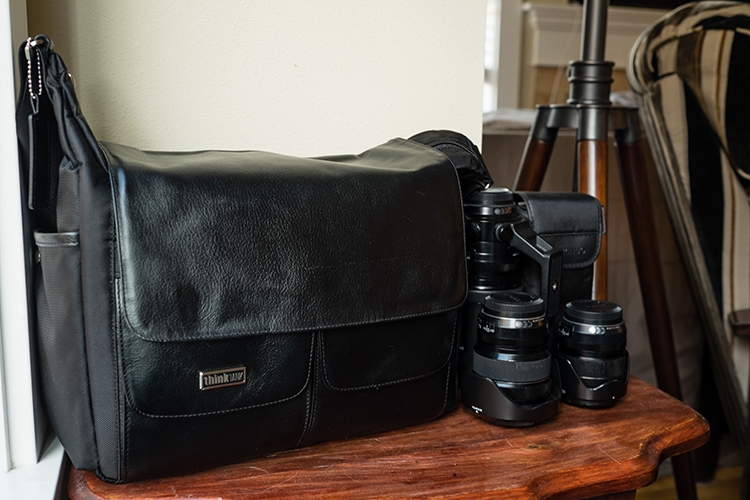
LilyDeanne_3

I recently had the opportunity to put the new Think Tank Lily Deanne Mezzo shoulder bag through its paces on a few different kinds of photo shoots – from photographing a full day conference to a portrait shoots, to a day on the move chasing an athlete up and down the stairways in Seattle. The Lily Deanne Mezzo not only kept up with me, but it made my shoots even easier because of how well it performed.

The Think Tank Lily Deanne women’s shoulder bag line is designed by two of the photography industry’s most respected members, Pulitzer Prize-winning photographer Deanne Fitzmaurice and Lily Fisher, Think Tank’s senior camera bag designer. They designed the Lily Deanne series to be the ideal camera shoulder bag for women photographers, and that’s exactly how I would describe this bag.

Design

My first reaction to this bag was how it looked. It looks professional, classy, and functional, yet is understated. When I’m on assignment carrying a lot of gear, whether on a shoot in Seattle or in Egypt, I want to look professional but not have a bag that screams, “look at me, I’m a photographer.” Deanne’s background as a photojournalist shines through in this bag’s design, both in its discretion, but also in its functionality.
LilyDeanne_5

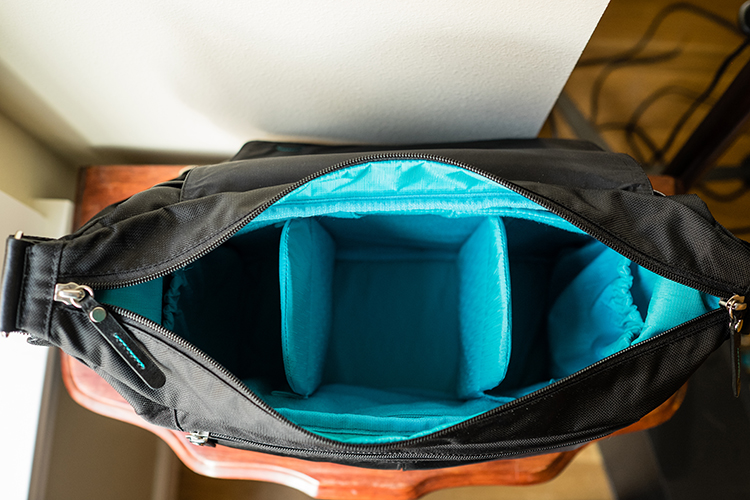
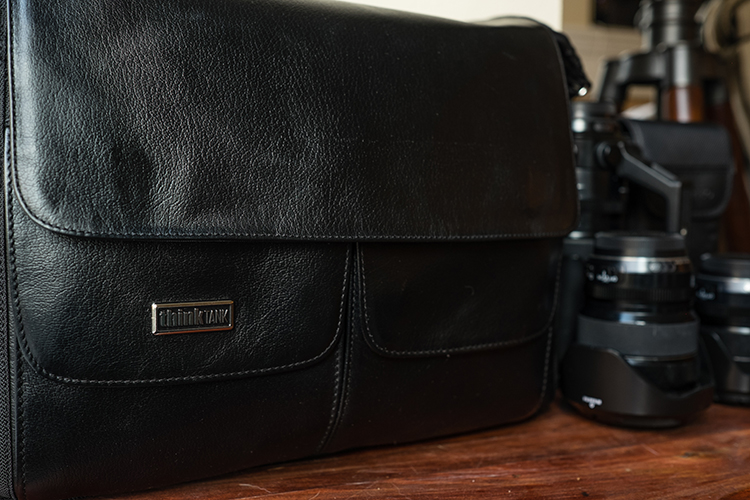
Using the Lily Deanne Mezzo bag, I immediately felt that this was a bag designed by a working photographer. From the wide zipper opening, to the flap which can be thrown over the top and latched with magnetic fasteners, to all the pockets and organizational units, to the slit in the back which lets you slide it over the bars of a roller bag – this bag met all my functional needs without any unnecessary bells and whistles. The level of attention to small details, and high quality craftsmanship makes this a beautiful bag to look at. The bag is a mix of strong nylon and supple full-grain Dakota leather flaps, pockets, and accents. The interior of the bag and exterior accents are a beautiful Robin’s egg blue, making this a stylish bag.

The Lily Deanne shoulder bag comes in two colors, Chestnut Brown and Black Licorice, and three sizes, Lucido (small-size), Mezzo (medium-size) and Tutto (largest-size). This bag was designed with plenty of room for pro-size lenses, no matter whether you shoot Canon, Nikon, Fuji, Sony, Olympus or any other line of camera.
LilyDeanne_2

The large zipper opening allows for quick and easy access of your gear. The top flap folds back completely to give full access to the interior of the bag. Or, it can be flipped forward to cover the main opening, it attaches to the front with rare earth magnets. The shoulder strap is well padded, with non-slip gripping. The success of any great shoulder bag hinges on the shoulder strap. Carrying a lot of gear around all day, I need a shoulder strap that is strong, does not slip, and is well padded. The Lily Deanne bags deliver with one of the most comfortable shoulder straps I’ve used. The bag has a lot of pockets (some zippered, some covered by magnet flaps), which really helps keep your accessories organized. The sides of the bag have expandable pouches to hold odds and ends, water bottles, or sunglasses.
LilyDeanne_1

Sizes and Specs

Lucido (small): Holds one standard DSLR with one to three lenses, or a complete mirrorless camera system (and three to four lenses). There is also room for an 8-inch tablet.

Mezzo (medium): Holds one standard DSLR with a mid-range zoom attached and two to three additional lenses, or a complete Mirrorless camera system (and three to four lenses). There is room for a 10 inch tablet or 11 inch laptop.

Tutto (large): Holds one standard DSLR and additional grip with a mid-range zoom lens attached, and two to five additional lenses, as well as 2 flashes, or one standard DSLR with a 70-200mm f/2.8 and two to five lenses in its main compartment and two flashes. It can fit a complete mirrorless camera system and 4 to 5 lenses. It also holds a 15-inch laptop.

In the Field

The Lily Deanne Mezzo is a great bag for lady photographers no matter what kind of job you’re on – event, editorial, commercial, photojournalist, wedding, or portrait shoot. Short of needing a backpack camera bag to carry a lot of gear over a long distance; this shoulder bag will handle pretty much any other type of scenario.
LilyDeanne_4

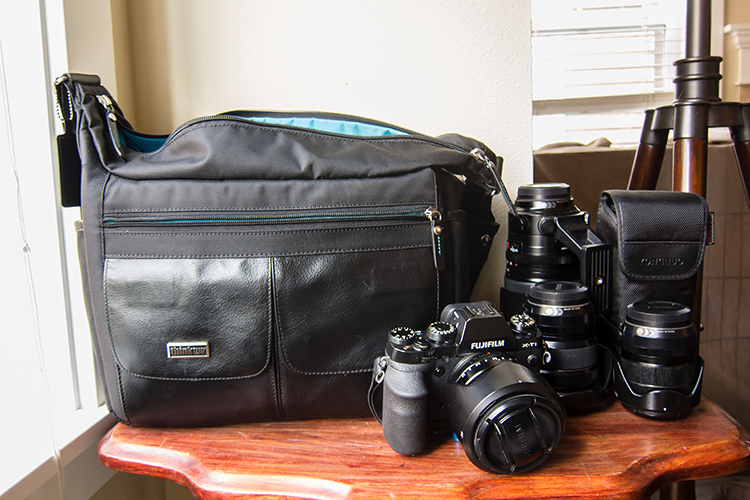
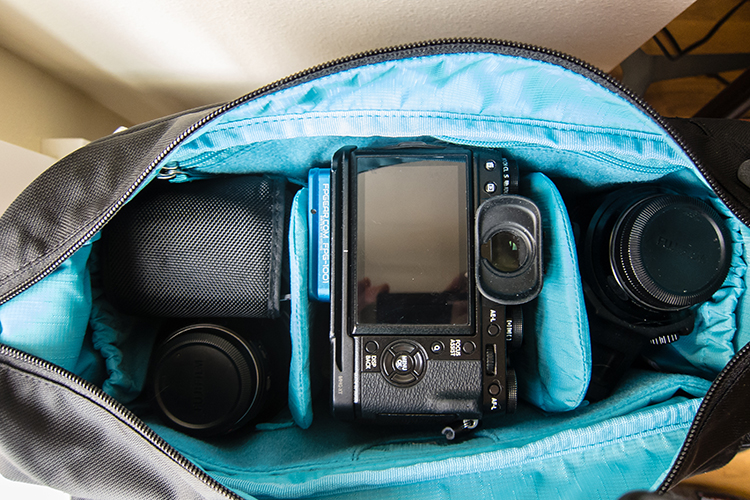
I shoot with the Fuji professional line and was able to easily fit in the bag: the Fujifilm XT-1, 18-55mm lens, 23mm f/1.4 lens, 10-22mm f/4 lens, and 50-140mm f/2.8 lens, along with a flash, and all my accessories. I still had room to fit an additional small prime lens.

Using this bag, it was very easy to access all my gear. I loved all the organizational pockets, which eliminated the need to hunt around for batteries, lens clothes, my phone, business cards and extra memory. The top flap is a great feature which allows you to keep the large zipper open, but cover your gear with the flap. The magnets keep the flap secure, while also allowing for very quick access to gear in time sensitive situations.

The shoulder strap is incredibly well designed, well-padded, and doesn’t slip around. While testing this bag on a 10 hour photoshoot of a conference, carrying all my lenses (which includes one mid-range zoom) and a flash setup, the bag did start to make my shoulder and neck sore toward the end of the shoot. But any shoulder bag, full of heavy camera gear, would have given the same result.

Conclusion

The Think Tank Lily Deanne shoulder bags are one of the best women’s bags I’ve used, arguably the best shoulder bag I’ve found. It balances understated elegance with functionality and comfort. I highly recommend this bag for women photographers looking for a great shoulder bag.

googletag.cmd.push(function() {
tablet_slots.push( googletag.defineSlot( “/1005424/_dPSv4_tab-all-article-bottom_(300×250)”, [300, 250], “pb-ad-78623” ).addService( googletag.pubads() ) ); } );

googletag.cmd.push(function() {
mobile_slots.push( googletag.defineSlot( “/1005424/_dPSv4_mob-all-article-bottom_(300×250)”, [300, 250], “pb-ad-78158” ).addService( googletag.pubads() ) ); } );

The post Review: The Think Tank Lily Deanne Mezzo Shoulder Bag by Peter West Carey appeared first on Digital Photography School.


Digital Photography School

 
Comments Off on Review: The Think Tank Lily Deanne Mezzo Shoulder Bag

Posted in Photography


Surprisingly sharp: Inmacus 18mm HD Wide Angle Kit lens review

22 Apr

Don’t write off smartphone camera accessories just yet – a three-lens bundle from Singapore-based Inmacus produces surprisingly good results. Read more

Articles: Digital Photography Review (dpreview.com)

 
Comments Off on Surprisingly sharp: Inmacus 18mm HD Wide Angle Kit lens review

Posted in Uncategorized


Fujifilm X70 Review

19 Apr

The Fujifilm X70 is fixed-lens APS-C compact camera with a 16.3MP X-Trans sensor and a 18.5mm (28mm field of view equivalent) F2.8 Fujinon lens. It shares many design elements and some specifications with Fujifilm’s popular X100-series, but omits their hybrid optical/electronic viewfinder – or indeed any kind of built-in viewfinder at all. Instead, the X70’s user interface employs a Fujifilm first: a touchscreen. And a tilting one, at that.

What the X70 does share with the X100 lineup is a metal chassis adorned with dials upon dials, putting camera settings exactly where you left them every time. It’s a setup that any vintage camera user can appreciate, but one that still makes sense in the digital age. It also represents a completely different approach to this camera’s closest competitor, the venerable Ricoh GR (II)*.

Let’s see what else the X70 brings to the market:

Fujifilm X70 Features:

  • 16.3MP X-Trans CMOS II APS-C sensor
  • Fixed Fujinon 28mm equiv. F2.8 lens
  • 77-point hybrid autofocus system (49 PDAF+CDAF points, plus 28 CDAF)
  • 3″ tilting 1.04M dot touchscreen LCD
  • Abundant physical controls, including shutter speed, aperture and exposure compensation
  • All-metal build
  • Both mechanical (leaf) and electronic shutter
  • Digital 35mm and 50mm teleconverter with upscaling to full-resolution
  • Wi-Fi

The fixed-lens 28mm camera segment already has quite a few current and defunct members, including the Nikon Coolpix A, Ricoh GR II, Sigma DP1Q and Leica Q. Still, the Fuji has plenty going for it. Of these cameras, the closest competitor is definitely the Ricoh GR II. Let’s take a look at its specs against the X70:

  Fujfilm X70 Ricoh GR II
 Effective pixels 16 megapixels 16 megapixels
 ISO Auto, 200-6400 (expandable to 100-51200) Auto, 100-25600
 Aperture F2.8 – F16.0  F2.8 – F16.0
 Autofocus Modes
  • Contrast Detect (sensor)
  • Phase Detect
  • Multi-area
  • Center
  • Selective single-point
  • Tracking
  • Single
  • Continuous
  • Touch
  • Face Detection
  • Live View
  • Contrast Detect (sensor)
  • Multi-area
  • Center
  • Selective single-point
  • Tracking
  • Single
  • Continuous
  • Face Detection
  • Live View
 Focus Range 10 cm (3.94″) 30 cm (11.81″)
Macro mode: 10 cm (3.94″)
 Rear Screen Tilting

Fixed

 Battery Life (CIPA) 330 320
 Weight (inc. batteries) 340 g (0.75 lb / 11.99 oz)
251 g (0.55 lb / 8.85 oz)
 Dimensions 113 x 64 x 44 mm (4.45 x 2.52 x 1.73?)

117 x 63 x 35 mm (4.61 x 2.48 x 1.38?

The X70 and GR II offer very similar feature sets. Both use 16MP APS-C sensors, but the GR is able to beat out the Fujifilm in both size and mass, although that doesn’t suddenly make the Fujifilm big. In fact, they’re almost the same size.

The similarities to the Ricoh GR II are almost uncanny.

So is the X70 a travel camera? A landscaper’s lightweight companion? A street shooter’s delight? Come with us to look deeper in to the X70 and to find out just how it fits in (and stands out) in this corner of the market.

* We put the (II) in parentheses because the main hardware differentiation between the 3 year-old Ricoh GR and last year’s GR II is the addition of Wi-Fi. The lens, AF, and sensor all remain the same.

Articles: Digital Photography Review (dpreview.com)

 
Comments Off on Fujifilm X70 Review

Posted in Uncategorized


Review – Outdoor Action and Adventure Photography Paperback Book

18 Apr

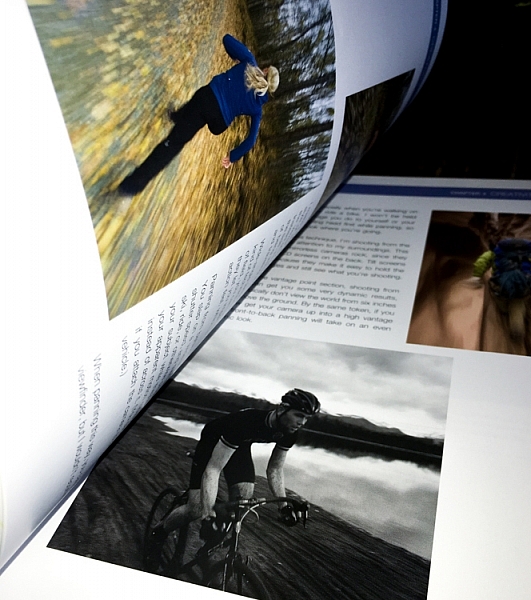
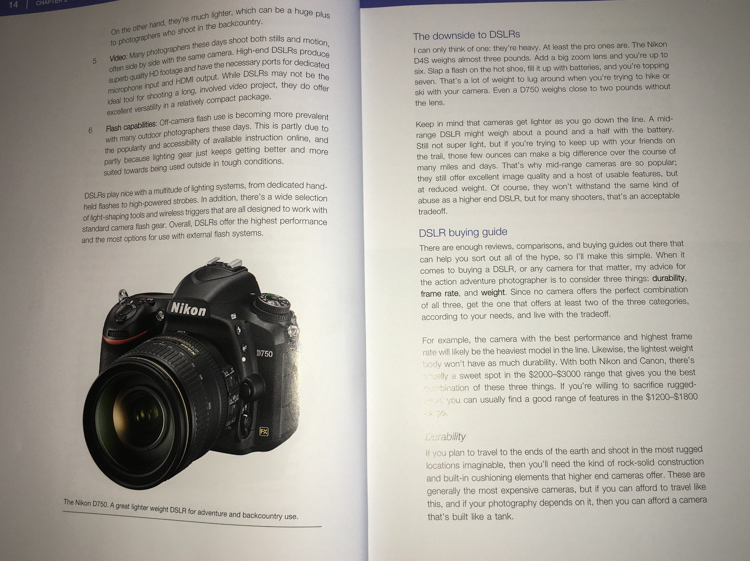
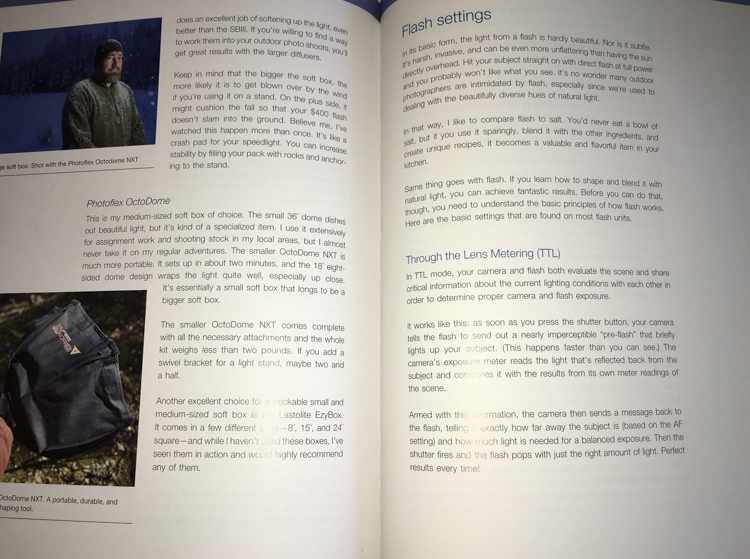
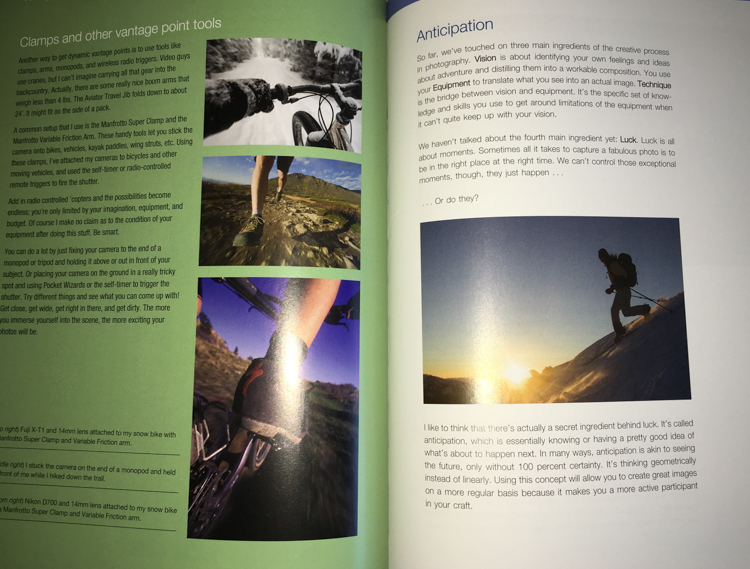
outdoor action and aventure photographyOutdoor Action and Adventure Photography by Dan Bailey is a refreshing change of course in this digital age we live in – it’s actually a paperback book. It is a good thing that Dan had decided to go hardcopy with this book, because it is filled with information, and as a result I feel like many people will want to jot things down, highlight paragraphs, and refer back to it time and again.

Overview

The book starts out with a heartfelt acknowledgement section that truly shows you how much time, effort, and passion, Dan has put into this work. It’s not just something that he’s slapped together – and it shows! Not only is the book well written and informative, but it is beautifully illustrated with a number of photographs from Dan’s portfolio.

After the acknowledgements, you’re given a general introduction to frame your mind for what you’re about to learn. Outdoor Action and Adventure Photography is geared to outdoor photographers, but I’d argue it’s geared even more so towards the outdoor enthusiast, who wants to take great photographs of their adventures.

outdooraction

What I mean is that this book is designed to show you how to take photographs, while you’re hitting a triple black diamond ski slope, or hiking up the side of a mountain. It’s geared more towards the extreme side of outdoor adventure, and the challenges that you would face if you were trying to photograph in those conditions.

What You’ll Learn

After the general framework is set, the book is broken down into a fairly logical path. First you’re introduced to the types of gear that you’ll need. Dan makes a great point about how, for this type of work, expensive gear does make a difference. Not necessarily just for the image quality, but because higher quality professional gear is designed to take a beating, and in the conditions you’ll be facing, the gear you use will need to withstand a few bumps.

outdooraction-3

One of the largest problems faced by adventure photographers is the desire to pack light, but maintain a versatile and high quality kit. In the book, Dan addresses how he handles this challenge, and from what I can gather he is focused more on lightweight and ease of use, versus trying to carry every possible lens and body up the side of a mountain. He has a few different configurations of bodies and lenses that he brings, depending on how far and strenuous the adventure is expected to be.

outdooraction-2

Another big issue that is addressed in this book is regarding lighting. Light on the side of a mountain is not always going to be what you want it, and in this section Dan spends a great deal of time discussing different types of flashes, he provides a great step by step workflow, and talks about different use cases.

outdooraction-4

Finally, there’s a great section on weighing the decision to go pro. What does it mean, do you have what it takes, will you go full-time or part-time? A lot of what is discussed in this section can be applied to other fields of photography, but there are a few considerations specific to Dan’s field, that are worth considering if you’re thinking about making this a career choice.

Final Thoughts

Outdoor Action and Adventure Photography is a book that is designed for the outdoor enthusiast who wants to take great photographs in extreme conditions. While Dan keeps a fairly conversational tone throughout, the book is so packed with information, I’d equate it to more of a textbook than a simple informational guide.

If you’re looking to take great photographs while hitting the slopes with your friends – this is the book for you!

googletag.cmd.push(function() {
tablet_slots.push( googletag.defineSlot( “/1005424/_dPSv4_tab-all-article-bottom_(300×250)”, [300, 250], “pb-ad-78623” ).addService( googletag.pubads() ) ); } );

googletag.cmd.push(function() {
mobile_slots.push( googletag.defineSlot( “/1005424/_dPSv4_mob-all-article-bottom_(300×250)”, [300, 250], “pb-ad-78158” ).addService( googletag.pubads() ) ); } );

The post Review – Outdoor Action and Adventure Photography Paperback Book by John Davenport appeared first on Digital Photography School.


Digital Photography School
 
Comments Off on Review – Outdoor Action and Adventure Photography Paperback Book

Posted in Photography