RSS
 

Posts Tagged ‘REVIEW’

Nikon D7000 Camera Review with HD Test Footage

09 Dec

If you want to deck out your website with stunning photos and HD video, Nikon may have just released the camera for you. The all-new D7000 takes super high-resolution 16 megapixel photos AND records video in 1080p at 24 frames per second. The only way to get more from Nikon would be to drop 00 on a D3x. At 00, the price tag is reasonable. If you are going to be shooting video on a DSLR, make sure you get an external microphone so that you will get professional quality sound. If you think you?d rather have a pro do your website?s video, check out www.FairfaxVideoStudio.com to learn more about our services.
Video Rating: 5 / 5

 
Comments Off on Nikon D7000 Camera Review with HD Test Footage

Posted in Nikon Videos


9 December, 2012 – Alpa 12 FPS Review

09 Dec

Alpa are well known in the medium format world as occupying the pinnacle of engineering excellence. With the Alpa 12 FPS (Focal Plane Shutter) they have created an accessory that fits virtually any Alpa 12 technical camera and which allows a huge variety of legacy lenses to be adapted.

Mark Dubovoy and Alpa dealer Jim Taskett of Bear Images in California have been testing a pre-production FPS unit and provide us with Mark’s exclusive review, and their joint 13 minute-long video tour of this exciting new product.

Happy Holidays! 


The Luminous Landscape – What’s New

 
Comments Off on 9 December, 2012 – Alpa 12 FPS Review

Posted in News


Fujifilm XF1 Review

09 Dec

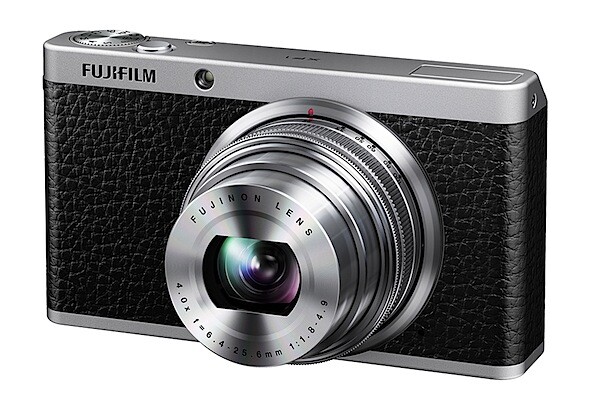
XF1_Black_Front_Left_Wide.jpg

After a swag of complex, interesting and somewhat challenging digicams passed over my review desk, I felt I deserved a holiday. So I fell upon this new, aluminium-bodied Fujifilm model as an example of what you can find out there: small, pocketable, easy to use, yet with a smallish zoom range … but with a very fast lens.

It’s easy to get blasé in this business and sometimes I don’t immerse myself deeply enough in the press guff that accompanies these delights of technology. So when I pulled the XF1 out of the box I was flummoxed at how to start it up. No power button! Nowhere could I find a means to kick it into life. And of course the last place I would look for assistance was in the instruction manual PDF!

So what to do?
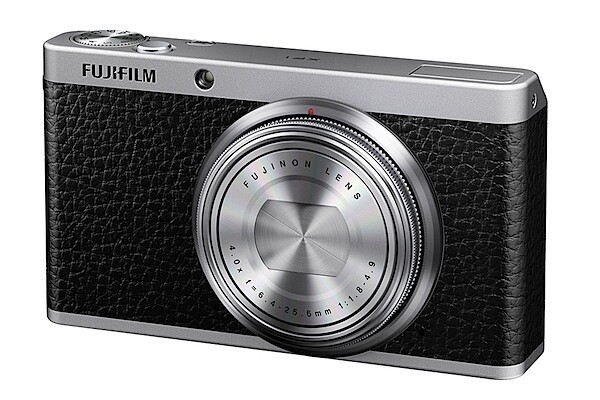
XF1_Black_Front_Left_Off.jpg

I then noticed that the lens was oddly flush with the camera body. So I idly twirled the lens, pulling it out a few mils. Then twirled it a bit more.

Voila! Power’s on. LCD screen comes alive. What a gas! Cleverest startup I’ve ever seen.
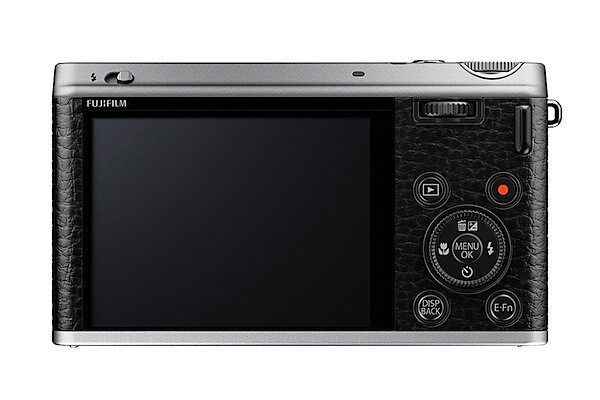
XF1_Black_Back.jpg

Fujifilm XF1 Features

The review XF1 was beautifully styled with a chrome top deck and black body. Very Leica-ish! It’s also available in two other colours: red and brown.
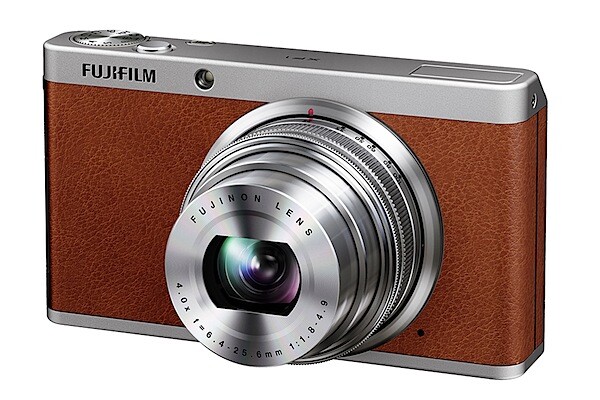
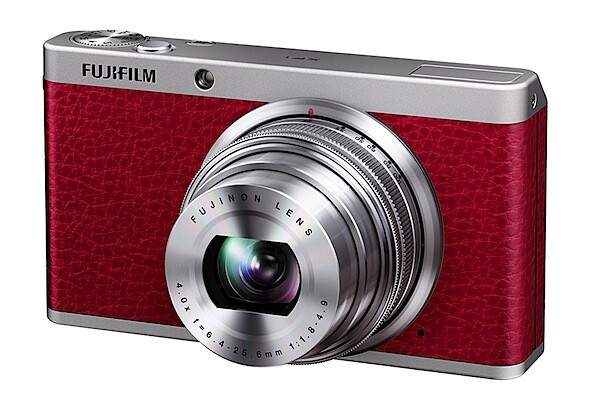
XF1_Brown_Front_Left_Wide.jpg

XF1_Red_Front_Left_Wide.jpg

The lens is an f1.8 4x zoom, with the wide end a decent 25mm SLR equivalent, zooming into a useable 100mm tele end, ideal for portraiture.

The maximum image size can deliver a 34x25cm print.

Movies at Full HD res of 1920×1080 pixels can be shot.

In keeping with the clean design philosophy, external controls are down to an absolute minimum.
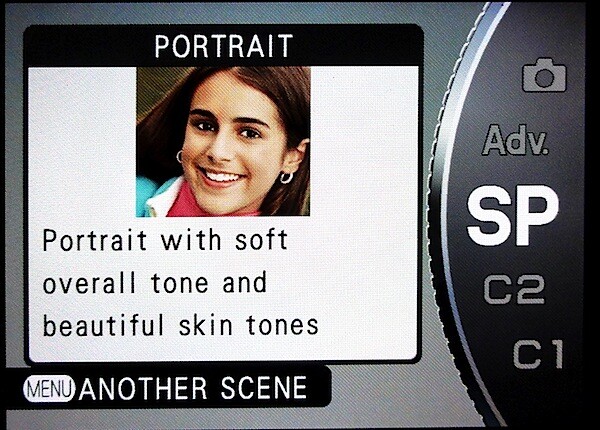
Top deck: mode dial (PASM, auto, two custom settings, EXR, advanced settings, scene position) plus shutter button, Function and flash pop-up.

Rear: four way rocker (trash, exposure compensation, macro, self timer, flash settings) display options, Function, replay and video record.
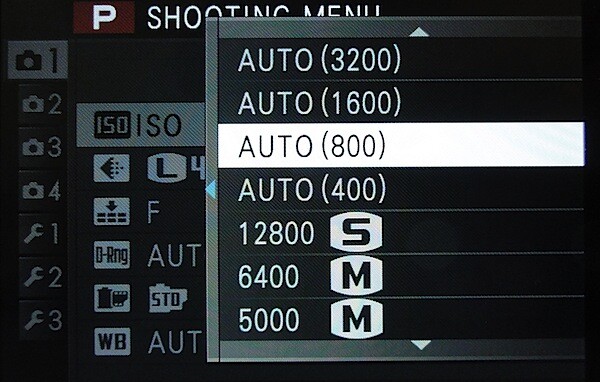
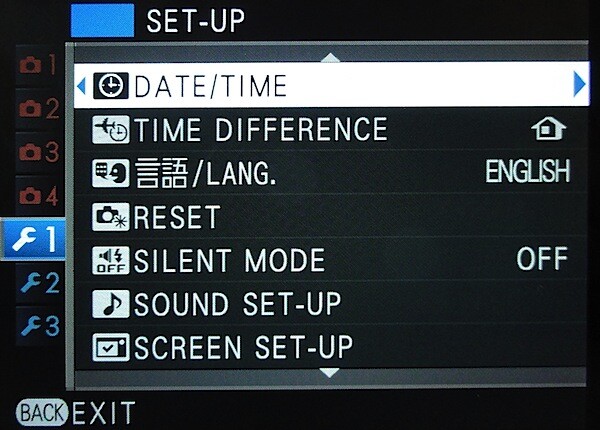
Main menu.JPG

Menu 2.JPG

SP.JPG

The screen menus are displayed in large, clear text in a series of well laid out panels. One of the best menu sets I have seen.


Beach group.JPG

Beach people 5.JPG

Shop mural 3.JPG

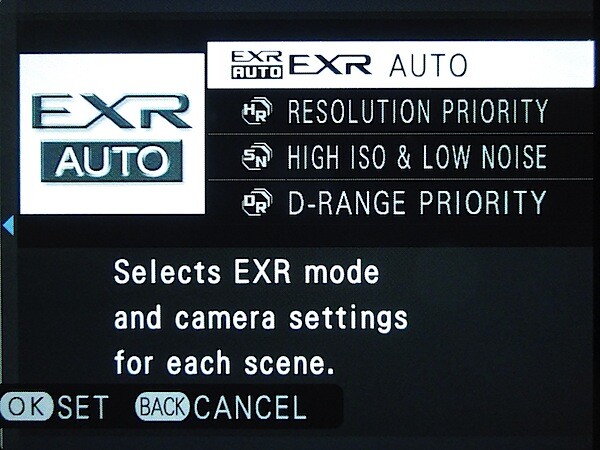
A note on the EXR feature: in this mode the camera selects the optimum setting from 103 patterns; this helps you lift the quality of your image taking
EXR.JPG

Choose from an auto setting, or ones that place emphasis on resolution, high ISO and/or low noise or D-Range that will increase detail highlights. One worth exploring.

Startup Time

The camera is fast in departments other than the f1.8 lens: in less than a second I was ready to shoot my first shot with follow-ons coming in at a rate of less than a second each and as I became more practised in rolling the lens out obviously the startup figure would fall!

Distortion

Some evidence of barrel distortion at the wide end of the zoom; no problems at the tele end.

Panoramas

As with the XE-1, this model can shoot large motion panorama stills, with the camera capturing a run of individual frames, then stitching them in camera.

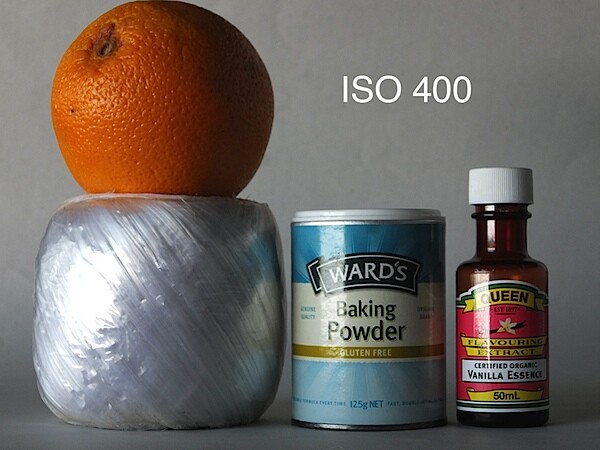
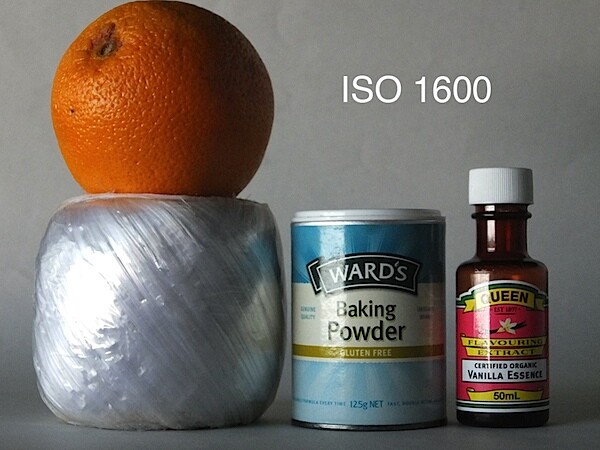
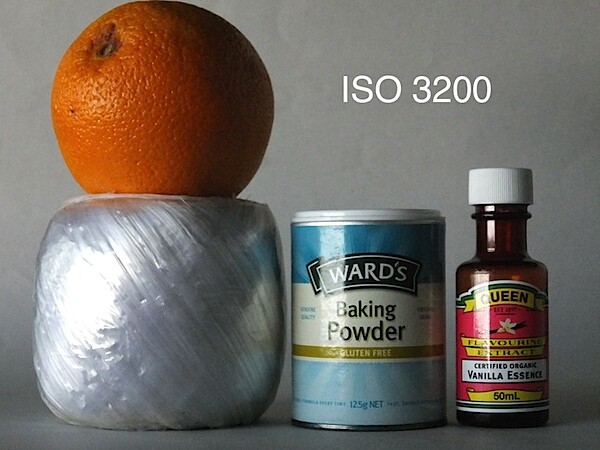
Fujifilm XF1 ISO Tests
Fujifilm XF1 ISO 100.JPG

Fujifilm XF1 ISO 400.JPG

Fujifilm XF1 ISO 800.JPG

Fujifilm XF1 ISO 1600.JPG

Fujifilm XF1 ISO 3200.JPG

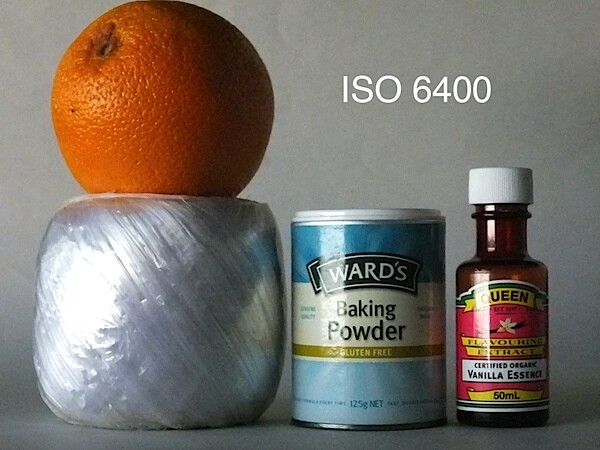
Fujifilm XF1 ISO 6400.JPG

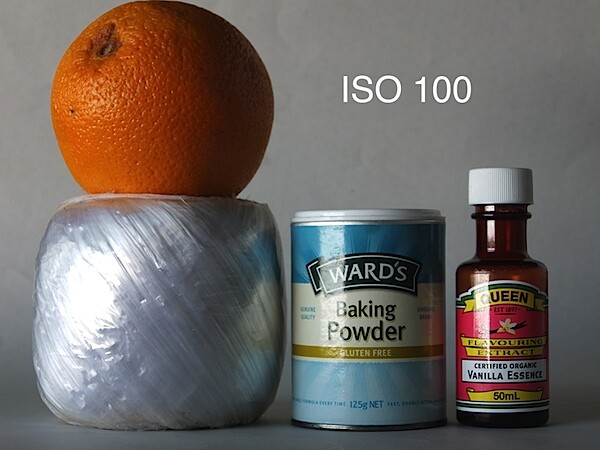
Very interesting! The initial shot at ISO 100 revealed that the camera is not exactly razor sharp at close distances (ie 30cm).

Higher ISO figures revealed that definition fell further, then noise became apparent at ISO 1600 and rose even more by ISO 6400 (2816×2112 pixels). No point in testing ISO 12800 due to an even smaller capture size (2048×1536 pixels).

Fujifilm XF1 Review Verdict

Quality: good at normal distances. Not the best for close up work.

Why you’d buy the Fujifilm XF1: fast to get going; high quality snapping.

Why you wouldn’t: you may find the startup routine unnecessarily fiddly … takes some time to get used to!

There’s a lot to like in this camera, although I fell afoul of the startup routine when rolling the lens from wide to tele: if I ran the lens too hard against the tele end it shut down! Frustrating!

I then figured out there were two startup configurations: travel mode, where the lens retracts fully inside the camera to minimise the camera size; pull the lens slightly away from the body, then (when ready to shoot) roll the lens to the desired focal length.

An interesting camera for a number of reasons.

Fujifilm XF1 Specifications

Image Sensor: 12 million effective pixels.
Sensor: 17mm EXR CMOS.
Metering: Multi segment, averaging, spot.
Lens: Fujinon f1.8-4.9/6.4-25.6mm (25-100mm as 35 SLR equivalent).
Exposure Modes: Auto, Program AE, shutter and aperture priority, manual.
Shutter Speed: 30 sec to 1/2000 second.
Memory: SD/SDHC/SDXC.
Continuous Shooting: Approx 3-16fps.
Image Sizes (pixels): Stills: 4000×3000 to 1536×1536.
Movies: 1920×1080, 1280×720, 640×480, 320240, 320×112.
Viewfinders: 7.6cm LCD screen (460,000).
File Formats: JPEG, RAW, JPEG+RAW, MPO (3D), MPEG4.
ISO Sensitivity: Auto, 100 to 12800.
Interface: USB 2.0, HDMI mini, AV.
Power: Rechargeable lithium ion battery.
Dimensions: 107.9×61.5×33 WHDmm.
Weight: 225 g (inc battery, card).
Price: Get a price on the Fujifilm XF1 at Amazon.

Post originally from: Digital Photography Tips.

Check out our more Photography Tips at Photography Tips for Beginners, Portrait Photography Tips and Wedding Photography Tips.

Fujifilm XF1 Review


Digital Photography School

 
Comments Off on Fujifilm XF1 Review

Posted in Photography


Nikon D90 DSLR Camera Review 2012

08 Dec

In this video I do a short review on the Nikon D90. I have owned this camera since 2008. It is awesome and in my opinion still beats out a lot of the newer cameras in this price range. Please rate, comment and subscribe! Thanks for watching!

 
Comments Off on Nikon D90 DSLR Camera Review 2012

Posted in Nikon Videos


Pentax K-5 review

08 Dec

Pentax K-5 video review – What Digital Camera tests the K-5 DSLR Read our full review at: www.whatdigitalcamera.com Like us on Facebook: ?www.facebook.com Follow us on Twitter: @whatdigcamera
Video Rating: 4 / 5

 
Comments Off on Pentax K-5 review

Posted in Nikon Videos


Nikon 28mm f/1.8 AF-S Hands-on Review (feat. MS Optical 28mm)

07 Dec

Description: We take a look at Nikon’s latest 28, which is an AF-S lens. Nikon shooters haven’t exactly been spoilt for choice with 28mm primes, so this is good news, right? Kai takes a look at it on the streets of Hong Kong. Featuring a MS Optical Perar Super Triplet (mainly for Leica Porn purposes). Pricing reference: www.digitalrev.com

 
Comments Off on Nikon 28mm f/1.8 AF-S Hands-on Review (feat. MS Optical 28mm)

Posted in Nikon Videos


Canon EOS 1Dx Hands-on Review

07 Dec

Sample shots: www.digitalrev.com Pricing Reference: www.digitalrev.com Join DigitalRev Free at: www.digitalrev.com Special Thanks: Chris Collins – www.chriscollinsaction.com The Canon Nikon Rap itunes.apple.com (Don’t buy this, seriously)
Video Rating: 4 / 5

 
Comments Off on Canon EOS 1Dx Hands-on Review

Posted in Nikon Videos


App Review : DSLR Controller for Android & Canon DSLR’s

05 Dec

DSLR Controller is the first and only app that allows you to fully control your Canon EOS DSLR from your Android device, with nothing more than a USB cable. No computer or laptop required, no root required, no Wi-Fi required. All you need is a compatible mobile device, a compatible camera, and the right USB cable. I used my Samsung Galaxy Siii with the Offical USB Adapter, i also have used a Toshiba AT1010 Tablet which has a USB 2.0 port. My Website: iderren.com DSLR Controller Website dslrcontroller.com Follow me on: Twitter: @iderren Flickr: www.flickr.com Instagram : dm.stagram.com Facebook: www.facebook.com Please Rate, Comment & Subscribe!
Video Rating: 4 / 5

 
Comments Off on App Review : DSLR Controller for Android & Canon DSLR’s

Posted in Nikon Videos


Just Posted: Tamron 18-270mm F/3.5-6.3 Di II VC PZD Review

04 Dec

tamron_18-270_3p5-6p3_vc_pzd.png

Just Posted: Our review of the Tamron 18-270mm F/3.5-6.3 Di II VC PZD, prepared in partnership with DxOMark. In the last of our recent mini-series examining superzoom lenses for SLRs, we take a look at how Tamron’s contender compares to its Sigma and Nikon counterparts that we reviewed recently. This type of all-in-one travel and ‘walkaround’ lens is enduringly popular, but how does this two-year-old design stand up against its brand-new competitors?

News: Digital Photography Review (dpreview.com)

 
Comments Off on Just Posted: Tamron 18-270mm F/3.5-6.3 Di II VC PZD Review

Posted in Uncategorized


App Review: Perfectly Clear for iOS

04 Dec

Perfectly_Clear_screen.jpg

Smartphones aren’t just about catching grab-shots and applying heavy processing filters to cover up any flaws. As the cameras get better, processing to get the best out of those images becomes increasingly important. Perfectly Clear, a processing app for iOS devices, provides a host of tools to fine-tune your mobile photography (or edit any photos when away from your computer). It even has a tool to correct the iPhone 5’s notorious purple flare. Click here to see what we thought.

News: Digital Photography Review (dpreview.com)

 
Comments Off on App Review: Perfectly Clear for iOS

Posted in Uncategorized