RSS
 

Posts Tagged ‘REVIEW’

Connect Review: Shooting with the Galaxy Camera

14 Dec

samsung_galaxycamera4g.png

The Samsung Galaxy Camera is the the most serious attempt anyone’s yet made to build a truly connected camera. It’s essentially a hybrid of the company’s WB850F compact superzoom and its Galaxy SIII smartphone – combining the zoom range and larger sensor of the camera with the powerful processor, touch screen and Android operating system of the ‘phone. But how much extra capability does this bring? Mobile photographer Oliver Lang takes a look.

News: Digital Photography Review (dpreview.com)

 
Comments Off on Connect Review: Shooting with the Galaxy Camera

Posted in Uncategorized


Just Posted: Tamron 18-270mm F/3.5-6.3 Di II VC PZD Review

13 Dec

tamron_18-270_3p5-6p3_vc_pzd.png

Just Posted: Our review of the Tamron 18-270mm F/3.5-6.3 Di II VC PZD, prepared in partnership with DxOMark. In the last of our mini-series examining superzoom lenses for SLRs, we take a look at how Tamron’s contender compares to its Sigma and Nikon counterparts that we reviewed recently. This type of all-in-one travel and ‘walkaround’ lens is enduringly popular, but how does this two-year-old design stand up against its brand-new competitors?

News: Digital Photography Review (dpreview.com)

 
Comments Off on Just Posted: Tamron 18-270mm F/3.5-6.3 Di II VC PZD Review

Posted in Uncategorized


Just Posted: Sony Alpha SLT-A99 review

13 Dec

Sony_A99.jpg

Just Posted: Our review of the Sony Alpha SLT-A99. The A99 is Sony’s flagship SLT camera – featuring a 24MP full-frame sensor and dual AF system, along with the level of build and direct control you’d expect from a range-topping model. We’ve put the A99 through its paces in a variety of situations, including an investigation of how its AF depth control performs in challenging shooting conditions. We’ve also looked at the advantages the SLT system and articulated screen bring to a camera at this level, as well as looking at their downsides. Click here to find out what we concluded.

News: Digital Photography Review (dpreview.com)

 
Comments Off on Just Posted: Sony Alpha SLT-A99 review

Posted in Uncategorized


Just Posted: Sony Alpha SLT-A99 review

13 Dec

Sony_A99.jpg

Just Posted: Our review of the Sony Alpha SLT-A99. The A99 is Sony’s flagship SLT camera – featuring a 24MP full-frame sensor and dual AF system, along with the level of build and direct control you’d expect from a range-topping model. We’ve put the A99 through its paces in a variety of situations, including an investigation of how its AF depth control performs in challenging shooting conditions. We’ve also looked at the advantages the SLT system and articulated screen bring to a camera at this level, as well as looking at their downsides. Click here to find out what we concluded.

News: Digital Photography Review (dpreview.com)

 
Comments Off on Just Posted: Sony Alpha SLT-A99 review

Posted in Uncategorized


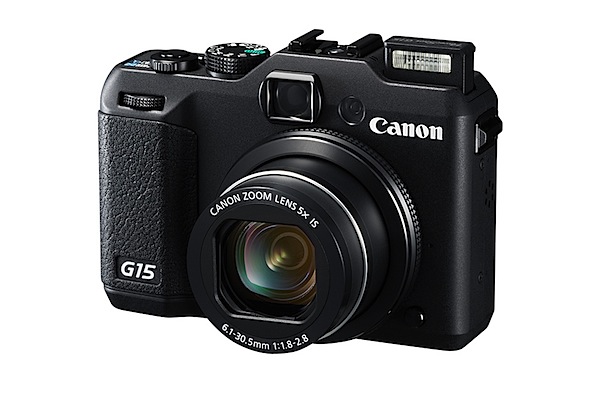
Canon Powershot G15 Review

12 Dec

Canon G15 Review

Don’t know about you, but I shudder when I read that a camera company has described a lens or a camera as being ‘bright’.

I presume they mean that the lens involved is what used to be described as ‘fast’ … you know, with a maximum aperture of f1.5 or f2 or nearby. But bright …?

Anyway, this G series model – the Canon Powershot G15 – is the latest in what Canon used to describe as its top level, fixed lens series of cameras, with specs generally above the run of the mill models.

So, here they go: ‘Canon introduces its fastest and brightest compact camera. The Canon PowerShot G15 camera delivers enthusiast and professional photographers the fastest auto focus and brightest lens in Canon’s compact camera history.’ Whew!

Time was when the G series sat as Canon’s premier compact line of cameras. Before DSLRS became common-place, a G series camera was the one to go for. So how are things these days?

But before we head into the present it’s interesting to observe that the pioneering G1 of 2006 measured 119.7×76.8×63.8cm and weighed 420g as against the G15′s 125x87x110cm and 310g in weight. So the veteran G1 camera was almost precisely half the size of the new G15 but, weightwise, the G1 was a third heavier. Lenswise, the G1 had an f2 optic, so the new boy is (very) minimally faster.

BTW the ISO options went only to 400 — boy those were the dim days! And it used CompactFlash cards!

Enough of the past.
G15_04.jpg

Canon Powershot G15 Features

I have to say the camera got me immediately, with its classy matte black body and clearly-picked out in white control points. You can see at a glance what the mode dial settings are, along with any exposure correction you may have dialled in on the camera’s top surface. Power and shutter buttons as well as zoom controls are only millimetres away.

The speed grip is smallish but enough to securely wrap your fingers around.
Menu.jpg

Mode dial.jpg

The rear area carries little, aside from the four way rocker which gives access to ISO, macro mode, display options and flash variations with the function button set in the centre. Nearby are buttons for menu, metering options, AF selection and aperture selection. In my book, this setup makes the camera a dream to use without any need to dive into the menu ‘jungle’ which is, in typical Canon fashion, a very friendly jungle.

For me, there are very few ‘downers’ but I feel the widest end of the zoom (at a 35 SLR equivalent of 28mm) is not wide enough for most punters … 25mm makes me smile, 28mm forces me to step back a bit!

Overall, the camera could make a pro or enthusiast very happy as a backup to DSLR kit.

Maximum image size is 4000×3000 pixels, enough to output a 34x25cm print.

Movies: Full HD capture in MPEG4 at 1920×1080 resolution. Shooting movies is dead easy, simply by pushing the by now familiar red button, found at the top right corner of the camera; no stills capture, mid movie, unfortunately … do so and the move recording will stop, so there! However the AF and auto exposure functioned flawlessly during movie shooting.

All the moving shots were taken with the camera at waist level. Head high video was shot with the camera held still. All of this is a great help for the in-camera stabiliser.

The optical turret viewfinder is matched happily to the zoom’s operation, so you can enjoy flare free viewing/shooting even in bright sunlight. The bad news is that there is no indication of focus.

And then I noticed a tiny button at the front of the camera and just beneath the lens: this is to release the lens ring, enabling attachment of a tele-converter lens. Not sure if there is a wide adaptor available.

One gripe: the continuous shooting speed is a measly 2.1 fps, with so many lesser-specced cameras offering much faster rates.

MacDonald's interior 3.jpg

McDonald's interior 4.JPG

McDonald's interior 5.JPG

McDonald's interior 6.JPG

Startup Times
About a second after power up I caught my first shot; follow-ons came in at a little over a second apiece. Not rapid, I would say.

Distortion
I could discern very little barrel distortion at the zoom’s wide end, with no aberrations apparent at the tele end.

Canon Powershot G15 ISO Tests

Canon G15 ISO 80.JPG

Canon G15 ISO 400.JPG

Canon G15 ISO 800.JPG

Canon G15 ISO 1600.JPG

Canon G15 ISO 3200.JPG

Canon G15 ISO 6400.JPG

Canon G15 ISO 12800.JPG

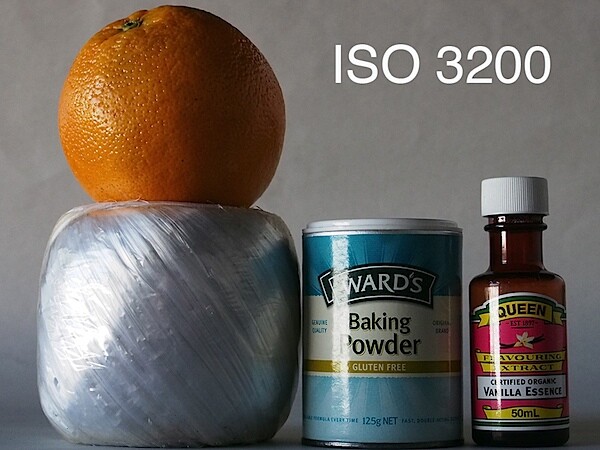
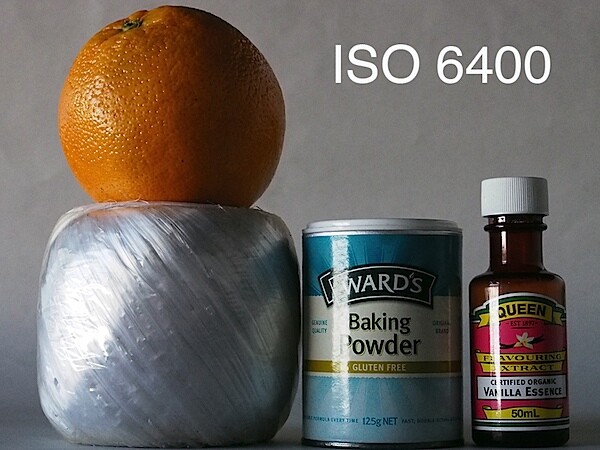
It’s all good news, all the way up to ISO 3200, with excellent definition and relatively low noise.

By ISO 6400 we start to fall off the edge with noticeable noise and a drop in sharpness. By ISO 12800 the image is nasty: lots of noise, poor colour fidelity, poor definition. But hey! How about ISO 3200!

Canon Powershot G15 Review Verdict

Quality: the images I took leapt off the screen. These are some of the best I have ever seen from a digital compact. Stunning video as well.

Why you’d buy the Canon Powershot G15: easy to follow control layout.

Why you wouldn’t: a tilting LCD screen would make it a much better camera for stills and movie work.

A little beauty! It could happily sit in my kit bag.

Canon Powershot G15 Specifications

Image Sensor: 12.1 million effective pixels.
Sensor: 15mm CMOS.
Metering: Evaluative, centre-weighted, spot.
Lens: f1.8-8.0/6.1-30.5mm (28-140mm as 35 SLR equivalent)
Exposure Modes: Auto, Program AE, manual.
Shutter Speed: 15-1/4000 second.
Memory: SD/SDHC/SDXC.
Image Sizes (pixels): Stills: 4000×3000 to 640×480.
Movies: 1920×1080, 1280×720, 640×480.
Viewfinder: Optical turret and 7.5cm LCD screen (922,000).
File Formats: JPEG, RAW, MPEG4.
Colour Space: sRGB.
ISO Sensitivity: Auto, 80 to 12800.
Interface: USB 2.0, HDMI mini, AV output, DC input.
Power: Rechargeable lithium ion battery.
Dimensions: 125x87x110 WHDmm.
Weight: 352 g (inc card and battery).
Price: Get a price on the Canon PowerShot G15 at Amazon.

Post originally from: Digital Photography Tips.

Check out our more Photography Tips at Photography Tips for Beginners, Portrait Photography Tips and Wedding Photography Tips.

Canon Powershot G15 Review


Digital Photography School

 
Comments Off on Canon Powershot G15 Review

Posted in Photography


Review of Nikon 55-300mm telephoto lens

11 Dec

Great new lens from Nikon. Read full review: www.seeingthemoment.com
Video Rating: 4 / 5

 
Comments Off on Review of Nikon 55-300mm telephoto lens

Posted in Nikon Videos


Tamron 28-75mm f2.8 lens review

11 Dec

dombowerphoto.blogspot.com this review really should cover everything you will ever need to know about this lens If you enjoy myvideos please post them on your Facebook page and let others know about this channel, please SUBSCRIBE and share on Facebook and Twitter. Also check out the links below. If you really like my work please feel free to check out or buy a copy of the my PHOTOGRAPHY BOOK: Getting There With Photography: By Dom Bower www.blurb.com FACEBOOK Critique/advice GROUP www.facebook.com FACEBOOK PAGE www.facebook.com TWITTER page twitter.com WEBSITE www.dombower.com PHOTOGRAPHY CLOTHING Point and destroy clothing http please donate to a charitable cause visit www.justgiving.com and the blog www.dombowerphoto.blogspot.co.uk
Video Rating: 4 / 5

Adorama TV presents how to set up lighting for Group Shots. This week, Mark demonstrates how to light a large or small group of people indoors with a single light source. Mark uses the Inverse Square law to calculate how the size of the light source and the distance from the light source to the subjects can create even, flattering light. Be sure to watch to the very end of this video! For more articles and videos about portraits and lighting, go here: www.adorama.com Products used in this episode: Matthews Baby Junior Triple Riser Stand with Wheels www.adorama.com Flashpoint 60″ x 60″ PZ Octabox. 5 Foot Octabox www.adorama.com Flashpoint Speed Ring Adapter to fit Profoto www.adorama.com Profoto Acute2R 1200 Pro Value Pack #900795 www.adorama.com Nikon D3S Body Only www.adorama.com Nikon 24-70mm f/2.8G ED-IF AF-S Wide Angle-Telephoto Zoom Nikkor Lens www.adorama.com Benro A0690TBH00 Travel Angel Aluminum Tripod www.adorama.com Pocket-Wizard Plus II www.adorama.com Visit the Adorama Learning Center for more AdoramaTV videos. www.adorama.com

 
Comments Off on Tamron 28-75mm f2.8 lens review

Posted in Nikon Videos


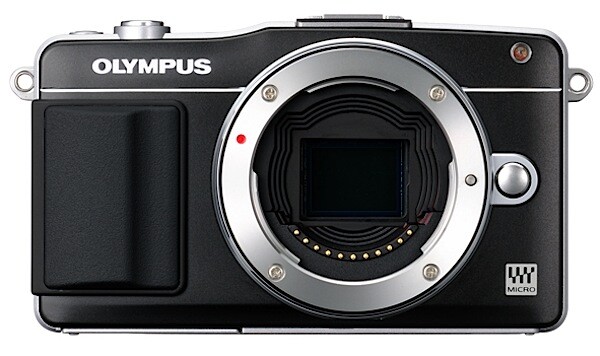
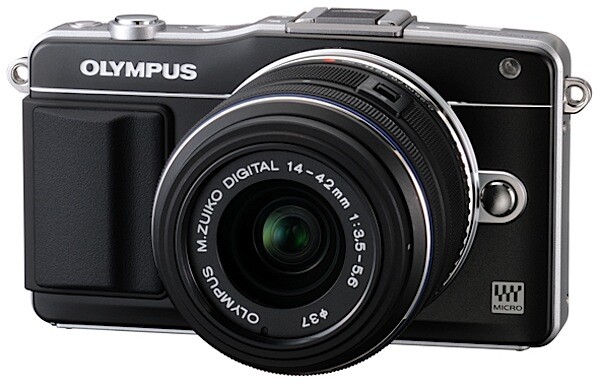
Olympus PEN E-PM2 Review

11 Dec

You can’t complain about the lack of variety in the current crop of mirrorless interchangeable lens compact cameras! This one will sure fit many people right down to the ground.

Olympus PEN  E-PM2 Review.jpg

Although I have to admit it’s not my style of camera, mainly due to the lack of external controls — it’s mostly menu driven — the Olympus PEN E-PM2 is agreeably small and light and, with lens detached, the body is pocketable.

With the f3.5/14-42mm kit lens fitted to the review camera, the distance from the back of the camera to lens front stretched to a lengthy 10cm … and that was with the lens at minimum ‘stretch’!

Olympus PEN  E-PM2.jpg

Olympus PEN  E-PM2 top.jpg

Olympus PEN  E-PM2 back.jpg

Olympus PEN E-PM2 Features

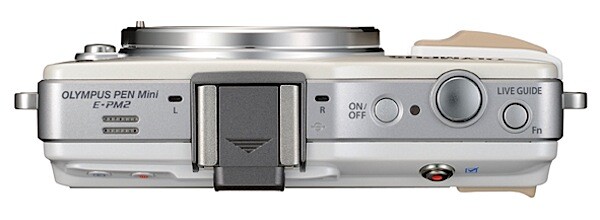
Top deck controls: on/off button, shutter button, Function button, replay, trash.

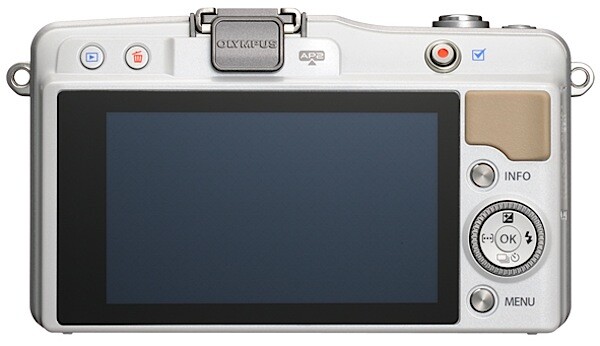
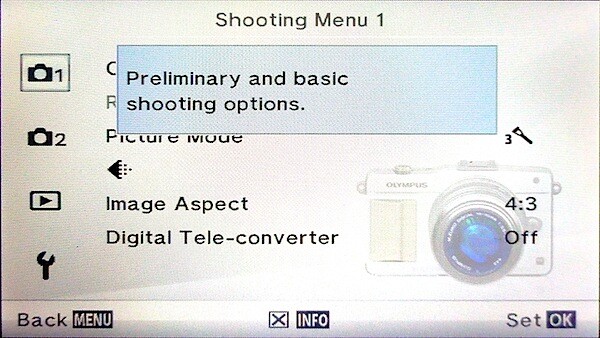
Rear: video record, four way rocker (exposure compensation, flash options, single/continuous shooting, AF targets), menu and info buttons. And that’s all!
Menu 1.jpg

Choices of Program AE, aperture and shutter priority and manual shooting modes are selected via the menu system, which is initially graphics supported and then moves into the familiar lines of text. Five minutes practice with this and you will become familiar with it. I have to say that using menu driven exposure options does remove a major hazard of rolling the mode dial to your choice: on some cameras the mode dial can be easily knocked to an unwanted spot.

I found the touch screen LCD screen to be bright and clear and useable in bright daylight, although I regretted the lack of a vari-angle screen. A novel touch is that you can tap the screen to take a shot!

The maximum image size is 4608×3455 pixels, enough to make a 39x29cm print.

Movies in Full HD 1920×1080 pixel resolution are on hand.

Menu 2.jpg

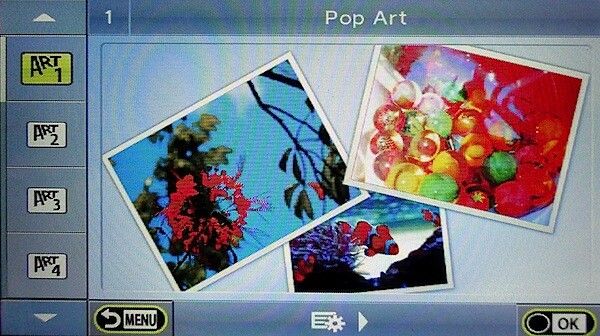
Those who have experienced Olympus’ Art Filters will enjoy the options of capturing an image with a Pop Art, sepia, grainy look, pin hole and other ‘looks’ in a total of 12 ‘looks’.

People who like the joys of connectivity with smartphones and tablet devices, will appreciate the PM2 which fully supports the new Flashair SD storage/wireless card that transforms the camera into a wireless access point.

The top accessory shoe can support a wide variety of optional accessories, such as the eye-level digital viewfinders VF-2 and VF-3, an external stereo microphone, and the PP-1 Bluetooth data transfer module.

Olympus PEN E-PM2 ISO Tests

Olympus PEN E-PM2 ISO 200.JPG

Olympus PEN E-PM2 ISO 400.JPG

Olympus PEN E-PM2 ISO 800.JPG

Olympus PEN E-PM2 ISO 1600.JPG

Olympus PEN E-PM2 ISO 3200.JPG

Olympus PEN E-PM2 ISO 6400.JPG

Olympus PEN E-PM2 ISO 12800.JPG

Olympus PEN E-PM2 ISO 25600.JPG

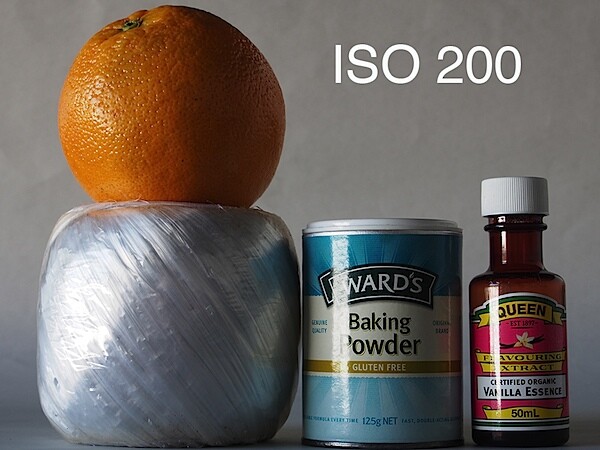
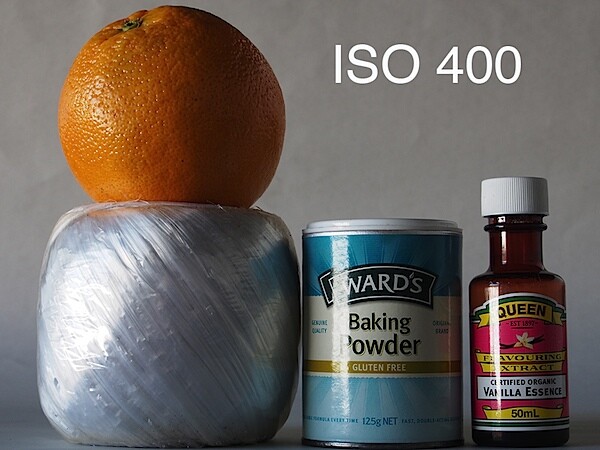
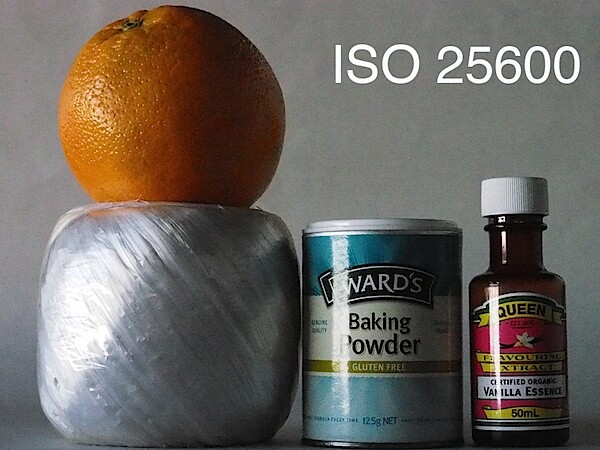
Excellent performance all the way to ISO 6400. At ISO 12800 noise is still down and definition acceptable. By ISO 25600 the noise level has gone too far but definition is OK.
City traffic.JPG

Mortuary station 3.JPG

Tongue ad agency.JPG

Olympus PEN E-PM2 Review Verdict

Quality: very good.

Why you’d buy the Olympus PEN E-PM2: small, easily carried camera.

Why you wouldn’t: you don’t like menu mining!

This is a MILC model that will take very good quality pictures.

Available in black, silver, red or white.

Olympus PEN E-PM2 Specifications

Image Sensor: 16.1 million effective pixels.
Metering: Multi zone, centre-weighted averaging, spot.
Effective Sensor Size: 17.3×13.0mm (22.5mm diameter) Live MOS.
35 SLR Lens Factor: 2x.
Shutter Speed: 60 to 1/4000 second, Bulb.
Continuous Shooting: 8 fps.
Memory: SD/SDHC/SDXC cards.
Image Sizes (pixels): 4608×3455 to 1024×768. Movies: 1920×1080, 1280×720, 640×480 at 30fps.
LCD Screen: 7.6cm LCD (460,000 pixels).
File Formats: JPEG, RAW, JPEG+RAW, MPEG4.
Colour Space: sRGB, Adobe RGB.
ISO Sensitivity: Auto, 200 to 12800.
Interface: USB 2.0, HDMI mini, AV, accessories.
Power: Rechargeable lithium ion battery, DC input.
Dimensions: 110x64x34 WHDmm.
Weight: 269 g (inc battery and card).
Prices: Get a price on theOlympus PEN E-PM2 at Amazon.

Post originally from: Digital Photography Tips.

Check out our more Photography Tips at Photography Tips for Beginners, Portrait Photography Tips and Wedding Photography Tips.

Olympus PEN E-PM2 Review


Digital Photography School

 
Comments Off on Olympus PEN E-PM2 Review

Posted in Photography


Nikon 35mm f2 AF-D Review: Why Zach Arias and Myself Like This Lens

09 Dec

www.artoftheimage.com – Reviewing the Nikon 35mm f2.0 AF-D. Why Zach Arias and myself like this lens. Check out Zach’s site at http

 
Comments Off on Nikon 35mm f2 AF-D Review: Why Zach Arias and Myself Like This Lens

Posted in Nikon Videos


Nikon coolpix P510 Review

09 Dec

– 42X Ultra Zoom Nikkor Lens – Lens Shift type VR(Vibration Reduction) – Various effect mode – 16M Pixel Steel image – 1920 X 1080 / 30fps Movie Recording – 120 fps Ultra High Speed movie recording
Video Rating: 4 / 5

 
Comments Off on Nikon coolpix P510 Review

Posted in Nikon Videos