RSS
 

Posts Tagged ‘Project’

Tips for Creating a Personal Photography Project

16 Aug

One of the best ways to grow your photography is by working on a personal photography project. As a professional photographer, I am always working on personal projects. It’s a way to keep myself inspired, and to feel challenged to grow. It’s also a great way to keep my portfolio fresh, try out new ideas, and grow my vision as a photographer.
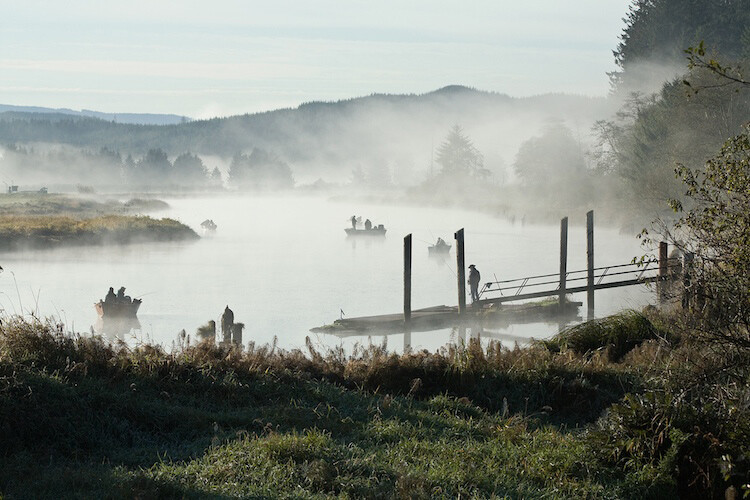
Shooting a place more than one time gives you the opportunity to capture the place in the perfect light. I had visited this part of the Oregon Coast more than a dozen times before the perfect scene appeared.

Shooting a place more than one time gives you the opportunity to capture the place in the perfect light. I had visited this part of the Oregon coast more than a dozen times before the perfect scene appeared.

In this article, I will share with you:

  1. What is a personal photography project?
  2. What’s the value of working on personal projects?
  3. What makes a good project?
  4. How to be successful
  5. Ideas for personal photography projects of your own

What is a personal photography project?

I define a personal photography project as choosing a subject to shoot over and over again over time. It can be as simple as shooting your kid’s sporting event every weekend, photographing an intriguing building near your home six times, or creating a series of portraits of your friends.
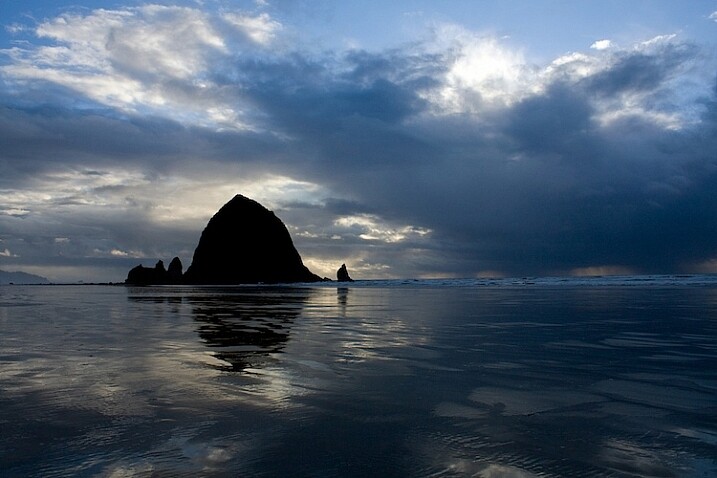
Personal-Projects-Oregon-Beach-CBB

I photographed about 60 miles along the northern Oregon coast over a period of six months. I created a route that I drove whenever I could. By shooting the same place over and over again, I was able to truly capture the personality of the places.

2 – What’s the value of personal projects?

Some photographers are reluctant to shoot the same subject over and over again, but by photographing it more than once, it gives you some great opportunities to grow as a photographer.

  1. It gives you the chance to get it right. Have you ever said, “I wish I would have done X better?” By going back and shooting something more than one time, you create the opportunity to analyze your mistakes, and go back and do it again. In this exercise, you shoot one day, analyze what you can do better, then tweak your shooting until you learn to nail it every time.
  2. It gives you some structure. When you have some free time, you don’t have to wonder what you are going to shoot. If you have committed to photographing the City Hall in your town six times, you can just go shoot it. On the other side of the coin, you can also put your shoots on your calendar weeks, or months, ahead of time.
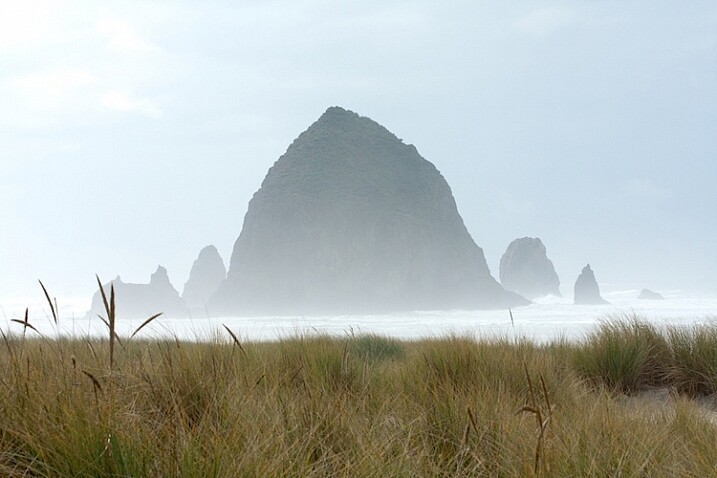
A different mood of Cannon Beach, Oregon.

A different mood of Cannon Beach, Oregon.

A Project could look like this – Shoot City hall at:

  1. Sunrise
  2. Sunset,
  3. Morning light
  4. Afternoon light
  5. Golden hour
  6. Dusk
  7. With the moon
  8. On a sunny day
  9. On a cloudy day
  10. On a rainy day
  11. On a Snowy day
  12. During each of Spring, Winter, Fall, and Summer

Can you begin to see the many opportunities, and how to create different pictures of just one thing?
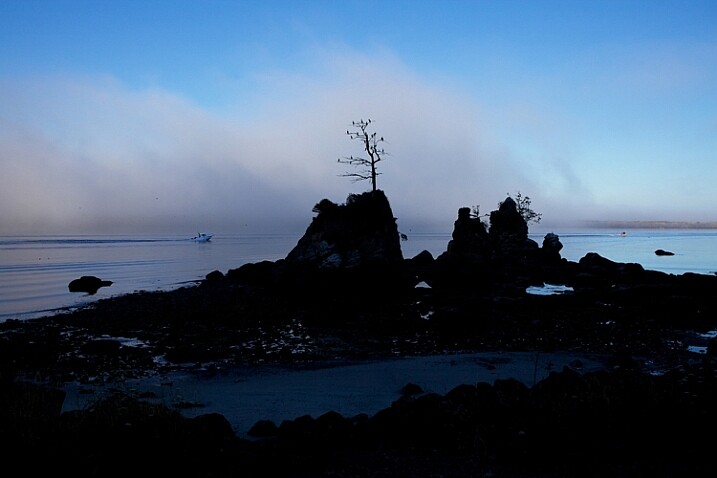
I was fascinated by this lone tree growing out of a huge rock near Garlibaldi, Oregon but I wanted to get it with a beautiful sky.

I was fascinated by this lone tree growing out of a huge rock near Garlibaldi, Oregon, but I wanted to get it with a beautiful sky.
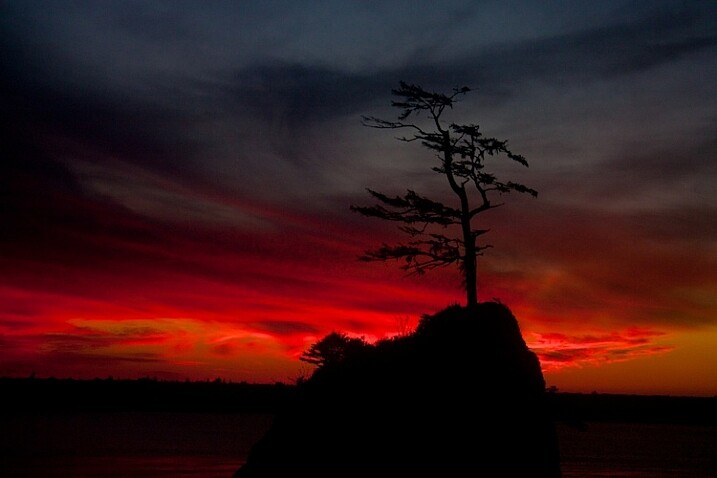
It took many evenings of watching for the perfect sunset, but the photo was well worth it.

It took many evenings of watching for the perfect sunset, but the photo was well worth it.

Once you nail the technical part of a situation, you can challenge yourself to do something really different. This is the point the great photos come in!

The great photos don’t come when you are trying to figure out how to focus your camera, use your flash, or what is the right exposure or camera angle. Once you’ve got all that nailed, the real creativity begins! That’s when the great pictures happen. Here’s an example:
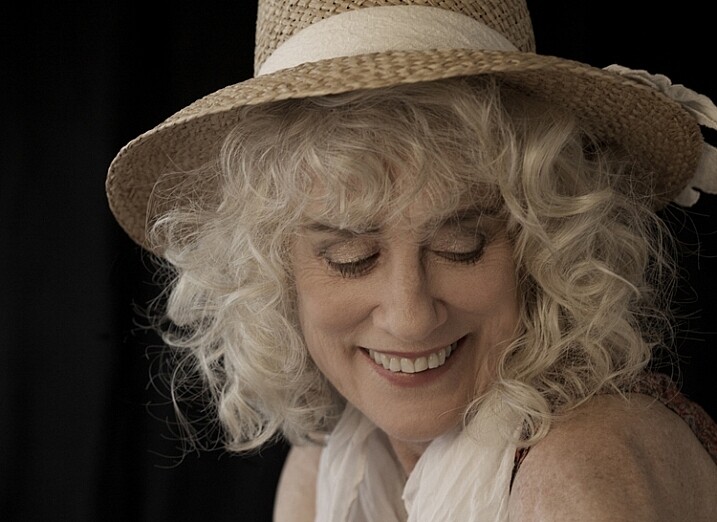
Posey-Personal-Projects

This was my first glamour shoot. I just practiced finding the perfect window light in my studio. And, as a journalistic photographer, I rarely do any retouching, but this subject offered the opportunity to pull out some new retouching tools, and also reminded me to pose the subject in such a way to hide skin imperfections.

I fell in love with the work of a glamour photographer, Sue Bryce. She does beautiful work and doesn’t use studio lighting, she uses window light in a very sophisticated way. I decided to emulate her work by studying her technique. I had never studied glamour photography, so not only would the lighting be a challenge, but the posing would be too. Here’s what I did:

  • I studied her technique, watched some YouTube videos, and took detailed notes.
  • I practiced posing myself in front of the mirror.
  • I did some tests with window light in my studio to find the best times of day to shoot, and to decide what kind of reflectors, props, and backdrops I needed.
  • I found a few make-up artists who wanted to build their portfolio, and offered to work with me for prints.
  • I scheduled several friends for shoots.

Suzanne-personal-projects

This was my second shoot. I practiced using a different kind of light, a little bit harder with more fill.

I also had the chance to work with posing and hands. It felt awkward to me, and I didn’t really get the subject to do what I wanted her to. It was time to go back to the mirror and practice with my own hands, then create language that would help my subject move into those poses.

allie-personal-projects

This shoot went much better. I was learning, developing skills, having fun, and building my confidence in this new world of glamour photography.
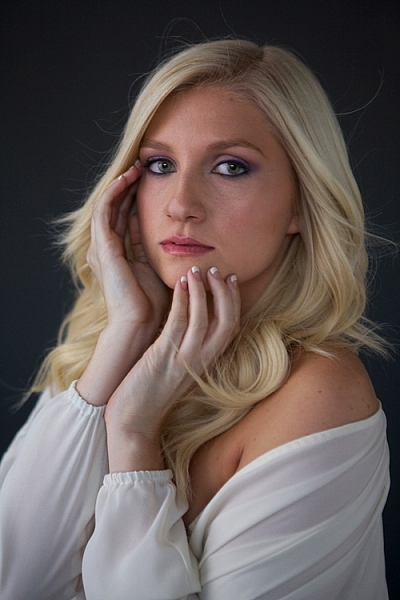
Tyler2-personal-projects

By my fourth subject, I had learned how to direct my subject into a pose, and had a great feel for window light.

Tyler-personal-projects

I had a few new pieces for my portfolio, not to mention a few happy friends with prints.

Let’s back up a few steps and review some of the ideas we’ve touched on so far.

3 – What makes a good photo project?

  1. Have an objective, a goal. Be clear on your outcome. It can be to master a new skill, to create a series of prints, or to make a calendar as a gift.
  2. Select a subject that you can return to over and over again.
  3. Choose something you are really interested in, and passionate about. For ideas, think about the activities you and your family are involved in. Would any of your hobbies make a good project? Are there places you love to visit or photograph?
  4. Find something to shoot within 10 or 20 minutes of your home.
  5. Commit to something that either happens on a regular basis at a scheduled time, or a place you can just show up and shoot anytime. For example, a ballet class that happens every week or a favorite park, botanical garden, or lake.
  6. Choose a subject with a variety of visual possibilities.
  7. Choose a subject with a learning goal, or end product in mind. You might want to learn more about light, or shooting in manual mode, or photographing people.

The Capital Building in Washington DC is stunning at night, and I wanted to capture the full moon rising behind it. This was the sixth night I made a trip to the monument. Persistence paid off.

The Capitol Building in Washington, DC is stunning at night, and I wanted to capture the full moon rising behind it. This was the sixth night I made a trip to the monument. Persistence paid off.

Several years ago, while living in Washington, DC, I chose to shoot the monuments with a full moon. Why was this a good project? Let’s look at the checklist above and compare

  1. I love documenting history, enjoy being out in the evenings taking pictures at night, and I always feel a sense of wonder seeing the Washington, DC monuments.
  2. I wanted to create a set of prints that I could share and offer to my corporate clients.
  3. Getting to the monuments was easy for me.
  4. I could write the full moon dates in my calendar months ahead of time and keep my schedule clear. (Although I did get strange looks when I told friends I couldn’t join them for dinner because it was a full moon!)
  5. There are lots of monuments to photograph within walking distance.

I loved having something on my calendar to shoot. It provided some structure, and gave me something to shoot for several months without having to come up with a new idea. And, now I have a beautiful collection of photograph for my portfolio.
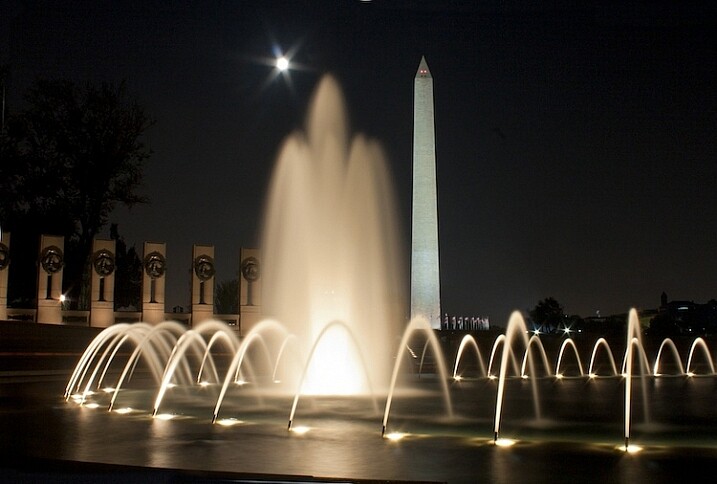
This is the World War II Memorial in Washington DC with the Washington Monument in the background. Committing to shooting a personal project is fun, rewarding and builds your self-confidence.

This is the World War II Memorial in Washington, DC with the Washington Monument in the background. Committing to shoot a personal project is fun, rewarding, and builds your self-confidence.

4 – How to be successful

  1. Make a commitment and write out the whys of doing the project.
  2. Find an accountability partner, a coach, a class, or a photo group, to share your progress.
  3. Put the time commitments on the calendar. Treat this as a new ritual. Plan the time and treat it as sacred.

5 – Ideas for your own personal photography projects

Here are some ideas to get you started on your own personal project.

  • Find a photographer or a style you love and try to mimic that style. I fell in love with Georgia O’Keefe’s paintings and her use of color. Ultimately, studying her art led me to creating these photographs. 
  • Shoot the full moon every month for six months. I chose to shoot the monuments in Washington, DC with a full moon and created a beautiful series of art prints.
  • Photograph a local park 10 different times, at different times of day. This is a simpler version of my Oregon Coast project.
  • Shoot a local landmark at all times of the day. It could be a building, for example the City Hall, a mountain, or a river. This project will give you an opportunity to learn about the quality of light at different times of days, the right angles, and it’s simple! Buildings and mountains are always there for you.
  • Shoot a kid’s sporting event every weekend. This will help you refine your skills with stopping action and learning focus.
  • Make portraits of your relatives and create a beautiful coffee table as a Christmas gift for the family. A great way to take care of that holiday gift list, as well as learn more about photographing people and developing a style of your own.
  • Photograph pets. Pets can be a real challenge. It will be an opportunity to learn about capturing action as well as learning about light.

Shooting projects is an amazing way to grow your portfolio and your self-confidence. Do you have an idea for a project? Share it with me in the comment section below, I’d love to hear about it or see your images.

googletag.cmd.push(function() {
tablet_slots.push( googletag.defineSlot( “/1005424/_dPSv4_tab-all-article-bottom_(300×250)”, [300, 250], “pb-ad-78623” ).addService( googletag.pubads() ) ); } );

googletag.cmd.push(function() {
mobile_slots.push( googletag.defineSlot( “/1005424/_dPSv4_mob-all-article-bottom_(300×250)”, [300, 250], “pb-ad-78158” ).addService( googletag.pubads() ) ); } );

The post Tips for Creating a Personal Photography Project by Vickie Lewis appeared first on Digital Photography School.


Digital Photography School

 
Comments Off on Tips for Creating a Personal Photography Project

Posted in Photography


Japan-ized Cities: Surrealistic “Worldwide Tokyo-lization Project”

01 Aug

[ By WebUrbanist in Art & Drawing & Digital. ]

tokyolization

A team of designers has taken iconic images of major global cities and added a “rich graphic language and vibrant visual effects” to blend each one with elements of Japanese infrastructure and visual culture.

tokyo buenos aires

Presenting their work at the Venice Architecture Biennale, this strange art series from Daigo Ishii + Future-Scape Architects aims to question our ideas of locality and our sense of civic imagery and identity.

tokyo denmark

What happens, they ask, when a familiar underlying environment gets an overlay, sending mixed signals to observers? Is it the underlying shape and form of a place that make it what it is, or those other visual cues that lend familiarity?

tokyo paris

The firm set their cities on cities including New York, Buenos Aires, Copenhagen and La Paz, each time pulling in distinctively Japanese elements, from neon signage to cherry trees.

tokyo bolivia

In each case, the result is a surreal hybrid, playing off cues in source photographs shot in the United States, Argentina, Denmark, France, Bolivia and Italy, becoming something that is neither here nor there, original or artificial.

“The project seeks to present an amalgamation between traditional architectural studies and surprising artistic elements.” The display in Venice consists of “a video work shown on a large-scale monitor, with six surrounding boards displaying the final scenery of each city after ‘Tokyo-lization’ has taken place.”

Share on Facebook


[ By WebUrbanist in Art & Drawing & Digital. ]

[ WebUrbanist | Archives | Galleries | Privacy | TOS ]


WebUrbanist

 
Comments Off on Japan-ized Cities: Surrealistic “Worldwide Tokyo-lization Project”

Posted in Creativity


Lenovo Phab2 Pro is the first Project Tango phone

10 Jun

At its TechWorld conference Lenovo has not only announced the modular Moto Z and Moto Z Force smartphones but also the first Google Project Tango enabled device, the Lenovo Phab 2 Pro. The phone provides an Augmented Reality (AR) experience, thanks to its ability to sense 3D-motion and geometry. It can capture 3D-scans of its surroundings and use the data to create 3D-maps, recognize places or track objects. The technology can project virtual effects in real-world spaces, help navigate indoor areas or provide information about objects it has recognized. 

To achieve this the Phab2 Pro has a total of four cameras. In addition to the 8MP front module and the 16MP rear camera there are a depth and a motion tracking camera, both also located on the back. Underneath the 6.4″ Quad-HD IPS display there is a Qualcomm’s Snapdragon 652 chipset running Android 6.0. 4GB RAM and 64GB of microSD-expandable storage are on board as well, along with a fingerprint reader and Dolby Atmos surround sound technology. Energy is provided by a 4,050 mAh battery. All the high-end technology is nicely wrapped up in metal unibody that is available in gold or silver. 

The Lenovo Phab2 Pro will be available to purchase online in August and one month later in stores globally. In the US it will cost $ 499. Lenovo promises that by the time of shipping a special Tango App Store will contain around 25 apps and is planning to expand this number to 100 by the end of the year. The new technology certainly looks promising, and it will be interesting to see how it catches on with consumers and developers. Additional information on how Tango works on the Phab2 Pro can be found in the Lenovo promotional video below.

Articles: Digital Photography Review (dpreview.com)

 
Comments Off on Lenovo Phab2 Pro is the first Project Tango phone

Posted in Uncategorized


Cows Of A Different Color: The Moooving Art Project

06 Jun

[ By Steve in Art & Installation & Sound. ]

moooving-art-1a
The Moooving Art project in Shepparton, Australia, promotes the region’s dairy industry via dozens of fiberglass cows creatively painted by local artists.

moooving-art-1e

moooving-art-2b

moooving-art-2a

The Moooving Art Project was established in 2002, inspired in part by the very successful “Merry Moos” campaign featured at the Shepparton agricultural show. So what’s the deal with Shepparton and cows, you might ask?

moooving-art-1d

moooving-art-1b

In a nutshell, Shepparton is the largest town in the Goulburn River valley, located just over 100 miles (175 km) north-northeast of Melbourne in Victoria, Australia. The region is Australia’s largest producer of dairy products and the aim of the project is to celebrate the positive impact the cow-driven industry has made on the local economy. Flickr user rotheche snapped some of these “outstanding in their field” designs in April of 2009.

moooving-art-10a

Though most of the models sport the standard bovine pose, a few feature out-of-the-ordinary modifications. Fancy some relaxing on the above “Cowch” whilst enjoying a sunny summer’s day down under?

Next Page – Click Below to Read More:
Cows Of A Different Color The Moooving Art Project

Share on Facebook


[ By Steve in Art & Installation & Sound. ]

[ WebUrbanist | Archives | Galleries | Privacy | TOS ]


WebUrbanist

 
Comments Off on Cows Of A Different Color: The Moooving Art Project

Posted in Creativity


Photo bomb: Student project sends Instax camera skyward

24 May

In what must be a one-of-a-kind project, a visual media student at the Rochester Institute of Technology has installed a Fujifilm Instax camera on a DJI drone, making it possible to shoot instant photos from the air.

Nicholas Kundrat created the drone/instant camera hybrid for a new course called ‘Visual Media Innovation Project.’ Bringing the project to life started with a DJI Flamewheel 450 quadcopter kit as the base with an Instax Mini 25. From Kundrat’s Vimeo page:

‘A servo motor was then fitted onto the camera and plugged into the auxiliary port on the receiver to be controlled by the SX6i transmitter. A flip of the aux switch on the transmitter fires the camera and before you know it a picture is ejected from the camera.’

The drone can fly up to twelve minutes with the camera and motor attached. Kundrat hopes his creation will challenge views of drones as dangerous and harmful by creating a positive connection between observer and drone. If nothing else, it brings a whole new meaning to the term ‘photo bomb.’

Via: PetaPixel

Articles: Digital Photography Review (dpreview.com)

 
Comments Off on Photo bomb: Student project sends Instax camera skyward

Posted in Uncategorized


‘Blank Books’ Project is Rebuilding Burned Library in Baghdad

13 May

[ By WebUrbanist in Art & Installation & Sound. ]

arts library detroyed

A lone artist is on a mission to restore some of the 70,000 books from the College of Fine Arts at the University of Baghdad that were reduced to ash during the 2003 invasion of Iraq. As chaos mounted, looters broke in set the library on fire, burning it to the ground.

Students at the school still lack replacements over a decade later, which led Wafaa Bilal (an Iraqi-born artist living in New York City) to propose Blank Books, a program designed to bring in book donations, in turn to be shipped in sets to the Iraqi capital.

blank book art replacement

This combination art, awareness and shelf-stocking project works essentially like this: blank books are created and put on shelves at the Art Gallery of Windsor. When someone donates a book, a white blank is removed and given to the donor as a symbol of the void they helped fill.

art book blanks replaced

While the university shared a wishlist, they also welcome books from personal collections in any of the following categories: Painting, Sculpture, Ceramics, Radio, TV, Film, Music, Art Education, Industrial Design, Printing, Textiles, Calligraphy, Ornamentation.

blank book art

The effort raised over $ 50,000 from a crowdfunding campaign, more than 5 times its target amount. The campaign worked like the installation: “The blank books will transform into colored books. I see this as a visualization of the reversal of destruction,” explains Bilal

As the shelves fill up with real books, Kickstarter backers and other donors receive the blank books as rewards as a “small reminder of their contribution.” You can read a more detailed interview with the artist on Hyperallergic or watch him speak on CNN.

arts book program

More historical context on this effort from its creator: “During the Islamic Golden Age, Baghdad was home to the largest library in the world—the Bayt al-Hikma, or House of Wisdom. A Mongol siege in the 13th century laid waste to all the libraries of Baghdad, along with the House of Wisdom.”

“According to legend, the library was thrown into the Tigris River to create a bridge of books for the Mongolian army to cross. The pages bled ink into the river for seven days, after which the books were drained of knowledge.”

Share on Facebook


[ By WebUrbanist in Art & Installation & Sound. ]

[ WebUrbanist | Archives | Galleries | Privacy | TOS ]


WebUrbanist

 
Comments Off on ‘Blank Books’ Project is Rebuilding Burned Library in Baghdad

Posted in Creativity


Blog Project: Your Best Photos From 2015

27 Apr
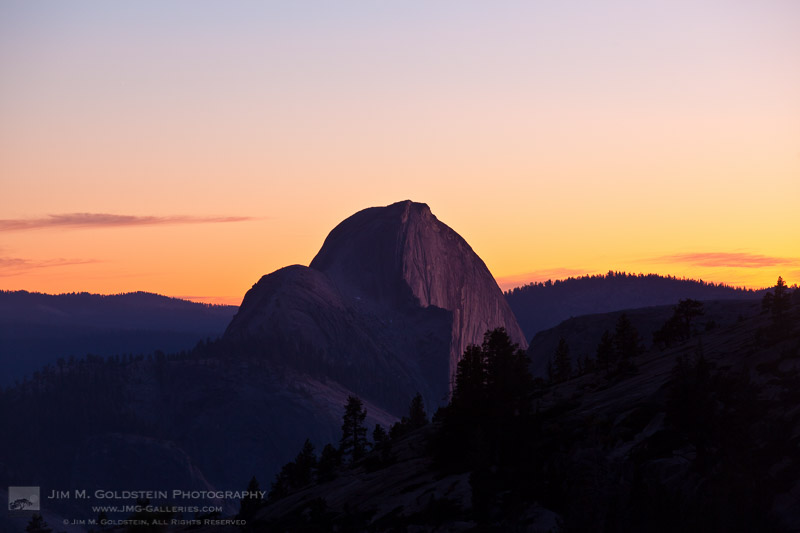
Half Dome Sunset from Olmstead Point, Yosemite

It’s that time of year again and if you’re a regular JMG-Galleries reader that means one thing…
it is time to kick off the 9th annual best photos of the year blog project. This is by far my most popular blog project with over 200 participants taking part last year (see Best Photos of 2014, 2013,  2012, 2011, 2010, 2009, 2008 and 2007). Around this time of year people start to ask if I’d be running this project again. The answer clearly is always YES!
1. I love this project and I love that so many people get excited about it.
2. It’s a great way exercise to improve your photography (10 Ways to Top Your Best 20xx Photographs).
So with out any further delay here is how you take part to submit your best photos of 2015.

How to Participate (Read Carefully)

  1. Review & select your best photos from 2015.
    Note: Photo edit carefully narrowing down your results to your best 10 or 5 photos. Reference Pro Tips: Photo Editing with Gary Crabbe for pointers.
  2. Create a blog post on your web site or a Flickr/500px set containing your best photos from 2015.
  3. Complete the form below by Saturday JANUARY 2nd at 11:59PM PST to take part. The following Tuesday, or there about, I’ll post a link to all submitted sites and photos on my blog. Through out the week I’ll also share the results across all my social media accounts.

Spread the Word!
Feel free to spread the word of this project on Twitter, Facebook, Google+, photo forums you frequent and/or your blogs. All who are interested in taking part are invited.


Loading…

The post Blog Project: Your Best Photos From 2015 appeared first on JMG-Galleries – Landscape, Nature & Travel Photography.


JMG-Galleries – Landscape, Nature & Travel Photography

 
Comments Off on Blog Project: Your Best Photos From 2015

Posted in Equipment


A small project: iFixit Samsung NX Mini disassembly guide

17 Apr

iFixit Samsung NX Mini disassembly guide

As far as small cameras go, the Samsung NX Mini is one of the most impressively small we’ve come across. The Mini manages to fit a 20.9MP 1″-type sensor into a super-slim body that’s just 22.5mm thick. It’s been discontinued, but when we saw iFixit post a disassembly guide for the littlest NX we just had to see what was inside. See some of the highlights from a safe distance here, and if you’re feeling adventurous head over to iFixit and find a step-by-step guide to taking the NX Mini apart.

iFixit Samsung NX Mini disassembly guide

After removing the battery and various screws from the battery compartment and external flash port, you’ll be ready to unscrew the lens mount. That teeny, tiny lens mount.

Image courtesy of iFixit

iFixit Samsung NX Mini disassembly guide

Removing a few more screws from the bottom of the camera frees the front housing, revealing the sensor and NFC chip. Relative to the camera body, the 1″-type sensor looks pretty big.

Image courtesy of iFixit

iFixit Samsung NX Mini disassembly guide

The NFC target lives on top of the battery compartment, which can be removed as seen here to reveal the motherboard underneath. The sensor cover has also been removed at this stage, giving a better view of the 20MP chip underneath. And that’s the next bit to go…

Image courtesy of iFixit

iFixit Samsung NX Mini disassembly guide

A little spudger action frees the sensor module from the motherboard so it’s ready to be carefully removed.

Image courtesy of iFixit

iFixit Samsung NX Mini disassembly guide

There’s one more screw to remove to disconnect the motherboard, and just above it is the Wi-Fi antenna. Of course, you’ll want to carefully disconnect the ribbon cables connected to the motherboard before it goes anywhere.

Image courtesy of iFixit

iFixit Samsung NX Mini disassembly guide

This step requires some careful spudger work to release the ribbon cables…

Image courtesy of iFixit

iFixit Samsung NX Mini disassembly guide

…and once those have all been removed the motherboard is free.

Image courtesy of iFixit

iFixit Samsung NX Mini disassembly guide

The flash assembly is the last piece to come out of the chassis, and takes with it the Wi-Fi antenna as it’s removed.

Image courtesy of iFixit

iFixit Samsung NX Mini disassembly guide

The tilting LCD twists free of the housing and there you have it – one tiny camera in lots of tiny pieces. Check out the whole guide on iFixit for the play-by-play disassembly instructions.

Image courtesy of iFixit

Articles: Digital Photography Review (dpreview.com)

 
Comments Off on A small project: iFixit Samsung NX Mini disassembly guide

Posted in Uncategorized


Impossible Project unveils I-1 instant camera for 600-type film

13 Apr

The Impossible Project has unveiled the I-1 instant camera, a revival of an analog classic. The I-1 prints photos using Impossible Project 600-type film, which was reverse-engineered from Polaroid’s now-discontinued 600-type offering. The camera includes digital control not found in the original Polaroid camera. Using a related iOS app, photographers can adjust shutter speed, aperture, flash and select one of several presets.

The Impossible Project’s CEO Oskar Smolokowski showcased the camera at Bloomberg’s design conference on Monday, revealing that the I-1 will be available starting May 10 for $ 299. The model is simple in design, but robust in overall features; the physical camera features an exposure dial, shutter button, focus selector, LED flash ring and square viewfinder. Power is delivered via an integrated battery that recharges with USB.

When paired with a related mobile app over Bluetooth, users can remotely capture images, creature multi-exposure photos, adjust capture settings, and creature ‘open-shutter’ pictures. The Impossible Project only lists an iOS app on its website at this time; it is unclear whether an Android app will be made available, as well. Interested photographers can sign up for updates on the Impossible Project’s I-1 web page.

Via: Bloomberg

Articles: Digital Photography Review (dpreview.com)

 
Comments Off on Impossible Project unveils I-1 instant camera for 600-type film

Posted in Uncategorized


Roadside Renaissance: Art Of The Painted Desert Project

21 Mar

[ By Steve in Art & Street Art & Graffiti. ]

painted-desert-project-0
Conceived by photographer/activist Chip Thomas, The Painted Desert Project connects urban street artists with communities in the southwest‘s Navajo Nation.

painted-desert-project-1a

painted-desert-project-1b

painted-desert-project-1c

Chip Thomas (above) first set foot in Navajo Nation over 25 years ago when, as a newly-minted doctor, he decided the best way to repay his National Health Service Corps scholarship was by volunteering to serve a community with limited access to healthcare. Decades later, his roots are set deep into the stony desert soil.

painted-desert-project-9a

painted-desert-project-9b

Somewhat of a Renaissance Man, Dr. Thomas displays a very different skill set when he “becomes” Jetsonorama – a street artist whose favored medium is blown-up black-and-white photos applied to a range of outdoor structures.

painted-desert-project-11a

painted-desert-project-11b

painted-desert-project-11c

painted-desert-project-11d

Being as his home base is the Western Agency of the Navajo Nation in Arizona, Thomas’s subjects are the Navajo people and their traditional symbolism. “I’m just trying to reflect the positivity I have been allowed to experience from the people for the past 25 years,” explains Thomas. “It’s like I’m holding a mirror up and saying, ‘Thank you for letting me experience all this.’ And to the youth I’m saying, ‘Learn from this!’” Not corny at all, actually.

Next Page – Click Below to Read More:
Roadside Renaissance Art Of The Painted Desert Project

Share on Facebook


[ By Steve in Art & Street Art & Graffiti. ]

[ WebUrbanist | Archives | Galleries | Privacy | TOS ]


WebUrbanist

 
Comments Off on Roadside Renaissance: Art Of The Painted Desert Project

Posted in Creativity