RSS
 

Posts Tagged ‘Project’

H2O Yeah! The Water Tank Project Makes NYC Cooler

13 Mar

[ By Steve in Art & Installation & Sound. ]

water-tank-project-0
Like rainwater flowing from rooftops to roads, The Water Tank Project seeks to artistically enhance New York City‘s gritty skyline from the top down.

water-tank-project-1a

Spearheaded by artist/activist Mary Jordan, The Water Tank Project does double duty as both a cool art installation and an innovative awareness campaign spotlighting the global water crisis.

water-tank-project-1b

water-tank-project-1c

Compared by one of the participating artists to “a museum waiting to happen,” NYC’s rooftop water tanks expand the 2D format of advertising billboards into the next dimension!

water-tank-project-3a

water-tank-project-3e

Over 30 artists including Jay-Z and Jeff Koons signed on to transform dozens of otherwise nondescript rooftop water tanks into colorful examples of activist art. The tanks themselves won’t be painted – preparing the exterior surfaces alone would be expensive, time-consuming and environmentally unfriendly.

water-tank-project-10a

water-tank-project-10b

Instead, the artists will work on vinyl “canvases” customized to fit each individual water tank. Once imprinted with the artwork, the rectangular pieces will be wrapped around the tanks and secured against wind and weather. As The Water Tank Project is neither a permanent nor a fixed exhibit, works can be removed and/or replaced quickly and easily as required.

water-tank-project-4a

water-tank-project-4b

The Water Tank Project was organized by Word Above The Street, headed by Mary Jordan, who was inspired to shine a spotlight on wasteful water use after visiting Ethiopia in 2007. “Water is our most challenged but taken-for-granted resource. It’s all around us but virtually invisible,” explains Neville Wakefield, a member of the project’s curatorial team. “By drawing attention to the water tanks, we hope to alert the world to the wastage of our most precious commodity.”

Next Page – Click Below to Read More:
H2o Yeah The Water Tank Project Makes Nyc Cooler

Share on Facebook


[ By Steve in Art & Installation & Sound. ]

[ WebUrbanist | Archives | Galleries | Privacy | TOS ]


WebUrbanist

 
Comments Off on H2O Yeah! The Water Tank Project Makes NYC Cooler

Posted in Creativity


6 Tips for Doing a Successful 365 Photo Project

04 Jan

Happy 2016, welcome to the start of a new year. This is a great time to start new projects – be it losing weight, getting fit by regularly exercising, committing to eating right, or improving and growing your photography knowledge and skill.

We all have many different goals when it comes to our passion for photography. A great way to get started is by working on personal and professional photography projects. One simple yet effective way to work on your photography skills is to participate in a 365 Photo Project. Quite simply, a 365, as it is most often called, is a commitment to take a photo a day for 365 days straight. You can get as specific or as general as you like in terms of what you photograph, when you photograph, or even how you photograph. There are no set rules – the only requirement being you must take at least one photo each day, that counts towards your 365.

365 Photo Collage

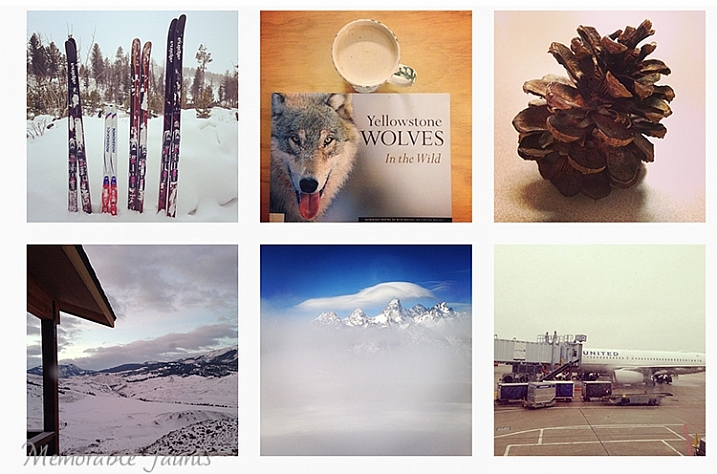
A small collage from my 365 project done in 2014.

That being said, there are some basic guidelines to successfully complete a 365 – a sort of dos and don’ts list, if you will.

#1 Be honest about why you want to do a 365

Talk to anyone, and you are bound to hear many different reasons why you should do a 365 photo project. Some people feel it improves your photography because you are consistently taking at least one picture a day. Others feel it is a fun way to document and record a year in your life. It is also a great way to experiment and learn about light, composition, subject, equipment, and develop and hone in on your observation skills.

Since you know you have to take at least one photo every day, you are constantly looking for good photo opportunities everywhere, and tend to become more observant of your environment. No matter what your reason, be very clear on exactly why you want to start a 365, and document that as part of the process. This will help clarify your goals, and make the process more enjoyable.

Processed with VSCOcam with t1 preset Memorable Jaunts DPS Article 365 Photo a day article 03

#2 Create a routine for your 365

Just like anything else in life, having a routine provides a sense of organization. Figure out when is your best time to photograph, and stick to that routine. For me, the best time is around 9:00-10:30 a.m. It is early enough in the morning when my brain is quite active, there are no distractions, and the morning light is quite clean and bright. Of course that is not to say that I don’t photograph at other times of the day, but when I am working on a project, or an assignment, that’s my go-to time. And yes, I do treat my 365 as an assignment. The only difference is that I am my own client!

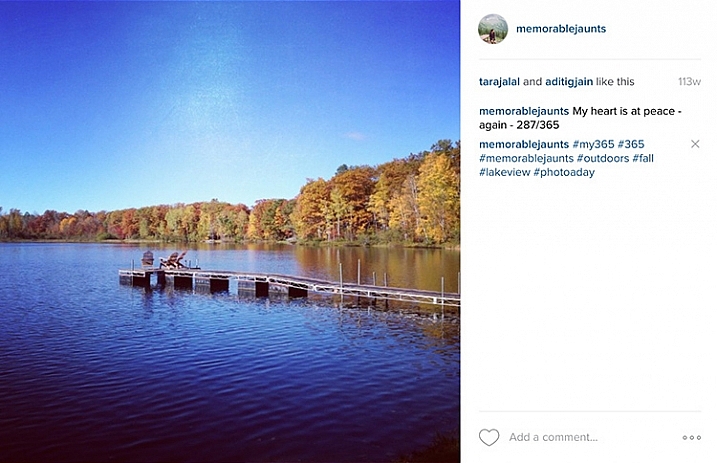
Memorable-Jaunts-365-Example

My general task list for my 365 -generally, all it takes is 10 minutes of my time:

  • Shoot 365 photo – five minutes
  • Edit photo – two minutes
  • Load to Dropbox – 30 seconds
  • Post on Instagram – 30 seconds
  • Write a caption and one line description for the image – one minute
  • Add hashtags – one minute
  • Total – 10 minutes approximately

#3 Set your own prompts or join a 365 group

In my opinion, this is the hardest part of doing a 365. The proverbial, “What do I photograph?”. Luckily there are so many of us doing 365 projects, that there are online groups you can join to get daily or weekly prompts sent to your inbox. Here are a few:

  • Project 365 Flickr group
  • 365 Project website
  • The 365 Make 1 shot per day, for 1 year – Flickr group

The other option is to completely customize the project, and work from your own prompts, or inspirational triggers. You might only want to photograph your breakfast, your pet, or your children. You may want to focus on modes of transportation. No matter what the prompt, I recommend creating a list or a journal to document them. That way you know what you have already photographed, and what comes next.

Memorable Jaunts DPS Article 365 Photo a day article 07

I try to follow this general prompt weekly for my 365. Sometimes, I deviate from it, and for me that’s okay!

  • Monday – Inspire
  • Tuesday – Food
  • Wednesday – Nature of the outdoors
  • Thursday – Indoors
  • Friday – Family
  • Saturday – Personal
  • Sunday – Fun day (anything goes)

Memorable Jaunts DPS Article on 365 photo series 05

#4 Choose the tools of the trade

Choose a camera – any camera! If you want to improve on your mobile camera skills go for it. Did you get a new camera for Christmas? Use a 365 photo project as a great way to learn the workings of your new toy. After all, practice makes perfect, and there is nothing like practicing everyday to get you comfortable with using that new camera.

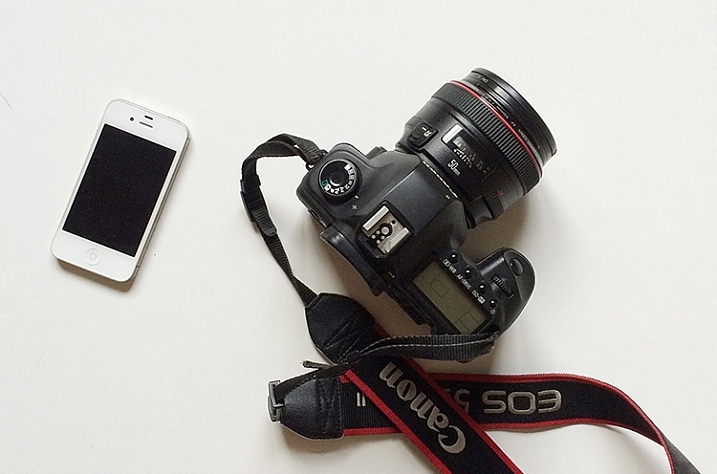
Regardless of what tool you use, makes sure that it is something achievable. I find my DSLR to be cumbersome at times, and not easy to carry around with me for smaller errands in town. So instead, for my 365 photo project, I use a combination of iPhone and DSLR, which gives me the flexibility I need.

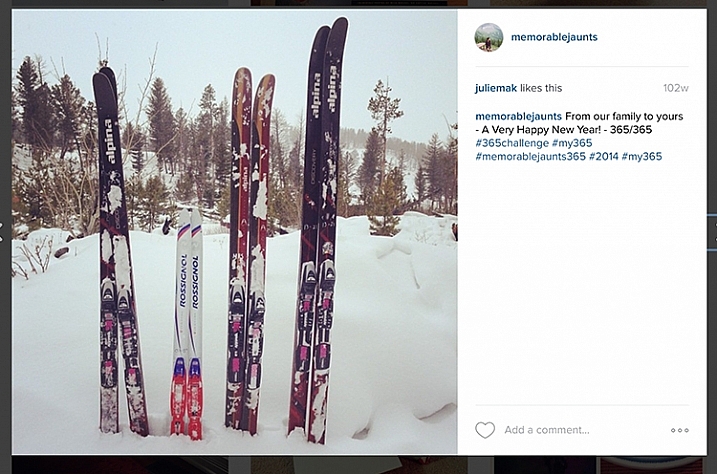
The other common question that most people want to know is how to document the project. My 365 medium of choice is Instagram. I love this platform, as it brings forth a great sense of community and creativity. By posting my images, and using the #365 hashtag, I am instantly part of a large group of people who are in the same project. It keeps me motivated and on track. I know a lot of people who post a collage of images on their social media channels, rather than a picture a day. This does not mean they don’t photograph one picture a day, but rather they just share their images once a week, or a month at a time.

Memorable Jaunts Gear for executing a 365 photo a day series article for DPS

These are the only two tools I use for my 365. When an image is from my DSLR, I can use the #dslr365 in Instagram to separate the two (not a required step but I like to do it just for my reference).

#5 Learn to forgive and move on

Who knew that doing a 365 can also be a great way to learn basic life lessons! The age old adage to forgive and forget is very relevant while participating in a 365. Sometimes things happen and you end up missing a day, or several days in a row. It is not the end of the world. Acknowledge it, accept it and move on. Either you can catch up, and post more than one picture the next day, or just mark it off as missed and go forward. The key here is to keep moving forward. Otherwise days turn into weeks, that turn into months, and before you know it, the 365 has long been forgotten and abandoned.

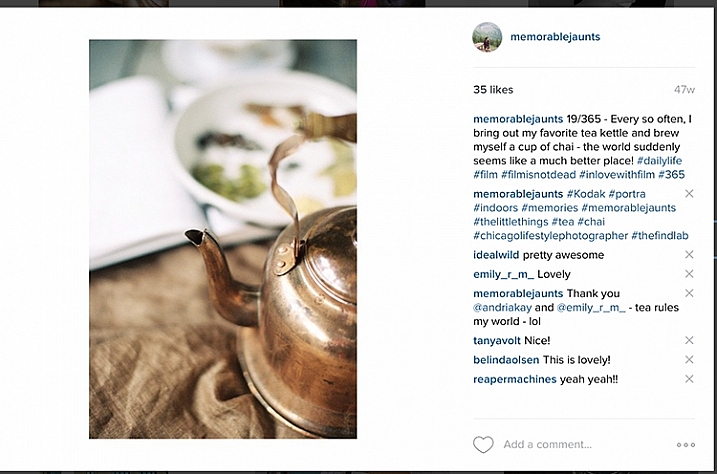
Memorable Jaunts Photo a day 365 example article for DPS

One of my favorites from my last 365. I did miss a few days here and there but the memories that I was able to capture still make me smile to this day!

#6 Success, completion, and what’s next

A 365 photo project is definitely a commitment. One that takes time and effort on your part, but the rewards are quite satisfying. To me, completing a 365 photo project provides a sense of achievement and accomplishment. In my mind it’s not an easy task, and I do celebrate my success!

Print all, or some of your best images, and create a collage of photos. Create a photo book specific to your 365. The possibilities are endless. My 365 photo project lives on my Instagram feed only, and I like printing my favorites. There are several companies that also provide the option of printing Instagram images. I have used Artifact Uprising in the past, but Blurb and Shutterfly are a few other companies that come to mind.

Memorable Jaunts DPS Article 365 Photo a day article 08 Memorable Jaunts DPS Article 365 Photo a day article 05

Note: If you use Lightroom you can create a Blurb book and order it directly from within the software, all right from your original camera files.

Once you have completed your 365 photo series, my recommendation would be to take a break. Jumping right in to another 365 can be a bit much. That’s not to say that people don’t do it, and be successful. Many people absolutely love doing 365 photo projects, and have consistently done it for several years at a stretch.

Personally, I like a variety of challenges in my photographic journey. After completing a 365 photo project in 2014, I took a break and focused on other things. Now I am ready to get back into the game and will be starting a 365 photo series in 2016 on my Instagram. Join me if you want to and lets motivate each other to take a photo a day for 365 days!

googletag.cmd.push(function() {
tablet_slots.push( googletag.defineSlot( “/1005424/_dPSv4_tab-all-article-bottom_(300×250)”, [300, 250], “pb-ad-78623” ).addService( googletag.pubads() ) ); } );

googletag.cmd.push(function() {
mobile_slots.push( googletag.defineSlot( “/1005424/_dPSv4_mob-all-article-bottom_(300×250)”, [300, 250], “pb-ad-78158” ).addService( googletag.pubads() ) ); } );

The post 6 Tips for Doing a Successful 365 Photo Project by Karthika Gupta appeared first on Digital Photography School.


Digital Photography School

 
Comments Off on 6 Tips for Doing a Successful 365 Photo Project

Posted in Photography


Project Apollo Archive uploads more than 8400 NASA images to Flickr

06 Oct

Project Apollo Archive has uploaded a massive library of high-resolution photos taken during NASA’s moon missions and related training exercises. More than 8,400 photos have been published, including scans of original photos taken by astronauts’ Hasselblad cameras and some processed photos from film magazines. Read more

Articles: Digital Photography Review (dpreview.com)

 
Comments Off on Project Apollo Archive uploads more than 8400 NASA images to Flickr

Posted in Uncategorized


Colorful Cabs: Taxi Fabric Project is a New Form of Urban Art

04 Sep

[ By Steph in Design & Fixtures & Interiors. ]

taxi fabric project

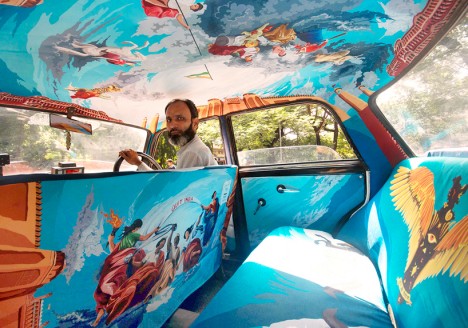
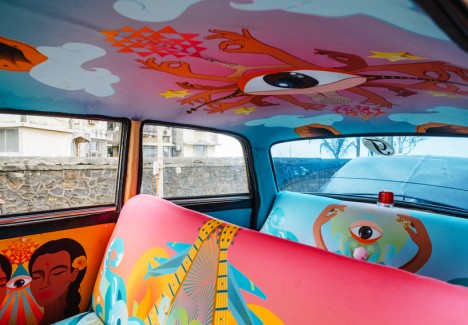
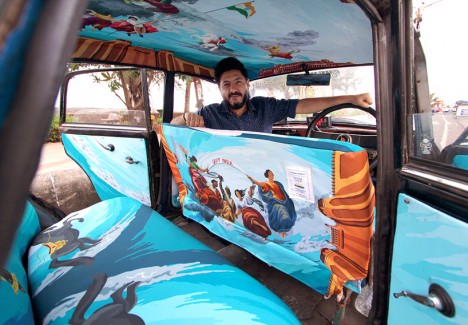
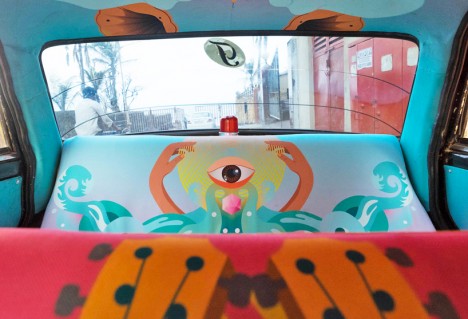
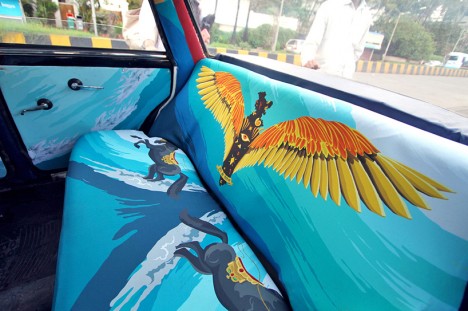
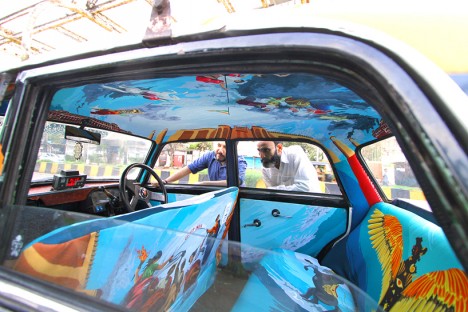
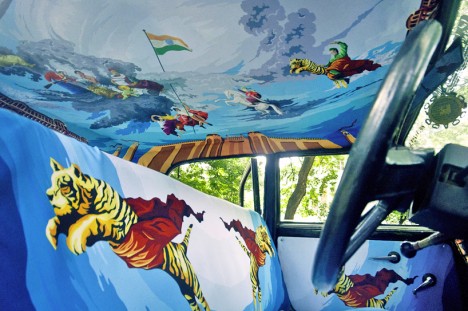
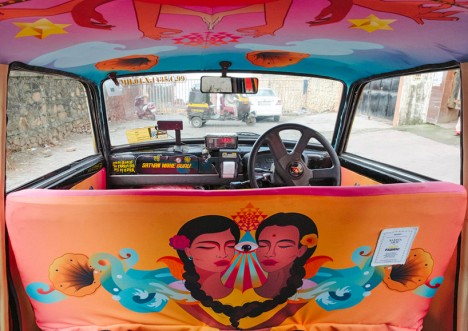
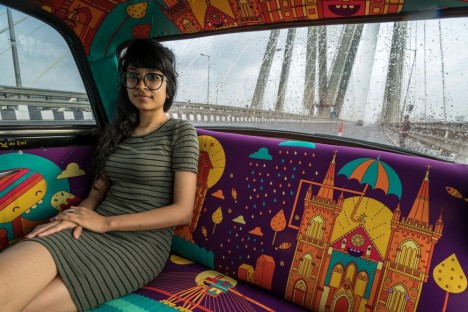
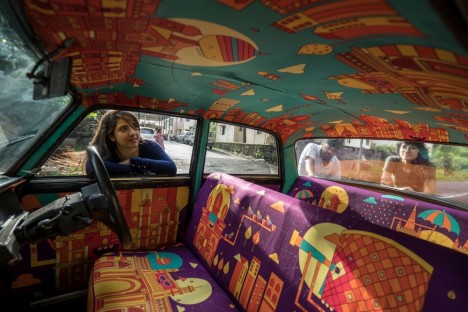
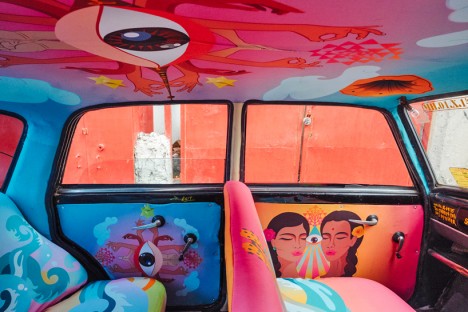
Thousands of people get to gaze at beautiful original artwork while taking a ride from one place to another in Mumbai, India, bringing exposure to local design talent through a new form of urban art. The Taxi Fabric Project beautifies this often impersonal mode of transport, making cabs stand out as individuals in a crowded sea of cars and creating mobile galleries that immerse riders in a particular artist’s imagined world.

taxi fabric project 10

taxi fabric project 5

taxi fabric project 9

“Design – as a job or studied at school – is unfortunately not widely recognized in India,” say the creators of the project. “Older generations don’t understand it. Design to them just performs a function. Many people don’t know that design can create a real impact. With so few spaces for young people to show off their skills, it’s hard to change that perception.”

taxi fabric project 2

taxi fabric project 7

taxi fabric project 8

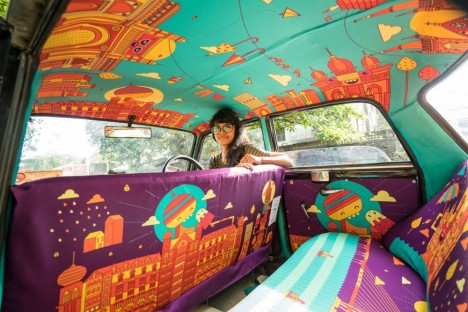
In a city where cabs are the most convenient and common way to get around, this unusual mashup of art and transportation has the potential to get a lot of people excited about design and curious about the artists. Up to 30 taxis will be made over for the project, printing colorful works onto fabric and stitching it directly to the interior surfaces of each car.

taxi fabric project 6

taxi fabric project 4

taxi fabric project 3

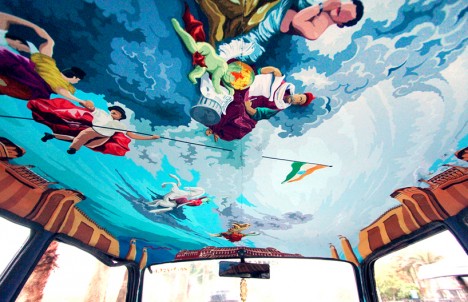
One notable example is ‘A Century of Revolt’ by Kunel Gaur, which illustrates the Indian Independence in a fresco-inspired style. Another – ‘Monad’ by Samia Arif – reminds Indians how similar their culture is to that of neighboring Pakistan, while conflicts continue to rage between the two countries.

taxi fabric project 11

taxi fabric project 12

taxi fabric project 13

‘Happily Ever After’ by Shaivalini Kumar celebrates the landmarks of Mumbai. “The architecture of Mumbai blends Gothic, Victorian, Art Deco, Indo-Saracenic and contemporary architectural styles. Many buildings, structures and historical monuments remain from the colonial era. All these buildings coexist beautifully and are also as resilient as the amazing people of Mumbai.”

Share on Facebook


[ By Steph in Design & Fixtures & Interiors. ]

[ WebUrbanist | Archives | Galleries | Privacy | TOS ]


WebUrbanist

 
Comments Off on Colorful Cabs: Taxi Fabric Project is a New Form of Urban Art

Posted in Creativity


Holga Digital camera project launched on Kickstarter

01 Sep

The Holga camera – a 120 film camera from the 1980s which has recently seen a resurgence among low-fi photo fans – is going digital, thanks to a project seeking funding on Kickstarter. The Holga Digital camera features original optics that are known for their dark corners and vivid colors. Read more

Articles: Digital Photography Review (dpreview.com)

 
Comments Off on Holga Digital camera project launched on Kickstarter

Posted in Uncategorized


How to Create an Incredible Street Photography Project from A to Z

20 Aug

With a camera in hand anyone can proclaim himself or herself a street photographer. However, urban imagery requires vision. Most street photographers operate in a spontaneous way, but if you take a closer look at their projects they all have a key-element at the heart of their work, an idea that drives them. Street photography translates into emotional reactions to Continue Reading

The post How to Create an Incredible Street Photography Project from A to Z appeared first on Photodoto.


Photodoto

 
Comments Off on How to Create an Incredible Street Photography Project from A to Z

Posted in Photography


4 Steps to Help You Start a Documentary Photography Project

24 Jul

The thing you need to do for getting good ideas which are actually possible, is to weigh the game in your favour.

You need to be selective in your project choices, research well, and demonstrate an intense curiosity when pitching your project idea.

The four steps in this article will help you:

  • Use your interests to research and learn about a subject.
  • Demonstrate your curiosity to those who hold the key. These are the gatekeepers.
  • Gain access.
  • Start a documentary photography project.

Peter David Grant dps submission 1 of 7
Primarily a street photographer, using this method I transitioned into documenting places hidden behind closed doors, as you can too.

Step #1. What are you interested in?

The first thing to ask yourself is, what are you actually interested in? Grab your pen and pad, write down “What Interests Me?”, then number lines, 1 to 20.

Without thinking too much, fill in all the way down to the bottom of the list. The goal here isn’t to think about where your interests might go, but rather to give you a reference from which to work.
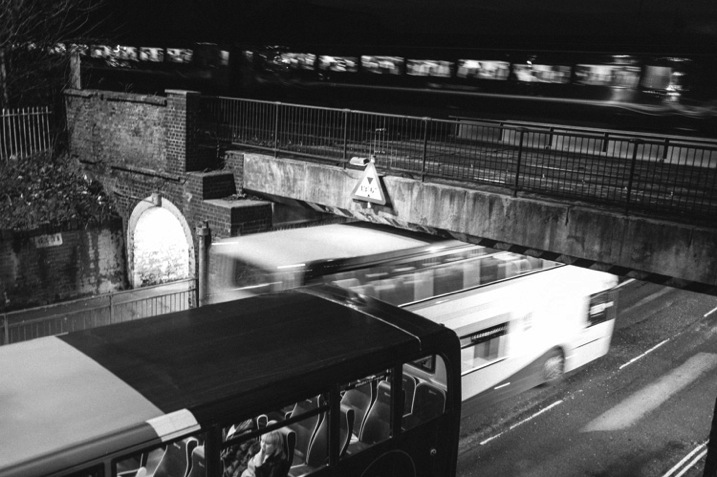
Peter David Grant dps submission 2 of 7
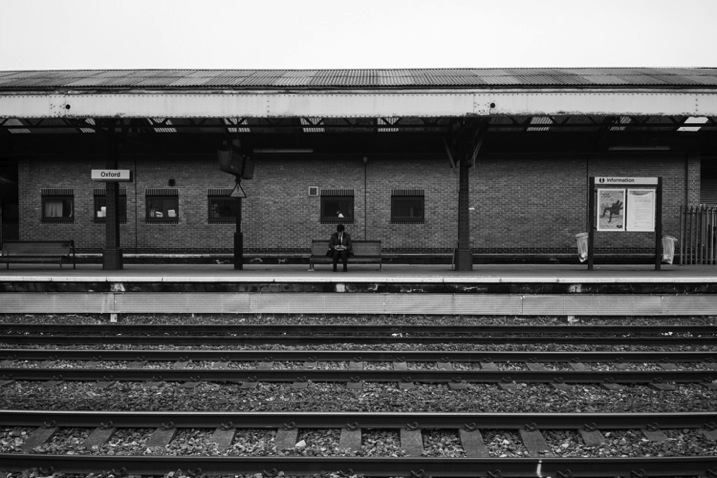
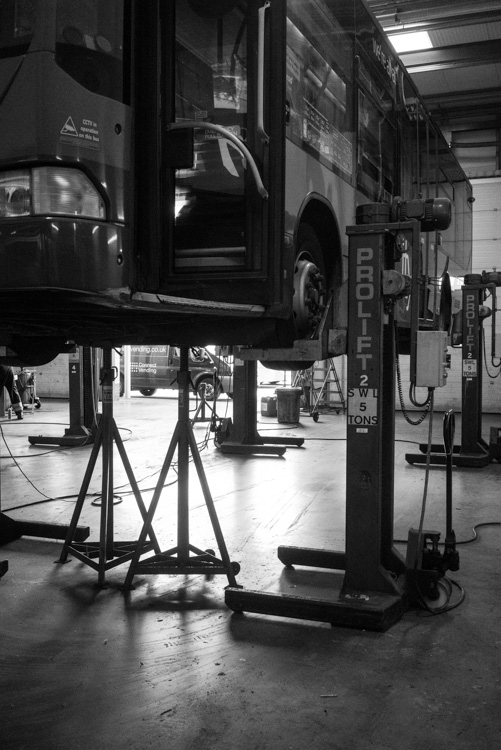
Look back at your photographs and see what you like to capture. Lots of street photographs like these were coming about due to my interest in transport. I’ve now started projects about the local train station, and a local bus company.

Step #2. Whittle down your list

Now that you’ve got your list of 20 interests, the next thing you need to do is get rid of those which are not visual in nature, or are impractical. For example, you should cross off astronaut training from your list, or following your favourite sports star around the world, as they do their thing. It just isn’t realistic, at least not in the early days.

Your goal here is to have a list of potentially visually stimulating interests which are readily accessible (assuming you gain access) to go back to over many visits. A key part about documentary photography is understanding what is going on, and picking up on the subtleties of the situations. You need to be able to go back again and again, build rapport, and blend in – because it is at that point that you’ll start producing quality photographs.

With the list reduced to those that are practical, which also have a visual interest, you should select three that you believe will be most interesting to others. This is important for a couple of reasons:

  1. You’re starting to think about what your audience will be thinking. This will be useful when it comes to talking to the gatekeepers, to use as a reason why you should document the subject.
  2. You’re thinking about what the gatekeepers find interesting. You need to be able to demonstrate empathy with the people you contact.

Finally, of those three interests, which one do you feel you know the most about? This makes the next step easier.
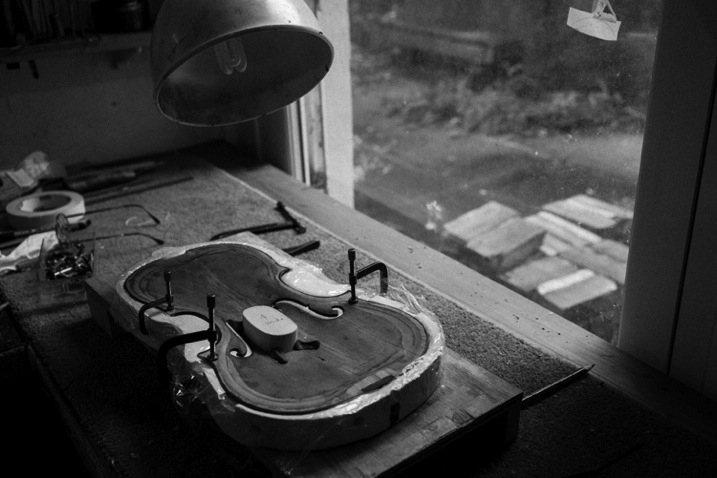
Peter David Grant dps submission 3 of 7
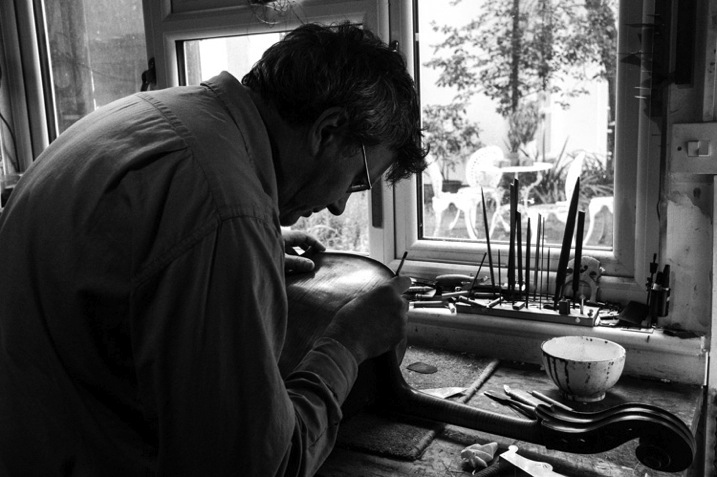
Don’t forget to think laterally. While I’m as musical as a crumbling wall, being an engineer, I could appreciate the design and material aspects of violin making.

Step #3. Research your interest and finding out who to contact

Once you’ve chosen your interest, you should further your understanding. Get your notebook again, start researching and make notes. Some suggestions:

  • Google your interest, and read the top three or four links.
  • Read the related Wikipedia article, making sure you follow any links that stand out.
  • If you’re researching a company, devour their website. Click every single page. Read everything.
  • Search on Google News for your interest.

While reading, in addition to anything that grabs your interest, keep an eye out for:

  • A name for someone you might be able to contact.
  • Something time sensitive which is changing. Part of documentary photography is recording something for historic purposes.

All of this collected information will form ammunition for your first contact, showing your knowledge, interest, and understanding of the subject. Remember this should be interesting stuff to you. If it feels like a chore, you’ve probably chosen the wrong interest as a subject, or aren’t connected with it.
Peter David Grant dps submission 4 of 7
You should be deeply interested in the subject. I had no problem spending hours, upon hours, researching the local train station, because I wanted an all-access pass so badly.

Next, you should consider your close friends and family. Do any of them have links to your interests? Those who do, are they in a position to give you the access you’re after? If so, great! They’re going to be who you contact. If they’re not, you should still talk with them about your interests, and desires. They might be able to put you in contact with a connection.

After you’ve found the person you’re going to contact, you should look for their details. It might be as easy as looking at their contact page online, or through finding someone else’s email address at the company, working out their structure, and taking a punt.

For example, if you wanted to contact John Doe to ask about documenting Company XYZ, through some Googling, or looking at XYZ’s PR or HR page, you might find an email address like john.doe@XYZ.com. It wouldn’t be too difficult to imagine john.doe@xyz.com. I’ve used this in the past to great success.

Peter David Grant dps submission 5 of 7
Guessing an email address allowed me to access the Oxford Train Station which I’m currently documenting as they redevelop.

In large organizations, you might find the assistant to the gatekeeper is the person you’re going to be contacting. LinkedIn is also a brilliant resource.

One final piece of research to do, is to look for example photographs you can show the person you’re making contact with. These can either be your own work, or the work of other photographers (be sure to credit them though). What you’re looking for is something that visually explains the kind of thing you’re seeking to achieve.

At this point, you should have a chunk of research about the organization, relevant news articles, an idea of who you’re going to contact, and some example photographs to show them.

Step #4. Making contact – demonstrating your interest and knowledge

It is now time for you to put it all together in an email. Your email should include:

  1. Why you’re emailing that particular person. This is about understanding why they are the gatekeeper to the project, showing that you care about the subject, and demonstrating your understanding.
  2. Show your curiosity and understanding of their role within the organization.
  3. Tell them what you want to do. Make your request clear and straightforward. Note: don’t ask for everything at once. If you think what you want to ask is too much, dial it down, and ask for something smaller. Once you’re in, and have gained their trust, they’ll open things up for you. As well as explaining what you want to do, you should also explain why you want to produce and show your audience the photographs at all. Mention the examples you’ve attached.
  4. Tell them what they can do with the photographs. Give them permission to use those that you’re going to take. It is the least you can do. Make suggestions where they can use them, for example in their monthly newsletter (if you can somehow find out what they call the newsletter, make sure to include that too) or on their social media.
  5. Tell them what you want to do. Explain your intentions for the photographs, e.g., are they for an exhibition (don’t worry if you’ve not arranged one, if the work is good that will sort itself out later), a book, or just your website. Be honest about your intentions.
  6. Understand the difficulties. This will impress them. You’re once again demonstrating your understanding of what they do. You’re effectively saying, “I know there are problems that me being there will bring, but I think they’re worth overcoming”. Bring it back to why you want to do the project in the first place, so that they can see the benefits, and why they outweigh the difficulties.
  7. Summarize all of the above and suggest what the next action step. You could say something like, “If this sounds interesting to you Mr. Doe, it would be great to discuss this further when it suits you sometime”.
Peter David Grant dps submission  6 of 7
Don’t be scared to chase emails either. If you don’t hear from them within the week, send a follow up email or phone call. Without it, I wouldn’t have shot at Oxford Violins.

In addition, you should make it clear that none of your ideas are set in stone, and that you’re open to their input (remember, it is highly likely that they are more knowledgeable than you are).

Finally get someone to check it. Before you do though, make sure you don’t prime them as to your intentions. You’re looking to find out if your request is obvious, clear, straightforward, that you’ve demonstrated your curiosity, and that there is a single next step that is easy to understand.

Now send it.

Step #5. What do you do next?

Once you’ve got your foot through the door, you need to show your face, be confident, demonstrate your knowledge, ask questions, and show your curiosity. Assuming that all goes well, the rest should pan out nicely. Start shooting, see how the project develops, and learn as you go.

This is where the joy starts. You’ve used your interest, and your camera, to get into somewhere that is fascinating to you. Enjoy yourself. Make friends, and click that shutter.
Peter David Grant dps submission  7 of 7
Before you know it, you’ll be behind the scenes in places you couldn’t have imagined yourself being.

Bio: Peter David Grant has produced an exclusive ebook of the emails he’s used to get access to many of his projects for dPS readers. He’s deconstructed them, explaining why each bit is in there, and provides templates for you to use. You can get it here.

googletag.cmd.push(function() {
tablet_slots.push( googletag.defineSlot( “/1005424/_dPSv4_tab-all-article-bottom_(300×250)”, [300, 250], “pb-ad-78623” ).addService( googletag.pubads() ) ); } );

googletag.cmd.push(function() {
mobile_slots.push( googletag.defineSlot( “/1005424/_dPSv4_mob-all-article-bottom_(300×250)”, [300, 250], “pb-ad-78158” ).addService( googletag.pubads() ) ); } );

The post 4 Steps to Help You Start a Documentary Photography Project by Peter David Grant appeared first on Digital Photography School.


Digital Photography School

 
Comments Off on 4 Steps to Help You Start a Documentary Photography Project

Posted in Photography


Take this Picture of the Day Project to Practice and Help You Grow as a Photographer

26 Jun
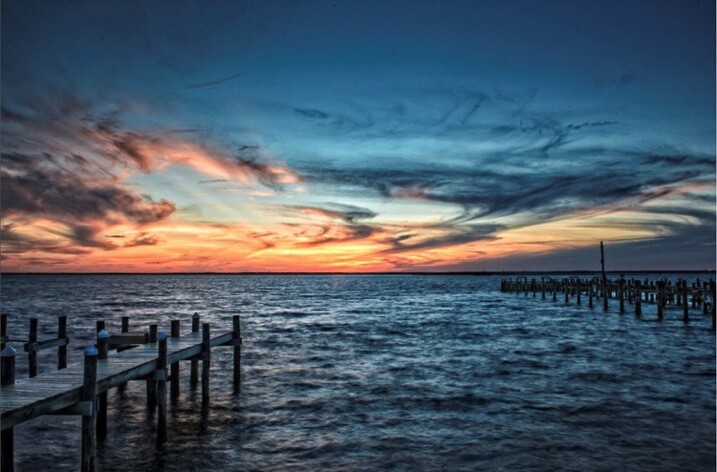
Sunset

Sunset on Long Beach Island (NJ)

I watched the future football Hall of Fame quarterbacks practicing on the sidelines just before the Super Bowl. Although they had thrown the football perhaps millions of times before, they were practicing their throwing before the big game. They believe in the old (but true) saying, “Practice makes perfect.”

It’s important for us as photographers to continually practice our skills as well. Although we may have pressed the shutter button a million times, we need to be sure that we are always “ready for the big game”. Like the Super Bowl quarterbacks, it is important that we keep practicing our skills; whether we are professionals, aspiring professionals, or enthusiasts.

Why Practice?

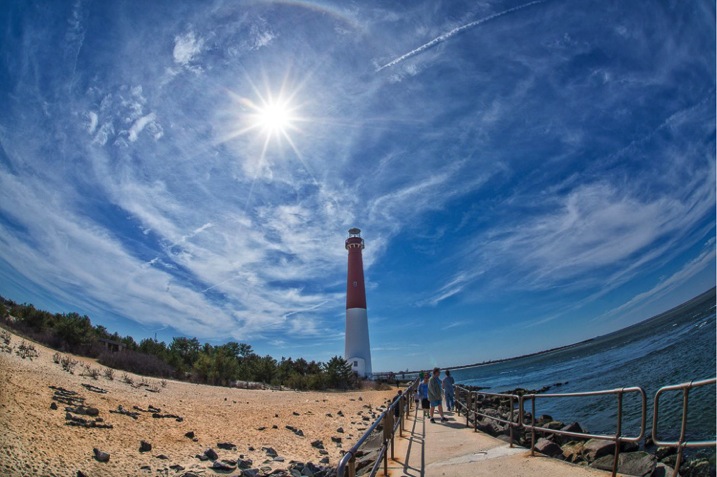
Old Barney

Old Barney lighthouse in Barnegat Light, NJ

Although practice does not make perfect (we can practice doing things the wrong way), it does make our techniques more natural, and more permanent. For example, using back-button focus on my camera the first time seemed strange to me, but after practicing it over and over, it become an automatic technique that I use without even thinking about it. It’s a challenge to try turning off your brightly lit LED display on your camera once the theatre is darkened, but with practice it’s an automatic, and easy process.

Practice not only gives us a chance to make our shooting techniques more automatic, it gives us a chance to try new techniques. Practice gives us an opportunity to learn new poses, try a new lenses, or try a new post-processing technique to enhance our photographs before we use them in a client shoot. As a photographer, learning never stops; practice is a good way to try out things with no pressure or fear of failure.

Maybe I’ll Practice Tomorrow

Unless we are full time photographers or we have the luxury of having the time to shoot whenever we want, finding time to practice can be a challenge. Life is busy; there are so many things that need to be done that we are sometimes tempted to say, “Maybe I’ll practice tomorrow.” Sometime we need motivation to force us to make the effort, despite other things that may get in the way, to practice our photography techniques.

Picture of the Day

Clyde

If someone asked me what the biggest thing was that has helped me to improve my photography skills, I would have to say that it was my commitment to what I call the Picture of the Day. A little more than a year ago I started trading photographs that I took with my sister who is a photography enthusiast. Very quickly that practice spread to other family members and friends. Today, I send a new photograph to more than a hundred people every morning. The list continues to grow. But it’s not the number of people that receive the Picture of the Day that is the motivator, it’s the commitment to taking, and sending the picture, that benefits me as a photographer.

Even though my photography business focuses mainly on people (weddings, portraits and events); my Picture of the Day photos may include people, animals, architecture and landscapes. People that receive my Picture of the Day have commented that opening my morning email is like opening a box of chocolates because “you never know what you’re going to get”. Sometimes my pictures are not meant to be works of art, but rather just funny, like the shot of my dog Clyde (above), sitting by the dinner table with his sunglasses on, waiting for dinner. The zoo is always a great place to take pictures, so I make that part of my list of places to shoot.

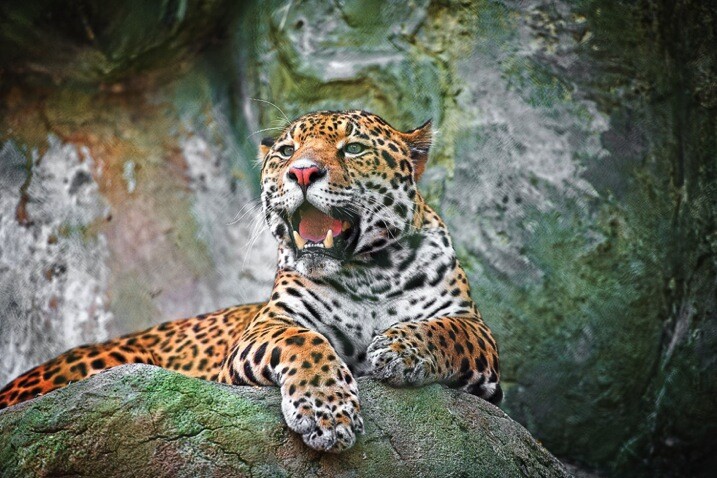
Jaguar

Jaguar at the Elmwood Park Zoo (Norristown, PA)

Admittedly, I shoot most days, but not every day. I make time during the week to practice shooting; I am committed to take that time despite everything else. I have my camera with me most of the time, and many of my shots are unplanned. I stockpile the shots so that I always have a reserve of pictures to use for my morning emails.

How has the Picture of the Day Helped Me?

My commitment to the Picture of the Day has helped me to grow as a photographer more than anything, including the following:

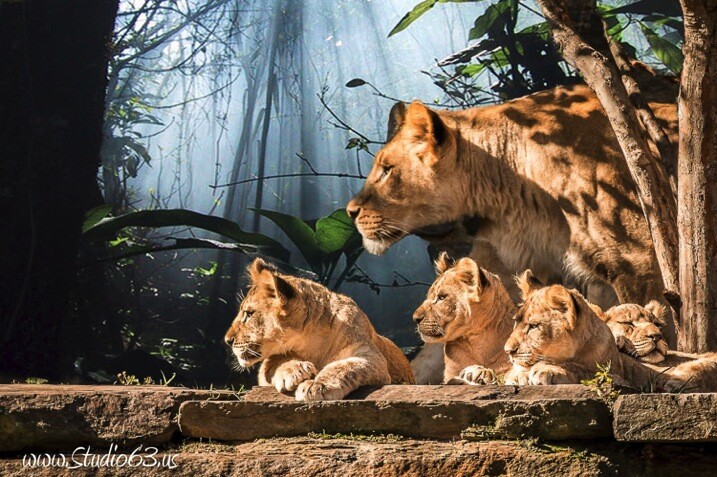
Kids and Mom

Four month old lion cubs with mom (Philadelphia Zoo)

  • Knowing that I need a new picture every day motivates me to get out and shoot, even if I am not shooting the things that my business is focused on.
  • Knowing that my Picture of the Day needs to be different than all of those that I previously sent out, motivates me to try new techniques and to look at things more creatively. That has helped me to start thinking out-of-the-box and has greatly expanded my composure skills for when I am shooting weddings or portraits for clients.
  • Shooting for the Picture of the Day has given me the opportunity to try and to practice with new lenses and filters, so that when the time comes to use them in a business shoot, I am ready.
  • My Picture of the Day has enabled my business to grow, as people that receive my email every morning are reminded that I am in the photography business. I can’t think of a more effective, less costly marketing tool.
  • Lastly, shooting for my Picture of the Day has been just plain fun!!!

Make the Commitment Today

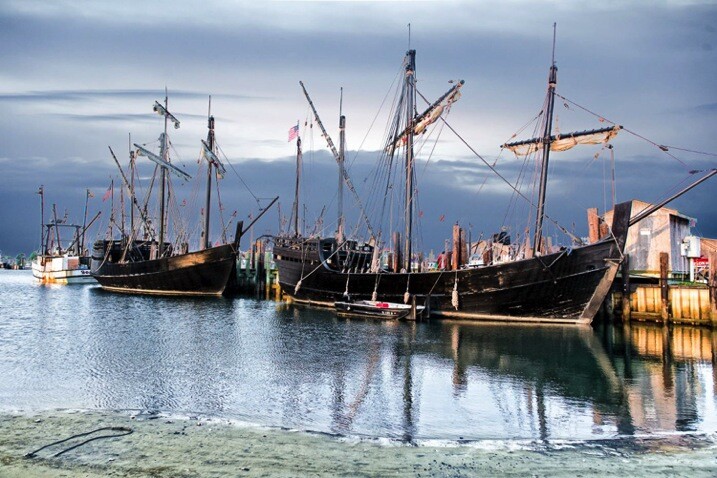
Nina and Pinta

Nina and Pinta replicas at visit to Viking Village (Barnegat Light, NJ)

If you are not just a picture snapper, but rather, serious about photography – make the commitment to start your own Picture of the Day project today. Like mine, it can start small and grow over time (I had only one person on my list initially.) I sometimes post my Picture of the Day on my personal Facebook page which adds more visibility to my work. This visibility also adds to my list of people that subscribe to my Picture of the Day.

How do you practice your photography?

googletag.cmd.push(function() {
tablet_slots.push( googletag.defineSlot( “/1005424/_dPSv4_tab-all-article-bottom_(300×250)”, [300, 250], “pb-ad-78623” ).addService( googletag.pubads() ) ); } );

googletag.cmd.push(function() {
mobile_slots.push( googletag.defineSlot( “/1005424/_dPSv4_mob-all-article-bottom_(300×250)”, [300, 250], “pb-ad-78158” ).addService( googletag.pubads() ) ); } );

The post Take this Picture of the Day Project to Practice and Help You Grow as a Photographer by Frank Slezak appeared first on Digital Photography School.


Digital Photography School

 
Comments Off on Take this Picture of the Day Project to Practice and Help You Grow as a Photographer

Posted in Photography


Das 24 Hour Project in München

08 May

0:06 Exhausted

2012, als Instagram noch das Netzwerk der Smartphone-Enthusiasten war, kamen zwei Amerikaner auf die Idee, ein Fotoprojekt der besonderen Art aus der Taufe zu heben: Samuel Smotherman und Renzo Grande dachten, dass es spannend sein könnte, eine Stadt über einen Zeitraum von 24 Stunden nonstop zu dokumentieren.
kwerfeldein – Fotografie Magazin | Fotocommunity

 
Comments Off on Das 24 Hour Project in München

Posted in Equipment


Save The Memory Project restores over 400,000 photographs from Tsunami-hit areas of Japan

15 Apr

A project to salvage, clean, scan and return photographic prints found in the areas devastated by the August 2011 Great East Japan Earthquake and Tsunami has reunited over 90,000 images with their rightful owners since shortly after the disaster struck. The Save The Memory Project has recovered over 400,000 prints from the rubble of affected areas, having cleaned, scanned and posted digitized versions to an online system for owners to claim. Learn more

Articles: Digital Photography Review (dpreview.com)

 
Comments Off on Save The Memory Project restores over 400,000 photographs from Tsunami-hit areas of Japan

Posted in Uncategorized