RSS
 

Posts Tagged ‘portraits’

7 Tips and Etiquette for Taking Portraits in Public

11 Dec

Facial expressions, skin and hair, and sad or sparkly faces have attracted the artist’s eye since the first caveman recorded his first story on rock. Facial features have the power to convey stories. A single image says more than a thousand words. If you are a photographer who shares this joy in the human form, you would recognize that each person is unique and beautiful in his or her own way. If you are a portrait photographer, you know how humbling it is when you are given the privilege of taking a photo.

Storytelling through portraits requires a code of conduct that should be observed. Through my experience, I have developed some rules that I follow, and I would like to share some tips and etiquette of taking portraits in public with you.
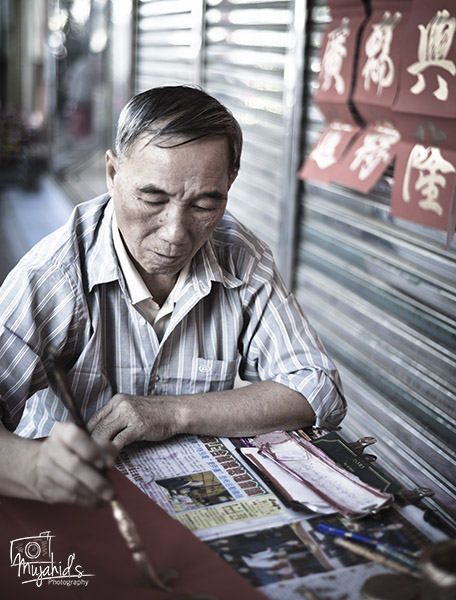
Calligrapher  China Town Bangkok

You can not only admire the beauty of the person, but also his work and workplace.

#1 – Show Your Presence

Smartphone holders, tourists, and casual snappers with DSLRs have made the jobs of serious portrait photographers a bit difficult. Photography overload has contributed toward a sort of over saturation in the population – perhaps the subjects have become weary. You are never sure of the reaction when you point your camera toward a person. If you see someone you would like to take a photo of, try to stand around for a while and become part of the scene. Observe the movements and dynamics, even try to catch their eye, but do not make the person feel uncomfortable.

#2 – Engage

If you don’t know the language, at least learn the local words to greet people. Remember, every culture has its signs of respect and ways to start a conversation, so keep those in mind. Show interest in whatever he or she is busy doing, selling, or offering. Engaging in such a manner normally makes people comfortable, and often less skeptical, of to your forbidding-looking, long lens. You come across first as an individual with a personality. Try to engage with something that you believe will be appreciated, be it about their children or their surroundings – sound them out, gauge a response. Of course, lack of response is answer enough that you do not proceed to take their picture.
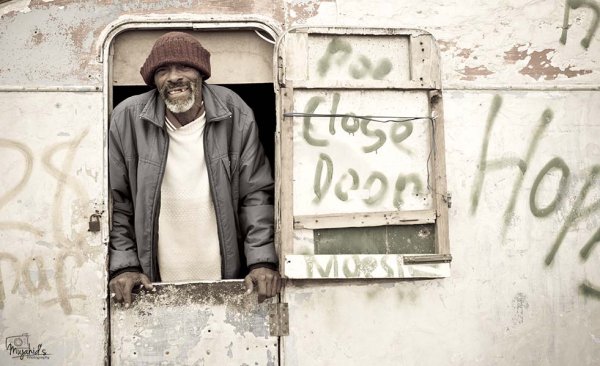
Freek, the fisherman. I said hello to him as I passed by his caravan. We chatted for a while before I opened my camera bag and requested a photo.

Freek, the fisherman. I said hello to him as I passed by his caravan. We chatted for a while before I opened my camera bag and requested a photo.

#3 – Ask Permission

You are allowed to take photos in public spots, even without permission. Portraits need all of what we have discussed so far. However, this is not an hour long process; you need to get to the bottom line soon. Ask permission. If it is given, help the person posing as per your preference. Do not feel bad if they refuse, accept it politely and pleasantly, and remember especially then, to be respectful. A few things I learned along the way:

  • A guard asked me to gain permission from the shop owner first (cool guard!).
  • I was once told by a religious person that his faith doesn’t allow taking photos.
  • A tribesman allowed me to take photos of men and children only, and not of the women.
  • A young girl allowed me to take her photo on condition that I would never upload it; it was for my eyes only as she was comfortable with me but not the general public.

#4 Remember People

You cannot do justice to a portrait if you do not include at the very least the name and background of the person, and preferably also age. You need to know who they were, and what their life was like. It is first and foremost a sign of respect to the person whose image you have used for your own purpose, but secondly you will realize how powerful your portraits become when contextualized. I currently use my smartphone to note down these details, but am considering carrying a dictaphone. A simple notebook will do.
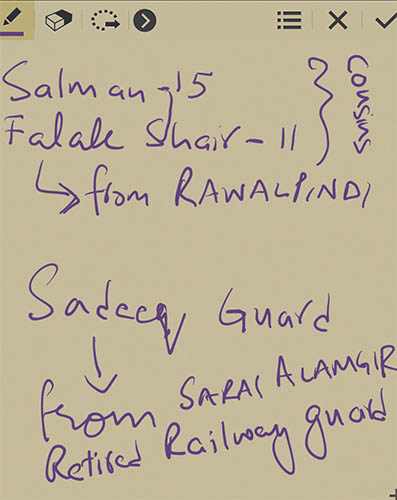
Notes

Capture their names, ages and origin.

#5 Show the results and make people feel good about themselves

If your camera allows previews, show it immediately, and get feedback. Sometime the best ideas come from the person in front of the lens. Make your new friend smile and even chat while you are taking photos. I often ask questions while I am busy taking photos. I believe it is a great technique which helps people calm down. When they are animated about something important to them, it reflects in the photo. If you have a companion with you, sometimes having them strike a conversation allows for the opportunity of candid shots of your subject with spontaneous expressions.

“Wow, you are in grade 2. This is so cool buddy, I wish I was in grade 2 again”.

“Were you a solider before Mr. Sadeeq? I feel that strength in your eyes”.

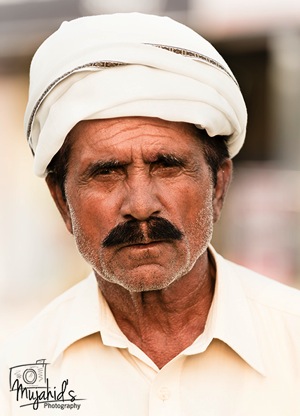
“Enrique, you remind me of my cousin… he has a beautiful mustache like you”.
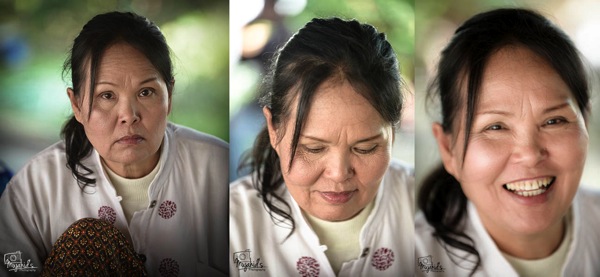
Umbrella Lady Serious to smiling

After I showed the first shot to this umbrella-making lady, and told her she looked beautiful, she felt shy and even gave me a big smile.

#6 Respect their possessions

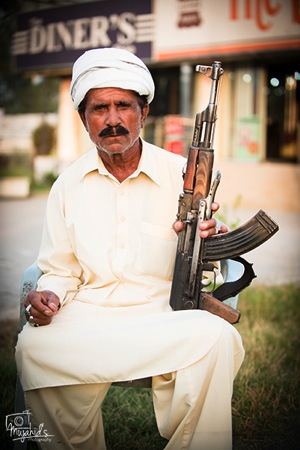
I have not followed this rule strictly, and I have regretted it several times in retrospect, after the moment passed. Once, after taking photo of a guard, I proudly showed it to him, and he asked, “Where is my gun? It is not in the photo”. His voice echoed in my mind for many days, I had missed an important aspect of what made him a guard! Not only was it integral to his identity, but what an important prop I had omitted in error. Take two.

Take a photo of the people with their surroundings to remember what they were doing. It will help you in your story telling one day!
Sadeeq Guard Without Gun

Take #1 – first photo.

Sadeeq Guard With Gun

Take #2 – photo with guard’s belongings, i.e. his gun.

#7 Say Goodbye and inform them of the use of their photo (legal)

Greet properly. Ask if they would mind if it was published or uploaded. Some photographers even carry model releases on their person, for use as required. If this is not feasible, as far as language allows, at the least make your subject aware that you may use the images. Later, if you were to personally or commercially use the images, depending on the laws of your country which are variously lax and stringent, you may either need to submit a model release and/or affidavit along with the photo to make its use legal.

Remember to be informed and aware of not only the etiquette of taking portraits, but also of the legal requirements which will vary from country to country, and are a topic of their own. Be particularly cautious when photographing the faces of minors without formal consent of their parents. I still have inadequate knowledge in this area myself.

I hope these tips would help you in your portrait photography. I look forward to seeing your feedback and learning from you all.

googletag.cmd.push(function() {
tablet_slots.push( googletag.defineSlot( “/1005424/_dPSv4_tab-all-article-bottom_(300×250)”, [300, 250], “pb-ad-78623” ).addService( googletag.pubads() ) );
} );

googletag.cmd.push(function() {
mobile_slots.push( googletag.defineSlot( “/1005424/_dPSv4_mob-all-article-bottom_(300×250)”, [300, 250], “pb-ad-78158” ).addService( googletag.pubads() ) );
} );

The post 7 Tips and Etiquette for Taking Portraits in Public by Mujahid Urrehman appeared first on Digital Photography School.
Digital Photography School

 
Comments Off on 7 Tips and Etiquette for Taking Portraits in Public

Posted in Photography


How to Create Dramatic Portraits in Your Garage

08 Dec

The setup

1

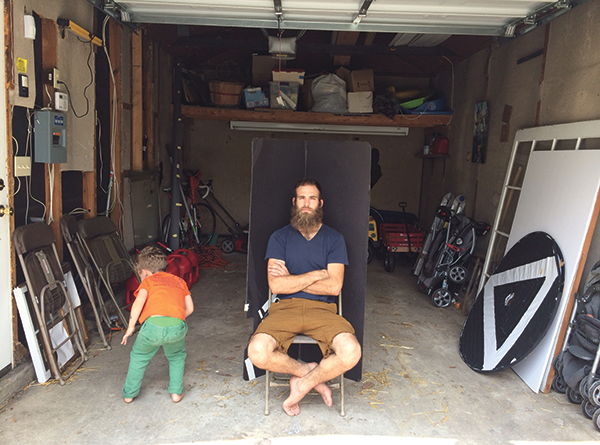
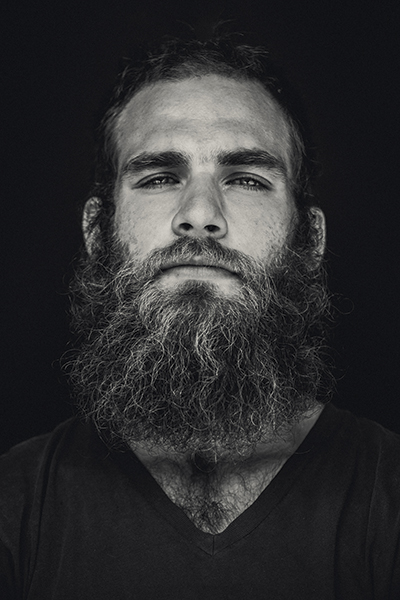
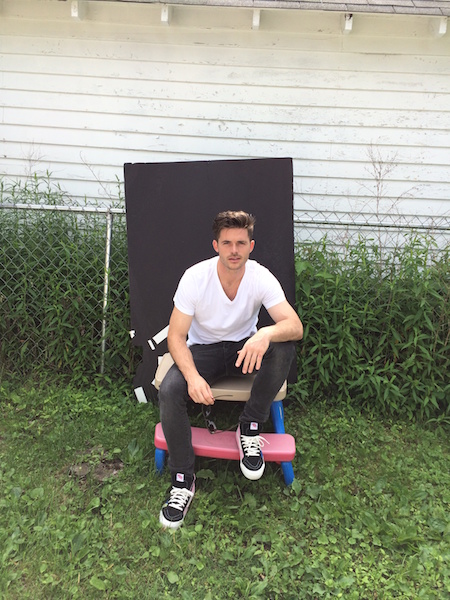
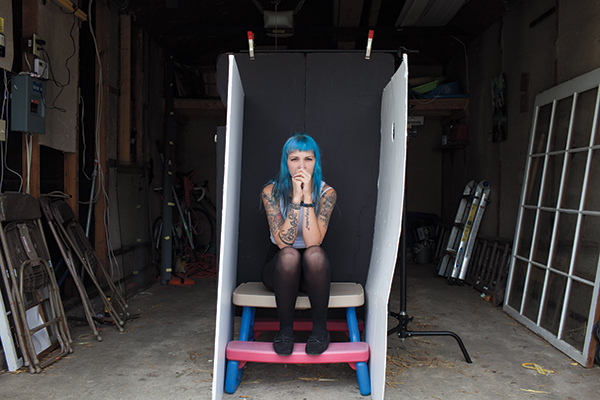
If I want to take dramatic portraits on a black backdrop (without even needing a single light), a garage is your new go to spot. This is the simplest (and most makeshift looking) setup that I use. As you can see in the image above, all I am using is a piece of black foam core, folded into a “v,” set inside a garage on a sunny day.

While you can accomplish this setup on overcast days, having a sunny day helps to increase the brightness of everything outside the garage, thus increasing the catch light in the model’s eyes. The sunny daylight scene outside the garage essentially acts as a giant reflector, which hold under the subject’s chin to soften shadows.

2 copy

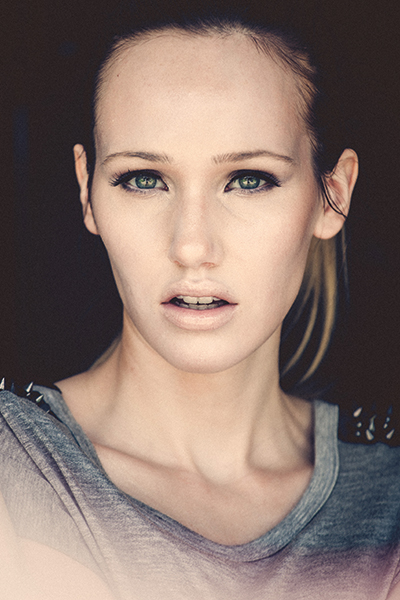
The reason why a garage is great for this kind of setup is that it allows you to place your subject closer or further away from the bright, outdoor light, depending on how much light you want in your subject’s eyes or how even you want the light to appear. For example, if the subject is right at the edge of the garage, just out of the sun, the exposure will be very bright, requiring a very fast shutter speed and/or a small aperture, but they will have large catchlights in their eyes. Note that the smaller aperture will cause the image to be sharper from the front to the back. Also, the closer the subject is to the bright outside, the darker the background will be once you’ve adjusted your exposure for their skin tone.

Alternately, if the subject is placed deeper into the garage, it allows you to use a wider aperture or slower shutter speed, which can create a flattering, softer, depth of field, though the catch light and overall light quality will change.

3 copy

Shooting in a garage is the equivalent to a one-light studio portrait since the only light source is the open garage door. This increases the appearance of the image being a studio portrait, as it mimics a large softbox or octabank (though an open garage door is larger and less expensive). If you want to have more light, such as hair light and rim light to create separation between a subject and the background, there is another option available to you. Simply place your subject on the shaded side of the garage, allowing the sun to light just the edges of your subjects hair and shoulders, as seen below.

3

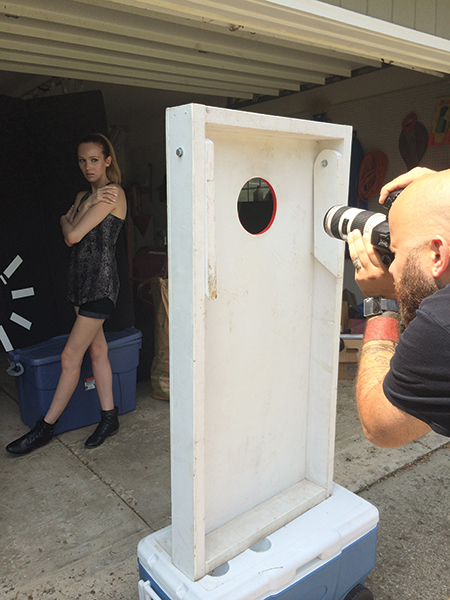
The one downside to having a huge wall of soft light in front of your subject is that it can flatten out the subject, which can make the lighting appear flat or boring. One remedy for this is flagging off portions of the light, as seen in the image below. Note that any object you place in front of the model to flag the light will also change the shape of the catch lights in their eyes.

4 copy

For portraits like this, you will want to use a focal length of at least 50mm or longer. Anything wider angle will lead to distortion of the subject’s features. Since you are shooting outdoors, you have unlimited space to back away from the subject. So I like to use my 70-200mm lens for these type of head shots.

5 copy

The other perks that come with shooting outside or in a garage is that you have a free hair fan and plenty of ventilation, which comes in handy when you’re shooting smoke.

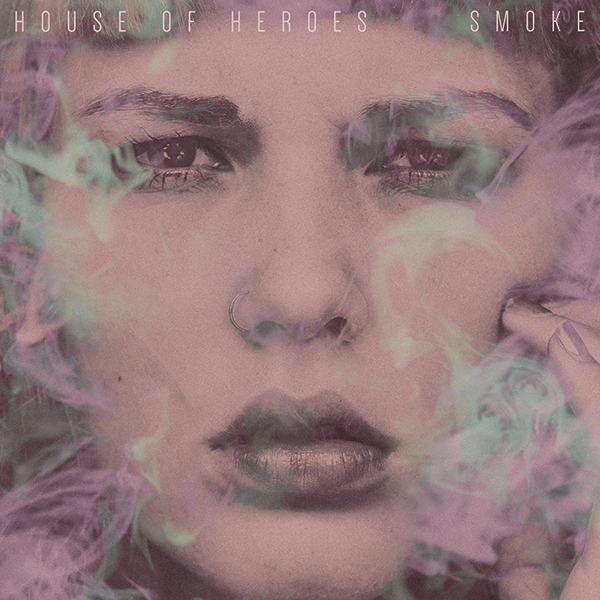
My buddy Colin is a drummer in the band House of Heroes. He approached me to shoot the cover of their latest EP, Smoke. He wanted a dramatic, close-up of a girl’s face with smoke all around. I knew that my garage would be the perfect spot to conduct the shoot (open air with bright light). I placed white boards on either side of Courtney, which helped to not only fill in any shadows under her jaw but also add catch lights to her eyes. In addition to the images of Courtney, I also shot several frames of smoke, being exhaled by Colin (try doing that inside a studio), isolated on the black backdrop, which was later overlaid on the final image of the model in post-production.

6 copy

Have you tried doing portraits in your garage or other makeshift location? Have any additional tips? Please share in the comments.

googletag.cmd.push(function() {
mobile_slots.push( googletag.defineSlot( “/1005424/_dPSv4_mob-all-article-bottom_(300×250)”, [300, 250], “pb-ad-78158” ).addService( googletag.pubads() ) );
} );

The post How to Create Dramatic Portraits in Your Garage by Nick Fancher appeared first on Digital Photography School.

Digital Photography School

 
Comments Off on How to Create Dramatic Portraits in Your Garage

Posted in Photography


5 Tips to Help You Take More Natural Looking Portraits

05 Dec

Writing for dPS has afforded me several opportunities, the best one being getting to converse with photographers – hobbyists to professionals and everything in between – from all over the world.

lynseymattingly3

Each time an article I write is published, I get the loveliest emails and comments, and I do my very best to respond to each of them. The question I get most often is one I ask other photographers all the time: How do you make your pictures look like……..that? The question may be worded differently, but ultimately it is the same:

  • How do you get your colors to pop?
  • What lens do you use?
  • How come the people all look so happy/comfortable/natural in your pictures?
  • What’s your editing process?

When we ask another photographer these questions, we are all asking the same thing: How do you make your pictures look like that?

When an image grabs you – makes you take an extra second to look at, to admire it, or to wonder if your own images look that great, (or throws you into a jealous rage over picture envy (please tell me I’m not the only one) – it’s as though the photographer has such a defined style, their entire message comes across in that one photo staring back at you. Since my style is candid portraiture, or lifestyle photography, or whatever the latest buzzword is we are calling it now, my subjects’ expressions and poses are what I typically get asked about most. Or maybe that’s just the only part I can explain very well, as the science and equipment piece of it is just not my cup of tea.

lynseymattingly8

So here are the five things I say and do during a portrait shoot that I feel make the biggest difference in the comfort level of my clients, and ultimately is the reason I occasionally strike gold. It’s these things that are the answer to how I make my pictures look like that.

#1 Explain the process

Before I take a single picture – whether my subjects are nine or 90 years old – I tell them exactly what to expect from the session, and what I expect from them. It nearly always goes like this: “I’m going to take some pictures. I’m going to take some pictures of just the kids, some pictures of just Mom and Dad, and some pictures of everybody. You can smile if you want to smile, but you don’t have to if you don’t want to, and at the end I’m going to give you a little prize.” This short little introduction often immediately puts my clients at ease and I am able to set the tone of the whole shoot based on their response.

lynseymattingly6

If I am photographing kids, I always sit down on the ground so I am closer to their level, but I say this exact thing to children and adults alike. Yes, I carry around lollipops. My gear bag has an entire area just for that, and people I have photographed before know it. A lollipop is a tiny treat and while it’s fun and funny, though not usually a huge motivator for teenagers and certain adults, you’d be surprised how far it gets me. Obviously for most, it’s not the prize itself, but rather that I am acknowledging that this is going to be a bit of work, and it’s going to have an end point. It’s an offering to them, silently asking for them to go all-in for photos and perhaps have a little patience with me.

Also important is that I tell them they don’t have to smile. I don’t want anyone smiling because they think they have to – smiles out of obligation makes for terrible pictures. I want them to smile because we are having so much fun, they do it instinctively.

lynseymattingly1

#2 Strive for interaction and reactions, not poses and smiles

If I have to choose between a picture of every face looking at me, smiling, or one of a family looking and laughing at each other, I will chose the latter every day and twice on Sunday. It is my personal and professional belief that 50 years from now, those images of people being themselves with their loved ones will be much more treasured than portrait studio shots that only show everyone together. I do my best to set-up a moment and let my subjects take it where they want. I can’t declare their reaction to something, so therefore I set the tone for funny or serious, or as I would say to a child: a loud picture or a quiet picture. I see myself as a third wheel on a great date – I’m along for the ride, I just happen to be photographing it.

lynseymattingly5

#3 Shoot everything

I am a massive over-shooter. I carry more memory to a quick portrait shoot than some photographers would pack for a day-long wedding. Changing a card mid-shoot is completely normal for me. This no doubt adds to the backend of my process, as I have so much more to sort through, but this means I can feel confident enough to guarantee my clients a minimum number of images. This also means, I very rarely have a client ask: “Did you get it?”.

I shoot looking through the viewfinder, and not. I line up the shot and then peek my head out so my subjects aren’t just staring at a black box. I make funny faces. I have a fake sneeze that can get even the most serious of baby giggling and that requires several sneezes, shots, and me not having a camera affixed to my face. I shoot an average ratio of one to 30. Meaning for every 30 images I shoot, one of them will get edited and delivered to the clients.

This would be terrible if I shot film. To be honest sometimes it’s a little overwhelming the first time I upload all of the images from a shoot. Often it’s even a lesson in self-loathing, wondering how on earth I will ever get through them, and why do I do this to myself every – single – time. In the end, it always works out. Plus, I always have the images I was hoping I caught.

lynseymattingly9

#4 Be a giant cheerleader during a shoot

I am a giant cheerleader during a shoot, to the point that it’s a bit eye-roll-inducing. If it’s dark and gloomy out, I show-up saying this is what we call perfect, even, light! If it’s bright and sunny, and miserably hot? What a perfect day for photos!

Every single thing my clients do during a photo session is perfect and if it’s not, I tell them I’m going to fix it. I want my clients on the other side of that lens to feel beautiful, and like they are doing a perfect job. Having them feel awkward, or be in poses or positions that feel unflattering, will make for bad pictures. Being told that they are doing a great job and that the pictures are coming out perfectly, gives clients the confidence to be themselves. I’m their friend during a shoot – kids and adults alike. And if I’m not behaving in a way that people would want to hang-out with me when I am not taking photos, why would they want to hang-out with me when I am?

lynseymattingly7

#5 Know you are just a piece of the process

I don’t want to get all cheesy on you or anything, but I don’t feel like any picture I have taken of someone is mine. The photo belongs to the person in it, and whomever they chose to share it with. I don’t do any printing. When someone pays for a photography session with me, they get the high resolution images as jpg files, and a release to print and use them as they would like. I honestly feel like this creates a comfort level that I didn’t see when I used to offer prints only. They know they are going to get the best of what I shoot and they aren’t going to have to pick a favorite for an expensive enlargement. They know there isn’t going to be a hard sale in a few weeks where we look at everything together. I don’t put watermarks on my images ever and I encourage them to share their pictures on social media. In fact, I often share their pictures on social media.

lynseymattingly2

Here’s why: if they didn’t hire me, show-up, look great, have fun, etc., I wouldn’t have the pictures to show in the first place. I’m only a piece of any picture I’ve ever taken. You may argue, what if someone steals your images? To do what? Claim them as their own? I have never run into a situation where that would truly hurt me. If there is a wild rampage of stealing other photographer’s images out there and mine are being stolen, I would honestly be a little flattered. That means they’re good! I’ve already been paid for my work. Though I would never use an image where my client hasn’t signed a release allowing my use, I don’t see how getting my images out there is anything but free advertising. I want my clients to love their photos so much they print them all in large sizes to hang up for their friends to see. I want them to talk about how fun the shoot was, how happy they are to get all of the images, and how they will hire me again and again. Those people know who took the pictures, and that’s all that really matters.

How do you help clients feel comfortable during a photo shoot? Share your comments and suggestions with us below.

googletag.cmd.push(function() {
mobile_slots.push( googletag.defineSlot( “/1005424/_dPSv4_mob-all-article-bottom_(300×250)”, [300, 250], “pb-ad-78158” ).addService( googletag.pubads() ) );
} );

The post 5 Tips to Help You Take More Natural Looking Portraits by Lynsey Mattingly appeared first on Digital Photography School.

Digital Photography School

 
Comments Off on 5 Tips to Help You Take More Natural Looking Portraits

Posted in Photography


Readers’ Showcase: Portraits and People

24 Nov

DPReview members are a talented group and we’ve been highlighting their photography in a series of readers’ showcases. Recently we asked the Portrait & People Photography forum to share their favorite shots. They responded with excellent work both in and out of the studio, and we’ve picked a few of our favorites to share. See gallery

Articles: Digital Photography Review (dpreview.com)

 
Comments Off on Readers’ Showcase: Portraits and People

Posted in Uncategorized


How To Source Locations For Portraits In Your Own Town

20 Nov

I’ve noticed that a lot of articles on scouting locations focus on travel — we have a wonderful one on this website listing 100 amazing places to shoot. That is, however, not actionable advice for everyone. Some photographers can’t afford to travel regularly, some aren’t interested in it, and some simply focus on a different type of photography. For that Continue Reading

The post How To Source Locations For Portraits In Your Own Town appeared first on Photodoto.


Photodoto

 
Comments Off on How To Source Locations For Portraits In Your Own Town

Posted in Photography


How to Find Great Backgrounds for Portraits

17 Nov
Portraits and backgrounds

I used a short telephoto lens at a wide aperture to throw the cliff in the background out of focus in this photo. With this technique, the background itself isn’t so important as no-one can tell what it is, but it must still complement the subject.

Finding great backgrounds that complement the subject is an essential part of the process of creating beautiful portraits. My article How to Plan the Perfect Portrait Shoot will help you with the other aspects of putting together a portrait shoot, but today I thought it would be interesting to delve deeper into the subject of backgrounds for portraits. Here are some things to think about in your search for the perfect background for your portraits.

Do you want your background to be sharp or blurred?

This is an important question because the answer dictates your entire approach to the portrait shoot.

If you want the background to be in focus, then this suggests that the background is in some way relevant to your subject. For instance, if you are taking a portrait of a performing musician, then perhaps it would be nice to take a photo in a venue where they perform, including the background to show the environment.

On the other hand, if your aim is simply to take a pretty portrait of somebody, then the background may not be so relevant, but it must be complementary. A good example of this is taking a portrait of somebody on a beach, where the environment becomes an important part of the composition.

The easiest way to take a portrait with the background in focus is to use a wide-angle lens with a smallish aperture (f/8 is ideal). You should be careful not to get too close to the subject (avoiding distortion) and to include lots of background.

Portraits and backgrounds

I used a 24mm lens at f/4 for this portrait. With such a wide-angle lens f/4 was sufficient to ensure the entire background was relatively sharp.

If you want to take photos with a completely blurred background, then the background itself isn’t so important. It will be out of focus, so nobody will be able to tell what it is. The important thing is that you need to be able to position your model some distance from the background. Then all you need to do is to use a short telephoto lens with a wide aperture, and if the model is far enough from the background it will go out of focus.

This technique works best with prime lenses because of their wider maximum apertures. But you can still make it work, even with an 18-55mm kit lens (which typically have maximum aperture settings of f/5.6). You’ll just need to move your model further away from the background, and get as close to her as you can (try taking a simple head and shoulders shot) to make it work.

Don’t forget there’s a middle ground between these two extremes. You may want to render the background slightly out of focus, so it is still recognizable but not so sharp it competes with the model for attention.

Portraits and backgrounds

The background of this portrait is out of focus, but still sharp enough for the viewer to tell what it is.

Are you going to take your photos indoors or outside?

The answer to this question is important because it leads to the question of how you are going to light your photo.

For example, indoor locations can be great for shoots that take place in the winter time, or even at night, when you can’t rely on the weather to be good enough to take photos outdoors. While you may be able to use your house as a location, another idea is to keep an eye out for interesting indoor locations in your local area that you may be able to use. Examples are cafes, bars and hotels. Once you’ve found a photogenic location, it’s a simple matter of finding the right person to ask for permission to use that location for a shoot.

Once you’ve found the location, you need to decide how to light the portrait. You might be fine with natural light, especially if there are large windows or your camera works well at high ISOs. You’ll probably need an assistant with a reflector to help out.

If you decide to use flash to light your portrait, things may be a little more complex. You’ll need room for lighting stands, and you may need to run power cords across the floor. If you intend to use flash, make sure you mention this when you ask permission to use the location.

Portraits and backgrounds

I took this portrait in a cafe, using natural light from the windows.

If you are going to take your photos outside then the question of lighting still applies. Do you intend to use natural light? Again, an assistant with a reflector may be useful. If you intend to use flash to supplement or even overpower the natural light, then you need to consider if you have enough room in your chosen location to set them up? Will you need someone to help you? Thinking through the practicalities will help your shoot run smoothly.

Background ideas

Finally, here are some of my favourite locations for taking portraits. You may find these suggestions useful in your search for great backgrounds.

Beaches: I especially like rocky beaches as rocks make great backgrounds. The key to getting the best from a beach location is to take the portraits close to the sunset and utilize the beautiful quality of light during the golden hour.

Gardens or parks: Public gardens can be a great place to take portraits. They are normally quite beautiful and may contain a variety of plants and trees that you can’t find elsewhere in your area.

Urban or suburban areas: I like to wander around interesting parts of the city I live in with my model looking for good backgrounds. It’s amazing how many times a wall or doorway can make a simple yet effective background for a portrait.

Portraits and backgrounds

This portrait was taken using an ivy covered wall (that I found on a street near my house) as a background.

Woodlands: These can be tricky as the light tends to come from above, between the trees, almost like a spotlight. The result is harsh shadows under your model’s eyes and nose, even on an overcast day. The solution is to use a reflector or flash to fill in the shadows. While the lighting isn’t always easy in woodlands, the results can be worth the effort.

Children’s playgrounds: Use a playground at a quiet time and your model can have lots of fun on the rides, adding a sense of movement and vitality to your portraits.

Portraits and backgrounds

We went to a children’s playground in the late afternoon (no kids to disturb) to take this portrait. My model enjoyed playing around on the rides.

Your turn

These are my suggestions, now it’s your turn. Can you suggest any locations or types of background that are suitable for portraits? Please let us know in the comments.


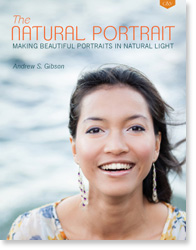
The Natural Portrait photography ebookThe Natural Portrait

My ebook The Natural Portrait teaches you how to take beautiful portraits in natural light. This 240 page ebook, published by Craft & Vision, takes you through the entire process of natural light portrait photography through from finding a model, deciding where to shoot, working with natural light and post-processing your images. Click the link to learn more or buy.

The post How to Find Great Backgrounds for Portraits by Andrew S. Gibson appeared first on Digital Photography School.

Digital Photography School

 
Comments Off on How to Find Great Backgrounds for Portraits

Posted in Photography


Readers’ Showcase: Submit your best portraits!

16 Nov

We’re accepting submissions for our latest Readers’ Showcase and we want to see your best portraits! Stop by the Portrait & People Photography forum and show us your best shots. Our favorite images will be included in a showcase article on the homepage. We’re accepting photos through the end of the week, so dust off your hard drive and submit some of your favorites from your portfolio. Read more

Articles: Digital Photography Review (dpreview.com)

 
Comments Off on Readers’ Showcase: Submit your best portraits!

Posted in Uncategorized


5 Tips for Stress-free and Successful Child Portraits

12 Nov

DSC 7364dps

Children are the best examples of spontaneity, creativity, and wonder and that is precisely why we all love them so much. Then family picture day comes and you wish they’d just sit down and be still for five seconds. Photographing children comes with its own brand of challenges, but if you arrive to a session with a few tricks in your bag, you’ll come away from that shoot with pictures that perfectly capture that what being a kid is all about. Here are five tips to help you have more stress-free and successful child portraits

1 – Kids Don’t Like Dictators

Children are used to being told what do to. All day long, it’s all they hear. “Sit down,” “Be quiet,” “Don’t hit your sister,” and “Spit that out!” Wven though they don’t like being told what to do, they’ll expect the same treatment from you. You’ll find, however, that you’re more likely to get great photos out of them if you shatter those expectations and treat them as equals.

Children like being helpers and they like being grown-up. So give them what they want. Instead of saying, “Sit down there and look at the camera,” you might try something like, “Hey buddy, would you help me out by sitting right here so I can see if the light is right?” In that phrase, you made them the big helper. You may already know that the light is right, but the child doesn’t know that. All he knows is that you needed his help and you see him as an equal. Another technique is asking the child where they’d like their picture taken. This gives them adult-like control. Give them options though or you run the risk of them picking a bad spot. Point out a few spots that you’re okay with and let them choose from those. Even go as far as to ask their advice when it comes to posing. Give them a little control and they’ll be happy to give some back when you need it. I once had a three year-old tell me that he wanted to do his epic mad face for a pose. I told him, “That’s a great idea! Let’s do it!” After I took a picture of that epic mad face and I then said we should try out a few other faces just to make sure we get them all. He was more than happy to let me pick the next face.

DSC 7130dps DSC 6481dps

2 – They Don’t Need to Look at the Camera

Even with the best psychologist-tested techniques, children are still children. Most children have a hard time looking at a camera. The reason? Because the camera is a big black thing and it doesn’t even come close to resembling a human being. Children like to look at people’s faces, especially their eyes. Older children have an easier time, but younger ones really don’t like looking at the black hole in the middle of our cameras.

That’s okay! Some of your best shots could be the ones where the child isn’t looking at the camera. Being a kid means being on the go, constantly exploring, and living for the very next moment. Allow the child to move around the location and explore. Your job is to follow and click away. Once in a while, they may look directly into your lens and make a connection and that’s awesome. More than not, you’ll get shots of them whizzing past or looking down at a flower or hugging mom’s leg. All great shots that show what being a child is all about.

DSC 1742bwdps

3 – Use Their Inner Actor

Getting genuine smiles out of a child is difficult at times. It seems that as children get older their smiles get more forced. So how do you instruct a child to smile naturally? Even adults have a hard time with that. One effective technique is to work with the little actor that lives at the heart of so many kids. Try asking your kid clients to give you a fake laugh. Go as far as to model how the laugh should go. The awesome thing is that when you ask someone, child or adult, to fake laugh, it’ll make them feel silly and then they’ll really laugh. There is a smile that happens toward the end of a laugh and that is where their natural smile lives. This technique can work even on shy children.

You could also have them imagine something and see what expression you get. You could ask them to give you the smile they get when they’ve just gotten away with something or the smile they get when they get a present. For older children, it seems like asking them about a boy or a girl they like at school, in a playful manner, always elicits a very nice smile. Children like acting and pretending, so use it to your advantage.

DSC 9653dps

4 – Monkey See, Monkey Do

Most children, especially young ones, don’t really excel at following directions. If you’re trying to pose them and you’re giving them the same directions you’d give adults, you’ll end up with a very confused child who pulls off a really weird pose. If you’re photographing children and they’re okay to sit and pose for you, model every pose you want from them. Children can mimic like pros, so use that gift. If you want them to sit cross-legged with their elbows on their knees, get down and do it yourself. This goes for facial expressions too. Say you want them to smile, but not a big toothy smile. Show them the smile you want. They’ll give you their own version of it, but you’ll get what you’re going for. You may be exhausted at the end of the shoot after moving around so much, but in many ways, it’s easier than trying to verbally instruct a child into a pose.

DSC 9414dps

5 – Give Them a Break

DSC 9432dps

We all have our limits. Children are no different. If you find that your kid client is getting tired or upset, it’s time for a break. Take them by the hand and explore your location together. If the parents are okay with it, break out some snacks and have a sit. Talk to them and let them relax. Many photographers are worried about the use of time during a shoot and may be reluctant to do something like smell the flowers with a three year-old when they should be getting those precious shots mom and dad want. That’s understandable. But great photographers understand that you’re more likely to get the shot you’re after if you work with the client, not against them. In fact, you might find the perfect shot during the little break. Perhaps the child is picking flowers or collecting rocks and because they’re so happy, they look at you and click! You’ve got the shot. If you’re doing a family shoot, a break could mean that you go off to photograph another member of the family while the little one gets to sit back and relax a bit.

Children live in their own worlds with their own rules. If you prepare and have the right mindset, they’ll let you in and you’ll both have an awesome time.

The post 5 Tips for Stress-free and Successful Child Portraits by Anna Durfee appeared first on Digital Photography School.

Digital Photography School

 
Comments Off on 5 Tips for Stress-free and Successful Child Portraits

Posted in Photography


Use Photo Drones for Fun Family Portraits

11 Nov
Extra photos for bloggers: 1, 2, 3

You don’t have to fret over getting your youngins to say cheese for this year’s family portrait.

Why? Because family photo shoots turn into playtime once a drone is involved!

We’ve thought of 8 entertaining ways to not only make the most of your drone’s high-flying perspective, but to also keep your photogenic family having a blast from beginning to end.

So gather the fam and get ready for some up-up-and-away fun!

8 Amazing Family-Friendly Drone-tography ideas!

(…)
Read the rest of Use Photo Drones for Fun Family Portraits (1,094 words)


© Taylor for Photojojo, 2014. |
Permalink |
No comment |
Add to
del.icio.us

Post tags:


Photojojo

 
Comments Off on Use Photo Drones for Fun Family Portraits

Posted in Equipment


Tips for Creating Dance Portraits

07 Nov

Dance and music have always been a part of my life, but work and my wife have kept me a bit busy lately. So when I had some photography assignments for a few dance concerts, I knew it was going to be a lot fun. It also made me realize that it can also be a bit challenging. In that split second, there is movement, emotion and a story to be captured. You need to anticipate that split second and capture the motion.

Emotion 1

When it comes to your viewers, you want them to believe and see that motion for themselves. So here a few tips to get prepared for a dance portrait. Why would you shoot dance portraits and how would you plan for it?

  • Dance concert – You are asked to take dance portraits as part of a dance concert.
  • Promotion – You are asked to take portraits of the dancer to promote them or the upcoming event that they are currently working on.
  • Head shots– You are helping the dancer to build their portfolio so that they can be represented by an agency or could be sent for casting calls.
  • To fulfil your creativity – You just want to experiment, unleash your creativity, and add Dance portraits to your portfolio.

Whatever might be the reason for your dance portraits here are a few things that are common while planning and executing a dance portrait session:

1. Knowledge and research

It’s always good to know what dance form your model or dancer is learning or practicing. This would help you to do your ground work which includes researching the dance form, checking online for inspiration and creating your mood board.

Research the clothing that is required for that dance form. You can either find a stylist to source the clothes for you or even better just ask the dancer if they would have something appropriate and comfortable that they can wear for the shoot. If you are doing this as part of a dance concert you would not have much say in it, as that will be predefined.

Knowledge and Research  1

Knowing the dance form can also help you choose music tracks for the shoot. Again your model can be a great help in this. Ask your model if they can bring along suitable music which you can play in the studio during the shoot. This helps to establish the environment.

2. Motion

The most important part in a dance portrait is motion or the sense of it. As a photographer you have to make sure that the viewer can visualize the motion. This can be done in a few ways:

  • It can be as simple as capturing someone mid-jump to convey motion.
  • Hair movement.
  • Dress or costume movement.

Some techniques which can be useful for this are, to use a fast shutter speed. Fast shutter speed ensures that the movement is frozen. This can also be achieved by using a flash. At times having a motion blur can also help create a sense of movement.

Motion 1

Motion 2

3. Emotion

Dance is all about motion and emotion. It’s an art form that involves facial emotions combined with body language to convey the idea or concept.

Make sure that you chat with your dancer beforehand to confirm the look they are after. This helps in two ways; one, it tells you what to expect and second you can adjust your lighting to capture the desired mood or add some more drama.

Emotion 2

Emotion 3

4. Anticipation

If you understand dance this one is very easy to master. But if you don’t you might need to work with your instinct. As a dance concert photographer you are expected to anticipate the movement and capture it at the right time to emphasize the effect. If you are photographing a dance concert the best way to address this, is to attend the dress rehearsal. This gives you an idea as to what to expect on the day. What will the lights be like and most importantly what are the critical moments that you need to capture and the best location from which to capture them?

Anticipation  1

If you are doing dance portraits in a studio this factor won’t be of much importance as you have more one on one time to repeat a step or pose if you missed it in the previous shot.

5. Energy

Capturing the energy of the dancer can make the photo look lively. One thing that works for me is I tell them the camera can capture their voice along with the picture. So don’t let them just stand there and smile. Tell them to shout or do something that they can’t do with their mouth closed. This could be done at the end of the shoot when you have got all your shots and just want to take some fun shots.

Energy 1

6. Creative twist

As with any photography, adding that creative twist is always fun. You can experiment with many of different techniques.
You can try panning where you follow the dancers’ movement, making sure that the dancer is in focus and blurring the background.
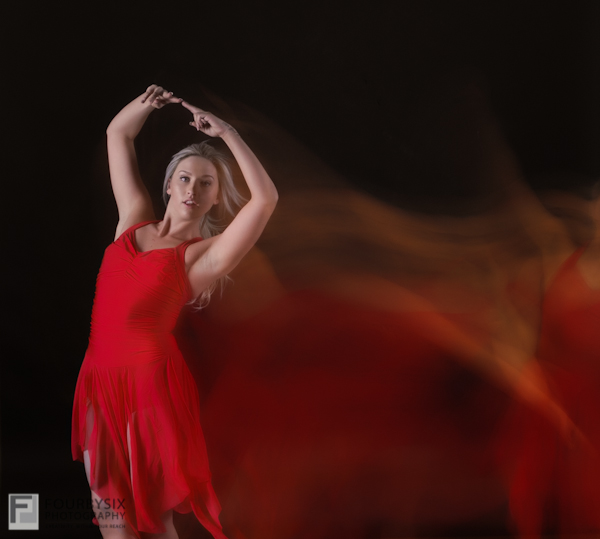
Drag the shutter (keep the shutter open for longer duration) and capture creative blur. Or try your hand at stop motion where the shutter is left open for a longer duration and a flash is fired at the very end to freeze the final movement.

Creative Twist 1

A few tips for dance portraits:

  • A fast shutter speed helps freeze the motion, but if you want a creative blur a slow shutter speed will do the trick.
  • A faster lens, like f/2.8 or lower, is better suited to take photos of a dance concert where flash photography is usually not allowed.
  • Do not be scared to use a high ISO for a dance concert, this will add grain (noise) to your photo, but you will be able to use higher shutter speed to freeze the motion. Sometimes grain isn’t all that bad.
  • Most important have fun and enjoy what you shoot.

Have you done any dance photography? Share your experience and any other tips you might have in the comments below.

The post Tips for Creating Dance Portraits by Siddhesh Jukar appeared first on Digital Photography School.

Digital Photography School

 
Comments Off on Tips for Creating Dance Portraits

Posted in Photography