RSS
 

Posts Tagged ‘Photos’

Worlds on End: Geometrically-Rotated Photos Twist Landscapes

13 Jul

[ By WebUrbanist in Art & Photography & Video. ]

reflected landscape

In a smooth and simple motion, a single section of each image in this series is utterly transformed, this piece rotated until it sits precisely upside down with respect to the original scene.

reflected urban setting context

While some feature more complex shapes, in general the process is extremely straightforward and geometry recognizable: squares or circles, centered horizontally (and sometimes vertically) in the frame, turned precisely 180 degrees.

reflected forest mountainside

reflected black white trees

reflected cityscape at night

Victoria Siemer lives in New York City but graduated upstate – reflecting both country and cities, her modified pictures span both natural and urban landscapes but share common themes and methods. What began as a college thesis about fragmentation of self and emotions has morphed into a larger series of shots and prints.

reflected waves surfs up

reflected forest walk

reflected fragmented animal

reflected angular approach

While her surrealistic approach includes everything from universes in coffee cups to cliffs suspended in space, this particular group of works is compelling as much for its quiet directness as anything. Without a clear message or meaning, it is up to the viewer to interpret the results and put these fragmented images back together in their mind’s eye.

Share on Facebook


[ By WebUrbanist in Art & Photography & Video. ]

[ WebUrbanist | Archives | Galleries | Privacy | TOS ]


WebUrbanist

 
Comments Off on Worlds on End: Geometrically-Rotated Photos Twist Landscapes

Posted in Creativity


Canon PIXMA MG3620 can print photos directly from social networks

09 Jul

Canon has introduced a new printer that can print images directly from Instagram and other social networks. The PIXMA MG3620 Wireless Inkjet all-in-one printer works with the Canon PRINT app for iOS and Android to both access and print from Instagram accounts, as well as other online services like Facebook, Twitter, Flickr, OneDrive, Evernote, Google Drive, Photobucket, and Dropbox. Read more

Articles: Digital Photography Review (dpreview.com)

 
Comments Off on Canon PIXMA MG3620 can print photos directly from social networks

Posted in Uncategorized


Discover the Secrets to Perfectly Focused Photos [Save 50% on Jay & Varina Patel’s Focus Collection]

06 Jul

It’s deal #6 in our mid year sale and this one is courtesy of two of our favourite photography teachers, Jay & Varina Patel.

For the next 24 hours, you can save 50% off their Focus Collection — In Sharp Focus & Hyperfocal Distance!

The $ 44.50 discount will be automatically applied when you click ‘Add to the Cart’ here.

These two in-depth courses will help master your focusing techniques.

You’ll learn the best practices and camera settings for getting sharp focus every time, and gain the confidence to get in close using a wide angle lens.

With 15 video lessons, over 80 minutes of invaluable content taught in the field, case studies and a post processing workflow walkthrough, not only will you be shown how to handle difficult focusing situations, but you’ll see how to get creative with focus too.

One day is all you have, so get this great training now before time runs out!

googletag.cmd.push(function() {
tablet_slots.push( googletag.defineSlot( “/1005424/_dPSv4_tab-all-article-bottom_(300×250)”, [300, 250], “pb-ad-78623” ).addService( googletag.pubads() ) ); } );

googletag.cmd.push(function() {
mobile_slots.push( googletag.defineSlot( “/1005424/_dPSv4_mob-all-article-bottom_(300×250)”, [300, 250], “pb-ad-78158” ).addService( googletag.pubads() ) ); } );

The post Discover the Secrets to Perfectly Focused Photos [Save 50% on Jay & Varina Patel’s Focus Collection] by Darren Rowse appeared first on Digital Photography School.


Digital Photography School

 
Comments Off on Discover the Secrets to Perfectly Focused Photos [Save 50% on Jay & Varina Patel’s Focus Collection]

Posted in Photography


White House ban on photos and social media has ended

03 Jul

The White House has ended the ban on photography and social media use during public tours, and is instead urging visitors to take and share photos from tours using the applicable hashtag #WhiteHouseTour. The photography ban had been in place for 40 years, and was instated in part to reduce the damaging effects of flash photography on artwork. Read more

Articles: Digital Photography Review (dpreview.com)

 
Comments Off on White House ban on photos and social media has ended

Posted in Uncategorized


5 Ways to Create Dramatic Landscape Photos at Midday

03 Jul

Outdoor photographers are repeatedly taught to plan their scenic photography excursions early in the morning or late in the day. These magic hours we’re told, is the only light worth shooting in. Yet, what about those situations when being on location at sunrise or sunset isn’t possible? You can pack up your bags and go home with an empty memory card, or make the most out of every opportunity. Allow me to let you in on a little secret not found in most photo magazines. Some of the best landscape opportunities can be found at midday when the sun is high over head.

Here are five tips to help you create dramatic landscape photos at midday:

1) Work with the sun

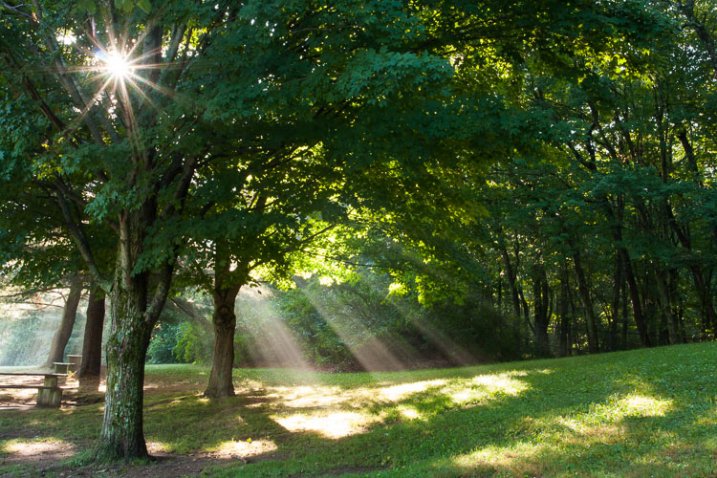
Rather than avoiding the sun, use it to add visual interest in your composition. This technique is not overly complicated but does take a bit of trial and error to master. Start by setting a very small aperture opening such as f/22. Then, while looking through the viewfinder, position yourself so an object partially blocks the sun. It should not be entirely obscured, so you may have to rock back and forth ever so slightly to find the optimal point. When you see the beams of light spilling through the obstruction, take the shot. The results can be quite dramatic and potentially aided by subtle hints of colorful flare.

2) Give your wide angle lens a rest

The contrast found midday makes it difficult to hold the detail in the sky while properly exposing a foreground. Rather than resorting to an HDR shot, use the occasion to simplify your composition. Does that bright sky really add to the overall scene? If not, give your wide angle lens a break and switch to a medium telephoto lens.

Before pressing the shutter, check all four corners of the frame for any unwanted bright areas. The human eye tends to focus on these areas first. As you eliminate these distractions, the design of the photo will become more evident. Just remember, if you are hand holding the camera with a telephoto lens, opt for a slightly faster shutter speed to prevent camera shake. At these greater magnifications, even the slightest imperfections become more noticeable.

3) Find more people

Sunny days can also be useful for creating salable prints and stock photos. Images of people enjoying the outdoors are popular with a wide variety of clients; from those looking for home decor, or pharmaceutical companies, clothing lines, the parks department, etc. In the afternoon, you’ll find infinitely more people than you would at sunrise or sunset. This is a good thing, as it opens the door to a whole new series of photographic possibility. By including a human element, the image will have greater reach as viewers can relate to it personally.

4) Slow the shutter speed down with black glass

Believe it or not, you can shoot long exposures even on a bright sunny day. The trick is add a round neutral density filter to your bag. Sometimes dubbed “black glass”, these dark screw-on options block a great deal of light from entering the lens.

For example, if the proper exposure gave you 1/125, f/22, ISO 100, the water motion (below) would be largely frozen. By adding a nine stop ND filter, you can keep the aperture and ISO the same, but drop the shutter speed all the way down to four seconds. This will create that dreamy effect previously limited to low light situations.

5) Go easy on the polarizer

If you have a short layover in a distant location, you can use the opportunity to capture some of the sites mid-afternoon. Perhaps the most important tool will be the circular polarizer. Some may disagree here, but it does not need to be a multi-coated, super high-end filter. A basic model from Hoya or Tiffen will be just as effective. With it, you can take a pale blue sky and make it pop. This is especially true when the sky is dappled with clouds.

Be warned however, the technique is so powerful it’s easy to go overboard. As a tip, I’d recommend that you find the maximum strength of the filter, and then cut the intensity slightly. This will provide you with more natural results.

Do you have any additional tips for shooting at midday? Please share in the comments below.

googletag.cmd.push(function() {
tablet_slots.push( googletag.defineSlot( “/1005424/_dPSv4_tab-all-article-bottom_(300×250)”, [300, 250], “pb-ad-78623” ).addService( googletag.pubads() ) ); } );

googletag.cmd.push(function() {
mobile_slots.push( googletag.defineSlot( “/1005424/_dPSv4_mob-all-article-bottom_(300×250)”, [300, 250], “pb-ad-78158” ).addService( googletag.pubads() ) ); } );

The post 5 Ways to Create Dramatic Landscape Photos at Midday by Chris Corradino appeared first on Digital Photography School.


Digital Photography School

 
Comments Off on 5 Ways to Create Dramatic Landscape Photos at Midday

Posted in Photography


5 Tips That Will Make Your Food Photos Stand out from the Crowd

01 Jul

1 Cornish Game Hen

Food photography may be more popular now than ever before. The blogosphere is exploding with pictures of food, and social media sites like Pinterest and Instagram are flooding you with never-ending streams of food photos 24/7. Creating food images that stand out in this massive sea of content is a difficult task. Here are five tips to help you get your food photos noticed.

#1 Don’t be afraid of shadows

Shadows make a scene look realistic, give your food texture, and create mood, so don’t hesitate to make them part of your food photo. To create nice, dark shadows let your light fall onto your food either from the back or the side at a fairly low angle, from just a little bit above the surface of your set. Use reflectors sparingly, or not at all. Reflectors bounce light back into the areas of your photo that your light source doesn’t reach, in other words, into the shadows. So to keep the shadows dark, don’t reflect the light.

1 Salted Caramel Candy

In the salted caramel candy photo above my light was falling onto the set from the back at a low angle and I didn’t use any reflectors.

#2 Imply action

Action makes your viewers feel as if they are part of your scene; that kind of engagement is always a good thing. Action can be literal, such as a hand holding a hamburger or pouring syrup over a stack of pancakes, but there are other (and actually easier) ways for you to suggest that something is happening in your photo. One example is a glass of freshly poured beer. Your viewers likely know that the lifespan of the foam top on a beer is only a minute, so seeing a fresh beer tells them that someone must have just been at the scene to pour it.

2 BBQ Ribs

#3 Point your lens up at food that is tall and stacked

Shooting up from slightly below the food is an unusual angle for food photography; but it can create really compelling images of tall items such as cakes, and things that are stacked, like burgers or, as in the example below, shards of toffee. The food will be towering above the viewer which makes it look big and impressive. Needless to say this angle doesn’t work for flat food, so don’t shoot a pizza with this method.

3 Toffee

#4 Create visual contrast

Contrast comes in many varieties and helps make your food photo look interesting. You can create contrast by incorporating different shapes into your photo, such as round and rectangular (or square). You can also create contrast by including colors in your photo that are on opposite sides of the color wheel (complementary), like red and green, or blue and orange. The lettuce cup photo below illustrates both of these concepts, the square dish contrasts the round lettuce cups and the red sauce provides contrast to the green lettuce.

4 Lettuce Cups

#5 Leave negative space in the image

Don’t feel that you have to fill every square inch of the frame with food or props. A little negative (empty) space gives the food room to breathe, and will keep your viewers from getting overwhelmed and feeling claustrophobic. There are no hard and fast rules that dictate where to leave negative space in a food photo but the rule of thirds is always a good place to start. Imagine your photo dissected into thirds, both vertically and horizontally, and place your subject on or near one of the four points where those lines intersect. Leave the rest of your photo empty and take a test shot. Does the scene look good to you or is it too barren? If it looks like it’s missing something, add more elements to the frame, one by one and along the imaginary lines that dissect your frame, until you have a composition that looks pleasing to you. That’s how I went about composing the Thai curry ingredients shot below.

5 Thai Curry Ingredients

I hope these tips give you some new ideas for your food photography. If you have any others please share them in the comments below.

googletag.cmd.push(function() {
tablet_slots.push( googletag.defineSlot( “/1005424/_dPSv4_tab-all-article-bottom_(300×250)”, [300, 250], “pb-ad-78623” ).addService( googletag.pubads() ) ); } );

googletag.cmd.push(function() {
mobile_slots.push( googletag.defineSlot( “/1005424/_dPSv4_mob-all-article-bottom_(300×250)”, [300, 250], “pb-ad-78158” ).addService( googletag.pubads() ) ); } );

The post 5 Tips That Will Make Your Food Photos Stand out from the Crowd by Nicole Branan appeared first on Digital Photography School.


Digital Photography School

 
Comments Off on 5 Tips That Will Make Your Food Photos Stand out from the Crowd

Posted in Photography


How to Avoid Loss of Your Digital Photos

24 Jun
Mariam S

By Mariam S

Nowadays almost all photos are taken using various digital devices. In the era of paper photos, the main photo destructors were natural disasters like fires, and also such a phenomenon as discolouration. Modern digital photos face mainly the same dangers – fires, floods, and so on. Surprisingly, digital photos also have some equivalent to discoloration – degradation of a photo storage device over time. However, apart from these dangers inherited from paper predecessors, digital photos are subject to new specific dangers, for example: loss of photos due to a storage device failure. Let’s discuss in more detail what dangers digital photos might face and how you can avoid many of them.

Generally speaking, there are three bottlenecks where you can lose photos – when taking photos, when transferring them, and in storage.

#1 Loss of photos in camera

Immediately after you have taken a photo there is only a single copy of it. If this copy is lost, you can in no way get it back. In all fairness, such cases are relatively rare. Even if data recovery software doesn’t help, as a last resort you can send a memory card to a repair lab in the hope that the hardware specialists can help. However, if it fails, all you have left to do is to say “goodbye” to the photos because there was only a single copy of them.

For example, you shoot a football match and then on the way home lightning hits your camera and all that was left was a pile of ashes. This is what contracts call “force majeure” and therefore nothing can be done. However, history has some funny stories. A man had dropped a camera into the sea; a year later some divers raised it and surprisingly the photos were readable. Divers were even able to identify a camera owner by the photos and then returned him his “property” (read the full story here).
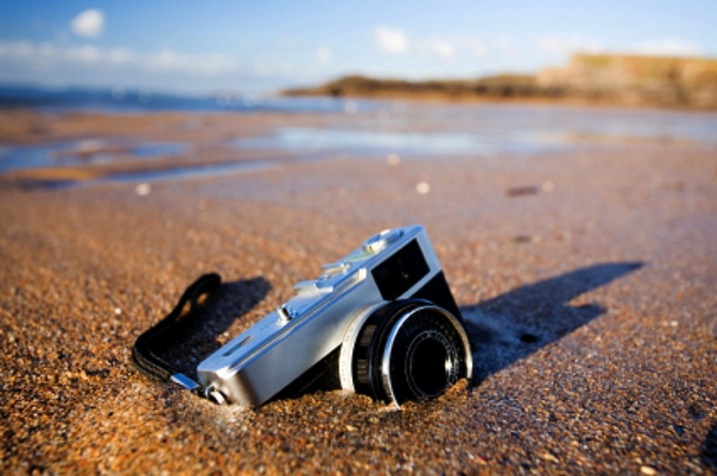
Image 2

Tips

Here, there is little advice for you because surely you know better how not to drop the ball, say due to a camera failure or something like that, when shooting a unique event.

There are some tips on memory card health that will help though:

  • How to Spring Clean Your Memory Cards
  • The Best Way to Delete Photos From Your Memory Card

Also remember to turn off your camera before removing or changing your memory card or battery. Not doing so can result in a card crash and lost images.

#2 Transferring photos

The process of transferring digital photos from your camera to computer is akin to producing paper photos from the negative. In both cases you duplicate photos from a single copy you have, whether it would be a negative from an old camera, or a flash card in a modern digital device.

In the film days, the process of transferring photos to new data storage was laborious, took a lot of time, and required certain skills and equipment; with digital photos the process becomes radically simplified. However, strange as it may be, nowadays the chance of losing photos during transfer is still significant.

Earlier, when developing film you had to stick to certain rules. Ignoring these rules inevitably resulted in destruction of photos. For example, one such rule says that all actions with negatives must be performed in a darkroom. In case of digital photos there are also some rules, however, people tend not to follow them because ignoring them doesn’t always lead to loss of photos. Those “less fortunate” people who neglected the rules and lost their photos, then have to bother with photo recovery.

Let’s look at the rules:

  • Always use the “safely remove hardware” option when ejecting a memory card or any other removable device from a computer. Otherwise, the operating system may not have time to handle data on the removable device properly. That sometimes can lead to the RAW file system issue, the typical symptom of which is when Windows shows you the message like this:
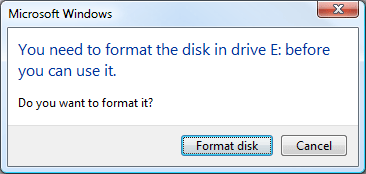
    Image 3 small
  • Don’t eject a memory card from a working camera, for the same reasons as in the previous case.
  • Always monitor the battery charge. If battery runs low at the wrong time, it may result in a file-system failure on the memory card. Generally, it is better to use a card reader device for transfers since it has no such problems.
  • Transfer photos regularly. By doing so, in the worst-case scenario would be that you lose only you’re latest photos, rather than an archive for the entire year.

However, it should be noted that all listed above typically don’t destroy photos themselves. It just leads to a file-system failure which is pretty well cured by data recovery software, given that you have not formatted a card.

#3 Storage

In general, loss of data in storage is bad form. Immediately after taking pictures you have just one chance to copy them, and you still can write data loss off to an “irresistible force of nature”, for example. Once you have enough time to create a copy of the photos, however, data loss is less excusable.

Charles Wiriawan

By Charles Wiriawan

Do not trust only one storage technology

Do not rely upon only one storage technology, even if you think it is very reliable. No data storage technology, be it a fault-tolerant RAID or modern Storage Spaces from Microsoft, can replace a good old backup. More than that, a proper backup procedure requires an off-site copy, maintained in some physically separate location. This is to prevent simultaneous loss of both original,
and backup copies to a fire or theft.

Tips

  • Off-the-shelf NAS devices like Synology and QNAP have several indicators that can be green, yellow, and red. These indicators significantly simplify monitoring of the device “health” – just remember what typical indications are, then glance at the NAS at least once a day. Extinguished or red lights are a reason for concern.
  • If you store photos on a Windows PC, use special software to monitor your disk state. S.M.A.R.T. is a technology used in hard drive self-diagnostics. Fairly often, it can predict hard drive failure ahead of time. A monitoring tool requests S.M.A.R.T. status of the device periodically and if S.M.A.R.T. data deviates from the normal values, the tool will alarm you so that you can back up the data.
  • Check the S.M.A.R.T. state of your hard drives at least once a month.

Photo recovery tips

If you have lost some photos and are looking for a way to recover them, there is no need to panic because photo recovery from a camera memory card is one of the easiest, and well-established data recovery tasks. All you need is to download and install any data recovery software – there exist both paid and free options – select a memory card from the device list, and see what it brings up.

If you are not satisfied with the quality of the recovery, it makes sense to try several tools since recovery algorithms used in various software may differ in some way. Note that data recovery tools, for the most part, are read-only so they will not destroy anything on your card. Windows CHKDSK is the significant exception to this rule – it sometimes does make matters worse.

Below are some tips on how to achieve the best result when recovering photos from a memory card:

  • Stop using a card once you see that something is wrong. If the camera’s behaviour is unusual, stop taking any new photos until you clear up the situation with the existing photos.Image 4
  • If possible, use a card reader device when recovering data. It is stable and provides better performance than a cord and direct connection to the camera.

    Matthew

    By Matthew

  • Do not take new photos once you realize that you need to recover data. Usually, with each new photo you lose a capability to recover one previously deleted photo.
  • Ascertain in advance what your camera actually does when you format a card. If the camera uses a “complete” (also called low-level) format by default, change it to a “quick” format. Thereby, if you format a card accidentally you still can recover photos from it; after a complete format, all the data will be overwritten and not recoverable.

Bonus – discolouration

In early days, when archives were stored on magnetic tape, it was critical that the tapes must be rewound regularly. Otherwise, the data became unreadable because magnetic fields mixed between adjacent layers of tape (what was then known as crosstalk effect).

Some place the photos on CDs and then do not check them for years. In five years one can easily find that at best only half of the CDs are readable. CDs are not suitable for long-term storage and should only be considered as one of the backup options for a short period of time.

Those who keep their photos on old hard disks, in ten years will not be able to find a proper connector anywhere else except in a museum. If you are going to store photos for a long time you should use the most modern devices to increase the chances of find a compatible setup in the future. This is sometimes called “future-proofing”. However, you should not bet on the ultramodern technologies since it may happen that the technology does not stick and therefore, say in five years, you will not be able to find compatible components (think beta versus VHS).
Sophia Maria

By Sophia Maria

Generally speaking, digital discolouration differs from analog (paper) discolouration, only in that you can discern at least something on a discoloured paper photo, while a digital picture is destroyed immediately and completely.

Image 5

So some care and planning on your part can help you avoid losing your images, or in the worst-case scenario, quickly able to recover them. What’s your disaster avoidance plan?

googletag.cmd.push(function() {
tablet_slots.push( googletag.defineSlot( “/1005424/_dPSv4_tab-all-article-bottom_(300×250)”, [300, 250], “pb-ad-78623” ).addService( googletag.pubads() ) ); } );

googletag.cmd.push(function() {
mobile_slots.push( googletag.defineSlot( “/1005424/_dPSv4_mob-all-article-bottom_(300×250)”, [300, 250], “pb-ad-78158” ).addService( googletag.pubads() ) ); } );

The post How to Avoid Loss of Your Digital Photos by Alexey Gubin appeared first on Digital Photography School.


Digital Photography School

 
Comments Off on How to Avoid Loss of Your Digital Photos

Posted in Photography


5 Tips to Take Less Photos of Everything and Take More Photos That Mean Something

22 Jun

How many photos do you have from a recent holiday, that you just haven’t had time to organize? Or, have you come back from a dream vacation and your photos just don’t seem to match up with your memories? You are not alone, as this is an all too common issue, and both of these questions have their roots in a simple and easy to fix problem.

Take fewer photos, not more!

001A resized2

I mean this literally, but also figuratively. Yes, overall take fewer photos. But, in reality this is a lesson in becoming more conscious of your photography. What is the point of the photo? Why are you clicking the shutter at that moment?

You may have heard many times, that in the era of digital cameras, you can shoot your heart’s desire (a.k.a. until your SD or CF card is full), unlike with film which needed to be developed and only had a limited number of photos on each roll. While that is true, it is not true that more photos equals better photos. Well, you may have also heard that professional photographers shoot hundreds, or thousands, of photos just to get one or several good ones. That is also true, but they are first and foremost shooting with a purpose. Literally shooting less will allow you to discover your point of view, and thus figuratively you will shoot less of everything, and more of something.

Here are five tips on how to take less quantity of photos but more compelling ones

Tell more stories

The story could be your personal story or could be of something else, but most important is that you communicate with your photos. If you are always shooting, you cannot create; you simply react. Creating a balance between creating and reacting will give you storytelling abilities. Be proactive by finding a place with good leading lines and waiting, not by rushing and hoping that one of your clicks is a keeper. Think about a beginning, middle, and an end. This can be easily depicted with shots at different focal lengths like a wide-angle (image above), a close-up (below), and finally a full-frame scene. The process of storytelling is something we have all grown up with – get back to it. Remember, the more simple the story, the more universal it can be.

001B resized2

Close-up gives direction.

001C resized2

Full-frame concludes the events.

Give yourself some time to write (in a travelogue or in a diary)

This gives you an opportunity to reflect, which gives meaning and helps you find purpose. Looking at your own writing helps you realize your patterns day by day, or travel experience by travel experience. Identifying structure will help you select moments and behaviours that lend themselves to your style of photography. You may see yourself getting up late despite your desire to have better golden hour photos, or that you feel more creative in the afternoon so you can set aside time to create your photographic stories when others are resting. You will also love reading what you write in 10 years!

Curb your fleeting feeling

Time is limited and you might just miss the moment. For a photographer, this manifests itself in too many photos, and too little purpose. The reality is you are always going to miss something, you can’t be in two places at the same time, and you definitely can’t turn back the clock. But that doesn’t mean that you must give in to the fleeting feeling. Let the event occur, or the scene develop, and visualize what you want from it. Be selective about your vision and then get it, not all of it. Three meaningful photos outweigh thirty so-so snapshots. You have worked hard for your days off and money saved for leisure; enjoy it and enjoy being productive with your photography.

Create a concept and stick to it. Resist pulling out your camera immediately.

This can be an exercise in patience and restraint. Buildings are not going anywhere, rivers will stay their course, and the coffee shop will always have another interesting customer. Find your concept in a developing scene, whether it is the arches of a building, reflections of the water, or a pair of hearty hands sipping a hot beverage. Know that your vision is attainable. Your concept can be simple or complicated, modern or traditional, but only needs to be defined and pursued by you. Just do it with conviction and don’t measure your concept against others. Go for it!

002A resized2

Creating a concept.

002B resized2

Slight variation of shooting through a window and making it B&W.

002C resized2

Going back to the concept and color to provide continuity.

Philosophically you will never find what you are looking for…

There is an old Chinese proverb that says, “If it will happen, it will no matter your actions; if it will not happen, it will not no matter what you do.”. There are many circumstances which seem to be too peculiar to be a coincidence, and as a photographer these are the moments of pure brilliance. Be present for them; don’t chase after them. There is a whole world of events that are unfolding in front of us at each moment. Your awareness of them is subject to your willingness to be aware of them, not the existence of them.

Photography and traveling have always gone hand in hand. Both have ways of opening up new horizons and being in touch with new possibilities. Both are essential. Spend some time with an ethos of travel, a perspective of photography, and a philosophy of life – and watch your photos tell a story that speaks to the hearts and minds of more than just a few close friends. Instead of having photos sitting unedited, unorganized, and undiscovered; take less photos of everything and take more photos of something. Create a convergence between your photos and your ideas. Less really is more, especially when a photo is worth a thousand words.

googletag.cmd.push(function() {
tablet_slots.push( googletag.defineSlot( “/1005424/_dPSv4_tab-all-article-bottom_(300×250)”, [300, 250], “pb-ad-78623” ).addService( googletag.pubads() ) ); } );

googletag.cmd.push(function() {
mobile_slots.push( googletag.defineSlot( “/1005424/_dPSv4_mob-all-article-bottom_(300×250)”, [300, 250], “pb-ad-78158” ).addService( googletag.pubads() ) ); } );

The post 5 Tips to Take Less Photos of Everything and Take More Photos That Mean Something by Branson Quenzer appeared first on Digital Photography School.


Digital Photography School

 
Comments Off on 5 Tips to Take Less Photos of Everything and Take More Photos That Mean Something

Posted in Photography


3 Secrets for Creating Beautiful Nature Photos

19 Jun

Secret #1 Start with you

What elements of nature do you particularly like? You may already be clear on this; but even if you are, write it down, as something magical happens when you get things out of your head and living in front of you on paper.

00 Copyright Beth Jennings Photography Digital Photography School Nature 2423

Are you a flowers person? Do you like trees? How about specific elements of nature, for example, mushrooms on forest floors? No answer is a silly answer – just write them all down, no-one is screening what you say.

You have your own take on the world and you need to work out what it is. Then you’ll make nature photos that have a little piece of you in them.

Secret #2 How close is too close?

You can go as far away, or as close as you like when photographing nature. Just so long as the element of nature is clear within the photograph.

Let’s break it down a bit:

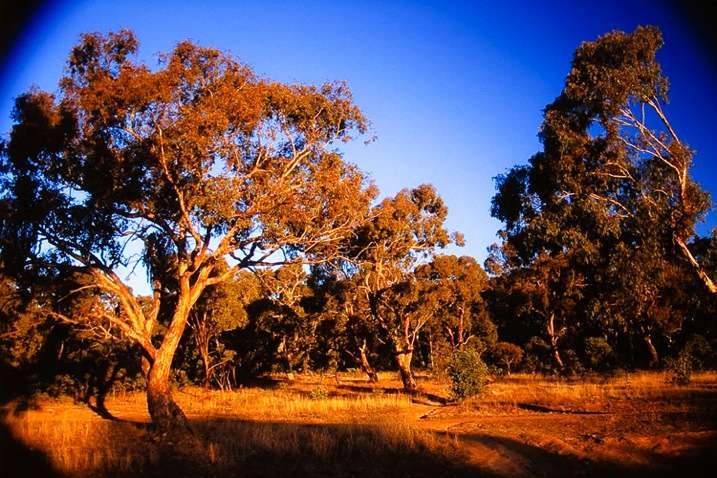
You can get a fair distance from your nature subject and allow it to dominate your frame. These trees were captured in late afternoon light with a polarizing filter to make the blue sky really intense. The light is pouring through – totally natural. Would you believe this was shot on transparency film – no post-production, ha! However, that means I can’t give you the camera settings. (slaps forehead).

Have a guess, what do you think the settings may have been?

Either ISO 100 or 400 because that’s what was available at the time! Handheld – 1/125th of a second or faster. F/? something large to keep the depth of field, maybe, f/11.

01 Copyright Beth Jennings Photography Digital Photography School Nature transparency

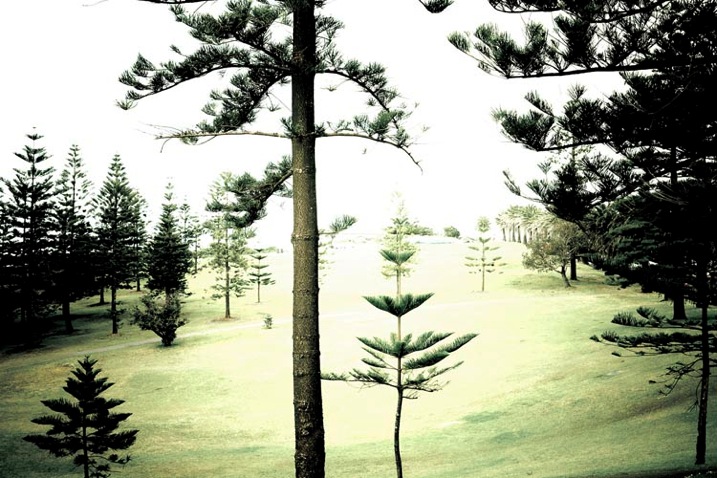
Take a few steps in toward your trees and your composition changes. The trees run right to the edges and now we are so close that some are cropped off. See how the meaning of this picture changes, just by moving in closer? (Yes, it’s a different scene, but work with me here!)

Where the previous picture was about the vast form of the trees, and the setting sun, this one is about the delicate nature of the branches and pine needles. It was taken about 11am on a bright, overcast day. The deep green needles contrast against the light, bright background.

See the careful placement of all the trees in the composition? Look all the way to the edges, then through all the grassy areas. Notice the care in the spatial placement of the trees and the green grass? Take your time, and really see where the elements are falling in the composition.

03 Copyright Beth Jennings Photography Digital Photography School Nature Photography 4348

ISO 400, f/10, 1/160th

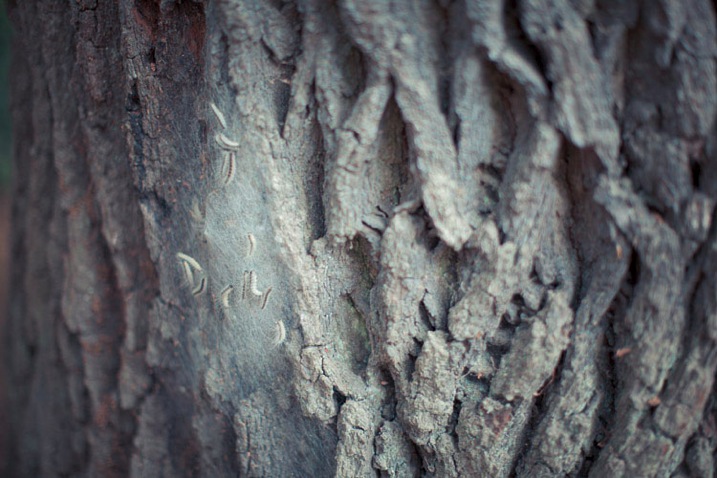
Take a few more steps in on one tree, right up close on the detail. You have a choice now about rendering most of the capture out of focus, or creating lots of depth with the f-stop. This one has a shallow depth of field, to keep the focus on the tiny caterpillars. You can see parts of the texture of the tree to give a little hint as to the environment they live in.

It was late afternoon with dappled, soft light coming through trees. The little creatures were spotted in their web in a soft, spot-lit area.

04 Copyright Beth Jennings Photography Digital Photography School nature 2229

ISO 320, f/1.2, 1/1600th

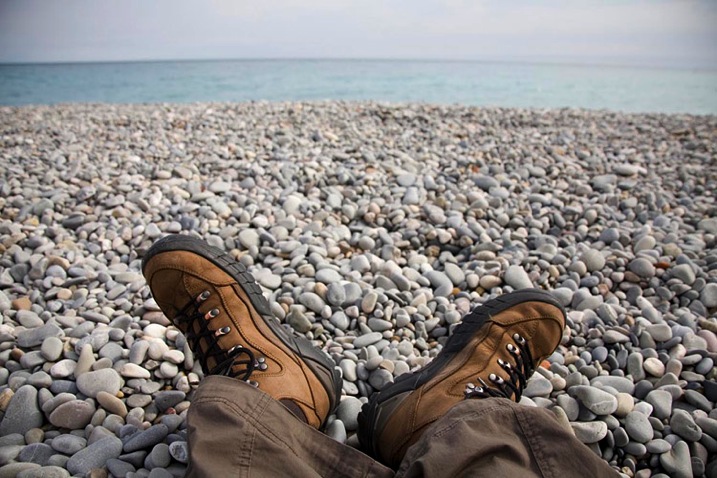
Secret #3 Move your feet

When you come to photographing nature, it pays not to be too fixated on how you want to photograph your subject in terms of distance to subject, camera angle, and technical settings. Do have ideas in mind, but be open to the possibility that you may see something else (possibly better) on the day.

05 Copyright Beth Jennings Photography Digital Photography School Nature 0332

Walking and looking does wonders. Relax and enjoy your surroundings first. The beautiful things will come to you as long as you don’t force it.

When something catches your eye, go up closer to it, study it, and figure out what element in particular it is that interests you. There is spontaneity in capturing nature in its living, untouched state. The key is being open to the most beautiful, particular and unique elements, and finding your composition, lighting and camera settings to suit.

06 Copyright Beth Jennings Photography Digital Photography School Nature Photography 2 5

It does sound a little new-age, but give this method a try, and hey, it costs nothing but your time to walk around and breathe it in.

So there you have it – three secrets revealed as to how you can create pretty nature images, without it costing you a cent!

What’s your secret to getting better nature photographs? Drop it in the comments area below.

googletag.cmd.push(function() {
tablet_slots.push( googletag.defineSlot( “/1005424/_dPSv4_tab-all-article-bottom_(300×250)”, [300, 250], “pb-ad-78623” ).addService( googletag.pubads() ) ); } );

googletag.cmd.push(function() {
mobile_slots.push( googletag.defineSlot( “/1005424/_dPSv4_mob-all-article-bottom_(300×250)”, [300, 250], “pb-ad-78158” ).addService( googletag.pubads() ) ); } );

The post 3 Secrets for Creating Beautiful Nature Photos by Beth Jennings appeared first on Digital Photography School.


Digital Photography School

 
Comments Off on 3 Secrets for Creating Beautiful Nature Photos

Posted in Photography


24 Photos of Perfectly Posed Portraits

12 Jun

Editor’s note: this week we will be featuring a series of articles on posing for portraits. Look for a new one each day. If you miss any make sure you subscribe to our newsletter and you’ll get a reminder of all our articles once a week.

When doing a portrait there is a lot to think about. You have to find a good location and background. The right lens needs to be selected. Camera settings are a consideration. The light needs to be just right.

But if that’s all you focus on you’re forgetting something rather important. The person in front of your camera. They need direction and reassurance on how to position their body to look their best. As the photographer it is your job to help them, and it is our job to help you. So here are some ideas to get started posing people in your portraits. You can also check out the dPS ebook Portraits: Striking the Pose or our set of posing guides 67 Portrait Poses (printable).

Photograph * * * by Sergey Lukankin on 500px

* * * by Sergey Lukankin on 500px

Photograph Stairway to heaven by Seemanta Dutta on 500px

Stairway to heaven by Seemanta Dutta on 500px

Photograph *** by Irina Dzhul on 500px

*** by Irina Dzhul on 500px

Photograph transylvanian hunger by  Moga on 500px

transylvanian hunger by Moga on 500px

Photograph **** by Brian Ingram on 500px

**** by Brian Ingram on 500px

Photograph Mehmet Haci by Ahmed  Mustafa on 500px

Mehmet Haci by Ahmed Mustafa on 500px

Photograph Marta by Noi korukay Marquez on 500px

Marta by Noi korukay Marquez on 500px

Photograph N by Nikolay Tikhomirov on 500px

N by Nikolay Tikhomirov on 500px

Photograph falling leaves by annabella photography on 500px

falling leaves by annabella photography on 500px

Photograph Country Family by Lisa Holloway on 500px

Country Family by Lisa Holloway on 500px

Photograph Family Portrait by Jimmy Rodriguez on 500px

Family Portrait by Jimmy Rodriguez on 500px

Photograph Brothers by Sarah johnson on 500px

Brothers by Sarah johnson on 500px

Photograph Magic Lavender by Sergey Bondarev on 500px

Magic Lavender by Sergey Bondarev on 500px

Photograph Family by Karin Sanders on 500px

Family by Karin Sanders on 500px

Photograph I see you... by Ett Venter on 500px

I see you… by Ett Venter on 500px

Photograph Doux by August Malinin on 500px

Doux by August Malinin on 500px

Photograph Afternoon by TJ Drysdale on 500px

Afternoon by TJ Drysdale on 500px

Photograph Portrait: "Lovers" by Mike Champagne by Mike Champagne on 500px

Portrait: "Lovers" by Mike Champagne by Mike Champagne on 500px

Photograph A Mother's Love by Jake Olson Studios on 500px

A Mother's Love by Jake Olson Studios on 500px

Photograph Mother and Daughter by Edi V on 500px

Mother and Daughter by Edi V on 500px

Photograph Contrast by Jake Olson Studios on 500px

Contrast by Jake Olson Studios on 500px

Photograph Daydremers by Katie Andelman Garner on 500px

Daydremers by Katie Andelman Garner on 500px

Photograph Kiss by Holly Spring on 500px

Kiss by Holly Spring on 500px

Photograph Old Men I by Alexander Rink on 500px

Old Men I by Alexander Rink on 500px

googletag.cmd.push(function() {
tablet_slots.push( googletag.defineSlot( “/1005424/_dPSv4_tab-all-article-bottom_(300×250)”, [300, 250], “pb-ad-78623” ).addService( googletag.pubads() ) ); } );

googletag.cmd.push(function() {
mobile_slots.push( googletag.defineSlot( “/1005424/_dPSv4_mob-all-article-bottom_(300×250)”, [300, 250], “pb-ad-78158” ).addService( googletag.pubads() ) ); } );

The post 24 Photos of Perfectly Posed Portraits by Darlene Hildebrandt appeared first on Digital Photography School.


Digital Photography School

 
Comments Off on 24 Photos of Perfectly Posed Portraits

Posted in Photography