RSS
 

Posts Tagged ‘Photography’

Weekly Photography Challenge – Simplify

21 Jul

It’s time once again for the weekly photography challenge. This week your job is to do LESS! Yup, that’s right we want you to put less in your photos. Simplify your images down to one easily identifiable subject with a minimalist composition and simplicity.

Simplify – you don’t need to see the whole thing to get the message here.

How else can you simplify? Perhaps get rid of all color and shoot monochrome or convert to black and white later? Here are some ideas for simplifying or getting minimalist.

  • How to Simplify and Improve Composition with Normal or Long Lenses
  • 4 Tips for the Minimalist Photographer
  • The Minimalist Landscape Photographer: What do you really need?
  • Tips for Minimalist Photography in an Urban Environment
  • 5 Guidelines of Minimalist Photography to Help Improve Your Work

Here’s an example of a really busy landscape scene. Now let’s simplify it!

Get closer to the subject so it’s super obvious to viewers what you want them to look at. Less is more! 

Weekly Photography Challenge – Simplify

Simply upload your shot into the comment field (look for the little camera icon in the Disqus comments section) and they’ll get embedded for us all to see or if you’d prefer, upload them to your favorite photo-sharing site and leave the link to them. Show me your best images in this week’s challenge. Sometimes it takes a while for an image to appear so be patient and try not to post the same image twice.

Share in the dPS Facebook Group

You can also share your images in the dPS Facebook group as the challenge is posted there each week as well.

The post Weekly Photography Challenge – Simplify appeared first on Digital Photography School.


Digital Photography School

 
Comments Off on Weekly Photography Challenge – Simplify

Posted in Photography


These are the winners of the 2018 iPhone Photography Awards

21 Jul
Jashim Salam, Bangladesh
Grand Prize Winner, Photographer of the Year

The iPhone Photography Awards (IPPAWARDS), was founded in 2007, making it the longest running iPhone photo competition in the world. Now in its 11th year, the winners of the IPPAWARDS have just been announced, and looking at the winning image it should be pretty clear that you don’t always need a DSLR and big lens to capture outstanding photographs.

The Grand Prize winning image is called “Displaced” and shows Rohingya children watching an awareness film about health and sanitation near Tangkhali refugee camp in Ukhiya, Bangladesh. It was captured by photographer Jashim Salam on an iPhone 7.

Swiss photographer Alexandre Weber’s contribution “Baiana in yellow and blue” was captured on an iPhone 6S in Salvador de Bahia, Brazil and was awarded 1st prize in the Photographer of the Year category.

Alexandre Weber, Switzerland
1st Place, Photographer of the Year

Huapeng Zhao from China won the 2nd prize for his image “Eye to eye” showing a boy at the seaside in YanTai ShanDong province, China. Zhao used an iPhone 6 to record his award-winning photograph.

Huapeng Zhao, China
2nd Place, Photographer of the Year

The winners were selected from thousands of entries captured by photographers from more than 140 countries.

IPPAWARDS founder Kenan Aktulun said “iPhone users have become very fluent in visual storytelling. This year’s photos were technically impressive and many of them were very personal.”

On the IPPAWARD website you can see the winning images in all categories and find out more about all winning photographers. If you feel inspired, you’ll also find more information about how to enter the 2019 competition.

Articles: Digital Photography Review (dpreview.com)

 
Comments Off on These are the winners of the 2018 iPhone Photography Awards

Posted in Uncategorized


Huawei launches photography contest with an AI judge

20 Jul

Huawei has launched the world’s first photography contest with both AI and human judges. The company invites photographers to submit their best images to its ‘Spark A Renaissance’ competition, during which time both Huawei’s P20 Pro smartphone AI and Leica pro photographer Alex Lambrechts will review the images.

The contest revolves around the P20 Pro, Huawei’s smartphone co-engineered with Leica. The handset features a triple-camera system and Huawei’s Master AI, which works in real-time to determine which of 19 categories any particular scene belongs to, automatically adjusting the settings in an effort to produce the ideal image.

The contest began on July 12 and will run for 8 weeks. During this time, photographers can submit their images via a Facebook Messenger chatbot, where Huawei explains that its P20 AI will evaluate it in multiple ways:

Trained using 4,000,000 images taken by professional photographers and picture editors the AI will then give each photo a personalised AI score based on parameters such as focus, jitter, deflection, colour and composition.

Huawei’s competition will revolve around five themes total, including “Deep in Detail” and “A New Renaissance,” with the winner in each category receiving a P20 Pro smartphone. A total of 10 winners from the themed categories will be given a trip to Florence, Italy, where they’ll attend a Leica masterclass.

Both Leica photographer Alex Lambrechts and Huawei’s AI will review the images taken during the Florence trip. The final winner chosen from them will receive the Grand Prize, a tour of three European countries. As well, Huawei says the top photos from the contest “will be sold to raise money for a local charity.”

Huawei is currently accepting entries for the contest’s first theme: A New Renaissance. The next theme, After Dark, starts on July 24, followed by three more with the final theme starting on August 28. All five themes can be found here.

Photographers must submit their images to the Huawei Spark A Renaissance Facebook Messenger chatbot, which guides users through the submission process:

Deadlines, eligibility requirements, and more can be found in the contest’s Terms and Conditions. The contest is only open to legal residents in Europe.

Via: Light Stalking

Articles: Digital Photography Review (dpreview.com)

 
Comments Off on Huawei launches photography contest with an AI judge

Posted in Uncategorized


How to Choose Your Next Travel Photography Destination

19 Jul

If you’re anything like me, your love for photography is matched only by your love for travel. Your days consist of dreaming of epic landscapes, amazing cities, and unlimited air miles. Unfortunately, my friend, you have the travel photography bug, and I’m sorry to tell you that it’s incurable.

beach with chairs and umbrella - how to choose your next travel photography destination

It’s easy to get down about your inability to see and photograph everything right now. There just aren’t enough hours in the day, and for most of us, not enough money in the bank. The thing that keeps me from getting down is planning my next trip.

Planning is the easy part, the hard part is choosing where to go. You might get overwhelmed by the options, so here are a few things to consider which may help you choose your next travel photography destination.

Look in Your Own Backyard

First up, your next trip doesn’t need to be an epic destination across oceans to places like Iceland or Patagonia. I’m always trying to find ways to get to big bucket-list locations that I know I would love, but sometimes looking closer to home may be a better option.

Unless you live on an island in the middle of the ocean, there’s likely somewhere nearby that you’ll be able to get to sooner to satisfy your wanderlust.

Is there anywhere within driving distance that you’ve always wanted to visit or a place that people have been saying you should check out? Somewhere in your own backyard that others spend thousands of dollars and countless hours traveling to see? It may be somewhere you’ve been before but could revisit to try to photograph better. The benefits of looking in your own backyard are many.

lake with rocks and mountains - how to choose your next travel photography destination

Make a Bucket List

You likely already have an idea of some of the places that you would like to visit and photograph. If you ask me, I can rattle off a long list of dream destinations. If you haven’t already done so, make a list and write it down. You could even make more than one list – local and international.

My bucket list has nested sub-locations within each item because I keep seeing new locations within a given country that I want to see.

I also encourage you to try and get past the big-name travel destinations. Add them for sure, I certainly have, but there’s more to the world than Iceland, New Zealand, and Yosemite. These places are insanely popular, which makes them expensive to get to and you’ll often be competing with huge crowds.

Instagram is a great place to find inspiration, but again, try to look for more than the uber-popular locations. Also, try asking people who love to travel for their recommendations. I’m always happy to make suggestions if you’re stuck for ideas.

egypt - how to choose your next travel photography destination

Talk to Your Travel Buddy

Who will you be traveling with? Do you have a buddy that you go everywhere with? Share ideas with them and come up with a shared list. Do you usually travel alone? Great, that gives you some freedom to do whatever and go wherever you want. It might be worth considering a travel buddy for a change. There are many benefits to traveling with somebody else or even a group.

If your travels usually come in the form of family vacations, then your plans will need to work for them too. Maybe try asking your kids where they would like to go for your next family trip? They might suggest something you have not considered. Is there somewhere your partner has always wanted to go but never mentioned?

Multi-Task

Is there a way that you can kill two birds with one stone? Sometimes there are ways to justify travel that you may not have considered. Do you have family somewhere that you could visit? Maybe an old friend that you haven’t seen for years?

Not everyone has the ability to travel for work, but if you do – is there a way you could tack on some personal travel to the end of a work trip? If you’re crafty you might be able to get your boss to pay for you to go to a conference somewhere. If you don’t ask the answer is always “No”.

cathedral how to choose your next travel photography destination

It’s worth considering photography workshops also. Although it will still be all about the photography, you’ll be investing in your craft. They can be expensive, but if you find one close to home you can keep the travel costs down. Your photography will benefit from a workshop far more than it would just by taking a trip.

Budget

The biggest barrier for most of us is cost. If money were no object, I’m sure many photographers would spend more time traveling than they do at home. Unfortunately, travel costs a lot so it needs to come into consideration.

Depending on where you live, you can use seasonal fluctuations to help you choose your next destination. Virtually everywhere in the world will have a high and a low season. These seasons affect travel costs significantly, so it’s worth doing some research into where’s the best place to visit at a given time of year. Either side of high season (shoulder season) is often cheaper, while the weather is still okay.

It’s also worth considering exchange rates as they can fluctuate a lot. If your home currency is performing well against another country’s currency, it could be worth considering traveling there while you’re able to get more for your money. I’ve planned travel at short notice a few times due to an unusually good exchange rate, and it’s saved me hundreds of dollars.

Expand Your Portfolio

It’s worth taking a look at your travel photos and asking yourself if there’s a subject or medium that you really want to add. Maybe you have loads of images of beaches and the ocean and could diversify by getting into the mountains?

Do you primarily photograph nature and could stretch yourself by spending a weekend photographing cityscapes? Always wanted to try out some astrophotography? Go spend a few moonless nights as far away from light pollution as possible.

I’ve always wanted to take my camera underwater, so next month I’m spending a few weeks in Queensland, Australia exploring the Great Barrier Reef.

cityscape how to choose your next travel photography destination

As photographers, we naturally seek out subjects that we’re drawn to and are comfortable with, but it’s worth trying something different from time to time. Choosing your next destination based on the subject or medium you want to photograph is a great way to learn something new and maybe go somewhere you wouldn’t usually choose.

Available Time

I’m a big advocate of slow travel. You can see and experience a place in a completely different way when you spend a few months there rather than a couple of days or weeks. That said, not everyone wants to or can quit their job and go live somewhere new for a few months.

It’s worth considering how much time you have available for your next trip. If you only have a weekend, you’re not going to want to spend 20 hours flying in each direction. If you have a month, you probably don’t want to spend the whole time in a small town down the road. Use your time wisely.

spices how to choose your next travel photography destination

There are places that I want to visit that I wouldn’t really enjoy if I rushed it. So I’m leaving them for when I can explore it at my own pace. There are also many places that would happily spend a couple of nights and be satisfied.

Make it a Road Trip

It’s pretty hard to beat a good road trip. You have the freedom to go where you want when you want. You’re not dependent on public transport or an itinerary.

You can even sleep in your vehicle if you like and get to obscure locations away from the crowds. Drive as far as time allows.

mountains how to choose your next travel photography destination

A road trip opens up many possibilities for travel photography destinations. It can turn one location into many. I always wanted to visit Yosemite National Park in California, so I did an epic road trip on the entire west coast of the USA.

Next, I wanted to see the Canadian Rockies, so I drove all the way from Vancouver through British Columbia, into Alberta and the Rockies, then down through northern Washington. I saw so much more on those road trips than I ever would have flying or busing between locations. Maybe a road trip should be next on your list?

Where to Next?

You probably can’t pack your bags and get on the road tomorrow, but choosing and planning your next travel photography destination can give you something to look forward to and prepare for. I hope this has helped you to consider new possibilities and narrow down your options.

If it’s helped your next trip come around sooner, even better. What’s on your travel photography bucket list? I would love to hear what you’re thinking or planning, please share in the comments area below.

The post How to Choose Your Next Travel Photography Destination appeared first on Digital Photography School.


Digital Photography School

 
Comments Off on How to Choose Your Next Travel Photography Destination

Posted in Photography


Leica participates in $121M funding round for computational photography company Light

19 Jul

As far as camera makers go, Leica and Light could not be further apart. Leica has a rich photographic heritage and, at least in the minds of many photographers, stands for beautifully manufactured mechanical devices. Light is a very new company and with its 16-sensor L16 camera is by many regarded as a spearhead of innovation in digital imaging.

Nonetheless – or maybe because of those differences – Leica is now an investor and shareholder in Light. The latter just announced a $ 121 million Series D funding round led by SoftBank Vision Fund. Leica is one of the participants in the round as well, investing an undisclosed amount.

The company confirms that we will see Light-powered smartphones later this year

In the announcement the company confirms that we will see Light-powered smartphones later this year and says it is planning to use the funding to expand in sectors beyond consumer imaging.

“The new funding will allow Light to expand the reach of its imaging platform beyond consumer photography and into security, robotic, automotive, aerial and industrial imaging applications,”

Leica on the other hand seems to be hoping to get its hands on on some of the computational imaging technologies that Light is developing.

“With the rapid development of the computational photography, partnering with the innovators at Light [allows] Leica to extend its tradition of excellence into the computational photography era.”

Articles: Digital Photography Review (dpreview.com)

 
Comments Off on Leica participates in $121M funding round for computational photography company Light

Posted in Uncategorized


5 Tips to Help You Do Better Nighttime Photography

15 Jul

Nighttime photography offers the opportunity to observe and photograph some great astronomical subjects including the moon (as a whole or during different phases), stars, the Milky Way and even celestial events such as the Northern Lights. If you are new to night photography or want to improve your shots, here are 5 tips to help you on your way:

1. Decide on a subject

Nighttime photography 01 - northern lights over mountains and a lake

Capturing beautiful images at night is not as easy as you might think and camera techniques and settings differ greatly to photographing during the day. Turning up to a location in darkness and hoping to shoot as you would in the daytime can lead to disappointment. You won’t be able to see much by nightfall and finding a scene to shoot will be extremely challenging.

Whether your dream night shoot is to photograph the stars, the moon, meteors or the Milky Way, for example, decide on a subject first and then where you would like to shoot it.

It may seem obvious, but if you want to photograph the moon, there are different phases of the moon to consider.

Nighttime photography 02 - full moon landscape at night

You also need to be aware of the changes in light that can occur with a full moon or a new moon. Photographing under a full moon will make the sky and landscapes brighter. This means that you won’t be able to photograph as many stars as you would with a new moon but you will see a beautifully lit landscape with fewer dark shadows.

Neither of the phases is more photogenic than the other, they simply offer different opportunities and variations in lighting. Research the moon’s phase and plan where you would like it to appear in your image by using an app like PhotoPills or The Photographer’s Ephemeris.

Nighttime photography - stars and tree at night

2. Choose your shooting location during the day

Exposing yourself to a location and its surroundings during the day will help you decide what you want to shoot later at night.

Find a location before dark to avoid the frustration of seeing blind at night and a likely lack of decent images from the shoot. Give yourself time to find your spot and come up with a composition during the day to help you capture better images by nightfall.

Nighttime photography - star trails over a mountain valley

3. Include other elements

Once you have chosen a subject and found a decent location to shoot, your next task is to find a composition you like and that will work well combined with a beautiful night sky. Look for other interesting elements to add to your shots. Other subjects you can include with the moon and stars might include architecture, trees, the landscape or an interesting water source.

Nighttime photography - northern lights over mountains and waterfalls

4. Use a tripod

To stabilize the camera and capture sharper images, always use a tripod. You will need to operate your camera in near darkness and allow for longer shutter speeds in order to record a brighter image than the blackness you will initially see with your naked eye.

A tripod will help you to get the best image quality and a sharper shot. If you don’t have a tripod with you, you could improvise by finding a spot to put the camera down such as on a wall or ledge to keep it from moving when taking the photo.

Any image blur and camera movement can ruin nighttime photography. Even if your hands are as steady as a surgeon’s in the operating theatre, you will move the camera slightly while pressing the shutter button. So in addition to using a tripod, a remote trigger to fire the camera is another good idea.

Nighttime photography - crescent moon and clouds

5. Raise the ISO

You will find that if you want to shoot striking photos after dusk, you may need to use slow shutter speeds (long exposures). In order to maintain the quality of a photo that you can capture during the day when using a low rating of say ISO 100-200, this is necessary.

Sometimes a long exposure may not suit the subject you are photographing so to help you shoot faster (in other words, use a faster shutter speed) during low light, you will need to increase the ISO setting to accommodate.

Nighttime photography - stars and waterfall

The advantages of increasing the ISO to 3200 or 6400 include more detail in the image and a brighter exposure with a shorter shutter speed. However, this comes at a price as the higher the ISO you choose, the more noise will be evident in your image, impacting the overall quality.

I would recommend going for a balance between a slightly slower shutter speed from 1 to 30 seconds and a medium ISO setting of around 1000 or 3200 to get the best image possible without compromising too much on quality. Note: This will depend on your subject though as star trails or the Milky Way may require it higher.

Nighttime photography 08

Conclusion

Once you have experimented with these tips you will soon discover that photographing in the dark can be just as enjoyable and easy as shooting during the day. So what’s stopping you from getting out there and capturing your best ever night shots?

Do you have any nighttime photography tips you would like to share?

The post 5 Tips to Help You Do Better Nighttime Photography appeared first on Digital Photography School.


Digital Photography School

 
Comments Off on 5 Tips to Help You Do Better Nighttime Photography

Posted in Photography


Weekly Photography Challenge: Super-Wide

14 Jul

It’s time to dig out your widest lens. If you don’t have a super wide-angle maybe you can rent or borrow one from a friend or go out shooting with a group and share one. Or buy one for your mobile phone even! Think outside the box about how you can shoot super-wide.

Canon 5D Classic, ISO 100, 15mm fisheye lens, f/22, 1/8th second.

Need some tips or ideas – here are some for you:

  • Tips for Using Your Wide-Angle Lens Better
  • 7 Ways to Get More Out of a Wide-angle Lens
  • How to Create Compelling Wide-Angle Portraits Using One Off-Camera Flash
  • How to Use a Wide-angle Lens with Wildlife for a New Perspective
  • 10 Tips for Photographing Wide-Angle Landscapes

Weekly Photography Challenge – Super-Wide

Simply upload your shot into the comment field (look for the little camera icon in the Disqus comments section) and they’ll get embedded for us all to see or if you’d prefer, upload them to your favorite photo-sharing site and leave the link to them. Show me your best images in this week’s challenge. Sometimes it takes a while for an image to appear so be patient and try not to post the same image twice.

Share in the dPS Facebook Group

You can also share your images in the dPS Facebook group as the challenge is posted there each week as well.

The post Weekly Photography Challenge: Super-Wide appeared first on Digital Photography School.


Digital Photography School

 
Comments Off on Weekly Photography Challenge: Super-Wide

Posted in Photography


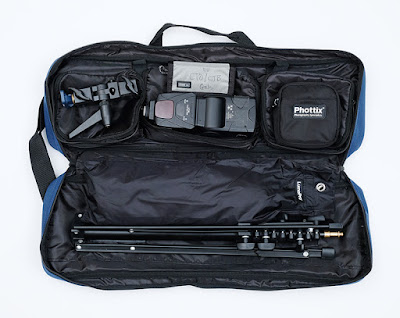
SLC-OE-02: The Best Compact Lighting Bag Is Not a Photography Bag

13 Jul

Call me crazy, but I love the idea of finding a great piece of photo gear by going off-label. In this case, a lighting bag that is not technically a lighting bag.

It's perfectly sized, comes in a ridiculous array of colors and is $ 22.99 shipped. Read more »
Strobist

 
Comments Off on SLC-OE-02: The Best Compact Lighting Bag Is Not a Photography Bag

Posted in Photography


How to Find Opportunities for Abstract Photography Anywhere

12 Jul

Abstract photography, otherwise known as non-objective, conceptual, or experimental photography, is a tricky subject. According to Wikipedia, abstract photography is “a means of depicting a visual image that does not have an immediate association with the object world and has been crafted through the use of photographic equipment processes or materials”.

So basically, abstract photography is image-making that doesn’t aim to represent reality but rather visually explores the components that construct conventional subject matter.

To seek out abstract photography in any opportunity, you must shift your focus away from describing the world in a literal way, focusing on line, shape, form, space, color, contrast, pattern and texture instead. These elements come together to create an image that explores the way you appreciate your visual environment.

Here are a few tips to finding opportunities for abstract photography, wherever you are!

Previsualization

How to Find Opportunities for Abstract Photography Anywhere

Previsualization in photography is a skill where a photographer “sees” the outcome of an image before it is taken. By breaking down a potential image in your mind’s eye, you can dissect a scene, prioritizing the best possible visual results.

This is especially useful in abstract photography, where the outcome of a photograph sometimes isn’t immediately obvious.

Previsualizing will help you make the most of any potential photographic opportunity. Imagine encountering a fence for example. You could easily photograph the fence line and move on, but your photograph won’t be very engaging. Or, you could mentally analyze the fence’s structure, breaking it down into abstract categories (color, shape, line, pattern, etc.) to take advantage of the scene and exploit it to its full potential.

Go macro

macro flower - How to Find Opportunities for Abstract Photography Anywhere

Macro photography is an especially unique form of photography, illuminating what often goes unseen to the naked eye. Provided you have a macro lens, extension tubes, or even a magnifying glass, one of the best things about abstract macro photography is that you can get an interesting result photographing just about anywhere.

Abstract macro photography is a great opportunity to focus on subtle details in a scene without being overly concerned about representing a specific subject. Focusing on abstracted aspects such as color and shape rather than the subject means you can explore the building blocks of an image visually.

Look for lines

Abstract photography focuses on the naked ingredients of image making, but sometimes this means a change-up in your photographic approach. One great way to tease out abstract photographic opportunities is to focus on a compositional technique. For example, focusing on lines will reveal opportunities you may have passed over before.

How to Find Opportunities for Abstract Photography Anywhere

As one of the most basic elements of composition, lines are an extremely powerful tool in visual art. Lines that guide a viewer’s eye around an image (also known as leading lines) are a way to point towards a specific subject or highlight the geometry of a scene. They can also add a sense of urgency with straight, abrupt lines or lend a sense of calm or peace with softer, curved lines.

Concentrating on lines will reveal new opportunities in any environment, all you have to do is look.

Seek out texture

Texture in photography is one of the most under-utilized compositional tools. Exploring texture creates an image that people can “feel” in their mind. The feeling of touch appeals to a viewer’s understanding of the world.

By incorporating texture into an abstract photograph, you are connecting to an audience’s knowledge of how the world behaves under the sense of touch. And because most things feel like something, there are plenty of opportunities for textural abstract photography. Try looking for peeling paint, roughed up wood or dried leaves.

How to Find Opportunities for Abstract Photography Anywhere

Investigate color

Color is all around us, it’s a universally powerful tool of communication. For example, psychologically, yellow has associations with joy and energy, whereas green is associated with nature and calm. It’s just the same in abstract photography.

Focusing on color investigates our associations with the environment around us. It transcends abstract subject matter to connect with a viewer on a psychological level.

Making color the center of interest in your photography will reveal new and unusual abstract subject matter too. Objects that may seem boring or mundane come alive with a bit of color, creating unusual and interesting abstract photography.

How to Find Opportunities for Abstract Photography Anywhere - color

Conclusion

The scope of abstract photography is exciting and endless. Although it’s exact meaning is hard to define, abstract photography provides space for creativity and experimentation.

It’s the perfect excuse to shake up your photographic practice, all you have to do is look! Please share some of your abstract photos in the comments below.

The post How to Find Opportunities for Abstract Photography Anywhere appeared first on Digital Photography School.


Digital Photography School

 
Comments Off on How to Find Opportunities for Abstract Photography Anywhere

Posted in Photography


Some of the Pros of Using Micro Four-Thirds Cameras for Wildlife Photography

11 Jul

Micro four-thirds (MFT) cameras have been on the market for 10 years now and have grown to be a preferred option for professionals and amateurs alike. The small camera bodies (you might even say tiny) house high-quality features including high dynamic range, high ISO sensitivity, and 16mp (or greater) sensors.

As the MFT format has gained popularity a range of professional-quality lenses has also been developed. I have been shooting the Olympus Em5 and Em5II since they came on the market in 2013 and 2015 respectively. Throughout my travels shooting wildlife across the U.S., I have been shooting this system with great results.

There are many aspects that micro four-thirds cameras great for wildlife as well as a few drawbacks. I will walk you through my impressions of this system for wildlife photography, both the pros and the cons.

humpback whales - Pros and Cons of Using Micro Four-Thirds Cameras for Wildlife Photography

I took this image of bubble-net feeding Humpback Whales with an Olympus OMD E-M5. All of the images featured in this article were captured using the MFT system.

Intrinsic Advantages (Pros)

The micro four-thirds system has some advantages for wildlife photographers due to the nature of its sensor and technology. These “intrinsic advantages” as I’m calling them are inherent to the system and can assist in your wildlife photography. In the next few sections, I will walk through how a 2x 35mm equivalency, quiet camera, high ISO range, high shutter speed, and high-resolution.

I will also review some features specific to the Olympus E-M5 Mark II system that you may find beneficial.

Micro four-thirds for wildlife - caterpillar

Here I have used MFT to photograph all forms of wildlife. From coastal brown bears to insects.

Pro – Get Closer with the 2x Crop Factor

Everyone who shoots wildlife photography wants to get closer to their subject and this is one way in which micro four-thirds sensors shine. When talking about how a sensor’s size affects the final zoom of your lens, the photography industry standardizes to “35mm equivalency”.

Without diving into the ins-and-outs of that means, here’s the bottom line: if you have a 100-300mm lens the micro four-thirds system effectively makes it a 200-600mm lens. The camera intrinsically doubles the length of your telephoto lens – you can likely appreciate how that doubling of focal length will help you get your wildlife shots!

Micro four-thirds for wildlife - portrait of a deer

2x equivalency is a big deal! You can get closer to wildlife with your enhanced telephoto lens.

small bird with a berry - Micro four-thirds for wildlife

As an avid birder, I appreciate the 2x equivalency to get closer to small birds.

Pro – High Maximum Shutter Speed

The micro four-thirds system is capable of really fast shutter speeds. As a wildlife photographer, it can give you a leg-up on fast-moving animals such as small birds or even insects.

The Olympus OMD E-M5 II is capable of shutter speeds up to 1/8000th of a second! In bright lighting conditions, you can use the fast shutter speed to stop water droplets of an animal walking in a river or the fast pulse of the wings of a hummingbird.

hummingbird in flight - Micro four-thirds for wildlife

Fast shutter speeds will help you stop the wings of a bird even as quick as that of a hummingbird’s!

Pro – 40MP High-Resolution Mode

A feature specific to the Olympus OMD E-M5 II is the 40-megapixel high-resolution mode. Sensor shifting-technology allows the camera to increase the resolution of the image.

One restriction of this process is the subject or animal has to be completely still. However, if you know you have the right conditions and a shot for which you need high resolution, you will find this mode convenient if your goal is to make large prints later.

owls in a tree - Micro four-thirds for wildlife

These great horned owl chicks were sitting so still that I was able to use the high-resolution feature of the Em5II to create a 40-megapixel image of them.

Pro and Con – ISO, and Light

The micro four-thirds system is capable of using high ISO settings to boost your camera’s sensitivity to light. However, high ISO values can create image noise (graininess in the image), and this is one area where the MFT systems fall much shorter than full-frame systems and DSLRs.

You will find that you can comfortably shoot up to ISO 800 or 1600 and be able to post-process out the noise. However, at ISO 1600 you will notice the noise if you crop the image, so be aware of that. Low-light conditions are common for wildlife photography, so consider that this system will not give you the performance of full frame cameras.

great horned owl eyes closed - Micro four-thirds for wildlife

This great horned owl was photographed in low light, so I needed to increase my ISO to capture it.

Pro – A Stealthy Camera

This camera contains no mirrors or moving parts inside the camera – every process occurs digitally. That makes the camera extremely quiet when you press the shutter button and it will not disturb the wildlife you are watching. This helps you keep the animal in range and also be an ethical wildlife photographer that does not negatively impact the wildlife you are shooting.

dragonfly damselfly - Micro four-thirds for wildlife

A quiet camera is very important for capturing skittish animals such as this damselfly!

Pro – Flexibility

This camera can provide incredible flexibility to your kit. In the next sections, I will review some features that I find helpful for wildlife photography.

Pro – Light Body

All of the mirrorless cameras are light which makes them ideal to transport. This is due to the lack of moving parts within the camera such as mirrors – which allow the cameras to be smaller. The lenses native to micro four-thirds cameras are also generally light.

Reiterating my point about 2x equivalency, you can get a 600mm equivalent telephoto lens that only weighs a few pounds. As a traveling wildlife photographer, you will appreciate the light weight in your backpack, carry-on luggage, or strapped around your neck.

micro four-thirds for wildlife - olympus camera

This is the Olympus Em5II body and Lumix 100-300 that I use for wildlife photography. You can see how small the body and lens is!

Pro – Fast Autofocus

The autofocus system on this camera is very fast and is useful for inflight shots of birds and general wildlife photography. Upgrades to the autofocus systems in the Olympus E-M5 II have provided accurate focus points giving you the ability to target an exact spot in your frame to focus.

One disadvantage is I find that the autofocus hunts in low-contrast situations. So you should be prepared to manually focus in low-light shooting conditions such as at dusk or in a heavy forest canopy.

micro four-thirds for wildlife - eagle in mid-air

A fast autofocus system will help you a lot with in-flight images of birds.

crane in flight - micro four-thirds for wildlife

I relied on the autofocus to capture this sandhill crane as it flew by.

Pro – High Resolution

Almost all micro four-thirds cameras come with a high-resolution (16mp or greater) sensor. The 16mp sensor on the Olympus E-M5 II gives plenty of resolution for enlargements. This is useful for printing and also gives you the ability to crop a shot and maintain sharpness.

I have made canvas prints up to 36” with images from this camera and found the resolution was ample for that as long as you have a sharp shot.

owl in Lightroom - micro four-thirds for wildlife

Here is a 1:1 crop of an image of a great horned owl. You can see that the image maintains decent sharpness even at a large crop.

Pro – Native Lenses and Adapting Lenses

If you are willing to shoot with manual focus it is possible to adapt nearly any brand of telephoto lens (Canon, Nikon, Sigma, etc.) to your MFT camera using an adaptor. This is thanks to the small flange distance of the MFT format. I have had success adapting long telephotos, old Olympus OMD lenses, and even old screw-mount lenses such as a Takumar 35mm that I have.

Why does that matter? Adaptors are cheap ($ 25 – $ 50 generally) and allow you to utilize glass that you may already own bringing down the price-point of your system.

olympus camera and adapted lens - micro four-thirds for wildlife

You can adapt almost any lens to the MFT bodies. Although I do not use this Takumar portrait lens for wildlife, it shows off the ability to adapt even a screw-mount lens such as this one built in the 1960s.

Pro – Sealed Bodies and Lenses

The body of the Olympus E-M5 Mark II is sealed from dust and water. Although that is not the case with all MFT cameras, as long as you do your research you’ll find other camera bodies that are sealed and well-built too.

This is invaluable to a wildlife photographer! I am sure you can think of times that you needed to shoot in the rain, the dust, or perhaps the mist of a waterfall. Having a sealed body will protect your camera and investment.

breaching whale - micro four-thirds for wildlife

On a boat or on land, you need to be able to count on a sealed body to protect your camera.

The Bottom Line

You may have found the features above appealing for your photography needs, so let’s look at the bottom line and the value-to-cost of this system.

You can find micro four-thirds cameras starting at $ 200 and going up to about $ 1,000. For those prices, you are getting a camera capable of shooting high-resolution images with excellent quality. With practice and patience, you can take beautiful images of wildlife and not break your back (or your bank) while doing it.

As I like to say, “pixels are cheap”, so I hope you make lots of them photographing wildlife with a micro four-thirds system.

The post Some of the Pros of Using Micro Four-Thirds Cameras for Wildlife Photography appeared first on Digital Photography School.


Digital Photography School

 
Comments Off on Some of the Pros of Using Micro Four-Thirds Cameras for Wildlife Photography

Posted in Photography