RSS
 

Posts Tagged ‘Photography’

How to do Extreme Close-Up Photography with a Macro Bellows

06 Aug

Macro photography is technically designated as the ability to photograph subjects at magnifications equal to or greater than life size. This means that if the subject’s projection size on the camera’s sensor is the same size as the subject itself, then you have life-size magnification, also known as a 1:1 ratio.

Even though many lenses state they have macro functions, a true macro lens must be able to do 1:1 or greater ratio magnification. These specialized lenses allow for a closer focus distance and have great image quality, but they tend to be expensive.

There are cheaper ways to create macro images though. Reverse rings, extension tubes and close up lenses are good options, but my very favorite one is the macro bellows. In this article, I will show you how to use macro bellows to achieve great extreme macro images the easy way.

The Gear

I am very proud to be the lucky owner of one of the very rare Spiratone Kenlock tilt-shift macro bellows sold by Hama in the 80s.

This is probably the rarest and the fullest featured bellows out there, designed originally for 35mm SLR cameras.
In fact, it looks like a scaled down monorail camera with the ability to be adapted to an SLR body.

macro bellow - How to do Extreme Close-Up Photography with a Macro Bellows

This is an amazing piece of gear, despite the fact it was built in the 80s for film cameras, that remains perfectly actual and can be used with modern digital cameras.

It has removable adapters for different brands of lenses and camera bodies.
In this particular setup, I’m using an M42 mount 50mm Tessar Carl Zeiss Jena DDR 2.8 lens and full frame sensor Canon 5D MKIII.

Because this equipment was made for old cameras with flat fronts without a hand grip like the modern digital ones, I am also using a Canon 25mm Extension Tube between the camera body and the bellows to give me some space for the mount.

This is obviously an expensive setup, but you can find many inexpensive simple function macro bellows that can be used with your existing camera and lenses.

Magnification

The magnification ratio is simply the relationship between the size of the (in-focus) subject’s projection on the imaging sensor and the subject’s size in reality.

Imagine a subject like a bug that is 1cm long in real life;

  • If its projection on the camera’s sensor is also 1cm then you have a 1:1 ratio.
  • You have a 2:1 ration if its projection on the camera’s sensor is 2cm.
  • And so forth…

This magnification is achieved by the extension of the bellows operated by two knobs that allow you to move the front and rear elements.

macro bellow on a Canon body - How to do Extreme Close-Up Photography with a Macro Bellows

Retracted, the macro bellows creates a smaller magnification.

extended - How to do Extreme Close-Up Photography with a Macro Bellows

Extended, the macro bellows makes a greater magnification.

There is some really complex optics math behind this magnification process that I am not able to calculate myself. So I used an online calculator to try to understand what I could achieve with this setup and these are the results I got.

magnification - How to do Extreme Close-Up Photography with a Macro Bellows

I was able to find out that the combination of this particular lens with this macro bellows allows me to get a magnification of 3:1 with the bellows at its minimum extension and 5:1 at its maximum extension.

Focusing

The process of focusing is done by moving the whole set constituted by the lens, macro bellows and camera body along a rail, making it closer or further to the subject.

Although it might sound simple, it is, in fact, a very hard process due to the scale of the image we are composing. Any minimal movement throws everything out of focus. So the use of a sturdy tripod and making sure the subject doesn’t move are critical factors to minimize error and allow precise control.

The focusing process is usually done with the lens at its widest aperture to allow enough light in and then it is changed to the chosen aperture for the image capture.

lens - How to do Extreme Close-Up Photography with a Macro Bellows

This aperture open/close process is done automatically in modern cameras and lenses, but with most bellows, it is not possible to have the communication between the camera and the lens due to the lack of electronic contacts, so it has to be done manually.

Sometimes this simple act of changing the lens aperture is enough to change the focus plane, making it a really hard process to control.

Depth of Field

This is for sure the toughest factor to control in macro photography. The depth of field is extremely reduced at this magnification even when photographing with the lens’s narrowest aperture.

A tilt and shift bellows like the one I am using helps to minimize the depth of field issues with some focal plane movements. But many macro photographers choose to use a much more complex technique called focus stacking. The process consists of digitally merging multiple images taken at different focus distances, resulting in a greater depth of field in the final image.

Getting the Picture

Now we’ve gone through the basic technicalities it is time to put everything in action.

For this setup, I will be photographing a dead house fly I found near my living room window. The fact that is not moving makes it a perfect case study to use in a macro stage.

To allow me full control of the equipment, I prepared a tethered setup with the camera connected to a computer, being operated by its native capture software. This way I can avoid touching the camera to release the shutter.

For lighting, I will use two speedlights controlled by a transmitter connected to the camera’s hotshoe that also allows power control through software.

setup for macro - How to do Extreme Close-Up Photography with a Macro Bellows

The intention was to create some light and shadow volume on the fly and separate it from the dark background. Here is the result:

house fly - How to do Extreme Close-Up Photography with a Macro Bellows

Illuminating such a small subject is a very difficult task as the smallest changes produce totally different results. Such is the case in this next image with softer light where I used only one flash and one reflector, instead of two speedlights.

house fly - How to do Extreme Close-Up Photography with a Macro Bellows

To me, it is really fascinating to see a fly at this magnification with all the small details. It is a creepy experience for sure.

This was just with the macro bellows retracted. For the full magnification experience, I will now extend the bellows all the way and experiment greater magnification.

This time I will focus on the fly’s head and the lighting will be done with an LED panel and a small reflector.

behind the scenes shot - How to do Extreme Close-Up Photography with a Macro Bellows

Here is the result:

fly head extreme close-up - How to do Extreme Close-Up Photography with a Macro Bellows

Now we’ve achieved extreme macro with fantastic detail.

Conclusion

It is amazing how an old lens and macro bellows can produce such a high-quality image.

Give this technique a try, I’m sure you will have a lot of fun and make some great images along the way! Please share your macro images with a bellows in the comment area below.

The post How to do Extreme Close-Up Photography with a Macro Bellows appeared first on Digital Photography School.


Digital Photography School

 
Comments Off on How to do Extreme Close-Up Photography with a Macro Bellows

Posted in Photography


Weekly Photography Challenge – Portraits

04 Aug

I did portraits and weddings as commissioned work for years. To this day, people photography is still my favorite thing to do. So, whether you’re into travel, street, or full-on portrait photography you can practice your people skills with this week’s photography challenge.

Natural light portrait, taken in Turkey.

If you need some tips and help getting started, try these dPS articles:

  • 6 Portrait Lighting Patterns Every Photographer Should Know
  • How to use Off-Camera Flash to Create Dramatic Images with Cross Lighting
  • Tips for Doing Natural Light Headshots and Portraits
  • 7 Quick Tips To Help You Capture Better Portraits
  • How to Use a Small Softbox With Your Flash to Transform Your Portraits
  • How to Create Compelling Wide-Angle Portraits Using One Off-Camera Flash

Need more information and training? Grab our dPS ebook Portraits: Making the Shot.

This portrait was lit using a combination of flash and natural light at 1/30th of a second.

This portrait was made in a classroom when I was teaching a portrait class. There is a large window off to camera right which is lighting the model’s face, another reflector being held behind her and up high to light her hair and add highlights. Finally, there is a black reflector being held by one of my students to create the background. You don’t need a lot of gear!

Weekly Photography Challenge – Portraits

Simply upload your shot into the comment field (look for the little camera icon in the Disqus comments section) and they’ll get embedded for us all to see or if you’d prefer, upload them to your favorite photo-sharing site and leave the link to them. Show me your best images in this week’s challenge. Sometimes it takes a while for an image to appear so be patient and try not to post the same image twice.

Portrait using window light (camera left) and a gold reflector to add the highlights on her hair.

Share in the dPS Facebook Group

You can also share your images in the dPS Facebook group as the challenge is posted there each week as well.

The post Weekly Photography Challenge – Portraits appeared first on Digital Photography School.


Digital Photography School

 
Comments Off on Weekly Photography Challenge – Portraits

Posted in Photography


10 Things You Can Learn About Photography from Elliott Erwitt

03 Aug

I’ve always been a huge fan of the photographer Elliott Erwitt. His photography is sharp, often very funny and captures a sometimes silly, sometimes ridiculous part of our human experience.

His way of talking about photography is wonderful. He is a super pragmatic person who doesn’t go in for all fuss of talking about photography as if it’s some kind of sacred experience.

street graffiti - 10 Things You Can Learn About Photography from Elliott Erwitt

He does, though, have extraordinary photographic talent, which has been honed over a 60-year career. So I thought I’d share with you some of the many things we can learn from him. After you read this I encourage you to look up his work and investigate for yourself.

couple in jean jackets with a camera - 10 Things You Can Learn About Photography from Elliott Erwitt

Finding a mentor

I make a point of learning from people I admire. It takes me out of my own little bubble of creative work, the hustle I do as a photographer and creative entrepreneur – and offers me interesting perspectives that are totally different to my own way of doing things.

There are always very cool and interesting ideas to be sparked, new ways to do things, new thoughts and inspirations to be gathered from some of the amazing creative talents in the world.

In this article, I’ve used some of my photos that are a little Elliott Erwitt inspired and paired them with some things you can also learn from this legendary photographer.

man on rollerblade walking dogs - 10 Things You Can Learn About Photography from Elliott Erwitt

Lesson 1: Learning to use your camera is actually the easy bit

“There isn’t much to learn about photography, everything you need to know you can find out by reading the instructions in the box. The rest is practice.” – Elliott Erwitt

Okay, okay, I know this sounds flippant and probably frustrating if you are knee deep in confusion about how to use your camera. But even though it can be challenging and difficult, your camera is a machine with very clear and logical instructions. That’s the easy bit.

Learning how to compose interesting, unique photos, developing your eye for striking compositions, or bringing artistic and captivating elements into your images – those are the challenging parts!

couple with woman crying - 10 Things You Can Learn About Photography from Elliott Erwitt

So if you can trust that with some perseverance you will learn the mechanics of the camera, then you can dedicate yourself to the other part of photography that really makes the difference between an OK photograph and an amazing one. And that is…

Lesson 2: Photography is all about learning to see the world in new ways

“To me, photography is an art of observation. It’s about finding something interesting in an ordinary place… I’ve found it has little to do with the things you see and everything to do with the way you see them.” – Elliott Erwitt

I think one of the reasons Erwitt is so successful is that he is totally an observer. He watches the world from a state of complete presence. I cannot overstate the importance of becoming an observer.

man taking a cell phone photo - 10 Things You Can Learn About Photography from Elliott Erwitt

You may think you are always observing the world, but I would counter that. What you likely do is see a little, but mostly you are lost in your mind, in your thoughts and ideas – usually about the past. “Why did I do that?! Why did he say that?!” Or in the future. “I have to remember to send an email about that meeting!”

We all do it! Then, with the small amount of attention we have left, we are looking at the world, but are so lost in ourselves that what we see is very limited, just tiny measures of what is actually there.

Our brain processes billions of pieces of visual information every second (crazy right?!) but in an effort to make sure we don’t get overwhelmed, we only ever see a few hundred segments.

kid in batman suit - 10 Things You Can Learn About Photography from Elliott Erwitt

So when we are lost in our own minds, our own thoughts, we are seeing even less.

But when you decide to stop paying attention to your never-ending rush of thoughts and ideas and to-do lists and decide to become fully present in the world, fully aware of what is happening right now – then you will be truly observing the world.

Notice the feeling of a light breeze on your skin, the harsh sunlight on your eyelids making you squint, the deep blue of the sky, the way the movement of undulating water is shimmering under the bright sun.

You may notice people laughing in a cafe, a dog barking in the distance, the people walking past you with a rhythmic thud. The rolling drone of cars passing.

crosswalk painting - 10 Things You Can Learn About Photography from Elliott Erwitt

This is what it is to observe the world – to step into the world of now. To step out of your mind and into the present moment.

Elliott Erwitt’s photography is such an amazing display of observing. It shows that when you are in a state of observation, particularly of human beings, you’ll find gems everywhere.

Lesson 3: Don’t stop taking photos – you’ll get a good one eventually

“The ratio of successful shots is one in God-knows-how-many. Sometimes you’ll get several in one contact sheet, and sometimes it’s none for days. But as long as you go on taking pictures, you’re likely to get a good one at some point.” – Elliott Erwitt

corn with a face - 10 Things You Can Learn About Photography from Elliott Erwitt

I like to think of photography in terms of balance. It’s always good to keep learning and developing your skills, but without practice, without getting out there and doing it – all the learning means nothing.

You also don’t want to get stuck in the learning cycle where you never feel like you have enough information, or that you must learn more or upgrade your camera before you can take better photos.

No! Nothing – literally nothing – beats just going out and actually taking photos.


Lesson 4: Technical skill will only take you so far

“Good photography is not about ‘Zone Printing’ or any other Ansel Adams nonsense. It’s just about seeing. You either see, or you don’t see. The rest is academic. Photography is simply a function of noticing things. Nothing more.” – Elliott Erwitt

When I was starting out in photography I bought all of Ansel Adams’ books about Zone printing. I studied them and used them in my work. Through them, I become an excellent printer, both from film and then digital. I am pretty into technology, and I’ve never met a camera manual I didn’t want to read.

But I do, however, have to agree with Elliott Erwitt here. Technical skill can help you capture the photo you see in your head. It can give you the tools to make a photo work, but it is not what makes a photo successful.

couple with sunglasses on a couch - 10 Things You Can Learn About Photography from Elliott Erwitt

There are examples of many famous photographers who were completely untechnical.

Diane Arbus would say that if her camera stopped working she’d just press all the buttons until it started functioning again. Her portraits, though, are breathtaking. She used her ability to connect with people to draw out the most extraordinary expressions and portraits.

So, although I love to draw on strong technical skills as a background for my work – I know it’s not what creates the magical elements, the je ne sais quoi, that makes an image interesting or memorable.

I have seen more than my share of technically perfect, but instantly forgettable images, to know this to be true.

lady in a blue shirt laughing - 10 Things You Can Learn About Photography from Elliott Erwitt

Again it comes back to balance. My ideal goal is to have enough technical skill to be able to execute to my standard, and then focus on that emotion, inspiration, observer part of myself that finds the arresting scenes and subjects to photograph.

Lesson 5: Passion never gets old

Elliott Erwitt is a very prolific photographer. As well as photographing hundreds of advertising and commercial campaigns, he has produced more than 80 books and countless exhibitions.

I love that he has done eight books just on dogs! Isn’t that cool? What that tells me is that you are only done with a subject when your passion for it fades. And Mr. Erwitt is currently 89 years old as of the date this article was published!

dog on the street - 10 Things You Can Learn About Photography from Elliott Erwitt

If you still get excited about a subject, if you still want to photograph it – then you still have something more to say about it. As you get more familiar with your subject, your narrative, your feeling and your observations about it change. Things are always changing and developing with you, the world, and your creativity.

I have been photographing London during the blue hour, sunrise hours, for almost 20 years – and I have never been bored in the city. Often I go to the same spots over and over (East London) and I always find something interesting, because it inspires me.

So always follow that excitement, that inspiration – because passion never gets old.

4 people on a bridge - 10 Things You Can Learn About Photography from Elliott Erwitt

Lesson 6: People reveal a lot about themselves when they think nobody is watching

Elliott has taken some brilliantly absurd shots of people doing bizarre things. You would think that being in public would make people more self-conscious about their behavior. To an extent it does. But most of us aren’t as open as when we are alone.

And yet people are always revealing themselves. It seems impossible to hold onto our mask, our veneer, as humans for very long. Especially when we think no one’s paying attention.

This is one of the key tenets of street photography. Watch closely enough, and for long enough and someone will do something crazy or funny or weird. It’s just human nature.

man taking selfie with a seagull - 10 Things You Can Learn About Photography from Elliott Erwitt

Lesson 7: A good photograph is all about the emotions it invokes in the viewer

“I observe, I try to entertain, but above all I want pictures that are emotional. Little else interests me in photography. Today, so much is being done by unemotional people, or at least it looks that way… I mean, work that’s fascinating and fun and clever and technically brilliant. But if it’s not personal, then it misses what interesting photography is about.” – Elliot Erwitt

This reminds me of a beautiful Maya Angelou quote, “I’ve learned that people will forget what you said, people will forget what you did, but people will never forget how you made them feel.”

It’s the same with photography and all art. If someone feels something when looking at your photos, that creates much more of an impact and connection than a photo that simply looks beautiful or interesting, but doesn’t invoke any emotion.

man with his head down - 10 Things You Can Learn About Photography from Elliott Erwitt

That is easier said than done right?! How do you go about doing that? How do you create a feeling in your images?

The main thing is you, as the photographer, must be in a state of feeling first. If you are feeling bored by your subject, you will not translate an emotionally impactful sentiment into your photos.

If you are looking at your subject and feeling, for example, deeply calm, then you are more likely to convey that feeling in your images.

Like Henri Cartier-Bresson said, “To photograph: it is to put on the same line of sight the head, the eye and the heart.”

10 Things You Can Learn About Photography from Elliott Erwitt - silhouette of a man at sunset with boats

Now, I don’t want to say that happens automatically. Just because you feel something when you are taking the photo doesn’t mean it will immediately be translated into the image. It isn’t. It does require some technical abilities to be able to capture the image that you want – getting good exposures on your light, etc. But that is just learning and practice.

The state of feeling – of always putting yourself in front of things that make you feel something – that is the thing that elevates your images overall.

For example, I spent seven weeks in a castle in Tuscany over the winter and much of my time was spent wandering the hills and forests taking photos. One beautiful, crisply cold afternoon I came upon a deserted building. It was huge and looming, with a cold and scary facade. The gardens were overgrown, and nature had begun its reclamation of the stone statues and walls.

creepy old building interior - 10 Things You Can Learn About Photography from Elliott Erwitt

It was really eerie. Although terrified of exploring it, I pushed through my fear and went inside. The whole time I was there I was anxious – too many scary movies perhaps running through my mind – and my photos reflect that feeling of fear.

But that’s great because it works for the subject. The subject was scary and creepy. So my photos feel scary and creepy. A job well done, I’d say!

As I mentioned, I spend a lot of time photographing cities at dawn – particularly in summer when sunrise is so early in many places that there is no one around. You really get to observe the city as it is, without crowds of people.

Venice at dawn - 10 Things You Can Learn About Photography from Elliott Erwitt

So here’s the second example, above. I have hundreds of photos of sunrises, in beautiful places like Venice or Istanbul, that have filled me with awe. The combination of the sky breaking open from deep blue to explosions of pinks, purples, yellows and oranges and the incredible buildings and architecture in the cities is so exciting for me to experience.

The feeling you get from viewing these photos matches the epic feeling I experienced taking them. I had a feeling of total awe while I was taking the photos. I capture the images technically well – but the impact comes from that feeling.

In another example, I love finding peculiar things stuck on the ground or on walls. I love making funny compositions of odd shapes that you can find on pavement or the shapes created by torn posters.

ripped poser on a wall - 10 Things You Can Learn About Photography from Elliott Erwitt

There are so many ways to play with shape, form, and texture in these subjects.

To me the feeling I have when I find something like this is one of intrigue. I think that translates into the images I capture as well.

So there are many ways to approach this sense of feeling. The most important factor is finding the things that exhilarate, intrigue, or inspire awe within you.

little girl with sunglasses - 10 Things You Can Learn About Photography from Elliott Erwitt

Lesson 8: Interesting things happen all the time…you just have to wait

“I rarely stage pictures. I wait for them… let them take their own time. Sometimes, you think something’s going to happen, so you wait. It may pan out; it may not. That’s a wonderful thing about pictures– things can happen.” – Elliot Erwitt

The world is magical, things will happen regardless of what you do. In fact, the less you do the better. I find that the less you try to control the world around you the more effort you make to observe and be in that state of awareness.

The world, and we humans, always do funny things.

man sweeping a cat - 10 Things You Can Learn About Photography from Elliott Erwitt

Lesson 9: It’s easy to create something original if you don’t follow the crowd

“After following the crowd for a while, I’d then go 180 degrees in the exact opposite direction. It always worked for me, but then again, I’m very lucky.” – Elliott Erwitt

I spend a lot of time photographing some of the most photographed places on earth – cities like Paris and London. You might think it’s hard to capture something original in such over-photographed places, but that’s not the case.

Most people are photographing the exact same things. A bit like how tourists are always to be found crowded around the same spots. The trick is to go (or shoot) in the opposite direction to everyone else.

One evening I was on Westminster Bridge in London. There was a gorgeous sunset setting behind the Houses of Parliament. It was really incredible – lots of purples and pinks.

On the bridge, hundreds of photographers had their cameras pointed at the scene. This is understandable, of course.

I grabbed that shot (above), which was pretty but not very original. Then I started to look around. The light wasn’t just the sunset, it was affecting everything around us. I turned 180 degrees and there was a really cool scene of almost metallic colors. I got a great shot of that scene, see below (and no one else seemed to have noticed.)

Almost everyone will shoot the obvious shot, and not look around to see what else there is to photograph.

Lesson 10: Stay curious!

“I don’t think you can create luck. You’re either lucky or you’re not. I don’t know if it’s really luck or if it’s just curiosity. I think the main ingredient, or a main ingredient for photography is curiosity. If you’re curious enough and if you get up in the morning and go out and take pictures, you’re likely to be more lucky than if you just stay at home.” – Elliott Erwitt

Keep it simple.

This is another piece of Elliott’s simple advice that I love. Don’t overthink photography. Use your passion and instinct. Go out, take photos. Look at the world around you. Then shoot some more.

10 Things You Can Learn About Photography from Elliott Erwitt - chairs on the street and a yellow wall

Last bonus tip – be yourself!

“The dedicated photographer works with his own sensibility, instincts, and experience. He stays curious about everything visible. He looks, looks some more, and then looks again, because that is the fundamental basis of photography. And that’s all… just looking and making your own unique connections.” – Elliott Erwitt

We each have totally different ways of seeing and capturing the world around us. I couldn’t emphasize enough the importance of not worrying about what everyone else is doing and just focusing on you!

Your photos, your passions, your personal curiosity. That’s how you’ll create something unique and interesting.

two guys sitting on steps in red pants - 10 Things You Can Learn About Photography from Elliott Erwitt

I hope this has inspired you to take a look at the work of one of my favorite photographers and given you some ideas for your photography.

I’d love to know what you think of these gems of wisdom from Mr. Erwitt and the lessons I have interpreted from them. Please share your thoughts below.

The post 10 Things You Can Learn About Photography from Elliott Erwitt appeared first on Digital Photography School.


Digital Photography School

 
Comments Off on 10 Things You Can Learn About Photography from Elliott Erwitt

Posted in Photography


Five (More) Uncomfortable Truths About Photography

02 Aug

One of my first articles here at DPS was entitled 5 Uncomfortable Truths About Photography. I wrote it as a reality check to myself, and for you, the readers of DPS. Our beloved art of photography has a dark side, and it’s important to recognize this. In the couple of years since I penned that piece, a few more negatives about our art have occurred to me, so I figured it was time for Part II.

#1 – Bad Weather is Good Weather

cloudy view of mountains from a small plane - Five (More) Uncomfortable Truths About Photography

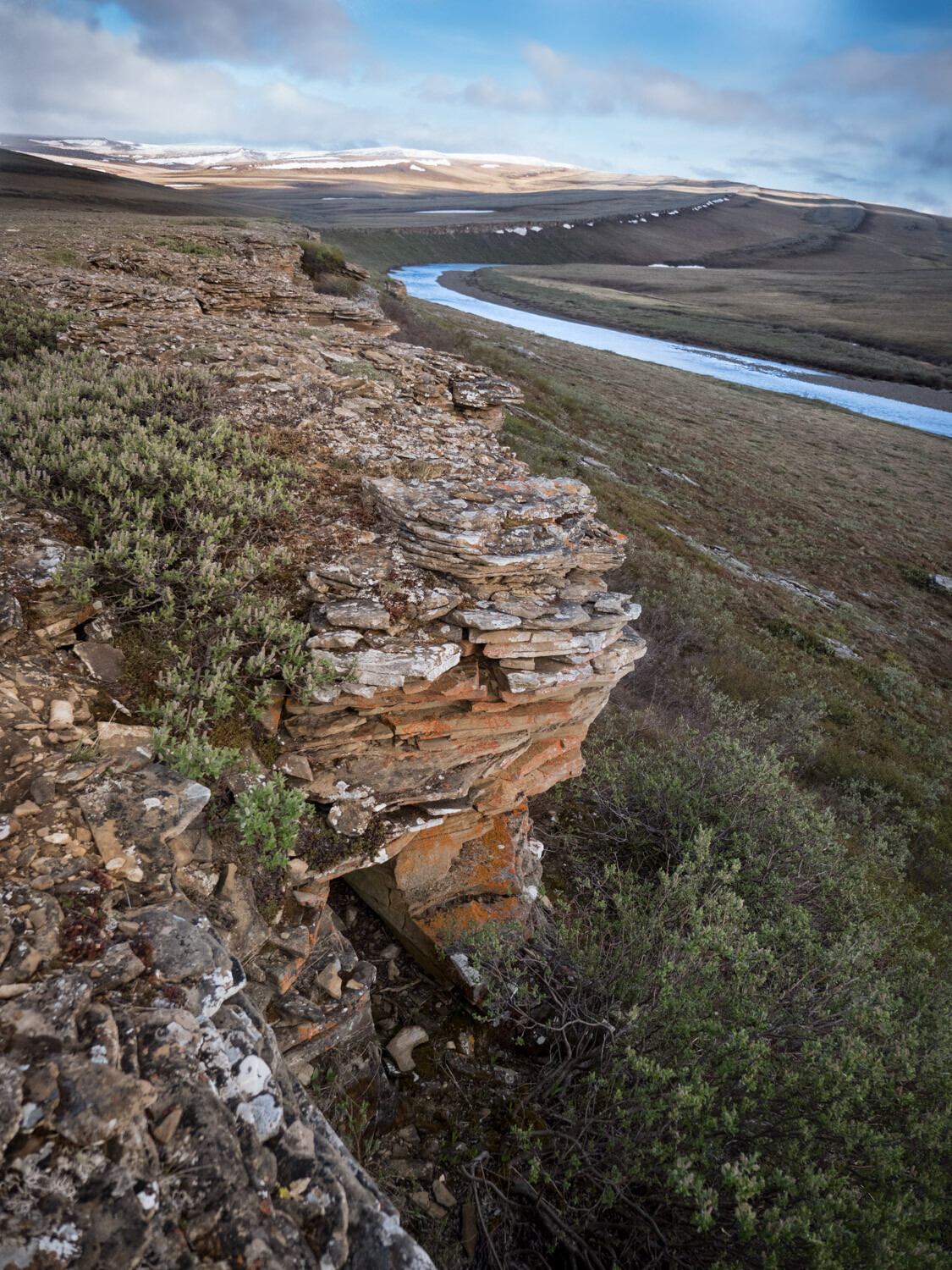
I’ve recently returned from leading a wilderness trip in Alaska’s Northwest Arctic. My group and I spent 11 days canoeing on a very remote and wild river. For the first three days, the weather absolutely sucked and it was glorious. But then the sun came out and it all went downhill from there.

When it comes to outdoor photography, the bluebird days we hope for as hikers, paddlers, cyclists, and explorers, are not ideal. Bright blue skies do not create drama. They don’t catch the evening light, and they don’t roil and boil in textures of deep blues and grays.

Now a good storm, that’s dramatic!

rocky outcrop and cloudy sky - Five (More) Uncomfortable Truths About Photography

Without the moody skies here, the warm tones in the rock would be either absent or much less compelling.

Our small bush plane slipped in beneath low clouds, barely clearing the pass over the mountains. We landed in a mix of blowing snow, sun patches, and a cold north wind. Photographically speaking it was perfect weather; a constantly shifting drama unfolding across the landscape.

For a few cold and blustery days it was perfect, and my best images of the trip were made during that time. But, on the fourth day, the wind shifted and blew out the clouds and snow, leaving behind a bluebird sky, warm temps, and sunshine. It definitely could have been better for photography.

Five (More) Uncomfortable Truths About Photography - blustery day

This image and the one below were made 24 hours apart but from very nearly the same location. This brooding, moody, stormy weather is far superior to the more generic, nice-day image below.

brighter day blue sky - Five (More) Uncomfortable Truths About Photography

The moral of the story is that the best weather for being outdoors is often boring when it comes to photography. So be brave, and step outside even when it’s snowing sideways.

#2 – Lens Snobbery is Real

Five (More) Uncomfortable Truths About Photography - bird in a tree singing

A Swainson’s Thrush singing in my yard in Fairbanks, Alaska. This image is one I could never have captured with my old 500mm f/4 simply because I simply would not have been carrying it while walking my dog.

A few months ago I made the heart-wrenching decision to sell off my beloved Canon 500mm f4L IS lens. It was a hard decision. That big hunk of glass and metal had been with me a for a few years, traveled around the world with me, and made some of my best images. But, its size, heft, and cumbersome, tripod-requiring handling was getting in the way.

I’ve replaced it with a much smaller Olympus 300mm f4 PRO for the micro 4/3rds system (giving me a 600mm f4 equivalent at a third of the size). And here is the uncomfortable part – the quality of the Olympus lens is equal to that of the Canon and I don’t miss the bigger, more expensive Canon lens at all. Not one little bit.

Except (and to be honest I have a hard time admitting this) when I’m around other photographers. As a bonafide professional shooter, the big lens felt like a badge of honor. It’s a bogus badge for sure because the size of your lens has nothing to do with performance or image quality. Yet I felt like I needed that big glass to be taken seriously as a pro.

Five (More) Uncomfortable Truths About Photography - portrait shot of a raven

I don’t think the bokeh or sharpness of my Olympus 300mm f4 falls short in any way when I compare it to larger, far more expensive lenses like my old 500mm f4.

The compact mirrorless 4/3rds system does not stand out the way the big gear did, and in groups of photographers, I noticed my gear (and me) being brushed over.

The great irony is that my long lens work has improved dramatically with the purchase of the new gear. Its small size is easy to transport, so it is always with me when it matters. I now walk the dog with a 600mm f4 equivalent for heaven’s sake! It’s there when I need it and the results have been excellent.

Time to put the snobbery aside and let the images speak for themselves.

#3 – Your big DSLR is Unnecessary

Five (More) Uncomfortable Truths About Photography - animals running on a ridge

Yesterday, while wandering around my local farmer’s market, I saw a photographer shooting with the exact same Canon professional level DSLR I owned until a few months ago. My god, it looked huge!

You see, I’ve recently switched from Canon to Lumix (for general shooting and wildlife) and Sony for night work and high-resolution landscape imagery. Both of these two mirrorless systems cast a tiny shadow compared to the hulking DSLRs of my past life.

In this day and age, the difference in quality and performance between a big DSLR and a light and compact mirrorless is precisely zilch. The big camera may make you stand out in a crowd (see #2 above), but it won’t make better images.

#4 – Creativity is More Important Than You Think

northern lights over a mountain - Five (More) Uncomfortable Truths About Photography

Part of creativity is knowing when to grab a shot. Rather than pausing when the headlights of a big truck fell across this mountainside, I experimented with an exposure.

Look across the pages of any photo website or magazine and you’ll see gobs of articles and tutorials about camera settings, focus techniques, equipment, exposure, and post-processing. But likely you’ll find very few about the creative process of image making.

I know why. These types of articles are popular because they offer simple, actionable things to learn that can improve your images quickly. Don’t get me wrong, these things are super important to know. But all the settings, equipment, and post-processing tips are merely tools in your toolbox, not the final product.

sunset over a forest and hills - Five (More) Uncomfortable Truths About Photography

Eventually, every serious photographer reaches a point where they know all they really need to know about their camera and computer programs, and then what…? They either realize that that photography is more than a technical craft and they begin looking at it from a creative perspective, or they don’t, and they stall out.

Learning the technical details is easy compared to actually finding and composing images in the field. Good photography is not formulaic, and how do you learn something that doesn’t use a formula for success? You work at it, a lot. It’s hard and uncomfortable. That’s how.

#5 – Money is Better Spent on Travel than Gear

northern lights over a mountain scene - Five (More) Uncomfortable Truths About Photography

For much less than the price of a new pro-level camera body, you could go photograph something like this.

Got a few hundred bucks to blow on gear? Don’t. Take that few hundred bucks and take a few days and go somewhere awesome instead. Unless you really need it, your extra money is better spent on going somewhere really cool to make images, and not on cameras, lenses, bags, filters, and flashes.

I can just about promise you that you’ll get more and better images by a few days of travel to photograph wildlife, or landscapes, or the northern lights, or some new city than you will by spending the same amount on a new piece of kit.

sun burst over trees in Africa - Five (More) Uncomfortable Truths About Photography

A trip to Africa last year re-inspired me in a way a bunch of new gear never could.

A new telephoto lens or camera could cost you thousands of dollars. If you have functional camera gear, and you are looking at something new just because it’s all bright and shiny, take a moment to reconsider. Could those thousands be spent traveling somewhere new and unique? Some place to photograph a landscape or phenomenon you’ve always dreamed of shooting?

We make images by exploring our world. Without that exploration, all the fancy new gear in the world is worthless. Just as importantly, you’ll get the experience and joy of travel, and that is truly priceless.

Conclusion

night campfire scene - Five (More) Uncomfortable Truths About Photography

Look, photography is messy and expensive. I suggest you embrace the mess and reassess the expense. Go outside when the weather sucks and see what you find. Remember that the performance of your gear is what matters not the brand or the size, and know that creativity is hard but it’s the only way to advance your photography. Photography takes work.

Lastly, think about how you spend your money. Old glass and old cameras often work just fine, and are capable of producing excellent images. Maybe you should hold onto that gear for a while longer and spend some of that extra money to go somewhere new. Travel, you’ll find, is an excellent strategy for making great photos.

It’s an uncomfortable photographic world out there. So it’s time to accept it, and go make something beautiful.

The post Five (More) Uncomfortable Truths About Photography appeared first on Digital Photography School.


Digital Photography School

 
Comments Off on Five (More) Uncomfortable Truths About Photography

Posted in Photography


Creative Macro Photography – Using Fairy Lights

31 Jul

Are you interested in doing some creative macro photography? Oftentimes, we macro photographers find ourselves photographing the same subjects over and over, searching for new compositions that seem like they’ll never appear.

fairy light creative macro photography flower

In this article, I’ll discuss a macro photography technique that will get you out of that creative rut: using fairy lights. I’ll explain where to purchase them, how to set them up, and how to use them. Ultimately, you’ll learn how to enhance your macro photography with a cheap accessory. You’ll even have lots of fun in the process!

What are fairy lights?

Fairy lights are tiny LED lights. They come in a number of different colors and can be picked up for cheap ($ 10 or thereabouts) on Amazon.com. I prefer to use warm white colored fairy lights, but feel free to experiment. Different colors will give your photographs different tones.


fairy light creative macro photography flower daisy

What makes fairy lights interesting?

There is one reason why I love fairy lights, and it is this:

Bokeh, bokeh, bokeh!

When placed properly in a photograph, fairy lights can create wonderful out of focus highlights that add a magical feel to your images.

fairy light creative macro photography flower

This can be used in any genre of photography. For instance, it is fairly popular in some portrait photography circles. But I most enjoy using fairy lights in creative macro photography, which is what I’ll be focusing on in this article.

How to use fairy lights?

Work in the twilight hour

Fairy lights are not very bright relative to ambient light. Therefore, it’s necessary to shoot late in the day.

fairy light creative macro photography flower daisy

I photographed this daisy a few minutes after sunset.

If your subject is shaded, or if the day is cloudy, you can start shooting a few minutes before the sun has gone down. As the level of ambient light decreases, the overall look offered by the fairy lights will change.

The fairy lights will become more noticeable, and will really pop off the background (which can be good or bad, depending on the look you desire).

fairy light creative macro photography flower bokeh

I generally shoot until I can no longer handhold my camera. This is usually in the area of 30 minutes after sunset. However, If you like to use a tripod, feel free to stay out later.

Shoot wide open and feel free to underexpose

What should you use for camera and lens settings?

The lens aperture is the easiest setting to choose, widen it as much as possible. Not only does this let in the most light (to compensate for the lack of ambient lighting), but it also blurs the fairy lights in a more pleasing way.

Therefore, when working with fairy lights, I generally stick to my lens’s widest aperture, usually f/2.8.

fairy light creative macro photography flower bokeh

This image was taken with a shallow aperture to ensure better bokeh. The large blobs (lower right) were created by putting some of the lights closer to the camera than the flower.

As for shutter speed, I meter off the main subject (for me, this is usually a flower), and then deliberately underexpose the image. Why? I like that blue twilight aesthetic and I want it to be clear that the image was taken after sundown. This also really causes the fairy lights to stand out.

Regarding lenses, I usually shoot with a macro lens. However, you might also work with another fast lens, such as a 50mm f/1.8. These have the added benefit of being smaller and are therefore easier to handhold.

fairy light macro photography flower bokeh

In macro photography, being able to focus manually is often essential. This is even truer when it comes to fairy light photography. When working in such dark conditions, your autofocus will hunt and hunt until the light is completely gone and you’re forced to pack up.

Instead, switch your lens to manual focus. You can also switch on Live View, which can be very helpful in such difficult conditions.

Place the fairy lights directly behind or in front of the subject

There are two general approaches that I recommend for fairy light photography.

#1 – Put the lights a few inches behind the subject

This distance can decrease if you’re working at high magnifications or a very wide aperture. But it should increase if you are farther from your subject or working with a narrow aperture. If I’m photographing flowers, I often just drape the lights over other flowers or branches behind the main subject.

fairy light creative macro photography flower bokeh aster

I positioned some fairy lights behind this flower by placing them in a nearby bush.

The key is to ensure that the lights themselves are out of focus. You don’t want viewers to look at your images and actually see the fairy lights as fairy lights. They should appear as beautiful background highlights. This means that you should work with a bit of distance between the subject and the fairy lights in the background.

Holding the lights in behind the daisy.

Final image.

#2 – Put the lights in front of the subject

The second approach is harder to pull off but is well worth the difficulty. This involves placing the fairy lights in front of the subject, close enough to the lens that they remain out of focus.

fairy light creative macro photography flower daisy

I held the fairy lights between the lens and the subject in order to ensure the fairy lights remained out of focus and generated strong bokeh for this image.

I generally hold the lights in front of the lens with my left hand while manual focusing the lens with the other. This ensures that the fairy lights remain nothing more than out of focus highlights.

fairy light creative macro photography flower bokeh

Final Techniques to Consider

Now you know the basics of fairy light macro photography. But how do you create compelling images?

creative macro photography fairy lights

I find that there’s a particularly useful guideline for fairy light photography which is to incorporate the fairy lights into the composition.

creative macro photography fairy lights flower daisy bokeh

That is, don’t just let the fairy lights spray randomly throughout the background. Yes, this will result in an interesting image, but it will probably seem chaotic as well. In any type of photography, you want every bit of your photograph to be deliberate. Fairy light macro photography is no exception.

Instead, compose so that the fairy lights complement the main subject. Place them so that they appear above the subject (in the background). Make them appear beside the subject. Put them so that they seem to ring the main subject.

creative macro photography fairy lights flower cosmos bokeh

I held the fairy lights in the bottom of the frame, so as not to obscure the flower.

If you are using the second technique that I mentioned above, in which you put the fairy lights in front of the lens, make sure that they don’t block out important parts of the subject.

You don’t want to obscure your main subject with lights. It needs to be recognizable in order to offer a point for the viewer to focus on.

creative macro photography fairy lights flower aster

Conclusion

Fairy lights can add creative flair to your macro photography. They can also help you get out of a creative rut.

If all goes well, you might find yourself inspired to experiment with different colored fairy lights, or even take them with you when engaging in other genres of photography like portrait or pet photography.

creative macro photography fairy lights flower bokeh

By following the guidelines set out above, you’ll be able to take some fantastic eye-catching images!

Got any creative macro photography techniques of your own? Please share them in the comments section below.

fairy light macro photography flower

fairy light macro photography flower abstract

fairy light macro photography flower daisy abstract

fairy light macro photography mushroom

fairy lights photography leaves autumn

The post Creative Macro Photography – Using Fairy Lights appeared first on Digital Photography School.


Digital Photography School

 
Comments Off on Creative Macro Photography – Using Fairy Lights

Posted in Photography


Six Non-Photography Tips to Super-Charge Your Travel Photography

31 Jul

It’s a real challenge to portray the true essence of a destination and to show it to the world the way you see it. This genre, travel photography, calls for immense creativity, technical expertise, and unflinching dedication to the art. Every little detail that can weigh off your shoulders count.

I have been traveling across the most remote corners of the country and beyond for years now, and the best results are a boon of some of the non-photography decisions I’ve made. When you are on the road for long, you realize the real beauty of a travel shot goes deeper than its aesthetic value. All the technical training in the world, the best gear money can buy, and time-tested templates of composition can only take you so far. But then comes the real work. The stuff that makes a photograph, speak.

Six Non-Photography Tips to Super-Charge Your Travel Photography - overhead shot of a road and field

Here are six non-photography tips that will help you improve and super-charge your travel photography.

#1 – Go solo

This insanely frightening, uncomfortable, non-economic travel decision is also the most rewarding of all. This might mean, you will have to make all the plans, work out all the logistics, and deal with any issues by yourself. But, in a very unexpected way, this is what you need.

Travel photography does not allow for the luxury of blending and adjusting to plans of your co-travelers. The darkest hours, the first light of the sun, the busiest markets – what catches the artist’s eyes are endless. To be at the right time and the right place, you will need the freedom you only get when you have no strings attached.

Six Non-Photography Tips to Super-Charge Your Travel Photography - camera and the ocean

You must be ready to ditch your plans and make new ones at a snap, and be prepared for longer stays to get that one single extraordinary shot. Besides, you can always find backpacker hostels, local transport, and the denizen cuisine to fit into the budget; even without a companion to share the charges.

#2 – Learn the tongue

This tip is not just for the special ones with an eidetic memory though. Practically, all you need are a few dozen commonly used phrases and words to get the ball rolling. You will be amazed at how useful a little conversation with the locals can turn out to be, albeit with broken wording and all.

Six Non-Photography Tips to Super-Charge Your Travel Photography - Chinese writing

Learning the tongue goes beyond speaking a few words. It’s also about how you approach the culture and the people within. You have to understand them, think like them and start feeling their home like they do. That doesn’t just open up new doors and undiscovered locations but puts truth in the photographs.

The more you blend in with their culture, the more un-alienated the subject can be perceived.

#3 – Take the local choice

lady buying a bracelet from a monk - Six Non-Photography Tips to Super-Charge Your Travel Photography

The tourist trails are often unrevealing and pompous. The rustic secrets, the basic ingredients to amazing travel photographs need to be chased by getting off track. This might mean, taking the bumpy bus rides, eating spicy street food, cramped roadside shows, and everything over and under.

It adds an amazing perspective, nothing else can provide. Look for couch surfing and home-stays. Try the local cuisine and home-made meals. Take the local roads and transport, and even take part in the native leisure and social events. All of these things will add rocket fuel to your images.

Six Non-Photography Tips to Super-Charge Your Travel Photography - man sitting under columns

#4 – Volunteer

Taking time off from your camera sounds crazy, right? Being a part of the local’s life, besides gives an understanding of the destination, can be translated into unique perspectives, flavors, and themes in your work. The financial freedom, longer stays and new acquaintances are also invaluable.

bowl and hand with a stick - Six Non-Photography Tips to Super-Charge Your Travel Photography

This can be extended to work exchanges, internships, or any other short-term work you can find. Sites like Workaway, Volunteerhq, Helpx offer tons of opportunities all over the world. Deviating a little, one can consider online work, that can enable extended stays in a single place.

The goal is to try and get an inclusive feeling into the community and culture, standing in their shoes before photographing their homes.

#5 – Stay fit. Stay resistant.

mountains - Six Non-Photography Tips to Super-Charge Your Travel Photography

Being picky when traveling is the one biggest art killers. Compatibility of body and mind in extreme of conditions is the greatest tool you can ever have. A travel photographer needs to endure heat, rain, snow, and hail alike and still be ready to go.

Training so you are able to walk for miles or travel for hours is worth the effort exponentially. Being able to sleep wherever, eat whatever, and tune your body to be able to function in diverse habitats, let’s you break the physical barriers needed to visit THE photo spot. A tired body can no longer push itself for perfection.

Six Non-Photography Tips to Super-Charge Your Travel Photography - underwater shot

#6 – Be ready to take the leap

Adventure and nature photography are close cousins of the travel genre, and mastering them too makes you a Jedi. Most of your favorite shots are from off-beat places only the deadliest daredevils venture out. Economic travel facilities and easy gear have saturated the internet with spectacular shots.

sunset silhouette - Six Non-Photography Tips to Super-Charge Your Travel Photography

To make the difference, you have to see like no one has ever seen and go where no one has ever been. This might mean kayaking down the stream, cycling up a valley, hiking up a hill, or flying on a glider. Sometimes this might even mean, getting your own ride, staying in tents, and living off candy bars.

And more essentially, have a heart filled with enthusiasm and craving for adventure. Every step forward past other photographers is a step forward to more unique travel shots.

man in a field - Six Non-Photography Tips to Super-Charge Your Travel Photography

Conclusion

None of these skills require special training or innate power to accomplish. All of them can and will be acquired over time. But to be ready with these in mind, you can get one step ahead of every other photographer in town.

More than anything, a good travel photograph tells a good story and has a strong spirit to it. The best camera is what you have with you, or so they say. So, it’s time to hack into how you are going to make the best of it!

The post Six Non-Photography Tips to Super-Charge Your Travel Photography appeared first on Digital Photography School.


Digital Photography School

 
Comments Off on Six Non-Photography Tips to Super-Charge Your Travel Photography

Posted in Photography


Time-Lapse Photography – Beyond the Basics

30 Jul

Time-lapse photography is a different way to show the world around you. They are videos which are made up of a serious of still images and combined to look like a movie. The frame-by-frame gives a sped-up view of the world. People find them interesting to look at and if done well they are fascinating.

Time-Lapse Photography – Beyond the Basics - sunset and lighthouse

One of the hundreds of photos taken at Point Lonsdale while trying to get a time-lapse there.

There are a few ways of making time-lapse videos The obvious way is to do a video and speed it up, however, most are made from lots of individual still images. Using special programs, you can put them together and set the time for the video to run.

In this article, I’ll share my experiences with you testing out some time-lapse gear and settings so you can learn along with me.

Basic Time-lapse

Doing time-lapse photography is relatively simple. All you really need to do is set your camera up on a tripod and get it to take a photo every few seconds. Put the images on your computer, batch process them if you like, then run some software that will allow you to make them into a time-lapse. Here is an example.

?

That is a very simplified way of looking at it. Of course, there are many other factors, like what is moving in the scene, how quickly it is moving, etc.

As you experiment more you will learn how to work out what time is best and how many images you need. On average, you will need 30 images for every second of video you want. So if you want a one minute video you will need 30 x 60 = 1800 images.

Adding panning to your time-lapse

Over the years I’ve played around with doing time-lapses, such as I just described. It didn’t seem hard and I thought that adding some new equipment would be fine, That it would just work. I was wrong.

Recently I was loaned quite a few products from Syrp here in Australia to try out. It seemed like the ideal time to step up what I was doing with these. Perhaps get more serious about doing time-lapse photography.

I was loaned enough gear to do panning, tilting, and sliding. In the kit were two Syrp Genie Minis, the tilt bracket, the Genie and the magic carpet rails.

Time-Lapse Photography – Beyond the Basics

Photo by Syrp showing a kit with the magic carpet rails, Genie, and tilt bracket.

Initially I decided to try just the Genie mini. Start with the easy one.

Time-Lapse Photography – Beyond the Basics

One of the stills from the first attempted time-lapse.

Syrp Genie Mini – first attempt

My first attempt was at the Tesselaar Kabloom Flower Festival. There were fields of flowers and lots of clouds, the conditions were perfect time-lapse photography. For a successful time-lapse it is best if there is something moving in the image.

I moved around a bit to various places, but the very first series I shot had to be deleted. The exposure was okay, but none of the images were in focus. It was my first big lesson with doing them this way. I learned that you have to focus the image and then turn off autofocus, otherwise, the camera will attempt to refocus for each image.

The Genie and Genie Minis are all controlled by an app on your phone. It is fairly simple to use, but the arcs for shooting can be confusing.

Next, I worked out how panning worked and wide it should be. Several different arcs were attempted and when I got home and loaded the photos, the problems were clear to see.

?

The first one was okay, but that was probably more luck than skill. I didn’t really know what I was doing and just let it go for ages, with the camera taking a photo every two seconds. There were around 450 images total.

For the next few, I told the Genie Mini to run for 6 minutes, and for the camera to shoot an image every two seconds. This time it took 360 images. The area it was panning over was increased. When converted to the time-lapse it was jerky and the panning was too fast.

Solutions, if you are going to do a wide pan, you need to take a lot more photos than you think you will need.

flower garden - time-lapse photography

Another one of the stills from the flower center.

Next attempt

I went down to a local area to try it out again, this time giving it more time. Unfortunately, I made a similar mistake.

As I was setting up, I had it in my head to do an image every 5 seconds and to set the pan to last for 20 minutes. This only gave me around 240 images for the video. It wasn’t enough, and the same problem occurred. Next time if I only want to do 20 minutes I should take a photo every two seconds. That will yield 600 images, which should make it a better time-lapse. That is what will be attempted next time.

A couple of other problems happened as well. While panning, the camera was not level for the whole scene. So, I need to work out how to make that happen. Practice will make it easier.

?

All the tutorials I’ve been watching say to use manual mode for exposure. However, this really only works for constant light. If you are shooting a scene where it is variable, then you may need to use aperture priority.

Working it out

There did come a point when I realized the smaller the arc the better. Not covering such a wide area was better. Making sure there was something interesting in the image as well, something moving.

The number of images and how far apart they are shot is another aspect that can be hard to work out. Taking a photo every 2 or 5 seconds is good for some scenes, but not others. However, it is a good place to start and as you do more time-lapse photography you will begin to understand what settings you need.

?

Most time-lapse series will result in a video of around 5-10 seconds. When you are compiling it, you need to think about how many images you will need.

As a general rule most are done with 30 frames per second, or 30 images per second. In theory then, for a 5-second time-lapse you will need 150 images. However, if you are adding panning to that, then it will depend on how far you pan. If you are covering a really wide area you might need a lot more images.

time-lapse scene at sunset

You have to make sure there is something interesting in the scene, and that there is movement.

Adding Tilting

Once you think you have worked out how to pan you can try tilting the image up and down as well as panning. I only tried this a couple of times, as the biggest problem I had was my camera is very heavy and the tilt bracket struggled with it. You could see that it was too much weight for the system.

I found that using the Genie Mini with it was a bit tricky and it would tilt the wrong way. The lens would hit the bracket if it went the wrong way. It was the most frustrating aspect.

Again, you have to be careful what you use this for. There needs to be a reason to tilt up or down. Waterfalls are a good choice for tilting. Maybe looking up at a building. Think about why you would do this beforehand.

Gliding along the Magic Carpet with the Genie

The magic carpet rails with the Genie on top will glide the camera along in a straight line. It can add a small amount of movement to your video to make it appear like the camera is moving.

The Genie was very complicated to use and after doing so once, I really didn’t want to use it again. It wasn’t as easy and intuitive to use as the Genie mini. I had been shown how to use it, but when I went to do it myself, I had trouble working it out. In the end, I only used it once.

?

It does add a nice effect to the final time-lapse, but I’m not sure it is worth the aggravation. Perhaps, if you really wanted to get into doing time-lapse photography seriously it would be worth spending the time learning how to get the best results.

However, Syrp have now upgraded it to the Genie II. It is supposed to be easier to use and can do a lot more. Though at $ 1599 USD, the price will put it out of the range of many photographers, myself included.

Syrp gear

For most of the time that I had the gear on loan, I used the Genie Mini the most. It was small enough that I could carry it around in my bag most of the time and it was easier to use. Using the phone to control it was never a problem.

It is something that will take a lot of getting used to, but for anyone starting out doing time-lapse photography it would be enough. The Genie Mini is what I would recommend. It isn’t cheap, for what it is, but not that expensive that if you really wanted to do time-lapse. The Syrp Genie Mini sells for USD$ 249.

In the end, by the time I had to give the gear back, I knew I wanted to do more time-lapse photography. So I have since purchased the Genie Mini. I like what I can do with it, it’s simpler to use and the price-point is doable for most people.

?

Storage and processing the time-lapse

Everyone recommends you take raw images for your time-lapse series, that way you can process them in Lightroom. The biggest problem is the size of the raw files. My D850 has raw files that are approximately 50MB each, so when you are taking a few hundred images, that requires a lot of space.

Thankfully, the D850 has the ability to change the size of the raw files, so I can use smaller ones for time-lapse. If your camera has this feature, then I suggest you do so. Once the images are processed and the time-lapse is done, you can delete the raw files as you will be unlikely to use them again.

time-lapse still Princes Pier

Princes Pier is a popular place for photos, so it seemed like a good idea to try a time-lapse. This is one of the still images from the series.

Using Lightroom to process the images is good as you can edit one image, then sync the rest of them. This will help give all your images the same look. You can then export them to make the time-lapse.

I used Photoshop to build the time-lapse. However, there are many different programs available to try. Some will give you more control, however, Photoshop is quite basic. It’s a good place to start.

If you have trouble getting Photoshop to work it could be the sequence of images you are using. They have to be consistent, or Photoshop won’t load the images properly.

?

Getting into time-lapse photography

If this is something you want to try, then start with your camera on a tripod. Take photos every few seconds.

However, if you want to get some camera movement, then I would try the Syrp Genie Mini. Learn how to use it completely to get the best videos. If you decide to add more then you can look at doing tilting and gliding. Don’t confuse yourself by trying to learn it all at once.

Read more on time-lapse photography here:

  • How to Shoot and Create a Time-Lapse Video Using Lightroom
  • How to Shoot a Pine Cone Time-lapse: A Mini Tutorial
  • Time-Lapse Photography Equipment Guide to Getting Started
  • Discover the Wonder of Time-Lapse Photography
  • 10 Pro Motion Control Time-Lapse Tips
  • Time-Lapse Photography – a Quick Guide to Building Your Movie

The post Time-Lapse Photography – Beyond the Basics appeared first on Digital Photography School.


Digital Photography School

 
Comments Off on Time-Lapse Photography – Beyond the Basics

Posted in Photography


Weekly Photography Challenge – Creative Black and White

28 Jul

This week it’s time to get creative and work on your black and white photography.

Bland and white photography of a Kayaw girl

Image by dPS author Kevin Landwer-Johan

Get some help here:

  • 9 Quick Tips for Better Black and White Photos
  • A Guide to Black and White Conversion in Photoshop
  • A Guide to Black and White Conversion in Lightroom
  • Rekindling the Romance of Black and White Photography
  • 5 Reasons Why You Might Want to Try Black and White Photography
  • How to Make Brilliant Black and White Photos with Dramatic Composition

And have a look at our dPS ebook: THE ESSENTIAL GUIDE TO BLACK AND WHITE PHOTOGRAPHY

Weekly Photography Challenge – creative black and white

Creative use of shadows

Look for light and shapes – black and white photography is better with a play of light and shadow!

Simply upload your shot into the comment field (look for the little camera icon in the Disqus comments section) and they’ll get embedded for us all to see or if you’d prefer, upload them to your favorite photo-sharing site and leave the link to them. Show me your best images in this week’s challenge. Sometimes it takes a while for an image to appear so be patient and try not to post the same image twice.

Share in the dPS Facebook Group

You can also share your images in the dPS Facebook group as the challenge is posted there each week as well.

The post Weekly Photography Challenge – Creative Black and White appeared first on Digital Photography School.


Digital Photography School

 
Comments Off on Weekly Photography Challenge – Creative Black and White

Posted in Photography


5 Essential Shots You Need to Get for Street Market Photography

26 Jul

A favorite subject for many street photographers is the market. It’s no surprise either, as these places have a lot of life going on, and therefore many good photography opportunities. The best way to get the most out of your street market photography is to get organized.

That means going in with a plan, which for photographers means a list of photographs you intend to take. So in this article, you’ll get an idea of what those photos should be, read on to find out.

#1 – An overall scene-setting shot

Five Essential Street Market Photos You Need to GetFive Essential Shots You Need to Get for Street Market Photography

A scene-setting photo that shows the scale of the market will often need to be taken from a high vantage point.

This is the photo that tells the viewer about the scale of the market. It’s the entry point for the viewer into all the other photos that will go into this set. There will be different approaches to achieving this photo, and depending on the location of the market some options might not be available to you.

  • Bird’s eye view – To get this photo you’ll need to find a high vantage point of some description. The aim is to capture the whole market or as much of it as possible in one shot. You essentially want to show the size of this market before you present the more human photos. Your lens choice will depend on how far away from the market your vantage point is located. Typically you’ll want to use a wide-angle lens for this, although photographing from a distance means a longer focal length is always possible. A third possibility these days is using a drone (check the laws in your area first!), with this available you’ll not need to spend the time looking for a vantage point.
  • Wide-angle – Assuming you’re not able to utilize a bird’s eye view, the next option is a wide angle photo from street level. You won’t capture the whole market, but a sense of scale is still possible. These type of photos will work best with an indoor location where you can capture interior architecture.
  • The tunnel – Finally many markets will have market stalls along a road that seem to go off into infinity. The best method to capture this is to use a longer focal length lens to compress the scene. If the market stalls are on both sides of the road this may well give the effect of a tunnel.
Five Essential Shots You Need to Get for Street Market Photography - market near train tracks

Elements in the photo that give context to the scene are a good idea. Here you can see this is a railway market.

#2 – A staged portrait

Photographing strangers is a big part of market photography. In order to get a good photo of market vendors, there are several steps which you’ll need to take as a photographer.

  • Gaining permission – As this photo is staged, you’ll first need to ask the person for their permission. In some cases, this will be a simple request, which is either accepted or refused. In order to increase your chances of getting a “yes”, buying something from a street vendor will help, you may even offer to pay cash just for the photo. Are you in a location where you don’t speak the local language? Learning the simple expression, “May I take your photo please?” is a great idea, and failing that body language can be surprisingly effective.
  • Taking the photo – As you’ve gained permission for this photo, you’ll likely be standing close to your subject. The best lens for this is a prime lens that’s good for portraits such as the 50mm. It’s preferable that you spend time to build rapport with your subject before taking the photo, this will give you a more natural looking photo. Then take care of the usual things like a nice clean background, and light coming from the right direction to light up the person’s face.
Five Essential Shots You Need to Get for Street Market Photography - vendor selling fruit in large baskets

Gaining permission to take the photo allows you to control the scene a bit more.

#3 – A candid portrait

Candid street market photos will likely make up the majority of your photos of the market. Getting good photos here will require quick wits, and an ability to blend in.

  • The decisive moment – Capturing the decisive moment can make or break your photo. To increase your chance of getting this moment you need to position yourself in the right place. Look for spots where there are many human interactions, and anticipate the right moment. So this might be a customer interacting with a vendor, or perhaps a street hawker cooking some food.
  • Hip photography – One way to be more conspicuous with your photography, and get natural looking photos is to experiment with hip photography. If your camera is not at your eye most people will assume you’re not taking a photo of them. So if your camera is at your hip instead you can get close to your subject, and take the photo from the hip secretly, without drawing attention to yourself. To get this technique right takes a bit of practice. Focus your camera to a set distance before taking the photo, and keep the camera in manual focus to prevent it from refocusing. Use a small aperture of f/16 or smaller, so you have a large depth of field.
Five Essential Shots You Need to Get for Street Market Photography - man selling fish at a market on the train tracks

This photo is a candid, the rail lines frame the vendor nicely.

#4 – Detail photos

The produce you’ll find at the market can make for some excellent detail photos to go in your street market photography selection. In theory, these photos should be the easiest to come by. Because it’s still life photography you won’t need to get permission from a person to take the photo. However, you are taking photos of someone’s stock, so ask permission to take the photo first.

  • Repeating patterns – Items like fish or fruit make great subjects for repeating patterns. Often the vendor will have these lined up in an aesthetically pleasing manner, so as a photographer you just need to concentrate on good framing.
  • Contrast – Look for color contrast, perhaps between fruits of differing color, or table backgrounds against produce. Colorful images will look good in your street market photography collection.
  • Change the angle – The majority of detail photos are taken from the top down. Changing the angle can still give you an interesting detail photo though, but with more depth to it. If you use a low enough angle you may even get some bokeh background in your frame.
apples in baskets next to train tracks - Five Essential Shots You Need to Get for Street Market Photography

This is a detail photo, but once again context is inferred with the train track.

#5 – Something more creative

Finally, it’s always good to introduce a little creativity to your street market photography. These are the type of photos you’ll want to go for once you’ve bagged the other photos in this list.

There are many ways you can be creative with your market photography, below are a few ideas.

  • Low key – Markets are great places to find shards of light, a gap in the roofing perhaps that lets the sunlight through? You can use that light to create a low key portrait. Simply expose for the sunlit area, and underexpose the background. You will likely be exposing at -2EV or -3EV to create a photo like this. Wait for your subjects face to be lit up by the sun, and take your photo.
  • Blur – The use of blur can create a dynamic edge to your photo. Whether you attempt a panning photo, or put your camera on a tripod and expose for around 1/3 of a second to capture the motion of people moving about the market is for you to decide.
  • Crystal ball – A versatile object that can be applied to many different genres of photography. If you’re looking for a photo with a fish-eye like feeling but compressed into the ball, then this is a great option.
Five Essential Shots You Need to Get for Street Market Photography - low key portrait of a lady

Creating a low key photo is one option for more creative street market photography.

Now it’s time for you to do some market photography!

So do you enjoy street market photography? What’s your favorite type of photo to take while you’re in the hustle and bustle of a market?

What time of the day do you typically photograph markets? Do you like to go at the crack of dawn to see all the life at a fish market? Or do you go for the low light magic of a night market?

What tips do you have for getting the best results from this genre of street photography? As always please share your photos and ideas in the comments section of this article.

street market photography - vendors selling goods on train tracks

In this photo, the motion blur of a moving train can be seen behind the market vendors.

The post 5 Essential Shots You Need to Get for Street Market Photography appeared first on Digital Photography School.


Digital Photography School

 
Comments Off on 5 Essential Shots You Need to Get for Street Market Photography

Posted in Photography


Copper, Prisms, and Orbs, Oh My! – 3 Creative Techniques for People Photography

26 Jul

Have you ever wanted to shake things up a bit when it comes to people photography? Stretch your creative muscles? Try something new and different? Then this article is for you! We’ll explore three easy and relatively inexpensive creative techniques for people photography that will help you step outside the box and have a little fun.

3 Creative Techniques for People Photography - silhouette and a sun flare

One of my favorite techniques – shooting a silhouette with a piece of copper pipe for a little extra added shine.

1. Copper Pipe

A small piece of copper pipe can create a huge bang for your buck when it comes to people photography! My husband is a plumber, and I always ask him to save me spare pieces of copper pipe in different diameters to put to use in my photography.

If you don’t happen to be related to a plumber, head to your local home improvement store, and they’ll be able to cut a piece or two for you. I mostly use pieces that are 1-2″ long, and 1/2″-2″ in diameter.

3 Creative Techniques for People Photography - copper pipe flare two kids photo

From there, things are easy. Simply hold the piece of copper pipe in front of your camera lens as you’re shooting!

Depending on where you and your subject stand in relation to the sun, you’ll create all sorts of different effects ranging from a warm glow to semi-circles that look like they’re on fire. When I use this method I typically prefer to shoot in silhouette, which tends to produce a more defined glowing light.

I use manual focus coupled with Live View mode to more easily adjust the placement of the effect in interesting ways.

silhouette and flare - 3 Creative Techniques for People Photography

2. Glass Orbs

Another fun and unique tool for creating interesting photos of people, is to use a glass orb or crystal ball.

These orbs result in a kind of fish-eye effect that can be really fun in certain instances! I enjoy using these with kiddos, especially those who might need a little help warming up in front of the camera. Because you’re pointing your camera at the orb rather than directly at them, it can be a fun way to ease nervous kids into being in front of the camera.

3 Creative Techniques for People Photography - glass ball kids portrait

The final image is cropped and inverted as the image appearing in the glass orb is upside down.

Keep in mind that anything you photograph in an orb will be flipped upside down, so if you want the person to be right-side-up, you’ll need to adjust that in post-production. On the other hand, sometimes being upside down enhances the creative effect, so don’t be afraid to play around with the orientation to see which you prefer.

Some people prefer to keep the edges of the orb sharp and in focus, while other people prefer to shoot at a wider aperture to blow them out a bit. Again, when it comes to creative applications like this, there’s really no right or wrong way to do things, so feel free to play around and discover what you like.

3. Prisms

Yep, your favorite item from elementary science class can be a really fun tool to implement in photography too! Simply holding a prism directly in front of your lens and turning it as you’re shooting can create a whole variety of effects from subtle to intense.

3 Creative Techniques for People Photography - kid portrait and reflection from a prism

Once again, I typically use manual focus and Live View mode when shooting with prisms.

If you’re new to prisms, it can take a bit of time to learn how to achieve the different effects. Those can range from reflecting your subject to different places in the image (above), projecting small rainbows near your subject (below), to even showing your subject and what’s in front of them at the same time.

I’ve even seen people utilize prisms to show both a bride walking down the aisle and the groom waiting at the same time.

3 Creative Techniques for People Photography - girl laughing

Wrapping Up

In conclusion, copper pipe, glass orbs, and prisms are all really fun options for creative techniques and effects in people photography. All three require a bit of a learning curve, so don’t be afraid to play around and try different things.

You’ll discover what your aesthetic preferences are in no time! Have you tried any in-camera photo effects that you really enjoy? Please share your ideas in the comments section below.

The post Copper, Prisms, and Orbs, Oh My! – 3 Creative Techniques for People Photography appeared first on Digital Photography School.


Digital Photography School

 
Comments Off on Copper, Prisms, and Orbs, Oh My! – 3 Creative Techniques for People Photography

Posted in Photography