RSS
 

Posts Tagged ‘Photography’

Weekly Photography Challenge – Out of the Blue

08 Sep

Here is another easy one for you.

Get out there and find some blue things to photograph this week for the photography challenge!

You can look for blue things, shoot during Blue Hour, or use some split-toning on a black and white image to make your something blue for this challenge.

blueberries

Blueberry image by dPS writer Stacey Hill.

In post-processing, removed most of the color tones in the image except for blues, and a little bit of green/teal. 

Oil and water and a bit of color make for a fun afternoon photography project.

Weekly Photography Challenge – The Color Blue

Simply upload your shot into the comment field (look for the little camera icon in the Disqus comments section) and they’ll get embedded for us all to see or if you’d prefer, upload them to your favorite photo-sharing site and leave the link to them. Show me your best images in this week’s challenge. Sometimes it takes a while for an image to appear so be patient and try not to post the same image twice.

Share in the dPS Facebook Group

You can also share your images in the dPS Facebook group as the challenge is posted there each week as well.

The post Weekly Photography Challenge – Out of the Blue appeared first on Digital Photography School.


Digital Photography School

 
Comments Off on Weekly Photography Challenge – Out of the Blue

Posted in Photography


How Marketing And Finance Could Derail Your Photography Business

06 Sep

It’s is not often that we find people going into businesses that have been widely regarded as sole entrepreneurship. Recently in the photography business, firms can take up to fifty employees in a single office with each photographer doing their thing. However, the journey to be like the top photography companies who have fifty or more employees as an example, Continue Reading

The post How Marketing And Finance Could Derail Your Photography Business appeared first on Photodoto.


Photodoto

 
Comments Off on How Marketing And Finance Could Derail Your Photography Business

Posted in Photography


Weekly Photography Challenge – Seeing Red

01 Sep

Okay, this should be an easy one for you. All you need to do to participate in this week’s photography challenge is come up with something red!

Photo by Jacek Dylag on Unsplash

Photo by Jacek Dylag on Unsplash

That could mean finding a red subject, making your own (oil and water and dye) or using a selective color technique to remove all the other tints in the image except for red.

Weekly Photography Challenge – The Color Red

Simply upload your shot into the comment field (look for the little camera icon in the Disqus comments section) and they’ll get embedded for us all to see or if you’d prefer, upload them to your favorite photo-sharing site and leave the link to them. Show me your best images in this week’s challenge. Sometimes it takes a while for an image to appear so be patient and try not to post the same image twice.

Share in the dPS Facebook Group

You can also share your images in the dPS Facebook group as the challenge is posted there each week as well.

The post Weekly Photography Challenge – Seeing Red appeared first on Digital Photography School.


Digital Photography School

 
Comments Off on Weekly Photography Challenge – Seeing Red

Posted in Photography


5 Things I Wish I’d Known Before Starting Nature Photography

30 Aug

5 Things I Wish I'd Known Before Starting Nature Photography - rose macro

How do you, as a beginning nature photographer, go about improving? How do you ensure that you gain useful skills as rapidly as possible so that you can start shooting professional quality nature photography?

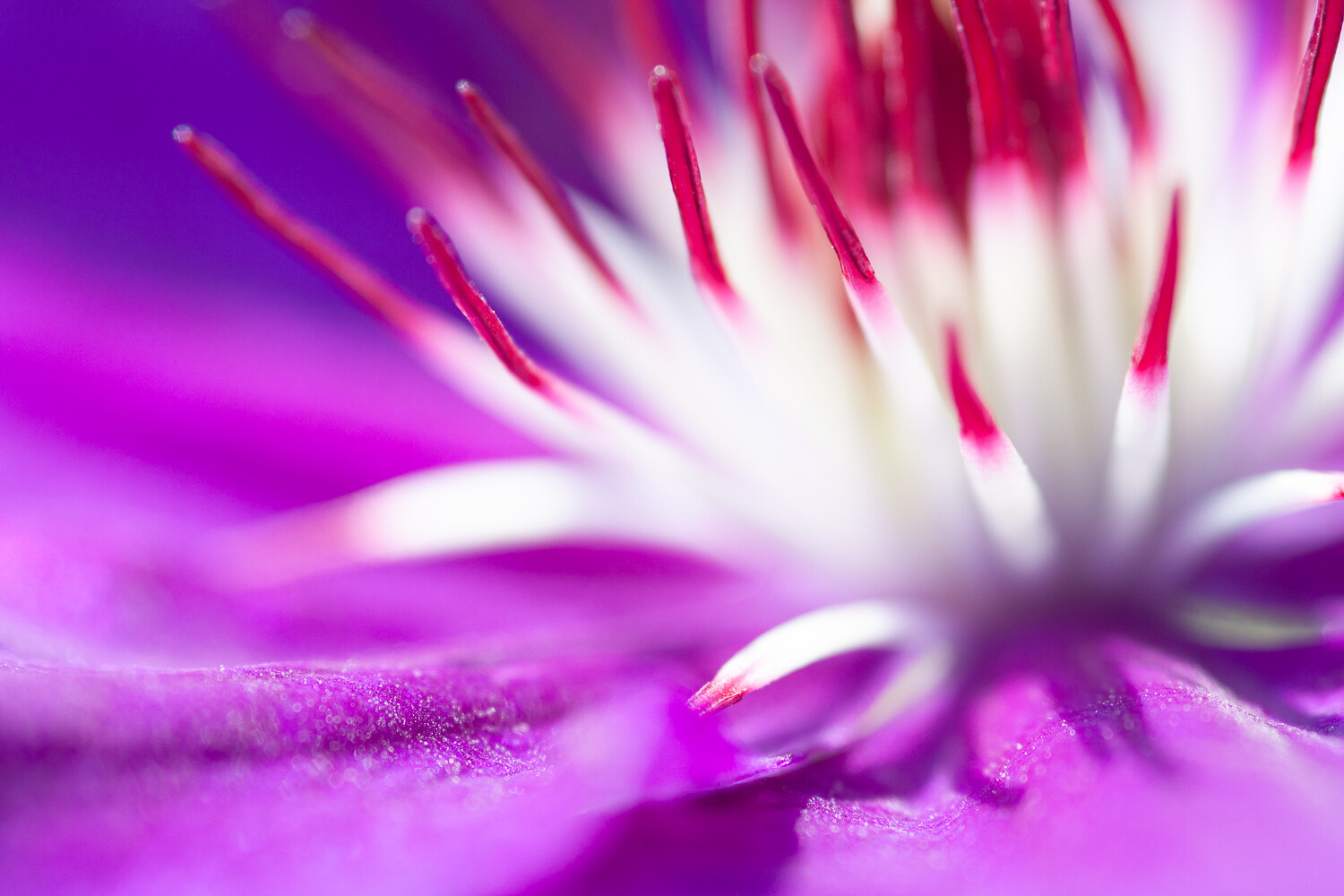
5 Things I Wish I'd Known Before Starting Nature Photography - flower macro pink

In reality, it’s often difficult for the beginner to recognize how they should learn nature photography.

But I myself am a nature photographer, and looking back the answers to these questions are clear. So I thought I’d make a tutorial that discusses several things I wish I had known at the beginning of my nature photography journey.

Read on. The sooner you know these things, the sooner you’ll begin to take consistently stunning images.

1. Photograph every day

The first thing I wish I had known when starting nature photography is extremely simple,

Photograph every day!

I cannot emphasize this enough.

5 Things I Wish I'd Known Before Starting Nature Photography - flower close up

If you’re truly serious about improving as a nature photographer, you should try to take at least one photograph of nature, every single day. It doesn’t matter if you take it with your DSLR or your iPhone. Just get out and shoot.

You’ve likely heard that practice makes perfect, and this is part of that. But there’s more to it. By photographing every day, you’ll ensure that your artistic eye remains strong.

5 Things I Wish I'd Known Before Starting Nature Photography - yellow flower poppy

What do I mean by that? If you photograph every day, thinking about light, color, and composition will become second nature. You’ll start to see photographic opportunities everywhere.

This is exactly where you want to be as a nature photographer.

2. View the type of photography you want to create

extraordinary-photographs-ordinary-subjects

This is a huge one, as well. If you want to create great nature photography, you have to view great nature photography.

When you view amazing photography, you develop an eye for light, color, and composition without even realizing it.

nature-photography-flower-macro

This is an essential skill for a budding nature photographer. Plus, there’s an added bonus – it’s really fun!

Start by looking up the type of photographs that you’d like to create. You can use a well-organized site like 500PX. Or you can just use Google. The important thing is that you find photography to look at for inspiration.

For instance, if you’re an up-and-coming macro photographer, try viewing the portfolios of photographers such as Mike Moats and Kristel Schneider.

If you’re a beginning landscape photographer, look at the work of Ian Plant and Thomas Heaton.

If you’re a budding wildlife photographer, look to photographers such as Marsel Van Oosten and Matthew Studebaker.

5 Things I Wish I'd Known Before Starting Nature Photography - flower extreme close up

Then expand from there.

The purpose isn’t to memorize their images so that you can copy them in the field. Rather, the goal is to appreciate great imagery, while recognizing (if only subconsciously) what makes it great.

The goal is also to get inspired.

3. Light matters more than you think

I’ve emphasized the need to practice photography every day, and that truly is essential. However, when practicing, there’s something extremely important you need to consider. That is the light.

I’ll state it plainly. Photograph the two hours after sunrise, the two hours before sunset, and during midday only if it’s cloudy.

Otherwise, stay indoors.

extraordinary-photographs-ordinary-subjects
nature-photography-flower-macro

This generally takes some retraining of the brain. It’s easy to think to yourself, “It’s such a nice sunny afternoon; I should get out and photograph!”

But you need to resist this thought. Because photographing during a sunny afternoon will result in harsh, contrasty images that are almost never desirable in nature photography.

Start spending time observing the quality of the light. Notice how nicely illuminated your subject is when the sun is low in the sky. Notice how lovely and soft the light is on a cloudy afternoon. Notice how harsh the light is under the midday sun.

nature-photography-flower-macro
extraordinary-photographs-ordinary-subjects

As a beginning photographer, I often forgot about this rule. So my photographs paid the price. I have thousands upon thousands of photographs that are simply unusable because of the harsh sunlight.

Memorize the rule. You may not be able to see such a difference in your images at present. But in a few years, you’ll thank me!

4. Gear matters less than you think

While light is more important than you think, gear is also less important than you may imagine.

You might think that gear is essential. You may ask me, “Jaymes, if my gear really isn’t important, then why do you spend so much time reading gear reviews and upgrading your equipment?”

But my response is this: gear does matter. High-quality lenses will allow you to capture the detail on a singing bird or the movement of sparring polar bears.

5 Things I Wish I'd Known Before Starting Nature Photography - flower extreme close up - daisy

High-quality cameras will allow you to photograph a wolf under the cover of twilight or a hawk flying directly above.

Yet gear is nothing without the photographers that wield it. A good photographer can get stunning images with any equipment. Whereas a bad photographer cannot create stunning images, regardless of their gear.

extraordinary-photographs-ordinary-subjects
nature-photography-flower-macro

So focus less on making sure you have the right equipment. Instead, practice using the equipment you do have. Try to eke out as much as you can from it.

Eventually, if you work hard enough, you will get beautiful images, high-quality gear or not.

5. Most of the images you take will be terrible

Beginning nature photographers often have a dangerous misconception about nature photography. That is that the best photographers rarely take bad images.

This belief can lead to discouragement on the part of the budding photographer.

5 Things I Wish I'd Known Before Starting Nature Photography - flower extreme close up abstract

This type of abstract photograph comes amid a huge number of deleted images.

After looking through your memory card, to find that only you’ve managed to nail a single image (out of a hundred!), you may want to give up.

Don’t.

Why?

Because most of the early images you take will be terrible, and that’s okay. This is true for nature photographers of all levels. Of course, at the higher levels, the nature photographer’s standards are higher, but the tip still applies.

5 Things I Wish I'd Known Before Starting Nature Photography - flower extreme close up

This is true for me, as well.

I go on dozens of photo shoots each month and take around 600 images per shoot. Yet I’m happy if I get a single image with which I’m really pleased.

Because uncertainty, guesswork, and reaction are part of the game. This is the nature of nature photography.

So let me reiterate. Don’t get discouraged. Most of your shots will be terrible, but it’s the good ones that count.

5 Things I Wish I'd Known Before Starting Nature Photography - flower extreme close up tulip

In Conclusion

Starting nature photography can be daunting for a lot of people. It can be difficult to know how to improve. You want to take stunning images as soon as possible, but you just can’t figure out how.

5 Things I Wish I'd Known Before Starting Nature Photography - flower extreme close up

By understanding the lessons above, you’ll be well on your way to creating beautiful nature images.

Just remember:

  • Shoot every day.
  • View the type of photography you want to create.
  • Light matters more.
  • Gear matters less.
  • Finally, don’t be discouraged if most of your images are terrible.

nature-photography-flower-macro

Someday soon, you’ll be a great nature photographer.

What are some things you wish you had known when first starting out as a nature photographer? Let me know in the comments area below.

nature-photography-flower-macro

The post 5 Things I Wish I’d Known Before Starting Nature Photography appeared first on Digital Photography School.


Digital Photography School

 
Comments Off on 5 Things I Wish I’d Known Before Starting Nature Photography

Posted in Photography


Tips for Doing Drone Photography and How it Improve All Your Images

28 Aug

In this article, I’ll share with you some of my experiences doing drone photography in my first month with my new flying camera. You’ll see how learning to use and fly a drone can help you improve all your photography as well.

Getting into drone photography

A filmmaker friend of mine brought his DJI Mavic Pro (a small drone with a built-in 12-megapixel camera) to our house several months ago. I told him that I’d been thinking about all the photos I could take if I had a drone. He insisted that I try his out, so I did.

Bad move. I probably raved about it far more than was wise. My family took my enthusiasm seriously. Thus, for a combined Father’s Day/Birthday/Christmas present (since these flying cameras don’t come cheap), they got me a DJI Mavic Pro. I then owned a drone. And had no idea what to do with it.

You may be in the same situation if you’ve recently purchased a drone or are considering doing so. If you’re still determining which one to get, check out this helpful overview. Or take a look at these tips and reasons why you might want a drone.

Lessons Learned from Drone photography 2

What we’ll focus on here are the issues no one tells you about when you do finally get a drone. Learn how to speed up the learning curve and some surprising discoveries about how using a drone can make you an overall better photographer.

Take time to learn the basics

How long it will take you to learn to fly your drone depends in part on the drone you get. With the DJI Mavic Pro, I spent time reading the manual (somewhat helpful), watching the DJI videos (more helpful) and then watching other people’s YouTube videos (super helpful).

Even if you’re a “forget the instructions, let’s get going” type of person, spend time watching some of these videos. It will be worth the effort since not everything about your drone, especially from a photography perspective, will be intuitive. Besides, you can do it while your batteries are charging.

Lessons Learned from Drone photography 3

On most drones, the controller connects to your smartphone. Your phone’s screen becomes your remote viewfinder. Let’s state what may seem obvious but isn’t if you’ve never owned a drone.

You need a smartphone to fly most drones for photography purposes.

It took me three days of trying to get the detested DJI app (just read the app reviews and you’ll see what I mean) to work only to find that it was incompatible with my older phone. I switched to my wife’s phone and voila, everything suddenly worked.

If your drone doesn’t connect immediately once you download the app, it’s likely the app/phone combo. My advice is to focus on solving the phone/app connection first.

Starting to fly

Lessons Learned from Drone photography 17

The first time I actually flew the drone, I freaked out seeing it go up so high. The second time, not so much. The third time, I stopped looking at the aircraft (which, DJI reminds you repeatedly, is the proper name for the device, not a drone. Drones shoot missiles and spy on terrorists. Aircraft are, well, aircraft, I guess, even if this one can fold up and fit in a purse).

Instead, I just watched the screen. That is much easier. In short, while you want to have your drone in visual range at all times so you’re aware of hazards (that’s actually the law in most areas), concentrate mostly on your screen and you’ll gain confidence in flying it faster.

Learning how to make photos

I posted my first drone shots on Instagram and found some nice folks out there who liked them and have inspired me with their own drone photos. After looking at their photos (I’m only concentrating on photos initially, videos will come later), it gave me additional ideas on how to use my aircraft as a photography tool.

Here are some of the lessons learned in my first month of flying:

Lessons Learned from Drone photography 6

Learn to fly before you learn to shoot

This means finding a really open space and learning the controls well so don’t have to consciously think about every lever and button and what it does. You’ll have plenty of time for making photos later. Get the feel of the aircraft now.

Visualize before you take off

On the Mavic Pro, you get about 26 minutes of flying time on each battery (so definitely consider buying extras). Because of that, try to visualize your shots before you take off so you’re not spending that precious 26 minutes of battery life just flying around aimlessly.

You must realize, however, that when you first start working with a drone, everything will look different from above. Don’t worry. As you get more experienced, you’ll learn how to “read” a scene better and you’ll spend less time searching and more time setting up the shots you want.

Lessons Learned from Drone photography 13

Shoot RAW

Consider photographing in RAW (the camera’s native format for images as opposed to JPEGs) if you know how to process them in a program light Lightroom. For me, it is too hard to see all the lighting nuances on my phone screen. RAW gives me more latitude than JPEGs for fixing later.

Consider bracketing your shots as well (if your drone has that feature) to allow for even greater flexibility with exposure.

Don’t let the initial images fool you

DJI’s RAW files look pretty bad right out of the camera. But pump up the Blacks (for contrast) and increase the Vibrancy and the images can be stunning. Overall, the camera and the Mavic Pro aircraft are surprisingly good.

Lessons Learned from Drone photography 11

Learn the focus and metering buttons

Switching between the focus and metering buttons is easy once you locate them on the controller. Both are very useful since you get strong contrasts from the air.

At first, I blew out a lot of highlights. Once I learned to meter on the right areas of the scene, my photos improved dramatically. Start by sticking with the auto functions of the camera but quickly learn and use the other focus and metering functions available.

Consider getting a polarizer

Lessons Learned from Drone photography

A polarizing filter reduces glare but you can’t just twist it like a circular polarizer on your DSLR (it’s a bit out of reach when the drone is 300 feet above you). You can only adjust it by changing the angle of the aircraft which isn’t always helpful when composing a particular shot.

But the polarizer does protect the lens and makes the sky pop in your images. My next purchase will be some ND (Neutral Density) filters to knock down even more of the light and glare. Because you’re shooting from above, you’ll experience new angles of light that you don’t usually get with traditional photography.

Pay attention to the weather

Wind and moisture are big limiters in some areas. I recently returned from a trip to England (yes, most airlines allow drones on board as long as your batteries are in your carry-on) and was only able to fly the aircraft three times in 10 days.

Lessons Learned from Drone photography 8

Mostly, it was either rainy (moisture will ruin your battery) or too windy. But I did learn that I can fly in more wind than I initially thought, up to about eight mph of wind. I have gotten the high wind warning on the controller (which warns you about wind, if you’re in a restricted area or are too close to an object), but otherwise, no problems. But use your own discretion as one bad gust could ruin your day and your aircraft.

Don’t fly too high

Overhead shots can become more intriguing when you limit your altitude. As the photo above of the couple reveals (shot at a height of about 12 feet/three meters), you can get great images with a drone that no one but you will even know were shot with a drone.

Lessons Learned from Drone photography 10

Play with the color

Because sunlight is hitting the subject from a different angle than you’re used to, that will affect the color of your photos in surprising ways. Some familiar objects such as trees will be more vibrant when shot from above than from the side.

Just be prepared to experiment a good deal in your editing software with color.

Compensate for parallax

Lessons Learned from Drone photography 5

There’s a parallax phenomenon that takes time to understand. Compare the photos of two bridges above and below. In the first, I wasn’t directly over the bridge and the photo isn’t as good as the second one where I took the time to turn the drone sideways while rotating it at the same time to get the shot lined up perfectly.

Lessons Learned from Drone photography 7

It seems simple until you try it. But with practice, you’ll learn little tricks on how to maneuver your drone to get the shot you want. And the image stabilization, at least in my Mavic Pro, worked better than expected. Thus, if you can line up the shot, you’ll likely get a good image.

Start with photographs

As noted, I’ve held off on shooting more than quick snippets of video. Why? Because with still photography, the aircraft is essentially a floating platform that I can nudge into position. If my turns are awkward, it doesn’t matter.

But when you’re shooting video, flying is everything (or a whole lot). You want your aircraft’s movements to flow smoothly. In my first month of periodic flying, I just wasn’t experienced enough for video. But I did ask my friend Randy (who’s had a drone about as long as I have) about his experience with video.

Lessons Learned from Drone photography 18

He noted that a) videos are smoother when you lower the frame per second rate, and b) it’s far better to keep the focus on a single element rather than panning around to capture everything at once.

Learn how to avoid obstacles

In the early stages, you’ll likely be a bit freaked out by trees or other objects that seem to reach out toward your drone. Personally, I haven’t yet gotten close enough for the aircraft to employ its obstacle avoidance procedures.

Randy tested the sensors out by flying his aircraft directly at him. He figured that unlike flying into a tree, he could move out of the way if the sensors failed. As it turns out, they worked great. The aircraft stopped a few feet before him.

You still want to fly carefully, but it is nice to know you have the sensors working for you.

Recognize the limitations of where you can fly

Lessons Learned from Drone photography 12

There are restrictions where you can fly your drone (no national parks, no crowded areas, no flying near airports, etc.) but there are still vast regions you can explore by air that you can’t when tied to the ground. Also, scenes that look boring from the ground (a wheat field, for example), take on new possibilities when viewed from above. You just have to rethink what makes for a great image.

Try direct overhead photos

Shots taken directly overhead will likely be more intriguing to you when you first start. Remember when Instagram was first getting going? Everyone took photos of their feet because they were more enamored with the filters on Instagram than in taking great photos.

You’ll likely soon grow to improve and get better shots at angles, but as a beginner, the direct overhead shot is fun because it is a completely new way of seeing things. And don’t rule them out even as you get better. You’ll still find scenes where the direct overhead shot tells the best story.

Lessons Learned from Drone photography 15

Compare, for example, the two shots of the wrecked fishing boat above and below. Which is better? It’s all a matter of taste, but now you have options.

Lessons Learned from Drone photography 16

Learn to shoot at angles

Angled images are tougher to shoot at just the right height, distance and direction than direct overhead ones. But they don’t scream “DRONE SHOT” the way some higher-altitude-direct-overhead photos do.

Also, a benefit of angled shots is that you can isolate your subject from distracting foreground or background items. For example, in the shot of the ruined church above, using a drone allowed me to avoid several unwanted foreground elements.

Lessons Learned from Drone photography 9

Photograph like a designer

Back to direct overhead shots, another benefit is that they can help you think differently about photography. You may, in fact, start perceiving the world more from a design perspective, being more aware of line, texture, patterns, and colors.

You’ll see shapes, arrangements and interesting connections you wouldn’t otherwise just because you’re viewing scenes from different heights and angles. Check out these 11 drone tips for inspiring examples of using design principles in your photography.

Lessons Learned from Drone photography 14

The added benefits of photographing with a drone

For most photographers, a good quality drone is a luxury, not a necessity. But its greatest value isn’t just in allowing you to take photos you cannot without it. It’s helping you to make better photos even when you’re not using it simply because it will cause you to rethink how you see a scene and thus make a photo.

When I was in college, I played on the school’s tennis team. Part of the training included a class on how to teach others to play the game. For the month that the class lasted, each participant had to play using his or her non-dominant hand. Not easy.

Shooting with the drone/aircraft is similar. Because it is initially so unfamiliar, it will rewire how your brain thinks about the subject you’re photographing and how to compose the image the best way. Without a drone, your photography will likely be two-dimensional and you’ll probably continue shooting in the same way as you always have.

With a drone, you have to factor in height and different angle possibilities. That, in turn, will affect your more terrestrial shots as well since you’ll see more possibilities than you did before.

It may take time to master drone photography. But along the way, you’ll likely capture some surprising and astounding images. And best of all, you may become a better overall photographer as a result.

The post Tips for Doing Drone Photography and How it Improve All Your Images appeared first on Digital Photography School.


Digital Photography School

 
Comments Off on Tips for Doing Drone Photography and How it Improve All Your Images

Posted in Photography


The Illusion of Photography and the Miracle of Sight

27 Aug

The photographic process is a grand illusion from top to bottom. Think about it. Everything about the process is visual trickery. Photography provides a reasonable facsimile of real-life perception, and luckily, your brain’s visual cortex is very forgiving and willing to play along with this ruse.

Here’s what I mean.

Illusion of Photography CameraLensEye

Your brain is pretty smart; way smarter, adaptable and intelligent than we sometimes give it credit for. Human perception takes place on a completely different level than photography (or even videography). But photographic science and advanced camera functions do hold certain advantages over nature’s system. Here’s a look at a comparison of the two systems.

Motion / Still Life

Your camera is able to capture slices of time and literally freeze motion in its tracks. Camera shutter speeds slice and dice life into instances of time lasting just thousandths of a second each. Only when we fail to set the shutter speed and (ISO) sensitivity properly are objects in motion recorded as a blur.

Illusion of Photography Motion Blur

Your eyes, on the other hand, have rarely seen anything absolutely still, unless it is a rock formation or building. Even then, our view is constantly changing simply because our body moves continually.

While your eyes capture thousands of frames each second, they process the images quite differently than your camera. They stream high-speed snapshots to your brain’s visual cortex – two at a time (right and left views) providing dimension and shape. And they do this all day, every day. No batteries or memory cards are required.

Your eyes shift and refresh their view thousands of times every second to paint complete three-dimensional moving scenes in your mind. This is perpetual “streaming” at the speed of light.

Video

The illusion of moving pictures (or movies) comes close to replicating what human eyes perceive as motion. The action portrayed in motion pictures is accomplished when single-frame images are flashed onto a screen sequentially at the same speed that they were recorded. The process works effectively to simulate what the human eye processes at much higher rates.

The major difference is the processing speed. Specific video codecs (computer word for the compression and decompression process) involve industry-standard capture/playback speeds (frames-per-second) designed to match the processing power of various playback systems. Videos are recorded and played back at speeds up to 60/fps to trick the eye into perceiving motion instead of seeing individual frames flickering by.

Autofocus and Blurred Backgrounds

The camera focuses on a single plane or depth of field and blurs the rest of the picture. You have the option to automatically focus on all subjects in the scene or select specific pinpoint areas.

If you set the camera to autofocus, you must remember that the camera always seeks and focuses on the objects with the highest contrast ratio in the scene. To control this you may select between face detection, autofocus tracking, multiple focus points (zone focus) or overall scene settings to tell the camera your preference.

Camera focus is all about managing the blur; making the eye concentrate on a particular part of the scene.

Illusion of Photography Autofocus Blur

Your eyes don’t really see blurs at all. They automatically focus on the single subject of your attention and gradually defocus and separate the view of the non-subject areas. This is quite different than camera “bokeh.” Close one eye and view a scene in the room, then switch eyes and notice how the background shifts.

The human eye displaces subjects in the background while the camera attempts to blur them. We’ve been conditioned to accept photo blurs as if they are a part of real life, even though they aren’t!

Two Versus Three-Dimensionality

Single lens cameras capture only two-dimensional images; with height and width. Items in focus are limited to a single defined “plane,” or distance from the camera. The dimension of depth is simulated by blurring objects which are not in perfect focus.

Your eyes never observe scenes in only two dimensions; they see every scene in three dimensions, through two converged horizontal viewpoints, your left, and right eyes. Your eyes adjust and shift focal length almost instantaneously. Only recently has Hollywood caught onto the 3-D trick.

Dimension, like depth, is perceived visually by slightly defocusing and horizontally shifting the two scenes behind the object in focus. This differs significantly from the camera’s method of simply blurring and softening the background. While depth can be simulated, dimension cannot be. Dimension requires a process called parallax, a word derived from the French “parallaxe” meaning “fact of seeing wrongly.”

Depth of Field

The camera uses its single lens to capture subjects from a direct frontal view. With the camera, you can also determine how much of the scene you want in focus by a managing the depth of field (DOF); blurring both the foreground and background for emphasis.

You can’t do this with your eyes. If you concentrate on an object close to you, pretty much everything behind the subject will automatically be defocussed.

Illusion of Photography DOF

Each of your two eyes sees that same subject from a slightly horizontally-offset angle, which is a very good thing! This overlapping, crisscross view allows you to see enough of the sides of each subject to sense dimension, judge distances, and safely navigate your way around obstacles. When the eye’s two views are combined, they provide a unique depth and dimension to your perception.

Try walking around when viewing the scene ONLY through your camera’s viewfinder and you’ll notice the difference.

Sphere of Focus

Camera lenses all have one thing in common. When they focus on an object a measured distance from the lens, everything else in the scene (the same distance from the lens) is also in focus. The optical nature of the spherical shape of the lens makes this happen. When you employ a wide angle lens, you can see everything in the scene in near-perfect focus.

Illusion of Photography Sphere of Focus

The human eye is quite different. Our focus on a subject is actually limited to a very small radius of view, between 7-10° wide. Everything outside that window appears defocused; not blurred, but just out of sharp focus.

While our peripheral vision spans nearly 180°, only a very tight circle of view appears totally focused. The way we perceive entire scenes by our eyes is constantly shifting and sending patches of focus to the cerebral cortex, which paints a momentary scene in our mind.

Try staring at one word on this screen. You’ll notice that unless your attention shifts slightly, the words on either side of that word aren’t really “in focus.” The real magic is that both of your eyes have this agility and they both work in perfect unison, viewing the same exact spot and shifting together at precisely the same moment.

Monochrome

All digital cameras are able to record images using only the luminosity channel producing “black-and-white” images. Monochrome photographic images remove all chrominance (color) information and rely only on single color contrast (luminance) to portray the scene.

Photography’s earliest roots are in black and white photography as the development of film emulsions were able to capture only luminance (monochrome) values with the light-sensitive silver halide particles. Even color films used this same monochromatic process but added color filters to capture individual RGB light waves.

Illusion of Photography Monochrome

Your eyes have never experienced this phenomenon except in photographic reproduction. The eye’s rods and cones that make up the image receptors interpret every scene in full color. Red, green, and blue receptors in your eyes perform this same service for your vision.

This characteristic of photography is perhaps the most bazar example of visual forgiveness, though the eye’s rods (more receptive to the green frequency of light) are most able to perceive forms and shapes under very low lighting conditions. This is why identifying colors in low light is so difficult. Not coincidentally, the green channel of color digital photography captures the most realistic monochromatic information.

Zoom, Wide Angle, and Telephoto

You probably own either a zoom lens, a fixed-focus telephoto, or a wide-angle lens for your camera. These variable distance lenses allow you to capture scenes either closer or farther away than your eyes typically see. Your human eyes are “fixed” on a 1:1 or “real-time” vantage point.

If you want to see a subject at a different distance, you have to adjust your personal distance to the subject or view the world through magnifying lenses like binoculars.

Resolution

Illusion of Photography Resolution

Here’s another area where photographic systems hold an advantage over human vision. When ultra-sharp lenses are coupled with high megapixel image sensors, the number of pixels available to publish a photo far exceeds the size and magnification capabilities of human vision. When pixels are displayed small enough to escape detection (roughly 100 per inch), image projection and reproduction sizes are nearly limitless.

Autofocus

Your camera can capture a scene in which everything is in near-perfect focus. From an object just feet away to a mountain five miles away, everything is sharp and clear. It is impossible for your eyes to view entire scenes in perfect focus, though photographic prints depend on the brain’s forgiving acceptance of this abnormal interpretation.

Y0ur eyes very rarely maintain the same focus for any period of time. Your brain stays hungry for visual information and your eyes know how to satisfy that appetite. Your eyes shift their attention rapidly to maintain their focus on moving objects.

Try staring at this page for more than 15 seconds and you’ll probably notice your eyes shifting briefly before returning to the word you were reading. Your eyes and brain have an insatiable visual appetite and a boundless curiosity.

Pixels, Dots, and Spots

Illusion of Photography Pixel Dots Spots

And then there’s the whole pixel/halftone illusion itself. Your eyes register nature’s colors as continuous tones, colors that have no stages or gradations. A feat we graphic illusionists have never been able to reproduce. Every image we reproduce has to be broken down into minuscule particles of color so small that human vision cannot readily identify them individually (I’ve exaggerated the pixels and halftone dot sizes for those who don’t know the trick).

Something to think about

For all the similarities between the camera and the human eye, there are just as many (if not more) differences.

But in spite of those differences, we would be much the poorer without the precision of the human eye and the features of the digital camera. Appreciate both systems for what they add to your perception of life.

The post The Illusion of Photography and the Miracle of Sight appeared first on Digital Photography School.


Digital Photography School

 
Comments Off on The Illusion of Photography and the Miracle of Sight

Posted in Photography


Nikon offers optional Dot Sight accessory to aid telephoto photography

27 Aug

Alongside the official unveiling of the Nikkor 500mm F5.6E PF ED, Nikon has announced an optional Dot Sight accessory to help telephoto photographers better track moving subjects. The DF-M1 makes it easier to aim a super-telephoto lens like the 500mm at a fast-moving, distant subject by presenting a wider field-of-view and an illuminated dot target that moves relative to the lens. The Dot Sight accessory will cost $ 175.

Press release:

NIKON RELEASES THE AF-S NIKKOR 500mm f/5.6E PF ED VR, A FIXED FOCAL LENTH SUPER-TELEPHOTO LENS COMPATIBLE WITH THE NIKON FX FORMAT

Delivers Exceptional Agility that Makes Hand-Held Super-Telephoto Photography Enjoyable, as Well as Offering Superior Optical Performance and Functionality

MELVILLE, NY (AUGUST 23, 2018 AT 1:01 A.M. EDT) –Nikon Inc. is pleased to announce the release of the AF-S NIKKOR 500mm f/5.6E PF ED VR, a fixed focal length super-telephoto lens compatible with Nikon FX-format digital SLR cameras.

The AF-S NIKKOR 500mm f/5.6E PF ED VR is a high-performance, FX-format, super-telephoto lens that supports 500 mm focal length. The adoption of a Phase Fresnel (PF) lens element has significantly reduced the size and weight of the lens, making hand-held super-telephoto photography easier and more enjoyable.

With a maximum diameter of 106 mm and length of 237 mm, the AF-S NIKKOR 500mm f/5.6E PF ED VR, which weighs 1,460g (roughly the same weight as the AF-S NIKKOR 70-200mm f/2.8E FL ED VR) is significantly lighter than previous500mm lenses which can typically weigh up to more than 3,000g. The AF-S NIKKOR 500mm f/5.6E PF ED VR is designed with consideration to dust- and drip- resistance, which in addition to the fluorine coat applied to the front lens surface, allows greater agility when shooting.

The use of one PF lens element and three ED glass elements enables extremely sharp and detailed rendering that is compatible with high pixel-count digital cameras. In addition, the materials used in the new PF lens element have been developed effectively to reduce PF (diffraction) flare, allowing light sources to be reproduced in near-original colors. In combination with Nikon’s coating technologies, such as the Nano Crystal Coat, effective in controlling ghost and flare, extremely clear images are achieved.

AF speed has been increased by making lens elements in the focusing group lighter. The AF-S NIKKOR 500mm f/5.6E PF ED VR is equipped with a VR mechanism that offers camera shake compensation equivalent to a 4.01-stop increase in shutter speed. The SPORT VR mode that has been adopted is especially effective when photographing fast-moving and unpredictable subjects such as wild birds, or in scenes such as sporting events. The stabilization of the image displayed in the viewfinder is also an effective feature for recording movies.

Additionally, the use of the Mount Adapter FTZ will allow the lens to be used with mirrorless cameras Nikon Z 7 and Nikon Z 6, also announced today. Users will be able to enjoy super-telephoto shooting at the 500 mm focal length with a system that is even more compact than ever before.

We are also planning to release the Dot Sight DF-M1, an accessory that is highly effective with super-telephoto photography. With super-telephoto shooting, a narrow field of view in the viewfinder tends to be made visible – making it easy to lose track of the subject. The Dot Sight DF-M1 makes it easy to keep track of the intended subject within the frame, even if the subject exhibits sudden movement.

PF (Phase Fresnel) Lens Elements
The PF (Phase Fresnel) lens, developed by Nikon, effectively compensates chromatic aberration, utilizing the photo diffraction phenomenon2. It provides superior chromatic aberration compensation performance when combined with a normal glass lens. Compared to many general camera lenses that employ an optical system using the photorefractive phenomenon, a remarkably compact and lightweight body can be attained with fewer lens elements.

Primary Features

  • Significantly smaller and lighter with the adoption of a Phase Fresnel (PF) lens element, making 500 mm hand-held super-telephoto photography easier and more enjoyable
  • Designed with consideration to dust- and drip-resistance; fluorine coat applied to front lens surface, effectively repelling water droplets, grease, and dirt
  • Adoption of one PF lens element and three ED glass elements for extremely sharp and detailed rendering, compatible with high pixel-count digital cameras
  • Optical performance that is not compromised with the use of the TC-14E III AF-S teleconverter
  • Materials used in the new PF lens element effectively control PF (diffraction) flare
  • Ghost and flare effectively suppressed with the adoption of the Nano Crystal Coat, enabling clear images
  • AF speed increased by making lens elements in the focusing group lighter
  • Equipped with a VR mechanism that offers camera shake compensation equivalent to a 4.01-stop increase in shutter speed, in two modes: NORMAL and SPORT
  • Electromagnetic diaphragm mechanism adopted for extremely precise aperture control

Optional Accessories
We will release the Dot Sight DF-M1 (available separately), an accessory that is highly effective with super-telephoto photography. This accessory makes it easy to keep track of the intended subject, even if the subject exhibits sudden movement.

Price and Availability
The AF-S NIKKOR 500mm f/5.6E PF ED VR will be available September 13 for the suggested retail prices (SRP) of $ 3599.95*. The Dot Sight DF-M1 will be available for $ 174.95 SRP*. For more information on these and other Nikon products, please visit www.nikonusa.com.

Articles: Digital Photography Review (dpreview.com)

 
Comments Off on Nikon offers optional Dot Sight accessory to aid telephoto photography

Posted in Uncategorized


Mirrorless Cameras and Wedding Photography – A Match Made in Heaven?

26 Aug

Can you use mirrorless cameras for wedding photography? My answer is yes you can, absolutely. Why not?

That doesn’t mean mirrorless is for every photographer. I will preface this discussion by saying that your camera is a tool, and it’s all personal taste. No camera is perfect, neither is any photographer. It’s about using what fits.

mirrorless cameras and weddings - two kids at a wedding

I can promise you that many professional wedding photographers will shun the idea of trusting a mirrorless camera for the job of photographing weddings. Some of the best in the world will say that. In turn, some of the best wedding photographers in the world use mirrorless cameras. Some of the naysayers’ concerns are valid, some are ignorant.

Switching over to mirrorless

I will share my experiences and you can use that to help you make an informed decision. I’ve used Fuji mirrorless cameras as my exclusive platform since July of 2014. It started with me needing to upgrade my 7 and 9-year-old Canon 1D series SLRs and being rather unexcited with my upgrade options.

mirrorless cameras - black and white wedding candid photo

My friend at my local camera shop had recently switched from Nikon to Fuji mirrorless and let me play with his camera. It was a rangefinder design and had a lot of resemblance to retro film cameras. It was fun to use and due to its smaller size, it wasn’t a daunting task to take it everywhere. So I picked up a Fuji XT-1 of my own.

This was 2014 when mirrorless technology was still in its infancy and didn’t have the capabilities it does today. It was a rocky 3-4 month learning curve, and some of it was frustrating, especially as I tried to incorporate the Fuji into my professional work.

mirrorless cameras wedding candid photo

Something was different about my work so I stuck with it. When getting used to a different platform, logic should prevail that you have to learn that system, not expect it to work as you think it should. That principle is a hard one to swallow for many. It requires you to think differently, it requires you to change. Sometimes that can do wonders for your inspiration and overall work.

What is different?

When I was getting used to the Fuji system, it seemed that few photographers really understood the system, and we would just learn it together. The image goes straight from the lens to the sensor, there is no mirror inside the camera body. It also uses a contrast phase detection autofocus.

Mirrorless Cameras and Wedding Photography - bride in black and white

In the early days before improved sensors, firmware updates, and faster lenses, the camera hunting for focus was a huge issue. Particularly in low light and in points of lower contrast.

Today, the technology is greatly improved, but there are still advantages an SLR has over mirrorless, particularly for sports and rapid-fire shooters. But anyone who loves the mirrorless system can use it for any kind of professional work. If you learn the system.

What really changed?

Mirrorless Cameras and Wedding Photography - couple getting married

For me, getting used to the mirrorless system changed how I worked and shifted many things about my whole approach. The biggest was using all prime lenses, where before I was using all zoom lenses.

The primes are faster to focus and have better depth of field control from the available Fuji lens lineup. That made me move my feet and become more strategic with my composition. It’s been easier to rely on fewer focal lengths and pick my most versatile lenses.

Mirrorless Cameras and Wedding Photography - couple toasting

I’ve worked closely with the subjects and have become more deliberate with my work. More negative space in my composition and more watching and waiting for the shot, less rapid fire. The tack sharp glass and amazing Fuji color, the electronic viewfinder, and compact size made the system a joy to use.

The things that at first seem to be shortcomings can actually help us become stronger artists through patience and adaptability. My whole point of discussing these past issues is it emphasizes the transition that was required then, and many didn’t make it through. Which is neither right or wrong. The point is that anyone who wants to learn the system has better tools to do so in the present day.

Why or why not to use mirrorless cameras for wedding photography

Mirrorless Cameras and Wedding Photography - first dance b/w

No one can address the future of photography as far as SLR, mirrorless, etc. Nor should that matter. Here are some key facts that may help offer an inside perspective.

Battery life isn’t as long as SLR cameras so spares are needed. You can disable the live electronic viewfinder and switch to optical which helps.

Most mirrorless wedding photographers use two active bodies. You can use a harness or wear one around your neck with your most used lens, and have another camera at your hip with a side holster – just as an example. There’s something more deliberate about primes, and less of a clinical look.

Mirrorless Cameras and Wedding Photography - dance and kiss

There are limitations with TTL flash and mirrorless cameras. The options are to work with that and use manual, which I always have anyway, or not use flash. Which is not always an option.

Pixel peeping and stressing over crop sensor (APS-C)

NOTE: Sony does make full-frame mirrorless bodies if it bothers you that much, or you can stick with your DSLR.

Those people stressing over the smaller sensor make no sense to me. Only other photographers notice noise or will pick an image apart for technical imperfections.

Mirrorless Cameras and Wedding Photography

What about capturing a decisive moment full of emotion? If the images well-composed and exposed, no client will notice or care about things pixel peepers do. Most who insist they need full frame can’t give a proper explanation why. “Oh, the pictures are better.” Pffft.

Use the tool you feel comfortable with. If the good outweighs the quirks you’ve gotten used to, it’s a win. There are many large prints out there shot on crop sensors and mirrorless cameras.

Clients might think you look unprofessional with a mirrorless camera

Two guys walk into a bar, flex their muscles back and forth, and the only lady in the place starts talking to a simple businessman minding his own business.

Mirrorless Cameras and Wedding Photography

If it takes the biggest, loudest, or camera with a specific image to command respect as a photographer, they’re lacking something. Never once has a wedding guest or couple cared about my gear. It’s all about what you can do with it. This would be a ridiculous reason not to go mirrorless. Be secure in who you are as a pro.

You can be less intrusive or conspicuous

Being less intrusive – that has value for me. You can blend in with guests and not be a spectacle.

With a documentary approach, that helps me maintain a low profile, and I’m seldom noticed. Being able to work closer gives you an advantage in that regard. With the smaller camera, it feels less clumsy and doesn’t stand out as much to guests and the couple.

Mirrorless Cameras and Wedding Photography

When you work closer to the subjects, you feel in your soul what is going on at that moment, and it’s less likely that you’ll have your shot blocked. Again, it is less a clinical feeling.

It’s also easier on the body, particularly the shoulders or neck, your back, etc. When you hear about other wedding photographers being sore the day after a wedding, and all you can do is shrug your shoulders, you might be a mirrorless shooter.

Getting used to the mirrorless platform before using it for a wedding

It’s only responsible to be well versed with your equipment, and know its strengths and weaknesses in different areas before using it for a no do-over occasional like a wedding.

Mirrorless Cameras and Wedding Photography

The best way to get used to a new platform, body, or lens is to do some street photography. It’s a very psychological thing to have confidence in your equipment and know its operation well enough to fully trust it. Not doing so sets you up for failure and the clients stand to suffer.

Weddings are demanding and fast-paced, full of decisive moments, and you have to deal with constant lighting and setting changes. It pays to think and act swiftly and keep calm. Street photography is great field training as it is also decisive and fast-paced, and you have to look for the mood or setting you want within time constraints.

Mirrorless Cameras and Wedding Photography

Mirrorless Cameras and Wedding Photography

Plus, you’re also dealing with textures, colors, depth, dimensions, all the things that help make a great photo. Street photography is a great way for you to become one with your gear.

Conclusion

Whether or not mirrorless cameras are for you is a personal choice. But, don’t let anyone tell you that you can’t use them for weddings, or worry about the wrong things.

The post Mirrorless Cameras and Wedding Photography – A Match Made in Heaven? appeared first on Digital Photography School.


Digital Photography School

 
Comments Off on Mirrorless Cameras and Wedding Photography – A Match Made in Heaven?

Posted in Photography


Photography Challenge – Stunning Smartphone Pics

25 Aug

You don’t need the latest greatest top of the line full frame DSLR to take good photos. But you do need to have a camera with you and to make use of good lighting and composition principles.

This week it’s time to practice your Smartphone photography and share your images with us for the weekly challenge. But let’s take it up a notch, shall we?

Image by Beth Ringsmuth Stolpan

The image above is a macro shot done with a Smartphone, read more on how to do that here: How to Get Stunning Macro Photos with Your Mobile Phone.

Need more ideas? How about these:

  • Tips for Better Smartphone Photography
  • 9 More Great Apps You Need for Your Smartphone
  • 8 Ways to Use Your Smartphone for Photography

Weekly Photography Challenge – Stunning Smartphone Pics

Simply upload your shot into the comment field (look for the little camera icon in the Disqus comments section) and they’ll get embedded for us all to see or if you’d prefer, upload them to your favorite photo-sharing site and leave the link to them. Show me your best images in this week’s challenge. Sometimes it takes a while for an image to appear so be patient and try not to post the same image twice.

Share in the dPS Facebook Group

You can also share your images in the dPS Facebook group as the challenge is posted there each week as well.

The post Photography Challenge – Stunning Smartphone Pics appeared first on Digital Photography School.


Digital Photography School

 
Comments Off on Photography Challenge – Stunning Smartphone Pics

Posted in Photography


Black and White Fashion Photography: The Set Up

24 Aug

Black & white photography: from training the eye to choosing your models, make up,


Fashion Photography Blog

 
Comments Off on Black and White Fashion Photography: The Set Up

Posted in Uncategorized