RSS
 

Posts Tagged ‘Photography’

30 Things you Should Know to Help you Start a Photography Business

21 Feb

14“Follow your bliss and the universe will open doors for you where there were only walls.” – Joseph Campbell

1. Find the best photography course or workshops that work for you

If you are going to invest in a photography course/workshop do some serious research first.

It’s a huge investment so find out who the teachers are. Are they industry professionals that are going to be teaching you relevant styles and techniques?

Is the style of teaching suited to your personality and photography?

Who are the ex students that have gone on to create successful careers?

Consider weekend workshops and online courses held by experts in their fields.

2. Find a great mentor

A mentor should be someone who has had a successful career, whose work you admire and is passionate about what they do. They should be available for at least one hour a month.

3. Get as much industry experience as you can

Intern with as many different photography businesses as you can, both large and small. My first interning gig was with a food photographer. I’ve also worked with high-end commercial product photographers, car photographers, and fashion and wedding photographers. I came away with valuable skills that I still use today.

4. Be Flexible when looking for an internships

When you are looking for an internship it’s often easier to offer your services on a casual daily basis or weekends or even nights rather than trying to find someone who will commit to a long-term internship.

5. Sweep the floor and scrub the toilet

I landed a full time assisting job with a fashion and celebrity photographer because he noticed I scrubbed his toilet and cleaned his studio when I had nothing to do

6. Hang around with people who inspire and support you

Some of your friends and family are going to try and talk you out of pursuing your dreams.
They have good intentions but it’s your dream not theirs.

7. It takes 10,000 hours of work to become a master of your craft

If you spend 3 hours a day photographing and editing photos you will become a master at it in 10 years. There are no short cuts or magic formulas, just hard work.

8. Photography is not a job it’s a passion

When you love what you do it never feels like work.

9. Learn to embrace failure

Some of the world’s greatest entrepreneurs had spectacular failures before they found success.

Henry Ford had 5 businesses fail before he founded the successful Ford Motor Company.

Thomas Edison failed 10,000 times trying to invent the light bulb and after the 10,000th time; he succeed

Don’t be afraid to make mistakes

10. Your uniqueness is the most important asset you have

The photography industry does not need another Ansel Adams, Annie Leibowitz, or Alfred Stieglitz. Develop a unique style that sets you apart from everyone else

11. The most common cause of failure is quitting

Most people give too early. Building a business takes years, there will be set backs. Commit to the long haul.

Fact: the average entrepreneurial millionaire has been broke or nearly broke 3.2 times

12. There is no such thing as overnight success

It took me 5 years to actually make a profit. It took me ten years before that profit was enough to afford me a decent lifestyle

13. Having a full time or part time job while you build your business is a great idea

I worked full time in an Italian restaurant for the first 5 years

Having another job while I built my business had the following positive effects

  • It gives you something positive do everyday while you are waiting for your first breaks
  • It removes that “desperate” energy around you. Trying to find new clients in this headspace is really difficult. Nobody wants to hire someone that appears desperate it makes them wonder what is wrong with you.
  • Your part time job may be the source of photography leads or your first big break. It was for me.

14. You will constantly be surprised by where your big breaks come from

I landed my first paid advertising shoot from waitresses I worked with. She introduced me to her husband who ran an advertising agency. One day he asked me to do a shoot for his agency. It was a simple product shot that should have taken an hour. I worked on it for 2 days, made a loss but earned a very happy and lucrative client.

15. Every time you are rejected means you are one step closer to success

Collecting new clients is a numbers game. In my early years I discovered that when I was showing my folio to Art Directors and Editors I was getting 30-50 “no’s” to every “yes”.

It took me many, many years to work out that this rejection is never personal. It often just comes down to potluck if you meet with someone on the same day they happen to have an assignment that suits you.

There are some very famous examples of people who experienced countless rejections before they achieved success

  • Author, J.K Rowling’s manuscript Harry Potter was rejected 12 times before she found a publisher
  • Walt Disney was knocked back 302 times before he got financing for creating Disney World
  • Several record labels rejected The Beatles
  • Colonel Sanders, the founder of KFC had his famous secret recipe knocked back a staggering 1009 times

16. Seek constructive criticism and learn from it

One of my greatest learning periods was during a 3-month stint working in a photo lab printing Black and white prints. Yes, last century when we marveled at the new mobile phone that was the size of a small refrigerator and twice as heavy.

I was shooting models tests all weekend and bringing them into the lab to print and process during the week. Two of my co-workers were 30+ year veterans who would critique my work and give me suggestions on improving technique and style.

Show your photos to as many industry professionals as you can. Ask for constructive criticism and learn from it. This is a great time of growth and learning.

Be grateful for all the praise your family and friends will always give your work but remember they will always love everything you do and may find it difficult to point out any faults.

17. Dress to impress

If you want people to take you seriously then you should take your appearance seriously.

18. Always read the fine print

Never sign a contract before reading the fine print. If you don’t understand it then find someone who does.

19. Work your strengths, hire your weaknesses

Aim towards outsourcing all the things that take you away from earning money for your business like book keeping and web design. Your time would be better-spent blogging or marketing.

20. Social Networking

Blog, tweet, flickr, facebook, instagram, google+, linkedin do it all and do it often.

Share your work, support other artists whose work you love and be generous with your information.

21. Shoot personal projects that inspire you

Unless you are lucky enough to be working for cutting edge magazines or alternative clients who love to push the envelope shooting only paid work will give you a very generic looking folio.

Shooting personal projects give you a chance to test new lighting styles, lenses, locations and it’s a brilliant way to showcase your personality.

22. Have a consistent workflow

Name and number and file every shoot in a consistent way. If you’ve ever spent hours looking for an image or even worse lost files you will understand the importance of this point.

23. Back up twice

Keep one hard drive on location and another off site. Hard drives fail. Protect your files.

24. If you pay peanuts you get monkeys

Use professional assistants. Having a great assistant means you never have to sweat the small stuff. Everything is taken care of. This means you can focus on getting the shot

25. An inexperienced make up artist or stylist can ruin and entire shoot

Work with a variety of different Hair and Make Up artists and Stylists till you find the ones that compliment your shooting style.

26. Always shoot in RAW

A RAW image file contains all the original data that the camera censor captured.

A JPEG is a compressed file that only retains about half the data of a RAW file.

Give image the best possible chance from the start. No excuses. Just shoot RAW.

27. Never store your memory cards in your back pocket and don’t shoot an entire job on one card

Pockets get holes in them and cards fail. I found out the hard way.

28. Be quiet

If you depend on your creativity for your living, then your most valuable piece of equipment is your mind. Taking time out everyday is a great way to do this and

29. Make friends with other photographers

The best advice on equipment and technique has come from spending time with other photographers. Social networking makes it really easy to connect with different photographers from all around the world.

30. Just start. Today

“Whatever you can do, or dream you can, begin it.” -Johann Wolfgang von Goethe

The first thing I did when I decided to become a photographer was to get business cards printed that said Gina Milicia PHOTOGRAPHER. Even if I wasn’t 100% convinced I was ready or good enough the simple act of printing cards made it real to me.

I started out with a basic SLR camera and a cheap zoom I borrowed from my brother. I photographed only in daylight for the first 2 years because I could not afford flash gear and worked hand held because I also could not afford a tripod.

There will never be a time when you are 100% ready. There will always be something missing. Just start. Today.

A few great books that inspired me.

  • Think and Grow Rich: – Napoleon Hill
  • Power Stories: The 8 Stories you MUST tell to build an epic business: Valerie Khoo
  • Outliers: The Story of Success: Malcolm Gladwell
  • The Alchemist: Paolo Coelho

Enjoy this post? Check out more of Gina’s advice in her new eBook – Portraits: Making the Shot (and get a bonus one free for the next 24 hours only).

Portraits_468x190px.jpeg

Post originally from: Digital Photography Tips.

Check out our more Photography Tips at Photography Tips for Beginners, Portrait Photography Tips and Wedding Photography Tips.

30 Things you Should Know to Help you Start a Photography Business

Digital Photography School

 
Comments Off on 30 Things you Should Know to Help you Start a Photography Business
Posted in Photography


Meet The Photographers Who Write For Digital Photography School ~ Darlene Hildebrandt

21 Feb

You’ve been reading their articles for months or years, have you ever wondered “Who are the photographers who write for dPS”? Today meet photographer Darlene Hildebrandt from Alberta, Canada.

maritimes06-339f-680

1. How long have you been shooting?

I graduated from a 2 year photography program in 1988!  So over 25 years now, mostly as a professional.  I’ve been in the industry in many forms including: doing commercial studio work; had my own portrait/wedding studio for 12 years; was a trade rep for an album company and coached my photographer clients on business; some editorial work; travel photography; and the odd image sale for stock.  I’ve also done tons of art shows and sell my work in local galleries.

2. Do you have a full time job or are you a full time photographer?

I have a part-time job at a camera store, in the accounting department of all things. Mostly because I’ve done my own accounting for years and I needed something to get me out of the house after a 6 month extended RV trip around Canada and the US. Camera discounts are also a bonus, and it has connected me with teaching photography classes which I do here at the store as well as with two other local photography schools.

The photography that I do now is mostly for myself and my articles and classes.  I make most of my living teaching classes, doing private tutoring (in person and virtually using skype), leading workshops and photo tours.

RV-03957-680

3. If you had to limit yourself to one genre of photography, what would it be and why?

Tough question.  I’d have to say travel photography, which to me encompasses fine art, urban, landscape, HDR, night photography, and people.  I find joy in all those areas so I’d find it hard to pick among those.  If I had to I’d say travel photography with people.  Those are the images I find I want to see first when I download after a long trip.  But I also love night photography and HDR, both of which I teach.  Okay I can’t pick, so can I say I’d pick – “general”!

4. When did you start writing for dPS and why?

May 2012 was the date my first article was published with DPS.  I wanted to teach to a wider audience than I currently had on my own site and share my knowledge with more people.  DPS allows me to do that in a big way.  I love hearing the comments from readers who have enjoyed my articles. Seeing their resulting images after applying my tips, and hearing how excited they are about photography is why I do this.

5. What do you shoot with and what is your favorite lens?

I’m a Canon shooter, I have a 5D MarkIII.  However, not to get into a flame war here, I believe the camera is just a tool and whatever you use is just fine, be it Canon, Nikon, Pentax, Sony or something else.  It’s about learning how to use it and this is the right place to do that!  Not sure I have a favorite lens, but I’d say the extremes.  I love either really wide angle images, or long lens tight shots.  I tend to live in the 17-20mm and 150-200 range more so than I do in the middle.  My wide is a Tamron 17-35mm.  I also really love my 85 f1.8 for portraits.

6. What would be your number one tip to any new photographer?

Invest in education before you invest in gear.  I’ve had several students want to jump from an entry level DSLR into a full frame one, thinking that it will magically make all their photos better.  While there are some advantages of full frame (better at higher ISO, can get better shallow depth of field, etc) in my personal opinion mastering some of the other aspects of photography first will take you further. Things like getting the right exposure; what IS the right exposure; metering; controlling contrast; composition; lighting; choosing the right lens for the job; white balance; lighting; working with people; confidence; shooting in manual and RAW modes, and more.  A full frame SLR is a big investment, but I suggest you invest in yourself first.  An experienced, great photographer can do more with a crappy camera, than an inexperienced photographer can do with great camera – in my opinion.

7. What’s your next big project?

I have two projects in the works right now.  First is a virtual photography class I’m collaborating on with another photographer, still hammering out the details as I write this but by the time this is published it will likely be available.  It will be an 11 week (first one is free so you can try it out with no obligations, no money down), 15+ hour, live class which will incorporate lecture, Q&A, image reviews, and weekly assignments.  The topic is two fold – Lightroom mastery and Image mastery, so a marriage of technical (image processing) and artistic (shooting and processing).

The second is an ebook that I’ve had in my mind for a while.  It’s 75% written, now I just need to find time to finish it and process all the images.  It will feature photo tips, things I learned along the way on my 6 month RV journey to reinventing myself as a photographer, as well as inspirational images.

8. Where can people go to find out more about you and your work?

My main hub is my website Her View Photography,  where you can get my FREE ebook “10 Challenges to Help you Take Better Pictures Without Buying More Gear” and find out more about my upcoming photo tours, workshops  and photography tutoring – both in person and virtual using Skype or Google Hangouts.

You can see some of my images on my portfolio site. My social media links are: Facebook, Google Plus, Twitter and Pinterest. Contact me here or by commenting on this article.

Drumheller-Sept-2012-0124_5_6_7-680

HDR-FT-Sept2011-0044_5_6_7_8-680

Drumheller-test-0113-Edit-680

SanFran-2012-0868_69_70_71-680

Photowalk-07_29_2012-0195-680

TrainWkshp2011-0009-680

Post originally from: Digital Photography Tips.

Check out our more Photography Tips at Photography Tips for Beginners, Portrait Photography Tips and Wedding Photography Tips.

Meet The Photographers Who Write For Digital Photography School ~ Darlene Hildebrandt


Digital Photography School

 
Comments Off on Meet The Photographers Who Write For Digital Photography School ~ Darlene Hildebrandt

Posted in Photography


Photography Tips That You Should Try Today!

19 Feb

On top of being an awesome hobby, photography is also a magnificent art form. You can produce professional quality photographs by experimenting with your camera’s setting, taking shots from different perspectives and using a variety of natural and artificial lighting techniques.

When preparing for a trip, pack your equipment carefully. Take all different kinds of lenses, and make sure you take cleaning accessories and enough batteries. You should avoid taking any equipment you will not use, and consider how each item you bring will be useful to your goals.

You do not want to risk missing a fantastic photo because you do not know which camera setting to use or how to adjust it properly. Do not pick a preset because you need to modify your settings. Experiment with your camera’s features to see how different settings affect your photos.

When you go travelling, look around for new ideas on all the different things you can shoot. If you do not know where to start, take a look at some postcards. There are also postcards highlighting the major attractions in town, so make sure you include these on your subject list.

Even with drastic technological improvements in cell phone cameras, lighting is still an issue for most of them. Cell phone cameras generally lack a flash. Therefore, you’ll need to compose your shot to take advantage of the available lighting. Zooming in is a great way to cut out some of the shade or shadows around the user.

One technique for capturing a great shot is to start taking pictures at a distance and then move forward, taking additional photos, until your subject fills the frame. The viewer will have the ability to more clearly see a shot’s details. Sometimes, these details can increase the interest of the shot to the viewer.

Always hold your camera at your eye level, or adjust your body so that the camera’s perspective is level with your own. This is a great way to pull the viewer to the photo because it creates a personal atmosphere. If you want to take pictures of children, kneel to their eye level.

If you are photographing a bride or another person wearing white clothing, make sure to use a contrasting background color. Majority of cameras have auto focus, so it takes in all the shades present in the full shot. White is almost always “washed out” in shots like this.

You can get free photo editing software, and have a little fun with it. All photographers use some type of photo editor, so you don’t need to feel bad about using it. It can make the difference between a so-so photo, and one you want to frame. with only a few minor modifications.

Though you may not think you need a flash outside, take a look and make sure. Bright sunlight can create harsh, dark shadows on your subjects’ faces. Set your camera to the setting that allows you to use a technique called “fill flash” when you see shadows. This setting will eliminate the shadows that appear in deep facial folds.

Don’t be afraid to break some photography rules with your camera. Good photography takes unique style, and you want to show the world a new view through your lens. Try to stay away from taking pictures that are described as ‘classic’. Experiment with new angles, and be creative.

Your photography skills will improve from a mere hobby to a work of art. Produce photographs that you are proud of and wish to share with the world by utilizing some of the tips here. It will take a lot of practice, but take some of these tips and give it a go.

Thanks for reading. The author is an editor at camerashq

dslrBlog

 
Comments Off on Photography Tips That You Should Try Today!

Posted in Photography


Travel Photography Inspiration Project: Argentina

19 Feb

From the seemingly timeless Southern areas to the modern heart of Buenos Aires, Argentina is a lively county with wide spaces, soaring peaks and a unique culture.

Let’s wander around Argentina in today’s installment of the DPS Travel Photography Inspiration Project.

And if you would like to be involved in the next country’s post, drop me a line here.

PageImage-512483-3672802-FloridaStBuenosAiresJuly2011

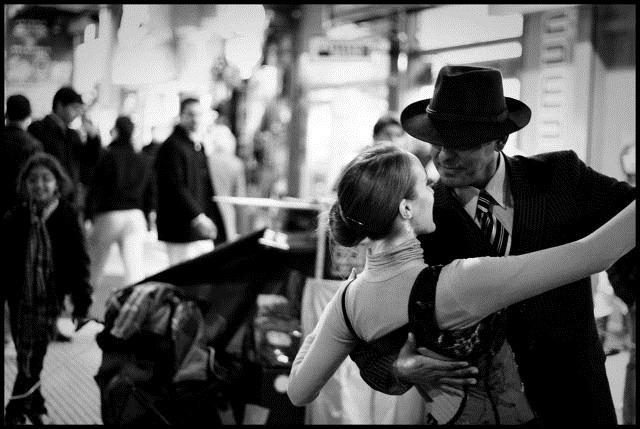
Street Tango in Buenos Aires  by Anand Gopol

Tango dancers strike a pose on Florida Street in Buenos Aires.

Tip: While in Buenos Aires, walk, walk, walk. It’s a great walking city and downtown is drizzled with street artists and dancers. On many street corners, one can find a tango troupe such as this one with a speaker busting out some music and a hat that’s being passed around.

DSC04313

Local young couple in colourful La Boca, Buenos Aires by Joshua Raif

IMG_0041copy

This is Buenos Aires’ iconic national historic monument, the obelisk, located in Plaza de la Republica by Ken Duquaine

We were in Argentina for a few days between Christmas and New Years Day this past year before leaving on a trip to Antarctica.  There is a considerable difference in weather conditions between Buenos Aires (very warm) and Ushuaia (much cooler), so anyone traveling to Argentina and planning on seeing both areas would do well to pack clothing that will accommodate a fairly wide range of temperatures. 

Glacier

Glacier trekking at Perito Moreno by Will Villiers-Tuthill

ARGENTINA-michael-robert-powell_1

rain-clouds over bariloche by Michael Robert Powell

I was above the town of Bariloche in Patagonia; bad weather can bring nice shots, too. The image was a bit flat so I tweaked it to make the image pop more (without getting too HDR).

DSC07209

Enjoying the local Mate by Joshua Raif

Colourful local characters on San Telmo square are usually happy to be photographed. In good weather the square is full of action: crafts stands, musicians, tango dancers, and is surrounded by old and beautiful architecture.

IMG_0158copy

A window with character in La Boca by Ken Duquaine

Right Whale Breeching

Right Whale Breeching: Puerto Madryn by Will Villiers-Tuthill

ARGENTINA-michael-robert-powell_4

girl staring into rainbow – iguazu falls by Michael Robert Powell

A lucky few seconds, in which I took a few shots and this was the best. Simply, have your camera ready.

DSC04914

Upsala Glacier Viewpoint, Patagonia by Joshua Raif

Since boat access has been blocked by the melting glaciers, this remote site now requires a full day trip which combines a boat ride on Argentina lake together with a 4X4 dirt road drive from Estancia Cristina. This full day trip contains a wide variety of photo opportunities which include icebergs on the lake, the old ranch itself, sculptured trees, rock formations recently sculpted by the melting glaciers and the panoramic viewpoint itself.

IMG_0110copy

Plaza de Mayo, the scene of the May 25, 1810, revolution leading to Argentina’s independence, and a major center for political activity in Buenos Aires by Ken Duquaine

Nest Building

Birds building nests outside Ushuaia by Will Villiers-Tuthill

quiet streets of downtown – buenos aires by Michael Robert Powell

DSC04353

A modern neighborhood of Buenos Aires by Joshua Raif

Ushuaia20111231_2327copy

Ushuaia, known in Argentina as the “End of the World” owing to its being the southernmost city in the world and the staging area for boat trips through the Drake Passage to Antarctica by Ken Duquaine

Ushuaia

Ushuaia – the coordinates are on the signposts by Will Villiers-Tuthill

ARGENTINA-michael-robert-powell_3

changing the guards – buenos aires by Michael Robert Powell

Get low for some shots. This was taken years ago on a video camera and hence is only a low-res still image (but better than nothing). I played with the lighting later.

DSC07238

A 19th century coffee shop on San Telmo square, still in operation by Joshua Raif

Buenos Aires still boasts 19th & early 20th century architecture and establishments which appear more authentic than those found in Europe or the U.S.


IMG_0140copy

The very colorful La Boca neighborhood of Buenos Aires where the sights, smells and activity complement the “over the top” colors of the buildings by Ken Duquaine

HDR tonemapped

snowy mountains behind ushuaia by Michael Robert Powell

Apart from the great scenery, the inclusion of a person (bottom left) gives it a real sense of scale. This is close-to straight out of the camera; a near-monochrome shot.

Thank you again to all the DPS reader-contributors who participated. If you would like to be involved in the next country’s post, drop me a line here.

Post originally from: Digital Photography Tips.

Check out our more Photography Tips at Photography Tips for Beginners, Portrait Photography Tips and Wedding Photography Tips.

Travel Photography Inspiration Project: Argentina


Digital Photography School

 
Comments Off on Travel Photography Inspiration Project: Argentina

Posted in Photography


Weather: Weekly Photography Challenge

16 Feb

Twelve Days of Christmas (Day 11)   ** EXPLORE No. 1 **Earlier in the week we featured an image set that contained 25 images that all had ‘snow’ as a feature. So today we thought it might be fun to do a ‘weather’ challenge as our weekly theme.
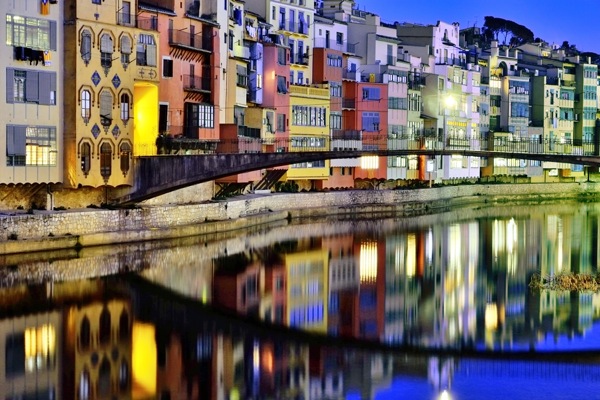
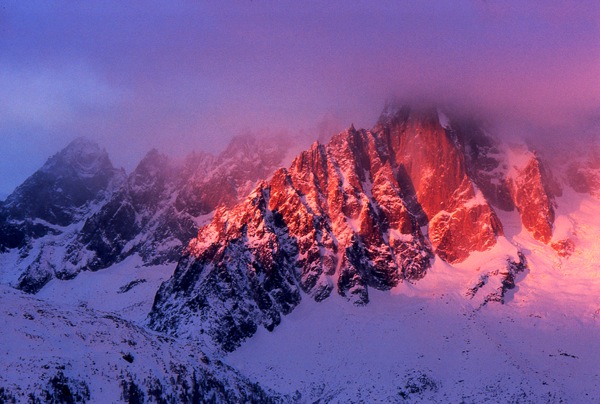
Your challenge is to take and share an image on the theme of weather.

As we have a global audience this should produce images with a real variety of types of weather. Aussie – we want you to show the world what summer is like for you right now. North Americans and Europeans – show us how winter is going?

We want to see rain, hail, snow, sun, storms, wind… you name it – we’d love to see some images that attempt to capture it. Feel free to tackle the topic with what ever type of shot you like, landscape, portrait, colour, black and white… anything you like – be creative!

Looking for inspiration – in addition to the Snow image collection we also have a Rain image collection.

Once you’ve taken and selected your best WEATHER shot upload it to your favourite photo sharing site and either share a link to it or – embed it in the comments using the our new tool to do so.

If you tag your photos on Flickr, Instagram, Twitter or other sites with Tagging tag them as #DPSCUTE to help others find them. Linking back to this page might also help others know what you’re doing so that they can share in the fun.

Also – don’t forget to check out some of the great shots posted in our last challenge – Cute challenge where there were some beautiful shots submitted.

Post originally from: Digital Photography Tips.

Check out our more Photography Tips at Photography Tips for Beginners, Portrait Photography Tips and Wedding Photography Tips.

Weather: Weekly Photography Challenge


Digital Photography School

 
Comments Off on Weather: Weekly Photography Challenge

Posted in Photography


What is Holistic Photography?

14 Feb

A Guest Post by Ben Evans

Photo1

Holistic Photography is a way to develop an artist’s appreciation for the visual world. This is achieved by interaction with challenging ideas and technical mastery of the photographic craft.

Photographers, in my experience as a photography coach, tend to gravitate toward two extremes;

Photo2

1. Science

I’m misusing ‘science’ to mean technical expertise and measurable results. Craft is closer, but popular usage muddies the meaning.

Photographers attracted by this sphere tend to be focussed on the intricate details of their equipment, photographic rules, precise exposure values and accurate colour balancing. They are very protective of the highlights in the photographs and either use HDR and Photoshop extensively, or take up a ‘no manipulation’ stance (and occasionally use film). Digital noise is the enemy and sharpness is of paramount importance; though lenses with apertures as wide as f0.95 are often favoured.

Typical questions include;

  • ‘How many megapixels does your camera have?’
  • ‘What aperture value should I be using?
  • ‘Which equipment did you use to take this photo?’
  • ‘How do I get sharper photographs?’
  • ‘Is Adobe RGB better than ProPhoto RGB for landscapes?’

Photo3

2. Art

Photographers, often buoyed up by Instagram fame and Facebook ‘likes’, believe that the camera doesn’t matter and that one prime lens or super-zoom is enough. They tend to use obvious Photoshop ‘art’ filters and composite images. They may have an artistic background and believe strongly in the importance of a good ‘eye’. Their photos tend to have higher contrast and more saturation.

They ask fewer questions;

  • ‘How can I capture the beauty of this scene?’
  • ‘What’s the coolest colour for light painting?’
  • ‘How do I get a blurry background?’

Therefore, it is either the camera drawing the photographer’s attention, or the subject; seldom both. Holistic Photography aims to correct this imbalance by providing a structure, the Quartet.

1. The Idea:

Photographs without a thought or feeling behind them rarely command attention. Holistic Photography separates this crucial aspect into two parts;

– Preservation:

The camera is a marvellous tool for accurate reproduction of the visual world. It allows us as photographers to capture an impression of a scene or subject, then carry it through time and transmit it across the world. This is the realm of mimesis; show, don’t tell. The subject is enough and there is little creative input from the photographer; although often tremendous skill with the craft is required.

A lot of art used to exist solely to create displayable simulacrum of a patron’s possessions; including people and animals. Now commercial photos normally exist to identify, preserve and sell. There are still some people alive who think that preservation is all photography is, or can be (and maybe even should be?).

Examples;

  • Passport photography
  • Product photography for catalogues
  • A lot of landscape photography
  • Much architectural photography
  • Much school and event photography
  • Much studio, sports, pet and ‘family’ photography

Photo4

– Expression:

Some paintings can be photo-realistic and say nothing while others can be deeply moving; we’ll call them Art. Photography can also be an excellent medium creating for Art with a capital ‘A’.

Expression in Holistic Photography is about the transmission of a thought, idea or feeling. First and foremost are those photographs about the Holistic Photographer’s inner life and perspective of the world.

Often the subject is used as a symbol or part of a palette; the photograph isn’t just about the objects depicted. What we know and believe physically effects what we see, so Holistic Photography includes ways of developing the elusive ‘artistic eye’.

Also important are those commercial photographs that go beyond the rational depiction and into emotional content. A portrait says more about a sitter’s character than just what they look like. A car advertisement sells a vision of another life.

Examples;

  • Fine Art photography
  • Conceptual photography
  • Abstract photography
  • Some advertising photography
  • Some landscape photography
  • Some portrait photography
  • Some documentary and editorial photography
  • Some wedding photography

Photo5

2. The Light:

Light is crucial for everyone, and especially for photographers. Light is pretty predictable and this section is dealt with by introducing key principles which allow the Holistic Photographer to identify or create the ‘right’ light for their intended photograph in many different situations. The process of looking at Light is divided into three parts;

– Observe: Our primary light source is normally the sun or an artificial flash. This is the Key light. The other light sources, and light reflected by objects in the scene provide Fill light.

We can identify many factors such as the colour content, intensity, duration, character and direction of the lights incident upon our scene and subject.

By understanding the fundamental principles, we can understand how to analyse light and optimise our subject’s positioning to make the most of it. The question is always, ‘Where are my light sources?’

– Control: If we were content with what the world presented us with, we would still be living in caves. It follows that taking control of the lighting in your scene is desirable.

We can do this by adjusting and refining the light sources already present, or by adding more; usually artificial flashes. Reflectors serve to bounce light. Silks can soften it. Gelled lighting can colour it. If the budget is big enough, there are few effects that the photographer can’t achieve.

– Capture: This sub-section normally provides the majority of material for a ‘complete’ photography syllabus. It covers how the camera reacts to light, including aperture, shutter speed and ISO sensitivity. Understanding the creative application of these three variables plus filter-use is emphasised.

Exposure modes and compensation are taught here along with modifying the camera’s response to colour using the White balance. Techniques such as HDR imaging and in-camera effects fit within this area.

3. The Composition:

Photography is a two dimensional medium which represents the three dimensional visual world. Therefore, we need to rely upon tricks to create the illusion of depth and perspective. We also need to compose the elements in our photographs to ensure that our subject is clear and our intended meaning is apparent.

Fortunately Aesthetics, which aims to achieve this, is well-established, and there are plenty of principles we can learn from and apply. Composition is divided into two parts;

– Command: A camera captures a more objective impression of the world than our subjective experience. Therefore, to make photographs that move our audience, we must take advantage of certain effects created by the camera.

For example, we can control perspective using the Pyramid Technique which covers camera positioning and choice of focal length. Beyond such in-camera techniques as optimising depth of field to communicate our message, we may also be able to direct our subject within the scene.

– Significance: Light is energy and colour is our reaction to predominant wavelengths. Scientific evidence has shown that colour has a physiological and psychological effect on people. Understanding colour psychology is covered in the section on Light, but the composition of colours within the frame also affects their significance.

Understanding symbols, either cultural or instinctual, gives the Holistic Photographer the necessary fluency in the visual language to create metaphors and narratives.

Photo6

4. The Timing:

The world is apparently 4.54 billion years old. The average photograph is made in about 1/250th of a second. Why choose a particular moment in time to capture the arrangement of things?

Mountains grow up and erode over millennia while a world-title winning jab may last for milliseconds. Movement can be captured at different moments to create opposite meanings.

The duration of the exposure also affects how movement is shown, and can even be adjusted to de-familiarise time itself. Lighting also changes with time, so an understanding of light requires attention to time. Timing is divided into two parts;

– Moment: Cartier-Bresson the Surrealist street photographer thought that each scene had a ‘decisive moment’ when all of the elements of the picture came momentarily together to tell the story of the whole scene. Different photographers will see different moments because their interpretation of the scene is unique.

However, there are some useful concepts to know. For example, research into micro-expressions says that people’s true emotions show momentarily on the face. High speed film cameras such as those made by RED can capture these. Timing is also linked to composition; a person seems different if they are photographed at different moments when they’re walking. If their legs are shown together they seem like they’re dawdling, and if they’re caught mid-stride they look purposeful.

– Duration: How long is a moment? We are really capturing a length of time. The duration we choose affects how the photograph appears; and therefore its potential meaning. Pictures of bullets in flight use high-speed bursts of flash-light to freeze motion otherwise invisible to the naked eye. Conversely the Ultra Deep Field photograph of galaxies required the Hubble telescope use a shutter speed of ten days.

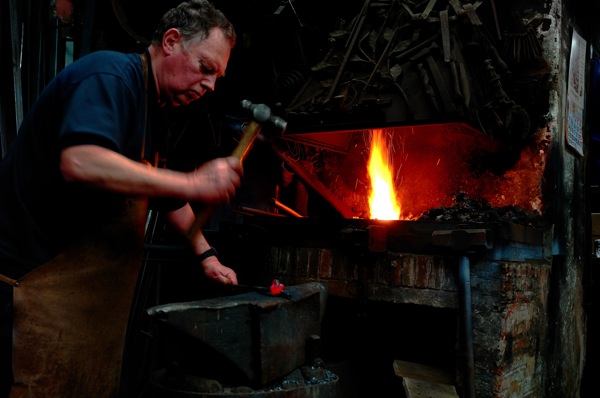
These are extremes; in this photograph the duration that the photograph was taken for was sufficient to blur the movement of the blacksmith’s arm; but fast enough that the rest of the photograph appears sharp.

Photo7

The INs and OUTs:

Separate from the quartet but still important, these two categories look at the equipment required to create the photograph. Inputs include the camera, lenses, tripods, lighting equipment, filters and so on. Outputs include printing options, framing, digital displays, computers, image editing software and those fridge magnets with the holiday snaps on.

So the Quartet – the Idea, the Light, the Composition and the Timing – provides the structure for Holistic Photography and the Ins & Outs take us from capture to display. You can check out the Holistic Photography Quartet video

My experience of learning photography was like a Seurat painting or a Rolf Harris drawing; slowly building up the bigger picture from specific ideas and techniques. Holistic Photography helps accelerate and deepen learning by beginning with the complete outline first, then providing the material for the individual to build his own unique skill and vision and connect previously learned material.

Photography has given me a deep appreciation for the world that I couldn’t even imagine when I started. As well as a way to preserve, it has become a way to see, understand and express; which continues to develop. This is why I created Holistic Photography – to help my own progress and share the process with others. I hope that it is useful.

Photo8

Ben Evans gives Holistic Photography coaching internationally. Check out his Barcelona photography courses and his £0.99 ebook, Photography: The Few Things You Need To Know.

Post originally from: Digital Photography Tips.

Check out our more Photography Tips at Photography Tips for Beginners, Portrait Photography Tips and Wedding Photography Tips.

What is Holistic Photography?


Digital Photography School

 
Comments Off on What is Holistic Photography?

Posted in Photography


Meet The Photographers Who Write For Digital Photography School ~ Elliot Hook

14 Feb

You’ve been reading their articles for months or years, have you ever wondered “Who are the photographers who write for dPS”? Today meet UK photographer Elliot Hook.

dps_interview-1-2

1. How long have you been shooting?

I’ve always taken pictures but it wasn’t until 2009 that I bought my first DSLR and started to seriously learn about photography.

2. Do you have a full time job or are you a full time photographer?

I have a full time job in research science meaning that photography is an ‘all-other-time’ consuming hobby currently.  It is unfortunate that work stops me from getting out with my camera as much as I would like, but I am fortunate in that I enjoy my job, and can use photography as a way to unwind at the end of a week.

profile pic

3. If you had to limit yourself to one genre of photography, what would it be and why?

I would have to say ‘outdoor’ photography as it allows me to cover both landscape and wildlife photography in one genre.  I seem to alternate between the two in terms of which one I put all of my effort into, though really they are quite similar in terms of my approach – being up and out early for sunrise, trying to make sure I am in the right place at the right time and having patience to wait for the perfect moment.  Trying to shoot landscapes or wildlife can be very frustrating as you are at nature’s whim, however, that just makes it all the more rewarding when you do capture that great shot!

4. When did you start writing for dPS and why?

I started writing for dPS in October 2012.  It is a blog that has helped to inspire and teach me ever since I bought my first DSLR, so when I saw a post from Darren saying that dPS was looking to recruit new writers, I just had to apply.  I really enjoy sharing images, knowledge and tips with others so I’m very happy that I am able to share what I have learned and help people avoid making the same mistakes that I’ve made.

5. What do you shoot with and what is your favorite lens?

I shoot with an Olympus E-3 and two lenses: Olympus Zuiko 12-60 mm f/2.8-4.0 SWD and the Olympus Zuiko 50-200 mm f/2.8-3.5 SWD.  I’m not sure that I could pick a favourite of the two as they are each perfect for their intended use.  The 12-60 mm gives me a great 24-120 mm effective focal length, perfect for landscaping and as a walk around lens.  The 50-200 mm, when coupled with a teleconverter, gives me up to 560 mm effective focal length, perfect for capturing wildlife.  Both give amazingly quick autofocus performance and both are fully weather sealed; I couldn’t ask for much more.

6. What would be your number one tip to any new photographer?

Don’t obsess about having the latest and greatest kit; it isn’t the camera or lens that defines the photographer or photograph they can produce.  I see far too many folk out and about using top of the range cameras that they have no idea how to operate.  My advice would be to just get out there and learn how to use your camera.  The more comfortable you are with your camera, with its strengths and flaws, the more likely you will be to capture that special moment.

Oh, and get out before sunrise.  The world is a completely different place before everyone else wakes up!

7. What’s your next big project?

There are so many things I want to try and get stuck into in 2013 that I don’t quite know where to begin.  I don’t have any projects defined currently, but I have just booked my first trip to the Isle of Skye in Scotland for early in the year.  It looks to be a landscape photographer’s dream, so I really can’t wait to go.

8. Where can people go to find out more about you and your work?

More of my photography can be found on my website at , or on my 500px or Flickr  pages.  I’m also on twitter.

dps_interview-1-5

dps_interview-1-4

dps_interview-1-3

dps_interview-1-7

dps_interview-1

Post originally from: Digital Photography Tips.

Check out our more Photography Tips at Photography Tips for Beginners, Portrait Photography Tips and Wedding Photography Tips.

Meet The Photographers Who Write For Digital Photography School ~ Elliot Hook


Digital Photography School

 
Comments Off on Meet The Photographers Who Write For Digital Photography School ~ Elliot Hook

Posted in Photography


Digital Photography 1 on 1: Episode 26: Metering Part 2: Exposure Compensation

13 Feb

This week is the second episode in a four-part series about metering. In this episode, Mark will explain exposure compensation. He will also demonstrate this and show us how to use it correctly.

Info : mockmoon.sblo.jp music (MP3) download : soundcloud.com movie (MP4) download : vimeo.com Recording live : Ustream address www.ustream.tv Location : Panoramio adress www.panoramio.com


Travel Photography Tips – Jasin Boland

13 Feb

Jasin Boland is an Australian based motion picture stills photographer who’s worked on such films as The Matrix, Ghost Rider, The Mummy, Mission Impossible and The Bourne films. Jasin’s work has been used on movie posters, billboards, TV commercials, magazines and newspapers all around the world. In this episode, Jasin talks with us regarding one of his favourite pastimes: travelling. Hear from our Nikon Ambassador as he discusses his favourite locations, talks over some practicle camera gear, and offers key tips on how you can improve your travel photo’s. See more @ My Nikon Life: mynikonlife.com.au
Video Rating: 4 / 5

hey guys ithree6mafia here, just talking about how you should price your photography and how i price mine., remember to SUBSCRIBE!COMMENT!RATE! and as usual send me a question of about anything as i will answer it:) THANKS FOR ALL THE SUPPORT:DD!! ADD ME ON FACEBOOK! www.facebook.com FOLLOW ME ON TWITTER! twitter.com JOIN THE FORUM 🙂 www.facebook.com
Video Rating: 4 / 5


Photography Bucket List – Big Sur

13 Feb

As a photographer, I’ve been blessed with the opportunity to travel around to some great locations in the United States and abroad. It’s hard to tell which places are worth going to and which really aren’t that great or worth the time investment. Some places in general are worth going to but certain places within that said place should be avoided. So I thought I’d start a series of blog posts here on DPS reviewing some of the places I’ve been in hopes that it will help out other photographers with travel plans in the future. In the future, I’ll also bring in guest writers to review places they’ve been as well. So I hope you will enjoy this new series and it will help you solidify some of the places you’d like to visit, or help you skip over some as well!

Big Sur, California – United States

The first location I’ll be reviewing is Big Sur. I’ve been to Big Sur twice now and I can tell you with complete confidence that I will be back some day soon. Big Sur is a low populated area of wilderness along the central coast of California about two hours north of San Luis Obispo and about 4 hours south of San Francisco. I think a lot of photographers are attracted to this region because there aren’t many places in the U.S. where you can get huge mountains and an ocean in a single shot. Big Sur has the largest coastal mountain in the U.S. (Cone Peak) at just over 5,000 feet. The Pacific Coast Highway (Hwy 1) hugs the coastline the majority of the way through Big Sur. Couple that with it’s hairpin turns, scenic bridges and jaw dropping views with sprawling mountains on one side of the road and straight drops down to the ocean on the other side…and I can comfortably call it the most beautiful stretch of road I’ve driven on in the U.S. (note I haven’t driven the Road To Hana in Hawaii yet although I have driven the entire coast line of the Big Island).  The photographic opportunities here are endless and I feel as though I haven’t even scratched the surface.

Where To Stay

There are a few hotels to stay at if camping isn’t really your thing, but I’d suggest making reservations in advance because some of them fill up quick and you’re not going to find a La Quinta Inne or Hilton. This is the wilderness and most areas don’t even have cell phone reception. My suggestion is to camp and I can’t think of a better place than the Fernwood Resort right on the Big Sur River. In the offseason it costs around $ 35 a night but I think the normal rate is around $ 45-$ 50. That’s cheaper than any hotel you’ll find there! At Fernwood you get to camp in a tent surrounded by towering redwood trees along the banks of the Big Sur River. Sleeping at night with the sound of the river rushing by is about as peaceful as it gets. Here’s a shot from right outside my tent in the morning.

1DS_3813

Where To Eat

There are plenty of restaurants scattered throughout Big Sur. When I was there with my friend Cliff Baise we ate at the Big Sur Bakery & Restaurant. Their wood fired bread board with butter and sea salt is a great appetizer, the wood fire pizzas are incredible and the local brews on the menu are a must. All things considered this place was a little on the pricey side but it was worth every penny. I think together we spent around $ 50 on the meal.

Where To Shoot

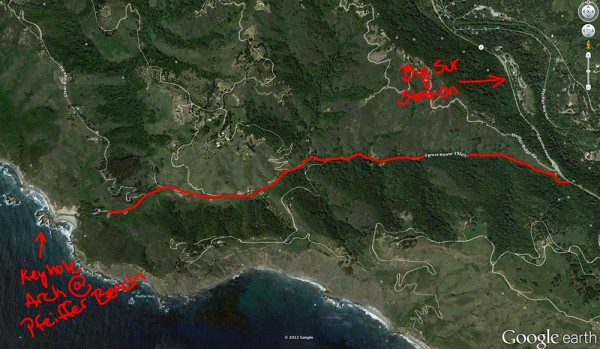
Now the important part: Shooting. Or, erm, photographing. No guns in Big Sur kids. Like I said before, the photographic opportunities in Big Sur are endless and I haven’t even begun to hit all the good spots. The first spot that I’d suggest going to for any photographer is Pfeiffer Beach. I only found out about this beach by asking a local where some good photo ops were. He gave me directions to go up the road from where I was and look for a sharp turn off on the right. I think I only found what he was talking about by luck but I made it and I couldn’t have been happier. When you turn off the PCH you have to travel down a two mile, single lane road to get down to the beach. Make sure you have cash on you because once you get down it costs around $ 8 to get onto the beach. From the parking lot you’ll have a quick hike to the beach. Here’s a map…

Screen-Shot-2013-02-10-at-12.44.58-PM


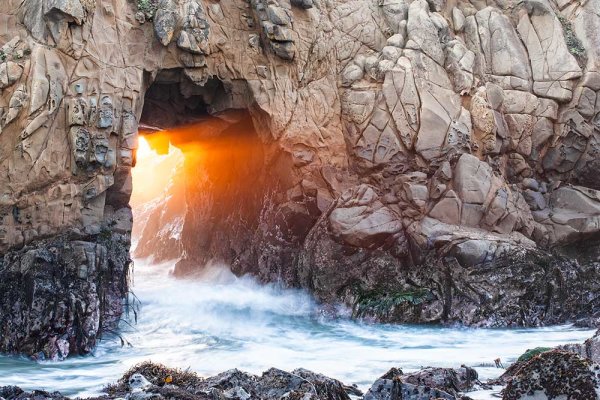
The main attraction at this beach is a rock formation called Keyhole Arch. It’s a cave the goes straight through a huge rock in the water and waves come crashing through it every few seconds. If you come during the winter you can even catch the sun setting right through the cave making for some great photo ops. I believe the perfect time for this is around December 23rd or something like that but I’ve heard the beach is filled with photographers during that time. I was just there on January 30th and got the shot below. Even then there was one photographer there who perched up on the spot looking through the arch and wouldn’t budge. He must have taken the same photo 1,000 times that night. I was there with Cliff and eventually he just walked right in front of the guy to take some pictures from the same location. A little etiquette tip: when you are at cool place where people have to travel long distances for certain shots, be sure to share the compositions. Don’t just post up at one spot and hog it. Get your shot and move along :-) .

bigSurKeyholeSun


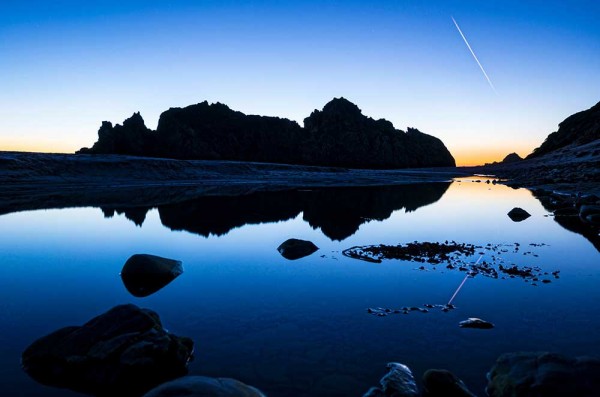
Here’s another shot from the same location that Cliff took. There’s a stream running right through the middle of the beach so he got down low to take advantage of the reflections in the smooth water.

Screen-Shot-2013-02-11-at-10.05.21-AM

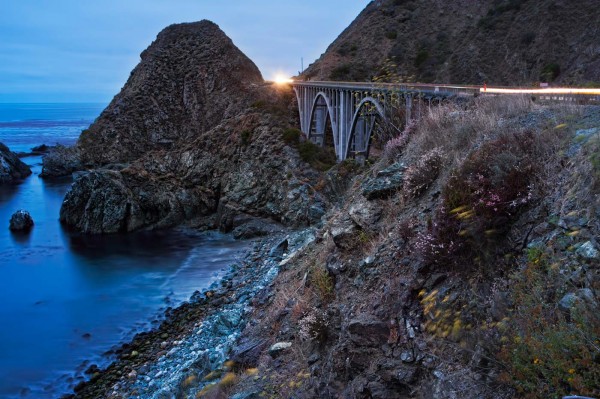
Another great thing to photograph in Big Sur are the bridges. You can’t really miss these if you drive through on the PCH. Both of the two big bridges have turn off areas right at one end so finding a place to from is easy. If you can shoot them at night or sunrise/sunset I highly suggest it! This was shot at night between the transition from nautical twilight to astro twilight. I waiting for a car to start crossing the bridge and then started a 30 second exposure.

bigSurBridge


Drive to north end of Big Sur (getting closer to Carmel, past the Bixby Bridge) and you’ll find a nature reserve with a bunch of hiking trails leading the ocean. There’s plenty of photo ops here as well. I shot this in broad daylight with no clouds in the sky. This a great time for an ND filter. In this case I used a Lee Big Stopper, a 10 stop ND filter that allowed me to get a 90 second exposure in direct sunlight. This creates smooth water and a more ethereal feel to a scene like this.

1DS_3862

Conclusion

Big Sur gets 5 out of 5 stars in my book. I can’t recommend it highly enough as a photography destination. The big cities like San Francisco, Los Angeles and San Diego are nice but Big Sur is a whole other world. Whether you’re a mountain kind of person or a beach kind of person, you can have your cake and eat it too at Big Sur.

Cliff Baise and I just got back from an epic road trip where we hit Big Sur, San Francisco, Mono Lake, Death Valley, Las Vegas and Grand Canyon on our way back to Texas. To see more images from this trip be sure to check out Cliff’s website at The Creative Gap and mine at James Brandon Photography.

You can also follow us on Instagram for behind the scenes stuff as well: @jamesdbrandon @cliffbaise

Post originally from: Digital Photography Tips.

Check out our more Photography Tips at Photography Tips for Beginners, Portrait Photography Tips and Wedding Photography Tips.

Photography Bucket List – Big Sur


Digital Photography School

 
Comments Off on Photography Bucket List – Big Sur

Posted in Photography