RSS
 

Posts Tagged ‘Photography’

Talking Lightroom & Photography

22 Aug

I was privileged to have a chance to take part in the Lightroom on the Road Google Hangout last week discussing Lightroom 5 and photography with Julieanne Kost, Chris Chabot and Brendan van Son.  It was great to talk photos, photography & Lightroom 5 with talented and like minded individuals. There’s some great tips and ideas in the video around LR5 so be sure to check it out.

Note: At 12:39 I show and discuss some new unreleased photography so if short for time at least check that out.

Copyright Jim M. Goldstein, All Rights Reserved

Talking Lightroom & Photography

The post Talking Lightroom & Photography appeared first on JMG-Galleries – Landscape, Nature & Travel Photography.


Related Stories

  • Talking Lightroom & Photography – Enclosure
  • Recommended Reading: Search Engine Optimization
  • Recommended Reading: Search Engine Optimization – Enclosure


JMG-Galleries

 
Comments Off on Talking Lightroom & Photography

Posted in Equipment


Ten unique cameras from the dawn of consumer digital photography

21 Aug

coolpix100_hand-trans2.png

Do you remember having to change floppy disks on your Sony Mavica? Or perhaps plugging your Coolpix 100 into the side of your laptop? The early days of consumer digital photography were filled with cameras that broke new ground, though not necessarily in directions that were widely adopted. In this article, DPReview’s Jeff Keller takes a look back at ten unique cameras from the era of PC Cards and SCSI ports. Follow the link to explore some of the interesting dead-ends of early digital photography.

News: Digital Photography Review (dpreview.com)

 
Comments Off on Ten unique cameras from the dawn of consumer digital photography

Posted in Uncategorized


Seeing and Street Photography

20 Aug
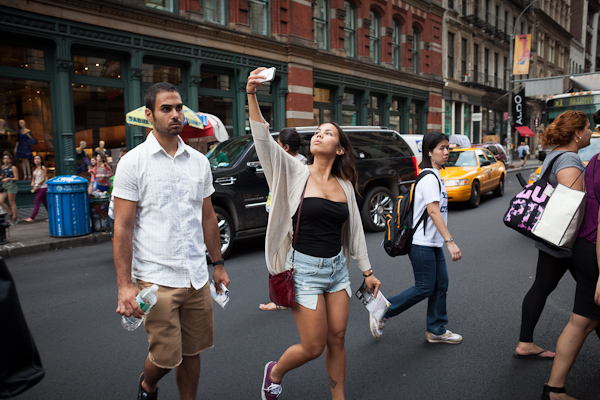
The Pose of a Generation.

The Pose of a Generation.

The next time you are out shooting street photography, try this.  Put your camera down at your side and just look around for awhile.  Watch things happen and let moments develop in front of your eyes.

It sounds simple but it goes against our natural instincts to throw the camera in front of our face every time we see something remotely interesting.  That is especially true with digital.

The camera is the tool, but it can get in the way sometimes.

The camera can be easy to hide behind and it can become a crutch.  It’s so easy to rev the engine and just start clicking away, trying to capture everything.  Meanwhile, in the haste the most important moments go unnoticed.

Most of the work that goes into capturing a good photo is done before you put the camera to your eye and after you take it away, in editing.  You need to see the photograph or the potential for a photograph with your eyes before you can get to the point of trying to capture it.

The key is to hold back, slow yourself down and scan the area until you finally see something,  Then you can pounce.  Often, just seeing something isn’t enough and you’ll have to wait for the situation to develop further.

Always think, can this be better?

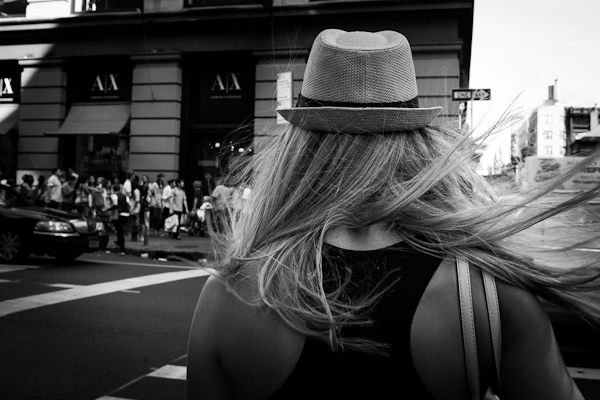
Gust, SoHo.

Gust, SoHo.

It’s better to be proactive instead of reactive.  You need to see the potential for a moment before it occurs.  Of course there will be great images that will suddenly spring out at you and you will have to photograph them as fast as you can, but that’s only a fraction of the time.

An important tip is to try to notice people from further away, especially in a crowd.  Scan the area and go from person to person.  If you’re only first noticing people as they are 8 or 10 feet away from you, then there’s nothing you can do but react.  Yes, some brilliant photos are created this way, of course, but if you instead focus on the people coming towards you from say 25 feet away, then you’ll have much more of a chance to get in position and capture the moment if it occurs.

The camera is just a tool to capture what your eye sees.  And the more your eye is able to see without the camera, the better your photographs will be.

Post originally from: Digital Photography Tips.

Check out our more Photography Tips at Photography Tips for Beginners, Portrait Photography Tips and Wedding Photography Tips.

Seeing and Street Photography


Digital Photography School

 
Comments Off on Seeing and Street Photography

Posted in Photography


When Bad Weather Means Great Photography

19 Aug

CKP_Landscape_Clare128.jpg

Landscape photographer Carsten Krieger is no stranger to poor weather, but in this article he explains how you can get great shots even when the sun is hidden from view. His three-page article features several images taken in his native Ireland which should provide plenty of inspiration for those damp, rainy days that are just around the corner. Click through for a link to the full article. 

News: Digital Photography Review (dpreview.com)

 
Comments Off on When Bad Weather Means Great Photography

Posted in Uncategorized


3 of My Favorite Photography Books

19 Aug

We are all familiar with the old refrain, “Those who can, do.  Those who can’t, teach.  Those who can’t teach, teach gym.”  I’m still not sure about that last part, but I think by now we’ve pretty much debunked the middle part.  The photography world is full of incredibly successful, highly talented photographers who willingly and eagerly pass along their knowledge and expertise to a new wave of hobbyists, enthusiasts, and professionals.  From workshops and photo walks, to seminars and tutorials, there is a lot of solid information to be found.  As great as live face-time with many of these photographers is, however, it’s not always feasible, possible, or even affordable.  As amazing as a five-day seminar at a four-star hotel in the Virgin Islands might sound, in my world things like food, shelter, and a growing 12-year-old son have to come first.

That’s when I hit the books.  And I’m not talking about an e-book or an on-line forum or magazine (not that there’s anything wrong with them).  I’m talking about an actual collection of pages, bound together in a single unit, containing useful information and insight.  Something I can highlight and bookmark.  But just like not every workshop is everything it’s cracked up to be, not every book is full of secrets bound to catapult you to the next level.  I’ve amassed a fairly sizable photography library over the years.  Some have been disappointing, while others have been worth every penny.  My philosophy on photography books is simple.  A photography book is worth its price tag and earns a permanent place on the shelf if I learn even just one or two things that can noticeably impact my photography in a positive way.  Regardless of whether it is geared towards shooting, editing, or running my business, a good photography book will have at least one shiny nugget that changes the way I do things.

In no particular order, these are three of my favorites.

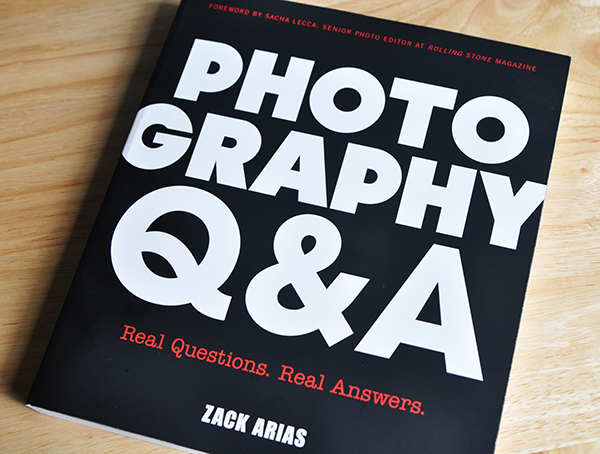
1.  “Photography Q&A – Real Questions. Real Answers,” by Zack Arias

I had the pleasure of writing the first published review of  Zack’s book back in June.  Since then, I have re-read it cover-to-cover twice.  In August of 2012, Zack, an Atlanta-based commercial/editorial photographer, embarked on a mission to save us all from really bad advice.  He launched his popular Tumblr blog, “Phtography Q&A – Ask Me Anything About Photography”, with the goal of answering 1,000 reader-submitted questions.  It was this collection of questions and answers that became the rough draft for the Q&A Book.   There are several things I love about this book.  For starters, it’s not about any one topic.  The questions range from gear, lighting, and confidence, to portfolio-building, submitting your work, and selling yourself.  I wouldn’t call this a book about photography,  but I would call it a book about being a photographer.  Covering topics as widely varied as the photographers who submitted them, PQ&A reads like you’re sitting across the table from Zack, having a beer, as he shares not only his advice and expertise, but the personal experiences that taught him those lessons in the first place.

JJG-001

I summed up my original review like this: “While this book may help improve your photography, I think its greater goal will be improving your quality of life as a photographer– or at least the quality of your head space.  If you’re anything like I am– still grappling with crises of confidence, fighting and clawing through creative and practical ruts, or still occasionally convinced that ‘my photography/business will skyrocket if I can just buy THAT,’ then this book is for you.”

Our playing field has changed drastically in recent years.  PQ&A cuts to the chase and tells it like it is.  The advice you’ll find in these pages is worth way more than the price tag.

2.  A Tie Between “The Moment it Clicks” and “The Hot Shoe Diaries,” both by Joe McNally

Joe McNally has to be one of the most dynamic photographers and educators working today.  And no, I’m not exaggerating.  If you’ve ever had the privilege of attending one his seminars you know what I’m talking about.  If you haven’t, read both of these books.  Both are written in Joe’s signature conversational style and will leave you chomping at the bit to get out and put what you’ve learned into practice.

A typical Joe McNally seminar or workshop tends to be filled with sentences that begin with things like, “The photo editor at National Geographic once told me…” or “My editor at Life Magazine used to say…”  These are your cues to start feverishly writing down every word that follows.  “The Moment it Clicks” is an entire book of these one-liners, with each two-page spread combining Joe’s words of wisdom with a stellar photograph and the story behind it to illustrate the point.

JJG-004

“The Hot Shoe Diaries” should absolutely be required reading for anyone who even gives passing thought to off-camera flash.  I know I sound like a gushing fanboy when I say this book changed my life, and I’m okay with that.  With sections like “Up to Your Ass in Alligators,” “Strobe Strategy,” and “Do You Have a Bedsheet?” you know that a whole heap of knowledge and information is about to fall in your lap.  As with “The Moment it Clicks,” each lesson is illustrated with one of Joe’s amazing images.  One of the most valuable sections comes at the very beginning of the book.  “What I Use…and Why and When I Use It” sets the stage for each of the many off-camera flash lessons.

JJG-006

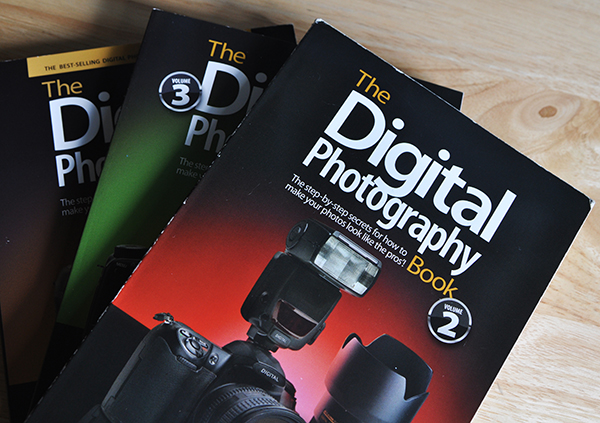
3. “The Digital Photography Book – Volume 2,” by Scott Kelby

The name Scott Kelby has pretty much become synonymous with photographic education, from shooting to post production, and everything in between.  There are currently four volumes in this series.  Volume 2 is my favorite.  Just like the other authors mentioned here, Scott Kelby lays it all out on the table, sharing his setups, his experiences, and why he does things the way he does them.  Each chapter (all named “Shoot ________ Like a Pro”) sets out with a singular goal– to improve a specific aspect of your photography.  Topics include flash, portraits, landscapes, weddings, travel, and macro.  There is also excellent information on “Building a Studio from Scratch” and “Pro Tips for Getting Better Photos,” as well as Scott’s “Recipes to Help You Get ‘The Shot.’”

JJG-008

Photography is one of those things where you only get better by doing it.  A LOT.  You can read all the photography books you can get your hands on, but until you get out there and repeatedly apply what you’ve read (over and over again), nothing is going to change.  I’ve chosen the three (okay…four) books here for three very different reasons.  Scott Kelby’s “The Digital Photography Book” series is bursting at the seams with useful information for the beginning to intermediate photographer looking to take their photography to the next level.  Nobody beats Joe McNally when it comes to teaching everything from the basics to the finer points of off-camera flash, but you need to have a solid foundation and firm grasp of certain photographic principles before tackling advanced lighting techniques.  Zack Arias’ book departs from the traditional photography book in that it is less about technique and more about getting your photographic head screwed on straight.  All three are important, and all three will benefit every photographer at some point on their journey.

Post originally from: Digital Photography Tips.

Check out our more Photography Tips at Photography Tips for Beginners, Portrait Photography Tips and Wedding Photography Tips.

3 of My Favorite Photography Books


Digital Photography School

 
Comments Off on 3 of My Favorite Photography Books

Posted in Photography


Secondary Point of Interest: Weekly Photography Challenge

17 Aug

Earlier this week we published a post on composition of images in which author Matt Dutile introduced the concept of adding a second point of interest to your photos to give your image a natural viewing progression.

Adding a secondary point of interest can not only add more interest in your image but reinforce a theme or perspective argues Matt.

NewImage

A number of people commented that they’d not considered this technique before so we thought this might be a fun weekly challenge – taking photos that not only have a single point of interest – but which have a second one.

Check out Matt’s post and then head out with your camera to practice the technique.

Once you’ve taken your ’2nd Point of Interest’ photos upload your best ones to your favourite photo sharing site either share a link to them even better – embed them in the comments using the our new tool to do so.

If you tag your photos on Flickr, Instagram, Twitter or other sites with Tagging tag them as #DPS2NDINTEREST to help others find them. Linking back to this page might also help others know what you’re doing so that they can share in the fun.

Also – don’t forget to check out some of the great shots posted in last weeks Black and White Landscapes challenge – there were some great shots submitted.

Post originally from: Digital Photography Tips.

Check out our more Photography Tips at Photography Tips for Beginners, Portrait Photography Tips and Wedding Photography Tips.

Secondary Point of Interest: Weekly Photography Challenge


Digital Photography School

 
Comments Off on Secondary Point of Interest: Weekly Photography Challenge

Posted in Photography


The Kickstarter Travel Photography Campaign You Just Have to See to Believe

15 Aug

Throughout my photography career, one of the most challenging aspects has been learning how to get the travel shots I really want. Faced with a limited window of time, unfamiliar areas, and unpredictable weather, getting the shot you envisioned can be difficult. However, by planning ahead, being flexible and making any conditions work to your advantage, the end result of Continue Reading

The post The Kickstarter Travel Photography Campaign You Just Have to See to Believe appeared first on Photodoto.


Photodoto

 
Comments Off on The Kickstarter Travel Photography Campaign You Just Have to See to Believe

Posted in Photography


Photography Pricing: How much is your Art worth?

14 Aug

We all love the art of photography, and perhaps even the technical challenges of capturing the essence of a scene or an occasion. Behind passion and creativity, however, is the reality that every photographer – whether you are into advertising photography, or offer wedding photography services, or any specialization for that matter – must place proper value on his or Continue Reading

The post Photography Pricing: How much is your Art worth? appeared first on Photodoto.


Photodoto

 
Comments Off on Photography Pricing: How much is your Art worth?

Posted in Photography


Portrait Photography: How to Photograph People in the Harsh Midday Sun

13 Aug

By: Oded Wagenstein

Great tips and tricks on overcoming the harsh mid-day sun to create beautiful portraits on either side of the “golden hours”

The Golden Time

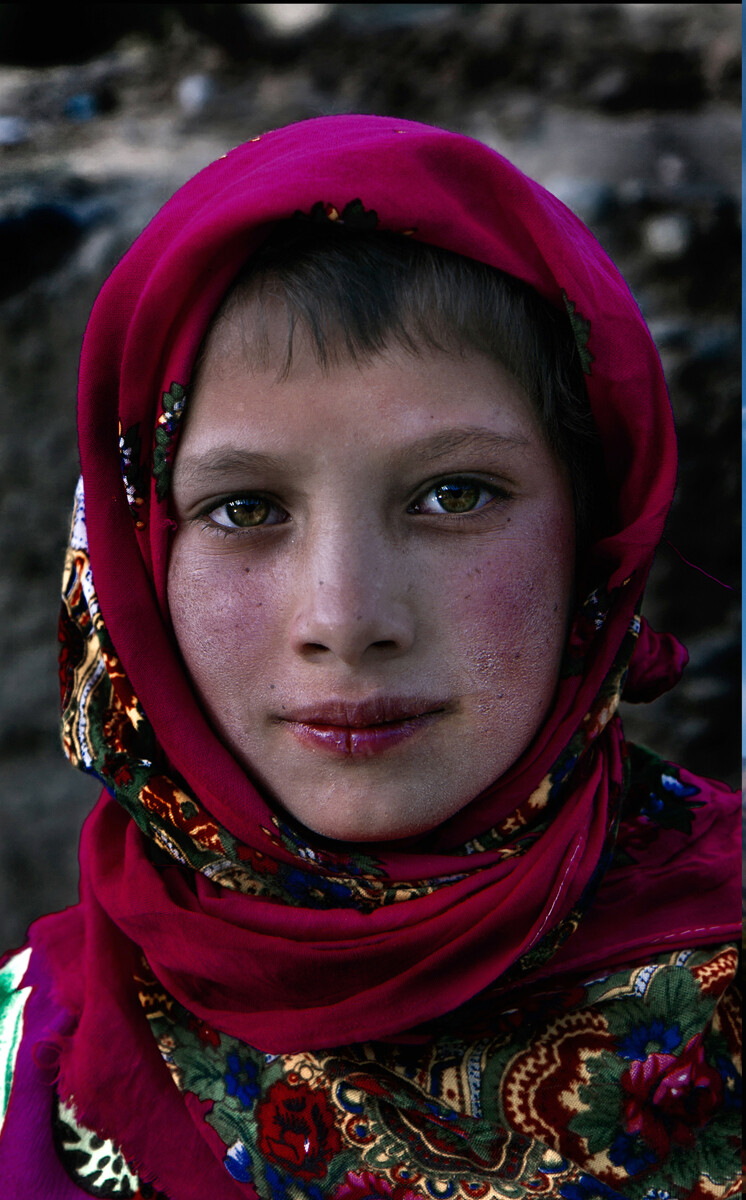
The best time to take almost any kind of  picture, is in the “golden hours”: around one hour before sun down and one hour after sunrise, because that’s when the light is at its softest, lacking hard shadows, rich in colors, bathing your subject in even light, which entering from the side and that gives your subjects face definition.

-Uzbekistan-  Canon EFS 17-55mm f/2.8  Fstop of 3.5, shutter speed@10 ISO 160

-Uzbekistan-
Canon EFS 17-55mm f/2.8
Fstop of 3.5, shutter speed@10 ISO 160

-Tajikistan- Canon EFS 17-55mm f/2.8 Fstop of 5.6, shutter speed@15, ISO 200.

-Tajikistan-
Canon EFS 17-55mm f/2.8
Fstop of 5.6, shutter speed@15, ISO 200.

-China - Canon EFS 17-55mm f/2.8 Fstop of 2.8, shutter speed@10 and ISO 400 Natural light (sunrise) entering the frame from the right

-China –
Canon EFS 17-55mm f/2.8
Fstop of 2.8, shutter speed@10 and ISO 400
Natural light (sunrise) entering the frame from the right

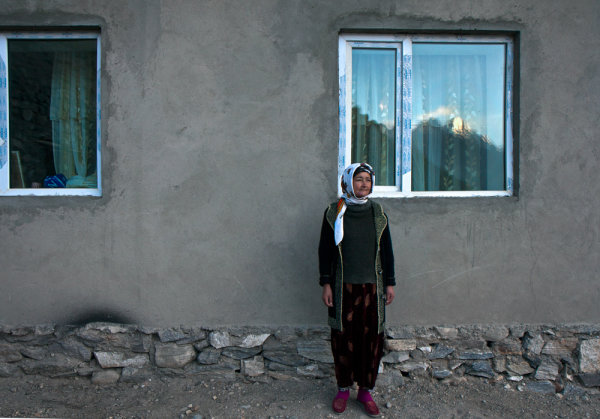
-Tajikistan- Canon EFS 17-55mm f/2.8 Fstop of 5.6, shutter speed@10 and ISO 100 Natural light (sunrise) reflecting from the mountains, which are about 45 degrees to the woman (you can see it in the window).

-Tajikistan-
Canon EFS 17-55mm f/2.8
Fstop of 5.6, shutter speed@10 and ISO 100
Natural light (sunrise) reflecting from the mountains, which are about 45 degrees to the woman (you can see it in the window).

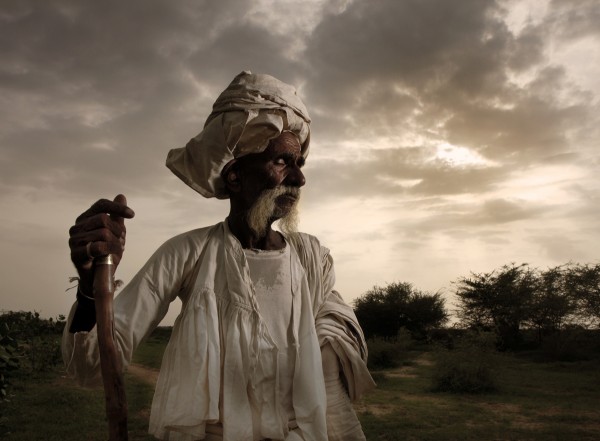
Once this time (golden time) has passed, we are left with harsh, unflattering light that is low in saturation and makes the images look dull and flat as you can see in this photo:

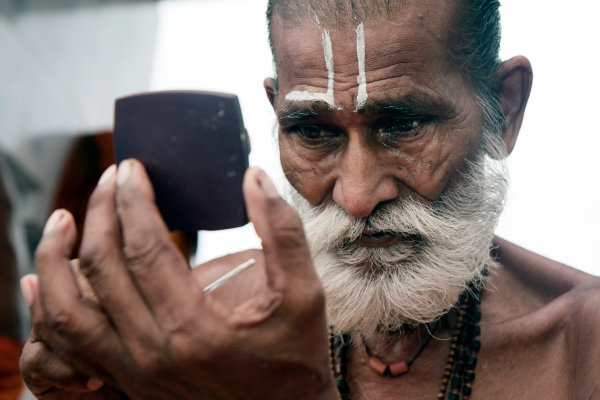
-India- Canon EFS 17-55mm f/2.8 Fstop of 8, shutter speed@10 and ISO 100 The harsh mid-day sun is just above him.

-India-
Canon EFS 17-55mm f/2.8
Fstop of 8, shutter speed@10 and ISO 100
The harsh mid-day sun is just above him.

The Problem

In order to provide solutions, first let’s understand the “problem”: Your camera doesn’t see as well as your eyes.  The “problem” is the camera’s dynamic range.  In plain English, the dynamic range is the distance between the brightest and darkest points in the frame.  Let’s say you take a shot of a man wearing a hat in the middle of the day, when the sun is at its highest and harshest. Your eyes will be able to make out his eyes even under the shadow of his hat, as well as his chin in the strong daylight. That’s because your eyes have the ability to see a large dynamic range.

Your camera however has a far more limited ability to see the dynamic range .If you we go back to our man in the hat, your camera will see his eyes, which are in shadow under his hat as black, while his chin which is in strong sunlight will be blown out and very white.

You might try to “fix it” by changing your aperture/shutter or ISO parameters but, this would only make your image lighter or darker as these actions have no bearing on the dynamic range. Even if we try to use an ND filter, again, this would only make your image darker and would not solve the problem or alter the range.

The Solutions

Move to the shade
Try moving the subject to the shade, or perhaps indoors. When I asked Steve McCurry, the creator of the “Afghan Girl” image, how he works in the mid day sun, he told me that he prefers to work indoors with the harsh light coming in through a window so that it turns to soft even light, and that’s really change my way of “seeing” the harsh light as an opportunity of creating great images by moving to the shade or indoors.

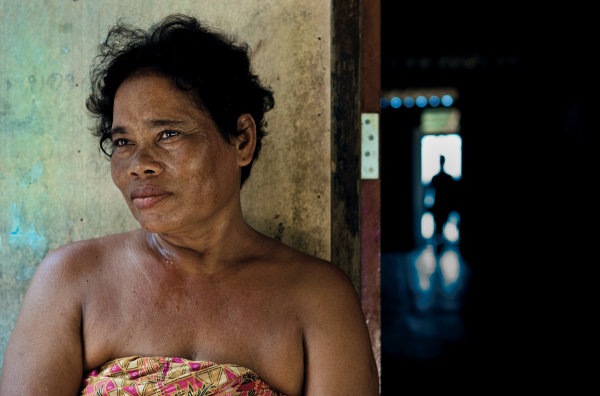
-Thailand- Canon EF 24-70 mm f/2.8L Fstop of 3.5, shutter speed@10 and ISO 160 This woman is sitting in the shade with strong light coming from the street (to her left). A small piece of paper was held above her head to block the light (flag).

-Thailand-
Canon EF 24-70 mm f/2.8L
Fstop of 3.5, shutter speed@10 and ISO 160
This woman is sitting in the shade with strong light coming from the street (to her left). A small piece of paper was held above her head to block the light (flag).

Try turning your subject 45 degrees to the light source (exp: window) by doing so you will be able to create a nice 3D effect.

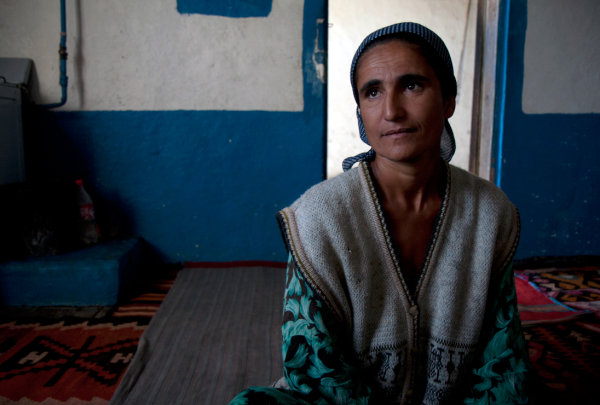
-Uzbekistan- Canon EFS 17-55mm f/2.8 Fstop of 2.8, shutter speed@10 and ISO 500 Natural light (only) coming from the window on the left side of the frame (about 45 degrees)

-Uzbekistan-
Canon EFS 17-55mm f/2.8
Fstop of 2.8, shutter speed@10 and ISO 500
Natural light (only) coming from the window on the left side of the frame (about 45 degrees)

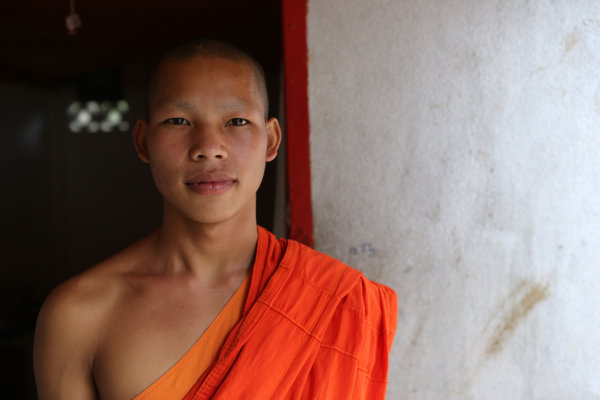
-Laos- Canon EF 24-70 mm f/2.8L Fstop of 3.5, shutter speed@100 and ISO 1000 I used the soft light coming through a red robe which was on the right side of the frame, in order to "sculpture" the light on his face. It also gave the whole image some sort of orange glow.

-Laos-
Canon EF 24-70 mm f/2.8L
Fstop of 3.5, shutter speed@100 and ISO 1000
I used the soft light coming through a red robe which was on the right side of the frame, in order to “sculpture” the light on his face. It also gave the whole image some sort of orange glow.

Create a Silhouette

Expose your image from the background, so your subject becomes a silhouette in some cases it makes for a wonderful image.

You can do so by using the manual exposure (M mode) or by changing the metering mode to spot and measure from the background.

-Thailand- Canon EF 24-70 mm f/2.8L Fstop of 5, shutter speed@10 and ISO 100 (on spot metering) Natural light only

-Thailand-
Canon EF 24-70 mm f/2.8L
Fstop of 5, shutter speed@10 and ISO 100 (on spot metering)
Natural light only

Burn it Down

Burning the background is not always a bad thing. On the contrary it creates a unique portrait that’s different and interesting

-India- Assistant: Hardik Pandya Canon EFS 17-55mm f/2.8 Fstop of 4.5, shutter speed@10 and ISO 200 Natural light only

-India-
Assistant: Hardik Pandya
Canon EFS 17-55mm f/2.8
Fstop of 4.5, shutter speed@10 and ISO 200
Natural light only

Reflector

By using a reflector, you can minimize the light range by bouncing light back onto your subject, which will add light to the dark areas. Like this image below.  I used a small folding reflector, which I held in my hand while taking the photo.

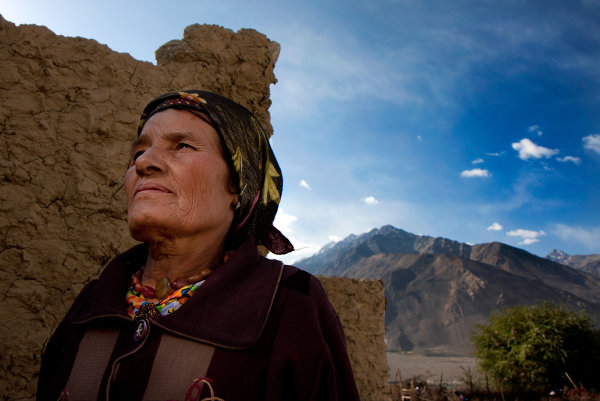
-Tajikistan- Canon EFS 17-55mm f/2.8 Fstop of 8, shutter speed@10and ISO 100 Natural light+ Reflector (gold color) I held in my hand on the lower left side of the frame + warm natural light bouncing off the mud wall

-Tajikistan-
Canon EFS 17-55mm f/2.8
Fstop of 8, shutter speed@10and ISO 100
Natural light+ Reflector (gold color) I held in my hand on the lower left side of the frame + warm natural light bouncing off the mud wall

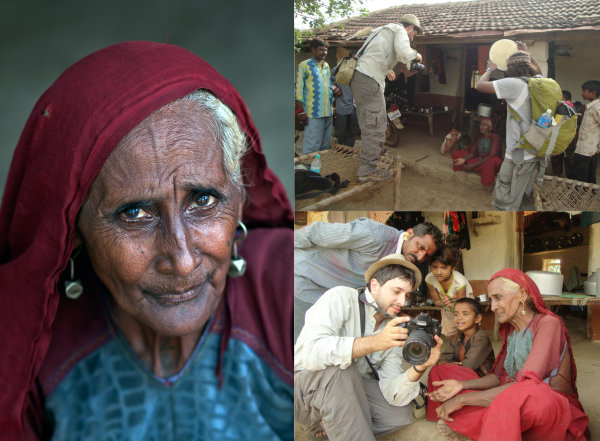
-India- Assistant: Hardik Pandya Canon EFS 17-55mm f/2.8 Fstop of 2.8, shutter speed@10 and ISO 100 This nice lady was sitting in the shade of her house + silver color reflector, coming from the right upper side of the frame.

-India-
Assistant: Hardik Pandya
Canon EFS 17-55mm f/2.8
Fstop of 2.8, shutter speed@10 and ISO 100
This nice lady was sitting in the shade of her house + silver color reflector, coming from the right upper side of the frame.

External Flash

Like the reflector, the flash will add more light to the dark areas in turn creating a smaller dynamic range.

-India- Canon EFS 17-55mm f/2.8 Assistant: Hardik Pandya Fstop of 9, shutter speed@10 and ISO 100 Natural light of the background sky + fill light flash (off camera and inside a small soft box) coming from the right side of the frame, about 1 meter in front of the man's face.

-India-
Canon EFS 17-55mm f/2.8
Assistant: Hardik Pandya
Fstop of 9, shutter speed@10 and ISO 100
Natural light of the background sky + fill light flash (off camera and inside a small soft box) coming from the right side of the frame, about 1 meter in front of the man’s face.

HDR

Taking 3 (or more) exposures of your subject and using this technique in post processing could come in very handy.

-India- Canon EFS 17-55mm f/2.8 Assistant: Hardik Pandya Fstop of 11, shutter speed@10 and ISO 100 Natural light of the background sky + fill light flash (off camera and inside a small soft box, coming from the left side of the frame) + HDR effect in Photoshop.

-India-
Canon EFS 17-55mm f/2.8
Assistant: Hardik Pandya
Fstop of 11, shutter speed@10 and ISO 100
Natural light of the background sky + fill light flash (off camera and inside a small soft box, coming from the left side of the frame) + HDR effect in Photoshop.

I would like to thank Hardik Pandya and Linda Burnette for their help on making this article.

Do you have any interesting techniques or methods to overcome the harsh light? Please share in the comments.

Oded Wagenstein is a Travel photographer and writer. He is a regular contributor to the National Geographic Traveler magazine (Israeli Edition) and he is known for his intimate culture portraits. You can join his Portrait & Travel Photography blog and continue to discuss on travel and people photography and get more amazing tips!

Post originally from: Digital Photography Tips.

Check out our more Photography Tips at Photography Tips for Beginners, Portrait Photography Tips and Wedding Photography Tips.

Portrait Photography: How to Photograph People in the Harsh Midday Sun


Digital Photography School

 
Comments Off on Portrait Photography: How to Photograph People in the Harsh Midday Sun

Posted in Photography


What to Teach Your Kids about Photography

10 Aug

A Guest Post by Jeff Guyer.

001

We love photography. We love our kids. So, it would stand to reason that if we can find a way to combine photography and spending time with our kids it’s a big win, right? Of course it is. If your kids are anything like mine, however, they’ve either already reached a point where they vanish into thin air the moment they even sense a camera coming out of a bag, or will reach that point soon enough. So, how do we enjoy our cherished hobby without abandoning our kids for hours or days at a time? If they’ve grown weary of their time in front of your camera, maybe it’s time to help transition them from test subjects and guinea pigs to budding photographers themselves.

STEP 1 — WHERE TO START…COMPOSITION & AUTO MODE
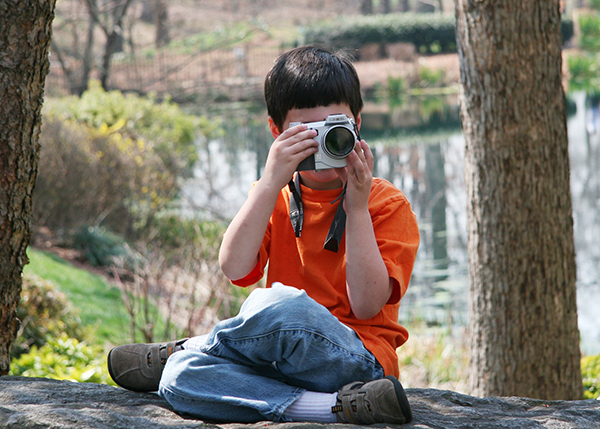
002

I know– the mere mention of Auto Mode makes you cringe. Ordinarily I’d agree, but it’s time to get over it (at least for a little while). I’ve been teaching a kids photography class for three years, and I can state with absolute certainty that if I tried teaching my own son the way I teach my students, he would most likely never pick up a camera again. In the classroom, I start each semester with a demonstration. We talk about the exposure triangle (aperture, shutter speed, ISO).

To illustrate, I pull out an old, 1972 Pentax Spotmatic and do something that would be impossible with any of today’s DSLR’s– I open it up. I take off the lens. I open up the back. I show them how the shutter stays open longer at slower shutter speeds. I demonstrate how the aperture ring works on older lenses. Let them see what’s going on from front to back. I show them how these concepts work on a practical, visual level. From exposure, we work our way to composition, to lighting, etc. It’s a logical progression and it works. An effective classroom approach, however, won’t often be the same recipe for success when we try it on our own kids. Why?

Because our kids just want to spend time with us and take nice pictures. They spend enough time in school learning nuts and bolts. If you are going to get (and keep) them interested in photography, you’re going to have to teach them without teaching them.
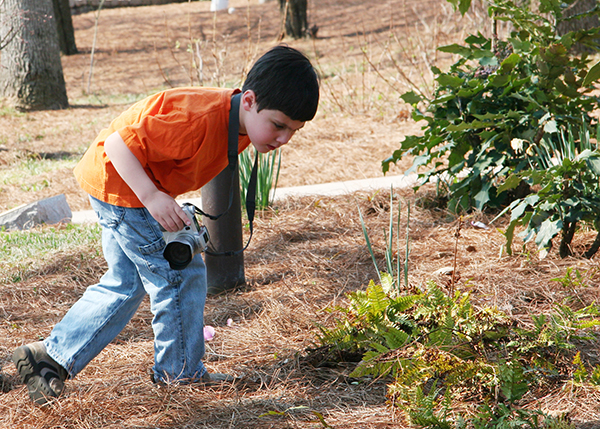
006

Huh?

You’ve taught your kids all kinds of things without sitting them down and making a formal lesson out of it. This is no different. But whereas in the classroom I start with the technical, with my son I start with composition and let the technical fall into place later.

We all know that composition consists of the placement of our subject and other elements within the boundaries of the frame. What you have to remember, though, is that your child views the world from a much lower vantage point than you do. So, start by getting down on their level and see things as they do. It may also help at first to leave the big guns at home and use a point & shoot or even an iPhone. The iPhone is an amazing compositional tool. A live view that you can share with your kids will be a huge help in guiding them towards alternate angles and helping them get what they see with their eyes within the confines of the frame.

This is where they will start expressing themselves creatively. It also gives you a chance to get inside their heads and maybe even let them teach you a thing or two about creativity. In some ways, pressing the shutter button is almost secondary at this point.

STEP 2 – SUBJECTS & LOCATIONS
003

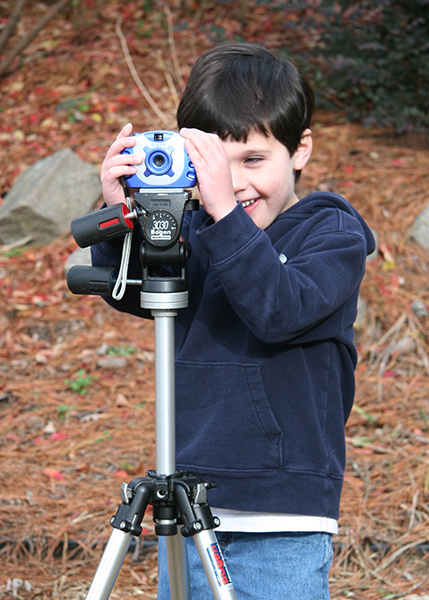
Start by thinking about what frustrates you most about basic photography and make sure to remove as many of these stumbling blocks as possible. The more you do to create a successful environment for them, the better your chances for successfully instilling a love for photography. Stationary subjects like landscapes are a great place to start, as are pets, toys, or even cracks in the sidewalk for that matter.

As long as you are helping them select relatively stress-free subjects on their visual level, you increase their chances of success. Remember also, that creativity does not usually fall too far from the tree. Free from our adult notions of creativity, your kids might very well have some pretty awesome creative visions of their own. Be open to those visions and be sure to give them a chance to guide the journey as well.

Once they get more comfortable with capturing their vision in a box, you can start introducing games, challenges, and scavenger hunts. You’ve got their interest and attention. Now hold onto it by making it fun and exciting. Shooting themes (e.g., “Lines,” “Red,” “Doors,” “Reflections,” etc.) is a great way to both engage their imaginations and expand how they see the world around them.

STEP 3 — CAN WE FINALLY TALK ABOUT EXPOSURE NOW?
004

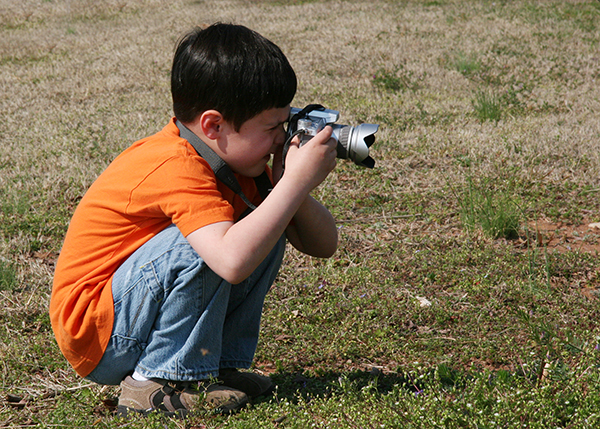
As children become more and more comfortable with the ideas of composition and choosing their subjects, they will be in a better position to not only start asking questions about why their photos are too light or too dark, but to understand the answers as well. By now you are hopefully comfortable with your own grasp of exposure, as well as the interplay and symbiotic relationship between the three elements. Once again, it’s all well and good, but your 8-year-old is going to get a glassed-over look in her eyes and expel the biggest yawn you’ve ever seen the moment she starts hearing things like “depth of field,” “stopping down,” and shooting “wide open.” So what do we do? We teach it visually by example.

Imagine a room with a large single window covered with a curtain. Congratulations– you’ve just stepped inside a camera. The window and curtain combine to act as your shutter and aperture. If your kids can get their heads around the concept simply by way of discussion, great. If not, pick a room of your house and demonstrate. If I open the curtain just a little, I have a smaller aperture. If I open it wider, I have a larger aperture. If I open and close the curtain very quickly, I have a faster shutter speed, and if I open and close it more slowly I have a longer, slower shutter speed. Demonstrate this with various combinations, showing them how their choices affect how much light enters the room and for how long.

Once they have a handle on aperture and shutter speed, you can add ISO to your demonstration with the use of sunglasses. Technically, ISO is a measure not of the light entering your camera, but of your camera’s sensitivity to that light. For purposes of this discussion, starting with sunglasses on and taking them off will be comparable to raising the ISO. The light entering the room has not changed, but it obviously becomes brighter with the removal of the sunglasses.

STEP 4 — ARE WE HAVING FUN YET?
005

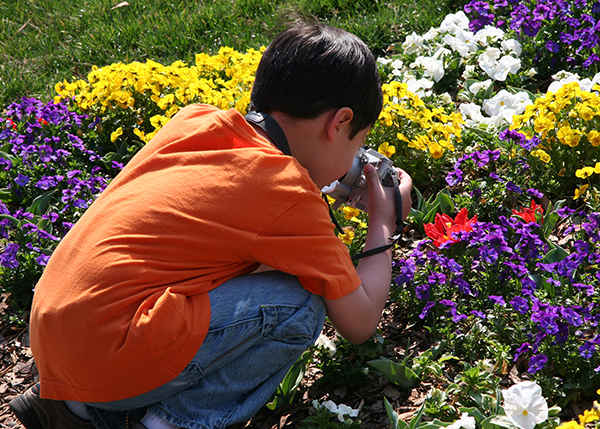
I suppose my most important piece of advice is to make sure you keep all of this in perspective. We love our kids first and photography second. “You’re doing it wrong,” or any variation of it is strictly off-limits. Allow for mistakes and imperfections. Celebrate and embrace them. Just remember, though, that your kid can read you like a book. The second they realize you’re getting pushy or not having fun, it’s over. You didn’t just wake up one morning an accomplished photographer. You worked at it. If you guide them right your kids will work at it, too.

And one day they might even take a killer, life-altering photo and thank you for it.

Jeff Guyer is a photographer based in Atlanta, GA. In addition to shooting portraits, architecture, sports, weddings, and just about anything else that pauses in front of his lens, he also teaches a Digital Photo Challenges class for kids. Follow him on Facebook at http://www.facebook.com/guyerphotography or on Twitter @guyerphoto

Post originally from: Digital Photography Tips.

Check out our more Photography Tips at Photography Tips for Beginners, Portrait Photography Tips and Wedding Photography Tips.

What to Teach Your Kids about Photography


Digital Photography School

 
Comments Off on What to Teach Your Kids about Photography

Posted in Photography